Small Groups and the Seven Deadly Sins
One of the great calming forces in my life is meeting with my small groups. One is a monthly book club; we are not all of the same mind; we bring different perceptions, and it is good for us. New doors open, we see things differently. Yesterday, I was confronted by a woman who reminded me that when she was reviewing a book she loved, and wondered why it was not popular, there was a silence. And then I said “Well, it was poorly written.” I expected a rebuke, but she said that having given it some thought, now she agrees. Whew!
(I hate confrontation. And I also have a big problem with lying. I believe lying hurts the person receiving the lie, and it hurts the liar. I think lies are seeds that grow wildly, creating a thicket of evil. Unintended consequences.)
My other small group doesn’t meet all the time, just for studies two or three times a year. Small group are where real connections are made, so the church makes an effort to help us connect with one another. This small group has met at the same time with the same leader for several years. It has several people who have been with this group for a long time. New people come once or twice and are never seen again, and some come and settle in for the long haul. We are diverse, from all segments of the church, and we have a wonderful gift in common. As we study and apply scripture, we laugh at ourselves. On rare occasions, we cry with one another. It is a band of buddies, and our buddies keep us safe in life.
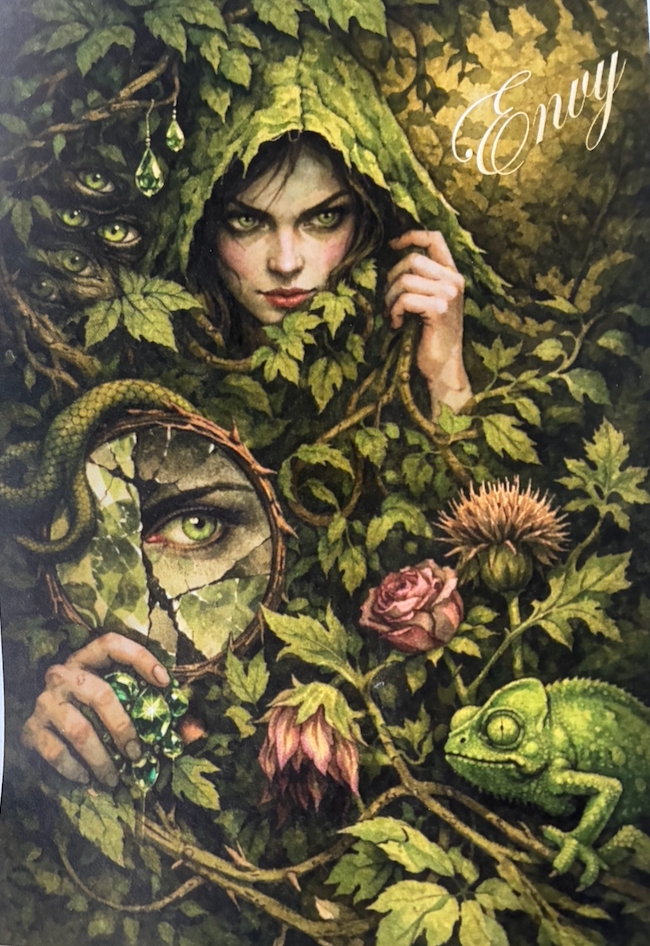
Last night we were working on Envy. It was fascinating, and I learned something new. There is a technical difference between jealousy and envy. Jealousy is having something/someone and being afraid of losing what you have. Envy is wanting something – or something better than – someone else has, or something you lack. That’s food for thought for the rest of the week.
As a group, we thought the illustration for Envy was fabulous. One member asked to look at all the eyes, all green, and notice how cold envy is. Another said that Envy is the only deadly sin that gives no pleasure. We only have six weeks; it makes me laugh to know that the deadly sin of Lust is optional.
During an epoch when I find events stirring in me emotional turbulence, I leave these groups feeling at peace, and I sleep well at night. The world goes on. We find our people. They help us shoulder our burdens and march alongside us. Thanks be to God.
Unintended Consequences
It is rare that I am stunned into silence.
This is not the world I grew up in. This is not the country I served. These are not the values we were taught as children, in a United States full of post WWII optimism, as we allied with other nations for the greater good.
I am a blessed woman. I have what I need, and my son married a woman with deeply perceptive insights. An environmental specialist, she taught me the concept of Unanticipated Consequences. We are witnessing a host of unanticipated consequence unrolling by the minute, consequences which will have reverberations far into the future – not forseeable consequences but lasting.
Our current Administration is whacko. They command the mightiest military on earth, and they hold the keys to nuclear weapons. I have a friend who says “We’re Doomed,” only he uses a stronger, vulgar word I don’t want to use here.
Anna Julia Haywood Cooper
Today the church honors Anna Julia Haywood Cooper, an extraordinary woman who prevailed against prejudice.
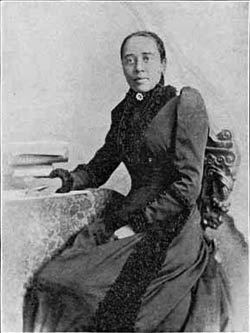
ANNA JULIA HAYWOOD COOPER
EDUCATOR
(1964)
Anna Julia Haywood Cooper (August 10, c1859- February 27, 1964). Educator, advocate and scholar. Born in Raleigh, North Carolina to an enslaved woman and a white man, presumably her mother’s master, Anna Julia was an academically gifted child and received a scholarship to attend St. Augustine Normal School and Collegiate Institute, a school founded by the Episcopal Church to educate African-American teachers and clergy. There she began her membership in the Episcopal Church. After forcing her way into a Greek class designed for male theology students, Anna Julia later married the instructor, George A.C. Cooper, the second African-American ordained to the Episcopal priesthood in North Carolina.
After her husband’s death in 1879, Cooper received degrees in mathematics from Oberlin College, and was made principal of the only African American high school in Washington D.C.. She was denied reappointment in 1906 because she refused to lower her educational standards.
Throughout her career, Cooper emphasized the importance of education to the future of African Americans, and was critical of the lack of support they received from the church. An advocate for African-American women, Cooper assisted in organizing the Colored Women’s League and the first Colored Settlement House in Washington, D.C. She wrote and spoke widely on issues of race and gender, and took an active role in national and international organizations founded to advance African Americans.
At the age of fifty-five she adopted the five children of her nephew. In 1925, Cooper became the fourth African-American woman to complete a Ph.D degree, granted from the Sorbonne when she was sixty-five years old. From 1930-1942, Cooper served as president of Frelinghuysen University.
from the Episcopal Women’s History Project
A Rare Co-Incidence of Holy Days
To all my friends entering this holy period of fasting and repentance and meditation, I wish you a Holy Lent and a Holy Ramadan. May God Almighty/Allah listen to your prayers and grant you peace and serenity.

Diwali: A Light Sparkles in Dark Times

Today, Labor Day, when dark events are taking place in our country, shutting down the light of liberty and democracy, we got an unexpected invitation – to a Diwali party, coming up in a couple months.
We are so honored. And we know Diwali; we were living in Al Fardan 1, in Doha, Qatar, when an Indian neighbor invited all the residents of Al Fardan to come over for Diwali. We didn’t know what Diwali was, and our internet was dial-up and irregular, but we asked around and were told, with big smiles, to go and find out.
The night of Diwali came, and we walked to our neighbor’s house, along with many of our Al Fardan neighbors. We could see it long before we arrived – thousands of candles set out in patterns in the yard, lining the sidewalk, leading us inside, to more lights and a feast of sweets, platters of sweets, all illuminated by gleaming candlelight.
Such open-hearted hospitality. Such generous sharing. No one was excluded; everyone was welcome, and there was plenty for everyone.
Our neighbors’ beliefs were different from ours, and yet, I believe all such generosity, freely given, springs from the same spirit.
We can’t wait for this upcoming Diwali.
The “Righteous Gentiles”
Today in our church Lectionary, we celebrate those who stood up to the Nazi policies and shielded and rescued thousands of Jewish people who might otherwise not have survived the torture, imprisonment and extermination, solely for being “the other.”
PRAYER (contemporary language)
Lord of the Exodus, who delivers your people with a strong hand and a mighty arm: Strengthen your Church with the examples of the Righteous Gentiles of World War II to defy oppression for the rescue of the innocent; through Jesus Christ our Lord, who lives and reigns with you and the Holy Spirit, one God, now and for ever. Amen.
“THE RIGHTEOUS GENTILES”
Although the phrase “Righteous Gentiles” has become a general term for any non-Jew who risked their life to save Jews during the Holocaust, it here appears to apply specifically to: Raoul Wallenberg [Swedish, d. 1947] Hiram Bingham IV [d. 1988, American]; Karl Lutz [d. 1975, Swiss]; C. Sujihara [d. 1986, Japanese]; and Andre Trocme [d. 1971, French].

Raoul Wallenberg (August 4, 1912 – July 17, 1947?) was a Swedish humanitarian who worked in Budapest, Hungary, during World War II to rescue Jews from the Holocaust. Between July and December 1944, he issued protective passports and housed Jews, saving tens of thousands of Jewish lives.
On January 17, 1945, he was arrested in Budapest by the Soviets after they wrested control of the city from the Germans, and was reported to have been executed while a prisoner at Lubyanka Prison, although this is not entirely certain.
Wallenberg has been honored numerous times. He is an honorary citizen of the United States, Canada, Hungary and Israel. Israel has also designated Wallenberg one of the Righteous among the Nations. Monuments have been dedicated to him, and streets have been named after him throughout the world.
— more at Wikipedia

Hiram “Harry” Bingham IV (July 17, 1903 – January 12, 1988) was an American diplomat. He served as a Vice-Consul in Marseille, France, during World War II, and helped over 2,500 Jews to flee from France as Nazi forces advanced.
In 1939, Bingham was posted to the US Consulate in Marseille, where he, together with another vice-consul named Myles Standish, was in charge of issuing entry visas to the USA.
On June 10, 1940, Adolf Hitler’s forces invaded France and the French government fell. Several influential Europeans tried to lobby the American government to issue visas so that German and Jewish refugees could freely leave France and escape persecution.
Anxious to limit immigration to the United States and to maintain good relations with the Vichy government, the State Department actively discouraged diplomats from helping refugees. However, Bingham cooperated in issuing visas and helping refugees escape France. Hiram Bingham gave about 2,000 visas, most of them to well-known personalities, speaking English, including Max Ernst, André Breton, Hannah Arendt, Marc Chagall, Lion Feuchtwanger and Nobel prize winner Otto Meyerhof.
— more at Wikipedia
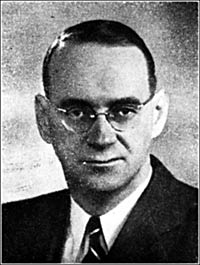
Carl Lutz (b. Walzenhausen, 30 March 1895; d. Berne, 12 February 1975) was the Swiss Vice-Consul in Budapest, Hungary from 1942 until the end of World War II. He helped save the lives of tens of thousands of Jews from deportation to Nazi Extermination camps during the Holocaust.
Lutz immigrated at the age of 18 to the United States, where he was to remain for more than 20 years. Lutz’s sojourn in the United States ended with his assignment as vice-consul to the Swiss Consulate General in Jaffa, in what was then Palestine.
Appointed in 1942 as Swiss vice-consul in Budapest, Hungary, Lutz soon began cooperating with the Jewish Agency for Palestine, issuing Swiss safe-conduct documents enabling Jewish children to emigrate.
Once the Nazis took over Budapest in 1944 and began deporting Jews to the death camps, Lutz negotiated a special deal with the Hungarian government and the Nazis: he had permission to issue protective letters to 8,000 Hungarian Jews for emigration to Palestine. Lutz then deliberately misinterpreted his permission for 8,000 as applying to families rather than individuals, and proceeded to issue tens of thousands of additional protective letters, all of them bearing a number between one and 8,000. He also set up some 76 safe houses around Budapest, declaring them annexes of the Swiss legation. Among the safe houses was the now well-known “Glass House” (Üvegház) at Vadász Street 29. About 3,000 Jews found refuge at the Glass House and in a neighboring building.
— more at Wikipedia
Chiune Sugihara (1 January 1900 – 31 July 1986) was a Japanese diplomat, serving as Vice Consul for the Japanese Empire in Lithuania. During World War II, he helped several thousand Jews leave the country by issuing transit visas to Jewish refugees so that they could travel to Japan. Most of the Jews who escaped were refugees from German-occupied Poland or residents of Lithuania. Sugihara wrote travel visas that facilitated the escape of more than 6,000 Jewish refugees to Japanese territory, risking his career and his family’s life.
When asked why he did it, he responded:
“You want to know about my motivation, don’t you? Well. It is the kind of sentiments anyone would have when he actually sees refugees face to face, begging with tears in their eyes. He just cannot help but sympathize with them. Among the refugees were the elderly and women. They were so desperate that they went so far as to kiss my shoes, Yes, I actually witnessed such scenes with my own eyes. Also, I felt at that time, that the Japanese government did not have any uniform opinion in Tokyo. Some Japanese military leaders were just scared because of the pressure from the Nazis; while other officials in the Home Ministry were simply ambivalent.
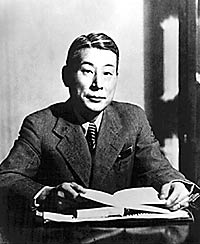
People in Tokyo were not united. I felt it silly to deal with them. So, I made up my mind not to wait for their reply. I knew that somebody would surely complain about me in the future. But, I myself thought this would be the right thing to do. There is nothing wrong in saving many people’s lives …. The spirit of humanity, philanthropy … neighborly friendship … with this spirit, I ventured to do what I did, confronting this most difficult situation —and because of this reason, I went ahead with redoubled courage. ”
When asked why he risked his career to save other people, he quoted an old samurai saying: “Even a hunter cannot kill a bird which flies to him for refuge.”
— more at Wikipedia
André Trocmé ( April 7, 1901 – June 5, 1971) and his wife Magda (née Grilli di Cortona, November 2, 1901, Florence, Italy – Oct. 10, 1996) are a couple of French Righteous Among the Nations. For 15 years, André served as a pastor in the town of Le Chambon-sur-Lignon on the Plateau Vivarais-Lignon in South-Central France. He had been sent to this rather remote parish because of his pacifist positions which were not well received by the French Protestant Church. In his preaching he spoke out against discrimination as the Nazis were gaining power in neighboring Germany and urged his Protestant Huguenot congregation to hide Jewish refugees from the Holocaust of the Second World War.

In 1938, André Trocmé and Reverend Edouard Theis founded the Collège Lycée International Cévenol in Le Chambon-sur-Lignon, France. Its initial purpose was to prepare local country youngsters to enter the university. When the refugees arrived, it also took in many Jewish young people wishing to continue their secondary education.
When France fell to Nazi Germany, the mission to resist the Nazis became increasingly important. Following the establishment of the Vichy France regime during the occupation, Trocmé and his church members helped their town develop ways of resisting the dominant evil they faced. Together they established first one, and then a number of “safe houses” where Jewish and other refugees seeking to escape the Nazis could hide. Many refugees were helped to escape to Switzerland following an underground railroad network. Between 1940 and 1944 when World War II ended in Europe, it is estimated that about 3500 Jewish refugees including many children were saved by the small village of Le Chambon and the communities on the surrounding plateau because the people refused to give in to what they considered to be the illegitimate legal, military, and police power of the Nazis.
— more at Wikipedia
I am thankful for Sawtucket, who has kept me up with my daily Lectionary readings for more than 22 years. I thank Sawtucket for today’s reading, reminding us that we are all of one blood, one humanity, no matter our skin color, our nationality, nor our religion. We are human beings, and our job is to watch over one another.
Chasing Petroglyphs: Dinosaur National Monument
I love it when I underestimate an attraction. This is the day we visit the Carnegie Quarry/ Douglass Quarry. I am going to quote from the Dinosaur National Monument Day Trip 5 folder now: The Visitor Center contains a fine bookstore, exhibits explaining the fossils, petroglyphs, and other park features, and information about how to see fossils in the park. The Carnegie Quarry . . . is one of the best Jurassic Period dinosaur finds in the world. Between 1909 and 1924, Paleontologist Earl Douglass discovered 10 species of dinosaurs, twenty complete skeletons and skulls. The Carnegie Quarry and other fossil quarries in the park have greatly advanced the study of dinosaurs. Current research in the park is focused on understanding the ecosystems the dinosaurs lived in, which has resulted in the discovery of new species of dinosaur, salamander, frog, lizard, mammal and plants. By protecting fossils, we can better understand the past. By understanding the past we can better understand the present.

There is so much I find both impressive and moving about this site. First, Douglass discovers this amazing site where an ancient river regularly flooded, killing local species in an early version of climate crisis, the bodies would be stuck in the mud, the mud baked hard, like concrete, and the cycle continues, layer on layer of bones, many with skeletons relatively intact, piled up in this location.
He had the genius to know it was a paleontological gold mine. Workers extracted skeletons that are now in the finest paleontology museums in the world. To me, here is where true vision comes in – Douglass had the vision to preserve an entire partially excavated wall of fossils, to create a beautiful, light-filled building to protect the wall, and to open this wall of fossils to the public, at no charge.
What better way to build public understanding and public support?
We drove to the visitor center, and caught a shuttle, which makes the circuit every 15 minutes. Soon we arrived at the Wall of Bones.
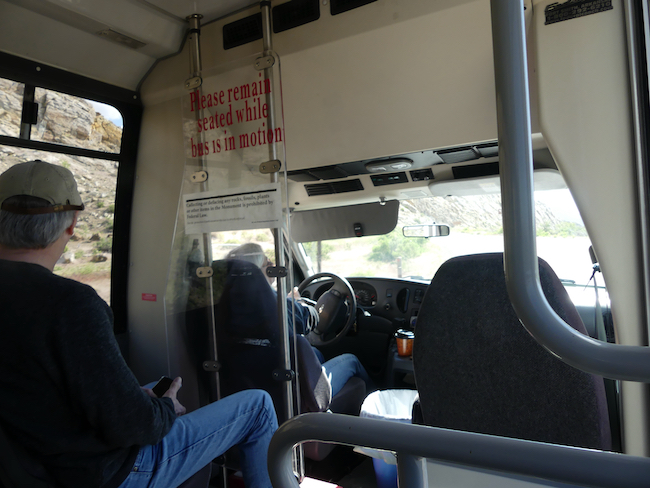
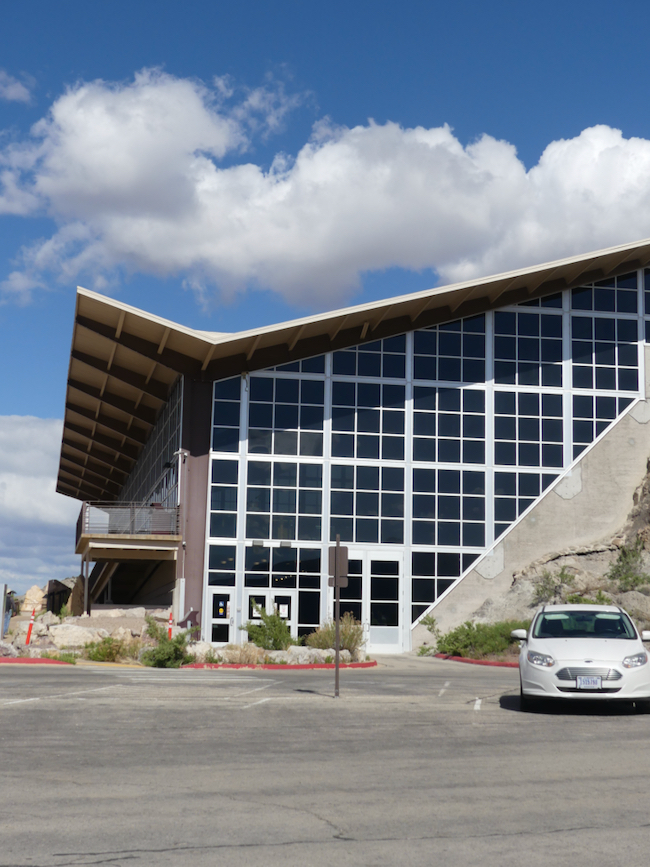


On the upper level, there are interactive stations which will help you identify exactly whose bones you are looking at. It’s amazing stuff.
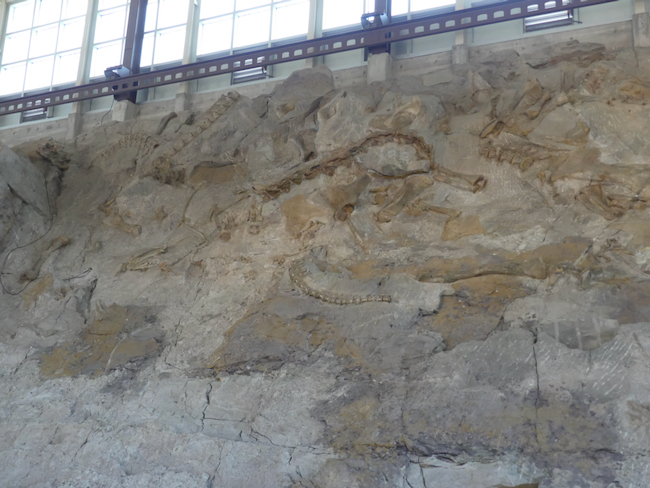

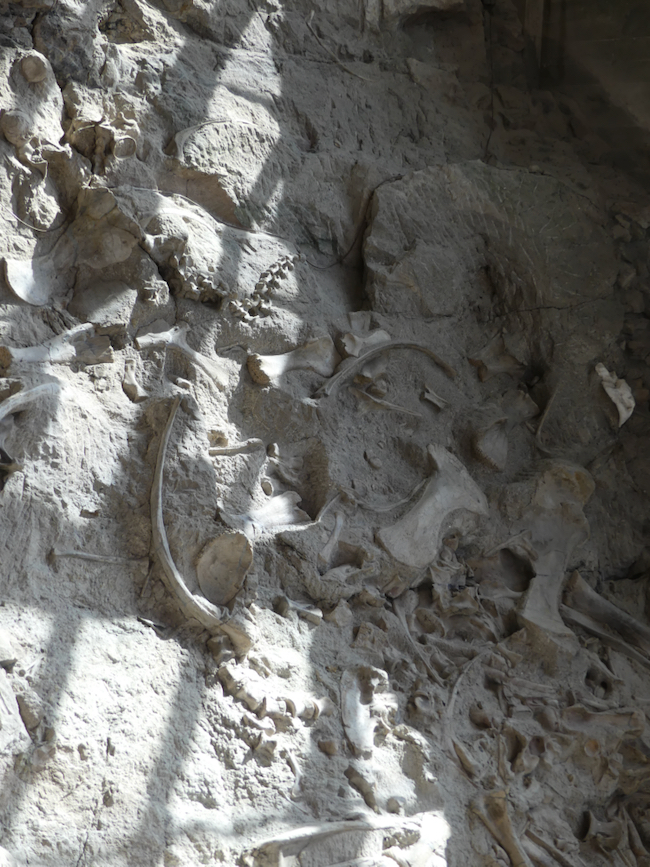


All kinds of informational displays help you understand exactly what you are seeing.


I had never heard of Dinosaur National Monument. I saw it on the map and thought it would be an interesting stop on our way to Moab. I had no idea I would be so blown away by the Fremont Petroglyphs at McConkie Ranch or this Wall of Bones at the Dinosaur National Monument. Life remains a great adventure.
Coming Up: Red Desert, Dinosaurs, Petroglyphs and Night Skies Travel

We take small local trips, but this is our first Spring Out-West trip since last year. We’ve got some highlights – seeing our niece in Denver (early readers know her as Little Diamond) and getting to know her growing children, staying in the Elk Hunting capitol of the world, Craig, Colorado (well, just because who knew?), exploring the Red Desert of Wyoming and visiting remote and rarely seen petroglyphs and pictographs, on through the Flaming Gorge to the Dinosaur National Monument, and then down to a cabin just south of Moab where we will be heading down to the Canyon of the Ancients, near the four corners area of the United States, for more exploration of ancient ruins, focusing on petroglyphs and pictographs. From there, a family meet-up in Breckenridge, a stay with my sister in Colorado Springs, and back up for one last family visit in Denver before we fly back to Pensacola.


The trip focuses on remote locations, petroglyphs, pictographs, and lesser-visited sites with dark skies, where we will stay mostly in cabins. We are always up to try to find an unknown gem, like the Traveler’s Rest Cabins, where we stay on the east side of Glacier National Park. (I see they are now for sale; I can only hope the new owners are as wonderful as the current sellers.)
Sometimes when choosing a hotel or restaurant, I am hooked by a clever name, so in Rock Springs, WY we will stay at the Outlaw Inn. It’s a Best Western, not a cabin, but I love the name. Rock Springs is also famous for herds of wild horses and outdoor activities.
The whole trip is outdoor activities, with an occasional visit to a specialty museum or two to help us understand what we see. We have two reservations at Arches National Park, the earliest reservations we could get so as to have the benefits of fewer people and the glorious morning light hitting the arches, and reservations for a sunset cruise on the Colorado River, for the same reasons – views with the glorious light of sunset. My husband wants to eat at a famous restaurant, the Sunset Grill, overlooking Moab, so we will make reservations far in advance – the place fills up quickly.
When we land, whether it’s Bozeman, Denver, Juneau, Portland or Seattle, we always give ourselves enough time to visit a local store to stock up on water, apples, oranges, peanut butter, crackers and necessities like tissues, paper towels, toilet paper, insect repellant, sunscreen – anything we might need and not want to carry in our suitcases. It gives us a lot of flexibility, so we don’t have to worry about finding a meal when we are remote. On the other hand, we love a good meal, so we plan to find places in advance, and make reservations. It works for us.
I’m getting excited just writing about it. Planning trips has gotten me through the COVID desert; even just doing the research and getting reservations gets my blood going faster as we anticipate new sights and experiences, new adventures.
And yes, I’m taking you with me 🙂
Insh’allah
One of today’s readings in the Lectionary always brings a smile to my face. I can hear my teacher at the Qatar Center for the Presentation of Islam (where I was studying Arabic in Doha, Qatar) saying to me “don’t you know your own book? It tells you never to say you are going to do something without adding Insh’allah (God willing) because we never know even what the next minute will bring.”
James 4: 13-17
Boasting About Tomorrow
13 Now listen, you who say, “Today or tomorrow we will go to this or that city, spend a year there, carry on business and make money.” 14 Why, you do not even know what will happen tomorrow. What is your life? You are a mist that appears for a little while and then vanishes. 15 Instead, you ought to say, “If it is the Lord’s will, we will live and do this or that.” 16 As it is, you boast in your arrogant schemes. All such boasting is evil. 17 If anyone, then, knows the good they ought to do and doesn’t do it, it is sin for them.
It’s a perfect reading for the last day of a troubled year, preparing for a year in which we have no idea what joys or troubles are in store for us.
Today, I look back with gratitude to that whole period in my life where I lived in the Middle East and was forced to confront my own ignorance. I was not only ignorant about my Muslim neighbors, I was equally ignorant about my own religion. My years among the Muslims motivated me to learn more about what I believed, and why.
This month, my religious mentor died. She had an enormous influence on my life, on bringing me to where I am today. When I returned to the United States, understanding how little I knew about my own religion, I enrolled in a four-year seminar in theology through an Episcopal Church program called Education for Ministry. It was life-changing. The first-year students read Old Testament, the second-year students read New Testament, the third-year students read Diarmaid MacCulloch’s book Christianity: The First Three Thousand Years, and the fourth-year students read a variety of theological perspectives.

(MacCulloch’s book is thick and intimidating – and surprised us all with how much fun it was to read.)
My mentor was a skilled counselor and guide; she led us through all-year discussions of our weekly readings, so in the four-year program, we not only were reading our own year but giving input on the other’s readings. The discussions were lively and provocative. Slowly, even without realizing it, the students bonded closely with one another. We learned a very important lesson – how to disagree with people, especially when you felt strongly about an issue, and remain respectful.
It has served me well, living as I do in another alien culture. Although I was raised in a hunting culture (Alaska), when I lived there people kept their weapons locked away when not in use. There was no open-carry. As kids, we were lined up at school and given vaccinations, which we accepted as being necessary for our own well-being and the well-being of the community. I don’t believe we had a single black person in town, but we had the original inhabitants, Inuit, Haida, Tlingket and we all went to school together peaceably. My father worked for the government, he served. Service to country is a tradition in my family. I am aghast at elected officials who mistake staging political drama for good governance. I struggle to achieve civil discourse about issues about which I feel strongly.
And so I am thankful for all the years living among others; among the vanquished in Germany, among the desert people of Tunisia, and among the people of Abraham’s other son, Ishmael. Their patience with me taught me so much about myself, and that even my strongly-held convictions may not be nuanced enough to capture what passes for truth. It serves me well to this day, and, I hope, will continue to humble me as we enter this coming new year, Insh’allah.
Recent Comments
ExpatAlien on What Country am I Living … intlxpatr on Yellowstone: Old Faithful to C… Michelle on Yellowstone: Old Faithful to C… Cathy on No Grown-Ups in Charge intlxpatr on Waiting for Snow Wikipedia Donate Button

Amazina


Early Voting in Florida


 Here There and Everywhere