Airline Fees We Love To Hate
Frequent Flyer.com reveals a new survey identifying the fees airline travelers hate the most:
It goes without saying that of the many gripes travelers currently have about flying, the so-called ancillary fees charged by the airlines for, well, everything they can disaggregate from the core service would rank near the top of the most-despised list.
But of the multitude of such fees, which irk travelers the most?
A new survey conducted by Skift shines some light into that dark corner of the travel experience.
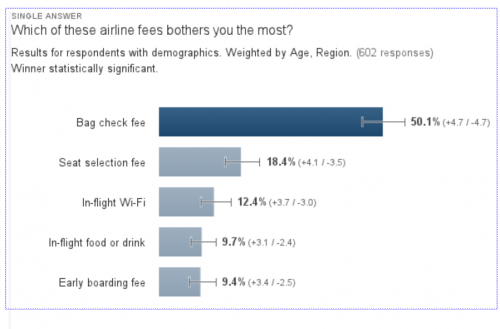
According to a poll of 1,000 adults, the most and least reviled airline fees are as follows:
Bag check fees (50.1%)
Seat selection fees (18.4%)
Inflight WiFi fees (12.4%)
Inflight food or beverage fees (9.7%)
Early boarding fees (9.4%)
Although there was general unanimity across age and other groups, there were a few interesting demographic disconnects:
Wealthier travelers were less bothered by bag fees but more bothered by seat-selection fees.
Less wealthy travelers were notably less bothered by inflight meal/drink fees.
Younger flyers were more bothered by inflight WiFi fees.
Travelers 65 years and older were most bothered by inflight meal/drink fees.
Palafox One of ‘Ten Best Streets in America’
From today’s Pensacola News Journal, the best parade street I have ever seen is recognized nationally for parades, restaurants and community spirit.
Palafox named one of Ten Best Streets in America

Written by
Julio Diaz
and Kevin Robinson
Need more proof that Palafox Place has become a thriving thoroughfare? Here it is: Palafox Place is one of 10 “Great Streets in America for 2013,” according to the American Planning Association.
The independent, not-for-profit educational organization — affiliated with the American Institute of Certified Planners — named Palafox Place alongside streets in Philadelphia; Galveston, Texas; Honolulu; and Corning, N.Y., on its 2013 list.
“For hundreds of years, Palafox Street has been at the center of life in our city,” Mayor Ashton Hayward said in a news release. “Over the past three decades, our community has reinvested in Palafox Street and, as a result, Palafox has once again become the anchor to a thriving, vibrant downtown and a city in renaissance.”
The organization recognized the eight-block stretch from Wright Street to Main Street. Locals will note that Palafox Place addresses run from 1 to 400 south of Garden Street, so this honor additionally includes parts of North and South Palafox Street (from Wright Street to Garden Street and from Government Street to Main Street).
The selection cites the historic architecture and character of the street, as well as popular events such as Mardi Gras parades and the annual Pelican Drop on New Year’s Eve; management of public events and street closures by the Downtown Improvement Board; private investment, including the Al Fresco food trailer court; and a variety of planning and preservation achievements.
You can read the entire article by clicking here.
Or better yet – come for Mardi Gras! See for yourself 🙂

Kuwait Marriage and Divorce 2013
The presentation is a little confusing, but I have to guess that if 19% of the divorces are “non-Kuwaiti” by which they mean that one member of the marriage is not Kuwaiti. So what they are not saying is that 80% of the divorces are Kuwaitis married to Kuwaitis.
They also did not say how long marriages lasted – how many of those marriages were divorced in the first year, how many after many years? If the statistics are accurate, Kuwait is doing OK – more than half the marriages are succeeding.
OOps – found second report in the same Kuwait Times! See below
9,404 Kuwaiti marriages, 4,067 divorces in 2012
KUWAIT: More than 9,000 Kuwaiti couples married last year and more than 4,000 marriages ended in divorce the same year, a local daily reported yesterday quoting official statistics.
The statistics released by the Ministry of Justice and published by Al-Qabas daily indicate that 9,404 marriages between Kuwaitis took place last year compared to 4,067 divorces, or 43.3 percent.
The same statistics also indicated that 4,910 marriages took place between a Kuwaiti and non-Kuwaiti spouse in 2012, compared to 2,605 divorces in the same category. In detail, the statistics show that 814 Kuwaiti men married non-Kuwaiti women in 2012, while 648 Kuwaiti women married non-Kuwaiti men the same year.
The percentage of Kuwait couples in the total number of marriages last year reached 65 percent, according to the statistics, while 19 percent took place between non-Kuwaiti couples. 10 percent of marriages took place between a Kuwaiti man and a non-Kuwaiti woman, while marriages between a non-Kuwaiti man and a Kuwaiti woman also reach 10 percent.
Regarding divorce percentages, the statistics show that 19 percent of divorce cases happened between non-Kuwaiti couples; 12 percent between couples in which the husband is Kuwaiti and the wife is non-Kuwaiti, and 7 percent between couples in which the husband is non-Kuwaiti and the wife is Kuwaiti.
Regarding academic qualifications, the statistics show that 35 percent of women married last year have university degrees, 30 percent have high school degrees, and 19 percent have diplomas, whereas 29 percent of men have university degrees, 24 percent have high school degrees, 21 percent have middle school qualifications and 20 percent have diplomas. On the other hand, the statistics show that the majority of women divorced last year have university degrees (29 percent), while the majority percentage of divorced men have middle school qualifications (29 percent).
55% couples married in last 4 years seek divorce
KUWAIT: Almost 55 percent of couples filing for divorce in Kuwait have been married for four years only, including 25 percent who are yet to celebrate the first anniversary of their wedding, a local daily reported yesterday quoting official statistics. The statistical report released by the Research and Statistics Department in the Ministry of Justice and obtained by Al- Qabas daily further indicates that out of 5,662 couples who sought marriage counseling, only 20 percent had their issue successfully resolved.
Lack of willingness to coexist was identified as the primary cause for divorce requests, with 32 percent of the requests made by husbands and 23 percent by wives.
The statistics further indicate that 77 percent of couples who attended marriage counseling were Kuwaitis compared to 22 percent non-Kuwaitis.
Meanwhile, 62 percent of those couples do not have children, 34 percent have one to three children, and 2.7 percent have between four and six children.
Regarding age groups, the statistics show that 42 percent of couples seeking marriage counseling are aged between 25 and 34, 22 percent aged between 35 and 44, and 20 percent aged between 15 and 25. And according to the couples’ academic levels, the statistics indicate that 28 percent of husbands have middle school degrees, 22 percent have high school degrees and 21 percent have university degrees, whereas 27 percent of wives have high school degrees, 23 percent have university degree, 22 percent have diploma and 20 percent have middle school
My Visitors from Ulaanbaatar, Mongolia
Every now and then I check statistics, see who’d dropping by, see what they are looking at. My Mongolian friends always give me a grin; I get about four a day, they are all looking at the same post:

Be careful what you blog, LOL, sometimes it assumes a life of it’s own.
MRSA Link to Pigs

From Nature.com News:
People living near pig farms or agricultural fields fertilized with pig manure are more likely to become infected with methicillin-resistant Staphylococcus aureus (MRSA) bacteria, according to a paper published today in JAMA Internal Medicine1.
Previous research has found that livestock workers are at high risk of carrying MRSA, compared to the general population2. But it has been unclear whether the spreading of MRSA through livestock puts the public at risk of infection.
The study examined the incidence of infections in Pennsylvania, where manure from pig farms is often spread on crop fields to comply with state regulations for manure disposal. Researchers reviewed electronic health-care records from patients who sought care from the Pennsylvania-based Geisinger Health System (which helped to fund the study) in 2005–10.
The team analysed cases of two different types of MRSA — community-associated MRSA (CA-MRSA), which affected 1,539 patients, and health-care-associated MRSA (HA-MRSA), which affected 1,335 patients. (The two categories refer to where patients acquire the infection as well as the bacteria’s genetic lineages, but the distinction has grown fuzzier as more patients bring MRSA in and out of the hospital.)
Then the researchers examined whether infected people lived near pig farms or agricultural land where pig manure was spread. They found that people who had the highest exposure to manure — calculated on the basis of how close they lived to farms, how large the farms were and how much manure was used — were 38% more likely to get CA-MRSA and 30% more likely to get HA-MRSA.
The researchers also analysed 200 skin, blood, and sputum samples isolated from patients in the same health-care system in 2012. The MRSA strains found in those samples are commonly found in humans. Researchers did not find any evidence of bacteria belonging to clonal complex 398 (CC398), a MRSA strain classically associated with livestock and found in farms and farmworkers in many previous studies.
However, there is little information about which MRSA strains are most common on US farms, so the absence of CC398 is not a sign that MRSA is not being transmitted from livestock to humans. “We’ve done studies in Iowa, we haven’t always found CC398. That’s not too shocking,” says Tara Smith, a microbiologist at Kent State University in Ohio, who was not involved in the study.
Many researchers think that widespread use of antibiotics to encourage growth in farm animals fuels the proliferation of MRSA and other drug-resistant bacteria. The latest findings suggest that manure is helping antibiotic resistance to spread, says Joan Casey, an environmental-health scientist at the Johns Hopkins Bloomberg School of Public Health in Baltimore, Maryland, and a co-author of the study.
“We’ve certainly described a connection we think is plausible,” she says. “We haven’t described every step in the path.”
“It’s a pretty interesting and provocative observation,” says Robert Daum, a paediatrician and the principal investigator of the MRSA Research Center at the University of Chicago in Illinois. He adds that he would like to see similar studies done in different geographic regions, and research to find out whether the MRSA strains carried in pig manure are the same as the MRSA strains found in nearby human infections.
Casey is at work on a follow-up genetics study to identify the most common MRSA strains in the region.
Nature doi:10.1038/nature.2013.13752
References
Casey, J. A., Curriero, F. C., Cosgrove S. E., Nachman, K. E. & Schwartz, B. S. JAMA Intern. Med. http://dx.doi.org/10.1001/jamainternmed/2013.10408 (2013).
Show context
Smith, T. C. et al. PLoS ONE 8, e63704 (2013).
Get Ready For the Harvest Moon

From Weather Underground News where you can read the entire article by clicking on the blue type:
Get ready for the Harvest Moon. Depending on where you live on the planet, it’s either Wednesday or Thursday of this week.
“In traditional skylore, the Harvest Moon is the full moon closest to the autumnal equinox,” EarthSky reports, “and depending on the year, [it] can come anywhere from two weeks before to two weeks after the autumnal equinox.” For 2013, that changing of the seasons happens on September 22 — just a few days from now.
Unlike the Blue Moon we covered back in August, the Harvest Moon behaves differently than a typical full moon. “Throughout the year, the moon rises, on average, about 50 minutes later each day,” according to NASA Science News. “But near the autumnal equinox … the day-to-day difference in the local time of moonrise is only 30 minutes.” Why does that matter? Simply put, agriculture.
“In the days before electric lights, farmers depended on bright moonlight to extend the workday beyond sunset,” wrote NASA’s Dr. Tony Phillips. “It was the only way they could gather their ripening crops in time for market. The full moon closest to the autumnal equinox became the Harvest Moon, and it was always a welcome sight.”
So my question is this – the Harvest Moon is what we call it, because it gave farmers extra time to bring in the harvest. What do other cultures call it?
Sinkholes in Florida
Dont you just love Google? Today I asked Google to find “images sinkholes Florida” hoping I could find some graphic which would show me how often they occur in parts of the state, which is very very long. There it was.

It is not something I ever worried about until the neighborhood we bought a house in near Tampa suddenly had a rash of sinkhole damage and property values plummeted. I was lucky, not only was I not in the “band” of sinkholes, but my house sold very quickly, at the same price we had paid. I breathed a sigh of relief and moved on.
You never know where a sinkhole will suddenly appear, but as the graphic above demonstrates, some places are likelier than others.
Here is an article from today’s AOL Weather News:
ORLANDO, Fla. (AP) – Sections of a building at a resort near Orlando’s theme park district collapsed into a sinkhole late Sunday, forcing the evacuation of 105 guests in the structure and also dozens of visitors staying in two adjacent three-story buildings.

Watch out for those blue zones!
Sinkholes are as much a part of the Florida landscape as palm trees and alligators. Florida has more of them than any state in the nation. Earlier this year, a man near Tampa died when a sinkhole opened up underneath his bedroom.
PHOTOS ON SKYE: Astonishing Sinkholes Around the World
Experts say sinkholes aren’t occurring at a greater rate than usual but that the high-profile nature of recent one in populated areas has drawn attention to them. There also has been a rise in sinkhole claims in Florida, but insurance officials believe some of those claims are questionable. Here are some answers about why sinkholes form and their costs.
WHY ARE THERE SINKHOLES IN FLORIDA?
Florida’s peninsula is made up of porous carbonate rocks such as limestone that store and help move groundwater. Dirt, sand and clay sit on top of the carbonate rock. Over time, these rocks can dissolve from an acid created from oxygen in water, creating a void underneath the limestone roof. When the dirt, clay or sand gets too heavy for the limestone roof, it can collapse and form a sinkhole. Sinkholes are caused naturally but they can be triggered by outside events.
WHAT TRIGGERS SINKHOLES?
Although sinkholes are formed naturally, they can be triggered by heavy rainfall, drought followed by heavy rainfall, tropical storms and human activity. The most common actions by humans that cause sinkholes are heavy pumping of groundwater to spray on oranges and strawberries during freezes to keep them from being damaged, well drilling, excavating, creating landfills, leaking broken water lines and pounding or blasting from construction.
WHERE ARE SINKHOLES MOST COMMON IN FLORIDA?
Three counties in the Tampa region are known as “sinkhole alley.” Two-thirds of thesinkhole damage claims reported to the state Office of Insurance Regulation from 2006 to 2010 came from Hernando, Hillsborough and Pasco counties. Sinkholes are less common in South Florida, home to the state’s two most populous counties – Broward and Miami-Dade.
HOW MANY SINKHOLES OCCUR IN FLORIDA?
The state Office of Insurance Regulation says reported claims from sinkholes have risen in recent years. More than 2,300 claims were reported in Florida in 2006 but that figure jumped to almost 6,700 claims in 2010. There is no geological explanation for the rise and state insurance officials believe many claims are questionable. There must be structural damage to a home for a policyholder to claim a loss from a sinkhole, but insurance officials say claims are often paid without that proof.
HOW MUCH DAMAGE DO SINKHOLES DO?
The state Office of Insurance Regulation says sinkhole claims in Florida cost insurers $1.4 billion from 2006 to 2010.
Worse Than Crack Cocaine? Growing up Poor
From AOL Daily Finance Poverty damages children more than being born to a crack addicted mother. Poverty keeps children from attaining their full potention, and hurts us all as a society as a huge waste of potential resource:

In the 1980s, the crack baby epidemic was hard to ignore. Television show after television show, article after article proclaimed that children born to addicts of the increasingly prevalent “crack” cocaine were all-but-guaranteed to have birth defects, including extremely low IQs and severe emotional problems. This “lost generation,” commentators emphasized, would be incapable of forming relationships or reaching full emotional maturity. They would be, in the words of Washington Post columnist Charles Krauthammer, condemned to “a life of certain suffering, of probable deviance, of permanent inferiority.”
A little over 20 years later, Krauthammer’s predictions have proven almost embarrassingly inaccurate. Last week, the findings of a 24-year-long study of crack babies revealed that parental use of the drug had little or no direct effect on the children. In the process of investigating the babies, however, researchers discovered another environmental problem that did, in fact, lead to problems with depression, anxiety, cognitive functioning, and a host of other issues: poverty.
In 1989, Dr. Hallam Hurt, chair of the neonatology department at Philadelphia’s Albert Einstein Medical Center, began tracking 224 near-term or full-term children who were born to crack addicts. In the ensuing years, her longitudinal study followed the children, finding that, overall, their IQs were about the same as a control group of children of non-addicted mothers. Further, the children in Hurt’s study had comparable outcomes when it came to educational and emotional development.
That having been said, Hurt’s study found that children raised in poverty — regardless of whether or not their mothers were addicted to crack — tended to have lower IQs and lower school readiness than those who weren’t raised in poverty. A big part of the problem, she argues, is environmental: Of the children in her study, “81 percent of the children had seen someone arrested; 74 percent had heard gunshots; 35 percent had seen someone get shot; and 19 percent had seen a dead body outside.” The children themselves acknowledged the effect of these events: “Those children who reported a high exposure to violence were likelier to show signs of depression and anxiety and to have lower self-esteem.”
In other words, while prenatal crack abuse may not have a major effect on children, the societal conditions in crack-ravaged communities most certainly do. As Hurt emphasized, “Given what we learned, we are invested in better understanding the effects of poverty. How can early effects be detected? Which developing systems are affected? And most important, how can findings inform interventions for our children?” Or, to put it another way, now that we understand that poverty is more dangerous for children than crack, what can we do to protect our children from its effects?
In Florida, the worst schools are those serving the poor. Many fell a full grade point in the Florida evaluations and would have fallen further if there were not a law – I am not kidding – that says they can only fall one grade point in a year. We are failing in the two most important areas that can help children pull themselves out of poverty – good health care, and good education.
World’s Most Expensive Cities for Expats
By Mark Johanson
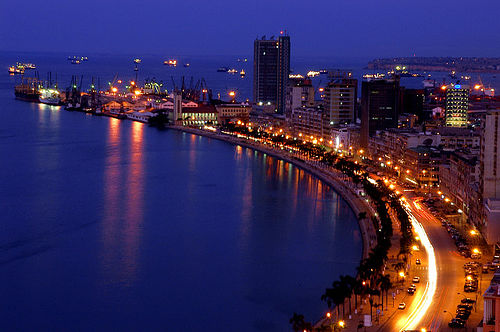
Where is the world’s most-expensive city for expatriates? It’s not notoriously pricey Tokyo. It’s not wallet-shrinking Sydney, Moscow or Oslo. And it’s definitely not surprisingly cheap New York City. Rather, it’s an African seaport you’ve probably never heard of: Luanda, Angola.
This finding from U.S. consulting firm Mercer underscores its annual survey’s purpose: to assess the cost of living around the world so that multinational companies and governments can determine appropriate compensation allowances for their expatriate employees. After all, more than half of oil-rich Luanda’s 5 million residents live below the poverty line.
“Despite being one of Africa’s major oil producers, Angola is a relatively poor country, yet expensive for expatriates since imported goods can be costly,” Barb Marder, senior partner and Mercer’s global mobility practice leader, said. “In addition, finding secure living accommodations that meet the standards of expatriates can be challenging and quite costly.”
Mercer noted in the survey that the difference in cost of various everyday items could be dramatic from country to country. The average cup of coffee, for example, costs about $1.54 in Managua, Nicaragua, while it costs $8.29 in Moscow. A fast-food hamburger meal in Kolkata, India, costs $3.62, compared to $13.49 in Caracas, Venezuela. A ticket to the cinema, meanwhile, can run between $5.91 in Johannesburg and up to $20.10 in London.
Cost of accommodation was another major factor Mercer looked at, and a one-month unfurnished luxury rental in Hong Kong topped the world at about $7,092 — more than 20 times as much as in Karachi, Pakistan. Yet, it was Moscow that crept in just below Luanda as the second-most expensive city for expats, followed by Tokyo, Chad’s capital city of N’djamena, and Singapore.
“Recent world events, including economic and political upheavals, which resulted in currency fluctuations, cost inflation for goods and services, and volatility in accommodation prices have impacted these cities making them expensive,” Marder explained.
Mercer assessed a total of 214 cities across five continents for its 2013 survey, analyzing data from March 2012 to March 2013. Cities were then ranked by the price of housing, transport, food, entertainment and clothing, and ordered on the joint cost of 200 items compared to the benchmark, New York City.
“Given the increasing numbers of business travelers, global ‘commuters’ and longer-term expatriates, companies are keeping a close eye on the cost of living for international assignees in different cities around the world,” Marder said, explaining the purpose of the study. “Organizations need to evaluate the impact of currency fluctuations, inflation, and political instability when sending employees on overseas assignments while ensuring they can facilitate the moves they need to drive the business results by offering fair and competitive compensation packages.”
Nathalie Constantin-Métral, principal at Mercer with responsibility for compiling the survey ranking, said that, overall, cost of living went up across parts of Europe, while it went down in much of Asia. Japan dropped significantly from last year due to a weakening of the yen against the U.S. dollar.
In the Americas, meanwhile, South American cities were the most expensive for expatriates, while Canadian cities moved down in rankings due to a slight decrease of the Canadian dollar against the U.S. dollar. New York remained the most-expensive urban center in the U.S.
“Overall, U.S. cities either remained stable in the ranking or have slightly decreased due to the movement of the U.S. dollar against the majority of currencies worldwide,” Constantin-Métral said. “Yet several cities, including New York, moved up in the ranking due to a rise in the rental accommodation market.”
Recent Comments
intlxpatr on Shampoo Ginger tigerbutterya0c5ff1d… on Shampoo Ginger intlxpatr on British Soldier Kidnapped, Esc… John on British Soldier Kidnapped, Esc… intlxpatr on British Soldier Kidnapped, Esc… Wikipedia Donate Button

Amazina


Early Voting in Florida


