Rabbit Holes: Paul Samuelson, John Steinbeck and Anu Garg
It’s a rainy day in Pensacola, and Florida needs rain. The reservoirs are depleted, and a drought has been declared. As I go through my e-mail, I come to Anu Garg’s A Word a Day post. (Today’s word is “incubus”). I subscribed to his daily e-mail many years ago as I studied teaching English as an additional language.
Anu Garg is profound. He chooses wonderful words, words my foreign students adored. He also includes a quote at the end of each post. Today’s quote was from John Steinbeck.
A THOUGHT FOR TODAY:
The things we admire in men, kindness and generosity, openness, honesty, understanding and feeling are the concomitants of failure in our system. And those traits we detest, sharpness, greed, acquisitiveness, meanness, egotism and self-interest are the traits of success. And while men admire the quality of the first they love the produce of the second. -John Steinbeck, novelist, Nobel laureate (27 Feb 1902-1968)
And it just so happens that this coming month, my book club is looking at three Steinbeck novels; Tortilla Flats, Cannery Row, and The Moon is Down.
One thing leads to another. Tortilla Flats takes place on a hill above Monterey, California, where paisanos live.
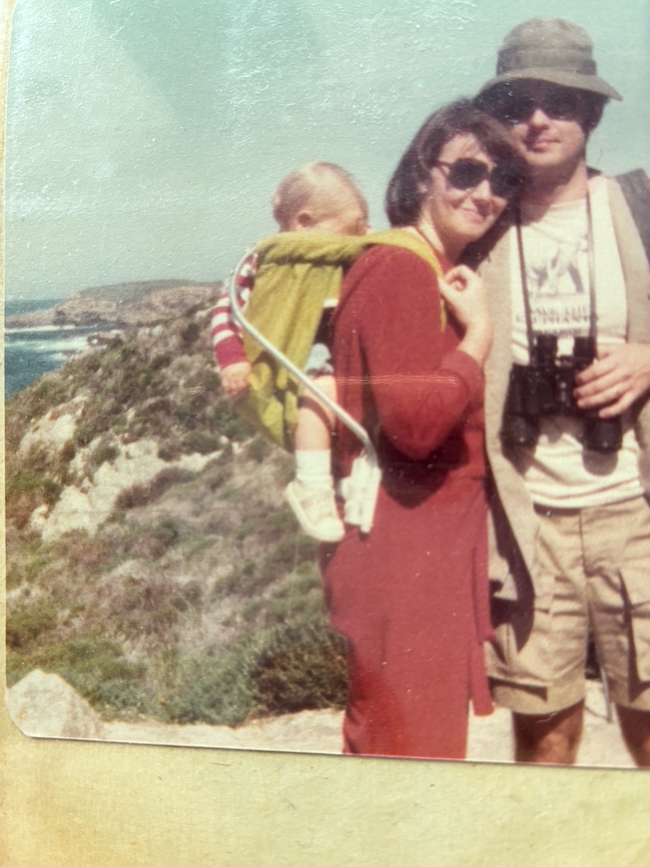
Of all the places I’ve lived, I have never loved a place the way I love Monterey, California. We lived on a hill above Monterey, above the old Del Monte Hotel, now the Naval Postgraduate School. The location sounds very suspiciously a lot like Tortilla Flats. The book bring back so many wonderful memories, particularly lying in bed at night and hearing the sounds of the sea lions barking down on the rocks, the gulls screeching, and the fog horn warning – we had a lot of fog.
And I remember Paul Samuelson, the author of the Economics textbook I used for an introductory economics class I took my freshman year in college. I never intended to like economics, but I found Samuelson readable – and even riveting. I remember one quote from his text: “Man does not always starve quietly” which had to do with his theories on economic development. Within that chapter, he also explains comparative economic deprivation.
This was a long time ago, so I am paraphrasing what I remember, and I might be getting it wrong. Samuelson talked about how once the most basic needs are met in a developing country, food, housing, clothing, jobs – you’d think everybody would be happy, but once people can stop scrabbling to survive, once they are stable, they start looking around and see someone who has more – and this is relative deprivation. The see someone with something they didn’t know they needed, and now they need this, too, to be happy.
So how does this relate to Steinbeck, and La Mesa Village, and Paul Samuelson?
My husband and I and our brand new little baby were leaving one military school and headed for schools in Monterey when he got a call from military housing in Monterey. It was such a nice, positive call when it started out, telling my husband about the lovely house we were to have with three bedrooms and a fireplace in La Mesa Village, and went on to give information about measurements and furniture and we were joyfully amazed. Our military housing had never been so fine, nor had any housing office called us and treated us so respectfully.
And suddenly everything changed. “Oh wait,” she said. “You’re not Navy?”
“No,” replied my husband, “I’m in the Army.”
“You’re not a Navy Captain?” she confirmed.
(silence as we looked in horror at one another)
“No,” my husband said shortly, the way you respond when a short-lived dream-come-true has just died.
“Oh. Well you’ll be in normal student housing then. Sir,” she added, respectfully, but all the pleasantness was gone.
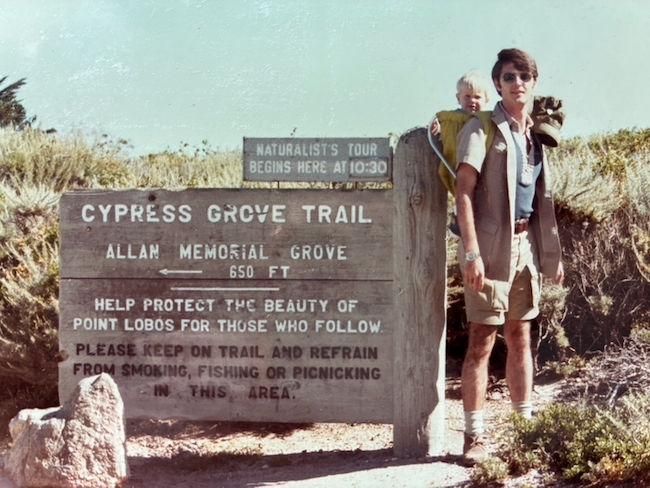
And that’s where my friend Paul Samuelson, the first Economist in the United States to be awarded the Nobel Prize (1970) comes in. How much do you remember from your college classes? As we accepted our student housing – not a beautiful 3 bedroom house with a fireplace, but a flat in a quad with two bedrooms and linoleom floors (no fireplace) I remembered the concept of relative deprivation. I had a roof over my head in Monterey, California, heaven on earth. I had a baby and good child care and great grocery stores; I attended the Naval Postgraduate School and the Defense Language School. On weekends, we hiked at Point Lobos, and we were happy. Happy, except for that occasional twinge of jealousy when we passed the houses higher on the hill with three bedrooms and a fireplace.
And when I felt that twinge, I smiled and thought of Paul Samuelson.
From the Sublime to the Ridiculous
It’s been a beautiful vacation, capped off with visits to two families I adore. Everything has gone so beautifully.
Then, as we set our alarms in Denver for our early morning flight back to Pensacola, we get a notification our flight will be delayed. The huge thunderstorm threw the crew schedule out of whack, and the large window we left for transfer in Atlanta shrunk to . . . nothing.
We’ve missed our flight, but we are very lucky, very lucky, they were able to find us two seats on the next flight out.
My seat

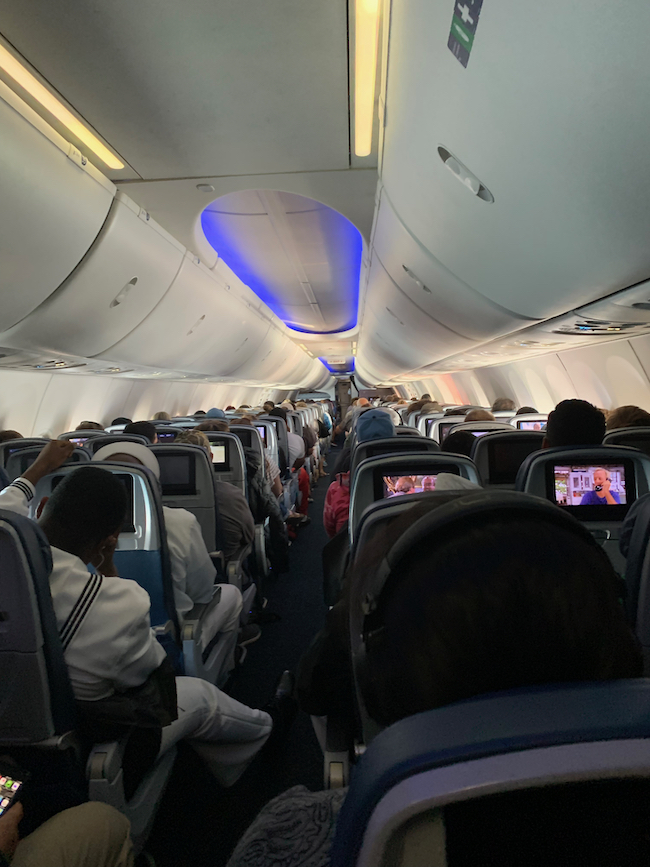
My view
We made it to Pensacola. All our bags made it with us. We had a wonderful ride home. All is well that ends well.
Barcelona to Abu Dhabi: Dubai, Sharjah and More Adventure Than Anticipated
North from Muscat, through the Straits of Hormuz (where you see Khasab) and then south to Dubai.

We didn’t have a lot of expectations for the day. We were docking late in Dubai, just after lunch, and heading off almost immediately for Sharjah. We couldn’t really think why we were really going.
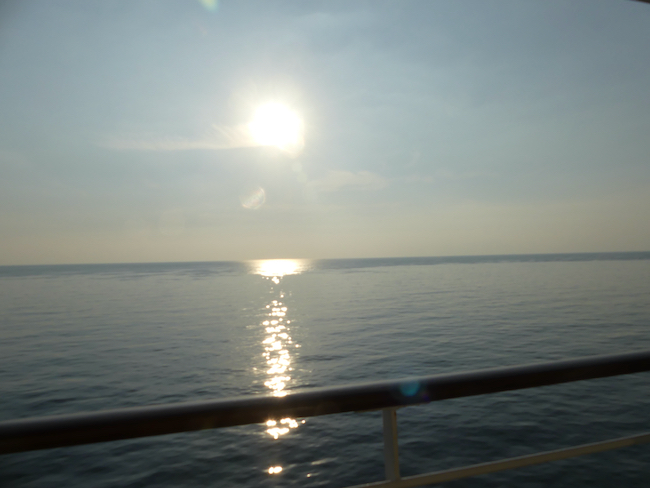
Packing to go home changes everything. You are no longer on a journey, you are already planning an end, it’s like the end of a love affair. AdventureMan and I sit down and calculate our tips. The tour requires that we prepay gratuities, and we did so, but there are people who contributed greatly to our happiness on board, and we need to encourage them in the most sincere way – cash.
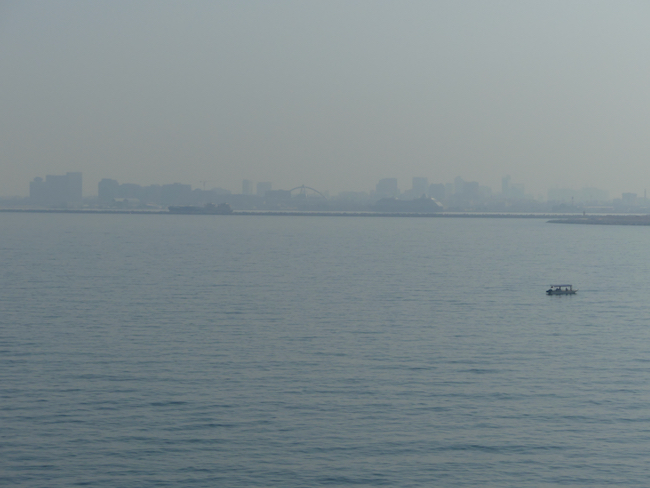
So I spend my early morning time up in Horizons, drinking coffee, catching up on e-mails, and taking photos of the sunrise, which is shockingly dirty. The sun appears to be fighting its way through the smog and haze. And, oddly, the sun is rising on the port side of the ship, which would imply we are heading south, how can that be? I figure we must have passed the Straits of Hormuz and are now going south towards Dubai, it’s the only explanation I can think of. (See map above)

We hit breakfast – it’s taken about two weeks for us to settle back down, with all the variety and abundance offered, and we are now back to mostly eating with some discipline. I’ve not been as good with the blood sugar during the trip, but I’m back down to normal now and want to hold that line.
Our last trip to the spa, and once again, we have it all to ourselves, and then loll around for a while in the hot Gulf sunshine before showering – the spa is salt and showering is a must, as is drinking a lot of water to rehydrate. Lunch is just a little rushed, and then we are off to the Nautica Lounge where we run into Ed and Alan, and catch up on their happenings as we wait for our trips to be called. They are off to visit Dubai, while we are off to Sharjah.


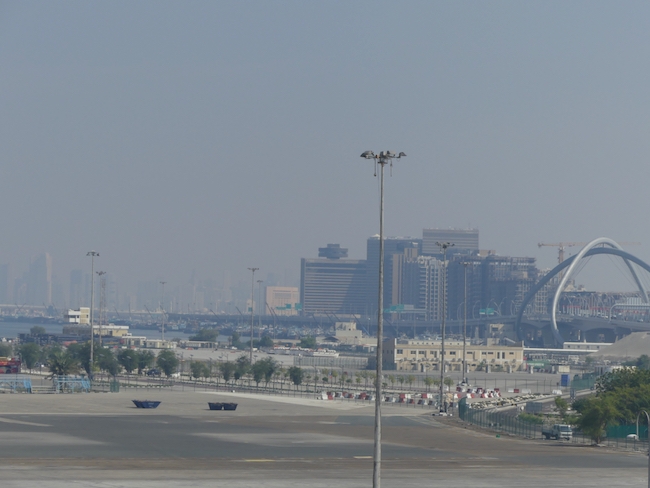
Below is the very modern, very efficient arrivals terminal and immigration.

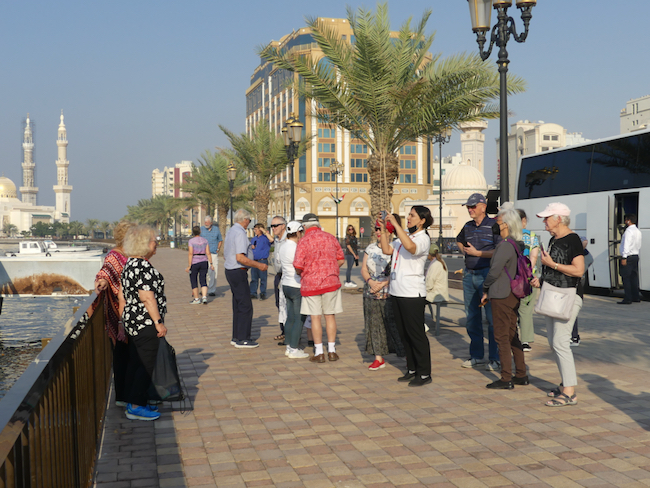
First, we have a great guide, an Iranian woman, with no headscarf, which she later explains – that the Quran says nothing about covering your hair or face, only to “cover your beauty.” She says that she covers sometimes, like for praying in the mosque, but she finds the abaya and headscarf are off-putting to her western tourist clients, and that people feel freer to ask her questions when she looks more like them. I found that to be compelling – that she believes in covering but that she also believes in eliminating barriers with her clients. I liked that she could hold those two ideas and make it work.

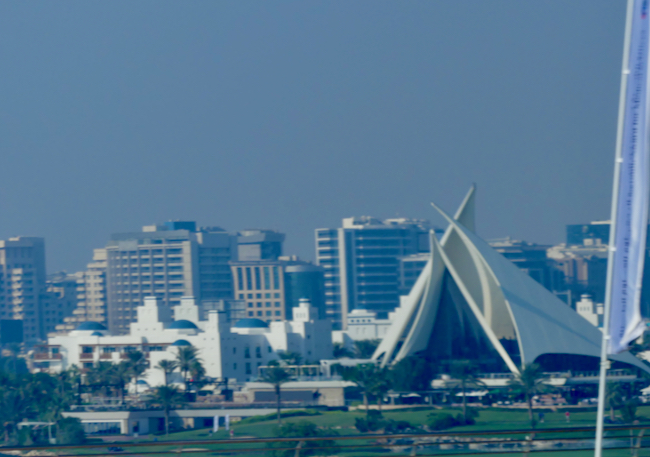

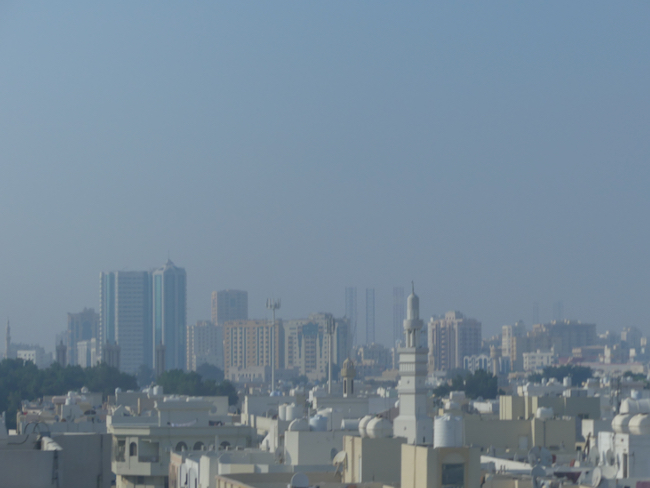
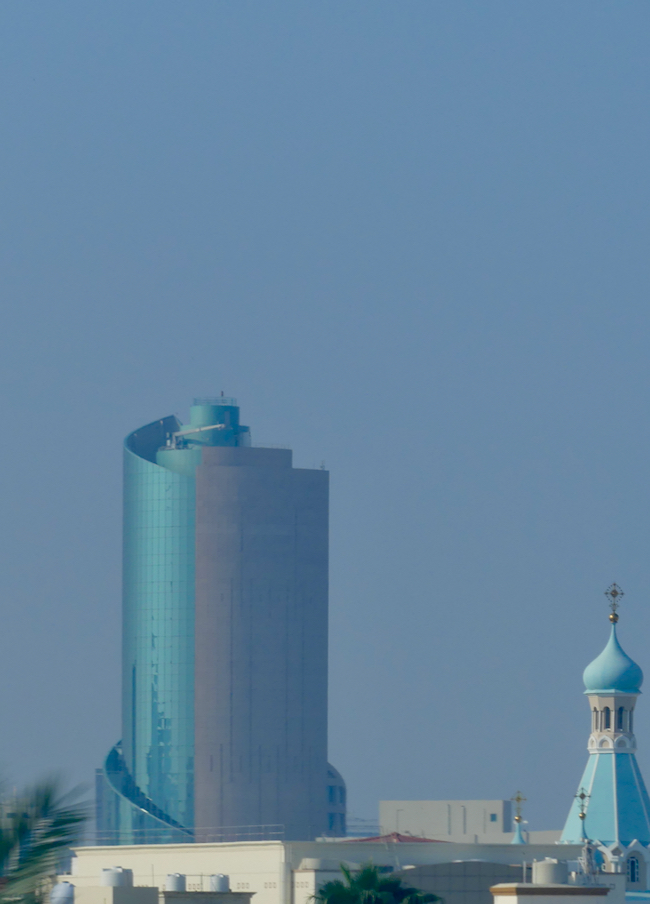
The trip was amazing. Sharjah is still quieter and somewhat less modern than Dubai and Abu Dhabi, although still built up in a more residential way. We started with a visual (in the bus) tour of a roundabout with beautiful official buildings – the court, the library, a mosque, surrounding a park, all very beautiful. Then we went to the Islamic Museum.


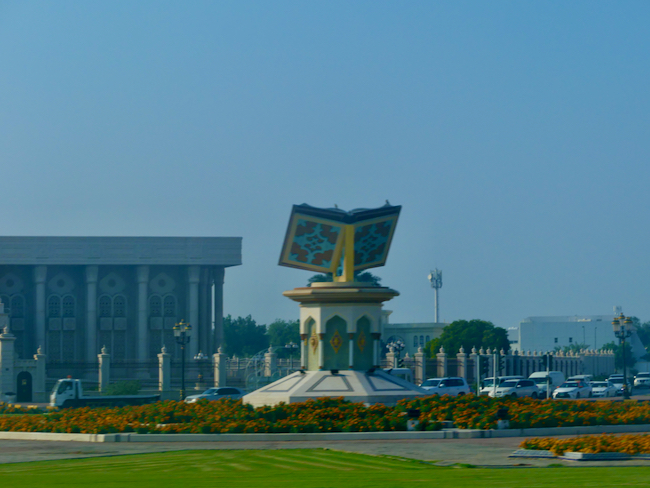
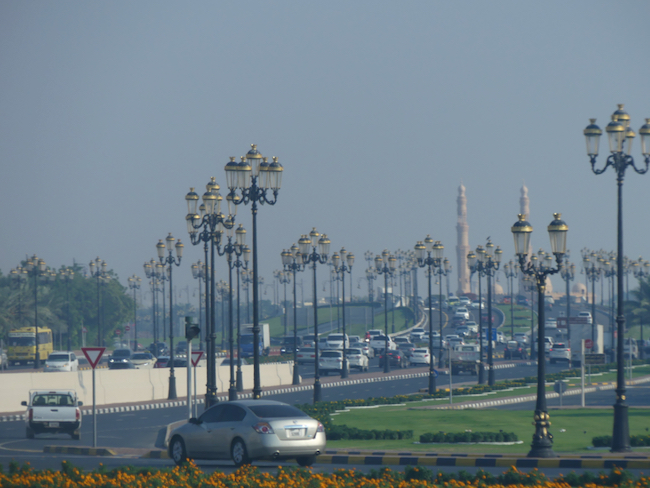
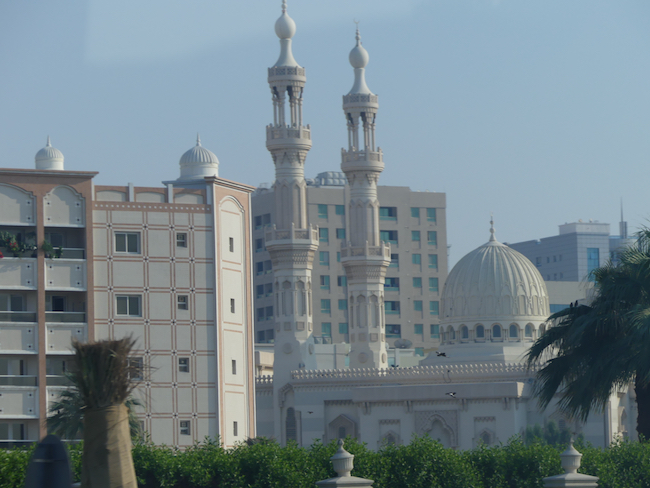


The Islamic Museum was impressive.



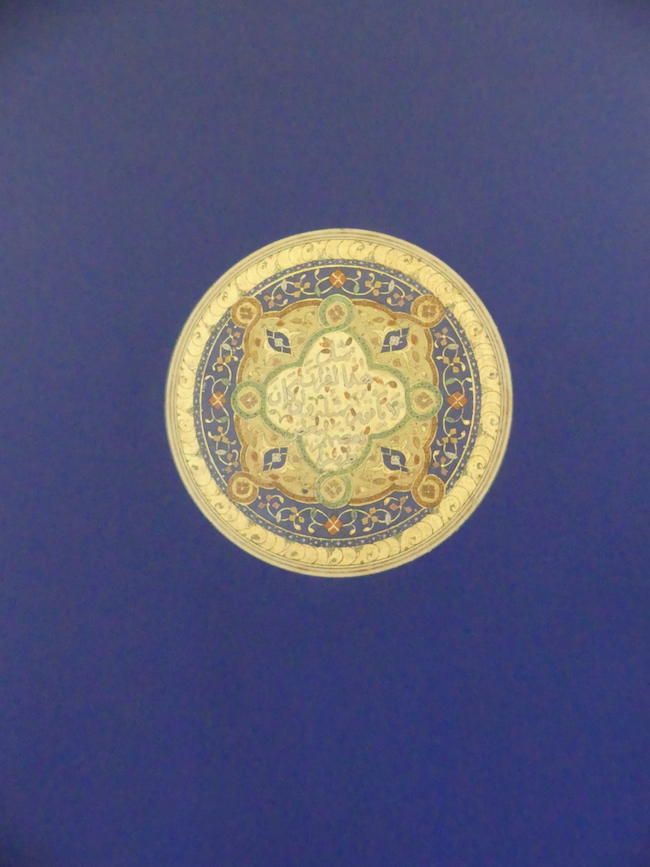
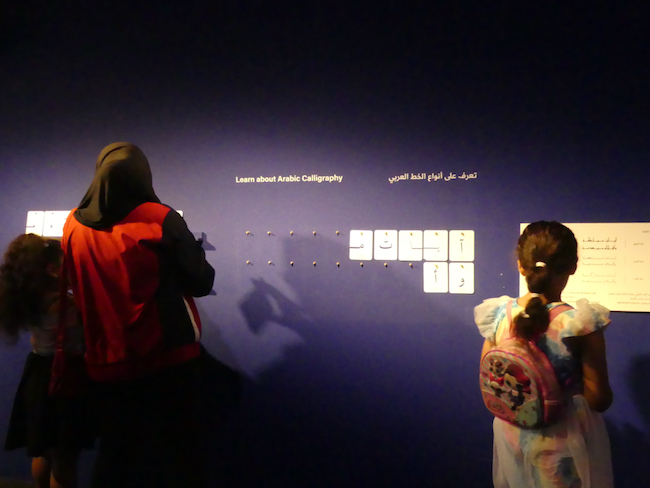
I leave the group; I zipped to the gift shop. It’s not that I am a rabid shopper, it’s that I do like to bring things back for people and I find the best quality at the best prices in museum shops. I found some wonderful things, very quickly, and moved on to a visiting Calligraphic exhibit, (I learned the glory of Islamic calligraphy at the Tarek Rejab Museum in Kuwait, a treasure trove of gorgeous Islamic scripts) and then I zipped up to visit the beautiful dome, gloriously painted with constellations and signs of the zodiac.



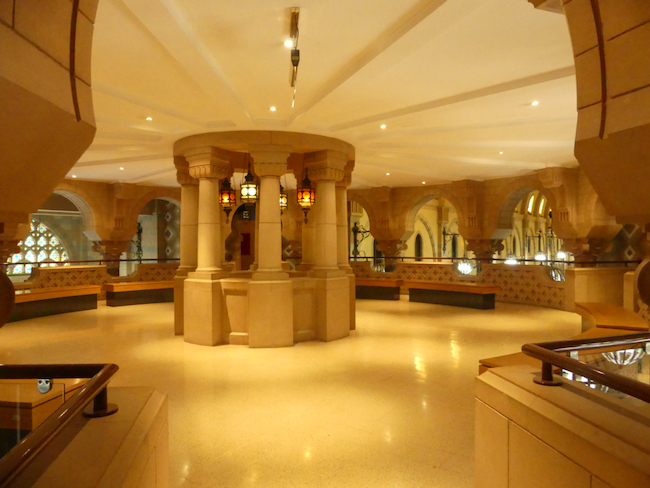
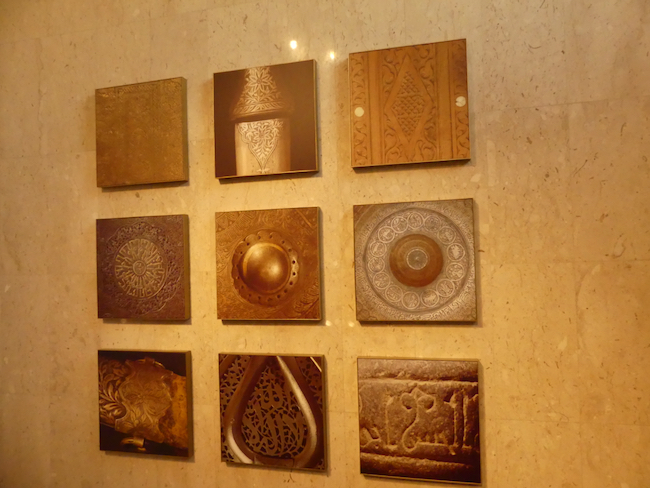
The dome crowns a beautiful reception room with comfortable chairs, and people looking up at this ceiling in wonder. It is beautiful.


From there, I went to the section on Islamic technology, where I exalted in astrolabes and exquisite instruments of measurement – I love good design. It thrills my heart to see the gorgeous design of these instruments created to do practical work, but which thrill the user with their beauty.
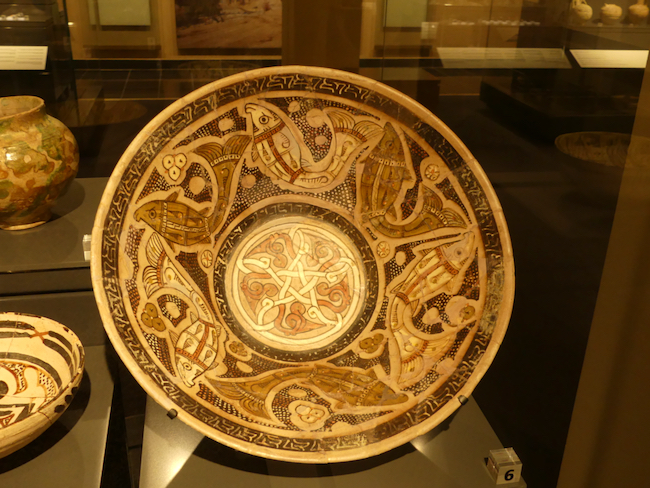


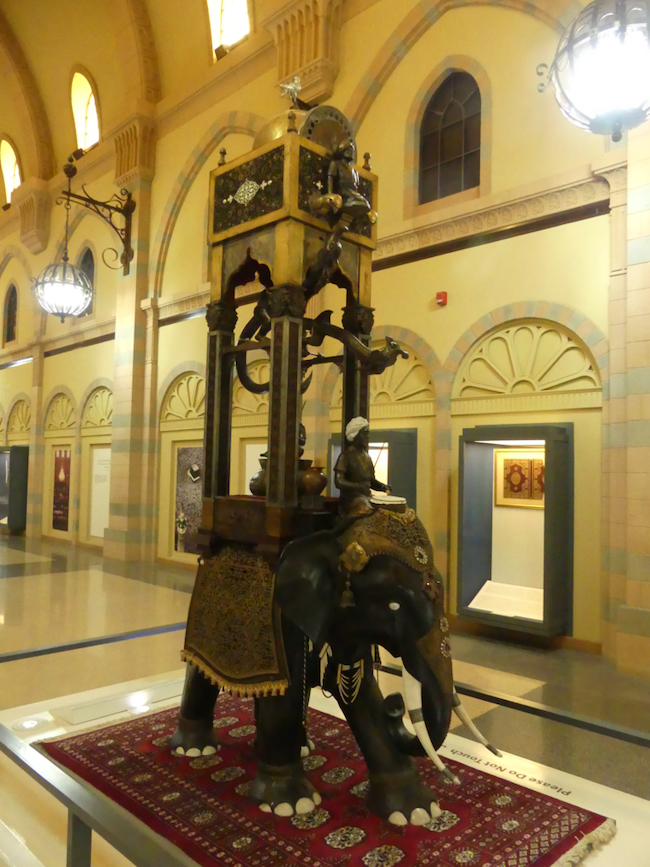
As I am there, I get a call from AM reminding me our time is almost up and it is time to meet. Here is a thing about Oceania excursions – we never had a single one where were were held up by a lagger. On all our tour, people paid attention to time expectations and met – or even exceeded – the instructions.


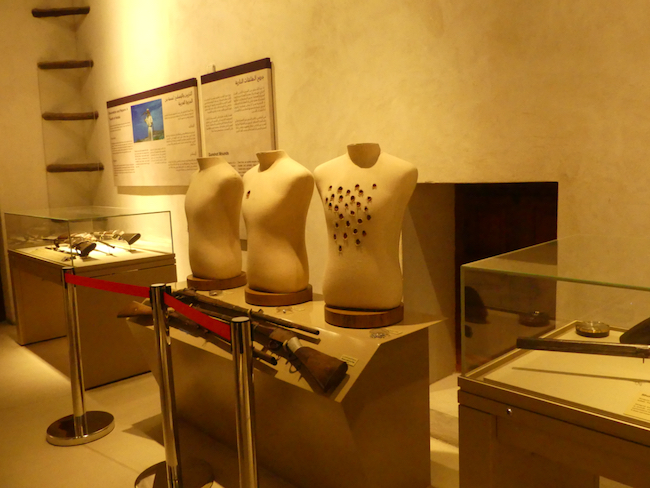
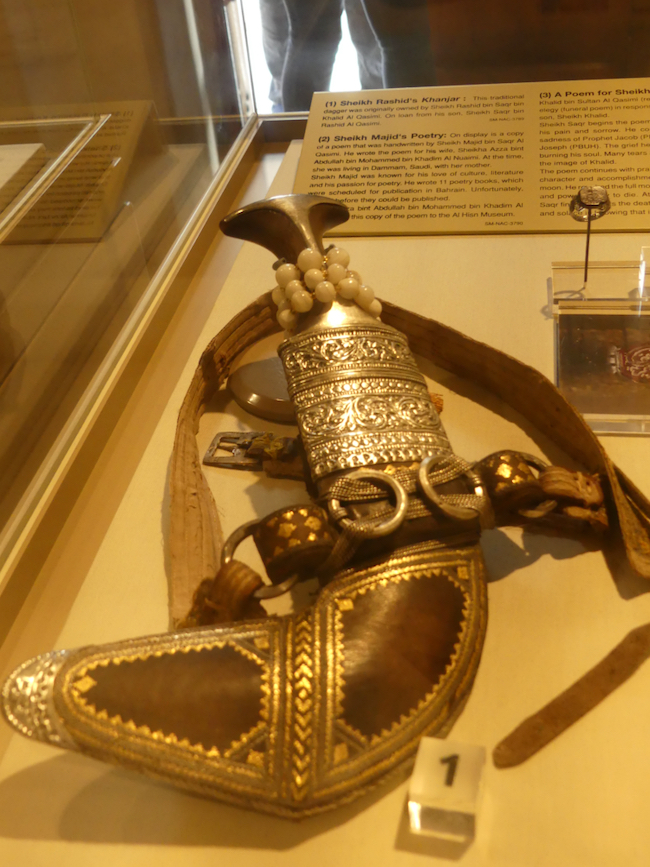
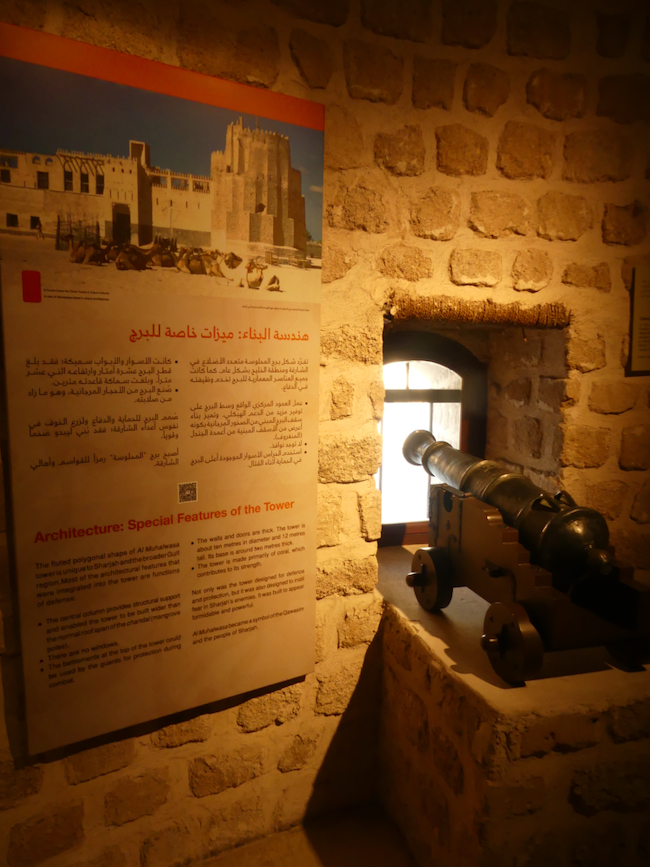
From the Islamic Museum, we headed to a fort, actually a re-creation of an actual fort which had been built on that exact spot. It had gorgeous pieces of ancient weaponry, guns, cannons, ammunition, suits of armor, and samples of early technology, such as goat skins used to store liquids, make yoghurt and butter. It was nearing sunset, and the late afternoon light loved the fort and it’s beautiful spaces.


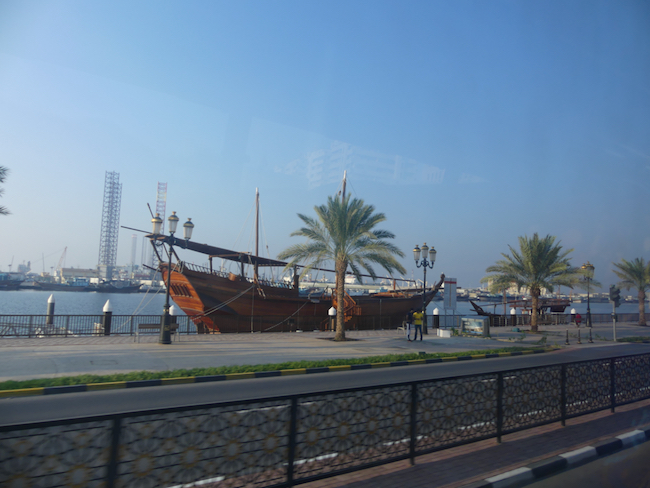


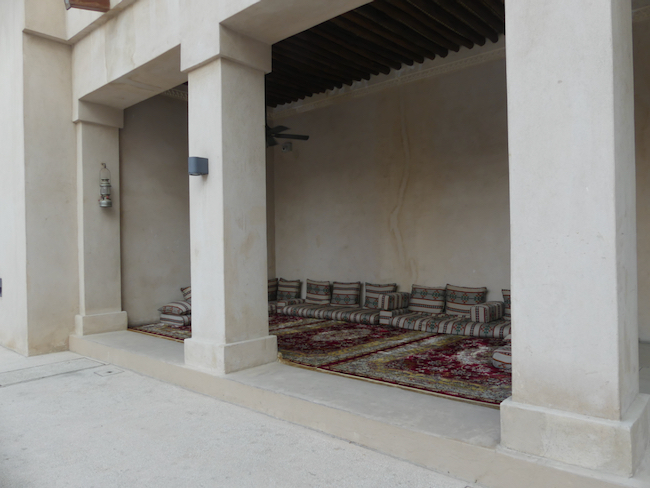

You will see a picture later of the original fort; this fort has been re-constructed in the middle of a busy city to honor the Sheikh and to honor earlier traditions in Sharjah. Below is looking down into the well in the fortress.


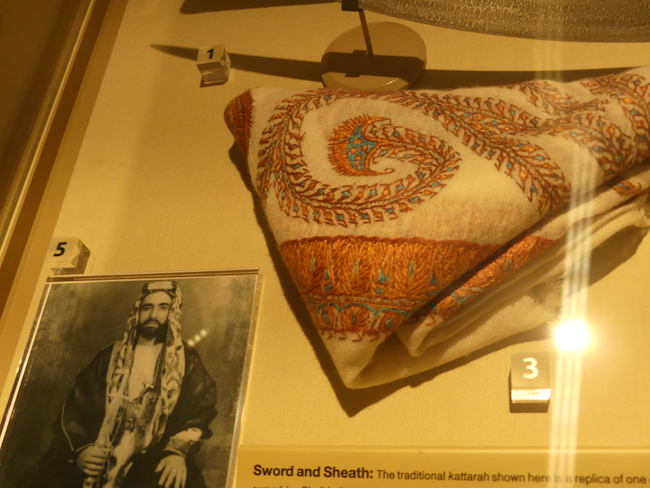
I found this display below a bit bizarre, but maybe that’s just me?


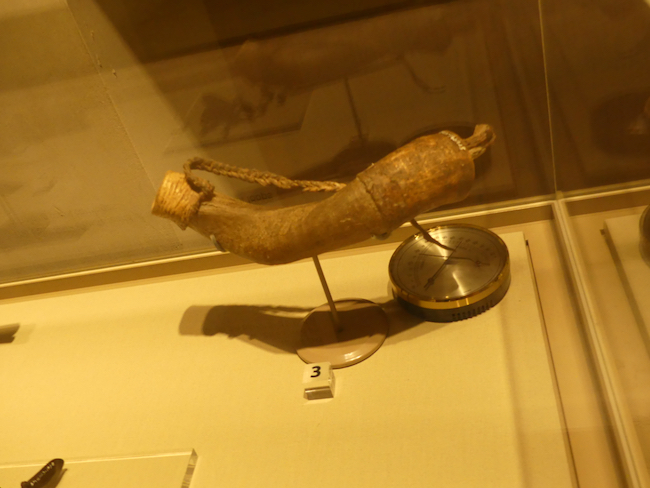


Below is an Omani chest, with the nail-head decoration. This chest is used as a closet, holding a simile of the Sheikh’s wardrobe.

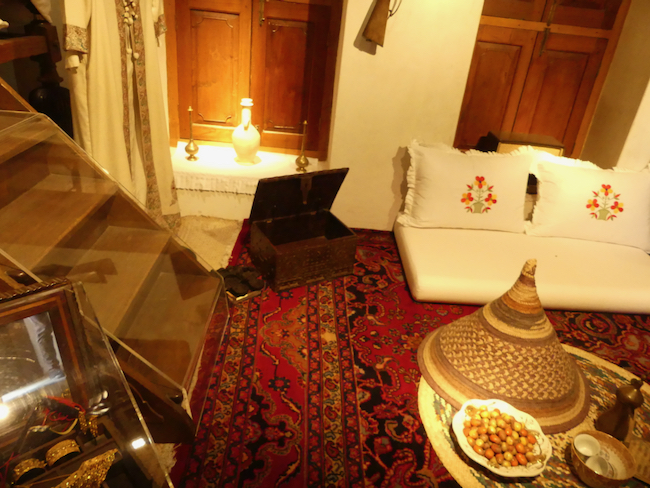





Another view of this modern apartment building; I would like to believe the snake-like figure is also calligraphic:
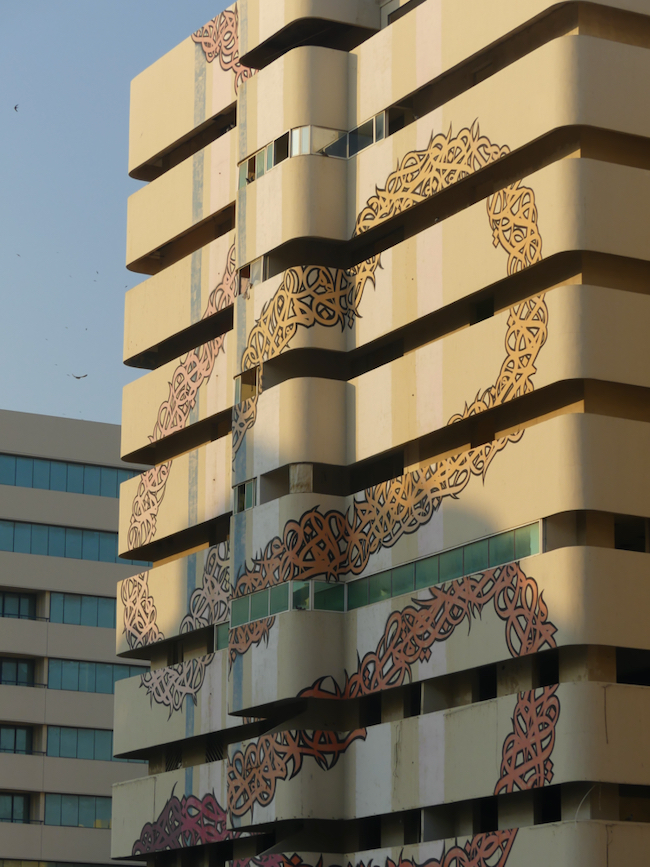

Last, we went to the Sharjah “souks.” We started off at the gold souks.

I like gold. I like real jewelry. The gold souks are overwhelming. Many of the shops are full of gold sets, the kind of gift a young bride is given by the groom’s family when she enters their family, a mail-like necklace/breastplate, and maybe earrings, a headpiece, sometimes handpieces, all matching, and all of which belong to her and provide her with some security in case down the line she is divorced or widowed. In theory, her bride price and her jewelry are hers to invest and manage. These sets are awesome to behold.

The sets are also intimidating. Maybe a movie-star could carry them off in our culture, but otherwise, they would draw too much attention. As we walk by shop after shop, I am dazzled and my heart beats faster, but when it comes to something for me, there is nothing. I remember how hard I had to look in places like Saudi Arabia, when gold was much cheaper, for pieces which were more modest and simple.


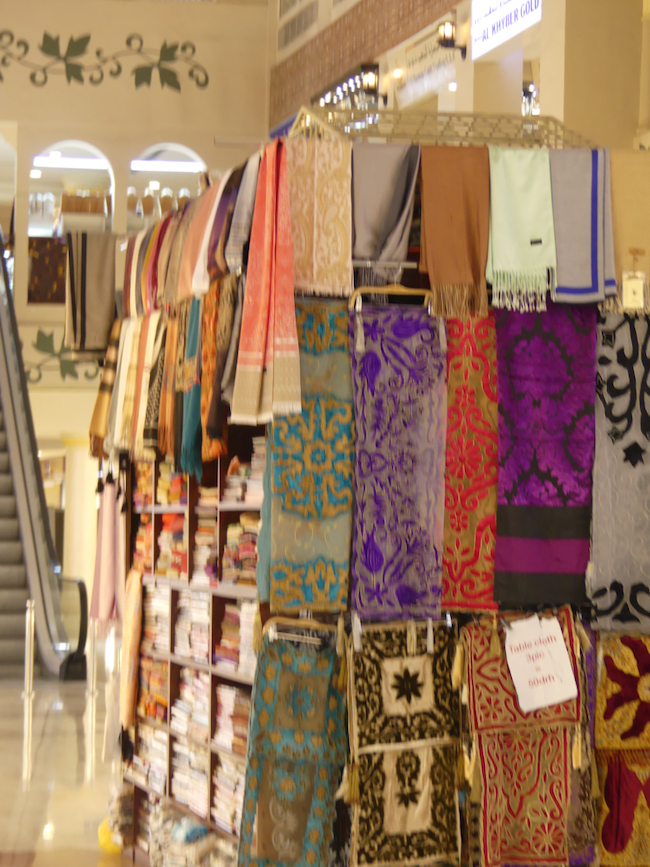
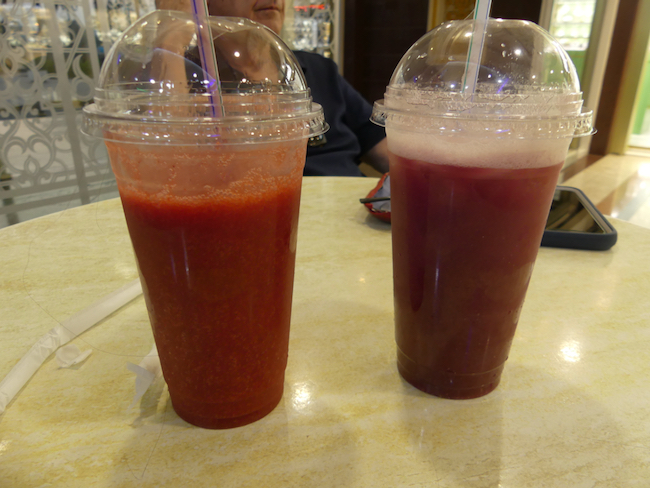
I buy nothing, except for at the end when AdventureMan and I have fresh-pressed juice; strawberry for him, and pomegranate for me. It is fresh juice, with no additives, and no sugar; there are pieces of fruit in the juice and it is delicious. These are times I really miss living in the Middle East.

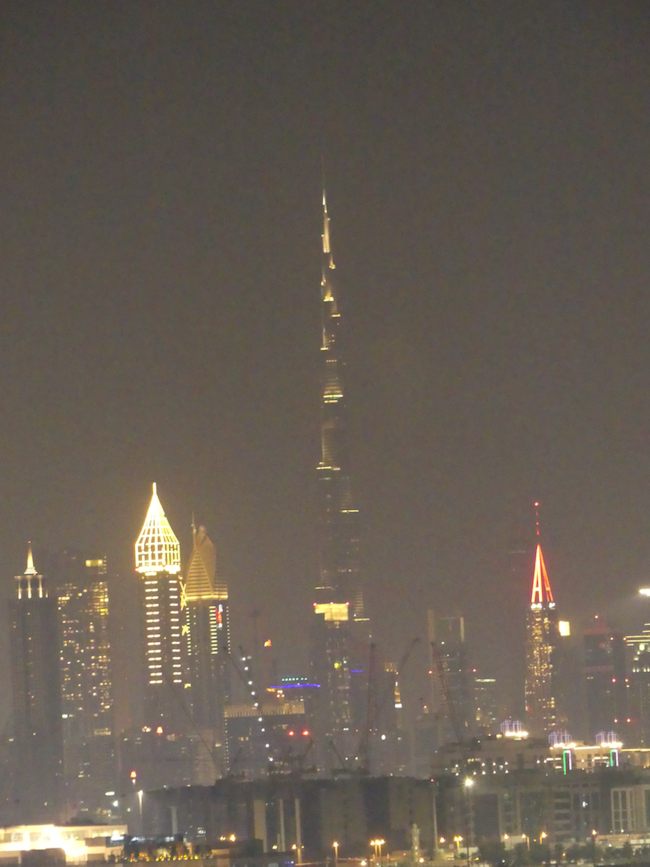
As we are leaving, the sun has just gone down and the night has gone purple. It never fails to take my breath away. I only see this color in the Middle East, and it is just when the call to prayer begins to be called. Tonight there is a crescent moon. We are looking across the river at Dubai. The lights are twinkling, the call to prayer calls to our hearts, and families are gathering on woven mats to sit on the grass of the park across from the Mall. It is an exquisite time of the day and an experience of pure joy.


“So,” I can hear you asking, “The day is over. Where is the unanticipated adventure?”
Back at Nautica, we stand in line to pick up our passports for our departure the next day. I am handed my passport. AdventureMan’s passport is not there. The crew searches relentlessly, as we watch others easily access their passports. AdventureMan’s passport does not show up. It has not been returned by UAE Security. No one knows why.
We go through a bad couple of hours. I am trying to game what we will do if the problem is not resolved. This is an unusual circumstance, but this is the Middle East.
Security tells us his passport has been flagged because he was in Dubai in 2008 and they have no record of his exit. This is entirely possible. AdventureMan traveled a lot, in and out of many countries. Perhaps someone was talking with him as he departed and neglected to mark his departure. It’s all speculation. We really don’t know.
Finally, hours later, they relent, and an hour before the boat sails, his passport is returned by UAE officials.
We dine in our cabin, as we finish our packing. We need to have clothes for sleeping, clothes for disembarkation, and clothes for flying, including something warm for our transits through Brussels and Montreal. This entire trip has been a packing challenge, trying to anticipate temperature changes and comfortably appropriate clothing, including modesty requirements. Dinner is simple but relaxing, we finish off the wine we bought in Barcelona, and we jump up now and then to refine packing, make sure we have the appropriate paperwork, etc. We are greatly relieved to have AdventureMan’s passport back and we are also a little unnerved. We are hoping there will be no further problems as we leave Abu Dhabi.
We sleep well.
Barcelona to Abu Dhabi: A High Risk Area for Piracy

Leaving Aqaba, we all received this letter along with our daily newsletter, The Current:

The Nautica actually was attacked by pirates several years ago and used both speed and a water cannon to avoid being boarded by Somali pirates. (Travel Weekly: Oceania Outruns Pirates: https://www.travelweekly.com/Cruise-Travel/Oceania-Nautica-outruns-pirates)
Suddenly, too, on the very sedate walking path overlooking the swimming pool area, we found very fit young men, running the course. They had boarded, maybe in Aqaba, and left the ship when we were no longer in the pirate area.
Meanwhile, for the duration of our time in the Red Sea and Gulf of Aden, we were under strict orders to close our curtains at sunset and to keep them closed. We were to stay off our balconies after dark. The curtains in the restaurants were closed, and night lighting was minimized. We were told that if there were any kind of challenge to the ship, we were to go into the hallway, or to where our crew told us to go to keep safe.
The issue with pirates – specifically Somali pirates – is more complex than you would think.
We were delighted to have young men on board who looked entirely capable of manning a water cannon and successly challenging any invaders.
Chasing Petroglyphs: White Mountain, Eden and the Pilot Butte Ponies
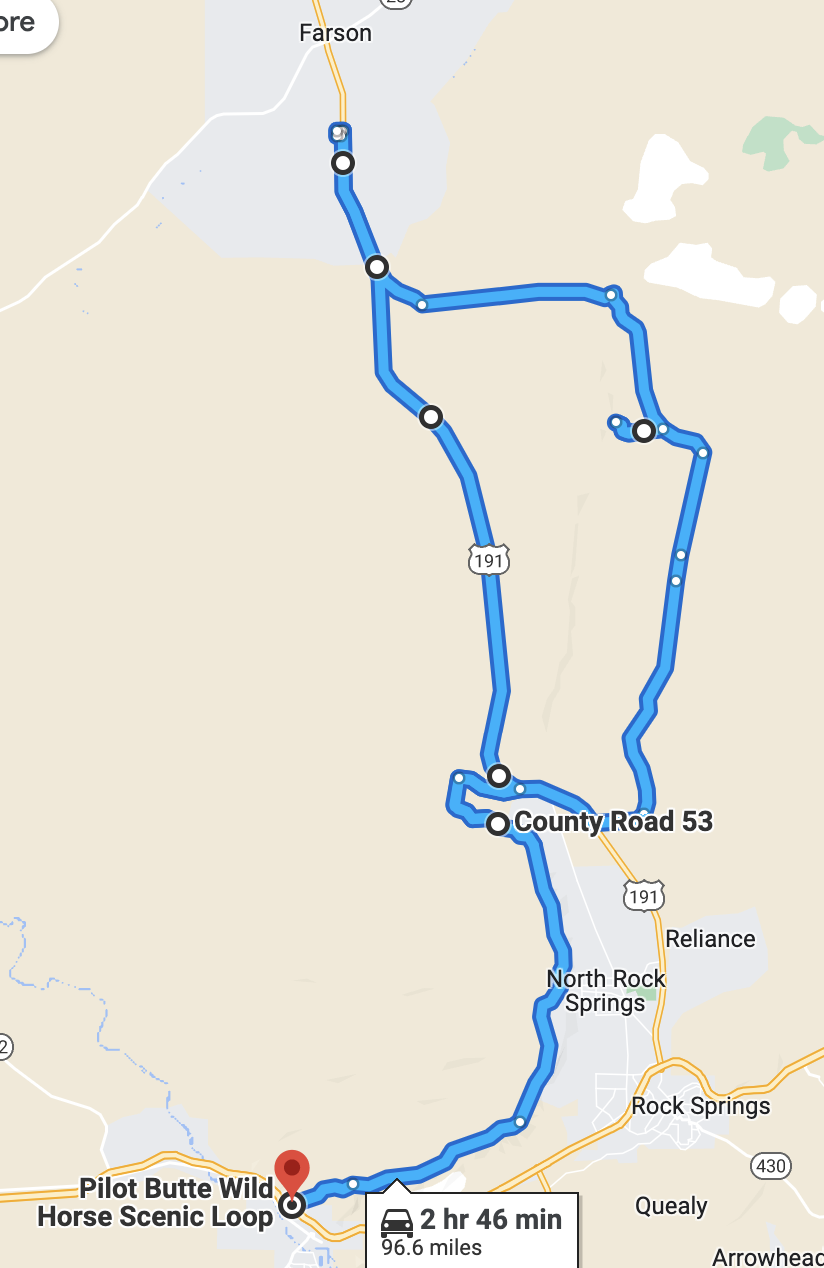
This morning, we slept in. Well, 0830 is sleeping in for us, it’s 9:30 in Pensacola and we are up and ready to hit the day. It is a quiet Sunday morning. We have a quick breakfast at the Outlaw Inn, and head out with our friend Google Maps to find White Mountain, and our first petroglyphs of the trip.
It’s an easy drive, just turn right outside the Outlaw Inn and then turn right onto a pretty good County Road. It’s a dirt road, but well maintained. Then we turn onto another county road, a road less travelled. And then Google tells us we’ve missed our exit to White Mountain. What?? There was not a sign of an exit! Not a road sign, not a track, not a visible indicator of a way. We back up. We get out. Oh. There. Faint tire marks turning off the road. AdventureMan goes further on foot to make sure the road continues.

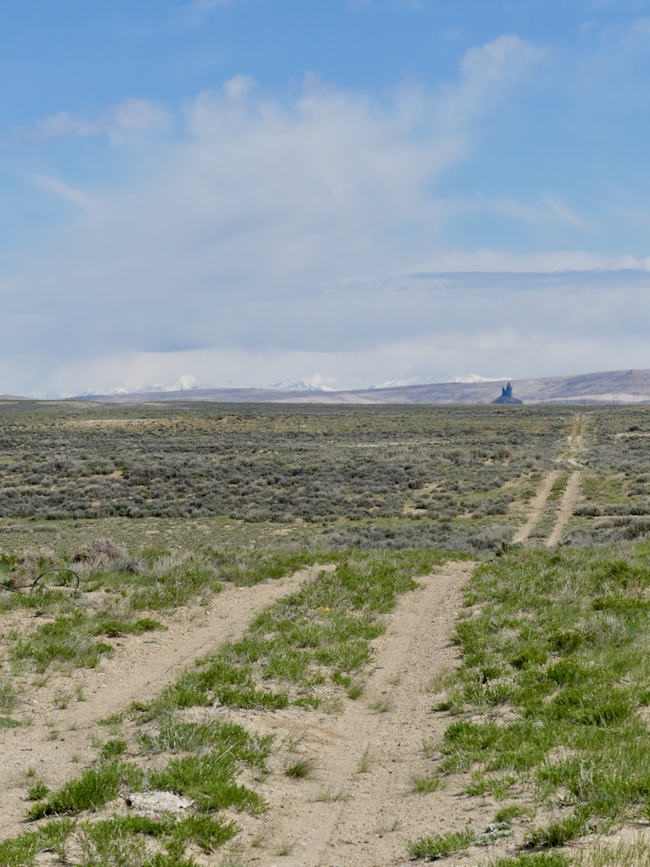
The tracks are more visible once you are actually out in the field. We have an AWD vehicle, we have experience – so we decide to continue on the track. We continue for about half a mile, and the ground is softer. We have visions of being rescued, elderly, dehydrated, because we’ve bogged down out of sight of any road . . . we turn back and decide to follow the county road.
We are so glad we do. Just a couple miles further, we see signs for White Mountain Petroglyphs, and then come to a legitimate turn-off, a marked turn-off. Part way to White Mountain we see those tracks join the road, and we are glad we are not still out there in the field, worried about getting stuck in the sand, no shovels, no cardboard, nothing to help us free ourselves.

Although remote, there is a parking lot, a long-drop toilet, and a clear trail to the base of the mountain, and a clear trail – straight up.
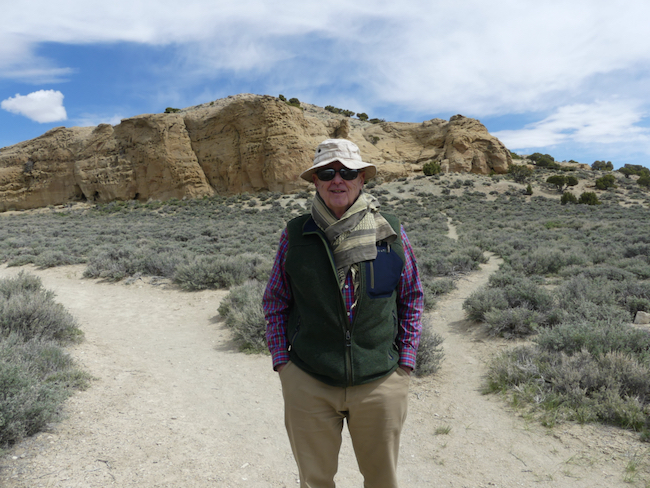
Although Rock Springs is not as high up as Denver, we are still adjusting to the altitude and the dryness of the air. It is still cold, we are glad of it, because the hike heats us up and we take it at a comfortable pace because the air is so dry and our lips and faces are chapping.
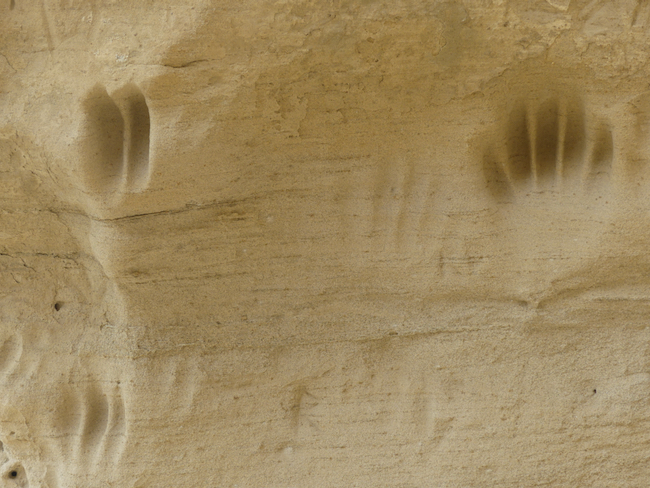
Totally worth the hike. While these are not the best-preserved petroglyphs we’ve ever seen, they are original and intriguing. There is also a lot of modern-day petrographic activity of the high school demographic.

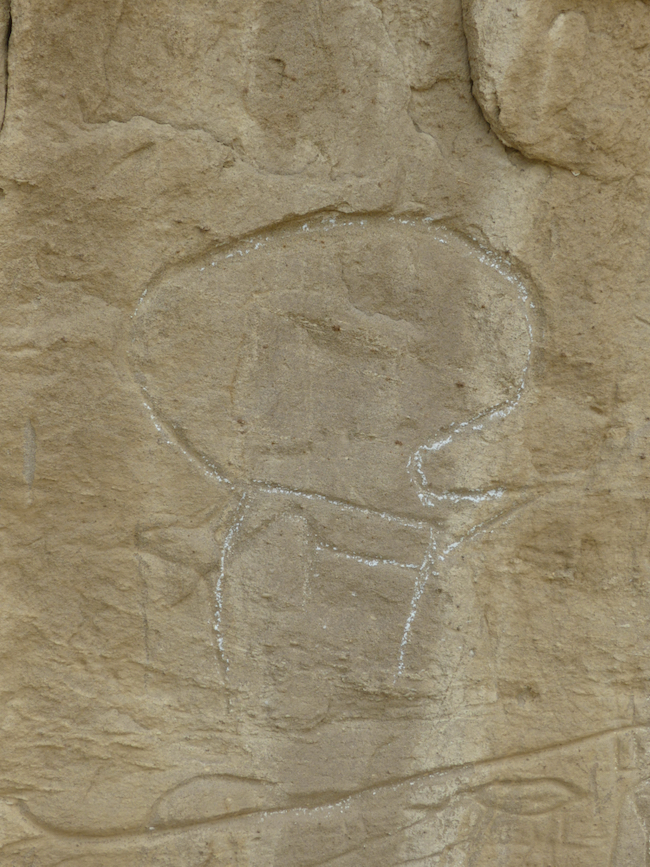
The standard rule with petroglyphs (carved into rock) and petrographs (drawn onto rock) is NO TOUCHING. No rubbing, no outlining with chalk, nothing which might degrade the incision or erode the lines. Someone has used chalk, probably a guide, to help viewers understand what they are seeing. If you know anything about petroglyphs, you know that we can speculate, we can ask modern-day First Nation people, and in the end, it is all speculation. Are they celebrating a triumphal hunt? Are they imploring the spirits to be available for the hunt? Are these incised bear claws a tribute to the bear’s strength? A brag about a bear-clan strength? We can only guess.




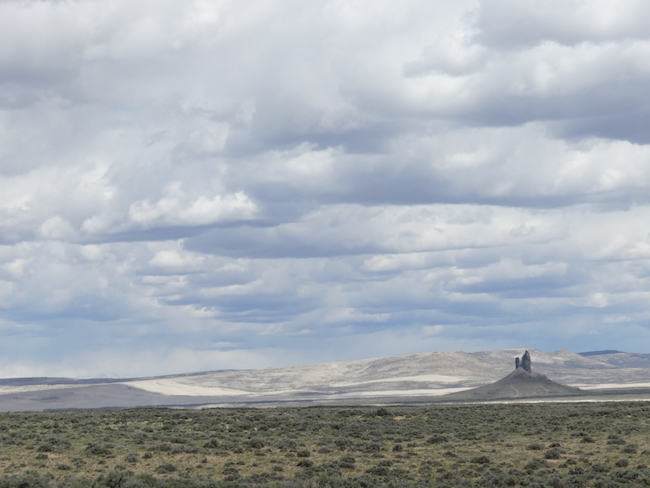
Boars Tusk is the remnant of an ancient volcano thrust 400 feed above the plain; an instantly recognizable landmark for hikers (and people looking for White Mountain.)

We are pumped. We’ve spent a couple hours traipsing around the mountain, seeking out these obscure petroglyphs, trying to decipher what they were meant to communicate. Bottom line – we don’t know, but we are exhilarated and delighted to have found this site.
The county road loops back around to the main road to Farson, and we know that just short of Farson is the Sweet Water Smoke, a barbecue restaurant we’d like to try. We are famished. Hiking and cold fresh air will do that to you!
We find Sweet Water Smoke and are delighted. It is small, and four of the five tables are taken, which leaves one for us. The entire time we were there, people were coming and going, take out orders rolling out the door, this place is humming with activity.
And no wonder! This is not ordinary barbecue! Their cole slaw is Sriracha cole slaw. They offer roasted brussel sprouts as a side, along with more traditional baked beans, macaroni and cheese, etc. I was just blown away to find roasted brussel sprouts as a side in a small Wyoming town. We remember one time traveling through Wyoming when we felt desperate for vegetables and were told to go to this “wonderful restaurant with a salad bar.” The steak was delicious. The salad bar had potato salad, cottage cheese, jello salad, and macaroni salad.
Sweet Water Smoke changes out two additional entrees every week and features a goat-cheese cheesecake with chocolate ganache. Who could resist?


There is a route we want to follow next, the Pilot Butte Road, which is supposed to be challenging, but I think they may have improved the road since we read the warnings because it was easy with our AWD. Having said that, we passed another group busy changing a tire; the road was dirt and gravel and some potholes. Not what we would consider challenging, but a road where we took care.
We were looking for the herds of wild ponies.

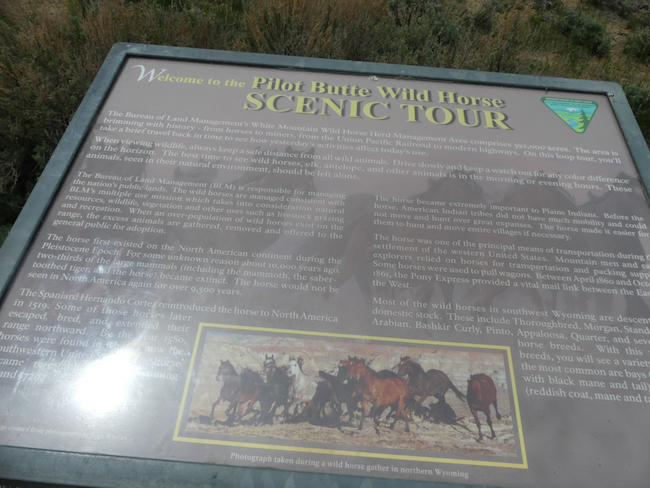


No wild horses in sight, but some mind-blowing expanses of scenery along the track. There were inescapable signs of wild horses, piles and piles of signs of wild horses, but we never saw a single wild horse.

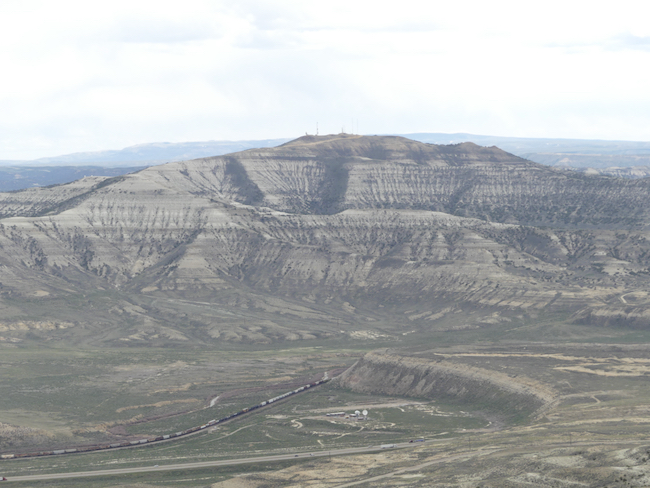
In front of us is a valley where Interstate 80, the old Lincoln Highway, runs. It is also where the Pony Express trail ran before the coast-to-coast railroad took over prompt mail delivery. It makes me sad to see that prompt delivery of mail is no longer a priority for the US Mail system. Here also ran several of the migratory trails as America moved westward. What courage and initiative it took – blasting away hills, bridging canyons and rivers, tunneling through mountains and building across swamps – feats of imagination and engineering. We are in awe of the minds that solved these problems.
Chasing Petroglyphs: Joe Pickett Guides Us Through the Red Desert, Wamsutter and the Lincoln Highway to Rock Springs, Wyoming
The sun wakes us early the next morning, streaming in our window. The temperature is 22°F and there is a light frost on the ground. All we brought in are our backpacks, so we grab a quick breakfast from our supplies and head out.


“Why would you want to go to Rock Springs, Wyoming?” asked my new brother-in-law with genuine bewilderment, at the end of our trip as we were spending time with him and my sister.
I didn’t know he had been born there, and still has family there. No, we had chosen this obscure route because of a series by C.J. Box about a game warden named Joe Pickett, a series we have both read from book one to book 22. In Off the Grid, Joe is tracking a crazy bear into the Red Desert when he finds a bunch of terrorists and naive young people putting together a magnetic pulse bomb to create havoc in the civilized western world. (Honestly, I don’t even know how to describe the plot to you, sometimes it doesn’t have to make a lot of sense, you just sort of have to roll with it.)
I had never heard of The Red Desert before, and I had driven that stretch of Highway 80, the old Lincoln Highway, several times. It was always just a place to get through, but this time we would be looking at it with different eyes.
It all started in Qaqortoq, on our Wake of the Vikings trip (just type in Wake of the Vikings in the search window of this blog if you want to more about that trip). In Qaqortoq, AdventureMan asked me what I would do if I lived there and I told him I would learn to spin wool, something I’ve always wanted to do. He said “If I had to live here, I would kill myself or drink myself to death.”
On this trip, we passed through several towns about which he felt the same. We like being remote on trips. He doesn’t like the idea of living remote.
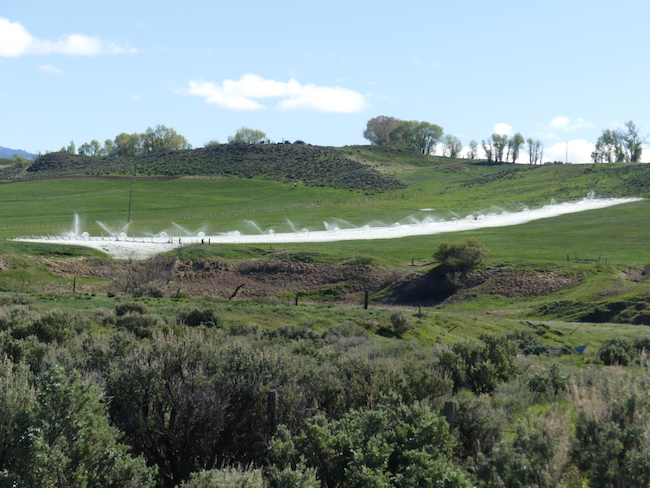
The field irrigators are on, and the spray etches patches of fairy ice onto the grass.
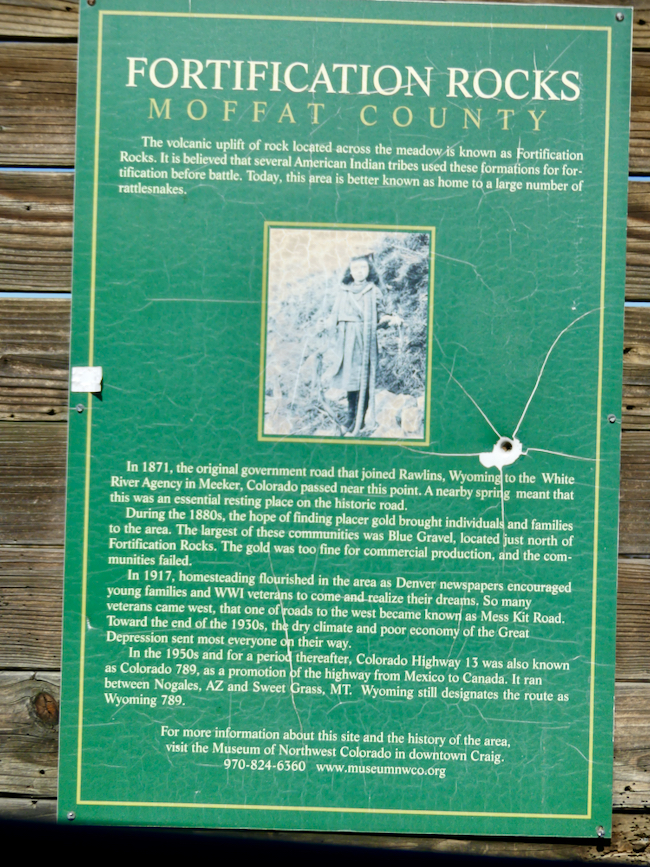
It is a beautiful day, and we stop often, just because we can. It is cold, but it is also beautiful. These rocks, we learn, are called fortification rocks, because in territorial wars people could use them to strategic advantage.


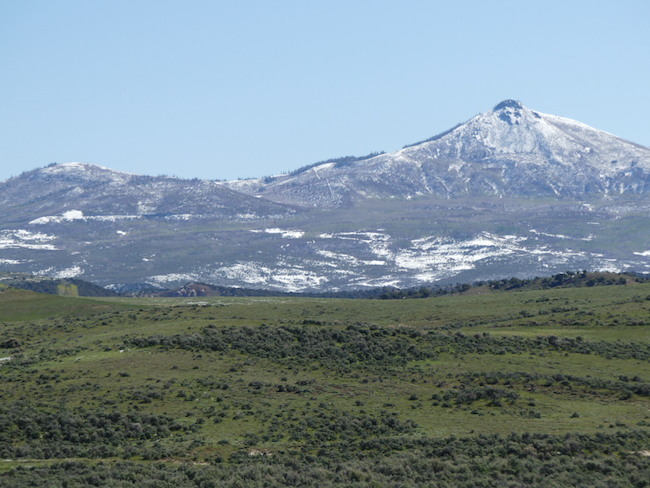
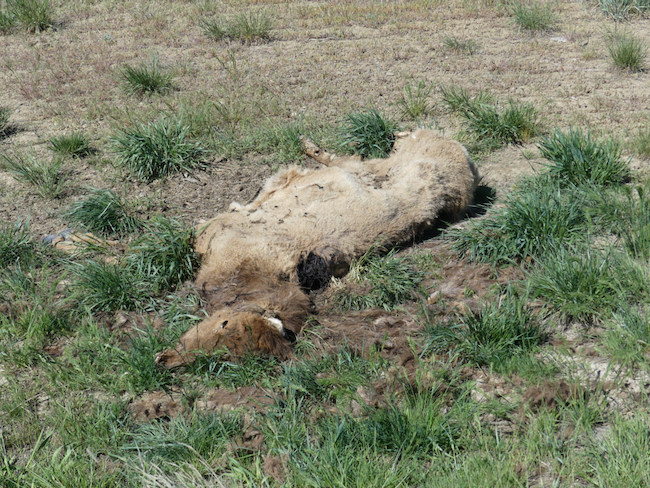
There were mountains in the distance capped with white snow. We began seeing pronghorns, and at one point, when we stopped to take a photo, I almost stepped on a dead elk, probably hit by a car. There was no smell, probably because it was still so cold.

Baggs, Wyoming, is at the border between Colorado and Wyoming and is at the southeastern tip of The Red Desert. Baggs was where AdventureMan said he would kill himself if he had to live in a town with 411 people.

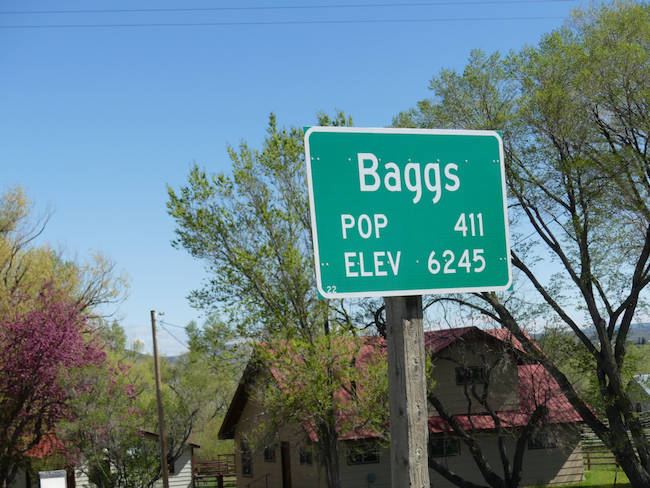
AdventureMan mentions there are routes into the Red Desert coming up, and I counter saying that they are tracks, not routes, and if we were to go in, and get into some trouble, it is very remote and we might be those tragic elderly people who foolishly thought they could survive, but couldn’t. Honestly, I would love to see the Red Desert AND I know we are not the people we once were. I think we could survive a lot, being who we are, and I also know it is not wise, at our age, to tempt the fates. I can’t really tell whether he is disappointed or relieved by my response. My best guess would be – both.
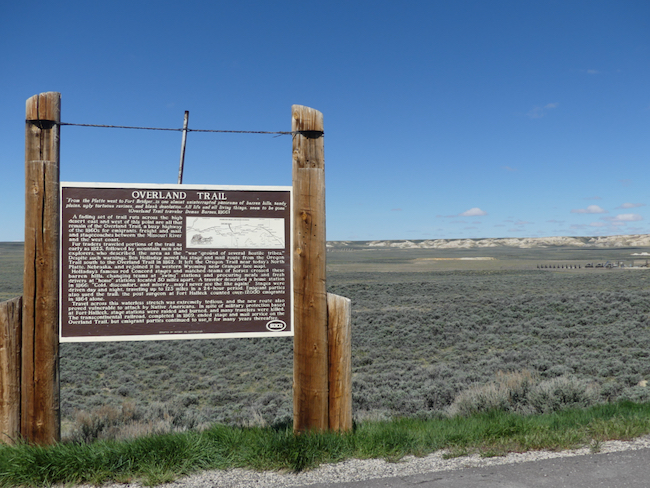

That’s the tip end of The Red Desert in the background. If you look at the Google Map of today’s journey, you will see a big empty space in the middle, a biblical “trackless waste.”
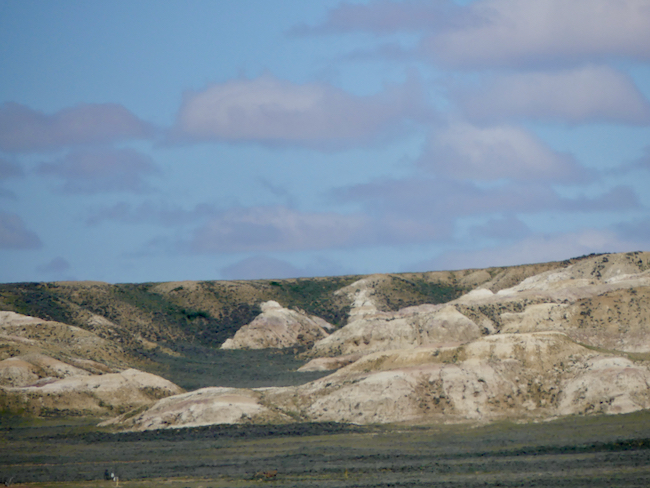

Just around lunchtime, we enter Wamsutter, a boom-and-bust town with several past lives. AdventureMan finds the Hacienda Mendez, where we have our first taste of cactus salad – it is delicious.


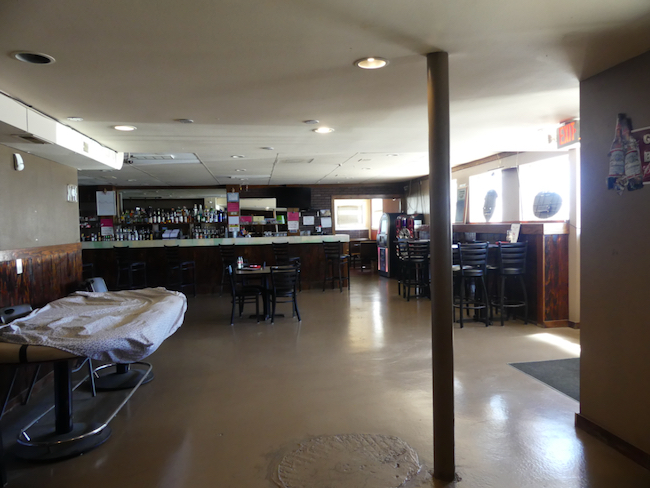
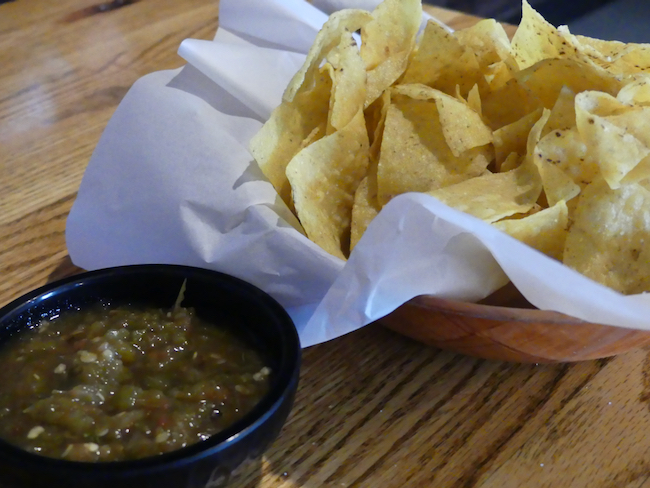
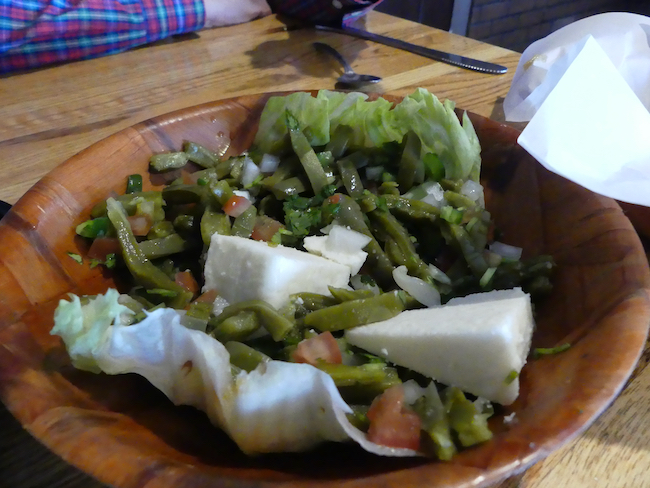


And on we go, down the Lincoln Highway toward Rock Springs, the Red Desert to our left with high tabletop plateaus guarding the tracks leading to the interior, and the Great Divide Basin to our right, along with the Killpecker Sand Dunes (Wikipedia calls them the largest living dune system in the United States. I didn’t know that – did you know that?)
We head into Rock Springs and find our home for the next couple of nights, The Outlaw Inn. I could not resist the name.

They gave us a really great room, with two bathrooms, one with a toilet and shower, one with a toilet and tub. Just pure luck.


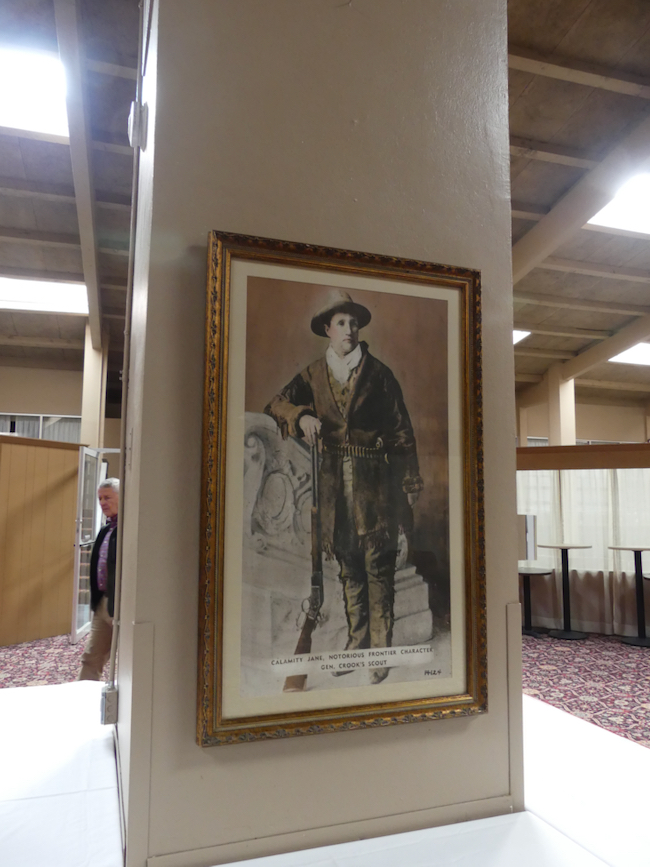
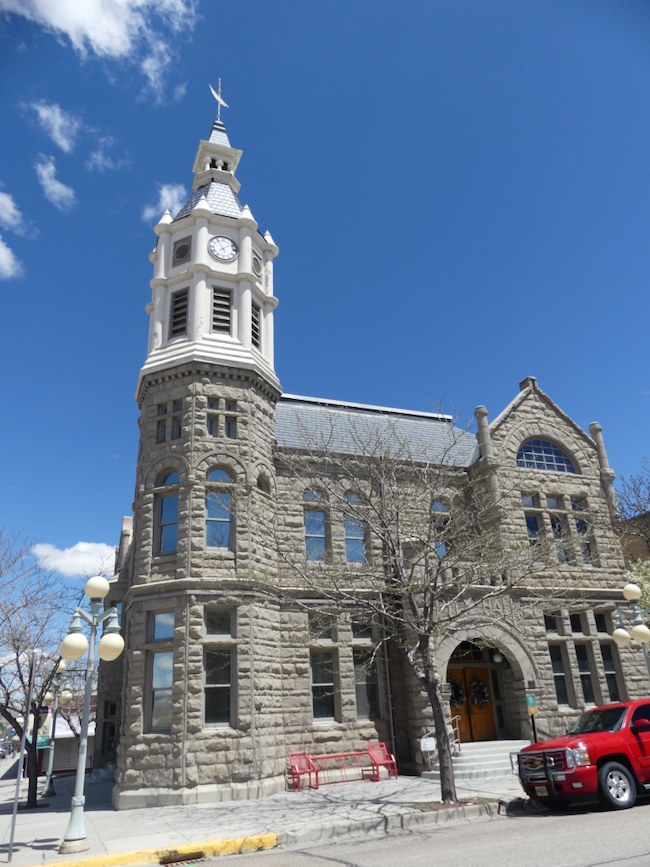
Dropping our gear, we headed out to explore Rock Springs. We wanted to find the college museum, but when we found it, nothing was open. In Joe Pickett’s world, this was where his daughter April went to university, a rodeo college. What we did find was a wonderful museum, the Rock Springs Historical Museum, and a wonderful docent who was willing to answer all our questions. This museum was wonderful. It included a full jail, and a padded cell as well as well-curated exhibits of communications, health care, etc. through the earliest history of the county.


I am eager for tomorrow, when we have a real adventure, searching for the White Mountain Petroglyphs!
Chasing Petroglyphs: A Day for Blizzards En Route to the Elk Hunting Capitol of the World
From time to time, we have a moment of reckoning. We love adventure. We always have. It is wired into our beings. And every now and then, we catch a glimpse of who we might also be, people in their seventies, “elderly” and vulnerable. We realize that today is risky. The weather forecasts are dire. Should we cancel?
We load up the car and head for Snooze, a popular breakfast stop, where I stoke my engine with an oatmeal covered with fruit, and AdventureMan has an omelette with cheese and bacon and hash browns. We stop at Trader Joe’s for an empty liquor box which serves for the rest of the trip as “The Food Box” and keeps our things from rolling around.
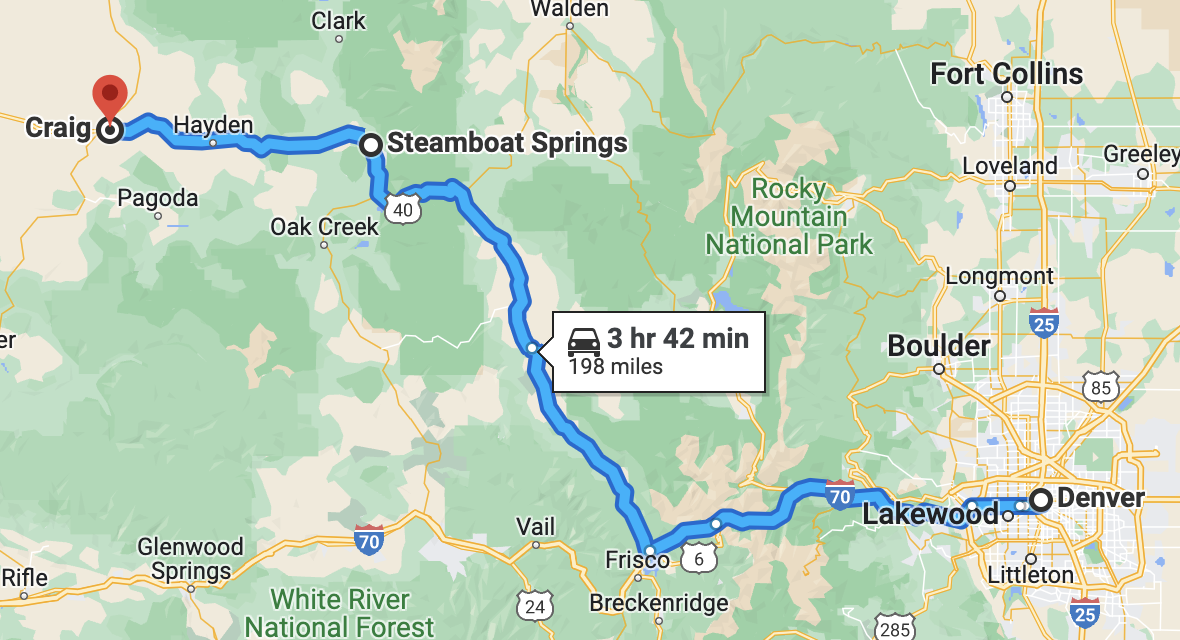
Google Maps gets us out of town, on to I-70 and we begin to see little specks of something that might be snow, but we agree that as long as the roads are clear, we are good to go. We do forego the very track-like road for an exit with a more used road, and head north, to Craig, Colorado, The Elk Hunting Capitol of the World.

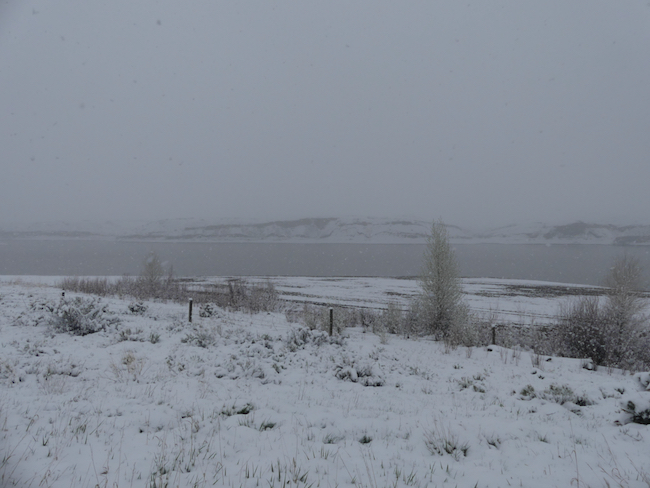

The higher we got, the colder it got, but lucky for us, it just stayed that way until we left I-70 for highway 40 going north and west through Steamboat Springs to Craig. Here, on the two-lane highway, things slowly got a little dicey. Cars coming toward us were covered with snow. The sleet had turned into a light snow, and the temperatures had now dropped down into the 20’s.
We went through several mountain passes, the snow getting heavier, and beginning to accumulate on the highway. We slowed down. Fortunately, most of the other drivers were also slowing down; you can’t always tell where the ice patches are forming just by looking. We knew we had come through the worst of it when, after the last pass (where I almost felt like I was having trouble breathing) we saw trucks pulling over and taking off their chains, a really good sign.
We were so glad to get to Steamboat Springs. Our short drive had taken four hours, crawling along with low vizibility.
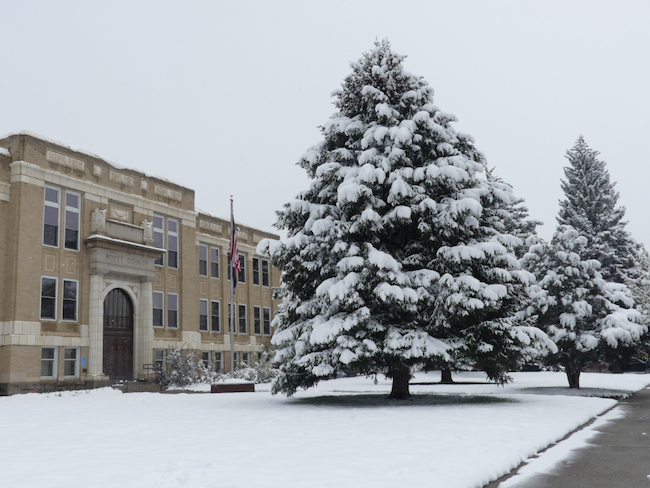
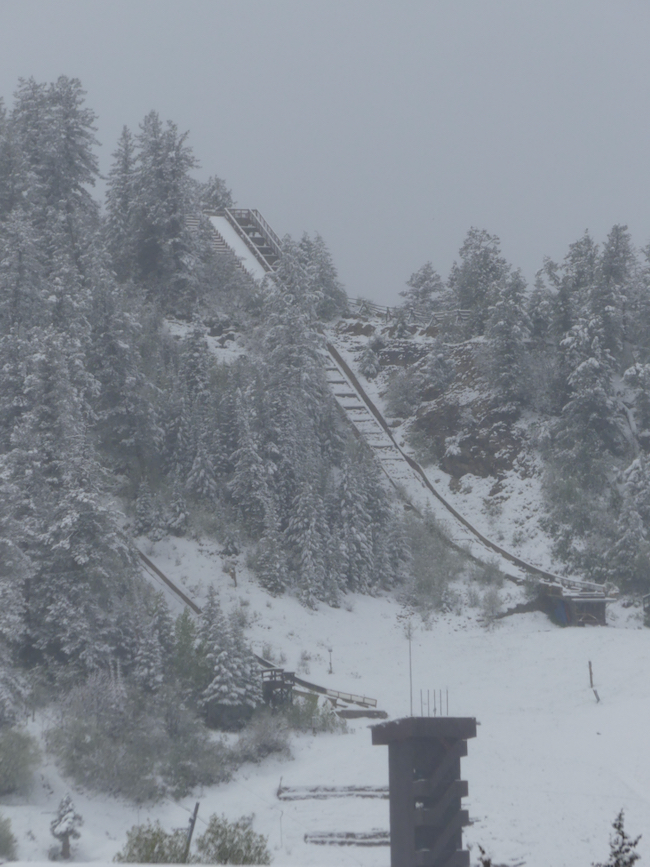

Steamboat Springs is a ski town, with high-end gift shops. This one had a full dinosaur skeleton leg for sale. I could see it in some nouveau-timber-lodge with high ceilings, but I shudder at the thought. We grab sandwiches, enjoy a walk around the town, and head off the few remaining miles to Craig. For a this leg of the drive, we even see some blue sky.

“Why are we going to Craig?” AdventureMan asked, “even though it is the ‘Elk hunting capital of the world?”
About five years ago, we made a change in our travel habits. I grew up in a family that got up early, drove hell-bent-for-leather as far as we could go, sometimes 12 or 14 hours straight, a habit my husband never loved nor developed. Finally, I figured out there were other options, and we decided on “shorter days and longer stays.” Now, we are much happier travelers, and our adventures have fewer cross moments.
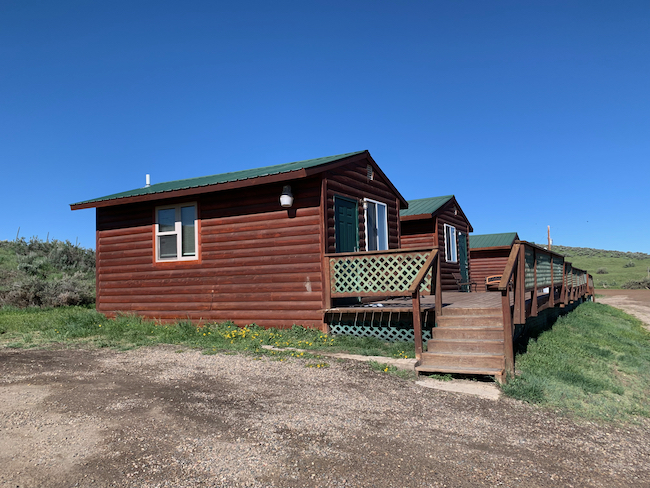
“Craig is about halfway to Rock Springs,” I responded. “I knew we could drive the whole distance in one day but it would kill us. So I broke the day up, and Craig had these interesting cabins, Wild Skies Cabins. I’m interested to see what they are like.”
I often take a chance on something a little out of our lane, just to see how it works out. Then, I worry that it isn’t going to be a good thing. We found the cabins, and just as we started to unload our bags, we were hit with a furious flurry of snow.

The cabin was simple, and warm. We bundled the minimum necessary inside and AdventureMan just grinned. It’s just what we like. It isn’t large, but it is cozy, it has wood carved furniture, wood-paneled walls, a refrigerator, a microwave, and wi-fi. He loved that the comforters and sheets had fish and bear and canoes; he says it reminds him of boy scout camp. It is not fancy, but it is very private. From our deck we can see a herd of pronghorn deer settling in for the night. By the way, not a single elk in sight.

Don’t you love those sheets and comforters? The sheets are flannel! AND, we have some of the best Chinese food, still chilled and plentiful, to warm in the microwave, so we don’t even have to go out into the snow.
It’s always exhilarating to survive an adventure 🙂
Chasing Petroglyphs: Outfitting and Play in Denver
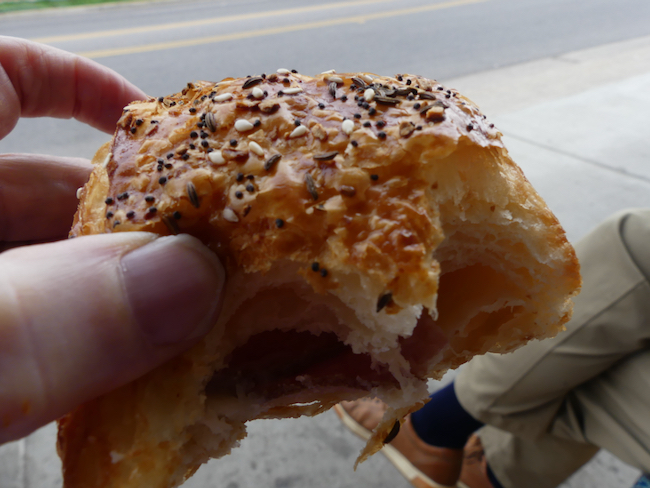
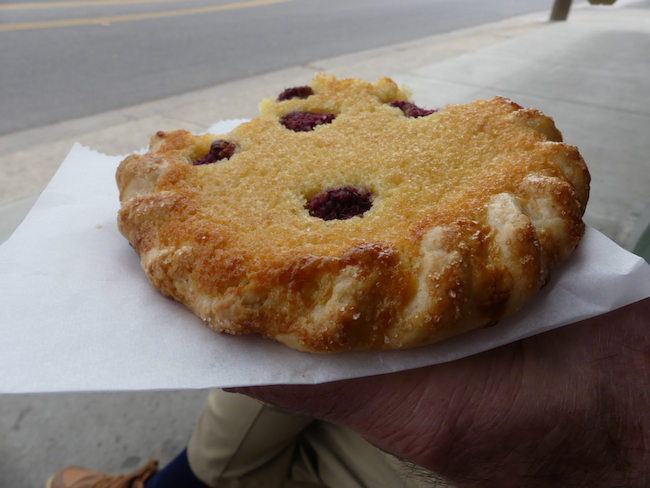
Even sleeping in, we are up early, due to the one hour difference in our body time from Denver time. We need a little breakfast, and head over to La Fillette for coffee and breakfast rolls.


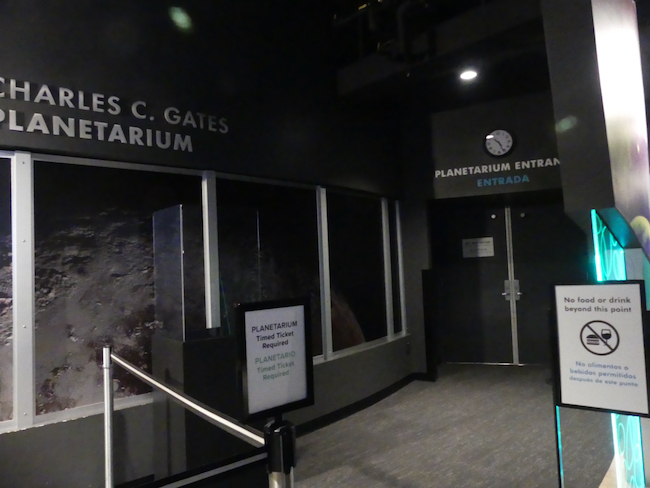
Next stop, the Denver Museum of Nature and Science, one of our favorite places in Denver. AdventureMan wanted to see the visiting Egypt exhibit (and said it was a total WOW) and I wanted to visit the nature exhibits and see the visit to the Solar System, so we split up with an agreement to meet up for lunch.

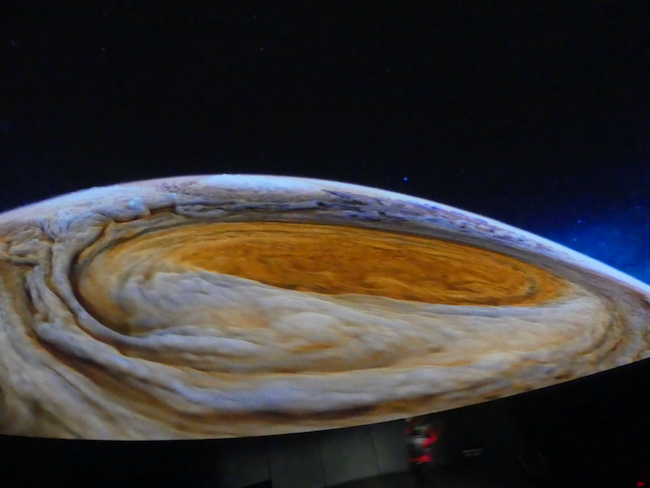


There are several school groups in the museum, which I suppose I could count as Colorado Wildlife, but they were all so good, and I love to see children enjoying museums.

AdventureMan has had a spiritual adventure, viewing the Egypt exhibit, so he is ready to indulge me – I want to drive back downtown to the Union Station area and have Chinese noodles.
I grew up eating good Chinese food, in Seattle. When we were moving to Pensacola, our son sat us down and told us he had some bad news for us – there is no good Chinese restaurant in Pensacola. Nor in New Orleans. I am guessing that the deep south is not ready for the exotic tastes of real Chinese food.
But Denver is another story. We find our way downtown, and search the Union Square area, where a concierge tells us how to find it – just next door to Union Station.
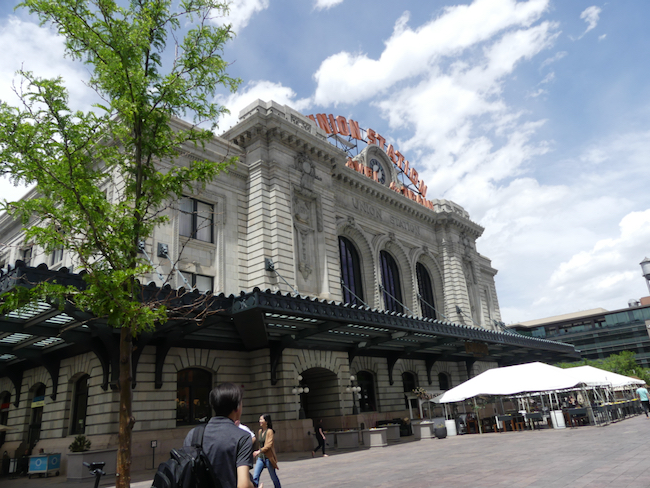
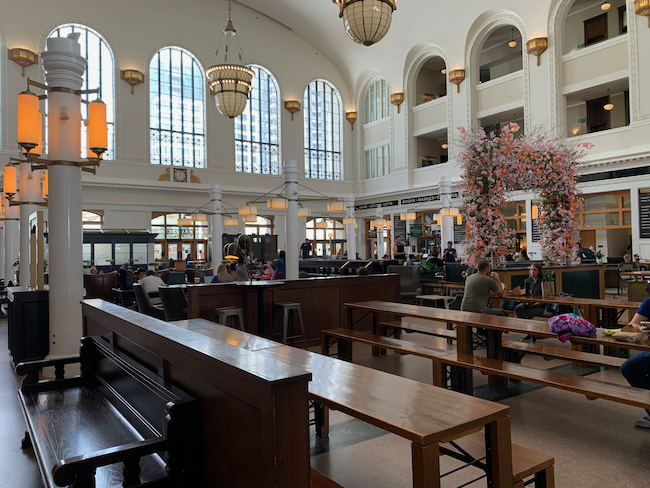

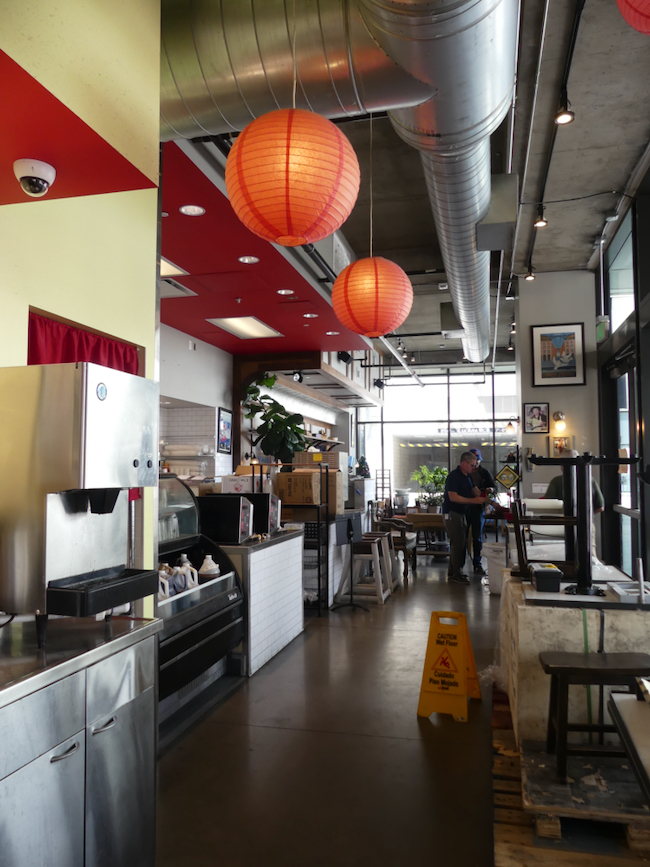


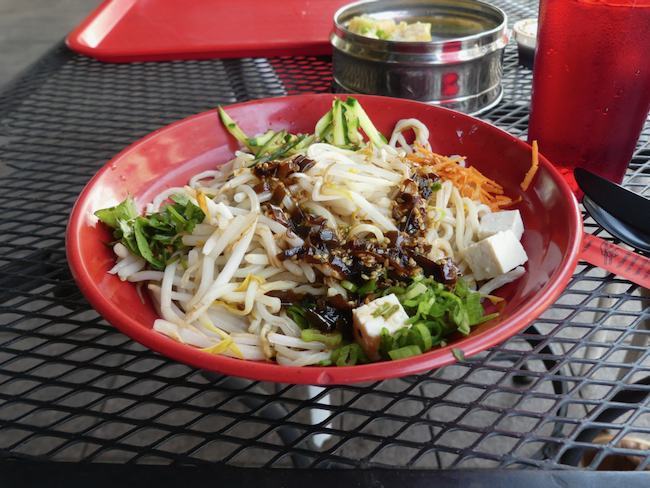
This is living! The noodles are house-made, the tastes are fresh and delicious. My noodles are cooked, but cold, perfect on a hot summer’s day. We eat outside, because although it is hot, it is so dry we can manage the heat and we like eating outdoors. AdventureMan strikes up a conversation with another vet, a security guard, making sure the homeless do not intrude on the meals of the customers.
We find our way back to the parking lot, which is really expensive, and it takes us so long to figure out how to get out that our charge goes up again.
We are off to outfit for our trip – hitting our favorite Denver Target, we pick up our car staples – water, apples, oranges, crackers, peanut butter, and AdventureMan’s specialty, two kinds of snacks, a box of thick, chewy brownie bits and another box of lemony madeleines. He chose well; having only one or two a day, they lasted right up to the last day. We also invested in insect repellent and sun screen, which we never used. Our clerk mentioned the incoming blizzard.
Blizzard? We hadn’t heard of it. We headed back to the VRBO and our hosts were busy moving pots and pots, concerned that their lushly blooming garden will take a bad hit from freezing temperatures and snow and hail, the alder branches can break from the weight of the snow, all the blooms will freeze, and who knows what will survive?
We sort, we repack, and we take a nap. We have a great conversation with our hostess and say goodbye in advance; we have decided to leave early the next morning hoping to escape the worst of the storm. That night AdventureMan indulges me for a second time – this time we go to Q’s House on Colfax, get an outside table and oh-my the menu is short but fabulous. I have the Chong Qing Chicken and AdventureMan has Duck Lo Mein. We both have way too much, no matter how delicious it is. We decide to take a chance – we have a refrigerator and tomorrow should be really cold – so we pack it up and take it with us.
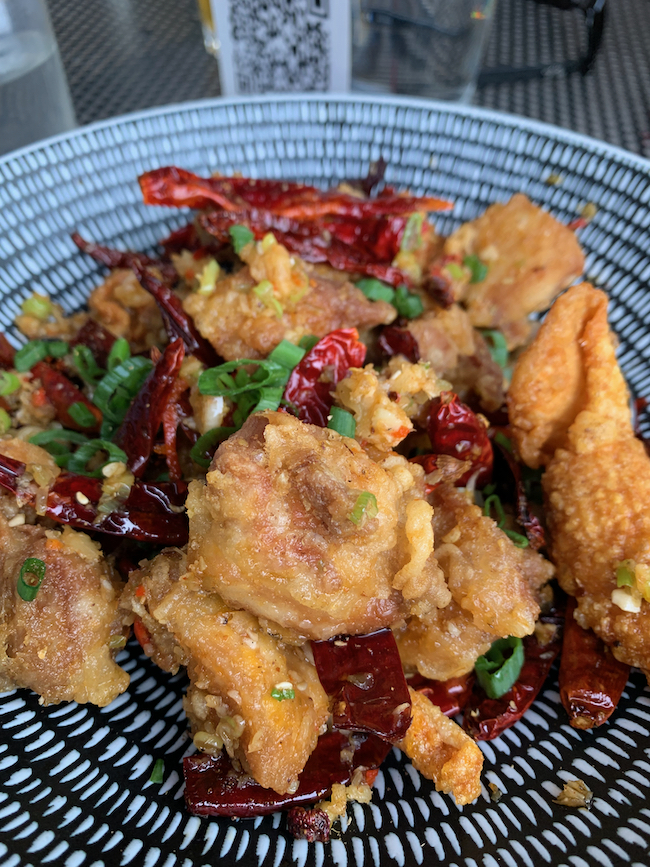

A perfect ending to an excellent first day.
I Stand Corrected
Today is the coldest day we have had in Pensacola this winter. As we headed out for early church, the temperature was 30 degrees F., there was frost on our roof and the bird bath had a skin of ice on it. “A good day not to exercise,” I said to myself. After church, I spent a couple hours prepping for dinner and making up my oatmeal mix for a couple weeks to come, as I am running low. (Separate blog entry 🙂 )
I’m an early person. If I am going to get it done, I need to get it done early in the day. By five at night, when I need to be thinking about dinner, I just don’t care. I know, I know, I am a bad woman to admit to such a thing, but trust me, I am legion. I’ve learned to think about dinner early in the day, and to prep.
But it’s Sunday, and it’s cold (yes, yes, I am rationalizing) and I swam three days last week and I have all my prep done so I make an executive decision to give myself a break today. And no sooner had I given myself permission to sit myself down than AccuWeather alerted me to an article about the importance of exercising in cold weather, which I will share with you now:
What you need to know about ‘brown fat’ and exercising in the cold
By Amanda Schmidt, AccuWeather staff writer & Kevin Byrne, AccuWeather staff writer Copied
AccuWeather’s Dexter Henry talked to a veteran fitness instructor and the creator of Fit N’ Play Mama about ways you can stay active this holiday season.
The shift to colder, winter weather often makes us feel lethargic and deters our motivation to go outside.
But before you pull over the blankets or curl up by the fire to watch your favorite show, you should consider the potential benefits of cold-weather workouts.
Aside from helping to ease fears of potential winter weight gain, exercising outdoors in colder weather has numerous health benefits.

New York City native Alec Barab gets in a morning run in the snow on 12th Ave. in Denver’s historic district on Tuesday, April 16, 2013. (AP Photo/Ed Andrieski)
While many avoid the cold, outdoor winter workouts are a great way to take in small doses of sunlight. The sunlight can help to improve mood and help with vitamin D intake, according to the American Heart Association (AHA).
Winter exercise boosts immunity during cold and flu season. A few minutes a day can help prevent simple bacterial and viral infections, according to the Centers for Disease Control and Prevention (CDC).
Shivering, a mechanism to produce heat, also burns a significant amount of calories. Studies have shown that people expend five times more energy when shivering, compared to when they are resting.
CLICK HERE FOR THE FREE ACCUWEATHER APP
Regardless of exercise, studies have shown that being outside in cold weather can transform white fat, specifically belly and thigh fat, into calorie-burning beige or brown fat.
Brown fat’s purpose is to burn calories to generate heat. Brown fat is often referred to as the “good” fat because it helps to burn rather than store calories. It is typically found in areas around the neck and kidneys.
AccuWeather National Weather Reporter Dexter Henry recently sat down with Nataliya Galifianakis, a clinical assistant professor of biology at New York University to learn more about how brown fat is beneficial during the winter.

NYU Clinical Assistant Professor Nataliya Galifianakis explains the effects of exercising in cold weather and how that generates brown fat in the human body. (AccuWeather)
“Brown fat can actually create heat,” Galifianakis told Henry. “Brown fat cells instead of using calories to make energy, it uses calories to produce heat.”
One of the signals for the activation of brown fat is exercise, Galifianakis said.
In addition to making new brown fat because a human body exercises, the generation of brown fat is also increased because someone is exercising in the cold weather, she explained.
“Brown fat could be activated by cold,” Galifianakis said. “Chronic cold exposure activates your brown fat cells.”
A 2014 study, published in the Journal of Clinical Endocrinology and Metabolism, showed people have more genetic markers for brown fat in the winter than during the warmer months. This could signal slightly more calorie burn in the winter as the body insulates itself.
“Browning fat tissue would be an excellent defense against obesity. It would result in the body burning extra calories rather than converting them into additional fat tissue,” study author Dr. Philip A. Kern said in a release.

People run in the snow across the Williamsburg Bridge, Saturday, Jan. 7, 2017, in New York. (AP Photo/Mary Altaffer)
While the cold weather may deter some from outdoor physical activity, working out in the cold has several advantages over warmer weather workouts.
There is no heat and humidity to deal with in colder weather. Winter’s chill might even make you feel awake and invigorated, according to the AHA.
In the cold, your body can regulate its temperature a little better. This means you can often exercise farther or longer; therefore, you can potentially burn even more calories, according to AHA.
Exercising in extreme temperatures, hot or cold, has shown the ability to enhance endurance and mental edge. However, it is important to be aware of the potential risks and proper safety precautions before venturing out.
+++++++++++++++
So me again. I stand corrected. I know I need to go out for a swift walk, and shiver in the cold, burn that brown fat! And here I sit, in my toasty warm house, watching Fareed Zacharia and chatting with you . . . . Most days I exercise early, and it actually gives me more energy; I accomplish more during the day when I exercise early. If I miss that first-thing-in-the-morning slot, it’s a lot harder to get to it later. I’m thinking about it.
Recent Comments
ExpatAlien on What Country am I Living … intlxpatr on Yellowstone: Old Faithful to C… Michelle on Yellowstone: Old Faithful to C… Cathy on No Grown-Ups in Charge intlxpatr on Waiting for Snow Wikipedia Donate Button

Amazina


Early Voting in Florida


 Here There and Everywhere