Florida Man Shot in Case of Mistaken Identity
U.S. News
Suspect denied bond in I-4 shooting death in Florida
-
Published: July 2, 2013 at 9:32 PM
TAMPA, Fla., July 2 (UPI) — The suspect in the Interstate 4 shooting death in Florida was denied bail Tuesday and authorities now say it’s a case of mistaken identity, not road rage.
Jerome Edward Hayes will have another bail hearing next week, WFTS-TV, Tampa, reported.
Hayes is charged with first-degree murder in the slaying of Fred Turner, 47, Saturday. He turned himself in Monday.
His attorney described Hayes as a “soft-spoken, nice guy.”
“You take a look at him, you talk to him, he does not seem like the kind of person that could possibly commit this kind of crime,” Nick Matassini Jr. said.
The TV station said police have obtained the gun and car involved in the shooting. Investigators say Turner was in the wrong place at the wrong time.
“The victim was mistaken for an individual who was involved in an altercation with the suspect’s friend inside the Gold Club,” Col. Donna Lusczynski said.
Hayes and a friend allegedly were in a fight at the strip club and waited outside for their opponent. But they mistakenly followed the wrong person, who had been in an adjacent business.
“Mr. Turner was followed from the location by the suspect to the interstate, where he was shot several times,” Lusczynski said.
Turner was on the phone with a 911 operator, telling the dispatcher he was being followed and had not done anything to precipitate a confrontation when he was shot, she said.
Arabs wary of expressing their opinions online
Fascinating study results published in Qatar’s Gulf Times:

Northwestern University in Qatar has released new findings from an eight-nation survey indicating many people in the Arab world do not feel safe expressing political opinions online despite sweeping changes in the aftermath of the Arab Spring.
From over 10,000 people surveyed in Lebanon, Tunisia, Egypt, Saudi Arabia, Bahrain, Qatar, Jordan and the UAE, 44% expressed some doubt as to whether people should be free to criticise governments or powerful institutions online.
Over a third of Internet users surveyed said they worry about governments checking what they do online.
According to the report, “The implied concern (of governments checking what they do online) is fairly consistent in almost all countries covered, but more acute in Saudi Arabia, where the majority (53%) of those surveyed expressed this concern.”
The study – titled ‘Media Use in the Middle East – An Eight-Nation Survey’ – was undertaken by researchers at NU-Q to better understand how people in the region use the Internet and other media. It comes as the university moves towards a more formalised research agenda and is the first in what will be a series of reports relating to Internet use.
The survey includes a specific chapter on Qatar, the only country where those surveyed regarded the Internet as a more important source of news than television. “We took an especially close look at media use in the State of Qatar – a country with one of the highest Internet penetration rates in the Arab world—and internationally,” said NU-Q dean and CEO Everette Dennis.
These findings follow a preliminary report NU-Q released last April that showed web users in the Middle East support the freedom to express opinions online, but they also believe the Internet should be more tightly regulated. “While this may seem a puzzling paradox, it has not been uncommon for people the world over to support freedom in the abstract but less so in practice,” Dennis explained.
Among other findings, the research shows: 45% of people think public officials will care more about what they think and 48% believe they can have more influence by using the Internet.
Adults in Lebanon (75%) and Tunisia (63%) are the most pessimistic about the direction of their countries and feel they are on the ‘wrong track.’
Respondents were far more likely to agree (61%) than disagree (14%) that the quality of news reporting in the Arab world has improved in the past two years, however less than half think overall that the news sources in their countries are credible.
Online transactions are rare in the Middle East, with only 35% purchasing items online and only 16% investing online.
The complete set of results from the survey is available online at menamediasurvey.northwestern.edu. The new interactive pages hosting the survey on the website have features that allow users to make comparisons between different countries, as well as between different demographics within each country.
Dennis confirmed that the research report is the first in an annual series of reports produced in collaboration with the World Internet Project; one of the world’s most extensive studies on the Internet, in which NU-Q is a participating institution.
NU-Q and WIP signed an agreement earlier in the year, providing a global platform for the current research.
Three Little Kittens

This morning, driving to the commissary, about ten feet apart on the highway, I saw the smooshed bodies of three little kittens. They must have been about five or six weeks old. I felt sick; I still do. What kind of animal would throw little kittens out the window of a car to let them die in terror on a busy highway? Who raises these people who could act with such cruelty?
I am a believer; I believe God put each one of us here for a purpose. I think we often misunderstand some of God’s intentions; I think sometimes we get it very wrong. I fantasize that maybe these little cats and dogs we adopt are really our guardian angels, who will speak up for us on the last days and tell the Lord Jesus how we treated his little ones. Imagine the punishment for hurting a helpless animal! Imagine the penalty for hurting an innocent, defenseless child!
Anesthesia Linked to Dementia Risk in Seniors
It may not be dementia. It may be a reaction to a medication in the elderly that LOOKS like dementia.
My father was 87, and doing pretty well for a man 87. He still walked on his own, using a walker when he had to, and very rarely, a wheelchair if we were going a long ways. He went into the hospital for a minor surgery. The tube inserted in his hand for the anesthetic became infected. Dad was acting weird, he was having hallucinations, and my sister rightly identified that Dad had a reaction to the diuretic drug Lasix; when they switched him to an alternative, the raving and hallucinations stopped.
He was transferred to a rehabilitation unit, where for two days, they put him back on Lasix. Poor communication between hospital and the rehab facility, plus standardization of drug regimens – they switched him without telling him, or us. Once again, he went loony tunes, and at the same time, his right hand began to swell until it looked like a lobster claw. He kept saying it hurt, and it was big and red, and the rehab people kept saying it would get better.
Dad was rushed to another hospital, one the rehab clinic worked with, and the doctors told us he had a ‘cascade of problems’ and which were the primary three we wanted them to work with?
Get him off the Lasix, first thing, we all agreed, and find a way to have it annotated on any record that he is never to have Lasix. (It did no good; the next hospitalization, back at the first hospital, they gave him Lasix again, which made him crazy and masked all the other symptoms.)
Long story short, there were a cascade of hospital mistakes – not one hospital, two hospitals and the rehab clinic – where miscommunications, inattentions and shortage of trained personnel resulted in a cascade of issues that led to my father’s death later that year. The other lesson learned is that if you go into a hospital, make sure you have a good support system, someone with you who will bravely ask questions, and remind someone if an inappropriate medication is prescribed. You need a family member with you for protection against inattention, mistakes, miscommunications and personnel shortages.
It’s not like there’s anyone to bring a lawsuit against; they were all doing the best they could, but Dad was old. My bet is that he might have lived another couple years, at the very least, had he not gone in for that first non-essential minor surgery. To me, the moral of the story is if you want to live a long life, stay away from hospitals.

Anesthesia Linked to Increased Dementia Risk in Seniors
Exposure to anesthesia has been linked to a 35 percent increase of dementia in patients over age 65, according to a new study.
By Jeffrey Kopman, Everyday Health Staff Writer
FRIDAY, May 31, 2013 — Caregivers and seniors struggling with the dilemmas of elder care have another risk to weigh against potential rewards — senior patients exposed to general anesthesia face an increased risk of dementia, according to research presented at Euroanaesthesia, the annual congress of the European Society of Anaesthesiology (ESA).
Researchers reviewed the medical information of 9,294 French patients over the age of 65. The patients were interviewed several times over a ten year period to determine their cognitive status.
After two years, 33 percent of participants had been exposed to anesthesia. Most of the exposed patients (19 percent overall) were exposed to general anesthesia — a medically induced coma. The rest were exposed to local/locoregional — any technique to relieve pain in the body — anesthesia.
In total, 632 participants developed dementia eight years after the study began. A majority of these patients, 512, were diagnosed with probable or possible Alzheimer’s disease. The remainder had non-Alzheimer’s dementia.
The gap between dementia related to general anesthesia (22 percent) and non-dementia patients (19 percent) was associated with a 35 percent increased risk of developing dementia. This risk was linked to at least one general anesthesia.
“Elderly patients are at an increased risk for complications following anesthesia and surgery,” said Jeffrey H. Silverstein, MD, MS, and vice chair for research at the Department of Anesthesiology at Mount Sinai in New York City. “[They] are particularly prone to postoperative delirium, which is a loss of orientation and attention. Anesthesiologists have been evaluating higher cognitive functions (for example, memory and executive processing) and found that a substantial number have decreases in one or more of these areas after a surgical procedure.”
Researchers hope this study will lead to more awareness for surgeons.
“Recognition of postoperative cognitive dysfunction (POCD) is essential in the perioperative management of elderly patients,” said study author Dr. Francois Sztark, INSERM and University of Bordeaux, France, in a press release. “A long-term follow-up of these patients should be planned.”
Elderly Care: Risk vs. Reward
Senior citizens and their caregivers might be willing to accept an increased risk of dementia if it means getting necessary anesthesia for an important medical procedure. Dementia is a relatively common occurrence in old age: One in three seniors has Alzheimer’s disease or dementia by the time of their death.
But surgery at old age can also carry more severe, and less common, health risks. In fact, simply surviving surgery can be difficult for elderly patients, especially those over the age of 80.
While the numbers vary depending on procedure, researchers have found that mortality risk tied to elective major surgeries increases with age. The risk more than doubles for patients over 80 compared to patients ages 65 to 69.
But other surgery complications are even more common in seniors.
“The major risk for elderly patients following surgery is pneumonia,” said Dr. Silverstein. “Cardiac complications are next most common.”
However, Dr. Silverstein still feels that if surgery is deemed necessary, patients should not fear the risks.
“In theory, only necessary surgery is done,” he said. “Knowing how [patients] reacted to anesthesia and surgery in the past may give them some idea of their postoperative course.”
Last Updated: 05/31/2013
Baby Wants . . .
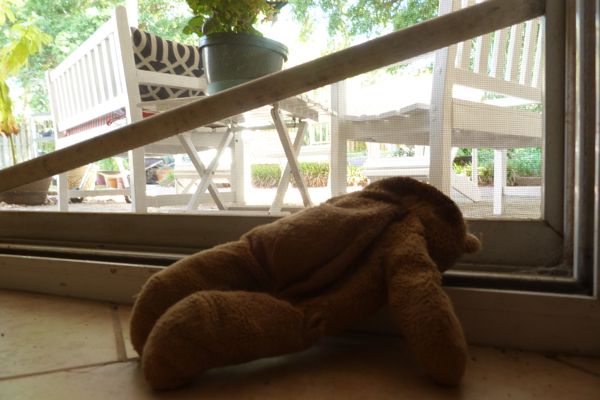
You’ve seen photos of Baby in the food dish, and Baby by the garage door. I opened the door into summer for the Qatari Cat, just the door, and propped the screen door tightly shut so QC could watch the birds and squirrels from the safety of the house.
In Qatar, when he was young and strong, he actually knocked a screen off and escaped. When we replaced the screen, he scratched a long rent in the screening and escaped again. He had a tree he would run for, and once on the wall – he was king of the roost. Only cheese or sardines would get him back again, and it could take hours just to find him before we could tempt and capture him.
Now, he is more content to be an indoor cat. At least, content most of the time. There are times he leaves a message telling us he still yearns to chase a squirrel or two . . .
Monster Quake Predicted for US Pacific Northwest
You can read this entire threatening report of a recent study done by earthquake experts at Weather Underground News:
Northwest Earthquake: Experts Say Get Ready

By: Lauren Gambino
Published: March 15, 2013
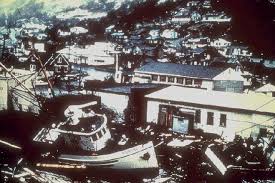
SALEM, Ore. — More than 10,000 people could die when – not if – a monster earthquake and tsunami occur just off the Pacific Northwest coast, researchers told Oregon legislators Thursday.
Coastal towns would be inundated. Schools, buildings and bridges would collapse, and economic damage could hit $32 billion.
These findings were published in a chilling new report by the Oregon Seismic Safety Policy Advisory Commission, a group of more than 150 volunteer experts.
In 2011, the Legislature authorized the study of what would happen if a quake and tsunami such as the one that devastated Japan hit the Pacific Northwest.
The Cascadia Subduction Zone, just off the regional coastline, produced a mega-quake in the year 1700. Seismic experts say another monster quake and tsunami are overdue.
“This earthquake will hit us again,” Kent Yu, an engineer and chairman of the commission, told lawmakers. “It’s just a matter of how soon.”
When it hits, the report says, there will be devastation and death from Northern California to British Columbia.
Many Oregon communities will be left without water, power, heat and telephone service. Gasoline supplies will be disrupted.
The 2011 Japan quake and tsunami were a wakeup call for the Pacific Northwest. Governments have been taking a closer look at whether the region is prepared for something similar and discovering it is not.
Oregon legislators requested the study so they could better inform themselves about what needs to be done to prepare and recover from such a giant natural disaster.
The report says that geologically, Oregon and Japan are mirror images. Despite the devastation in Japan, that country was more prepared than Oregon because it had spent billions on technology to reduce the damage, the report says.
Distracted Driving #1 Killer of U.S. Teens
Horrifying article. I would have thought they would be talking about texting, which we can see for ourselves has people, young and old, swerving all over the highway, but no – the culprit is PASSENGERS! The death rate for teens in cars increases with each additional passenger!
The papers are full of heartbreaking obituaries, young people, men and women, who had so much potential, so much life ahead of them, and now they are gone. Heartbroken parents think of the years of joy they will miss.
Fatal Distraction: Teen Drivers And Passengers Are A Deadly Mix
Studies show that one passenger in a teen driver’s car increases fatality risk by 44%, two passengers doubles the risk
Sharon Silke Carty
AOL Auto News
Teen driving safety is one of those problems that is easy to ignore: So often the tragedies are spread out throughout small towns around the country. One lost life here, two lost there. We don’t often piece all those crashes together and realize what’s happening to our children.
Sometimes to get change, you need a tipping point. Maybe this week will be it: Since Sunday, 15 teenagers have died in major car accidents around the U.S. Six died after crashing into a pond in Ohio. Five died when they crashed into a tanker truck in Texas. Four died when they crashed into a creek in Illinois.
And that’s just the crashes that were major and notable enough to make national news. One teen in Colorado died Sunday when the teen driver of a car he was in crashed into the side of a mobile home. Three died in Indiana when the drivers, in two trucks, ran stop signs and collided head-on. A 15-year-old driver in Maryland died when he was fleeing police in a car. And there are others, many which don’t make the news. Crashes that don’t end in fatalities but left serious damage: traumatic brain injuries, crippling spinal cord issues.
“The numbers are so small and spread out geographically,” said Timothy Hollister, a teen driving safety advocate in Connecticut whose book, “Not So Fast: Parenting Teen Drivers Before They Get Behind The Wheel”, comes out in September. “It’s only when you put the numbers together nationally that people even begin to take notice.”
Driving is the No. 1 killer of teens in this country, accounting for about 25 percent of teen deaths each year. About 3,000 to 5,000 teens die annually in car wrecks, enough to fill the halls of a large high school. Or two.
Recently, the Governor’s Highway Safety Association release preliminary figures for 2012 that show a troubling trend: After 10 years of declining, teen driving deaths are on the rise.
Although teen crashes seem random and unpredictable, they actually often follow a predictable pattern: It’s likely a group of teens heading nowhere in particular, probably late at night, and going fast. Often, they’re not wearing seatbelts.
Researchers have identified the dangerous habits of young drivers, who can’t ever be considered safe behind the wheel because they are simply too novice. There’s a common thread for many fatal crashes: More than one passenger in the car, especially if those passengers are male.
The Passenger Effect
A study released last year by AAA said passengers have a huge impact on fatalities: Fatality rates went up 44 percent with one passenger under 21 years old, doubled with two passengers, and quadruples when carrying three or more passengers who are under 21 years old.
Many graduated drivers license (GDL) laws regulate how many passengers teens can have in the car before they are awarded a full license. Parents who are concerned about their teens behind the wheel want to pay close attention to this rule: Make sure your teens are driving alone mostly, with no more than one passenger. Don’t let them carpool to and from school events. Don’t let them head out for the evening with a bunch of other kids teens in one car. Remember that other passengers are a huge distraction that can turn into a fatal distraction.
Laws regarding passengers in vehicles driven by teens are “the single least enforced and most ignored rule,” Hollister said. “It’s the one piece that could make a difference. That’s parents putting convenience ahead of safety, and not understanding the dangers that every passenger in a teen driver’s car adds an additional risk.”
Payback is a Bummer
People all around Pensacola are dropping like flies; the weather fluctuates between hot and humid and cold and dry, with thunderstorms marking the boundaries, and there are colds and flu popping up everywhere. I’ve flown serenely through the season without much problem, just a little four day cold around Christmas, feeling thankful for my strong immune system. I may have been a little smug.
And then, WHAM, it hit. One minute I was in a meeting, and the next, as I headed home, I was sniffing and reaching for a tissue. It quickly got worse. It was one of those nights where you can’t sleep because you are drowning in your own mucus. I know, I know, too much information, too graphic. Trust me, the reality has been worse. I stayed in bed most of Friday, and Saturday, when I was feeling better, we discovered our water heater has sprung a leak. All that mopping up was probably good exercise; once we got all the water up we were OK. Yesterday, my sniffles had turned into aching, irritated sinuses, so I spent the day putting warmth on my face.
This morning, we have the plumbers coming in with a new water heater, I feel marginally better, and I know I will feel a LOT better once I can get a hot shower 🙂
There was a huge blessing in all this. Our calendars for January and February are full, winter is the active season in Pensacola. We have events, we have commitments, and we have house guests coming. In the entire period, I only had five dates with no obligations, and that was this weekend. It’s a strange thing to be thankful for, but I thank God to be sick during a time when I can stay home and take care of myself, and I don’t have to call anyone and renege on an obligation.
It’s also wonderful that if the water heater was going to go (and it is ten years old) it burst while we were here, and we were able to stop the flow and mop up the water before it caused a lot of damage. We had a water heater go out several homes ago, while we were out of town, and oh, what a mess we came back to, and it took forever to get all the carpeting dried out and replaced. It’s wonderful that we could take care of this BEFORE our house guests start arriving.

We’ve been exploring tankless heaters; our heater is smack in the center of the house, a terrible location, where, if it goes, it can cause a lot of damage. We’ll go ahead with a regular old-fashioned heater this time, but suddenly, we have some urgency to trying to install tankless – maybe in the next couple of years. We had tankless heaters in Germany, and in the Middle East; we are used to them and comfortable with the idea. I like the idea of not keeping water warm when we are not using it, and heating it only when we do. I also like the idea of not having gallons and gallons of water spilling into my kitchen, dining room, living room and family room when the tank goes 😦
I miss my energy . . . I no longer feel smug, no longer assured of my good health. I’d forgotten how wonderful it is to be normal, without sinus pain, without this thick-headed draggy feeling. I think I’m on the mend; the last three days I couldn’t even begin to think about writing a blog entry . . .
Friday, 24 August and It’s All About Isaac
You know how you don’t want to go to bed nervous or unhappy? Unfortunately, the last conversation AdventureMan and I had last night before going to bed was whether or not we needed a 24 – 32 foot articulated ladder, so we could put up our hurricane protection shields if it looks like Isaac is heading our way. (And it looks like Isaac is heading our way.)

You know how you can learn a lot from people who have been through something if you ask the right questions and then shut up and listen? We’ve learned a lot from people here in Pensacola who have weathered a hurricane or two. One thing is that you are a lot better off living a little bit inland and a little bit uphill. People who have the glorious waterfront houses are hit hard by hurricanes, and the resulting surges, and Lord have mercy, al the flooding and rain and high winds.
Another thing we have learned is that there is a difference between a hit and a direct hit. There can be some areas, right next to other areas, which suffer more damage and some areas that suffer less. While I don’t feel at all right about praying that the hardships hit somewhere else, I am praying that Pensacola be spared. Pensacola has been hard hit by hurricanes in the past, and by the economic downturn. Pensacola needs a break.
So we went out this morning after water aerobics to buy an articulated ladder, but there were none the size we need. I just figure that is a sign, plus a ladder of that size must be pretty heavy, and big – another storage issue. We did buy a couple more water storage containers and non-latex plastic gloves.

We have what we hope is a safe area in the house where drinking water and peanut butter and crackers, and tuna and canned salmon and candles and self-wind combination radios/flashights are stored in preparation. We have installed hurricane protective measures, and we are hoping they work.
Studies show that people who stay actually fare better than those who go. If you stay and are able to deal quickly with some of the problems, you can forestall greater damage. There is evidently some sort of emotional factor, too, that those who go often have a lot of stress trying to get back into their homes if there has been a lot of damage.
We listen. We plan. We hope for the best. We pray. 🙂
We make it a point, as often as we can, to do our shopping during the week, because we remember what it is like when both parents are working and you have to get everything else done – grocery shopping, dry-cleaning pick up, meal preparation, laundry, etc. after work or on the week-ends.
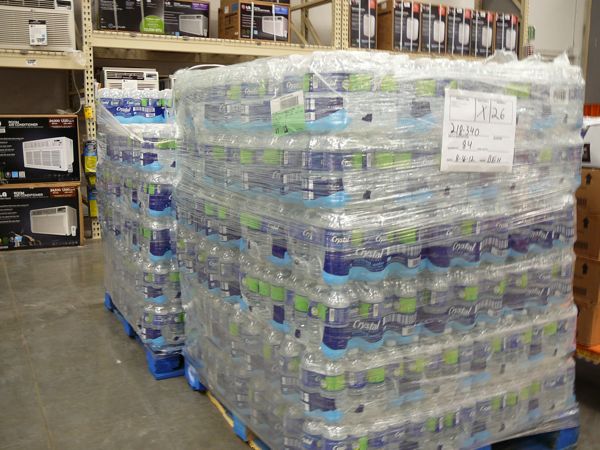
Lowe’s and Home Depot have special hurricane trucks coming in, loaded with large storage containers for water, lots and lots and lots of bottled water, generators, flashlights, batteries, etc. This morning, the big orders were all about plywood, stacks and stacks of plywood leaving the stores, en route to guard windows.

If we are without electricity for three days in hot, humid, rainy, windy conditions, it will be the WORST for me, especially if there are mosquitos. That’s my biggest worry. I really hate being hot.
God Speaking – Are You Listening?
Last week I read an article about a correlation between having more friends and social connections and living a long life. Part of me thought “but what if you are sort of stuck in one place and some of those relationships are toxic?” Doesn’t the nature of the relationship matter? But the study didn’t comment on unhealthy relationships, just that having long standing relationships with people you could go to and trust was a healthy thing.
Then I started to feel a little sad, thinking how many times I have moved and how hard it is to build long-lasting healthy relationships. I thought of how little I participate with the social networking sites, and how my preference for privacy impacts on my socializing. Would this have an impact on how long I will live?
Then, some surprising things started happening. One far-away friend called, just to hear my voice. She had broken her leg, just after unpacking from yet another move, and had been incapacitated. Very shortly, I got a call from another Doha friend, and a chatty e-mail from another. We all lead busy lives; how was it they all thought of me the same week?
My best friend from college e-mailed me, and a friend from long-ago times in Germany e-mailed me to set up a telephone date. A newer friend called to ask us if we’d like to hit the Shakespeare Fest with them. I started to realize that I DO have a lot of healthy, loving, long-term relationships, some with people a lot like me, who have moved a lot and not lived too long in any one spot, and some just the opposite, with people who have lived lives entirely unlike mine, in one spot most their lives.
It made me laugh. Sometimes, God answers prayers you don’t even know you’ve prayed. If you keep your eyes open, if you pay attention, you can see the pattern. It’s one good reason to keep a prayer journal, because so many times our prayers are answered and we forget even to say thank-you; once the prayer is answered, we move on, forgetting even how important our request once was. God spotted my little pity-party and gave me the gift of a little shift in perspective. Thanks be to God.
On a similar train of thought, as I read recently a book on Eleanor of Aquitaine, I think of how incredibly wealthy we all are, living in this day and age, and we live blithely on, unaware how very blessed we are. We worry about having ‘enough’ in terms of material comforts and goods, and never give a second thought to how good we have it.
I think of growing up in Alaska, where my Mother always had to order our annual snowsuits from the catalog so that they would arrive before the last boat could get through. I remember the pipes freezing up, and being sent to the creek to haul water into the house. I remember going with my Dad to the cold-storage locker, where they kept the frozen fish and meats from fishing and hunting season. (I also remember hating Moose-burgers, they were so game-y, but it was what was for dinner.)
AdventureMan laughs and says people were never intended to live in Florida, that Florida is a swamp, but with air-conditioning, it is bearable.
So you think of how the kings and emirs and caliphs and chieftans of old – even a hundred years ago – lived, and you look at how we live, and take it all the way down to border-line poverty. What I’m about to say does not apply to the homeless, or the transient homeless, sleeping in family basements or on friend’s couches. There is a strata of the poorest poor to whom this does not apply.
For the most part, we all have shelter, and most of it is climate controlled. We have some heat for when the temperatures are chilly, and some kind of fan or air conditioning to mitigate hot weather. We have windows with glass that can be opened and shut, and we have coverings for those windows. We have multiple changes of clothing that we can wear in various combinations.
We have toilets, and running water. We have ways to heat that water and to chill it. We have ways to heat food, and to keep it from spoiling. We have entertainment, books, televisions, phones and tablets to amuse us. We have exposure to places and ideas without ever leaving our homes. We can experience the athletes ordeals, frustrations and exaltations in London as they compete for medals. Ordinary people can train and compete on the world stage for these medals.
We have roads which stay stable in rain and heat, not bogging us down in mud and muck or snow, becoming impassable for months at a time. We can speak to friends and family anywhere in the world for a pittance. Anyone can; it’s affordable.
We have, most of us, enough to eat. Our problems are more those of excess than of want.

If Eleanor of Aquitaine were to come visit me, the Duchess of Aquitaine, the wife of the King of France and then wife of the King of England, she would be open-mouthed with astonishment at the luxury of our lives. She lived in palaces, places of great luxury for the times – for a very few. Even so, the palaces had no running water, nor bathrooms. No electricity, no heating other than fires in hearths or stoves. She would think our modest houses with our indoor bathrooms and cooking facilities and gathering spaces were miraculous, and she would be even more astonished that we common folk had such amenities. She would marvel at the privacy we have, rooms in which only one or two people sleep. She would look in our closets and be boggled at the amount of clothing we own which we never even wear, and the quality of the seams and stitching. She would look in wonder at our transport, and how the most common of people have cars, can fly to another city, or across the wide oceans.
She would be astonished that even the very poor and us commoners have rights, and judicial procedures protecting our rights against the rapacity of the nobles. She would marvel at our medical care, and that so many have access to it. I’m certain she would find us cheeky, and lacking in a humble acceptance of our station in life. I suspect she would be appalled at the idea of a person having the freedom to pursue an education and an idea, to create their own wealth by the work of their minds and hands.
She was an enormously capable and talented woman, Eleanor of Aquitaine, but once married, while she maintained ownership of her lands, her husbands controlled their use and revenues. If she could see women today, able to choose their husbands, able to attain an education and earn a living wage, supporting children, sometimes parents, and saving for retirement, controlling their own wealth and choosing their own destiny, she would blink in disbelief.
I would enjoy showing her modern life, the bad along with the good, and telling her about our trips to Africa, and our life lived in many countries in the world. I would show her my treasures gathered from here and there (and everywhere! 😉 ) and maybe take her to Pier 1 or World Market where she could pick up a treasure or two for herself. I would show her my fabric collection and watch her swoon with pleasure, and some of my perfume bottle collection, collected with glee from tiny stores in the Middle East. I’d take her to church with me, and out to lunch at Five Sisters. She could sleep in the guest suite, in a great big bed with soft covers and a walk-in closet and her own private bathroom with hot and cold running water and a jacuzzi tub and a shower. I would show her how the refrigerator works, and the microwave, and the oven, and the outdoor sprinkling system. She would absorb it all, and be full of wonder.
And yet every day, we get up and we live our lives oblivious to our riches . . .
Recent Comments
ExpatAlien on What Country am I Living … intlxpatr on Yellowstone: Old Faithful to C… Michelle on Yellowstone: Old Faithful to C… Cathy on No Grown-Ups in Charge intlxpatr on Waiting for Snow Wikipedia Donate Button

Amazina


Early Voting in Florida


 Here There and Everywhere