Car Rental Fees Update
So here is how my car rental looked:

The ACTUAL charge was like $142 for the week. “Fees” and taxes came to an additional $76.85. It is SO misleading when you are quoted a car rental price and it doesn’t include those charges until the final tally. It’s OK for me, it’s just what I have to do, but I remember being young, and when an extra almost $77 might have been a really bad surprise.

The check-in person asked me how I liked the car – a Ford Focus. I told her I hated it. I know it’s being advertised as ‘better than Toyota’ but it isn’t. It drives like a boat. It is clunky feeling, and it doesn’t get great pick-up. When I first got in, I had to drive those extra narrow, extra fast lanes on Seattle’s crowded I-5 going North, and it was raining and water is swooshing off the tops of trucks (who were passing me) and I just hated the car.
Toyotas are more nimble. Toyotas have better pick-up. You know, I would rather like to buy American, but first the automakers have to show me that they have a car that makes you happy to be driving.
People kid me about my Rav4, that it’s a young people’s car, but you know, I love the way it drives, I love the way it grips the road and goes anywhere, and still remains small enough and nimble enough to park in a tiny little spot. It has a much bigger feel, and is so comfortable. The Ford Focus is just clunky.
BTW, I asked the check in person if it was legal for me to rent a car for a week to get the better rate and then to turn it in early. She just laughed and said “It’s not illegal; it’s SMART!”
96% Decrease in Honeybees
This isn’t good. A new study shows a dramatic, continuing drop in honeybees, those honeybees which cross pollinate many of our food sources. This is an excerpt from AOL News and by clicking on the blue type, you can read the entire article.
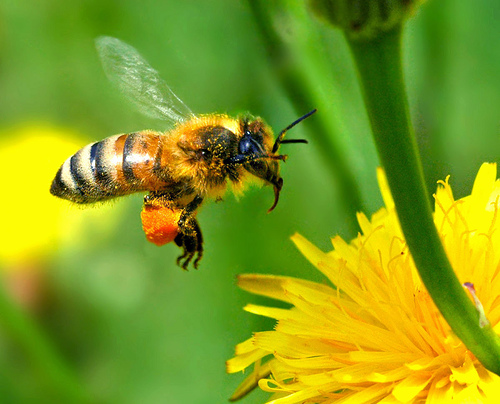
Study: US Bumblebee Population in Sharp Decline
The population of bumblebees in the United States is in a kind of free fall, dropping 96 percent over the past two decades, according to a new study that has scientists alarmed.
Four species of bumblebees are in a rapid decline, possibly because of increased fungal infections and inbreeding. Researchers called the findings of the study, published in the Proceedings of the National Academy of Sciences, “disturbing” and said they were in line with findings in Europe.
“Disturbing reports of bumblebee population declines in Europe have recently spilled over into North America, fueling environmental and economic concerns of global decline,” the authors wrote.
The bumblebee population in the United States is in a steep decline.
The bumblebee is wild, but it pollinates commercial crops from tomatoes to coffee, and its disappearance could have a dire effect on food sources. “People need to know that wild bees are an enormously important ecosystem service, just like honeybees,” Sydney Cameron, the head author of the study and a professor at the University of Illinois, told AOL News by phone today.
To find and count the bees, teams of researchers across the United States visited fields of flowers where hives had historically been found and gently scooped up the insects in butterfly nets.
The disappearing bees have scientists somewhat perplexed. They think a disease-causing pathogen, Nosema bombi, as well as a “lack of genetic diversity” could be plaguing the insects, but they haven’t been able to prove it yet. Cameron said the Nosema bombi pathogen seems to make it difficult for queen bees to survive the winter so they can reproduce.
Honeybees in the United States are also in trouble. They are suffering from a phenomenon called “colony collapse,” a disorder that seems to kill massive numbers of a hive’s worker bees. Scientists aren’t entirely sure what’s causing the disorder, but they suspect a virus may be to blame.
1001 Inventions: Muslim Inventions That Changed the World
A fabulous new exhibition, 1001 Inventions has opened, and will be coming to this country in December of this year. The exhibit details our Muslim heritage in the arts and sciences.
1001 Inventions – Discover The Muslim Heritage In Our World

From coffee to cheques and the three-course meal, the Muslim world has given us many innovations that we take for granted in daily life. As a new exhibition opens, Paul Vallely nominates 20 of the most influential- and identifies the men of genius behind them
Saturday, 11 March 2006

1 The story goes that an Arab named Khalid was tending his goats in the Kaffa region of southern Ethiopia, when he noticed his animals became livelier after eating a certain berry. He boiled the berries to make the first coffee. Certainly the first record of the drink is of beans exported from Ethiopia to Yemen where Sufis drank it to stay awake all night to pray on special occasions. By the late 15th century it had arrived in Mecca and Turkey from where it made its way to Venice in 1645. It was brought to England in 1650 by a Turk named Pasqua Rosee who opened the first coffee house in Lombard Street in the City of London. The Arabic qahwa became the Turkish kahve then the Italian caffé and then English coffee.
2 The ancient Greeks thought our eyes emitted rays, like a laser, which enabled us to see. The first person to realise that light enters the eye, rather than leaving it, was the 10th-century Muslim mathematician, astronomer and physicist Ibn al-Haitham. He invented the first pin-hole camera after noticing the way light came through a hole in window shutters. The smaller the hole, the better the picture, he worked out, and set up the first Camera Obscura (from the Arab word qamara for a dark or private room). He is also credited with being the first man to shift physics from a philosophical activity to an experimental one.
3 A form of chess was played in ancient India but the game was developed into the form we know it today in Persia. From there it spread westward to Europe – where it was introduced by the Moors in Spain in the 10th century – and eastward as far as Japan. The word rook comes from the Persian rukh, which means chariot.
4 A thousand years before the Wright brothers a Muslim poet, astronomer, musician and engineer named Abbas ibn Firnas made several attempts to construct a flying machine. In 852 he jumped from the minaret of the Grand Mosque in Cordoba using a loose cloak stiffened with wooden struts. He hoped to glide like a bird. He didn’t. But the cloak slowed his fall, creating what is thought to be the first parachute, and leaving him with only minor injuries. In 875, aged 70, having perfected a machine of silk and eagles’ feathers he tried again, jumping from a mountain. He flew to a significant height and stayed aloft for ten minutes but crashed on landing – concluding, correctly, that it was because he had not given his device a tail so it would stall on landing. Baghdad international airport and a crater on the Moon are named after him.
5 Washing and bathing are religious requirements for Muslims, which is perhaps why they perfected the recipe for soap which we still use today. The ancient Egyptians had soap of a kind, as did the Romans who used it more as a pomade. But it was the Arabs who combined vegetable oils with sodium hydroxide and aromatics such as thyme oil. One of the Crusaders’ most striking characteristics, to Arab nostrils, was that they did not wash. Shampoo was introduced to England by a Muslim who opened Mahomed’s Indian Vapour Baths on Brighton seafront in 1759 and was appointed Shampooing Surgeon to Kings George IV and William IV.
6 Distillation, the means of separating liquids through differences in their boiling points, was invented around the year 800 by Islam’s foremost scientist, Jabir ibn Hayyan, who transformed alchemy into chemistry, inventing many of the basic processes and apparatus still in use today – liquefaction, crystallisation, distillation, purification, oxidisation, evaporation and filtration. As well as discovering sulphuric and nitric acid, he invented the alembic still, giving the world intense rosewater and other perfumes and alcoholic spirits (although drinking them is haram, or forbidden, in Islam). Ibn Hayyan emphasised systematic experimentation and was the founder of modern chemistry.
7 The crank-shaft is a device which translates rotary into linear motion and is central to much of the machinery in the modern world, not least the internal combustion engine. One of the most important mechanical inventions in the history of humankind, it was created by an ingenious Muslim engineer called al-Jazari to raise water for irrigation. His 1206 Book of Knowledge of Ingenious Mechanical Devices shows he also invented or refined the use of valves and pistons, devised some of the first mechanical clocks driven by water and weights, and was the father of robotics. Among his 50 other inventions was the combination lock.
8 Quilting is a method of sewing or tying two layers of cloth with a layer of insulating material in between. It is not clear whether it was invented in the Muslim world or whether it was imported there from India or China. But it certainly came to the West via the Crusaders. They saw it used by Saracen warriors, who wore straw-filled quilted canvas shirts instead of armour. As well as a form of protection, it proved an effective guard against the chafing of the Crusaders’ metal armour and was an effective form of insulation – so much so that it became a cottage industry back home in colder climates such as Britain and Holland.
9 The pointed arch so characteristic of Europe’s Gothic cathedrals was an invention borrowed from Islamic architecture. It was much stronger than the rounded arch used by the Romans and Normans, thus allowing the building of bigger, higher, more complex and grander buildings. Other borrowings from Muslim genius included ribbed vaulting, rose windows and dome-building techniques. Europe’s castles were also adapted to copy the Islamic world’s – with arrow slits, battlements, a barbican and parapets. Square towers and keeps gave way to more easily defended round ones. Henry V’s castle architect was a Muslim.
10 Many modern surgical instruments are of exactly the same design as those devised in the 10th century by a Muslim surgeon called al-Zahrawi. His scalpels, bone saws, forceps, fine scissors for eye surgery and many of the 200 instruments he devised are recognisable to a modern surgeon. It was he who discovered that catgut used for internal stitches dissolves away naturally (a discovery he made when his monkey ate his lute strings) and that it can be also used to make medicine capsules. In the 13th century, another Muslim medic named Ibn Nafis described the circulation of the blood, 300 years before William Harvey discovered it. Muslims doctors also invented anaesthetics of opium and alcohol mixes and developed hollow needles to suck cataracts from eyes in a technique still used today.
11 The windmill was invented in 634 for a Persian caliph and was used to grind corn and draw up water for irrigation. In the vast deserts of Arabia, when the seasonal streams ran dry, the only source of power was the wind which blew steadily from one direction for months. Mills had six or 12 sails covered in fabric or palm leaves. It was 500 years before the first windmill was seen in Europe.
12 The technique of inoculation was not invented by Jenner and Pasteur but was devised in the Muslim world and brought to Europe from Turkey by the wife of the English ambassador to Istanbul in 1724. Children in Turkey were vaccinated with cowpox to fight the deadly smallpox at least 50 years before the West discovered it.
13 The fountain pen was invented for the Sultan of Egypt in 953 after he demanded a pen which would not stain his hands or clothes. It held ink in a reservoir and, as with modern pens, fed ink to the nib by a combination of gravity and capillary action.
14 The system of numbering in use all round the world is probably Indian in origin but the style of the numerals is Arabic and first appears in print in the work of the Muslim mathematicians al-Khwarizmi and al-Kindi around 825. Algebra was named after al-Khwarizmi’s book, Al-Jabr wa-al-Muqabilah, much of whose contents are still in use. The work of Muslim maths scholars was imported into Europe 300 years later by the Italian mathematician Fibonacci. Algorithms and much of the theory of trigonometry came from the Muslim world. And Al-Kindi’s discovery of frequency analysis rendered all the codes of the ancient world soluble and created the basis of modern cryptology.
15 Ali ibn Nafi, known by his nickname of Ziryab (Blackbird) came from Iraq to Cordoba in the 9th century and brought with him the concept of the three-course meal – soup, followed by fish or meat, then fruit and nuts. He also introduced crystal glasses (which had been invented after experiments with rock crystal by Abbas ibn Firnas – see No 4).
16 Carpets were regarded as part of Paradise by medieval Muslims, thanks to their advanced weaving techniques, new tinctures from Islamic chemistry and highly developed sense of pattern and arabesque which were the basis of Islam’s non-representational art. In contrast, Europe’s floors were distinctly earthly, not to say earthy, until Arabian and Persian carpets were introduced. In England, as Erasmus recorded, floors were “covered in rushes, occasionally renewed, but so imperfectly that the bottom layer is left undisturbed, sometimes for 20 years, harbouring expectoration, vomiting, the leakage of dogs and men, ale droppings, scraps of fish, and other abominations not fit to be mentioned”. Carpets, unsurprisingly, caught on quickly.
17 The modern cheque comes from the Arabic saqq, a written vow to pay for goods when they were delivered, to avoid money having to be transported across dangerous terrain. In the 9th century, a Muslim businessman could cash a cheque in China drawn on his bank in Baghdad.
18 By the 9th century, many Muslim scholars took it for granted that the Earth was a sphere. The proof, said astronomer Ibn Hazm, “is that the Sun is always vertical to a particular spot on Earth”. It was 500 years before that realisation dawned on Galileo. The calculations of Muslim astronomers were so accurate that in the 9th century they reckoned the Earth’s circumference to be 40,253.4km – less than 200km out. The scholar al-Idrisi took a globe depicting the world to the court of King Roger of Sicily in 1139.
19 Though the Chinese invented saltpetre gunpowder, and used it in their fireworks, it was the Arabs who worked out that it could be purified using potassium nitrate for military use. Muslim incendiary devices terrified the Crusaders. By the 15th century they had invented both a rocket, which they called a “self-moving and combusting egg”, and a torpedo – a self-propelled pear-shaped bomb with a spear at the front which impaled itself in enemy ships and then blew up.
20 Medieval Europe had kitchen and herb gardens, but it was the Arabs who developed the idea of the garden as a place of beauty and meditation. The first royal pleasure gardens in Europe were opened in 11th-century Muslim Spain. Flowers which originated in Muslim gardens include the carnation and the tulip.
“1001 Inventions: Discover the Muslim Heritage in Our World” is a new exhibition which began a nationwide tour this week. It is currently at the Science Museum in Manchester. For more information, go to www.1001inventions.com.
Verizon iPhone 2011
I found this on AOL News today, after seeing it on the Wall Street Journal. This article is from engadget and tells of the long awaited Verizon iPhone. In our area, ATT reception is a bad joke; I’ve been waiting and hoping for a Verizon iPhone to be possible. January! I can hardly wait!
We’ve been to this rodeo before (a few times, actually), but the smoke that leads to fire is getting far harder to ignore. Following a Bloomberg report in June that a Verizon iPhone was on track for a January 2011 release as well as independent confirmation from John Gruber, Yukari Iwatani Kane from The Wall Street Journal is now sounding mighty confident that the aforementioned plans are true.
According to various people “briefed by Apple,” Jobs and Company will begin “mass producing a new iPhone by the end of 2010 that would allow Verizon Wireless to sell the smartphone early next year.” It’ll rely on a key Qualcomm chip as well as a CDMA radio, but curiously enough, there’s nary of a mention of LTE in this report. In closely related news, it’s bruited that Apple is also developing a separate iPhone model, though it’s unclear how soon VZW will be able to grab the fifth generation edition.
‘Course, it’s not exactly the shocker of the year to hear that Apple’s toiling on a new iPhone without a dubious antenna design, but the real question is this: will the Verizon iPhone beat AT&T’s elusive white iPhone 4 to market? Inquiring minds would love to know.
Update: The WSJ udated the story to be more clear, “Apple Inc. is making a version of its iPhone that Verizon Wireless will sell early next year.” So it’s not just a generic CDMA iPhone that may or may not end up on Verizon Wireless. The WSJ also added that the CDMA iPhone 4 variant will be built by Pegatron and would only work on a CDMA network (i.e., it’s not a dual-mode GSM/CDMA device). Also, according to one source, VZW has been working with Apple to test its network and is adding additional capacity to avoid being overwhelmed a la AT&T.
Lying Prompts Need for Cleansing!
Lying makes you want to wash your mouth out, LOL! Who thinks up these studies?? I found this on AOL News:
Parents who punished their fibbing children by washing their mouths out with soap may have been onto something.
Researchers at the University of Michigan found that people who lie have the urge to wash their “dirty” mouths afterwards, apparently in an effort to wipe themselves clean of their bad behavior.
“Not only do people want to clean after a dirty deed, they want to clean the specific body part involved,” study author Norbert Schwarz, a psychologist at the university’s Institute for Social Research, said in a statement.
Schwarz and co-author Spike W.S. Lee asked 87 students to pretend they were lawyers who were competing with an imaginary coworker, “Chris,” for a promotion. They were told to picture finding an important document Chris had misplaced. If they gave it back to him, it would help his career and harm theirs.
Participants were instructed to send Chris an e-mail or leave him a voicemail message in which they either told him the truth — that they’d discovered the lost report — or lied to him, saying they couldn’t find the missing paper.
The subjects then had to rate how much they wanted certain products, including mouthwash and hand sanitizer, and what they were willing to pay for them. They were told the items were the focus of a market research survey.
The students who had lied on the phone felt a stronger desire for mouthwash and were willing to pay more for it than those who hadn’t told the truth over e-mail, the authors said. But those who lied over e-mail had a greater wish for hand sanitizer and were willing to pay more for it than those who’d fibbed on the phone, according to the research.
Those who had been truthful had less of an urge to buy either product.
In other words, the scientists concluded, verbal lies compelled the liars to want to buy mouthwash; lying with their hands by typing an untruthful e-mail made them more drawn to hand sanitizer.
“The references to ‘dirty hands’ or ‘dirty mouths’ in everyday language suggest that people think about abstract issues of moral purity in terms of more concrete experiences with physical purity,” Lee, a Michigan doctoral candidate in psychology, said in a statement.
University of Pennsylvania psychiatrist Dr. Christos Ballas told AOL Health that the compulsion to buy hand sanitizer may have been for another reason entirely.
“The preference for hand sanitizer may well be related to the fact that they were typing on someone else’s computer keyboard,” he joked.
He said the scientists should have examined whether the the cleaning products had any impact on the liars’ future behavior.
“An even better study to conduct would be whether the availability of mouthwash/sanitizer reduces ‘guilt’ feelings, or makes it more likely they’ll lie the next time,” Ballas said.
In the end, he believes the findings, which appear in the October issue of Psychological Science, tell us more about the relationship between language and our subconscious than they do about the desire to wash ourselves clean of our sins.
“We interpret this as ‘lies make you feel dirty.’ And so the resultant mouthwash makes sense,” said Ballas. “But this is a purely semantic relationship. What if lies made you feel … small? Would you reach for platform shoes? Thus, the real insight here wouldn’t be that lies make us feel dirty, but that our unconscious is entirely dependent on our language.”
Super Harvest Moon Tonight
Thank you, BitJockey, for this news from 13 WMAZ on tonight’s enormous moon.
AdventureMan and I – before we even knew it was the Super Harvest Moon – took a walk tonight and the moon was glorious – glorious.
The autumnal equinox is Wednesday night — 11:09 p.m. sharp — and it’s a full moon, which can only mean one thing: Super Harvest Moon!
The two rarely occur at the same time — in fact; the last time this happened was almost 20 years ago.
A Harvest Moon is simply defined as the full moon closest to the autumnal equinox.
You may be wondering where the term came from. Well, from agriculture! Farmers, before the days of electric lights, depended on bright moonlight to extend the workday beyond sunset. It allowed them to gather their ripening crops in time for market.
The name “Harvest Moon,” came along, as it brought extra harvest.
What can you expect to see? As the sun sets, the full Harvest Moon will rise. The two sources of light will mix together to create a kind of 360-degree, summer-autumn twilight glow that is only seen on rare occasions.
The moon may appear strangely inflated, which is an illusion. A low-hanging moon appears much wider than it really is.
The moon will reach maximum illumination a mere six hours after the equinox. The brilliant planet Jupiter rises a little below the Moon, and they remain close throughout the night.
It is definitely a sight to check out, and with mostly clear skies shouldn’t be a problem in Central Georgia tonight!
Don’t miss it or you’ll have to wait until 2029!
Jupiter Closest Now!
The planet Jupiter is the closest to the earth that it has been in 47 years. Watch from sunset to midnight to catch the clearest glimpse you will get in your lifetime. I found this on AOL Science News where you can read the entire article:
CAPE CANAVERAL, Fla. (Sept. 19) – Better catch Jupiter this week in the night sky. It won’t be that big or bright again until 2022.

Jupiter will pass 368 million miles from Earth late Monday, its closest approach since 1963. You can see it low in the east around dusk. Around midnight, it will be directly overhead. That’s because Earth will be passing between Jupiter and the sun, into the wee hours of Tuesday.
The solar system’s largest planet already appears as an incredibly bright star – three times brighter than the brightest star in the sky, Sirius. The only thing brighter in the night sky right now is our moon. Binoculars and telescopes will dramatically improve the view as Jupiter, along with its many moons, rises in the east as the sun sets.
“Jupiter is so bright right now, you don’t need a sky map to find it,” said Tony Phillips, a California astronomer under contract with NASA. “You just walk outside and see it. It’s so eye-catching, there it is.”
“Why Are Barns Painted Red?”
This is what I love about long road trips with AdventureMan. We have hours together in the car, and you just never know where the conversations will go.
We saw a lot of barns. Most of them are red.
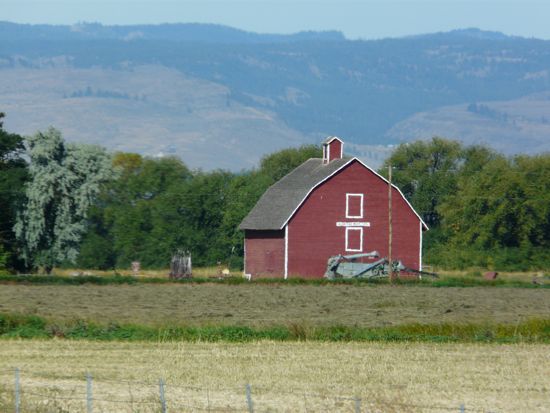
“Why are barns red?” AdventureMan asked. “Like we just accept that barns are red, when we are kids and we are told to draw a barn, we reach for the red crayon, why is that? Why red?”
So we looked it up at the next wireless stop and found the answer on Wiki answers:
Centuries ago, European farmers would seal the wood on their barns with an oil, often linseed oil — a tawny-colored oil derived from the seed of the flax plant. They would paint their barns with a linseed-oil mixture, often consisting of additions such as milk and lime. The combination produced a long-lasting paint that dried and hardened quickly. (Today, linseed oil is sold in most home-improvement stores as a wood sealant).
Now, where does the red come from?
In historically accurate terms, “barn red” is not the bright, fire-engine red that we often see today, but more of a burnt-orange red.
Farmers added ferrous oxide, otherwise known as rust, to the oil mixture. Rust was plentiful on farms and is a poison to many fungi, including mold and moss, which were known to grown on barns. These fungi would trap moisture in the wood, increasing decay.
Regardless of how the farmer tinted his paint, having a red barn became a fashionable thing. They were a sharp contrast to the traditional white farmhouse.
As European settlers crossed over to America, they brought with them the tradition of red barns. In the mid to late 1800s, as paints began to be produced with chemical pigments, red paint was the most inexpensive to buy. Red was the color of favor until whitewash became cheaper, at which point white barns began to spring up.
Today, the color of barns can vary, often depending on how the barns are used.
My dad and grandpa have been farmers their entire lives and they used to tease us kids that the barn was red because it was the most noticeable when the snow was falling sideways and you could barely see because of the sleet and hail.
Did You Get the Dashboard Gas Emissions E-mail?
I did.
Here is what I read this morning in the Qatar Gulf Times:
Steamy car interiors do not produce gas: expert
By Sarmad Qazi
The National Campaign for Road Accident Prevention (NCFRAP) yesterday dismissed as “false” a purported e-mail from “Saudi Geophysical and Environmental Consulting” making the rounds, saying that a poisonous gas forms in cars parked under direct sunlight.
There is no such company in Saudi Arabia, it has been learnt. However, a national organisation, “Saudi Geophysical” has been in operation since 1998.
“This is absolutely false. It is true that vehicles parked under direct sunlight get hot, but the formation of any poisonous gas is absolutely ridiculous,” Ademola Ilori, adviser to the Traffic Department said yesterday.
The e-mail cautions motorists to leave the vehicle’s doors well and windows open for a while, to let the “gas” escape.
“Based on scientific research, it is found that there is a gas called gasoline, emitted from the seats, air fresheners and seat covers, when parking your car in the sun particularly when the temperature is higher than 15 degrees Fahrenheit or 6 degress Celsius,” one of the six paragraphs from the e-mail reads.
According to Ilori, on a typical sunny day in Qatar, the temperature inside a parked vehicle can easily exceed 50 degrees C in just ten to twenty minutes.
“Hot weather brings unique challenges to vehicles. It can present dangerous conditions for both the vehicle and its occupants but fortunately most incidents can easily be avoided,” Ilori said.
“Studies show that 75% of the temperature rise occurs within five minutes of closing the doors and goes up to 51-67C within 15 minutes. Leaving the windows (cracking) slightly open does not keep the temperature at a safe level,” he added.
Sharing summer driving tips, the official said that motorists should check oil, transmission fluid, windshield washer, battery level and strength, tyre pressure, etc before taking their vehicles out.
“Drivers need to stay cool as well, by drinking a lot of water (not ice cold) especially those who travel in vehicles without air-conditioning. Of particular importance for motorists is to keep an eye on the lights and gauges when driving in hot weather.
“If your temperature gauge moves up, turn on the heater to its highest and hottest setting. It will be uncomfortable, but it will help draw some of the heat away from the engine. If you are stopped in traffic put the vehicle in “P” (or neutral for manual gears) and lightly step on the gas to help circulate the coolant,” he said.
In case the temperature gauge enters the “red zone”, a vehicle should immediately be pulled off the road and the engine be shut.
However, at this point, motorists should not attempt to remove the radiator cap as the hot pressurised coolant will spray out with great force.
“Do not pour water over the radiator or engine, since a dramatic change in temperature could cause damage. After the engine cools, add a 50-50 mix of coolant and water to the reservoir to bring it up to its proper level,” Ilori said.
Sun in Ultra High Definition
You would never know my Kuwaiti friend is such a nerd. She is beautiful, she is gracious, and she is a lot of fun. She also sends me some of the most wonderful e-mail forwards, great stuff, stuff you can think about and go WOW. She knows I am a nerd, and she loves me anyway. 🙂
Today she sent me a link to Fox News where there is an article with new, ultra high definition series of sun shots – they are purely glorious:
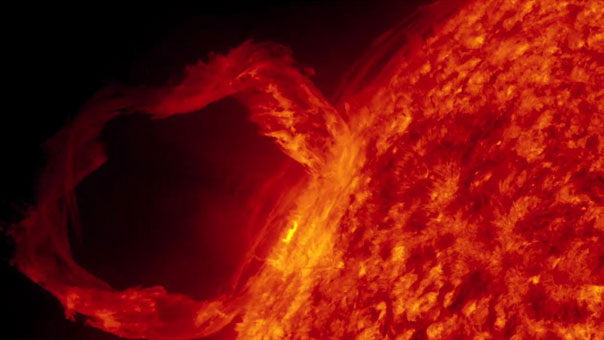
At a second link, you can click on play and listen to the transliterated ‘sound of the sun.’ Give it a try. It is awesome.
Recent Comments
intlxpatr on Waiting for Snow intlxpatr on Waiting for Snow Abou Tabblouleh on t… on Waiting for Snow Abou Tabbouleh on in… on Waiting for Snow intlxpatr on Waiting for Snow Wikipedia Donate Button

Amazina


Early Voting in Florida


 Here There and Everywhere