Unbelievably Slow
Since sometime late yesterday afternoon, when I try to get on the internet, it is so unbelievably slow that I can’t do anything. Is it me? Have I caught some kind of virus? Or is there some major slowdown? Aarrgh!
Bu Yousef – World Digital Library
Thank you, Bu Yousef, for your focus and your generosity. Because his blog(s) are special interest – photography, Mangaf, bird-photography – he passed along to me this information on the World Digital Library, which he heard about on BBC during his morning drive. Because my blog is . . . well . . . here, there and everywhere . . . he knew I would love to share this with you.
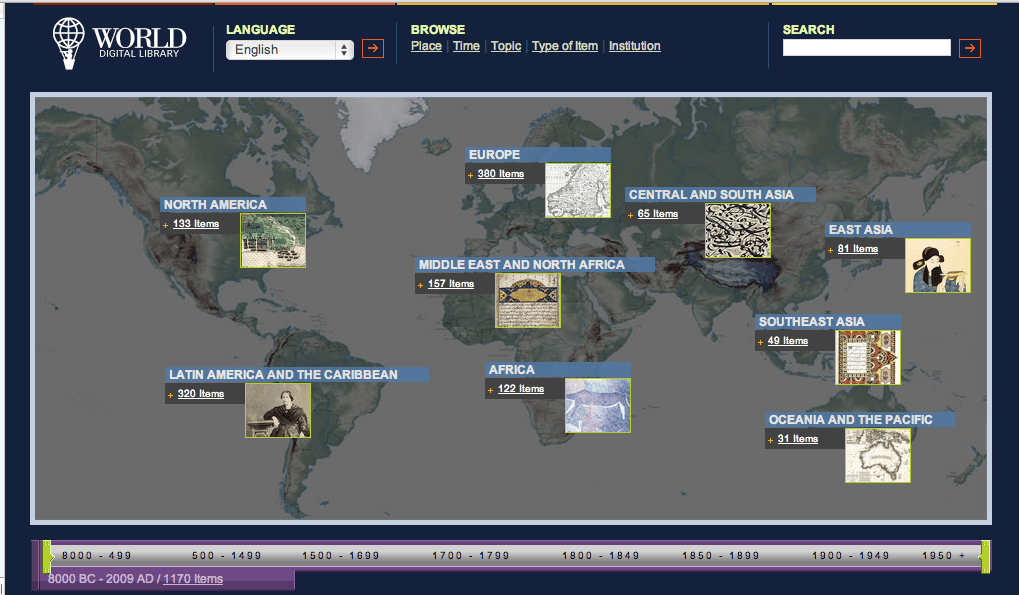
This is what the World Digital Library looks like when you go there:
Of course, the first thing I had to do was go to the Middle East, where there are all kinds of early maps of the Gulf – and this! Look! The old trading routes through the Sahara!
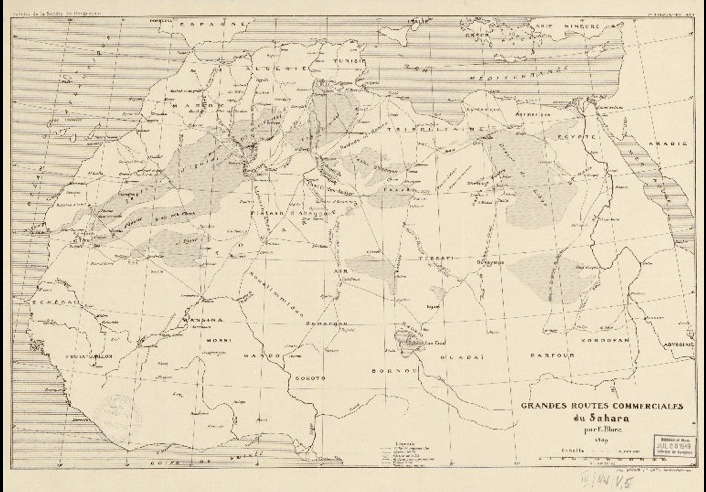
WARNING! WARNING! You could lose hours of your life on this website!
Speaking of hours of fun, my friends, please go visit Neubronner, Bu Yousef’s new web page about his pigeons, and watch his movie of his pigeon, Charcoal, flying around his neighborhood. He even has a photo of a pigeon with the camera strapped.
Need Help / Information to Play .wmv Downloads
First, I am a technology clod. I am a tool user, but I don’t always understand a lot about the tool I am using.
I had a tool on my desktop that helped me see .wmv things my friends send in the e-mail. I’m on a Mac. My friend Mrm gave me a recommendation, I downloaded it and it worked like a charm.
Today I went to use it and it is gone! I don’t know where it went! I’ve looked in everyplace on the computer I can think of and I can’t find it.
The icon for it looks like a traffic cone. It is orange and yellow, I think. I don’t know the name, but when I want to view something, I would open it up and then choose a file while in that program. Do any of you know what I am talking about? It is something like ‘universal movie player’ but it has a weird name. I need something for the simple (tech) minded.
Geraldine Brooks: People of the Book
I love the way Geraldine Brooks writes. I got hooked when I read Nine Parts of Desire and then again when I read Year of Wonders. You can read my review on her award winning March here. So I could hardly wait for People of the Book to come out in paperback, so I could read it. (Those hard cover books hurt too much when they fall over if I fall asleep, and are too heavy and bulky to carry on airplanes.)

Here is what I like about Geraldine Brooks. Her books are not easy to read. They make you uncomfortable. They make you think. They give you another perspective, and that perspective challenges your assumptions.
The heroine, Hannah, is not very likable. She is cold, she makes poor decisions, and she has a very uneasy relationship with her mother. She is, on the other hand, a master of her craft, which is stabilizing and restoration of old books. She is the specialist called in by museums to help preserve masterful works, and to identify forces at work which can cause grave damage to these books.
While this is a work of fiction, it is based on an actual book and some of the history surrounding it. The Sarajevo Haggadah, a Jewish holy book, is a real book. Some of its history is known – including the fact that it was twice saved from destruction by Moslems, one a very brave librarian in Sarajevo who rescued and preserved it risking his own life, the fact that it was saved from destruction during the Italian inquisition by a Catholic priest. From tiny bits of physical evidence, Geraldine Brooks weaves an entire book creating a story how all the individuals and forces that might have been involved in the creation and preservation of this one special book.
People of the Book is a mystery – Hanna goes in and in the process of evaluating and analyzing the book, gathers tiny bits of “evidence” – a tiny grain of salt, a hair, wine stains. As she investigates, lab results come back, filling in missing pieces of how this book might have travelled from Spain of the convivencia (Medieval Spain) to modern day Sarajevo. Slowly, slowly, Brooks reveals to the readers the real (fictional!) people behind the tiny pieces of evidence.
The plot is interesting. What grabbed me from the beginning, however, is that this is a real book-lovers book, written by a woman who loves books. We learn about how books are created, how book conservators know, from looking at the origin of a sheet of paper, where a book was created and about what time period it was created. We learn about different treatments of paper, we learn about inks, we learn how pigments are created, and we learn about illustrations.
I was captivated by all the love of book-creation present in this book. Most of all, I love it that she dedicated this book to the librarians of the world, those unsung heros who devote their lives to the preservation of information. It was definitely worth a read – and, as an exception to most of my rules, it will probably be worth a re-read.
A friend recommended a video of Geraldine Brooks discussing this book at a book-talk at Northeastern University. It is a little long – you will need about 38 minutes of your time if you want to listen to this amazing woman:
Record Traffic Violations Recorded
Cameras capture record traffic violations
Staff Writer – From today’s Al Watan
Wooo HOOOO! Cameras are impartial; they catch the violators, no matter who. I love it.
KUWAIT: The relocation of radar cameras on major roads has led to a sharp increase in the number of violations registered during an entire month. According to security sources; they reported that around 2,000 cars have been photographed by the relocated cameras during last January as compared to 900 cars prior to the relocation.
Earlier on, the Assistant Undersecretary for Traffic Affairs Major General Mahmoud AlـDousari had recommended the relocation of the radar cameras, particularly since motorists had become too familiar with the previous locations. Drivers who have been involved in violations have been contacted through official channels to either pay their fines or get referred to the concerned authorities. It has been gathered that fines have been already collected from 400 errant motorists.
Last updated on Friday 27/3/2009
Here is an extra one for you, General Al-Dousari, one of those special kind of people who travel in the emergency lane while the rest of us obey the rules and crawl along the freeway. I could not resist this particular photo – with the sign right there.

PS – We were not moving. I wasn’t driving when I took the photo. 🙂
Space Storm Alert: 90 Seconds from Catastrophe
A fascinating article from New Scientist passed along by Law and Order Man. Thanks for a very scary article. 😦
According to the NAS report, a severe space weather event in the US could induce ground currents that would knock out 300 key transformers within about 90 seconds, cutting off the power for more than 130 million people (see map). From that moment, the clock is ticking for America.
First to go – immediately for some people – is drinkable water. Anyone living in a high-rise apartment, where water has to be pumped to reach them, would be cut off straight away. For the rest, drinking water will still come through the taps for maybe half a day. With no electricity to pump water from reservoirs, there is no more after that.
There is simply no electrically powered transport: no trains, underground or overground. Our just-in-time culture for delivery networks may represent the pinnacle of efficiency, but it means that supermarket shelves would empty very quickly – delivery trucks could only keep running until their tanks ran out of fuel, and there is no electricity to pump any more from the underground tanks at filling stations.
Back-up generators would run at pivotal sites – but only until their fuel ran out. For hospitals, that would mean about 72 hours of running a bare-bones, essential care only, service. After that, no more modern healthcare.
72 hours of healthcare remaining
The truly shocking finding is that this whole situation would not improve for months, maybe years: melted transformer hubs cannot be repaired, only replaced. “From the surveys I’ve done, you might have a few spare transformers around, but installing a new one takes a well-trained crew a week or more,” says Kappenman. “A major electrical utility might have one suitably trained crew, maybe two.”
Within a month, then, the handful of spare transformers would be used up. The rest will have to be built to order, something that can take up to 12 months.
Even when some systems are capable of receiving power again, there is no guarantee there will be any to deliver. Almost all natural gas and fuel pipelines require electricity to operate. Coal-fired power stations usually keep reserves to last 30 days, but with no transport systems running to bring more fuel, there will be no electricity in the second month.
You can read the entire, very scary article, by clicking NEW SCIENTIST
Sunrise March 21, 2009
For all your Kuwaiti students back in the USA who check in daily to see what Kuwait looks like – I am sorry to tell you, you are missing one of the most beautiful days of the year. The sun rose over a sea so still it is like glass; it looks so solid you could walk on it:

You wonder how I know you are Kuwaiti students? I use this wonderful software called StatCounter which I love.
What is STATCOUNTER?
A free yet reliable invisible web tracker, highly configurable hit counter and real-time detailed web stats. Insert a simple piece of our code on your web page or blog and you will be able to analyse and monitor all the visitors to your website in real-time!
It allows me to see where people who check my blog are checking in from – like if you are at University of Arizona, for example, it might show me that. People who have commented are identified from previous comments. It is a great little utility, and a lot of fun when you have a little time to spare.
For those of you in Kuwait – look at this week to come:

It doesn’t get any more beautiful in Kuwait. Get outside today! It is gorgeous out there!
Painful Sight
Everytime I go to Fehaheel – not all that often, but maybe two times a month – I see water overflowing from two manholes. Sometimes, it is a LOT of water. It makes a terrible hazard along Gulf Road, where traffic is chaotic at best, and worse – in a dry and thirsty land, it is a terrible thing to waste water.

Sometimes the water stinks like sewage. It makes me wonder where this water is coming from? It also makes me nervous because if it is sewage water, it comes up, it dries on the ground, a wind comes along and blows it on to my salad as I sit outside with AdventureMan having lunch – and I haven’t a clue what I have just ingested. Not good!
This isn’t something that happens rarely. It happens often, often enough that I think it is every time I am in Fehaheel. This isn’t just bad for the environment, it is also very bad for our health. Whatever is going wrong here needs a permanent fix.
Amnesty International Report on Gaza
This is just an excerpt from a much longer article on Wired.com. You can read the entire article by clicking on the blue type.
Tracking Down Gaza War’s Deadly, Mysterious Cubes
By David Hambling February 24, 2009 | 11:21:49 AMCategories: Ammo And Munitions, Missiles, Sabras
An unidentified weapon packed with strange “cube shaped shrapnel” killed or wounded civilians in the recent Gaza war, according to a new report from Amnesty International.
Amnesty’s report on weapons used by both sides in Gaza finds much to condemn. The group is particularly hard on the U.S., having found numerous remains of American munitions — including white phosphorus shells from Pine Bluff Arsenal, and a Hellfire missile made in Orlando. Another weapon which bothers Amnesty is a mysterious munition, filled with cubic particles.
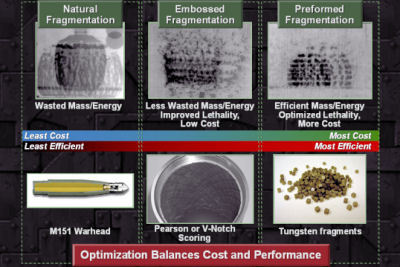
“Amnesty International delegates in Gaza also found evidence of the use of a new type of missile, seemingly launched from unmanned drones, which explodes large numbers of tiny sharp-edged metal cubes, each between 2 and 4 mm square in size. This purpose-made shrapnel can penetrate even thick metal doors and many were seen by Amnesty International’s delegates embedded deep in concrete walls. They appear designed to cause maximum injury…
Whatever Floats Your Boat
Actually, I hate that phrase, but today it fits. I looked out the window and laughed – there is a tanker, floating above the horizon. At first, I almost thought it was a balloon. Look! See for yourself:
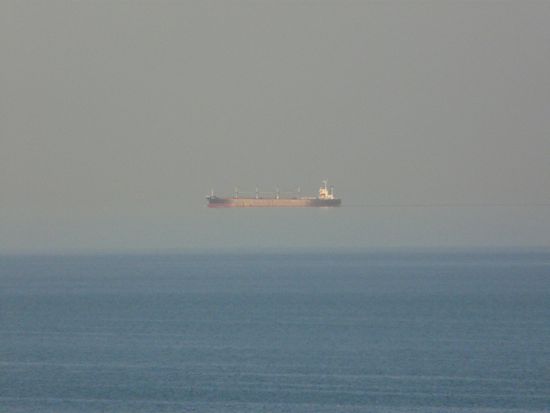
The day is so clear, I can see the tin roofs on Failaika Island with my bare eye. It isn’t much, but it is the clearest day in a long time:

In today’s Kuwait Times, Dr. Saleh al-Ajeeri tells us that the chances of rainfall are going away because the winds are changing, and that the temperatures are going to fall again. It’s hard for me to believe, on a day like today, warm and sunny and not a cloud in the sky, it’s hard to believe it is going to be cold. Dr. Al-Ajeeri says “The winter season is still going on and the cold will return during a season locally known as the ‘Scorpion’s Cold'” and that we can’t count on higher temperatures until the end of February.
SCORPION’S COLD?? OK, my Kuwaiti friends, I have never heard of that before. Can anyone explain to me what this is? And what it it called in Arabic?
Recent Comments
Kitchen on Isiais: Winding Down intlxpatr on Shampoo Ginger tigerbutterya0c5ff1d… on Shampoo Ginger intlxpatr on British Soldier Kidnapped, Esc… John on British Soldier Kidnapped, Esc… Wikipedia Donate Button

Amazina


Early Voting in Florida


