A Ray of Hope for Free and Fair Elections
This, just in from NPR News:
“Immigration and Customs Enforcement agents will not patrol polling locations during this year’s midterm elections, a Department of Homeland Security official said yesterday on a call with top state voting officials. Kentucky Republican Secretary of State Michael Adams confirmed the promise in a social media post. The declaration comes as the president has continued to push false claims of noncitizen voter fraud, as recently as in Tuesday night’s State of the Union address. “
Orwellian Insurrection Talk v. Free Elections
I am haunted by memories of our Janus-like leader telling people while running for the office of President that if we voted for him, we would never have to vote again. What could he have meant by that? Aren’t elections part of what we value as a Democracy?
I am troubled by a leader who insists that what we saw with our own eyes on January 6th, that the thugs beating policemen, breaking and entering the Congress, chasing down Mike Pence with a noose was NOT an insurrection, not at all what he was going for when he told followers to “Fight Like Hell!” or we would have no Democracy. This leader who said he would be with them, and scurried back to the white house to watch events unfold on his Presidential television. He didn’t call off these hooligans and goons until HOURS after the violence began.
He PARDONED these thugs who invaded the Congress. He now calls it a “Day of Love.” Like we can’t see with our own eyes?
Just in time for Black History Month, he continues to dismantle exhibitions exploring the relationship between the enslaved and the enslavers. If it makes white people uncomfortable, isn’t that appropriate? Is slavery something we want to return to? And who, exactly do we enslave. Like are camera bearing Democrats candidates for the new underclass?
Armed with Whistles and Phone Cameras
J.D. Vance tells us to “lower the temperature” and help the ICE forces. J.D. Vance, you are talking to Minnesotans! You are talking to the descendants of Norwegians, the very nationality our orange leader wants to come to the USA! You are talking to people who have peacefully incorporated people from many nations, welcomed them! YOU created a spurious policy, based on a poorly made video by a social influencer. Yes, there was a child care scandal, and the people charged were not Somali but US citizens! YOU are creating the rise is heated emotions, and those you are shooting are armed with whistles and phone cameras!
Who has a history of creating violent insurrections? Who has sent unwelcome storm troopers into Minnesota? Who is poking Minnesota officials? Who is creating the problem and like every school boy bully, blaming the victim – “You started it!”
Go HOME, ICE. You are not welcome, you are not needed. You are invading the homes of US CITIZENS without a warrant, and laughing! You are shouting “Boo HOO!” to witnesses when you shoot a non-violent demonstrator 10 times! 10 Times! If that isn’t excessive force, what is?
I applaud the citizens of Minneapolis who are standing against this villainy and this bullying. I applaud their self-restraint and their persistence. I applaud Portland, Oregon for utilizing the legal system to lower the temperature and resist the pressure to give the radical bullying thugs any opportunity to raise the stakes.
Self restraint and Persistence while we activate the legal system is our only hope if we want to continue to have free and safe elections, and I believe that is what this is all really about.
So Much For Health and Transparency
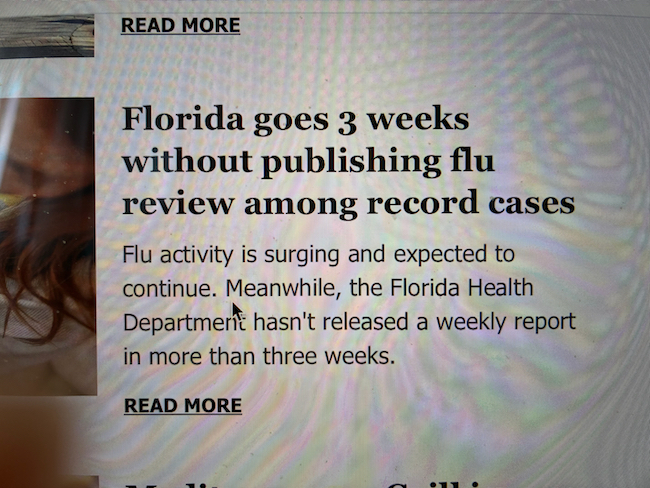
It started during COVID. Politicians and their Administrations stopped publicizing statistics when the stats revealed their government was doing little or nothing to prevent spread of disease. Now, under the cover of cost reductions and eliminating fraud they are gutting the agencies that maintain the statistics and restricting publications of what few statistics are being gathered. Fortunately, private institutions and individuals are watching, keeping track, and doing their best to keep a vulnerable population informed.
History the White House Doesn’t Like: The List of Exhibits Trump Wants Gone
It’s a strange honor to have exhibits selected that the President wants gone. As in Literature, when you read through the list, you learn a lot about the fears and the prejudices of the creator. In recent decades, the United States of America has had a greater tolerance for the idiosyncratic views of artists, appreciating their differing perceptions. The list below is taken word for word from the White House Post called The President is Right About the Smithsonian.
- The National Museum of African American History and Culture debuted a series to educate people on “a society that privileges white people and whiteness” — defining so-called “white dominant culture“ as “ways white people and their traditions, attitudes, and ways of life have been normalized over time” and portraying “the nuclear family,” “work ethic,” and “intellect” as white qualities rooted in racism.
- The campaign featured content from hardcore woke activist Ibram X. Kendi

As part of its campaign to stop being “wealthy, pale, and male,” the National Portrait Gallery featured a choreographed “modern dance performance“ detailing the “ramifications“ of the southern border wall and commissioned an entire series to examine “American portraiture and institutional history… through the lens of historical exclusion.”
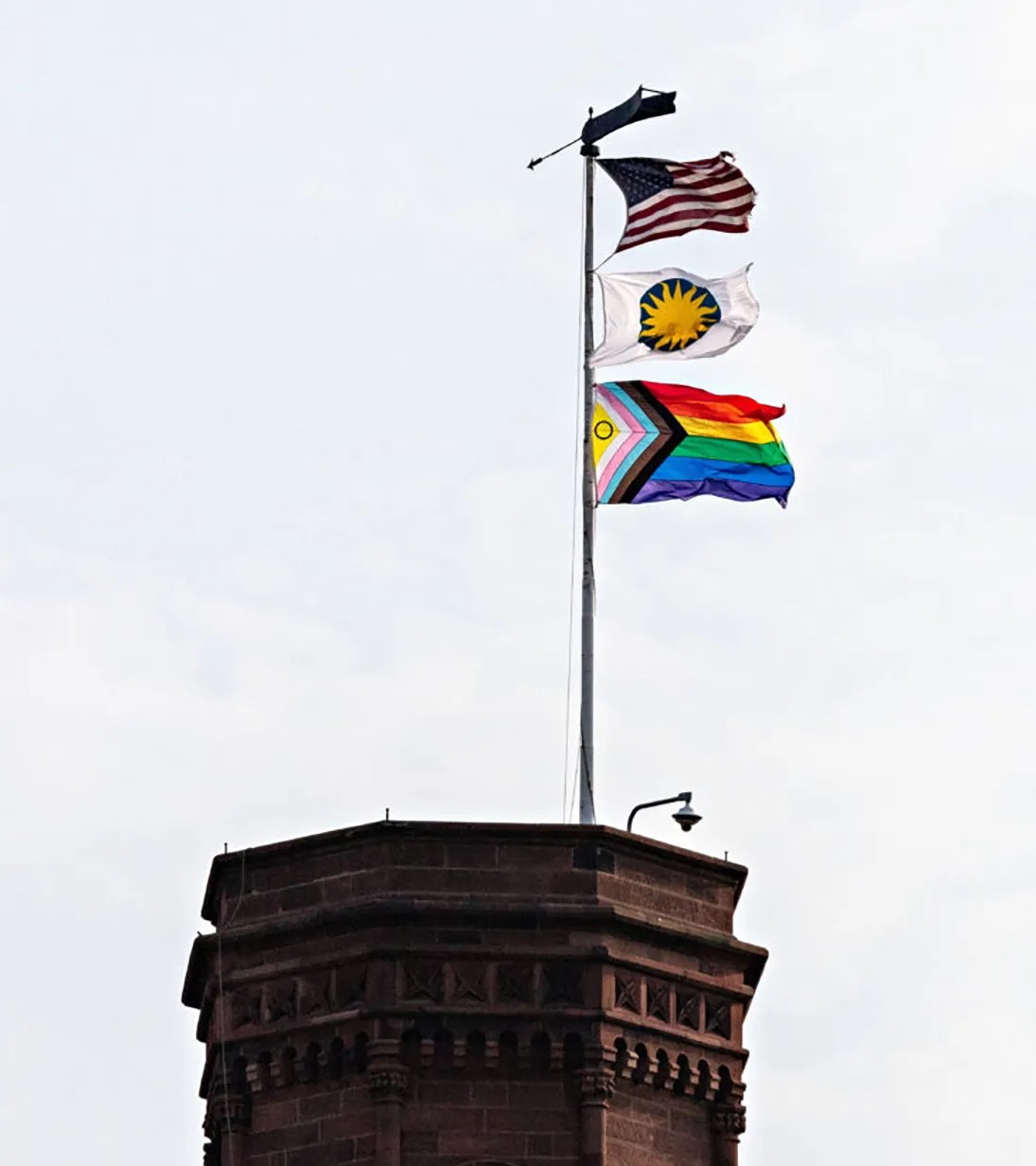
The National Portrait Gallery features art commemorating the act of illegally crossing the “inclusive and exclusionary” southern border — even making it a finalist for one of its awards.
(Intlxpatr comment: This painting reminds me of the painting of Mary, Joseph and the Baby Jesus escaping to Egypt to avoid King Herod’s massacre of the innocents)

The National Museum of African Art displayed an exhibit on “works of speculative fiction that bring to life an immersive, feminist and sacred aquatopia inspired by the legend of Drexciya,” an “underwater kingdom populated by the children of pregnant women who had been thrown overboard or jumped into the ocean during the Middle Passage.”
The American History Museum’s “LGBTQ+ History” exhibit seeks to “understand evolving and overlapping identities such as lesbian, gay, bi-sexual, transgender, queer, transsexual, transvestite, mahu, homosexual, fluid, invert, urning, third sex, two sex, gender-bender, sapphist, hijra, friend of Dorothy, drag queen/king, and many other experiences,” and includes articles on “LGBTQ+ inclusion and skateboarding“ and “the rise of drag ball culture in the 1920s.”
The National Museum of the American Latino features programming highlighting “animated Latinos and Latinas with disabilities” — with content from “a disabled, plus-sized actress” and an “ambulatory wheelchair user” who “educates on their identity being Latinx, LGBTQ+, and disabled.”
The National Museum of the American Latino characterizes the Texas Revolution as a “massive defense of slavery waged by ‘white Anglo Saxon’ settlers against anti-slavery Mexicans fighting for freedom, not a Texan war of independence from Mexico,” and frames the Mexican-American War as “the North American invasion” that was “unprovoked and motivated by pro-slavery politicians.”
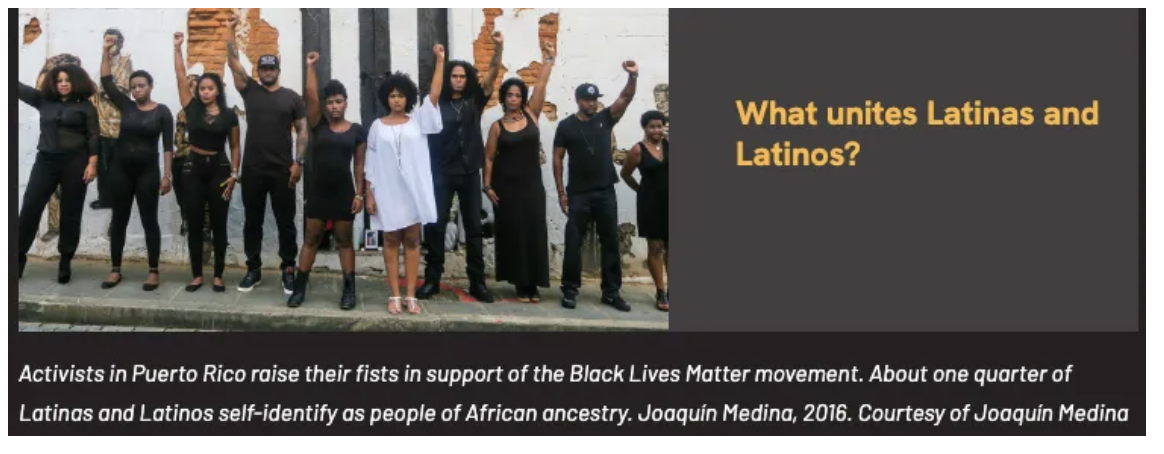
According to the National Museum of the American Latino, “what unites Latinas and Latinos“ is “the Black Lives Matter movement.”
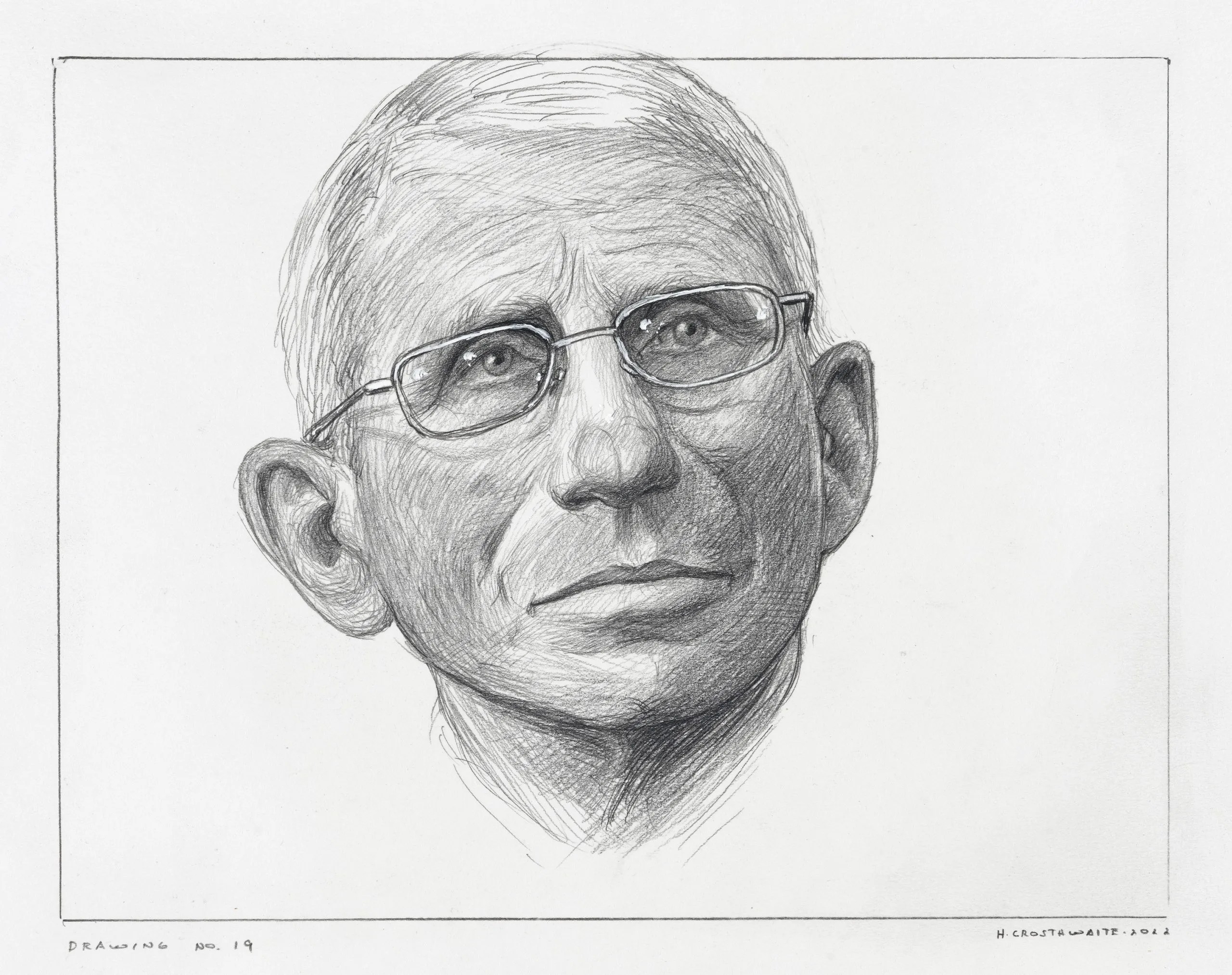
The National Portrait Gallery commissioned a “stop-motion drawing animation” that “examines the career“ of Anthony Fauci.
The American History Museum’s exhibit marking the 50th anniversary of Title IX includesbiological men competing in women’s sports and argues in favor of “transgender” athletes competing in sports against the opposite biological sex.
A exhibit at the American History Museum depicts migrants watching Independence Day fireworks “through an opening in the U.S.-Mexico border wall” and says America’s founders “feared non-White immigration.”

The American History Museum features a display that refers to the founding of America as “a profound unsettling of the continent.”
The American History Museum’s “American Democracy” exhibit claims voter integrity measures are “attempts to minimize the political power” of “new and diverse groups of Americans,” while its section on “demonstrations” includes only leftist causes.
An American History Museum exhibit features a depiction of the Statue of Liberty “holding a tomato in her right hand instead of a torch, and a basket of tomatoes in her left hand instead of a tablet.”

- The National Museum of the American Latino features an anti-American exhibit that defines Latino history as centuries of victimhood and exploitation, suggests the U.S. is stolen land, and characterizes U.S. history as rooted in “colonization.”
- The exhibit features writing from illegal immigrants “fighting to belong.”
- The exhibit displays a quote from Claudia de la Cruz, the socialist nominee for president and a director an anti-American hate group, as well as another quote that reads, “We didn’t cross the border; the border crossed us.”
- The exhibit remains prominently featured on its website alongside a quote from the Communist Party USA’s Angela Davis, who was once among the FBI’s Top 10 Most Wanted Fugitives.

- The National Museum of the American Latino features an anti-American exhibit that defines Latino history as centuries of victimhood and exploitation, suggests the U.S. is stolen land, and characterizes U.S. history as rooted in “colonization.”
- The exhibit features writing from illegal immigrants “fighting to belong.”
- The exhibit displays a quote from Claudia de la Cruz, the socialist nominee for president and a director an anti-American hate group, as well as another quote that reads, “We didn’t cross the border; the border crossed us.”
- The exhibit remains prominently featured on its website alongside a quote from the Communist Party USA’s Angela Davis, who was once among the FBI’s Top 10 Most Wanted Fugitives.

The former interim director of the future Smithsonian American Women’s History Museum declared the museum will be “inclusive” of biological men posing as women.
Commentary from The Hill, August 22, 2025:
White House lists 20 objectionable Smithsonian exhibits, artworks
BY ASHLEIGH FIELDS – 08/22/25 10:34 AM ET
The Trump administration specifically targeted the American history museum’s “LGBTQ+ History” exhibit and condemned a separate display lauding the 50th anniversary of Title IX with a focus on transgender athletes. President Trump signed an executive order in February barring transgender women from competing in women’s sports.
The decision to highlight more than a dozen exhibits and artworks as “woke” comes days after Trump criticized the history museum for its depiction of slavery and its impact on Black Americans.
“The Smithsonian is OUT OF CONTROL, where everything discussed is how horrible our Country is, how bad Slavery was, and how unaccomplished the downtrodden have been — Nothing about Success, nothing about Brightness, nothing about the Future,” the president wrote Tuesday in a Truth Social post.
“We are not going to allow this to happen, and I have instructed my attorneys to go through the Museums, and start the exact same process that has been done with Colleges and Universities where tremendous progress has been made,” he added. “This Country cannot be WOKE, because WOKE IS BROKE.”
During his first term, Trump lauded the opening of the National Museum of African American History and Culture for its portrayal of harsh truths and storied victories for disenfranchised Black citizens.
Trump’s issue with the depiction of slavery in museums has been widely challenged by Black historians and community leaders.
“Just as the Holocaust is remembered in all its brutality, so must America reckon with the truth of chattel slavery, Jim Crow and racial terror,” Toni Draper, publisher of the Afro-American Newspaper — the archives of which were used to help curate the museum — wrote in a recent op-ed for Afro.com. “Anything less is historical erasure, a rewriting of facts to make the nation appear more palatable.”
“But history is not meant to comfort — it is meant to confront. And only in confrontation do we find the lessons that lead us forward,” she added.
Bravo, Kuwait!

Bravo, Kuwait, for the first election in years, supplying Kuwait with what the New York Times describes as a “robust” collection of representatives.
As we know, democracy is messy. It is often compared to sausage making – you don’t want to know what goes into it. Having an autocratic leader, however, leads to increasing gaps between the very wealthy and privileged, and those who are at the bottom, working their bottoms off just to put a roof over their heads and food in the mouths of their children.
I look at the turbulence and polarization in my own country and thank God for a breath of fresh air, as this news of the election in Kuwait gives me hope. We are praying for a fair election in the United States.
“Oh, He’ll Blame Obama”
I laughed as I read the following headline to AdventureMan:
China will achieve major landmark this decade: Report
“Trump is going to hate that this is part of his legacy,” I laughed. Our infantile, petulent soon-to-be-gone President throws temper tantrums over this kind of news. Anything he doesn’t like he determines to be “fake news.”
AdventureMan just snorts. “He’ll just blame it on Obama,” he says.
Americans are addicted to cheap goods, and plenty of them. China feeds that need. No need to look for a conspiracy. It’s all classic supply and demand. No nefarious plots. Take a look at your furniture, your plasterboard, your wooden floors, look in your cupboard at your canned goods, in your closets at your clothing. China is building the largest economy in the world by providing what people want at a lower price.
Wooo HOOOO Biden / Harris!
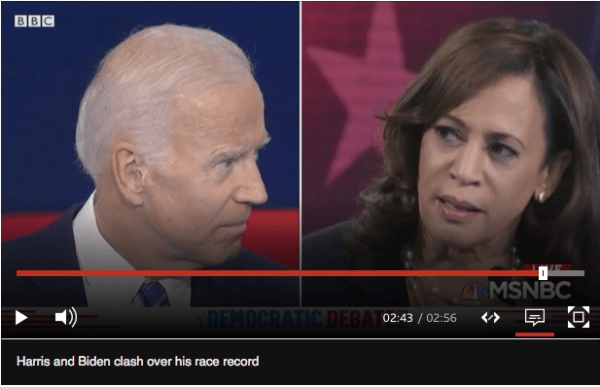
After more than three long depressing years, slogging through a presidency of a man I find totally unworthy to be the leader of the USA and the free world, finally, a breath of hope, a breath of fresh air.
I applaud Joe Biden, a decent man, with the stones to choose Kamala Harris, his sole genuine challenger in the Democratic race for the nomination, who challenged his position on race, and said it hurt her personally. I applaud him for listening. I applaud him for choosing a warrior woman, an unafraid woman, whom he can trust to tell it as she sees it. My position is that a leader needs to be surrounded by people who will tell the truth as they see it, and help him / her see different perspectives.
And Wooo HOOOO, Kamala Harris, WARRIOR WOMAN! Tell it! I may not aways agree with you, but I trust you. I trust your integrity, I trust your work ethic, and I trust your love for the United States of America and your compassion for our peoples.
Go team go! Fight, team, fight! WIN, TEAM, WIN!
Florida Breaks All Records for COVID Cases
First, to those of you who know me and are far away, we are well.
My Mother died of COVID in Seattle, in April. It was a shock. Although she was 96, she was mentally fit, very sharp, and her mother lived to 104. We all expected Mom to break her Mom’s record.
We don’t live in the biggest hot-spot, the Miami/Dade County area far to the south and east of Pensacola. No, we are in the eighth worst hit part of Florida, and part of the 18 greatest concerns for COVID according to the study out yesterday.
No one I know here has gotten sick. Almost everyone I know has the luxury of staying home, working from home, not needing to interface with the public unnecessarily. It is stunning, however, to think that one person in ten in this area has or has had the virus.
These graphs are not from the Florida Department of Health website. The person hired to design that website designed a great, comprehensive website to transparently share information. She was fired. She says she was fired for not agreeing to manipulate the information to make things look not so bad in Florida. Our governor is a total toady to President Trump, who is doing nothing to provide leadership to our country in fighting this pandemic, not providing comfort to those who suffer from it.


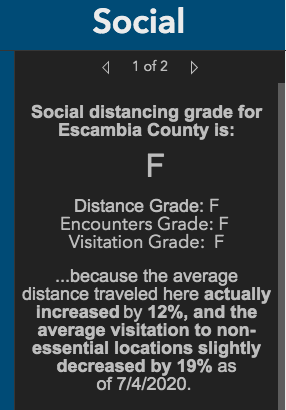
These snapshots are from her new website, which has much more accurate presentations of the situation in Florida than the official site. She, and others, gather information which may be obscure, but is available to the public, and publishes it. Her website is Florida Covid Action. She is a hero.
I live in a county where I have friends who support Trump and believe that the Democrats are over-hyping the problems for political reasons, so that Trump will lose his bid for re-election. They also believe masks are unnecessary. They don’t see any reason to socially distance. They perceive restrictions on their behavior as violations of their First Amendment rights.
So Trump has mandated our schools to open as normal – that means in August. The schools must offer an in-school option, which has many teachers frightened and/or furious. They also offer a remote school-day option, 6 hours in front of a computer, and an independent option, where a student completes a curriculum on his or her own. Those who attend school will not be required to mask or to social distance.
My grandchildren are 7 and 10. Their parents face having to choose the least bad of the three proposals. Parents all around the state are debating what to do. Many parents work, and child care is almost impossible to find and very costly. Many parents will have to send their children to school or leave them unattended and unsupervised at home.

The pediatric cases are for my county, Escambia County. The highest rate of transmission is among those 15 – 24. They’ve closed the bars, but the rate remains high, and rising. The rate of transmission among children is also rising.
I am outraged. We have handled this contagion worse that a third world country. We know masks work. We know social distancing, plus masks, plus conscientious hand-washing can flatten this curve, bring the number of cases down, and expect a rational re-opening. Nothing we have done, especially in Florida, has been rational. God help us. Lord, have mercy on us.
Sweet Land of Liberty: Religious Rights and Jury Duty
Every now and then, God, in his infinite mercy, sends an abundance of blessings, covers us with blessings. In a time in which I have found myself uncharacteristically depressed and anxious about the path our country is taking, for one brief moment, the last few days, all depression has lifted and all anxieties have calmed.
One source of anxiety has been a personal matter, a family matter, and that has resolved itself graciously, happily, with a great feeling of relief and gratitude.
For Sunday, July 2nd, our priest had prepared us for a new set of studies, kicked off by an examination of Democracy and Religion. There were rules – 1) Be nice (that’s what they say in the South for ‘be civil’) and 2) Try to see the issue through the eyes of someone with whom you disagree.
The church hall was set up with twenty-four chairs. A half hour before he was due to start, people started pouring in, and we started pulling out more chairs, and more chairs and more chairs. He actually started off early with a reflection on our Old Testament reading, the story of Abraham and the almost-sacrifice of Isaac. (My Moslem friends correct me; they tell me it was Isaac. Let’s just agree that it was Abraham and a son, and perhaps the details will come clear on the other side of the great divide.) More people arrived, more chairs put out until we were out of chairs. Toward the end of the discussion on Religious rights and Democracy, I did a quick count of chairs and people standing and figured we had over ninety people – and one of the best Sunday School classes ever.
Our priest took a Socratic approach, asking questions, bringing in current topics. In these times of divided opinions, there was, surprisingly, a lot of laughter. My favorite moment was when we were discussing limits on religious freedoms, and things that there are laws against – live animal sacrifices, bigamy, sale of alcohol on Sunday before 11 a.m. – then one of the lawyers added “How about serving liquor to minors without checking IDs every Sunday?” That got a big laugh. It’s what we do; we use real wine in the communion cup, it’s Anglican / Episcopalian tradition. And yep, even young children get to take a sip. Oops.
As divided as we are, as it turns out, we have a lot in common. It takes a lot of courage to open up such a topic to the congregation. We all behaved. I think we all came away thinking we need more of this.
The very next day, yesterday, I was at the County Courthouse for my first ever call to jury duty. Well, this was my first ever call where I actually was living in the United States and able to show up. While we lived overseas, I would have to get on my VOIP late at night when the Clerk’s office opened and tell them I was living in (Germany. Kuwait. Qatar. Saudi Arabia. Jordan. Tunis. Take your pick.)
Jury duty is an exercise in tedium. At one point when the large selection pool left a courtroom, one of the potential jurors was going “Baaaa baaaaa baaaaa; we are all like sheep.” You park in one place and get on a trolley to the courthouse, you line up to enter the courthouse, you gather in a room and you wait to be called. You get instructions, you watch instructive videos, you get pep talks on your civic duty.
I had my eyes opened in a lot of ways. First, that I would guess more than two hundred people showed up, and this was a Monday between the weekend and the Fourth of July holiday. Many had to take time off from work to show up. We were supposed to be in “business’ dress, but this is Florida, and I guess ‘business dress’ is a matter of interpretation.
Groups would be called to go before judges for jury selection. There were many cases, so almost all of us were a part of one group or another. From my group, juries were being chosen for three trials, so they asked a lot of questions up front that would pertain to all three trials, then the lawyers for the prosecution and the lawyers for the defense would ask questions.
The questions surprised me. They named the witnesses, and the defendants were there in the courtroom; they asked if anyone knew the defendant or any of the witnesses. They asked about our prejudices for or against law enforcement officials, and could we overcome our prejudice to listen to the evidence fairly. They asked about our own court experiences, and they asked about our convictions for drug use, and other things. Many of my pool had served many times on juries and knew how things went. Many were reluctant, yet, there they were. Serving. Doing their duty.
Here is what really surprised me – at least in Florida, the defendant, who is sitting there through all the questioning, gets a say in who will be on his jury. I had no idea! We don’t see a lot of jury selection on TV (although the lady sitting next to me said I need to watch a show called Bull, where jury selection is what the show is about.)
None of the defendants wanted me, and I can understand why. They want people on the juries to truly be as close to their peers as possible, people who can identify with being arrested, maybe even convicted of a crime. They want people who might give them the benefit of the reasonable doubt.
How often have you been arrested? My son, who has been a part of the system, once told me that there are Americans who never have a brush with The Law, other than maybe a traffic ticket or a DWI. Now and then, I ask my friends. None has ever been inside a jail, but these days, a friend or two has a child who has become involved with heavy drug use, and has spent some heart-breaking time in the system.
It was a long day, full of tedium. I thought about the judge, and the lawyers, who go through this day after day, asking the same questions, looking out at groups full of people who maybe don’t even want to be there, going through the process to insure that our system is as fair as possible, day after day, month after month. I had no idea that the wheel of justice ground so finely, so relentlessly, on and on. I had no idea what stoic determination it takes to be a part of that system, and trying to make sure that while the state makes the case, the defendants rights are protected.
I’ve lived, as you know, in countries where justice prevails – occasionally. I remember living in one country, which was peaceful, and thinking to myself that they were educating a lot of people for positions they will never be able to fill, because they are not in the elite.
We have all seen, in every country, that those with the money to buy the best legal protection can often escape the consequences of their crime, but there is hope, for me, even in making them stand trial.
I had no idea how proud I would feel at the end of the day, being a part of this huge effort, seeing how many of my fellow citizens, at great sacrifice to themselves, showed up. I had no idea what an education it would be for me. I had no idea how often those who least want to serve are those chosen to serve – and they persist. They show up.
I was in a room with maybe two hundred people from all walks of life. We were really just numbers, there to fill a systemic need. Some may even be, like me, a little cynical about how much justice our system really delivers . . . and we show up.
One of the defense lawyers yesterday asked us “Do you know what we are here about today?” and while we were all thinking about the charges, she answered “we are here about this man’s liberty. We’ll be deciding where he will spend his time in the next weeks, and months and years. We’ll be deciding his liberty.”
I’m glad I showed up.
Happy Fourth of July 🙂
Recent Comments
ExpatAlien on What Country am I Living … intlxpatr on Yellowstone: Old Faithful to C… Michelle on Yellowstone: Old Faithful to C… Cathy on No Grown-Ups in Charge intlxpatr on Waiting for Snow Wikipedia Donate Button

Amazina


Early Voting in Florida


 Here There and Everywhere