Bordeaux/Dordogne Trip – We Owe it All to Martin Walker and Bruno, Chief of Police
Several years ago, I ordered a book recommended by Amazon. I do that from time to time, and I will tell you honestly, some of them are real stinkers.
This book, Bruno, Chief of Police, by Martin Walker, was delightful. So delightful I started looking for more of the series, some of which I was able to find used. So delightful, I shared the Bruno, Chief of Police with my husband, and he, too, was hooked.
If there is a genre I like, it is detective novels set in foreign locations, dealing with crimes that have to do with social issues current in the locale. The first I can remember is the Eliot Pattison series about Inspector Shan, a Chinese detective who falls on the wrong side of Chinese political correctness and ends up in a Tibetan jail, where he begins a series long association with Tibetan monks and the threat to Tibetan civilization that the Chinese pose. It is eye-opening reading.
The next series I discovered were the Barbara Nadel series set in Turkey with Inspector Cetin Ikhmen. Then the fabulous and prolific Donna Leon and Commisario Guido Brunette, set in Venice.
And actually, I don’t read all this books in sequence. I watch for books by these authors, and read them when they come out, not unlike my addiction to James Lee Burke and Dave Robicheaux, set in New Iberia, Louisiana and Montana.
That was a very long introduction to the idea that it makes travel in foreign lands much more user-friendly to have read books that put you on the ground, seeing what the people who live there might see. When we went to Venice, we went off the beaten track to eat at a restaurant that Commissario Brunetti recommends to a touring couple who witnessed a crime and made a report to him. It was a great adventure just finding this restaurant, Rossa Rosa (“Guido Brunetti Sent Us”) and it had delicious local food, no tourists. In Venice. Imagine. Now, too, when we read the newest Brunetti novel, or watch the German production of the Brunetti series, we feel a closer connection with Venice, a familiarity, because we have a “friend” on the inside. Or so we feel.
Bruno Correze, the Chief of Police in the fictional French village of St. Denise, along the Vezere river close to where it links with the Dordogne, loves his small town. In the very first volume, we meet his friends, we visit his home, we are with him when he prepares meals and entertains his friends (he uses a lot of duck fat) and we get to visit the markets and cafes with him. Every book, like the best of this genre, introduces us to at least one issue, social and/or criminal, past or present, which is manifesting itself as a problem in the Dordogne. The actual crime may or may not be the point of the novel, and the solutions are often very French.
We have devoured this series. We felt like we had been there. So we decided we needed to go there.
We visited the Dordogne – it seems like a short time ago – the last time, 35 years ago, when our son, now grown, was around 9. We made a special effort to make this a trip which was relevant to him, too. We visited Castelnaud, and spent hours with the trebuchets and mangonels, old weapons once the ne-plus-ultra of fighting off the enemy. We visited the old caves with early paintings, when they were still open to visitors.
We love France, we love traveling in France and we have never had a negative experience in France. While I once spoke French fluently – we lived in French speaking Tunisia – but language skills get rusty when they don’t get exercised. Oh, really, any excuse will do. Martin Walker’s books made us hungry, hungry for French foods and hungry just to be in France.
We booked a cruise out of Bordeaux, eight days of cruising on the Gironde, Dordogne and other rivers, visiting villages older than our entire nation, learning about major appellations, eating some fine food and drinking some very fine wine.
And then we picked up a rental car in Bordeaux and headed to the Dordogne. I’m going to tell you all about it, but first I want to share Martin Walker’s books with you. He, and Bruno, have a wonderful website where he tells you all his favorite places. As we read the Bruno books, we also take notes – which wine he chose to serve with the duck course, where he and his friends gathered for the wedding feast, etc. It was like having a friend who says “Oh, I am desolate I won’t be there, but here are all the places you need to go, restaurants you will like and oh, be sure to try this wine!” Hotel and restaurant recommendations are on the website under “Bruno’s Perigord”
Martin Walker’s Bruno, Chief of Police website
Here are the Bruno, Chief of Police books, in order, from a resource called How to Read Me, which puts the books in order. http://www.howtoread.me/bruno-chief-of-police-books-in-order/
1 Bruno, Chief of Police – Meet Benoît Courrèges, aka Bruno, a policeman in a small village in the South of France who has embraced the pleasures and slow rhythms of country life. But then the murder of an elderly North African who fought in the French army changes all that. Now, Bruno is paired with a young policewoman from Paris and the two suspect anti-immigrant militants. As they learn more about the dead man’s past, Bruno’s suspicions turn toward a more complex motive.
2 The Dark Vineyard – When a bevy of winemakers descend on Saint-Denis, competing for its land and spurring resentment among the villagers, the idyllic town finds itself the center of an intense drama. Events grow ever darker, culminating in two suspicious deaths, and Bruno finds that the problems of the present are never far from those of the past.
3 Black Diamond – Something dangerous is afoot in St. Denis. In the space of a few weeks, the normally sleepy village sees attacks on Vietnamese vendors, arson at a local Asian restaurant, subpar truffles from China smuggled into outgoing shipments at a nearby market—all of it threatening the Dordogne’s truffle trade and all of it spelling trouble for Benoît “Bruno” Courrèges, master chef, devoted oenophile, and, most important, beloved chief of police.
4 The Crowded Grave – It’s spring in the idyllic village of St. Denis, and for Chief of Police Bruno Courrèges that means lamb stews, bottles of his beloved Pomerol, morning walks with his hound, Gigi, and a new string of regional crimes and international capers. When a local archaeological team searching for Neanderthal remains turns up a corpse with a watch on its wrist and a bullet in its head, it’s up to Bruno to solve the case.
5 The Devil’s Cave – It’s spring in St. Denis. The village choir is preparing for its Easter concert, the wildflowers are blooming, and among the lazy whorls of the river a dead woman is found floating in a boat. This means another case for Bruno, the town’s cherished chief of police.
6 Bruno and the Carol Singers (short story) – Bruno is occupied with his Christmastime duties. From organizing carolers to playing Father Christmas for the local schoolchildren, Bruno has his hands full . . . at least until some funds raised for charity go missing.
7 The Resistance Man – First, there’s the evidence that a veteran of the French Resistance is connected to a notorious train robbery; then, the burglary of a former British spymaster’s estate; and, finally, the murder of an antiques dealer whose lover is conveniently on the lam. As Bruno investigates, it becomes clear that they are connected.
8 The Children Return (also known as Children of War) – Bruno’s village of St. Denis has been called many things, but a hotbed of international intrigue has never been one of them . . . until now. When an undercover agent is found murdered just as a prodigal son is set to retun from a grim tour in the Middle East, the small town suddenly finds itself host to a determined global tribunal, threatening the usual cheer brought by St. Denis’s annual wine festival.
9 A Market Tale (short story) – As summer blooms, the newest talk of the town is the rapport between Kati, a Swiss tourist, and Marcel, a popular stall owner whom Kati meets over his choice strawberries. None are happier than police chief Bruno to see Marcel interested in love again, but as his friend’s romance deepens, Bruno senses trouble in the form of Marcel’s meddlesome sister Nadette.
10 The Patriarch (also known as The Dying Season) – Bruno Courrèges is thrilled when he receives an invitation to the lavish birthday celebration of his childhood hero, World War II flying ace Marco “the Patriarch” Desaix. But when the party ends in the death of one of Marco’s longtime friends, Gilbert, it turns into another day on the job for St. Denis’s chief of police.
11 Fatal Pursuit – It’s the start of summer, and Bruno’s found himself the last-minute replacement navigator in a car rally race. The event has attracted a spate of outsiders with deep pockets, big egos and, in the case of one young Englishman, an intriguing story about a lost Bugatti Type 57C. When a local scholar turns up dead, Bruno suspects unnatural causes.
12 The Templars’ Last Secret – When a woman’s body is found at the foot of a cliff near the idyllic French town of St. Denis, chief of police Bruno Courrèges suspects a connection to the great ruin that stands above: a long-ago Knights Templar stronghold. With the help of Amélie, a young newcomer to the Dordogne, Bruno learns that the dead woman was an archaeologist searching for a religious artifact of incredible importance.
13 A Taste for Vengeance – When a British tourist fails to turn up for a luxurious cooking vacation in the idyllic village in the south of France that Bruno Courrèges calls home, the chief of police is quickly on the case. Monika Felder is nowhere to be found, and her husband, a retired British general, is unreachable.
14 The Chocolate War (short story) – Police chief Bruno enjoys wandering the stalls of the weekly market in the village of St. Denis as they are being loaded with wares. But when Bruno’s old friend Léopold from Senegal start selling African coffee and chocolate more cheaply than Bruno’s old friend Fauquet at his café across the square, a competition erupts between the vendors.
15 The Body in the Castle Well – When Claudia, a young American, turns up dead in the courtyard of an ancient castle in Bruno’s jurisdiction, her death is assumed to be an accident related to opioid use. But her doctor persuades Bruno that things may not be so simple. Thus begins an investigation that leads Bruno to Monsieur de Bourdeille, the scholar with whom the girl had been studying, and then through that man’s past.
How to read me: Bruno, Chief of Police
http://www.howtoread.me/bruno-chief-of-police-books-in-order/
I owe a big thanks to Martin Walker for giving us so much inside information which enhanced our trip so much. I will try to remember to give him credit along the way as I take you along with us on our trip.
“Do You Have a Heartbeat?”
This morning in Pensacola the temperature was a cool 71 degrees F. and the humidity was low. It makes all the difference in the world.
“How’s your day?” I asked my friend in the pool at the YMCA, and she grimaced. “I’m off to a bad start,” she said, “I hung my suit and towel and shoes on the line outside, and after the rain last night, everything was soaked this morning.
(We really needed the rain, and we got a soaker of a storm. Today, everything is blossoming in our yard and happy, moonflowers, African Irises, Ginger, plumbago, roses – they respond to a good soaking by blooming in delight.)
I grinned at her. “Did you wake up this morning? Do you have a heartbeat? Are you breathing? Are you here at the YMCA?” I was heartless, and persistent. She laughed.
I talked about the countries I’ve lived in; how in my first African country, Tunisia, back in the day, people competed for our garbage. My cleaning lady asked permission to take glass jars with lids, to take tuna cans. She asked that I give her any clothes I didn’t want. In the Middle East, there were restaurants where people waited near parked cars to beg for the leftovers we carried. Anything. Anything would do.
Some people didn’t have a towel, much less a swim suit, or shoes to hang on a line.
We live in the midst of plenty. Even Tunisia, when we went back twenty five years later, didn’t have the poverty we saw when we lived there. We didn’t see clubbed feet, we didn’t see hunched backs, we didn’t see crossed eyes. The little villa we had lived in had a second floor. There were signs everywhere of prosperity. We didn’t see any beggars, not one.
When I get all wrapped around the axel about the state of civility in my country, about our abuses at the border, about our increasing bureaucratic hardness-of-heart toward the least of these, I need to stop and take a deep breath and spend time acknowledging how very blessed we are. It gives me strength to go on fighting.
In the Wadi
A lovely quiet Saturday morning; the cats let me sleep in a little bit, I rise relaxed and happy to feed them and to read The Lectionary before my day gets fully underway.
The Old Testament story is David and Goliath.
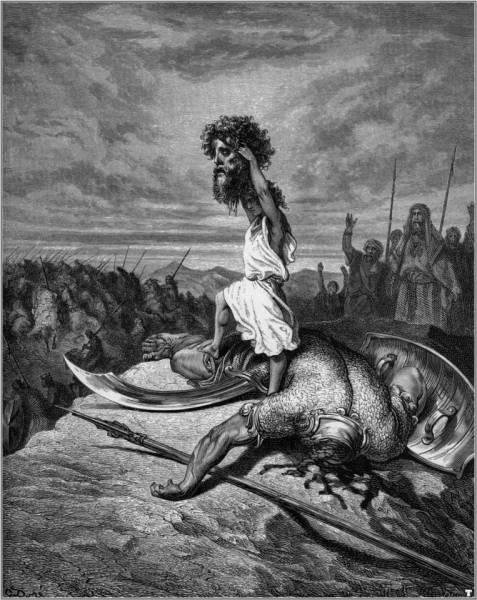
1 Samuel 17:31-49
31 When the words that David spoke were heard, they repeated them before Saul; and he sent for him. 32David said to Saul, ‘Let no one’s heart fail because of him; your servant will go and fight with this Philistine.’33Saul said to David, ‘You are not able to go against this Philistine to fight with him; for you are just a boy, and he has been a warrior from his youth.’ 34But David said to Saul, ‘Your servant used to keep sheep for his father; and whenever a lion or a bear came, and took a lamb from the flock, 35I went after it and struck it down, rescuing the lamb from its mouth; and if it turned against me, I would catch it by the jaw, strike it down, and kill it. 36Your servant has killed both lions and bears; and this uncircumcised Philistine shall be like one of them, since he has defied the armies of the living God.’ 37David said, ‘The Lord, who saved me from the paw of the lion and from the paw of the bear, will save me from the hand of this Philistine.’ So Saul said to David, ‘Go, and may the Lord be with you!’
38 Saul clothed David with his armour; he put a bronze helmet on his head and clothed him with a coat of mail. 39David strapped Saul’s sword over the armour, and he tried in vain to walk, for he was not used to them. Then David said to Saul, ‘I cannot walk with these; for I am not used to them.’ So David removed them. 40Then he took his staff in his hand, and chose five smooth stones from the wadi, and put them in his shepherd’s bag, in the pouch; his sling was in his hand, and he drew near to the Philistine.
41 The Philistine came on and drew near to David, with his shield-bearer in front of him. 42When the Philistine looked and saw David, he disdained him, for he was only a youth, ruddy and handsome in appearance. 43The Philistine said to David, ‘Am I a dog, that you come to me with sticks?’ And the Philistine cursed David by his gods. 44The Philistine said to David, ‘Come to me, and I will give your flesh to the birds of the air and to the wild animals of the field.’ 45But David said to the Philistine, ‘You come to me with sword and spear and javelin; but I come to you in the name of the Lord of hosts, the God of the armies of Israel, whom you have defied.46This very day the Lord will deliver you into my hand, and I will strike you down and cut off your head; and I will give the dead bodies of the Philistine army this very day to the birds of the air and to the wild animals of the earth, so that all the earth may know that there is a God in Israel,47and that all this assembly may know that the Lord does not save by sword and spear; for the battle is the Lord’s and he will give you into our hand.’
48 When the Philistine drew nearer to meet David, David ran quickly towards the battle line to meet the Philistine. 49David put his hand in his bag, took out a stone, slung it, and struck the Philistine on his forehead; the stone sank into his forehead, and he fell face down on the ground.
So it’s an interesting story, and, as it turns out, plausible. When we lived in Tunis and in Amman, we often saw young men with slings, and they were amazingly proficient.
What caught my eye in this reading was that David picked up five smooth stones from the wadi, and that one work brought back so many associations. We often camped, in Tunis, and in Jordan, and from time to time we set up camp in a wadi. It always made me nervous, thinking that a sudden, unexpected, unseasonal, and, frankly, totally unlikely storm could come along and wash us to a tragic death. That kind of timidity came with motherhood, and an understanding of how little control I had as a mother, protecting children from all the possible ways children can be injured, sometimes fatally. Lucky for me (she says wryly) she was always outvoted by the testosterone in the family, and the dearth of likely camping spots.
In Tunisia, the Tunisia before Tunisia became developed, we would drive around to old ruins, Roman, pre-Roman, ancient ruins, and camp. There were no toilets, no showers. We had a Volkswagon bus. From time to time when nature called, I would turn to AdventureMan and say “I need a wadi.”
He knew what I meant. He would find a bridge over a wadi in a seemingly deserted place, and I would jump out, pee quickly, and run for the bus. I always wore a wrap skirt or a jean skirt, so much quicker.
“Why the hurry?” you might ask.
We learned, from the very beginning, that no matter how deserted a place might appear, that within two minutes of stopping curious children would begin to show up. Mostly they were just interested that something different was happening, sometimes they wanted “bonbon.” We always carried a package of hard candy; anything else would melt in the heat, in these days before Volkswagen buses had air conditioning.
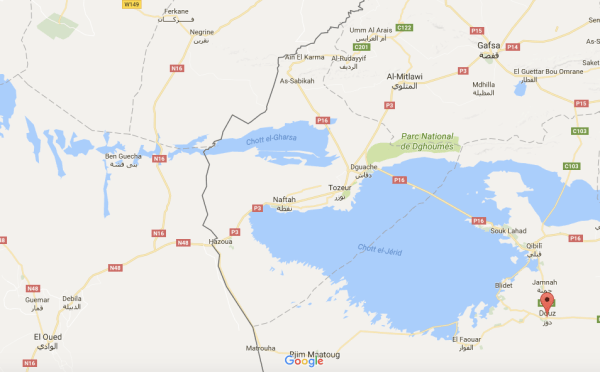
As for showering – we didn’t. At least most of the time, we didn’t. One time, one December, just after Christmas, there was a desert festival in Douz, and we went on a week-long camping trip. We camped in an oasis / field just outside of Douz, and right next to the Bedouin campers, who would come to sit with us around the campfire. During the day, there were parades of camels, and at night, huge bonfires and poetry contests.
The desert nights were cold, so bitterly cold I’ve never been colder, not even in Alaska. I zipped two sleeping bags together and had my son in mine with me; the cold was so intense it robbed the heat right out of our bodies, and I could protect him with mine. AdventureMan said it was the only time in his life that he considered peeing in his sleeping bag rather than leaving it’s small protection to walk outside the camp (he braved the walk!)
When the festival ended, we drove across the Chott al Jerid, a great salt flat, huge and empty, and then up into the mountains. I think we headed to Al Mitlawi, and from there, followed a crude map to a waterfall, near which we camped. On New Year’s Eve day, we got up early and headed to the waterfall, which we had all to ourselves, for a shower. It’s one of the most amazing memories I have, showering under that waterfall in a dry and arid part of the world. It was so early, and so remote, no children showed up. 🙂
Update: As I am reading the news, I see that in May the U.S. Department of State issued a travel warning for Tunisia, specifically the southeastern and mountainous parts, because of terrorism.
To Have Diplomatic Immunity, You Actually Need Diplomatic Credentials
Not only did Sheikh Khalid bin Hamad al Thani rent this house before he fled the USA fearing arrest for reckless driving, but now Saudi Prince Majed Abdelaziz Al-Saud rents the same house and is arrested after forcing some young woman to have oral sex. She was seen escaping the house and crawling over the wall to get away. Sorry guys. You may get away with these things in Qatar and Saudi Arabia, but not in the USA. And it’s just embarrassing to claim diplomatic immunity when it’s so easy to prove you have none. We have to play by your rules when we live in your country. It’s called being a good guest. Please pay us the same courtesy. It’s our country.

From today’s AOL News/Fox News:
A Saudi prince was arrested Wednesday at a compound near Beverly Hills in connection with an alleged sex crime after a bleeding woman was seen trying to flee the grounds.
Majed Abdulaziz Al-Saud, 28, was arrested on suspicion of forced oral copulation of an adult, according to the Los Angeles Times. Police were called to the gated compound after a caretaker at the home reported the disturbance. The Times, citing jail records, reports Al-Saud was freed on $300,000 bail Thursday afternoon. LAPD officer Drake Madison told the newspaper the suspect was booked after 4 p.m.
Capt. Tina Nieto said the police department has a consul liaison that checks with foreign nations’ consulates regarding a certain person’s diplomatic immunity. Nieto said Al-Saud doesn’t have immunity in this case.
Tennyson Collins, a neighbor, told the Times he saw a bleeding woman trying to scale the property’s 8-foot wall on Wednesday. When Collins returned home from work, police followed his car through the gates and then onto the property. He said officers escorted about 20 people out of the compound, most of them staff members.
Police said Al-Saud was renting the home, which Zillow values at $37 million. Collins said different foreign nationals have been renting out the home for weeks at a time over the past year.
Earlier this month, a Qatari prince, Sheikh Khalid bin Hamad al Thani, was videotaped racing a yellow Ferrari through Beverly Hills at speeds of up to 100 miles per hour, blowing through stop signs and frightening residents. Al Thani later denied driving recklessly and claimed he had diplomatic immunity, Beverly Hills police said. Authorities consulted with the State Department and the Qatar consulate and determined he did not have diplomatic immunity, police Chief Dominick Rivetti said during a Sept. 17 news conference.
Al Thani reportedly flew back to Qatar before he could be arrested.
What Do You Wear When It Gets Really Hot?
 The people in my group last week suffered greatly in the high temperatures and high humidity we are experiencing. I must be adapting a little; I remember being thankful for the breeze.
“What do you wear when it gets this hot?” they asked me, “like around the home?”
I laughed. I learned a thing or two in Tunis, in Amman, in Tabuk and Riyadh, in Kuwait and in Doha. At home, I dress like local women, in long loose dresses.
Or worse. I dress like their maids. In the souks you could find wonderful, 100% cotton dresss that were loose and flowing, and that is good in hot weather so the air can circulate. Some of the dresses were nicer, but the dresses I liked a lot for just being around the house doing what people do, like making sure the dishes are done and a meal prepped, doing a little quilting or reading . . . you could buy these great little dresses for about $3.00 in the souks. Not only were they practical – especially when you live in a house with a cat, and always put on “real” clothes just as you are about to run out the door so you don’t have any cat hair on you – but they came in great colors and prints, designs that made me happy to put them on.
Now, one of my all time favorite dresses, in purple and black, has bit the dust. I liked it because it had some geometrics, and the geometrics changed, and – it was purple. I have worn it for about six years now, and I have worn it out. I mended it several times when the underarm seams ripped:

But now, it has gotten all soft, so soft the material just rips easily with holes that cannot be mended.
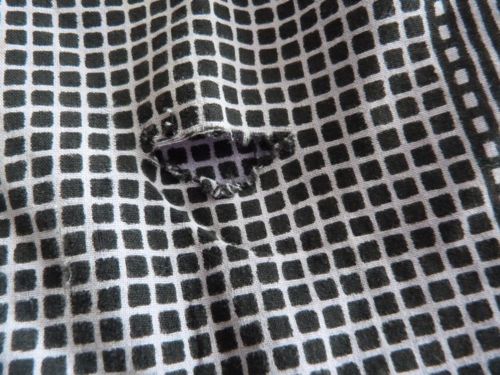
I like this dress so much I am saving it and cutting it up so it will have another new life as a quilt 🙂
And I am thinking it is time to plan a trip back to Doha and Kuwait to replenish my hot weather dresses 🙂
Study Shows Muslim Nations Differ on How Women Should Dress
Digg started sending me articles, I don’t know why, but every now and then something turns up truly interesting. This is a Pew Research Center Study found in Slate Online Magazine:

Charted: How People in Seven Muslim Countries Believe Women Should Dress
By Joshua Keating
As the chart above, created by the Pew Research Center, goes, there’s quite a bit of variation over what constitutes proper dress for women in the Islamic world. The data for the chart come from the Middle Eastern Values Survey conducted by the University of Michigan’s Institute for Social Research. (Several hundred people comprising what the researchers describe as a nationally representative sample in terms of education, religion, and social class were polled in each country. The gender breakdown was close to 50–50 in each of them.)
As you’ll see, the majority overall said that a woman should completely cover her hair but not her face. The majority in conservative Saudi Arabia favored the face-covering niqab, while relatively liberal Lebanon and Turkey had the highest support for no covering at all. (Hijabs are still prohibited for women in a number of jobs in Turkey.)
Overall, Tunisia had the highest number of respondents (56 percent) saying it is “up to a woman to dress whichever way she wants.” Only 14 percent of Egyptians agreed. Interestingly, given that it has the most stringent legal dress codes of any country sampled, 47 percent of Saudis said women should be able to dress how they wish.
God Vs. Worry; God Wins
One of the things that adds texture to my life, and helps keep me on the straight and narrow (and that takes a LOT) is reading the daily lectionary every single morning of the year, before I do anything else. Normal days, I access it from my computer, traveling or appointment days, I can access it from my iPad or iPhone. It’s like a little extra fence that helps keep me safe from myself and my own creativity when it comes to evil.
There is another side, the blessing side. In one of the bible studies I attend, we learn, over and over that God blesses the believer. You don’t have to be perfect – and it’s a good thing, because none of us are. If you want to see how much God can love a sinner, just read your bible. Sin is one of the main characters, right along side Abraham and Sarah, Job, Lot, and especially King David.
But in my life, I have seen wondrous things, and I have had some totally WOW moments when God has blessed me beyond any prayer I could have raised. One of those moments was showering under a waterfall near an oasis in the Tunisian desert. Two others happened this year, and these were blessings that stopped me in my tracks with their timing and aptness. First, we got an unexpected tax refund which arrived in our account just in time to cover the big expensive air conditioning system on the main floor when it broke and had to be replaced.
Second, when we were looking for the last few thousand dollars to help us buy a new car (we prefer to pay cash) we got another tax refund – we had asked that they re-look taxes for a move, and they allowed the moving expenses. We had waited almost a year for that decision; we had waited so long we had pretty much forgotten and given up on it. I mean tax refunds – it’s a never-never land, it all seems so arbitrary. You can have a perfect case, and it can be denied for a reason you’ve never heard of.
God’s timing is perfect. His sense of humor is breath-taking. The funds we needed poured into our hands just when we needed them, in just the right amount.
Matthew 6:25-34
25 ‘Therefore I tell you, do not worry about your life, what you will eat or what you will drink,* or about your body, what you will wear. Is not life more than food, and the body more than clothing? 26Look at the birds of the air; they neither sow nor reap nor gather into barns, and yet your heavenly Father feeds them. Are you not of more value than they? 27And can any of you by worrying add a single hour to your span of life?* 28And why do you worry about clothing? Consider the lilies of the field, how they grow; they neither toil nor spin, 29yet I tell you, even Solomon in all his glory was not clothed like one of these.
30But if God so clothes the grass of the field, which is alive today and tomorrow is thrown into the oven, will he not much more clothe you—you of little faith? 31Therefore do not worry, saying, “What will we eat?” or “What will we drink?” or “What will we wear?” 32For it is the Gentiles who strive for all these things; and indeed your heavenly Father knows that you need all these things. 33But strive first for the kingdom of God* and his* righteousness, and all these things will be given to you as well.
34 ‘So do not worry about tomorrow, for tomorrow will bring worries of its own. Today’s trouble is enough for today.
Happy 7th Blog-iversary to Me!
Once a year I get to troll the internet looking for cakes. It is so much fun. I had no idea there is so much creativity out there, so much daring. I found a wedding cake that is tilted! Something in me loved it, loved the spirit of a woman who would marry knowing life is often off-kilter and messy.
I love white roses, so this year I have sent some to myself:
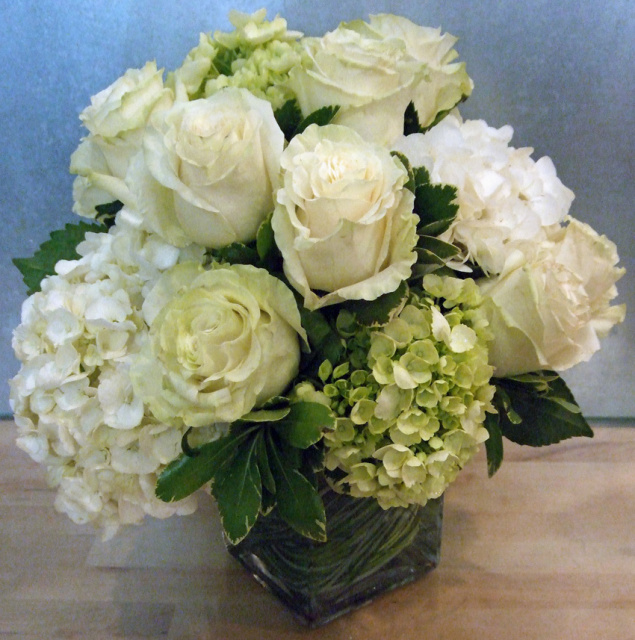
Come on by, have some virtual cake with me to celebrate seven years of blogging:
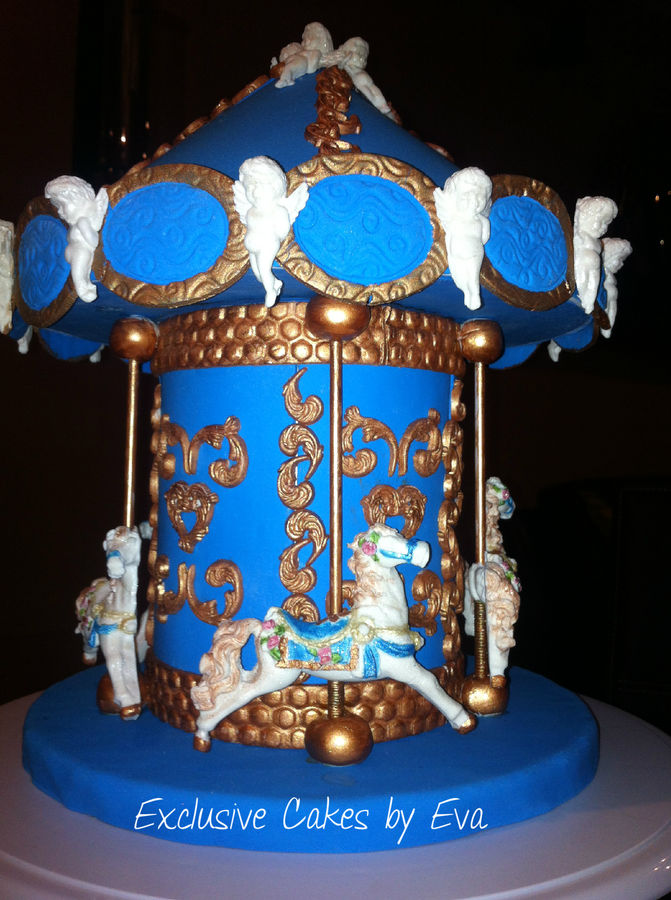

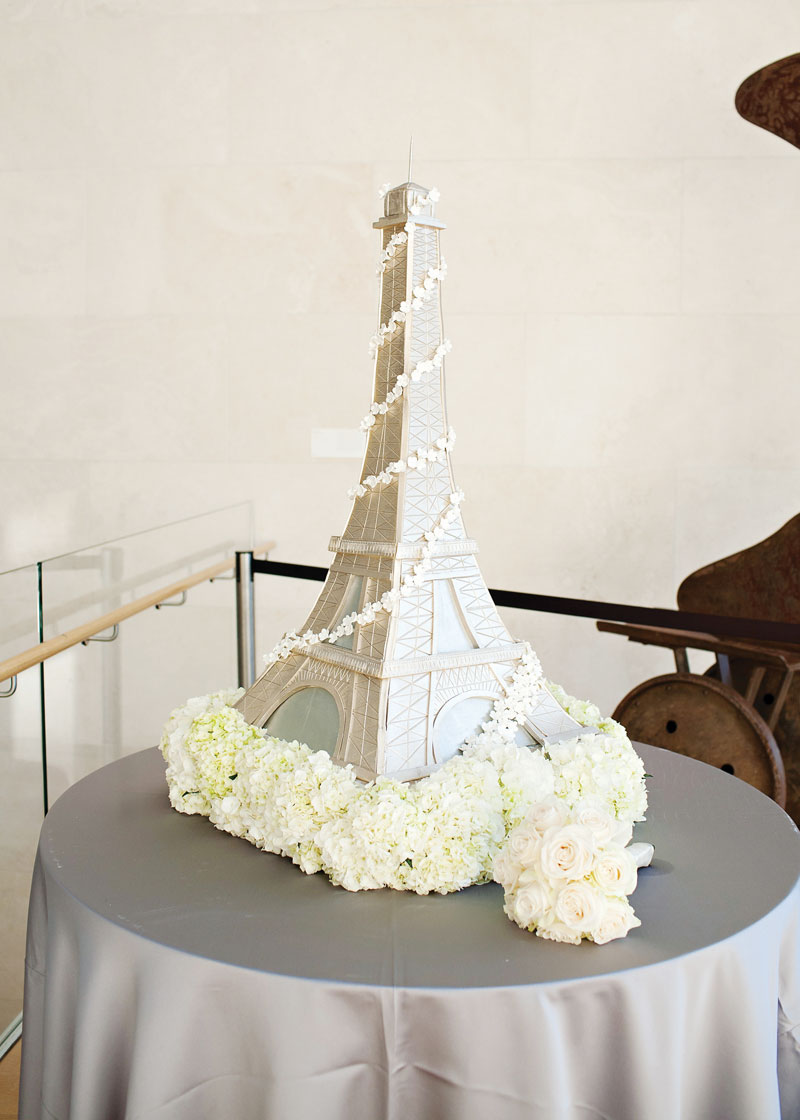
And here, an elegant combination of cake and white roses:

Seven years ago in Kuwait, I started blogging. There was a wild blogging scene in Kuwait, a lively community. Blogs were candid, and many were substantial, dealing (carefully) with political and economic issues in Kuwait. I remember reading and learning, and finally gathering up my courage to write my very first entry, and it has been a recurring theme, cross-cultural communication. I learned so much from my life in the Middle East, Tunisia, Jordan, Saudi Arabia, Qatar and Kuwait. I made the most amazing friends. It changed my life and my perceptions utterly.
Of the three Kuwait female bloggers who inspired me to start blogging, Jewaira has gone private, 1001 Nights is a good friend, a mother, and an author 🙂 and Desert Girl is still going strong. Mark, at 2:48 a.m. is also still going strong, so strong that he has been able to leave his full time employment and operate on a consultant basis.
Of course, as any blogger will, I sometimes think of quitting. There are days I find myself with nothing to say, nothing in my life so interesting that I think it is worth sharing, not even a news story worth noting. So I’ve had to ask myself why I continue.
I do it for myself. When I started, I had a reason and that reason still stands. I forget things. This isn’t age-related, it’s busy-life busy-world related; we forget the details.
My Mother saved all my letters from Tunisia. I remember reading them and laughing because at three, my son’s best friend in his day school was a boy he called Cutlet. I know his real name is Khalid, but Cutlet was as close as this little American boy in a French-Tunisian school could get. I had totally forgotten, until I read the letter. So my primary reason for continuing to blog is documentary – just plain record keeping, like an old fashioned diary. Noting things in my daily life or the life around me.
Even now, sometimes I see a post written long ago, usually one of our Africa trips, Botswana, Namibia, Tanzania, Zanzibar, Zambia – will start getting a rush of stats. It thrills my heart. It makes it all worthwhile, knowing something I have put out there is helping others, even years later. Perhaps one day, I will quit blogging, but leave the blog up, with these informational articles.
My stats make no sense at all, one of my biggest stat gainers this year was a news article I tossed off about the prank on the South Korean pilot names after the plane crash landed in San Francisco. It just made me giggle, and I couldn’t resist printing it. It ended up with a life of its own, as many entries do – and you just never know. Someone pins an image and you get a million (ok hyperbole here) hits you never expected.
In the end, I believe that those who keep blogging do it because as Martin Luther once said, “I cannot other.” We do it because something within needs to be expressed, even if it is just some kind of daily record. I know it’s why I blog.
Name that Country: A Most Difficult Challenge
This morning, as I was praying for Panama – there is always a diocese listed in the daily lectionary to be prayed for somewhere in the world – I was thinking how I know where Panama is. When we are praying for Nigeria, there are names I haven’t heard of. I now Lagos, and Port Harcourt, but where is Abuja? Owerri? I go to GoogleEarth and look them up.
I struggle with how little the average American knows about geographical location. It’s just embarrassing. Through all the years I lived abroad, most of the time, unless it was Germany, people couldn’t quite place where I was living. Many had heard of Tunisia; we had troops there in World War II, and Saudi Arabia, because they had seen it often enough on the news, but the rest of the Arab Gulf, Jordan, Syria, North Africa – beyond them.
Then, on the first night of one of my grad classes, the professor handed us this map and gave us ten minutes to put in the appropriate country names. He did not, thanks be to God, ask us to put in capitals. Not a single one of us got them all, and this was a class full of nation-oriented people.
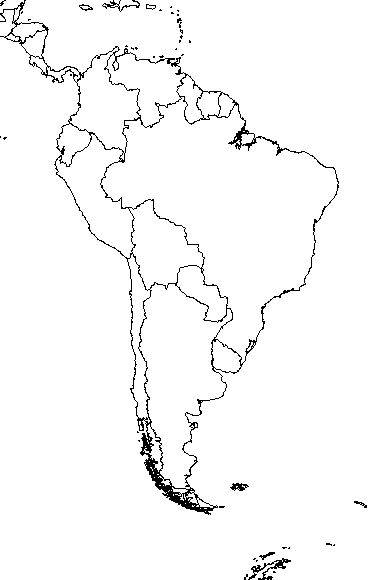
It was also on the final exam, three months later, and most of us got them all right – thanks to some fervent cramming and study groups.
Here are a couple more maps, in case you are feeling cocky. See if you can accurately fill in the name of each country:
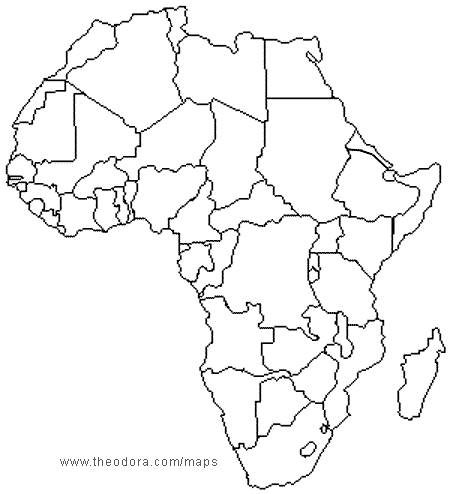

Bonne chance!
Welcome Ramadan 2013!

My first Ramadan was in Tunisia. It was summer, it was hot, and the days were long. The days dragged by, and then, in the evenings, our neighbors would send over huge platters of lamb and couscous, hot and spicy, to share with us. Our neighbors had ten children, all around our age, some older, some younger, and cars would arrive endlessly, bringing and taking people. They often included us in the family gatherings, out of the kindness and generosity of their hearts.
I didn’t understand how it all worked, Ramadan and fasting, and they would explain it to me. It’s a lot to take in. It took me a long time, many years, many Muslem countries, many Muslim friends. I still don’t think I understand all of it, but I understand enough of it to know this – it’s like a month of Christmas Eves.
A good Muslim won’t just fast from sunrise to sundown. A good Muslim circumcises his or her heart in this time. A good Muslim will read through the entire Quran at least once during Ramadan. The whole point of the sacrifice is to purify the soul.
I wish for my Muslim friends a joyful Ramadan, full of blessings. May God our Creator and Heavenly Father receive your sacrifice and bless your fasting. May your Mama prepare all your favorite foods for the breaking of the fast. 🙂
Recent Comments
intlxpatr on Shampoo Ginger tigerbutterya0c5ff1d… on Shampoo Ginger intlxpatr on British Soldier Kidnapped, Esc… John on British Soldier Kidnapped, Esc… intlxpatr on British Soldier Kidnapped, Esc… Wikipedia Donate Button

Amazina


Early Voting in Florida


