The Door Into Summer
We had a cat, a street cat from Tunisia, named Cinnamon. I had taken our son to see a movie and when I got home, my husband looked funny. You know, a wife can tell. I said “what’s up?” and he gave me those big innocent Bambi eyes that tell you for SURE something is fishy, and he said “Nothing!”
Just then, we could hear loud loud miowing at the back door, the kind only a kitten can make, the kind that attracts attention. We went to the back door and there was this tiny little kitten, barely old enough to be away from her family, and she is stuck between the screen door and the back door.
“How very strange!” I said, looking accusingly at AdventureMan, who continued to try to look innocent.
“She looks cold!” he said. “Maybe we had better bring her in!”
Later he confessed, he has found her wandering around alone, wet and miowing in our backyard and had been feeding her while we were at the movie, then put her in the back door so we could “discover” her. He wanted to keep her. We already had one big cat, but we had wanted another, and here she was.
She was my Door into Summer cat. She still had all her wild instincts, even though we adopted her at such a young age. Once, in Germany, I found a dead hare on my steps, with it’s throat torn out, an offering from Cinnamon – but the hare was at least twice her size! She was always bringing us offerings of a dead nature; she was a born huntress. One time when AdventureMan got out of bed, he stepped on what he thought was a rolled up sock, but it moved! It was a badly wounded mouse!
Cinnamon hated winter. We lived in a house with a lot of doors, and when it would snow, she would go from door to door, asking us to open so she could go out. When the bitter cold with the biting wind would hit her face, she would back into the house and head for the next door – always looking for the door she remembered, the one which led out into summer.

moar funny pictures
I used to read a lot of Robert Heinlein. His books are SO politically incorrect, so sexist, he was an old engineer, but man, could he write. His writing takes you WAAAYYY out of the here and now, and makes you stretch to think in new ways.
He wrote a book called Door into Summer, in which he wrote about another cat:
“…While still a kitten, all fluff and buzzes, Pete had worked out a simple philosophy. I was in charge of quarters, rations, and weather; he was in charge of everything else. But he held me especially responsible for weather. Connecticut winters are good only for Christmas cards; regularly that winter Pete would check his own door, refuse to go out it because of that unpleasant white stuff beyond it (he was no fool), then badger me to open a people door. He had a fixed conviction that at least one of them must lead into summer weather.”
The Door into Summer – Robert A. Heinlein
You can read about Robert Heinlein on Wikipedia and you can find many of his books still in publication on amazon.com.
Tuna Tunisienne
I didn’t dare publish this photo before the day’s fast had ended. Doesn’t it look just yummy?

We all know what tuna salad is all about, right? A can of tuna, maybe some pickle, and some mayo, slosh it on the bread and you’re done? If you’re getting fancy, you can grill it?
When I moved to Tunisia, I learned a whole new way to eat tuna – I still add the sweet pickle, but now, I also add a LOT of parsley, a little lemon juice, some finely chopped onion, coarse pepper and salt, and then, just a little mayo.
It has a fresh flavor. You can taste all the individual tastes, but together they are magnificent. If you have any capers, you can throw them in, too. C’est magnifique!
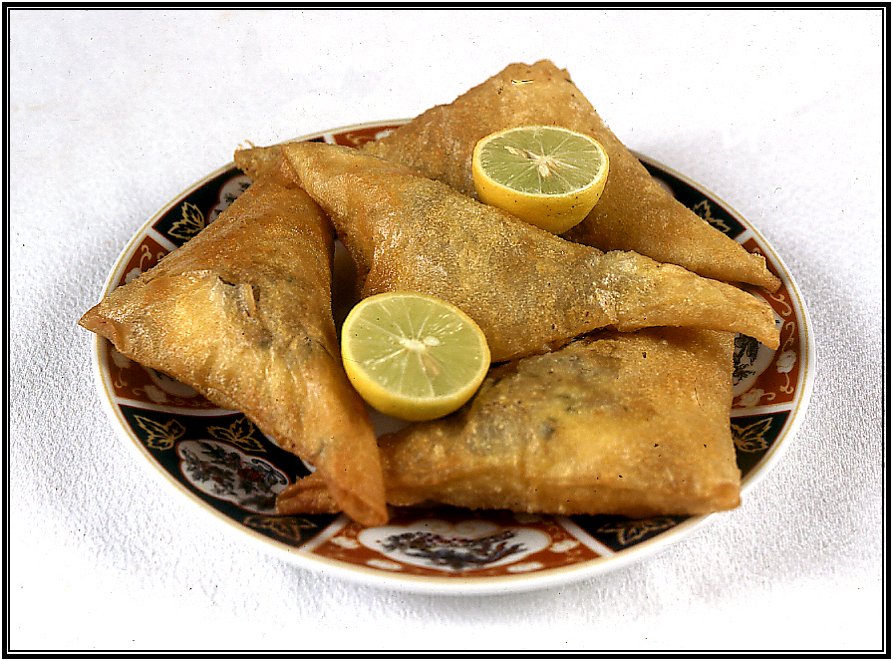
This is how the Tunisians fix their tunafish, in a very common appetizer dish called brik (breek), probably distantly related to the Turkish borek. Sometimes made with just egg, sometimes with tuna and egg, it was the inspiration for my own tuna salad sandwich.
I can actually make brik, but there is no substitute for fresh Tunisian brik, made in Tunisia, with the special very thin brik skins that fry up thin and crisp in the best Tunisian olive oil. The photo is from PromoTunisia.
Watermelon Sorbet
Sorbet is so simple, and so good, and not so bad for you. The first time I fixed this, we were living in Tunisia. It tasted so good on a hot summer’s evening. It will be icy and grainy, not smooth. The Italians call it “granita”.
The watermelon available right now in Kuwait is perfect, so intensely flavorful. Try it!
3 cups water
1 cup sugar
4 cups seeded, chopped watermelon
1/4 cup lime juice
Bring the water and sugar to a boil over high heat and stir until sugar dissolves. Remove from heat and cool.
In several batches, blend watermelon pieces and sugar syrup in a blender until smooth. Stir in lime juice, chill 2 hours in refrigerator.
Pour into ice cream maker and freeze according to instructions. It’s best if served fresh, so start the ice cream maker when you sit down to dinner, and it will finish just as you are ready for dessert.
EXTRA: You can blend up the leftover watermelon for a delicious refreshing summer drink. Serve with a sprig of mint, if you are growing any.
Santa’s Wish List: Cookbooks
You might think I love to cook. You would be very wrong.
I had a great friend for many years, one of those Southern gals with a last name first name, and when one day I told her of my secret guilt – that cooking wasn’t FUN for me, she said “what we do, every day, is SURVIVAL cooking. We just meet the expectation of getting a meal on the table. That doesn’t have to be fun, it just has to be done.”
That’s pretty much what I do, and why I have been giving you all these great recipes. The truth about the recipes I am giving you is that most of them are EASY and they taste good. A few require special equipment and mastering a new skill, but it’s like swimming – once you’ve done it, it’s easy. There is nothing complicated about the recipes I am sharing with you – they are ones I use, too!
Books About Food and Eating
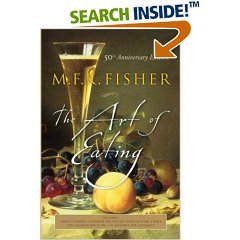
First I will share with you two books available through third party vendors at Amazon. The first is Food Lover’s Companion (A Comprehensive Definition of Over 4000 Food, Wine and Culinary Terms) by Sharon Tyler Herbst, which is available starting at $14.93, and the second is M.F.K Fisher’s The Art of Eating, also available through Amazon at $11.53. The Companion is invaluable when someone uses a term for a cooking technique or ingredient you don’t know; it has words for everything! My husband reads this book sometimes just for fun and is always sharing new information he has learned. The MFK Fisher book is just plain fun reading about food, full of information and anecdotes and stories, written in an enormously readable way.

Beginner Cookbooks
The first cookbook I used was the McCalls Cookbook – no longer in print. It had photos of how do do the things I found so intimidating, and that is where I got my earliers Christmas cookie recipes – the Russian Tea Cakes and the Candy Cane Cookies. The second was The Joy of Cooking, which I mentioned in an earlier blog entry. What is good about these books is that they keep it really simple. In Joy, they give you a long theoretical section, which you can read if you have the time, and which helps, but at the beginning it isn’t always easy to even understand the basics. That takes time. Then you can go back and read later and go “Aha! Now I understand!”
Cookbook Secrets
Actually, I love reading cookbooks. I have a huge collection. And almost all of them are Junior League Cookbooks. So here’s the secret – when you are looking for cookbooks, look for ones where women who contribute have to put their names. If their name is on the recipe, you can trust that the recipe will work, and that it will be one of their best recipes – they don’t want to be embarrassed!
The majority my cookbooks are from the South. And narrowing it down even further, most of my favorites come from Louisiana or Georgia.
The first one I ever bought was Talk About Good! And oh, it WAS good!

These recipes use ingredients like real cream and real butter and lots of salt. Southern people have some of the lowest life-expectancy rates in the United States – I suspect their eating habits have a lot to do with it. But if it isn’t a habit to eat so richly, every now and then it just tastes SO GOOD to use these ingredients. You will also notice that it has what they call a “plastic comb” binding. That means when you open it up to follow a recipe, it will lie flat. That’s a really good thing!
My second favorite is Quail Country, by the Junior League of Albany, Georgia. You would really have to scour the book stores to find this out-of-print classic, because so few people would ever want to part with it. Another gem is The Fort Leavenworth Collection, if you can get your hands on it – again, yard sales, used book stores would be your best bet.
There is a wonderful group of stores in the USA called Half Price Books. If books are not being bought as gifts, if you plan to just read a book and pass it along, or if you like to have a few on hand to pass along because you think they are so great, Half Price Books is a great place. They have the most obscure books, books you never thought you would see again. Many of their books are new, but remaindered (left over from book stores that couldn’t sell the, or from publishers who published too many copies) so they are sold at half price. They will also buy used books from you, but to me, they offer so little that I would just as soon give them away. (No, I don’t own stock in Half Price Books.)
There are some other fabulous Junior League cookbooks – the California Heritage Cookbook, the Seattle Classics, and there are other cookbooks produced by churches and charities that also have “real people” recipes that are drop-dead good. I remember once sharing a recipe for Chocolate Cheesecake from Seattle Classics. My friend told me she made it for Christmas dinner, but everyone was too full to eat dessert. But she said all night she heard doors opening and closing, as people snuck down to the kitchen to slice a little of the cheesecake and eat it, and in the morning, only a fragment was left!
Seeking out the best cookbooks can make every vacation an adventure. I have cookbooks from Kenya and Tunisia, Qatar, Jordan and Saudi Arabia . . . all full of great recipes, recipes with names attatched. I wish you a grand adventure seeking out cookbooks that will thrill your heart. Happy Hunting!
Arabesk and Jon Courtenay Grimwood
I am blessed with friends and family who share books, and Pashazade came into my life courtesy of Little Diamond, my globe-trotting glamourous niece. She always leaves a trail of books as she wanders hither and yon. Some of them are just too deep for me, or need too much attention. This series, the Arabesk Trilogy by Jon Courtenay Grimwood almost fell in that category.
I missed a clue. I kept trying to start the first volume, Pashazade, but was having a problem keeping up with the plot and the technology. I would go back and read again, trying to figure out what I was missing. I know I’m living in Kuwait, but I read! I keep up with the news! When did all this new stuff happen?
And then I just happened to look at the cover of the book and it all became clear – it is a parallel world, it is science fiction, and once I started reading and accepting all the strange words and implants as literary license, the book became fun, and intriguing, and very very hard to put down. And then I had to wait while the second and third volumes (Effendi and Felaheen) because the series is that much fun.
The main character, Ashraf al-Mansur has a complicated past. The plot is complex enough, but Ashraf doesn’t know who he is, we don’t know who he is, and we have to take time out from the plot now and then to get another piece of the puzzle. Fortunately, the puzzle pieces are in all kinds of cool places – Alexandria (but a different Alexandria from current day Alexandria) and the Sudan) but a slightly different Sudan, with a prophetic edge to it) and Seattle and a mental institution, and Tunis and the desert oases . . . oh, this is a lot of fun.
So Ashraf starts out in Alexandria, with his Aunt Nafisa who lives in this marvelous old madresa in Al Iskandriya, but then his aunt is killed, Ashraf becomes guardian to an exceedingly bright and introverted young girl, and falls in love with a young woman with whom he refused an arranged marriage.
Ashraf has friends in high places, is believed to have relations in high places, and although he gets into the worst situations, he has WASTA and a lot of problems just disappear. (For my non-Kuwaiti readers, wasta is sort of like the-power-of-connection-and-who-you-know-and-maybe-who-owes-you-a-favor-or-might-be-open-to-a-little-encouragement). These connections get people killed in the Arabesk trilogy, threaten chaos and mutilation and disaster, and take you on a great ride. Oh! Did I mention this is also a mystery, romance and has political intrigue, too?
It’s modern day – or maybe a year or two in the future – and with a huge twist in the universe here and there, so that it seems familiar, but it isn’t. There are dark shadows and differences that can be critical. And it has a whole raft of “who’s your ally?” kind of situations. It is a richly textured romp, and you are along for the ride. Don’t fight it, just lean back and hang on.
It is pure escapism, no great deep thoughts here. When the trilogy ends, however, you remember the characters, you remember the plots, and you still grin about them months later.
Pashazade, the first volume, is available through Amazon in hardcover and paperback. Paperback starts under $5.00, through used vendors.
Effendi is available from $10.20, new paperback edition.
Felaheen is available new and used from $8.99

What is YOUR Comfort Food?
You know how it is. You’re not yourself. Your throat hurts or your tummy hurts and Mom fixes something something you love, and it happens so often throughout your childhood that when you get to be an adult, and you find yourself sick, it’s the food you think of.
And, of course, it depends on the illness. For tummy things, I remember chicken broth and jello. But for colds and flu, it was always tomato soup and grilled cheese sandwiches. Now, even if I just had a bad day, grilled cheese sandwich and tomato soup can still cheer me up.
For my husband, raised in another part of the country, it is vegetable soup and cornbread. After we married, I learned to make cornbread in an iron skillet, and it is pretty good. He breaks it up and puts it in a glass of milk, though, and I can’t even watch him eat it.
Our son grew up in Tunis – when he has a sore throat, nothing will do but mint tea.

So what is YOUR comfort food? What did your Mamma (or Papa) make you when you were sick as a child? What do you dream of even now, all grown up, but sick and miserable?
Stunned Silence
Five sets of eyes were looking at me with horrified fascination. The silence seems to last a millenium.
“No marriage contract?” gasped Latifa. “How can this be? We have met your parents! You are from a good family, a religious family! How could you have no marriage contract to protect you?”
It isn’t often that I am at a loss for words, even though we are all speaking in French, often times a comical method of communication, as I normally speak English and they normally speak a Berber Arabic. Words sometimes elude us, and now, words are very elusive.
Fortunately, they all started talking at once.
“Don’t you know, dear one, that a man’s heart is not always constant!”
“You must make him give you gold, and property, to protect yourself and your children!”
“You must be investing for hard times to come!”
One by one, they shared stories of how women had been left by fickle men, or widowed, and how only by the grace of material wealth gathered from dowry, from wedding gifts, from gifts on anniversaries, from gifts when babies were born were they able to maintain themselves, and to provide education for their children.
“But none of you are divorced!” I cried out. “You have faithful husbands.”
Warning glances, barely perceptible, were exchanged, and their voices turned soothing . . .”Yes, dear one, for now. But we all protect ourselves against a future that only Allah knows . . .”
I was barely thirty years old, with a very young child, and these kind women surrounded me in my villa in suburban Tunis. We had worked very hard to develop a relationship, all of us, in spite of early discouraging events.
This was my first time living in an Islamic culture. They would send dishes of food to my house, to make me welcome in the neighborhood, and I would wait until a decent hour – maybe 10 a.m. – to call on them to return the dishes, only to find that not even the servants were up when I rang the bell. They would call on me at 5:30, as I was in my bathrobe, drying my hair for some event at the embassy that night.
Thank God we didn’t give up on one another! Finally, one time they called on me, the mother, the grandmother, two college aged daughters and a small child, one afternoon when my husband was out of town and I didn’t have any engagements that evening. After all our meetings, with the sense of failure to communicate, this time they called when my maid had gone home and I knew I had to serve tea, and something to eat. But that would mean leaving them alone in the salon . . .what to do?
After visiting for ten or fifteen minutes, I confessed I wanted to make them tea, but also didn’t want to leave them. Would they like to come into my kitchen and keep me company?
Who knew that such a simple, desperate request would be the key to unlocking the friendship we had all been seeking? They came into my kitchen, but instead of sitting around the small table while I fixed tea, they began looking into all my cupboards, pulling things out, exclaiming, asking questions. We were suddenly all fluent enough, no longer so self-conscious.
Things were never the same after that. They enjoyed dragging me along, pretending to others I was some long lost cousin from southern France, covering me in their sefsari’s, taking me with them to weddings. My husband objected to the “maquillage” and I told them that because we were religious, I could not wear so much make-up, and they relented. At Eid, I was allowed to peel and crush the garlic, while they cleaned and prepared the slaughtered lambs. Their friendship turned an isolated and intimidating experience into a warm, laughter filled time in my life.
I know they influenced me, changed me in subtle ways, some of which I probably don’t even know. I think it’s like CSI, where they say the primary forensic law is that in every interaction, you leave something behind and take something with you. My husband and I started seriously investing, and if today we are comfortable, I smile and think of those sweet women, and their horror that I would be unprotected by having no marriage contract.
Recent Comments
ExpatAlien on What Country am I Living … intlxpatr on Yellowstone: Old Faithful to C… Michelle on Yellowstone: Old Faithful to C… Cathy on No Grown-Ups in Charge intlxpatr on Waiting for Snow Wikipedia Donate Button

Amazina


Early Voting in Florida


 Here There and Everywhere