The Magic Bullet
What if someone told you there was a magic pill you could take that would help your body fight off attacks of diabetes, heart disease, osteoporosis – almost anything that ails you – wouldn’t you grab that pill?
You can read the entire article HERE, at the New York Times.
You Name It, and Exercise Helps It
By JANE E. BRODY
Published: April 29, 2008
Randi considers the Y.M.C.A. her lifeline, especially the pool. Randi weighs more than 300 pounds and has borderline diabetes, but she controls her blood sugar and keeps her bright outlook on life by swimming every day for about 45 minutes.
Randi overcame any self-consciousness about her weight for the sake of her health, and those who swim with her and share the open locker room are proud of her. If only the millions of others beset with chronic health problems recognized the inestimable value to their physical and emotional well-being of regular physical exercise.
“The single thing that comes close to a magic bullet, in terms of its strong and universal benefits, is exercise,” Frank Hu, epidemiologist at the Harvard School of Public Health, said in the Harvard Magazine.
I have written often about the protective roles of exercise. It can lower the risk of heart attack, stroke, hypertension, diabetes, obesity, depression, dementia, osteoporosis, gallstones, diverticulitis, falls, erectile dysfunction, peripheral vascular disease and 12 kinds of cancer.
But what if you already have one of these conditions? Or an ailment like rheumatoid arthritis, multiple sclerosis, Parkinson’s disease, congestive heart failure or osteoarthritis? How can you exercise if you’re always tired or in pain or have trouble breathing? Can exercise really help?
You bet it can. Marilyn Moffat, a professor of physical therapy at New York University and co-author with Carole B. Lewis of “Age-Defying Fitness” (Peachtree, 2006), conducts workshops for physical therapists around the country and abroad, demonstrating how people with chronic health problems can improve their health and quality of life by learning how to exercise safely.
Up and Moving
“The data show that regular moderate exercise increases your ability to battle the effects of disease,” Dr. Moffat said in an interview. “It has a positive effect on both physical and mental well-being. The goal is to do as much physical activity as your body lets you do, and rest when you need to rest.”
In years past, doctors were afraid to let heart patients exercise. When my father had a heart attack in 1968, he was kept sedentary for six weeks. Now, heart attack patients are in bed barely half a day before they are up and moving, Dr. Moffat said.
The core of cardiac rehab is a progressive exercise program to increase the ability of the heart to pump oxygen- and nutrient-rich blood more effectively throughout the body. The outcome is better endurance, greater ability to enjoy life and decreased mortality.
The same goes for patients with congestive heart failure. “Heart failure patients as old as 91 can increase their oxygen consumption significantly,” Dr. Moffat said.
Aerobic exercise lowers blood pressure in people with hypertension, and it improves peripheral circulation in people who develop cramping leg pains when they walk — a condition called intermittent claudication. The treatment for it, in fact, is to walk a little farther each day.
In people who have had transient ischemic attacks, or ministrokes, “gradually increasing exercise improves blood flow to the brain and may diminish the risk of a full-blown stroke,” Dr. Moffat said. And aerobic and strength exercises have been shown to improve endurance, walking speed and the ability to perform tasks of daily living up to six years after a stroke.
As Randi knows, moderate exercise cuts the risk of developing diabetes. And for those with diabetes, exercise improves glucose tolerance — less medication is needed to control blood sugar — and reduces the risk of life-threatening complications.
Perhaps the most immediate benefits are reaped by people with joint and neuromuscular disorders. Without exercise, those at risk of osteoarthritis become crippled by stiff, deteriorated joints. But exercise that increases strength and aerobic capacity can reduce pain, depression and anxiety and improve function, balance and quality of life.
Likewise for people with rheumatoid arthritis. “The less they do, the worse things get,” Dr. Moffat said. “The more their joints move, the better.”
Exercise that builds gradually and protects inflamed joints can diminish pain, fatigue, morning stiffness, depression and anxiety, she said, and improve strength, walking speed and activity.
Exercise is crucial to improving function of total hip or knee replacements. But “most patients with knee replacements don’t get intensive enough activity,” Dr. Moffat said.
Water exercises are particularly helpful for people with multiple sclerosis, who must avoid overheating. And for those with Parkinson’s, resistance training and aerobic exercise can increase their ability to function independently and improve their balance, stride length, walking speed and mood.

Need Some Encouragement
I just got sick of myself, not exercising, and decided to start exercising again, and so I did. I have a little running trampoline, I can run, watch the news, watch the ships go by out in the Gulf, and, of course, I count.
Why am I counting? I heard about this program, 1000 Steps, that if you walk 10,000 steps a day, you should be on your way to fitness. I figure if I can knock out a good part of that on the trampoline, also getting my heart rate up, it should be all good – right? Wouldn’t you think so?
I’ve done fairly well. Counting helps me get through the exercise – I’m sort of accomplishment driven, and I need to have goals to achieve. I started out at 2200 and I am now up to 3200 – it’s not that hard, and one day I am hoping to be able to knock out 10,000 steps and then all my other steps all day are gravy.
Except for one thing. Since I’ve started, which was only a week ago, I have actually GAINED weight. It is SO discouraging. I am feeling better, I think I can already see positive changes in the mirror, I am feeling more fit. I love the feeling of burning calories I get when I have finished. I don’t believe I have changed my eating habits – so why would the scales move up???
Just Yesterday . . .
Just yesterday, I remember sitting at my computer, looking out over the Gulf and blah blah’ing to you about having the luxury of a whole year luxuriously stretched out before me, a year to accomplish all kinds of wonderful things.
This morning, I thought with a start “a THIRD of the year is gone!” I have dallied and dawdled and let a third of this wonderful year just slip through my fingers! I feel I am out of control, careening dangerously through the year, not thoughtfully and with dignity.

Road Work Needed
I had a meeting in Mubarak Al Kebir yesterday, and when I got to the streetlight to turn on exit 209, this is what the road in the lanes next to me looked like:
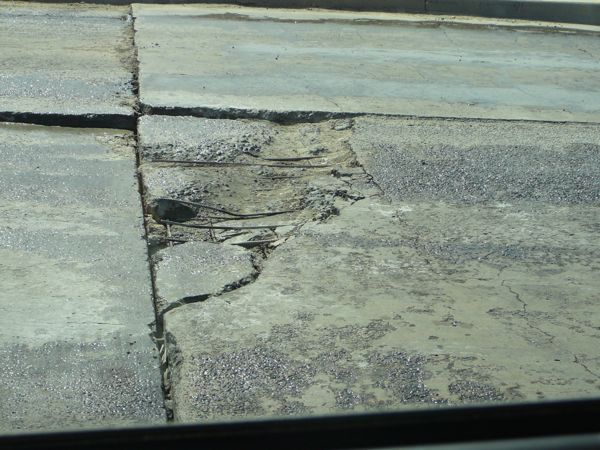
Four huge slabs of concrete – maybe they used to meet. One big depression, with rebar showing . . . most of the cars seem to know it is there, slow down to go over the bumps. I can only imagine what happens to the youngster who hits it going mach 6.
Think we need a little attention to detail here.
By Popular Demand
. . . your sunrise this morning at 0545. It looks like it will be a gloriously spectacular day, hot, but not killer hot, maybe in the low 100’s (F) (around 38 C). Not a cloud in the sky. Even the haze on the horizon is light, not that icky dark band you sometimes see. The Gulf is flat and glassy, not the tiniest wave. Freighters are tootling by, bringing all good things to Kuwait.

Tonight is date night, and the beginning of the weekend in Kuwait. I wish you all the happiest of weekends.
Traditional Clothing Exposition
Last night I was invited for a very special occasion, the Tarek Rajab family had a private showing of their unparalleled Arab Dress collection for the Kuwait Textile Arts Association. We enjoy their two museums so much – we take our friends and visitors there, sometimes we just visit the calligraphy museum to watch the film on calligraphy one more time! We learn something new with every visit. If you have never visited either of these museums, you are missing one of the rare treats in Kuwait.
On top of their value on traditional items, their foresight in beginning the collection decades ago, their two museums are open to the public, entirely free. Free of charge. Free admission. I never can get over it; the entire country of Kuwait is an honored guest in these museums. Imagine.
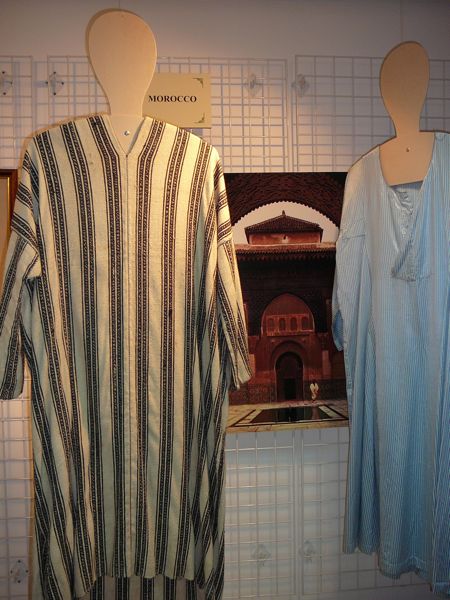
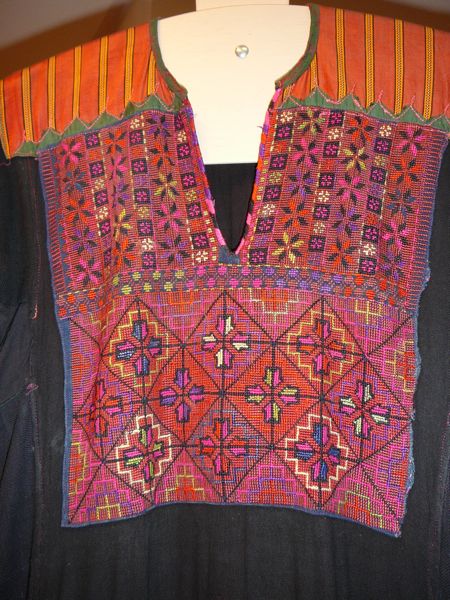
Denise Rajab, the museum curator, was on hand to answer questions about the costumes, which were displayed hanging against backgrounds showing photos of the countries and surroundings where these items of dress would be worn. White gloves were available to all present, and people were encouraged to (gently) handle the garb, so that you could see front and back.
There was so much loving attention to detail, so much handwork in these items of clothing!
I encourage you, my friends in Kuwait, to do two things. First, visit the two Tarek Rajab museums (located in Jabriya, near the New English School.) Here is their website: Tarek Rajab Museums
Second, if you want a window on a whole new world, join this group, Kuwait Textile Arts Association. Take their trips (this year the group just got back from South Africa, and are whooping with delight!) and attend their monthly meeting, meet some of the most interesting people in Kuwait, interesting because they have wide-ranging interests – like yours!
Here are some photos from a truly remarkable evening:

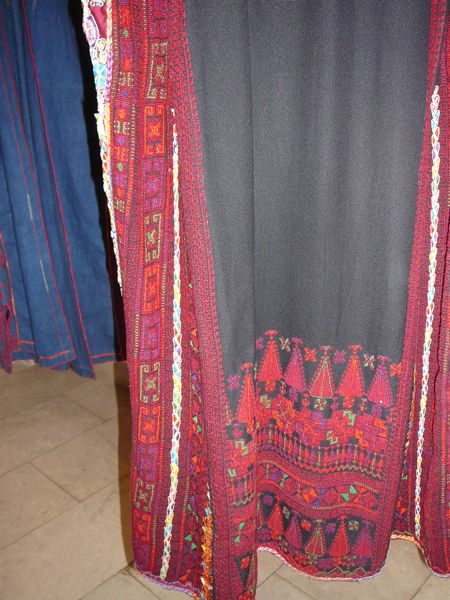


I hope I’m in town next year for all the meetings, and . . . I’ll see you there!
Ethnic Clothes and Mental Health
The studies findings surprised them – they were expecting that people who maintained their own traditions in a foreign country would experience more stress rather than less. BBC Health News reports that the choice to wear traditional clothes probably reflects family support, and strong family ties:
Ethnic clothes mental health link
Teenage girls from some minority communities who stick to their family customs have better mental health, researchers say.
Queen Mary University of London found Bangladeshi girls who chose traditional rather than Western dress had fewer behavioural and emotional problems.
The team said close-knit families and communities could help protect them.
Pressure to integrate fully could be stressful, the Journal of Epidemiology and Community Health reported.
Traditional clothing represents a tighter family unit, and this may offer some protection against some of the pressures that young people face
Professor Kam Bhui, report co-author
Adolescents are particularly vulnerable to mental health problems, and the researchers said that identity, often bound up in friendship choices or clothing, played a role.
They questioned a total of 1,000 white British and Bangladeshi 11 to 14-year-olds about their culture, social life and health, including questions designed to reveal any emotional or mental problems.
Bangladeshi pupils who wore traditional clothing were significantly less likely to have mental health problems than those whose style of dress was a mix of traditional and white British styles.
When this was broken down by gender, it appeared that only girls were affected.
No similar effect was found in white British adolescents who chose a mixture of clothes from their own and other cultures.
Professor Kam Bhui, one of the study authors, said that the result was “surprising” – he had expected that girls who were less fully integrated to show signs of greater strain.
“Traditional clothing represents a tighter family unit, and this may offer some protection against some of the pressures that young people face.
You can read the rest of the article HERE
Running Red Lights
I was out on seventh circle this morning, that annoying stretch where there sets of stoplights, one after another. Oone of the annoyances is the guys who are behind you honking the hell out of their horn because you STOPPED for the red lights, while others whiz right through. I am praying Kuwait has hidden cameras at all these lights and all those red-light-runners will have huge fines to pay when they go to register their cars.
Then I get to this red light:

I am only taking this photo because most of the lights along seventh ring were missing at least one light. This one – the set of lights on the right actually has a very dim light behind the red, you can see it a little if you are really looking. When the light changes, there is one green light – on the bottom of the other set of lights. I will admit this was the worst set of lights, but every single stoplight had missing traffic lights.
My friends, this is just not acceptable. There is so much labor around doing all kinds of stuff, but traffic lights – putting in fresh bulbs just isn’t that hard. There should be someone every single day of the year making sure traffic lights are ALL in working order. To allow it to go a day or two is truly criminal negligence, and some of these lights go for WEEKS.
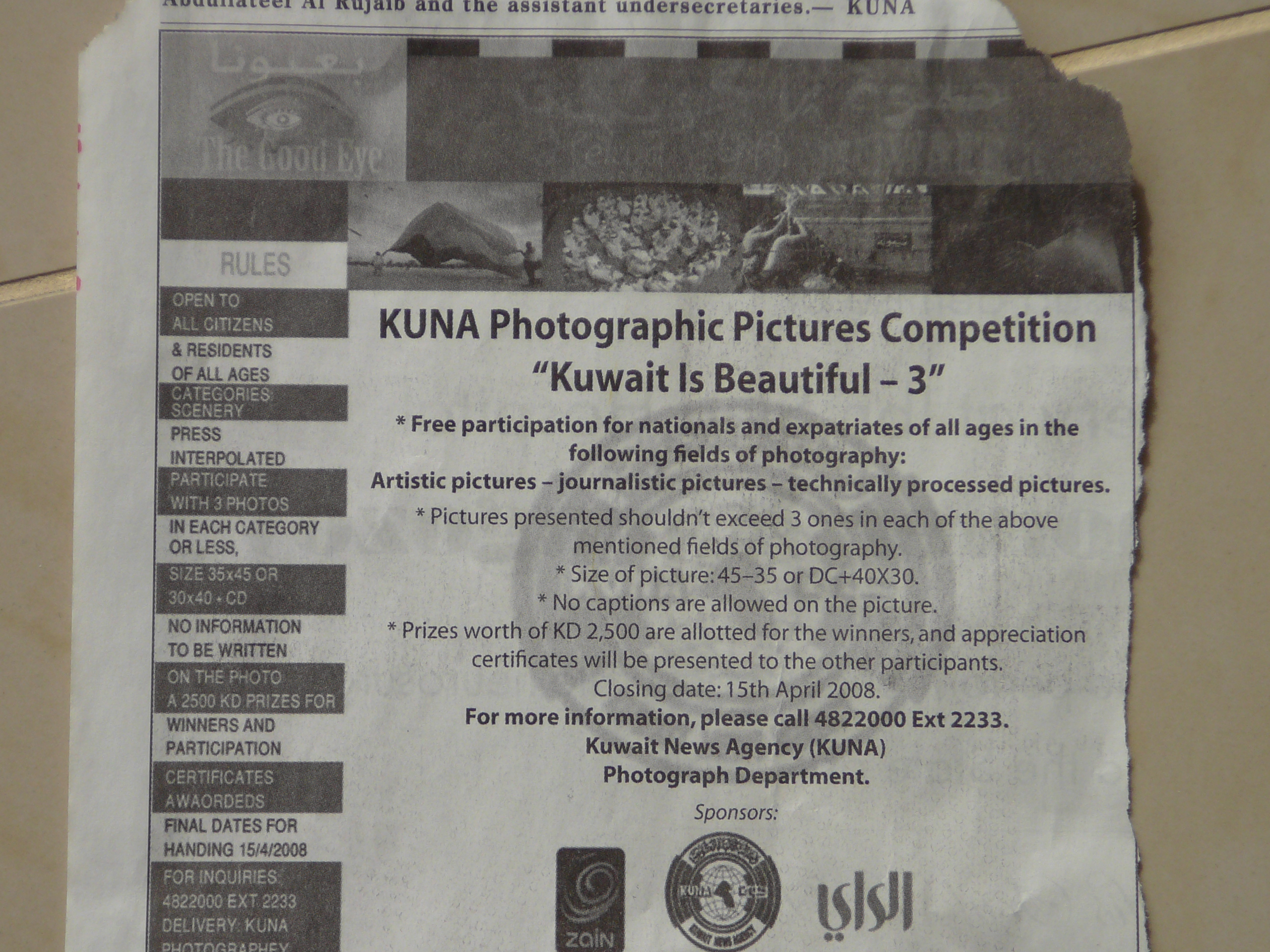
KUNA Photo Contest
All you photographers, here is a contest with a 2500KD prize!
For inquiries: 4822000 x 2233
Delivery: KUNA Photography Department
Closing Date 15 April 2008
Recent Comments
ExpatAlien on What Country am I Living … intlxpatr on Yellowstone: Old Faithful to C… Michelle on Yellowstone: Old Faithful to C… Cathy on No Grown-Ups in Charge intlxpatr on Waiting for Snow Wikipedia Donate Button

Amazina


Early Voting in Florida


 Here There and Everywhere