Expendables: Illegal and Unconstitutional
I believe the sentiments of most American people towards Kristi Noem and Pam Bondi are that their firings are no great loss.
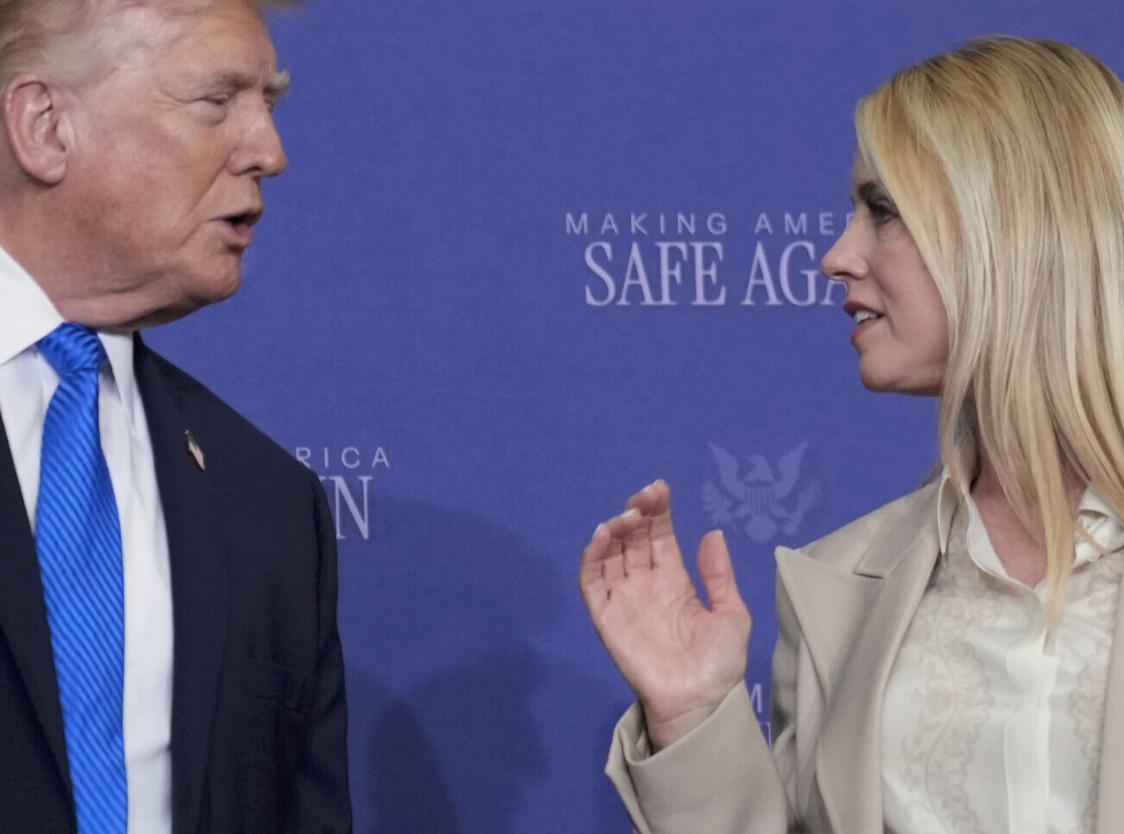
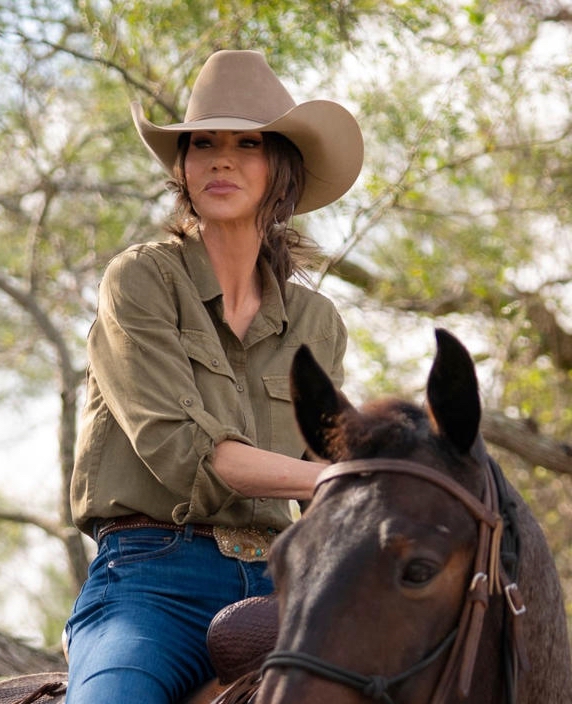
To give credit where credit is due, before becoming national public figures, both women had achieved notoriety in their own states. Like it or not, they are accomplished women, women achieving competently in the world of politics, Noem as governor and Bondi as attorney general.
Both are transactional types. Again, like it or not, each did her bounden duty to serve the will of the President, even when his demands were illegal and unconstitutional. Each, I believe, hoped for higher offices to come, in reward for executing acts and processes to eliminate the leaders “enemies,” whether enemy aliens or political opponents. Each stretched constitutional and societal mores beyond their limits in efforts to appease the endless greed of their leader, failing only because they wouldn’t go far enough. They broke laws. It wasn’t enough. They lied for the leader, they served his means.
I’m glad they are gone, and I feel sorry for them. They did everything the leader asked. They sacrificed personal integrity. They lied. They issued unconstitutional orders.
It didn’t pay. In the end, they took attention away from the man of endless genius they served. He found them to be expendable. They did what he wanted, but were not successful and exposed his means to public scorn. That was unforgivable. They’re pretty enough (and that matters to the leader) but just women.
“Off with their heads!” exclaims the Red Queen.
The one good thing, for them, that may come out of all this is to have escaped a morality-impaired regime before it collapses in ruins. This is just the beginning. Those who will not accept accountability must have scapegoats to carry the blame.
Slight of Hand and Wires and Mirrors; No Accountability
Our leader announced a speech to the nation, which turned out to be nothing but repeats of “Truth” social posts and comments previously made. A boring, disjointed 19 minutes of nothing credible. Credibility is stating a mission and following through. Chaos is changing the mission and its achievements every ten minutes or so. If you don’t believe me, watch the stock market.
Meanwhile, behind the curtain, The Great Oz and his handlers are changing how our democracy operates. The failed military officer, Pete Hegseth is examining and removing African Americans, females, and especially African American Females from promotion lists. He is firing the top general who questions his judgement in toying with a time honored system where the military chooses its leaders based on performance and leadership abilities, not their gender nor their color.
Does Hegseth understand demographics? Does he understand that military recruitment is problematic these days days, that the pool of recruits has shrunk dramatically? Does he understand that brawn no longer wins wars, but fighter planes, drones, new ideas and weapon development are fighting a new kind of war, where every gender and color contributes the the nuances of creative strategies available to a commander in chief who genuinely understands how to function in the fog of war?
Today Heather Cox Richardson alerts us to another slight of hand, the kind of small change the controllers hope will go unnoticed: The challenge of ACCOUNTABILITY and how it impedes a sitting President. She quotes the following, and it quite takes my breath away:
Yesterday Assistant Attorney General T. Elliot Gaiser, of the Office of Legal Counsel, published an opinion for the White House that claims the Presidential Records Act, which requires that presidents keep records of their official business and turn them over at the end of their term, is unconstitutional. Gaiser clerked for Supreme Court Justice Samuel Alito.
“The PRA is not a valid exercise of Congress’s Article I authority and unconstitutionally intrudes on the independence and autonomy of the President guaranteed by Article II. The Act establishes a permanent and burdensome regime of congressional regulation of the Presidency untethered from any valid and identifiable legislative purpose,” the memo reads. “For these reasons, the PRA is unconstitutional, and the President need not further comply with its dictates.”
(taking a moment to catch my breath)
We burden our elected president with the requirement that we know what he does and why he is doing it?
How can anyone believe this lunacy? Any person in a position of responsibility has to answer to his polity! Elected politicians all the more. He answers to us, the voters.
Our leader has a lot to answer for. We can’t trust anything he says, from minute to minute. Our treasury has been declared insolvent. He is sending our children off to war with unclear orders and insufficient leadership.
He has hired a confederacy of ignorant, greedy sycophants. He has gutted our diplomatic service. He has gutted Consumer Oversight. He has gutted the Environmental Protection Agency. He has corrupted the Department of Education.
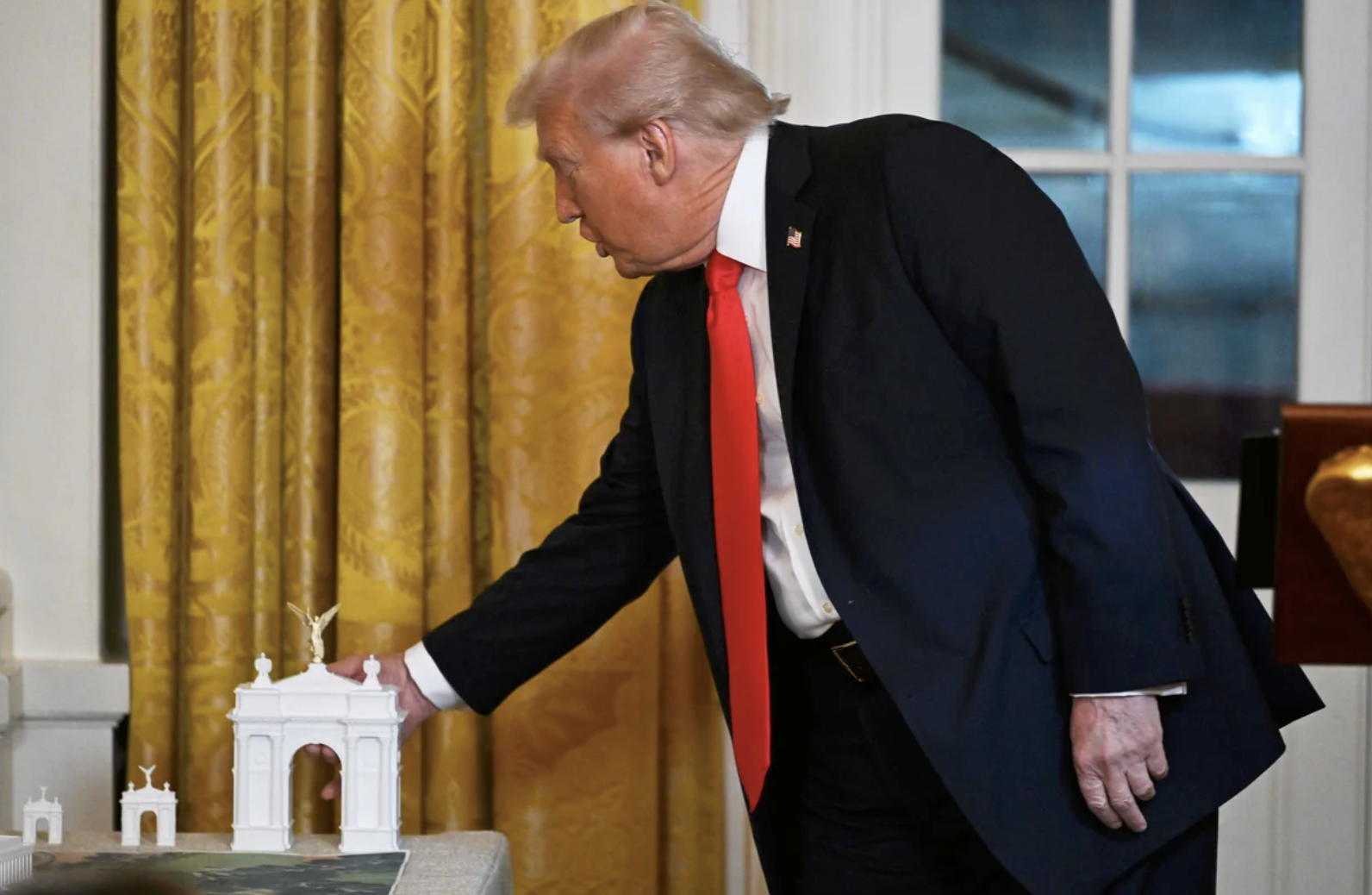
He is terrified he cannot win and is attempting to take over national elections. Meanwhile, he is bankrupting our country with garish monuments and wars we never agreed to fight.
He is subjecting women to outdated standards and taken away their rights to make decisions for their own bodies.
He is corrupting our social system, taking medical care away from those who need it most, and callously neglecting the veterans who have served our country so loyally.
He has made agreements with other countries that we only learn about by accidental comments.
This can’t go on. Give us Accountability. Oversight. Congressional Approval. Fair and Free Elections. Constitutional Restraints!
Anna Julia Haywood Cooper
Today the church honors Anna Julia Haywood Cooper, an extraordinary woman who prevailed against prejudice.
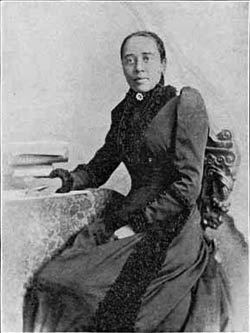
ANNA JULIA HAYWOOD COOPER
EDUCATOR
(1964)
Anna Julia Haywood Cooper (August 10, c1859- February 27, 1964). Educator, advocate and scholar. Born in Raleigh, North Carolina to an enslaved woman and a white man, presumably her mother’s master, Anna Julia was an academically gifted child and received a scholarship to attend St. Augustine Normal School and Collegiate Institute, a school founded by the Episcopal Church to educate African-American teachers and clergy. There she began her membership in the Episcopal Church. After forcing her way into a Greek class designed for male theology students, Anna Julia later married the instructor, George A.C. Cooper, the second African-American ordained to the Episcopal priesthood in North Carolina.
After her husband’s death in 1879, Cooper received degrees in mathematics from Oberlin College, and was made principal of the only African American high school in Washington D.C.. She was denied reappointment in 1906 because she refused to lower her educational standards.
Throughout her career, Cooper emphasized the importance of education to the future of African Americans, and was critical of the lack of support they received from the church. An advocate for African-American women, Cooper assisted in organizing the Colored Women’s League and the first Colored Settlement House in Washington, D.C. She wrote and spoke widely on issues of race and gender, and took an active role in national and international organizations founded to advance African Americans.
At the age of fifty-five she adopted the five children of her nephew. In 1925, Cooper became the fourth African-American woman to complete a Ph.D degree, granted from the Sorbonne when she was sixty-five years old. From 1930-1942, Cooper served as president of Frelinghuysen University.
from the Episcopal Women’s History Project
League of Women Voters: State of Union Bingo Cards
Gotta love those ladies in pearls, although lately the League has been attracting a much younger group of activists. An amazingly non-political group, the League looks at issues and candidates, and encourages INFORMED voters. All people are welcome; in spite of the name, the league also includes men. This is a group that makes a difference.

With their wicked sense of humor, the National League encourages all Americans to watch the dreaded State of the Union speech tonight, and has published a set of Bingo Cards to keep you engaged. You can download them for yourself and your family members at League of Women Voters: State of the Union Bingo or you can print these, which I downloaded from their website.
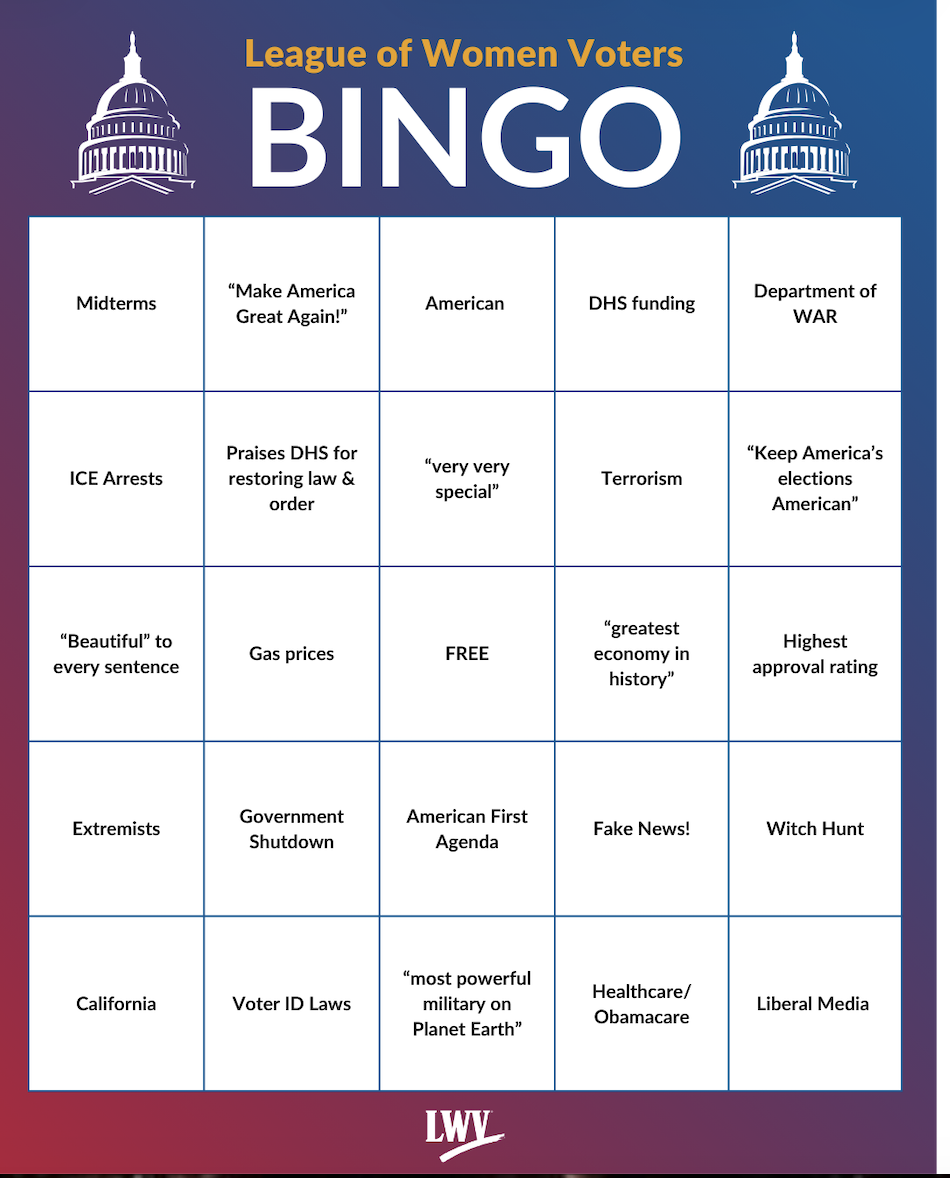
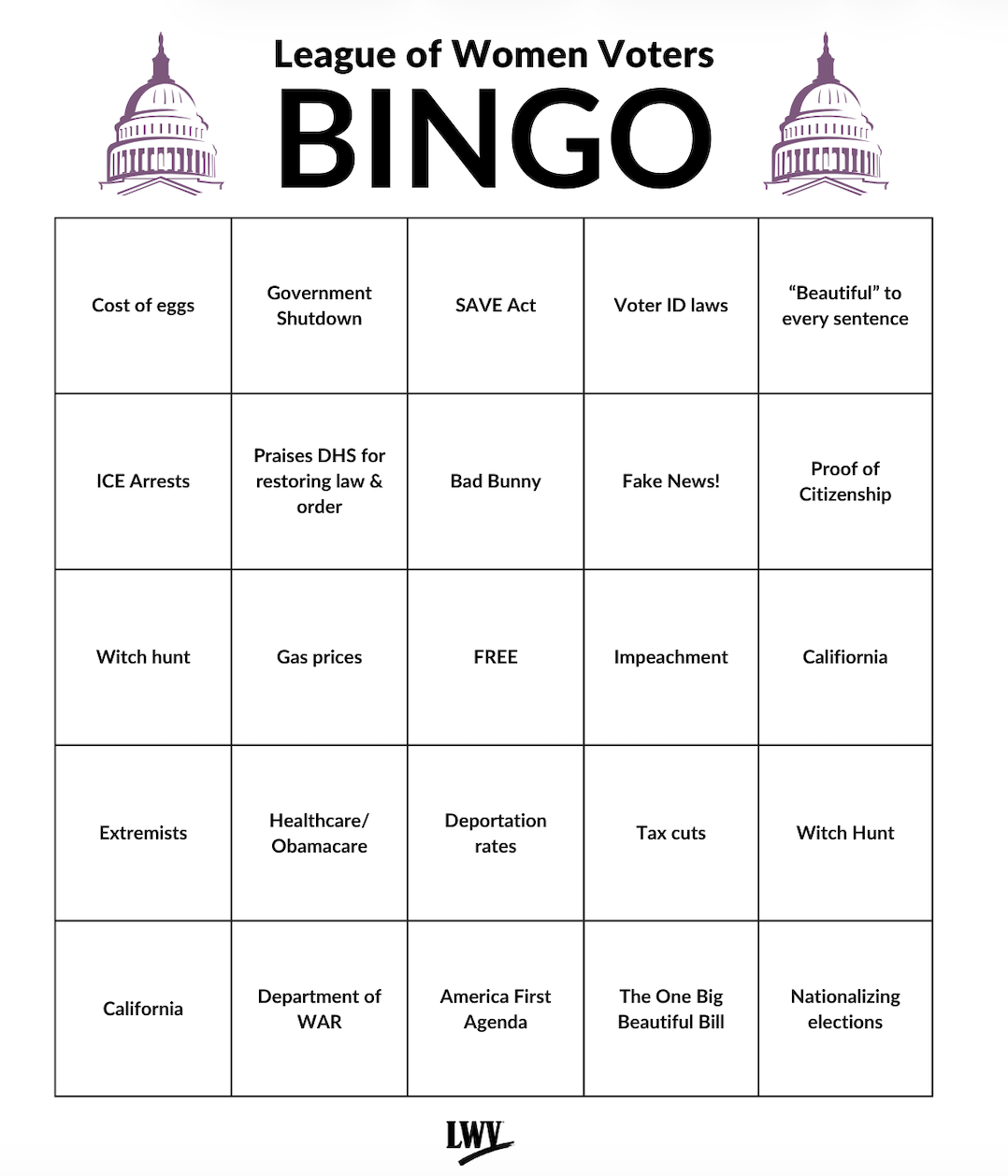
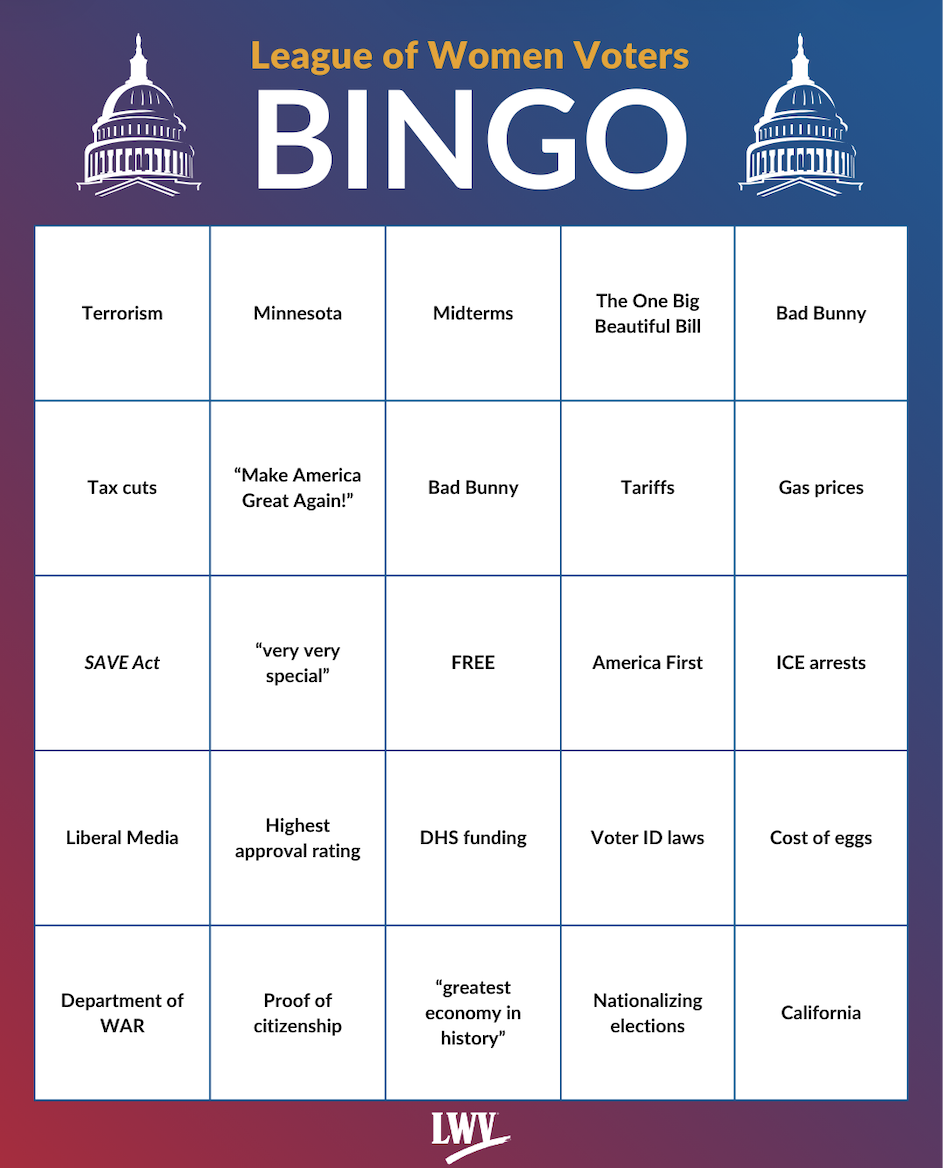
Yes, I am a member of this group. They keep up with the important issues, and they invite speakers to meetings to explain the substance to the public. They educate people about voting rights without bias.
They help with elections, and, where allowed, they help register new voters – people turning 18, new citizens, people who haven’t voted before. The current stereotype of this group as elderly educated women in pearls is quickly changing as super-charged young people seek to exert their rights in an orderly, lawful fashion.
By uniting women from all parties and all walks of life, they have a big voice and have effectively challenged unjust and unconstitutional laws at the local, state, and national levels. They take their commitment voting rights, issues, and impartiality very seriously.
And, they have a wonderful sense of humor 😄.
No Grown-Ups in Charge
We thought we would change the world, my generation. How on earth did we end up with a President who has the self-control, self-restraint, self-discipline, and dignity of a two-year-old?
How did we end up with a President who supports COAL, flying in the face of science, and wants to roll back protections against climate change, air pollution, water pollution, vaccinations, human rights, and stewardship of earthly resources?
What happened to the dawning of the Age of Aquarius, where we worked on harmony and understanding, and the dignity of ALL human beings?
How did we get stuck with a government of morons, whose first move was to remove all the bureaucratics who knew what they were doing? How did we allow all the oversights to be abolished?
How do we continue to allow the oligarchs to forbid the completion of a bridge between Canada and Michigan because of a conflict with a rich man who owns a competing bridge? How do we allow a Presidency which makes private deals to enrich his sons and son-in-law with opaque deals outside the public view?
How do we accept a new army of MERCENARIES, attracted by a $50K bonus for signing on, who have paltry training, disobey standard policing standards and who act with disregard to our national constitution?
I may be old, but I am not blind, nor am I stupid. I see, to my horror. I witness, and I document. I am part of a large and growing crowd of witnesses, (dead and alive!) who will call this administration to account for their grave injustices.
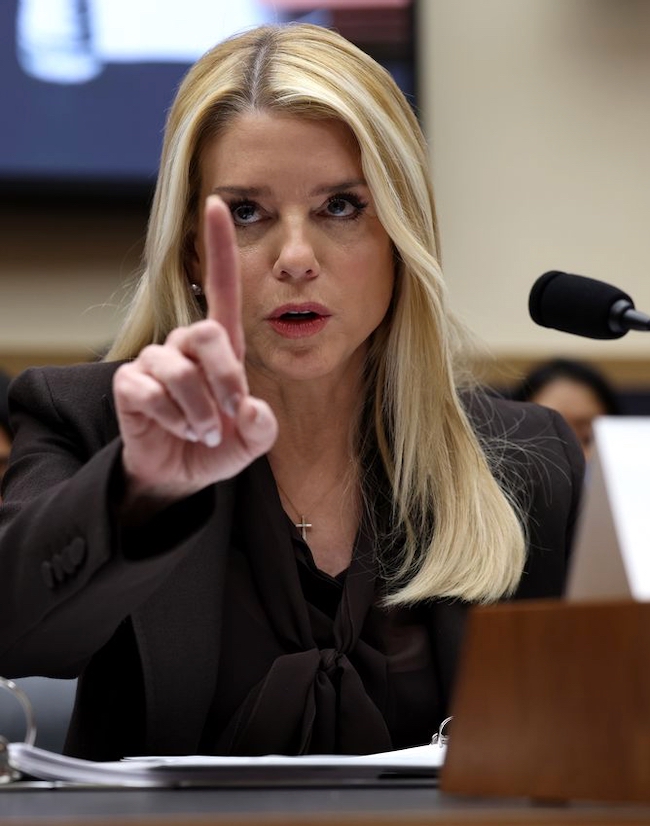
Pam Bondi, who cannot answer questions, who is protecting her boss, mentioned over one million times in the Epstein files, pointing her finger.
This week I attended a school service at our church, and the Old Testament reading was from Isaiah. It heartened me; this is what we are teaching our children
ISAIAH 58: 6-10
“Is not this the kind of fasting I have chosen:
to loose the chains of injustice
and untie the cords of the yoke,
to set the oppressed free
and break every yoke?
7 Is it not to share your food with the hungry
and to provide the poor wanderer with shelter—
when you see the naked, to clothe them,
and not to turn away from your own flesh and blood?
8 Then your light will break forth like the dawn,
and your healing will quickly appear;
then your righteousness will go before you,
and the glory of the Lord will be your rear guard.
9 Then you will call, and the Lord will answer;
you will cry for help, and he will say: Here am I.
“If you do away with the yoke of oppression,
with the pointing finger and malicious talk,
10 and if you spend yourselves in behalf of the hungry
and satisfy the needs of the oppressed,
then your light will rise in the darkness,
and your night will become like the noonday.”
Let us shine. Let us seek to shine.
From Oppressive Governments
Prayer from today’s Lectionary:
PRAYER (contemporary language)
Almighty God, we thank you for the faith and witness of Paul Sasaki, bishop in the Nippon Sei Ko Kai, tortured and imprisoned by his government, and Philip Tsen, leader of the Chinese Anglican Church, arrested for his faith. We pray that all Church leaders oppressed by hostile governments may be delivered by your mercy, and that by the power of the Holy Spirit we may be faithful to the Gospel of our Savior Jesus Christ; who lives and reigns with you and the Holy Spirit, one God, for ever and ever. Amen.
History the White House Doesn’t Like: The List of Exhibits Trump Wants Gone
It’s a strange honor to have exhibits selected that the President wants gone. As in Literature, when you read through the list, you learn a lot about the fears and the prejudices of the creator. In recent decades, the United States of America has had a greater tolerance for the idiosyncratic views of artists, appreciating their differing perceptions. The list below is taken word for word from the White House Post called The President is Right About the Smithsonian.
- The National Museum of African American History and Culture debuted a series to educate people on “a society that privileges white people and whiteness” — defining so-called “white dominant culture“ as “ways white people and their traditions, attitudes, and ways of life have been normalized over time” and portraying “the nuclear family,” “work ethic,” and “intellect” as white qualities rooted in racism.
- The campaign featured content from hardcore woke activist Ibram X. Kendi

As part of its campaign to stop being “wealthy, pale, and male,” the National Portrait Gallery featured a choreographed “modern dance performance“ detailing the “ramifications“ of the southern border wall and commissioned an entire series to examine “American portraiture and institutional history… through the lens of historical exclusion.”
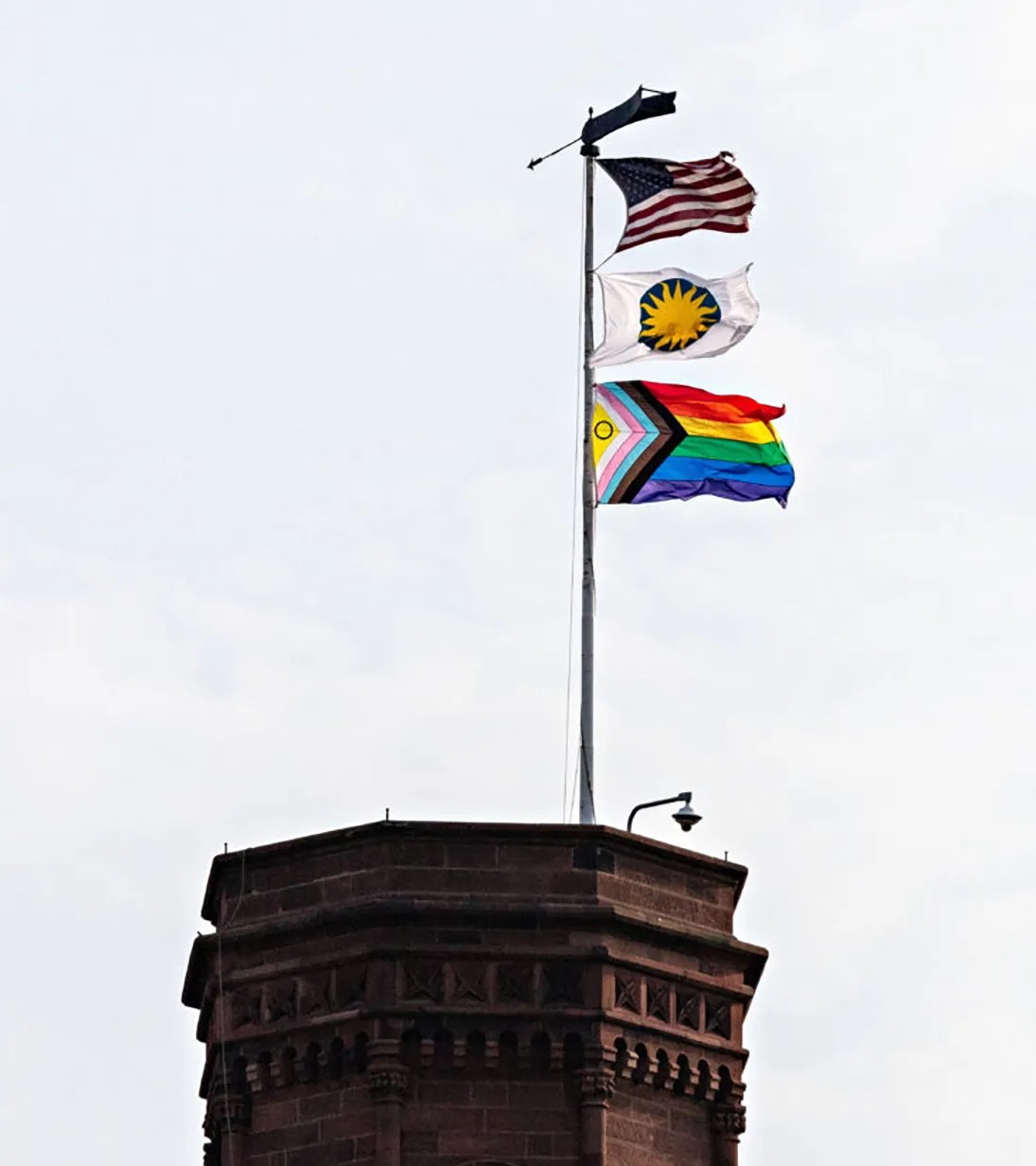
The National Portrait Gallery features art commemorating the act of illegally crossing the “inclusive and exclusionary” southern border — even making it a finalist for one of its awards.
(Intlxpatr comment: This painting reminds me of the painting of Mary, Joseph and the Baby Jesus escaping to Egypt to avoid King Herod’s massacre of the innocents)

The National Museum of African Art displayed an exhibit on “works of speculative fiction that bring to life an immersive, feminist and sacred aquatopia inspired by the legend of Drexciya,” an “underwater kingdom populated by the children of pregnant women who had been thrown overboard or jumped into the ocean during the Middle Passage.”
The American History Museum’s “LGBTQ+ History” exhibit seeks to “understand evolving and overlapping identities such as lesbian, gay, bi-sexual, transgender, queer, transsexual, transvestite, mahu, homosexual, fluid, invert, urning, third sex, two sex, gender-bender, sapphist, hijra, friend of Dorothy, drag queen/king, and many other experiences,” and includes articles on “LGBTQ+ inclusion and skateboarding“ and “the rise of drag ball culture in the 1920s.”
The National Museum of the American Latino features programming highlighting “animated Latinos and Latinas with disabilities” — with content from “a disabled, plus-sized actress” and an “ambulatory wheelchair user” who “educates on their identity being Latinx, LGBTQ+, and disabled.”
The National Museum of the American Latino characterizes the Texas Revolution as a “massive defense of slavery waged by ‘white Anglo Saxon’ settlers against anti-slavery Mexicans fighting for freedom, not a Texan war of independence from Mexico,” and frames the Mexican-American War as “the North American invasion” that was “unprovoked and motivated by pro-slavery politicians.”
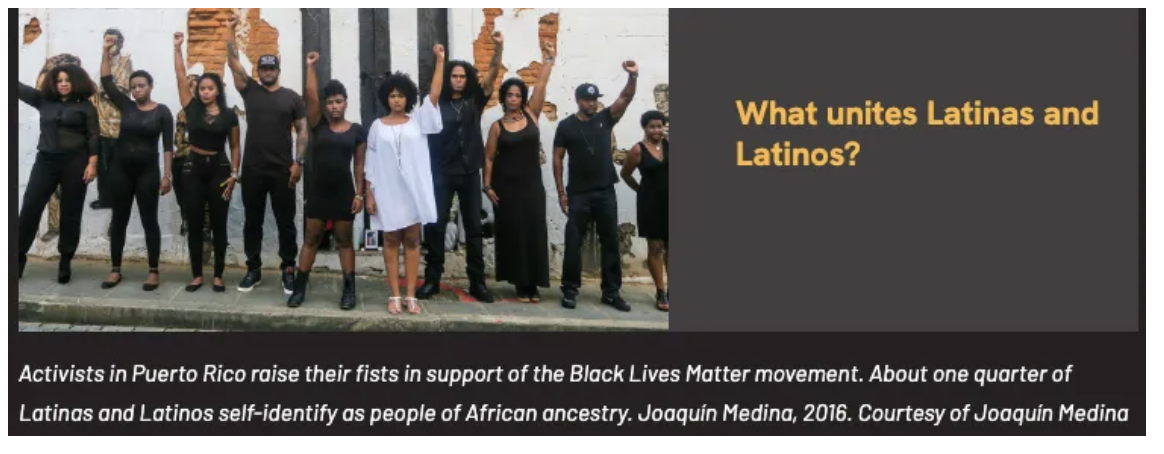
According to the National Museum of the American Latino, “what unites Latinas and Latinos“ is “the Black Lives Matter movement.”
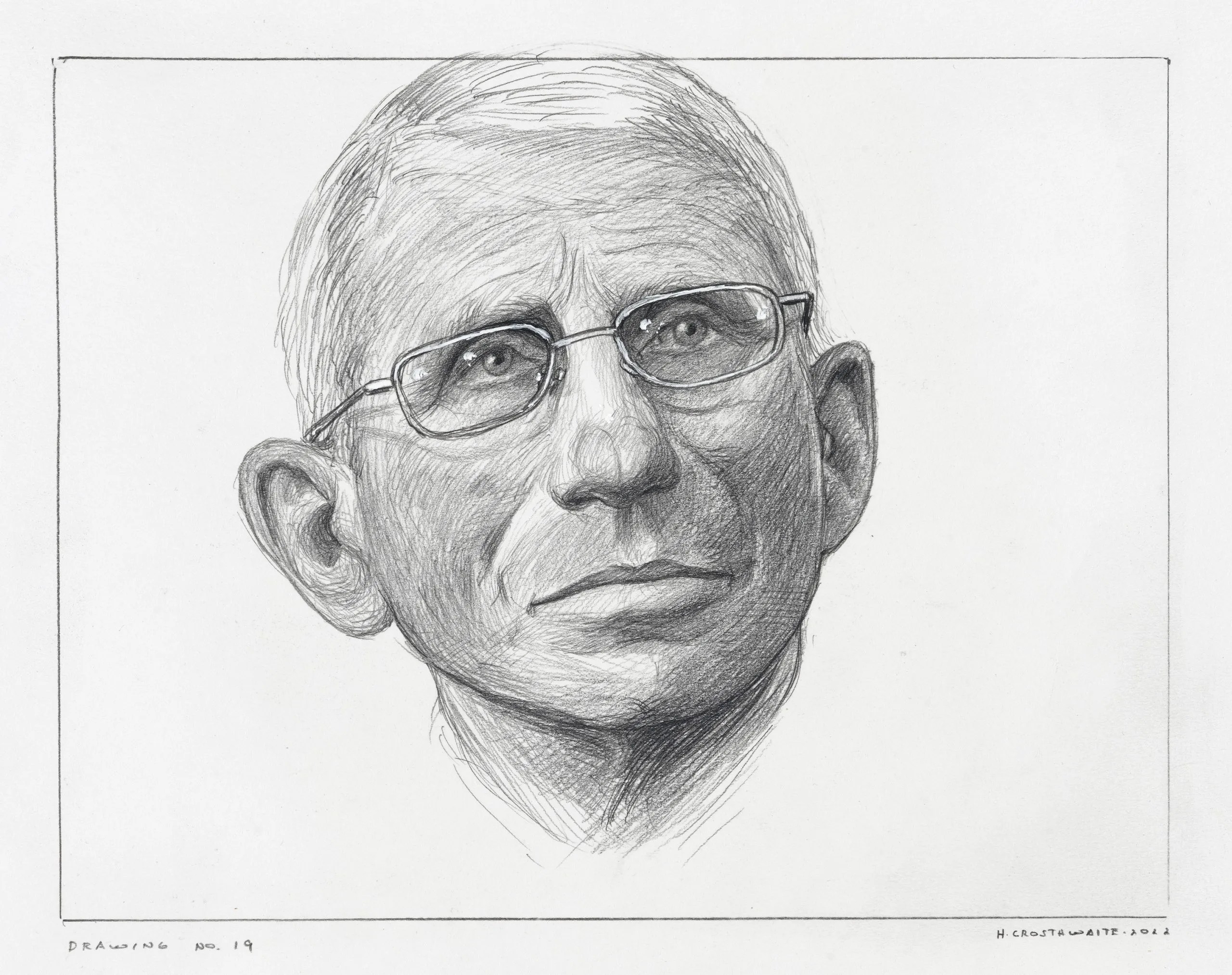
The National Portrait Gallery commissioned a “stop-motion drawing animation” that “examines the career“ of Anthony Fauci.
The American History Museum’s exhibit marking the 50th anniversary of Title IX includesbiological men competing in women’s sports and argues in favor of “transgender” athletes competing in sports against the opposite biological sex.
A exhibit at the American History Museum depicts migrants watching Independence Day fireworks “through an opening in the U.S.-Mexico border wall” and says America’s founders “feared non-White immigration.”

The American History Museum features a display that refers to the founding of America as “a profound unsettling of the continent.”
The American History Museum’s “American Democracy” exhibit claims voter integrity measures are “attempts to minimize the political power” of “new and diverse groups of Americans,” while its section on “demonstrations” includes only leftist causes.
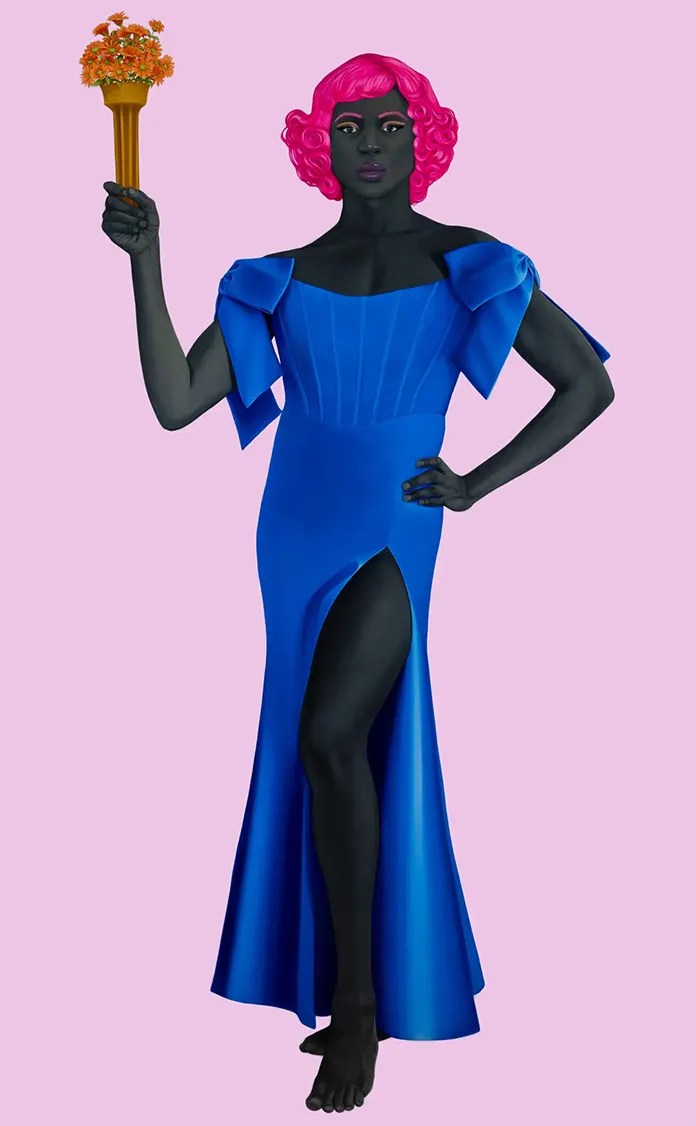
An American History Museum exhibit features a depiction of the Statue of Liberty “holding a tomato in her right hand instead of a torch, and a basket of tomatoes in her left hand instead of a tablet.”

- The National Museum of the American Latino features an anti-American exhibit that defines Latino history as centuries of victimhood and exploitation, suggests the U.S. is stolen land, and characterizes U.S. history as rooted in “colonization.”
- The exhibit features writing from illegal immigrants “fighting to belong.”
- The exhibit displays a quote from Claudia de la Cruz, the socialist nominee for president and a director an anti-American hate group, as well as another quote that reads, “We didn’t cross the border; the border crossed us.”
- The exhibit remains prominently featured on its website alongside a quote from the Communist Party USA’s Angela Davis, who was once among the FBI’s Top 10 Most Wanted Fugitives.

- The National Museum of the American Latino features an anti-American exhibit that defines Latino history as centuries of victimhood and exploitation, suggests the U.S. is stolen land, and characterizes U.S. history as rooted in “colonization.”
- The exhibit features writing from illegal immigrants “fighting to belong.”
- The exhibit displays a quote from Claudia de la Cruz, the socialist nominee for president and a director an anti-American hate group, as well as another quote that reads, “We didn’t cross the border; the border crossed us.”
- The exhibit remains prominently featured on its website alongside a quote from the Communist Party USA’s Angela Davis, who was once among the FBI’s Top 10 Most Wanted Fugitives.
The former interim director of the future Smithsonian American Women’s History Museum declared the museum will be “inclusive” of biological men posing as women.
Commentary from The Hill, August 22, 2025:
White House lists 20 objectionable Smithsonian exhibits, artworks
BY ASHLEIGH FIELDS – 08/22/25 10:34 AM ET
The Trump administration specifically targeted the American history museum’s “LGBTQ+ History” exhibit and condemned a separate display lauding the 50th anniversary of Title IX with a focus on transgender athletes. President Trump signed an executive order in February barring transgender women from competing in women’s sports.
The decision to highlight more than a dozen exhibits and artworks as “woke” comes days after Trump criticized the history museum for its depiction of slavery and its impact on Black Americans.
“The Smithsonian is OUT OF CONTROL, where everything discussed is how horrible our Country is, how bad Slavery was, and how unaccomplished the downtrodden have been — Nothing about Success, nothing about Brightness, nothing about the Future,” the president wrote Tuesday in a Truth Social post.
“We are not going to allow this to happen, and I have instructed my attorneys to go through the Museums, and start the exact same process that has been done with Colleges and Universities where tremendous progress has been made,” he added. “This Country cannot be WOKE, because WOKE IS BROKE.”
During his first term, Trump lauded the opening of the National Museum of African American History and Culture for its portrayal of harsh truths and storied victories for disenfranchised Black citizens.
Trump’s issue with the depiction of slavery in museums has been widely challenged by Black historians and community leaders.
“Just as the Holocaust is remembered in all its brutality, so must America reckon with the truth of chattel slavery, Jim Crow and racial terror,” Toni Draper, publisher of the Afro-American Newspaper — the archives of which were used to help curate the museum — wrote in a recent op-ed for Afro.com. “Anything less is historical erasure, a rewriting of facts to make the nation appear more palatable.”
“But history is not meant to comfort — it is meant to confront. And only in confrontation do we find the lessons that lead us forward,” she added.
“Mom, That is Very Bold”

He looked troubled. He knows living here is one of the reddest counties in one of the reddest states in the country, a sign like this could invite trouble.
“I’ve had the sign for weeks; I was afraid to put it out.” What I didn’t say is that this is Florida. People express themselves in ways I find unacceptable, like shooting at your house, or at the very least, stealing signs that express an opinion they don’t like. I didn’t have to say it. He deals with it every day.
You might think that sign means I am pro-abortion. I am not. I believe abortion is a last, desperate resort. And it is a remedy I want women to have – I want women to make decisions for their own bodies. Not men. Not a legislature. Not a governor.
It was a shock when we amassed enough signatures to get this initiative on the November ballot, not only enough, but way more than enough. The people of Florida want to vote on this and be a part of the decision-making. Right now in Florida, there is a six-week deadline on the pregnancy, during which a person might get an abortion – but that assumes the person realizes she is pregnant and can process and make a decision in that very short time.
Statistics show that since the states began limiting abortions, the number of abortions actually rose. Go figure?
No woman chooses abortion lightly. It is a medical procedure. It costs money. It takes time. It is uncomfortable. Women only choose abortion when the alternatives are unthinkable. Not having the right to choose doesn’t stop abortion, it only makes it a greater burden on women.
So I planted my sign and I hope for the best. I have found that in this very conservative neck of the woods, there are many like-minded people who of necessity keep their heads down. I want them to feel a ray of hope when they see my sign, and maybe, maybe along with voting for Proposition Four, they might even put a sign in their own yards, help others register to vote, or help transport voters to the polls in November.
Recent Comments
ExpatAlien on What Country am I Living … intlxpatr on Yellowstone: Old Faithful to C… Michelle on Yellowstone: Old Faithful to C… Cathy on No Grown-Ups in Charge intlxpatr on Waiting for Snow Wikipedia Donate Button

Amazina


Early Voting in Florida


 Here There and Everywhere