Qatar: The Richest Fattest Nation on Earth
Thank you, reader John, for passing along this fascinating article from The Atlantic:
Qatar is a tiny country with a big problem.
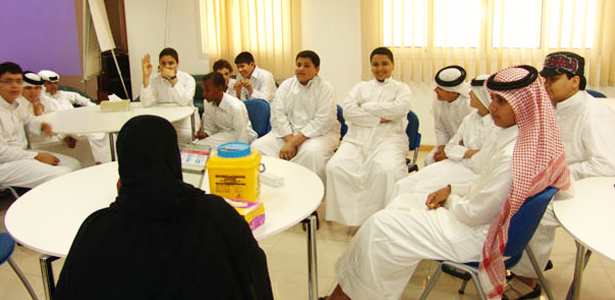
This Connecticut-sized nation, sticking out like a loose tooth in the Persian Gulf, is one of the most obese nations in the world, with residents fatter, on average, than even those of the United States, which often takes the cake in such competitions.
According to recent studies, roughly half of adults and a third of children in Qatar are obese, and almost 17 percent of the native population suffers from diabetes. By comparison, about a third of Americans are obese, and eight percent are diabetic. Qatar also has very high rates of birth defects and genetic disorders — problems that, along with the prevalence of obesity (PDF) and diabetes, have worsened in recent decades, according to local and international health experts.
So what’s going wrong in little Qatar?
Qatar also has very high rates of birth defects and genetic disorders — problems that have worsened in recent decades.
To misappropriate a well-worn phrase: It’s the economy, stupid. In September, Qatar officially became the richest nation in the world, as measured by per capita gross domestic product. It also recently became the world’s biggest exporter of natural gas, and earned the title of fastest growing economy in the world. By international development standards, all this growth has happened virtually overnight, making Qataris’ lifestyles much more unhealthy, and at the same time leading many to hang on resolutely to what’s left of their fleeting tribal traditions — practices that include inter-marriage between close family members and cousins.
“They’re concentrating the gene pool, and at the same time, they’re facing rapid affluence,” said Sharoud Al-Jundi Matthis, the program manager at the Qatar Diabetes Association, a government funded health center in Doha, the capital. As a result of these factors, Qataris are becoming obese, passing on genetic disorders at an alarming rate, and getting diabetes much more often than others around the world. They’re also getting diabetes a decade younger than the average age of onset, which is pushing up rates of related illnesses and complications, like hypertension, blindness, partial paralysis, heart disease, and loss of productivity. “It’s a very, very serious problem facing the future of Qatar,” Matthis said.
It’s a fascinating read, not too long, little more than double what you have already read. You can read the entire article by clicking HERE: The Atlantic
Thank you, John, for the recomendation.
Not-So-Real Housewives
Over Thai food, I confessed my guilty secret – I can’t help it, I watch the Real Housewives of Beverly Hills and the Real Housewives of New York. I expected a horrified response from my sweet smart niece, Professor Little Diamond, but she just laughed.

“Oh we all watch them,” she reassured me, “It’s like watching a train wreck, you are appalled, but you can’t look away.”
What makes me really, really nervous about these ‘real’ housewives is that I think that the Bravo station is carried in Qatar and Kuwait and Saudi Arabia. While the more educated have travelled, and know that these ‘real’ housewives are not the norm, there may be many who think that this is the life of the American female.

I remember when I shocked my Qatari friends as I told them I was going home to take care of my Dad while my Mom had a knee replacement and spent a few weeks in rehab. They didn’t know we take care of our parents; they thought we just put them in grim warehouse like nursing homes. How did they know? From television, of course.
So you can understand I have a major concern that these women are representing us normal people in the homes of our friends in the Middle East. These women spend a lot of money on scanty clothing, these women have people who come in and do their make-up before a dinner party, these people have nannies taking care of their children (many of whom are really bratty) and they all seem to be designing handbags or creating make-up lines or (oh-no!) cutting records to try to get a singing career started.
Ask yourself this – who do you know in your own circles who would agree to have camera crews follow them around in their lives, filming their most intimate conversations? Who do you know in your circle who creates drama and conflict? Who do you know who needs the affirmation of an audience to believe her life is worth living? Who in your circle is addicted to plastic surgery or throws charity events to get attention? Those are the women they are filming.
You never see these women go to church. You rarely see them cooking up a normal dinner for their family. You don’t see any of them heading off to an 8 – 5 job. You don’t see them doing all the normal things we normal American housewives do (a lot like our sisters do in every country of the world) like laundry, running the kids to school, doctors appointments, soccer matches, paying the bills, scrubbing the floor, making appointments at the veterinarian, getting the car serviced, buying groceries, going to PTA, or doing their volunteer work. You don’t see them running over to their children’s house to babysit, or going to their exercise classes.
But then again, if they were doing all these things that us REAL housewives do, who would watch, LLLLOOOOOLLLLLLL! I understand there may be some sister Real wives series coming up from foreign countries. It will be interesting to see how their lives look.
Secrets to a LONG Marriage
Read this article and weep, and be sure you have a group of wild girlfriends. 🙂
I found it this morning in AOL News Huffpost:
The Fine Line Between Marriage and Divorce
Iris Krasnow, Author, The Secret Lives of Wives: Women Share What It Really Takes To Stay Married
I’m just coming off 200 interviews and two years of listening to mature wives reflect on — or moan about — how they are managing to stick it out in long marriages. Scenes from their relationships that range from 15 to 70 years are woven together in my new book, The Secret Lives of Wives: Women Share What It Really Takes To Stay Married coming out in early October.
I’ve been married for 23 years during which my husband and I have raised four sons, and have had plenty of rocking and rolling in our relationship. From my own experiences, and from the dozens of sagas unloaded into my tape recorder, I am constantly reminded of the eggshell-thin line that separates loving from loathing. I know that staying married can mean plates flying across kitchens, tears soaking pillows and emailing old boyfriends at 3 a.m.
I thought nothing could shock me about what really goes on behind closed doors between two people working hard to make it “til death do us part” — without killing someone first. After all, I have heard every brand of twisted love story — swinging, adultery, spouses coming out as gay after 30 years together, threesomes, fist fights in restaurants, even the tale of a husband discovered to be having sex with a sheep, documented in a photograph discovered by his wife in his nightstand drawer.
But in piecing together this latest book I have been surprised at some of the revelations. I’m not as ruffled by the tawdry tales of farm animals or one I heard from a 55-year-old wife about screwing a perfectly sculpted landscaper while her doctor husband was lecturing on vein surgery in another country. My biggest shock is how many outwardly cheerful women who have been married forever think about divorce if not weekly, at least once a month.
How’s this for a statistic? Of the 200 plus women interviewed and woven into The Secret Lives of Wives, I can count on one hand those who have never considered splitting up. It was no surprise that Beth often considered leaving her husband. He routinely told her she was fat and ugly, and when they fought in the car he would pull over and shove her out the door. Who could blame Shauna for her many consults with a divorce lawyer? She’s the wife of the traveling doctor, a man who hasn’t initiated sex since their honeymoon 30 years ago. Her secret is that she has it both ways: an intact family and a ten-year affair with a hard-bodied lover, who does her landscaping for free.
The biggest shocker is the number of wives in stable unions who frequently contemplate fleeing their marriages. These are not abused wives; they are women with nice husbands who give them orgasms and jewelry and stability. Yet many of these settled midlife women admitted they were slightly jealous of Tipper Gore who gets to have a fresh start after 40 years of matrimony with the same guy. While many speculated about whether one of the Gores fell in love with someone else, my instincts without talking to either of them is that perhaps they are a lot like other couples portrayed in the book. Maybe they were simply sick of being around each other. And maybe one or both of them finally couldn’t take it any more.
Who stays married and who doesn’t is a question not always about commitment or deep abiding love — it’s about endurance.
I have found in my collection of wives who remain in long running marriages that the majority of them share these common traits: They have the guts and determination to stick it out, no matter what. And their laments about their marriages aren’t because of anything serious. It’s the subtle nuances of living with one person in one house for a very long time that grates at the soul, that causes a simmering malaise. It’s the grind of the ordinary that drives people into thinking, “Is this all there is? I want more. I want adventure. I want change.”
Who wouldn’t want changes with the current statistics on lifespan? Women in their 80s and 90s are the fastest growing segment of the aging population which means that many of us wives could easily hit our 50th wedding anniversaries and beyond. That’s a hell of a long time to sustain one love affair, particularly when empty nest hits and it’s only you and the husband with no cushion of kids as a buffer.
There are three strategies that have worked the best with the women I interviewed. The happiest wives have a sense of purpose and passion in work and causes outside of the home. Wives who counted on a spouse for fulfillment and sustenance were often angry and lonely. And the happiest wives don’t spend a whole lot of time with their husbands. My chapter called Separate Summers is filled with women who take their own vacations, take their own summers, take charge of their own lives. Couples who allow each other to grow separately are the ones with the best chance of growing together and staying together.
Finally, the wives with the highest marital satisfaction have a tight circle of wild women friends with whom to drink, travel and vent about their husbands.
Yes, my work on this book has been quite surprising and enlightening. I now know that acceptance of mediocrity in a marriage relationship is more prevalent that you would imagine. I know that sometimes the only reason women stay with a spouse is because they have divorced friends who may have more sex than they do with new husbands but they also have cranky step-kids who hate them. Other women stay in lackluster marriages because they don’t want to give up their swanky lifestyles, and divorce is expensive, really expensive. We know from our friends who are pushed to the edge and do call it quits that the grass isn’t always greener, there are parched patches on both sides of the fence.
But most women told me they stay married simply because they like their marriages more than they dislike them, even if much of the time it’s 51 percent “like” to 49 percent “dislike.”
Iris Krasnow is a bestselling author and an assistant professor in the School of Communication at American University. Connect with her on: http://www.iriskrasnow.com
Wooo Hoooo! Saudi Women to Have Right To Vote!
I found this today on Huffpost World; hey four years is not such a long time compared to forever. Getting the vote makes it more and more illogical for them not to be driving . . . think about it. Does choosing national leaders take less brains than driving? Ummm. . . . well . . . (LOL)
RIYADH, Saudi Arabia — Saudi Arabia’s King Abdullah, considered a reformer by the standards of his own ultraconservative kingdom, decreed on Sunday that women will for the first time have the right to vote and run in local elections due in 2015.
It is a “Saudi Spring” of sorts.
For the nation’s women, it is a giant leap forward, though they remain unable to serve as Cabinet ministers, drive or travel abroad without permission from a male guardian.
Saudi women bear the brunt of their nation’s deeply conservative values, often finding themselves the target of the unwanted attention of the kingdom’s intrusive religious police, who enforce a rigid interpretation of Islamic Shariah law on the streets and public places like shopping malls and university campuses.
In itself, Sunday’s decision to give the women the right to vote and run in municipal elections may not be enough to satisfy the growing ambition of the kingdom’s women who, after years of lavish state spending on education and vocational training, significantly improved their standing but could not secure the same place in society as that of their male compatriots.
That women must wait four more years to exercise their newly acquired right to vote adds insult to injury since Sunday’s announcement was already a long time coming – and the next local elections are in fact scheduled for this Thursday.
“Why not tomorrow?” asked prominent Saudi feminist Wajeha al-Hawaidar. “I think the king doesn’t want to shake the country, but we look around us and we think it is a shame … when we are still pondering how to meet simple women’s rights.”
The announcement by King Abdullah came in an annual speech before his advisory assembly, or Shura Council. It was made after he consulted with the nation’s top religious clerics, whose advice carries great weight in the kingdom.
It is an attempt at “Saudi style” reform, moves that avoid antagonizing the powerful clergy and a conservative segment of the population. Additionally, it seems to be part of the king’s drive to insulate his vast, oil-rich country from the upheavals sweeping other Arab nations, with popular uprisings toppling regimes that once looked as secure as his own.
Fearing unrest at home, the king in March announced a staggering $93 billion package of incentives, jobs and services to ease the hardships experienced by some Saudis. In the meantime, he sent troops to neighbor and close ally Bahrain to help the tiny nation’s Sunni ruling family crush an uprising by majority Shiites pressing for equal rights and far-reaching reforms.
In contrast, King Abdullah in August withdrew the Saudi ambassador from Syria to protest President Bashar Assad’s brutal crackdown on a seven-month uprising that calls for his ouster and the establishment of a democratic government.
“We didn’t ask for politics, we asked for our basic rights. We demanded that we be treated as equal citizens and lift the male guardianship over us,” said Saudi activist Maha al-Qahtani, an Education Ministry employee who defied the ban on women driving earlier this year. “We have many problems that need to be addressed immediately.”
The United States, Saudi Arabia’s closest Western ally, praised the king’s move.
In Washington, National Security Council spokesman Tommy Vietor said it recognized the “significant contributions” women have been making in Saudi Arabia. The move, he continued, would give Saudi women more ways to participate “in the decisions that affect their lives and communities.”
The king, in his own remarks, seemed to acknowledge that the Arab world’s season of change and the yearning for greater social freedoms by a large segment of Saudi society demanded decisive action.
“Balanced modernization, which falls within our Islamic values, is an important demand in an era where there is no place for defeatist or hesitant people,” he said.
“Muslim women in our Islamic history have demonstrated positions that expressed correct opinions and advice,” said the king.
Abdullah became the country’s de facto ruler in 1995 because of the illness of King Fahd and formally ascended to the throne upon Fahd’s death in August 2005.
The king on Sunday also announced that women would be appointed to the Shura Council, a currently all-male body established in 1993 to offer counsel on general policies in the kingdom and to debate economic and social development plans and agreements signed between the kingdom with other nations.
The question of women’s rights in Saudi Arabia is a touchy one. In a country where no social or political force is strong enough to affect change in women’s rights, it is up to the king to do it. Even then, the king must find consensus before he takes a step in that direction.
Prominent columnist Jamal Khashoggi said that giving women the right to vote in local elections and their inclusion in the Shura council means they will be part of the legislative and executive branches of the state. Winning the right to drive and travel without permission from male guardians can only be the next move.
“It will be odd that women who enjoy parliamentary immunity as members of the council are unable to drive their cars or travel without permission,” he said. “The climate is more suited for these changes now – the force of history, moral pressure and the changes taking place around us.”
___
Hendawi reported from Cairo. Associated Press writer Maggie Michael contributed to this report from Cairo.
Cultural Issues as Qatar races Towards 2022 World Cup
In the same issue of The Peninsula (Qatar), this author addresses cultural sensitivity when it comes to dress, but includes some intriguing mistakes. He (or she) states that all women are required to ‘veil their faces’ in Saudi Arabia, which is untrue. There is no law requiring women to cover their faces. Custom drives many – but not all – Saudi women to cover their faces. Western women are asked to cover their hair and to wear an abaya, and must do so when going off compounds or out of their hotels, but no one is required to cover their face.
The Issue: Is Qatar ready for 2022? Well, the country is all set to launch mega infrastructure projects worth billions of dollars in order to have facilities in place to host the coveted event.

But the key question being asked by many is whether the conservative Qatari society is ready to take in its stride the cultural shock that the preparations for the event and it being actually held here would trigger.
With no less than half-a-million international soccer fans expected to descend on the Qatari soil in 2022, Qatar must build the requisite mindset — and not just physical infrastructure — to be able to absorb the social and cultural tremors such an avalanche of people from different ethnicities and cultures would cause.
Or, will the Qatari society rise in rebellion against the onslaught, especially as Western values and traditions are seen gradually overshadowing local customs and the way people dress up and behave in public?
Already, there is widespread fear in the Qatari community about their identity being diluted due to the sheer size of the expatriate population. Official estimates suggest that out of a total of 1.7 million people living in Qatar, an incredible 1.5 million are foreigners. This means that some 90 percent people in the country are non-Qatari.
Since expatriates come from all over the world (unconfirmed reports suggest there might be people from more than 80 nationalities living here) the threat to Qatari identity and culture is real, say social analysts.
Some, though, argue that since Qatar is a small country with a tiny population, its people must pay the social price for development and prosperity. “Given the situation, you can’t have both—prosperity and identity. You must compromise and choose between the two,” says another social analyst not wanting his name in print.
Concerns in the Qatari community about its age-old culture and identity being compromised due to the ever-rising numerical preponderance of foreigners, are growing.
Rising indebtedness in the community due to limited income and growing consumerism has been relegated to the background as fears deepen over the local customs and folklore falling prey to what seems to be unstoppable intrusion of foreign cultures.
There is immense hostility in the Qatari community towards the way foreigners, especially young women, dress up. Foreign cultures have already reached Qatari homes with children being largely raised by foreign maids.
“Things are still under control since we can influence our children, but we are helpless when it comes to stopping outside influences that are causing damage to our society,” says a Qatari requesting anonymity. “The most harmful outside influences are TV and foreigners living in our midst.”
Objections are raised to young non-Qatari women, particularly Westerners, wearing skirts and sleeveless tops.
A number of Qatari mothers have expressed ire and want the state to intervene and ‘discipline’ young non-Qatari women who dress up ‘indecently’ in public. The mothers say they fear that their daughters might ape such negative behaviour.
There are some Qatari women, though, who see the media (read: foreign TV stations) posing a bigger threat than foreign women wearing skirts and sleeveless tops here in public.
Says Wisam Al Othamn, a lecturer at Qatar University: “It’s necessary to monitor the media, not foreign women.”
There are others, though, who feel that dressing up in public is one’s freedom and choice, so no one should impose restrictions.
Qatari social websites are filled with comments from people talking about threats to their identity. Some have called for setting up a ‘religious police’ to especially monitor young foreign women dressing up ‘indecently’ in public.
The commentators argue that Saudi Arabia has such a police and it is compulsory for every woman, whether local or foreigner, Muslim or non-Muslim, to veil her face in public.
But there are others who laud Qatar for the freedom people have in personal matters such as dressing up in public, and claim that foreigners here dress up decently if comparisons are made with neighbouring countries like Bahrain and Dubai.
There are still others who favour Qatar forcing foreign women to veil their faces while in public. They argue that since countries like France and Belgium have banned Muslim women from using face veils in public, Qatar and other Muslim countries should take counter measures and force all women, whether Muslim or non-Muslim, to cover their faces while moving in public.
An interesting comment on the way Qatari women dress is from a man writing on a local social website. He suggests that there is nothing like Qatari attire for women. Abaya is used by women in Yemen, Iraq and Syria, so it has come here from these countries.
As for naqab or full face and body veil, it did not exist in Qatar until 20 years ago, suggests the man. “So there is nothing called Qatari dress for women,” he says.
There are some who find fault with some schools having co-education and say Qatari girls tend to ape their foreign peers from these schools.
There is ire in sections of the Qatari community over the schools’ regulator, the Supreme Education Council (SEC), giving the freedom to schools on imparting lessons in Qatari history, language (Arabic) and religion.
Writing on social websites, some commentators are critical of the SEC and say that since land, history, language and religion are the four pillars of a society’s cultural identity, the schools must impart lessons in these subjects.
“It’s surprising why the SEC has not made the teaching of these subjects compulsory in schools. It’s a step that would destroy the Qatari identity,” wrote an angered commentator.
About language, the commentator quoted a famous Qatari writer, Dr Mohamed Al Kubaisi, as saying that it is only through their version of English language (different from the British English) that the Americans have built their identity and are dominating the world by popularising it (American English).
Another commentator said he saw the SEC move as a step aimed at diluting the Qatari identity. He even suggests that some teachers are opposing the SEC’s decision individually.
“Go to Germany and France and if you don’t speak the local language you wouldn’t get a response,” the commentator said, hinting that everyone in Qatar must speak the local language, Arabic.
Social analysts believe that Qatar faces a huge challenge over the coming 11 years (during the run-up to the 2022 event) in its struggle to maintain its cultural identity, and much of the onus will be on the Ministry of Awqaf and Islamic Affairs and the Ministry of Interior.
Talk of a dress code being imposed by the Interior Ministry is going on for a while with analysts wondering if at all it would see the light of day. Despite opposition to foreign women dressing up ‘indecently’ in public, there are some in the Qatari community who say they believe a dress code is unwanted and how people dress up in public should better be left to them, respecting their freedom.
There are some in the community, though, who want the government to act and impose a dress code, particularly as the number of foreigners in the country is quite high. Moreover, the fact that the foreigners come from so many nationalities makes it necessary to have some code in place to help protect Islamic values, they argue.
“If not a dress code, it should be accepted in principle by everyone living in the country that one must dress up decently to respect local customs and values,” says a community source.
“It’s normal for a country to have some say in matters like how people, especially women, dress up in public. This will in no way tantamount to curbing individual freedom,” he insists.
Analysts say that the Ministry of Interior introduced the concept of community policing sometime ago with this vision in mind. The entire concept of community policing where the law-enforcement agencies actively coordinate with different expatriate communities as well as civil societies and the locals is based on the idea of how to help protect and preserve Qatari identity and culture in the midst of threats being posed by the swelling population of foreigners in the country.
The focus of the effort (community policing) is on helping preserve basic social and religious values, knowledgeable sources say. Critics, however, maintain that the effort having been launched quite a while ago, is yet to yield results.
Qatar Women Want Dress Code to Maintain Cultural Norms
Every year around this time The Peninsula (Qatar) runs an article reminding other nationalities to respect Qattari values on modesty, and asking women to wear loose clothing, cover arms and shoulders and wear skirts at least to the knees. This year, there are comments about women wearing ‘indecent’ clothing around the hotel swimming pools, and calling for a national dress code with enforcement.

Qatari women lament disregard for norms
By Huda NV
DOHA: Dress code in any country is a very sensitive topic, for, while it protects the rights of many, it may hinder the rights of many others. When France issued ban on Hijab in public places, many Muslims who used the attire had to let it go. Same is the case in Saudi Arabia where all, including non-Muslims have to wear the abaya.
As of now, there is no strict ruling on dress code in Qatar except that it asks for modest dressing in public. The rules are with loose ends, according to some. With the on going development much have changed in dressing over the last 10 years.
Some Qatari women who spoke to The Peninsula said that due to the lack of awareness or mainly due to disregard for local norms, many people flout with the Qatari Penal Code that “prohibits wearing revealing indecent clothing”. Since no action is taken against the violators, rules or laws are being flouted with.
“The law asks one dress decent lyto protect oneself and the society as a whole. We are functioning in a society in various roles and at various levels. We go out, do what we need to do and go home, as other women do. But it pains to see many women bring with them negative influences into the community and dress in a way which is against the discipline of the community,” said Sheikha Al Naimi, a Qatari woman.
“We are not asking them to use hijab or abaya. We just want them to be modest, by which we mean covering the arms and shoulders, wearing skirts at least up to knee length, and wearing loose clothes. We are asking for respect not hindering their personal choices,” said Asma Abdullah.
RIGHTS?
So would not any law or dress code be against personal rights? Then, is not smoking or drinking a personal choice and a law banning these are against the so called rights, ask some.
“There are laws banning smoking and penalties for violating traffic rules, which are issued in public interest and these are strictly followed, for fear of heavy fines on violations. So a dress code is also needed for public security. We all have our own freedom, but in public we need to check the rights of public too. One’s freedom should not hinder other person’s rights and people should realise that rights come along with duties,” said Mariam Al Ali.
However some argued dressing in skimpy clothes is not freedom, but rather lack of self respect. “We would say the western idea of freedom and right is twisted and is not based on truth. For example, when it comes to dressing, the so called right is more or less like what men want to see,” said Tammy, a US expatriate.
“Our policy is you see what we want you to see rather than you decide what you need to see. We choose to whom we show our beauty. It is not for public attention,” one of the Qatari women said
THE WORRIES
One of the key problems, most of the Qatari women who spoke to The Peninsula, was on encroachment on their identity. “We are a minority in our own land; this does not mean we leave our identity. We are trying to pass it over to next generation and all these influences is a threat to our identity as Muslims, Arabs and Qataris,” Al Naimi said.
“All the expats come here for a reason, mainly financial, and hence they need to respect the culture here but now its more on destroying the society,” she laments. “Even in some schools and colleges, teachers dress badly. Even if it’s a girls-only school, it does not mean teachers show their body parts which we ourselves do not show to our children. Wearing translucent dress, shirts which are waist length and short skirts are in no way modest for a teacher,” said Al Ali
PROTECTING IDENTITY
Some Qatari women revealed the measures they take to ensure their children are not influenced by the changes. “My children have gone to the malls or shopping centers only few times. I want them to know what the Qatari identity is. They are not usually taken for shopping here. For their amusement and entertainment, I built a house away from Doha with all the amenities.
“So the question would be how will they learn to live in the society if they are kept isolated? Its just that we do not want these influences at very young age. After they get to know their roots, children will go out and understand the world,” said Asma.
“Earlier, when I was young, we used to go out to the beaches and enjoy as a family. But now we cannot take our children to the beaches as people wear indecent clothing even in public beaches,” said Sara Yousuf.
“Even some of the Qatari media post almost nude pictures, especially when it comes to movies. So we do censoring at home so that our children at young age do not have to distinguish between the right and wrong,” Sara said. “I would love to take my children to hotels here and enjoy time with them in the pool. But how can we do it when many are indecently dressed,” said a Qatari woman.
DRESSING WHEN ABROAD
Even when dress code is debated here, Qataris are much criticised for not abiding to the Qatari customs while abroad. “These are mainly people who are ashamed of their identity. Abaya or hijab is part of culture and our culture is based on Islam, which is same throughout the world. Hence, indecent dressing while abroad tarnishes the whole Qatari community. I have gone abroad, and even recently when I visited Thailand, I was wearing the exact costume – abaya — which I wear here. They should respect laws of other countries when abroad but at the same time try to protect their identity,” said Sara.
“I was educated in the US. I did face few problems but I knew the influences were coming from all directions and made sure I held on to my traditions,” said Asma.
THE CULPRITS
Majority of the Qatari women say that some of the Arab communities themselves are responsible for violating the dress code. “We feel that majority of the westerners and Asians know and understand us and respect the culture. People from sub-continent culturally they have their own modesty which is almost similar to ours. If these people are dressing badly it is because they think ‘if Arabs can do, why not we’,” says Al Ali.
“The sad part is that there are some Arab communities who mock themselves and us wearing skimpy dresses. Also some are so talented that they know how to dress exactly as Qataris and impersonate — they actually tarnish our image. They also talk indecently when faults are pointed out,” said Hessa Al Kuwari.
“Worse is when many dress indecent inside the abaya and pose as Qataris. The very purpose of abaya is to cover, but now it is turning into something that is used for showcasing the body,” Sara said.
SUGGESTIONS
1. Set up a new committee to establish and implement specific regulation with regard to dress code
2. Define exactly what modest dressing means
3. Malls should have individuals to warn people as they have people to keep out bachelors on family days.
4. While issuing visas, embassies should inform people about the dressing. They should also make strict rulings.
5. The existing laws on dresses should be activated by the authorities.
URGENT ACTION
Few of the women say there is an urgent need for a law or enforcement of existent regulations, as the situation is getting worse. “Over last three to four years, we are seeing women wearing very-short shorts in public places. I would ask what next? Will we have to see ladies in bikinis in malls in the next few years? It can happen if there is no enforcement,” said Sara.
“The identity change that we talked is not going to happen today or tomorrow. We will see the effect in some 10 to 20 years — majority of our people will not know what being an Arab or Qatari means. The values what we have will be lost,” Asma said. “We need development, but it should be framed in our identity. It’s not fair to cut our roots and establish on top of us,” she said.
The Peninsula
Thelma and Louise in Saudi Arabia
An editorial cartoon from my friend Grammy, in Texas, from today’s paper:

Chimamanda Ngozi Adichie: The Thing Around Your Neck

Chimamanda Ngozi Adichie has compiled a series of elegant vignettes in her most recent book, The Thing Around Your Neck. I had just read Half of a Yellow Sun, and was still wallowing in stunned admiration, when I heard an interview with the author on BBC, and learned she had written this book, The Thing Around Your Neck.
I loved Half of a Yellow Sun. I loved Purple Hibiscus. I felt I began to understand just a little bit about life in transitional Nigeria, with all the social and political forces blowing to and fro, straining the very fabric of nationhood.
In The Thing Around Your Neck, something else happens. It shares with Cutting for Stone and other books I like the impressions of those who come to live in the USA for the first time.
“Would that the wee wee giftie gi’e us, To see ourselves as others see us . . . ”
I’ve had a lot of experience going to live in foreign countries. One of the things I learned is that most of what I learn the first couple years isn’t much. You learn a lot of things wrong. You filter everything through your own cultural biases; you judge, you interpret, you try to make sense of things that just seem wrong.
I love to watch Chimamanda Ngozi Adichie’s characters do this in reverse, come to America and make judgements based on their own cultural expectations. I love to see us through these eyes.
Once, many many years ago, we entertained a Nigerian in our home, and when we served dinner, steaks, he looked at his plate and said “This would feed my family for a week.” We kind of laughed. We kind of thought he was exaggerating, or even kidding. We just didn’t know. We had never seen anyone truly hungry, we had always lived in this land of plenty. We had no idea what we didn’t know. We saw only what we knew.
Each story is a gem. Each treats the expat experience, coming here, or the reverse, coming to America and then going back and seeing Nigeria through eyes which have changed.
One story I had read before, in the New Yorker magazine and loved reading again, The Headstrong Historian. It starts with a smart woman, weaving her way among the ways of her people, whose husband’s family wants her husband to take another wife. He doesn’t want to. These two chose each other, and managed to live their lives together as best they could, by their own standards. Her son disappoints her, but her granddaughter – she sees her husband’s brave, courageous spirit in the eyes of her little grand daughter. You’ll have to read the story to find out the rest.
Other stories have to do with newlyweds, with students, with love and marriage and affairs – the full spectrum of human experience, through Nigerian expat eyes. There are settings common from all three books, the college campus at Nsukka, a prison outside of town, small villages outside the city. If you read all her books, you recognize place: “Aha! I’ve been her before, in Purple Hibiscus!” You learn how to bribe the guards so you can bring in food for your imprisoned family member, you learn to keep your eyes down to show respect, you learn how Nigeria smells when the rains come, and how dry and dusty it gets during the harmattan.
I’m just sorry there isn’t another book by this author – yet – that I can read!
I guess these books that I love deal with a theme dear to my heart – that we are culturally blind to so many things, and that as human beings we are more alike than we are different. Short of packing up all our lives and our assumptions and moving to many different countries, the best we can hope for in learning different ways of thinking is for books like these by Chimamanda Ngozi Adichie, which show us how differently we perceive things, depending on our cultures, and how alike we are in the things that we feel, as human beings.
Jeannette Walls: Half Broke Horses
About a month ago, I picked this up off the stack of “Read Me’s” . . . ummm . . . errr . . . one of the stacks of “Read Me’s.” (If there is some sort of emoticon for mild embarrassment, insert it here; one of my fatal flaws is acquiring book I WANT to read and having more books than I have time to read.)

I think Amazon recommended Half Broke Horses to me, and I didn’t know why. They keep track of what I buy and make recommendations, which over the many years I have been using Amazon.com to buy books has become more and more relevant to the kinds of things I actually buy and read. So I bought Half Broke Horses, and another one recommended by the same author, then put them in the stack. It is only because I had read whatever I put on top of them that I ended up reading.
I casually started reading, without a lot of anticipation. The first chapter starts off in the early early days of our country, in the wilds of West Texas, as a girl and her younger brother and sister are out checking the cows, who suddenly go crazy, even jumping over fences which under almost every circumstance successfully pen them in. The young girl recognized something strange was going on and figured it was a flash flood coming, got her siblings up in the tree and keeps them awake all night, as the flood hits, hoping the tree will hold and not wash away.
What is your first thought, reading that? Mine was – Where are her parents?? No one is out searching for them?
The next day, the flood recedes enough for them to make their way home back to a primitive dwelling hollowed out in the high side of a riverbank, dirt floors, dirt crumbling down on them, dark, small, smokey. Yes, there is a mother and a father, and they love their children, but these are very different times. These are hard times, where there is no grocery store, no nearby doctor, where babies die and children have fatal accidents all the time. Life can be short and brutal. The kids have some schooling, mostly at home, they learn to read and write and add and subtract, so they can keep track of home related business. They also work hard, every child has work around the ranch that needs doing, and work comes first or the family won’t survive.
The heroine, Lily Casey Smith, is a real person, the grandmother of the author, Jeannette Walls. This is called a true-life novel. From all the stories she heard about her grandmother growing up, and from knowing her grandmother, and from all the legends about her grandmother she was able to verify, she built a skeleton, and then filled it in with conversations and even a few events that she had to imagine.
Lily Casey left her family at 15 to ride her horse 25 days across Texas to take a teaching job in a one-room schoolhouse. (My jaw dropped, too!) After several years of teaching, she goes to Chicago to become educated and licensed as a teacher, marries, annuls the marriage, returns home, finds a teaching job, races horses, marries again, has children, has a huge ranch, loses the huge ranch, manages a huge ranch . . . her story is bigger than life, but so is the person of her grandmother, who never falls apart, but looks life in the eye and copes with it. Better than coping, she dominates.
Her major opponents are tough economic times, and dramatic and devastating weather conditions. Rain can fail to fall for months, cattle can die in an unexpected cold snap. At the best of times, you have enough to eat and a roof over your head.
I never wanted the book to end, and, in a sense, it didn’t. Jeannette Walls big best seller, The Glass Castle, takes up with just a little overlap where Half Broke Horses leaves off.
Here is what I loved: I loved the voice of Lily Casey Smith. She’s the kind of woman I want for a friend. She’s smart. She has a sense of how things work in the world. She experiences tragedies, but she doesn’t let them hurt her self-confidence. She can be beaten, but she always gets up again. She’s a problem solver. She never once lets being a woman get in the way of being the person she was born to be. She overcomes. She doesn’t sugar coat; she tells it as she sees it. And you know you can count on what she says to be the truth as she believes it. I truly hated for this book to end.
You can find this book at Amazon.com used under a dollar to new hardcover around $15. It is worth every cent.
Recent Comments
ExpatAlien on What Country am I Living … intlxpatr on Yellowstone: Old Faithful to C… Michelle on Yellowstone: Old Faithful to C… Cathy on No Grown-Ups in Charge intlxpatr on Waiting for Snow Wikipedia Donate Button

Amazina


Early Voting in Florida


 Here There and Everywhere