Iran Raids Coffee Shops as Un-Islamic

(Starbucks in Dubai Mail)
I always thought coffee shops started in that part of the world – oh wait, right, those were just for men.
LOL, found this on AOL, from Huffpost, from a Reuters report:
DUBAI, July 15 (Reuters) – Iranian police shut down dozens of restaurants and coffee shops over the weekend, Iranian media reported, in a renewed crackdown on what the state sees as immoral and un-Islamic behaviour.
Regular officers and members of the “morality police” raided 87 cafes and restaurants in a single district of the capital Tehran on Saturday and arrested women for flouting the Islamic dress code, according to the Iranian Students’ News Agency (ISNA).
“These places were shut for not following Islamic values, providing hookah to women, and lacking proper licenses,” said Tehran police official Alireza Mehrabi, according to ISNA. Women are not allowed to smoke hookah, water pipes, in public.
Mehrabi said the raid came as part of a plan to provide “neighbourhood-oriented” security, and would continue in other parts of Tehran.
Coffee shop culture has flourished in Iran in recent years, offering wireless Internet, snacks, hot drinks, and a place to hang out for Iranian youth in a country where there are no bars or Western chain restaurants or cafes.
But that trend has been criticised by conservative Iranians who consider it a cultural imposition from the West and incompatible with Islamic values. The government periodically cracks down on behaviour it considers un-Islamic, including mingling between the sexes outside of marriage.
In 2007, Tehran police closed down 24 Internet cafes and other coffee shops in as many hours, detaining 23 people. (Reporting By Yeganeh Torbati; Editing by Robin Pomeroy)
Wooo HOOO, Saudi Arabia Allowing Female Olympic Athletes
It hasn’t been so long in our own country since Title IX made it possible for more and more women to participate in athletic events, making funding possible, giving women in the United States an opportunity to participate in healthy athletic activities.
RIYADH, June 25 (Reuters) – Saudi Arabia will allow its women athletes to compete in the Olympic Games for the first time ever in London this summer, the Islamic kingdom’s London embassy said on its website.
Human rights groups had called on the International Olympic Committee to bar Saudi Arabia from competing in London, citing its failure ever to send a woman athlete to the Olympics and its ban on sports in girls’ state schools.
Powerful Muslim clerics in the ultra-conservative state have repeatedly spoken out against the participation of girls and women in sports.
“I think this is a victory for Saudi sportswomen and hopefully it will promote sports and women’s health awareness for the Saudi society,” said Lina al-Maeena, co-founder of Jeddah United Sports Company, a rare women’s exercise club that runs a female basketball team.
In Saudi Arabia women have a lower legal status than men, are banned from driving and need a male guardian’s permission to work, travel or open a bank account.
Under King Abdullah, however, the government has pushed for them to have better education and work opportunities and will allow them to vote in future municipal elections, the only public polls held in the kingdom.
Saudi women will be able to compete in the London Olympics only if they reach the qualifying standard for their event, and the Games opens in just over one month, on July 27.
“The kingdom of Saudi Arabia is looking forward to its complete participation in the London 2012 Olympic Games through the Saudi Arabian Olympic Committee, which will oversee the participation of women athletes who can qualify for the Games,” said a statement published on the embassy website.
The woman most likely to compete under the Saudi flag in London, show jumper Dalma Malhas, was ruled out on Monday when the World Equestrian Federation (FEI) said the 20-year-old’s mare Caramell KS had been sidelined by injury for a month during the qualifying period and had missed a June 17 deadline.
“Regretfully the Saudi Arabian rider Dalma Rushdi Malhas has not attained the minimum eligibility standards and … will not be competing” at the London Olympics, FEI secretary general Ingmar De Vos told the FEI website (www.fei.org).
Malhas won individual bronze at the junior Olympics in Singapore in 2010, but without official support or recognition.
In April the head of the General Presidency of Youth Welfare, which regulates sport in Saudi Arabia, said it would not prevent women from competing but they would not have official government endorsement.
The government’s role would be limited to ensuring that Saudi women’s participation “is in the proper framework and in conformity with sharia”, he said.
The IOC said on Monday that talks with the Saudis were “ongoing” and that “we are working to ensure the participation of Saudi women at the Games in London”.
The head of the kingdom’s Olympic mission, Khalid al-Dakheel, told Reuters on Sunday that he was unaware of any developments allowing women to participate.
Top Saudi clerics, who hold government positions and have always constituted an important support base for the ruling al-Saud royal family, have spoken against female participation in sports.
In 2009 a senior cleric said girls risked losing their virginity by tearing their hymen if they took part in energetic sport.
Physical education is banned in girls’ state schools in the kingdom, but Saudi Arabia’s only female deputy minister, Noura al-Fayez, has written to Human Rights Watch saying there is a plan to introduce it. (Reporting by Angus McDowall and Asma Alsharif; editing by Tim Pearce)
Angry Father Beheads Daughter with Sword
I am embarrassed to tell you that my source for this story is Fox News:
JAIPUR, India – Police say a man upset over his daughter’s lifestyle chopped her head off with a sword and then paraded it through his village before surrendering to authorities in western India.
Marble miner Ogad Singh’s 20-year-old daughter had been living with her parents in the Rajasthani village of Dungarji after leaving her husband two years ago.
Police Superintendent Umesh Ojha says Singh was upset by his daughter having affairs with men, and became enraged when she eloped with one of them two weeks ago.
Ojha says Singh forced her to return home Sunday, and beheaded her Monday with a sword.
Rapidly modernizing India faces increasing social clashes as youths resist traditions like arranged marriage or limits on women venturing outside their parents’ or husbands’ homes.
Rape Victim Commits Suicide After Being Forced to Marry Rapist
Aon AOL-Huffpost:
Amina Filali, Morocco Rape Victim, Commits Suicide After Forced Marriage To Rapist
By PAUL SCHEMM
RABAT, Morocco — The case of a 16-year-old girl who killed herself after she was forced to marry her rapist has spurred outrage among Morocco’s internet activists and calls for changes to the country’s laws.
An online petition, a Facebook page and countless tweets expressed horror over the suicide of Amina Filali, who swallowed rat poison on Saturday to protest her marriage to the man who raped her a year earlier.
Article 475 of the Moroccan penal code allows for the “kidnapper” of a minor to marry his victim to escape prosecution, and it has been used to justify a traditional practice of making a rapist marry his victim to preserve the honor of the woman’s family.
“Amina, 16, was triply violated, by her rapist, by tradition and by Article 475 of the Moroccan law,” tweeted activist Abadila Maaelaynine.
Abdelaziz Nouaydi, who runs the Adala Assocation for legal reform, said a judge can recommend marriage only in the case of agreement by the victim and both families.
“It is not something that happens a great deal – it is very rare,” he said, but admitted that the family of the victim sometimes agrees out of fear that she won’t be able to find a husband if it is known she was raped.
The marriage is then pushed on the victim by the families to avoid scandal, said Fouzia Assouli, president of Democratic League for Women’s Rights.
“It is unfortunately a recurring phenomenon,” she said.”We have been asking for years for the cancellation of Article 475 of the penal code which allows the rapist to escape justice.”
The victim’s father said in an interview with an online Moroccan newspaper that it was the court officials who suggested from the beginning the marriage option when they reported the rape.
“The prosecutor advised my daughter to marry, he said ‘go and make the marriage contract,'” said Lahcen Filali in an interview that appeared on goud.ma Tuesday night.
In many societies, the loss of a woman’s virginity outside of wedlock is a huge stain of honor on the family.
In many parts of the Middle East, there is a tradition whereby a rapist can escape prosecution if he marries his victim, thereby restoring her honor. There is a similar injunction in the Old Testament’s Book of Deuteronomy
Morocco updated its family code in 2004 in a landmark improvement of the situation of women, but activists say there’s still room for improvement.
In cases of rape, the burden of proof is often on the victim and if she can’t prove she was attacked, a woman risks being prosecuted for debauchery.
“In Morocco, the law protects public morality but not the individual,” said Assouli, adding that legislation outlawing all forms of violence against women, including rape within marriage, has been stuck in the government since 2006.
According to the father’s interview, the girl was accosted on the street and raped when she was 15, but it was two months before she told her parents.
He said the court pushed the marriage, even though the perpetrator initially refused. He only consented when faced with prosecution. The penalty for rape is between five and 10 years in prison, but rises to 10 to 20 in the case of a minor.
Filali said Amina complained to her mother that her husband was beating her repeatedly during the five months of marriage but that her mother counseled patience.
A Facebook page called “We are all Amina Filali” has been formed and an online petition calling for Morocco to end the practice of marrying rapists and their victims has already gathered more than 1,000 signatures.
The Problem of Saint Bridget
Today is the Feast of St. Bridget, and I found the following in our Lectionary for today. The problem for Christians is that we are to travel lightly on the earth, caring not for possessions, as Bridget did. The poem is hilarious:
ST BRIDGET OF KILDARE
ABBESS (1 FEB 523)
Bridget (Brigid, Bride, Bridey, or in Welsh, Ffraid) of Kildare was born around 450 into a Druid family, being the daughter of Dubhthach, court poet to King Loeghaire. At an early age, she decided to become a Christian, and she eventually took vows as a nun. Together with a group of other women, she established a nunnery at Kildare (meaning, Church of the Oak). She was later joined by a community of monks led by Conlaed. Kildare had formerly been a pagan shrine where a sacred fire was kept perpetually burning, and Bridget and her nuns, instead of stamping out the fire, kept it going but gave it a Christian interpretation. (This was in keeping with the general process whereby Druidism in Ireland gave way to Christianity with very little opposition, the Druids for the most part saying that their own beliefs were a partial and tentative insight into the nature of God, and that they recognized in Christianity what they had been looking for.) Bridget as an abbess participated in several Irish councils, and her influence on the policies of the Church in Ireland was considerable.
Many stories of her younger days deal with her generosity toward the needy. This aspect of her character has been the subject of a poem:
“The Giveaway” (from The Love Leters of Phyllis McGinley, New York, Viking Press, 1957)
 Saint Bridget was
A problem child.
Although a lass
Demure and mild,
And one who strove
To please her dad,
Saint Bridget drove
The family mad.
For here’s the fault in Bridget lay:
She would give everything away.
To any soul
Whose luck was out
She’d give her bowl
Of stirabout;
She’d give her shawl,
Divide her purse
With one or all.
And what was worse,
When she ran out of things to give
She’d borrow from a relative.
Her father’s gold,
Her grandsire’s dinner,
She’d hand to cold
and hungry sinner;
Give wine, give meat,
No matter whose;
Take from her feet
The very shoes,
And when her shoes had gone to others,
Fetch forth her sister’s and her mother’s.
She could not quit.
She had to share;
Gave bit by bit
The silverware,
The barnyard geese,
The parlor rug,
Her little
niece’s christening mug,
Even her bed to those in want,
And then the mattress of her aunt.
An easy touch
For poor and lowly,
She gave so much
And grew so holy
That when she died
Of years and fame,
The countryside
Put on her name,
And still the Isles of Erin fidget
With generous girls named Bride or Bridget.
Well, one must love her.
Nonetheless,
In thinking of her
Givingness,
There’s no denial
She must have been
A sort of trial
Unto her kin.
The moral, too, seems rather quaint.
Who had the patience of a saint,
From evidence presented here?
Saint Bridget? Or her near and dear?
It is reported of Francis of Assisi that as a young man he had a dream in which God said to him, “Francis, repair my church.” He took this to refer to a church building near Assisi which was in need of repair, and he sold a bale of silk from his father’s warehouse to obtain building materials. His father was furious. Francis had not asked for permission: he simply took it for granted that his father would wish to contribute to such a worthy cause. It is said of Bridget that as a young girl she made similar assumptions about her family.
 |
| St. Bridgit’s Cross, at St. Bridgit’s Church in Kildare |
There is a problem here. On the one hand, it can be argued that if our family members do not choose to make sacrifices for God we have no right to make that choice for them. Some time ago, if I remember aright, one listmember wrote in considerable bitterness about a childhood that had been blighted by the decision of the father that it would be nice if the whole family lived in Christian Poverty. (Said listmember found no spiritual blessings in the experience, and saw no sign that anyone else did, emphatically including said father.)
On the other hand, I far more frequently hear Christians argue that their sacred duty to keep everything nice for their spouses and children prevents them, not only from going as missionaries to distant shores, but also from volunteering even quite moderate amounts of their time and money for worthy causes down the block. (Not that all unattached Christians are blameless in this regard.) You will note that Saint Paul, writing to the Corinthians, told them that marriage, while instituted of God and a sign of the union between Christ and His Church, was not without its dangers to the spiritual life of the Christian. But the danger he saw had nothing to do with sex. He was concerned instead that the married are tempted to overvalue security, to feel that they cannot afford, for their families’ sakes, to take chances. And since he expected Christians to be facing persecution soon, he saw this as a matter of urgency.
So, as I said, there is a problem here. I have no final answer to give, but commend it to your consideration.
by James Kiefer
Canadian Family Found Guilt of Honor Killing
From today’s AOL / Huffington Post: World:
KINGSTON, Ontario — A jury on Sunday found an Afghan father, his wife and their son guilty of killing three teenage sisters and a co-wife in what the judge described as “cold-blooded, shameful murders” resulting from a “twisted concept of honor.”
The jury took 15 hours to find Mohammad Shafia, 58; his wife Tooba Yahya, 42; and their son Hamed, 21, each guilty of four counts of first-degree murder in a case that shocked and riveted Canadians from coast to coast. First-degree murder carries an automatic life sentence with no chance of parole for 25 years.
After the verdict was read, the three defendants again declared their innocence in the killings of sisters Zainab, 19, Sahar 17, and Geeti, 13, as well as Rona Amir Mohammad, 52, Shafia’s childless first wife in a polygamous marriage.
Their bodies were found June 30, 2009, in a car submerged in a canal in Kingston, Ontario, where the family had stopped for the night on their way home to Montreal from Niagara Falls, Ontario.
Prosecutors said the defendants allegedly killed the three teenage sisters because they dishonored the family by defying its disciplinarian rules on dress, dating, socializing and going online. Shafia’s first wife was living with him and his second wife. The polygamous relationship, if revealed, could have resulted in their deportation.
The prosecution alleged it was a case of premeditated murder, staged to look like an accident after it was carried out. Prosecutors said the defendants drowned their victims elsewhere on the site, placed their bodies in the car and pushed it into the canal.
Defense lawyers said the deaths were accidental. They said the Nissan car accidentally plunged into the canal after the eldest daughter, Zainab, took it for a joy ride with her sisters and her father’s first wife. Hamed said he watched the accident, although he didn’t call police from the scene.
After the jury returned the verdicts, Mohammad Shafia, speaking through a translator, said, “We are not criminal, we are not murderer, we didn’t commit the murder and this is unjust.”
His weeping wife, Tooba, also declared the verdict unjust, saying, “I am not a murderer, and I am a mother, a mother.”
Their son, Hamed, speaking in English said, “I did not drown my sisters anywhere.”
But Judge Robert Maranger was unmoved, saying the evidence clearly supported their conviction for “the planned and deliberate murder of four members of your family.”
“It is difficult to conceive of a more despicable, more heinous crime … the apparent reason behind these cold-blooded, shameful murders was that the four completely innocent victims offended your completely twisted concept of honor … that has absolutely no place in any civilized society.”
Hamed’s lawyer, Patrick McCann, said he was disappointed with the verdict, but said his client will appeal and he believes the other two defendants will as well.
But prosecutor Gerard Laarhuis welcomed the verdict.
“This jury found that four strong, vivacious and freedom-loving women were murdered by their own family in the most troubling of circumstances,” Laarhuis said outside court.
“This verdict sends a very clear message about our Canadian values and the core principles in a free and democratic society that all Canadians enjoy and even visitors to Canada enjoy,” he said to cheers of approval from onlookers.
The family had left Afghanistan in 1992 and lived in Pakistan, Australia and Dubai before settling in Canada in 2007. Shafia, a wealthy businessman, married Yahya because his first wife could not have children.
The prosecution painted a picture of a household controlled by a domineering Shafia, with Hamed keeping his sisters in line and doling out discipline when his father was away on frequent business trips to Dubai.
The months leading up to the deaths were not happy ones in the Shafia household, according to evidence presented at trial. Zainab, the oldest daughter, was forbidden to attend school for a year because she had a young Pakistani-Canadian boyfriend, and she fled to a shelter, terrified of her father, the court was told.
The prosecution said her parents found condoms in Sahar’s room as well as photos of her wearing short skirts and hugging her Christian boyfriend, a relationship she had kept secret. Geeti was becoming almost impossible to control: skipping school, failing classes, being sent home for wearing revealing clothes and stealing, while declaring to authority figures that she wanted to be placed in foster care, according to the prosecution.
Shafia’s first wife wrote in a diary that her husband beat her and “made life a torture,” while his second wife called her a servant.
The prosecution presented wire taps and cell phone records from the Shafia family in court to support their honor killing theory. The wiretaps, which capture Shafia spewing vitriol about his dead daughters, calling them treacherous and whores and invoking the devil to defecate on their graves, were a focal point of the trial.
“There can be no betrayal, no treachery, no violation more than this,” Shafia said on one recording. “Even if they hoist me up onto the gallows … nothing is more dear to me than my honor.”
Defense lawyers argued that at no point in the intercepts do the accused say they drowned the victims.
Shafia’s lawyer, Peter Kemp, said after the verdicts that he believes the comments his client made on the wiretaps may have weighed more heavily on the jury’s minds than the physical evidence in the case.
“He wasn’t convicted for what he did,” Kemp said. “He was convicted for what he said.”
Islamic cleric bans women from touching bananas, cucumbers for sexual resemblance
Thank you, John Mueller, for the following article, which is sadly hilarious:
An Islamic cleric in Europe says that women should avoid bananas, cucumbers, zucchini and other phallic fruits and vegetables. They may arouse sexual thoughts and that would be horrible.
Bikamasr reported, via ROP:
An Islamic cleric residing in Europe said that women should not be close to bananas or cucumbers, in order to avoid any “sexual thoughts.”
The unnamed sheikh, who was featured in an article on el-Senousa news, was quoted saying that if women wish to eat these food items, a third party, preferably a male related to them such as their a father or husband, should cut the items into small pieces and serve.
He said that these fruits and vegetables “resemble the male penis” and hence could arouse women or “make them think of sex.”
He also added carrots and zucchini to the list of forbidden foods for women.
The sheikh was asked how to “control” women when they are out shopping for groceries and if holding these items at the market would be bad for them. The cleric answered saying this matter is between them and God.
And what about the poor Moslem men, handling peaches, grapefruits, pomegranates . . . . . . ? Ah yes, between them and God.
You can read the entire article in it’s origin by clicking BIKYAMASR HERE
Saudi Arabia: Women Driving Will Have Sex, Report Says
I am sorry, but if this were a joke, it would be hilarious. It IS hilarious, or it would be, if it didn’t impact so darkly on the lives of so many women.
So my friends in Saudi Arabia, here is the solution. Let the women drive. Tell the men not to have sex with these driving women, not until they are married. Tell the men that no matter how much the women beg, to keep themselves pure, and not to let these women tempt them away from their purity. Teach the men that it is a CHOICE, and that they can behave themselves honorably, and withhold themselves from these driving women who want to have sex with them.
That’ll teach those women 🙂
From the Huffington Post
Saudi Arabia: Women Driving Will Have Sex, Report Says
RIYADH, Saudi Arabia — A report given to a high-level advisory group in Saudi Arabia claims that allowing women in the kingdom to drive could encourage premarital sex, a rights activist said Saturday.
The ultraconservative stance suggests increasing pressure on King Abdullah to retain the kingdom’s male-only driving rules despite international criticism.
Rights activist Waleed Abu Alkhair said the document by a well-known academic was sent to the all-male Shura Council, which advises the monarchy. The report by Kamal Subhi claims that allowing women to drive will threaten the country’s traditions of virgin brides, he said. The suggestion is that driving will allow greater mixing of genders and could promote sex.
Saudi women have staged several protests defying the driving ban. The king has already promised some reforms, including allowing women to vote in municipal elections in 2015.
There was no official criticism or commentary on the scholar’s views, and it was unclear whether they were solicited by the Shura Council or submitted independently. But social media sites were flooded with speculation that Saudi’s traditional-minded clerics and others will fight hard against social changes suggested by the 87-year-old Abdullah.
Saudi’s ruling family, which oversees Islam’s holiest sites, draws its legitimacy from the backing of the kingdom’s religious establishment, which follows a strict brand of Islam known as Wahhabism. While Abdullah has pushed for some changes on women’s rights, he is cautious not to push too hard against the clerics.
In October, Saudi Arabia named a new heir to the throne, Prince Nayef, who is a former interior minister and considered to hold traditionalist views, although he had led crackdowns against suspected Islamic extremists. His selection appeared to embolden the ultraconservative clerics to challenge any sweeping social reforms.
Prince Nayef was picked following the death of Crown Prince Sultan.
Qatar: The Richest Fattest Nation on Earth
Thank you, reader John, for passing along this fascinating article from The Atlantic:
Qatar is a tiny country with a big problem.
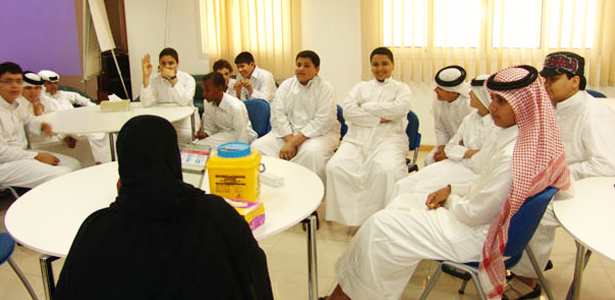
This Connecticut-sized nation, sticking out like a loose tooth in the Persian Gulf, is one of the most obese nations in the world, with residents fatter, on average, than even those of the United States, which often takes the cake in such competitions.
According to recent studies, roughly half of adults and a third of children in Qatar are obese, and almost 17 percent of the native population suffers from diabetes. By comparison, about a third of Americans are obese, and eight percent are diabetic. Qatar also has very high rates of birth defects and genetic disorders — problems that, along with the prevalence of obesity (PDF) and diabetes, have worsened in recent decades, according to local and international health experts.
So what’s going wrong in little Qatar?
Qatar also has very high rates of birth defects and genetic disorders — problems that have worsened in recent decades.
To misappropriate a well-worn phrase: It’s the economy, stupid. In September, Qatar officially became the richest nation in the world, as measured by per capita gross domestic product. It also recently became the world’s biggest exporter of natural gas, and earned the title of fastest growing economy in the world. By international development standards, all this growth has happened virtually overnight, making Qataris’ lifestyles much more unhealthy, and at the same time leading many to hang on resolutely to what’s left of their fleeting tribal traditions — practices that include inter-marriage between close family members and cousins.
“They’re concentrating the gene pool, and at the same time, they’re facing rapid affluence,” said Sharoud Al-Jundi Matthis, the program manager at the Qatar Diabetes Association, a government funded health center in Doha, the capital. As a result of these factors, Qataris are becoming obese, passing on genetic disorders at an alarming rate, and getting diabetes much more often than others around the world. They’re also getting diabetes a decade younger than the average age of onset, which is pushing up rates of related illnesses and complications, like hypertension, blindness, partial paralysis, heart disease, and loss of productivity. “It’s a very, very serious problem facing the future of Qatar,” Matthis said.
It’s a fascinating read, not too long, little more than double what you have already read. You can read the entire article by clicking HERE: The Atlantic
Thank you, John, for the recomendation.
Recent Comments
Kitchen on Isiais: Winding Down intlxpatr on Shampoo Ginger tigerbutterya0c5ff1d… on Shampoo Ginger intlxpatr on British Soldier Kidnapped, Esc… John on British Soldier Kidnapped, Esc… Wikipedia Donate Button

Amazina


Early Voting in Florida


