The Dow Jones Industrial average just went over 30,000 for the first time, ever, skyrocketing on the prospect of a peaceful transition, some predictability taking place of our four years of chaos, and some civility.
I am watching Joe Biden intruduce his new cabinet nomineees. Everyone is masked, and between each speaker an aide is wiping down the surfaces on th podium.
The words they speak thrill my heart:
Service
Diplomacy
Foreign Policy/ National Security / Allies
Respect
Opportunity
Telling Truth to Power
Unite America; Belief in America’s Ideals – Democracy, Rule of Law
Commitment
Reflecting the best of our nation
Truth, Facts, Science
There are women at the table. There are brown people at the table. There are humble, talented white men at the table. My heart sings. They are warriors, looking realistically at the challenges ahead and ready to do whatever they need to do to rebuild the American dream for ALL citizens.
These are people who work quietly, persistently and modestly in service to their country, and are willing to put in the hard work to achieve hard-gained successes.
I have the most creative and insightful daughter-in-law. She is a woman I really like, and one of the things I like most about her is that she sees things differently.
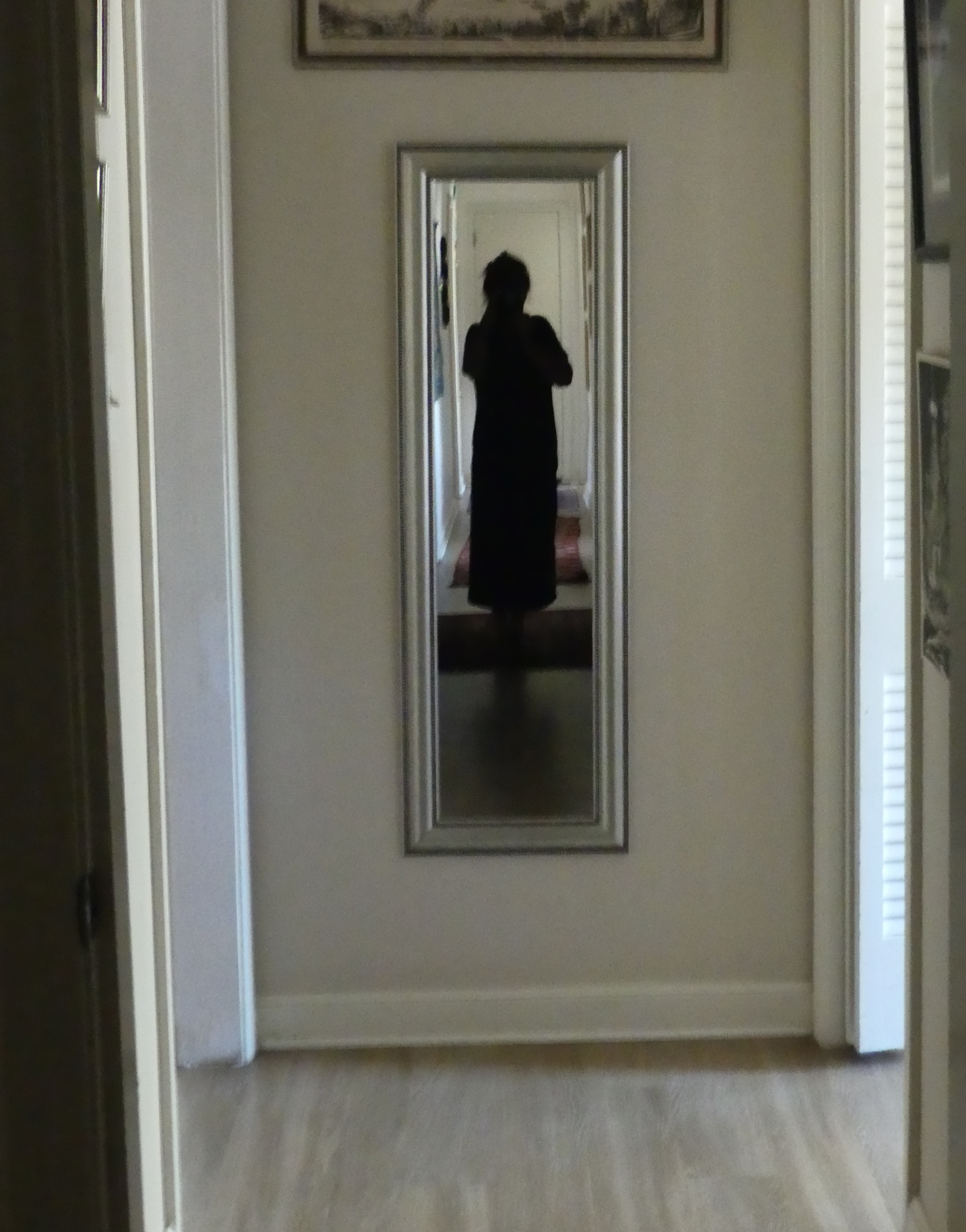
One day, visiting her house, as I walked down the hall, I noticed how thin I looked. My daughter-in-law had found a magical mirror!
I found a similar mirror, and when we bought the house, I put it in the same spot.
It’s a small thing, a very small, petty, vain, and gloriously irrational thing, but every time I walk down the hall and see myself as taller, and thinner, it just makes my day. I know it is only an illusion. It doesn’t matter. It makes me happy.
When I first came to Pensacola, a woman at our church who is very welcoming and kind to newcomers told me she “wanted to find just the right place for me to plug in.” A couple of her suggestions were not exactly what I wanted, but then she introduced me to Jena Melancon, the founder and director of the Gulf Coast Citizens Diplomacy Council, and I found my niche.
Jena is an amazing woman. She has created this organization. She has a data base of resources that allow her to tailor visits for foreign delegates so that they can meet the needs of their missions – Election Transparency, Entrepreneurship, Environmental Protection, Leading an NGO, Military and Civilian Community Cooperation, Domestic Violence, Creating Fair Policies, Programs for Enriching Disadvantaged Children – you name it, Jena can create a program that will enrich their understanding from an American perspective.
At the same time, Pensacolians who come into contact with the delegates sent by the Department of State find that their lives are also enriched. Many times they, too, learn something new and unexpected. Both groups benefit.
Jena also has a group in GCCDC that studies Great Decisions, and creates events throughout the year for membership participation. Members of the Gulf Coast Citizens Diplomacy Council can volunteer in Jena’s office, can host dinners for delegates and have some one-on-one time learning about customs in another part of the world, can sponsor a Pensacola child in an international exchange, can host teenagers here on an international exchange, or attend the famous Mint Julep party in Spring. Many in the GCCDC are also resources; the exchange of ideas bringing inspiration to both sides.
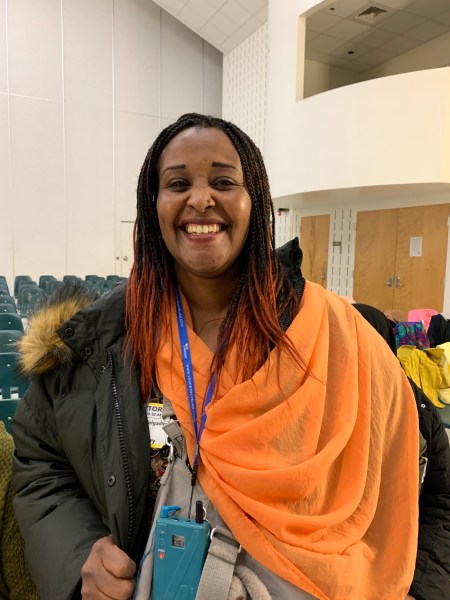
This week, I was honored to be able to work with a group of Women in Leadership, women from Chad, Iraq, Jordan, Saudi Arabia, Egypt and the Sudan. Each and every one of the women was a hero in her own right, making life better in their communities by stepping into leadership roles. Rehab, above, from the Sudan, works to empower women and to make the laws show greater equality in the treatment of men and women.
CPT Aseel is a police chief in Iraq.
Maki, from Chad, works to prohibit child marriages and female genital mutilation.
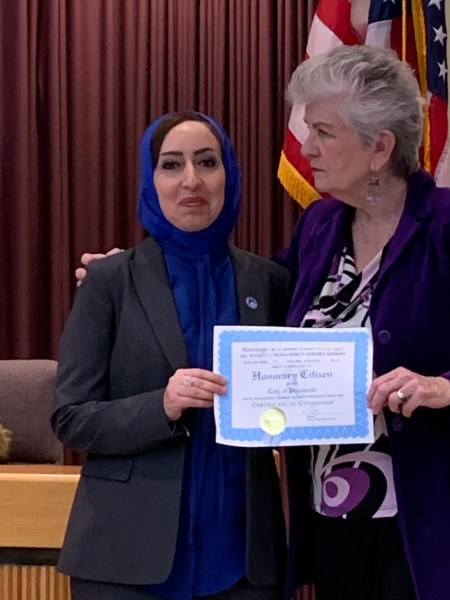
Mariam, from Saudi Arabia, is a high level journalist in the Saudi media industry, accepting honorary citizenship from the City of Pensacola city council chair Sherri Myers.
Wasfiya is a minister of parliament in Iraq.
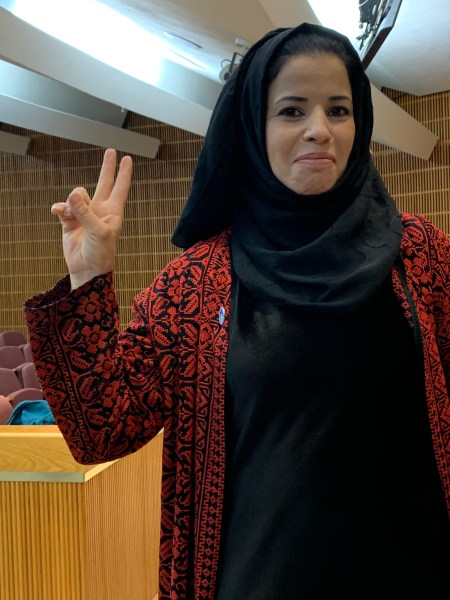
Ola is the delegate from Jordan.
I was honored to spend three days of my life with these women, and with Jena, and with other inspirational women of Pensacola at the Women in Leadership conference at UWF.
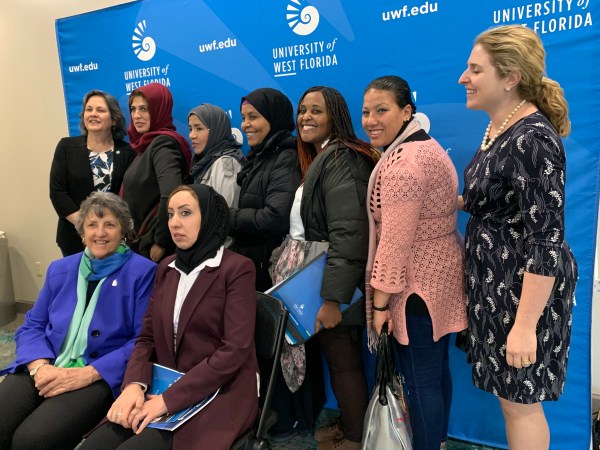
Here is most of the group with Judy Bense, President Emeritus of UWF, at the closing of the Women in Leadership conference, 2020. Life can be amazing when so many women of talent and confidence gather together to inspire one another.
CDC says STD cases in U.S. rose to record high in 2018 as funding lags
THOMSON REUTERS
Oct 8th 2019 3:19PM
Budget cuts at the state and local level resulting in staff reductions, clinic closures, less screening and patient follow-up has accounted for the increased disease rates, in addition to decreased condom use, health officials said.
“The resurgence of syphilis, and particularly congenital syphilis, is not an arbitrary event, but rather a symptom of a deteriorating public health infrastructure and lack of access to health care,” Gail Bolan, the CDC’s director of STD Prevention, said in the report.
Antibiotics can cure chlamydia, gonorrhea and syphilis, but many people fail to get screened and treated for the diseases.
The CDC’s annual STD prevention budget decreased in purchasing power by 40% from 2003 to 2018, according to data released by the National Coalition of STD Directors, an association of local health officials. The CDC’s financial data was first consolidated into the U.s. Health and Human Services financial reports in 2003.
Half of STD cases occur in people between the ages of 15 and 24 years old and can lead to health complications including infertility and increased risk of contracting HIV.
In 2018, the CDC received reports of nearly 1.8 million cases of chlamydia, some 580,000 cases of gonorrhea and more than 115,000 cases of syphilis. Of the 1,306 cases of congenital syphilis in 2018, 78 resulted in stillbirths and 16 in infant death.
(Reporting by Gabriella Borter in New York; Editing by Frank McGurty and Bill Berkrot)
My comment: This is what happens when we rely on “abstinence” and fail to fund Planned Parenthood AND other community sources of reliable information for young people. Oh yes, it would be so nice if teen-agers and young adults went to their parents for advice on keeping sex safe – is that what YOU did? What teenager does??
Teenagers and sex go hand in hand, young adults and sex go hand in hand. If we want to prevent STD’s, we have to give them accurate information as to what they are and how they can be prevented.
Do I sound exasperated????
Some of the things out there these days are increasingly drug-resistant. It is a DISGRACE that we are not preparing our children for the realities of the world, preparing them to live responsible lives and funding sources of accurate information (and yes, even birth control products) to keep them SAFE.
I lived through the 70’s and the ’80’s and as I have watched the young of our generation grow to maturity, I have had hope for a different kind of world. I believed I saw it coming, a new way of thinking, where women had equality, where all people had respect regardless of skin shade. I suspected it would be slow, but the dinosaurs my age and older would die off, leaving the more enlightened young people in charge.
When Obama was elected, I danced for joy. I saw it as a sign – a man of color elected President of the United States! To me, he embodied what our nation was established to attain. Freedom. Liberty. Justice for ALL. Equal opportunity.
This morning, AdventureMan and I were talking; as I was leaving his office I tweaked his photos by mere centimeters. They had shifted and were just a little crooked.
“I hope you don’t mind,” I said (and I had already done it.)
(Barely perceptible pause, but a pause none the less) “Oh no, my dear.”
We both broke out laughing. Sometimes people who have been married for a long time lie to each other in such a way, to be polite, not to rock the boat, but at the same time letting the other person know exactly how you feel about something.
That barely imperceptible pause had meaning. Nothing was something.
When you are a teen-age girl, there are a lot of things you tell yourself when trying to figure out what to do.
“Really, nothing happened . . . .”
“I wasn’t supposed to be at that party”
Maybe I shouldn’t have worn that bathing-suit. Maybe it was my fault”
“I know Mom and Dad would back me, but they would also be really pissed.”
“Do I want to be known as ‘that girl?'”
Maybe you talk to your friends. Most girls won’t talk to their parents, unless it is really severe and you can’t hide it.
I now – I worked with rape victims for two years at a Rape Crisis line. We listened. We offered information. We listened. We offered to go with them if they wanted to tell someone, like the police. We educated – police, hospital workers, first responders, parents. We listened. We went to court with the victims who chose to file charges. We listened.
The bravest woman I ever met was in Doha. I had agreed to meet with her when her mother told me she had been assaulted. She had been offered a ride home, the guy was the big brother of a school friend, driving her and her sister home. Instead, he and his friend drove deep into the desert, forced the girl out of the car and told her to co-operate and they would leave her little sister alone.
She negotiated. She wouldn’t do all that they tried to force her to do. Then they took her home.
She talked to a couple friends, who told her she needed to tell her parents because it had happened before, and could happen again. The young girls were like prey to these guys.
She went to the police, she named names. They were arrested, and when she saw them in the line-up, she told the police she needed for them to take off their clothes so she could tell for sure that it was them. She knew it was them. She also knew that they were from a good family and that nothing serious was going to happen to them no matter what the charges, but she wanted a moment where she could humiliate them in some small way for the way she had been abused and mistreated.
It was one of those unequal power moments, but she used what little power she had.
“I wanted to get this on the record,” she told me, “I wanted to make sure that when they go to get married, that their names will be on the record, and if not, people in Doha have long memories. Who will want to marry their daughters to these men?”
She was 16.
Her family suffered. Her father was heart-broken that he had brought his family to Doha and that he had, as he saw it, failed to protect his daughter. The family left Doha soon thereafter.
I still honor that girl, her courage, her wisdom, her dry-eyed willingness to speak out.
And I believe Dr. Ford. I believe she kept it to herself, maybe sharing a little with close friends. She was terrified and she was 15. She carried it for a long time. For most rape victims, like my 16 year old friend, the sexual violation pales in comparison to the violation of personal boundaries and the fear that you may not survive. You are in shock. You often blame yourself. You want to move on, and you don’t want to be known as “that girl that got raped.” She was younger than Kavanaugh, less powerful, a teen-ager.
President Trump, you are just an ignorant oaf. You think you are something, but you are nothing. It’s not like women are assaulted and men aren’t. A thousand Catholic boys can tell you differently, and they feel the same shame as female victims feel. I hope everyone in America reads your ignorant, hateful, smarmy tweet and see the horror in having you as a President.
On Sunday, the organist played “America the Beautiful” in a minor key. It reflected what many of us are experiencing. We love our country. We hate what we are seeing.
An excerpt from an article from the Washington Post about declining democracies in the world, this part focused on the USA, land that I love:
Democracy declined precipitously in the United States
The United States fell 24 places in the country ranking on liberal democracy over the past two years, from seventh in 2015 to 31st in 2017. When we compare the United States’ score in 2017 with its average score over the past 10 years, the drop is precipitous and unprecedented.
Liberal democracy in the United States: changes from the 10-year average.
Experts lowered their estimates of democracy in the United States because they began to be skeptical that the U.S. Congress will rein in executive overreach. Similarly, experts lost faith that the opposition party can contribute to overseeing, investigating or otherwise checking the majority party. The U.S. executive branch was assessed as showing less respect for the Constitution and compliance with the judiciary, two indicators that the judicial branch can restrain the executive.
For all four indicators, the score for the United States declined. The downward trend in the United States is much worse than in other countries. In terms of government compliance with decisions of the Supreme Court, the United States used to rank among the top countries of the world — but has now declined to No. 48.
I remember living in Kuwait, self-censoring my blog entries so I wouldn’t be expelled from the country, even blogging under a pseudonym. I think of the ICE officer who resigned, and was visited by law enforcement as he gave an interview to national news explaining why he (and others) were quitting ICE, disgusted and disheartened by the un-American practices they were being forced to engage in to export “illegals.” Yes, we still have freedom of speech, but we also look over our shoulders, now, never sure what new low will strike next.
“She shows us the same things,” you might complain, and again I say “I write this blog for myself and for the love of writing about the things I love. You are welcome, all are welcome, and if you are not happy, you are welcome to go elsewhere!”
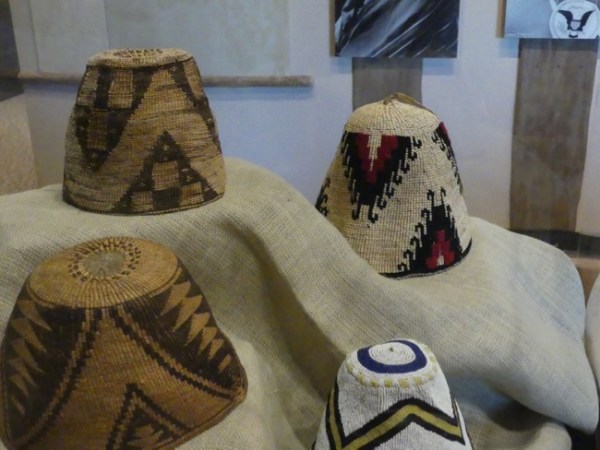
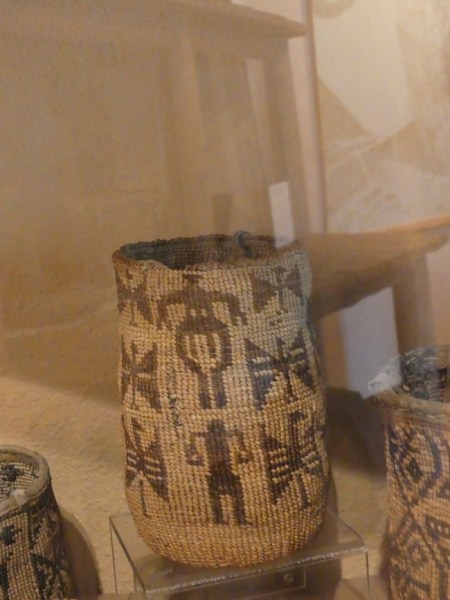
I’ve lived an odd life, a life I would’t trade with anyone. I grew up in Alaska, on an island with a lot of native Americans as my fellow students in my little elementary school. I grew up with Alaskan art, Indian artifacts, masks, baskets, and the hand made costumes, red and black images, sparked with trimming of white shirt buttons. I went to high school in Germany, traveling far and wide with my family or with friends through that continent, visiting more than a few churches and museums, even making special trips to see an exhibit or two.
Then a big change, life in the Middle East and Africa, where I learned to see things through a very different set of eyes and experiences, but something strange started happening, as I noted the differences, I could also see amazing similarities.
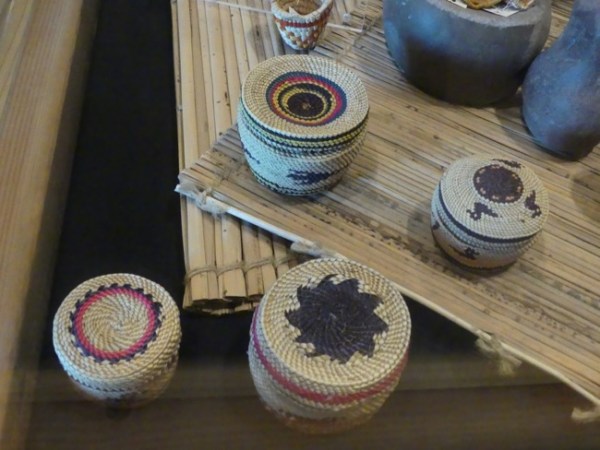
I love women’s handwork. I love the nomadic textiles, often made on very narrow looms that could be mostly a couple sticks and yarn from sheep or goats you’ve raised and slaughtered, died with whatever you could get your hands on. And, oddly, the weavings and patterns from Native American baskets and weavings have a lot in common with weavings from the Middle East, West Asia (the ‘Stans) and Africa. There is a love of working with black, white and red, for example, and a similarity to the structure of the animals, even when the animals themselves differ.
If you are interested in the work women do with their hands, you never lack for conversation wherever you go. There are always groups where women are teaching one another new techniques. I’ve met wonderful, creative women in Germany and in Kuwait and in Tunisia, all finding new and innovative ways to create, and also exploring preservation of early and ancient techniques.
I will show you pictures, and every now and then I will put in a little explanation.
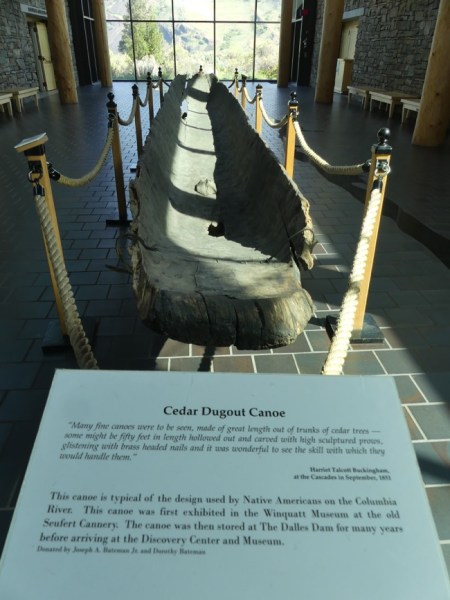
Below is a dugout canoe, created from one very large cedar tree trunk, carved out by hand
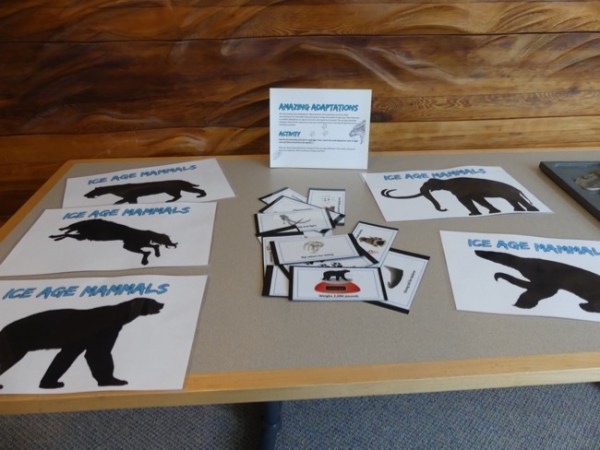
There were really Direwolfs? GOT didn’t make them up?
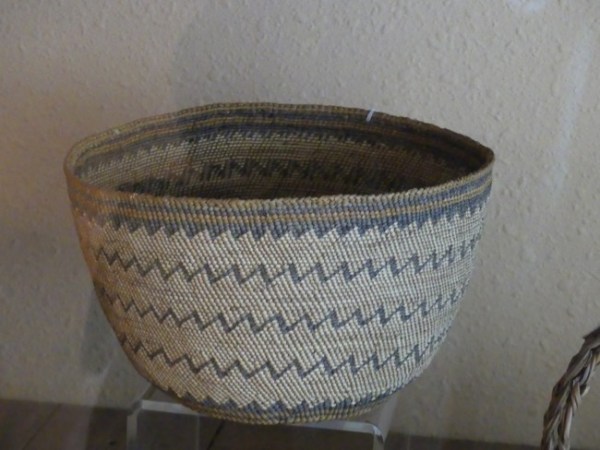
Look at the motifs on these baskets! African? Azerbaijani? Kazakh? Kuwaiti?
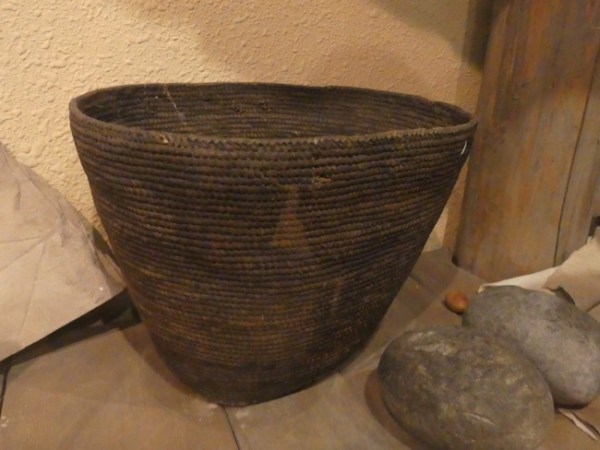
For grinding chestnuts into paste, then the paste is cooked into a kind of meal like oatmeal. The morter and pestle is the same in so many places.
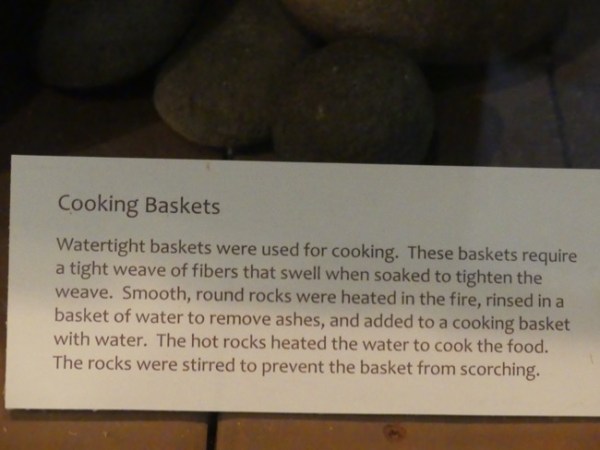
The round cooking stones, heated in fires, dropped into the meal, fished out once they start losing their heat, washed, reheated and put in again until the meal reaches a boil, all in this tightly woven basket.
Activity in the Children’s exploration area
We love the creativity and persistence of humans who preserve our heritage and traditions for future generations. It is particularly delightful when the preservation is in a museum conceived and manifested with beautiful elements and natural materials.
I like to stay out of medical facilities. I think it’s better for our health. 🙂 People who go to doctors tend to be sick, and we still have a lot to learn about germs, viruses, flesh-eating diseases, and even intestinal distress, and how they all spread. I’m pretty sure that there are a lot of things you can be exposed to in hospitals and doctors’ offices that you are less likely to be exposed to elsewhere.
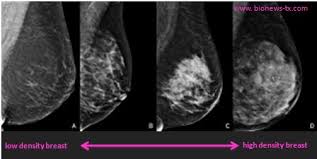
On the other hand, I am all for preventive medicine, and by the grace of God and my husband’s military service, and the American tax-payer, I have decent medical coverage. I see my doctor twice a year, and he reminds me if there are other things I need to do. Some, like an annual skin scan, and eye exams are easy. Mammograms, not so much. For me, it is easy to skip a mammogram for a year, or two, or three.
(Segueing into an aside – if men had to put their testicles in between two sheets of cold plastic and then have the sheets tightened by turning a knob until it was really, really uncomfortable, I am willing to bet they would find a more efficacious way to do the job.)
So it has been three years, and I scheduled, and went in for a routine mammogram. The technician was cool and I was in and out quickly; next contact should be a letter saying a radiologist has examined the photos and all is well, that’s routine.
Umm. Next, I get a call saying we need to schedule right away as there were some . . . I can’t remember the word. Sort of like ambivalencies or ambiguities in the films, and we needed to redo those on one of the breasts. And she got me in like day after tomorrow.
So we re-do the shots, and then we do them again. This is taking a long time. Then she comes back and tells me that they have an ultrasound scheduled for me just down the hall to get a better look.
I’m pretty cool. But I’m starting to get a little nervous.
The ultrasound lady is very professional, very thorough. Very thorough, and finally I glance up at the screen to see flares of blues and reds and yellows as she moves the scope around and I don’t show it but I am seriously starting to freak out.
She tells me she needs to talk with the radiologist and leaves the room and it seems like a long long time and then she comes back in and tells me the radiologist needs to talk with me. If I were the kind of woman who cries, I would cry, but I’m not, not in front of other people, so I just look cool.
The radiologist comes in and says a lot which I hear as “blah blah blah;” when I am freaking out, I have trouble understanding words strung together. I can understand each separate word, but I can’t understand them in a sentence, like “what does that mean?”
And then he says “so we know it is NOT breast cancer, but we don’t know what it is. It’s not even something we could biopsy. I’m not calling you back in six months because it isn’t something that has form or substance but be sure to come back in a year this time so we can take another look.” (I might have paraphrased everything after “We know it is not breast cancer . . .” Everything is pretty hazy except that I do NOT have breast cancer.)
Walking out of that clinic (it took hours) was like getting my life back again.
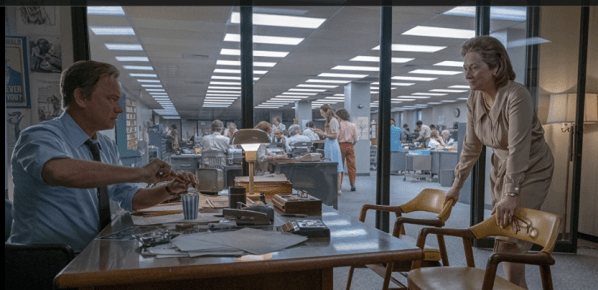
When you are watching The Post, the story is so interesting that you can forget that this really happened, that newspapers were told they could not publish the Pentagon Papers, and that the Washington Post ultimately defied the “cease and desist” and printed, believing the First Amendment protected their rights.
Meryl Streep is perfect as Katharine Graham, who inherits the Washington Post on the death of her husband, and Tom Hanks makes a great Ben Bradlee. The sets are wonders of 1970’s decor, and oh, Meryl Streep in the frowzy seventies clothes, hilarious.
What isn’t so hilarious, what is actually painful, is watching Meryl, as Katharine, dither and constantly ask the men around her what to do. She was the first woman publisher of a major American newspaper. It was her family newspaper; her father has asked her (now deceased) husband to take it over, and she was delighted. He was the man, and women weren’t expected to take on roles of such importance. As the movie opens, she is getting ready to take The Post public. It is painful watching the bankers and lawyers talk down to this intelligent woman, painful watching rooms full of men making all the decisions, and, as the movie points out, some very bad decisions in the management of the Vietnam War.
It is also a great reminder of who we are as Americans, and the power of a free press. It is a great reminder that the free press is here to put a spotlight on that which is hidden, to help us have transparency in our government, that decisions are not to be made in private huddles, but are to be in the “sunshine” of public awareness, so that we have the ability to question, and to debate, what we want our country to look like.
We found The Post exhilarating. We found it full of hope, even in these dark times.
A local school district is using “abstinence only” as it’s sex-ed class guidance. Has abstinence, among any population, ever worked? Give our hormone-ridden teens some information, please! Tell them that if they are going to have sex, how to use a condom, and explain a wide variety of contraceptives which will prevent an unwanted pregnancy. How many teens do you know who are ready to become parents? Teens are greatly at the mercy of their bodies, teach them to use their bodies responsibly.
It’s not just teen-agers in the US.
One recent fact I read recently is not included in this article; one of the greatest increases in STD’s in our population is among adults 55 and older, and people in retirement homes and nursing homes. We need to get these grown-ups some sex-ed, too!
“All it takes is a simple STD test and antibiotic treatment to prevent this enormous heartach,” said Gail Bolan, director of CDC’s Division of STD Prevention, of STDs that are passed from mother to child (AFP Photo/BRENDAN SMIALOWSKI)
More
Washington (AFP) – Sexually transmitted diseases surged to a record high in the United States last year, with more than two million cases of chlamydia, gonorrhea and syphilis nationwide, officials said Tuesday.
This was “the highest number ever,” said the annual Sexually Transmitted Disease Surveillance Report released today by the US Centers for Disease Control and Prevention (CDC).
Most of the new cases — 1.6 million in 2016 — involved chlamydia, a bacterial infection that affects both men and women.
Gonorrhea also increased among men and women last year, but the steepest rise was among men (22 percent), said the report.
Nationwide, gonorrhea cases reached 470,000, with a large share of new gonorrhea cases among men who have sex with men.
These trends are “particularly alarming” because of the growing threat of gonorrhea becoming resistant to the last recommended treatment, according to the CDC report.
Syphilis cases numbered 28,000, a rate that increased nearly 18 percent from 2015 to 2016.
Most cases of syphilis occur among men — mainly gay, bisexual and other men who have sex with men.
But women too saw a 36 percent increase in rates of syphilis.
There were more than 600 cases of syphilis among newborns — known as congenital syphilis — a 28 percent increase in a single year.
These syphilis cases led to “more than 40 deaths and severe health complications among newborns,” said the report.
“Every baby born with syphilis represents a tragic systems failure,” said Gail Bolan, director of CDC’s Division of STD Prevention.
“All it takes is a simple STD test and antibiotic treatment to prevent this enormous heartache and help assure a healthy start for the next generation of Americans.”
Experts say despite growing concerns about antibiotic resistance, these three STDs can all be cured with antibiotic treatment.
If left untreated, however, they can lead to infertility, life-threatening ectopic pregnancy, stillbirth in infants, and increased risk for HIV transmission.
“Increases in STDs are a clear warning of a growing threat,” said Jonathan Mermin, director of CDC’s National Center for HIV/AIDS, Viral Hepatitis, STD, and TB Prevention.
“STDs are a persistent enemy, growing in number, and outpacing our ability to respond.”