If you were to overhear conversations between AdventureMan and I, you would think we are whacko. It’s a funny thing about love; sometimes odd ducks can find one another and live happily ever after, or at least, have some really good times.
The other day we were on our way to lunch, and had no great preferences for going anywhere. We made a decision (and now I can’t even remember what it was, it was such a negligible decision) and AdventureMan said he kind of wanted to eat this, and I said his want was greater than my yen . . . . and off we went.
All the way to the restaurant, we were inserting words on a spectrum and debating now and then on their proper placement on the continuum. Like is a “yen” milder than a “want?” On the far end, does “obsession” precede “compulsion?” Is a compulsion truly related to a want at all, or does being driven to something take out the want-factor altogether? Yes, like I said, we are totally whacko, and thanks be to God, often whacko in the same direction, or we would drive one another totally crazy.

(No. This is not us. This is just a photo I found online)
Here is our “want” line, from “yen” which we consider a very mild want, to compulsion, which drives out all other wants. We have probably left out some words you can think of, if you are a person who is still reading this far, please feel free to suggest amendments, or specific additions to make the line more flowing. You must defend your suggestion rigorously 🙂
yen – hankering -like – want – desire – crave – obsessing for – compulsion for
January 26, 2014
Posted by intlxpatr |
Adventure, Communication, Language, Marriage, Random Musings, Relationships, Words |
Leave a comment
A-Word-A-Day was the very first website I ever bookmarked. I was getting my certification to teach English as a Foreign Language and my students loved words. I’m pretty good with words, even so A-Word-a-Day teaches me a new one, or a new meaning for an old one, more often than not. You can subscribe and receive a new word five days a week and a discussion at the end of the week.
This is a great word, and one I had never heard used before:
stellenbosch
PRONUNCIATION:
(STE-len-bosh)
MEANING:
verb tr.: To relegate someone incompetent to a position of minimal responsibility.
ETYMOLOGY:
After Stellenbosch, a town in South Africa. Earliest documented use: 1900.
NOTES:
Stellenbosch, near Cape Town, was a British military base during the Second Boer War. Officers who had not proven themselves were sent to Stellenbosch, to take care of something relatively insignificant, such as to look after horses. Even if they kept their rank, this assignment was considered a demotion. Eventually the term came to be applied when someone was reassigned to a position where he could do little harm.
A similar term is coventry.
January 20, 2014
Posted by intlxpatr |
Cross Cultural, Cultural, Language, Words | A-Word-A-Day |
2 Comments
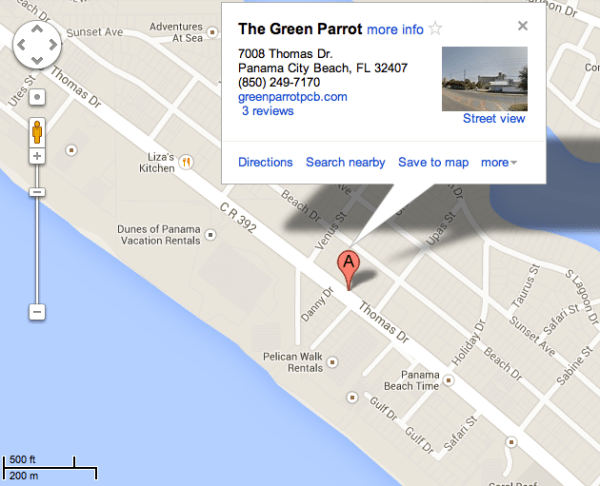
Our first day in Panama City Beach, I watched AdventureMan’s head swivel 120° to the left as we drove down the main drag.
“Did you see that?” he exclaimed! “A ‘Mediterranean’ restaurant!! Woooo HOOOOOOO!”
We’ve come to learn that ‘Mediterranean’ is code for comfort food. It is not Mediterranean-Italian, or Mediterranean-Greek, it is Mediterranean like Lebanon or Syria or Palestine . . . it is comfort food.
Sigh. Or close enough. There is no machboos, and sometimes the felafel aren’t home made. Still, we know we’ll give it a try.
On our last night in town, it is the perfect night to go. 

The owner is a delightful Lebanese import named Hani, and he is a word-of-mouth phenomenon on Panama City Beach. He has many fanatically loyal customers, and people recommend him all the time. We can see why. He loves what he is doing, and it shows.

Mixed appetizers/Mezze

His food is DELICIOUS 🙂




Everything tasted so good. We can understand how he is developing such a following – his food is really good.
December 4, 2013
Posted by intlxpatr |
Cooking, Cultural, Customer Service, Eating Out, Food, Living Conditions, Restaurant, Road Trips, Words |
2 Comments
From AOL Everyday Health:
WEDNESDAY, November 6, 2013 — A small but growing body of research is finding that people who are proficient in multiple languages have a lower risk of cognitive decline. In the largest study to date on the relationship between bilingualism and dementia, researchers from Hyderabad, India, and Edinburgh, Scotland, demonstrated that bilingualism may stave off symptoms of Alzheimer’s disease and other types of dementia for several years. Their study was published in the journal Neurology.
The research team in Hyderabad evaluated 648 people who had dementia symptoms for 6 months to 11 years before enrolling in the study; 391 of the subjects were bilingual. The researchers found those who were bilingual developed dementia on average 4.5 years later than people who spoke only one language. On average, bilinguals developed dementia symptoms by age 65.6 compared with age 61.1 in people who spoke only one language.
“Nowadays, a lot of companies are having expensive brain-training programs, but I’d say bilingualism is very cheap,” said Thomas Bak, MD, a lecturer in human cognitive neuroscience at the University of Edinburgh, and second author on the study. “The crucial thing about bilingualism is that it offers what we say is constant brain training. A bilingual person Is forced to switch to different sounds, words, concepts, grammatical structure, and social norms.”
Dr. Bak’s study demonstrated the impact bilingualism has not only on the progression of Alzheimer’s disease, but also on other types of dementia. Though the majority of patients in the group studied (37 percent) had Alzheimer’s-related dementia, 29.2 percent had vascular dementia, a type caused by reduced blood flow in the brain from stroke. Frontotemporal lobe dementia — from atrophy or shrinkage of certain areas of the brain — accounted for 17.9 percent of the diagnoses. Lewy body dementia, the second most common type of progressive dementia and one that is related to Parkinson’s disease, accounted for 8.5 percent, while 7.4 percent of people in the study were diagnosed with mixed dementia.
The researchers found bilingualism had the most dramatic effect on people who were diagnosed with frontotemporal lobe dementia. Knowing multiple languages delayed dementia symptoms by as much as six years in this group. Individuals with vascular dementia had an average of almost four extra years before dementia symptoms set in. However, individuals who knew three or four languages weren’t protected longer from dementia symptoms than those who were only proficient in two languages.
The More Different the Languages, the Better
The World Health Organization estimates 35.6 million people in the world have dementia, with 7.7 million new cases every year. And in India the problem is expected to grow even more dire. In 2009, the World Alzheimer’s Report projected India will have 10 million dementia patients by the year 2020. This was the impetus behind the new research, said Suvarna Alladi,MD, lead author of the study, which was funded by the Indian Department of Science and Technology.
“Dementia has become a major public health problem in India, and research that explores potentially protective mechanisms is of tremendous importance,” said Dr. Alladi. “Since many people in India can fluently speak two or more languages in their daily life, it’s heartening for us to know that something that we take for granted may protect our brains from developing dementia early.”
Teluga is the official state language in Hyderabad. Natives of the city are often also proficient in Hindi and Dakkhini, which more closely shares roots with English than with Teluga. This raises questions about the brain and “linguistic distance,” said Bak.
“You could argue the more different languages are, the better they are for the brain,” Bak said. “However you can also argue that when you speak languages that are so closely related you have to suppress one.”
Scientists have also become interested in whether cognitive abilities can be retained in similar ways if a person doesn’t learn a second language until later on in life, but there are yet no studies on this topic. However, many researchers, including Bak, speculate that a person who learns a second language later on life could glean similar benefits. “There are theories that would say you need the constant practice,” he said. “The fact that I can swim won’t make me healthy. If I actually go swimming it will make me healthier.”
Exercising the Brain
Numerous studies have found one of the best ways to slow cognitive decline is by mindfully engaging in brain-flexing activities, such as playing Suduko and crossword puzzles or reading books. I-Chant Andrea Chiang, MD, a professor who specializes in language psychology at Quest University Canada in Squamish, B.C., sees very little difference between language learning and any other type of brain exercise. “The brain is a muscle and it needs to be worked out like any other muscle,” said Dr. Chiang. “All those mental activities stimulate the brain and build up a cognitive reserve, even though there may be physical decline.”
Chiang has consulted with Ryan McMunn, who runs BRIC Language Systems headquartered in New York City. McMunn said a number of Alzheimer’s patients have sought out BRIC language classes online to help offset the symptoms of the disease, or are learning a second language because Alzheimer’s runs in the family. McMunn, who is American and lived in China after college, said his grandmother had Alzheimer’s disease, but he wasn’t aware of the research on bilingualism and dementia until after he began learning to speak Mandarin, which he now does fluently.
“Honestly I can’t think of a more fun way of trying to postpone these things,” said McMunn. “Learn any language; it’s a fun thing to do and it allows you to communicate with new people. I look at it as very beneficial.”
November 8, 2013
Posted by intlxpatr |
Aging, Communication, Cross Cultural, Health Issues, Words |
Leave a comment
One of the great wonderful things that has happened with living in Pensacola is that I get to spend a lot of time with my two little grandchildren, one of whom is two months old and just loves to be held, and one of whom is three years old and loves to talk.
I adore them both, but the three year old is so much more interesting, as he can talk and express himself and I love the way a three year old thinks.
We talk a lot. The other day we were talking about breaking things like arms – he had just broken his arm in two places and got a 1 (needs improvement) on “uses playground equipment safely” LOL. I had just told him how my sister broke both of her arms, not at the same time, and how we had each broken a leg skiing.
“You know, Shisha, you’re a lot like a boy,” he said to me, and I knew it was a compliment but I couldn’t help laughing.
“Why do you say that?” I asked, and got some evasive answer – even a three year old has a sense of when a thought might be out of the ordinary.
This week, though, he really gave me a good laugh when he came running in and showed me his weekly sheet, with green happy faces (that is a very good thing) and a photo of himself as a baby.
“Another word for babies is ‘insects!'” he announced, and I couldn’t help it, I laughed.

“No! No! It’s ‘infants!'” I said, and made him watch my lips as I said it because it’s one of those words where we kind of cut off the t at the end, and he got it right. I laughed, knowing it must be “I” week at his school and how very cool is it that they are teaching three year olds such words as “infant” and “Insect” and so what if it takes a little while to get them all straight, just hearing them and seeing them applied is such a good thing.

November 3, 2013
Posted by intlxpatr |
Communication, Cultural, Education, Family Issues, Humor, Words |
4 Comments
I love words; I am a word-nerd. To this day, I always thought hoist by one’s own petard must mean a petard was some kind of edged weapon (knife, dagger, etc) so to know the true meaning is a glorious thing!
From Anu Garg’s A Word a Day to which I have subscribed for around 15 years now. You can subscribe and get a similar daily email here:
A.Word.A.Day
with Anu Garg
What comes to your mind if I say the name Dumpty? Perhaps you’re thinking of Humpty and you’d be right. The two go together. Each of this week’s words also prefers specific company, and usually appears in set expressions.
You can also think of them as fossil words. They are mostly obsolete and only appear as part of idioms. We are used to seeing them bundled and never stop to think about what they literally mean. This week we’ll go behind the scenes to identify their origins.
petard
PRONUNCIATION:
(pe-TAHRD, pi-)
MEANING:
noun:
1. A small bomb used to blast down a gate or wall.
2. A loud firecracker.
ETYMOLOGY:
From French péter (to break wind), from Latin peditum (a breaking wind), from pedere (to break wind). Ultimately from the Indo-European root pezd- (to break wind) which also gave us feisty, fart, and French pet (fart). Earliest documented use: 1566.
NOTES:
A petard was a bell-shaped bomb used to breach a door or a wall. Now that we have advanced to ICBMs, this low-tech word survives in the phrase “to hoist by one’s own petard” meaning “to have one’s scheme backfire”. The idiom was popularized by Shakespeare in his play Hamlet. Hamlet, having turned the tables on those tasked with killing him, says:
For ’tis the sport to have the engineer
Hoist with his own petard
USAGE:
“Her attempt to rub salt in the wound had backfired. She had been well and truly hoist by her own petard.”
Immodesty Blaize; Ambition; Ebury Press; 2010.
“Ned … heard the petard exploding against the doors of the fort.”
Dudley Pope; Corsair; House of Stratus; 1987.
Explore “petard” in the Visual Thesaurus.
A THOUGHT FOR TODAY:
Ultimately, the only power to which man should aspire is that which he exercises over himself. -Elie Wiesel, writer, Nobel laureate (b. 1928)
September 30, 2013
Posted by intlxpatr |
Communication, Words |
Leave a comment
As I worked on my earlier map post, I needed to know if it is “capital city” or “capitol city.” Yes. It matters. Here is what I learned at About.com:
Capital has multiple meanings: (1) a city that serves as the seat of government; (2) wealth in the form of money or property; (3) an asset or advantage; (4) a capital letter (the type of letter used at the beginning of a sentence).
Capitol refers to the building in which a legislative assembly meets. (Remember that the o in capitol is like the o in the dome of a capitol building.)
Examples:
- The dome of the United States Capitol may well be the most famous man-made landmark in America.
- Juneau is the capital of Alaska.
- “It is a capital mistake to theorize before one has data.” (Arthur Conan Doyle)
- “Capital punishment would be more effective as a preventive measure if it were administered prior to the crime.” (Woody Allen)
Practice:
(a) The United States Capitol is the ______ building that serves as the location for the United States Congress.
(b) It is located in Washington, D.C., the ______ of the United States.
July 16, 2013
Posted by intlxpatr |
Communication, Education, Words |
Leave a comment
Someone will lose their job, if it is ever discovered who pranked this totally politically incorrect news broadcast. This from Reuters via Huffington Post on AOL:
NTSB Intern Mistakenly Confirmed To KTVU Wrong Asiana Names, Statement Says
(Please note offensive language in paragraph 6)
July 12 (Reuters) – The National Transportation Safety Board apologized on Friday after an intern mistakenly confirmed to a local television station racially offensive fake names for the pilots of an Asiana flight that crashed in San Francisco.
“The National Transportation Safety Board apologizes for inaccurate and offensive names that were mistakenly confirmed as those of the pilots of Asiana flight 214, which crashed at San Francisco International Airport on July 6,” the NTSB said in a statement.
“Earlier today, in response to an inquiry from a media outlet, a summer intern acted outside the scope of his authority when he erroneously confirmed the names of the flight crew on the aircraft,” the NTSB said.
The crash of the Boeing 777 plane resulted in the deaths of three teenage girls in a group of students from eastern China who were visiting the United States for a summer camp, one of whom died on Friday in the hospital. Over 180 passengers and crew members were injured.
On Friday, an anchor for Oakland, California, station KTVU read a list of the supposed names of the pilots of the South Korean carrier on its noon broadcast after an employee apparently called the NTSB seeking to verify them.
The names appear to mock the events of the crash. The prank names were: Captain Sum Ting Wong, Wi Tu Lo, Ho Lee Fuk and Bang Ding Ow.
July 13, 2013
Posted by intlxpatr |
Communication, Cross Cultural, Cultural, Humor, Joke, Lies, Words | Bang Ding Ow., Captain Sum Ting Wong, Ho Lee Fuk, Wi Tu Lo |
4 Comments
Thank you, KitKat, for a great grin this morning 🙂

March 7, 2013
Posted by intlxpatr |
Humor, Words |
Leave a comment
The first reading today in The Lectionary is from Ecclesiasticus, one of the Apocrypha, books which are used by Catholics, Episcopalians, Lutherans and a few other liturgical sects in addition to the books of the bible selected at the Council of Trent used by most Protestant Christians.
We don’t think like God. God used flawed men, murderers, Moses and David, to further his goals for his people. Jesus was gentle with the fornicators and taxmen, and reserved his greatest wrath for those who thought they were holy, but who washed the outside of the cup, and were unclean on the inside. In the Final Judgement, we really don’t know who will stand. We do know, if we read scripture, that lying and slander are considered heinous.
Sirach 28:14-26
14 Slander* has shaken many,
and scattered them from nation to nation;
it has destroyed strong cities,
and overturned the houses of the great.
15 Slander* has driven virtuous women from their homes,
and deprived them of the fruit of their toil.
16 Those who pay heed to slander* will not find rest,
nor will they settle down in peace.
17 The blow of a whip raises a welt,
but a blow of the tongue crushes the bones.
18 Many have fallen by the edge of the sword,
but not as many as have fallen because of the tongue.
19 Happy is one who is protected from it,
who has not been exposed to its anger,
who has not borne its yoke,
and has not been bound with its fetters.
20 For its yoke is a yoke of iron,
and its fetters are fetters of bronze;
21 its death is an evil death,
and Hades is preferable to it.
22 It has no power over the godly;
they will not be burned in its flame.
23 Those who forsake the Lord will fall into its power;
it will burn among them and will not be put out.
It will be sent out against them like a lion;
like a leopard it will mangle them.
24a As you fence in your property with thorns,
25b so make a door and a bolt for your mouth.
24b As you lock up your silver and gold,
25a so make balances and scales for your words.
26 Take care not to err with your tongue,*
and fall victim to one lying in wait.
November 1, 2012
Posted by intlxpatr |
Faith, Lectionary Readings, Words |
2 Comments



 Here There and Everywhere