I was taking a group of International Visitor Leadership Program delegates around town, to their meetings, and they wanted to eat at a very nice local restaurant where they could have Southern Food, Soul Food, with some atmosphere. I discussed several options (Woooo HOOOO Pensacola, with an outsized selection of truly good restaurants for a town of 50,000) and they decided on Five Sisters.
We were so lucky. It was Friday, and just after noon. I walked in, there was a line. Looking past the line, however, I could see some empty tables, so I took a chance, asked for a table to be put together and it was just a few minutes before we were seated. I’ve waited a lot longer for a table at Five Sisters, so I felt God was smiling at me.
The women knew what they wanted, but when it came to sides, they were unfamiliar with the offerings, and several were automatically excluded, and they don’t like cole slaw, it’s just cultural. Finally, the perfect solution. The first one says “Double French Fries, please” and several others follow suit.
It’s actually not a bad choice from a taste point of view. Five Sisters french fries are tasty. I just had to keep my face straight, because everyone is so health conscious these days, and I have never heard anyone order “double french fries” before.
DUBAI: Qatar will likely face higher labor costs as a result of publicity about deaths of migrant construction workers building the infrastructure for the 2022 World Cup football tournament, the International Monetary Fund said. The Guardian newspaper reported in September that dozens of Nepali workers had died during the summer in Qatar and that laborers were not given enough food and water.
Qatar, which has denied the Guardian’s findings, has seen an increasing influx of foreigners, now estimated at 1.8 million, with its population rising 10 percent in 2013.
“Working conditions of some construction workers and domestic help have made global headlines and could affect the availability and cost of hiring new workers in the future,” the Fund said after completing annual consultations with Qatar.
“This would hinder growth since the success of Qatar’s current development model depends importantly on the ability to rapidly hire expatriate workers,” it said.
The gas-rich nation has planned to spend some $140 billion in the run-up to the World Cup on new infrastructure projects, including a metro, port and airport.
Such large public investments entail a possibility of overheating in the near term and low return and overcapacity in the medium term, the IMF warned. “In particular, the extent to which public investment will durably boost private sector productivity remains uncertainty,” it said.
Certain big-ticket projects such as the metro, port and airport have been scaled down or divided into phases to reduce the overcapacity risk, and the authorities are preparing a shortlist of critical projects, the IMF said without details.
However, the large-scale nature of the program has led to implementation delays and cost overruns and Qatar will continue facing the risk of cost escalation given its commitment to a compressed timetable ahead of the World Cup, it also said.
Increasing government spending may push the fiscal balance into a deficit over the medium term when combined with flat production of liquefied natural gas, falling crude oil output from mature fields and lower hydrocarbon prices.
“The public debt ratio is expected to fall, but the headline budget balance could … turn into deficit over the medium term, while the current account surplus could drop to 5 percent of GDP,” the IMF said.
The country’s fiscal surplus could shrink to 6.8 percent of GDP this year from an estimated 11.0 percent in 2013, and further to 4.2 percent in 2015, the IMF said, cutting its October forecasts of 8.4 percent and 5.8 percent, respectively.
The government intends to reduce public debt over time from an estimated 33.1 percent of GDP in 2013 by trimming foreign borrowings and domestic loans. It would continue issuing government securities to support bond market development.
The IMF also raised its forecast for economic growth to 5.9 percent this year and 7.1 percent in 2015, from 5.0 percent and 6.6 percent, respectively, in its October regional outlook.
Inflation should remain benign at 3.3 percent this year and 3.5 percent in 2015, the IMF said, less than 4.0 percent forecast for both years in October, as a decline in commodity prices will help reduce pressure from strong economic activity.
A version of this article appeared in the print edition of The Daily Star on March 10, 2014, on page 5.
Thank you, John Mueller, for forwarding me this story. We lived in luxury, next to a vacant lot where a few laborers lived with next to nothing. They were the lucky ones, but lived in fear of being caught without passports (their sponsors held their passports) and without any papers. The Indian and Nepalese were treated like animals, not like human beings. They are a means to and end, and treated as a resource, without humanity:
Boarding the bus back to their accommodation camp November 19, 2013
STANDING UP FOR THE LITTLE GUY
Azfar Khan: Laboring for Labor
February 07, 2014By Laura Secorun Palet
Share on facebookShare on Facebook Share on twitterShare on Twitter Share on emailEmail
Why you should care
Because migrant workers finally have an advocate worthy of their wants and needs in a place that believes they deserve none of the above.
Defending the little guy is a stance old as time, but you wouldn’t think the glitzy world of professional soccer would need that kind of advocate. But for the people who work so that others can play in new stadiums and watch from secure bleachers, it’s an entirely different story. And it’s the story being told by migrant workers in Qatar who are helping the city prepare for the world’s largest sports competition in 2022.
Cue Azfar Khan, a Pakistani native living in an increasingly unstable Lebanon because he sees an even greater threat facing the regions’ migrant workers.
“Sorry about the bad connection. There has been an explosion in the neighborhood,” Khan says in a surprisingly relaxed tone over the phone.
When you do something like this, it’s not only about the job — it has to be personal.
The senior migration specialist for the International Labour Organization (ILO) in Beirut, Khan monitors and advises Arab states on how to protect workers’ rights. He is talkative and cheerful, even in the face of bombs and sectarian violence.
Azfar Khan
“The security situation is pretty dire,” he says plainly.
If Khan doesn’t sound overly concerned about explosions, it’s because he’s focused on helping the countless immigrant workers who don’t make the headlines. As their champion, he is counseling the Qatar government on how to host the World Cup without violating any more international labor laws.
Working conditions in the region are “pathetic,” Khan says. He believes the kafala system — a traditional sponsorship scheme that binds each migrant worker to a single employer — is incompatible with modern-day labor because it puts workers in a very vulnerable situation.
Last year alone, 185 Nepalese workers — the single largest group of laborers in Qatar and also the lowest paid — died during the construction of the World Cup infrastructure. More than half, some as young as 16, died of heart attacks or workplace accidents, often after enduring 12-hour days and sharing unsanitary lodgings.
Surprisingly enough, Qatar has ratified most conventions on labor rights, which means all exploitative practices are technically illegal. But rules mean nothing if they’re not enforced.
”People with a little bit of assistance can do a better job about improving their lives than paternalistic policymakers.”
“The problem is an extreme lack of political will,” says Khan. “For example, Qatar has signed the convention on the elimination of forced labor but still allows the practice of withdrawing workers’ passports, which easily leads to forced labor.”
Source: Narendra Shrestha/EPA/Corbis
Nepalese domestic migrant worker Om Kumar Chaudhary, aged 23, fixes a goods lift at a 60 feet high construction building in Kathmandu, Nepal, December 16, 2013.
The Qatari government thinks Khan’s concerns are exaggerated, insisting, according to the Emir, that the country is “on the right track” and “truly committed to treating all workers fairly.”
Yet Qatar refuses to sign one convention — the very one Khan considers most crucial: the freedom of assembly and association. “Without any organization to adequately represent their interests, no matter how much we discuss, we are going to have problems,” he says.
And if you thought it was just a regional issue, think again. This unwillingness to take action is not unique to the Gulf states. According to Khan, “Labor law doesn’t get much attention anywhere, whether it is in developing countries or in developed ones.”
Pushing countries to implement these laws without the momentum of political will is like pushing water uphill, but Khan perseveres in his quest with modesty and conviction.
“I know that what I can do will not be earth shattering, but at least it is a cog in the wheel,” he explains.
Khan is himself a former immigrant who moved to Canada with his mother and sister from his native Pakistan at age 14. Raised in a household partial to Sufi philosophy, he was instilled with a sense of social justice from an early age.
“We were told that we had a commitment to people, and I guess championing the underdog was implicitly part of this teaching,” he says.
Source: Amnesty International/Corbis
Migrant worker sitting on a bunk bed in his accommodation in Qatar.
While in Canada, Khan’s dreams of cricketing stardom turned to aspirations of fighting for social justice. He studied economics at McGill University, specializing in development economics before moving to the U.K. and completing his Ph.D. on the impact of international migration on rural Pakistan. In the 1970s and ’80s, Khan noticed how many Pakistanis moved to the Gulf countries to earn money to send home and became concerned about the trend’s long-term effects.
In 1995, Khan started working for the ILO, where he promotes legal and social protection for migrant workers — a dream endeavor, but far from easy. A crucial part of his task is raising awareness among international organizations as well as the governments he already counsels. He thinks institutions should do more to empower those they seek to protect and stop viewing the poor as just another statistic.
What we really need are good institutions that will protect the workers like the unions used to.
Which explains why working face to face with people is Khan’s favorite part of the job. While running experimental community workshops in the region of Kochi, India, he realized “that people with a little bit of assistance can do a better job about improving their lives than paternalistic policymakers sitting in high offices can.” Grassroots work has become just as important to him as presenting reports in well-appointed meeting rooms.
Source: Fadi Al-Assaad/Reuters/Corbis
View of Doha city, under construction
The key to moving things in the right direction, he asserts, is public support — and Khan isn’t shy about using the media to get politicians’ attention. In Ukraine in 2003, for example, he surveyed how the restructuring of enterprises promoted by liberal policies was affecting workers’ security. The morning after he shared his results with the press, the issue was discussed in parliament, and his recommendations were adopted by the government.
Information is useful, Khan notes, but taking action is a whole other matter. “So what we really need are good institutions that will protect the workers like the unions used to,” he adds.
Unfortunately Khan’s work is as slow going as it is important, but he’s more than willing to put in the effort. Any moves toward social justice are worthwhile, he says, “regardless of the size.”
Khan’s genuine love of people seems to be the secret behind his boundless enthusiasm. After 20 years of working for the ILO, he will soon be forced to retire, but he plans to keep fighting for the proverbial little guy.
“When you do something like this, it’s not only about the job — it has to be personal. Do you believe in it or don’t you believe in it?” he asks rhetorically.
Spend a minute with Khan, and you too will believe.
A computer generated image shows the stadium to be built in Al-Wakrah.
From Agence France, a report that 191 Nepali laborers died in Qatar in ONE year:
Nearly 200 Nepali migrant workers died in Qatar last year, many of them from heart failure, officials said Monday, figures that highlight the grim plight of labourers in the Gulf nation.
Tens of thousands of impoverished Nepalis head every year to Qatar, where a construction boom is gathering pace as it prepares to host the 2022 football World Cup.
The Nepal embassy in Doha said it registered 191 deaths last year compared with 169 the year before, with a foreign ministry official describing many of the deaths as “unnatural”.
“In the year 2013, a total of 191 Nepali migrant workers died in Qatar,” Harikanta Paudel, a senior embassy official, told AFP by telephone.
“The highest number of deaths occurred in July when 32 workers died,” Paudel said.
Qatar is under mounting pressure over poor conditions for migrant labourers, particularly during the blisteringly hot summer, in the gas-rich nation’s booming construction industry.
A Kathmandu-based foreign ministry official told AFP that a third of the deaths recorded were due to “unnatural” heart failure.
“Young and healthy men in their twenties and thirties have died… it is unnatural,” said official Subhanga Parajuli.
“Cardiac arrest is followed by traffic accidents as another main cause of death. The third cause of death is injuries during work,” Parajuli said.
An Amnesty International report released last November said migrant workers in Qatar endured a series of abuses including “non-payment of wages, harsh and dangerous working conditions, and shocking standards of accommodation”.
The rights group said its researchers overheard one construction firm manager use the term “animals” to describe migrant workers, while a labourer told the watchdog that “Nepalis are treated like cattle”.
Qatari authorities last October said allegations of abuse of labourers working on World Cup facilities were exaggerated but insisted they took such claims seriously.
More than one million Nepali migrant workers toil in the Gulf region and Southeast Asia. Qatar alone hosts around 400,000 Nepalis as part of its two-million strong migrant workforce.
Amazon recommended this book to me, and as a person who loves just about everything Sue Monk Kidd writes, I bought it immediately. AdventureMan had also read a review and said it might be a good book for our book club, so he gets it next. Most of my friends have it on Kindle to read soon.
The book is written in two voices, that of Sarah Gremke’, white, and Charlestonian, of Charleston society families, and the other voice of Hetty/Handful, the slave given to Sarah for her 11th birthday. First Sarah tries to refuse the ‘gift,’ then, using her father’s law books, she writes a letter of emancipation for Hetty, and neither effort works. Sarah and Hetty are stuck with each other, stuck with the times, stuck with their situation, and stuck with the institutions that determine and limit what they will accomplish.
Or are they?
There were times, as I read the book, that I felt like I was going to suffocate. First, the heat and humidity of Charleston, South Carolina, are bad enough without the kinds of close-fitting clothing women were required to wear in that day; the thought of wearing those clothes makes me choke.
The limited expectations for women would stunt and damage the strongest female character in that society where those who thrived were those who were pretty, good at getting married, and good at bearing children, dressing appropriately and socializing endlessly at the same stale events.
Slavery damages everyone. No one should have that kind of power over another human being; studies show that when human beings are given power over another their very worst instincts come to the forefront. Why do we need studies? We have the real world to show us what that kind of power does, how it corrupts the one who holds the power so thoroughly that they don’t even know they are corrupted.
These are stories from my time living in countries where people from poorer countries came to work:
My maid had worked for a family where the men pestered her because she was full time and live-in. They assumed she was sexually available to them and made life very difficult for her. Her mistress saw a beautiful silk blouse she wore, a blouse she had saved for and only wore on her day off, and her mistress borrowed it, stained it, returned it and didn’t take any responsibility for ruining her one really nice blouse. It was never mentioned again. Only when the men complained about this woman was she allowed to leave; her mistress didn’t want the men tempted, she got her passport back and come to work for me. Her previous mistress wanted an ugly maid, and the men were hoping for someone more compliant.
The woman who bought my car had saved and saved, and was working under deplorable conditions in a day care. I told her that she had skills, get another job, and she told me that she hadn’t been paid for three months, and if she left she would never get that pay, and also her employer would never give her her passport or allow her to leave. She was, in effect, a slave.
Most of my friends are very good employers, taking good care of the people who come to work for them, but I have seen those (not my friends) who are violent and abusive. Being a slave is being trapped in an existence with no control over your own life.
Monk makes an interesting comparison of white women’s lives with their limitations being not unlike a variant of slavery. Maybe the conditions were a little better, but the un-free-ness was similar.
Sarah Grimke’ and her sister Angelina, against all odds, break free of family expectations and societal constraints. They forge their own way, with Angelina’s gift for rhetoric and Sarah’s keep legal writing. I had never heard of these women before, and I am so glad Sue Monk Kidd wrote this book to raise their visibility both as abolitionists and as some of the very first proponents for women’s rights to full equality.
As a quilter, I also loved in this book that Handfull’s mother is a quilter, and while she can neither read nor write, she puts down her history in an applique quilt which clearly spells out significant events in her life, and is a tool for passing family history from one generation to another.
This weeks New Yorker, with a delightful cartoon of Pope Francis on the cover, making snow angels (Isn’t it great to see a powerful man having so much fun doing his job?)
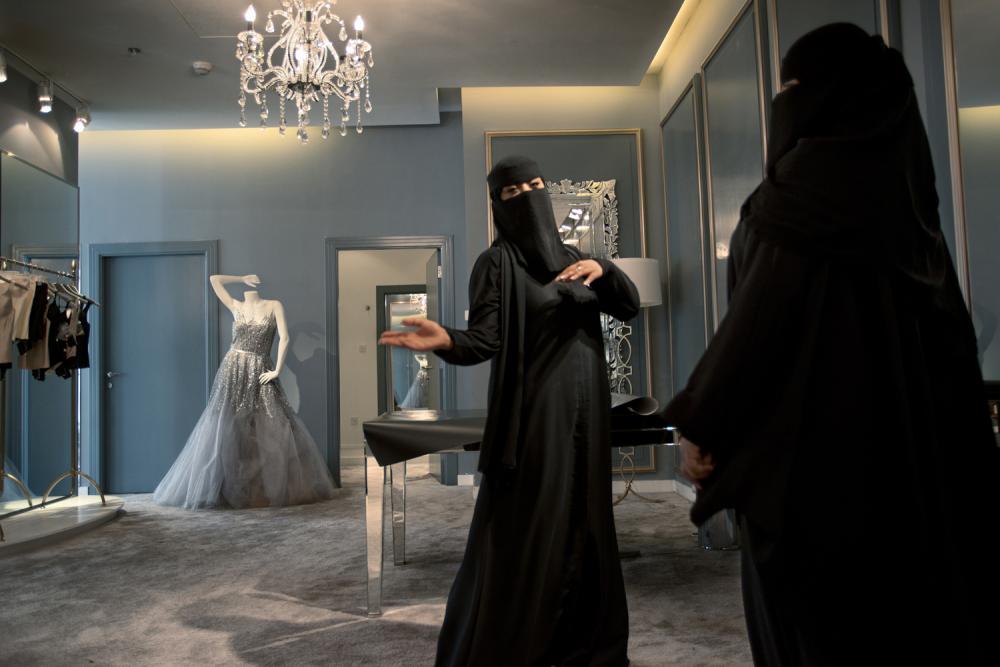
. . . there is also a truly wonderful article, sympathetic and well written, about Saudi women being allowed to work in select shops. New Yorker only allows me to print an few lines from the article, but I loved how it captured the delight these women take in having a little bit of life outside the home to call their own. It also covers the dilemma of dealing with the religious police, the Muttawa, who are in a fit because now women will be in contact with MEN and who knows what might happen?
I had not read anything in the papers – our papers rarely cover smaller details of life in the Middle East. We were there when men were in every shop, selling underwear, selling abayas, and not a woman to be seen. This is a major change, done so so quietly, and women who need more space to breathe are finding a little bit of that space.
Not every woman wants to work outside the home, but many are bored and restless. When they talk about working, they talk about the friendships they form with other women, the pride they take in having a purpose to their daily life, and the increased respect with which they are treated by family members – all good things. The article is sensitively and sympathetically written.
LETTER FROM RIYADH SHOPGIRLS: The art of selling lingerie.
BY KATHERINE ZOEPF
DECEMBER 23, 2013
A women’s revolution has begun in Saudi Arabia, although it may not be immediately evident. This fall, only a few dozen women got behind the wheel to demand the right to drive. Every female Saudi still has a male guardian—usually a father or husband—and few openly question the need for one. Adult women must have their guardians’ permission to study, to travel, and to marry, which effectively renders them legal minors. It took a decree from King Abdullah to put tens of thousands of them into the workforce. For the first time, they are interacting daily with men who are not family members, as cashiers in supermarkets and as salesclerks selling abayas and cosmetics and underwear.
One afternoon in late October, at the Sahara Mall, in central Riyadh, the Asr prayer was just ending. The lights were still dimmed in the mall’s marble corridor, but the Nayomi lingerie store had been unlocked. The rattle of steel and aluminum could be heard as security grilles were raised over nearby storefronts. Twenty-seven-year-old Nermin adjusted a box of perfume on a tiered display near the entrance, then turned to greet six saleswomen as they filed out of a storeroom, preparing to resume their shift. Nermin started working at Nayomi eighteen months ago, as a salesclerk herself. She was warm and engaging with customers, and was recently promoted to a position in which she oversees hiring and staff training for Nayomi stores across four Saudi provinces. All the employees wore long black abayas and niqabs, which revealed nothing but their eyes. They positioned themselves among the racks of bras, underpants, nightgowns, and foundation garments—black-cloaked figures moving against a backdrop of purples, reds, and innumerable shades of pink.
Nermin is one of the Nayomi chain’s longest-serving female employees. She was hired nearly a year after King Abdullah issued a decree, in June of 2011, that women were to replace all men working in lingerie shops. Early in 2012, on a visit to the Nayomi store in a mall near her house with her younger sister, Ruby, Nermin noticed a poster advertising positions for saleswomen. The sisters had never considered working, since there were virtually no jobs for women without a college degree or special skills. Nermin and Ruby mostly spent their days watching television, exercising, and surfing the Internet. In a blisteringly hot city with few parks, the mall was one of the only places to go for a walk. They filled out applications on the spot, and their family encouraged the idea. “I was surprised to find that I like to work,” Nermin said. Ruby, who got a job at the same store, is now the manager there. She wore its key on a yellow lanyard around her neck; pink-trimmed platform sneakers were visible beneath the hem of her abaya. After graduating from high school, she had spent four years feeling increasingly trapped at home, she said. “Nayomi gave me the chance to go on with life.” . . .
Every time I read this Psalm, from today’s Lectionary readings, I see something new. Today it gives me much to ponder in the midst of chaotic Thanksgiving preparations:
Psalm 127
A Song of Ascents. Of Solomon. 1 Unless the Lord builds the house,
those who build it labour in vain.
Unless the Lord guards the city,
the guard keeps watch in vain. 2 It is in vain that you rise up early
and go late to rest,
eating the bread of anxious toil;
for he gives sleep to his beloved.* 3 Sons are indeed a heritage from the Lord,
the fruit of the womb a reward. 4 Like arrows in the hand of a warrior
are the sons of one’s youth. 5 Happy is the man who has
his quiver full of them.
He shall not be put to shame
when he speaks with his enemies in the gate.
Interesting, Qatar announced today their fourth case – this article says they have had eight confirmed cases and one Tunisian who visited Qatar and came down with MERS. From the Gulf Times:
Most Mers cases going undetected, study says
Researchers estimate that for each case that has been found, five to 10 may have been missed
Gulf News Report
Published: 21:32 November 16, 2013
Image Credit: Reuters
The Mers coronavirus typically causes severe respiratory problems.
Dubai: A new analysis of Mers case data suggests a large number of infections are going undetected, with the researchers estimating that for each case that has been found, five to 10 may have been missed.
The scientific paper, from European researchers, further suggests that transmission of the Mers virus is occurring at a rate close to the threshold where it would be considered able to pass from person to person in a sustained manner. In fact, the authors say based on the available evidence they cannot rule out the possibility that person-to-person spread is the main mode of transmission of the virus at this point. The other option, they say, is that the virus is spreading via a combination of animal-to-person and then person-to-person transfer.
“We conclude that a slow growing epidemic is underway, but current epidemiological data do not allow us to determine whether transmission is self-sustaining in man,” they write in the article, published in the journal Lancet Infectious Diseases.
The scientists are from Imperial College London, the University of Edinburgh and the Institut Pasteur in Paris. The work was done with funding from Britain’s Medical Research Council, the Bill and Melinda Gates Foundation and other agencies.
To date there have been roughly 155 confirmed MERS cases and at least 65 of those infections have ended in death. All the cases trace back to infections in a handful of countries on the Arabian Peninsula: Jordan, Saudi Arabia, Qatar, the United Arab Emirates and Oman.
On Wednesday, Kuwait reported its second case Mers coronavirus for a man who just returned from abroad, the health ministry said.
In a statement cited by the official KUNA agency, the ministry said the new case was for a 52-year-old Kuwaiti national who was in a stable condition. Media reports said the patient had just returned from a visit to neighbouring Saudi Arabia.
The announcement came hours after Kuwait reported its first case of the Mers virus for a 47-year-old Kuwaiti man who was in critical condition.
Last weekend, Omani officials widened health checks following the country’s first death blamed on Mers. Officials looked for any sign of the virus in people who came in contact with a dead 68-year-old man.
Neil Ferguson, from Imperial College’s MRC Centre for Outbreak Analysis and Modelling, said that while publicly available data are spotty, calculations based on what is known support the argument that only a small proportion of cases are coming to light.
“At the very least there probably have been double that number of infections,” Ferguson said in an interview.
“But it’s considerably more likely in my view that we’ve had maybe five to 10 times more human infections than that. And symptomatic human infections, I would say.”
He stressed that he and his co-authors are not suggesting that the Mers-affected countries are hiding cases, just that the way they are looking for them is not capturing the full scope of the outbreak.
Experts have previously expressed concern that surveillance systems that look only for Mers among people who seek hospital care will only catch the sickest of cases. And in at least one affected country, Saudi Arabia, the criteria for who gets tested for Mers may be less inclusive still.
Dr. Anthony Mounts, the World Health Organisation’s leading expert on Mers, said the agency has been told Saudi health officials are focusing their testing on people with Mers-like symptoms who are gravely ill.
“I know that their surveillance strategy is focused on intensive care patients,” Mounts said in an interview. “That’s the focus of their surveillance strategy.”
Mounts agrees that many Mers cases are probably being missed. But he noted that some other affected countries are taking a different testing approach. For instance, Qatar has tested over 3,000 specimens over the past six months, looking for Mers in people who seek medical help for influenza-like illness, and all people diagnosed with pneumonia.
“They really are testing a lot of people and they’re not seeing this,” he said.
Eight Qataris have been diagnosed with MERS since the virus hit the global public health radar in September 2012. As well a man from Tunisia who contracted the virus is believed to have been infected on a visit to Qatar.
Because of the scarcity of publicly available data, Ferguson and his colleagues used some different approaches to try to estimate the state of the outbreak. He acknowledged that their calculations are estimates, and said of the analysis “it’s not definitive … but I still think it’s informative at least.”
“I would say we’re doing the best we can with the data available to try and address a couple of key questions,” he said. “We would certainly be in a better position if there was fuller [case] reporting.”
A commentary by Canadian epidemiologists lauded the team for the techniques they used to reach their conclusions. Dr. David Fisman and Ashleigh Tuite, who are with the University of Toronto’s Dalla Lana Faculty of Public Health, also hinted that the often-seen instinct to withhold information during infectious disease outbreaks may be futile in the era of computational biology.
“The ability to draw inferences about diseases from non-traditional data sources will hopefully both provide alternate means of characterising epidemics and diminish the temptation towards non-transparency in traditional public health authorities,” they wrote.
One of the questions Ferguson and his co-authors tried to answer relates to whether the virus is spreading person to person at this point or whether what is being seen are infections from an animal source that is igniting limited spread in people.
To do that, they tried to calculate what is known as the virus’s reproductive number — the number of people, on average, an infected person would pass the virus on to. For a virus to sustain itself in people, each person needs to infect at least one other person, a reproductive number of 1.0 or greater.
They could not come to a definitive conclusion, saying with what is known, either scenario is possible. But they said the evidence suggests the reproductive number is near 1.0.
Has Kuwait Airways safety record improved? Can you still pilot for Kuwait Airways just by being Kuwaiti? Just one more reason not to fly Kuwait Air rom today’s Kuwait Times:
Kuwait Airways buys used jets
KUWAIT: The Kuwait Airways is buying five used aircrafts from India’s Jet Airways after an initial deal with Airbus fell apart due to lack of funding, a local daily reported yesterday quoting sources with knowledge of the case. Speaking to Al-Qabas on the condition of anonymity, the sources said that an agreement to purchase the Airbus A330-200 aircrafts was reached during Kuwait Airways board meeting last Wednesday. Kuwait Airways had signed a memorandum of understanding earlier this year with Airbus to purchase and rent the same class of aircrafts, but the deal fell apart due to lack of funding and after Boeing reportedly entered negotiations with the national carrier. According to the sources, Jet Airways offered the five planes which have a total capacity of 1260 seats (252 seats each) for a total of KD 80 million.
The Kuwait Airways’ board sent its approval to the Kuwaiti government to make the final decision; which according to the sources is expected to be made by the Kuwait Investment Authority, which represents the general assembly for the Kuwait Airways and which will fund the deal if approved. If a deal is signed, the source predicts the aircrafts to arrive early next year. The planes, which have been in service for four years, can be used in medium and short range flights to Europe, the Middle East and Far East, the sources said. They added that each plane has two classes; a ‘Premium Class’ with 42 seats for businessmen, and an economy class with 190 seats.





 Here There and Everywhere