I can move mountains! Today it dawned cool! I walked in the garden with my coffee, I turned off the A/C and opened all the doors and windows to get all the stuffiness out AND I re-organized our pantry.
Sounds easy? LOL. It is easy when you move every couple years, or every six months. You get rid of a lot of stuff. Once you settle, you really have to watch out, STUFF begins to accumulate. Like for some reason, I ran out of mustard once, and then every time I was grocery shopping for a while I would buy another mustard so I would be sure not to run out, and now I have like 11 mustards, no two the same, German mustards, Chinese mustards, French mustards, no, no, I won’t be running out any time soon.
AdventureMan had made a list for me at the commissary yesterday, including Penne for a Pasta Putanesca he was making to celebrate my return, he’s not so hot on anchovies, but he did a bang-up job on one of my all-time favorite pastas ever. As I cleaned out today, I found two more boxes of penne.
We changed over to a tankless water system last week, it just seems like a good idea. When we bought the house, one thing made me nervous, the hot water tank was in the pantry, right in the middle of the house. Hot water heaters fail, they all do, eventually, and when it goes, it can leak all over everywhere. The first time it happened to me, we were out of town and it took a week to get all the carpeting and walls dried out. So I traded worrying about a leaking hot water tank for worrying about a gas explosion, aarrgh. Actually, it’s pretty safe. We used tankless systems all the years we lived in Germany, and I really liked them. It feels right, just heating the water when you use it, not holding it – and heating it – when you are not.
So now the big water tank is gone, and I brought in new shelving, and put that together, it was almost idiot-proof, almost . . .
That took most of the day, putting the new shelving in, clearing the shelves, sorting out the items, labeling the shelves so AdventureMan can find what he needs, although to me, it all SEEMS very logical, signs saying “Condiments” “Oriental Condiments” “Back-up Baking Supplies” “Tomato things” “Soups” and “Canned Sea Food”, etc. I did not label the pasta and rice; they just seemed so obvious.
All this with doors and windows open and the most heavenly breeze blowing through; give me the right climate and I can move a mountain! I got the laundry all done as I was re-organizing the pantry, I even cleaned out one of the spice drawers (getting rid of spices kept from Kuwait and Qatar because I couldn’t bear to part with them, but four years . . .) it’s time, and they aren’t really good any more.
AdventureMan brought our adorable four year old grandson over to play, and we got to chat a little. There is nothing like a four year old snuggle, and conversations with him are always so interesting and so direct, it’s so refreshing 🙂
And at the end of the day, there is even time to sit outside in the bright, cool, breezy sunlight sipping a glass of tea and watching all the birds come in for one last bite before bed time.
A heavenly day.
May 16, 2014
Posted by intlxpatr |
Cultural, ExPat Life, Family Issues, Generational, Home Improvements, Kuwait, Living Conditions, Moving, Pensacola, Weather | cleaning, organization, pantry, spring cleaning |
Leave a comment
My sweet niece, Little Diamond (Professor Little Diamond 🙂 ) has given birth to two of the most perfectly beautiful little babies, ever. These are the quilts I made for them, and lastly is one of the sweet babies on his quilt. Congratulations, Umm Al Tawaman, God is good and full of mercy and compassion.
 This one is called Interconnected.
 This one is called Desert Rose.
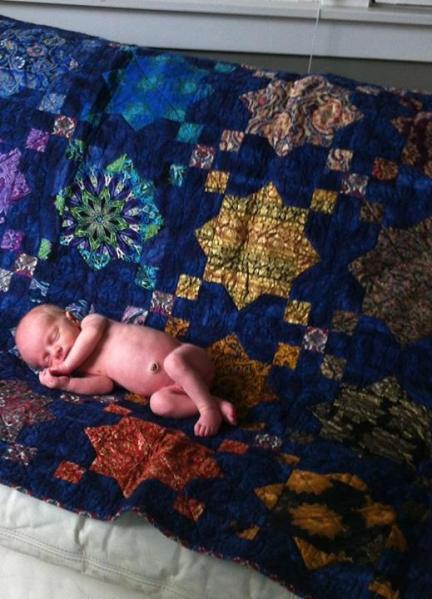
Isn’t that a beautiful little baby? 🙂
May 15, 2014
Posted by intlxpatr |
Arts & Handicrafts, Circle of Life and Death, Family Issues, Generational, Interconnected, Mating Behavior, Parenting |
2 Comments
Today is a blessing, clear and simple, today the winds are from the north, blowing away all the heat and humidity and the dismal rains of yesterday. Today I got my first cup of coffee, fed the Qatari Cat and went outside for a walk in the garden.
We have a miracle or two out there. I had two avocado trees, trees I had grown from pits of avocados we have eaten, trees taller than I am. In the lengthy cold spell we had, they lost all their leaves. We kept waiting to see if the leaves would come back, but none did. We trimmed them back; sometimes trimming can help. No leaves. We kept talking about maybe its time to use the pots for the next generation of avocado trees but did nothing. Then, one morning, AdventureMan came running in saying “You have to come look!” From the base of each trunk, each tree has new avocado trees coming up. Woooo HOOOOOOO, God is good!
Our roses all made it and all the roses in the yard are in full flower, thanks to the deluge(s) we have received. The guara is coming back – even spreading, which is good, I love guara. Given the harshness of the winter and the 29″ of rain we received in one night, we are so blessed to have come out of it so well.
Best of all, just being able to walk out into 58°F with a little shiver, walk freely, no mosquitos, turn off the A/C for a few hours and open doors and windows to get all the stuffiness out – sheer heaven.
May 15, 2014
Posted by intlxpatr |
Faith, Gardens, Living Conditions, Pensacola, Weather | mental health |
Leave a comment
From the Kuwait Times:
Sudanese woman may face death for choosing Christianity over Islam
KHARTOUM: A Sudanese court gave a 27- year-old woman until today to abandon her newly adopted Christian faith and return to Islam or face a death sentence, judicial sources said on Monday. Mariam Yahya Ibrahim was charged with apostasy as well as adultery for marrying a Christian man, something prohibited for Muslim women to do and which makes the marriage void. The final ruling will be announced today.
Ibrahim’s case was the first of its kind to be heard in Sudan. Young Sudanese university students have mounted a series of protests near Khartoum University in recent weeks asking for an end to human rights abuses, more freedoms and better social and economic conditions.
The authorities decided on Sunday to close the university indefinitely. Western embassies and Sudanese activists sharply condemned the accusations and called on the Sudanese Islamist-led government to respect freedom of faith. “The details of this case expose the regime’s blatant interference in the personal life of Sudanese citizens,” Sudan Change Now Movement, a youth group, said in a statement.
President Omar Hassan Al-Bashir’s government is facing a huge economic and political challenge after the 2011 secession of South Sudan, which was Sudan’s main source of oil. A decision by Bashir last year to cut subsidies and impose austerity measures prompted violent protests in which dozens were killed and hundreds were injured. — Reuters
May 14, 2014
Posted by intlxpatr |
Africa, Community, Faith, Law and Order, Living Conditions, Marriage, Political Issues, Sudan, Values, Women's Issues | Freedom of Religion, Freedom to marry, Freedom to Worship, Khartoum University, Mariam Yahya Ibrahim, Omar Hassan Al-Bashir, Personal choice, Sudan Change Now Movement |
3 Comments

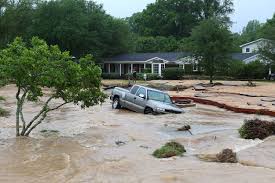
No, I didn’t take that photo, but it was exactly that kind of day. It was beautiful when I got to Seattle, it rained buckets one of the days I took my Mom shopping; she was such a good sport as we raced across the parking lot to the restaurant, both getting soaked, and then it was beautiful again for Mother’s Day and departure day.
Had juicy, laughing, crying visits with two very long time friends, feasted my eyes on all the rhododendrons growing so luxuriously, dancing with their intense colors in the Seattle gardens, watched the ferries coming in and out of little Edmonds. It was heaven.
 This is really a Chihuly rhododendron 🙂
On the way to the airport KUOW, the local National Public Radio station, mentioned, very politely, that there was a huge accident on I-5 going South, blocking all lanes of the freeway, and would I please consider taking an alternate route south, and gave a couple of suggestions.
So so Seattle. So civil.
Rarely do I hear a car beep in Seattle. People actually do the “after you” gesture – all the time. It takes some getting used to. 🙂
As soon as I got there, I opened the window where I was staying and just breathed the fresh sweet air. It always smells like fresh mown grass when I drive into Edmonds, and then the salt air. It is cool and refreshing. When the birds settle in for the night, there are the sounds of a thousand bird voices, loudest of all the seagulls, squawking at one another while the others are all doing sorter nestling sorts of sounds.
There are trains that go through in the middle of the night, but you learn to just wake up a little and say “oh, the train” and you go right back to sleep.
I took highway 99, which at one time was the major north south road, and while it was a little crowded, due to cars like me taking the alternate routes, it was peaceful and steady, with no delays. I haven’t taken the route for a long time, and got to see an old truck-stop my youngest sister mentioned, and I got to see all the things that are no longer there – the teepee pancake house, the elephant car wash sign. Things change. Taking 99 South took me a little longer than normal, but sometimes it can take a long time on the interstate, too, even without a major accident. Seattle, like Kuwait, has outgrown its infrastructure.


It seems to be the story around the United States. Who is paying attention to the decaying bridges, the once smooth and now potholed highways? Who is checking the buildings in the abandoned city centers and malls?
When I turned in my rental car, the little girl checking me in was in hijab and looked Sudanese. She asked me where I was from, and I told her, and I asked where she was from and she told me Cleveland. LOL.
The Seattle Airport is a gem, full of art works, you just have to take the time to look. Off in corners, they also have free wi-fi, free power plugs, Chinese take away and quiet areas where people can read or use the internet. For some reason, I am TSA PreCheck. Someone said it is age related, but AdventureMan looked it up online and there doesn’t seem to be a connection. I love the shorter line, and not taking off my shoes.
I have plane karma. Just before the plane was loaded and ready to go, the two inside passengers for my row arrived – a basketball player and his also-tall Mom. Behind us arrived a Mom and her two babies – in two seats. The doors closed. There were only three empty seats in the plane, and they were across from me. The basketball player jumped into the window seat and the woman sitting in the aisle seat behind me jumped into the aisle seat across from me, and the Mom and her babies had all three seats to themselves, while the rest of us had room for knees and elbows and room to breathe . . . it makes all the difference.
I like Pensacola, and I like our life here. I am already missing the beauty and coolness of Pensacola winter, dreaming of the beauty and coolness of Seattle summer, LOL.
May 13, 2014
Posted by intlxpatr |
Civility, Communication, Community, Cultural, ExPat Life, Family Issues, Living Conditions, Local Lore, Pensacola, Road Trips, Safety, Seattle, Travel | Mother's Day |
4 Comments
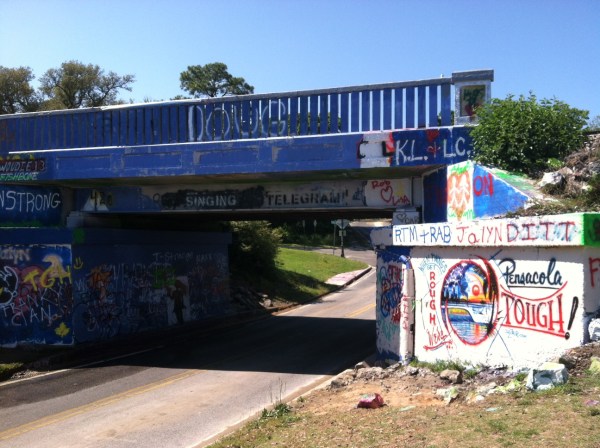
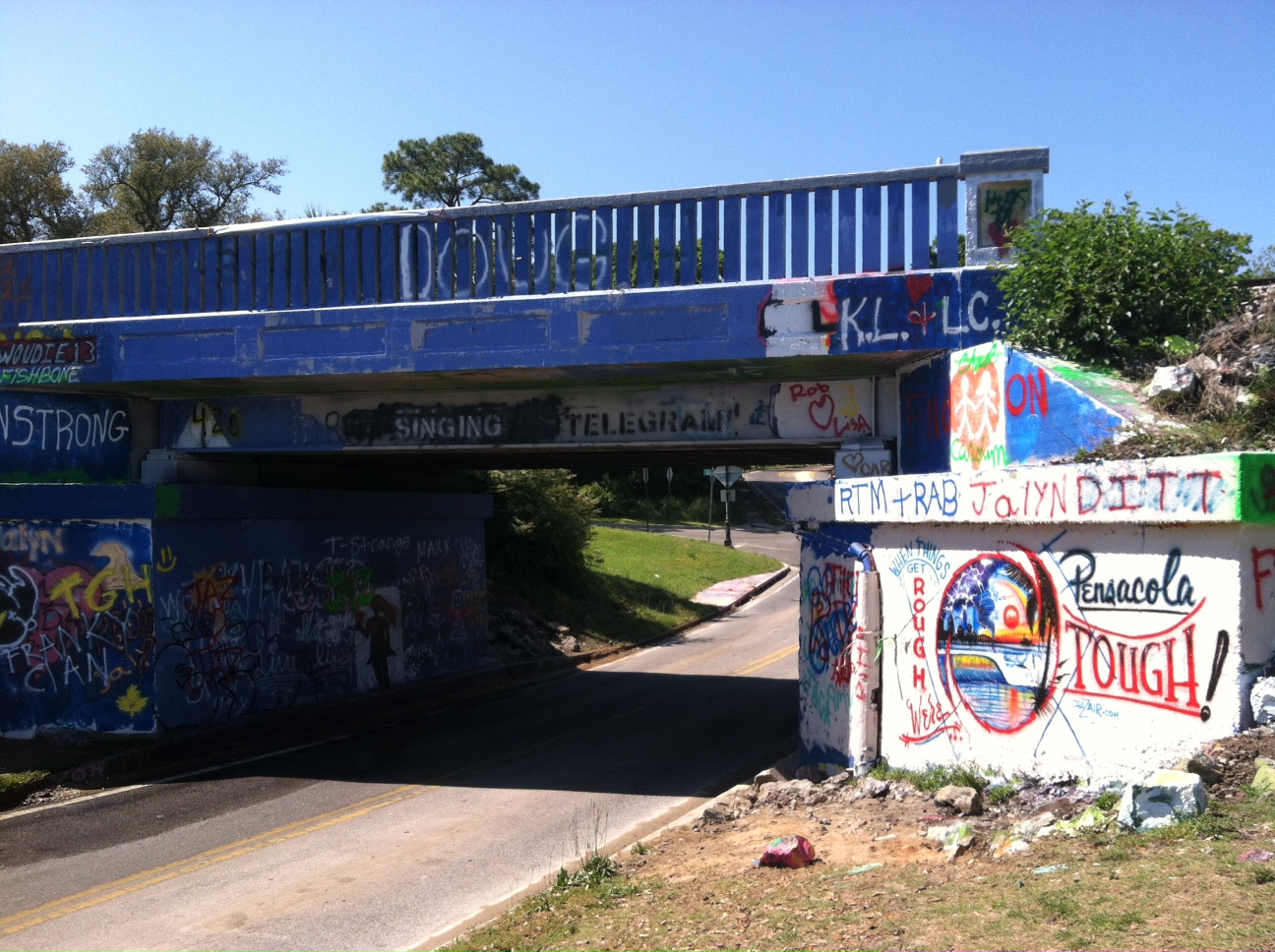
On my way home from a great Algerian pastry treat at SoGourmet, I passed Grafitti Bridge. Grafitti Bridge is one of Pensacola’s quirks. Every month – sometimes every week, even sometimes daily – the bridge is repainted. Sometimes it is that BubbleGum pink of Breast Cancer Awareness, with names of the fallen and names of survivors, sometimes it is Gay Pride, sometimes it is who loves who, or who is a first class jerk, sometimes it is Class of TwoThousandWhatever – it can be whatever someone feels passionate enough about to buy the paint and make it happen. No one gets too bent out of shape about it. Occasionally profanity will show up, but very shortly someone else will spray paint out the offensive word, or, which I love, alter it to have an entirely new meaning.
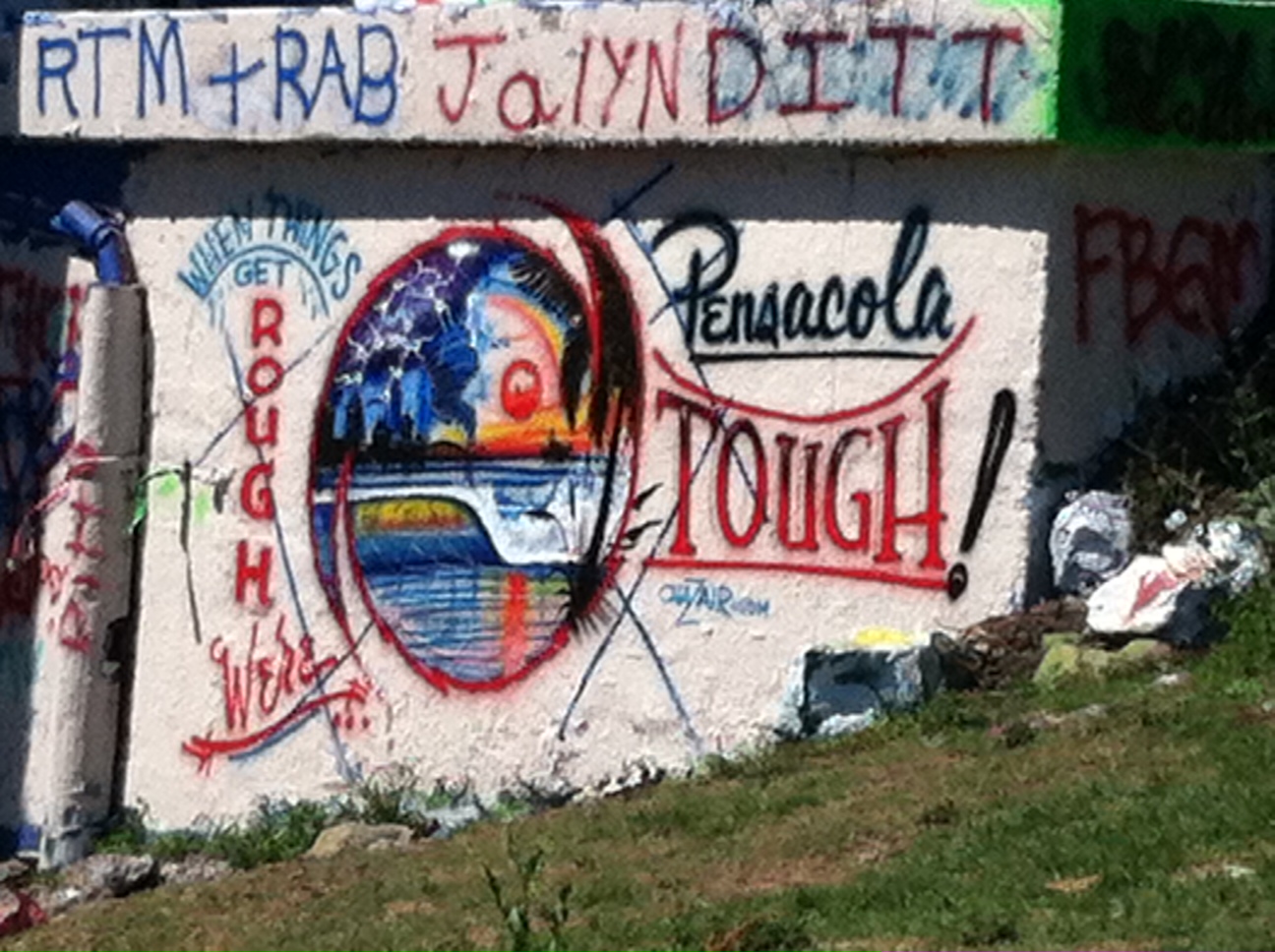
As I drove past today, I saw a lightning storm, well done, I couldn’t imagine how they had captured what it was like seeing so many strikes at once, and then I saw “Pensacola Tough.” By that time, I was through the bridge, so I had to circle and go back. I had to park, and take a closer look. And then I had to photograph it, and post it here.
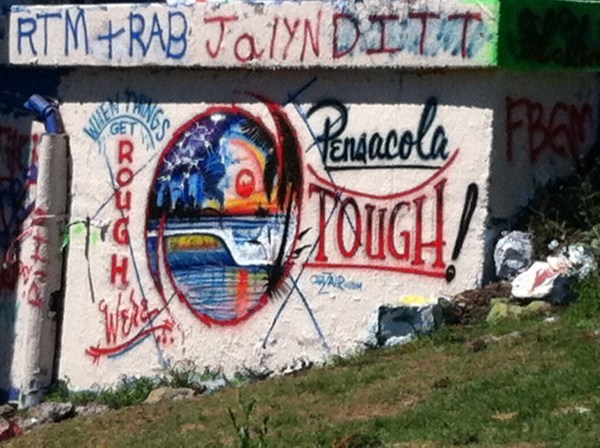
Pensacola Tough. Pensacola got an award as the Toughest City in the USA, based on a criteria that measured percentage of felons in the population (it’s OK, it keeps us humble), sports heros, the number of military personnel, violent crime statistics, etc. It isn’t an award cities run for.
And yet, as the raging water abates, tales of heroism and helpfulness abound. While there have been bands of looters at an apartment complex housing the low-income workers in Pensacola, there have also been bands of volunteers scouring the county, helping clean out houses, pull out sodden carpeting, moving soaked furniture to the curbs for pickup, pulling out drywall and ceilings to prevent black mold. In today’s Pensacola News Journal, there is a story of a man who worked just above where the Escambia County Jail exploded and fell through the floor, breaking legs, ribs and assorted bones. He was paralyzed. His co-worker, also hurt, saw him with his head under water and pulled his head out, and held his head out for over an hour while waiting for help to arrive. She got tired, but the alternative was letting him die. She didn’t let go.
Pensacola Tough.
“When Things Get Rough . . . We’re Pensacola Tough.
You gotta love this place
May 5, 2014
Posted by intlxpatr |
Arts & Handicrafts, Beauty, Civility, Communication, Community, Cultural, ExPat Life, Free Speech, Gulf Coast Citizen Diplomacy Council, Interconnected, Living Conditions, Local Lore, Pensacola, Values, Weather |
Leave a comment
Today’s meditation from Forward Day by Day deals with precious water. I think about how innocent we were, all of us in Pensacola, going about our daily lives as if every tomorrow would be so lovely, buying and planting new plants in our gardens, sweeping, cleaning, painting, all the things we do in Spring. And then – the deluge. And after the deluge, the “Boil water” warning (now lifted) because the water sources had been contaminated.
We have two cases of water set aside in case of hurricane. Two cases . . . really isn’t very much. We also have large containers which we fill – for hurricanes – so we can flush toilets (assuming the water mains have not broken) and keep a little clean. Those containers have not yet been filled for the upcoming season . . . Too much water – and then, too little.
After hearing the haunting strains of Nkosi Sekelel iAfrica just last weekend, I hear it again as I read the meditation:
SATURDAY, May 3
Exodus 17:1. But there was no water for the people to drink.
“Water is life—SAVE it!”
It was just a small sign on the wall next to the lavatory in a bed and breakfast, but it made a big impact. The word “SAVE” was written boldly in red block letters. Each time I approached the lavatory, my eye was drawn toward that sign. Each time, before I turned on the water, I asked myself, “Is this really necessary?”
South Africa is a water-challenged nation, and it shows. From small signs in bathrooms to national conservation campaigns to the removal of nonindigenous plants that use too much water, the country is trying to meet the challenge.
The South African Constitution’s Bill of Rights guarantees access to clean water for every citizen. After apartheid, the government extended water lines to all townships so residents without running water could at least get clean water from communal taps.
Our faith calls us to be good stewards of God’s creation. That includes the water we drink. Help us, Lord, to live out our faith by conserving, protecting, and sharing this life-giving resource that you have given us. Because water is life. Amen.
May 3, 2014
Posted by intlxpatr |
Bureaucracy, Civility, Community, Cross Cultural, Cultural, Environment, Faith, Florida, Lectionary Readings, Living Conditions, Pensacola, Values, Weather | Water |
Leave a comment
CDC confirms first case of MERS virus in American
May 2nd 2014 3:51PM
 |
|
This file photo provided by the National Institute for Allergy and Infectious Diseases shows a colorized transmission of the MERS coronavirus that emerged in 2012. Health officials on Friday, May 2, 2014 said the deadly virus from the Middle East has turned up for the first time in the U.S. (AP Photo/National Institute for Allergy and Infectious Diseases via The Canadian Press, File)
|
By MIKE STOBBENEW YORK (AP) — Health officials on Friday confirmed the first case of an American infected with a mysterious Middle East virus. The man fell ill after arriving in the U.S. about a week ago from Saudi Arabia where he is a health care worker.
The man is hospitalized in Indiana with Middle East respiratory syndrome, or MERS, according to the Centers for Disease Control and Prevention, which is investigating the case along with Indiana health officials.
Saudi Arabia has been the center of an outbreak of MERS that began about two years ago. At least 400 people have had the respiratory illness, and more than 100 people have died. All had ties to the Middle East or to people who traveled there. Infections have been previously reported among health care workers.
MERS belongs to the coronavirus family that includes the common cold and SARS, or severe acute respiratory syndrome, which caused some 800 deaths globally in 2003.
The MERS virus has been found in camels, but officials don’t know how it is spreading to humans. It can spread from person to person, but officials believe that happens only after close contact. Not all those exposed to the virus become ill.
But it appears to be unusually lethal – by some estimates, it has killed nearly a third of the people it sickened. That’s a far higher percentage than seasonal flu or other routine infections. But it is not as contagious as flu, measles or other diseases. There is no vaccine or cure for MERS.
The CDC on Friday released only limited information about the U.S. case: The man flew to the United States about a week ago, with a stop in London. He landed in Chicago and took a bus to the neighboring state of Indiana. He didn’t become sick until arriving in Indiana, the CDC said. Symptoms include fever, cough, breathing problems, which can lead to pneumonia and kidney failure.
CDC officials say they are sending a team to investigate the man’s illness, his travel history and to track down people he may have been in close contact with.
Saudi Arabia health officials have recently reported a surge in MERS illnesses; cases have tended to increase in the spring. Experts think the uptick may party be due to more and better surveillance. Researchers at Columbia University have an additional theory – there may be more virus circulating in the spring, when camels are born.
U.S. health officials have been bracing for the arrival of one or more cases, likely among travelers. Isolated cases of MERS have been carried outside the Middle East. Previously, 163 suspected cases were tested in the U.S. but none confirmed.
May 2, 2014
Posted by intlxpatr |
Circle of Life and Death, ExPat Life, Health Issues, Interconnected, Living Conditions, Saudi Arabia, Travel | MERS virus |
Leave a comment
Here are our recovery instructions quoting from the Pensacola News Journal:
“Caution. Stay off roads. Stay off bridges. Stay out of the water. Stay home, unless home is gone.” And in my wrecked neighborhood, boil all water for at least a minute until further notice.

More rain expected. People are not staying home. People are out and about, going to their jobs, keeping on keeping on. People are out helping one another clean out, carrying out soggy furniture and putting it by the curb. People are helping clean the trash. People are closing roads to make sure the underpinnings haven’t washed away. All our fire and police people are out doing extra duty, trying to keep us all safe and prevent chaos.
I saw a woman today with a T-shirt that said “medical examiner.” These days, you don’t know, there are shirts that say FBI and they aren’t FBI at all, or Alice in Chains, and it isn’t Alice in Chains. But as she turned around, the badge on her belt glinted in the light. She and her assistant were taking out; between the flood and the prison explosion, I doubt she has gotten a lot of sleep.
May 1, 2014
Posted by intlxpatr |
Bureaucracy, Community, Cultural, Family Issues, Financial Issues, Florida, Health Issues, Living Conditions, Pensacola, Safety, Weather, Work Related Issues | Pensacola flood, Pensacola rainstorm, Pensacola storm |
Leave a comment
This is what I love about New Yorker magazine: they print stories no one prints, they follow stories that need following. They lead, and they do their job, alerting us to issues that matter. My heart goes out to the families, Christian and Muslim, of these girls who were abducted because they were being educated. Boko Haram believes educating women goes against Islam. Someone should read them a Quran.
APRIL 30, 2014
NIGERIA’S STOLEN GIRLS
 “I thought it was the end of my life,” Deborah Sanya told me by phone on Monday from Chibok, a tiny town of farmers in northeastern Nigeria. “There were many, many of them.” Boko Haram, an Islamist terrorist group, kidnapped Sanya and at least two hundred of her classmates from a girls’ secondary school in Chibok more than two weeks ago. Sanya, along with two friends, escaped. So did forty others. The rest have vanished, and their families have not heard any word of them since.
Sanya is eighteen years old and was taking her final exams before graduation. Many of the schools in towns around Chibok, in the state of Borno, had been shuttered. Boko Haram attacks at other schools—like a recent massacre of fifty-nine schoolboys in neighboring Yobe state—had prompted the mass closure. But local education officials decided to briefly reopen the Chibok school for exams. On the night of the abduction, militants showed up at the boarding school dressed in Nigerian military uniforms. They told the girls that they were there to take them to safety. “They said, ‘Don’t worry. Nothing will happen to you,’ ” Sanya told me. The men took food and other supplies from the school and then set the building on fire. They herded the girls into trucks and onto motorcycles. At first, the girls, while alarmed and nervous, believed that they were in safe hands. When the men started shooting their guns into the air and shouting “Allahu Akbar,” Sanya told me, she realized that the men were not who they said they were. She started begging God for help; she watched several girls jump out of the truck that they were in.
It was noon when her group reached the terrorists’ camp. She had been taken not far from Chibok, a couple of remote villages away in the bush. The militants forced her classmates to cook; Sanya couldn’t eat. Two hours later, she pulled two friends close and told them that they should run. One of them hesitated, and said that they should wait to escape at night. Sanya insisted, and they fled behind some trees. The guards spotted them and called out for them to return, but the girls kept running. They reached a village late at night, slept at a friendly stranger’s home, and, the next day, called their families.
Sanya could not tell me more after that. She is not well. Her cousins and her close friends are still missing, and she is trying to understand how she is alive and back home. All she can do now, she said, is pray and fast, then pray and fast again.
The day after the abduction, the Nigerian military claimed that it had rescued nearly all of the girls. A day later, the military retracted its claim; it had not actually rescued any of the girls. And the number that the government said was missing, just over a hundred, was less than half the number that parents and school officials counted: according to their tally, two hundred and thirty-four girls were taken.
In the wake of the military’s failure, parents banded together and raised money to send several of their number into the forest to search for the girls. The group came across villagers who persuaded the parents to turn back. They told the parents that they had seen the girls nearby, but the insurgents were too well armed. Many of the parents had just bows and arrows.
***
The circumstances of the kidnapping, and the military’s deception, especially, have exposed a deeply troubling aspect of Nigeria’s leadership: when it comes to Boko Haram, the government cannot be trusted. Children have been killed, along with their families, in numerous Boko Haram bombings and massacres over the past five years. (More than fifteen hundred people have been killed so far this year.) State schools and remote villages in the north have borne the brunt of Boko Haram’s violence this year. The group is believed to be at least partly waging a campaign against secular values. The kidnapped girls were both Christian and Muslim; their only offense, it seems, was attending school.
Last June, I visited Maiduguri, the capital of Borno state and the birthplace of Boko Haram, to report on the insurgency and the Nigerian government’s counteroffensive, a security operation that placed three northeastern states, including Borno and Yobe, under a state of emergency as troops launched attacks on terrorist hideouts and camps. The military cut phone lines and Internet access, and, while residents were glad for the intervention, there was a sense of living in the dark. Gunshots, a bomb blast: was it Boko Haram or a military attack? Were the hundreds of men disappeared by the military actually terrorists—even the young boys? And was the government, as it claimed, really winning the war?
The military has restored phone lines in Borno. But the sole airline that flew to Maiduguri cancelled the route at the end of last year. The road to Chibok is so hazardous that Borno’s governor visited the town with a heavy military escort. Much of the northeast is now physically isolated. What is happening there that we cannot see?
Nigerians in the rest of the country had, until recently, been able to ignore the deaths. The general mood has been one of weary apathy—from a government waging a heavy-handed crackdown on northerners to civilians far removed from the chaos. That mood may finally change.
***
Sanya’s father, a primary-school teacher named Ishaya Sanya, is struggling with conflicting emotions: gratitude that his daughter has returned to him; guilt that the daughters of his siblings, friends, and neighbors are still somewhere in the bush; and an angry frustration that there seemed to be no effort to rescue the girls.
“We don’t know where they are up until now, and we have not heard anything from the government,” he told me. “Every house in Chibok has been affected by the kidnapping.” The only information that the families had been able to gather about the kidnapped girls, he went on, was from the girls who had escaped.
He remembers the exact time that Deborah appeared in front of him after her escape—4:30P.M.—and how he felt: “very happy.” But his despair soon returned. “Our area has been affected very seriously,” he told me. Parents had fallen physically ill, and some were “going mad.”
The military’s current plans are unclear; the Chibok parents hope that it is acting swiftly and cautiously. There is worry, too, that a rescue operation could result in the deaths of many of the girls; this happened during a previous attempted rescue, of two Western engineers kidnapped by Boko Haram. Last week, a military spokesman, Brigadier-General Chris Olukolade, said only that the search for the girls had “intensified.”
In the meantime, as in so many other ways in Nigeria, each community has to fend for itself. For a while after the abduction, girls trickled back into town—some rolled off trucks, some snuck away while fetching water. That trickle has stopped. “Nobody rescued them,” a government official in Chibok said of the girls who made it back. “I want you to stress this point. Nobody rescued them. They escaped on their accord. This is painful.”
A pastor in Chibok whose daughter is missing told me that he set out with friends on the morning after the abduction to find the girls. “I was forced to come home empty-handed,” he told me by phone. “I just don’t know what the federal government is doing about it. And there is no security here that will defend us. You have to do what you can do to escape for your life.”
I asked the pastor about rumors that Boko Haram has taken the girls outside of Nigeria’s borders, into Cameroon and Chad, and forcibly married them. He paused, and then said, “How will I be happy? How will I be happy?”
Four students walk in Chibok following their escape from Boko Haram. Photograph by Haruna Umar/AP.
May 1, 2014
Posted by intlxpatr |
Community, Crime, Cross Cultural, Cultural, Faith, Interconnected, Law and Order, Leadership, Living Conditions, Marriage, Mating Behavior, Nigeria, Values, Women's Issues | abduction, Abuja, Boko Haram, Nigerian school girls |
Leave a comment





 Here There and Everywhere