McGuire’s For Lunch
“I just have a yen for a steak,” I said to AdventureMan, and since it is my turn to choose, he grins and says “I could use a steak, too.” We don’t even feel guilty. The last steak we had was New Year’s Day this year, also at McGruires. Two steaks a year, not so bad.
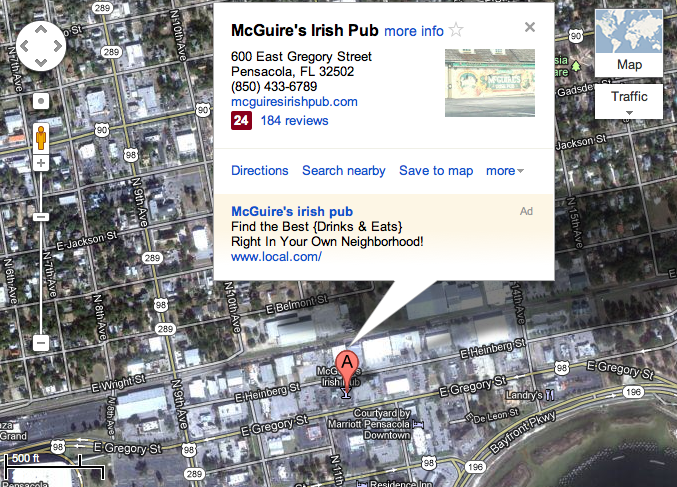
It’s a gloomy day, and we are hoping it’s not so crowded we have to wait. We are seated immediately, but upon looking around, AdventureMan said “Does anyone in here know that the economy is suffering? Do they know we are in a downturn?”
McGuires is PACKED. It’s not just old retired folk and tourists, either, it’s young Pensacola families and their children, generations meeting up for a Saturday lunch. The bar is packed, the tables are full throughout and as we leave, there is a line waiting.
The steaks – we like the Molly filet – were fabulous. Erin A, our excellent waitress, warned us that some people find the pepper coating too peppery, and we assured her we like a pepper coating to be very peppery; when our steaks came, they were VERY peppery, and we were very happy. They also had fresh asparagus, perfectly cooked, still just a little crisp. We were really bad, we also had the bleu cheese dressing on our salads. It was a wonderful meal, altogether, and Erin A was attentive without being intrusive. Erin kept our glasses full, swept used dishes away as soon as they were finished, and kept her eye on our table in case we had any needs. Her service added to our enjoyment of the meal. Isn’t that the best?
There are other steak houses in town, where you can get a steak almost as good for a lot less. You can’t beat McGuires for the overall experience, though, and when you only have steak every few months, why not have the best?
We also love it that our out-of-town guests LOVE McGuires, for the overall experience as well as for the food. Live entertainment at night, lots of old Irish ballads. 🙂
As we left, we had to run between the raindrops to get to our car. Big heavy voluminous clouds over Pensacola, and a daily humidity factor of around 100%.

Hemingway and A Movable Feast

After reading The Paris Wife, I had to read Hemingway’s A Movable Feast. I wanted to see how he saw his Paris years, and how his version integrated with the fiction version of Hadley’s. I was prepared to not like the book.
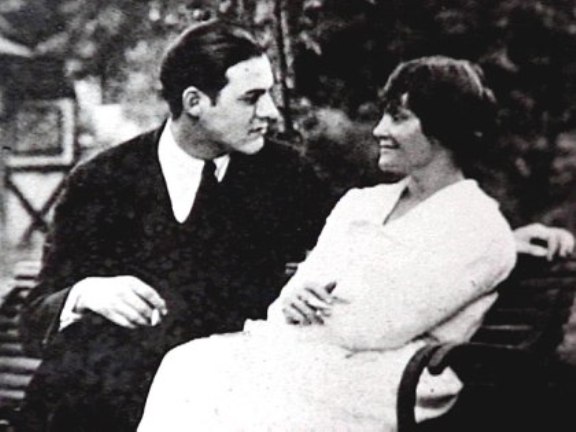
I was not prepared to like it as much as I did. Hemingway writes of the years when he was young, newly married and wildly happy, living a stimulating and lively life with lively friends. They were poor, but he was following his dream. They had a lot of fun.
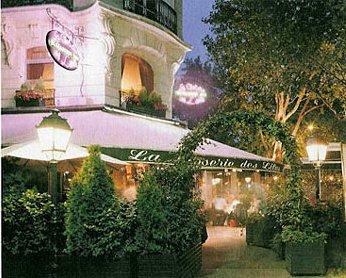
Hemingway wrote this book, full of stories of their Paris life, full of names you know – Ezra Pound, Scott and Zelda Fitzgerald, Picasso, Closerie des Lilas, Les Deux Magots, Brasserie Lipp, the Louvre . . . and as you read it, you are there. He writes in the moment; you are right there experiencing it along with him. He writes of people he likes, and people he doesn’t like. He writes about his own vices – an addiction to horse racing, for example – and he writes with enormous sadness about how he came to be distracted from his marriage and lost the most wonderful relationship that ever happened to him. He blames it on the careless rich. He takes some responsibility.
He also writes very frankly and openly about people he doesn’t like and why. I couldn’t help but think it is a heady thing, being an acclaimed author, where you can take revenge by putting people you dislike in your books. Hemingway uses real names and real people and often portrays them in a distinctly unflattering light. It made me wonder if he was planning to commit suicide all along; that or he just didn’t care what people think, and it seems he might have been the kind just not to care.
Just after finishing this book, and talking one last time with his first wife, Hadly, Hemingway committed suicide. It leaves me wondering if he was driven to suicide by regret, or by fears that his bigger-than-life life of adventure, travel, high life and travel was over, or if he had serious bouts of depression all his life, and this was just another, deeper depression?
It is a great read, especially paired with Paula McLain’s book, The Paris Wife. I thought it might be “he said – she said,” but Hemingway and the fictional Hadley in The Paris Wife both agree that they had a love and marriage that was very special, that Paris was a wonderful stimulating, alive environment, and that it was a great tragedy when the marriage ended. A Movable Feast seems to say that destroying his marriage to Hadley was one of a cocktail of self-destructive behaviors over which he tried to ride herd (gambling on the horse races, drinking, drugs, a coterie of star-struck sex partners outside of marriage, inability to focus on his work, a curmudgeonly nature . . .)

It’s also an easy read. I particularly enjoyed reading it on the iPad because you can do that swirly-finger-thing and find out what words mean or see the street locations as he walks Paris, see whether a cafe or restaurant in Paris still exist. It would be a good airline read – keeps your attention and finishes quickly.
As little as I like Woody Allen, it was fun to see Midnight in Paris, and to have some visuals of this go-go inter-war era.
Two things that stuck out for me: Hemingway loved walking in Paris, as do I. He also talks here and there about the benefits of being hungry. There were times when money was tight; they wore old shabby clothes, and there were times they didn’t have much food. He talks about hunger sharpening your other senses. On the other hand, very quickly when he has money, he has a great meal and a drink – or two – or three.
Bottom line, I’m glad I read this book. It’s given me a lot to think about.
Rain for Ramadan
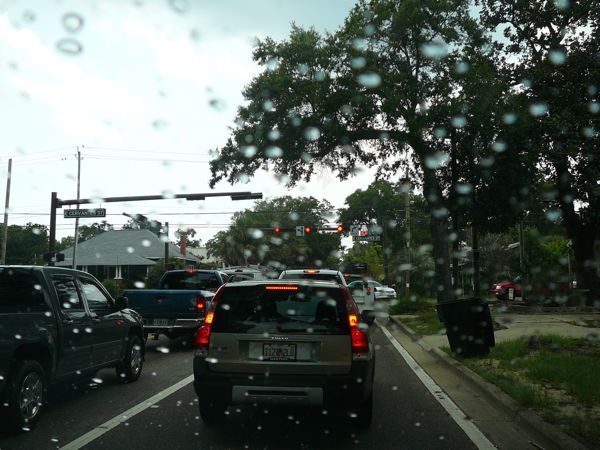
Frequent commenter Daggero asked for photos of clouds and rain to help him get through the long hot days of Ramadan in Kuwait. Yesterday I published cloud photos; today we had a downpour, so here are some rain photos:

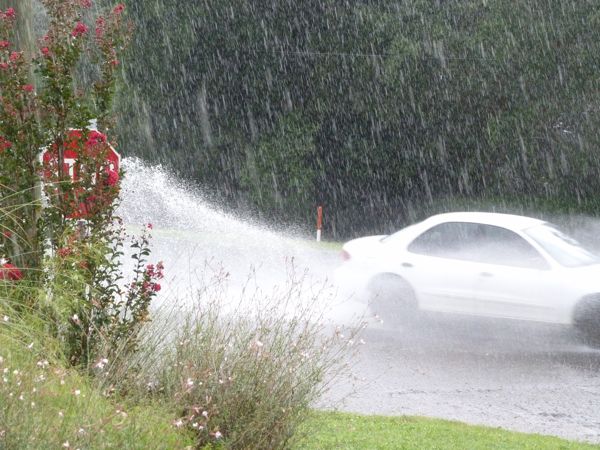


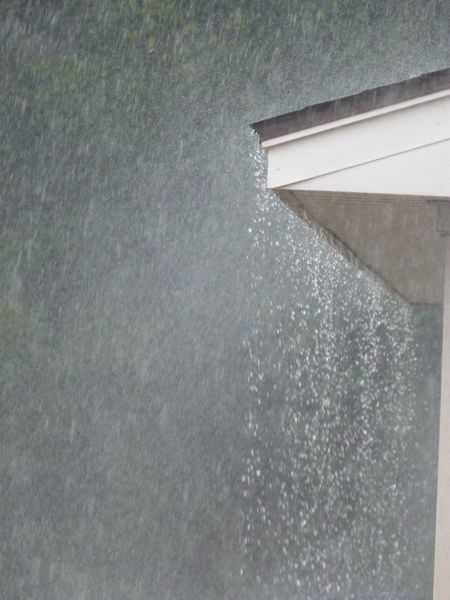


First thing I learned is that it’s not that easy to shoot rain drops. You have to shoot them against a darker background, and you have to shoot them at a slower speed, else you don’t see them at all.
This was great exercise. Now I want to go to Paris in November for more practice. Paris gets lots of rain in November, fewer tourists, it’s more the real Paris. It would also be great for shooting in black and white, people holding umbrellas, bent against the wind-driven rain, great architectural and textured backgrounds . . . 🙂
Deepwater Horizon Spill and Hazards
On the front page of today’s Pensacola News Journal is a report by the Associated Press saying:

BP Missed Big Hazards, report says: Focus on worker safety obscured other problems.
HOUSTON – BP and the drilling contractor that operated the ill-fated Deepwater Horizon were so focused on worker safety they didn’t do enough to prevent major hazards, such as the 2010 rig explosion in the Gulf of Mexico that killed 11 people, federal investigators said yesterday.
Excuse me? Does that make sense to anyone?? So concerned with safety that 11 people got killed because they overlooked SAFETY problems?? I thought I must be crazy, but the report goes on to say the following:
The panel listed a litany of problems large and small they had already uncovered even though it has not received all of the records from Transocean, the drilling contractor that has challenged the board’s right to investigate the offshore incident.
Among the panel’s findings:
• BP and Transocean’s “bridging document,” designed to align safety procedures between the companies, was generic and addressed only six safety issues, but none of them dealt with major issues.
• The companies didn’t have key process limits or controls for safe drilling.
• There were no written instructions for how to conduct a crucial test at the end of the cementing process, one that ultimately was misinterpreted by the crew after it was conducted several times, each time differently.
• Similar concerns about too narrow a focus on personal safety were raised after an explosion in 2005 at BP’s Texas City refinery that killed 15 people, but few of the panel’s recommendations were implemented on the offshore rig.
“It’s always puzzled me why a company like BP … that has major resources available … is involved with two of the biggest accidents,” said John Bresland, a member of the board who is wrapping up his second five-year term and was involved in both investigations.
The drilling company doesn’t want to cooperate, and doesn’t think the federal government has the right to investigate? The company so focused on worker safety had an agreement with the drilling company that only focused on minor issues? NO key processes or controls?
What is wrong with this story? From this story, it is clear that worker safety was never a focus of BP. BP had another blowup with 15 deaths at a Texas refinery resulting from safety processes that were too narrowly focused, and now they are saying they are too focused on worker safety, and that is why they have so many worker deaths?
I guess, following the same reasoning, that the Deepwater Horizon blowup, which killed sealife, is still blackening beaches, which has created a tar carpet along the ocean floor, created birth defects among birds and mammals, and will create havok for a lifetime to come, all that resulted from BP’s excessive concern for the Environment?
Is this craziness? That kind of communication just makes me crazy.
I don’t care how much they end up paying to universities, groups promoting tourism, people who lost work, wildlife organizations, etc. as a result of the Deepwater Horizon explosion. You have to see that whatever they are paying is to buy silence, to buy complicity, to keep us from complaining too much when problems associated with the explosion continue to – literally – surface. Their money is to co-opt us. No matter what they are paying, it is too little.
A Swallowtail is Born
“Come down! Come down!” AdventureMan is calling me from the garden, and I can tell it is something special.
“Look! He just came out of the chrysalis! He’s still wet!”
It is a beautiful new swallowtail butterfly. When the eggs are laid – it takes a mere second, a mere brush-by as the tiny egg is placed on the fennel – they are a mere 1/32 of an inch, you can barely see them with your bare eyes.

It is 78° in the cool of the morning, the best part of the day. The sun is coming up, and a new swallowtail is drying off, preparing to fly away to a new life.

Clouds for Daggero (and my other Hot Friends in Kuwait)
Can you imagine a daytime temperature of 120°F? Can you imagine fasting, not eating – or drinking – in that kind of heat?
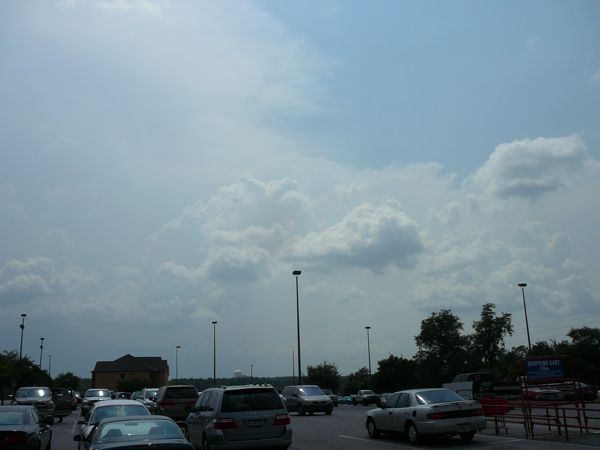
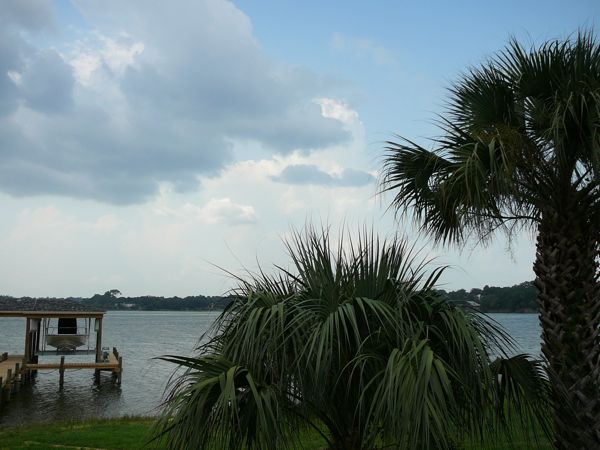
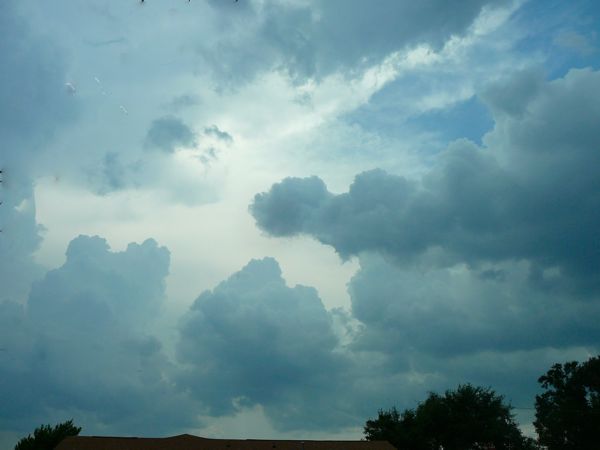
Daggero asked for clouds. It’s the least I could do. We may have a big cloudburst coming tonight, but I chased it today and it only sprinkled:
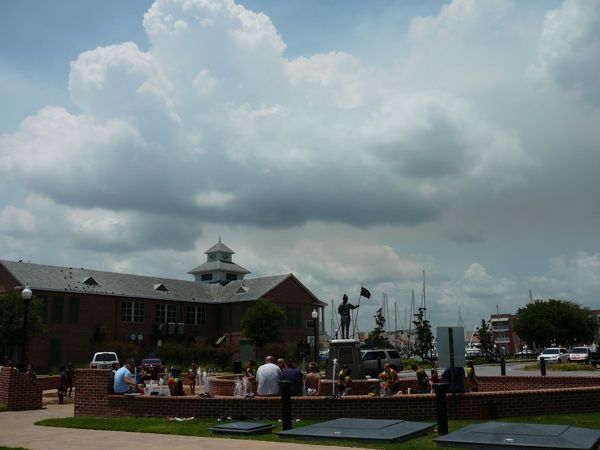
Clouds didn’t stop the fun at Palafox Pier
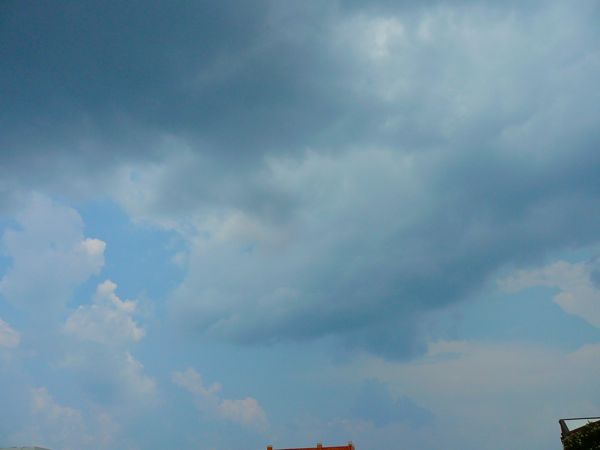
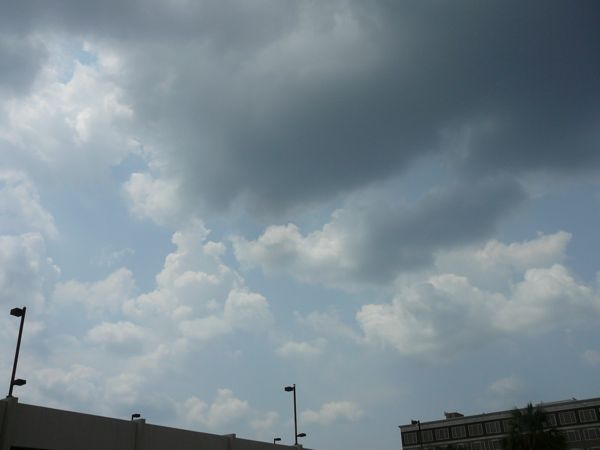
A few large tantalizing drips of rain, and then nothing . . .



Spy the Lie on the Diane Rehm Show

Thursday, July 24th, Diane Rehm had another wonderful show. Diane Rehm has a gift for asking thoughtful questions, listening carefully, and then following up with another thoughtful question. She treats her guests with great civility, but she never hesitates to ask the tough question.
Thursday, she interviewed Senator Marco Rubio, who did pretty well until she started asking him the tough, revealing questions, and you could actually hear him squirm.
Far more interesting than Senator Rubio was her interview with former CIA employees Philip Houston and Michael Floyd, discussing their new book Spy the Lie. We’ve all heard different ways liars give themselves away, but these two former interrogators told us how to ask questions, and a “cocktail” of responses – not one response, eyes shifting away, but a variety together – which tell you that you are being lied to.
Deflection, change of voice tone, swearing to God, anger at being asked – these and other giveaways work together. Bottom line – if your instincts are screaming “Lie! Lie!” then chances are good you are being lied to.
The truth is, most of us know when we are being lied to. There are times the liar will never admit to it, but you have to work with the knowledge that what he or she is saying is a lie. At least you know. You don’t have to buy into the lie. And you know my position – lying hurts the liar most of all.
Sunlight May Help Prevent Heart Attacks
This report is from Bottom Line. It seems to me that we are more primitive biological organisms that we think ourselves, but it also occurs to me that if sunlight helps prevent heart attacks, and helps limit damages, do people in the sunny places have a lower incidence of death due to heart attacks?
Sunlight Helps Prevent Heart Attacks

Ah, sunlight.
There’s nothing like being outdoors on a summer morning.
What you may not know is that sunshine doesn’t just boost your mood and your vitamin D level—it also may help you ward off a heart attack or minimize the damage that one can cause, according to a new first-of-its-kind study.
I talked to the researchers to find out more about how we can all harness the power of light to brighten our heart health.
I called the study’s lead author, Tobias Eckle, MD, PhD, an associate professor of anesthesiology, cardiology and cell and developmental biology at the University of Colorado School of Medicine in Denver.
Dr. Eckle told me that our circadian rhythm—the physical, mental and behavioral changes prompted by light and darkness that occur over each 24-hour period—helps determine the level of a certain protein that can minimize the cell damage and cell death caused by a heart attack. This protein might even stop a heart attack in its tracks. So Dr. Eckle and his colleagues were eager to see whether exposure to certain kinds of light at a certain time might be effective at boosting levels of this protein.
In the study, researchers divided mice into two groups. One group was exposed to light boxes emitting light that was the same level of brightness as daylight (“bright light”), and others were exposed to regular room lighting (“regular light”). Both groups were exposed to the light first thing in the morning at 6:00 am.
Then the mice were given anesthesia and heart attacks were triggered in them. Researchers found that mice that had been exposed to three hours of “bright light” had three times the amount of the protective protein as the mice that had been exposed to “regular light”—and, incredibly, the “bright light” mice’s hearts had experienced only one-fifth as much damage!
HOW SUNNY ARE THE FINDINGS?
There are, of course, unanswered questions—for example, how the findings might apply to humans and how lasting the benefit of the protein might be.
That said, the results are promising. What’s especially interesting is that it’s the light exposure on the eyes—not the skin—that affects the protein levels, said Dr. Eckle. So humans wearing sunscreen or long sleeves wouldn’t blunt the effect.
SAFE WAYS TO LET IN THE LIGHT
Several forces have conspired over recent decades to keep people out of the sun during the day, such as indoor work and fear of skin cancer. But many people would be likely to benefit from getting more sunlight exposure as early in the morning as possible.
Here are some safe ways from Dr. Eckle to shed more light on your daily routine…
1. Take a daily walk outdoors, and keep wearing sunscreen. Even 10 to 20 minutes a day is better than nothing. Since, as I mentioned earlier, it’s the way that light affects your eyes (not your skin) that matters, apply sunscreen—that won’t dampen the benefits. The added exercise will boost your heart health, too.
2. Get sunlight while indoors. Sit near large, bright windows.
3. Use a light therapy box. If you can’t follow either of the first two tips, or if you’re at high risk for skin cancer and want to avoid UV rays at all costs, this may be the best option for you. Available online for about $50 and up, light therapy boxes mimic the brightness of sunlight while filtering out most damaging UV rays.
Source: Tobias Eckle, MD, PhD, associate professor of anesthesiology, cardiology, and cell and developmental biology, University of Colorado School of Medicine, Denver. His study was published in Nature Medicine.
James Lee Burke and the Creole Belle
James Lee Burke is number one on my guilty-pleasures list.

I first met his main character Dave Robicheaux in A Morning For Flamingos, a book I picked up in a military library at Lindsay Air Station, a post that doesn’t even exist any more. In the cold dark endless winter in Wiesbaden, Germany, James Lee Burke lit up my life. I had thought I was picking up just another escapist mystery novel, but when James Lee Burke puts words together to describe the way a storm moves in over the bayou, prose becomes poetry.
There is a downside. Whether it is his character Dave Robicheaux, the former New Orleans cop, now head homicide investigator in New Iberia, Louisiana, or his Hackberry Holland series set in West Texas, James Lee Burke’s books are filled with extreme violence and disturbing images that live in your head for a long time.
I’ve recommended James Lee Burke to friends, some of whom have said “Why do you read this trash??? It is HORRIBLE! It is full of over-the-top violence!”
And then again . . . he is writing about some really really bad people. They are out there. There are people who exist who inflict cruelty. I don’t understand it, I can’t begin to fathom where the urge would come from, but I’ve seen it. It’s out there. James Lee Burke pulls up that rock and exposes the dark happenings underneath.
On one level, as I started reading Creole Belle, I thought “Oh James Lee Burke, stop! Stop! It’s the same old formula! A downtrodden victim (often a beautiful woman) cries for help. You and Clete start looking for information and end up beating people up and then they retaliate by threatening your family! There is a rich, beautiful woman who seems vulnerable and who you kind of like, but she is complicated. There are rich amoral people who keep their hands clean, but who are calling the shots and never go to jail! Stop! Stop!”
Well, I should say that, and maybe I should stop. Then he starts talking about the smoke from the sugar cane fields and the bridge over the Bayou Teche, and the big Evangeline oak in St. Martinsville, and I am a goner. I’m sucked in, I’m hooked.
I detest the violence and the images. I keep coming back because James Lee Burke has some important things to say.
I’d love to have him to dinner. I’d love for him and our son to have a chance to talk about Law Enforcement. Here is what James Lee Burke has to say in Creole Bell:
There are three essential truths about law enforcement: Most crimes are not punished; most crimes are not solved through the use of forensic evidence; and informants product the lion’s share of information that puts the bad guys in a cage.
My son hates shows like CSI, and Law and Order, where the evidence convicts the criminals. He says it raises unreal expectations in juries, and makes it harder to get a conviction.
We watched a Violation of Parole hearing, or actually a series of hearings, where the judge asked each individual whose parole was about to be revoked what had happened when he or she was re-arrested. In each case, the parolee had done something stupid; drove a car with an expired license, drove to another state, was arrested driving drunk, etc. EVERY time. The judge made his point, I believe.
From Creole Belle:
But if Caruso was the pro Clete thought she was, she would avoid the mistakes and geographical settings common to the army of miscreants and dysfunctional individuals who constitute the criminal subculture of the United States. Few perpetrators are arrested during the commission of their crimes. They get pulled over for DWI, an expired license tag, or throwing litter on the street. They get busted in barroom beefs, prostitution stings, or fighting with a minimum-wage employee at a roach motel. Their addictions and compulsions govern their lives and place them in predictable circumstances and situations over and over, because they are incapable of changing who and what they are. Their level of stupidity is a source of humor at every stationhouse in the country. Unfortunately, the pros – high end safecrackers and jewel thieves and mobbed-up button men and second story creeps – are usually intelligent, pathological, skilled in what they do, middle class in their tastes and little different in dress and speech and behavior from the rest of us.
And then there are paragraphs like this that discuss the human experience, and have a far wider application than the book:
No one likes to be afraid. Fear is the enemy of love and faith and robs us of all serenity. It steals both our sleep and our sunrise and makes us treacherous and venal and dishonorble. It fills our glands with toxins and effaces our identity and gives flight to any vestige of self-respect. If you have ever been afraid, truly afraid, in a way that makes your hair soggy with sweat and turns your skin gray and fouls your blood and spiritually eviscerates you to the point where you cannot pray lest your prayers be a concesion to your conviction that you’re about to die, you know what I am talking about. This kind of fear has no remedy except motion, no matter what kind. Every person who has experienced war or natural ctastrophe or man-made calamity knows this. The adrenaline surge is so great that you can pick up an automobile with your bare hands, plunge through glass windows in flaming buildings, or attack an enemy whose numbers and weaponry are far superior to yours. No fear of self-injury is as great as the fear that turns your insides to gelatin and shrivels your soul to the size of an amoeba.
Last, but not least, this is what keeps me coming back to James Lee Burke, so much so that I buy the book almost as soon as it is released. James Lee Burke isn’t afraid to take on the big guys. He “gives voice to those who have no voices.” (Proverbs 31:8) His focus is always on the dignity of the common man, the dignity of hard work, done well, and on the dignity of doing unexpected kindnesses to those who have no expectation of kindness.
. . . All was not right with the world. Giant tentacles of oil that had the color and sheen of feces had spread all the way to Florida, and the argument that biodegradation would take care of the problem would be a hard sell with the locals. The photographs of pelicans and egrets and seagulls encased in sludge, their eyes barely visible, wounded the heart and caused parents to shield their children’s eyes. The testimony before congressional committees by Louisiana fisher-people whose way of life was being destroyed did not help matters, either. The oil company responsible for the blowout had spent an estimated $50 million trying to wipe their fingerprints off Louisiana’s wetlands. They hired black people and whites with hush-puppy accents to be their spokesmen on television. The company’s CEO’s tried their best to look ernest and humanitarian, even though the company’s safety record was the worst of any extractive industry doing business in the United States. They also had a way of chartering their offshore enterprises under the flag of countries like Panama. Their record of geopolitical intrigue went all the way back to the installation of the shah of Iran in the 1950’s. Their even bigger problem was an inability to shut their mouths.
They gave misleading information to the media and the government about the volume of oil escaping from the blown well, and made statements on worldwide television about wanting their lives back and the modest impact that millions of gallons of crude would have on the Gulf Coast. For the media, their tone-deafnessness was a gift from a divine hand. Central casting couild not have provided a more inept bunch of villains.
James Lee Burke has a voice, and he uses it. He could just cash in on his reputation as an Edgar Award winning author, but he uses his voice to speak out against injustice and corruption. He is a champion of the people. I’ve written several book reviews, and taken some trips just because I wanted to see James Lee Burke country; if you are interested in those, you can read them here.
I have a concern about this series, in that this book ended differently than all the others. So differently it made me seriously question whether Burke intends to continue writing about Dave Robicheaux or if Dave is about to hang up his shield and call it a day. He’s a guilty pleasure I am not yet ready to give up.
Recent Comments
intlxpatr on Give to Those Who Ask ExpatAlien on What Country am I Living … intlxpatr on Yellowstone: Old Faithful to C… Michelle on Yellowstone: Old Faithful to C… Cathy on No Grown-Ups in Charge Wikipedia Donate Button

Amazina


Early Voting in Florida


 Here There and Everywhere