Galilee Cafe, Mobile, and Foley AL; Life in Small Adventures
AdventureMan was perusing the Weekend Section of the Pensacola News Journal when he saw the opening of the Farmer’s Market in Foley, AL, and he said “Let’s go!”
“Let’s Go!” and my agreement doesn’t always mean we will really go. The market isn’t until 3 in the afternoon, and a lot can happen. Sometimes we just change our minds.
But at water aerobics, I get a great idea, and I can hardly wait to share it with AdventureMan.
“Let’s go to the Jordan River Cafe for their Friday buffet, then head down toward Foley through Fairhope!” He loves the idea, we run a couple errands on the way home, I call the restaurant to make sure they are still open (It’s been about a year since we last went there) and then hit the road for Mobile:

When we get to the restaurant, we discover it is no longer the Jordan River Cafe; it is now the Galilee Cafe, and I wonder if the food will still be so good as before. As we enter, we are shocked – the Cafe is PACKED. Every table is taken – no, no, there is one small table, over in the back, we can have that one, the welcoming waitress says.
Galilee Cafe
326 Azalea
Mobile
T: 251-304-0297

Lunch was fantastic. Yes, the restaurant has changed hands; the current owner born in Bethlehem, and we are astonished and delighted to see so many people enjoying “Mediterranean” cuisine, which is suspiciously like what we used to eat in Jordan and Syria 🙂 The restaurant stayed busy the entire time we were there, so busy that some people ate outside on the front terrace. The food is delicious, and worth the drive from Pensacola. The Friday buffet (and it appears they also now have a Sunday buffet) is all the usual suspects – hummous, baba ghannoush (some of the best I have tasted), tabouli, fattoush, etc. plus a lot of the home-cooked favorites, lamb, chicken, grains, beans and vegetables, pita bread – all delicious.
The first time AdventureMan went to this restaurant (as the Jordan River Cafe) he went with a Saudi buddy and his son, and he has talked ever since about the route they took, but we never knew how to find it. Yesterday, we experimented, taking a right on Azalea as we left, and driving down to Government and turning left. (These iPhones are great navigational tools) It takes you through an older part of town, with large glorious mansions, and into a rather quiet downtown Mobile.
The good news is, it takes you to another tunnel under the Mobile Bay, closely paralleling the one I-10 uses. We like to have an alternative; I-10 can get clogged going through Mobile. This route serves our purposes as it is Highway 98, and it is the road we want to be on to get to Fairhope and then to Foley.

It is a lovely day for a drive, and while we have taken this drive before, it is never the same twice in a row. As we are on the stretch between Fairhope and Foley, the clouds darken and a few stray drops fall.
“That wasn’t bad!” I said as we arrived in Foley, promptly at three for the opening of the Farmer’s Market. “Great parking, too!”
We got as far as the first booth, which was soaps and toiletries (I love hand made soaps) and AdventureMan walked off to explore the rest of the stalls – and the torrent broke forth. Rain came down in buckets, and lightning came, crackling and booming, one strike after another. It never lasts very long here, so I thought we would just wait it out. The wind is blowing the rain under the canopy, so we gather up all the soaps to try to keep them dry, and we wait. And we wait. AdventureMan comes back, soaked; the wind has blown the rain under his umbrella. We wait another five minutes, and then everyone is starting to pack up – and I never made it beyond the first stall! We quickly made our purchases, ran to the car, and drove home mostly without air conditioning because we were so soaked and shivering.
The Farmer’s Market is held on Friday afternoons, 3 – 6 pm, in Heritage Park:
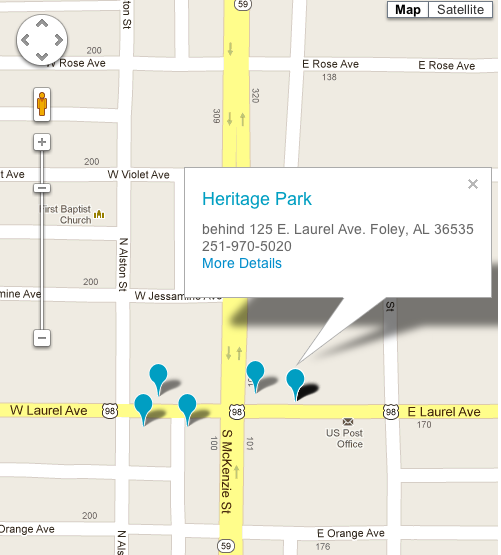
It was a great adventure 🙂 Thank you, Google Maps, for making it so easy to share the small adventure with our friends.
Tena Tena and a Trip to the Salt Pans
When that wake-up call comes, you really need to have everything ready. It’s cold, and while I like colder weather, I find it slows my thinking, especially early in the morning. By the time you load up in the car, you need to be sure you have drinking water with you, your spare camera battery charged, your camera in the backpack, heavier clothing for early in the drive, lighter cover ups for later, when it gets hot. You need sunscreen with you, and insect repellent, and anything else which makes you comfortable, like kleenex tissues, and lip balm (it gets very dry out on the game drives.)
It’s approaching mid-winter, so it is getting colder. If you could see us first thing in the morning, in all our layers, you would laugh, and you would wonder if we are in Africa or Alaska. We are all wrapped up in T-shirts, sweatshirts, sweaters, hats, scarves wrapped around our faces, blankets . . . it is early in the morning, we are in an open vehicle, and it gets COLD in June!
We are on our way out to the salt pans. The last time we did this, four years ago, one of our passengers got really really sick. It was awful. There was nothing we could do for him, except to pretend we didn’t hear him retching in the back, throwing up over the back of the truck. We all felt so sorry for him. We all knew, there but for the grace of God, it could any one of us.
Dawn coming up on the way to the salt pan:

This trip was totally different. We had an unexpected cloud cover much of the morning, which kept things cool. We kept passing villagers, men on bikes coming from the north with baskets of chickens to sell, to buy necessities to take back to their northern villages. Once, we saw an elephant, and warned some of the men on bikes that there was an elephant ahead. We found one man just mounting his bike; he had seen the elephant and had dropped his bike and run. These elephants are massive and if grumpy – or in ‘must’ – they can be lethal, and mean. If the man runs away, the elephant might stomp his basket full of chickens, or his bike, just out of meanness.
We couldn’t resist shooting this herd of impala, just their heads peeking up over the tall golden grass:
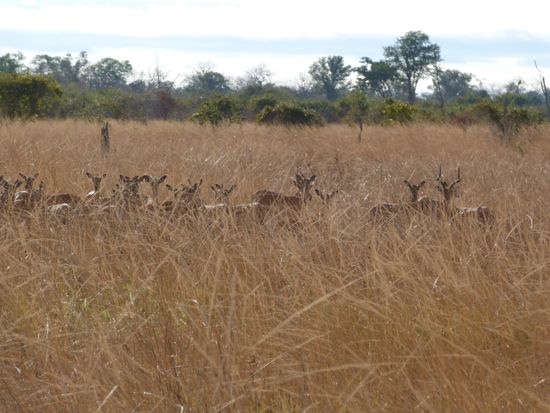
As we near the salt pans, we spot lion on the road ahead of us. We can see a mother and her cub.

Julius knows a way around, so we go around to the other side, where we can see four lion – and then six lions! They are all young males, females and cubs, and are resting.
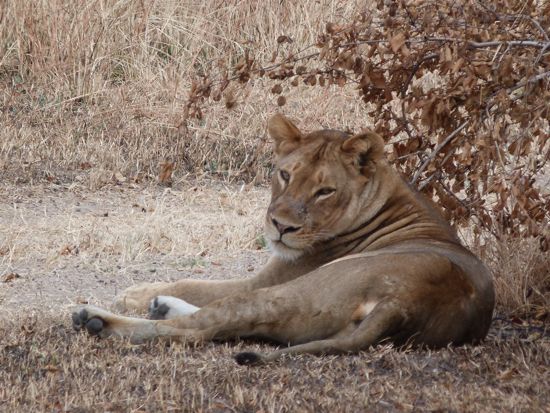
Julius tells us not to be fooled by their sleepy expressions; the lions are actually taking in everything, the sounds we make, the way we smell, and the way we move. Did you know male lions are “tri lobal?”

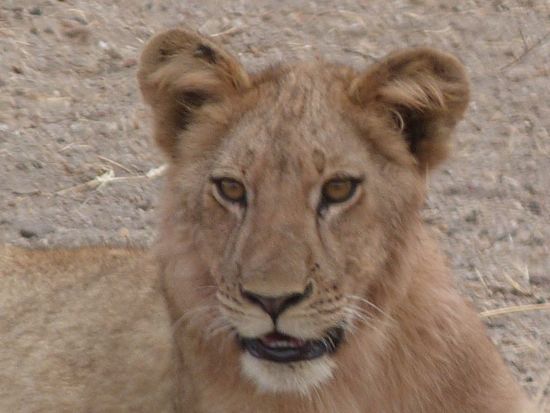
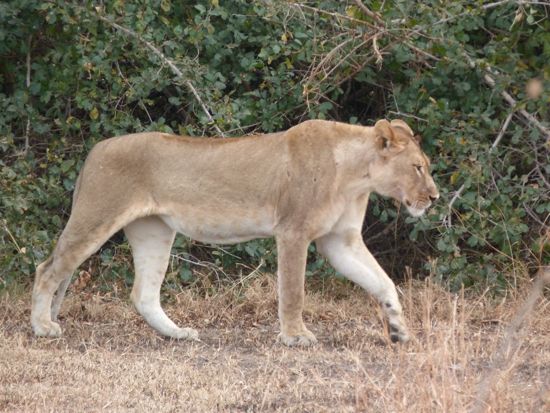
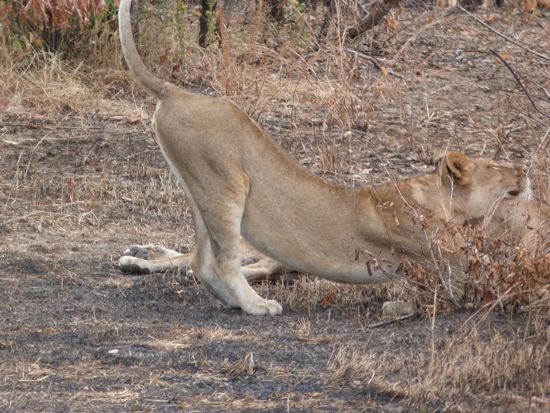
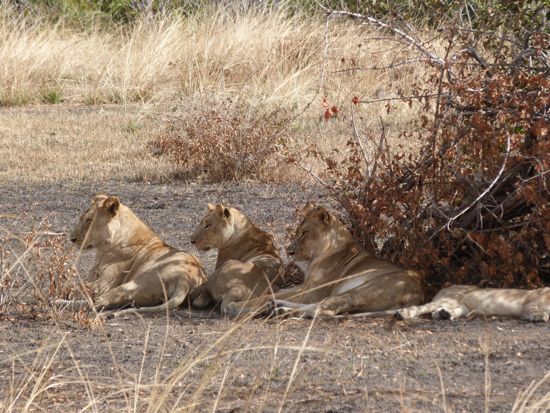
Then the lions decide to hunt, they stand, stretch, and walk off into the tall grass – and we love the way they just disappear, their golden color matching nearly the color of the golden grass:

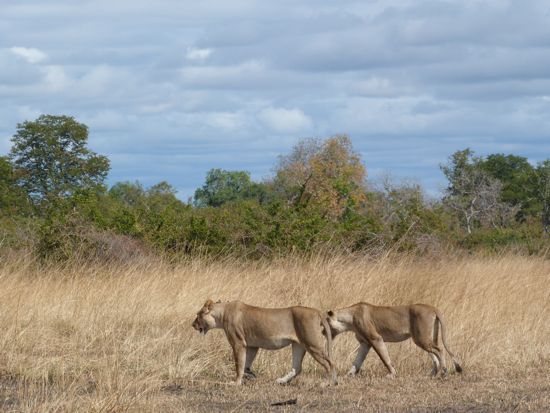
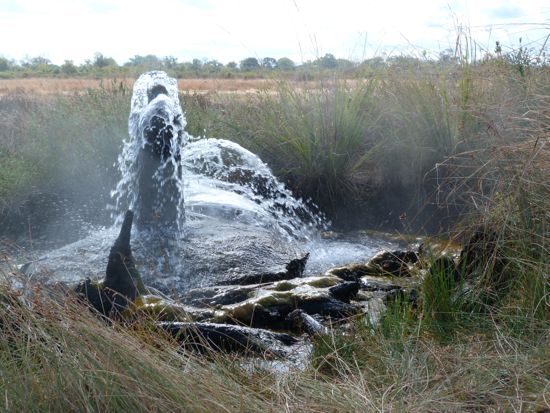
We spend about an hour just enjoying watching the lions, then head for the borehole hotspring for tea. The vista is both bleak and lush – where the water from the borehole has trickled, you can see green. The water is very hot, and you can smell the sulpher.
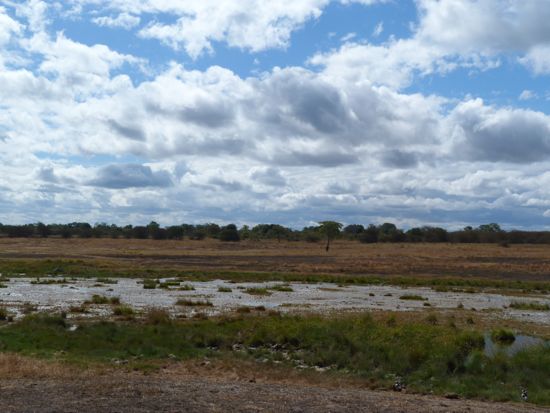
There is a funny story about the bore hole. A lodge was being built, Chichele, which wanted a borehole. The bore hole drillers asked the locals where was “chichele” (which means salty) and they didn’t know about the lodge; they sent the drillers to the old salt pan, also called “chichele.” They drilled a bore hole – out in the middle of nowhere – only to discover they had drilled in the wrong spot. They capped it, and today there is an oasis of green out in the middle of an otherwise fairly barren plain. It attracts a lot of wildlife – and those who prey on wildlife.

As we leave the hot spring, we spot more lions, maybe ten, a different pride. I say we, but it is really Julius, who sees the vultures circling and thinks there may be a kill in the area. We spot the lions, and then start the long drive back, stopping here and there along the way to take pictures or to learn about a whole lot of things we don’t know much about.
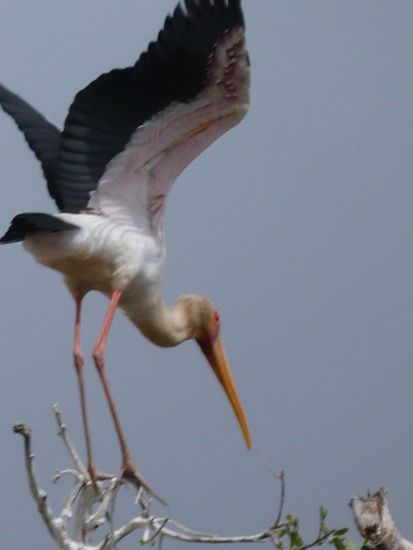
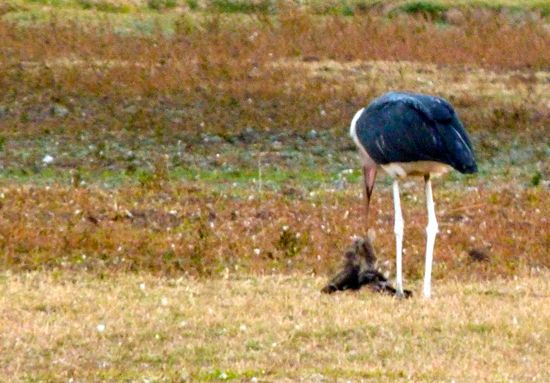
On our way back to Tena Tena, we pass through “The Colony” where the Yellow Billed Storks are nesting, hatching their young and teaching them how to fly. It is noisy, and hilarious; there is a lot going on. We particularly love the ‘flight school’ as young stork hesitate to take off, then practice their take offs and landings. Occasionally, one doesn’t make it, and there are Marabou Storks on the ground, who finish them off quickly.

We are late, and fortunately Claire has had sandwich plates made up for us so we won’t starve (LOL). We eat at the bar, and head for our cabins, but it is not an afternoon for resting – we have a visitor:
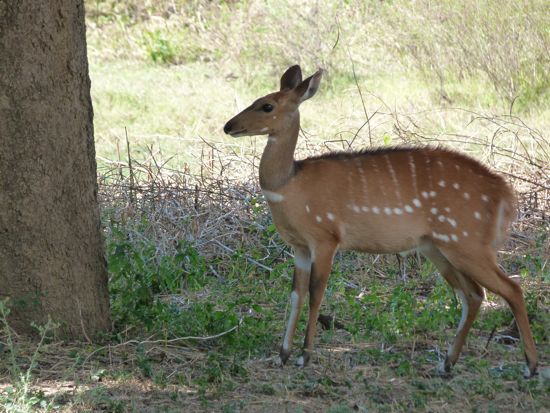
Most of the time, these little bushbuck are too shy for us to photograph, but here in the camp, there are a couple who have become used to the smells and noises of us intruders, and is oblivious to our cameras.
The afternoon drive starts off sedately along the Luangwa:

But we find beauty in the small things as we head toward sundown. These are Egyptian Geese settling in the lagoon nearby:

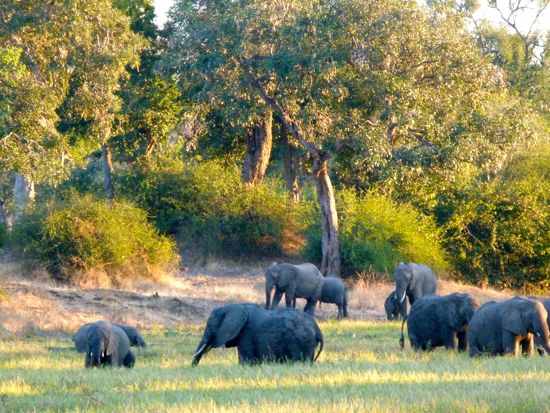
There are also elephant, an entire family, playing in the water:
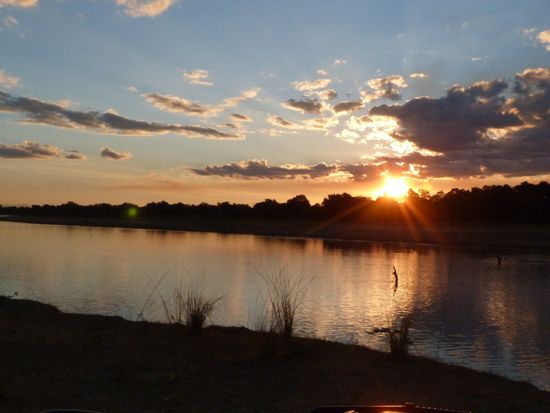
Sunset is spectacular. I am drinking Campari and Bitter Lemon, and because we are heading back early, I drink the whole drink.
Julius and Davis serve up sundowners:
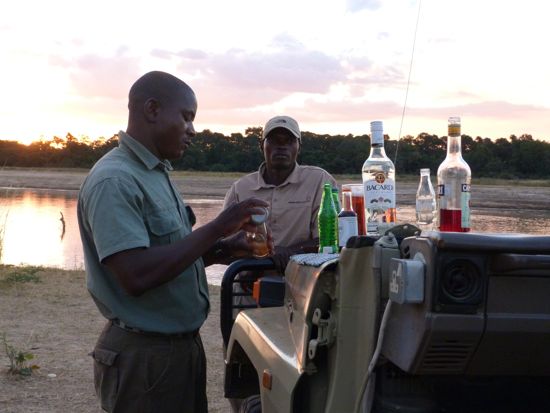
We had asked for a short night drive, but after ‘sundowners’ by the river, we find a pair of mating leopards, and the drive goes on a a lot longer than we intended. Mating leopards are exciting, they make a lot of noise, and are well worth a late drive, especially with a sky full of stars. NOTE TO SELF: No matter how tempting, limit your liquid intake at sundowners! Once the sky is dark, there is no safe bush to step behind and the roads are bumpy!
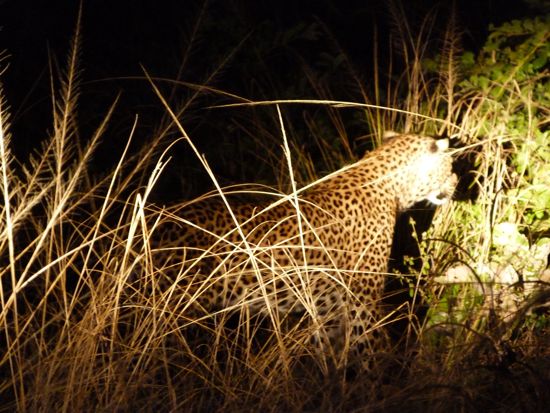

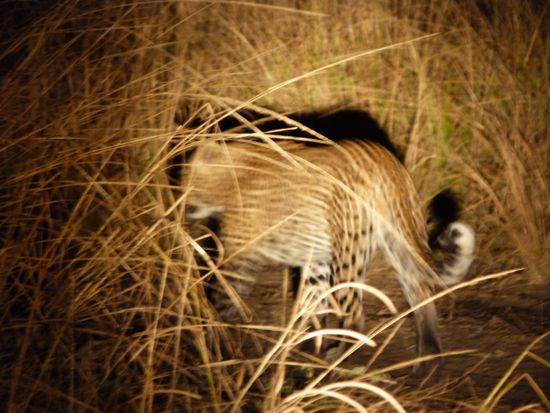
Julius helps us find the Southern Cross on the way back to camp, and shows us how to identify the Scorpion. The skies of the southern hemisphere are strange to us, but the stars are so bright and the night is so dark we just lie back and revel in the beauty of the heavens.
A very lively dinner, with the Swiss foursome, a new Scottish couple and us, eating ‘gammon’ which is ham, with pumpkin and mashed potatoes. Dessert is an amarula ice cream, which leads us all to the bar for shots of amarula liquer before he head for bed. It’s a lot harder organizing for the next early morning after a glass of wine and a shot of amarula, but we sleep like babies. We do hear lion roaring, but we just go right back to sleep.

Seventy Times Seven
I come from a great mixture of nationalities, but two of them, the Irish and the German, specialize in carrying grudges for a long time. I once lived in a small German village, where a woman told me that her family did not speak to this other family, nor that family to them. Their grandmothers had some great falling out – nearly 100 years ago – and while no one can remember what it was about, the families still don’t speak.
Seventy times seven – it goes against the grain, doesn’t it? Jesus said so many earth-changing things, like “Love your neighbor as yourself” and to take care of the poor and the prisoners and the widows and children – people who are considered, even in today’s society, to have less value. To let go of your angry feelings, to forgive – that is hard work.
And yet, he spells out how very damaging our grudges are – to US! If we can get over our selves, and our own selfish instincts, our lives are so much happier and so much more productive . . .
Matthew 18:21-35
21 Then Peter came and said to him, ‘Lord, if another member of the church* sins against me, how often should I forgive? As many as seven times?’ 22Jesus said to him, ‘Not seven times, but, I tell you, seventy-seven* times.
23 ‘For this reason the kingdom of heaven may be compared to a king who wished to settle accounts with his slaves. 24When he began the reckoning, one who owed him ten thousand talents* was brought to him; 25and, as he could not pay, his lord ordered him to be sold, together with his wife and children and all his possessions, and payment to be made. 26So the slave fell on his knees before him, saying, “Have patience with me, and I will pay you everything.” 27And out of pity for him, the lord of that slave released him and forgave him the debt. 28But that same slave, as he went out, came upon one of his fellow-slaves who owed him a hundred denarii;* and seizing him by the throat, he said, “Pay what you owe.”
29Then his fellow-slave fell down and pleaded with him, “Have patience with me, and I will pay you.” 30But he refused; then he went and threw him into prison until he should pay the debt.
31When his fellow-slaves saw what had happened, they were greatly distressed, and they went and reported to their lord all that had taken place. 32Then his lord summoned him and said to him, “You wicked slave! I forgave you all that debt because you pleaded with me. 33Should you not have had mercy on your fellow-slave, as I had mercy on you?” 34And in anger his lord handed him over to be tortured until he should pay his entire debt. 35So my heavenly Father will also do to every one of you, if you do not forgive your brother or sister* from your heart.’
Transfer from Nkwali Camp to Tena Tena Camp
Monday, 3 June transfer to Tena Tena
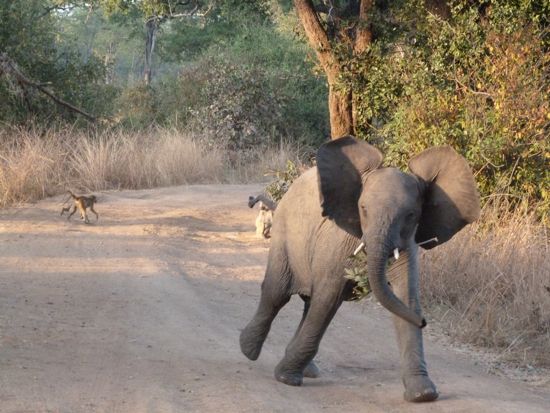
Fred takes us on a game drive to Tena Tena, and it is a great morning, with a lot of fun. First thing out, we come across another elephant family, and we love stopping to visit with the elephants.

We stopped to take photos of signs for Nkwali, and I really love this one because we are the shadows taking photos in the photo, LOL.

There were baboons out grooming on the bridge going into the park, and I took a photo of the restroom. It was primitive but totally clean – wouldn’t you prefer that to modern, but totally filthy? And . . . it beats going behind a bush. I always think about that lion lying under the tree; he sees me and I don’t see him.


We saw a cooperative waterbuck, with the target circle on his bottom:

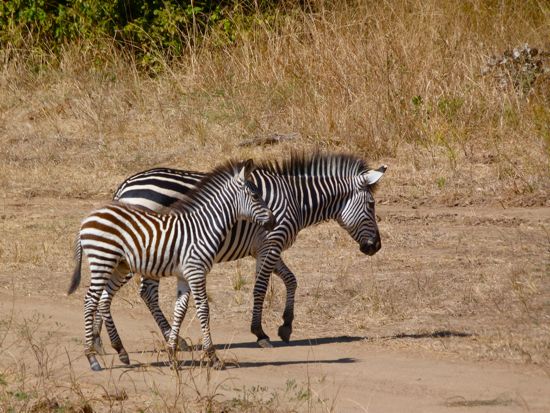
And a family of frolicking zebra:


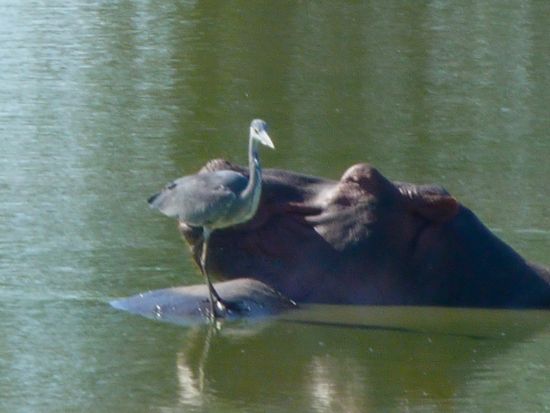
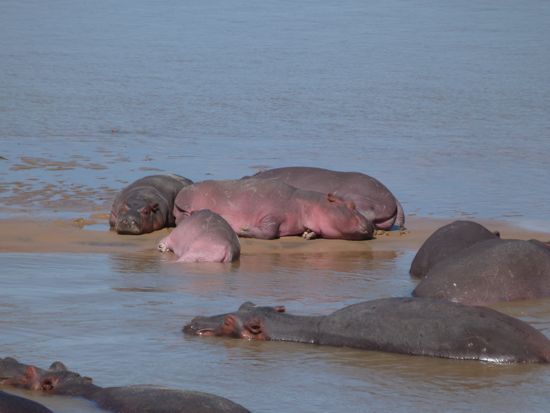
A great hippo – this one is for you, BL:
And another fish eagle, which make a great screech as they hunt:

We had a great stop for a family of giraffe feeding, then crossing the road to the flat plain across the road where they drink and continue on their journey. It’s one of the things we like best about the Robin Pope safaris; the guides respect our delight in spending time just observing the animals. We shoot photos, but we also love just watching, trying to figure out what is going on. The guides know so much, and Fred is good at helping us understand a lot of the smaller things.
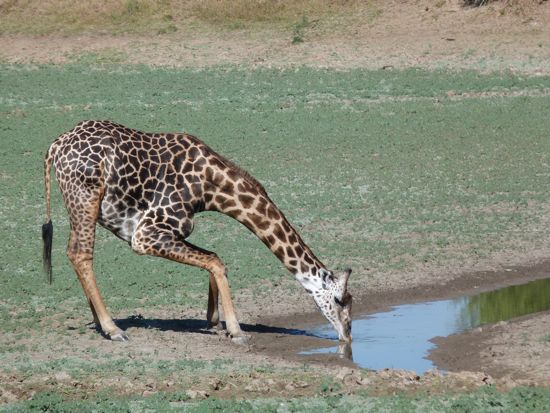
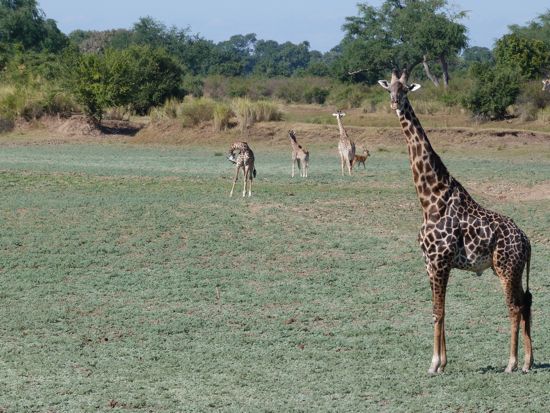

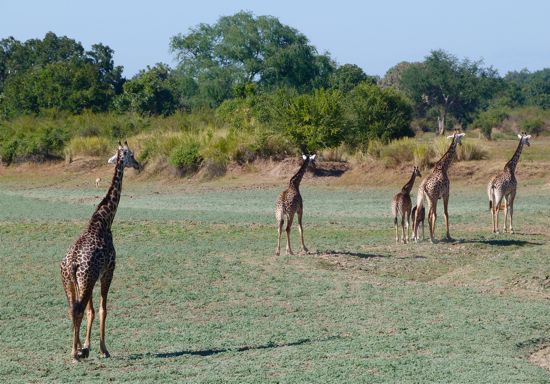
We reach the river, where the bags are loaded into a small canoe, and
we are too. We wave goodbye to Fred, are poled across the Luangwa, and
meet our next guide, Julius, on the other side of the river, for a
drive to our next stop, Tena Tena Camp.

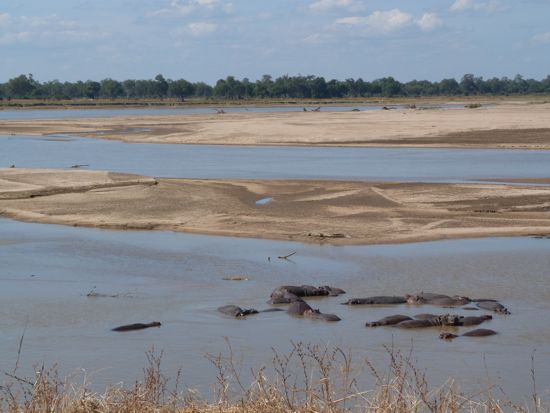

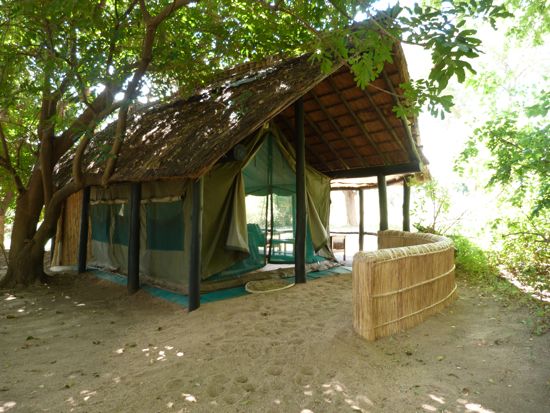
Tena Tena is one of our favorite camps ever. It is sort of tented – if
tents are tall enough to walk around in, with a great veranda for
sitting and watching the wildlife passing within feet in the nearby
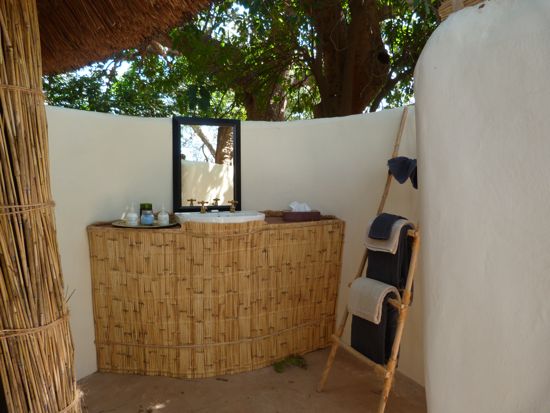
lagoon, with an outdoor bathroom with separate circular areas for
toilet and shower, all shaded by a tall tree whose branches entirely
cover the bathroom area. Between the two is a large dressing room with
shelves and a luggage rack.
Our tent:

Our washing up area:
Our shower area:

Our dressing area:
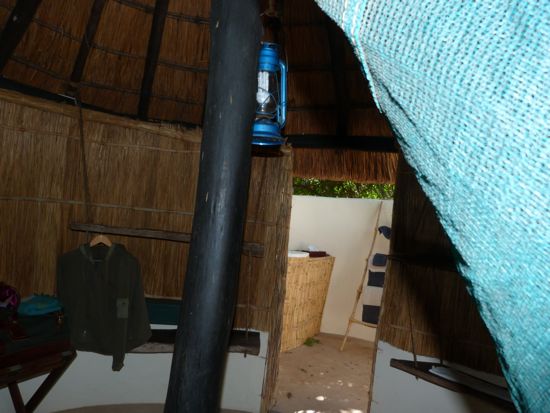
View looking out from our tent through our veranda:

Oh, and frogs. I couldn’t get my toilet to flush, so I took the top off to see if it was all hooked up, and FIVE frogs looked up at me, two sitting on that ball that goes up and down, two on the flushing mechanism and one in the little notch at the back of the toilet. I guess they love a cold, damp environment 😦
A short walk away from our tent is the gathering room with its large bar, and down about twenty paces further is the outdoor dining room, where
scrumptious lunches and dinners are served.
As we arrive, we are met by Claire and Nyale with cold “flannels”
to wipe our dusty faces and hands, and then shown to our cabins. We
have a few minutes to organize and then we head for lunch, where we
meet the other six guests in the camp. Tena Tena hosts ten guests
maximum, so it isn’t that hard to meet everyone. The wait staff excel in napkin folding; today we are eating fish 🙂

And “what will you eat in Africa?”
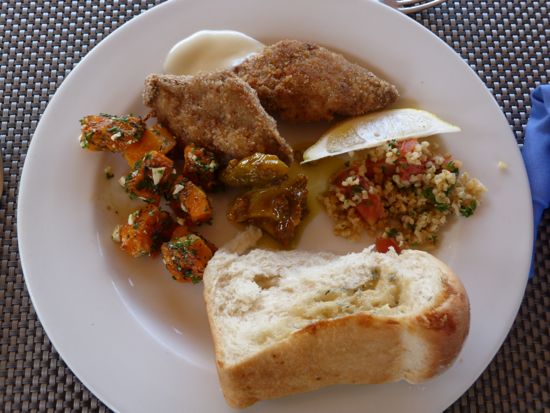
It’s a long, leisurely lunch, and then back to the cabin to unpack a little
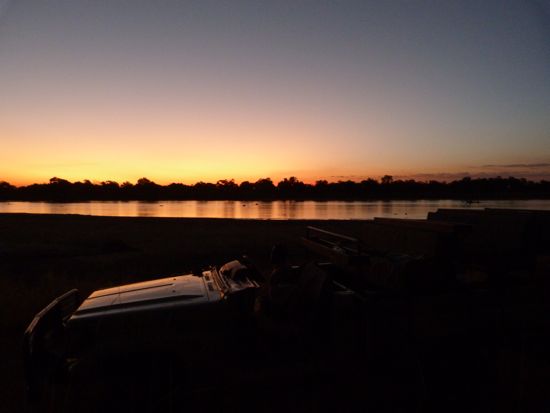
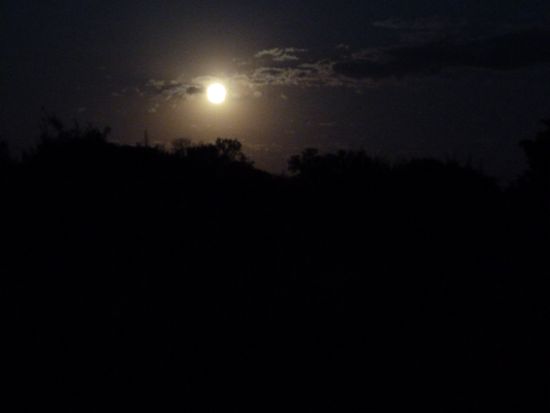
and catch a quick snooze before the afternoon game run. We spot a huge elephant, tearing apart a tree, and a lion lazing on the beach, a couple bush babies, a genet and elephant shrew, and search for leopard, but never find him. Back at Tena Tena for late dinner, we can barely keep our eyes open, and excuse ourselves soon after dessert to lay our our clothes for the next day and hit the sack.


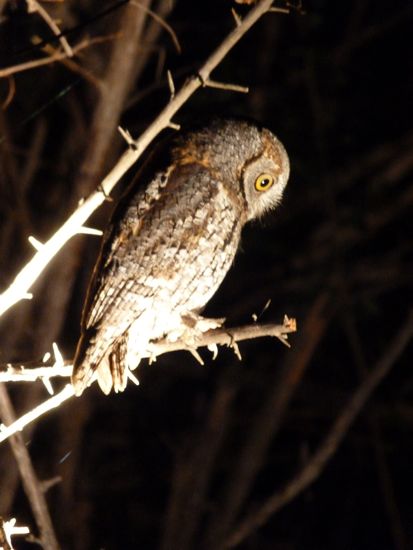
And! We see a Scope’s Owl!
To bed, we have a long day tomorrow, going to the Salt Pans!
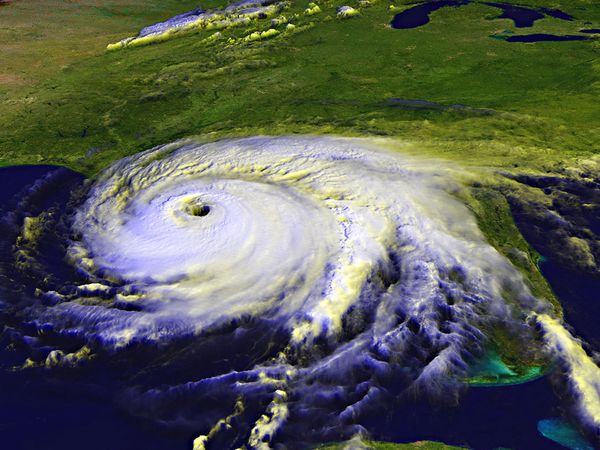
Terrify Them With Your Hurricane . . .
From today’s readings in The Lectionary, a psalm to which anyone who lives on the Gulf of Mexico can relate . . . there is a total realization of God’s awesome power in the nature of catastrophic events, and people who are not believers find themselves praying . . .
Psalm 83
A Song. A Psalm of Asaph.
1 O God, do not keep silence;
do not hold your peace or be still, O God!
2 Even now your enemies are in tumult;
those who hate you have raised their heads.
3 They lay crafty plans against your people;
they consult together against those you protect.
4 They say, ‘Come, let us wipe them out as a nation;
let the name of Israel be remembered no more.’
5 They conspire with one accord;
against you they make a covenant—
6 the tents of Edom and the Ishmaelites,
Moab and the Hagrites,
7 Gebal and Ammon and Amalek,
Philistia with the inhabitants of Tyre;
8 Assyria also has joined them;
they are the strong arm of the children of Lot.
Selah
9 Do to them as you did to Midian,
as to Sisera and Jabin at the Wadi Kishon,
10 who were destroyed at En-dor,
who became dung for the ground.
11 Make their nobles like Oreb and Zeeb,
all their princes like Zebah and Zalmunna,
12 who said, ‘Let us take the pastures of God
for our own possession.’
13 O my God, make them like whirling dust,*
like chaff before the wind.
14 As fire consumes the forest,
as the flame sets the mountains ablaze,
15 so pursue them with your tempest
and terrify them with your hurricane.
16 Fill their faces with shame,
so that they may seek your name, O Lord.
17 Let them be put to shame and dismayed for ever;
let them perish in disgrace.
18 Let them know that you alone,
whose name is the Lord,
are the Most High over all the earth.
PATRICIA WELLS AT HOME IN PROVENCE: Recipes Inspired By Her Farmhouse In France
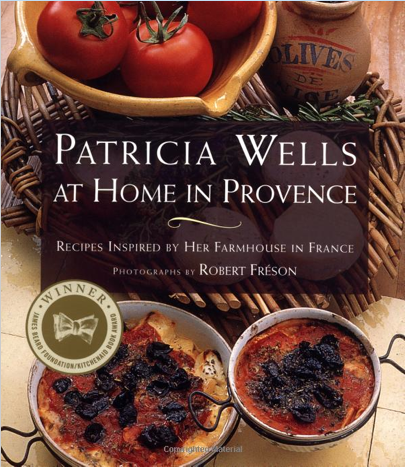
Ahhhhh. . . . . this is a gift for Father’s Day to AdventureMan, a gift that just keeps on giving.
The first night, he read it in bed, enthusiastically reading aloud ingredients for various recipes; they all sounded so delicious we were HUNGRY! Today we headed for the grocery store to find the crucial ingredients, which, because this book is very homey, are not hard to find. AdventureMan is making a pasta with sweet red peppers, and tonight, because we trust Patricia Wells, he is even going to add the Parmesan cheese which he sometimes hates. He has discovered that if it is really really good Parmesan cheese, it’s not so bad. (I don’t think he will ever like the stinky, salty Pecorino that I adore.)
I can hear him whistling in the kitchen as he prepares the onions and red peppers. My tummy is grumbling; I know this is going to be good!
We are Patricia Wells addicts. When we lived our many years in Germany, we had her books The Food Lovers Guide to France, and the Food Lovers Guide to Paris, and they were our major resources to go see things we might never otherwise have even known. She introduced us to Monsieur Fallot’s magnificent moutardes, and to La Duree’s hot chocolate and macaroons. We found kitchen shops and bakeries and charcuteries, and while she often led us into temptation, she never led us astray.
The recipes in this book are doable. She requires GOOD olive oil and fresh ingredients, we can do that. There is nothing very complicated or difficult – it’s home cooking, as only the French can do it. God bless you, Patricia Wells. 🙂
And now . . . to dinner 🙂
Nkwali Camp, Day 2
We’ve booked three nights at each camp, so we get at least two full days at each, and additional drives or hikes for the transfer days – there is never a dull moment.
The drums, the drums, and we are ready and out the door in no time. Today, as we are walking down to catch the boat, my toe catches on a root and I almost fall into the river. Even though the Luangwa is shallow, it would still be humiliating, and I would have to go back and change clothes, and then (gulp) there are those crocodiles . . . . The path is rough and I am a little unbalanced by my backpack, and by the grace of God, the guide, Keyala, steels himself, I hit him and he doesn’t fall in the water when I hit. He holds steady. Thanks be to God! (By evening, there was a new set of stairs, and no roots.)
Our day starts with leopard. We are once again at a green lagoon, watching ducks and cranes, when Keyala says “look, there is a leopard!” and about two hundred yards back, he is at a pond, drinking, then quietly, slowly, turns and walks back into the forest. What a great way to start!

Sorry, the leopard is in the distance and you learn to shoot fast. It doesn’t always make for the sharpest shot, but by the time you get all the settings right and the focus set, the leopard is gone and you have a photo of the lagoon where the leopard was, who wants to see that?
We have a lively morning, full of birds and more elephant and giraffe:

These giraffe are young males, and they are fighting with their necks, sort of comical to watch, but they can seriously hurt one another. I think these ones are more playing at fighting:

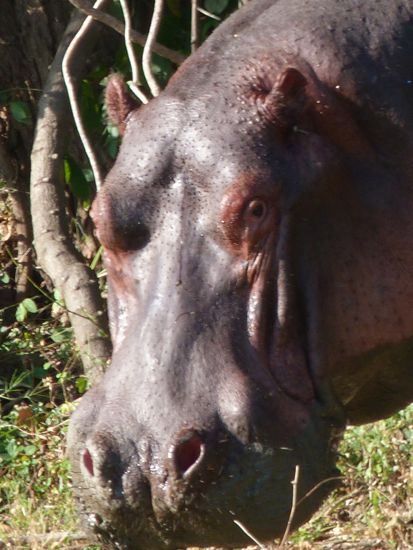
This hippo has gotten tired of the fighting for a spot in the river and has found a lovely isolated spot in the lagoon. You can tell he is a weathered old soul by the scars on his body.

We also get a chance to photograph that glorious fish eagle in a tree – this is how you usually see them; the one I shot in the previous post on Nkwali was actually catching a fish. You don’t get that shot often:

Many stops later, we are driving along and we smell sausages. Keyala says it must be a nearby lodge, but there is no lodge near by. . . We turn a corner and there is a crew, with a fire, and camp chairs all set up, and we realize we are about to experience one of the infamous Nkwali BBQ cook-outs, oh what fun. We are overlooking another great lagoon, full of hippo, Cape Buffalo, baboons, and all kinds of wildlife. Robert, the stellar camp cook, is there asking us how we like our eggs, and with our eggs are sausage, bacon, corn fritters, fried onion, baked beans and toast from loaves of bread made in camp, big thick slices.

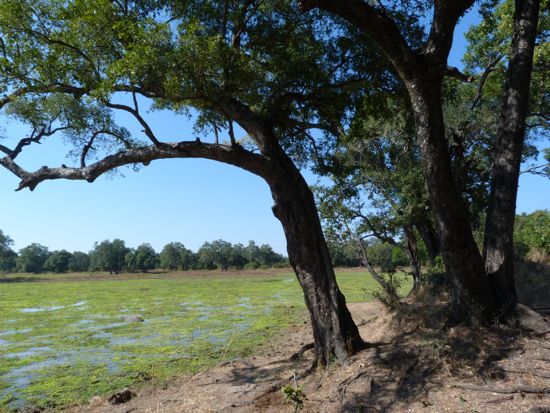

On our way back to camp, we will cross the river again:

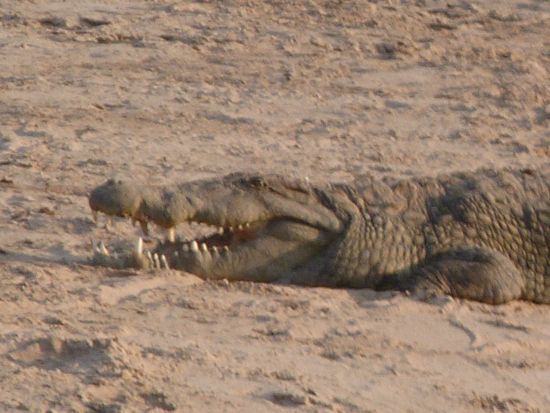
And here is one of many of the crocodiles sunning on the river sand:
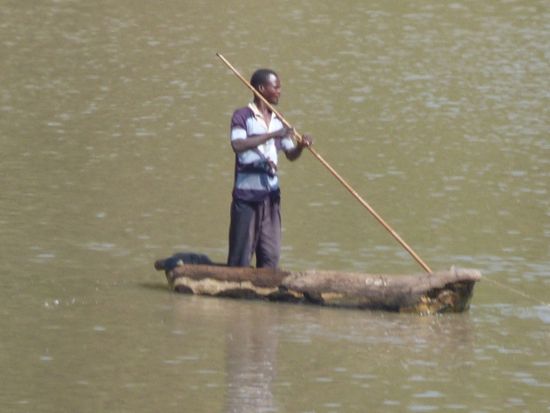
Just before we get back to camp, we see a Zambian local, fishing in the river. Look closely at the canoe – we used to see canoes like this in Alaska, too, dugouts. Imagine the hours it takes to hollow out a tree so that you can use it as a boat, and imagine that if you have very little, the man who has created for himself a boat can be a man with an enhanced opportunity to feed his family . . .
Once again, we arrive back at camp, and snooze a little until dinner. Bumping around in the Toyota trucks wears us out, and we are still jet lagging, some times we think we’ve beat it, and then when we least expect it, it beats us. I really need to wash my hair, it gets so dusty from the trails, but I really really need a nap and a nap almost always trumps washing hair.
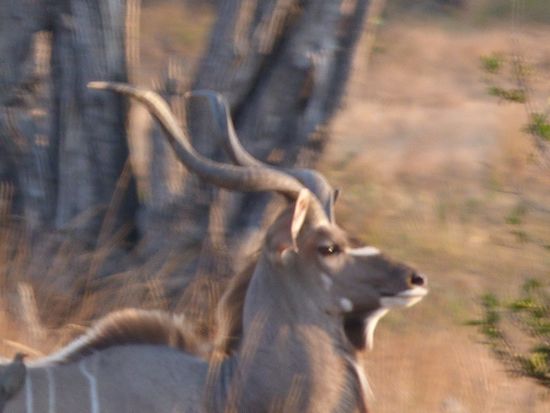
As we head out on our last Nkwali game drive, there is an air of excitement. We find the noble-looking kudu, so shy, and he astonishes us by walking across the road so we can get a clear shot of those amazing curled antlers.

You’d think there would come a time when we might think “Oh, it’s just another elephant family,” but for us, that time never comes. We always watch them with fascination, thinking how very smart they are, how far they range, how they communicate, and how they mourn the deaths of their group. Elephant are huge, and they have their own agenda, they are not there for our entertainment but for their own survival, so we watch them with great respect.

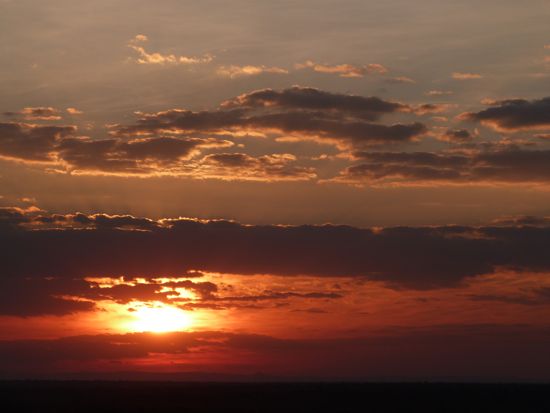
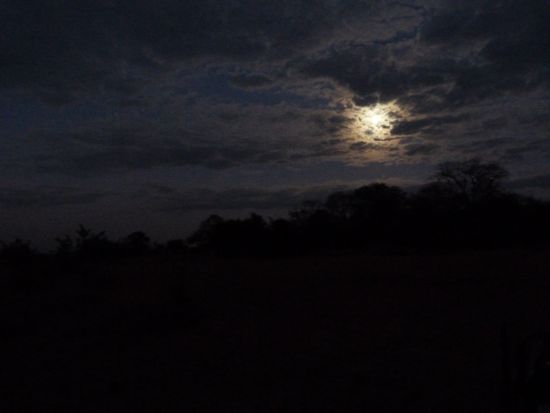
Keyala takes us across the river and we head up to the highest hill for sundowners, half-searching for lion and leopard on the way. The highest hill has a 180 degree view of the land all the way to the escarpment, and the sun sets at just about 90 degrees – right in front of us. Behind us, about the same time, the full moon rises. It is awesome.
This is Keyala and Keyfus. Keyfus (Kay-fus), on the left, is the same as Cephus in Greek, meaning rock – Saint Peter’s name. Keyala is our guide, and recently marketed for Robin Pope Safaris in Seattle. 🙂
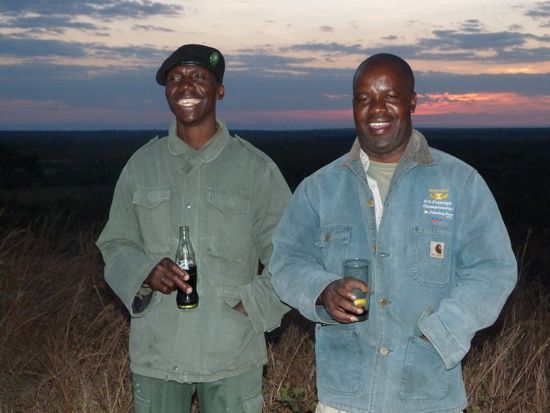
On this high hill I spot a tree, Sterculia quinqueloba, a tree I have never seen before, and Keyala tells us the name. It is such an unusual tree:

Sunset from the high hill in the Chongwe Game Park:
Moonrise in the east, magical:
Dinner conversation is fast and furious back at camp, and we excuse ourselves to make sure we are packed up and ready for departure the next day for Tena Tena. We say a sad farewell to Chris, and Tina, and Keyala, who have taken such good care of us and gotten our Zambia safari off to such a great and happy start.
Customer Service; the Good and the Ugly
We are not rich people. You might look at the places we go and the places we stay and think that we are more comfortable than we are. We learned a secret a long time ago, and that secret is to live UNDER your income. We live under what we can afford, we pay our bills in full, and we pay attention to small leaks that can add up to big financial leakages over time.
First, the ugly. Today I checked my KLM Flying Blue mileage, and they only gave me 25% of the miles I earned flying from Pensacola to Johannesburg and back. That should have been a huge number, but 25% of that number is very very low. I did some exploration on KLM and learned it has to do with a lot of factors, including type of ticket you buy.
To me, that’s just sleazy customer service. A person who buys a ticket should get the full mileage. If you want to give bonuses for higher levels, then do so, but give me the miles I earn, don’t swindle me with a fraction of the miles I flew. It leaves a really bad taste in my mouth. Honestly, I don’t think Delta is all that much better, but I may switch my frequent flyer program to them because now I am flying Delta more often. I had thought because they were all “Sky Team Partners” that the miles were all the same, but I was wrong. And try booking an award ticket on one of the partners – they have wires and mirrors and a series of hoops to jump through, and you get to the end and the answer is not only “No” but then they have the gall to ask “Can I help you with anything else?”
I promise you, I am very polite, but when they ask that, I tell them “You didn’t even help me with what I asked help for!”
Here is the good. I paid as many bills as I could before I left, including some significant travel costs associated with the Grand Canyon / Mesa Verde Trip , but when I got home, I found a letter from the credit card service company, with the check my bank sent, saying that there wasn’t enough account information on the check to credit it. I could see the last five numbers of my account on the check, which I believe many banks are doing to help protect client privacy and exposure to identity theft, so I sent the check back with the account number and today I called and complained, and especially that they had charged me an interest charge, when I had paid the bill in full, they just hadn’t credited it to my account.
They credited the interest charge immediately, no argument. They were pleasant and helpful, and I felt like they were on my side. In a time when banks are not our friends, I had a positive feeling toward our card provider.
I smile when I hear AdventureMan in his office, talking with medical claims people – when we had a recent vaccination, a very expensive one, I was re-imbursed and he was not. He is taking on the bureaucracy, slowly and patiently, to make sure he gets that money back. He is also seeing what can be done about getting re-imbursed for our yellow fever immunizations. It takes a lot of patience and persistence, and it pays off. We laugh that we are becoming those old farts who have enough time to make those phone calls.
Little drops of water . . . and paying attention. Battling bureaucracy, trying to make the most of opportunities . . . that’s how we manage our lush lifestyle.
Angry Father Beheads Daughter with Sword
I am embarrassed to tell you that my source for this story is Fox News:
JAIPUR, India – Police say a man upset over his daughter’s lifestyle chopped her head off with a sword and then paraded it through his village before surrendering to authorities in western India.
Marble miner Ogad Singh’s 20-year-old daughter had been living with her parents in the Rajasthani village of Dungarji after leaving her husband two years ago.
Police Superintendent Umesh Ojha says Singh was upset by his daughter having affairs with men, and became enraged when she eloped with one of them two weeks ago.
Ojha says Singh forced her to return home Sunday, and beheaded her Monday with a sword.
Rapidly modernizing India faces increasing social clashes as youths resist traditions like arranged marriage or limits on women venturing outside their parents’ or husbands’ homes.
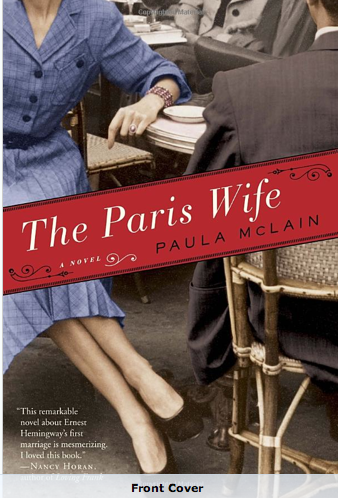
The Paris Wife by Paula McLain
The Paris Wife
Pauline Mclain
“This isn’t going to end well” you tell yourself when you start reading
this book, and you tell yourself not to read any further but you can’t
stop. This is a very good girl who meets a bad boy – what is it about
bad boys, anyway? You know you should go for the serious guy, the one
who will always have a good job, be a good provider for the family, a
good father to your children. You know all this, and you choose the bad
boy anyway. Why?
Hadley Richardson is a good girl at one of those transitional times in
history; world war I had ended, the damaged young men, including Ernest
Hemingway, are back from war, it is the 1920’s and the world is turned
upside down. When they meet, the chemistry is hot and strong. Their
friends warn Hadley against marrying “Hem” but when the attraction is
so hot and high, who can listen?
You know from the beginning that she is just the first wife, so most of
the book is full of dread, waiting to find out just how awful it is all
going to be. The early years, living in Paris, being dirt poor while
Hemingway gets started with his writing, are good years. They meet lots
of interesting expats living in Paris, they drink a lot, they are off
to Spain for the bullfights, and to Austria for the skiing, on the move
a lot, even once the baby comes.
It’s a fascinating book, a snapshot of the roaring 1920’s, of the
transitional era when women started becoming less submissive and more
free, and of a relationship between a nice girl and a talented but
damaged and self-destructive man. You’ll hate having to put it down.
Post review add: I finished this book while in Zambia and wrote the review. I really want to read A Movable Feast, now, Hemingway’s last book before he killed himself, written about this marriage. I understand it is a nostalgic tribute to his first marriage and to Hadley.
We watched Hemingway and Gelhorn last night, and watched him leave Pauline, the false friend who snatched him from Hadley (this is not a spoiler, folks, this is history) for Gelhorn, and then in anger at Gelhorn, turn to the woman who would become his last wife. She is protrayed as a total twit.
The movie, Hemingway and Gelhorn, was only mildly interesting; Kidman was her glorious self but there was zero chemistry, her romance with Hemingway barely believable. And he comes off as a real jerk. The jerk part is consistent with The Paris Wife, but while The Paris Wife is more sympathetic to Hemingway, portraying him as damaged but vulnerable, in Hemingway and Gelhorn, he is just arrogant, egotistic and obnoxious. Still, after you read The Paris Wife, it is interesting to see the rest of the story.
Recent Comments
intlxpatr on Shampoo Ginger tigerbutterya0c5ff1d… on Shampoo Ginger intlxpatr on British Soldier Kidnapped, Esc… John on British Soldier Kidnapped, Esc… intlxpatr on British Soldier Kidnapped, Esc… Wikipedia Donate Button

Amazina


Early Voting in Florida


 Here There and Everywhere