Two Saints of the Church
Here is the prayer given for today in the Lectionary:
PRAYER (traditional language)
Loving God, we offer thanks for the ministries of Edward Thomas Demby and Henry Beard Delany, bishops of thy Church who, though limited by segregation, served faithfully to thy honor and glory. Assist us, we pray, to break through the limitations of our own time, that we may minister in obedience to Jesus Christ; who with thee and the Holy Spirit livest and reignest, one God, now and for ever. Amen.
BISHOPS, 1928, 1957
Delany, Henry Beard [Feb. 5, 1858-April 14, 1928] was the second African American bishop in the Episcopal Church, being elected Suffragan Bishop of North Carolina in 1918. He is probably better known as the father of Sadie and Bessy Delany, authors of the popular book, Having Our Say, which chronicled their lives.
Edward Thomas Demby [Feb. 13, 1869-Oct. 14, 1957] was the first African American bishop in the Episcopal Church. He served his first parish in Mason, Tenn. He became “Suffragan Bishop for Colored Work in Arkansas and the Province of the Southwest” in 1918. His career has been covered in a book, Black Bishop.
As we begin to transition from the Lenten season to the great feast of Easter, my heart takes hope from the courage of those who stood in the face of prejudice and exclusion, and focused on doing their jobs and doing them with grace. I think of how hate blinds us. I think of how Catholics and Protestants slaughtered one another, how Mormons were driven West, how Sunnis and Shiites are clashing in Iraq, how Christians and Moslems are battling to the death, and when I am near to losing hope, I try to focus on how earlier conflicts have almost totally disappeared. We are all believers. We believe in the one true God. We squabble like children over his inheritance.
Chew Your Juice

“But we only drink REAL orange juice!” I protested to my friend. “We only buy orange juice squeezed from real oranges, not juice drink, or orange juice from concentrate!”
“Have you read the sugar content on the lable?” she asked quietly.
I grabbed the carton and started reading. Oh. Holy cow. 22 grams of sugar in one serving.
“There is nothing wrong with juice,” my friend added, “but chew your juice.”
” ? ? ? ”
“Eat whole fruit. That way you get all the good stuff, the skin, the vitamins and the fiber as well as the juice. Better for you.”
Sigh. Another habit to break and replace with a newer, better, healthier habit. No more juice.
Hmmm. Now I wonder about my hot-weather addiction, McDonald’s wild berry smoothies. I don’t think I want to know how many grams of sugar per serving . . . .
The YaYas
I see them everywhere. Small groups of women, usually three or four, sitting in church together, heads together over lunch, power walking down the boulevard, at coffee after their tennis matches. You can see the intimacy, the trust – these are women who have grown together over time. They share their secrets. They prop each other up in the bad times. They laugh over their faux-pas.
No, I don’t envy them, nor do I want to become a part of their group. I know my own YaYas will build, and I will have women I love sharing my life here. Meanwhile, I miss my old YaYa’s.
I’ve been here a year now. The one year point, for me, is usually when things start happening. The real friends come along. I start committing and getting involved in my new community. When I think of all the details we have overcome in one year, all the anxieties I had, all the details over which I agonized, I thank God for his mercy and for the peace of mind we have now. Truly, he answered every prayer, and brought us to a good and spacious place.
Lunch in Paris (A Love Story With Recipes) by Elizabeth Bond
I just finished this book, and I need to review it so that I can pass it along to my daughter-in-law, who sees France, as I do, through eyes of love. Americans either love France or hate it, for some reason France evokes strong emotions one way or the other.

This author is a New Yorker, and her experiences are not my experiences, because her culture is not my culture. New York is a culture all its own. On the other hand, her experiences as an expat are universal, and her insecurity with the language, the culture and the customs are magnified by her commitment to marrying a French man and living in France for the rest of her life.
For the record, I really loved this book.
Can you read a recipe and have a pretty good idea what it is going to look like and how it will taste? In my family, we read cook books for fun. The recipes Elizabeth Bond has included are great recipes, a great start on French cooking the simple and fresh way. Even someone who has never cooked French food can make most of the dishes she creates in this book. In my very favorite chapter, A New Year’s Feast, there are several recipes for North African dishes I have eaten and loved – and oh, I am eager to try these! Chicken Tajine with Two Kinds of Lemon! Tajine with Meatballs and Spiced Apricots! Oh, YUMMMM!
In one part of the book, the author talks about some very basic differences between how Americans approach life and how the French view life:
I watched the couples walking around the lake. “Maybe it’s the New Yorker in me. I’m too used to rushing around. But everyone here is so relaxed, it’s like they’re moving in slow motion.”
“Why should they rush? They’re not going to get anywhere.”
Sometimes I really have no idea what he is taling about.
“You will never understand. You come from a place where everything is possible.” We lay side by side on the grass, our eyes half closed.
“It’s Henry Miller that said, ‘In America, every man is potentially a president. Here, every man is potentially a zero.’ ”
And then he told me a story.
“When I was sixteen it was time to decide what kind of studies I would pursue. I was the best in the class in Math and Physics, but also the best in Literature. I went to the school library and the woman behind the desk gave me a book. It was called All the Jobs in the World. I looked through it. I found two things I liked: scientific researcher and film director. I brought the book to the front and showed her my choices. ‘Ah non,’ she said, ‘You forgot to look at the key.’ And she pointed to the top of the page. Next to each job were the dollar signs – three dollar signs if the job paid a lot of money, one dollar sign if it paid very little. Next to the dollar sign was a door. If the door was wide open it was very easy to tet this job, if the door was open just a little bit, it was very hard. ‘Regard,‘ she said, ‘You have picked only jobs with no dollar signs and a closed door. Tu n’y arriveras jamais. You will never get there.”
‘You should become an engineer,’ she said. My parents never met anyone who did these other things. We don’t come from that world. They had no friends they could call to get me a job. They were afraid I would fail and they couldn’t help me. They were afraid I would have no place in the society. And I didn’t have the force to do it myself. I didn’t want to disappoint them. So I became an engineer.”
“It’s just like that here. If you want to do something different, if you head sticks up just a little, they cut it off. It’s been like that since the Revolution. You know the saying, Liberte,’ Egalite,’ Fraternite,’ equality is right in the middle. Everyone has got to be the same.
Of all the stories Gwendal has told me, before or since, this one shocked me the most. Never in my life, not once, had anyone ever told me there was something I couldn’t do, couldn’t be.
Have you ever known an expat wife (a woman who has married a man of another culture and lived in his country)? Expat wives are some of the bravest women I have ever met. No matter how long you have been married to a man of another culture, you can still be surprised.
The expat wives I have known have been smart, gifted people, woman who have been blessed to see the world through the eyes of more than one culture, and it changes everything. Their children are amazing – most will speak – and think – in more than one language. They have a sort of international fluidity, as well as intercultural fluency. It isn’t everyone’s choice, but those who chose it often live lives you and I can only begin to imagine. Elizabeth Bond has opened the door a little, and shared some of those experiences with us.
The book I bought has Reader’s Groups questions in the back, and they are good questions. Read the questions first; it gives you food for thought as you read through her experiences.
Groupon Takes Us on a Dolphin Cruise in Destin
Do you know about Groupons? If you click on the blue type, it will take you to the groupon site for Pensacola, but they have special deals in many cities. You sign up. It’s FREE. You get notices for the cities you sign up for, like I get notices for both Pensacola and Seattle. Every day, Groupon sends you an offer – like for $5 you get $10 worth of food at some restaurant, or for $25 you get $50 worth of entertainment at Waterville (I made that name up) or some discount at a specialty boutique or local spa. I have found them amazingly helpful; many of them are for places we love to go anyway, whether we have a ‘groupon’ or not.
You pay with PayPal or Visa, and then they tell you you can print your groupon. Usually you have to wait a day before you can use it, but that is never a problem for us.
So with houseguests coming, when I saw the Groupon for Dolphin Cruises out of Destin with Olin Marler Charters (a short drive from Pensacola), I bought four Groupons; two adult and two seniors. It was a great discount. Our friends are always ready to do something fun, so we made a day out of it.
Sometimes I am having so much fun I forget to take enough photos, like lunch, but I did get the ice cream break. This was a fabulous dessert, a berry sorbet with whole blueberries, currants, raspberries, etc inside – it was SO good. So GOOD!

We hit the SanDestin Outlet Malls, big mistake, they had hoardes of shoppers and people lining up with numbers to get into some of the most popular shops (shudder!) so we toodled around and got back to the dock in time for the sunset cruise. The boat had a good load, but was not too crowded, and we had perfect, beautiful weather. Here are some photos:


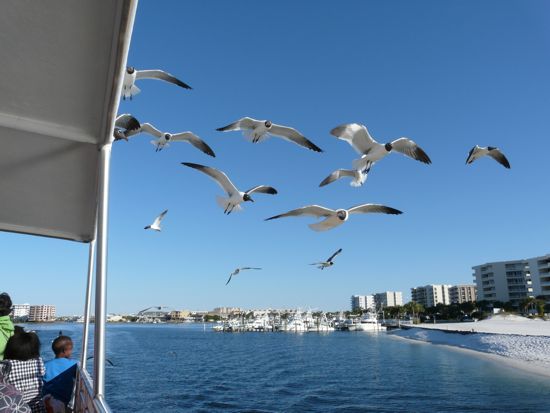



I don’t get cold easily, in fact I am sort of famous for not feeling cold much at all. I always joke and say it’s because I was born in Alaska, and I am an Eskimo, but after three hours out on the Gulf, coming back into port, I got a little cold. Well, actually, I was pretty cold. So cold that when we went to the nearby BBQ place, The Shed, I did not take a single picture. I really was cold! They had really good BBQ and great blues music.
Pensacola Visitors To Fort Pickens
You ask where I have been. We’ve just had two weeks and three weekends of house guests. Now, before you groan, I have to tell you that it was two different visits, with less than 24 hours in between, and both visits were old and dear friends. Our visitors are people we treasure and who are easy easy guests to have around. We’ve had two weeks of great visits and great conversations, and I apologize if you are feeling a little abandoned. I didn’t really abandon you; I checked the blog almost daily, but . . . I had a lot on my hands. I can only do a few things at a time, and do them well. I chose to focus on my guests. I hope you will forgive me. 🙂
So I am going to share with you some beautiful sights from nearby Fort Pickens. When we first went there, about a year ago, we discovered they have a Senior Lifetime Pass for only $20. There was only one Senior in the car at the time – me – so the pass is in my name, and gets us into every national park in the United States, me and up to eight people in the same car with me. How is that for a bargain? We’ve already used it four or five times worth the original payment of $20. What an amazing deal!
Fort Pickens is out along Pensacola Beach, and is a long narrow strip of land barely above sea-level. We could see it with our eyes, and when we measured it with our iPhones, it gave us a range from below sea level to 33 feet above sea level. (iPhones must be nearly out of fashion because all my friends have them and we are OLD! If we have them, there must be something out there newer and faster and better that all the trend-setting youngsters are buying . . . so what is it?)
Oops! I got distracted! What I want to do is share some photos of what a truly gorgeous place Fort Pickens is:
I think these are trilliiums:

Aren’t these pretty berries? I don’t know if they are edible – or poisonous!

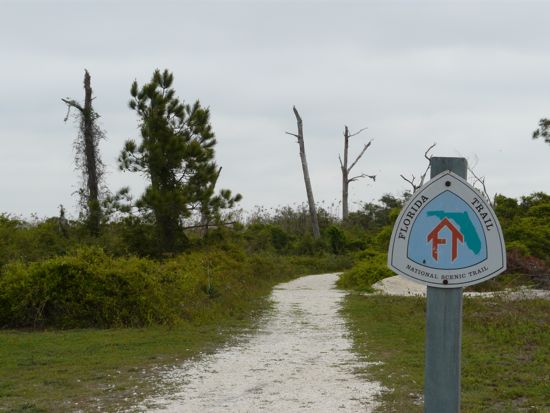
Perfect weather for a walk, and this is the walking trail, .7 miles each direction:
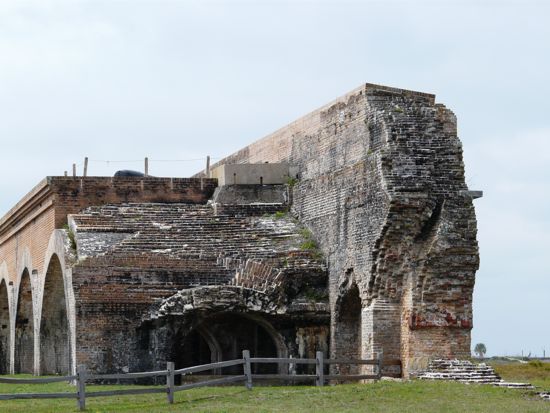
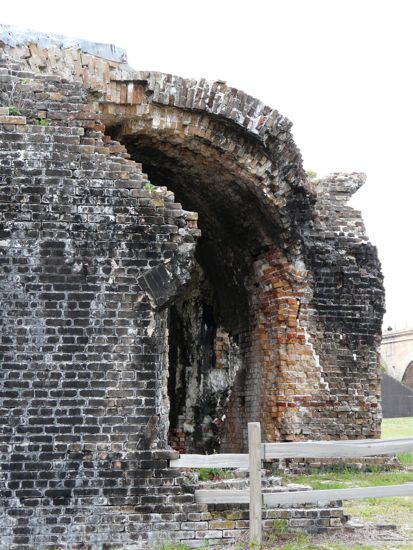
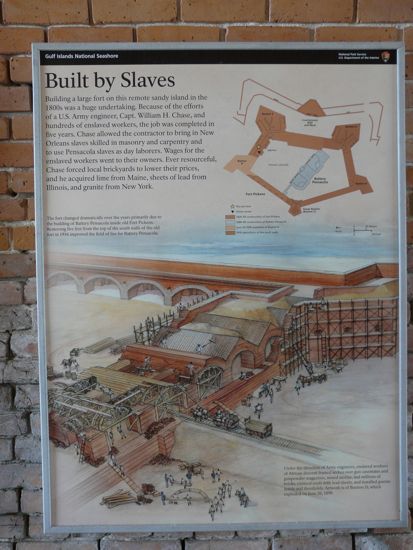
Fort Pickens was constructed to protect the shores from invaders, so this is one of the fortress walls”

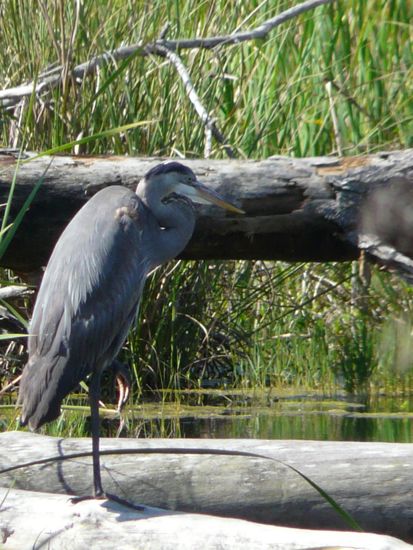
A Heron along the nature trail:
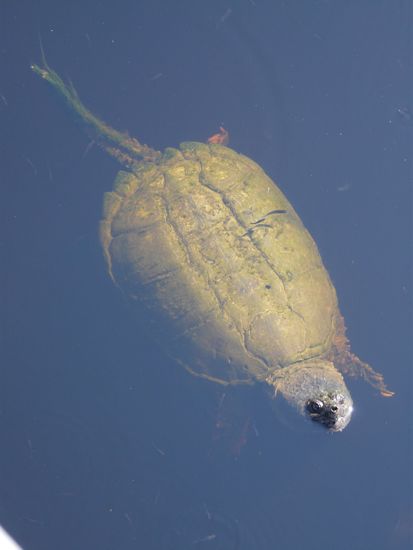
A Turtle (we can’t agree on whether it is a Gopher Turtle or a Snapping Turtle):
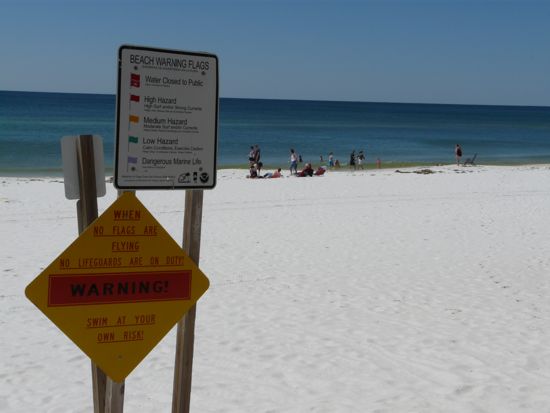
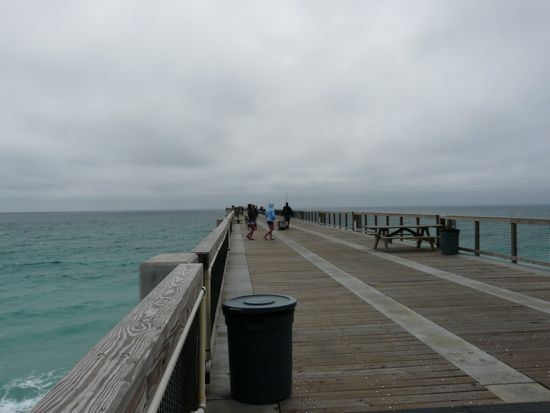
We finished up with a walk along the beach, where our visitors talked with the fishermen along the shore. These are the lines they have out trying to catch some fish, but I really want you to see how clean and beautiful the beach, sand and water are looking 🙂 :

This week, I need to get some things done in the garden, before the weather starts getting too hot!

US Highway Deaths Lowest Since 1949
The major reason? 84% US drivers use seat belts. You can read the entire article at AOL News
WASHINGTON — Highway deaths have plummeted to their lowest levels in more than 60 years, helped by more people wearing seat belts, better safety equipment in cars and efforts to curb drunken driving.
The Transportation Department estimated Friday that 32,788 people were killed on U.S. roads in 2010, a decrease of about 3 percent from 2009. It’s the fewest number of deaths since 1949 — during the presidency of Harry Truman — when more than 30,000 people were killed.
The Pacific Northwest region, which includes Washington state, Oregon, Idaho, Montana and Alaska, saw fatalities fall 12 percent. Western states including Arizona, California and Hawaii also posted large declines.
Government officials said the number of deaths was still significant but credited efforts on multiple fronts to make roadways safer.
“Too many of our friends and neighbors are killed in preventable roadway tragedies every day,” said Transportation Secretary Ray LaHood. “We will continue doing everything possible to make cars safer, increase seat belt use, put a stop to drunk driving and distracted driving and encourage drivers to put safety first.”
New Warden Message Kuwait
Kuwait City, Kuwait
March 31, 2011
To: All American Wardens
From: Consular Section
Subject: Warden Notice 2011 – 8
Please circulate the following message without additions or omissions
immediately to all U.S. citizens within your area of responsibility.
According to the Kuwait Ministry of the Interior, demonstrations may take place
Friday, April 1 outside the U.S. Embassy. The U.S. Embassy is located in the
Bayan Section of Kuwait City. Traffic patterns in the area may be affected. In
light of this, the embassy recommends that this area be avoided.
Spontaneous and/or planned demonstrations take place in Kuwait from time to time
in response to world events or local developments. At times, even
demonstrations intended to be peaceful can turn confrontational and possibly
escalate into violence. Avoid the areas of demonstrations, if possible, and
exercise caution if within the vicinity of any demonstrations.
For the latest security information, U.S. citizens living and traveling abroad
should regularly monitor the Department of State’s Bureau of Consular Affairs
Internet website, where the current Worldwide Caution, Travel Warnings, Travel
Alerts, as well as the Country Specific Information for Kuwait can be found.
Up-to-date information on security can also be obtained by calling
1-888-407-4747 toll-free in the United States and Canada or, for callers outside
the United States and Canada, a regular toll line at 1-202-501-4444. These
numbers are available from 8:00 a.m. to 8:00 p.m. Eastern Time, Monday through
Friday (except U.S. federal holidays).
If you are a U.S. citizen in need of emergency assistance in Kuwait, you may
reach the U.S. Embassy by calling +965-2259-1001 and requesting the duty
officer.
U.S. citizens living or traveling in Kuwait are encouraged to enroll in the
Department’s Smart Traveler Enrollment Program (STEP) so that they can obtain
updated information on travel and security. U.S. citizens without Internet
access may enroll directly with the nearest U.S. Embassy or Consulate. By
enrolling, U.S. citizens make it easier for the Embassy or Consulate to contact
them in case of emergency. For additional information, please refer to “A Safe
Trip Abroad”.
This message may be accessed on the Embassy website, http://kuwait.usembassy.gov
Please note that the Consular Section is closed for U.S. and most local
holidays. The current holiday schedule for 2011 is posted on
http://kuwait.usembassy.gov/holidays.html.




Recent Comments
intlxpatr on Shampoo Ginger tigerbutterya0c5ff1d… on Shampoo Ginger intlxpatr on British Soldier Kidnapped, Esc… John on British Soldier Kidnapped, Esc… intlxpatr on British Soldier Kidnapped, Esc… Wikipedia Donate Button

Amazina


Early Voting in Florida


 Here There and Everywhere