A Strange Bird
I have multiple bird-feeders in my backyard, which give me delight, except for the squirrels. One day last week, I had NINE squirrels in my backyard, feeding from my squirrel-proof feeders. One climbs on and slips the cage, then turns it so it spills on the ground for the others. Well, squirrels have to eat, too, but I would love to have one or two feeders strictly for the birds.
One night last week, I had a huge racoon, turning over my flower pots, looking for roots and bulbs. Huge! The area where I live is so suburban, my heart broke, I wonder where he has any habitat to call his own?
And then this guy . . . I don’t know who or what he is. He is the only one of his kind ever to show up, and it was only once. I am guessing maybe he is migratory. He might be a duck.

Shoreline Foods in Pensacola
“Oh, it’s on Main Street!” our friend told us, “Or it used to be Main Street, but now part of it is Bayfront, or some such, but we all know it is Main Street.”
My resourceful daughter-in-law is always full of the best hints. She told us about a place she thought I would love, called Shoreline Foods, a grocery store, but the old fashioned kind, and Greek.
I’ve been trying to find it ever since, but as it turns out, I was looking in the wrong direction. I finally asked my friend who knows EVERYTHING; Shoreline Foods IS on Main, at Main and “E” St. very near to Joe Patti’s, just as she said.
From the outside, you would never know how special it is, it just looks like another strip mall kind of store, but lots of parking, always a good thing 🙂

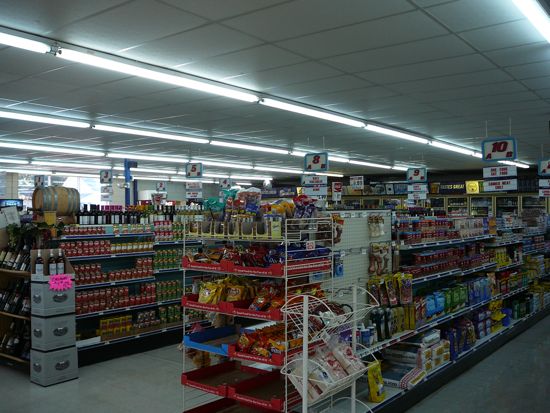
They do carry groceries, and an entire aisle with spices you can’t find most other places, or not all in one place:
And they have a deli! With wonderful sandwiches!
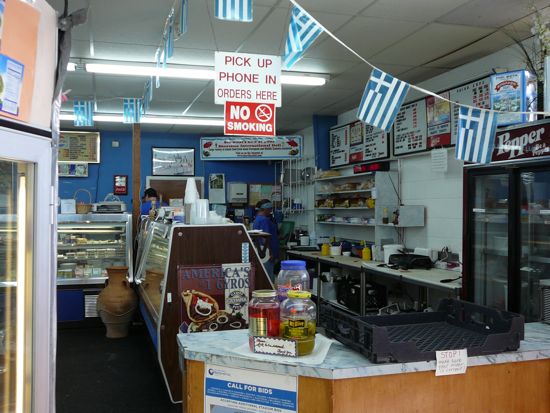
Tantalizing desserts!

Kanafi is a Middle Eastern pastry, so hard it is to find, and here it is in Pensacola!

And for me, the very best part is this:
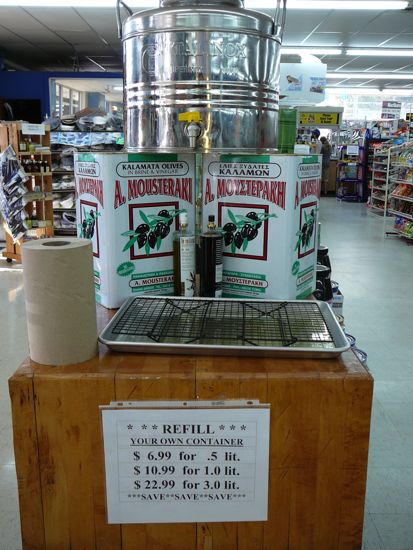
Here I am going to rant for just a little minute. Shopping for olive oil in the USA is the total pits. Even the “best” olive oils, when you read their labels, say that the oil comes from “Spain, Argentina and Tunisia” or some such. Blends. It gives you no guarantee that one month the oil is the same as the next month, or the quality of the oils they are using.
I challenge you! Go to your grocery store and look for an olive oil that tells you it is from one country! Even the specialty shops; few of them have single point of origin olive oils! But at Shoreline Foods, they import an olive oil from Crete (Greece) which is green and fruity and tasty! You can buy it by the litre, or half litre, or the gallon. 🙂 Even better, you can bring your own container and fill it in the shop.
When I lived in Tunisia, I used to do that. Go to the olive oil man (first make sure he has had a delivery; like an oil truck pulls up and fills his barrel) and then grab your container and go stand in line with all the maids until he will fill your container. At Shoreline Foods, there was no line, but lovely lovely olive oil from Crete! I am in heaven!
Room by Emma Donoghue
Hardly ever do I order a book in hardcover; they weigh too much, I do a lot of reading when flying, I prefer paperbacks so I can pass them on when I am finished (and no, I do not yet have a Kindle, because I like to pass my books along.) I made an exception for Room when I heard a review on National Public Radio. It sounded so different, and I wondered how it could be written without it being so horrible I couldn’t read it.
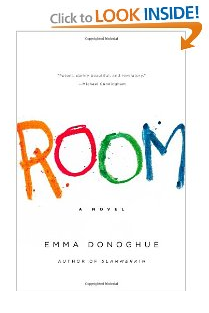
The story is told from the point of view of a five year old boy who lives in Room, an 11 x 11 foot space. He was born there, he has never been out of there.
As you read, you gain such huge admiration for the human spirit. Jake’s mother was abducted off the streets and kept in this room, which is totally soundproofed, surrounded by a chain metal cage, and can be entered and exited only by a door with a code entry lock. She raises Jake as best she can, keeping him hidden from her abductor. She teaches him reading and math, she tries to raise him eating nutritious foods, they have hygiene rules and daily physical education. Every now and then, she has a day when she is “gone”, when Jake wakes up and his mother won’t ‘switch on’ and just stays in her bed, sleeping all day. On those days, he feeds himself and plays quietly, knowing that his Mom will be back ‘on’ the next day – or so. He doesn’t understand his Mother’s despair, and she shelters him from it as best she can.
And then comes the time when she realizes that life is only going to get more and more difficult as Jake gets older. She makes a plan, a plan that relies on Jake, a desperate plan.
The book is fascinating. I have already passed it along; once I read it, I wanted to share it. In many ways, it is a cross-cultural book, because the culture Jake spends his first five years in is so insular, so enclosed. Emma Donoghue did a great job describing his world from his point of view, and dealing with the aftermath. I can’t tell you much more without spoiling the book for you in a major way. 🙂
There is a Reader’s Guide section at the back, and this book would be an excellent selection for a book club.
Full Moon over Edmonds
Jet-lagging in a very small way – when I fly to Edmonds, it is a half day trip, not a day-and-a-half day trip, but I am still mildly jet lagged the first couple days. Sometimes it can be a good thing. When I was up at an inhuman hour this morning making coffee, I was able to watch the full moon over the Puget Sound off Edmonds Beach. Silvery, and lovely:

Germy Mistakes I Never Thought Of . . .
This caught my attention on AOL Health News this morning. Ewwwww!
5 Germy Mistakes You’re Making Everyday
By Glamour Jan 11th 2011 2:45PM
You wash your hands frequently, do your best to avoid coughing strangers, and generally consider yourself to be a germ-avoiding pro. Still you may be surprised at five little things you’re doing that may be leaving you susceptible to harmful bacteria and viruses.
1. Fruit peels: You buy lots of fruit to eat — bonus points! But, when it comes to fruit you peel (think: bananas, oranges), do you ever wash them first? If you grab that banana, peel it, then handle the fruit as you eat it, you’re potentially putting harmful bacteria right in your mouth. Think of all the people who handled that banana: the banana farmer in another part of the world, the guy at the grocery store who stocked the bunch, 19 customers who picked over it to get to the greener bunch they wanted, the checker at the market, the bagger — and then you!
2. The handles/railings in your house: Did your roommate have a cold this week? Sure, you kept your distance and washed your hands frequently, but did you think to wipe down the stair rails and doorknobs? Using a little hot soapy water or a light bleach solution (like Clorox Anywhere Spray) on frequently touched surfaces can keep you extra protected.
3. Your shoes: Do you keep your shoes on in your house? Yes, this is a controversial issue — those who like to keep their shoes on, thankyouverymuch, may take offense to rhetoric about removing shoes at the door. But, there has been a mounting amount of research in the past years indicating that what we track in on the bottom of our souls could be making us sick — from chemicals lingering on sidewalks and roads to the microbes you picked up in the public restroom. In fact, some health experts consider taking shoes off in your home as a way that anyone can improve their health. Even the super-doc Dr. Mehmet Oz suggested this year that it was on his top-5 list of things he’d recommend people do. So take those shoes off, darlings!
4. Touching your face: We all do it — a scratch here, a nose rub there. But every time we’re touching our face (especially our nose, mouth and eyes), we’re giving germs a free ride into our bods. Even if you can be a teensy bit more aware of when you touch your face throughout the day, you can reduce your germ exposure. No, don’t be compulsive about it, but if you avoid rubbing your eyes now and then, you’re doing your body a good service.
5. The water glass in the bathroom: When’s the last time you sent it for a run in the dishwasher? How about now? Frequently used items like glasses — especially when shared or left out on a countertop where droplets can accumulate from various sources — can be a breeding ground for germs. Wash those glasses frequently, and don’t share them!
Hard Freeze in Pensacola
At least the sun is shining . . .
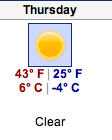
It was actually only 23 degrees when I got up this morning . . . brrrrrrrr!
. . . And He Doesn’t Even Know My Name . . .
Barrister Peter Williams wants to send me all this money . . . and he doesn’t even know my name???
ATTENTION BENEFICIARY,
WE THE MONEY GRAM URGENT REMMITTING OFFICE HAVE SENT YOUR FULL COMPENSATION PAYMENT OF 900.000.00 USD TO YOU THROUGH MONEY GRAM YOU WILL BE RECEIVING 10.000.00 USD PER DAY. NOW WE HAVE SEND THE FIRST PAYMENT TO YOU. SO CONTACT OUR DIRECTOR Dr.Robert Nnamdi AND ASK HIM TO GIVE YOU THE MONEY GRAM PAYMENT INFORMATION SO THAT YOU CAN BE ABLE TO PICK UP YOUR FUNDS THROUGH MONEY GRAM WITHOUT ANY PROBLEM.
HERE IS THE CONTACT INFORMATION OF MONEY GRAM
DIRECTOR GENERAL…Dr.Robert Nnamdi
EMAIL ADRESS … (money.gram2@globomail.com)
PHONE NUMBER +229-989-178-09
THEN CONTACT HIM WITH YOUR FULL INFORMATION.
YOURE NAME: _____________________
YOURE COUNTRY: ______________________
YOURE PHONE NUMBER: ____________________
YOURE ADDRESS: _____________________________
YOURE CITY: _____________________________________
YOURE AGE: _________________________________________
YOURE SEX: ______________________________________________
CALL OR EMAIL HIM NOW SO THAT HE CAN PROVIDE THE MONEY GRAM INFORMATION TO YOU AS URGENT AS YOU CAN.
THANKS AND GOD
Barr. Peter Williams
House Rules by Jodi Picoult
I got it all done – two days before Christmas. Wooo HOOOO, I get the reward, a new book! One I had been eager to read, House Rules by Jodi Picoult. (You can read reviews of other Picoult books by doing a blog search, enter Jodi Picoult in my blog’s search window.)
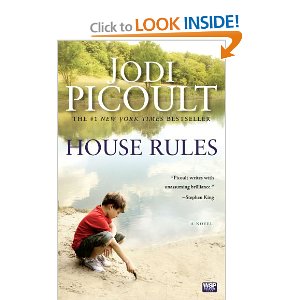
What I really like about Jodi Picoult is that she writes about really tough situations and exposes our ignorance and ambivalence to us. In this book, she writes about a single mother who is raising two sons, one of whom has Asperger’s Syndrome. He is extremely bright, but lives in a world where he is bombarded by too much sensation. He cannot block out sensory input that we learn to ignore, and some of it – noise, colors – in his case, the color orange – or any change in routine can cause him to spin out of control. Imagine a two year old having a tantrum in a grocery store . . . now imagine an eighteen year old young man having the same tantrum. It helps you see what the Mom is dealing with.
Dad left when the second son was born. “It’s too hard,” he said, and left her to cope with all of it.
She gets child support, while her husband is raising his new family a continent away. She free lances as an advice columnist, and edits from her home to supplement the bare bones family existence. She learns to cope with Jacob’s needs, and she advocates for him fiercely, to be mainstreamed in the school system AND to have some special supports to soothe him when he becomes over-stimulated.
Jacob isn’t a burden, although his need for routine – certain colors for different days of the week, including meals – can be burdensome. Jacob is also very very bright, and obsessed with crime scene forensics. He loves setting up “crime scenes” for his mom to solve and the one bright spot in his daily life is the Crime Busters show which comes on every day at 4:30.
And then, suddenly, a life which is already wobbling turns upside down. Jacob is implicated in the murder of his tutor, a young woman Jacob loved working with, who helped him develop an understanding of how people interact and behave. Those who know Jacob understand his quirks and eccentricities are due to his wiring, but Jacob looks very odd, very threatening and even violent to the outside observer – a nightmare client as a defendant.
It is a GREAT read. Picoult keeps her secrets up to the very end; the book is tightly wired and we are given clues all along the way. The edition I read had both a reader’s guide and an interview with the author at the end. It is NOT cheating to read those first! It gives you good guidance on what the author is trying to say, and what may be significant, while not appearing particularly so.
It gave me a great appreciation for parent’s of children outside the realm of ‘normal.’ It gave me an appreciation for the work and persistence and dedication it takes to try to get a more level playing field for their children.
It the book Jacob has some self-awareness, and compares Asperger’s Syndrome to seasonings, and he believes we all have a dose of Asperger’s Syndrome in our wiring, but that some children get a little extra.
‘Lost Boy’ Casts Vote for Independence
I found this today on NPR News and it delights me for a number of reasons. For one thing, I didn’t know David Eggars (you remember him from Zeitoun) had helped with the writing of ‘What Is The What?’. Second, who knew that any of these kids would survive? Survive, write a book, thrive, go back to the Sudan, give to the country – and vote. Every now and then in this sad world you hear a good story. This is one.
January 10, 2011
During Sudan’s civil war, in which some 2 million people died, Valentino Achak Deng fled to Ethiopia on foot. Separated from his family for 17 years, Deng is one of Sudan’s so-called Lost Boys, children who were orphaned or separated from their families during the brutal war.
Now, voting is under way in Southern Sudan in a referendum that is expected to split Africa’s largest country. Among those voting this week are the Lost Boys, including Deng, whose life became a best-selling novel in America and who has returned to his homeland to build a school.
After a peace agreement between north and south, Deng returned to Juba, the capital of Southern Sudan, in 2006. He says when he got there, the place was still a wreck.
“On some of these roads, you could see old war tanks. On some of these roads, in some neighborhoods you could see the bones and skulls of dead people,” he recalls now, driving around Juba.
Now, as Southern Sudan appears headed for independence, Deng is optimistic — and Juba looks a lot better. Paved roads, now lined with hotels and restaurants, arrived for the first time in 2007.
Juba is a booming city, one of incredible contrast: Barefoot women selling piles of gravel by the side of the road sit next to a Toyota dealership.
Peace is spurring investment and consumer demand. Juba’s growth is driven by Southern Sudan’s oil revenue as well aid from foreign governments and nongovernmental organizations.
Deng grew up in a tiny village called Marial Bai. In the 1980s, northern bombers and Arab militias came.
“They bombed Marial Bai, destroyed it, killed everything, burned crops and livestock,” he says.
Deng was there when the fighting came. He says he “ran away with the rest.” He was 9 years old.
Deng joined thousands of Lost Boys, who spent months trekking across Sudan to refugee camps in Ethiopia. His experience is captured in What Is the What, a novel by Dave Eggers, which reads like a modern-day story of Job.
The boys, some naked, march across an unforgiving landscape, facing Arab horsemen, bombing raids, lions and crocodiles.
Deng eventually resettled in the U.S., where he attended college and was mentored and sponsored by ordinary Americans.
In 2007, he returned to start a high school in Marial Bai, where there was none.
“We have 250 students. Our annual budget now stands at about $200,000 because the school is free,” he says.
The school is funded by Deng’s private foundation. He says most donations come from Americans touched by his story and the plight of Southern Sudan.
Deng, now 32, has just cast his vote for independence. He says that for a Sudanese child of war, his life’s journey is almost inconceivable.
“I never imagined I would be the person I am right now,” he says.
Somalia’s al-Shabab bans mixed-sex handshakes
From BBC News
Somalia’s al-Shabab bans mixed-sex handshakes
SOMALIA – FAILED STATE
Men and women have been banned from shaking hands in a district of Somalia controlled by the Islamist group al-Shabab.
Under the ban imposed in the southern town of Jowhar, men and women who are not related are also barred from walking together or chatting in public.
It is the first time such social restrictions have been introduced.
The al-Shabab administration said those who disobeyed the new rules would be punished according to Sharia law.
The BBC’s Mohamed Moalimuu in Mogadishu says the penalty would probably be a public flogging.
The militant group has already banned music in areas that it controls, which include most of central and southern Somalia.
Somalia has not had a stable government since 1991.
The UN-backed government only controls parts of Mogadishu and a few other areas.
Recent Comments
ExpatAlien on What Country am I Living … intlxpatr on Yellowstone: Old Faithful to C… Michelle on Yellowstone: Old Faithful to C… Cathy on No Grown-Ups in Charge intlxpatr on Waiting for Snow Wikipedia Donate Button

Amazina


Early Voting in Florida


 Here There and Everywhere