WOOO HOOO! Hope in a Bottle That Works!
Fresh from The New York Times: An Article on Wrinkle Removers, Backed by Science. You can read the entire article by clicking on the blue type.
By NICHOLAS BAKALAR
Published: August 18, 2008
Nostrums that promise to smooth wrinkled skin are a staple of snake-oil salesmen everywhere, but now there is strong evidence that certain kinds of treatment are effective. Over the past decade, researchers have been learning which treatments work, and why.
The key is a growing understanding of the skin’s connective tissue, called the dermal collagen, and a recognition that damage to the mechanical properties of the collagen outside the skin cells, and not necessarily genetic damage to the cells themselves, causes wrinkled skin.
A recent review in The Archives of Dermatology concludes that three anti-aging treatments are proven clinically effective: the topical application of retinol; carbon dioxide laser resurfacing; and injection of hyaluronic acid, a moisture-retaining acid that occurs naturally in the skin. Each depends on the same mechanism, the interaction of skin cells called fibroblasts with the collagen they produce.
“This is an area where there’s a lot of hype and not much substance,” said David J. Leffell, a professor of dermatology and surgery at Yale who was not involved in the review. But, he said, this study is “good science.”
Theory and experiment back these treatments, the authors write. Fibroblasts — connective tissue cells — secrete a complex group of polysaccharides and proteins that creates collagen, which gives the skin shape and elasticity and supports the blood vessels that permeate it. The network of collagen tissue is maintained by its mechanical tension with these skin cells.
Skin deteriorates as it ages, but its exposure to sunlight inhibits the ability of fibroblasts to produce collagen. The hands, face, neck and upper chest all suffer more than unexposed skin, and light-pigmented people wrinkle more readily than others. This damage, the authors write, is essentially an accelerated version of chronological aging. Ultraviolet radiation induces production of the same enzymes that degrade collagen with age.
Collagen fibers last as long as 30 years. But with age and ultraviolet exposure, they deteriorate and fragment, and fragmented collagen impairs the collagen-producing function of the fibroblasts that created it. As the fragmented collagen accumulates, new collagen production declines, the connections between the fibroblasts and the collagen weaken, and the skin, now lacking support, begins to wrinkle.
But there are treatments that counter this process. Topical application of retinol, a form of vitamin A, was the first to be proved useful. Although the molecular pathways are not well understood, retinol causes new collagen to form in chronologically aged skin and in skin damaged by ultraviolet light.
Spotting Infections in Your Elderly Parents
I am printing this entire article because few of you will be reading the Military Officers Association of America newsletter, and this is one of the best articles I have seen on the subject. It is SO easy to dismiss a parent’s complaints as just being a normal part of aging – and it is important to catch these things early.
Role Reversal — How to Spot Infections
2008/08/22 00:00:00
By Nanette Lavoie-Vaughan
The next time your parent complains of feeling “out of sorts” or gives you a vague list of minor problems, don’t dismiss it as normal grumpiness. There’s a good chance your parent could have an infection.
Diagnosing the elderly with an infection can be difficult. Seniors are less likely to have classic symptoms such as fever, chills, and vomiting. Instead they might have atypical symptoms such as subnormal temperature, confusion, fatigue, and decreased appetite. In many cases, these subtle signs can be attributed to the normal aging process — or ignored until the late stages of the infection.
Let’s take a brief look at how the infection process works. When the human body is under stress or exposed to bacteria and viruses, it triggers a healing chain of events that, in most cases, results in the prevention of infection or illness. However, when the amount of bacteria is too great an infection occurs. At that point, the immune system kicks in doubly hard, releasing a flood of chemicals to attack the infection and promote recovery.
Seniors are more susceptible to infection because multiple chronic illnesses that occur with age put extra stress on the body, and the medications for these conditions can block the immune system. In addition, the immune system naturally weakens as we grow older.
The most common sites for infections in older adults are the urinary tract, the respiratory tract, and the skin. It also is common for seniors to develop an infection prior to an acute deterioration of their chronic medical condition or in combination with other acute medical problems. A typical example is the person with congestive heart failure who develops pneumonia. The symptoms of cough, congestion, and shortness of breath are similar and might occur simultaneously, or the onset of pneumonia might precipitate an acute attack of congestive heart failure.
So how do you know if your parent is developing an infection? Look for:
an acute change in his or her ability to perform day to day activities;
subnormal temperature;
increased pulse rate;
unexplained dehydration;
confusion;
poor appetite; and
fatigue with increased aches and pains.
For specific infections you might want to look for the following signs:
Respiratory infections
Cough
Increased mucus
Abdominal pain
Headache
Chest pain
Generalized weakness
Loss of appetite
Urinary infection
New onset of incontinence
Pain with urination
More frequent urination
Flank pain
Weakness
Blood in the urine
Skin infection
Redness
Warmth
Pain or tenderness
If you note any of these symptoms, due diligence requires a complete medical evaluation to determine the source of the infection and any other acute medical problems.
Why is this so important? The risk of sepsis, an overwhelming infection that enters the bloodstream, is higher in the elderly. The longer these types of symptoms go untreated, the more likely the bacteria will find its way into the bloodstream.
Another concern is the prevalence of antibiotic-resistant infections. The overuse of antibiotics for viral illnesses and the common cold have caused bacteria to mutate and become resistant to antibiotics that once treated most infections. The three super infections that pose a threat are Methicillin-resistant Staphylococcus aureus (MRSA), Clostridium difficile (C diff), and Vancomycin-resistant enterocolitis (VRE).
MRSA is diagnosed by obtaining a culture of the body fluid (sputum, urine, blood) where the infection is present. MRSA infections can occur anywhere in the body, and even though treatment with Vancomycin appears successful, a small amount of the bacteria can remain — a phenomenon medical professionals refer to as colonization. The remaining bacteria can cause infections to reoccur at any time.
C diff and VRE both cause diarrhea and are the result of antibiotics killing the normal, beneficial bacteria that reside in the intestinal tract and allowing infection-producing bacteria to proliferate. C diff can occur after the prolonged use of any antibiotic; VRE is specific to the use of Vancomycin. Treatment includes preventing dehydration associated with diarrhea, a bland diet, and bulking agents to decrease the amount of diarrhea, and administration of Flagyl to treat the condition and allow the normal bacteria to return to appropriate levels.
The good news is that most infections are isolated and can be treated with short-term antibiotics. Basic preventative measures — such as assuring that your parents have a pneumonia vaccination, receive the flu vaccine yearly, avoid others with acute infections, and stay well-hydrated — can decrease the likelihood of serious infections.
In addition, keeping the skin well moisturized can prevent skin infections. Dry skin is more likely to crack and tear, providing an opening for bacteria to enter. Urinary tract infections are prevented by good hygiene and adequate fluid intake.
Infection in the elderly is a serious concern, but a few simple measures and a diligent eye are all it takes to keep your parents healthy.
(For more information about infections in the elderly, super infections, and vaccinations go to http://www.health.nih.gov/topics. )
Nanette Lavoie-Vaughan is an adult nurse practitioner and professional consultant. She is a featured speaker at national professional conferences and writes about geriatrics for multiple publications. If you’d like to send Nanette a comment, question, or suggestion for a future column, please e-mail rolereversal@moaa.org.
Streets of Gold
Because it is a time to be considering holy things, and because I was sent this in the mail this morning, and because we have been talking about the prophet Job/Ayoub, I will share this morning devotion with you:
Job 22:24-25. Assign your nuggets to the dust, your gold of Ophir to the rocks in the ravines, then the Almighty will be your gold, the choicest silver for you.
A story tells about a rich man who pleaded with God to let him bring into eternity one suitcase full of his most valuable possessions. God finally conceded, and the man packed as much gold as he could into his biggest suitcase. When he arrived at heaven’s gates he was met by St. Peter, who opened the suitcase, curious to see what the man valued most.
“What!” St. Peter was incredulous; “You brought pavement?”
(For my Moslem readers: I don’t know why, it doesn’t say this anywhere in the Bible, except that Peter is given the responsibility for the building of the church and is often shown holding keys – like in the keys to the kingdom. Peter is often pictured in cartoons as the keeper of the gate into Paradise; he is portrayed as an old, bearded man with a long list in front of him, like who is naughty and who is allowed in. I know it might seem strange to you, but this is not considered offensive; it is an affectionate portrayal.)
Namibia, A Bleak Kind of Beauty
This is an excerpt from the New York Times Travel Section on Namibia, a country AdventureMan and I visited a few years ago.
We landed in Windhoek, and our first night, we ate dinner at Joe’s Beerhouse, a little disorienting, as we had flown in from Germany, and found ourselves in a very German restaurant. The Germans colonized Namibia for a very few years over 100 years ago, but their influence lingers on in names, on streets, statues and cuisine.
Our trip through Namibia was unforgettable. It was unlike any other African country we have ever visited. It has a very long coastline with cold Atlantic currents called The Skeleton Coast. It has the world’s highest sand dunes, unbelievably beautiful. When I think of Namibia, I think of dryness – it is the thirstiest country I have ever seen, outside Kuwait.

Much of our time in Namibia, in Etosha and in Demaraland, we were camping, with CCAfrica (Conservation Corps Africa), but at the end, we stayed in one of the most spectacular private lodges in the world: Sossusvlei Mountain Lodge. It was a total WOW. We rode ATV’s to the top of the dunes for sunset. They had an astronomical observatory, because at night there is NO ambient light and you can see the sky so clearly. The food was fabulous and creative.
Namibia, a country of stark beauty and riveting contradictions, should be at the top of any serious traveler’s want-to-visit list.
The landscape is otherworldly, from the ocean of blood red crests along Dune Alley at Sossusvlei (pronounced SOSS-oo-vlay) to the gravity-defying rock formations and petrified forest of Damaraland, in the country’s center. Even beside the main highway, there are enough elephants, giraffes and springbok to satisfy those who can’t imagine a southern African trip without big game.
And the mind-boggling juxtaposition of women draped in skins that covered animals a week earlier against shopping malls offering a full selection of Ray-Bans, or of face powder ground in a mortar and pestle cheek by jowl with shiny Hummers, leads you into the heart of a modern Africa tangled by time, defined by the collision of centuries and traditions.
Namibia isn’t easy, especially for travelers whose notion of a vacation is dashing from one sight to another, or for urbanites who need regular fixes of bright lights and noisy streets. Except for those with pockets deep enough to arrange chartered flights between the dunes and the Damara homesteads, it demands patience with corrugated gravel roads and mile after mile of what poets are fond of calling terrible beauty.
You can read the entire article HERE.
What a Difference a “D” Makes
AdventureMan called me, laughing, and said “I just have to tell you what just happened to me.”
He was talking with a Kuwaiti woman who said “You speak Arabic amazingly well, except for one little thing – you say the ‘d’ when you should be saying the ‘Dh’.”
It was all he could do not to laugh. Not because of what she had said, but because it reminded him of a conversation we had, repeatedly.
When AdventureMan took Arabic, I took French. We were on our way to Tunis, I had a small baby, and I already spoke a little French. I made arrangements to study half days, and hoped it would be enough. Thanks be to God, together, we did just fine. In Tunis, most Tunisians spoke French and even those who spoke Arabic switched to French for the numbers. (Things are different now; this was many years ago.) The Tunisians called him “That Lebanese guy married to the French woman.” (He is not Lebanese. I am not French. Most Tunisians spoke a Berber dialect, which was not quite the same as Arabic.)
When I finally started formal Arabic classes, years later, I would say things I had learned from my husband and my dear Qatteri teacher would say “No, that is how those Lebanese people say it, not the way we say it.”
When my husband would correct my Arabic, now I could just cooly look at him and say “That is how you Lebanese say it, but we Qatteris say it this way.”
When he would lecture me on Arabic (I can only absorb about one minute of lecture at a time and them my head starts swimming) I would respond with ” ‘Dh’ AdventureMan, ‘Dh’ ” implying that his “Dh” wasn’t hard enough. It would make him laugh every time, totally crack him up. He can’t lecture me when he is laughing.
So here he is on the phone, laughing and laughing, because the Kuwaiti woman told him his Arabic was fine except that his “dh” wasn’t hard enough. God bless you, dear, whoever you are. 🙂
Home Prices Drop, Sales Rise in Seattle
The Seattle Real Estate market has been fairly bullet-proof, until lately, when following the trend across the United States, prices here have also dropped, reports this morning’s Seattle Times. (If you have ever dreamed of having a home in Seattle, even after all my rain photos, now is the time!)
By ALEX VEIGA
The Associated Press
A real-estate-agents trade group says sales of existing homes rose 3.1 percent in July as buyers snapped up deeply discounted properties.
Stephanie Kuhn — who moved in March from the Seattle area to Orlando, Fla., because of a family emergency — has yet to find a buyer for her Mountlake Terrace condo.
The two-bedroom, 1,100-square-foot condo has been on the market since March but is drawing little interest.
“I can’t buy another house until I sell my house up there,” said Kuhn, 47.
Seattle and Portland, Ore., were among the top 10 metro areas in the nation with the most pronounced drop in home sales last month compared with July 2007, according to The Associated Press-Re/Max Monthly Housing Report, which analyzed all home sales recorded by all local agents.
The AP-Re/Max home-sales report was one of two released Monday. The second was from the National Association of Realtors.
Sales of existing homes in the West edged higher overall in July, as many buyers took advantage of falling prices in foreclosure-ravaged areas in California, Nevada and elsewhere, both reports show.
About 1.1 million pre-owned houses and condominiums were sold last month in the 13-state region, up almost 1 percent from the same month last year, the Realtors group reported. But the median home price plunged more than 22 percent to $273,200, it said.
You can read the rest of the article HERE.
Science, Cows and Serendipity
This is from BBC but I first heard this story on National Public Radio.
Scientists at the University of Duisburg-Essen were studying naked mole rats and discovered that when they build a nest, the sleeping areas are always south. They wondered if humans also had an unconscious magnetic sensitivity and decided to use GoogleEarth to study how campers set up their tents around the world, but found that it was too difficult to see tents, but they could see cows really well. Since they could see cows, they decided to survey the cows and discovered that MOST of the time, cows face either north or south. Who knew?
Cattle shown to align north-south
By Elizabeth Mitchell
Science reporter, BBC News
Have you ever noticed that herds of grazing animals all face the same way?
Images from Google Earth have confirmed that cattle tend to align their bodies in a north-south direction.
Wild deer also display this behaviour – a phenomenon that has apparently gone unnoticed by herdsmen and hunters for thousands of years.
In the Proceedings for the National Academy of Sciences, scientists say the Earth’s magnetic fields may influence the behaviour of these animals.
The Earth can be viewed as a huge magnet, with magnetic north and south situated close to the geographical poles.
Many species – including birds and salmon – are known to use the Earth’s magnetic fields in migration, rather like a natural GPS.
A few studies have shown that some mammals – including bats – also use a “magnetic compass” to help their sense of direction.
Dr Sabine Begall, from the University of Duisburg-Essen, Germany, has mainly studied the magnetic sense of mole rats – African animals that live in underground tunnels.
“We were wondering if larger animals also have this magnetic sense,” she told BBC News.
I don’t know why, but random discoveries like this fascinate me. If you want to read more, you can do so here, at BBC News or here at National Public Radio.
Dont’cha just love these scientists? They figure out things just because they are curious!
Hope in a Bottle
Holy Smokes, I notice I am just about out of my trade-mark Smog eye shadow, totally unavailable even in the Sephoras in Kuwait and Qatar, but fortunately available in a nearby Sephora here in Seattle. Sparkle introduced me to Smog, and Maui Wowie, by Urban Decay. If you know me, you know how funny that is. The name is so Goth. I am so not.
As I am perusing what else I might need and not even know it until I see it, a very strange man comes into Sephora with a patter and a handful of red, white and pink balloons.
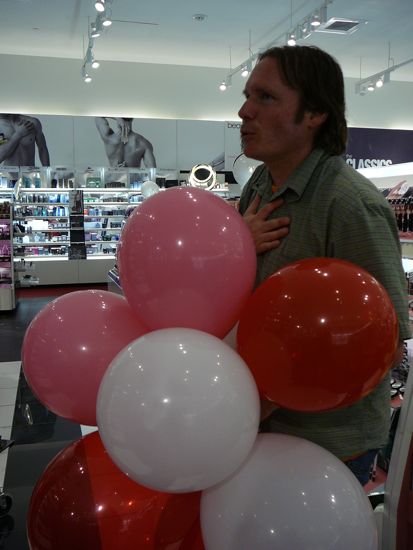
Honestly, I thought he was like a singing telegram, and maybe it was somebody’s birthday, but the gals working in Sephora were sort of brushing him off and his patter was, well, unattractive when not profane. One gal, working on a makeover, was kind but firm, and said good-bye to him and he seemed to take the hint and left. He comes by almost daily, she said.
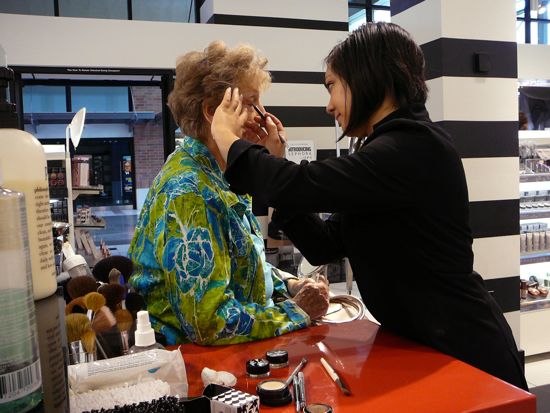
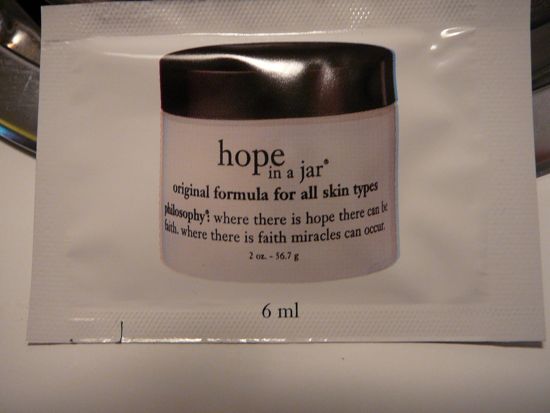
As I was checking out, I asked the Sephora lady if she had any little samples of face cream, so that when I go back to Kuwait I can put them in my little plastic sack and use them so my face won’t get all dry, and she very graciously gave me several. It wasn’t until I got home that I took a good look and started laughing. In my family, we have always called all face creams “Hope in a Bottle.”
Switch to Rain
We’ve had several glorious sunny days. On Friday, Mom and I ran some errands, and spent about an hour sitting down by the beach. Saturday – another glorious day, hot and sunny. Sunday morning – oooohhhh, there’s a change. There’s a wind blowing. Around ten, it starts raining, and then – raining and blowing.
On my way to my Mom’s, I am in a parking lot and the place is JAMMED. In Seattle, if it’s raining, it’s shopping weather! All those empty stores, now full of shoppers. It’s a shock.
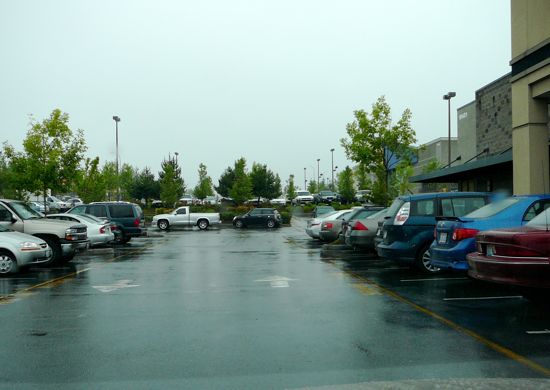
In front of Babies are Us, a totally disgusting, very non-Seattle sight:

Here is a very Seattle-style bumper sticker:

The Way I See It #21
Most mornings, even as a visitor here, I make my own coffee. On this Sunday morning, however, fresh from church, I allowed myself an early morning stop at a nearby Starbucks.
I don’t know if they are doing this in Kuwait, but here, I saw a quote on the side of my Grande, non-fat, no whip Mocha:
“People need to see that, far from being an obstacle, the world’s diversity of languages, religions and traditions is a great treasure, affording us precious oportunities to recognize ourselves in others.”
Youssou N’Dour
Musician
Recent Comments
intlxpatr on Shampoo Ginger tigerbutterya0c5ff1d… on Shampoo Ginger intlxpatr on British Soldier Kidnapped, Esc… John on British Soldier Kidnapped, Esc… intlxpatr on British Soldier Kidnapped, Esc… Wikipedia Donate Button

Amazina


Early Voting in Florida


