Dale Chihuly
Dale Chihuli makes my heart go pitter-patter. No, AdventureMan has nothing to worry about, it is a pure love, a love of great and beautiful pieces of glass spun from this incredible man’s imagination. I want you to go, right now, to this website and take a look at some of this breathtaking creations:
Dale Chihuly
Be sure to wait while the photos on this site change, or you will miss some spectacular pieces. How can anyone give molten glass such spirit?
Here are some pieces I found on display today:


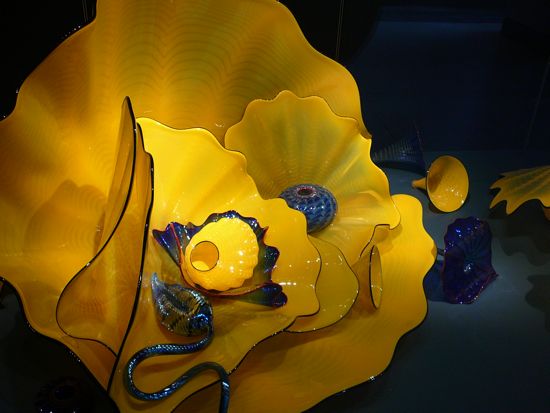
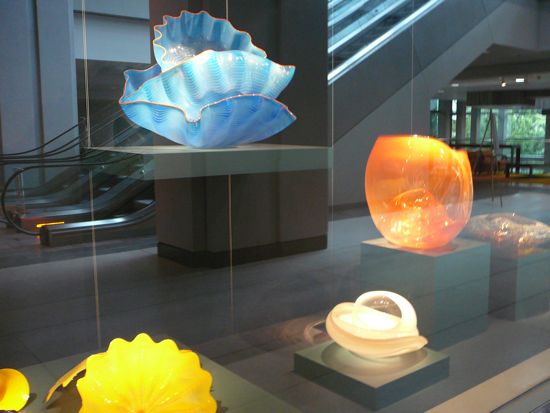
From his biography, you will know that his influence is strongly felt in the great Pacific Northwest:
Influenced by an environment that fostered the blurring of boundaries separating all the arts, as early as 1967 Chihuly was using neon, argon, and blown glass forms to create room-sized installations of organic, freestanding, plantlike imagery. He brought this interdisciplinary approach to the arts to the legendary Pilchuck School in Stanwood, Washington, which he cofounded in 1971 and served as its first artistic director until 1989. Under Chihuly’s guidance, Pilchuck has become a gathering place for international artists with diverse backgrounds. Over the years his studios, which include an old racing shell factory in Seattle called The Boathouse and now buildings in the Ballard section of the city and Tacoma, have become a mecca for artists, collectors, and museum professionals involved in all media.
Chevy’s Revisited
I told you all about Chevy’s Fresh Mex about a year ago, and since I can’t tell you a whole lot about what I am doing right now, I will tell you more about what we are eating: more Chevy’s Fresh Mex.
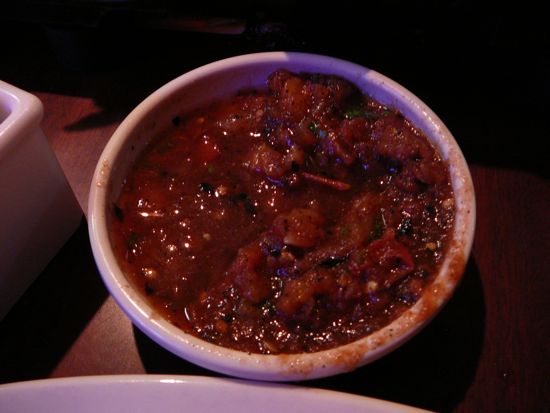
Here are my fish tacos, which I ate with Chevy’s fresh made salsa, yummmmmm. Yes, Purg, it is too much food. We don’t eat all of it. Like I only ate the tacos.
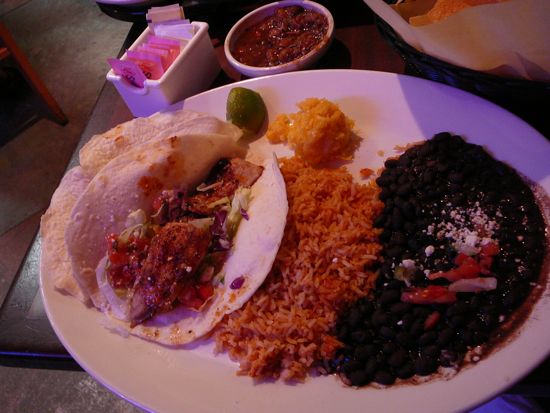
My dinner companion had the grilled chicken fajitas – and said that they were also YUMMMMMMMM!
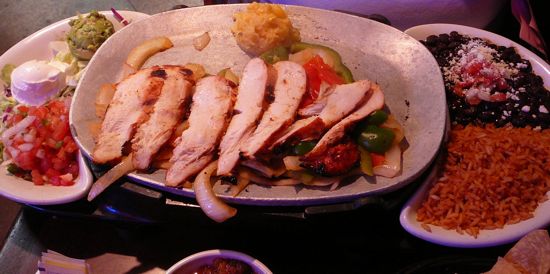
This is not real Mexican food. It is kind of a California-ized kind of Mexican food with a lot of lettuce and really fresh ingredients. It is kind of Mexican-lite. 🙂
Tsunami Signs
Tsunami Evacuation signs are everywhere in the area where we are staying. Is there anyplace in the world that is safe? Florida has sinkholes, and hurricanes. Seattle has earthquakes. Only in Oregon have I seen Tsunami Evacuation signs, but . . . would Kuwait be vulnerable to a Tsunami? If there were a tsunami, where would we run to? Where would we be safe?

In one place, on a high hill, we saw a sign saying Tsunami safe haven, but it was a long way up that hill and you are supposed to run, not drive, because they are afraid of gridlock with people trying to drive to get away. I am thinking a lot of people would probably die trying to run up that hill!
Here’s a sign you’ll be happy to see:

Riverside BBQ in Seaside, OR
AdventureMan and I love eating out in Kuwait, and the only thing we really yearn for are: genuine Mexican food, Vietnamese food, and southern (USA) Barbecue. When we come to the US we make sure to sample those three main food groups. And we laugh at ourselves, because when we are in the US, we are always looking for a good Middle Eastern restaurant. 🙂
We all had a yearning for barbecue today, so we stopped by a little pink restaurant by the side of Highway 101 in Seaside that had two smokers outside. The smell was divine.

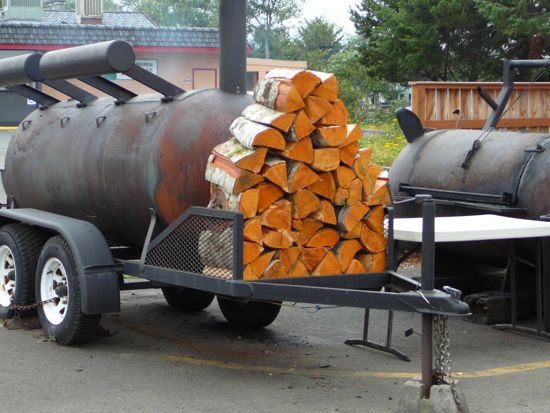
They had an extensive menu – beef, chicken and pork, and loads of sides – cornbread, baked beans, macaroni and cheese, potato salad, cole slaw – just to name a few. Here were some of the platters:
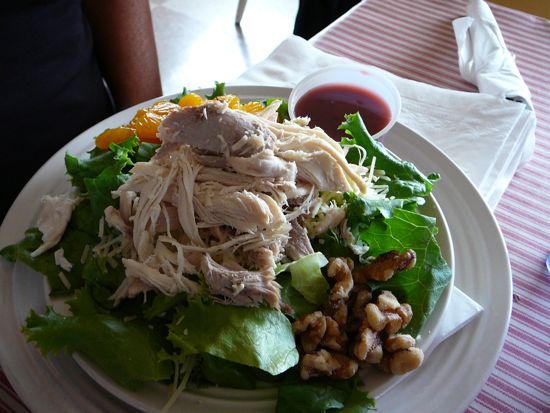
This was the smoked chicken salad
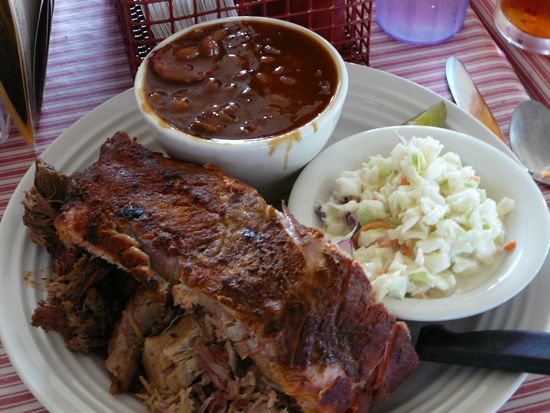
The Meat Lover's Platter

The Rib dinner
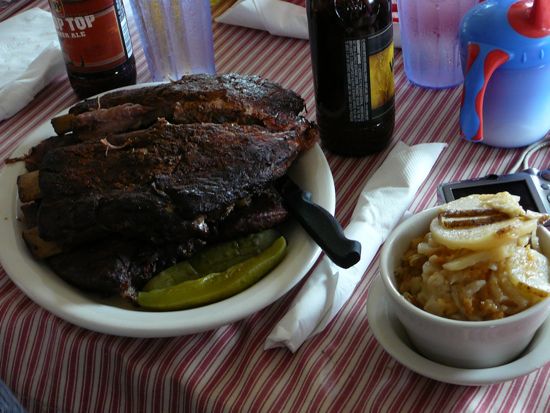
The Rib platter for two with a side of potato salad
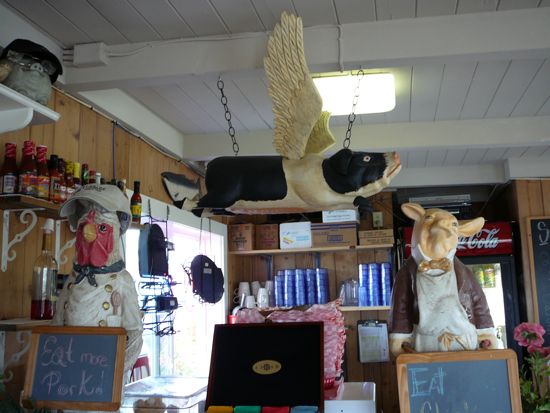
The counter where you order
The food was delicious. We ordered way too much – we had no idea how much food would come with each order. We boxed up the rest and brought it home to warm up later when we get hungry again, if ever.

Photo Nuts
My two sisters and I all have the same camera, and my niece, and my son and his wife, so we all share information. Like on our trip, EnviroGirl explained that if you made the picture size smaller, it extends the optical zoom, so if you don’t need a really vast photo, you can focus on something and get this huge telephoto. I had no idea until she explained it. Like yes, it is in the book, and I even read the book, but there is SO MUCH in the book.
My sister Sparkle told us about using a feature called Fireworks. She tried it for fireworks – it works! It also works on moon shots, although there is another feature called Starry Nights for that.
One thing totally cracks me up. There used to be a Simple Mode indicated with a heart, it was simple and automatic, and no one liked to use it. The newer models have something called Intelligent Automatic, and we all use that mode because it gets the best photos. We would never dream of using something called “simple” but “intelligent!” That’s very different!
Mariner Man, Sparkle’s husband, doesn’t use the same camera but he showed us a new technique he says is working for him, getting interesting and new photos: put your camera really near the ground or on the ground.

Sand Castle


Good tip, Mariner Man!
So I’m kind of waiting for sunset, and photo ops just keep happening. There are wonderful kids flying kites, and I wait, and I get the shot I want – what joy!

And then, as the sun continues setting, along come a couple surfers.
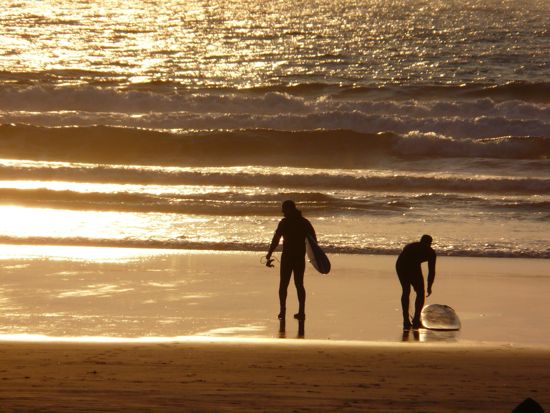
This isn’t such a great shot, but it is the only shot I got of one of them up on his board. He wasn’t up for very long.

This hasn’t happened to me for a long time – my memory card is full. I have to quickly go through and delete anything excessive to have room for the sunset. And then – the sun goes into a fog bank. I had thought it would shine through, but no – the fog EATS the sun! And, just at that moment, the surfers decide to go home and I get my last shot:

Your Last Breath
You never know. These people are just like us, renting a vacation house up the road a village or two, right on the ocean. And while they are sleeping, a plane crashes into their vacation house. You never know when you might be taking your last breath.

4 Die After Plane Crashes Into Home
GEARHART, Ore. (Aug. 4) – A small plane crashed into a seaside house in heavy fog early Monday, killing two people aboard and two children in the vacation home it struck, authorities said.
A small plane flying through heavy fog clipped a tree and then slammed into a house in Gearhart, Ore., Monday. Authorities said two people aboard the plane and two children in the seaside vacation home were killed. Here, a deputy fire marshal stands outside what is left of the home.
A third child was unaccounted for after the crash, which apparently occurred soon after the plane took off from nearby Seaside in northwest Oregon.
The single-engine plane clipped a tree and then plowed into the house, followed by explosions. A second, vacant home nearby was heavily damaged.
The pilot and his only passenger were also killed. Their identities were not immediately released.
The four-seat Cessna was owned by Aviation Aventures in Seaside. The company had rented it to the pilot, city officials said.
The impact shook homes a half-mile away in this resort town.
You can read the entire article on AOL News.
Rolling Thunder
Astoria, Oregon is a city on the border between Oregon and Washington, and one of the oldest explored areas on the West Coast. They have their own trolley line for tourists, to take them to various sights:

They also have a BBQ place called Rolling Thunder. Rolling Thunder, my brother-in-law Mariner Man says is an event in Washington DC where all the war veterans get on their motorcycles and tour all the Washington monuments. I didn’t know that. Adventure Man said that Rolling Thunder is also one of the code names for the US attacks on D-Day in WWII. I didn’t know that either.
I do know I love barbecue!


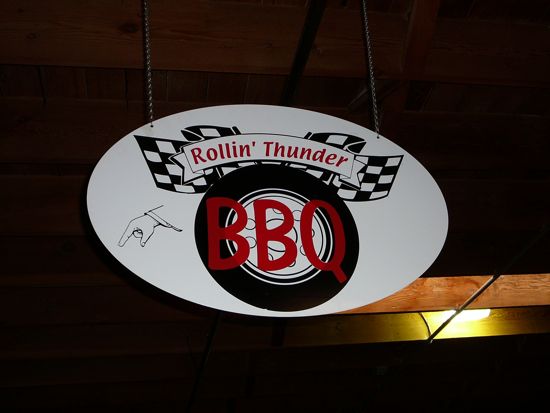
I guess I must have been really hungry. . . I didn’t get any pictures of the FOOD! Mom had the pulled pork sandwiches, and I had the smoked chicken. Yummmmm.
Teriyaki Flank Steak
I keep meaning to post some food photos for Puratory but the problem is we get everything on the table and we start eating. Mariner Man has been the best at documenting our meals; I only think to take a photo too late, and the camera is far away.
Finally, I remembered, just in time for Teriyaki Flank Steak, my Mother’s speciality that everyone loves. She bought three huge flank steaks, put them into plastic bags with the marinade and froze them. They thawed as we drove to the beach, and were ready for the grill when we got there:

Here is my Mother’s marinade recipe for Flank Steak:
Teriyaki Flank Steak Marinade
Most recipes will tell you to marinate a flank steak for an hour – we thing overnight is even better. Sometimes two or three nights, or marinate it in a plastic bag and freeze until needed:
(per 1 – 2 lbs flank steak)
1 cup soy sauce
1 cup sake or sherry (optional)
1 cup pineapple juice (use two if you don’t use wine or sake)
1/4 cup olive oil
1 Tbs sugar
1 large chopped onion
2 cloves finely chopped garlic
1 t. shredded fresh ginger
Grill flank steak until there is no red in the middle; some people like no pink in the middle. Slice thinly against the grain and serve.
Here is a platter of the finished flank steak:

Recent Comments
intlxpatr on Shampoo Ginger tigerbutterya0c5ff1d… on Shampoo Ginger intlxpatr on British Soldier Kidnapped, Esc… John on British Soldier Kidnapped, Esc… intlxpatr on British Soldier Kidnapped, Esc… Wikipedia Donate Button

Amazina


Early Voting in Florida


