Afghani Interpreters Begin Arriving
First group of evacuated Afghan interpreters arrives in US
from BBC News
(This morning, Adventureman’s heart is lighter. He is a Vietnam vet, and for many years has carried the guilt of our country having left behind so many people who worked with our forces so loyally, and suffered terribly when we pulled out. While we believe Afghanistan was not a winnable war (just look at history), he had anxiety that once again we would leave our allies behind.
We have a soft spot for Afghanistan. While we worked with the Department of State, way back before the Taliban, Afghanistan was considered by many to be a great post. The Afghani people were educated, and had a long and fascinating history. Afghani food is delicious. Day trips around Afghanistan opened people’s eyes to new ways of thinking and doing things. Even the Afghan clothing was comfortable and loose, perfect for the great heat of the summers. Friends who had served in Afghanistan shared wonderful stories and memories, and would gather for “Afghan Night” where they would prepare food for 100 of their best friends, of which we were honored to be included.
So to read that the first flight of interpreters and their families have arrived gave us great hope. Hope for a new group of citizens in our country who will work hard and share the gifts of their heritage, hope for their wives and daughters who we know to be amazing women, and hopes that one day there might be an Afghani restaurant in Pensacola!)
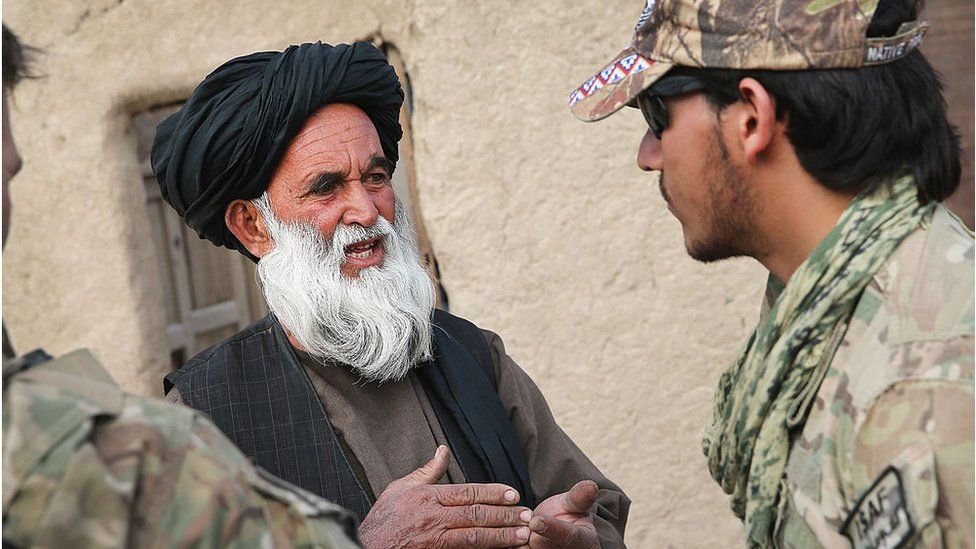
About 200 Afghan interpreters and their families have arrived in the US – the first of a group of 2,500 Afghans being evacuated as the Taliban advances.
The interpreters are being resettled under a visa programme for those who worked with the US during the recently ended 20-year war with the Taliban.
They arrived in the early hours of Friday morning and were taken to Fort Lee military base in Virginia.
They are expected to stay there for around a week while they are processed.
In a statement, US President Joe Biden called the arrivals “a milestone” and “the first of many” as US authorities work to relocate eligible Afghans out of harm’s way.
Afghans eligible for Special Immigrant Visas (SIV) will be transported either to the US, American facilities abroad or to third countries while they finish their applications. The most recent arrivals have already completed an extensive vetting process.
On Thursday, the US Senate approved more than $1bn (£719m) to pay for the evacuations, including housing and transportation.
The bill would also loosen applicant requirements and allow for 8,000 more visas in addition to the ones already allocated for.
The Taliban have been advancing Afghanistan following a decision by Mr Biden to withdraw the remaining American troops from the country.
With those advances have come danger to those who worked alongside US troops during the two-decade conflict.
Since 2008, approximately 70,000 Afghans have been resettled in the US on an SIV .
Last week, a senior state department official said that the total number of visa applicants now stands just over 20,000. About half have yet to complete the first steps of the process.
Those yet to go through the process face potential threats in attempting to secure a visa. Mike Jason, a former US Army battalion commander who was deployed to Afghanistan, told the BBC that travelling across Taliban-controlled areas with the documentation needed for SIVs puts interpreters in “mortal danger”.
“That’s basically an entire confession that you’re an interpreter working for the Americans. We’re asking them to travel with the evidence,” he said.
Not-for-profit group No One Left Behind estimates that at least 300 Afghans or their family members have been killed for working with the US.
The Taliban were removed from power by the US-led invasion in 2001, following the attacks on the World Trade Centre in New York.
Fighting between the insurgent Taliban and Afghan government forces has increased over the past two months as international troops pull out of the country.
AdventureMan Does Yoga
“Move your spine in all directions at least once a day,” AdventureMan’s new yoga-instructor-via-Netflix advises.

AdventureMan has a whole new cadre of bossy women in his life. He has Julia, his Netflix advisor, he has Petrina, his expert masseuse at the YMCA who can tell just by touching him what he has been doing. She can be much more direct, and expects results. AdventureMan, who is a man who will not be bossed, is amazingly docile when it comes to these two women.
He also objects to bossy males, so when our yoga-naturals, Ragnar and Uhtred, join him in his exercises, we just laugh. They can bend in ways he can never aspire to, get their heads between their legs, roll and curl backwards. They love it when he cranks up the computer to do his spinal exercises. Cats have certain advantages doing yoga.
It all started months ago during COVID when I couldn’t swim at the Y and felt the need to DO something. I got out my mat, found a good program and started in. It was Yoga for Beginners, with Adrienne, very relaxed if you are not me. I used to do ballet, form is everything, and you strive for exactness. Trying to do yoga exactly is sort of the opposite of all intents, so instead of feeling relaxed when I finished, I had a migraine from trying too hard.

But AdventureMan watched and was intrigued. He likes privacy. He also has issues I don’t have, aches and pains that gentle yoga can help. He got a beautiful yoga mat for Christmas. We did yoga together a couple times, and then I was back swimming laps and he got into walking and yoga. To my surprise, it is July, and he is still faithful, both to Julia and to Petrina. He has lost weight. He has gained some balance and stability, and his spine is more flexible. I join him occasionally in the spinal tape; it is gentle and doable without pressing my OCD button.
No, these photos are not AdventureMan, just images that give an idea what the gentle art of yoga can help people do to develop strength and balance.
Rest in Peace, Donald Rumsfeld

You can admire a man without agreeing with him. Donald Rumsfeld gave me one of my favorite quotes:
Reports that say that something hasn’t happened are always interesting to me, because as we know, there are known knowns; there are things we know we know. We also know there are known unknowns; that is to say we know there are some things we do not know. But there are also unknown unknowns—the ones we don’t know we don’t know. And if one looks throughout the history of our country and other free countries, it is the latter category that tends to be the difficult ones.
I always thought he said “it is the latter category that bites us in the butt,” but maybe that was the unofficial version.
Kids Eat Healthy in New Orleans
There are times when AdventureMan and I take a grown-ups trip to New Orleans, and at those times, we eat in restaurants where the food is too rich and we come back hating ourselves. On occasion, rich is tasty, wonderful and delicious and you can’t resist.
Fortunately for us, most of the time when we head for New Orleans we have our grandchildren with us, and we have to behave ourselves.

A good friend told us about The Parkview – a historic inn, perfect for us in so many ways. We buy an annual membership to the Audubon Zoo, which is almost next door. There is a really cool park for children just across the street. There is parking on the street, and cookies every day late in the afternoon. The St. Charles streetcar stops right in front of the hotel, going in both directions. The lobby is full of fascinating exotica – stuffed peacocks, antique furniture and countless clocks. Their brochure welcomes “well-behaved children” and our grandchildren take that to heart – they want to be welcome at this hotel!

We are not always adults who behave responsibly, but when we are entrusted with our grandchildren, we are on our best behavior.

We have been delighted to find that there are places in New Orleans which welcome children, treat them respectfully and offer some healthy options.
While we have (after some hilariously awkward situations) learned to avoid the French Quarter with children, we have found some work arounds that make it a more acceptable adventure.
Felipe’s Mexican Taqueria
301 N. Peters Street New Orleans, LA 70130
This is not a fancy place, not at all. This is a place where you order at the counter, and carry food to a condiments stand and then to your table. There are no tablecloths. It is full of French Quarter workers finishing their shift providing hospitality for New Orleans visitors, tired, hungry and knowing where to find a good meal at a reasonable price, and a glass or two or three of beer. Chips and salsa, tacos, burritos, beans and rice – the basics, done well. Our grandchildren can always find something or order, no one cares if something spills, it is a little noisy and chaotic – a great place to take kids, and enough on the edge of the French Quarter as not to be a problem.

Louisiana Pizza Kitchen, French Quarter
95 French Market Pl, New Orleans, LA 70116

There are several Louisiana Pizza Kitchens, and this is the one we really like. It has so much more than pizza, and it has raw brick walls, a fun vibe, and you can take the trolley from the end of Canal street all the way to the French Market Station and avoid a lot of the FQ tawdry experience. Our grandson ordered a calimari dish that knocked our socks off, and the desserts were fabulous. When you add it all up, it’s not a cheap meal but we had a refrigerator and the kids loved having pizza for breakfast, too.
So much for the French Quarter. We don’t spend a lot of time there with children.
two locations:
901 Convention Center Boulevard
or
920 Gravier Street

You can see both Two Chicks Cafe’s on the map above. The one at the convention center, near the WWII Museum, has better parking. At the one on Gravier, you will probably have to pay to park in a lot or on the street, if you can find a place. It is handy from several of the hotels. The line forms early! They have unhealthy food, but they also have fresh juices, fruit, crepes, eggs in a variety of ways to your command; you can eat healthy if you wish. The kids find this place fascinating, and more than a little French.
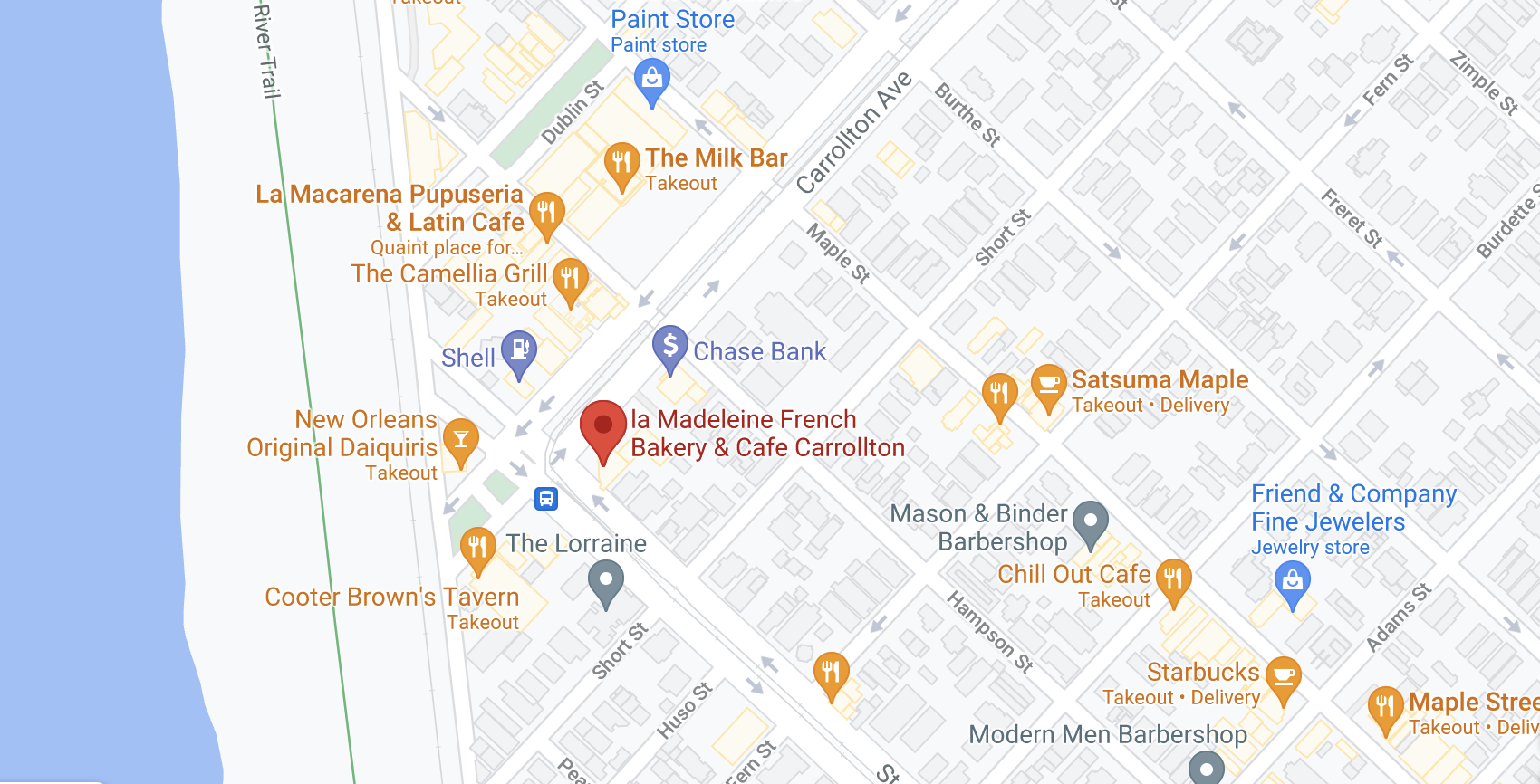
Just as St. Charles turns right into Carrolton, La Madeleine is on your right, just on the corner. There are other locations, one up in Metairie near Drago’s. It is a sort of French-ish cafe that also serves meals, cafeteria style ordering offering a large variety of salads, soups, chicken, salmon, small sandwiches, you can eat healthy. Once ordered, cooked meals are delivered to your table, salads and soups are prepared as you wait in line. Of course, we always ruin it by allowing the children to choose a French pastry for dessert, but eh! We are in New Orleans! One time my granddaughter went to wash her hands and didn’t come back; I found her speaking French along with the language tape playing in the restroom. Not fancy, but a very comfortable place with children.
Our grandchildren love this place. So do their parents. So do we. Great food choices for grown-ups and for kids, some of them healthy. We started going there where we found their name on an article written for parents bringing children to NOLA; Superior Seafoods was a top listed restaurant for kindness to children. We have been there many times and the wait staff is unfailingly courteous and patient, and we are unfailingly grateful. Here, they learned to love grilled oysters. And profiterole. Huge fish sandwiches. And they don’t even realize they are learning a whole lot about how to behave in a restaurant which will, we hope, be handy for them later in life.
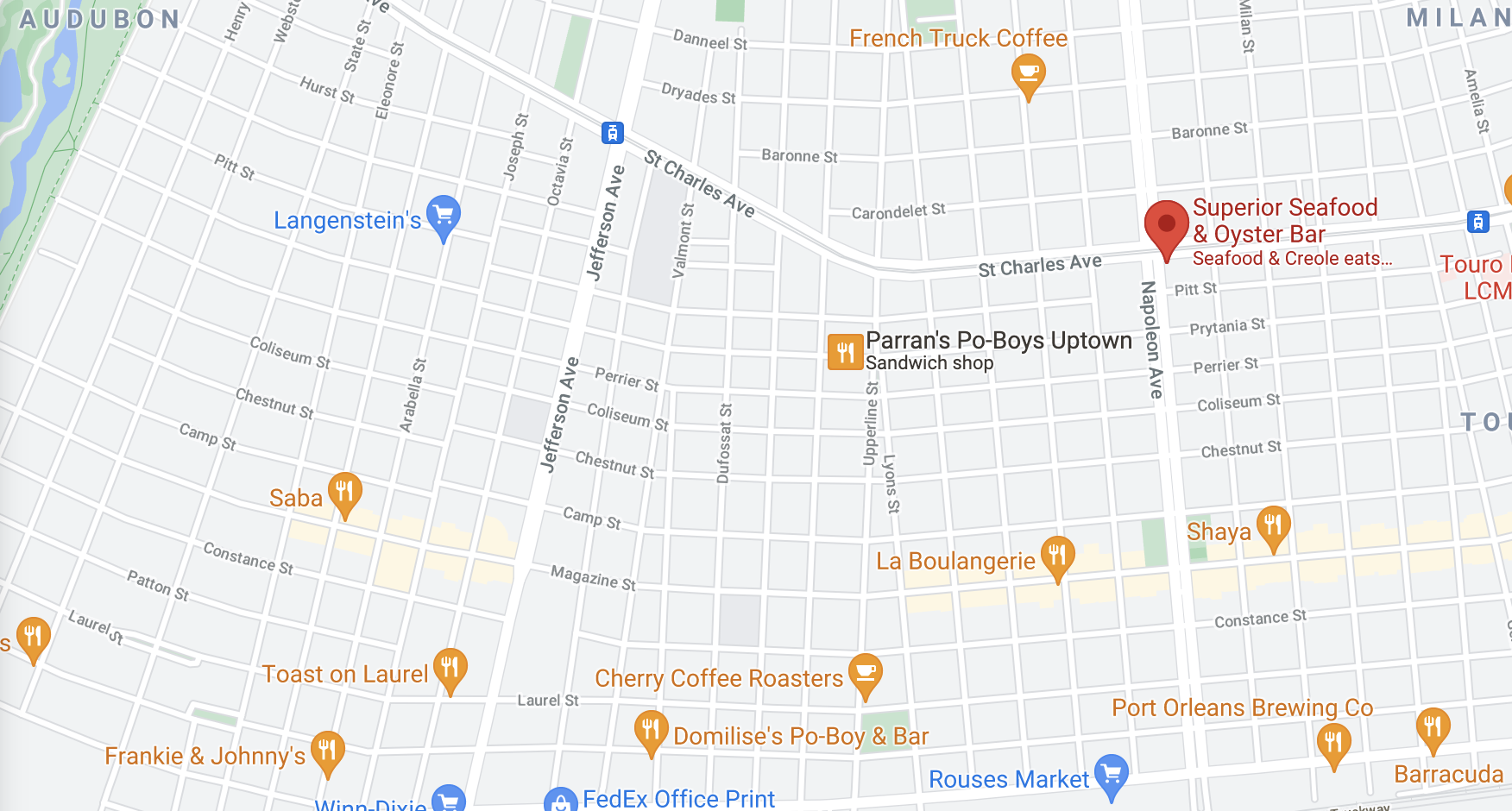
On the same map, above, you can also see Saba, on Magazine Street, La Boulangerie, also on Magazine, and Shaya. These are also options if your children are accepting of less familiar foods. Saba and Shaya are both “Mediterranian” or Israeli, offering Middle Eastern foods – rice, plain meats, flat bread, dips – most children can find something to eat while the grown-ups enjoy more sophisticated taste treats.
Drago’s Metairie: Home of the Charbroiled Oyster
While last, Drago’s is not least. Metairie is not that far if you have a car, literally minutes. The chargrilled oysters make this restaurant worth a trip. Children are everywhere, this is a huge restaurant, and very much a family gathering place. They have all the rich Southern and Cajun staples, and a few salads and gumbo soups and bisque, not particularly healthy choices. They do offer some non-fried fish dishes, entree’ salads and vegetable sides.
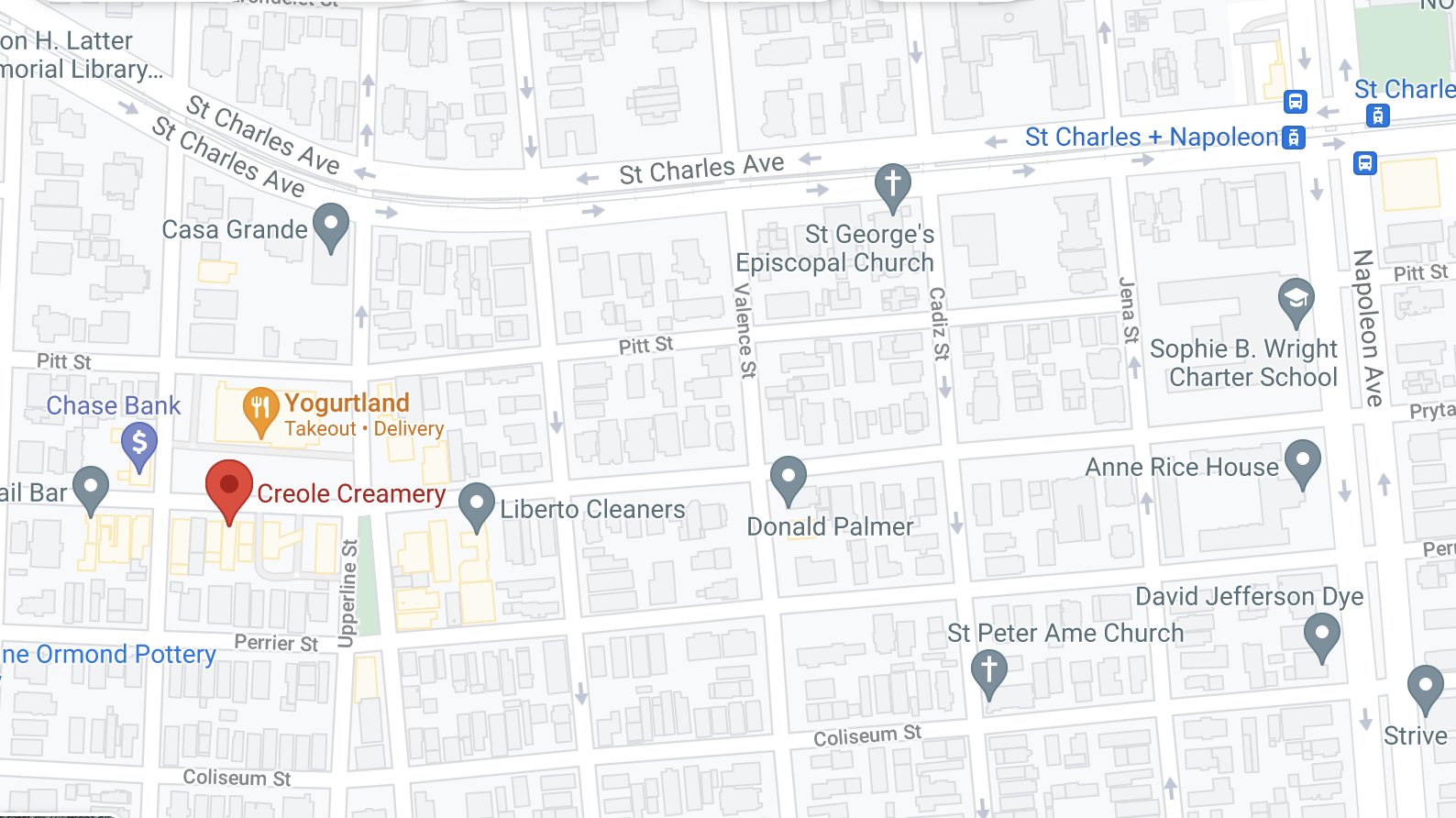
You’ve been so good! Creole Creamery is not a healthy option, but you can order a very small scoop, or you can order a sorbet, or you can tell yourself it is a reward for good behavior with all the healthy eating you have been doing 😉 The children will love this place – and so will you!
Origami Restaurant: A Happy Accident in New Orleans
I will spare you all the details of our latest trip to New Orleans except for one happy accident. As we were leaving the Audubon Zoo, we all decided we would like Japanese food / sushi for lunch, and we’ve been to a couple on Magazine which we considered less than stellar. Normally, I’ve done my research. Not this time. In desperation, I Google “Japanese restaurant near me” and up pops Origami, 5130 Freret St, New Orleans, LA 70115, just seven minutes away.
With no further recommendation, we decide to take a chance. It is close. We are hoping parking may be easier than on Magazine. It is between us and the nearest entrance to I-10, which we will be taking after lunch to get back to Pensacola.

We get there in six minutes. There is parking right on the street. There are customers leaving and customers entering who look a lot like us, except we have children with us.
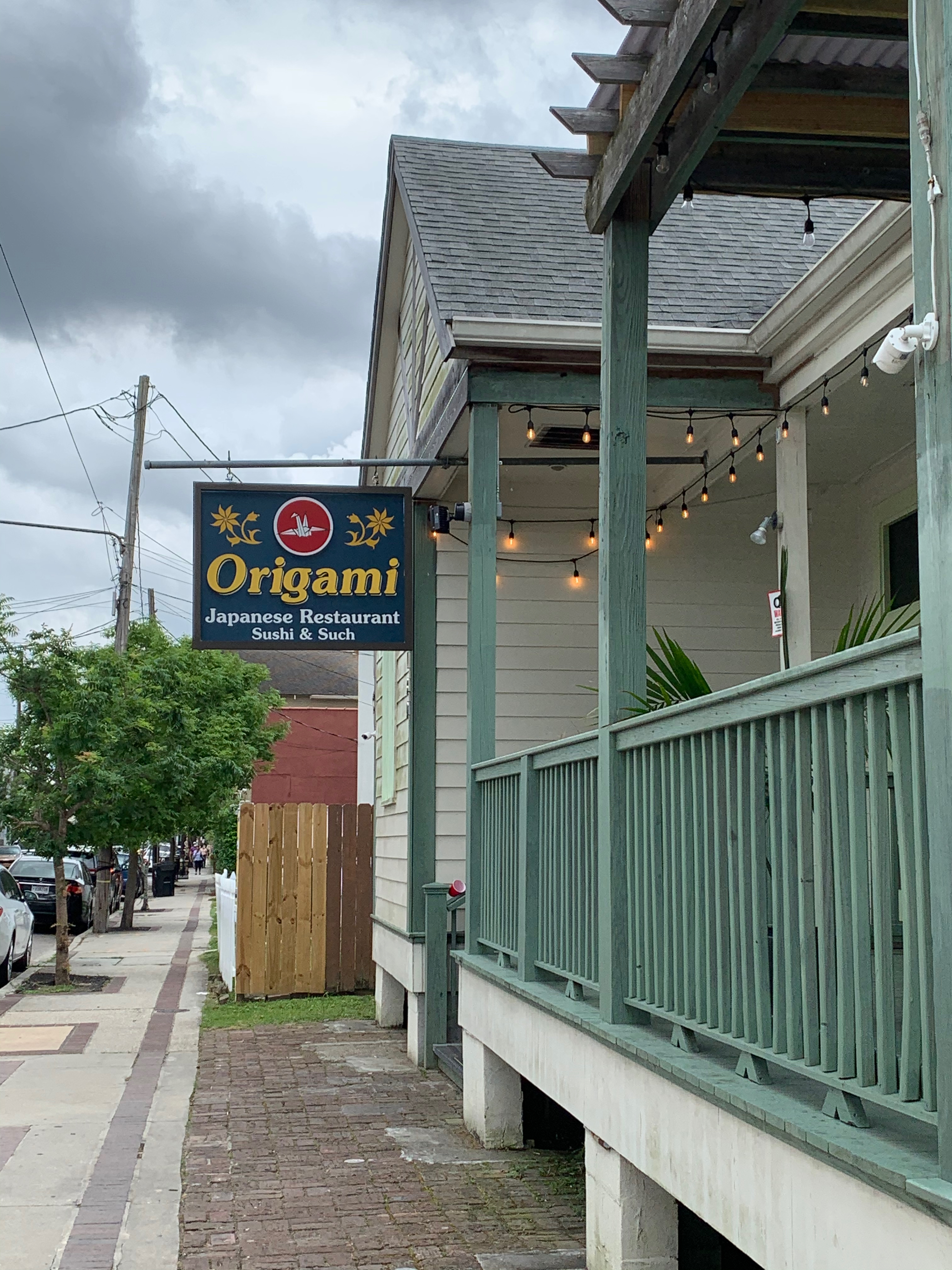
Once inside, we love it. The waitress approaches and shows no dismay that we have children. She shows us to a spacious booth.

It is a popular place, full of locals, regulars and relaxed people. They have a huge board on the wall with daily specials, and a menu so large that as I started reading, my hungry husband pointed out that there is a lunch menu and it would be faster just to order from that.

Once we had ordered, we all went to wash hands. Washing hands was a treat! The bathroom was actually very clean, and granddaughter pointed out the flower arrangement.

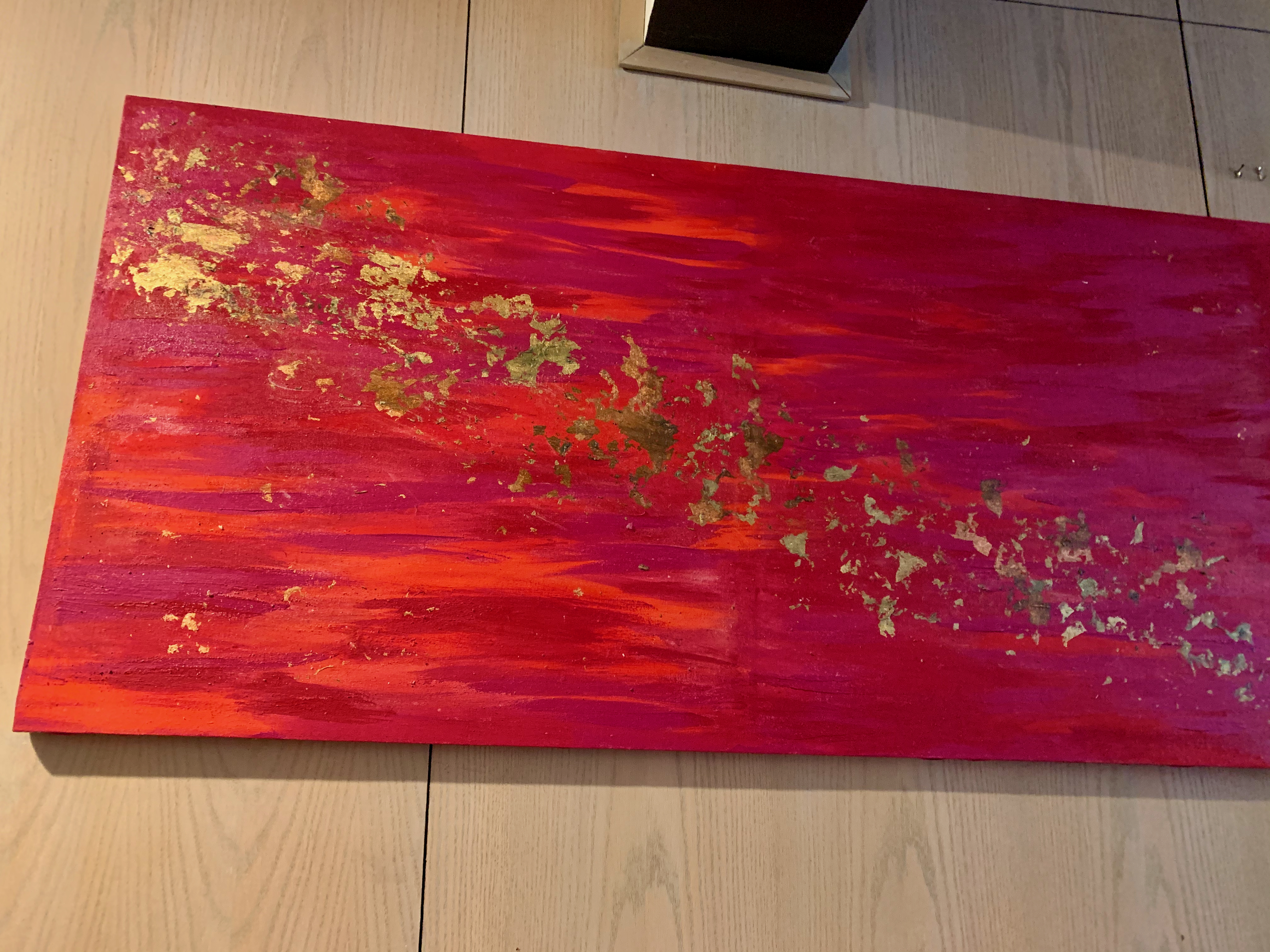
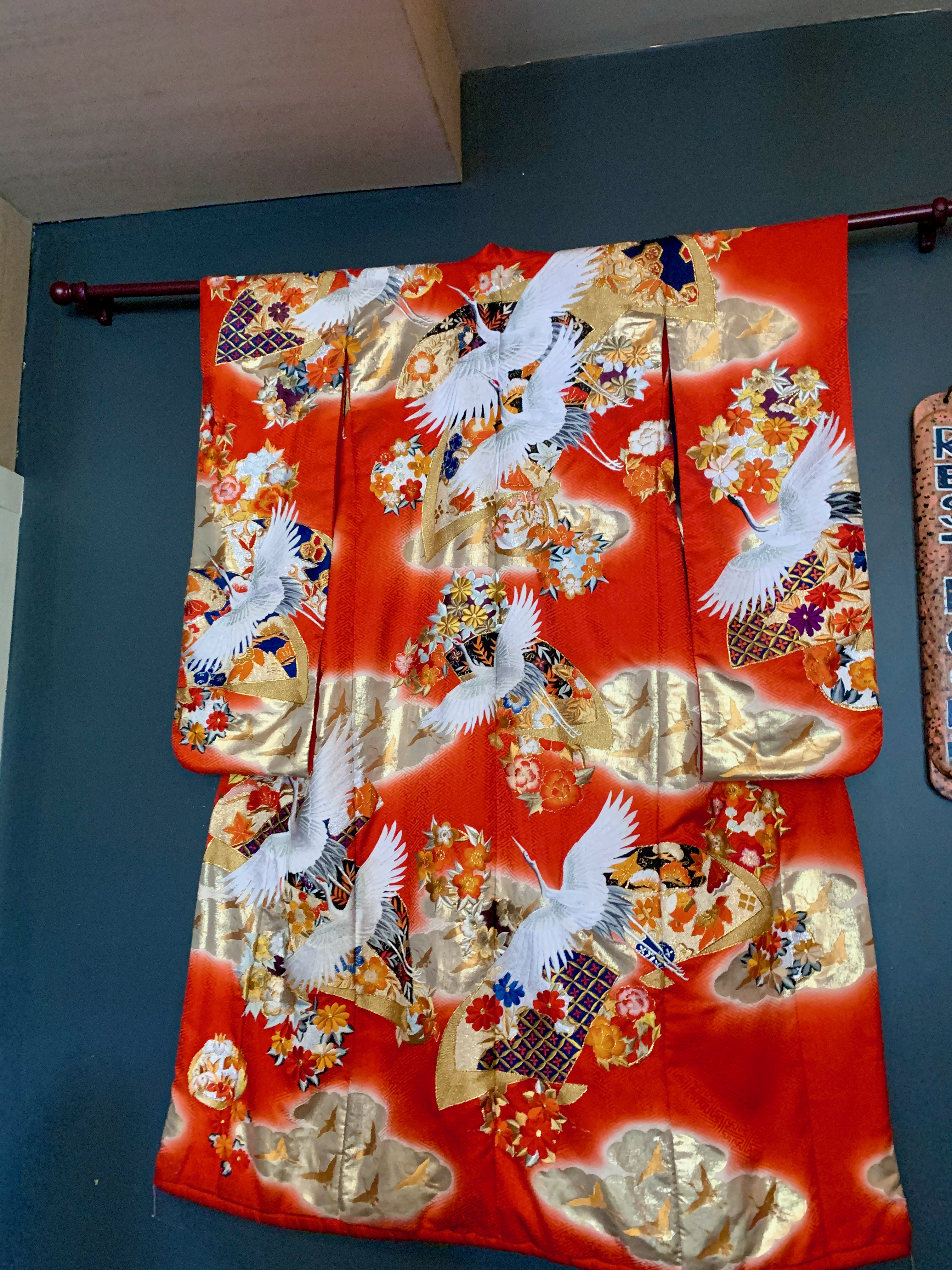
So many beautiful things to look at! I love it when a restaurant creates a sensual experience beyond really good food!

A huge flock of Origami cranes!
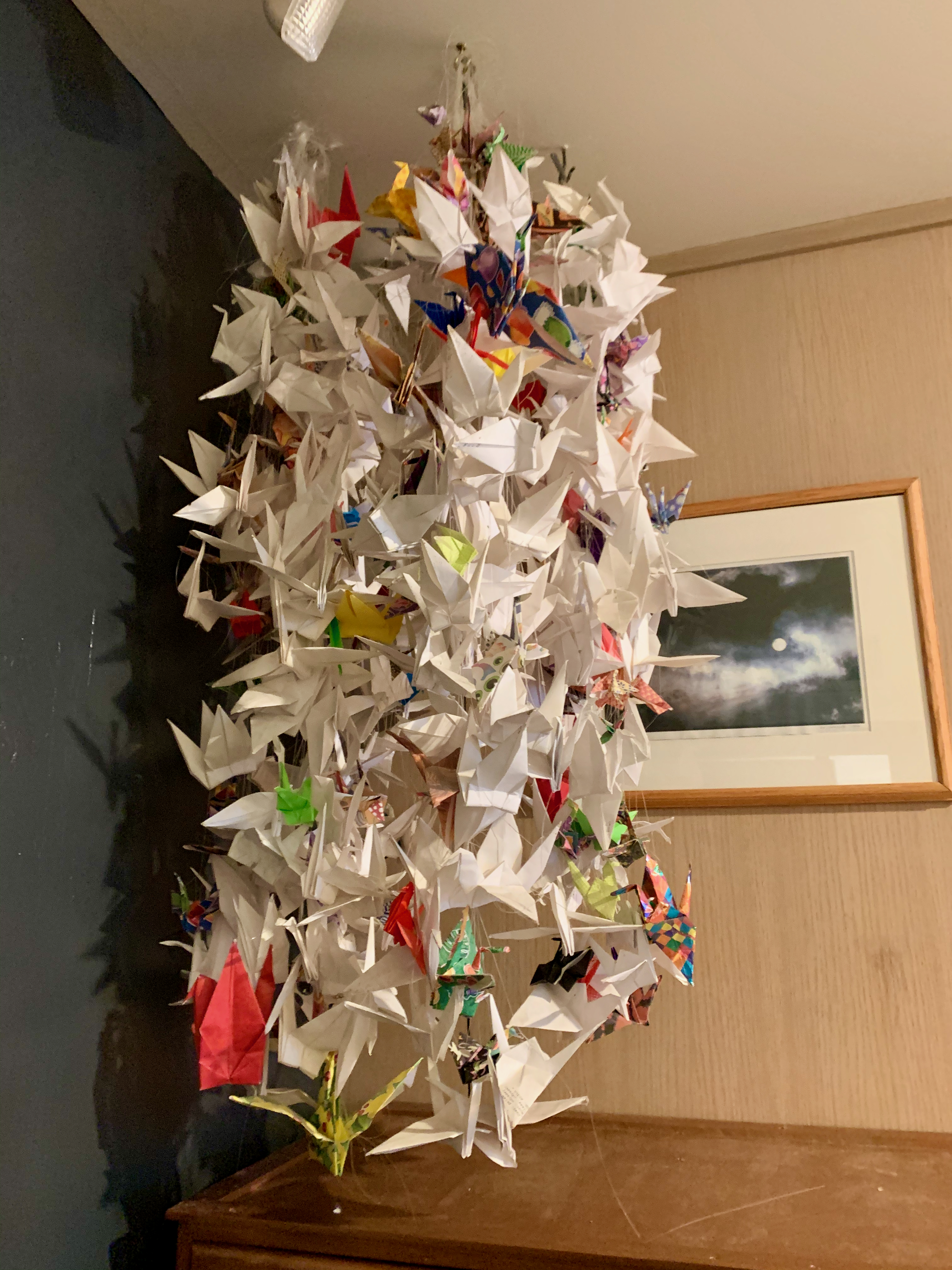


This is exactly the kind of experience we love to have with our grandchildren – lots to look at, tactile, visual, and a great way to spend a few minutes while we are waiting for our lunch.

We all love miso soup, even though it is good for us.

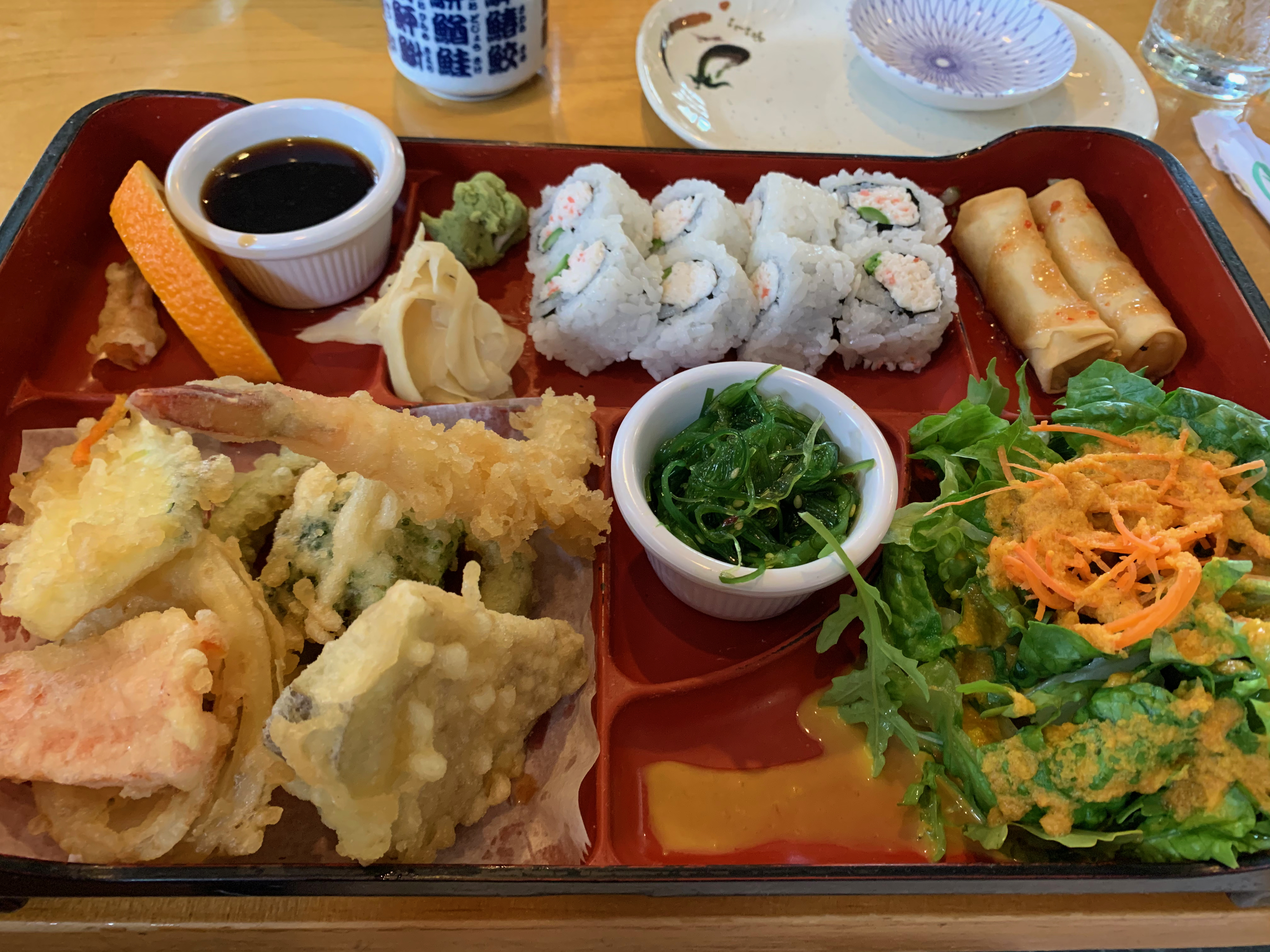
I am embarrased to tell you, this is my order. So much food! It is more like a complete Bento box, with soup and salad and rolls and even the seaweed salad I adore. Sadly, we couldn’t take it with us. I shared, but it was too much food. I later saw on the menu I could have ordered just the tempura; that would have made a better meal for me. Ah well, next time 🙂
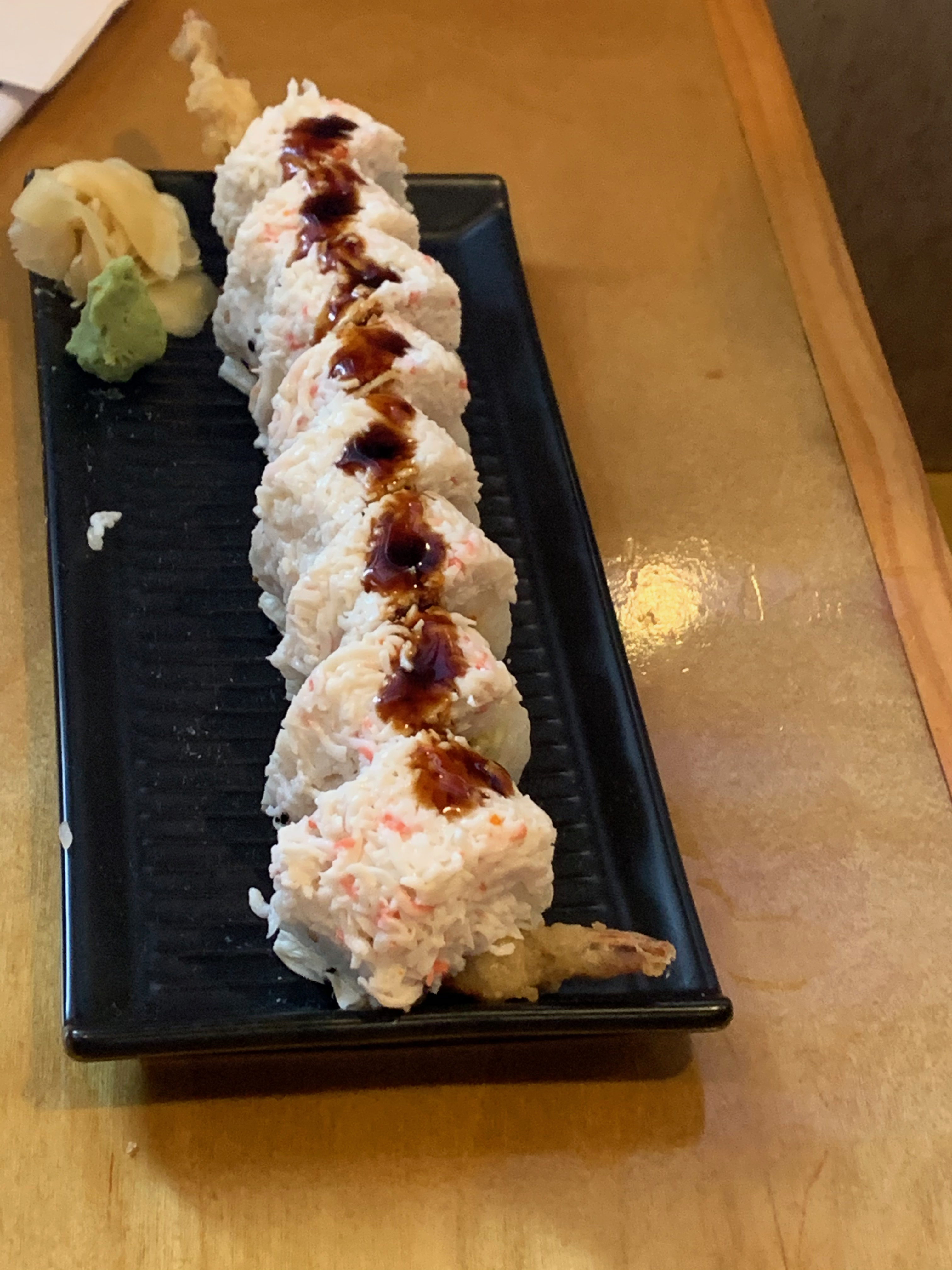
Our grandson ordered a special roll called Bye Bye Katrina. He is like his grandfather, very adventuresome.
My granddaughter was also very adventuresome, she ordered the snow crab roll and assortment. It was healthy and delicious! She tried everything.

AdventureMan had the three roll assortment. It was too much food. One reason we ordered too much was that the prices were so reasonable we thought there must be less food. Not so, our grandson informed us, a friend of his parents had told them that you will always get generous portions in New Orleans, it is part of the whole Bon Temps and hospitality thing.
The waitress offered us boxes, but we were headed out on a three plus hour drive back to Pensacola without refrigeration on a hot and humid day . . . we had to decline.

We are thrilled to add this restaurant to our “healthy places to eat in New Orleans where they are also kind to children.”
5130 Freret St, New Orleans, LA 70115
MomFest in New Orleans
Didn’t we just have a fest in New Orleans? On Saturday, AdventureMan and I were having chargrilled oysters at The Original Oyster House, our favorite seafood place along the Spanish Fort causeway going into Mobile.

As usual, we were having a discussion about words. I had decided that Saturday would be the beginning of Mother’s Day, and as we were meeting up with our son on Sunday, and heading to New Orleans for Monday and Tuesday, it would end up being a four day celebration. AdventureMan wondered what a four day celebration would be called. I suggested a four day weekend, and he said, no, MomQuad. I didn’t like the sound of that, so I announced, definitively, that we would call it the MomFest, which had a less legalistic and more celebratory flavor.
Sunday, too, was lovely, having time with our son where we could hear about his life and his adventures in prosecution. His accused was very sure he would not be convicted – “If they have no face, they have no case!” but our son, by his careful and painstaking work, proved him very wrong.
And Monday we headed to New Orleans, hitting the road around 0830 for an anticipated 1130 arrival.
Oops. Not so fast. Just out of Mobile we ran into massive thunderclouds and shocking bolts of lightning, and torrents of rain rushing up from the gigantic wheels of the trucks who drove hell-bent-for-leather to get their cargos in on time in spite of the weather.
The storm was easing up as we crossed the causeway into New Orleans, and by the time we got to Magazine Street, it had stopped raining and the sun began to peep out.
We love the variety available on Magazine street, and we haven’t had Ethiopian food for weeks :-).

Yes! Cafe Abyssinia, here we come again, a family tradition when we hit New Orleans just in time for lunch. Our waiter this time was delightful, a man from Chicago, related to the restaurant owner, who has actually been back to visit family in Ethiopia. He had great stories to tell about his family there, how they love hearing about America, and how they made him feel so welcome, and a part of a much bigger family.

Then on to Zito’s and to Enrique’s to pick up items we had left to be fixed, polished or mended. Always a good reason to come back. We had a good visit, then headed to Creole Creamery on our way to The Parkview. Usually when it comes to ice cream flavors, AdventureMan and I go our separate ways, maybe sharing small bites with one another, but this time we both landed on the same flavor: Bittersweet Chocolate Torte. It was divine. We had to eat it sitting out in our car, as no one is allowed to sit inside and even the numbers who can come in are limited, but we were lucky. When we went back the next day, there was a long line of people outside, waiting for their turn to go inside.

I did look at VRBO for this trip, but it’s just an overnight, and oh, we love The Parkview. We love the parking, we love the park, we love the proximity to the zoo, and we love that you can catch the streetcar going in either direction just outside the front door, on St. Charles.
We had a different room this time, and I didn’t think I was going to love it, but we did. It was on the main floor, near check in and the breakfast room, but because of COVID, and in spite of the fact the hotel was fully booked, it was not noisy, the bed was huge with a good mattress and linens, and we had plenty of space.
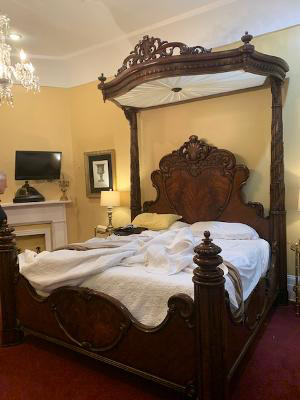
So this was our bed. AdventureMan noticed it had a face on it, which after he described where it was, I could see it. But I also saw a heart, which he did not, and another stylized face high above, on the crown over the bed.


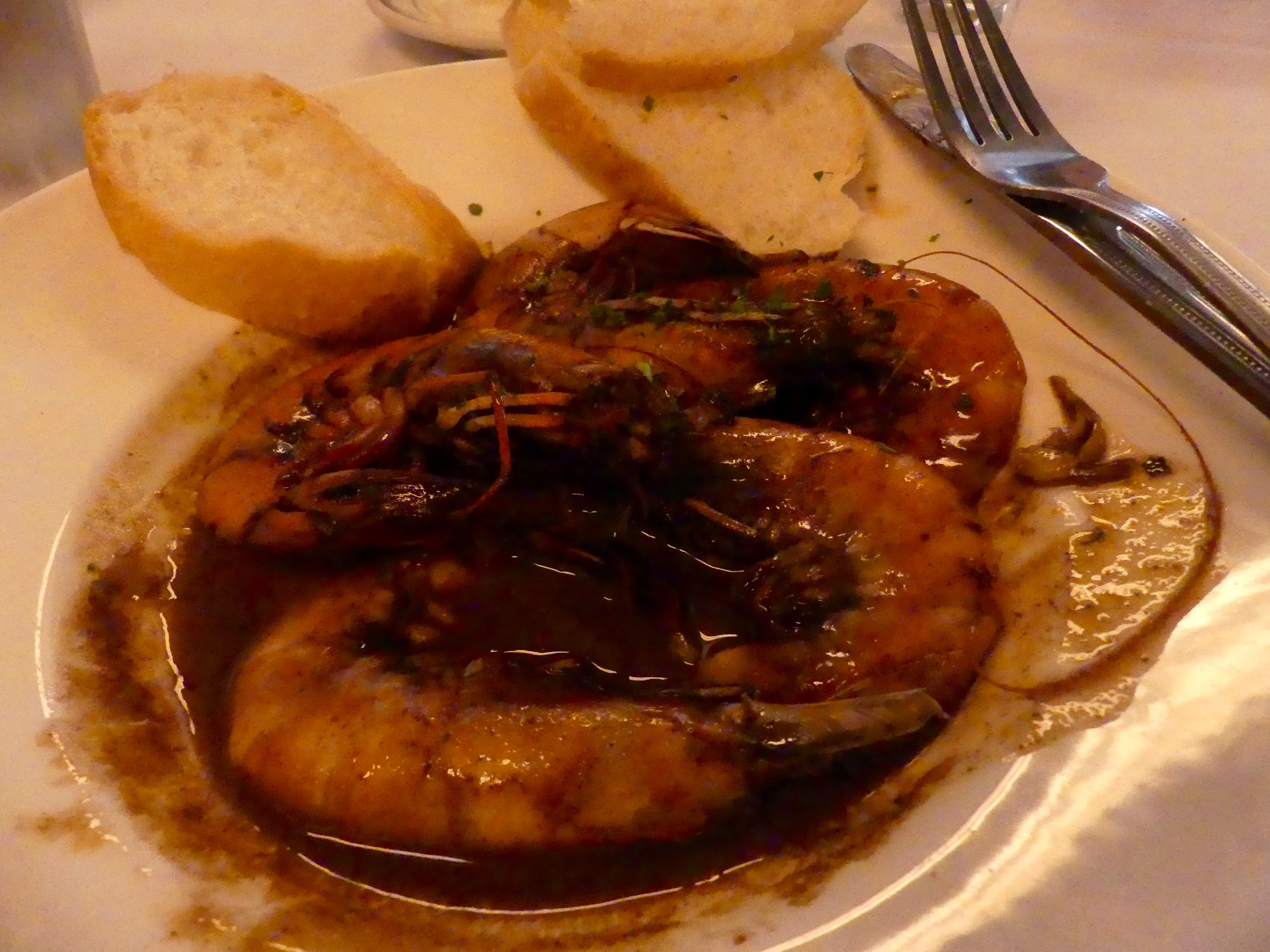
We had dinner again at Superior Seafoods; we split the grilled oysters, each had a salad, and AdventureMan had grilled shrimp, while once again, I exercised poor judgement and had the rich and satisfying BBQ Shrimp. We had a 45 minute wait to get in – New Orleans high schools, Loyola and Tulane are having graduations, and the place is a madhouse – but we had a delightful conversation with a young couple, she was just finishing graduate school and the two of them were on a quest to eat as many oysters as possible before leaving New Orleans for Nashville.
When I say I exercised bad judgement, it is not a reflection on the food. The food was marvelous. I am diabetic and I have no reason on earth to eat injera (Ethiopian pancake-bread) for lunch, really creamy ice cream at midday, and grilled buttery oysters and buttery BBQ shrimp for dinner. It was very foolish of me. Oh well, every now and then I allow myself a little bad judgement.
When we hit the road the next morning, the heavens opened and torrents of rain followed bolts of lightning. Traffic was a little lighter heading east. Our sweet and caring daughter-in-law texted us to fill our tanks before leaving Mississippi, as on top of the pipeline hack for ransom, a major Pensacola gas distributor had failed an EPA requirement and many Pensacola gas stations were dry. Even as far back as Biloxi, gas stations had cars lined up. We did manage to fill the tank, and we turned off the air conditioning for the rest of the drive. The situation seems to be easing in Pensacola, but there is such a fear of a gas shortage that people are panic buying.
FamilyFest in New Orleans
Time goes on and we have heard rumors that New Orleans is actually safer than Pensacola. The family needs some time together, just to be, and we love to travel together.
To be as safe as we can be, we choose to rent a place through VRBO (Vacation Rentals By Owner) and there is a large selection. We want to share space, and we also want this family of introverts to have space to escape one another, too. We found a beautiful place on Napoleon Avenue, close to several places we love, great walking, even a bakery, La Boulangerie, with fresh croissants and pain au chocolat for breakfast.
We have a tradition of starting at the Cafe Abyssinia – Pensacola doesn’t have any Ethiopian food, which we love for it’s flavor and healthiness. We order the Vegetarian platter, and add Doro Wat, a spicy chicken stew.

Then to the zoo. We hit paydirt, we don’t know why but the zoo is nearly empty. We have a Krewe membership, but we still had to make reservations. Totally worth it.



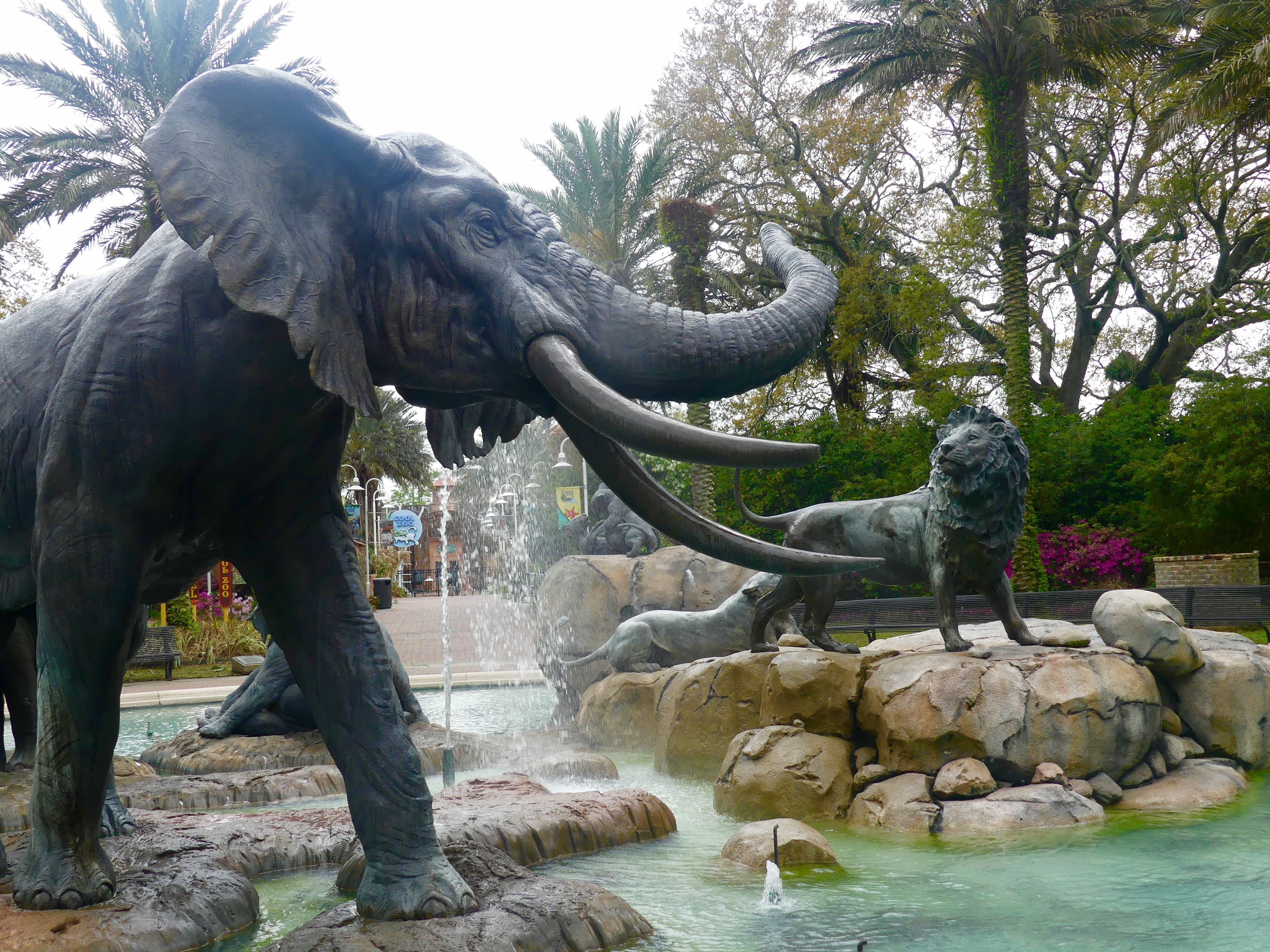
One of the reasons we normally stay at The Parkview is they have the most fabulous playground in the world. This time, it was a real thrill. All the houses in the neighborhood had signs in their yards saying “Thank You Drew” for the Saint’s retiring quarterback who created this wonderul playground and lives in this neighborhood.


It isn’t just a swing-set, it is also public art 🙂


“We’re staying in a mansion!” our beautiful, imaginative grand-daughter exclaimed as she entered our rental. It was less costly and more space than spending three nights in two rooms at The Parkview.

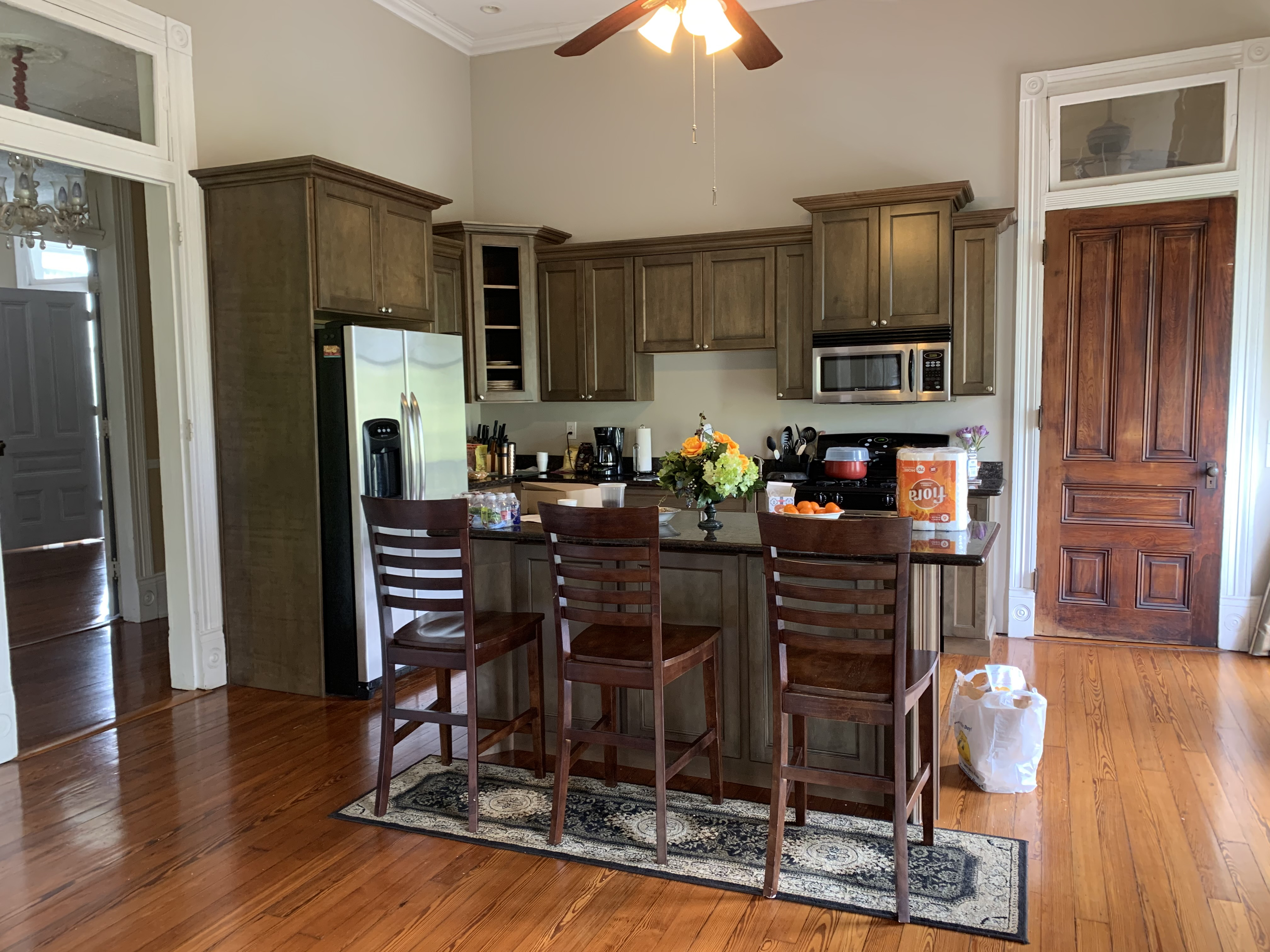

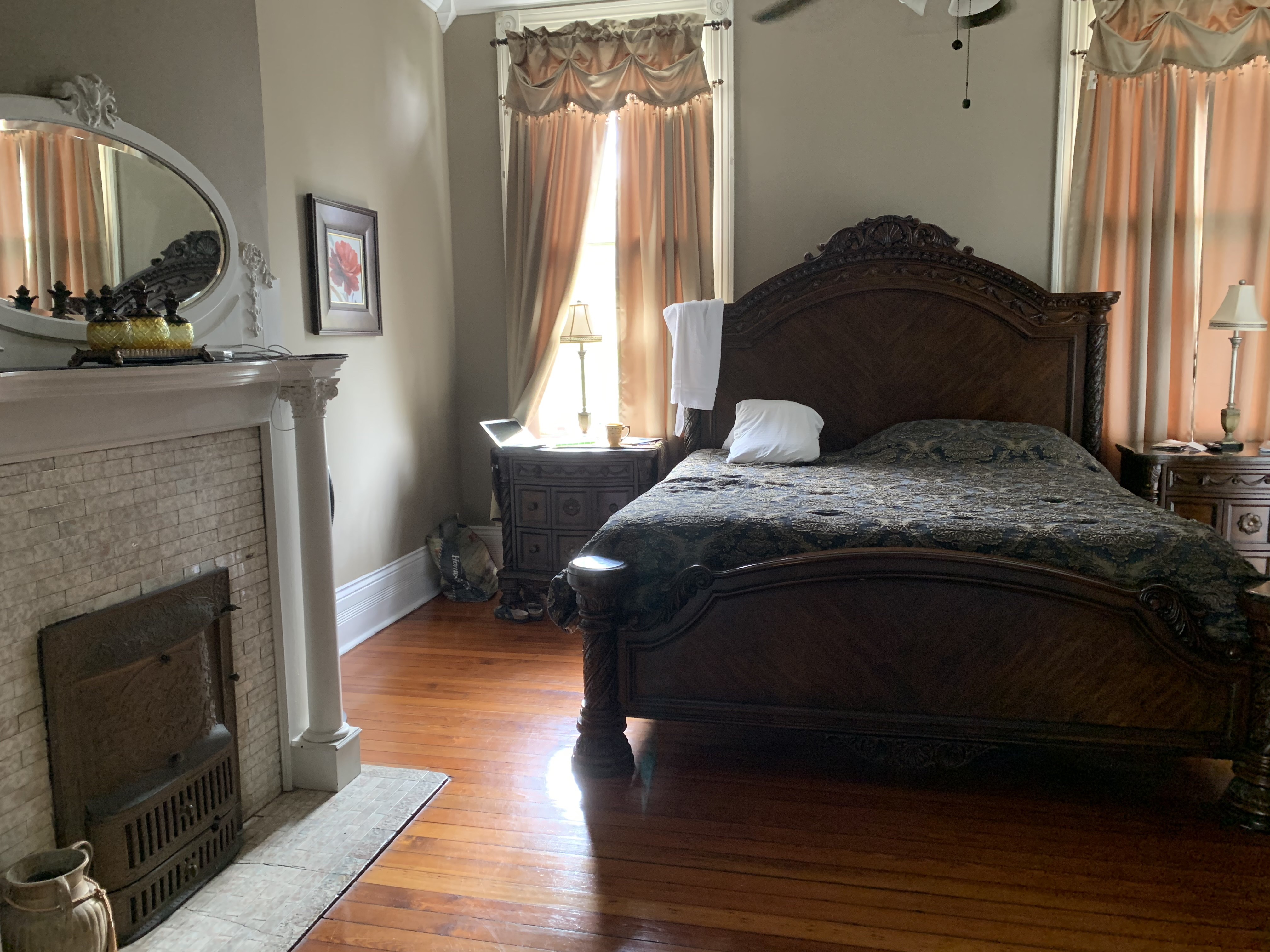


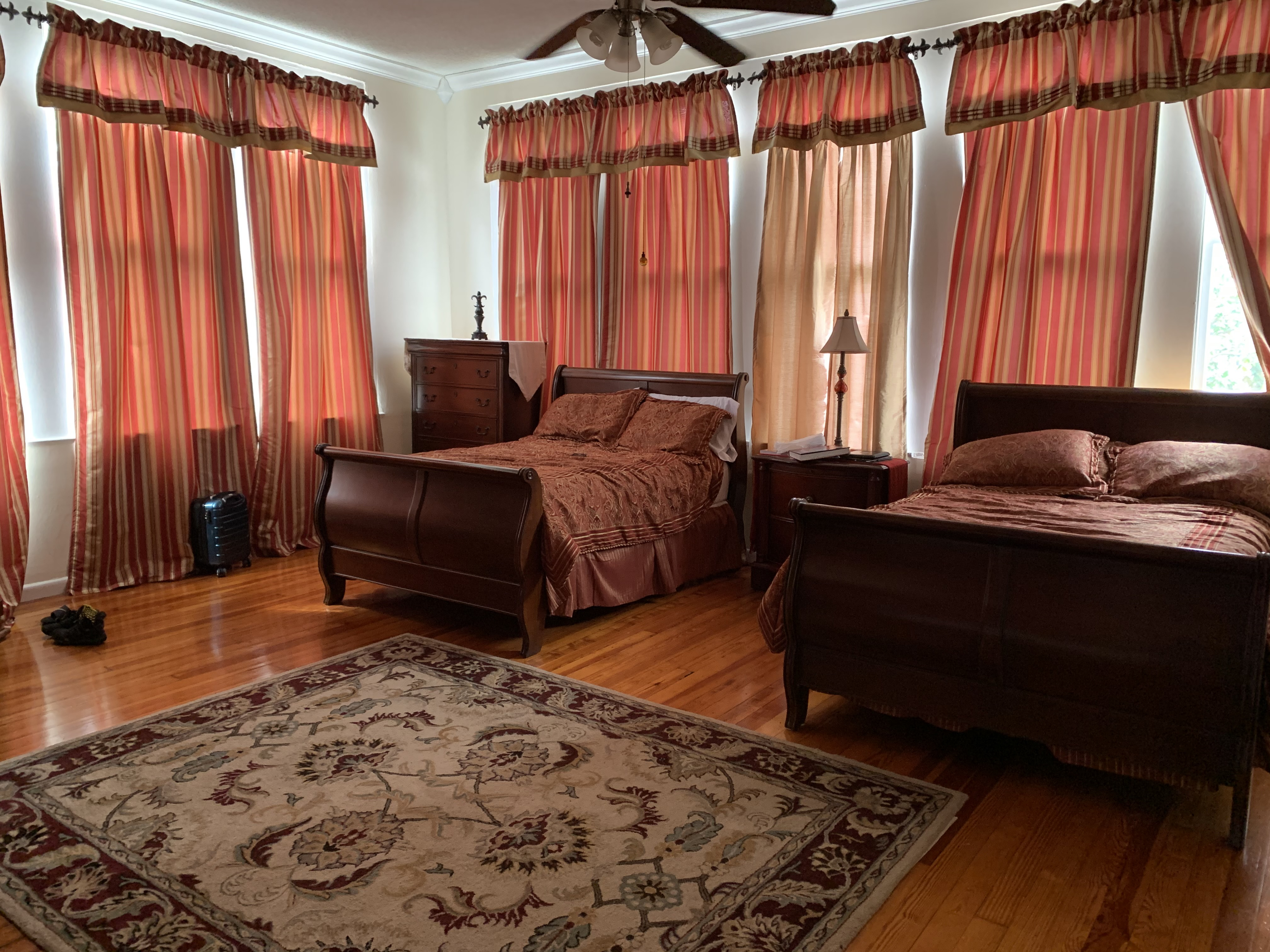
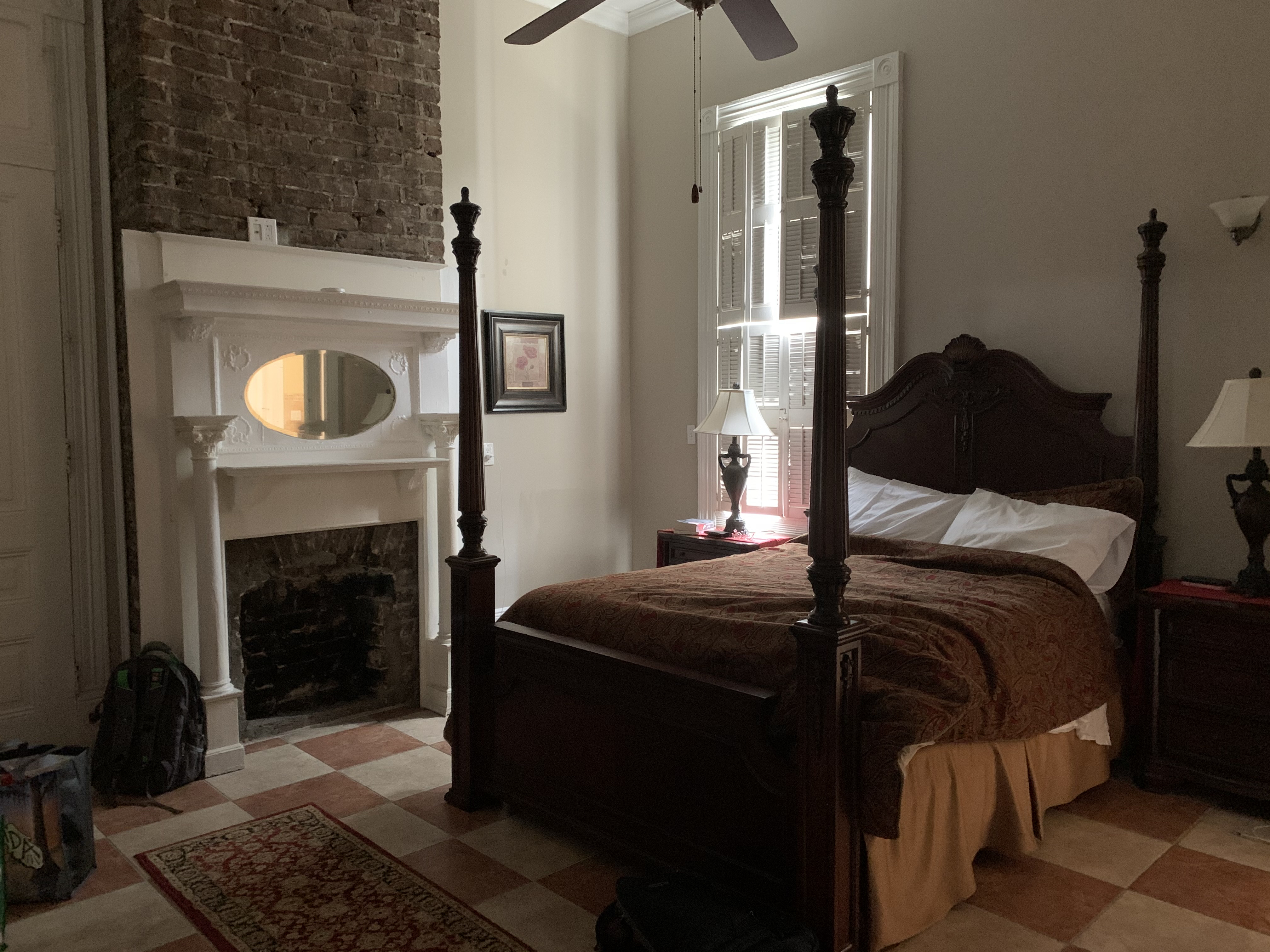


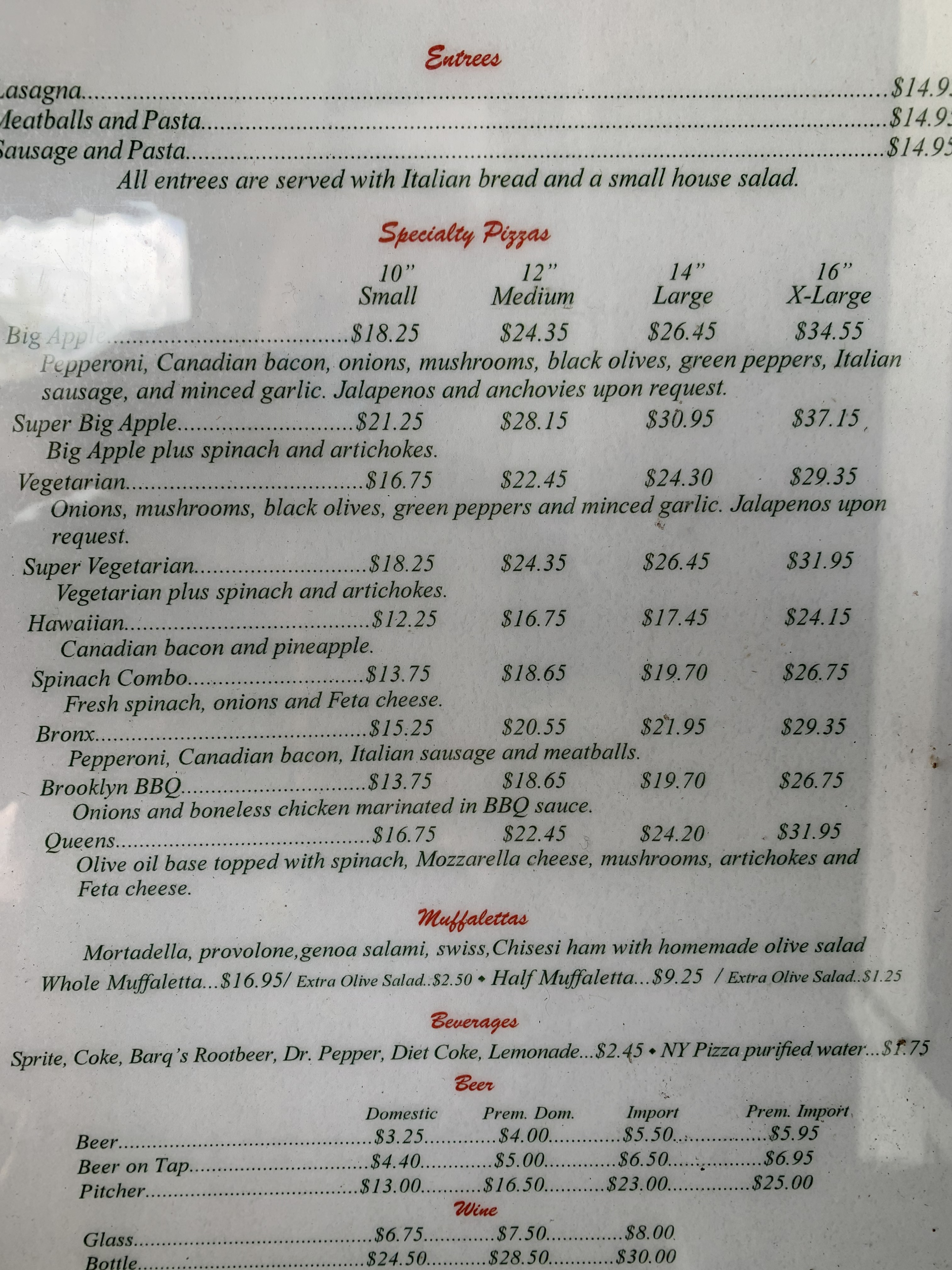
Part of the fun was walking to places where we could order out to eat. Magazine street has so many good restaurants; the first night was Japanese, the next day was mid-day wood oven pizza from New York Pizza. We ate it too fast to get a good picture. It was delicious!

Our favorite meal of the trip, on one of our all time favorite New Orleans restaurants, Superior Seafood, within walking distance on Saint Charles. What is not to love? It is here, long ago, that we introduced our grandchildren to grilled oysters, fish sandwiches, and profiteroles!


We ordered two dozen grilled oysters to share among the six of us. They are so rich, but they went fast. Too fast to photograph!


One of the highlights of the trip came at the time our waitress asked if we wanted dessert. When five of us ordered profiteroles, she exclaimed “Five?” She seemed so shocked! We assured her we wanted five portions (and a slice of carrot cake for one of the party) and she brought five, two profiterole each, SO good. They provide a bittersweet hot chocolate sauce in a silver server which you can pour over the profiteroles.
The next morning we all scrambled to strip our beds and pile all the sheets and towels in near the washer and dryer, make sure we left the kitchen as we found it, dishes washed, garbages emptied. It was a small price to pay for such a spacious and lovely location.
And the reward was breakfast at the new Two Chicks location, closer to the French Quarter hotels. We fortunately got there early, before the line formed outside to get a table!


I love to leave New Orleans with a taste of morning crepes in my mouth 🙂
We had picked up some items we had left to be polished and plated over a year ago. There they sat, with my name on them, but one of the pieces I was sure wasn’t mine. It is a bath box, and I was sure it was copper. When I picked it up, it wasn’t copper at all, it was sparkling brass. Zito’s Polishing and Plating does a fabulous job making our pieces from the Middle East look great again. Another stop was Enrique’s, to have some of our carpets mended.
So it wasn’t all walking and eating, we also had business to take care of, things we can’t get done in Pensacola.
On the way home, we saw a billboard nearing Mobile for Dick Russel’s, and we thought we would give it a try. We had to wait a half an hour, socially distanced and masked, although many of the people had noses out or a mask just hanging off an ear as they waited outside. The people waiting kept telling us we would love the BBQ.
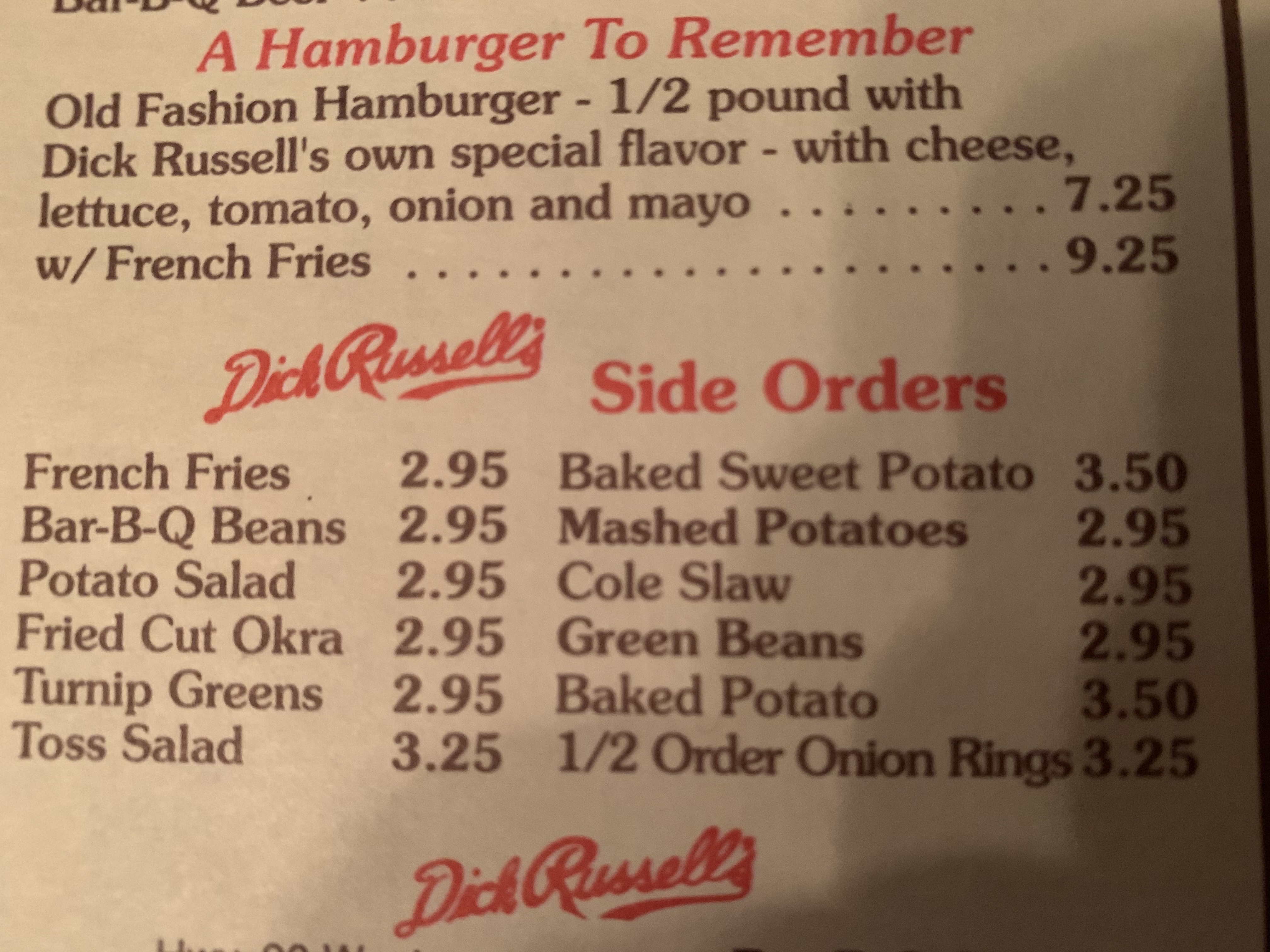


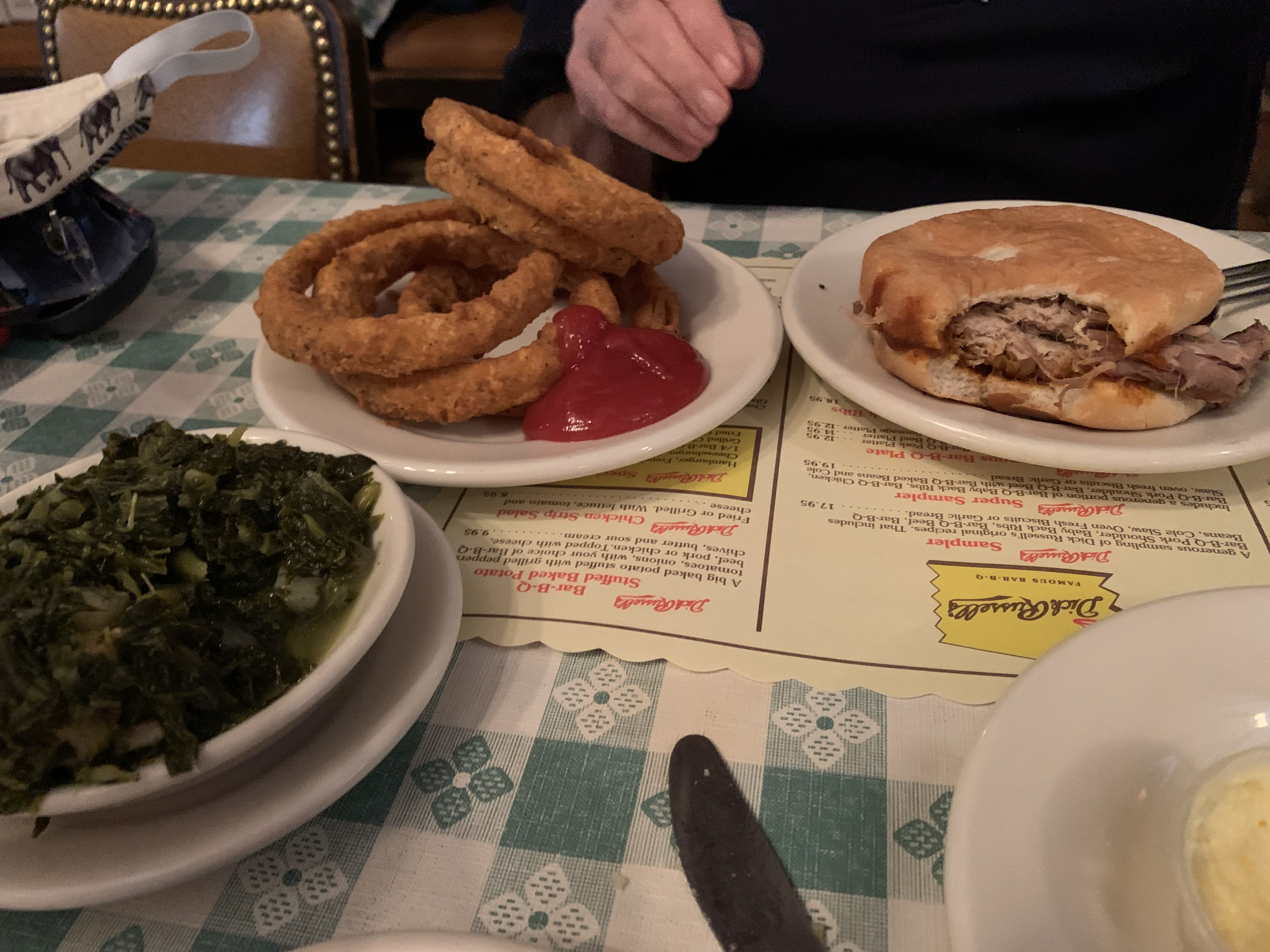
The truth is, we will never go back. BBQ is personal, and we were both horrified by the sauce, which others raved about. It tasted mostly like catsup to us. Sauce, in our humble opinion, makes the BBQ. This did not thrill our hearts.
All in all, however, a great family trip, our first outing as a family for over a year.
Welcome Ramadan 2021

For all my Muslim friends, people who have become dear to me, I wish you a blessed and faithful Ramadan.
Troublesome years, like 2020 – 2021, with all their deaths and miseries, also have hidden blessings, bringing us closer in faith to our Creator, by whatever name we call this mighty one. I am wishing you spiritual strength, and all the hidden blessings this holy season has in store for you as you set aside the cares of daily life and focus on the spiritual life.
I thank you for all I have learned from you, from the way your faith opened my eyes to my own faith, and how closely our faiths, in their purest form, intertwine.
May your Ramadan be greatly blessed.
Creme Chantilly: Happy Easter, Mom

Easter week, and I allow myself Creme Chantilly with my morning coffee.
Cream whipped with powdered sugar and a little vanilla for Easter morning crepes with the ham and other Easter dishes, it is a bittersweet treat this year; sweet and joyful that we can gather as a family to celebrate Easter, our good health, our hopes for the years to come, and sad, too, because most of what I have learned in terms of meal preparation and entertaining, I learned from my Mom.
My Mom died a year ago this week, in Seattle, one of the earliest victims of the COVID virus. I am still coming to grips with the way she died. When she went into the hospital, they were trying to figure out what this virus was, and how do deal with it. Even those already in Seattle could not visit nor sit by her bed. Flying from Pensacola to Seattle was unthinkable, but such a temptation. She was brave. We all FaceTimed, and she told us we were good, and we were loved. She faced her demise valiantly.
Rest in Peace, Mom. I am thinking of you all this week, and drinking your Creme Chantilly in my coffee.
Recent Comments
intlxpatr on Shampoo Ginger tigerbutterya0c5ff1d… on Shampoo Ginger intlxpatr on British Soldier Kidnapped, Esc… John on British Soldier Kidnapped, Esc… intlxpatr on British Soldier Kidnapped, Esc… Wikipedia Donate Button

Amazina


Early Voting in Florida


