Morocco Malta and the Med: Casablanca and El Jadida
I can’t be staying in bed when we are coming into port in a new city.

This was seriously disturbing.

That mist looks sulfuric!

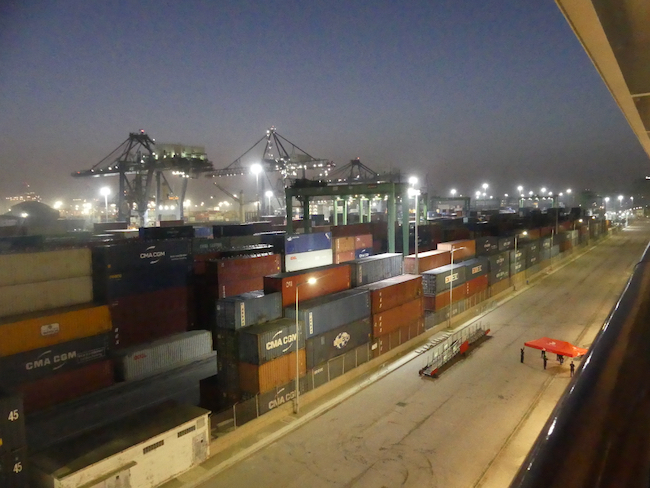
We are warned that Casablanca is an industrial port. No kidding!

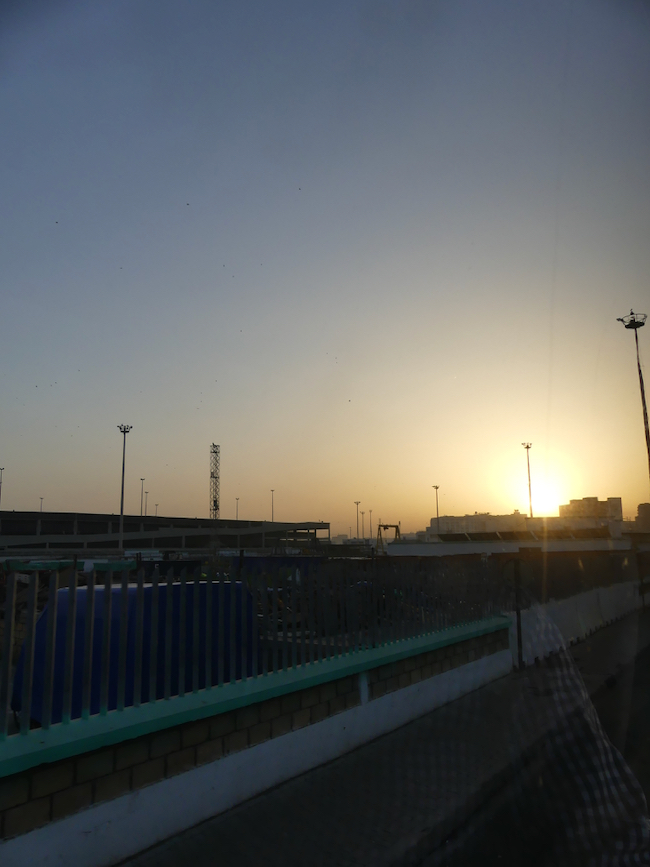
Quick breakfast and we are off to El Jadida, an old Portuguese fortress city. We were actually here ten years ago on our very first cruise, The Moors in Spain and Morocco. We really love Morocco. One year we came here at Christmas, which was also Ramadan, rented a car and drove all around Morocco with our son. We had such a great time.


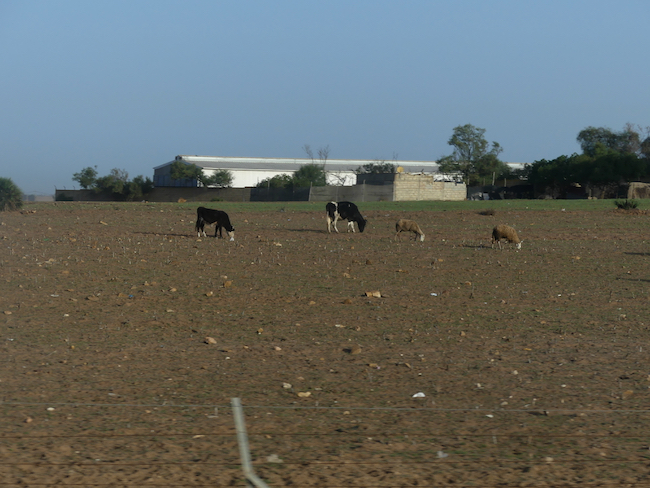
Our guide tells us this area near El Jadida is famous for raising horses for racing and showing.


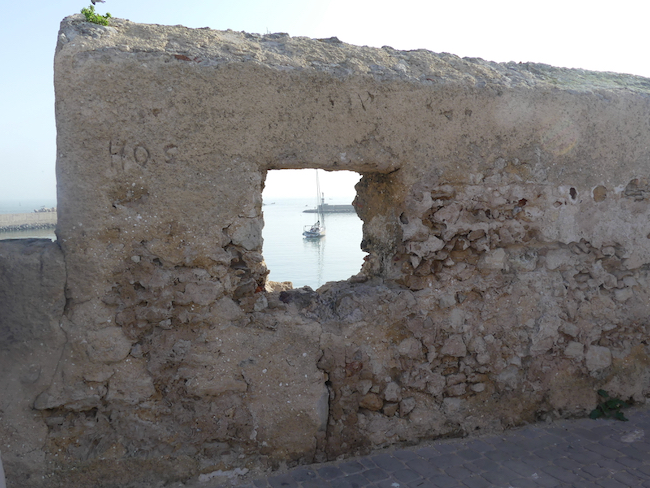
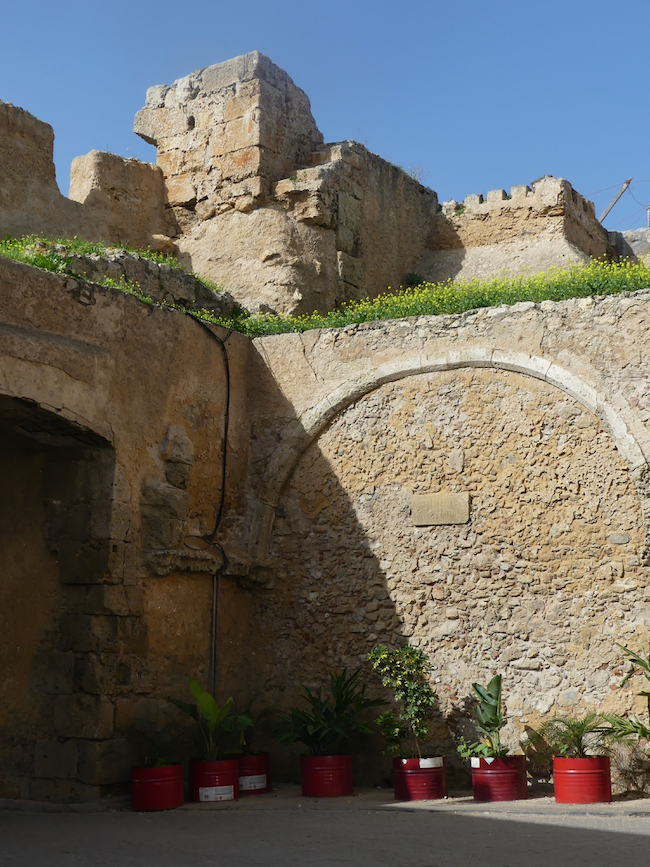
Me and my stone walls!


Getting close to El Jadida:
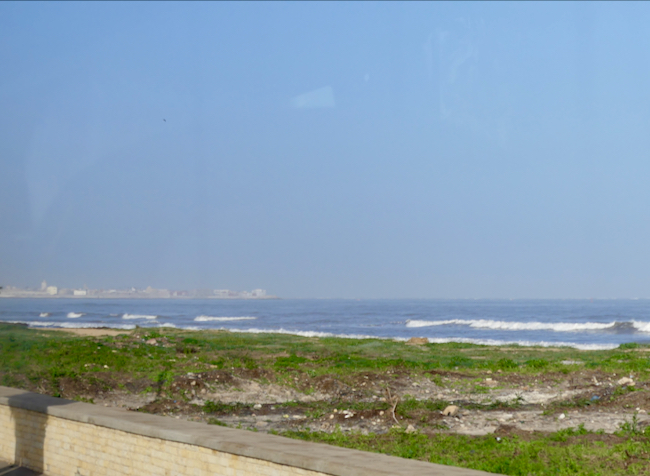
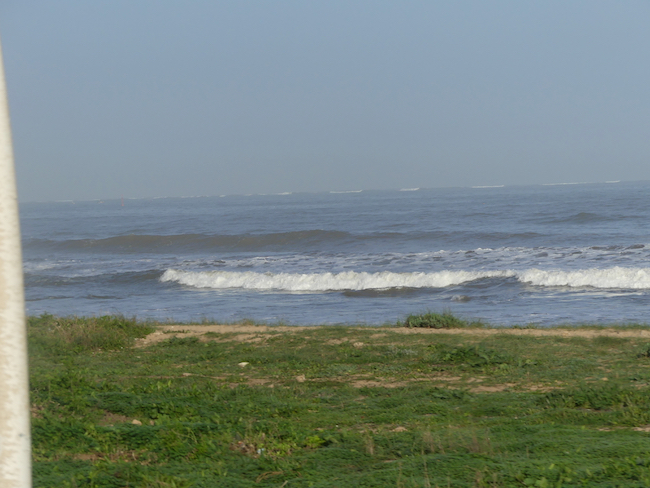

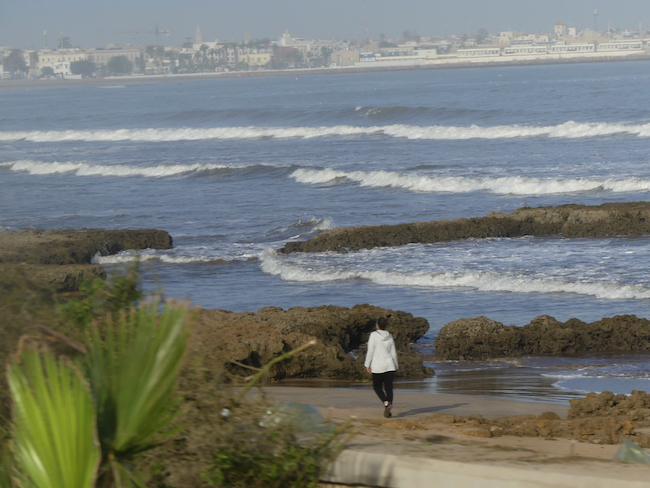

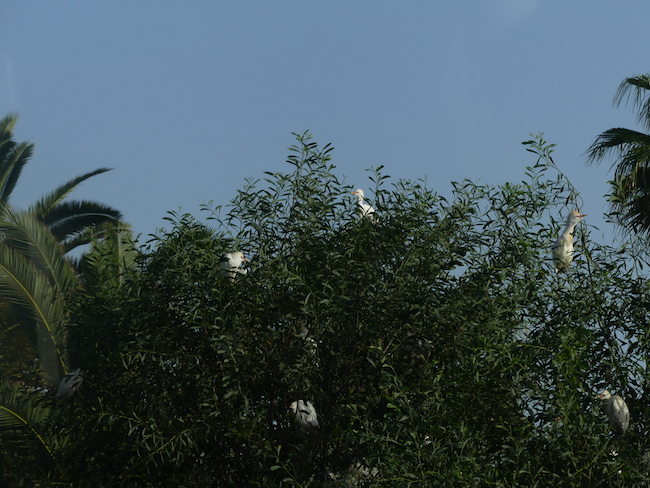


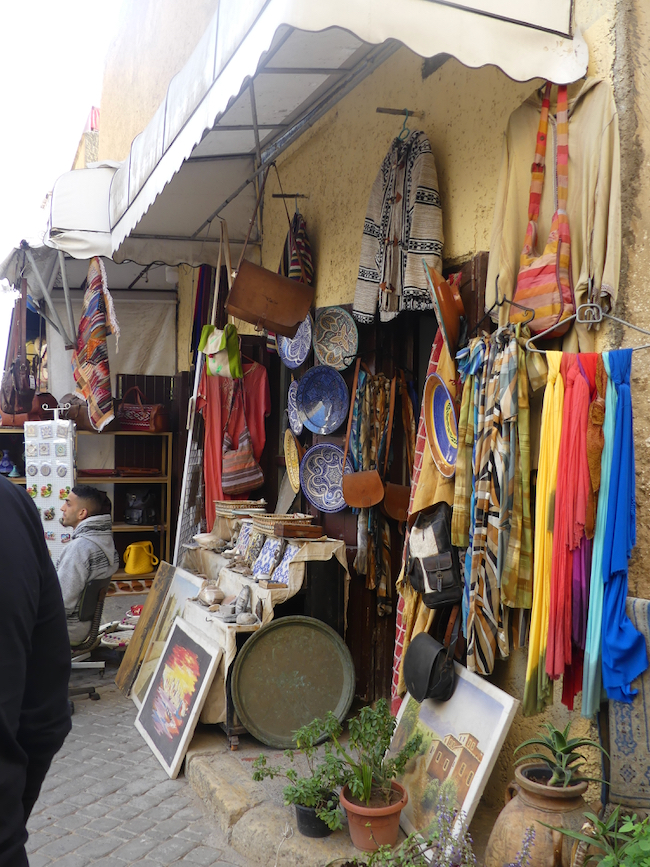
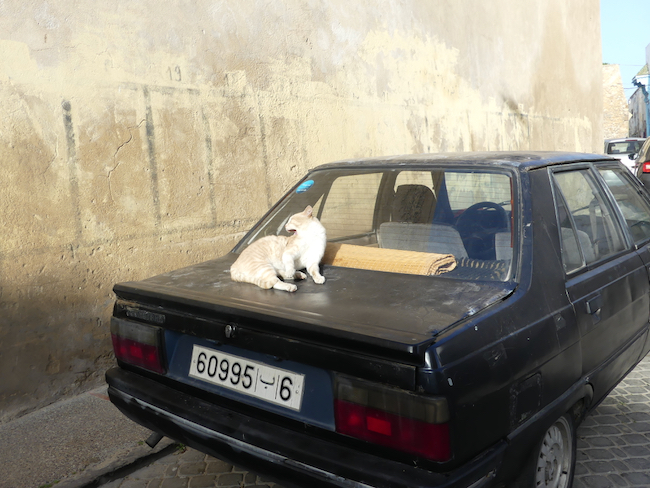

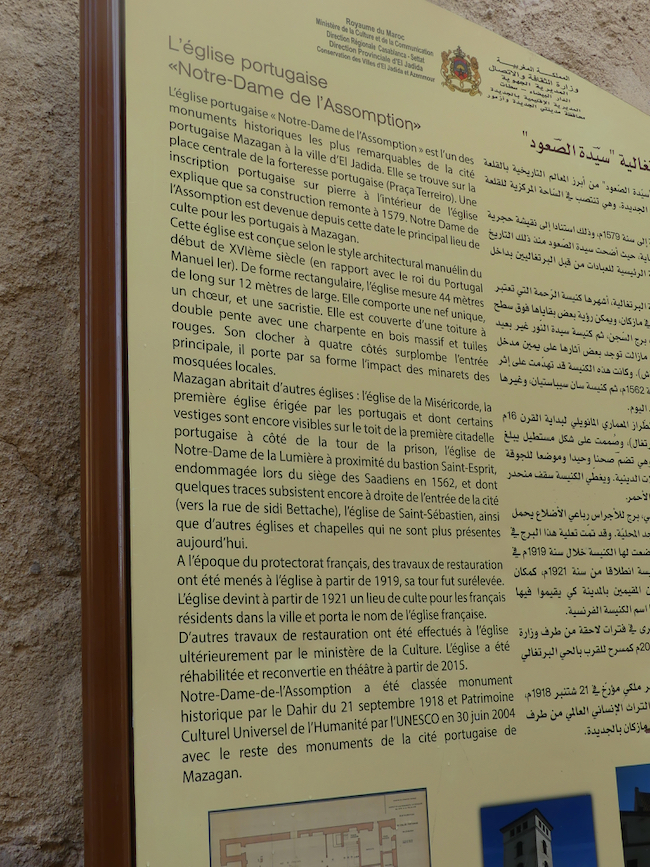
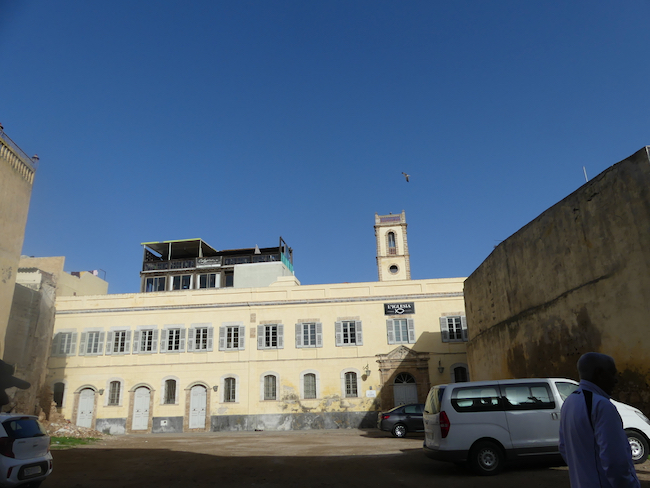
An old Portuguese Catholic Church in El Jadida. The people around Casablanca make it a point to discuss frequently how tolerant the area is, with Jewish and Christian populations as well as Muslim and Berber. Our guide was proudly Berber.
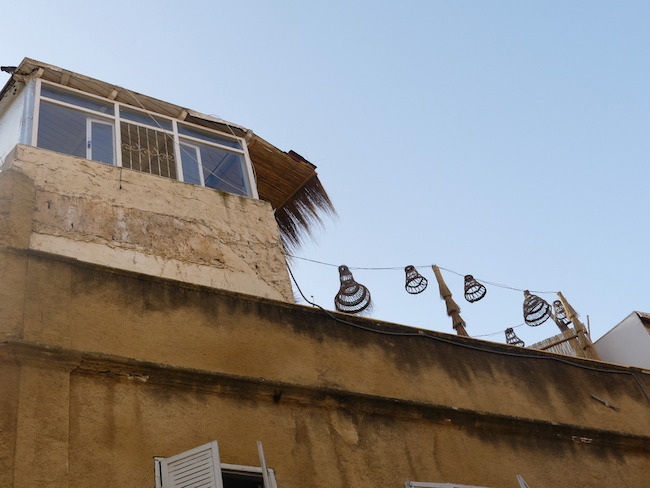


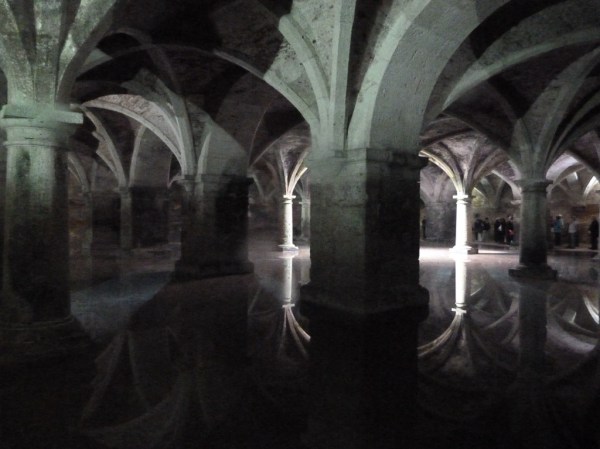
We had been warned that the beautiful old Portuguese Cisterns were closed for restoration, so the photo below is the exterior only, but I have a treat for you. Below the shot of the exterior is a photo of the interior I took ten years ago. I still love to look at it. The cisterns are so beautiful as well as functional.

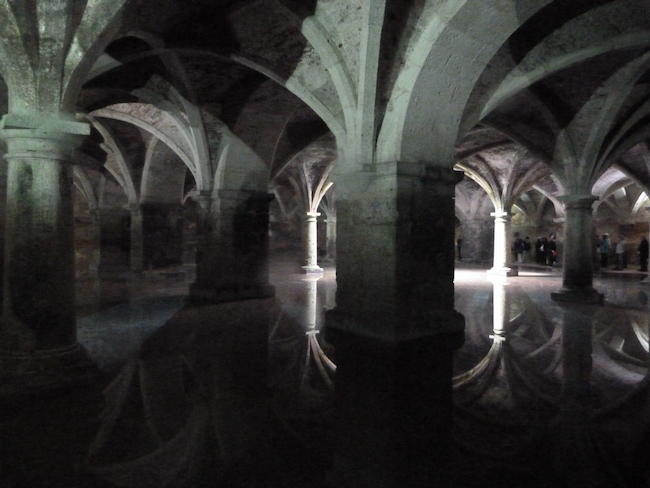
I don’t consider this cheating; I consider it . . . um . . . illustrating. . . or embellishing to show you what you might see when you go to El Jadida.
Below are Moroccan silk weavings.


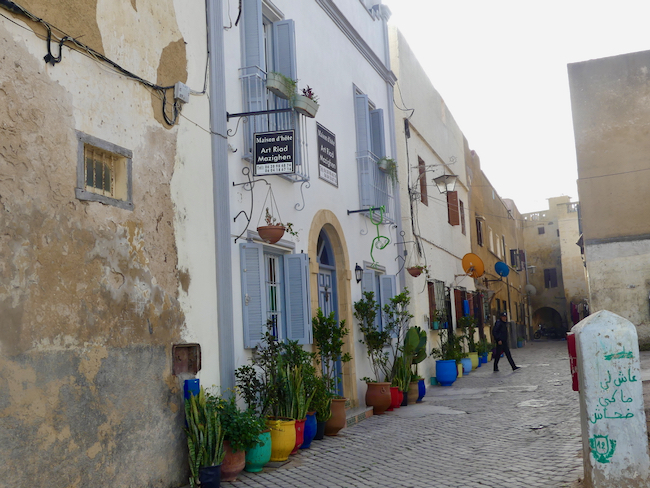
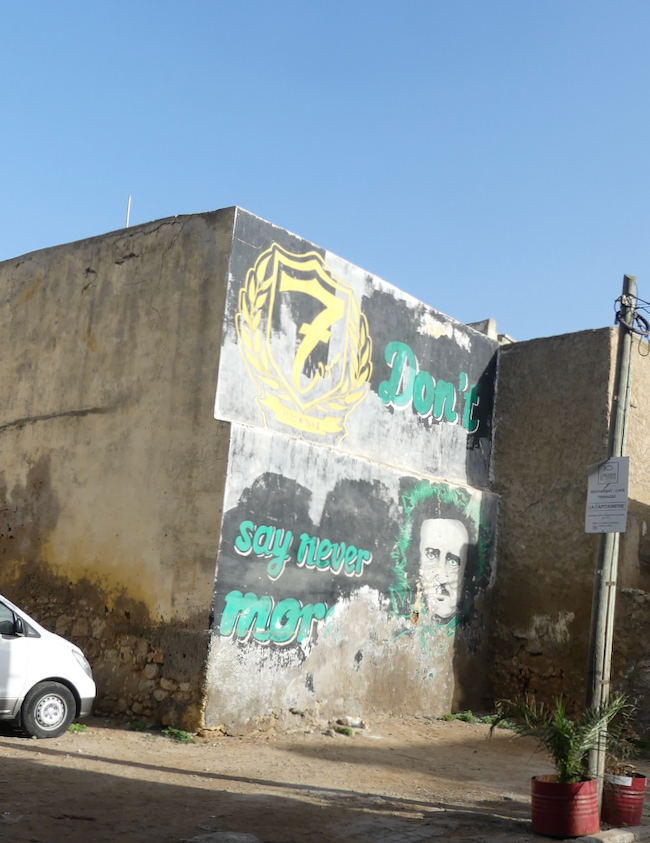



I believe this is the old Jewish bakery.
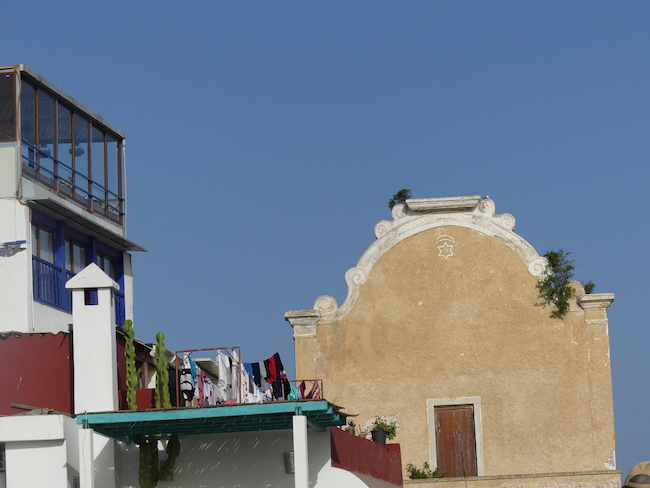
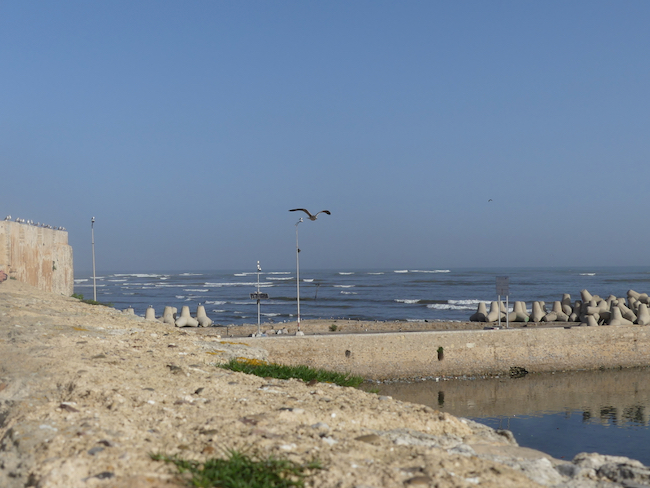

When you read old histories or bible stories about prisoners being cast into a well, it could look a lot like this:


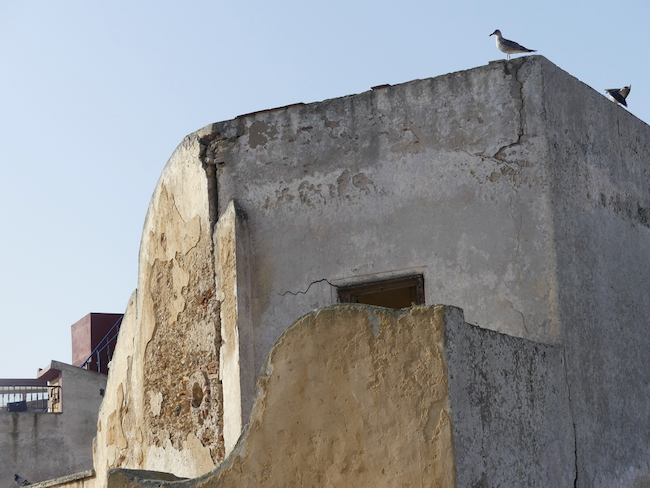
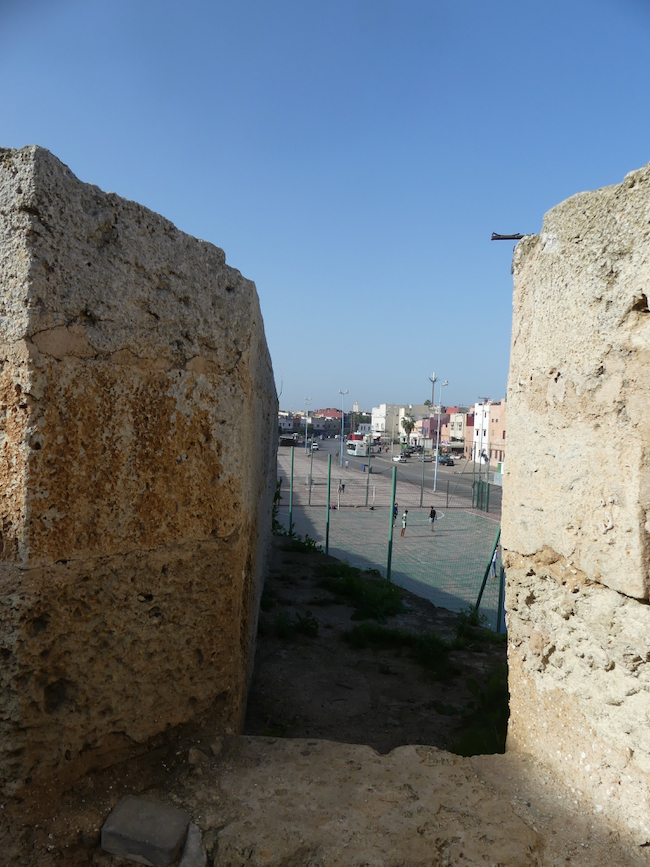


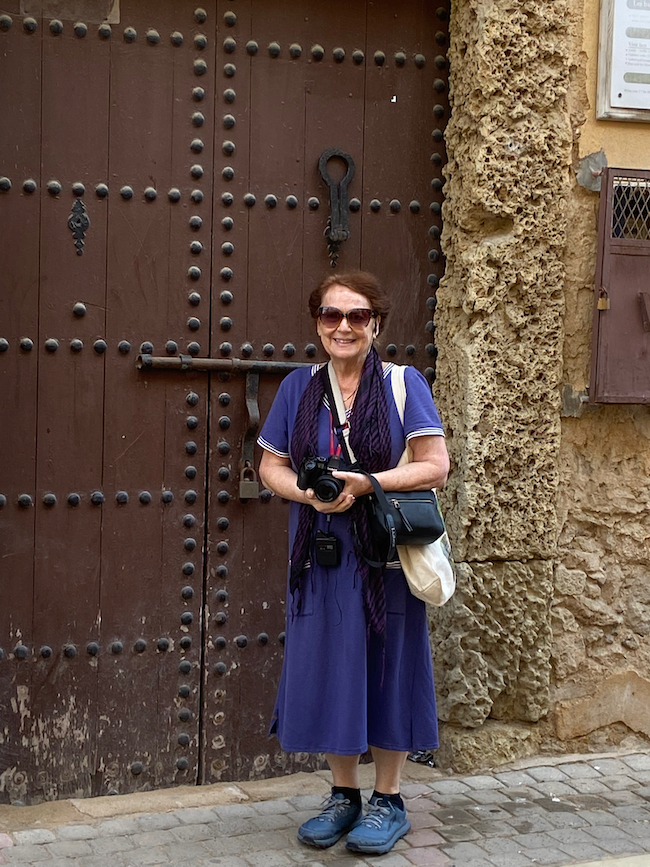
This picture below is hilarious because I am wearing an expensive pair of shoes that I find clunky. The trip description said it was challenging, with uneven hikes, rocks, and hills. It was a very mild hike; I could have worn my sandals.

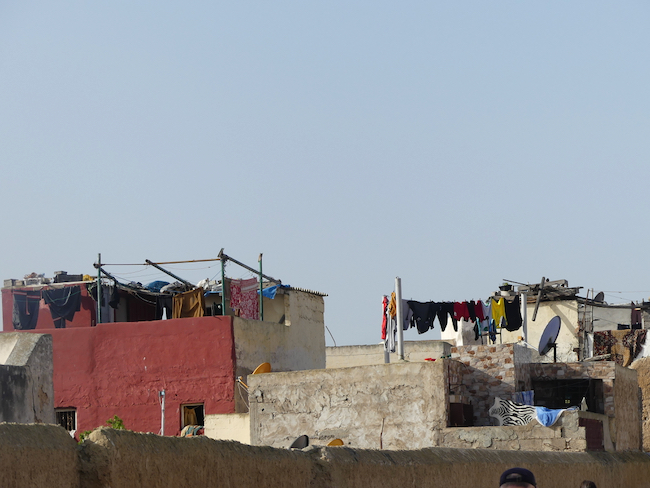
My husband took this photo below; he loved the contrast of the drawing of the cisterns and the laundry hung to dry over the cisterns.


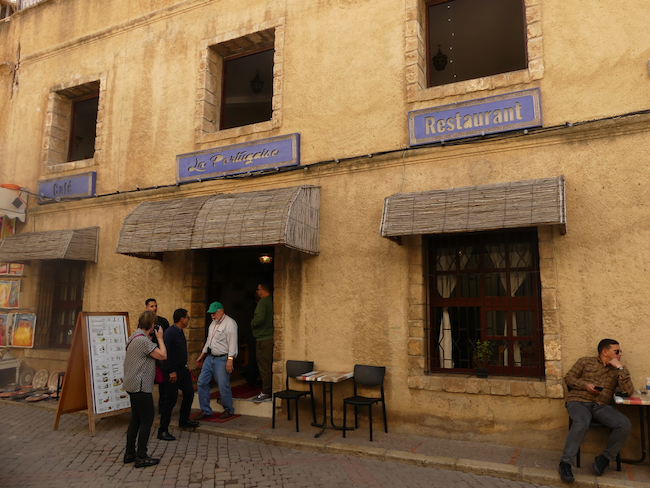
It’s going to be a couple hours ride back to the ship, but the guide has a treat for us – “Snacks” at a local restaurant, part of the tour, no extra charge. The small restaurant was just big enough to hold all of us, had a nice clean restroom and place to wash up, and served these delicious sandwiches, followed by a selection of house baked Moroccan cookies, and Turkish coffee or Mint Tea. The owner and his wife were so hospitable. They made us feel like very special guests. It really was a treat!

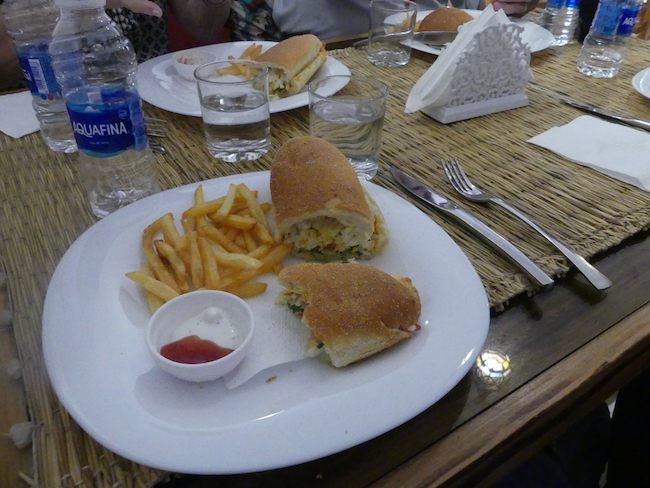



As we sail away from Casablanca, that same ship continues to be surrounded with that yellow steamy cloud.
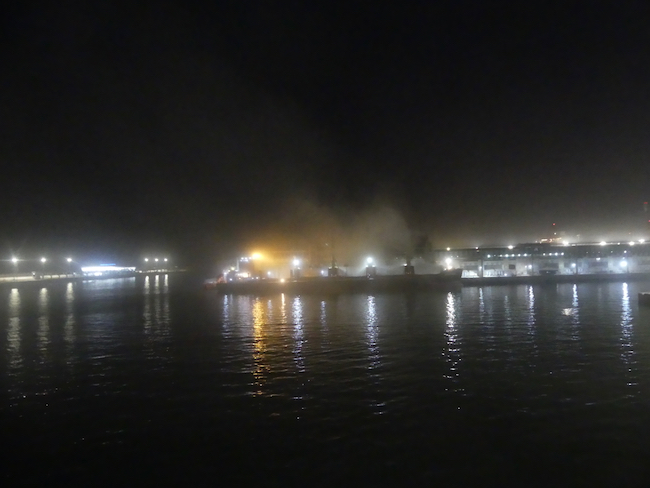
For us, we have seen everything we wanted to see. We think Cadiz and Malaga will be pretty tame after the excitement of Ajaccio, Malta, Tunis and Algiers. (We were wrong!)
El Jadida and Casablanca, Morocco
As we leave Marrakesh, I tell AdventureMan that we could easily drive here, and that gas prices are really good:

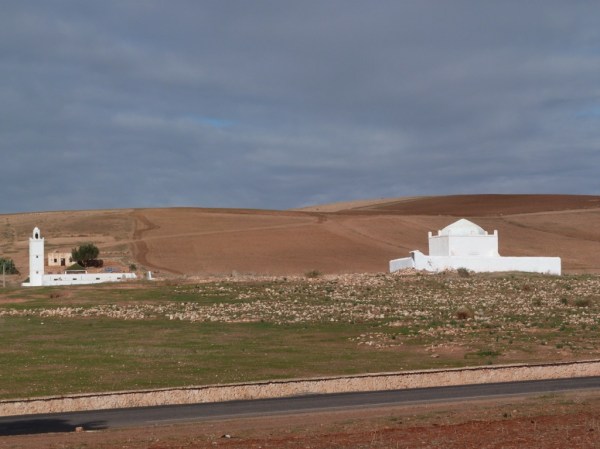
And AdventureMan reminds me that it is not the price per gallon, but the price per liter. Oh. That’s very different. The Moroccan countryside on our drive to El Jadida reminds me of Tunisia back in the late 1970’s when we lived there, full of little marabouts, or burial places of people who lived saintly lives. The guide explained if it is white, it is a man’s grave, if it has green or blue, it is a woman.
Market days along the route:
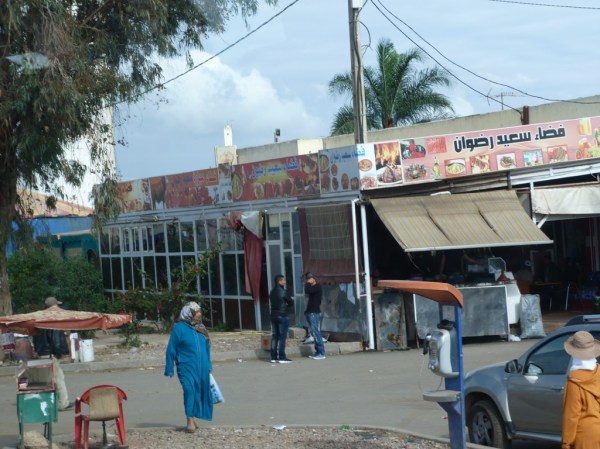


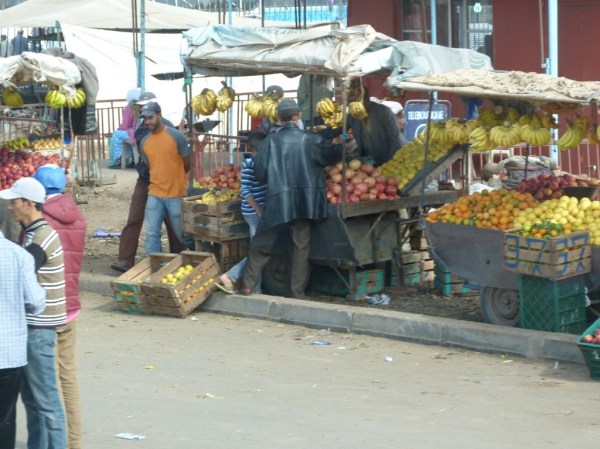
We reach El Jadida, where we are visiting an old Portuguese cistern. It turns out to be very beautiful. It also starts raining cats and dogs, making it very hard to take a good photo in any unsheltered place. The rain is really coming down! We are soaked!

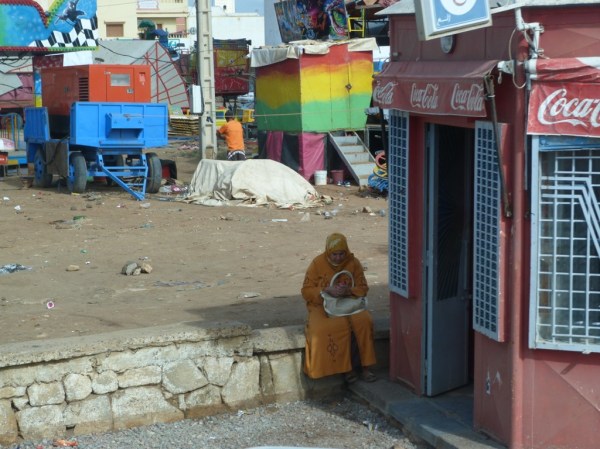
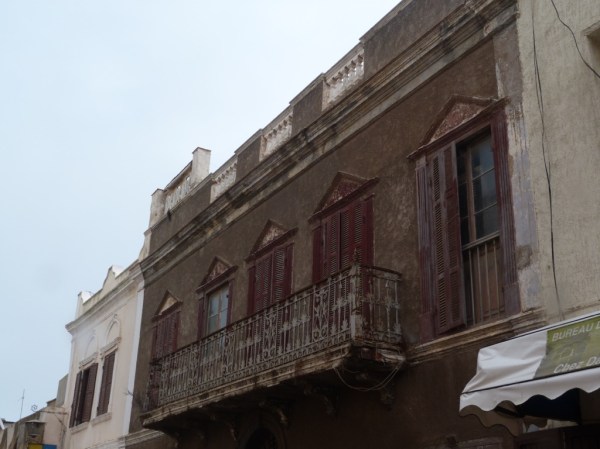
Those are not blue skies; those are cloudy grey skies!

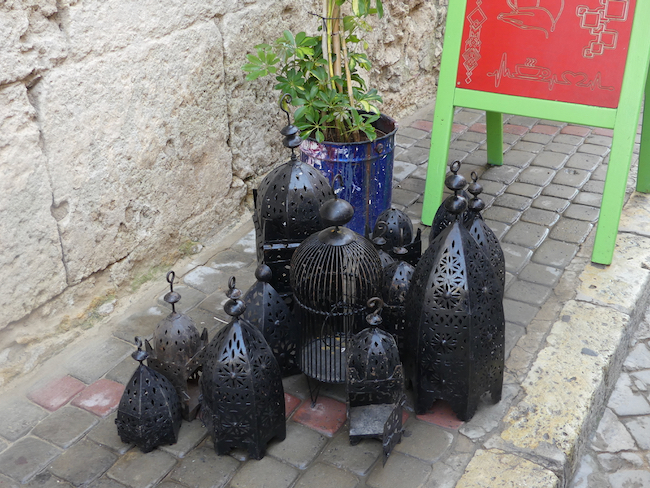
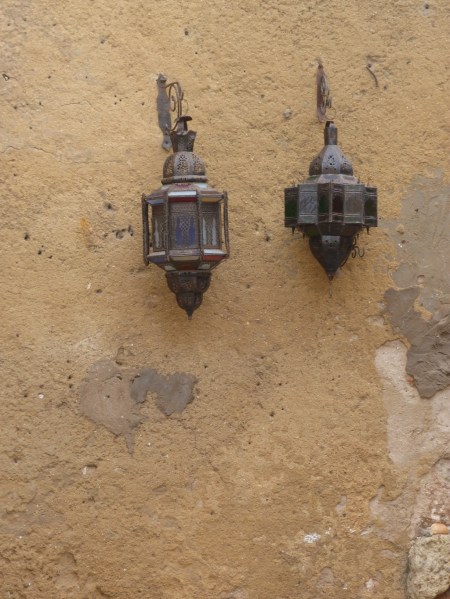
Light fixtures 🙂


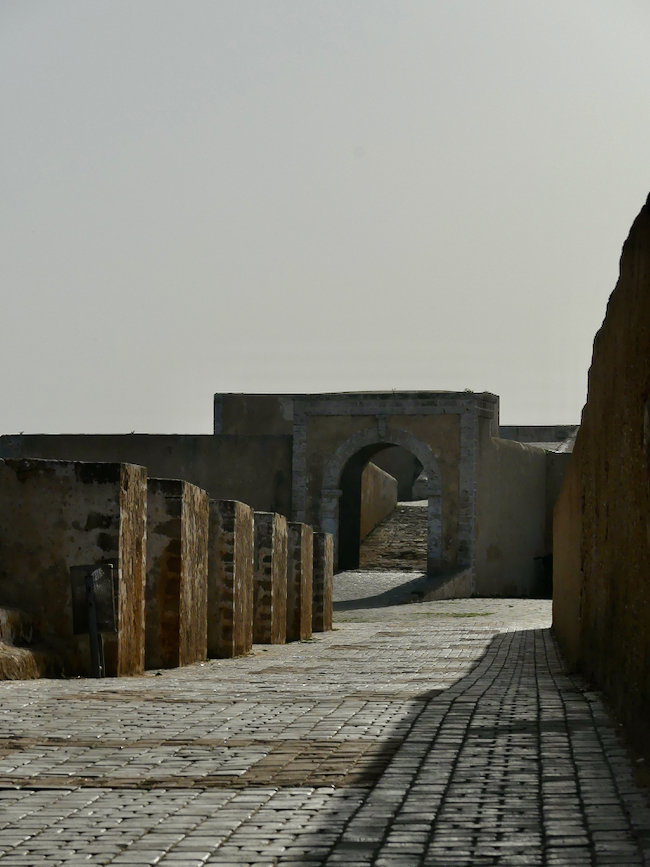
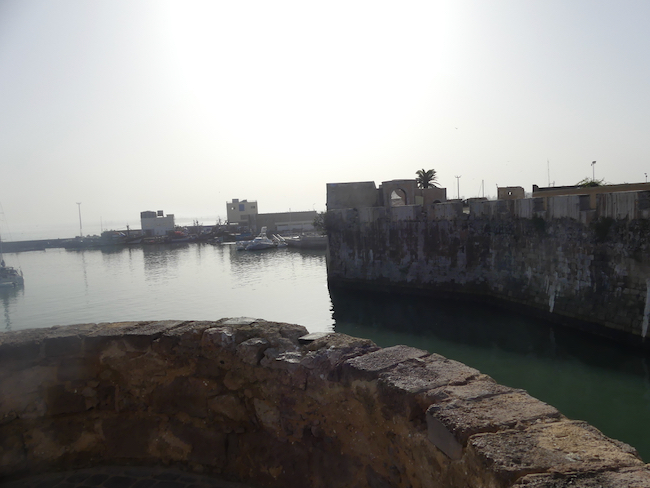
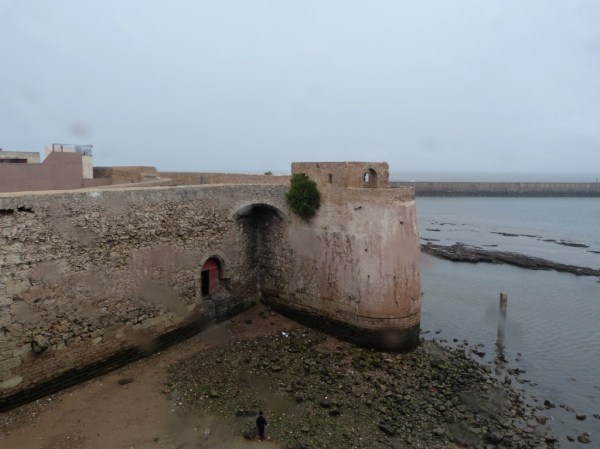
The old ramparts of the Portuguese fort:
We stopped at a huge place where, once again, they were set up to serve groups. There must have been 500 – 600 people serving themselves. I saw ONE Moroccan dish. There were several Chinese dishes, an entire section of Italian entrees, all in all, a very bland selection of “international foods” which means you can find something to eat, but it won’t taste all that great. It is engineered to be nourishing and inoffensive. There were many many kinds of desserts, in tiny portions. This was a very not-special kind of place to eat.
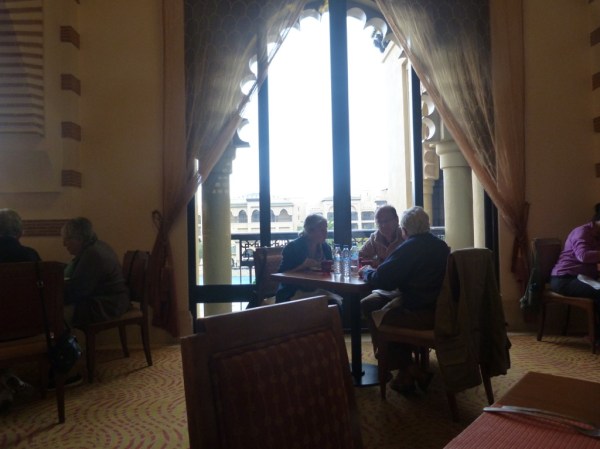


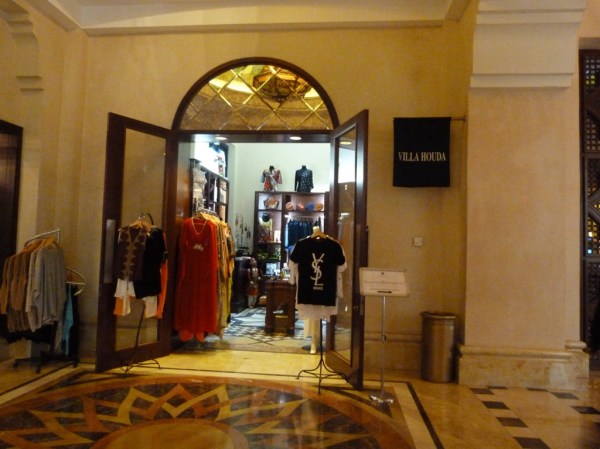
The entry was built to be impressive:

We were very close to Casablanca, and made a trip along the coastline to see one of the largest mosques in the world, the Hassan II mosque.


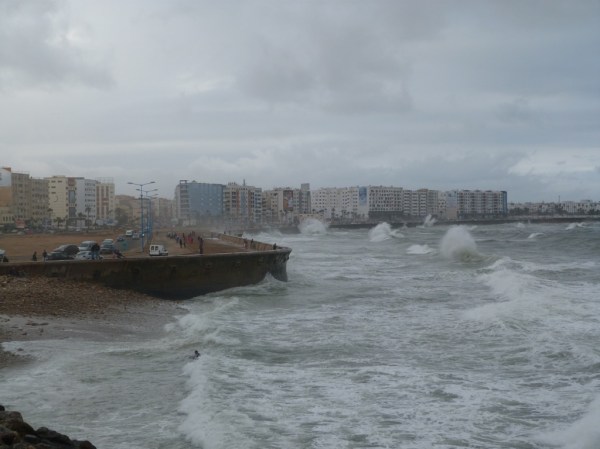
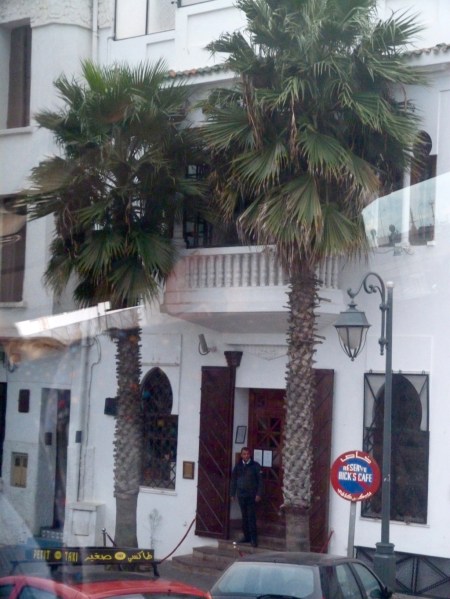
We made a brief stop so everyone could photograph “Rick’s Cafe.” which never existed except in the movie, but now has a restaurant of that name, in Casablanca, and draws in a lot of people who saw the movie.
Underway on the Guadalquivir
Before we even get underway, we hear the big engines start to rumble. AdventureMan wants to sleep a little longer, but I am exited and want to watch us cast off and head down the Quadalquivir, which is Spanish for the Arabic Wadi El Kebir, or big waterway. Or valley. I always think of wadis as dry, a place to potty under the bridge when you live in a country with few public conveniences, but the Guadalquivir is big, and deep, as wide as the Neckar River when we lived in Heidelberg.
The sun is coming up as we depart:
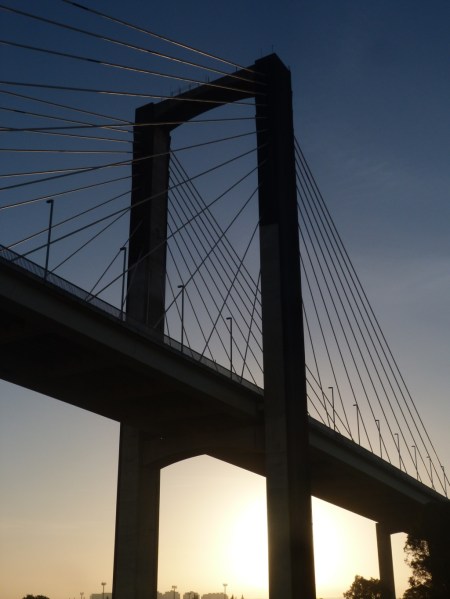
Most of what we pass is countryside, low and fertile.

Now and then we encounter another boat.

We meet and chat with other passengers as we watch the countryside go by. Soon, there is a lecture (none are mandatory, but all are interesting) about the context of the voyage, which is called Passage of the Moors. We get a lot of information from different lecturers, some of it repetitive, which is good, because when you hear it more than once, it might stick. There are lectures for the whole boat, and lectures for separate groups, and as we are in a gathering of the Smithsonian group, we pass Cadiz, en route for Casablanca. My heart grieves; I had dearly wanted to see Cadiz, but instead we had the wonderful day seeing Seville on our own, hopping on and off the bus and visiting the two museums.
This is an oddity. This is a small ship, and does educational trips, but educational trips for grown-ups. There is not one single child on board the ship, nor are there things for a child to do. There is a swimming pool, but it is outside, and unfilled; the weather is probably too cool. There is a spa, and there are lounges and a library, there is a lot to do – if you are an adult. (You can find the ship by Googling Voyages to Antiquity)
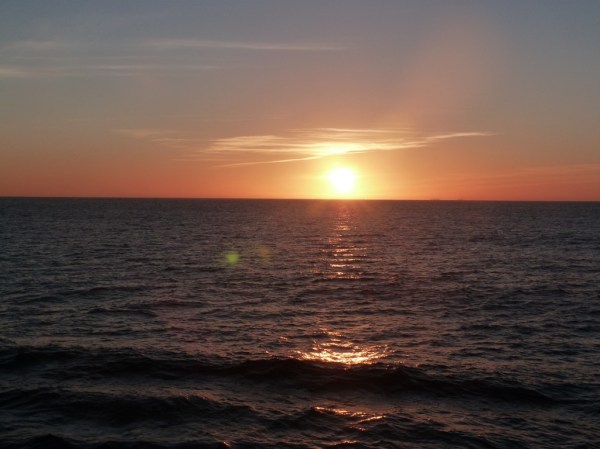
I skip the afternoon lecture to sit out on our balcony, which is large, and has beautiful wood fixtures, deck chairs, and a nice table. I read, I watch the waves go by, and wish I had a fishing pole. We are on the sunset side of the ship, so I get to take a photo of the sunset over the Mediterranean Sea.
And the next morning, we enter Casablanca!
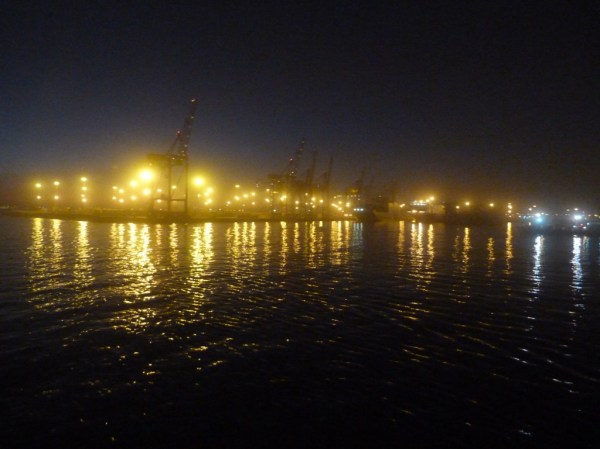

We dock, and for a while watch other ships come in, watch dock life in Casablanca, and pack for our day and overnight in one of our favorite cities in the world, Marrakech. The ship we are watching coming in is a sister ship to the ship that went aground in Italy not too long ago, a much bigger ship than we are on.

Our entry visa into Morocco:

Recent Comments
ExpatAlien on What Country am I Living … intlxpatr on Yellowstone: Old Faithful to C… Michelle on Yellowstone: Old Faithful to C… Cathy on No Grown-Ups in Charge intlxpatr on Waiting for Snow Wikipedia Donate Button

Amazina


Early Voting in Florida


 Here There and Everywhere