British Isles: Kirkwall, Scara Brae – The Best Day of Our Trip?
We think this day was the best day of our trip. We think every day of this trip has been stellar, above expectations, because we expected both heat and rain, and have had neither. We have had glorious days and breathtaking experiences, and today was the best of the best.

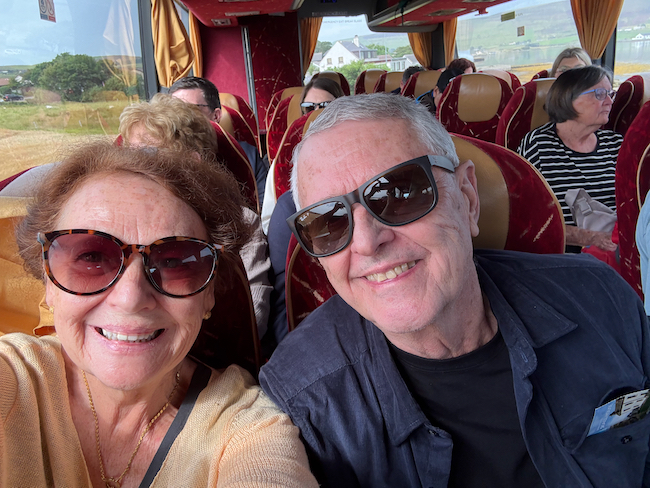
Thank you, AdventureMan, for helping me out with photos. I wish I had more.
We wanted to see two major geographical locations coming to Kirkwall, and we got to see them, and more.
One was Scapa Flow, a huge inland harbor, one of the largest inland harbors in the world. Vikings used it as a natural harbor for centuries. The British kept a fleet there in WWI, and the Germans scuttled their ships there after WWI rather than surrender the ships to the British.
A German U-boat came in after 1939 and sunk the Royal Oak, a British battleship, and over 800 people perished. Among them were 16 year old boys working on the ships with the Navy, causing such outrage in Britain that they no longer recruited 16 year olds.
For the British, the Scapa Flow is a memorial on the level of Pearl Harbor for the Americans. It’s a protected area.
Continuing on, we were able to see the Stone Circles of Brodgar and Stromness, These huge circles of stone pre-date Stonehenge by centuries.
And then we reach our goal, Scara Brae.
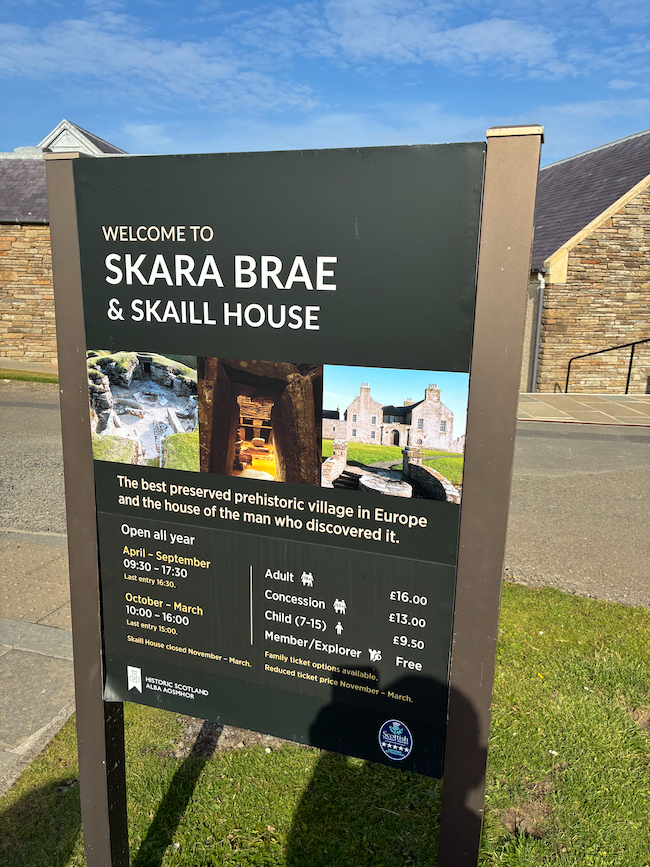
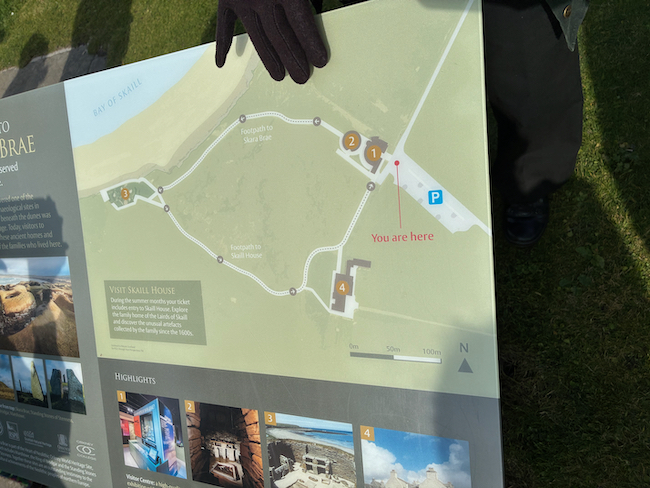
Scara Brae was discovered by accident when a huge storm uncovered stone dwellings buried by sand and soil, which were beginning to erode away. The dwellings are over 5,000 years old, created to shelter from wind and cold, to store goods, and to house families. There are areas created for food preparation, food storage and cooking, areas for sleeping, and a special area for crafting items like pottery and tools to make life easier.
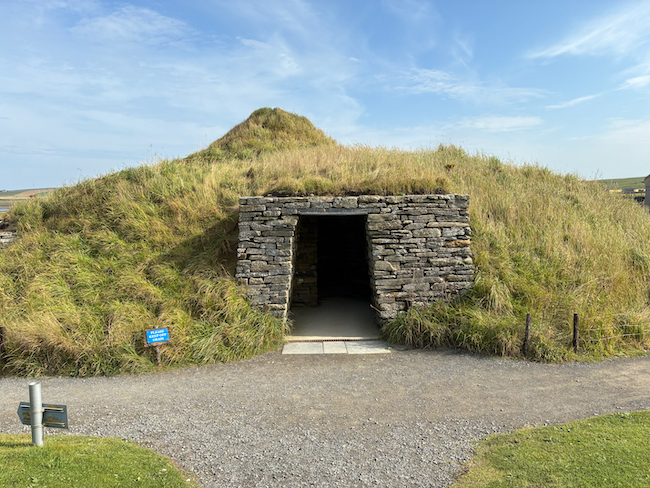
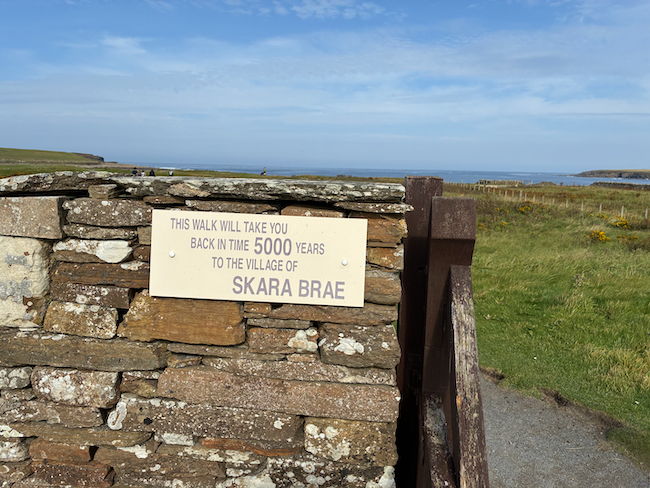
Many people today think we are smarter than earlier man, but when I look at the smart things these people created to make their lives livable, I believe they were every bit as smart as we are, and in some ways, smarter.
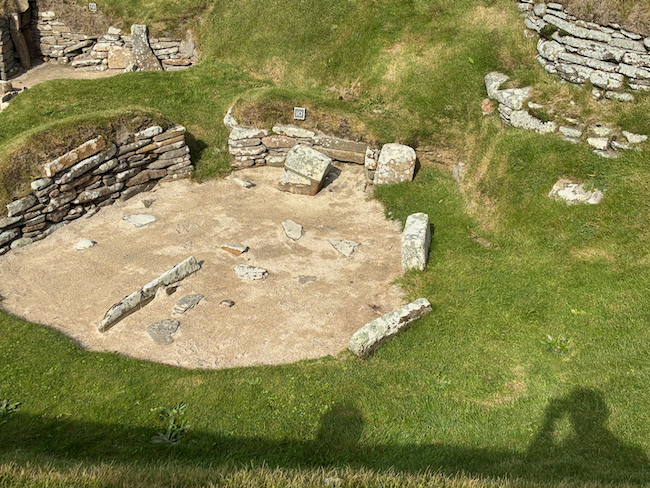
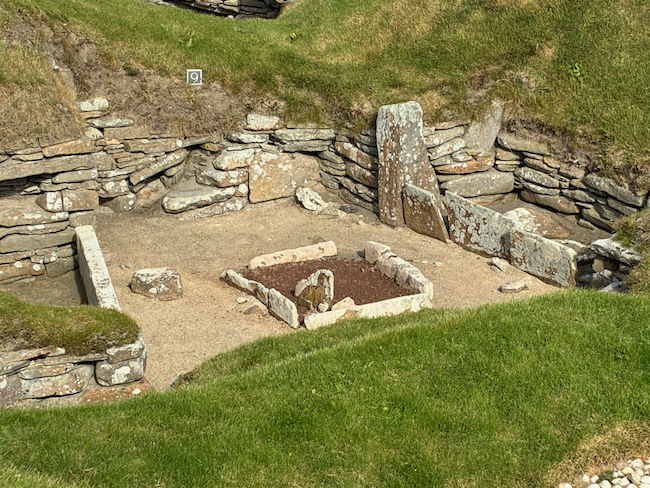
Look how closely these stones fit together to keep the earth out of their houses, fitted without mortar. Our archaeologist guide tells us there is no way to date a stone wall like this, that the inhabitants of the Orkneys build their walls the same way to this day, only now they also use mortar. Traditionally, they will put pointy flat stones on top, vertically, to discourage sheep and cattle from trying to get in (or out). In the museum there are artifacts – combs, needles, tools – which help date the findings.
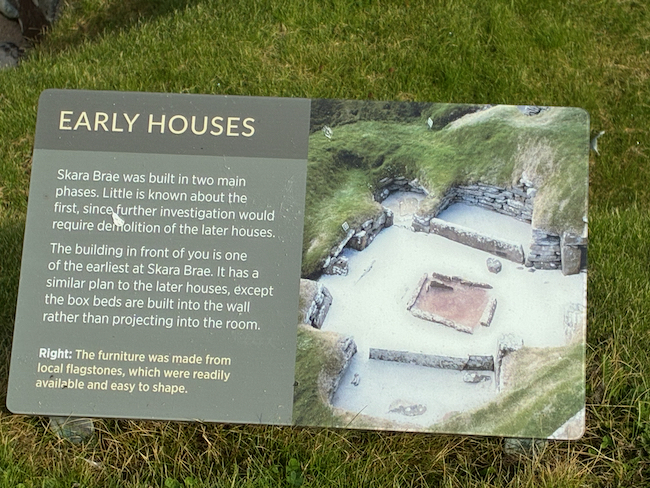
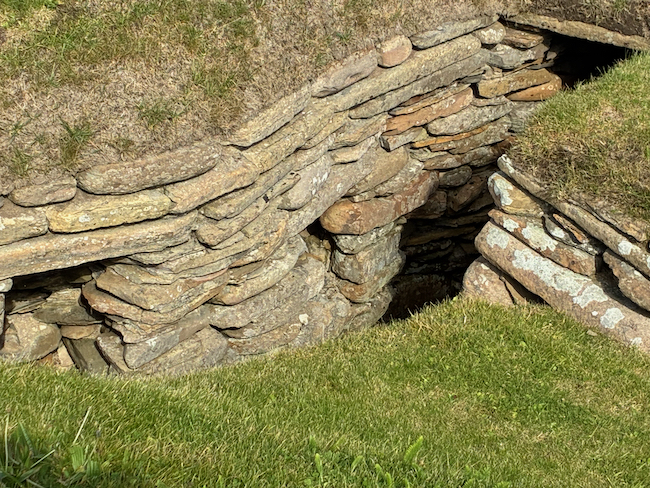
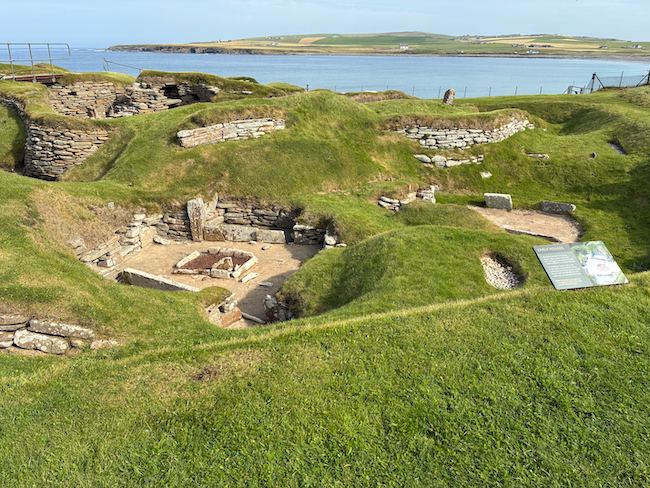
It is a beautiful location, by the sea. It was a thrilling visit.
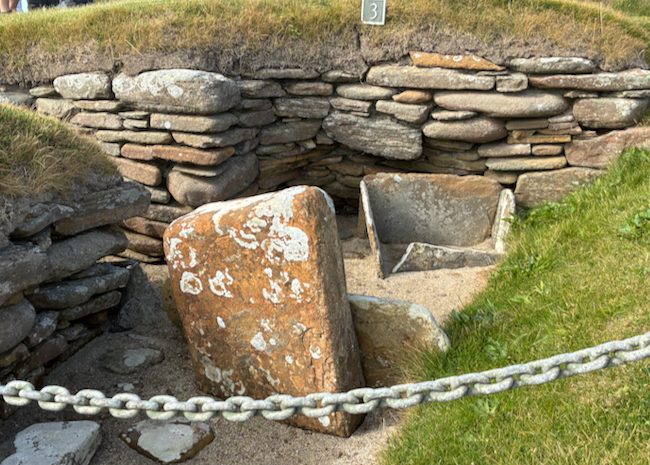

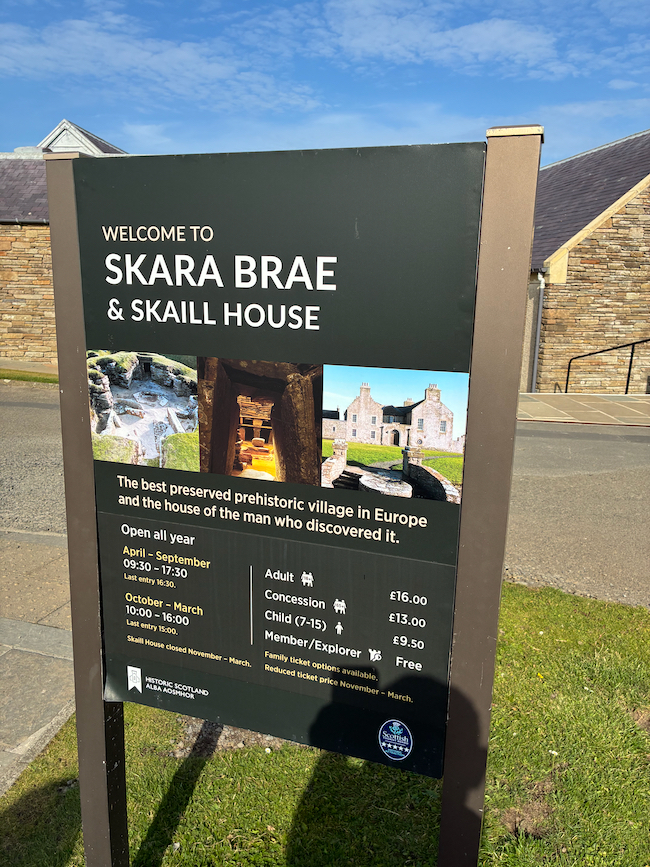
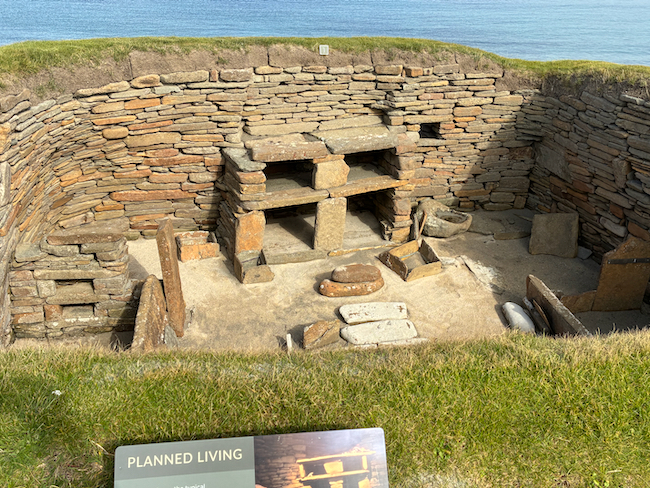
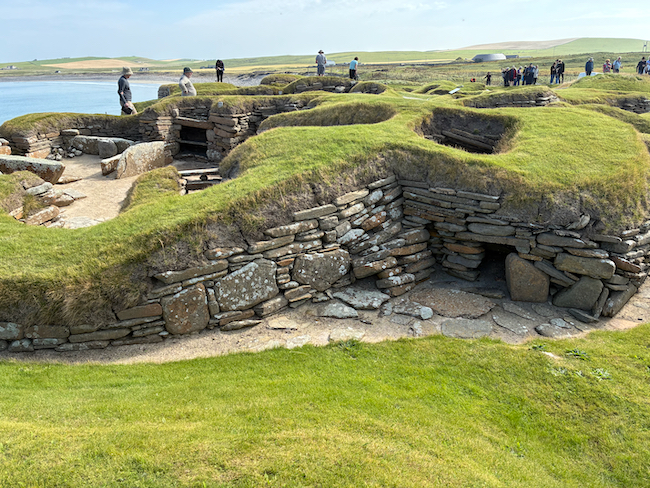
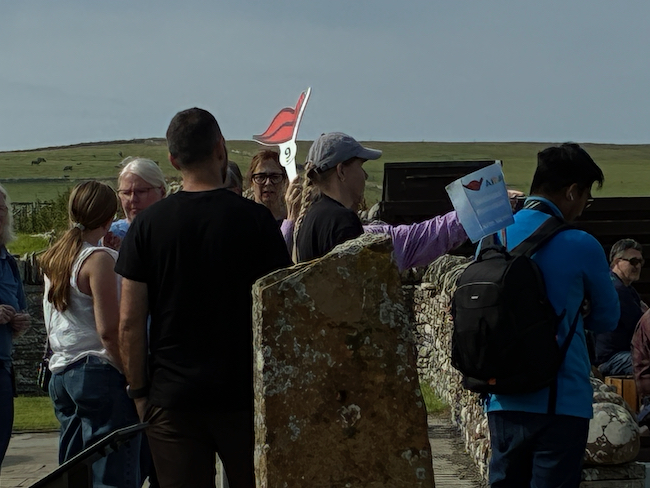
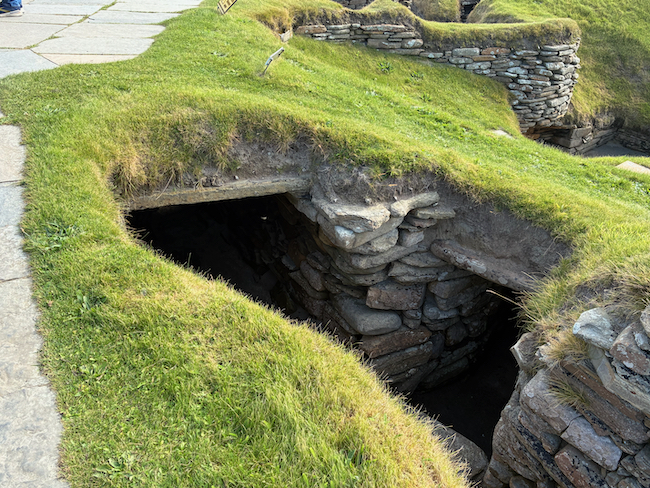
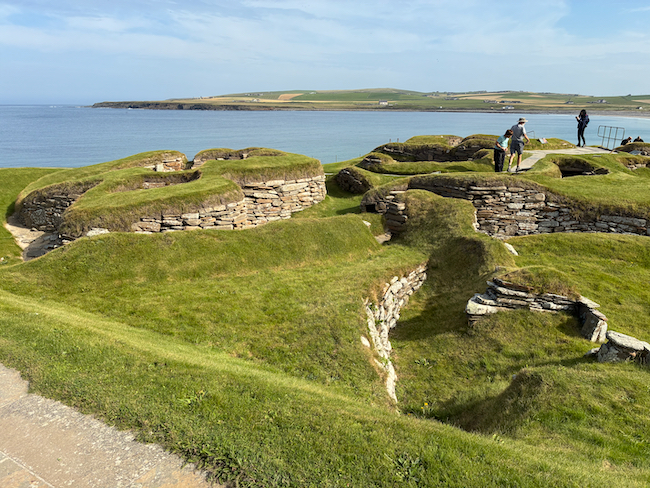
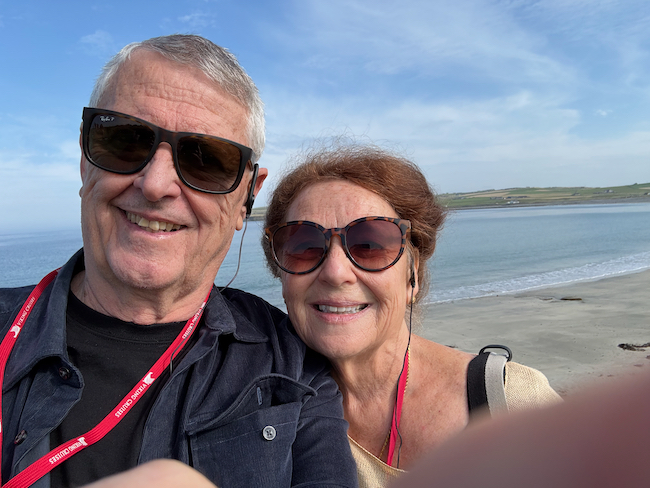

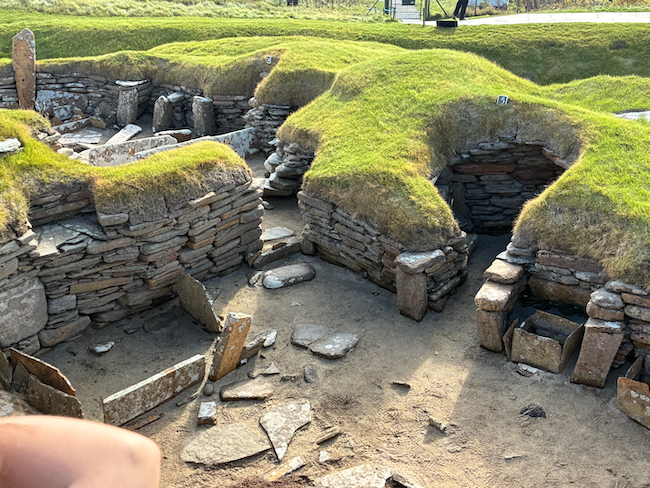
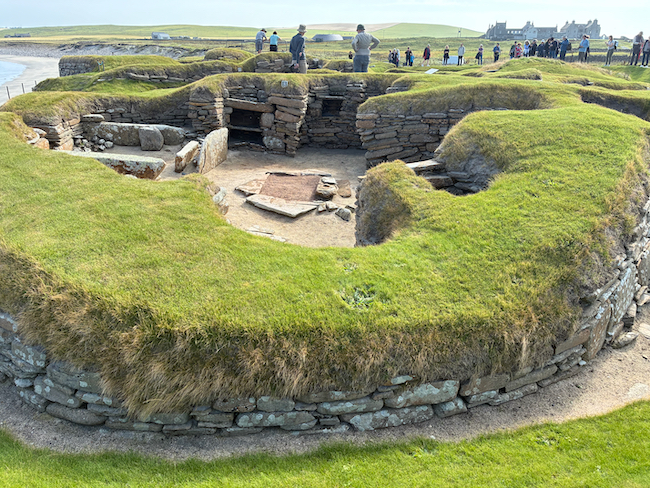

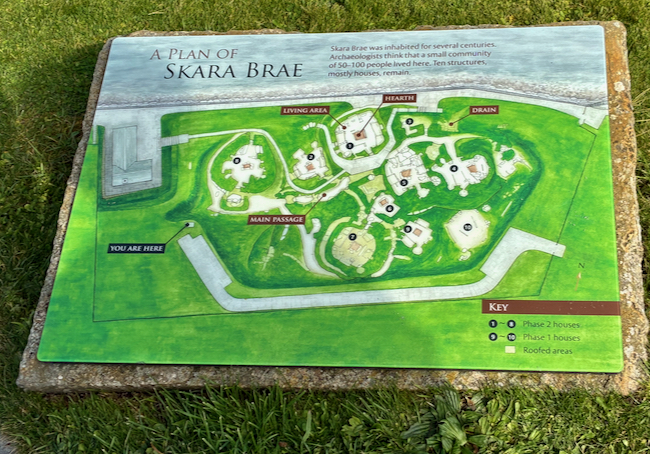
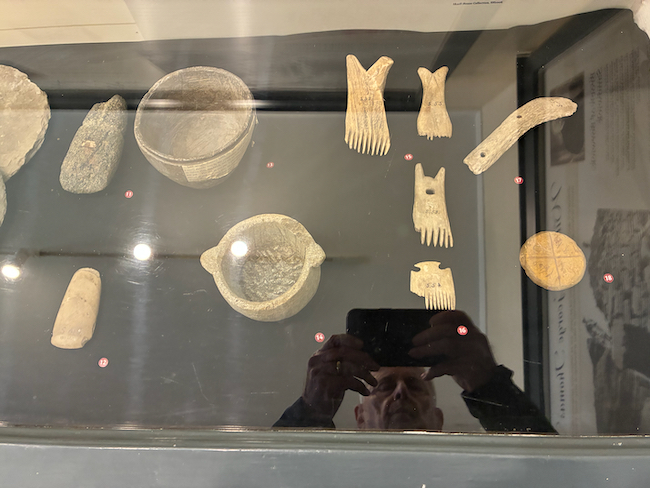
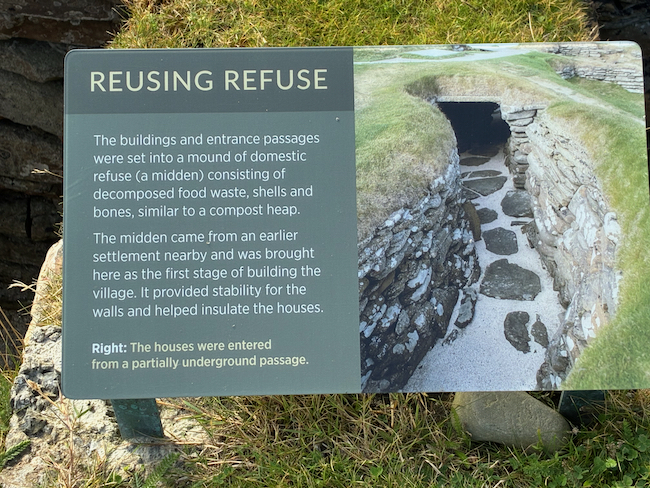
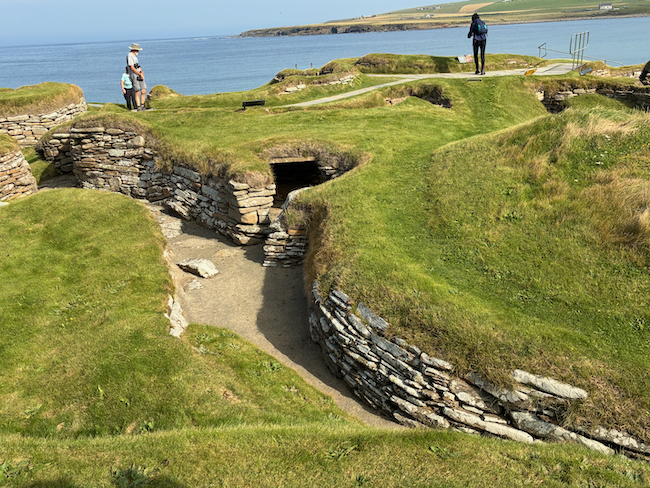
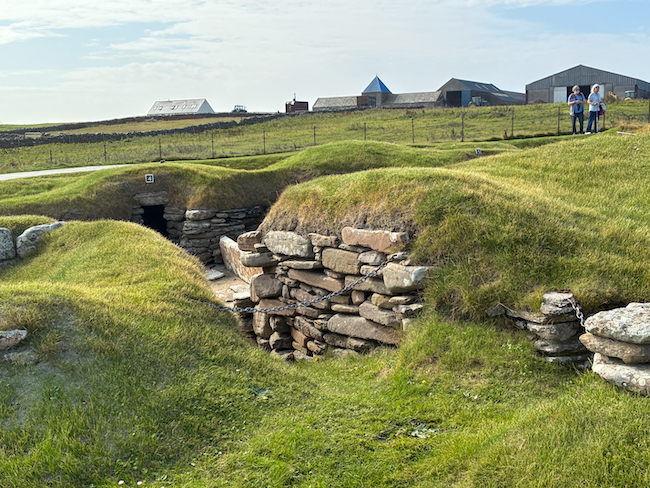
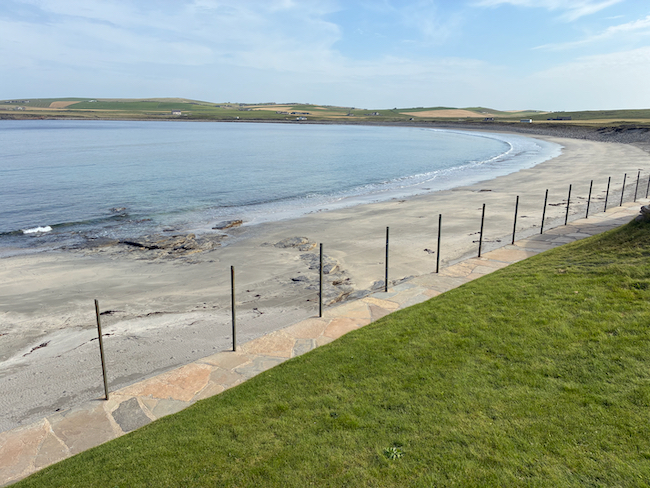

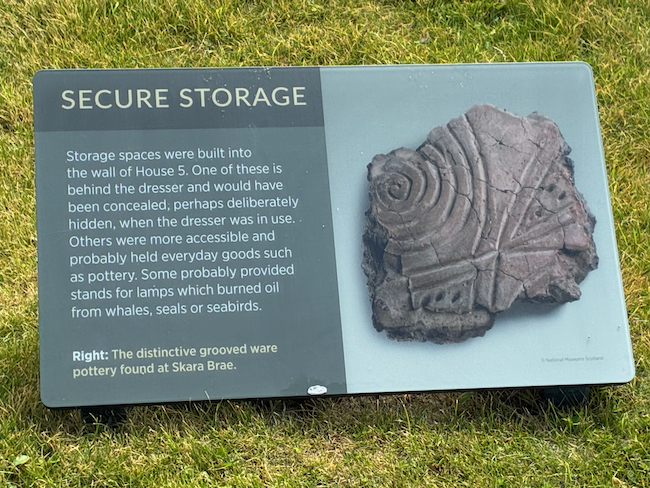


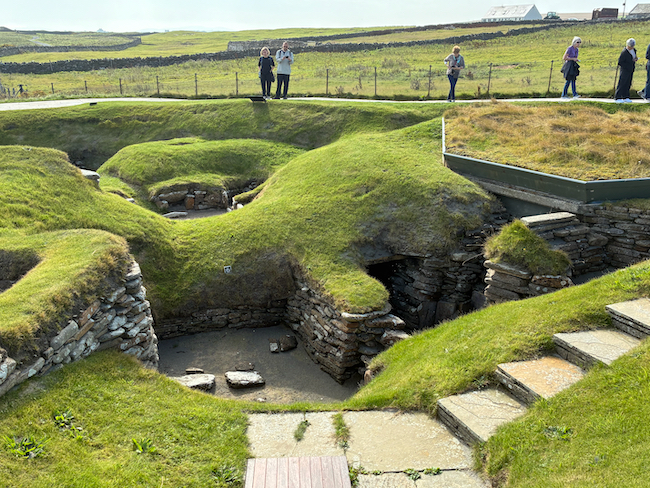
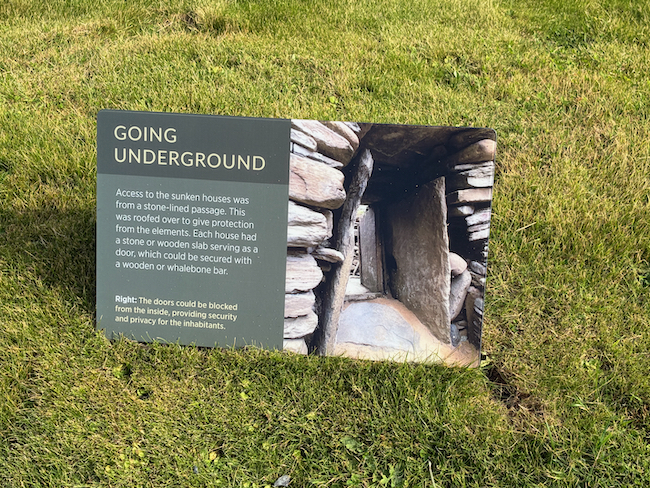
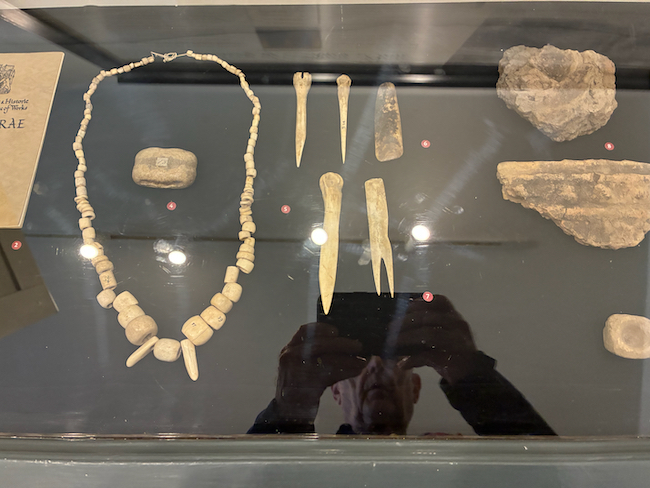


”Graham Watt, the 7th Laird of Breckness, who unearthed the world famous neolithic of Skara Brae in 1850 put in a seawall to forestall further erosion and archaeological experts have excavated several of the houses, although more exist still underground.” (I believe this quote came from a Scara Brae booklet, but I am not sure. 🤔)
On the way back, our bus drives slowly by a series of Neolithic marvels, the Stones of Stenness, the Ring of Brodgar and the tomb at Maeshowe. The bus isn’t allowed to stop because separate bus tours go to those sites (bureaucracy is international!)
(For a lot of fun, read Ann Cleeves newest book in the Shetland/Orkneys Inspector Perez series, The Killing Stones. It is better if you read all the Ann Cleeves Shetland series first, but I read this as a standalone and then started reading the Shetland series, and it worked just fine. )
“The Stones of Stenness are part of one of Europe’s richest archeological landscapes—the legacy of a Neolithic society that flourished between 3800 and 2200 B.C., after the introduction of agriculture but before the advent of metal tools. A mile to the northwest, on higher ground, is another mesmerizing assemblage of megaliths in open space: the Ring of Brodgar, a stone circle some three hundred and forty feet in diameter. To the east is the tomb at Maeshowe, where, beneath a grass-covered mound, Stenness-size slabs anchor a thirteen-foot-high chamber with a corbelled roof. Like Stonehenge and other Late Stone Age sites, Maeshowe has a solar alignment: on the midwinter solstice, the setting sun shines down the entrance passage. Together, these monuments, which are part of a UNESCO World Heritage complex called the Heart of Neolithic Orkney, seem to constitute a minimalist holy land.” (Another regrettably unsourced quote.)
Back in Kirkwall, we decided to have lunch and return to the boat later. We found an Italian restaurant and feasted on Caprese Salad; AdventureMan had a specialty Seafood pasta and I had Spaghetti Aglio Oglio. After lunch, we visited St. Magnus Cathedral, one of the oldest churches in the British Isles. There was a community flower show/competition – the sort of event I love. Groups and individuals created lavish floral displays around the church and won prizes for the best in several categories. It was magnificent and the cathedral was full of people! Then, to celebrate, we had ice cream at the famous Daily Scoop.
Kirkwall is a place to which we would happily return. There is so much more to see and learn.
If you think I am amazing because I remember all these details, you will be happy to know that I have forgotten much, but that I kept a daily journal that reminds me of the details of our daily life on board the ship and at our destinations. Honestly, now we have trouble remembering which day we were in which city.
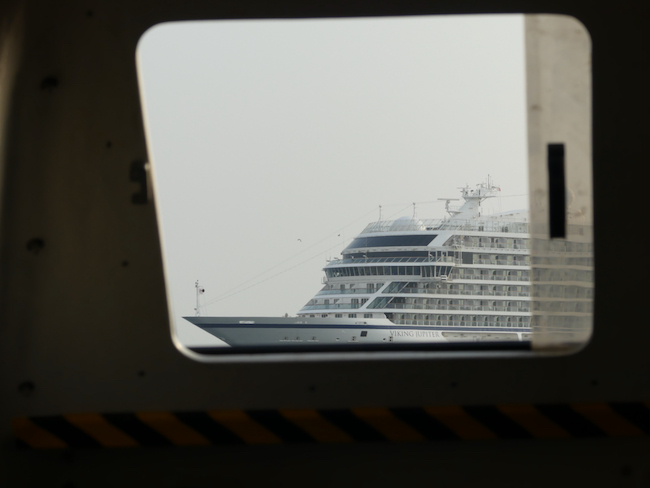
We tendered back to the ship and enjoyed a deeply satisfying nap before meeting up with our friends for dinner.
The food on board Viking Jupiter is fantastic. It’s a great life, being a grown-up, having options. One night we can focus on salads and seafood, another night on soups or Chinese specialties, another night on roasted salmon and sides – we can choose what we want to eat, and we can choose how much. Viking makes little tiny desserts, maybe a quarter cup of chocolate mousse with a meringue star on top, or one small scoop of ice cream – or two very large scoops with toppings, whatever is your pleasure.
When we get back to our room, it is newly cleaned, every night, with fresh towels and clean sheets, all set up for a good night’s sleep.
It’s not like we live like this at home. We cook, we clean, we keep up the yard, we repair the house, we handle our grown-up responsibilities. For just this short time, it is so wonderful to be taken care of.
I have to give full credit to my husband for most of the Scara Brae photos. I also take full responsibility for the fact that there is a jumble of Scara Brae photos in the middle of this post in no order. Somehow they all got grouped and I can’t figure out how to ungroup them. I used to laugh at my elders who struggled with technology, and now karma is biting me in the butt, and once again I am humbled.
Recent Comments
ExpatAlien on What Country am I Living … intlxpatr on Yellowstone: Old Faithful to C… Michelle on Yellowstone: Old Faithful to C… Cathy on No Grown-Ups in Charge intlxpatr on Waiting for Snow Wikipedia Donate Button

Amazina


Early Voting in Florida


 Here There and Everywhere