British Isles: Liverpool, Chester, Uhtred and The Beatles

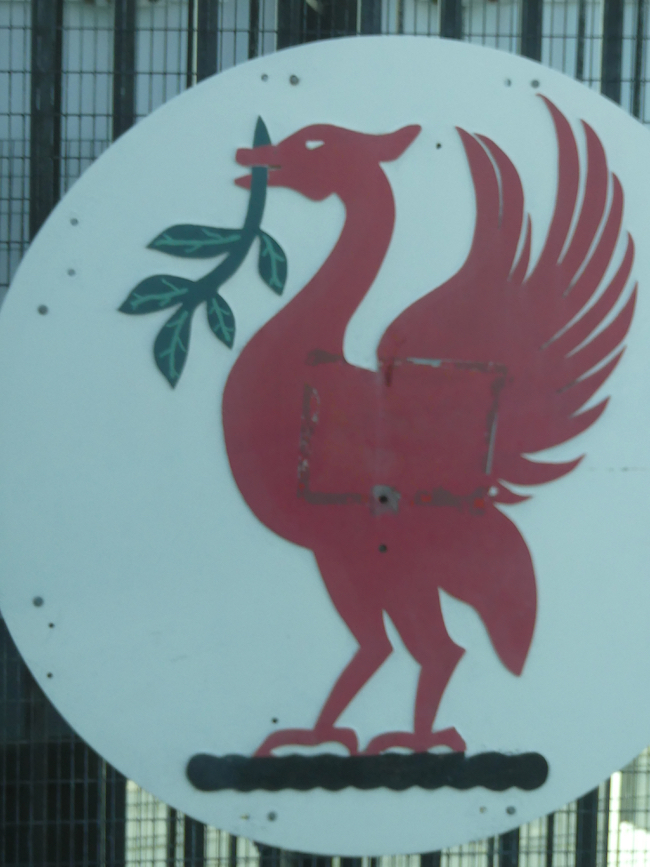

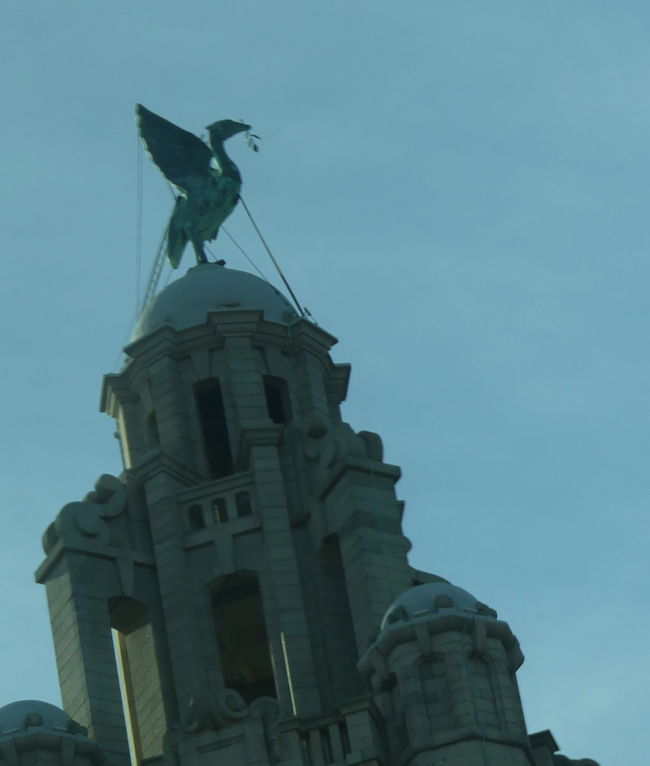
A bright sunny day docking in Liverpool, and we are facing the dock, which is fun for being able to watch people. We have a quick breakfast and depart with our group to find our bus in the parking lot. On our way to the bus we have an obstacle; a 45 degree incline to walk up, no steps, just a very long incline. We did fine, but I imagine people with walkers will find it challenging.

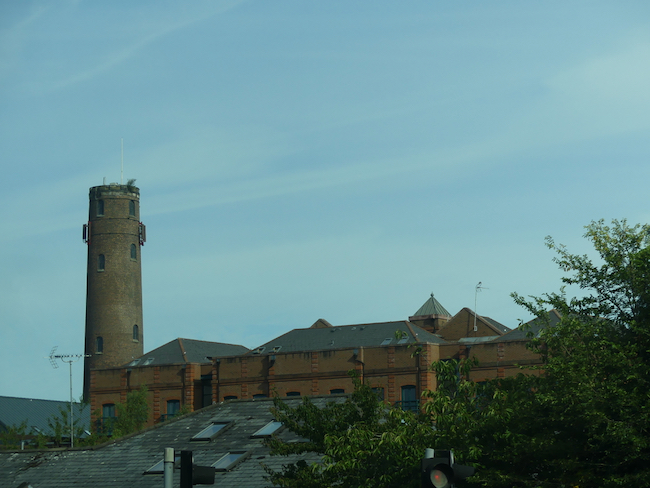
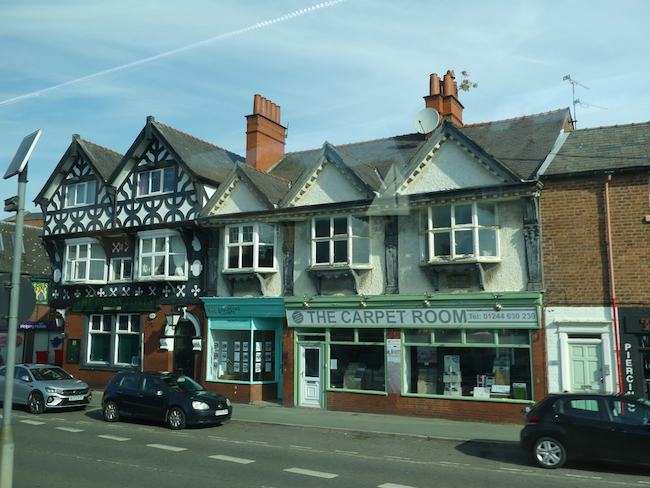
The drive to Chester was fun – I’ve read and re-read Bernard Cornwall’s Saxon series (about 21 books) featuring an uncouth but principled warrior named Uhtred, who is Lord of Bebbenburg but spends many books trying to take it back from the Danes who took it from his father, and raised him. It’s complicated. It’s a fascinating series, and it ends with the Battle of Brunanburh.
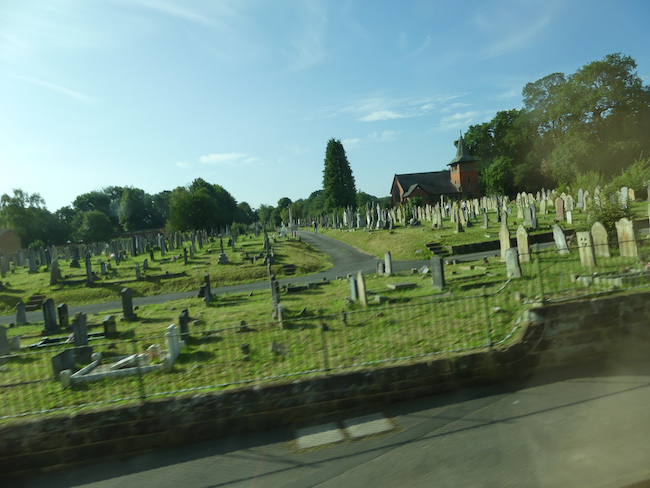
The Battle of Brunanburh is well documented, it happened, and it was definitive for uniting Britain under one monarch, but the records are ambiguous as to where the battle occurred. Recent archaeological finds indicate it may well be this area, near Chester, and we are passing right by this momentous battlefield.
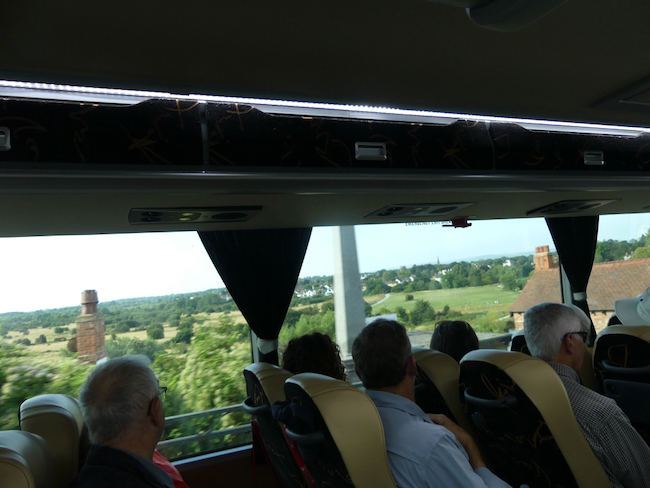
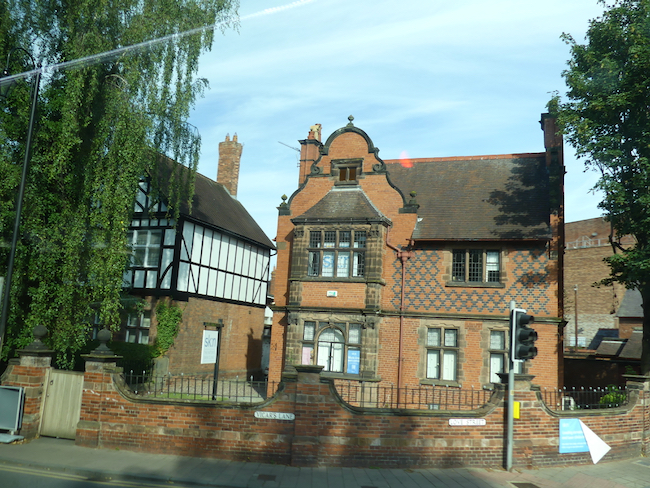
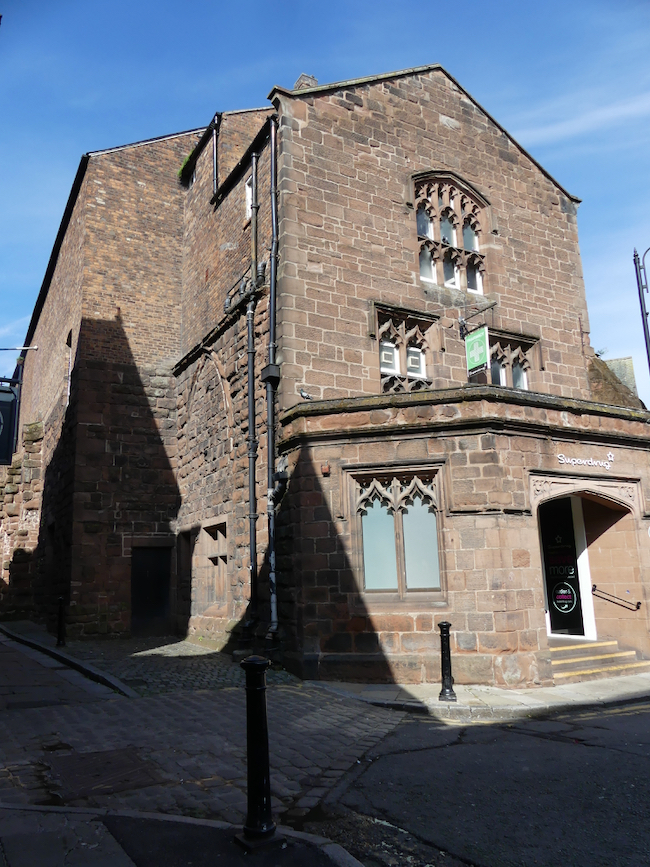
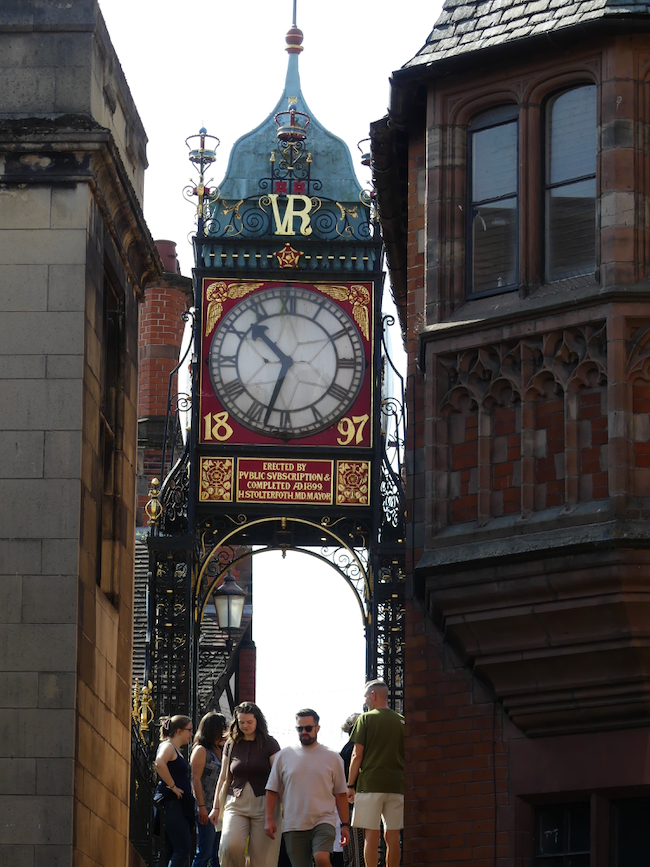
Chester itself is just as Uhtred describes it, an old Roman City with two major cross streets and an obelisk where the major roads cross.


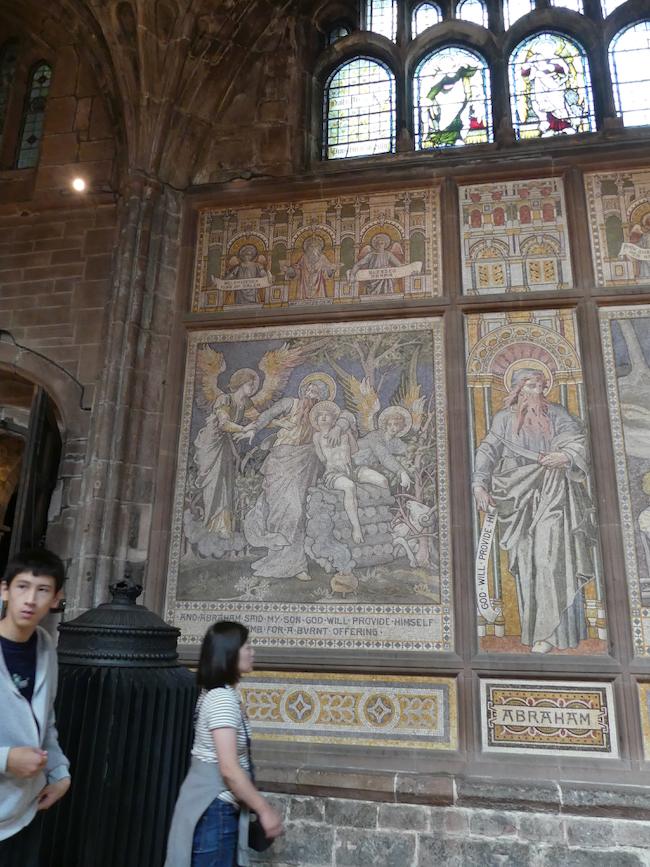
There is a significant cathedral, and a very old Church of Saint Olaf, the original church for the Danish community, once they arrived.

We found a woolen shop, and in the very back of the shop there is a display of pediments for an old Roman bath. Many shops in Chester have similar spaces, where for centuries, citizens have built over the original Roman structures. This is a city where you could spend months or years.

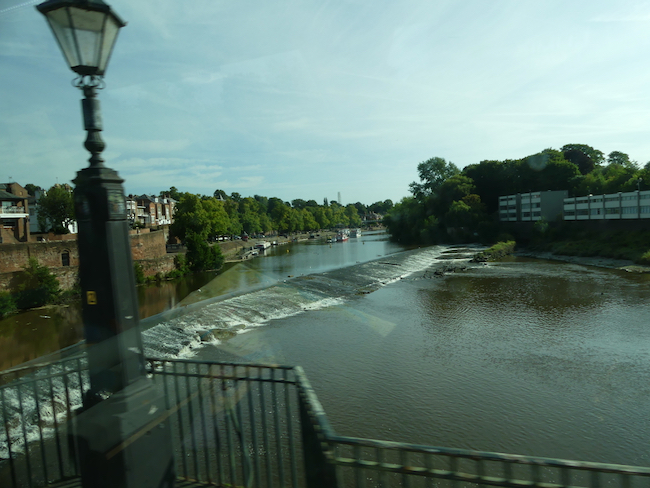
We walked outside the gates to look at the remains of the Roman Amphitheater, and the course of the river Dee, and how it changed so dramatically over the centuries, away from Chester, leaving Liverpool as the more convenient shipping depot, with the Mersey River.

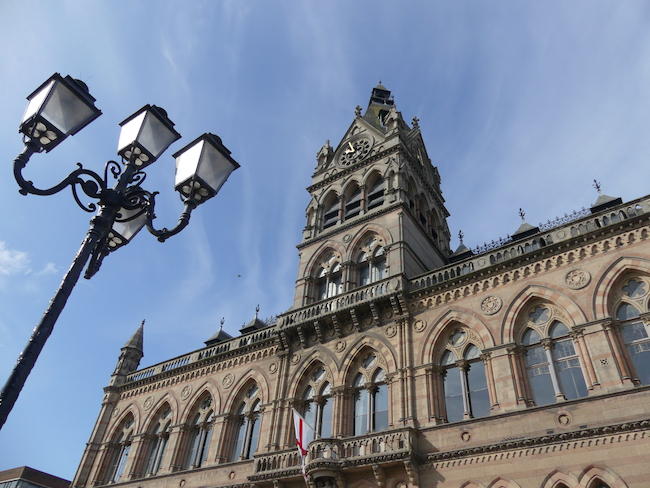
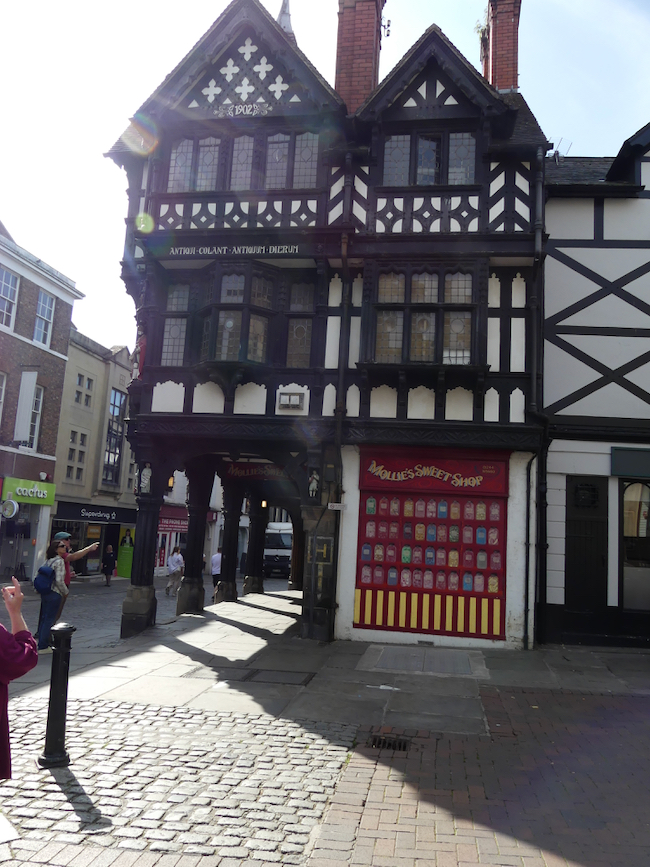
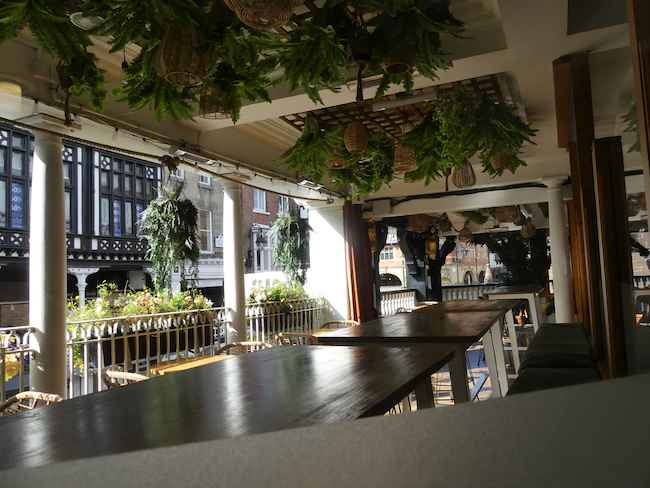
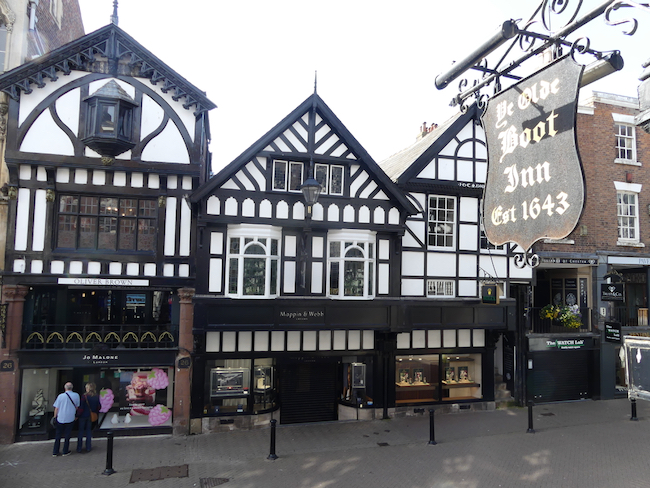


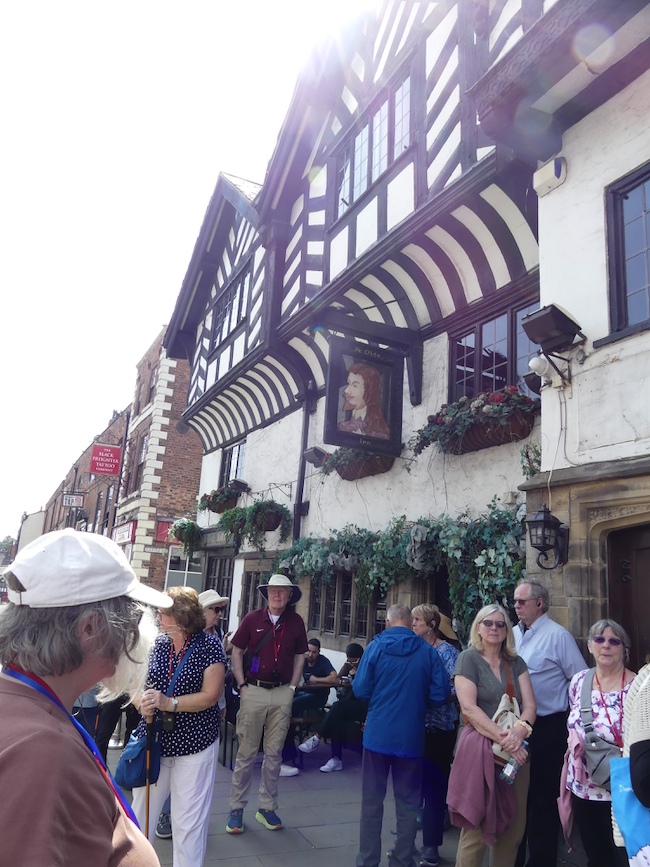
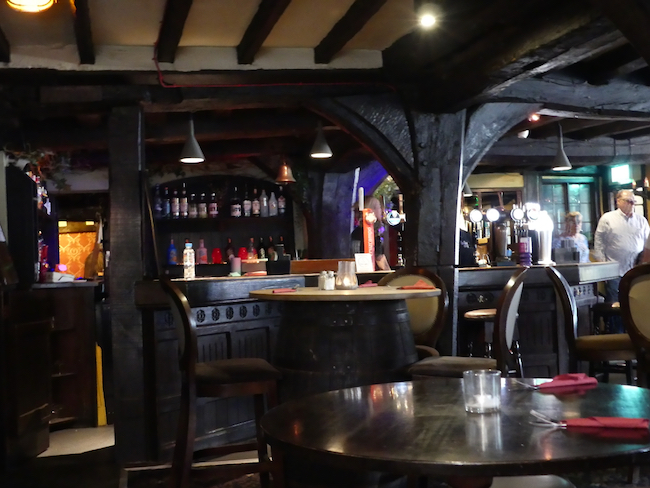
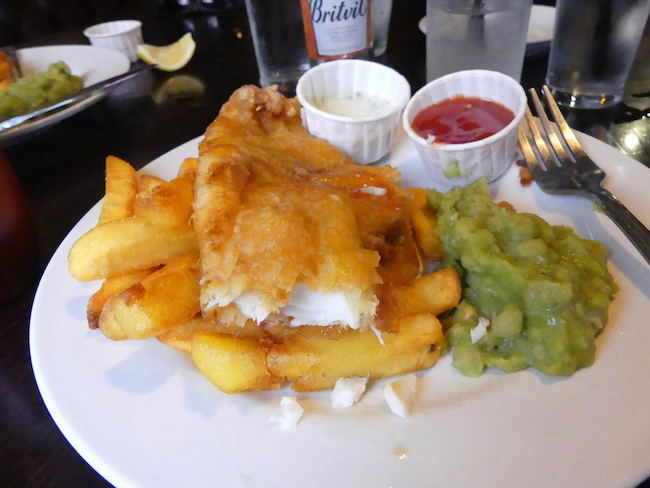
We ate lunch was at an old pub, The King’s Head (after Charles I, who was beheaded) and our group had it all to ourselves. We sat in old leather booths, drank British beer (I had Ginger Beer) and they fed us fish and chips and mushy peas. Yes, that is a thing. Not a thing familiar or welcome to most Americans, but a thing.

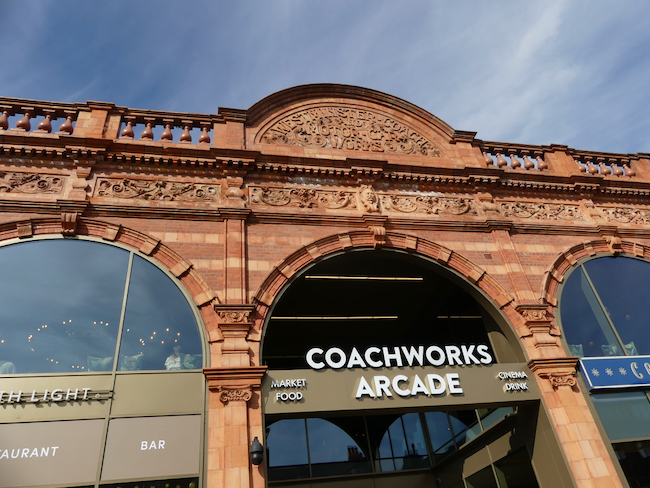
After lunch, we toured the big historic cathedral, and then had a little time on our own, which we spent in the community library. We agreed we would move to Chester in a heartbeat, just for this library, so welcoming (restrooms tourists could use) with an arch way made of books at the entry. Inside was a large snack lobby, all the books, tables and chairs; it was full of young people having a great time and it had a number of cinema rooms upstairs running old movies during the day. It was a delightful public space.










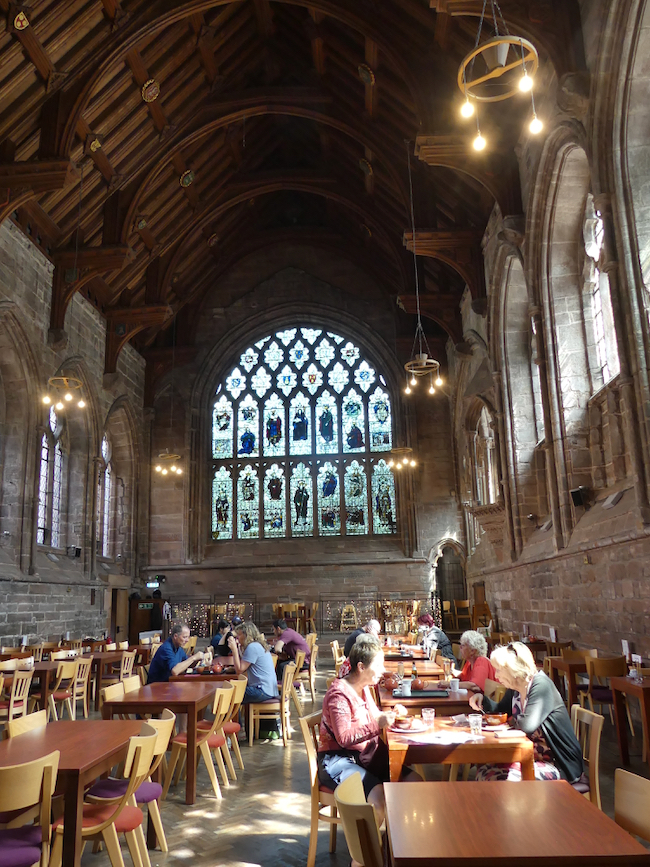


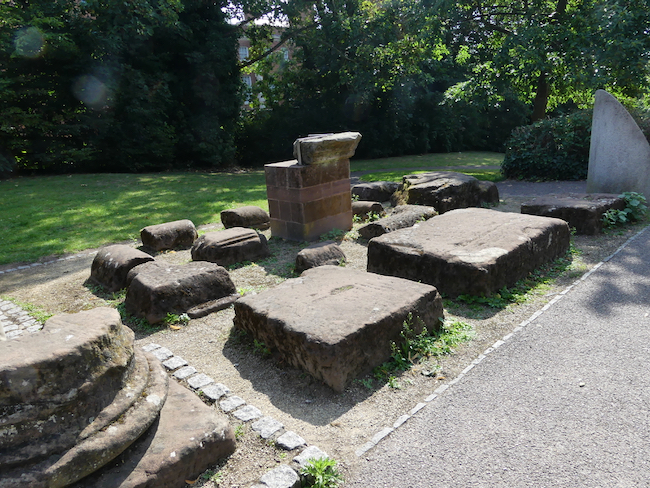
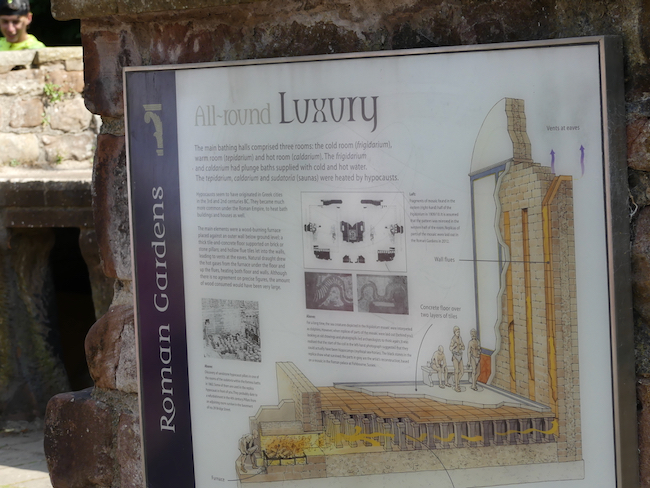

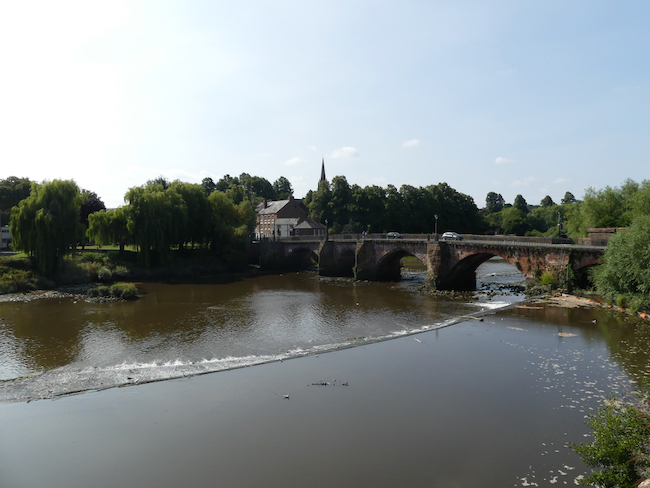
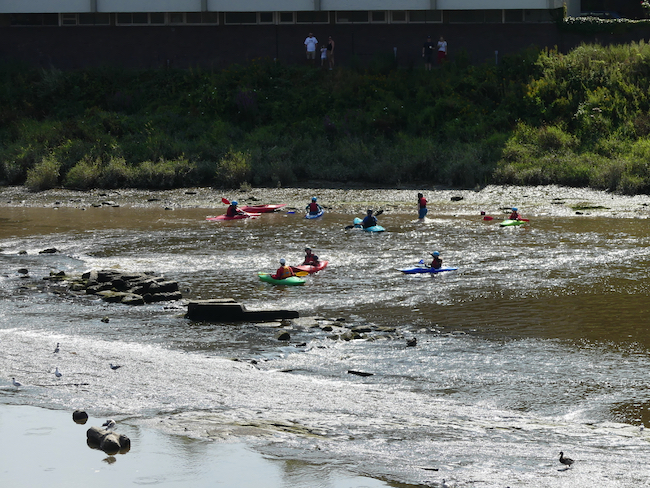

On the way home, the guide played “Ferry Cross the Mersey” as we took the long underground tunnel under the Mersey. We love creative guides – playing this song provided us with a truly memorable moment.
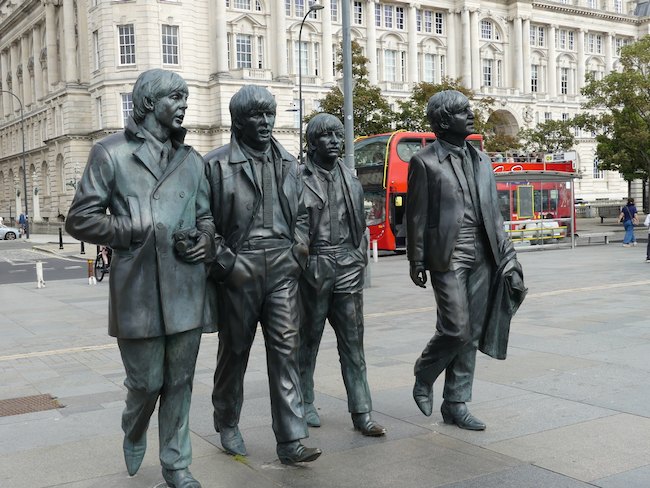
We exited the bus and made a quick walk over to pay homage to the larger-than-life statues of the Beatles prominently on the Liverpool ship harbor. This picture is a miracle – there was a line of people waiting to have their photos taken with the statues – a favorite was holding hands with Paul McCartney – and there had to be a second or two of space while one walked away and the next approached. It took a while! I was lucky to have two seconds to shoot this shot before the next in line took her place.
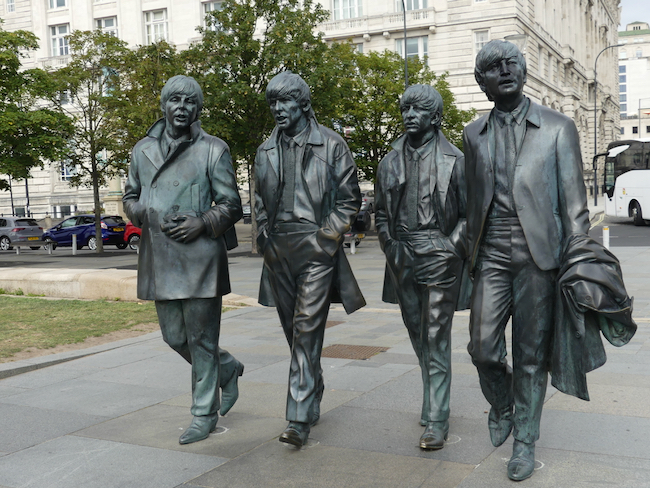
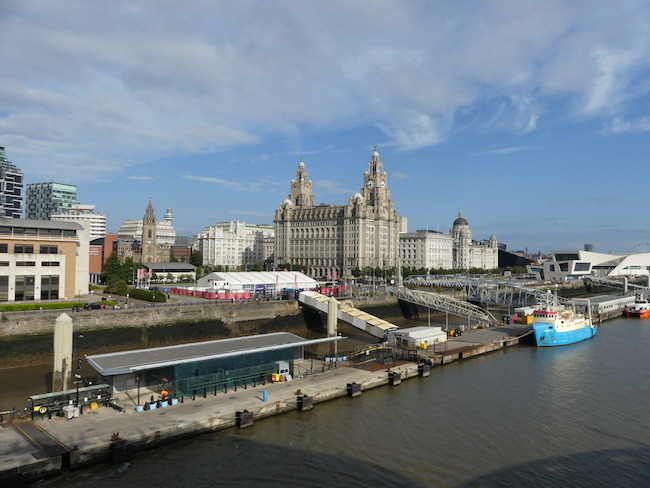


Another fun, memorable day with so many impressions and images that it is impossible to absorb and integrate them all. I thank God I kept a journal to help me know which day I was in which city!
British Isles: Wales and Carnaefon Castle

We don’t have any activities until we leave for Castle Carnaefon. I woke early, dressed, went up to Explorer Lounge for sunrise and to catch up on e-mails. AdventureMan caught up with me, we went to breakfast, then to the spa. I filled out a Viking request for assessment and delivered it to guest services on my way to the spa.
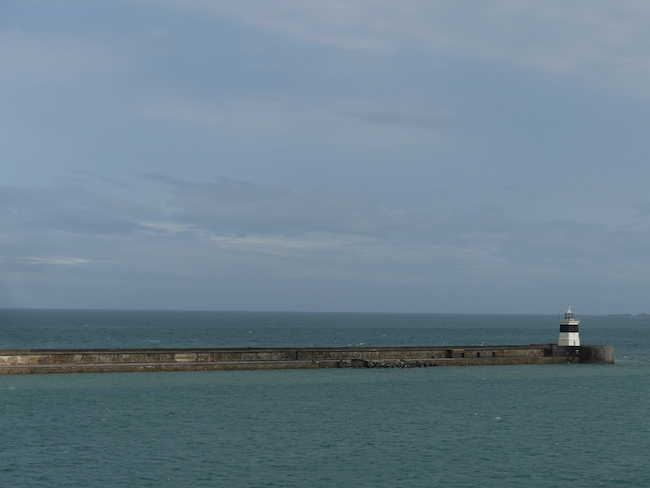
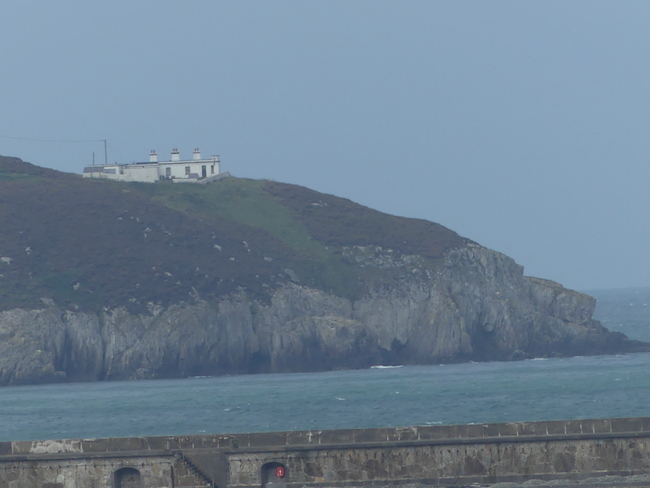
I’m the only one in the pool for the first half hour, and feel great about exercising without feeling watched. The water is cooler than the first day and more comfortable. AdventureMan joins me, we visit and recover on the lounge chairs, then I return to the room and AdventureMan follows later. We take it easy, read up on Carnaefon Castle, and eat lunch early, then meet up with our group at one. Actually, there are three groups going.



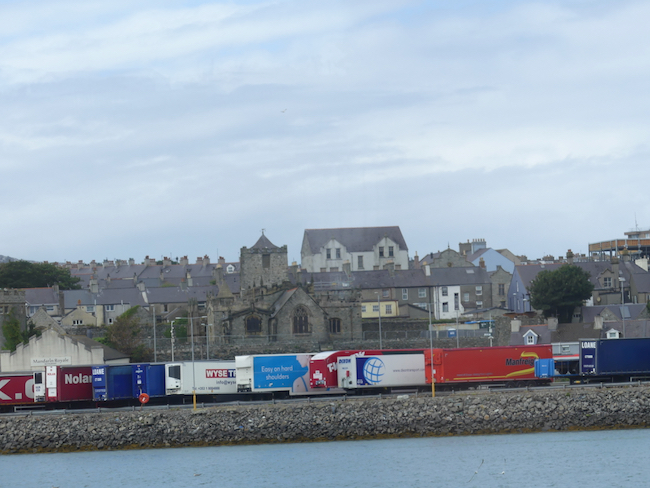
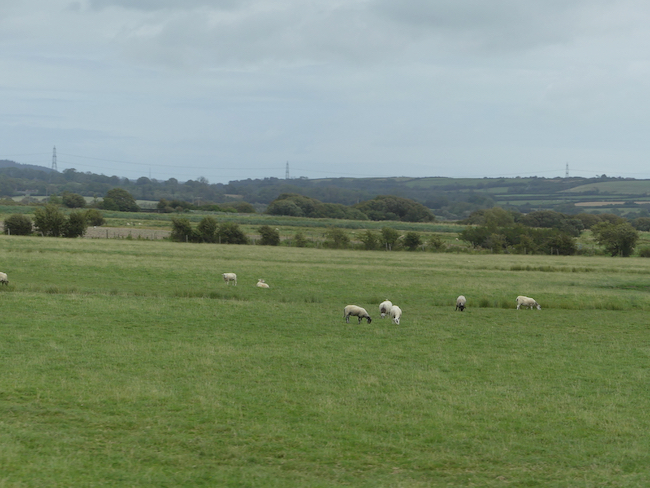
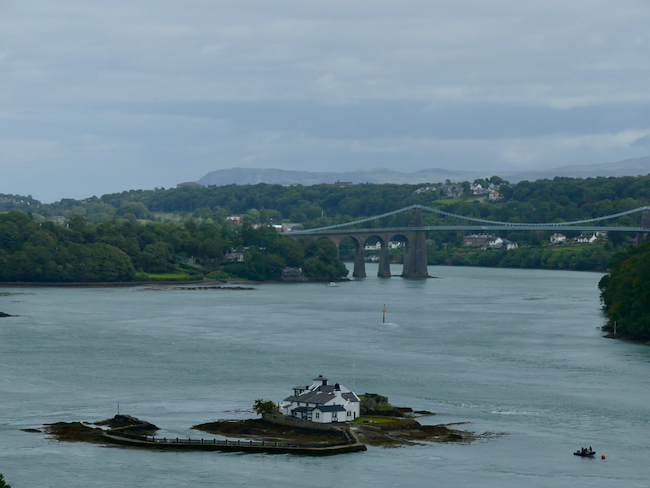
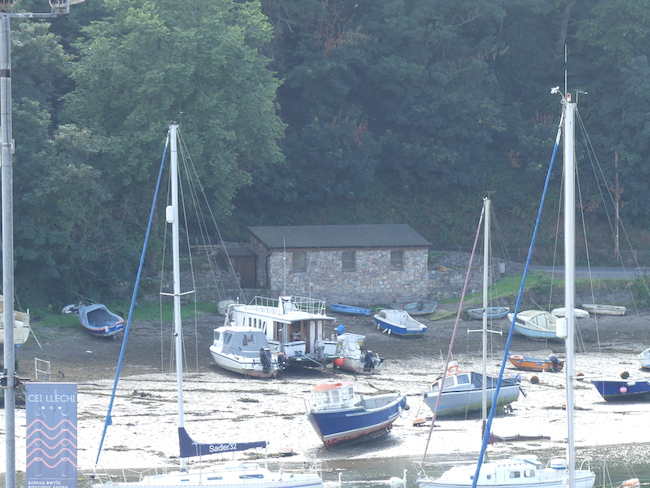
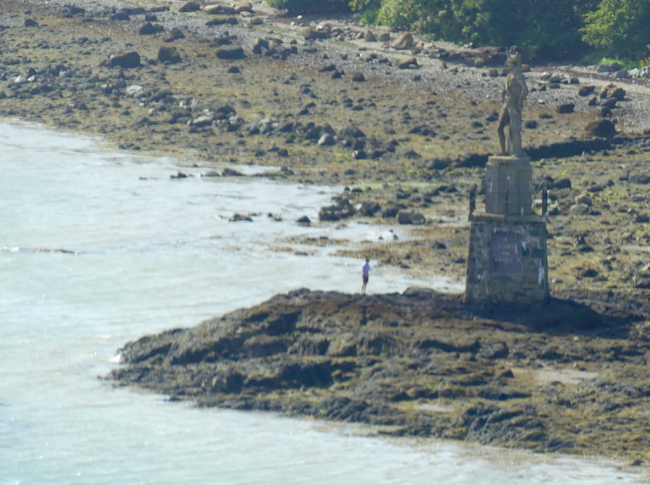
This photo above haunts me. The house is so vulnerable, so low to the water, it would look as if it would flood with a bare rise in the water. In the right lower corner is a small boat with people in it approaching the island. You can see there is an inlet on the riverside of the island where a small boat might be moored and protected somewhat from the vagaries of the river. The house looks sturdily built, but so isolated! So vulnerable!
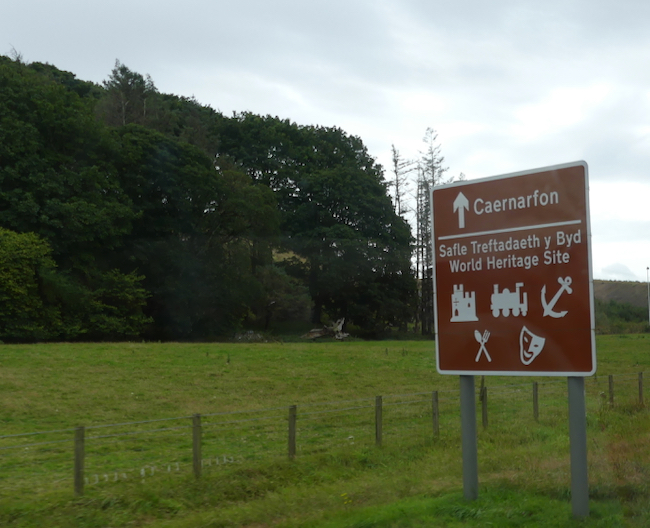
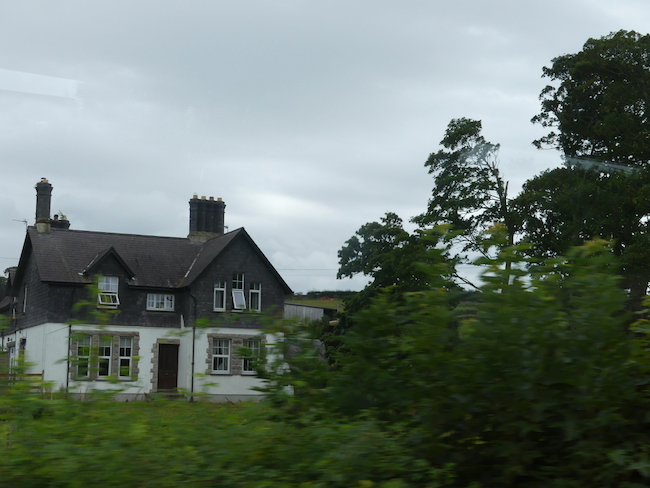
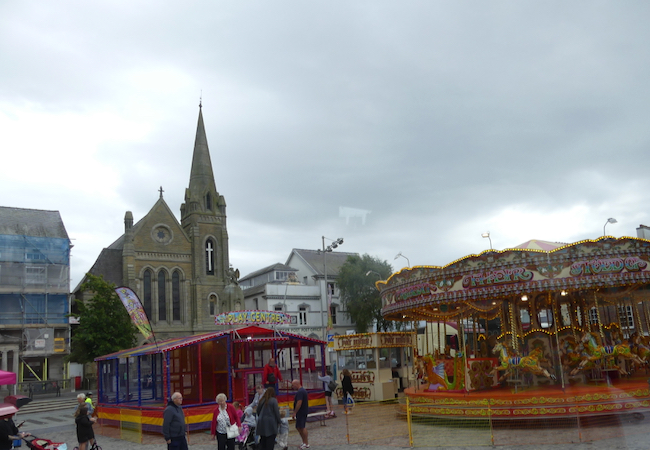
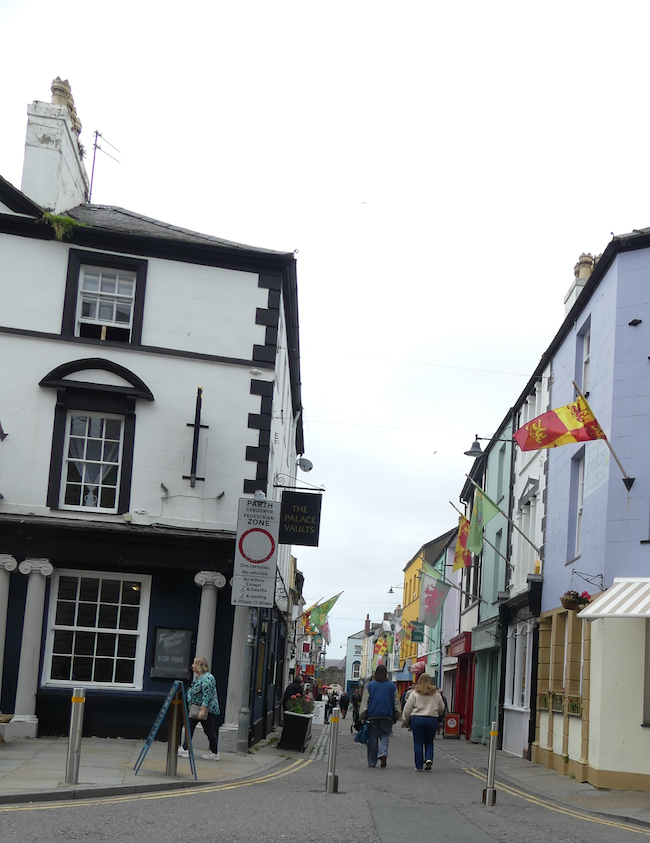
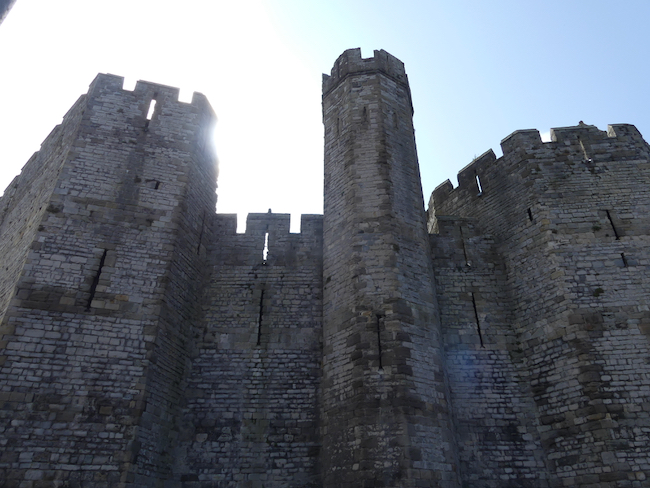
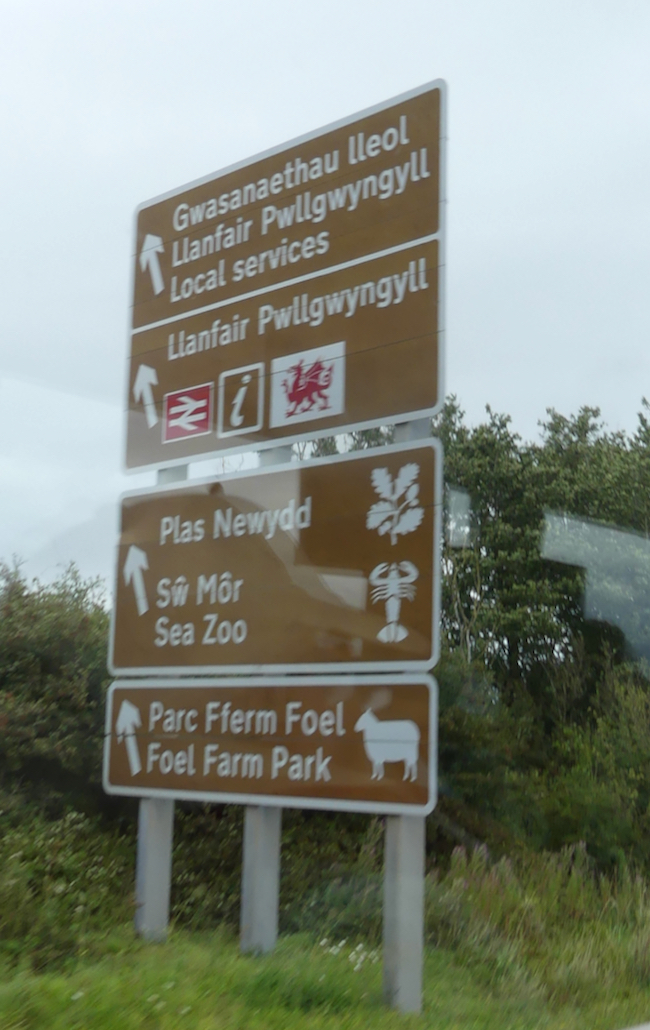
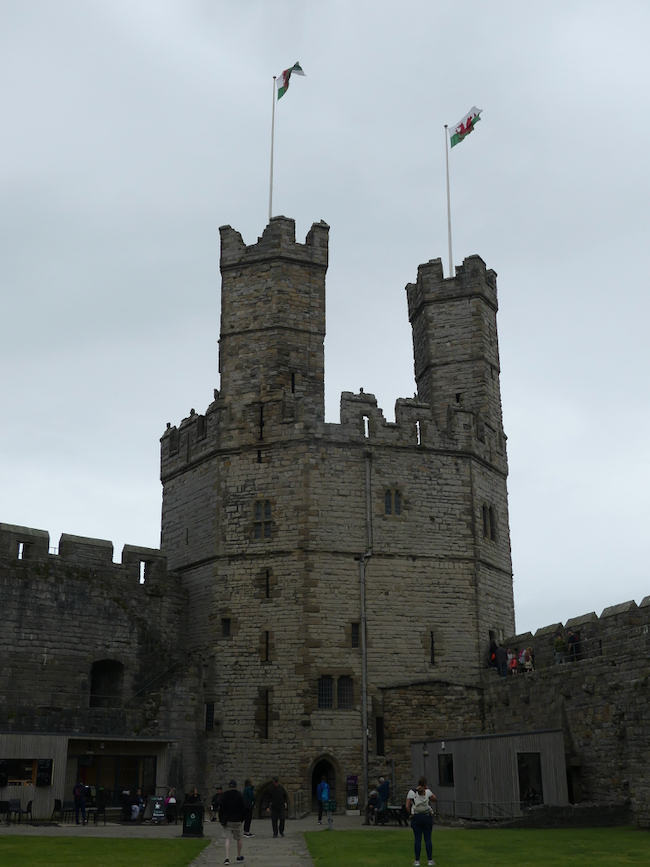
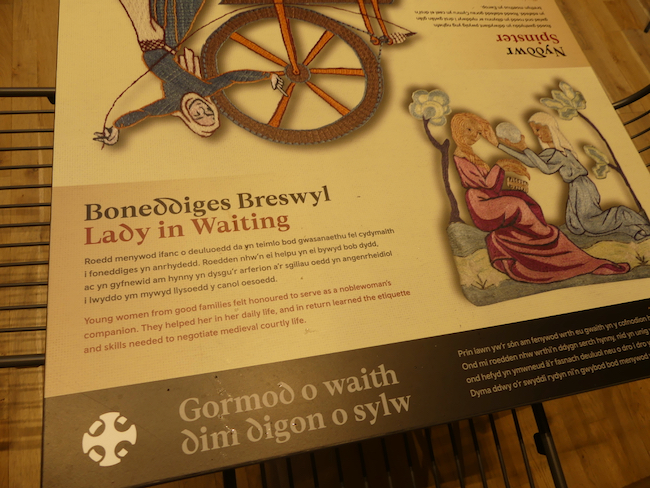
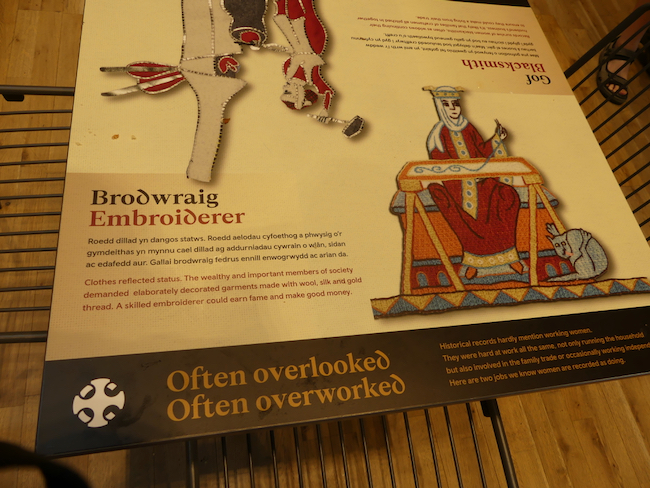
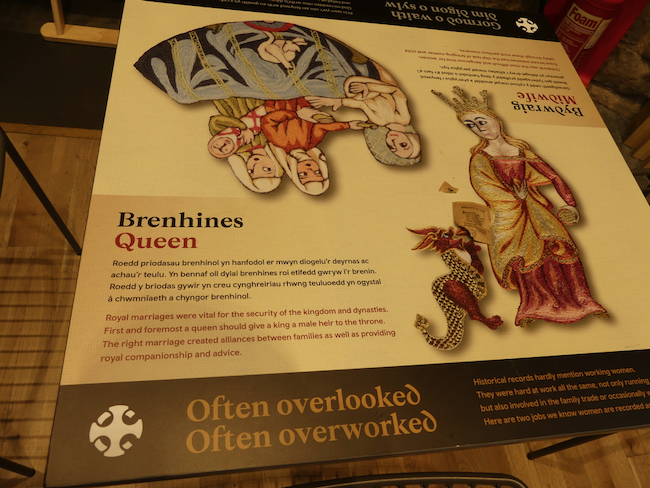
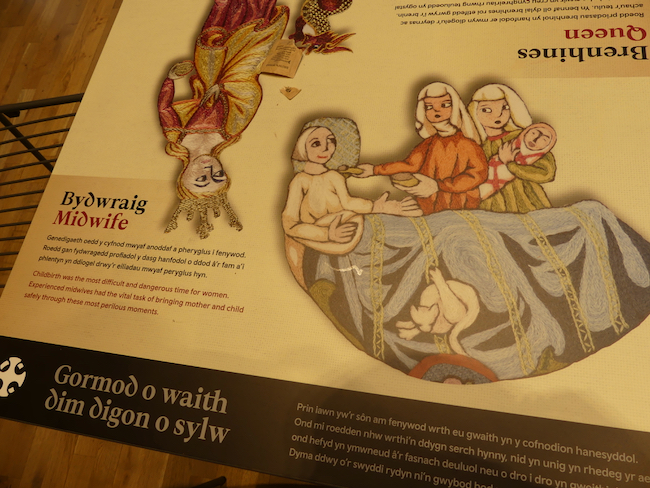
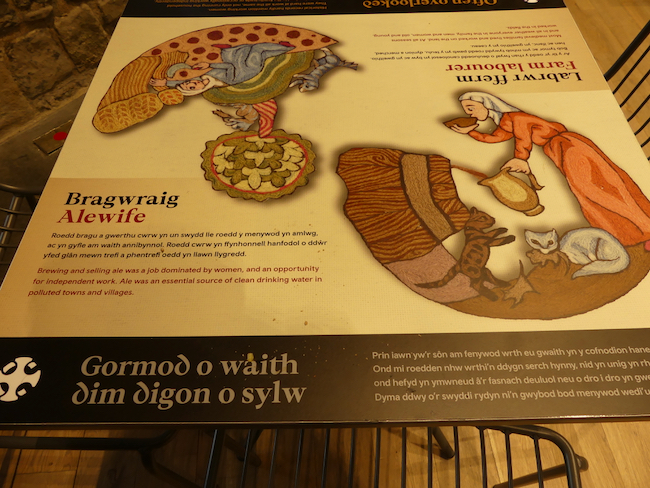
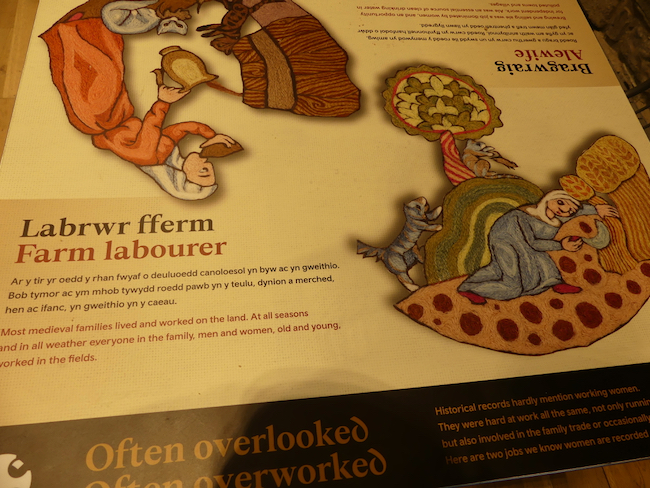
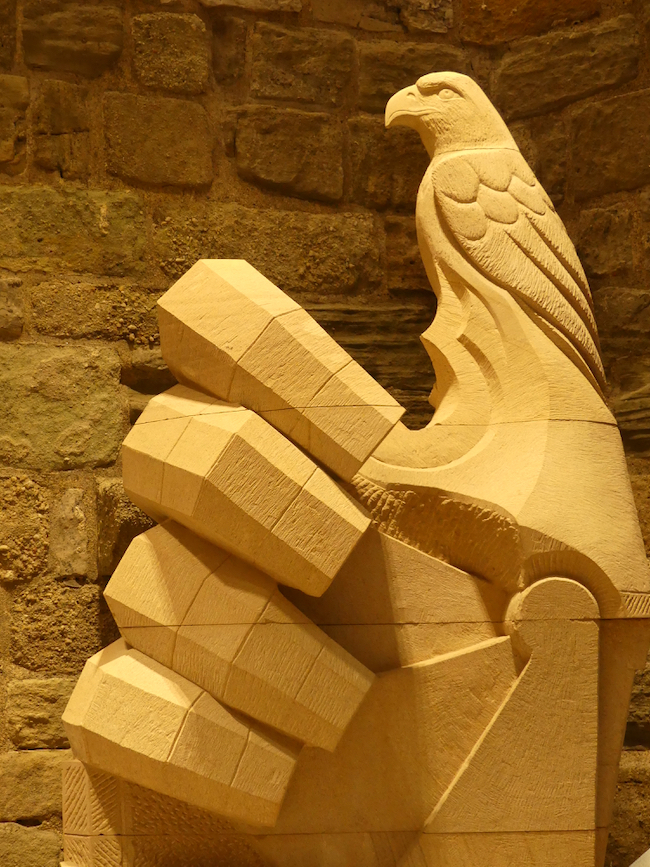
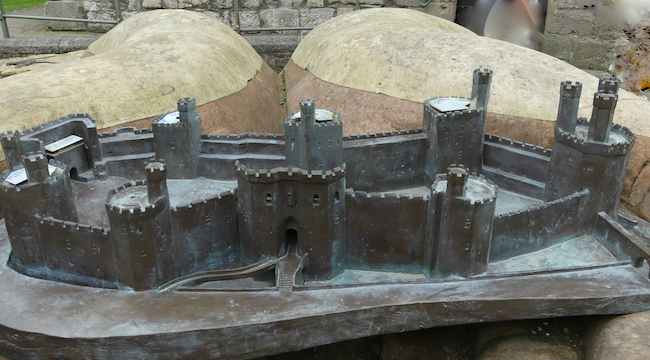
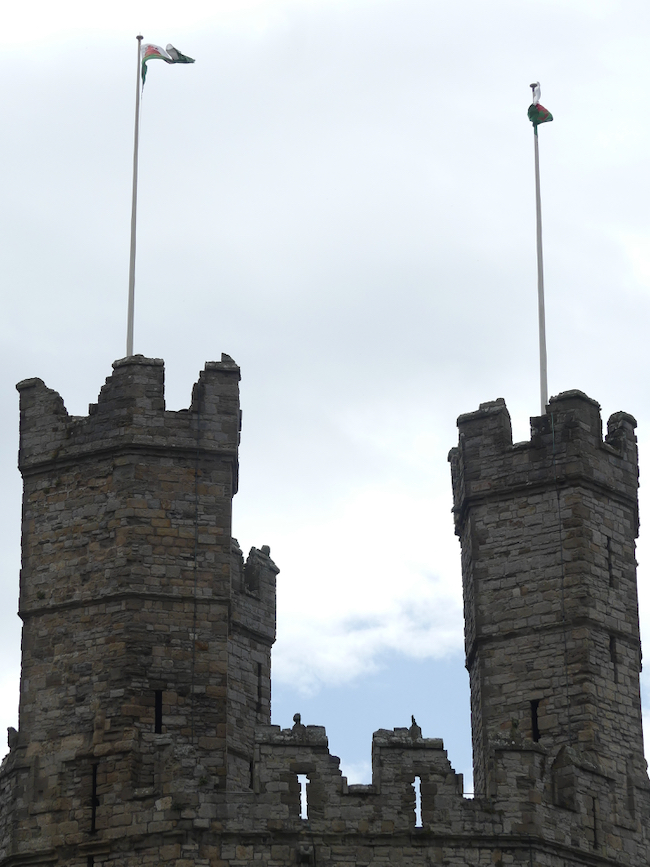
It is a lovely drive. We have a great guide, who gives us a brief history of Wales, and a lot of history about the castle, which is one of the earliest castles in the British Isles, huge, and is the castle of the Prince of Wales. We start in the kitchen, which had some system of running water, huge fire pits, separate rooms for a variety of functions; the speculation is that the kitchen fed around 600 people daily.


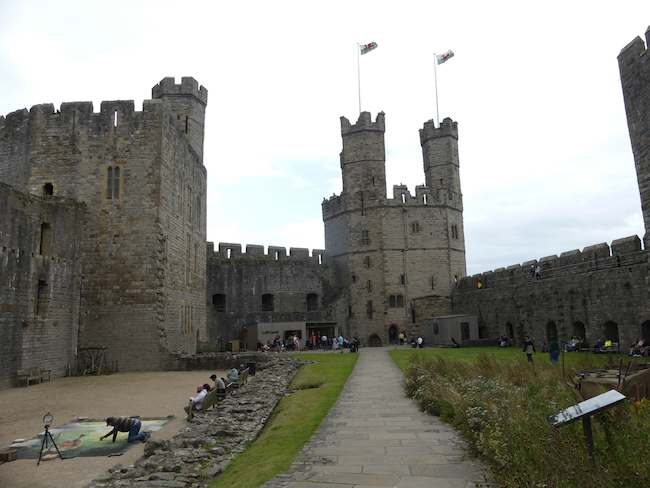
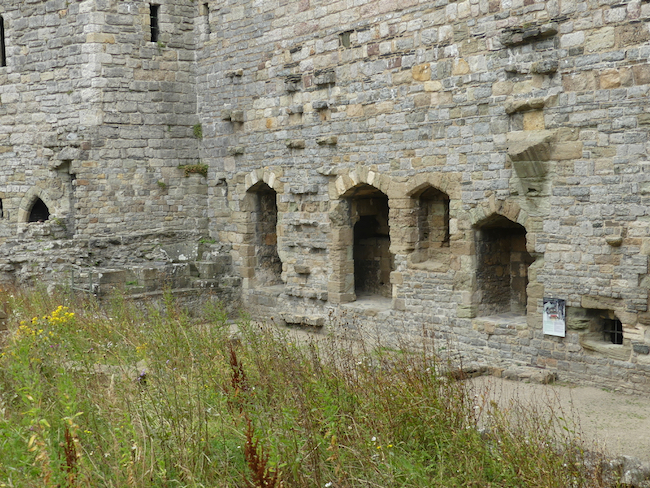
Below is the old kitchen area – inside and outside. It is hard for me to imagine feeding 600 people at least one meal a day every day of the year from this kitchen area.
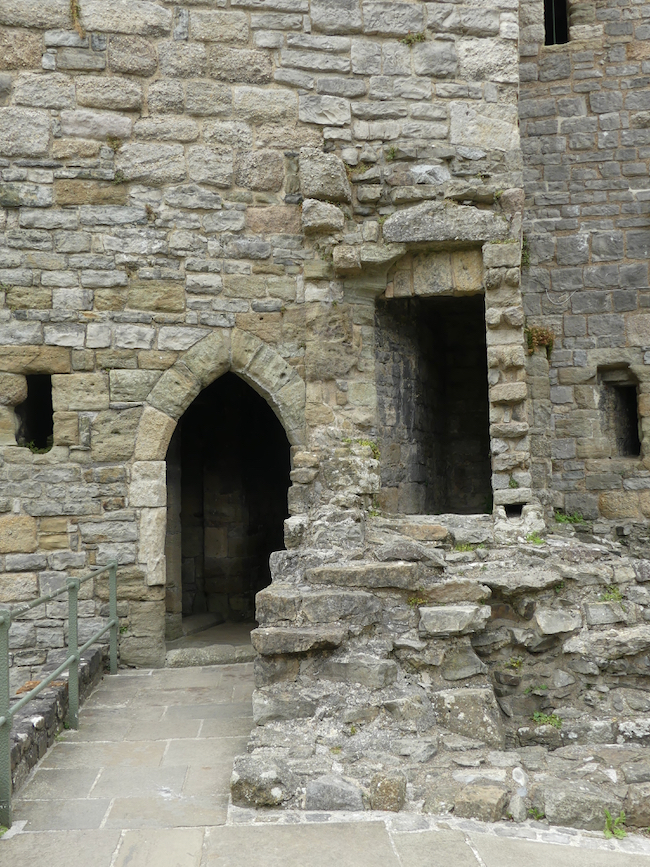
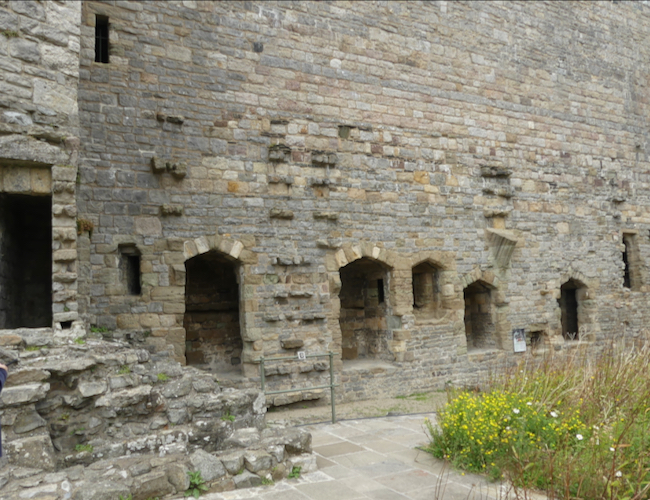
The walls are huge; high and thick, with arrow slits. We are told that there was little crime within the walls because those caught committing theft or assault were simply thrown out or executed.
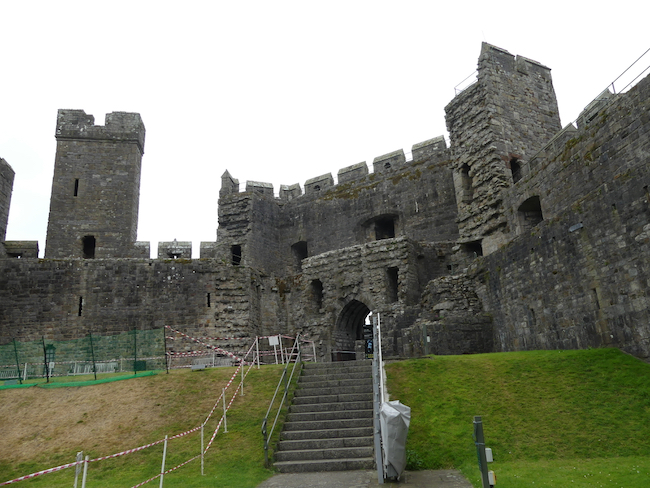
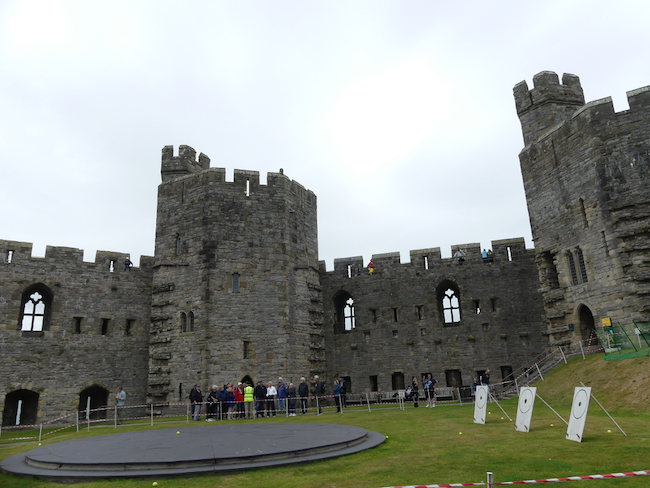
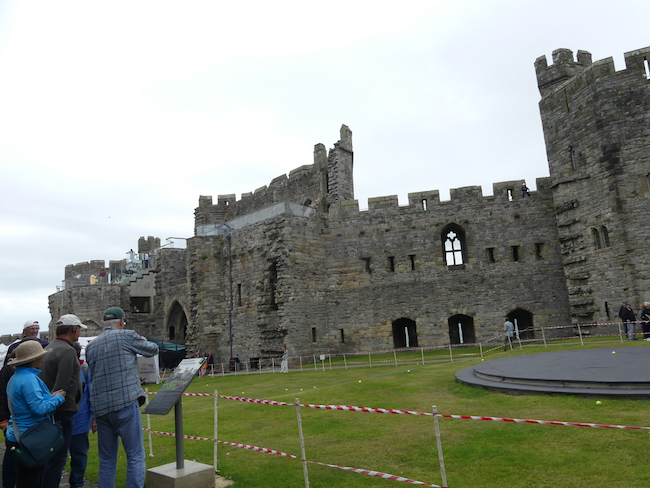
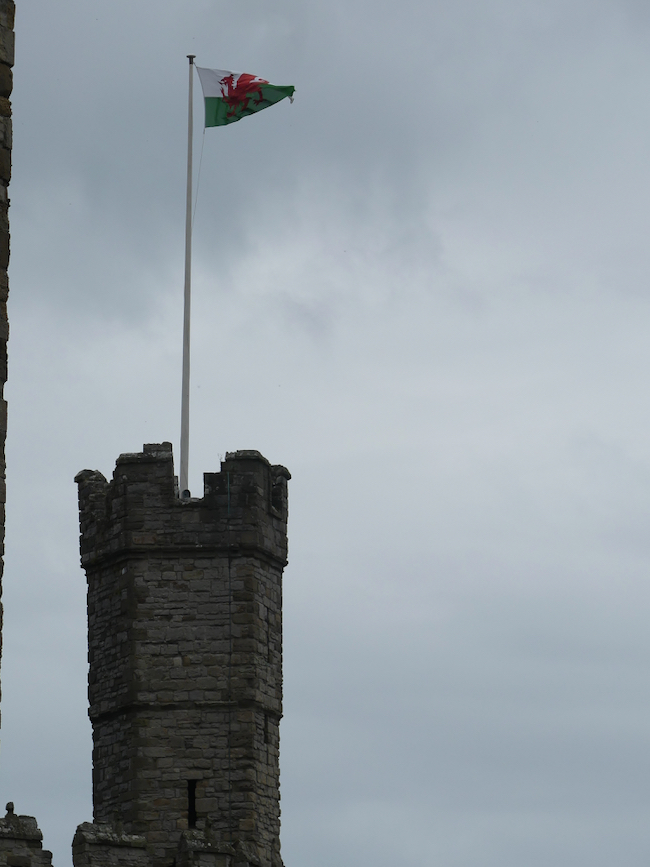
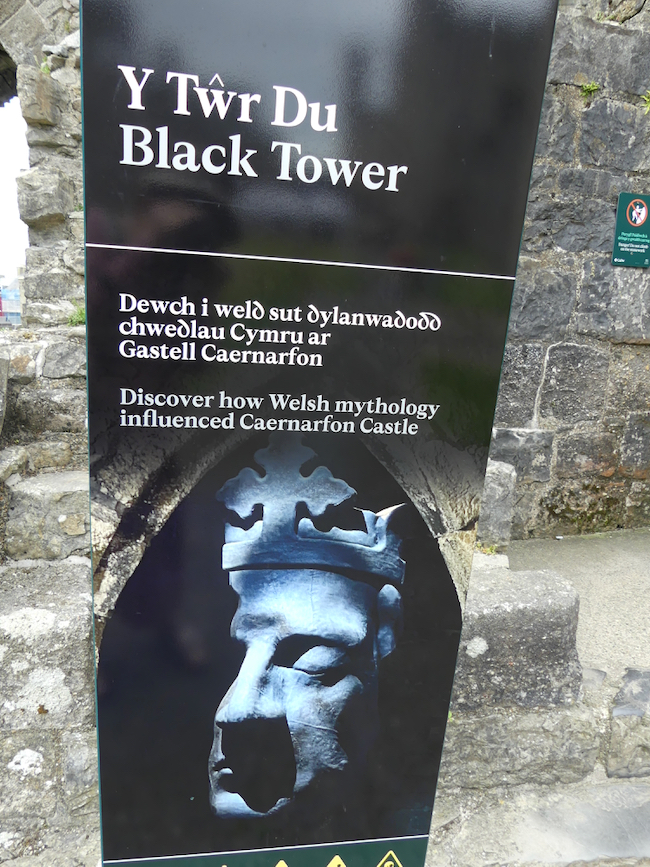
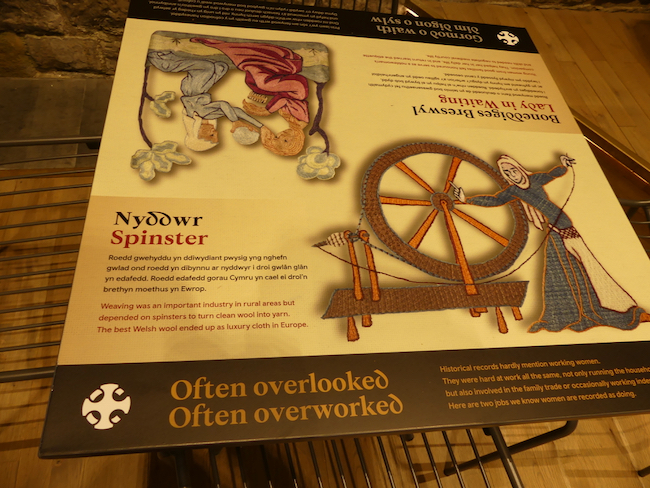
AventureMan found a comrade-in-arms in the Castle Museum and they had a long talk, then his new friend called his friend at the Fusiliers Museum and sent AdventureMan there, where he had another really good war-fighting related conversation, while I explored the castle walls and functional areas. I tried to get up the stairs, but there were groups blocking the way, so I had a coffee and hit the gift shop, then sat on a quiet bench in the old kitchen area, waiting to meet up with AdventureMan and the group.
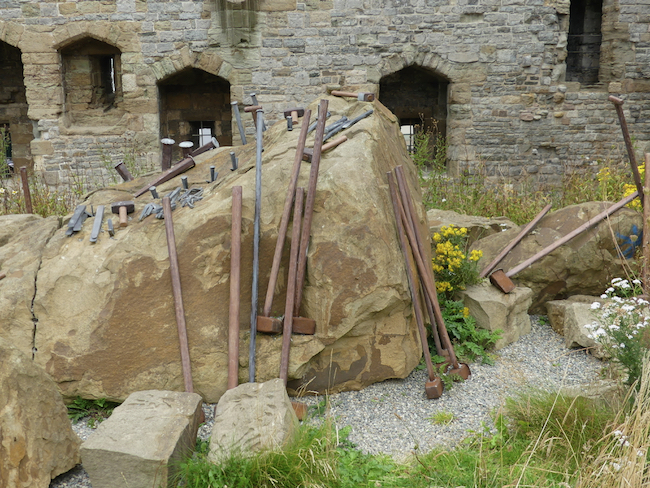
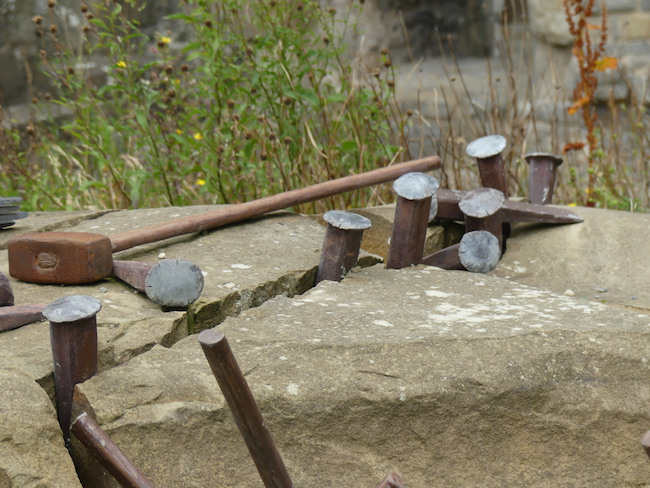


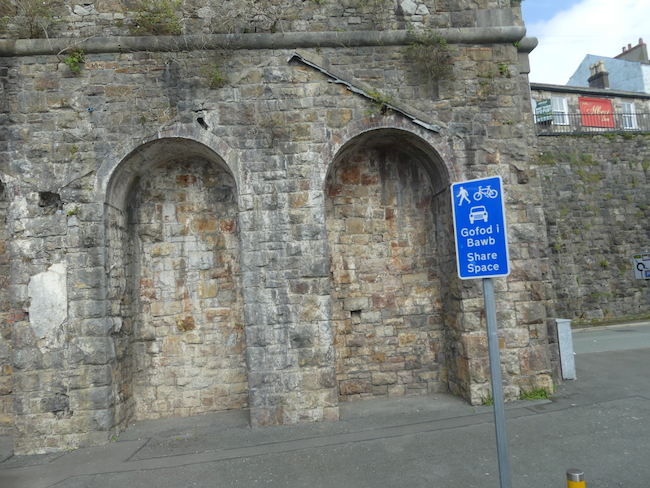
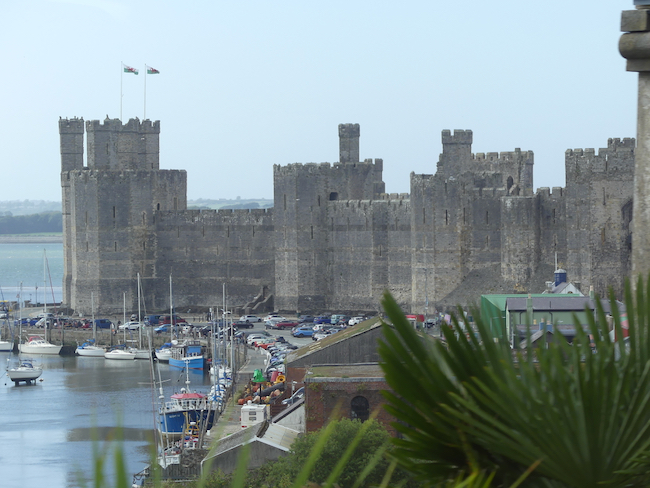
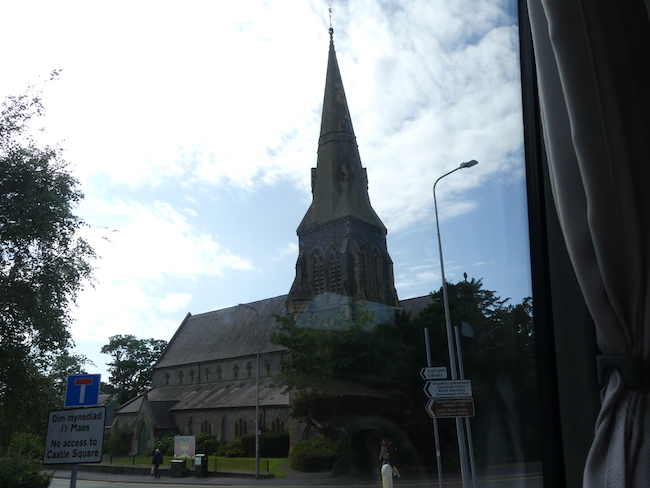
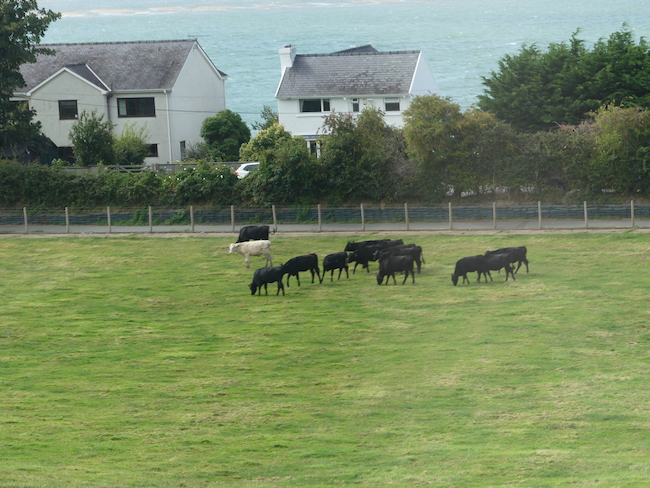



Back on board, we had some of our Greenwich wine and our Herrod’s cheese and sat out on our sunny balcony reviewing our experiences until time to meet up with our friends for dinner. After dinner, we walked the upper decks, chatted with some of the other guests and then returned to the room to prepare for tomorrow’s visit to the ancient Roman city of Chester.
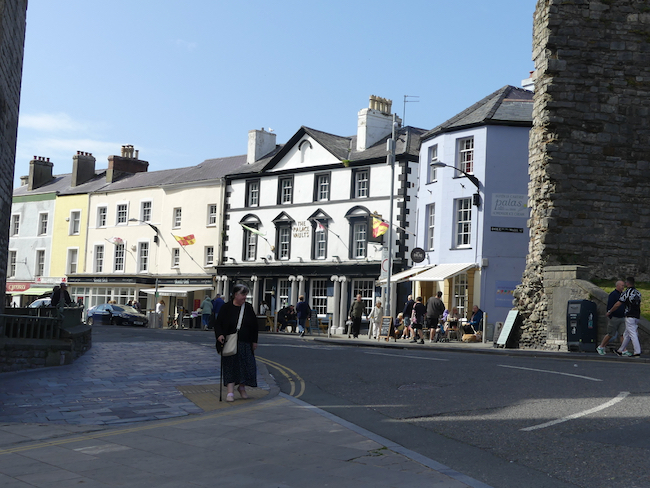
Here is what bothers me. I can say I’ve visited Wales; that might sound impressive. The truth is that today we spent about eight hours in Wales, mostly in the harbor, on the bus, in a historic castle, and then on the bus coming back. There is something in me that does not think this really counts as “visiting” Wales. I have a Welsh friend. I would have loved to have seen more of the country with her; I would have loved to walk the country, speak with the people, eat the food, live through a winter in a small Welsh town. I think the expat in me goes deep. An eight-hour span of time barely begins to touch the surface of a country with a history and culture like Wales. It almost feels disrespectful.
Major Pettigrew’s Last Stand
 Major Pettigrew’s Last Stand by Helen Simonson
My rating: 5 of 5 stars
I loved this book. It follows all the themes I love – how convention blinds us, how our cultural assumptions make us unconsciously snobbish and leads us to hideous behavior, it is very cultural and also very cross-cultural. Major Pettrigrew is widowed, and his grief has made him old. At the beginning of the book, his life seems very dull and grey. It lightens as his friendship sparks with Mrs. Ali, a widow who runs a small convenience market in his small English village. They both love reading (of course I love that part!) and they talk books, and sparks of warmth kindle.
This book is also very uncomfortable for me, as Roger has a grown son who bullies his father. The book isn’t just cross-cultural, it’s cross-generational, and I see glimpses of myself in the boorish behavior of his son toward his father.
There are some amusing scenes, some wickedly insightful village-interaction scenes, some painfully introspective moments, and some truly grand moments when everything becomes clear and a person acts. For me, there was an added bonus in that as I read Mrs. Ali’s words, I could hear them so clearly, and she spoke in the voice of a dear friend. I could picture her, because I could see the sweet smiling face of a dear friend. It was like having a great visit.
<a href=
The Guernsey Literary and Potato Peel Pie Society
I don’t know why I didn’t read this book sooner! First, I saw people like me reading it in airports, and it certainly has a memorable title. The people reading looked totally engrossed. I’m not one to strike up conversations in airports, but on occasion, when I see people reading a book I don’t know about and it is the size of the books that book groups usually read, I will ask, and write it down, and bother the person no further.

I had ordered it on amazon.com when my son’s wife’s father’s wife (and you thought Gulf relationships were complicated!) mentioned to me in an e-mail that she was reading it and that she could barely tear herself away. She and I often pass really good books and/or recommendations back and forth, so that bumped it up a few notches in priority. When it got here, I had just finished Rutherfurd’s London (oops, I thought I had reviewed it, and I haven’t, so I will,) and I thought it was a southern book, like The Ya-Ya Sisterhood or Sweet Potato Queens, no, you are right, I hadn’t read anything about it, just trusted from all the people I saw reading it that it was good, but because of the name, I thought it would be light.
Wrong!
It isn’t depressingly heavy, like The Little Prisoner was heavy, and it had some totally wonderful laugh-out-loud moments, but the subject matter was the German occupation of the island of Guernsey, in the English Channel, and an author in search of a book topic in post-war London, and a little girl born outside of marriage and cared for by a village of caring people. It is spiced up by a dashing romance, and the process of relationship building that happens in the novel, unlikely relationships, aren’t those the very best kind for spice? 😉
The entire story is told in letters. The primary voice, that of Juliet, a thirty-something author, ties all the letters together, but not all letters are to her or from her. It is a great technique for allowing many different voices and many different perspectives. From the first page, you are captivated. Right now, Guernsey is more real to me than the boxes I need to unpack, and there is a part of me that yearns to flee to Guernsey and find a house near a cliff where I can watch the sun set in the west and the clouds turn colors . . .
Here is one sample of the kind of letters you will find when you read The Guernsey Literary and Potato Peel Pie Society. Don’t wait! This is an unforgettable book!
1st May 1946
Dear Mark,
I didn’t refuse, you know. I said I wanted to think about it. You were so busy ranting about Sidney and Guernsey that perhaps you didn’t notice – I only said I wanted time. I’ve known you two months. It’s not long enough for me to be certain that we should spend the rest of our lives together, even if you are. I once made a terrible mistake and almost married a man I hardly knew (perhaps you read about it in the papers) – and at least in that case, the war was an extenuating circumstance. I won’t be such a fool again.
Think of it: I’ve never seen you home – I don’t even know where it is, really. New York, but which street? What does it look like? What color are your walls? Your sofa? Do you arrange books alphabetically? (I hope not.) Are your drawers tidy or messy? Do you ever hum, and if so, what? Do you prefer cats or dogs? Or fish? What on earth do you eat for breakfast – or do you have a cook?
You see? I don’t know you well enough to marry you.
I have one other piece of news that may interest you: Sidney is not your rival. I am not now nor have I ever been in love with Sidney, nor he with me. Nor will I ever marry him. Is that decisive enough for you?
Are you absolutely certain you wouldn’t rather be married to someone more tractable than I?
Juliet
Written by Mary Ann Shaffer and Annie Barrows, the book will challenge your ideas, will inform you of an obscure episode in World War II, will make your heart sorrow at the inhumanity of which we human beings are capable towards one another, and make your heart sing at the goodness in the human soul. That’s pretty amazing for one book.
Maitland and The Company of Liars: A novel of the plague
I had just finished The Swallows of Kabul and still had a long flight to go. Fortunately, I was in the Johannisburg airport, with it’s truly wonderful bookstore, and came across The Company of Liars: a novel of the plague. Well, it isn’t exactly a novel of the plague. The story opens in 1348, a year in which le morte bleu hit the British Isles, only later to be called the plague. The author captures the times, the filth, the lack of bathing, the superstitions, the ways of life.
The plot centers around a group who wanders through the island, just trying to stay alive. The spreading plague impacts on their wandering, but to call this a novel of the plague is just not accurate. The plague is the reason for the journey, but the journey is the center of the novel, not the plague.
Before I started reading the book, I read the Historical Notes in the back, and that is where I came across the most interesting information in the entire book:
The 1348 plague was only the latest in a series of disasters to hit Britain. The period between 1290 and 1348 had seen a rapid and drastic climate change which was so noticeable that the Pope ordered special prayers to be said daily in every church. Eyewitness accounts claimed that 1348 was a particularly bad year, for it rained every day from Midsummer’s Day to Christmas Day. Climate change brought about crop failure, liver fluke in sheep and murrain in cattle, as well as causing widespread flooding which virtually wiped out the salt industry on the east coast. This, combined with a population explosion, meant that as many people died from starvation as from the plague itself.
Interestingly, the book will not be released in the US until September 2008. The cover shown is nothing like the cover of the book I bought.
American issue cover:

Cover on book bought in Johannisburg:
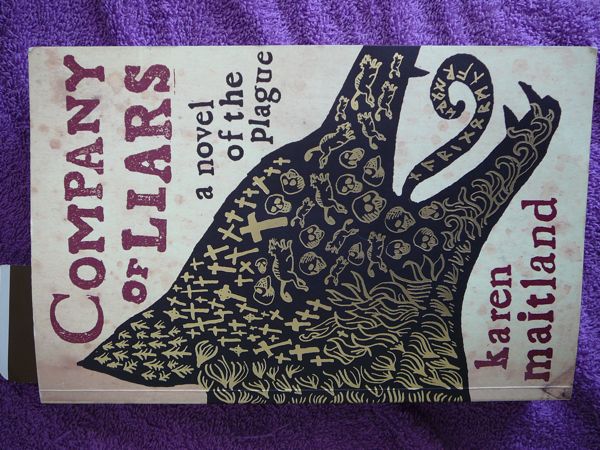
I like the cover of mine better.
Some reviewers call this book “enthralling” or “gripping.” I wans’t all that enthralled or gripped, but it did make good airplane reading. I learned a lot about the grim brutality of life in 1348, but as I told AdventureMan, this is more a book about a slice of time than a book with a great plot. The plot isn’t that great, it is the historical detail that is interesting, and fiction just makes it more easily absorbed. (my opinion)
Recent Comments
intlxpatr on Yellowstone: Old Faithful to C… Michelle on Yellowstone: Old Faithful to C… Cathy on No Grown-Ups in Charge intlxpatr on Waiting for Snow intlxpatr on Waiting for Snow Wikipedia Donate Button

Amazina


Early Voting in Florida


 Here There and Everywhere