The “Righteous Gentiles”
Today in our church Lectionary, we celebrate those who stood up to the Nazi policies and shielded and rescued thousands of Jewish people who might otherwise not have survived the torture, imprisonment and extermination, solely for being “the other.”
PRAYER (contemporary language)
Lord of the Exodus, who delivers your people with a strong hand and a mighty arm: Strengthen your Church with the examples of the Righteous Gentiles of World War II to defy oppression for the rescue of the innocent; through Jesus Christ our Lord, who lives and reigns with you and the Holy Spirit, one God, now and for ever. Amen.
“THE RIGHTEOUS GENTILES”
Although the phrase “Righteous Gentiles” has become a general term for any non-Jew who risked their life to save Jews during the Holocaust, it here appears to apply specifically to: Raoul Wallenberg [Swedish, d. 1947] Hiram Bingham IV [d. 1988, American]; Karl Lutz [d. 1975, Swiss]; C. Sujihara [d. 1986, Japanese]; and Andre Trocme [d. 1971, French].

Raoul Wallenberg (August 4, 1912 – July 17, 1947?) was a Swedish humanitarian who worked in Budapest, Hungary, during World War II to rescue Jews from the Holocaust. Between July and December 1944, he issued protective passports and housed Jews, saving tens of thousands of Jewish lives.
On January 17, 1945, he was arrested in Budapest by the Soviets after they wrested control of the city from the Germans, and was reported to have been executed while a prisoner at Lubyanka Prison, although this is not entirely certain.
Wallenberg has been honored numerous times. He is an honorary citizen of the United States, Canada, Hungary and Israel. Israel has also designated Wallenberg one of the Righteous among the Nations. Monuments have been dedicated to him, and streets have been named after him throughout the world.
— more at Wikipedia

Hiram “Harry” Bingham IV (July 17, 1903 – January 12, 1988) was an American diplomat. He served as a Vice-Consul in Marseille, France, during World War II, and helped over 2,500 Jews to flee from France as Nazi forces advanced.
In 1939, Bingham was posted to the US Consulate in Marseille, where he, together with another vice-consul named Myles Standish, was in charge of issuing entry visas to the USA.
On June 10, 1940, Adolf Hitler’s forces invaded France and the French government fell. Several influential Europeans tried to lobby the American government to issue visas so that German and Jewish refugees could freely leave France and escape persecution.
Anxious to limit immigration to the United States and to maintain good relations with the Vichy government, the State Department actively discouraged diplomats from helping refugees. However, Bingham cooperated in issuing visas and helping refugees escape France. Hiram Bingham gave about 2,000 visas, most of them to well-known personalities, speaking English, including Max Ernst, André Breton, Hannah Arendt, Marc Chagall, Lion Feuchtwanger and Nobel prize winner Otto Meyerhof.
— more at Wikipedia
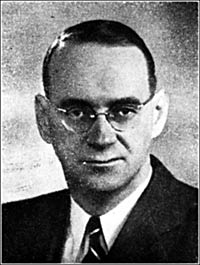
Carl Lutz (b. Walzenhausen, 30 March 1895; d. Berne, 12 February 1975) was the Swiss Vice-Consul in Budapest, Hungary from 1942 until the end of World War II. He helped save the lives of tens of thousands of Jews from deportation to Nazi Extermination camps during the Holocaust.
Lutz immigrated at the age of 18 to the United States, where he was to remain for more than 20 years. Lutz’s sojourn in the United States ended with his assignment as vice-consul to the Swiss Consulate General in Jaffa, in what was then Palestine.
Appointed in 1942 as Swiss vice-consul in Budapest, Hungary, Lutz soon began cooperating with the Jewish Agency for Palestine, issuing Swiss safe-conduct documents enabling Jewish children to emigrate.
Once the Nazis took over Budapest in 1944 and began deporting Jews to the death camps, Lutz negotiated a special deal with the Hungarian government and the Nazis: he had permission to issue protective letters to 8,000 Hungarian Jews for emigration to Palestine. Lutz then deliberately misinterpreted his permission for 8,000 as applying to families rather than individuals, and proceeded to issue tens of thousands of additional protective letters, all of them bearing a number between one and 8,000. He also set up some 76 safe houses around Budapest, declaring them annexes of the Swiss legation. Among the safe houses was the now well-known “Glass House” (Üvegház) at Vadász Street 29. About 3,000 Jews found refuge at the Glass House and in a neighboring building.
— more at Wikipedia
Chiune Sugihara (1 January 1900 – 31 July 1986) was a Japanese diplomat, serving as Vice Consul for the Japanese Empire in Lithuania. During World War II, he helped several thousand Jews leave the country by issuing transit visas to Jewish refugees so that they could travel to Japan. Most of the Jews who escaped were refugees from German-occupied Poland or residents of Lithuania. Sugihara wrote travel visas that facilitated the escape of more than 6,000 Jewish refugees to Japanese territory, risking his career and his family’s life.
When asked why he did it, he responded:
“You want to know about my motivation, don’t you? Well. It is the kind of sentiments anyone would have when he actually sees refugees face to face, begging with tears in their eyes. He just cannot help but sympathize with them. Among the refugees were the elderly and women. They were so desperate that they went so far as to kiss my shoes, Yes, I actually witnessed such scenes with my own eyes. Also, I felt at that time, that the Japanese government did not have any uniform opinion in Tokyo. Some Japanese military leaders were just scared because of the pressure from the Nazis; while other officials in the Home Ministry were simply ambivalent.
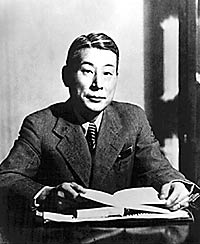
People in Tokyo were not united. I felt it silly to deal with them. So, I made up my mind not to wait for their reply. I knew that somebody would surely complain about me in the future. But, I myself thought this would be the right thing to do. There is nothing wrong in saving many people’s lives …. The spirit of humanity, philanthropy … neighborly friendship … with this spirit, I ventured to do what I did, confronting this most difficult situation —and because of this reason, I went ahead with redoubled courage. ”
When asked why he risked his career to save other people, he quoted an old samurai saying: “Even a hunter cannot kill a bird which flies to him for refuge.”
— more at Wikipedia
André Trocmé ( April 7, 1901 – June 5, 1971) and his wife Magda (née Grilli di Cortona, November 2, 1901, Florence, Italy – Oct. 10, 1996) are a couple of French Righteous Among the Nations. For 15 years, André served as a pastor in the town of Le Chambon-sur-Lignon on the Plateau Vivarais-Lignon in South-Central France. He had been sent to this rather remote parish because of his pacifist positions which were not well received by the French Protestant Church. In his preaching he spoke out against discrimination as the Nazis were gaining power in neighboring Germany and urged his Protestant Huguenot congregation to hide Jewish refugees from the Holocaust of the Second World War.

In 1938, André Trocmé and Reverend Edouard Theis founded the Collège Lycée International Cévenol in Le Chambon-sur-Lignon, France. Its initial purpose was to prepare local country youngsters to enter the university. When the refugees arrived, it also took in many Jewish young people wishing to continue their secondary education.
When France fell to Nazi Germany, the mission to resist the Nazis became increasingly important. Following the establishment of the Vichy France regime during the occupation, Trocmé and his church members helped their town develop ways of resisting the dominant evil they faced. Together they established first one, and then a number of “safe houses” where Jewish and other refugees seeking to escape the Nazis could hide. Many refugees were helped to escape to Switzerland following an underground railroad network. Between 1940 and 1944 when World War II ended in Europe, it is estimated that about 3500 Jewish refugees including many children were saved by the small village of Le Chambon and the communities on the surrounding plateau because the people refused to give in to what they considered to be the illegitimate legal, military, and police power of the Nazis.
— more at Wikipedia
I am thankful for Sawtucket, who has kept me up with my daily Lectionary readings for more than 22 years. I thank Sawtucket for today’s reading, reminding us that we are all of one blood, one humanity, no matter our skin color, our nationality, nor our religion. We are human beings, and our job is to watch over one another.
Mayor Emory Valentine Doesn’t Get His Way

It all started with a conversation with my Mom, during which, in a hushed voice, she told me about a neighbor “who had gotten a blue card.” A blue card? I had never heard of a blue card.
“It meant she had to leave the state!” Mom said.
Such a small thing, and such a journey it has led me on, trying to find out about the blue card and how it functioned. It led me to The History of the Juneau Alaska Police Department, and reading through that led to an hour of hilarity reading through the struggles of a small frontier town trying to bring order out of chaos and fight the battles of sewers, garbage, untethered horses, bawdy houses, and law enforcement.
Here are some examples of early actions:
1904
September, 1904 – George Kyrage (“George the Greek”) was elected to the Council and served with Mayor George Forrest, Councilmen Henry Shattuck, John Reck, Louis Lund, J.P. Jorgenson, and Henry States. Kyrage was named chairman of the Police Committee and found himself squarely between those who wanted prosperity through a wide open town, and those who demanded strict enforcement of a new ordinance prohibiting women loitering in saloons.
1910
January 7, 1910 – The conduct of a man named Al Graham was discussed and the Council ordered that he be given a “Blue Ticket”.
April 15, 1910 – The applicants for City Marshal were as follows: Charles Biernoth, W.G. Harris, Charles Meline, Mike McKenna, William Steinbeck, John Sweeney, Fred LaMarche Holmberg, and J.T. Martin. Charles Biernoth received the majority of the votes and was elected.
May 6, 1910 – City Marshal Charles Biernoth was asked to resign.
1913
April 18, 1913 – Mr. Nolan appeared before the Council and protested that the women of ill fame were allowed to live in the vicinity of the saw-mill outside of the restricted district, and the matter was referred to the Police Committee and the Chief of Police.
1914
January 2, 1914 – The City Attorney was instructed to prepare an ordinance against expectorating on the sidewalks of the City of Juneau.
-An ordinance was passed that provided punishment for pimps and moques to be set at not more than one hundred dollars.
City refuses to clean up red light district
February 6, 1914 – Councilman H.J. Raymond said that the last Grand Jury: wanted the City of Juneau to do something about cleaning up the red light district in the City. It was moved that the Chief of Police be ordered to close up every bawdy house in the City; but the motion died for lack of a second. It was then moved that the Chief of Police be instructed to stop the sale of liquor in all houses of prostitution in the City of Juneau; and again the motion died for lack of a second. It was then moved and seconded that a letter be forwarded to John Rustgard, US District Attorney, First Division of Alaska, stating that the City authorities of Juneau will be glad to lend all the aid they can in the enforcement of the law in the sale of liquor in houses of prostitution in the City of Juneau.
May 14, 1914 – A day’s labor in the Municipality of Juneau was set at eight (8) hours, common laborers were paid 35 cents per hour, and could work any number of additional hours at the same rate per hour.
1915
January 27, 1915 – A special meeting was called to hear charges of misconduct in office that have been made against Chief of Police William McBride. The Council requested that witnesses give their testimony. Harry Grove was duly sworn and testified and Charles Freegrove, Helen, and J.H. Gilpatrick were called and questioned by different councilmen. The hearing was then continued to a subsequent meeting of the Council.
January 29, 1915 – The Clerk read the resignation of William McBride from the office of the Chief of Police of the City of Juneau which took effect on February 1, 1915.
-A proposed ordinance was presented entitled “An ordinance requiring horses to be tied”.
July 7, 1916 – S.A. Judd protested that the Chief of Police had ordered him to leave town.
It makes for fascinating reading. Then I came across this sequence of reports, but for all my Googling, I cannot find out what the charges were against Chief of Police W.S. Harding:
1917
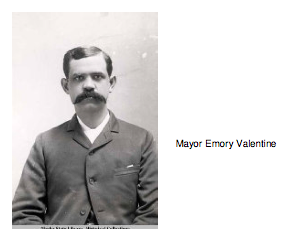
April 11, 1917 – Mayor Valentine declared that grave and serious charges have been made against W.S. Harding, Chief of Police, and that proofs are now in his possession. He further declared that an emergency existed, ordered that the office of Chief of Police be declared vacant, and stated that he will in due time appoint an emergency Chief of Police.
Councilman King asked Mayor Valentine the nature of the charges, to which Mayor Valentine replied that Mr. Harding would be given an opportunity to answer them, and that he would call a special meeting for that purpose.
April 12, 1917 – It was moved and seconded that W.S. Harding be elected to the position of Chief of Police for the coming year, to which Mayor Valentine declared out of order and stated that Mr. Harding had been suspended under the rules. Councilman Blomgren called for a vote on the adoption of the motion, and all six councilmen vote aye.
April 20, 1917 – The Clerk read the following demand: To Emory Valentine, Mayor and Common Council of the City of Juneau:
Whereas, Emory Valentine Mayor of the City of Juneau did at a public meeting held in the City of Juneau on the night of the 19th day of April, 1917, read certain affidavits purporting to contain certain charges against me as Chief of Police of Juneau, and that Emory Valentine publicly announced on the streets and public places of the Town of Juneau that he had other charges against me, I hereby demand that affidavits and all charges made against me as a public official and against my conduct, if committed and filed with the Common Council of the City of Juneau, or the Clerk of the City, and that a hearing be had immediately. Respectfully submitted, dated Juneau, Alaska, April 20, 1917. (signed) W.S. Harding
-An Executive Session was scheduled for Monday, April 23, 1917, at the hour of eight o’clock p.m. for the purpose of having the charges against W.S. Harding formally filed or presented.
-The Mayor called for the election of a person to fill the position of Chief of Police for the coming year. The Clerk read the following names as persons who had filed their applications: W.S. Harding, W.D. McMillan, E.J. Sliter, and Capt. E. Harrigan. W.S. Harding received six votes and the other applicants received none. The Mayor declared a veto on the election of W.S. Harding as Chief of Police.
-Harding appointed Dan Harrington, W.D. McMillan, and Emil Mullenbeck, to serve as police officers under him and asked for approval of the Council which was given. The Mayor declared a veto to the action of the Council.
April 27, 1917 – The Common Council of the City of Juneau, Alaska, convened in the Council Chambers of City Hall at the hour of eight o’clock p.m. on Friday, April 27, 1917, for the purpose of trying the charges against W.S. Harding, Chief of Police.
-The trial of the charges was to be heard by affidavit, and W.S. Harding was given until Monday night to file his answering affidavits, with the trial continued to Thursday, May 3, 1917 at the hour of eight o’clock p.m.
May 3, 1917 – The Common Council of the Town of Juneau, Territory of Alaska, convened in the Council Chambers of the City at the hour of eight o’clock p.m. on Thursday, May 3, 1917 – Mayor Valentine presiding. A resolution calling for the reading of the charges against W.S. Harding, Chief of Police accusing him of misconduct in office and the answering affidavits from the Chief was read.
-Affidavits of Walter Johnson, Frank Morrison, Jack Ivey, Fred Alexander, Mrytle Mercer, J.W. Felix, D. DeBlaser, F.J. Breezee, L.N. Ritter, and E. Valentine supported the charges.
-Affidavits of W.S. Harding, Emil Mullenbeck, Louise Dejonghe, E.W. Pettit, L.O. Sloane, C.O. Lindsey, Carl R. Brophy, W.D. MacMillan, A.C. Williams Jr., Frank E. Sargent, Glen C. Bartlett, H.H. Post, D.J. Harrington, George C. Burford, Edith Johnson, John B. Marshal, Harry Ellingen, and E.A. Naud were read in answer to the charges.
-The Council took a ten minute recess to consider the charges, and Mayor Valentine left the meeting.
-Following the recess, the following resolution was read: Be it resolved that W.S. Harding, Chief of Police of the City of Juneau, whom certain charges have been filed against, has been exonerated and it is the wish of the Council that he continue as Chief of Police.
May 4, 1917 – The electric light at the end of the garbage dump was out, causing trouble for boats navigating up and down the channel.
-Mayor Valentine objected to the claim of Chief Harding for his full monthly salary, saying that he was only entitled to pay for the first eleven days in April, because Harding was relieved from office on that date.
-The Clerk read Mayor Valentine’s veto message to the action of the Council electing W.S. Harding as Chief of Police on April 20, 1917, and to the action of the Council confirming the appointments of W.S. Harding, Patrolman Harrington and Mullenbeck. The following resolution was then read: Be it resolved that the veto of Mayor Valentine to the action of the Council in electing W.S. Harding, Chief of Police of the City of Juneau, Alaska on April 20, 1917, be overruled and held for naught. And be it further resolved that the veto of Mayor Valentine to the action of the Council in confirming the appointment of Patrolman Harrington and Mullenbeck on April 20, 1917, be overruled and held for naught.
Mayor Valentine served as Mayor for six terms, according to Wikipedia, and organized the volunteer fire department and designed the city’s first water system. For some reason, he really didn’t like the Chief of Police, but Harding and a lot of support among the council members, and retained his position. Fascinating stuff; brings history to life.
And you thought history was dull?
Stonehenge a Center for Healing
This is from BBC News: Nature, and you can read the entire article by clicking on the blue type, but I wanted you to know about the upcoming BBC Special on Stonehenge, September 27th.

Archaeologists have pinpointed the construction of Stonehenge to 2300BC – a key step to discovering how and why the mysterious edifice was built.
The radiocarbon date is said to be the most accurate yet and means the ring’s original bluestones were put up 300 years later than previously thought.
The dating is the major finding from an excavation inside the henge by Profs Tim Darvill and Geoff Wainwright.
The duo found evidence suggesting Stonehenge was a centre of healing.
Others have argued that the monument was a shrine to worship ancestors, or a calendar to mark the solstices.
A documentary following the progress of the recent dig has been recorded by the BBC Timewatch series. It will be broadcast on Saturday 27 September.
The mystery of Stonehenge, it’s origins, is purpose, has fascinated people for centuries. How amazing that one twelve day dig has discovered so much information – new pieces for a hugely complicated puzzle with lots of work left to be done.
As I write this post, I am also reminded of one of the all time funniest movies I have ever seen – This is Spinal Tap, one of those mocumentaries, this one about a rock group. Not a very bright rock group. It is a very funny movie.
They ask a set designer to create a magnificent recreation of Stonehenge, and give her a napkin with how they want it to look. The result is . . . hysterical:
Recent Comments
Kitchen on Isiais: Winding Down intlxpatr on Shampoo Ginger tigerbutterya0c5ff1d… on Shampoo Ginger intlxpatr on British Soldier Kidnapped, Esc… John on British Soldier Kidnapped, Esc… Wikipedia Donate Button

Amazina


Early Voting in Florida


