Unintended Consequences
It is rare that I am stunned into silence.
This is not the world I grew up in. This is not the country I served. These are not the values we were taught as children, in a United States full of post WWII optimism, as we allied with other nations for the greater good.
I am a blessed woman. I have what I need, and my son married a woman with deeply perceptive insights. An environmental specialist, she taught me the concept of Unanticipated Consequences. We are witnessing a host of unanticipated consequence unrolling by the minute, consequences which will have reverberations far into the future – not forseeable consequences but lasting.
Our current Administration is whacko. They command the mightiest military on earth, and they hold the keys to nuclear weapons. I have a friend who says “We’re Doomed,” only he uses a stronger, vulgar word I don’t want to use here.
Barcelona to Abu Dhabi: A Stop in Haifa
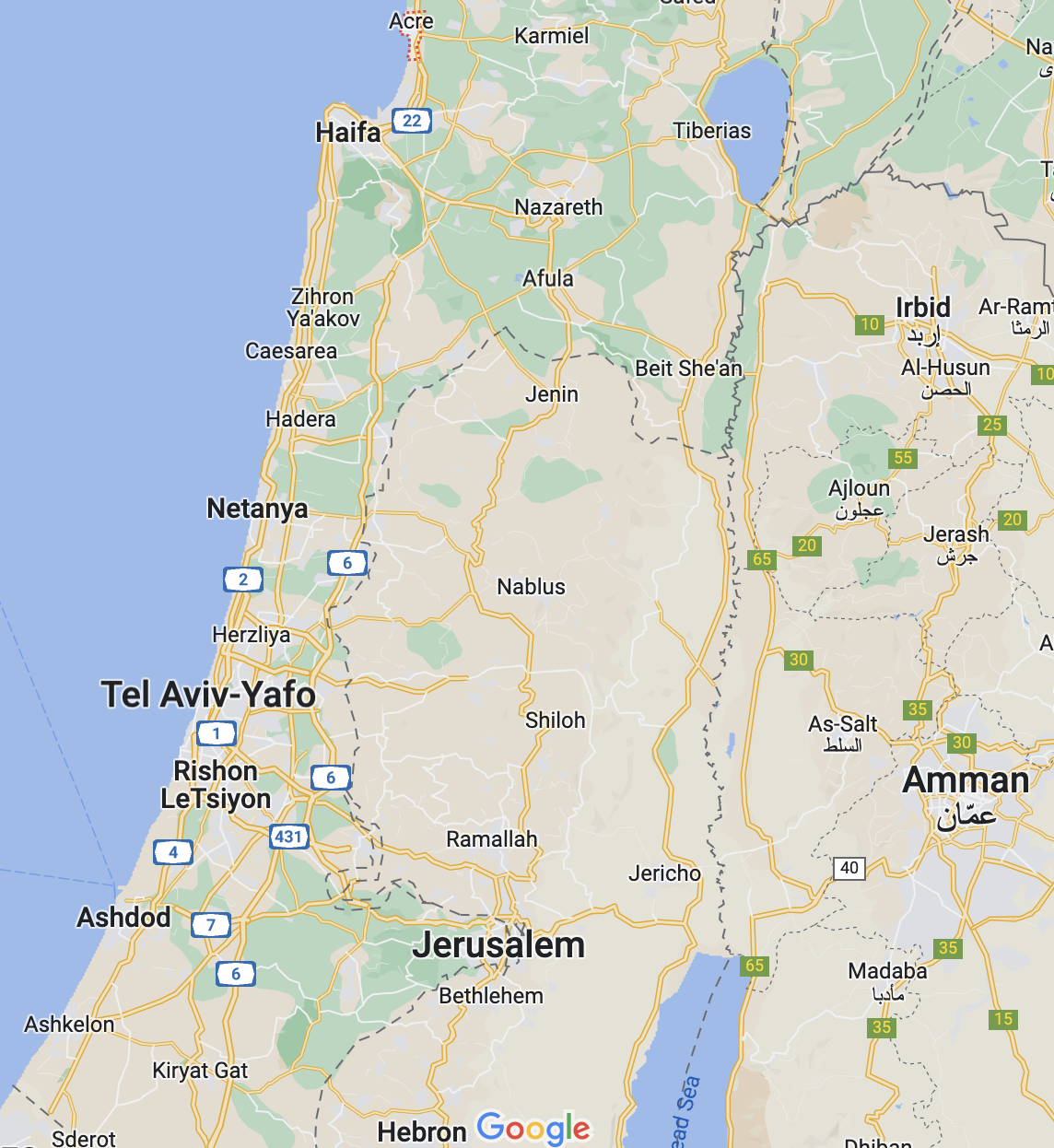
First, a little orientation. On the map above, in the upper left corner, you will see Acre, and just south of Acre you will see Haifa. At the bottom central, you will see Jerusalem / Bethlehem / Hebron and a short distance to the east of Jerusalem you will see Amman, Jordan, where we lived for two years several years ago.
Early, early in the morning, we make port in Haifa. It isn’t picturesque, the port, and we are instructed that every person on board has to make a face-to-face immigration visit even if they are planning to stay aboard.

Those of us on trips have to do it en route to our tour bus. It is bureaucratic and annoying. The lines are long. There are two other larger tour boats in town, an Azamara and a Costa (full of Italians) so there are a LOT of people processing, and there is also a lot of noise.

The lines more quickly, and we find our bus, which is fairly full, and . . . there is more coughing and sneezing. Some of us are masked. My forehead and upper cheeks feel a little tight, like some little allergen is bothering me.

The trip is to Acre, an old Crusader stronghold with a fascinating history, but we don’t get a lot of the history, but we do get a lot of the guide’s perspective on Israelis and Arabs and threats to Israel, and generalities about the medieval times.


He takes us first to a large souvenir shop with two meager restrooms, and lets us spend a long time there before even beginning our trip.

We spent our time wandering around – nearby – and taking photos. It was a waste of our time, and there was so much we could have seen.

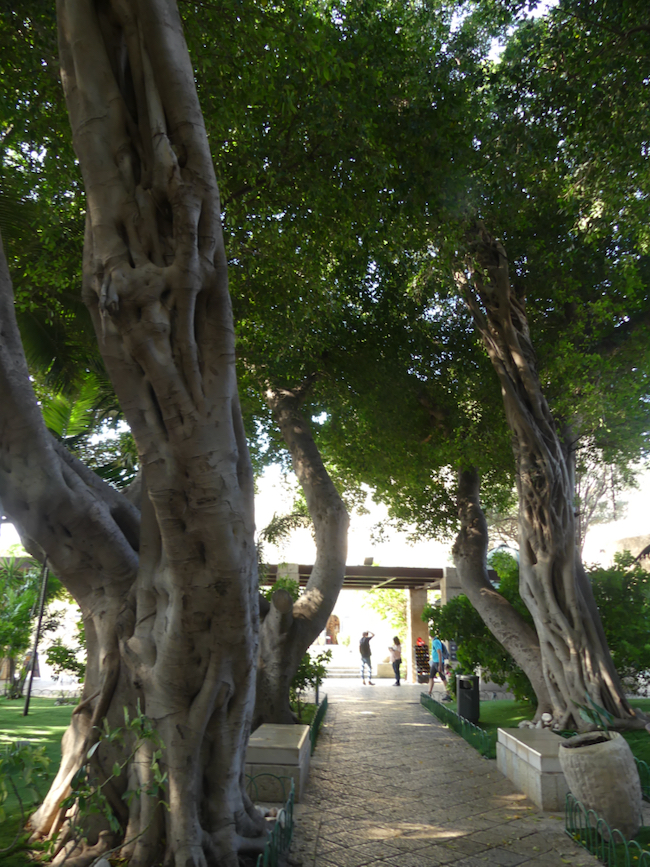
He won’t tell us where we will meet, does not want us wandering off, and because we don’t know when and where we have to meet, we have to stay with the group, my least favorite thing. He may have known a lot about Acre and the Fort, but he failed to convey the significance of what we were seeing, and he failed to place events in their context. “This is the Knight’s Hall” he would say, and let us look at a barren room with a slide show.
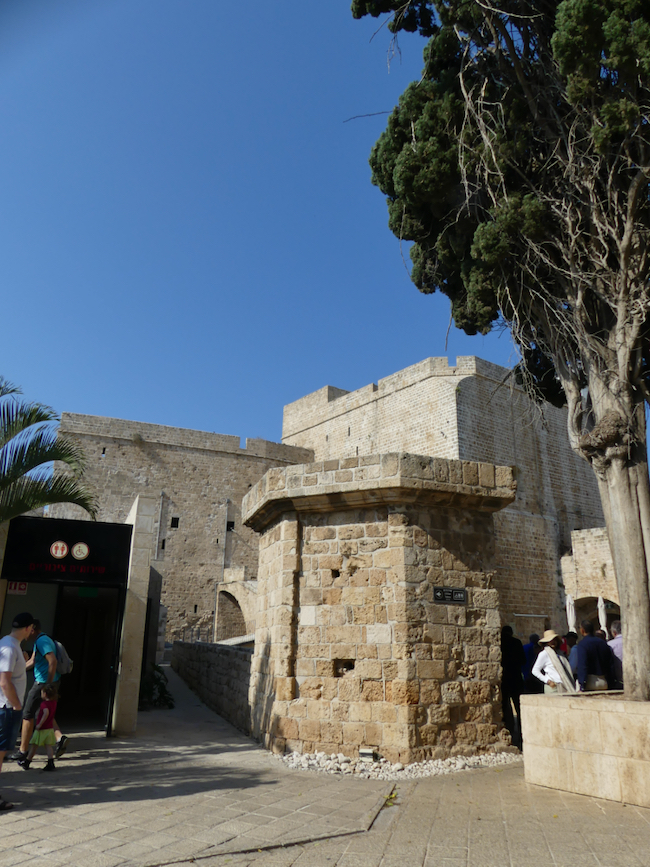

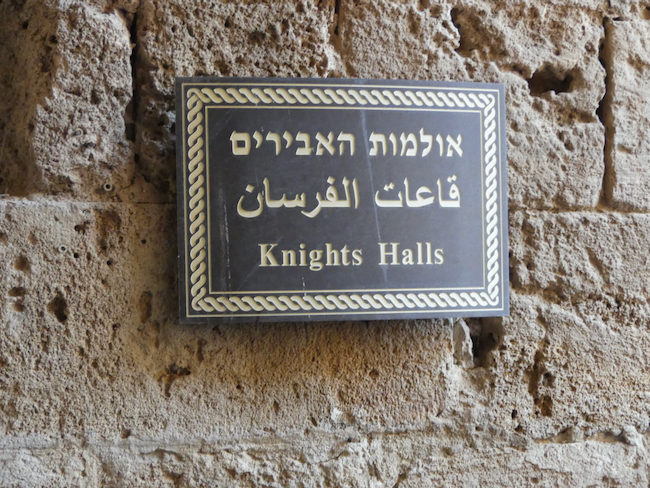


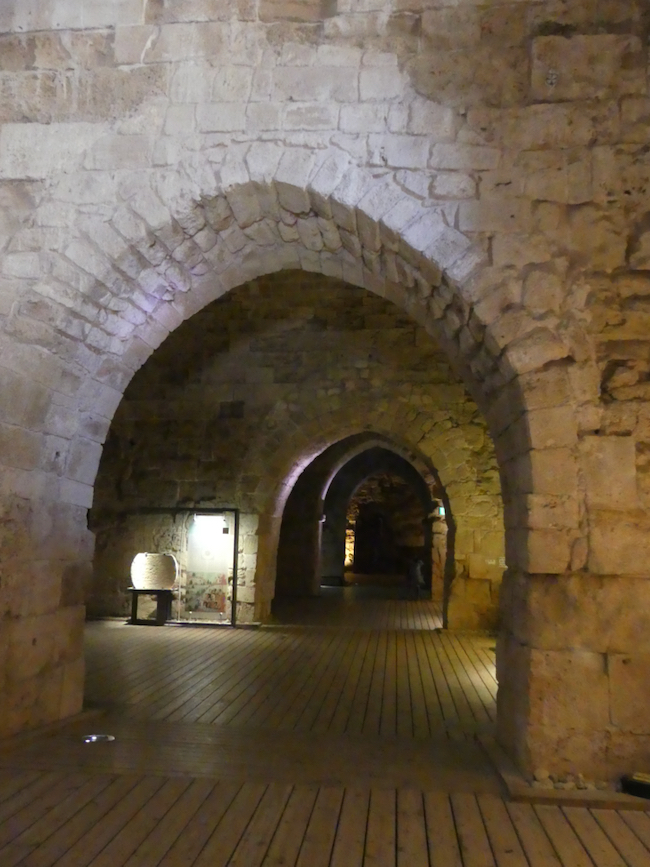


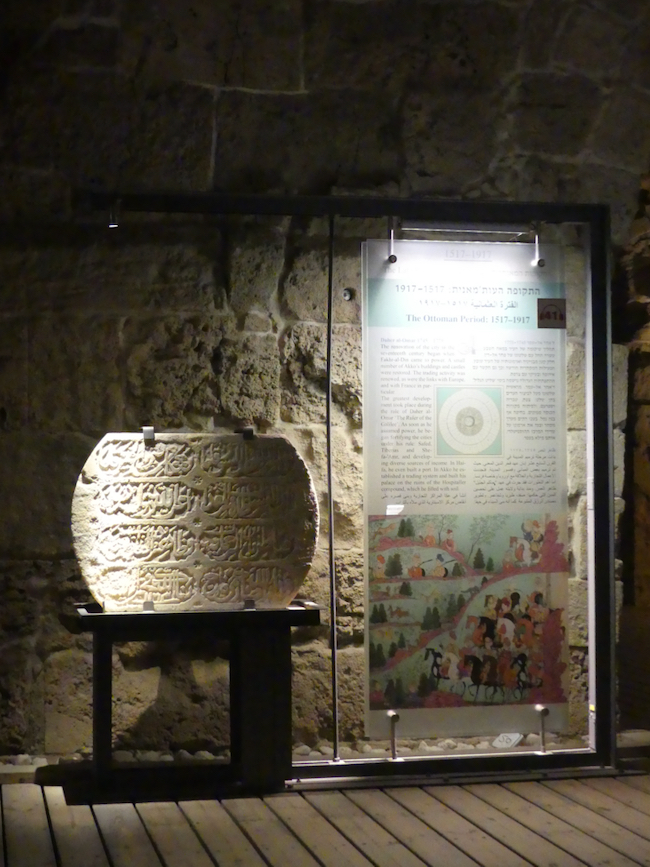


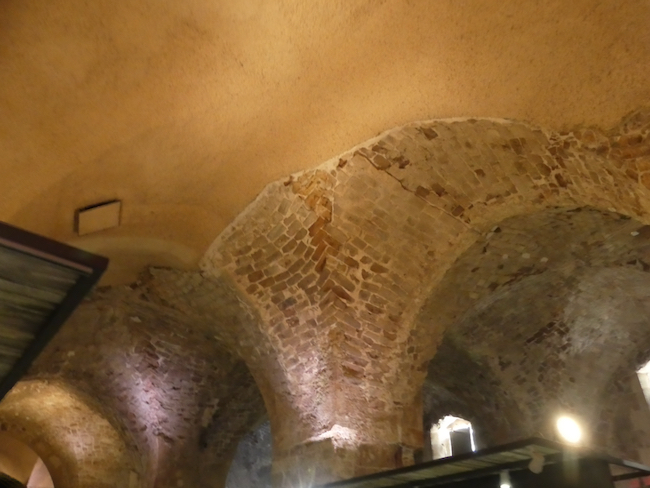


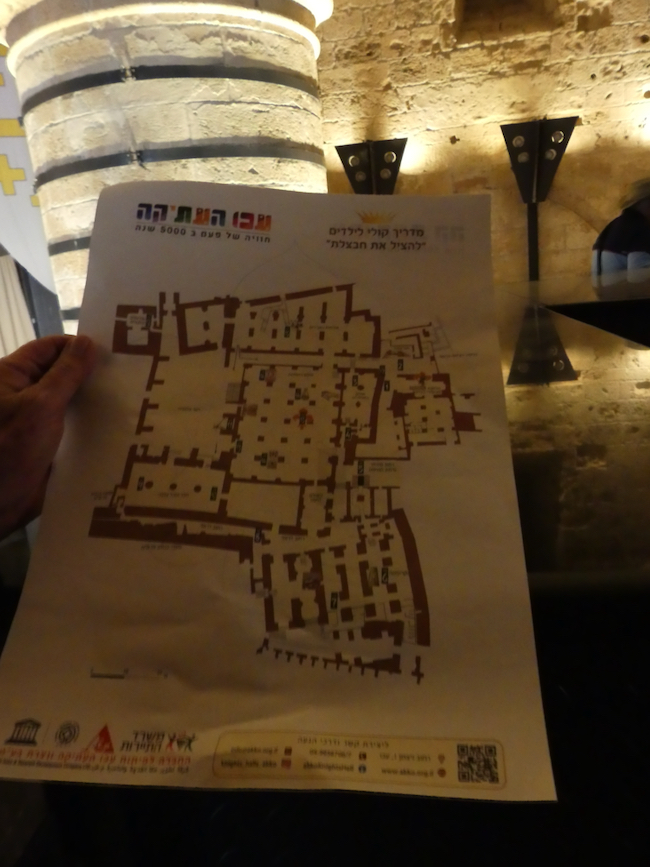
We found a map to help us out – except that it was in Hebrew
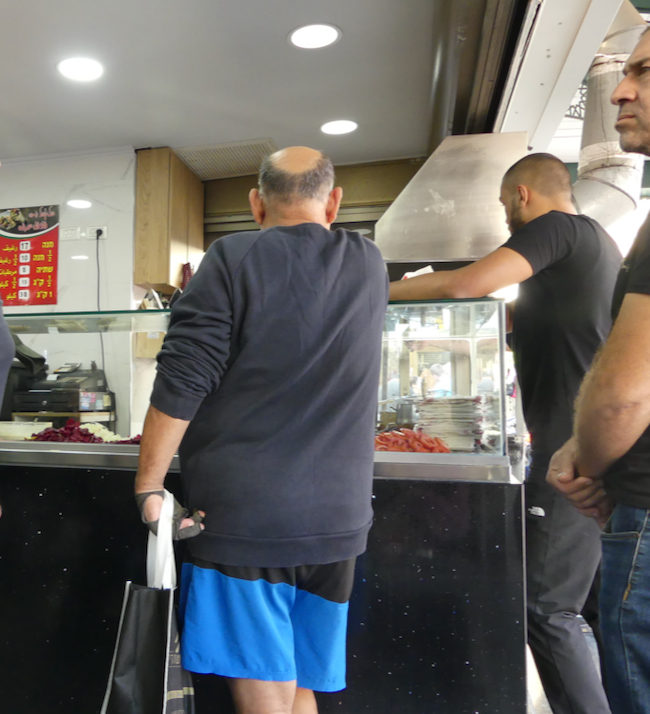
When we left the fort, the guide led us to the Arab market, we had about an hour. We could hear the call to prayer. Everything was about to come to a halt and we were starving. AdventureMan found a really good – really busy – falafel stand. It took us about half an hour just to get the meal, but it was so worth it – lots of vegetables, pickled eggplants, onion, etc, and the falafel were fresh out of the pot for each sandwich. That, and being able to watch all the regular customers as they ordered take-out for their families, was a lot of fun, and the best part of this trip to Acre.
I have visited Acre before. It is an old city, with a long history, back and forth. It was a sleepy old seaport, then a Crusader Citadel, then the site of a lengthy battle, which the Moslems won. A few Crusaders escaped alive through a secret hidden tunnel. I was so looking forward to visiting this site. I feel short-changed. If I had it to do over again, I would skip the Oceania tour and take the local ferry to Acre (Acre is a very short distance from Haifa) and we could wander at will (it is not a large location) and take the ferry back and see the things we want to see at our own pace.
When we got back on the bus, it was a hassle getting out of the lot, one couple was missing, and a lot more people were coughing. I couldn’t wait to get back to our quiet room on board. I also had allergies, or sinus, an almost-sore throat and I was just tired.


We considered ordering dinner in our room but decided it would be quicker to just run up to the Terrace buffet and grab something quick. We both had the asparagus salmon soup (not a lot of salmon) and I had a variety of vegetables – a pickled rolled up eggplant called involtini, a little mousse of sweet red pepper, some olives.
We ate outside – we have a table we like a lot to the far right, shaded from the breeze. It was actually warmer eating outside than inside. I drank a lot of mint tea with lemon and honey for my throat and head. Moustafa, our Turkish waiter, told us about farming practices near Ephesus, where he is from, about yoghurt, and fat content, and wanted to know about the varying kinds of cattle in the US. We didn’t know a lot, he was asking really good questions. We love those kinds of conversations.
By the time we got back to the room, all I wanted to do was go to bed.
I slept poorly, my sinuses swollen, not able to breathe well, feeling like a cold was coming on, until some point I got up and went to the couch where I could sleep in a more vertical position. It worked. I could breathe again, and when I woke up, I was feeling pretty good.
“Has Your Wardrobe Changed?”
I was on my hands and knees, sandwiching two new quilts when AdventureMan seated himself near me and asked if he should take his grey-green pants on the upcoming trip. With all the baggage insecurity going around, we’ve made a decision to take a carry-on bag and one personal item, and skip checked luggage altogether.

Being the kind of person who used to over-study for tests, this is causing me some anxiety. I told him that the pants did not coordinate with enough of his wardrobe to make them useful, to stick with the tried-and-true khakis which used to be his staple, and his blue jeans, which will get him through some of the more rugged places.
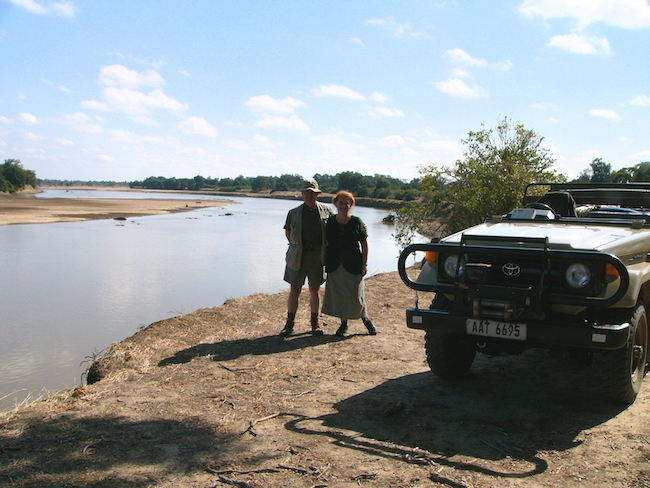
More than once, we’ve had luggage go missing. It always caught up with us, but once – in Lusaka, we were headed out into the bush the next day and had only our traveling clothes and night clothes – and, thank God, some shoes. We grabbed a taxi and found a street mall with a combination grocery and department store, stocked with camo and green clothing from China which was more or less apropos. We couldn’t be choosy, and we were thankful to find something that would get us through until, we hoped, our baggage showed up. I still love the thick green socks I found; they have worn like iron.

But this is different, this is not the bush, it is a lengthy cruise, and I am trying to pack enough cool-weather clothing for cooler places, warm-weather clothing for places that are pretty hot even when they have cooled off, and clothes for dining in specialty restaurants with a dress code. I need clothes which will be modest. I need something for just hanging around. I’ve saved old swimsuits I can wear and leave behind, so that’s one thing solved.

“We’ve never lived in one place this long, ever,” AdventureMan continued, “and I have clothes I never wear anymore, things that have just become irrelevant. I keep thinking I need to get rid of more, like the pleated pants and the dress shirts, but it’s hard, I wonder if I might need them. Does that happen with you?”
I pause in my pinning and laugh. I have one dress in three different colors, another dress in two colors, and two jean skirts. I have a winter hooded dress in five colors. I am not a big shopper, so when I find something that works, I go with multiples.
Meanwhile, yes, AdventureMan, I have that other closet full, like you, with just-in-case clothes. I still have what is left of my evening dresses. I have clothing for in case I have a business meeting, or a funeral, things maybe I’ve worn once or twice since moving here. I have the odd specialty pieces, like Christmas clothing. When will I be ready to part with my cold-weather clothing, so beautiful and once so expensive?
I laugh and tell him all the above, and then tell him that of all the clothes I wear, I still have the clothes which were made for me in Qatar and Kuwait, copies of one particular Coldwater Creek linen dress which I had copied in both linen and cotton. I have three left. I’ve been wearing them for fifteen years, and they still look like new.
“I’ve taken them in,” I tell him because I’m smaller than I was when I was relatively sedentary in Kuwait. “And I’ve taken the hems up at least twice as I’ve gotten more used to being back in America. People tell me I look nice – they used to ask me if I was a missionary wife,” I added, and we both laughed. When you live in a different culture for a while, you become adapted to local ways. I remember how disconcerting it was in summers coming back to the USA and finding all the women shockingly and scantily dressed in their sleeveless dresses and shorts and T-shirts, even respectable women and I knew the change was in me and my perceptions, not in my culture.

I am thinking the backpack will be my Godsend. I am hoping I still have the strength and energy to run through Charles de Gaulle airport with the backpack on my back, lifting the carry-on if we need to run up or down stairs. I am thinking I can strap the backpack onto the carry-on handle in the straight places. I am thinking whatever I take will be enough; I am hoping it might even be a matter of discovering I have overpacked a little less than before.
It’s a curious mentality you develop when you’re nomadic. You become aware of so many possibilities, things that can go wrong, and things you might need, so you are always thinking “just in case.”
We have a backup plan. We know there is a Carrefour (large French supermarket) in walking distance to our hotel, so we can stock up on things we don’t have room to pack, or which we can’t carry on-board an airplane – manicure scissors, needles, sun protection, and some good bottles of dry red wine for our cabin. My list gives me a small illusion of control.
I take a deep breath and remind myself that this is our get-away, our escape, and that anxiety is counter-productive. We will be fine. Enough is enough, it will be a grand adventure.
Amnesty International Report on Gaza
This is just an excerpt from a much longer article on Wired.com. You can read the entire article by clicking on the blue type.
Tracking Down Gaza War’s Deadly, Mysterious Cubes
By David Hambling February 24, 2009 | 11:21:49 AMCategories: Ammo And Munitions, Missiles, Sabras
An unidentified weapon packed with strange “cube shaped shrapnel” killed or wounded civilians in the recent Gaza war, according to a new report from Amnesty International.
Amnesty’s report on weapons used by both sides in Gaza finds much to condemn. The group is particularly hard on the U.S., having found numerous remains of American munitions — including white phosphorus shells from Pine Bluff Arsenal, and a Hellfire missile made in Orlando. Another weapon which bothers Amnesty is a mysterious munition, filled with cubic particles.
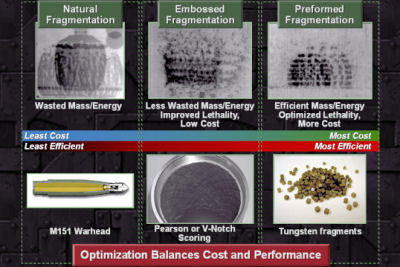
“Amnesty International delegates in Gaza also found evidence of the use of a new type of missile, seemingly launched from unmanned drones, which explodes large numbers of tiny sharp-edged metal cubes, each between 2 and 4 mm square in size. This purpose-made shrapnel can penetrate even thick metal doors and many were seen by Amnesty International’s delegates embedded deep in concrete walls. They appear designed to cause maximum injury…
Slaughter of the Innocents
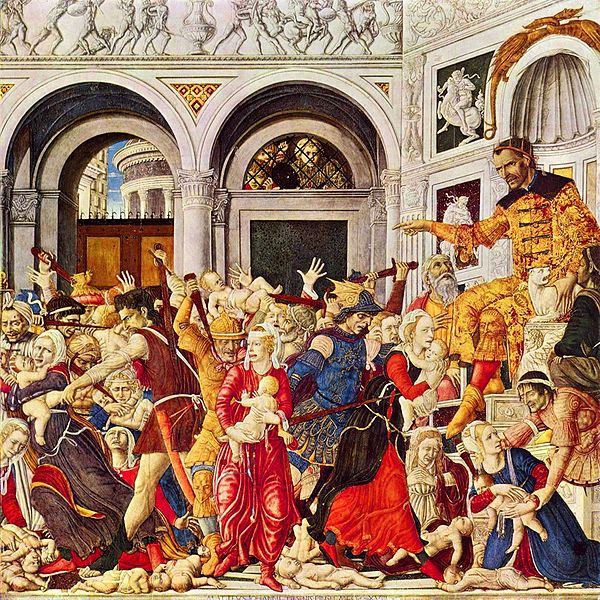
In our Lectionary readings for today we pray for the Innocents, slaughtered by King Herod, in the land that is now Israel.
PRAYER (traditional language)
We remember this day, O God, the slaughter of the holy innocents of Bethlehem by the order of King Herod. Receive, we beseech thee, into the arms of thy mercy all innocent victims; and by thy great might frustrate the designs of evil tyrants and establish thy rule of justice, love, and peace; through Jesus Christ our Lord, who liveth and reigneth with thee and the Holy Spirit, one God, for ever and ever.
There is nothing so maddening as to be helpless to intervene in the huge crush of political events among nations. On the other hand, we have been given this very powerful weapon – prayer – and the knowledge that God can do anything, and that he listens to our prayers, especially prayers for the weak, the helpless, women and children.
We can also raise our voices where it counts – to our governments – to say “this is wrong” and “this must be stopped.”
This is wrong. This must be stopped.
It is neither good nor right for bullies to impose their will on those with less power, just because they can. (That applies also to my own country.) It is not good for the victims – but it is also not good for the health of the bully! Countries where minority rights are not considered find themselves weakened from internal disorders, like a body eaten with cancer. If minorities can be likened to bacteria – a little bacterial makes us healthier and stronger. Tolerance of diversity makes us as nations healthier and stronger.
Don’t you wonder what might be accomplished if the Palestinians and Israelis could find some way to live together in peace?
Recent Comments
ExpatAlien on What Country am I Living … intlxpatr on Yellowstone: Old Faithful to C… Michelle on Yellowstone: Old Faithful to C… Cathy on No Grown-Ups in Charge intlxpatr on Waiting for Snow Wikipedia Donate Button

Amazina


Early Voting in Florida


 Here There and Everywhere