Rabbit Holes: Paul Samuelson, John Steinbeck and Anu Garg
It’s a rainy day in Pensacola, and Florida needs rain. The reservoirs are depleted, and a drought has been declared. As I go through my e-mail, I come to Anu Garg’s A Word a Day post. (Today’s word is “incubus”). I subscribed to his daily e-mail many years ago as I studied teaching English as an additional language.
Anu Garg is profound. He chooses wonderful words, words my foreign students adored. He also includes a quote at the end of each post. Today’s quote was from John Steinbeck.
A THOUGHT FOR TODAY:
The things we admire in men, kindness and generosity, openness, honesty, understanding and feeling are the concomitants of failure in our system. And those traits we detest, sharpness, greed, acquisitiveness, meanness, egotism and self-interest are the traits of success. And while men admire the quality of the first they love the produce of the second. -John Steinbeck, novelist, Nobel laureate (27 Feb 1902-1968)
And it just so happens that this coming month, my book club is looking at three Steinbeck novels; Tortilla Flats, Cannery Row, and The Moon is Down.
One thing leads to another. Tortilla Flats takes place on a hill above Monterey, California, where paisanos live.
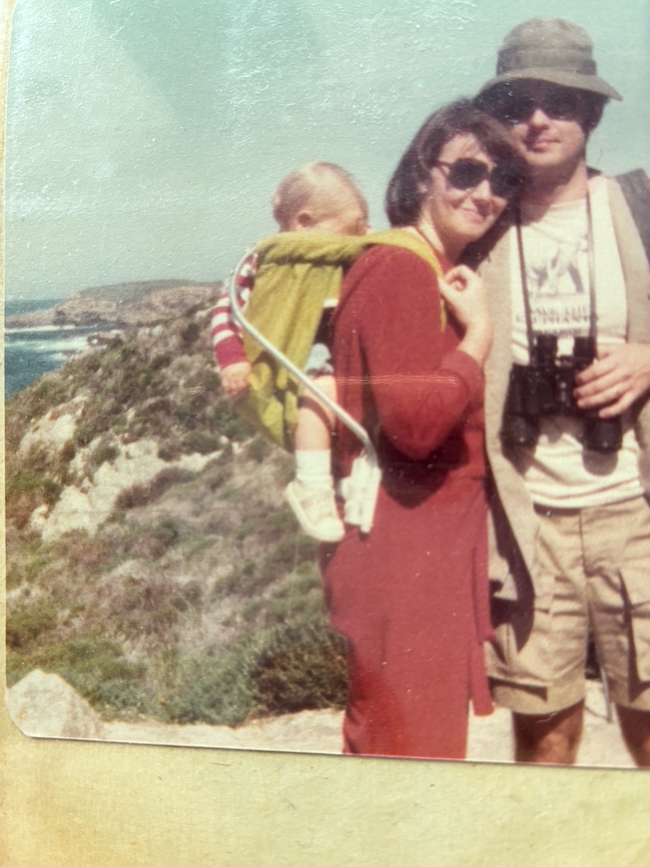
Of all the places I’ve lived, I have never loved a place the way I love Monterey, California. We lived on a hill above Monterey, above the old Del Monte Hotel, now the Naval Postgraduate School. The location sounds very suspiciously a lot like Tortilla Flats. The book bring back so many wonderful memories, particularly lying in bed at night and hearing the sounds of the sea lions barking down on the rocks, the gulls screeching, and the fog horn warning – we had a lot of fog.
And I remember Paul Samuelson, the author of the Economics textbook I used for an introductory economics class I took my freshman year in college. I never intended to like economics, but I found Samuelson readable – and even riveting. I remember one quote from his text: “Man does not always starve quietly” which had to do with his theories on economic development. Within that chapter, he also explains comparative economic deprivation.
This was a long time ago, so I am paraphrasing what I remember, and I might be getting it wrong. Samuelson talked about how once the most basic needs are met in a developing country, food, housing, clothing, jobs – you’d think everybody would be happy, but once people can stop scrabbling to survive, once they are stable, they start looking around and see someone who has more – and this is relative deprivation. The see someone with something they didn’t know they needed, and now they need this, too, to be happy.
So how does this relate to Steinbeck, and La Mesa Village, and Paul Samuelson?
My husband and I and our brand new little baby were leaving one military school and headed for schools in Monterey when he got a call from military housing in Monterey. It was such a nice, positive call when it started out, telling my husband about the lovely house we were to have with three bedrooms and a fireplace in La Mesa Village, and went on to give information about measurements and furniture and we were joyfully amazed. Our military housing had never been so fine, nor had any housing office called us and treated us so respectfully.
And suddenly everything changed. “Oh wait,” she said. “You’re not Navy?”
“No,” replied my husband, “I’m in the Army.”
“You’re not a Navy Captain?” she confirmed.
(silence as we looked in horror at one another)
“No,” my husband said shortly, the way you respond when a short-lived dream-come-true has just died.
“Oh. Well you’ll be in normal student housing then. Sir,” she added, respectfully, but all the pleasantness was gone.
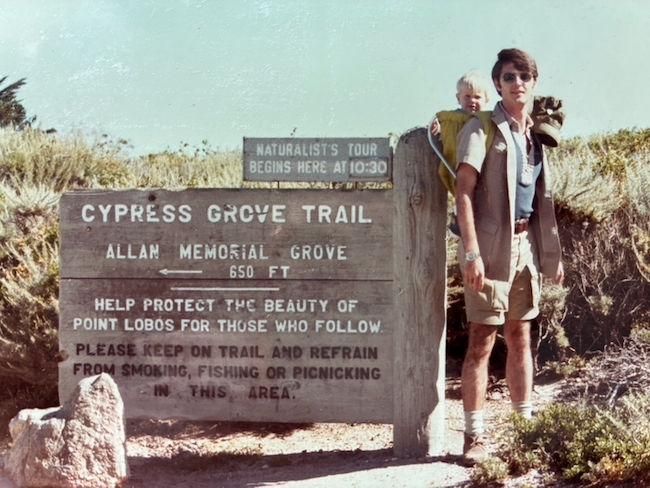
And that’s where my friend Paul Samuelson, the first Economist in the United States to be awarded the Nobel Prize (1970) comes in. How much do you remember from your college classes? As we accepted our student housing – not a beautiful 3 bedroom house with a fireplace, but a flat in a quad with two bedrooms and linoleom floors (no fireplace) I remembered the concept of relative deprivation. I had a roof over my head in Monterey, California, heaven on earth. I had a baby and good child care and great grocery stores; I attended the Naval Postgraduate School and the Defense Language School. On weekends, we hiked at Point Lobos, and we were happy. Happy, except for that occasional twinge of jealousy when we passed the houses higher on the hill with three bedrooms and a fireplace.
And when I felt that twinge, I smiled and thought of Paul Samuelson.
Monterey, CA; A Sentimental and Nostalgic Journey
One of the (many) highlights of our trip was spending time, once again, in Monterey, California where we had attended the Naval Postgraduate School and the Defense Language Institute. We used to lie in our bed in La Mesa Village, and we could hear the seals barking. We discovered that with our mighty ID cards, we could get a wonderful suite at the old Del Monte Hotel, now Navy Lodging on the campus of the Naval Postgraduate School.

The Del Monte is one of those magnificent hotels built to welcome post guests to destinations served by the railroads. The Ahwahnee is another such, as are Yellowstone and Glacier Lodges. The Navy took it over during the war, and used it as a rest and rehabilitation center, then later turned the hotel campus into a school specific to Navy needs of navigation, engineering, strategy and decision-making.
We had a two room suite with a bathroom and a kitchen. It was spare, but very spacious. Having space, for me, is like breathing. Having high ceilings makes all the difference.

This was the sunset from one of our windows:

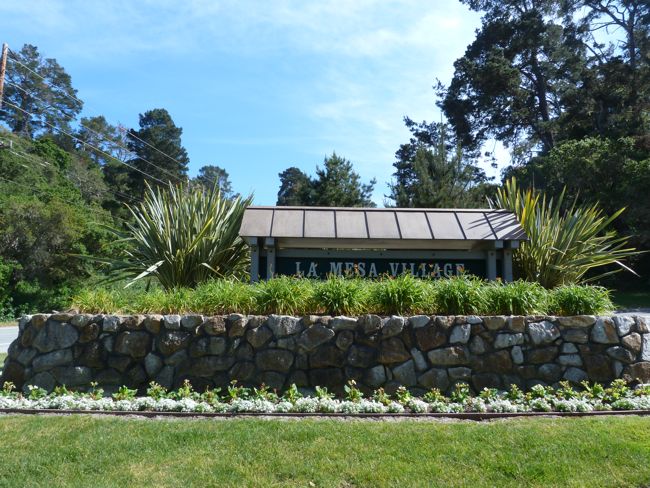
After settling in, we went out to revisit our old haunts. The biggest shock was La Mesa Village, where we once lived. When we got to Monterey, and saw our quarters, I cried. They were little three bedroom units in groups of four. We were lucky, we got an outside corner unit, so we had more windows and more light than many others, but we also had black linoleum. It was horrible. I cried.
AdventureMan found someone leaving who had carpeting cut exactly for our unit, and bought it to cover the linoleum floors. It was pretty hideous, a greeny-gold kind of shag carpet, but it covered the black linoleum. I thought he was a rock-star.
We couldn’t even find our old unit in La Mesa Village. Now, they are all duplexes, two story, I think they tore down all the old units and built new, modern ones. Each is painted differently, and they look very California suburban, no longer like military housing, except that one or two units have flags outside.
We head down to Asilomar, always one of our favorite drives, and feast our eyes on the coastal rocks and the crashing waves. It is a glorious spring day, people are all barefoot and enjoying the sun.


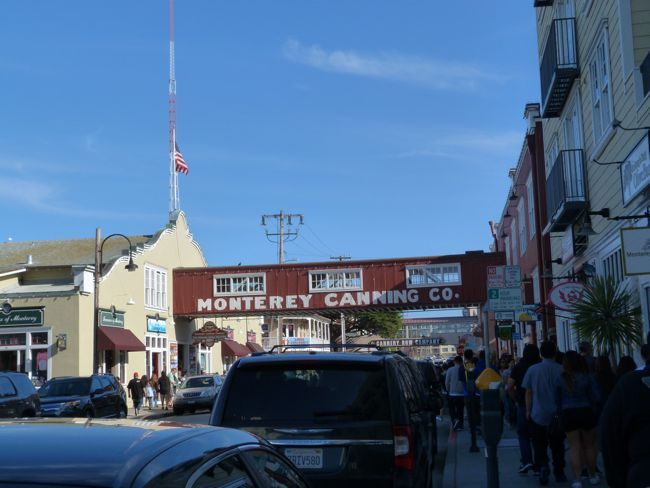
We stroll along the Monterey waterfront, which has changed also. It was always touristy, but it used to be sort of grungy, and now it is clean – and kind of bland, full of shops full of tourist kitch made in China.
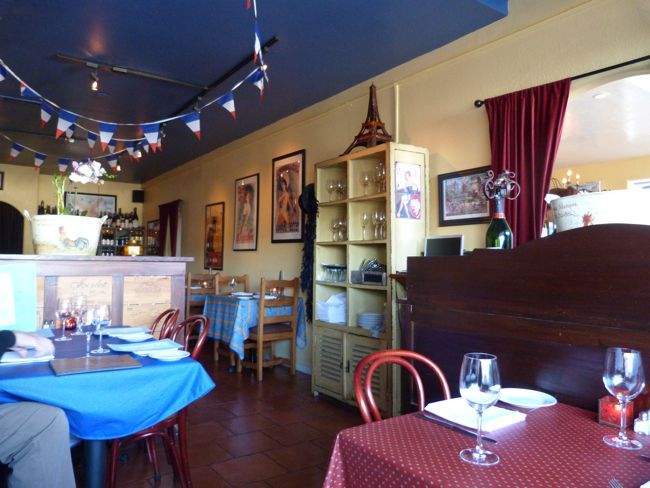
When planning the trip, we spent a lot of time looking for fun places to eat, and this was the place we agreed on instantly, the Bistro Moulin. Good thing we made reservations, they were turning people away as fast as they showed up. It’s an adorable place, very welcoming, and the food was fabulous. It got too crowded to take photos with discretion; we started with a pate, then I had the Petrale Sole, which was fabulous, and AdventureMan had Mussels in Wine Sauce which were more fabulous than my Sole 🙂

We were totally caught by surprise by the most nostalgic moment on this part of our trip. We were enjoying ourselves so thoroughly, being back in Monterey and Carmel, just relishing soaking in all the good times available, and then, as we got back to our room, we heard a trumpet. The long, haunting notes of Taps began to play, and it was as if we were still young students at the PG school, everything stopping to pay homage to the end of the day and its sacrifices.
We were equally surprised to be greeted by Reville the next morning!
Recent Comments
ExpatAlien on What Country am I Living … intlxpatr on Yellowstone: Old Faithful to C… Michelle on Yellowstone: Old Faithful to C… Cathy on No Grown-Ups in Charge intlxpatr on Waiting for Snow Wikipedia Donate Button

Amazina


Early Voting in Florida


 Here There and Everywhere