“Cunning, Ambitious, Unprincipled Men”
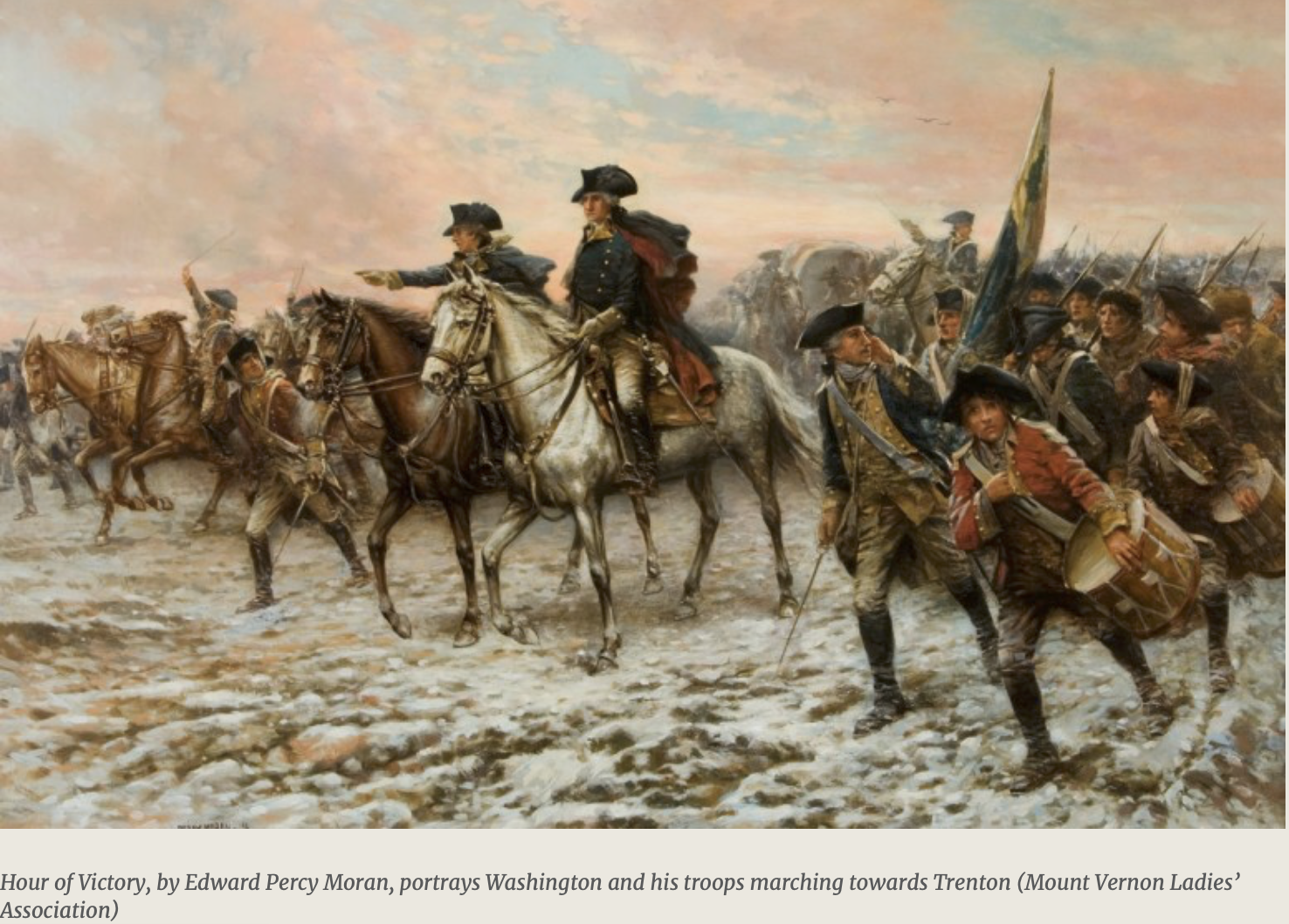
” However [political parties] may now and then answer popular ends, they are likely in the course of time and things, to become potent engines, by which cunning, ambitious, and unprincipled men will be enabled to subvert the power of the people and to usurp for themselves the reins of government, destroying afterwards the very engines which have lifted them to unjust dominion. “
George Washington, FAREWELL ADDRESS | SATURDAY, SEPTEMBER 17, 1796
The proposed SAVE act addresses a problem that does not exist. There IS occasional voter fraud, it is very rare and it is as often committed by one party as the other. Our elections are safe.
The SAVE act creates barriers for legal voters, especially for women who have changed their name as American citizens culturally do. So if you are a married woman, your ID does not match your birth certificate.
As a woman who has had to scramble in my life time to gather original documents, I know how frustrating, time-consuming and expensive it can be. I had to provide my birth certificate and marriage certificate to live in some foreign countries as we served our country. I was strongly motivated, and I had the luxury of clear instructions, TIME, and enough money to buy the documents I needed.
It is primarily American citizens; Women and the poor, who will be inconvenienced by this act, or unable to vote due to lack of money and time to access their documents.
In my state, Florida, restrictions have already gone into place that diminish voting: a requirement to renew your voting registration every other year, limits on early voting, and limits on absentee voting (especially hard for the elderly with limited abilities). Voters are increasingly forced to wait in long lines in the Florida heat and humidity. Oh – and there is an effort by one party to forbid groups who want to provide water for those standing in line to vote, a concern that a bottle of water might influence a vote.
LOL, this is an AI summary of Florida voting restrictions:
Overview of Voting Restrictions in Florida
Florida has implemented several voting restrictions that affect voter eligibility and the voting process. These changes have been a topic of significant debate.
Key Restrictions
Citizenship Verification
- Voters must provide proof of citizenship to register and vote.
- This requirement aims to ensure that only eligible citizens participate in elections.
Identification Requirements
- Certain forms of identification that were previously accepted may no longer be valid.
- Voters must present specific forms of ID when voting in person.
Voter Eligibility Challenges
- Individuals can challenge another person’s eligibility to vote, but this process is regulated.
- Challenges must be submitted in writing and can only occur within a specific timeframe before an election.
Provisional Ballots
- Voters whose eligibility is challenged can cast provisional ballots.
- These ballots are counted only after verifying the voter’s eligibility.
Impact on Voters
Affected Groups
- The new laws may disproportionately impact students, seniors, and women, who may lack the required identification or documentation.
- Critics argue that these restrictions could suppress voter turnout among eligible citizens.
Registration Deadlines
- Voters must register at least 29 days before an election.
- Changes to voter registration, such as party affiliation or address, must also be submitted by specific deadlines.
These restrictions are part of ongoing discussions about election integrity and access to voting in Florida.
These are moves designed to usurp the reins of government.
Streets of Minneapolis: Sing it Loud!
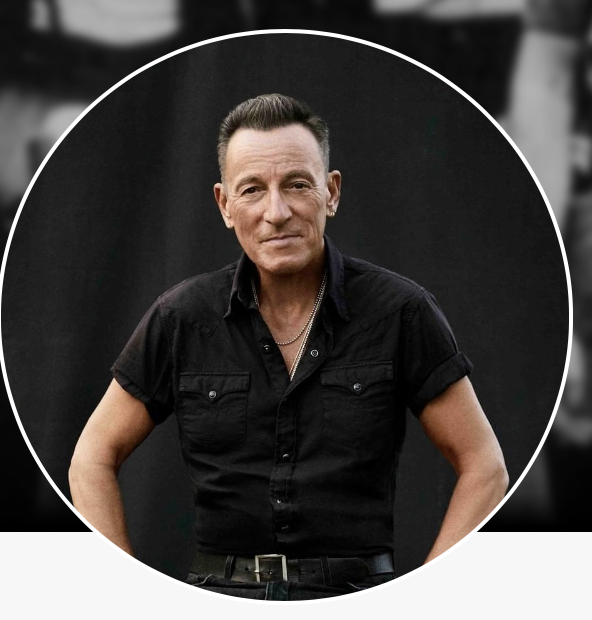
Thank you, Bruce Springsteen. Protests need an anthem, and just in time, you recorded Streets of Minneapolis, the number one song in 19 countries this weekend. That’s powerful. Listen for yourself on YouTube.
Here are the lyrics. Singing is non-violent and unifying; Sing it LOUD. If you can’t remember all the words, memorize the chorus 😊.
Streets of Minneapolis
Through the winter’s ice and cold
Down Nicollet Avenue
A city aflame fought fire and ice
‘Neath an occupier’s boots
King Trump’s private army from the DHS
Guns belted to their coats
Came to Minneapolis to enforce the law
Or so this story goes
Against smoke and rubber bullets
In the dawn’s early light
Citizens stood for justice
Their voices ringing through the night
And there were bloody footprints
Where mercy should have stood
And two dead, left to die on snow-filled streets
Alex Pretti and Renee Good
(chorus)
Oh, our Minneapolis, I hear your voice
Singing through the bloody mist
We’ll take our stand for this land
And the stranger in our midst
Here in our home they killed and roamed
In the winter of ’26
We’ll remember the names of those who died
On the streets of Minneapolis
Trump’s federal thugs beat up on
His face and his chest
Then we heard the gunshots
And Alex Pretti lay in the snow, dead
Their claim was self defense, sir
Just don’t believe your eyes
It’s our blood and bones
And these whistles and phones
Against Miller and Noem’s dirty lies
Oh, our Minneapolis, I hear your voice
Crying through the bloody mist
We’ll remember the names of those who died
On the streets of Minneapolis
Now they say they’re here to uphold the law
But they trample on our rights
If your skin is black or brown, my friend
You can be questioned or deported on sight
In our chants of “ICE out now”
Our city’s heart and soul persists
Through broken glass and bloody tears
On the streets of Minneapolis
Oh, our Minneapolis, I hear your voice
Singing through the bloody mist
Here in our home they killed and roamed
In the winter of ’26
We’ll take our stand for this land
And the stranger in our midst
We’ll remember the names of those who died
On the streets of Minneapolis
We’ll remember the names of those who died
On the streets of Minneapolis
source: https://www.lyricsondemand.com/bruce_springsteen/streets_of_minneapolis
Thank YOU Bruce Springsteen!
Sunset on the Coldest Night of the Year

What you can’t see is the wind blowing, and the white caps on the bayou. We had to re-cover and re-clothespin the roses and plumbago, and the ice on our water tubs was an inch thick. No problems with the running water freezing – so far. We have some cold days yet to come, but this is likely to be the coldest day of the year.
We saw One Battle After Another yesterday at the theater downtown that shows art films, foreign films and award nominees. The tickets are $10, the venue is provided free and the guy that runs the show does it for the love of film. Not only do we watch the films, but there are also great discussions.
Friends told me I probably wouldn’t like the movie, but I loved it. Going to Uni on the West Coast, I felt like I knew those people, on both sides. And dark as it was, it held a mirror up to current themes. I love actors who choose challenging roles, and even roles in which they play people who make bad decisions, or aren’t the brightest bulb in the chandelier. Leonardo diCaprio had his work cut out for him in this role, and I think he nailed it. Yes, it is wacky and violent. We are living in wacky and violent times. Who would have thought we would elect a liar, cheat, and felon to be President of the United States, and that we would stand by, helpless, as he gutted our Constitution? Wacko. It’s all wacko.
Today is a Full Moon, a new month and God willing, a time to turn things around. Bruce Springsteen has the number one song in 19 countries, with The Streets of Minneapolis, a roaring anthem fit for the times, and Minneapolis has been nominated for the Nobel Peace Prize for their activism and self-restraing in the face of the goons of ICE.
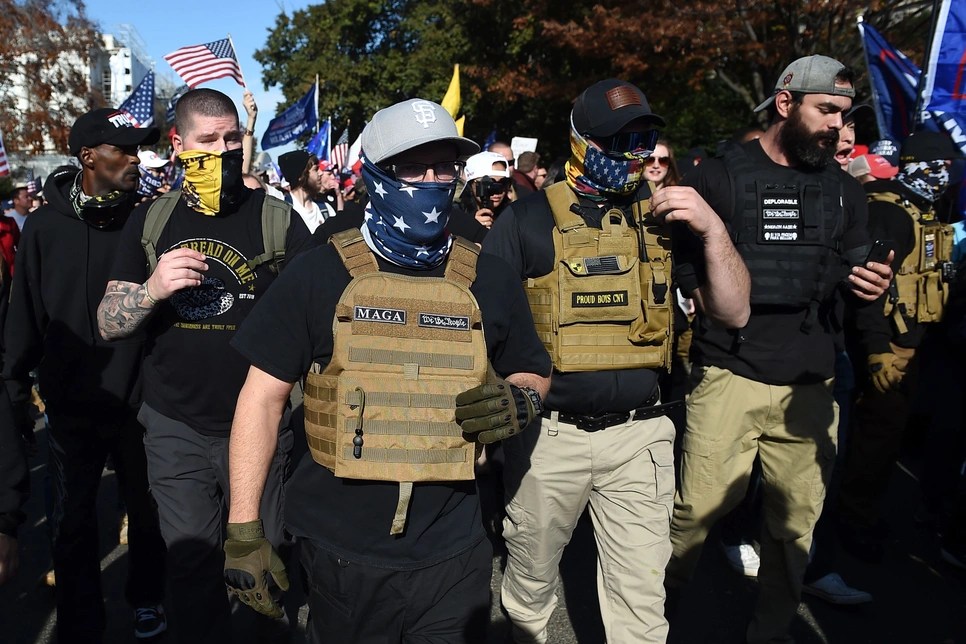
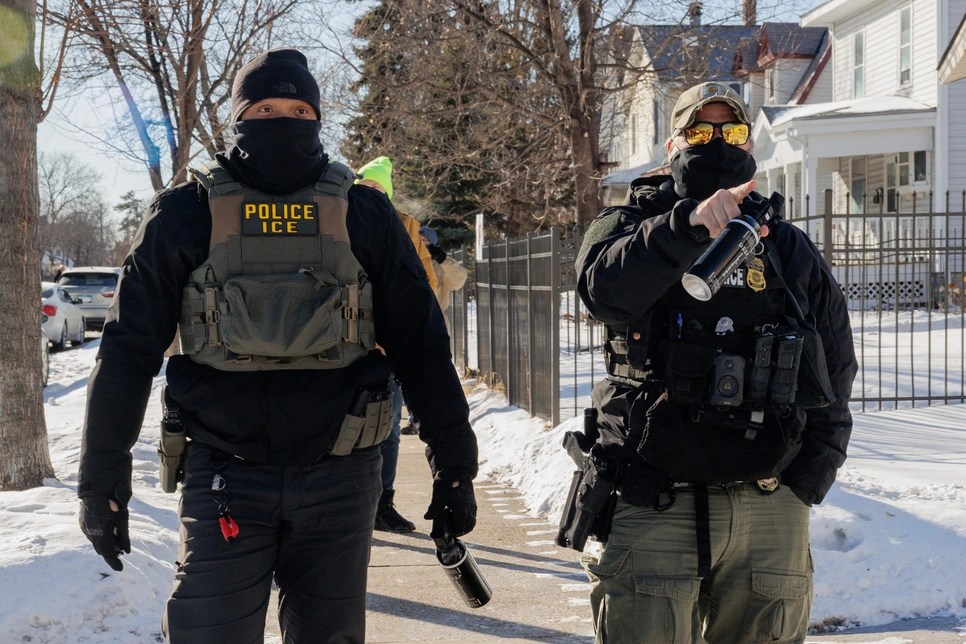
Atlantic Monthly has a new article on how the Proud Boys aren’t coming in the counter the hundreds of demonstrators; that the Homeland Security and ICE squads are doing a fine job – and they have photos to show how an organization theoretically doing customs enforcement now looks just like the Proud Boys. When did Customs Enforcement dress like troops going into villages in Afghanistan? What legitimate law enforcement officers wear masks? Who in their right minds arrests little children?:
Proud Boys in Washington, DC
ICE agents in Minneapolis
Law Enforcement officers, in civilized countries with laws protecting the innocent (and who are innocent until the system determines them guilty), are TRAINED to operate with restraint. Trained personnel do not fire on civilian bystanders.
I’ve watched the Minneapolis tapes, especially the one filmed by officer Jonathan Ross. I listened to him as, just after the shooting, he said “F@#king B!tch” and I don’t think he was even thinking about Good; I think he was angry that Good’s wife had called him “Big Boy” and told him to go get a sandwich. Most of the guys we see in those uniforms are hefty, and slow, and clumsy. And they do not respond to mockery with self-restraint – as we have seen. They need training. And it wouldn’t hurt if they had grown-up leadership. The kinds of vague, unconstitutional and inciting instructions they have received seem designed to be incendiary.
Crime Wave? Another Lie
Today I am sharing a blog post from Robert Reich, about how we can deal with the absurdities we are hearing about crime waves – but only in inconveniently Democratic majority cities:
How to respond to Trump’s lies about a “crime wave”
AUG 28, 2025
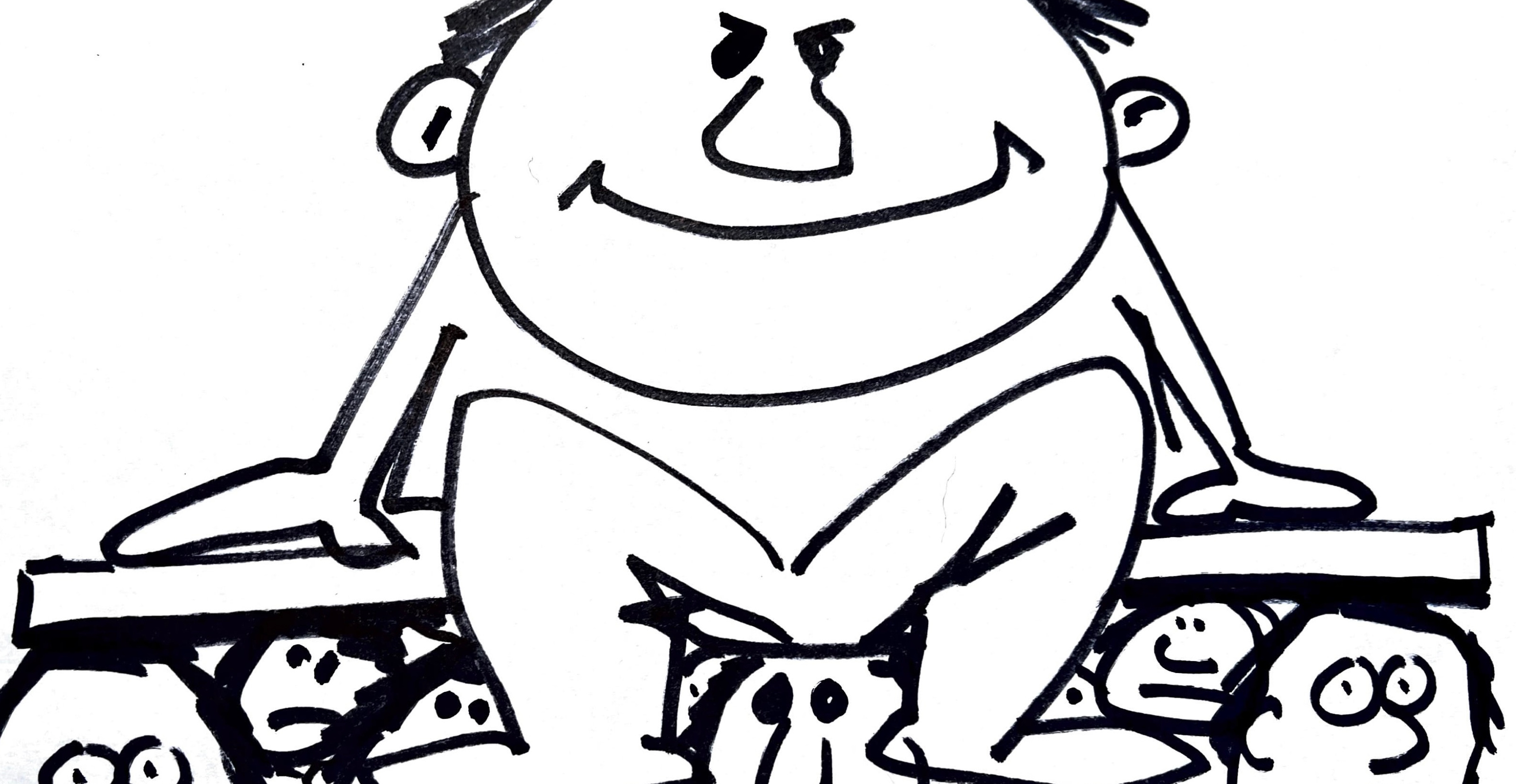
Friends,
Trump’s escalating rhetoric of a “crime wave” in America, coupled with threats to occupy Chicago, New York, Baltimore, and many other cities, has put many Democrats in a bind.
They worry if they deny crime is a problem, they could turn off swing voters who always and inevitably worry about crime.
As with immigration, crime is an issue that Trump can demagogue because, while the rate of serious crime his fallen dramatically, most Americans continue to fear crime. That fear has been heightened by expanding homeless encampments and drug overdoses in plain view, no matter what the statistics say.
Crime has also been a racial dog whistle. At least since Richard Nixon emphasized “law and order” and Ronald Reagan said he’d be “tough on crime,” Republicans have used fear of crime as code for white fear of Black people.
So what should Democrats do? My suggestion: Don’t simply give statistics showing that the rate of dangerous has fallen. Say safety is critically important, but local police rather than federal troops are best at dealing with it.
Don’t stop there. Hammer Trump for pardoning the 1,500 criminals who violently attacked the United States capitol and caused the deaths of four police officers — and for then firing the federal prosecutors who held them accountable.
Attack him for opening the floodgates to white-collar crime — hobbling the Consumer Financial Protection Bureau, freezing enforcement of the Foreign Corrupt Practices Act, disbanding the National Cryptocurrency Enforcement Team, and retreating from almost all federal lawsuits involving money laundering, crypto markets, and foreign corruption.
Since retaking the White House, Trump has granted clemency to Lawrence Duran, a health care executive who was convicted of leading a Medicare fraud and money laundering scheme. Trump has commuted the 14-year sentence of Jason Galanis, who defrauded investors, including a Native American tribe and a teachers’ pension fund, of tens of millions of dollars. He has pardoned Julie and Todd Chrisley, the reality TV stars convicted of bank fraud and tax evasion.
In April, the Wall Street Journal reported that Attorney General Pam Bondi was “swapping out and sidelining career supervisors who were responsible for charging crimes such as corruption, price fixing and securities fraud.”
Trump is soft on crime as long as the crime serves his own purposes. People who try to get on Trump’s good side — such as New York City Mayor Eric Adams, who was indicted on bribery charges during the Biden administration — have seen Trump’s Justice Department drop its charges against them.
Before they poured money into Trump’s initiatives and PACs, many Big Tech corporations were facing federal investigations and enforcement actions. Those investigations and lawsuits are now being dropped.
Earlier this year, the Department of Justice dropped its criminal case against Boeing, which involved the company’s role in two plane crashes that killed 346 people — despite Boeing previously agreeing to plead guilty in the case.
Trump is himself a criminal, found guilty on all 34 counts of falsifying business records in the first degree related to payments made to Stormy Daniels before the 2016 presidential election.
Don’t just accuse him of manufacturing a pretext to go into American cities. Hit him hard on his own horrific record of coddling criminals.
History the White House Doesn’t Like: The List of Exhibits Trump Wants Gone
It’s a strange honor to have exhibits selected that the President wants gone. As in Literature, when you read through the list, you learn a lot about the fears and the prejudices of the creator. In recent decades, the United States of America has had a greater tolerance for the idiosyncratic views of artists, appreciating their differing perceptions. The list below is taken word for word from the White House Post called The President is Right About the Smithsonian.
- The National Museum of African American History and Culture debuted a series to educate people on “a society that privileges white people and whiteness” — defining so-called “white dominant culture“ as “ways white people and their traditions, attitudes, and ways of life have been normalized over time” and portraying “the nuclear family,” “work ethic,” and “intellect” as white qualities rooted in racism.
- The campaign featured content from hardcore woke activist Ibram X. Kendi

As part of its campaign to stop being “wealthy, pale, and male,” the National Portrait Gallery featured a choreographed “modern dance performance“ detailing the “ramifications“ of the southern border wall and commissioned an entire series to examine “American portraiture and institutional history… through the lens of historical exclusion.”
The National Portrait Gallery features art commemorating the act of illegally crossing the “inclusive and exclusionary” southern border — even making it a finalist for one of its awards.
(Intlxpatr comment: This painting reminds me of the painting of Mary, Joseph and the Baby Jesus escaping to Egypt to avoid King Herod’s massacre of the innocents)

The National Museum of African Art displayed an exhibit on “works of speculative fiction that bring to life an immersive, feminist and sacred aquatopia inspired by the legend of Drexciya,” an “underwater kingdom populated by the children of pregnant women who had been thrown overboard or jumped into the ocean during the Middle Passage.”
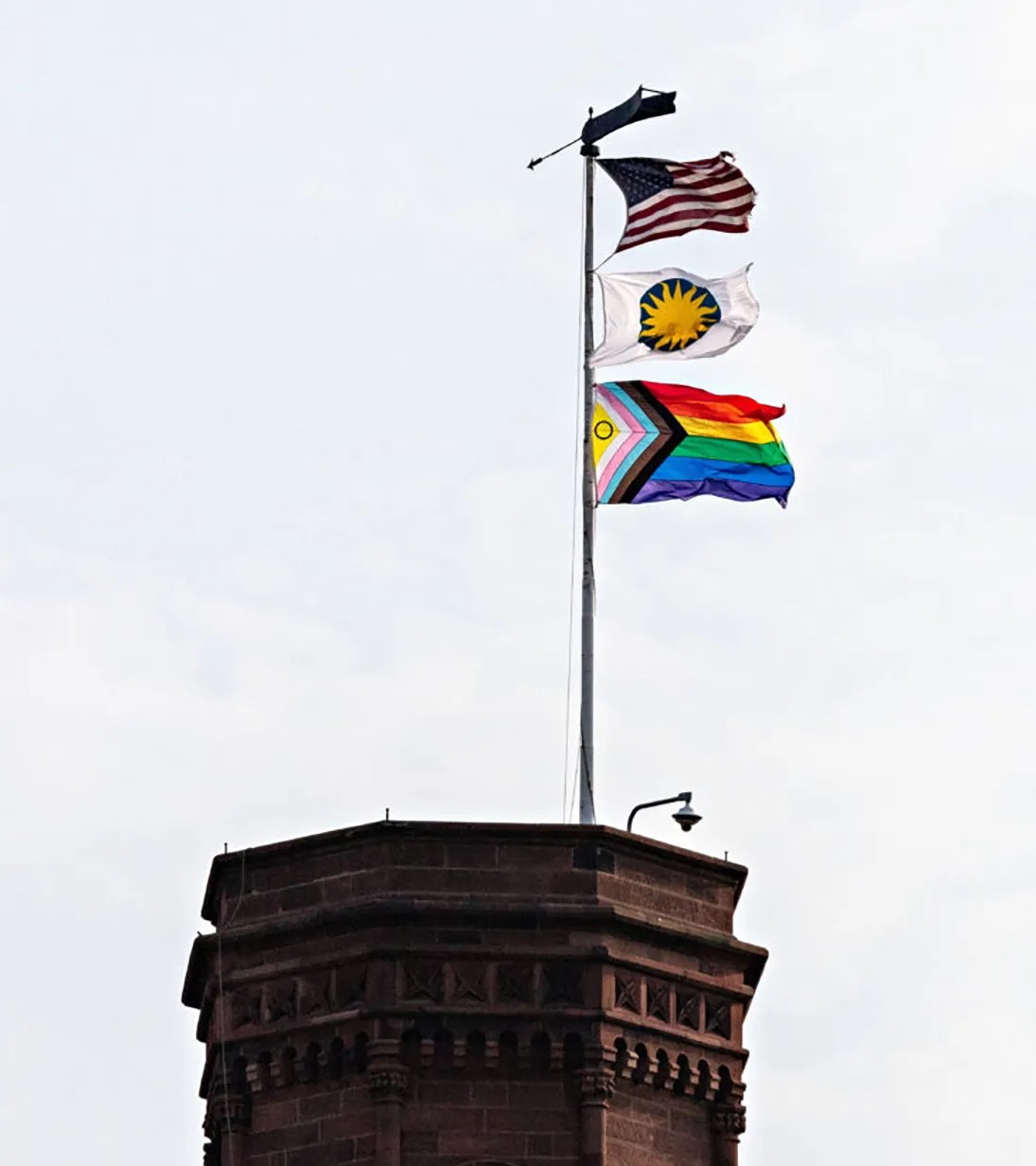
The American History Museum’s “LGBTQ+ History” exhibit seeks to “understand evolving and overlapping identities such as lesbian, gay, bi-sexual, transgender, queer, transsexual, transvestite, mahu, homosexual, fluid, invert, urning, third sex, two sex, gender-bender, sapphist, hijra, friend of Dorothy, drag queen/king, and many other experiences,” and includes articles on “LGBTQ+ inclusion and skateboarding“ and “the rise of drag ball culture in the 1920s.”
The National Museum of the American Latino features programming highlighting “animated Latinos and Latinas with disabilities” — with content from “a disabled, plus-sized actress” and an “ambulatory wheelchair user” who “educates on their identity being Latinx, LGBTQ+, and disabled.”
The National Museum of the American Latino characterizes the Texas Revolution as a “massive defense of slavery waged by ‘white Anglo Saxon’ settlers against anti-slavery Mexicans fighting for freedom, not a Texan war of independence from Mexico,” and frames the Mexican-American War as “the North American invasion” that was “unprovoked and motivated by pro-slavery politicians.”
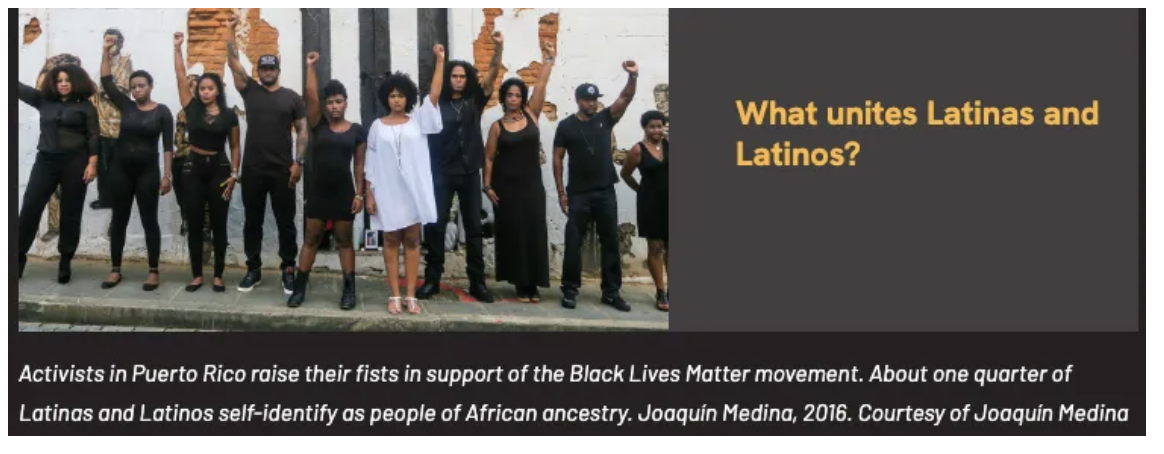
According to the National Museum of the American Latino, “what unites Latinas and Latinos“ is “the Black Lives Matter movement.”
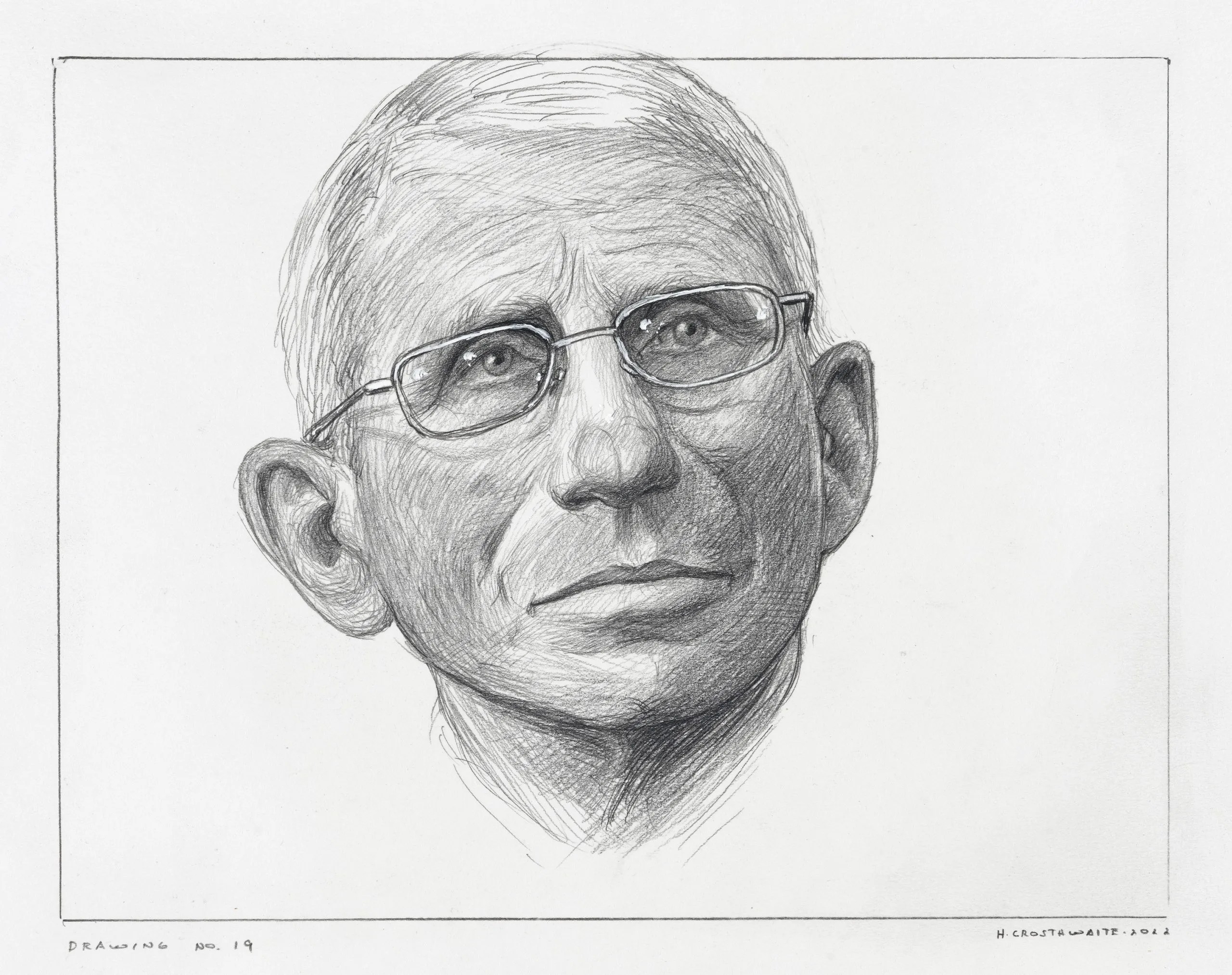
The National Portrait Gallery commissioned a “stop-motion drawing animation” that “examines the career“ of Anthony Fauci.
The American History Museum’s exhibit marking the 50th anniversary of Title IX includesbiological men competing in women’s sports and argues in favor of “transgender” athletes competing in sports against the opposite biological sex.
A exhibit at the American History Museum depicts migrants watching Independence Day fireworks “through an opening in the U.S.-Mexico border wall” and says America’s founders “feared non-White immigration.”

The American History Museum features a display that refers to the founding of America as “a profound unsettling of the continent.”
The American History Museum’s “American Democracy” exhibit claims voter integrity measures are “attempts to minimize the political power” of “new and diverse groups of Americans,” while its section on “demonstrations” includes only leftist causes.
An American History Museum exhibit features a depiction of the Statue of Liberty “holding a tomato in her right hand instead of a torch, and a basket of tomatoes in her left hand instead of a tablet.”

- The National Museum of the American Latino features an anti-American exhibit that defines Latino history as centuries of victimhood and exploitation, suggests the U.S. is stolen land, and characterizes U.S. history as rooted in “colonization.”
- The exhibit features writing from illegal immigrants “fighting to belong.”
- The exhibit displays a quote from Claudia de la Cruz, the socialist nominee for president and a director an anti-American hate group, as well as another quote that reads, “We didn’t cross the border; the border crossed us.”
- The exhibit remains prominently featured on its website alongside a quote from the Communist Party USA’s Angela Davis, who was once among the FBI’s Top 10 Most Wanted Fugitives.

- The National Museum of the American Latino features an anti-American exhibit that defines Latino history as centuries of victimhood and exploitation, suggests the U.S. is stolen land, and characterizes U.S. history as rooted in “colonization.”
- The exhibit features writing from illegal immigrants “fighting to belong.”
- The exhibit displays a quote from Claudia de la Cruz, the socialist nominee for president and a director an anti-American hate group, as well as another quote that reads, “We didn’t cross the border; the border crossed us.”
- The exhibit remains prominently featured on its website alongside a quote from the Communist Party USA’s Angela Davis, who was once among the FBI’s Top 10 Most Wanted Fugitives.
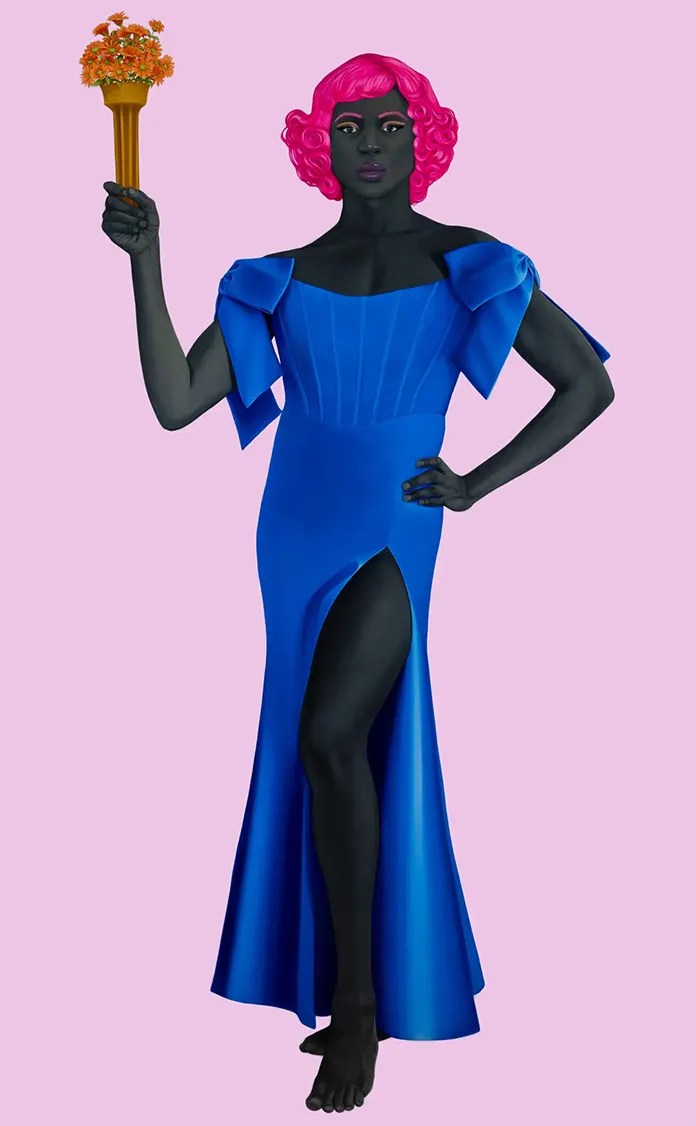
The former interim director of the future Smithsonian American Women’s History Museum declared the museum will be “inclusive” of biological men posing as women.
Commentary from The Hill, August 22, 2025:
White House lists 20 objectionable Smithsonian exhibits, artworks
BY ASHLEIGH FIELDS – 08/22/25 10:34 AM ET
The Trump administration specifically targeted the American history museum’s “LGBTQ+ History” exhibit and condemned a separate display lauding the 50th anniversary of Title IX with a focus on transgender athletes. President Trump signed an executive order in February barring transgender women from competing in women’s sports.
The decision to highlight more than a dozen exhibits and artworks as “woke” comes days after Trump criticized the history museum for its depiction of slavery and its impact on Black Americans.
“The Smithsonian is OUT OF CONTROL, where everything discussed is how horrible our Country is, how bad Slavery was, and how unaccomplished the downtrodden have been — Nothing about Success, nothing about Brightness, nothing about the Future,” the president wrote Tuesday in a Truth Social post.
“We are not going to allow this to happen, and I have instructed my attorneys to go through the Museums, and start the exact same process that has been done with Colleges and Universities where tremendous progress has been made,” he added. “This Country cannot be WOKE, because WOKE IS BROKE.”
During his first term, Trump lauded the opening of the National Museum of African American History and Culture for its portrayal of harsh truths and storied victories for disenfranchised Black citizens.
Trump’s issue with the depiction of slavery in museums has been widely challenged by Black historians and community leaders.
“Just as the Holocaust is remembered in all its brutality, so must America reckon with the truth of chattel slavery, Jim Crow and racial terror,” Toni Draper, publisher of the Afro-American Newspaper — the archives of which were used to help curate the museum — wrote in a recent op-ed for Afro.com. “Anything less is historical erasure, a rewriting of facts to make the nation appear more palatable.”
“But history is not meant to comfort — it is meant to confront. And only in confrontation do we find the lessons that lead us forward,” she added.
Thank You, Montana
A moment of clarity and good will brought to us by one of the manliest, reddest states in the
USA. Every family has individuals with gender issues. We’ve learned not to demonize our brothers and sisters, not to punish them for the way they are wired. Thank you, Montana for a breath of fresh air and good sense. Thank you, Washington Post, for a lucid exposition of the actions taken.
With GOP help, Montana lawmakers vote down transgender bathroom rule
The measure would have barred Rep. Zooey Zephyr from using women’s bathrooms near the House and Senate chambers.

Montana state Rep. Zooey Zephyr (D) stands in protest on the House floor on April 24, 2023 at the state Capitol in Helena. (Thom Bridge/Independent Record/AP)
Several Montana Republicans joined Democrats on Tuesday to block a measure that would have barred transgender lawmakers from using the state Capitol bathrooms that aligned with their gender identities.
The proposed measure would have banned Rep. Zooey Zephyr, a transgender Democratic lawmaker who was reelected in November, from using the women’s bathroom outside Montana’s House and Senate chambers. Last year, Zephyr was silenced in the House after speaking out against her Republican colleagues for their support of a ban on gender-affirming care for transgender children.
Weeks ahead of her return to the House floor, Zephyr’s colleagues in the chamber rejected the bathroom measure in a 12-10 vote. Three Republicans joined Democrats in voting against it, characterizing it as a rule that would not add value to their work while also noting they didn’t necessarily disagree with the ideology driving it.
Zephyr told The Washington Post on Wednesday that she was grateful to her GOP colleagues who voted “no.” She said she has a “good working relationship” with them, adding that their votes against the measure showed they were “able to recognize this for the distraction that it is.”
(Created with Datawrapper/The Washington Post)
Anti-trans bills have doubled since 2022. Our map shows where states stand.
“I hope that it serves as a signal to other Republicans across the country that there are more important things that governments should be focusing on besides targeting transgender people,” Zephyr said.
Montana’s measure paralleled a resolution introduced by Rep. Nancy Mace (R-South Carolina) last month that proposed changing House rules to ban trans lawmakers and visitors to the U.S. Capitol from using bathrooms associated with their gender identity. Mace’s resolution came two weeks after Sarah McBride, a Democrat from Delaware, became the first openly trans person elected to Congress.
Ahead of Tuesday’s vote, state Rep. David Bedey (R) said he would “reluctantly” cast a “no” vote, describing the measure as “a distraction.” Bedey, though, also made clear that he still had his “own opinion” on gender dysphoria, which he said was a “scientific issue actually that needs to be resolved.”
“This particular action will have the effect of making people famous in the national news and will not contribute to the effective conduct of our business,” Bedey said.
The Montana legislature made headlines across the country in April 2023, when the House was discussing four anti-trans bills — one of them a ban on gender-affirming care for trans children.
During an April 18 debate on the House floor, Zephyr said restricting access to care for trans minors was “tantamount to torture.”
“This body should be ashamed,” she said.
Later on in her remarks, addressing colleagues supporting the ban, Zephyr said: “I hope the next time there’s an invocation, when you bow your heads in prayer, you see the blood on your hands.”
Afterward, GOP leaders in the House silenced Zephyr, declining to recognize her during debate for days. Protests ensued, and about one week later, Zephyr’s Republican colleagues voted to formally punish her, saying that her comments were derogatory and that she had violated decorum in the legislature.
Zephyr was no longer allowed to debate and could only vote remotely.
Montana’s legislature did not meet this year, meaning Zephyr’s reelection last month opened the door for her to return to the House floor in January for the first time in 19 months.
On Tuesday, the Joint Rules Committee met to discuss amending rules ahead of the new legislative session, including the bathroom measure.
State Rep. Jerry Schillinger opened the discussion by saying that the proposal put forth a “relatively simple rule change.”
“It says what probably shouldn’t need to be said and puts into rules what probably shouldn’t need to be put into rules,” Schillinger said.
Multiple Republicans agreed with him.
State Rep. Jedediah Hinkle (R) said he knew multiple lawmakers who did not use the women’s bathroom outside the House and Senate chambers, adding that they walked across the Capitol to use a different one because they were uncomfortable “being in the same bathroom with a man,” an apparentreference to Zephyr.
He urged his colleagues to help Montana set an early precedent as lawmakers around the country are beginning to confront the same issue in legislative buildings.
Hinkle did not call out Zephyr by name but indirectly referenced her in his argument supporting the measure.
“We have one representative right now, but in the future, we could have many,” Hinkle said. “This could be an ongoing thing, and I think it’s time that this body addresses this issue now, as they are addressing it nationally.”
During the last legislative session, Hinkle said, lawmakers had installed locks on the doors leading into multi-stall bathrooms to permit individual legislators to use them alone if they desired.But that accommodation did not work, he said, adding that it kept lawmakers from their duties. Bedey, one of the Republicans who voted against the measure, later countered Hinkle’s point, saying that there was no evidence that lawmakers had missed votes.
Otherwise, Bedey said, he “might have a different opinion.” Following about 12 minutes of discussion, the measure passed in the Senate committee, 11-7. But the House voted it down, aided by the Republican votes. Zephyr commended her GOP colleagues who voted against it.
“I think those Republicans are likely talking to people in their district who are also saying, ‘Listen, people of Montana are struggling right now,’” Zephyr told The Post.
She said Wednesday that there were issues — including housing and health care — to address in the months to come, and a measure about the Montana Capitol bathrooms “is not helpful for the work that we were sent here to do.”
The “Righteous Gentiles”
Today in our church Lectionary, we celebrate those who stood up to the Nazi policies and shielded and rescued thousands of Jewish people who might otherwise not have survived the torture, imprisonment and extermination, solely for being “the other.”
PRAYER (contemporary language)
Lord of the Exodus, who delivers your people with a strong hand and a mighty arm: Strengthen your Church with the examples of the Righteous Gentiles of World War II to defy oppression for the rescue of the innocent; through Jesus Christ our Lord, who lives and reigns with you and the Holy Spirit, one God, now and for ever. Amen.
“THE RIGHTEOUS GENTILES”
Although the phrase “Righteous Gentiles” has become a general term for any non-Jew who risked their life to save Jews during the Holocaust, it here appears to apply specifically to: Raoul Wallenberg [Swedish, d. 1947] Hiram Bingham IV [d. 1988, American]; Karl Lutz [d. 1975, Swiss]; C. Sujihara [d. 1986, Japanese]; and Andre Trocme [d. 1971, French].

Raoul Wallenberg (August 4, 1912 – July 17, 1947?) was a Swedish humanitarian who worked in Budapest, Hungary, during World War II to rescue Jews from the Holocaust. Between July and December 1944, he issued protective passports and housed Jews, saving tens of thousands of Jewish lives.
On January 17, 1945, he was arrested in Budapest by the Soviets after they wrested control of the city from the Germans, and was reported to have been executed while a prisoner at Lubyanka Prison, although this is not entirely certain.
Wallenberg has been honored numerous times. He is an honorary citizen of the United States, Canada, Hungary and Israel. Israel has also designated Wallenberg one of the Righteous among the Nations. Monuments have been dedicated to him, and streets have been named after him throughout the world.
— more at Wikipedia

Hiram “Harry” Bingham IV (July 17, 1903 – January 12, 1988) was an American diplomat. He served as a Vice-Consul in Marseille, France, during World War II, and helped over 2,500 Jews to flee from France as Nazi forces advanced.
In 1939, Bingham was posted to the US Consulate in Marseille, where he, together with another vice-consul named Myles Standish, was in charge of issuing entry visas to the USA.
On June 10, 1940, Adolf Hitler’s forces invaded France and the French government fell. Several influential Europeans tried to lobby the American government to issue visas so that German and Jewish refugees could freely leave France and escape persecution.
Anxious to limit immigration to the United States and to maintain good relations with the Vichy government, the State Department actively discouraged diplomats from helping refugees. However, Bingham cooperated in issuing visas and helping refugees escape France. Hiram Bingham gave about 2,000 visas, most of them to well-known personalities, speaking English, including Max Ernst, André Breton, Hannah Arendt, Marc Chagall, Lion Feuchtwanger and Nobel prize winner Otto Meyerhof.
— more at Wikipedia
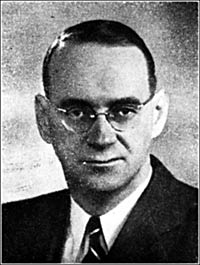
Carl Lutz (b. Walzenhausen, 30 March 1895; d. Berne, 12 February 1975) was the Swiss Vice-Consul in Budapest, Hungary from 1942 until the end of World War II. He helped save the lives of tens of thousands of Jews from deportation to Nazi Extermination camps during the Holocaust.
Lutz immigrated at the age of 18 to the United States, where he was to remain for more than 20 years. Lutz’s sojourn in the United States ended with his assignment as vice-consul to the Swiss Consulate General in Jaffa, in what was then Palestine.
Appointed in 1942 as Swiss vice-consul in Budapest, Hungary, Lutz soon began cooperating with the Jewish Agency for Palestine, issuing Swiss safe-conduct documents enabling Jewish children to emigrate.
Once the Nazis took over Budapest in 1944 and began deporting Jews to the death camps, Lutz negotiated a special deal with the Hungarian government and the Nazis: he had permission to issue protective letters to 8,000 Hungarian Jews for emigration to Palestine. Lutz then deliberately misinterpreted his permission for 8,000 as applying to families rather than individuals, and proceeded to issue tens of thousands of additional protective letters, all of them bearing a number between one and 8,000. He also set up some 76 safe houses around Budapest, declaring them annexes of the Swiss legation. Among the safe houses was the now well-known “Glass House” (Üvegház) at Vadász Street 29. About 3,000 Jews found refuge at the Glass House and in a neighboring building.
— more at Wikipedia
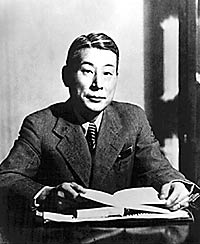
Chiune Sugihara (1 January 1900 – 31 July 1986) was a Japanese diplomat, serving as Vice Consul for the Japanese Empire in Lithuania. During World War II, he helped several thousand Jews leave the country by issuing transit visas to Jewish refugees so that they could travel to Japan. Most of the Jews who escaped were refugees from German-occupied Poland or residents of Lithuania. Sugihara wrote travel visas that facilitated the escape of more than 6,000 Jewish refugees to Japanese territory, risking his career and his family’s life.
When asked why he did it, he responded:
“You want to know about my motivation, don’t you? Well. It is the kind of sentiments anyone would have when he actually sees refugees face to face, begging with tears in their eyes. He just cannot help but sympathize with them. Among the refugees were the elderly and women. They were so desperate that they went so far as to kiss my shoes, Yes, I actually witnessed such scenes with my own eyes. Also, I felt at that time, that the Japanese government did not have any uniform opinion in Tokyo. Some Japanese military leaders were just scared because of the pressure from the Nazis; while other officials in the Home Ministry were simply ambivalent.
People in Tokyo were not united. I felt it silly to deal with them. So, I made up my mind not to wait for their reply. I knew that somebody would surely complain about me in the future. But, I myself thought this would be the right thing to do. There is nothing wrong in saving many people’s lives …. The spirit of humanity, philanthropy … neighborly friendship … with this spirit, I ventured to do what I did, confronting this most difficult situation —and because of this reason, I went ahead with redoubled courage. ”
When asked why he risked his career to save other people, he quoted an old samurai saying: “Even a hunter cannot kill a bird which flies to him for refuge.”
— more at Wikipedia
André Trocmé ( April 7, 1901 – June 5, 1971) and his wife Magda (née Grilli di Cortona, November 2, 1901, Florence, Italy – Oct. 10, 1996) are a couple of French Righteous Among the Nations. For 15 years, André served as a pastor in the town of Le Chambon-sur-Lignon on the Plateau Vivarais-Lignon in South-Central France. He had been sent to this rather remote parish because of his pacifist positions which were not well received by the French Protestant Church. In his preaching he spoke out against discrimination as the Nazis were gaining power in neighboring Germany and urged his Protestant Huguenot congregation to hide Jewish refugees from the Holocaust of the Second World War.

In 1938, André Trocmé and Reverend Edouard Theis founded the Collège Lycée International Cévenol in Le Chambon-sur-Lignon, France. Its initial purpose was to prepare local country youngsters to enter the university. When the refugees arrived, it also took in many Jewish young people wishing to continue their secondary education.
When France fell to Nazi Germany, the mission to resist the Nazis became increasingly important. Following the establishment of the Vichy France regime during the occupation, Trocmé and his church members helped their town develop ways of resisting the dominant evil they faced. Together they established first one, and then a number of “safe houses” where Jewish and other refugees seeking to escape the Nazis could hide. Many refugees were helped to escape to Switzerland following an underground railroad network. Between 1940 and 1944 when World War II ended in Europe, it is estimated that about 3500 Jewish refugees including many children were saved by the small village of Le Chambon and the communities on the surrounding plateau because the people refused to give in to what they considered to be the illegitimate legal, military, and police power of the Nazis.
— more at Wikipedia
I am thankful for Sawtucket, who has kept me up with my daily Lectionary readings for more than 22 years. I thank Sawtucket for today’s reading, reminding us that we are all of one blood, one humanity, no matter our skin color, our nationality, nor our religion. We are human beings, and our job is to watch over one another.
Recent Comments
intlxpatr on Yellowstone: Old Faithful to C… Michelle on Yellowstone: Old Faithful to C… Cathy on No Grown-Ups in Charge intlxpatr on Waiting for Snow intlxpatr on Waiting for Snow Wikipedia Donate Button

Amazina


Early Voting in Florida


 Here There and Everywhere