The “Righteous Gentiles”
Today in our church Lectionary, we celebrate those who stood up to the Nazi policies and shielded and rescued thousands of Jewish people who might otherwise not have survived the torture, imprisonment and extermination, solely for being “the other.”
PRAYER (contemporary language)
Lord of the Exodus, who delivers your people with a strong hand and a mighty arm: Strengthen your Church with the examples of the Righteous Gentiles of World War II to defy oppression for the rescue of the innocent; through Jesus Christ our Lord, who lives and reigns with you and the Holy Spirit, one God, now and for ever. Amen.
“THE RIGHTEOUS GENTILES”
Although the phrase “Righteous Gentiles” has become a general term for any non-Jew who risked their life to save Jews during the Holocaust, it here appears to apply specifically to: Raoul Wallenberg [Swedish, d. 1947] Hiram Bingham IV [d. 1988, American]; Karl Lutz [d. 1975, Swiss]; C. Sujihara [d. 1986, Japanese]; and Andre Trocme [d. 1971, French].

Raoul Wallenberg (August 4, 1912 – July 17, 1947?) was a Swedish humanitarian who worked in Budapest, Hungary, during World War II to rescue Jews from the Holocaust. Between July and December 1944, he issued protective passports and housed Jews, saving tens of thousands of Jewish lives.
On January 17, 1945, he was arrested in Budapest by the Soviets after they wrested control of the city from the Germans, and was reported to have been executed while a prisoner at Lubyanka Prison, although this is not entirely certain.
Wallenberg has been honored numerous times. He is an honorary citizen of the United States, Canada, Hungary and Israel. Israel has also designated Wallenberg one of the Righteous among the Nations. Monuments have been dedicated to him, and streets have been named after him throughout the world.
— more at Wikipedia

Hiram “Harry” Bingham IV (July 17, 1903 – January 12, 1988) was an American diplomat. He served as a Vice-Consul in Marseille, France, during World War II, and helped over 2,500 Jews to flee from France as Nazi forces advanced.
In 1939, Bingham was posted to the US Consulate in Marseille, where he, together with another vice-consul named Myles Standish, was in charge of issuing entry visas to the USA.
On June 10, 1940, Adolf Hitler’s forces invaded France and the French government fell. Several influential Europeans tried to lobby the American government to issue visas so that German and Jewish refugees could freely leave France and escape persecution.
Anxious to limit immigration to the United States and to maintain good relations with the Vichy government, the State Department actively discouraged diplomats from helping refugees. However, Bingham cooperated in issuing visas and helping refugees escape France. Hiram Bingham gave about 2,000 visas, most of them to well-known personalities, speaking English, including Max Ernst, André Breton, Hannah Arendt, Marc Chagall, Lion Feuchtwanger and Nobel prize winner Otto Meyerhof.
— more at Wikipedia
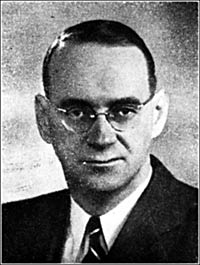
Carl Lutz (b. Walzenhausen, 30 March 1895; d. Berne, 12 February 1975) was the Swiss Vice-Consul in Budapest, Hungary from 1942 until the end of World War II. He helped save the lives of tens of thousands of Jews from deportation to Nazi Extermination camps during the Holocaust.
Lutz immigrated at the age of 18 to the United States, where he was to remain for more than 20 years. Lutz’s sojourn in the United States ended with his assignment as vice-consul to the Swiss Consulate General in Jaffa, in what was then Palestine.
Appointed in 1942 as Swiss vice-consul in Budapest, Hungary, Lutz soon began cooperating with the Jewish Agency for Palestine, issuing Swiss safe-conduct documents enabling Jewish children to emigrate.
Once the Nazis took over Budapest in 1944 and began deporting Jews to the death camps, Lutz negotiated a special deal with the Hungarian government and the Nazis: he had permission to issue protective letters to 8,000 Hungarian Jews for emigration to Palestine. Lutz then deliberately misinterpreted his permission for 8,000 as applying to families rather than individuals, and proceeded to issue tens of thousands of additional protective letters, all of them bearing a number between one and 8,000. He also set up some 76 safe houses around Budapest, declaring them annexes of the Swiss legation. Among the safe houses was the now well-known “Glass House” (Üvegház) at Vadász Street 29. About 3,000 Jews found refuge at the Glass House and in a neighboring building.
— more at Wikipedia
Chiune Sugihara (1 January 1900 – 31 July 1986) was a Japanese diplomat, serving as Vice Consul for the Japanese Empire in Lithuania. During World War II, he helped several thousand Jews leave the country by issuing transit visas to Jewish refugees so that they could travel to Japan. Most of the Jews who escaped were refugees from German-occupied Poland or residents of Lithuania. Sugihara wrote travel visas that facilitated the escape of more than 6,000 Jewish refugees to Japanese territory, risking his career and his family’s life.
When asked why he did it, he responded:
“You want to know about my motivation, don’t you? Well. It is the kind of sentiments anyone would have when he actually sees refugees face to face, begging with tears in their eyes. He just cannot help but sympathize with them. Among the refugees were the elderly and women. They were so desperate that they went so far as to kiss my shoes, Yes, I actually witnessed such scenes with my own eyes. Also, I felt at that time, that the Japanese government did not have any uniform opinion in Tokyo. Some Japanese military leaders were just scared because of the pressure from the Nazis; while other officials in the Home Ministry were simply ambivalent.
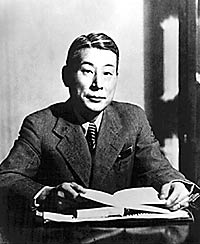
People in Tokyo were not united. I felt it silly to deal with them. So, I made up my mind not to wait for their reply. I knew that somebody would surely complain about me in the future. But, I myself thought this would be the right thing to do. There is nothing wrong in saving many people’s lives …. The spirit of humanity, philanthropy … neighborly friendship … with this spirit, I ventured to do what I did, confronting this most difficult situation —and because of this reason, I went ahead with redoubled courage. ”
When asked why he risked his career to save other people, he quoted an old samurai saying: “Even a hunter cannot kill a bird which flies to him for refuge.”
— more at Wikipedia
André Trocmé ( April 7, 1901 – June 5, 1971) and his wife Magda (née Grilli di Cortona, November 2, 1901, Florence, Italy – Oct. 10, 1996) are a couple of French Righteous Among the Nations. For 15 years, André served as a pastor in the town of Le Chambon-sur-Lignon on the Plateau Vivarais-Lignon in South-Central France. He had been sent to this rather remote parish because of his pacifist positions which were not well received by the French Protestant Church. In his preaching he spoke out against discrimination as the Nazis were gaining power in neighboring Germany and urged his Protestant Huguenot congregation to hide Jewish refugees from the Holocaust of the Second World War.

In 1938, André Trocmé and Reverend Edouard Theis founded the Collège Lycée International Cévenol in Le Chambon-sur-Lignon, France. Its initial purpose was to prepare local country youngsters to enter the university. When the refugees arrived, it also took in many Jewish young people wishing to continue their secondary education.
When France fell to Nazi Germany, the mission to resist the Nazis became increasingly important. Following the establishment of the Vichy France regime during the occupation, Trocmé and his church members helped their town develop ways of resisting the dominant evil they faced. Together they established first one, and then a number of “safe houses” where Jewish and other refugees seeking to escape the Nazis could hide. Many refugees were helped to escape to Switzerland following an underground railroad network. Between 1940 and 1944 when World War II ended in Europe, it is estimated that about 3500 Jewish refugees including many children were saved by the small village of Le Chambon and the communities on the surrounding plateau because the people refused to give in to what they considered to be the illegitimate legal, military, and police power of the Nazis.
— more at Wikipedia
I am thankful for Sawtucket, who has kept me up with my daily Lectionary readings for more than 22 years. I thank Sawtucket for today’s reading, reminding us that we are all of one blood, one humanity, no matter our skin color, our nationality, nor our religion. We are human beings, and our job is to watch over one another.
Wayfaring Stranger and James Lee Burke in the Heat of August
Just in time to save August from being my most hated month EVER, a new James Lee Burke novel, Wayfaring Stranger.

LOL, escaping from the relentless heat and humidity of Pensacola, I enter the heat and humidity of Burke country, ranging from the oil fields in Louisiana to the desolate social scene of Houston in the 1950’s.
I got hooked on James Lee Burke in a very cold winter February in Wiesbaden, Germany, when I came across a book called A Morning for Flamingos. I like mysteries, but this was a mystery by a poet! When I read about the what an approaching thunderstorm looks like when you live in a little cabin in New Iberia on Bayou Teche, I was lost. I-don’t-know-how-many books later, I’ve been to New Iberia, had lunch by the Bayou Teche and explored Burke country.
Louisiana is soulful, all those little roads, and sugar cane factories (think True Detective, here) but, (sigh) no matter how colorful, no matter how beautiful, the Louisiana in James Lee Burke’s books is better. He’s been there longer, he has the eye to see that heron, that shiver of wind over the water, that glint of pure evil in a bad guy’s eye. I know you think I am blathering on, but kinda-sorta the Dave Robicheaux detective series are all pretty similar, what changes is the particular social injustice. So this is what hooks me – Burke’s relentless battle against injustice, by writing powerful books that get read by a lot of people, and the elegant prose and philosophy he inserts to lift it way beyond the run of the mill mystery book.
The Wayfaring Stranger is the best yet. It’s not one of the Robicheaux series, it’s part of a Holland series, lawmen whose Texas lives and challenges we’ve read about in previous books. Wayfaring Stranger is the story of Weldon Holland (Burke tells us in an after word that Hollan – no D – is an old Texas family name in his line) who lives with his grandfather and runs into the real Bonnie and Clyde. Fast forward and he is fighting in the Ardennes, and the only reason you have faith he will survive is that there are so many pages ahead of you . . . he and one of his men trek, hop a train, and end up in a deserted death camp, where they find one survivor – a woman. The three of them are surrounded by fighting armies and find safety in a local farm’s cellar.
Oops. I’ve already given away that Weldon survives the battle. It’s hard to write much more without giving too much away. It’s a powerful story, powerfully written. It’s about good men and women and weak men and women and how sometimes an evil person can surprise you with a goodness.
Warning. Once you pick up Wayfaring Stranger, you’ll need a block of time so you can just go ahead and finish it. You won’t be putting it down.
All the Light There Was by Nancy Kricorian
AdventureMan came into the room where I was reading and handed me this book. “Will you read this?” he asked, and there was a note in his voice that sounded a little aggrieved.

“What’s up?” I asked. “You sound a little peeved.”
“I read this,” he said. “I thought it was pretty good, but when I read the reviews on Amazon, some people called it ‘trivial’,” and I could see he was embarrassed that something he thought was pretty good others believed was of little importance.
Big mistake, Adventureman.
I might read a little of the reviews when deciding whether to buy a book or not, because I won’t remember it when it comes time to actually read the book or review the book, but I never, NEVER read the reviews as I am reading or before I review a book. And, truthfully, I don’t really care what this reviewer says or that reviewer says. Sometimes I read a New Yorker review of a book and I think “that reviewer has her own filter and can’t see beyond her framework” or “Wow! That reviewer saw some things I’d like to see!” Sometimes I will read a review and then read the book and think that the reviewer really missed the mark, positively or negatively, it could be either way.
Reviews are opinions. We all have them. Some you might agree with, some you might not, but don’t let them touch you, or your experience with the book. We are each unique, and see through a unique lens!
First, it delighted me that I read this just after I read Babayaga, because I ejnoy Paris, and delight in walking Paris, and in Babayaga and in All the Light There Was, people do a lot of walking in Paris. So much so in All the Light There Was that I ran down to my little map collection for the Paris maps and would track the heroine through Paris. It was fun.
Although All the Light There Was is called a novel, I don’t think it is. As I read it, I thought it was highly biographical or autobiographical, based on a diary or diaries. The significant details – how the mama stockpiled food just as war was announced and all the places she stored it, including under the bed, the clothing they wore, the sweaters they knit, the indignities they endured, and the risks they bravely took against the occupying Germans – it doesn’t sound made up to me, it sounds like a story someone has told from that time.
The details are so strong – the bicycle tires that are treasured because if they go flat, that is the end of the last transport they have, the dresses that have become too big because people have eaten too little – these details sound like voices to me.
So I would not call this book trivial. This book captures a moment in time, it’s a snapshot. The characters don’t have a lot of depth, the events don’t have a lot of texture, but I do know what occupied Paris ate during the last years of the occupation (turnips) and the ambivalence with which Paris viewed their Jewish citizens. In this war-time Paris, Kricorian captures well Pastor Martin Niemoeller’s poem about When They Came for Me:
In Germany, they came first for the Communists, And I didn’t speak up because I wasn’t a Communist;
And then they came for the trade unionists, And I didn’t speak up because I wasn’t a trade unionist;
And then they came for the Jews, And I didn’t speak up because I wasn’t a Jew;
And then . . . they came for me . . . And by that time there was no one left to speak up.”
Many in Paris were happy to see the Jews go, happy it wasn’t them. Kricorian tackles this issue indirectly, with a light but inescapable hand.
One of the things that was shocking to both of us what that when Maral’s ancient Auntie Shakeh died, and we see the tombstone – she is 35 years old. We knew she and Maral’s parents had escaped the Turkish efforts to eradicate the Armenians in Turkey, but because we are seeing the story through Maral’s eyes, her parents and aunt seem ancient, whereas in today’s terms, they are very young adults.
Don’t read the reviews, AdventureMan! Read the book, take from the book what you will, enjoy your own experience. Write your own reviews!
Recent Comments
intlxpatr on Yellowstone: Old Faithful to C… Michelle on Yellowstone: Old Faithful to C… Cathy on No Grown-Ups in Charge intlxpatr on Waiting for Snow intlxpatr on Waiting for Snow Wikipedia Donate Button

Amazina


Early Voting in Florida


 Here There and Everywhere