Stat Spike
Blogging keeps me humble. I can write my heart out, and maybe not even get a single comment. I can write a two sentence entry on live Olympic coverage on July 31st, and get no response, and then ten days days later it is driving my stats to new heights – two record days in a row, all because people are looking for live Olympic coverage. No comments, or few. Total hoot.
The Perseids are Peaking!
This is a very good article I came across today on AOL News. If you click on the blue type you can read all the good parts I left out! 🙂
Perseid Meteor Shower Peaks Tuesday
By Joe Rao, Space.com
(Aug. 8) – Every August, just when many people go vacationing in the country where skies are dark, the best-known meteor shower makes its appearance.
It is also the month of “The Tears of St. Lawrence,” more commonly known as the Perseid Meteor Shower.
(The squeamish might want to skip this paragraph)
Laurentius, a Christian deacon, is said to have been martyred by the Romans in 258 AD on an iron outdoor stove. It was in the midst of this torture that Laurentius cried out:
“I am already roasted on one side and, if thou wouldst have me well cooked, it is time to turn me on the other.”
The saint’s death was commemorated on his feast day, Aug. 10. King Phillip II of Spain built his monastery place, the “Escorial,” on the plan of the holy gridiron. And the abundance of shooting stars seen annually between approximately Aug. 8 and 14 have come to be known as St. Lawrence’s “fiery tears.”
Viewing prospects
In 2008, the Perseids are expected to reach their maximum on Aug. 12.
The exact time of maximum should be about 7:00 a.m. EDT (1100 GMT) Aug. 12, according to Margaret Campbell-Brown and Peter Brown in the 2008 Observer’s Handbook of the Royal Astronomical Society of Canada. If so, the timing is very good for meteor watchers observing before dawn in North America, especially in the western states. And that morning, the waxing gibbous moon sets around 1:30 a.m. local daylight saving time, leaving a dark sky for the next 3 hours.
Take full advantage of that moonless period. Next year, a last quarter moon will illuminate the after-midnight sky with its light and will hinder observation of the Perseids.
. . . . . . . . . .
When and where to look
Typically during an overnight watch, the Perseids are capable of producing a number of bright, flaring and fragmenting meteors, which leave fine trains in their wake.
On the night of shower maximum, the Perseid radiant is not far from the famous “Double Star Cluster” of Perseus. Low in the northeast during the early evening, it rises higher in the sky until morning twilight ends observing. Shower members appearing close to the radiant have foreshortened tracks; those appearing farther away are often brighter, have longer tracks, and move faster across the sky. About five to 10 of the meteors seen in any given hour will not fit this geometric pattern, and may be classified as sporadic or as members of some other (minor) shower.
Watching for the Perseids consists of lying back, gazing up into the stars and waiting. Perseid activity increases sharply in the hours after midnight, so plan your observing times accordingly. We are then looking more nearly face-on into the direction of the Earth’s motion as it orbits the Sun, and the radiant is also higher up. Making a meteor count is as simple as lying in a lawn chair or on the ground and marking on a clipboard whenever a “shooting star” is seen.
Counts should be made on several nights before and after the predicted maximum, so the behavior of the shower away from its peak can be determined. Usually, good numbers of meteors should be seen on the preceding and following nights as well. The shower is generally at one-quarter strength one or two nights before and after maximum.
A few Perseids can be seen as much as two weeks before and a week after the peak. The extreme limits, in fact, are said to extend from July 17 to Aug. 24, though an occasional one might be seen almost anytime during the month of August.
Joe Rao serves as an instructor and guest lecturer at New York’s Hayden Planetarium. He writes about astronomy for The New York Times and other publications, and he is also an on-camera meteorologist for News 12 Westchester, New York.
Summer Sunday at the Pike Place Market
We have a great favorite tradition – hit the early service, 0800 – what my friend calls “speed church”, the one hour service instead of the longer family services – and then head straight for the Pike Place Market. Things get started there slowly on a summer Sunday morning, and we even found a free parking space – totally amazing.
First stop is breakfast at Campagne. We don’t have reservations, but they find a place for us:


The sun breaks forth and the market is teeming with people by the time we are finishing up:

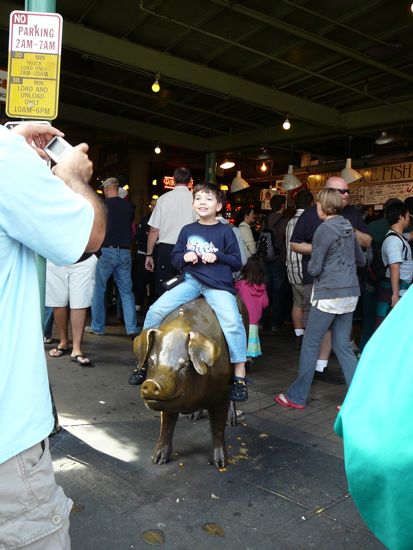
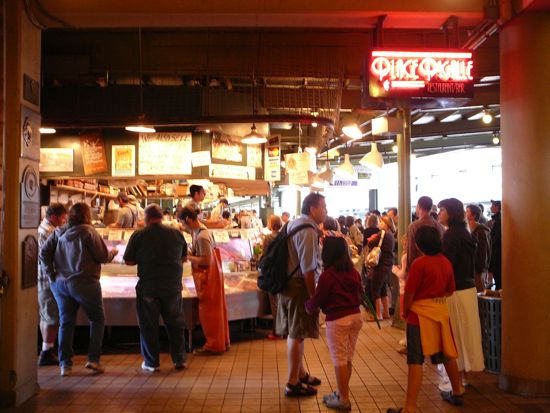

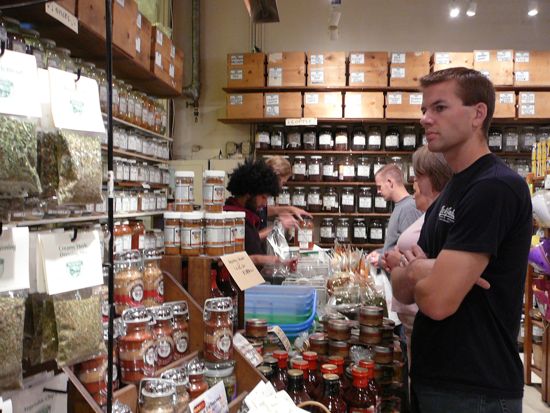

In the 1970’s, the market was a little run-down and shabby, and many business people wanted to raze it and use the space for office buildings. Seattle residents said “NO!” and instead, the market was revitalized. It is one of the major tourist destinations in the city, and a lively spot every day of the week.
A long time ago, before the big Seattle fire, my family lived just up the street from this market.
It’s The Law
There is something about Oregon I love. I don’t know if this is true anywhere else in the country, but in Oregon, you are not allowed to pump your own gas. So when it is cold and rainy and foggy and drizzly, you can sit in your warm car and someone else fills up your tank.
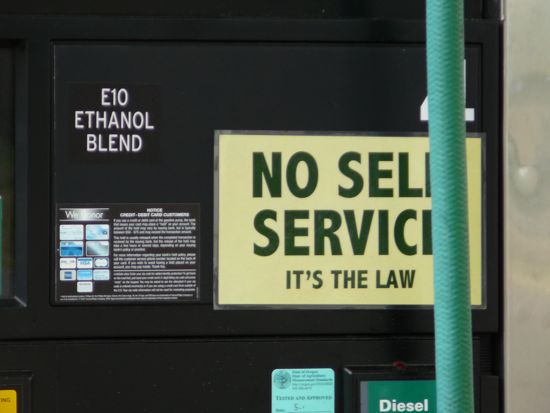
Just like Kuwait!
I asked the very nice young man who filled my tank if people ever tip him, and he said “Some people do!” with a big smile. I was happy to tip him for filling my tank.

(I asked him if I could take his photo for my blog, and he said “sure” it was fine. )
Wooo Hoooo, Oregon!
Dale Chihuly
Dale Chihuli makes my heart go pitter-patter. No, AdventureMan has nothing to worry about, it is a pure love, a love of great and beautiful pieces of glass spun from this incredible man’s imagination. I want you to go, right now, to this website and take a look at some of this breathtaking creations:
Dale Chihuly
Be sure to wait while the photos on this site change, or you will miss some spectacular pieces. How can anyone give molten glass such spirit?
Here are some pieces I found on display today:


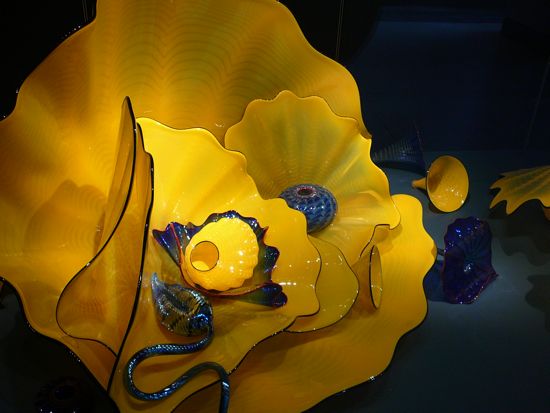
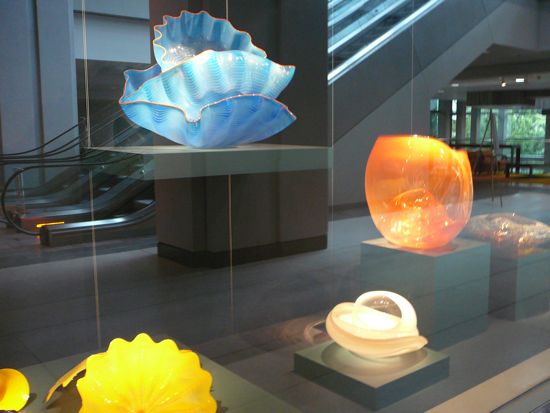
From his biography, you will know that his influence is strongly felt in the great Pacific Northwest:
Influenced by an environment that fostered the blurring of boundaries separating all the arts, as early as 1967 Chihuly was using neon, argon, and blown glass forms to create room-sized installations of organic, freestanding, plantlike imagery. He brought this interdisciplinary approach to the arts to the legendary Pilchuck School in Stanwood, Washington, which he cofounded in 1971 and served as its first artistic director until 1989. Under Chihuly’s guidance, Pilchuck has become a gathering place for international artists with diverse backgrounds. Over the years his studios, which include an old racing shell factory in Seattle called The Boathouse and now buildings in the Ballard section of the city and Tacoma, have become a mecca for artists, collectors, and museum professionals involved in all media.
Chevy’s Revisited
I told you all about Chevy’s Fresh Mex about a year ago, and since I can’t tell you a whole lot about what I am doing right now, I will tell you more about what we are eating: more Chevy’s Fresh Mex.
Here are my fish tacos, which I ate with Chevy’s fresh made salsa, yummmmmm. Yes, Purg, it is too much food. We don’t eat all of it. Like I only ate the tacos.
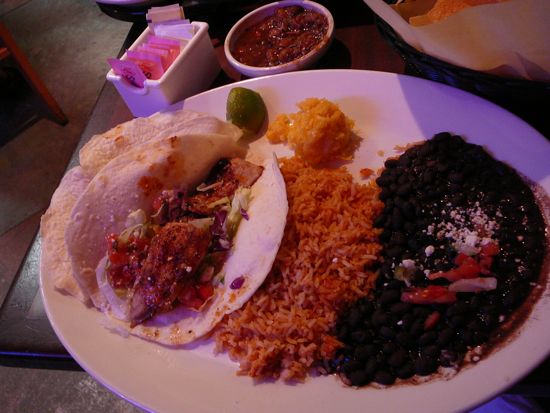
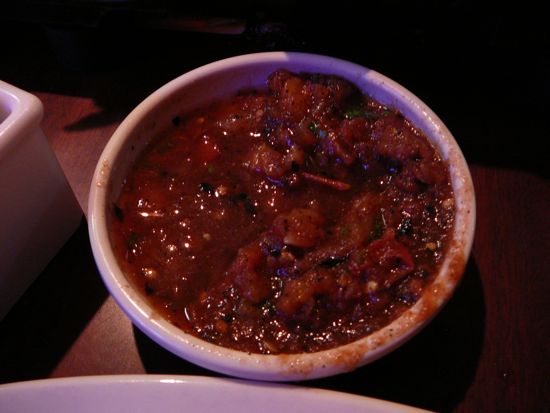
My dinner companion had the grilled chicken fajitas – and said that they were also YUMMMMMMMM!
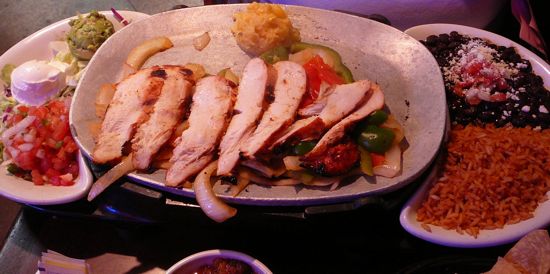
This is not real Mexican food. It is kind of a California-ized kind of Mexican food with a lot of lettuce and really fresh ingredients. It is kind of Mexican-lite. 🙂
Tsunami Signs
Tsunami Evacuation signs are everywhere in the area where we are staying. Is there anyplace in the world that is safe? Florida has sinkholes, and hurricanes. Seattle has earthquakes. Only in Oregon have I seen Tsunami Evacuation signs, but . . . would Kuwait be vulnerable to a Tsunami? If there were a tsunami, where would we run to? Where would we be safe?

In one place, on a high hill, we saw a sign saying Tsunami safe haven, but it was a long way up that hill and you are supposed to run, not drive, because they are afraid of gridlock with people trying to drive to get away. I am thinking a lot of people would probably die trying to run up that hill!
Here’s a sign you’ll be happy to see:

Riverside BBQ in Seaside, OR
AdventureMan and I love eating out in Kuwait, and the only thing we really yearn for are: genuine Mexican food, Vietnamese food, and southern (USA) Barbecue. When we come to the US we make sure to sample those three main food groups. And we laugh at ourselves, because when we are in the US, we are always looking for a good Middle Eastern restaurant. 🙂
We all had a yearning for barbecue today, so we stopped by a little pink restaurant by the side of Highway 101 in Seaside that had two smokers outside. The smell was divine.

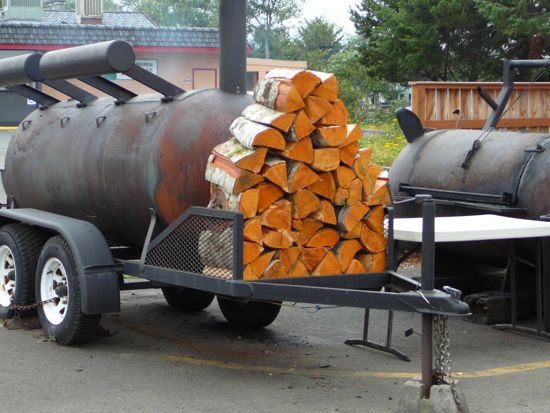
They had an extensive menu – beef, chicken and pork, and loads of sides – cornbread, baked beans, macaroni and cheese, potato salad, cole slaw – just to name a few. Here were some of the platters:
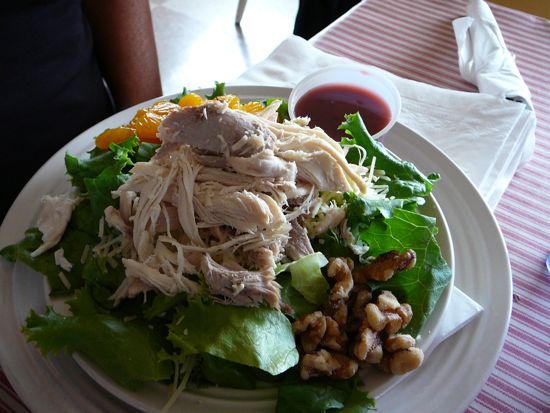
This was the smoked chicken salad
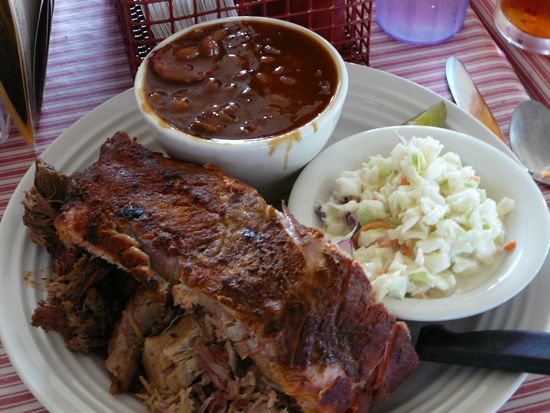
The Meat Lover's Platter

The Rib dinner
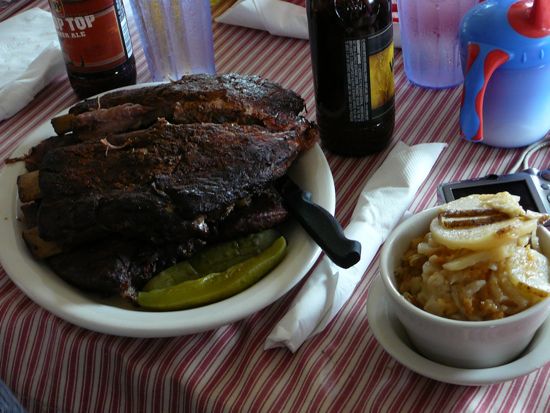
The Rib platter for two with a side of potato salad
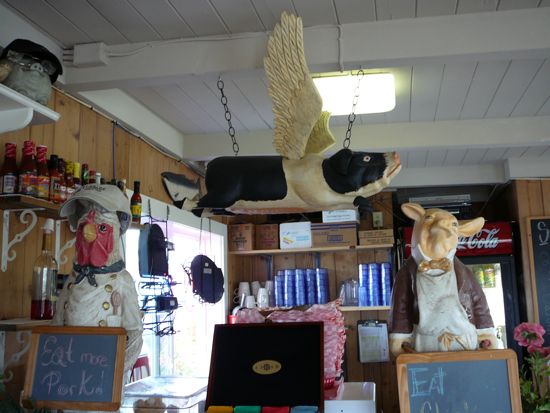
The counter where you order
The food was delicious. We ordered way too much – we had no idea how much food would come with each order. We boxed up the rest and brought it home to warm up later when we get hungry again, if ever.

Photo Nuts
My two sisters and I all have the same camera, and my niece, and my son and his wife, so we all share information. Like on our trip, EnviroGirl explained that if you made the picture size smaller, it extends the optical zoom, so if you don’t need a really vast photo, you can focus on something and get this huge telephoto. I had no idea until she explained it. Like yes, it is in the book, and I even read the book, but there is SO MUCH in the book.
My sister Sparkle told us about using a feature called Fireworks. She tried it for fireworks – it works! It also works on moon shots, although there is another feature called Starry Nights for that.
One thing totally cracks me up. There used to be a Simple Mode indicated with a heart, it was simple and automatic, and no one liked to use it. The newer models have something called Intelligent Automatic, and we all use that mode because it gets the best photos. We would never dream of using something called “simple” but “intelligent!” That’s very different!
Mariner Man, Sparkle’s husband, doesn’t use the same camera but he showed us a new technique he says is working for him, getting interesting and new photos: put your camera really near the ground or on the ground.

Sand Castle


Good tip, Mariner Man!
So I’m kind of waiting for sunset, and photo ops just keep happening. There are wonderful kids flying kites, and I wait, and I get the shot I want – what joy!

And then, as the sun continues setting, along come a couple surfers.
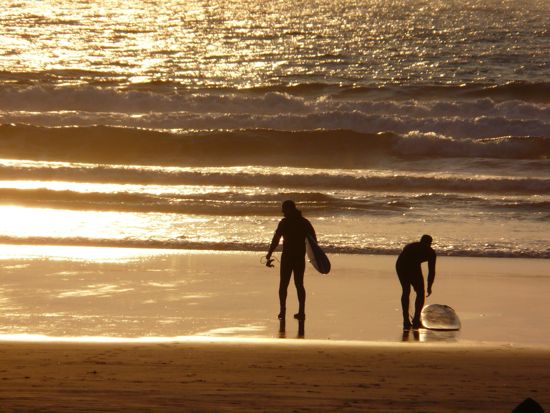
This isn’t such a great shot, but it is the only shot I got of one of them up on his board. He wasn’t up for very long.

This hasn’t happened to me for a long time – my memory card is full. I have to quickly go through and delete anything excessive to have room for the sunset. And then – the sun goes into a fog bank. I had thought it would shine through, but no – the fog EATS the sun! And, just at that moment, the surfers decide to go home and I get my last shot:

Recent Comments
ExpatAlien on What Country am I Living … intlxpatr on Yellowstone: Old Faithful to C… Michelle on Yellowstone: Old Faithful to C… Cathy on No Grown-Ups in Charge intlxpatr on Waiting for Snow Wikipedia Donate Button

Amazina


Early Voting in Florida


 Here There and Everywhere