Who Were the Chaldeans?
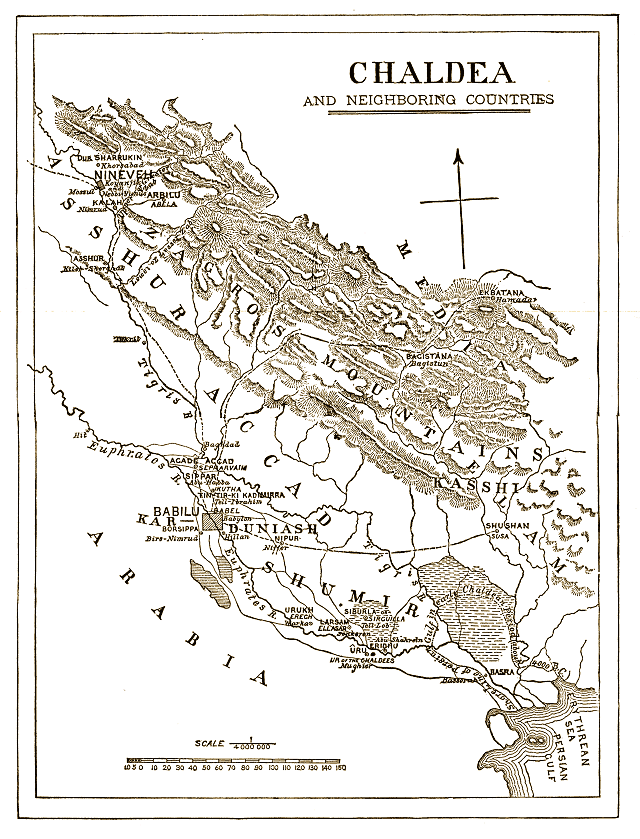
Some mornings I am amazed at what power technology puts at my fingertips. When I read books, I can tap a word I don’t know, and its meaning appears; the app connects to a powerful dictionary. Today, as I read Habakkuk, I wonder who these Chaldeans were, so dread and fearsome, so astounding? Seconds later, Wikipedia has given me history and maps
Here the Chaldeans are described in today’s Lectionary, in Habakkuk 1: 5-11:
5 Look at the nations, and see!
Be astonished! Be astounded!
For a work is being done in your days
that you would not believe if you were told.
6 For I am rousing the Chaldeans,
that fierce and impetuous nation,
who march through the breadth of the earth
to seize dwellings not their own.
7 Dread and fearsome are they;
their justice and dignity proceed from themselves.
8 Their horses are swifter than leopards,
more menacing than wolves at dusk;
their horses charge.
Their horsemen come from far away;
they fly like an eagle swift to devour.
9 They all come for violence,
with faces pressing* forward;
they gather captives like sand.
10 At kings they scoff,
and of rulers they make sport.
They laugh at every fortress,
and heap up earth to take it.
11 Then they sweep by like the wind;
they transgress and become guilty;
their own might is their god!
From Wickipedia:
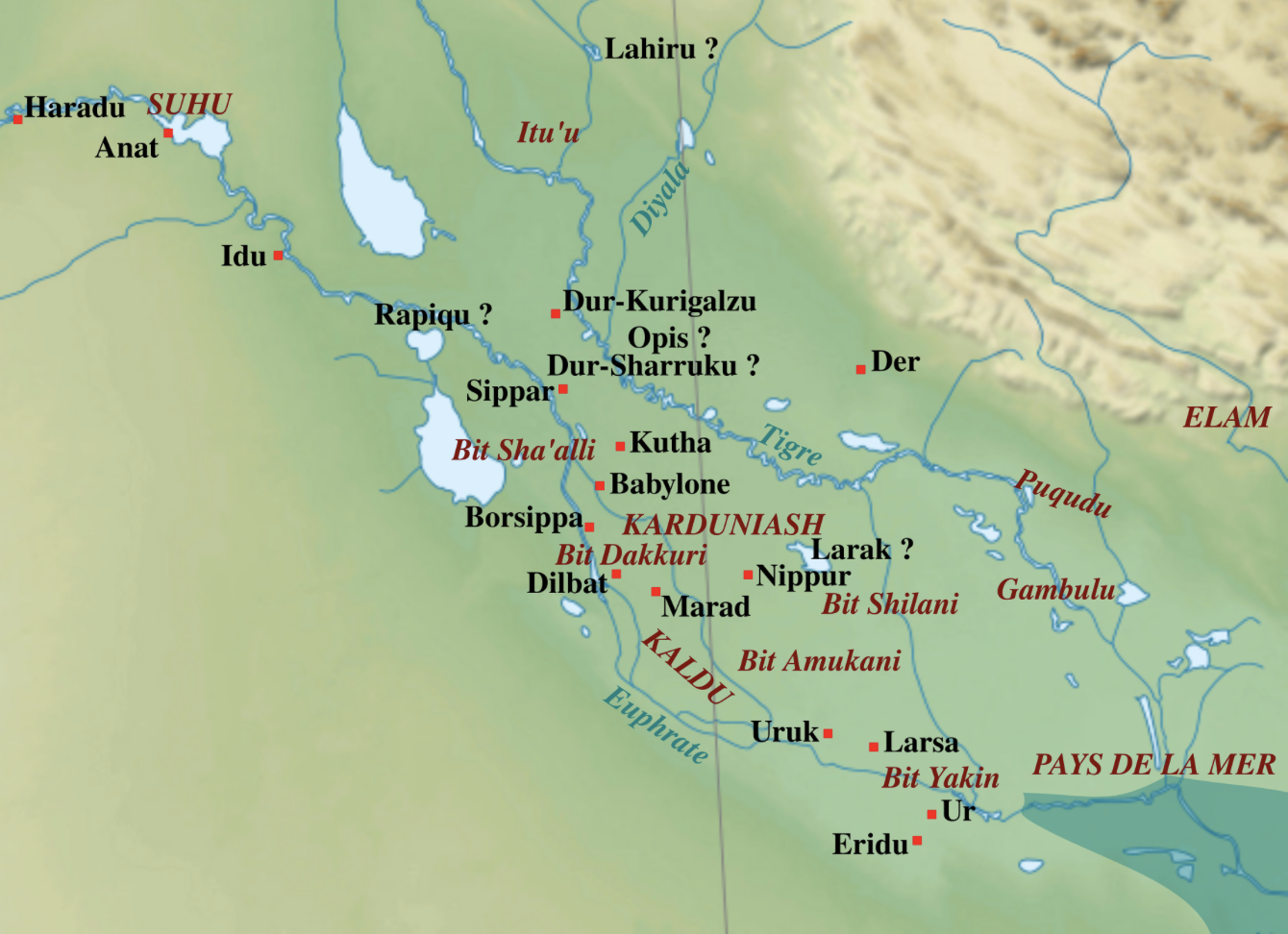
Ancient Chaldeans
Unlike the East Semitic Akkadian-speaking Akkadians, Assyrians and Babylonians, whose ancestors had been established in Mesopotamia since at least the 30th century BC, the Chaldeans were not a native Mesopotamian people, but were late 10th- or early 9th-century BC West Semitic Levantine migrants to the southeastern corner of the region, who had played no part in the previous three millennia of Sumero-Akkadian and Assyro-Babylonian Mesopotamian civilization and history.[16][17][page needed]
The ancient Chaldeans seem to have migrated into Mesopotamia sometime between c. 940 and 860 BC, a century or so after other new Semitic arrivals, the Arameans and the Suteans, appeared in Babylonia, c. 1100 BC. According to Ran Zadok, they first appear in written record in cylinder inscriptions of the King of Mari Aššur-ketta-lēšir II (late 12th-early 11th century BC), which record them reaching Mesopotamia as early as the 11th century BC.[18] They later appear in the annals of the Assyrian king Shalmaneser III during the 850s BC. This was a period of weakness in Babylonia, and its ineffectual native kings were unable to prevent new waves of semi-nomadic foreign peoples from invading and settling in the land.[19]
Though belonging to the same West Semitic speaking ethnic group and migrating from the same Levantine regions as the earlier arriving Aramaeans, they are to be differentiated; the Assyrian king Sennacherib, for example, carefully distinguishes them in his inscriptions.
The Chaldeans were for a time able to keep their identity despite the dominant native Assyro-Babylonian (Sumero-Akkadian-derived) culture although, as was the case for the earlier Amorites, Kassites and Suteans before them, by the time Babylon fell in 539 BC, perhaps before, the Chaldeans ceased to exist as a specific ethnic group.[20]
In the Hebrew Bible, “Ur of the Chaldees” (Ur Kaśdim) is cited as the starting point of the patriarch Abraham‘s journey to Canaan.
No comments yet.
Recent Comments
Kitchen on Isiais: Winding Down intlxpatr on Shampoo Ginger tigerbutterya0c5ff1d… on Shampoo Ginger intlxpatr on British Soldier Kidnapped, Esc… John on British Soldier Kidnapped, Esc… Wikipedia Donate Button

Amazina


Early Voting in Florida


Leave a Reply