HIV Epidemic Emerging in Middle East and North Africa
Recently published on National Public Radio is a study showing that governments are quietly gathering statistics on the rising tide of HIV infections in the Middle East and North Africa, but they don’t want those statistics published:
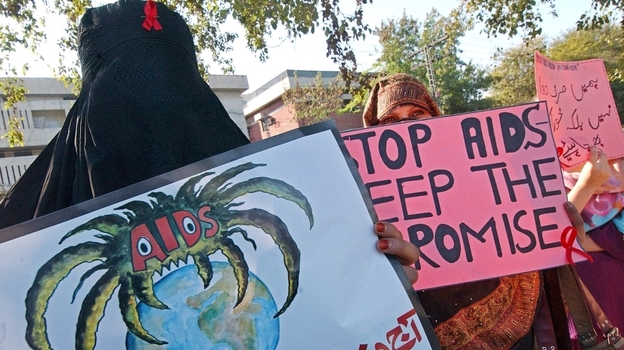
HIV epidemics are emerging among men who have sex with men in the Middle East and North Africa, researchers say. It’s a region where HIV/AIDS isn’t well understood, or studied.
More than 5 percent of men who have sex with men are infected by HIV in countries including Egypt, Iran, Lebanon, Morocco, Sudan and Tunisia, according to a recent study in PLoS Medicine. In one group of men in Pakistan, the rate of infection was about 28 percent. (For reference, in 2008, rates of HIV infection among men who have sex with men in the U.S. ranged from 16 percent among white men up to 28 percent of black men, according to the CDC.)
Risky behavior, low condom use, injectable drug use and male sex workers are some of the factors that could cause HIV rates to rise in the region, the researchers say. On average, the men who have sex with men group had between four and 14 sexual partners within the past six months, with consistent condom use falling below 25 percent.
Lack of HIV surveillance and low access to treatment and prevention are a concern for researchers, who believe the window of opportunity to prevent the epidemic from spreading across the region is growing smaller.
Shots had a chance to speak with one of the study’s authors, Dr. Laith Abu-Raddad, assistant professor of public health at the Weill Cornell Medical College in Qatar, to discuss the challenges of researching such a taboo topic.
What made you decide to pursue this study?
There are some political and community leaders who believe that our region is not affected by the epidemic. While others, such as HIV activists, believe that men having sex with men behavior is hidden, so HIV data must be hidden. They have called it the “HIV epidemic behind the veil.” It occurred to me that these are very contrasting views, and the truth must be out there somewhere.
I started this work eight years ago, to get every piece of evidence that we have on HIV. Turns out that there are more data than we think. The regions are not hiding the data, it’s just a sensitive issue. These issues aren’t discussed like in the western media. But it doesn’t mean that the government isn’t dealing with it. Governments do have programs such as active non-government organizations, NGOs, working with groups that are infected.
What surprised you about the findings?
Certain countries did surprise us with the work they’ve done. In Iran, they target the population of drug users. When Iran discovered HIV among drug users, they created programs that offered drug users access to treatment, and gave them free clean needles and syringes.
Many governments don’t want to provide HIV treatment or counseling directly. They support NGOs financially and logistically to help treat communities affected. It’s a way for them to protect people without raising sensitive issues of sexual and drug use behaviors that are often controversial.
What challenges did you face while gathering evidence?
There were some governments that gave us their data on the condition that we didn’t publish it. They want to deal with this issue, but they see no reason to raise it to the public. There were governments who did not want to release data. I can’t tell you which countries, since we have long-standing relationships with them. But we managed to convince some of them that the data would be used purely for scientific research and not used against them by the media.
What do you hope to accomplish from this study?
To raise awareness among policy makers. Hopefully, governments will make changes to policy. Surprisingly, the No. 1 barrier is poor research capacity in this region. If we don’t have the scientific data, we can’t have effective policy. We need to have an effective surveillance program, so we can help prevent further HIV transmission.
This part of the world is seen as not addressing the epidemic. Countries like Iran, Morocco and Egypt are developing programs and working with NGOs. But other countries haven’t yet improved their services to the public. But we hope they will.
I Need Your Trust . . .
Here is my scam letter for today, and here is part of what makes me so sad and so mad about these letters. IF they were true, which they are not, someone thinks I am the kind of person who would be a part of stealing a substantial sum of money. There may well be other relatives, or others who need that money – IF it were true, which it is NOT.
I NEED YOUR HELP WITH TRUST,
FROM: MR REDA ABDALLAH,
Please read carefully,
This message might meet you in utmost surprise. However, it’s just my urgent need for foreign partner that made me to contact you for this transaction. I got your contact from yahoo tourist search while I was searching for a foreign partner. I assured of your capability and reliability to champion this business opportunity when I prayed about you.
I am (MR Reda Abdullah) a banker by profession from Burkina Faso in west Africa and currently holding the post of Audits and Account manager at the foreign remittance department, i have the opportunity of transferring the left over sum of ($9.2 Million Dollars) that belongs to late Mr Rudi Harmanto from Indonesia who died along with his entire family in the Asia Earth Quake (TSUNAMI,DISASTER IN INDONESIA / INDIA. 2004, and since then the fund has been in a suspense account.
After my further investigation, i discovered that Mr Rudi Harmanto died with his next of kin and according to the laws and constitution guiding this banking institution, stated that after the expiration of (7) Seven years, if no body or person comes for the claim as the next of kin, the fund will be channel into national treasury as unclaimed fund. Because of the static of this transaction i want you to stand as the next of kin so that our bank will accord you their recognition and have the fund transfer to your account.
I don’t want the fund to go into our bank treasury account as unclaimed fund. So, this is the main reason why i have contacted you, so that we will release the fund to you as the nearest person to the deceased customer ( next of kin).Please, I would like you to keep this proposal as a top secret or delete it if you are not interested.
Upon receipt of your reply, I will send to you the full details on how the business will be executed, and an official copy of the ‘Application Form Of Claim’ of which you will fill, and send to the bank for the release of the fund into your receiving bank account. Also, note that you will have 40% of the above mentioned sum, if you agree to transact the business with me, and while 60% will be for me.
I won’t fail to bring to your notice that the risk to be taken is 100% free in this transaction, and that you should not entertain any atom of fear as all required arrangements have been made for the transfer of the fund into your bank account. Please, don’t ever forget to reply me this email urgently with your contact information’s like:-
(1)Name:……………………………………………
(2)Age:…………………………………………….
(3)Marital Status:…………………………………..
(4)Telephone Or Cell Phone Numbers:……………………
(5)Your Country:…………………………………….
(6)Your Occupation:…………………………………
I will like to receive the above following information’s from you as you reply this email to me for more trust, and better understanding of who you are. Looking forward to receive your reply urgently.
Thanks from,
Mr. Reda Abdallah
Adaobi Tricia Nwaubani: I Do Not Come to You by Chance
This book, the first novel from Adaobi Tricia Nwaubani, is hilarious, with moments of pathos, and a fresh point of view.
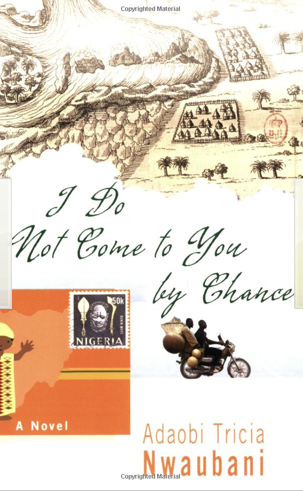
Amazon.com recommended it to me as I was busy buying books by author Chimamanda Ngozi Adichie; I thought ‘OK, I’ll read a series of Nigerian books as part of my summer reading.
Young Kingsley Ibe is the family’s first born male, and with that status goes many privileges – and responsibilities. After graduating with a Masters in Chemical Engineering, he has no success in his search for a job with an oil company in Nigeria, and consequently loses the love of his life, Ola, to another who has secure employment.
Worse, his retired father has a stroke, and the family discovers that with all the fees required, they haven’t enough for his continued care, so Kingsley must approach his uncle, Boniface Mbamalu, more familiarly known as Cash Daddy, for funds to transfer his father to a long term care facility, and, later, for his father’s funeral.
Serious Kingsley’s eyes nearly pop as he sees the life his uncle is living, cars, women, designer watches, shoes, suits and all the trappings of new wealth. Soon, his uncle makes a convincing case for Kingsley coming to work for him, the better to help out his family of mother, brothers and sister, now that he is the senior male in the family.
Kingsley discovers he has a gift for the work – which is writing 419s, those scam letters which I frequently publish in this column. I loved being on the inside, learning how strong possibility e-mail addresses are netted, how response e-mails are massaged – not unlike fund raising techniques by charitable organizations in the US. Kingsley’s education helps him achieve enormous financial success in a very short time – but he finds that all the cash and designer goods in the word do not solve his problems nor make him happy.
I learned a lot about how successful many of these scammers are, and how the money made is spread throughout the Nigerian communities. The author takes a balanced view, balancing the way the cash makes life easier for people – a lot of people, because the rich man has many obligations to his community, balanced against the disgust, and sick fear felt by his religious mother and aunt, and his one time girlfriend, when they learn the work he is doing. They are disappointed that a man of such promise has sunk to making so much money in a dishonest way. The book also does not deal sympathetically with those who have given or lost money to the scammers, nor, in my opinion, does the ending satisfy.
This is one of the funniest parts of the book – a group of Nigerian scammers is about to meet with a representative of a major US investment firm. He thinks he will be meeting with the Nigerian Minister of Transportation to discuss building a new airport; the reality is that Cash Daddy, in disguise, will be pretending to be the minister. Kingsley protests that Cash Daddy looks nothing like the minister, and Cash Daddy responds:
“Let me tell you something . . . Me, I really like these oyibo people. They’re very very nice people. See how they came and showed us that the ground where we’ve been dancing Atilogwu has crude oil under it. If not for them, we might never have found out. But Kings,” he dragged in his dangling foot and sat up in the tub, “white man doesn’t understand black man’s face. Do you know tht I can give you my passport to travel with . . . Even if your nose is ten times bigger than my own, they won’t even notice?”
It was a fascinating book. I understand better now why 419 scams work. (419 is the section of the Nigerian criminal code making scam e-mails a crime; thus the crime is called ‘a 419’) There are some very funny and very insightful moments in the book. It is no where near the level of literature that you experience with Chimamanda Ngozi Adichie, but there is more humor, and the book shows a more modern day Nigeria. Not a bad summer read, but not great literature.
Chimamanda Ngozi Adichie: The Thing Around Your Neck

Chimamanda Ngozi Adichie has compiled a series of elegant vignettes in her most recent book, The Thing Around Your Neck. I had just read Half of a Yellow Sun, and was still wallowing in stunned admiration, when I heard an interview with the author on BBC, and learned she had written this book, The Thing Around Your Neck.
I loved Half of a Yellow Sun. I loved Purple Hibiscus. I felt I began to understand just a little bit about life in transitional Nigeria, with all the social and political forces blowing to and fro, straining the very fabric of nationhood.
In The Thing Around Your Neck, something else happens. It shares with Cutting for Stone and other books I like the impressions of those who come to live in the USA for the first time.
“Would that the wee wee giftie gi’e us, To see ourselves as others see us . . . ”
I’ve had a lot of experience going to live in foreign countries. One of the things I learned is that most of what I learn the first couple years isn’t much. You learn a lot of things wrong. You filter everything through your own cultural biases; you judge, you interpret, you try to make sense of things that just seem wrong.
I love to watch Chimamanda Ngozi Adichie’s characters do this in reverse, come to America and make judgements based on their own cultural expectations. I love to see us through these eyes.
Once, many many years ago, we entertained a Nigerian in our home, and when we served dinner, steaks, he looked at his plate and said “This would feed my family for a week.” We kind of laughed. We kind of thought he was exaggerating, or even kidding. We just didn’t know. We had never seen anyone truly hungry, we had always lived in this land of plenty. We had no idea what we didn’t know. We saw only what we knew.
Each story is a gem. Each treats the expat experience, coming here, or the reverse, coming to America and then going back and seeing Nigeria through eyes which have changed.
One story I had read before, in the New Yorker magazine and loved reading again, The Headstrong Historian. It starts with a smart woman, weaving her way among the ways of her people, whose husband’s family wants her husband to take another wife. He doesn’t want to. These two chose each other, and managed to live their lives together as best they could, by their own standards. Her son disappoints her, but her granddaughter – she sees her husband’s brave, courageous spirit in the eyes of her little grand daughter. You’ll have to read the story to find out the rest.
Other stories have to do with newlyweds, with students, with love and marriage and affairs – the full spectrum of human experience, through Nigerian expat eyes. There are settings common from all three books, the college campus at Nsukka, a prison outside of town, small villages outside the city. If you read all her books, you recognize place: “Aha! I’ve been her before, in Purple Hibiscus!” You learn how to bribe the guards so you can bring in food for your imprisoned family member, you learn to keep your eyes down to show respect, you learn how Nigeria smells when the rains come, and how dry and dusty it gets during the harmattan.
I’m just sorry there isn’t another book by this author – yet – that I can read!
I guess these books that I love deal with a theme dear to my heart – that we are culturally blind to so many things, and that as human beings we are more alike than we are different. Short of packing up all our lives and our assumptions and moving to many different countries, the best we can hope for in learning different ways of thinking is for books like these by Chimamanda Ngozi Adichie, which show us how differently we perceive things, depending on our cultures, and how alike we are in the things that we feel, as human beings.
Chimamanda Ngozi Adichie: Purple Hibiscus
A couple of years ago, when we had a great book club in Kuwait, I read Half of a Yellow Sun, by this author, and I was blown away. Some books you just read for entertainment, and some books have such a strong, compelling voice that it comes back to you, again and again, and you think about it for a long time.

So when Amazon.com recommended Purple Hibiscus, I bought it, along with The Thing Around Your Neck. Purple Hibiscus is the author’s first book, and The Thing Around Your Neck is her most recent. In 2009, I found an interview with her online; you can watch it by clicking here: An Interview with Chimamanda Ngozi Adichie. She is an enormously talented author.
When I read Half of a Yellow Sun, I became Igbo, growing up in Nigeria. While that story was told through many eyes, I was able to be a boy from the bush brought to the college campus to be a houseboy, I got to be a wife, her sister, her professor husband. We experienced the Biafran succession, the insanity of several regime changes in Nigeria, the total fog and waste of war, through the eyes of the Biafrans.
Reading Purple Hibiscus was a little different; the story is told through the eyes of a girl, Kambili, who lives in a very controlled environment. We know from the very beginning that things are not right in her wealthy, beautiful world. Her father and mother love her, take good care of her, feed her, clothe her – and that is just a part of a bigger picture. Her father has an idea of the way things should be; he attained his position and wealth through his education by the Catholic priests and he has a rigid idea of how everything must be done. Vary from his strictures, and you get beaten, or scalded, or you little finger is broken and disfigured.
Part of what makes this book so compelling is that while the environment is Nigeria, and, to us, exotic, the climate of abuse is the same everywhere. It’s a dirty little secret, even in the wealthiest of families, you keep your mouth shut to stay alive, and to protect your family’s image. Abuse is no stranger to rich or poor families, and can only stay alive because people stay silent.
Kambili, fifteen when we meet her, lives a tiny, small, scared life, following the weekly schedules her father prints out for her and her brother and posts over her desk. She hears her mother beaten over the smallest failure, imagined or real. Her mother miscarries twice due to these beatings, and her father tenderly cares for the mother whose miscarriage his beatings caused. It is crazy-world. Kambeli and her brother are expected to take first in every class; if they do not, they, too, pay a severe penalty.
Just as the political climate in Nigeria starts to tremble and fall apart, so, too, does Kambili’s life, and in the falling apart, comes new ways of doing things, new perspectives, new risks and even learning to run, to laugh, to be ‘normal’ as other children are. She is blessed to have an aunt at the university, no where near so wealthy as her family but able to cajole her father into letting the children visit with her. The aunt, Ifeoma, laughs, and encourages her children to challenge other’s opinions respectfully, and who grows the very rare Purple Hibiscus. Her heart aches for Kambili and her brother, and she tries to give them space to figure things out for themselves, and to chose what they want for themselves.
It is a scary time in Nigeria, a time when men can come to the door and take someone away, and you don’t know if you will ever see them again, or how damaged they will be if they return. Kambili’s own life is full of a similar terror, but the terror is inflicted by someone who she loves, and who loves her.
I love the soul of an author who can write a book like this, a book that makes me feel like in another life I was a Nigerian. I can’t begin to think I know much about Nigeria now, but having read three books by Chimamanda Ngozi Adichie, I have the broad outlines of the divisions which traumatize and fracture Nigeria to this day. Even better, I understand how very different the cultural expectations are from our own, and how very similar we are as human beings.
This is a great read. It is inspirational. You might even learn something. You can find it on Amazon.com.
Hilarious Qadaffi E-mail
Those who come by here regularly know that I have a niece who is not only a professor of Arabic culture and studies, but is also beautiful and funny and adventerous. I had no idea she was so well connected, LOL. Thank you, Little Diamond, for contributing this wonderful scam e-mail to the HT&E collection. Read and weep!
My name is Saif Al Islam Gaddafi, the son of the present president of Libya. I am contacting you for an urgent assistance.
As you can read and see in the media, my family is presently undergoing tough time in the hand of the masses due to his long stay in power as the president of Libya for over 40 years now. Although there is no way you can satisfy human being, my father has done so many things to better the life of our people unfortunately they never appreciated his effort instead it resulted in calling my family bad names.
The International community has reached a resolution for immediate seizure of our assets both in US and the UK which the have already done and many other sanctions but it can’t affect our financial statue in the world. But as you can not predict tomorrow the say that is while I decided to reach you for this assistant hoping it will be top secret and you should avoid the media
I want to request your humble assistance to receive a total sum of €22m.
I will not give you details of the fund now because of security reasons but just have in mind that the fund exit in one of the African countries.
You will receive this fund directly and keep it safe or invest it in any business of yours till this saga is over then I will get back to you on how the fund or profit will be shared. By the special grace of Allah nothing will happen to me.
If you are ready and will keep it top secret and avoid the media contact this email address (aarifqasif@hotmail.com ) the details of where the fund exit and how it will be transferred will be made known t
I know you may have little fear on you but it is risk free.
I know you will be in hurry to reply me but due to what my family is facing now and security reasons I will not be responding ! ! ! ! ! ! !.
All you need to do is to contact my representative with the email given to you and tell him that you received an email from Saif Al Islam Gaddafi and that you are willing to receive the fund.
Assalamu ‘alaikum
Saif Al Islam Gaddafi
Little Diamond, that’s the best laugh I’ve had all day. 😀
Dear DADDY Intlxpatr
I get the feeling he doesn’t really read my blog . . .
Dear DADDY,
I am Johnson Koroma, from the Ivory Coast (D.R.C) in Africa. I am the first son and the eldest child of my late father, Late Capt. Suleiman Koroma.
My late father was killed by the rebels in my country as he died in the hospital, two days after he was shot on his chest.
I am in Jakarta-Indonesia now; I was smuggled in here with the help of the United Nations (U.N.).
The U.N assisted me to convey my inherited fund($15,500,000.00) to Jakarta-Indonesia, as I told them that, the fund was supposed to be delivered to my late father foreign partner here in Jakarta-Indonesia according to my late father’s instruction before he died.
I did this arrangement, as my late father told me before he died in my country Ivory Coast; to make sure I convey this fund to his foreign partner here in Jakarta-Indonesia for investment purposes since there is instability of power in Africa.
But on my arriving here in Jakarta-Indonesia, I could not find my late father foreign partner as I was told he died in a bomb blast that occurred in J.W Marot hotel here in Jakarta-Indonesia two year ago.
In this regards, I seek your urgent assistance, for you to come down here in Jakarta-Indonesia, so that I will introduce you to the U.N as my late father’s foreign partner for them to release my fund to you. This is because, the U.N said they will not release my fund to me, until they see my late father foreign partner as I told them earlier, as the said fund is too big for only me to handle as the U.N. officials said, since I am just 24 years of age.
Note: You are not expected to make any upfront payment before you make this claim, all you are required to do is just to come down here in Jakarta-Indonesia, and I introduce you to the U.N as my late father’s foreign partner, who will make the claim of my inherited fund and invest it into any lucrative investment according to your directives… Also, 15% of this total sum shall be giving to you for your kind assistant.
The U.N will deduct 10% of the total sum, for their service charges etc after they hand over my inherited fund to you, hence you will not be expected to make any payment for this claim.
Thanks and remain blessed, as I await your urgent response and arrival schedule here in Jakarta-Indonesia.
Yours son,
Johnson Koroma.
“My Wicked Uncle Who Is Threatened to Kill Me”
Holy smokes! This one is highly creative . . . a wicked uncle who will kill her if I share this information with anyone. Touche’, you are right, I do get some amazing scam letters.
Dearest One,
Compliment of the season, my name is Chantal Justin YAK am 25 years old Girl from Southern sudan. I want to have a common relationship with you, I need to tell you more things, but first I need your help to Stand for me as a trustee.
My father Dr. Justin YAK Arop was the former Minister for SPLA Affairs and Special Adviser to President Salva Kiir of South Sudan for Decentralization. My father Dr. Justin YAK and my mother including other top Military officers and top government officials where on board with the plane crashed on Friday May 02, 2008. You can read more about the crash through the below site: http://news.bbc.co.uk/2/hi/africa/7380412.stm
Some months after the burial of my parent, my uncle conspired with my step mother and sold my father’s properties to a Chinese Expatriate. On a faithful morning I opened my father’s briefcase and found out some vital documents which my beloved late father used in deposit some Money and GOLDDUST worth 250KG 22/23 carat alluvial Gold Dust deposited in a Finance& Security company in Burkina Faso , with my name as the next of kin beneficiary. I travelled to Burkina Faso to withdraw the money so that I can start a better life and take care of myself.
To the great disapointment when i arrived here in burkina faso, the director of the finance company whom I met in person told me that my present status does not permit me by the local law to clear money or make a transfer of money into an account, he advice me to provide a trustee who will help me to receive the money into an international bank account or I should wait till when I will get married then i can come for the claim with my husband as it was demanded by their Authority..
I have chosen to contact you after my prayers and I believe that you will not betray my trust. But rather take me as your own blood sister and help me. Though you maybe wonderring why I am so soon revealing myself to you without knowing you, well, I will say that my mind convinced me that you are the true person to help me. More so, I will like to disclose much to you if you can help me to relocate to your country because my uncle has threatened to assassinate me if care is not taken. The amount involve is $4.5 Million USD and I have confirmed from the Finance and security here in Burkina Faso.
However, you will help by recommending a nice University in your country so that I can complete my studies. It is my intention to compensate you with 15% of the total money and GOLD for your services and the balance shall be my capital in your establishment As soon as I receive your interest in helping me, I will put things into action immediately. In the light of the above, I shall appreciate an urgent message indicating your ability and willingness to handle this transaction sincerely.
Please do keep this only to your self. I beg you not to disclose it till i come over to your country after the transfer hits your bank account because I am afraid of my wicked uncle who is threatened to kill me. my emil add chantal.yak@blumail.org
Sincerely yours,
Chantal Justin YAK.
Alexander McCall Smith and The Saturday Big Tent Wedding Party

Just back from a wonderful two day trip to Botswana, visiting my dear and beloved friend Precious Ramotswe, who owns the #1 Ladies Detective Agency. For her, I make an exception to the paperback book rule (buy paperbacks because hard covers can hurt you if you fall asleep and they fall over) and get on the pre-publication order list so that Amazon will send me the book as soon as it comes out.
The Saturday Big Tent Wedding Party arrived Wednesday night. My husband was expecting a friend, and when the doorbell rang I thought “oh my, he is really early!” but it was the UPS guy, who had left a book-sized package on my doorstep. I had just finished an easy but fun book (The Map Thief by Heather Terrell) and was at odd ends as to what to read next, and this was an easy answer. As my husband drank Arabic coffee and sweet sweet Arabic tea, and ate delicate Middle Eastern treats downstairs, I got to start The Saturday Big Tent Wedding Party.
You know the books. They aren’t difficult to read, but while you are reading, you are transported to another world. Precious Ramotswe’s Botswana is not a world without problems, but the solutions to the problems are often found in softer gentler ways, ways that would seem counter-intuitive in our culture, but make total sense when you are raised in Botswana. There is a value placed on peaceable interaction, and maintaining relationships, on forgiveness, and going to extra mile. It’s a sweet world, and a great escape.
As usual, there are several intertwining plot lines with ingenious and unexpected solutions. I suspect that is what keeps me glued to this series – I cannot anticipate the solutions. That, and the gentleness of her outlook, the sweetness of life in Botswana, and the dignity and integrity of McCall’s primary characters.
I don’t know how McCall manages to keep the series fresh, but he avoids the formulaic and I find each book a treat. My favorite part of this book is how Mma Potokwane manages to wangle and invitation to Mma Makutsi’s wedding:
Mma Potokwane noticed the other woman’s uncertainty. “Yes,” she continued. “There’s that problem. And then there’s another problem. Problems come in threes, I find, Mma. So the next one – Problem number two, so to speak – is the cooking of food. You know what I find, Mma, it is this: the people doing the cooking never have enough pots. They say they do, but they do not. And right at the last moment they discover that there are not enough pots, or, more likely, the pots they have are too small. A pot may be big enough to cook your meat and pap at home, just for a family, but do not imagine that it will be big enough to cook for a couple of hundred people. You need big, catering-size pots for that.”
She was now warming to her theme. “And the third problem is the food itself. You may think that you have enough for the feast, and you may be right when it comes to the meat. People usually have enough meat – often rather too much, in fact. But they forget that after their guests have eaten a lot of meat, they need something sweet, and often they have made no arrangements for that. A wedding cake? Yes, but there will only be one small piece of that for each guest – usually not enough. So people find themselves wishing that they had had the foresight to get a supply of ordinary cake for the guests to eat with their tea. And where is this cake? Not there, Mma.”
Mma Ramotswe glanced at Mma Makutsi; this was not the way to speak to a nervous bride, she thought. “I’m sure that everything will work out well,” she said reassuringly. “And if there are any problems, they will surely just be small ones – nothing to worry about.”
Mma Potokwane looked doubtful. “I hope so,” she said. “But in my experience, it never works out like that. I think it’s better to be realistic about these things.”
Mma Makutsi picked up her pencil to add something to her list. “You said something about pots, Mma. Where would I be able to get these big, catering-size pots?”
Mma Potokwane examined her fingernails. “Well, we have them at the orphan farm. Each of the house mothers has a very large pot. I’m sure that we could do something . . . ”
Run to your bookstore and buy The Saturday Big Tent Wedding Party!
Cutting for Stone by Abraham Verghese

Someone in my book club in Qatar mentioned this book, Cutting for Stone, a while back, and I bought it, but it has sat for months on my to-read shelf (LOL, there are actually several, but one with the most important books, and another with the ‘guilty pleasures,’ the ones I am addicted to and save as a reward for good behavior, like vacuuming.)
When a good friend said she was reading it, and that it was good, I decided to move it up in priority, sort of like taking medicine, read a book that is good for you.
Oh WOW.
First, it is a great, absorbing story. Twin boys are born, totally unexpected, to an Indian Catholic nun and an English surgeon, working in Addis Ababa. How they were conceived is a mystery. The mother dies in childbirth, the father flees in horror, the children are born conjoined at the head and must be separated. The boys are adopted by an Indian couple, doctors at the hospital, and are raised with love and happiness.
That’s just the beginning!
I’ve always wanted to go to Ethiopia and Eritrea. I want to visit Lalibela, and some of the oldest Christian churches in the world. When my father was sick, he had a home health aid from Ethiopia, Esaiahs, who told me about the customs in his church, and how Ethiopian Christianity is very close to Judaism, with men and women separated in the church, and eating pork forbidden.
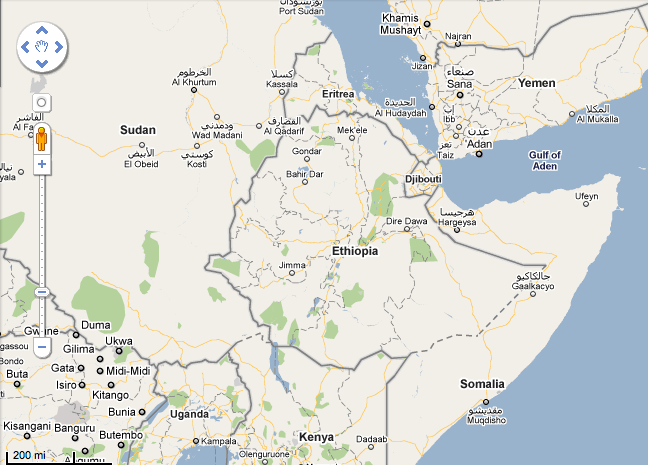
Reading this book, I felt like I had lived there, and I want to go back. The author captures the feelings, the smells, the visuals, the sounds, and if I awoke in a bungalow at the MIssing (Mission) Hospital, I would say “Ah yes! I remember this!”
I kept marking sections of this book that I loved. Here is one:
They parked at Ghosh’s bungalow and walked to the rear or Missing, where the bottlebrush was so laden with flowers that it looked as if it had caught fire. The property edge was marked by the acacias, their flat tops forming a jagged line against the sky. Missing’s far west corner was a promontory looking over a vast valley. That acreage as far as the eye could see belonged to a ras – a duke – who was relative of His Majesty, Haile Selassie.
A brook, hidden by boulders, burbled; sheep grazed under the eye of a boy who sat polishing his teeth with a twig, his staff near by. He squinted at Matron and Ghosh and then waved. Just like in the days of David, he carried a slingshot. It was a goatherd like him, centuries before, who had noticed how frisky his animals became after chewing a particuar red berry. From that serendipitous discovery, the coffee habit and trade spread to Yemen, Amsterdam, the Caribbean, South America, and the world, but it had all begun in Ethiopia, in a field like this.
We live inside the hearts and minds of doctors, some practicing under the worst possible conditions, and learn how they make their decisions and why. Verghese is a compassionate author; while his characters may be flawed, they are forgivable and forgiven.
Another section I loved, the man speaking is Ghosh, the man who adopted the twins with Hema, another doctor:
“My genius was to know long ago that money alone wouldn’t make me happy. Or maybe that’s my excuse for not leaving you a huge fortune! I certainly could have made more money if that had been my goal. But one thing I won’t have is regrets. My VIP patients often regret so many things on their deathbeds. They regret the bitterness they’ll leave in people’s hearts. They realize that no money, no church service, no eulogy, no funeral procession no matter how elaborate, can remove the legacy of a mean spirit.”
Things in Ethiopia get sticky, politically, and one of the twins is forced to flee, implicated in an airplane hijacking only because he was raised with a young woman involved. He is spirited into Eritrea, where he awaits his ride out to Kenya, and he helps the Eritrean rebels when large numbers of wounded are brought into his area. When the time comes to leave, his thoughts will strike a chord in anyone who has ever been an expat:
Two days later I took leave of Solomon. There were dark rings under his eyes and he looked ready to fall over. There was no questioning his purpose or dedication. Solomon said “Go and good luck to you. This isn’t your fight. I’d go if I were in your shoes. Tell the world about us.”
This isn’t your fight. I thought about that as I trekked to the border with two escorts. What did Solomon mean? Did he see me as being on the Ethiopian side, on the side of the occupiers? No, I think he saw me as an expatriate, someone without a stake in this war. Despite being born in the same compound as Genet, despite speaking Amharic like a native, and going to medical school with him, to Solomon I was a ferengi – a foreigner. Perhaps he was right, even though I was loath to admit it. If I were a patriotic Ethiopian, would I not have gone underground and joined the royalists, or others who were trying to topple Sergeant Mengistu? If I cared about my country, shouldn’t I have been willing to die for it?
The book has a lot of observations about coming to America; some of which made me laugh, some which made me groan. Coming back is always a shock to people who have lived abroad for a time, but it is a huge shock to those coming for the first time:
The black suited drivers led their passengers to sleek black cars, but myman led me to a big yellow taxi. In no time we were driving out of Kennedy Airport, heading to the Bronx. We merged at what I thought was a dangerous speed onto a freeway and into the slipstream of racing vehicles. “Marion, jet travel has damaged your eardrums,” I said to myself, because the silence was unreal. In Africa, cars ran not on petrol but on the squawk and blare of their horns. Not so here; the cars were near silent, like a school of fish. All I heard was the whish of rubber on concrete or asphalt.
As I neared the end, I read more slowly, unwilling for this book to end. It is one of the most vivid and moving books I have ever read. AdventureMan has gone online to find the nearest Ethiopian restaurant so we can have some injera and wot.
Recent Comments
intlxpatr on Waiting for Snow intlxpatr on Waiting for Snow Abou Tabblouleh on t… on Waiting for Snow Abou Tabbouleh on in… on Waiting for Snow intlxpatr on Waiting for Snow Wikipedia Donate Button

Amazina


Early Voting in Florida


 Here There and Everywhere