Does Malawi Law Ban Farting?
Don’t you just love the internet?
I knew the photo I was looking for to illustrate my post on going to church today, and it took me about three pages of internet search to find it. When I found it, I also found an article that totally made me laugh. It is so hilarious.
Malawi row over whether new law bans farting
By BBC News
Fri 04 Feb. 2011, 13:30 CAT
Two of Malawi’s most senior judicial officials are arguing over whether a new bill includes a provision that outlaws breaking wind in public.
Justice Minister George Chaponda says the new bill would criminalise flatulence to promote “public decency”.
“Just go to the toilet when you feel like farting,” he told local radio.
However, he was directly contradicted by Solicitor General Anthony Kamanga, who says the reference to “fouling the air” means pollution.
“How any reasonable or sensible person can construe the provision to criminalising farting in public is beyond me,” he said, adding that the prohibition contained in the new law has been in place since 1929.
The Local Courts Bill, to be introduced next week reads: “Any person who vitiates the atmosphere in any place so as to make it noxious to the public to the health of persons in general dwelling or carrying on business in the neighbourhood or passing along a public way shall be guilty of a misdemeanour.”
Chaponda, a trained lawyer, insists that this includes farting.
“Would you be happy to see people farting anyhow?” he asked on the popular “Straight Talk” programme on Malawi’s Capital Radio.
He said that local chiefs would deal with any offenders.
When asked whether it could be enforced, he said it would be similar to laws banning urinating in public.
This is the article from which I stole the photo of a man
Al Jazeera (English) Covers Egypt
If you are in the USA, the best coverage I have been able to find has been on Al Jazeera live. They have English language coverage. Unlike Egypt, which has closed down all access to the internet, you can stream Al Jazeera live by clicking on the blue type below.
Their coverage is – from what I can tell – fair and balanced.

It’s in the mid 70’s Fahrenheit, in Cairo in the daytime, getting down to the 50’s – 60’s at night – perfect weather for a protest. Looks like Paris in the late 60’s.
Scams: 419’s
My good friend John Lockerbie, from Catnaps sent me this great link on scams this morning. One of the sections has hilarious photographs of the scammers – sent by scammers to reassure potential victims of their authenticity. This is from their section describing how you can identify a scamming letter or e-mail:
Information quoted from the US Secret Service Web Site.
4-1-9 Schemes frequently use the following tactics:
An individual or company receives a letter or fax from an alleged “official” representing a foreign government or agency.
An offer is made to transfer millions of dollars in “over invoiced contract” funds into your personal bank account.
You are encouraged to travel overseas to complete the transaction.
You are requested to provide blank company letterhead forms, banking account information, telephone/fax numbers.
You receive numerous documents with official looking stamps, seals and logo testifying to the authenticity of the proposal.
Eventually you must provide up-front or advance fees for various taxes, attorney fees, transaction fees or bribes.
Other forms of 4-1-9 schemes include: c.o.d. of goods or services, real estate ventures, purchases of crude oil at reduced prices, beneficiary of a will, recipient of an award and paper currency conversion.
Nigerian Advance Fee Fraud Overview
The perpetrators of Advance Fee Fraud (AFF), known internationally as “4-1-9” fraud after the section of the Nigerian penal code which addresses fraud schemes, are often very creative and innovative.
Unfortunately, there is a perception that no one is prone to enter into such an obviously suspicious relationship. However, a large number of victims are enticed into believing they have been singled out from the masses to share in multi-million dollar windfall profits for doing absolutely nothing. It is also a misconception that the victim’s bank account is requested so the culprit can plunder it — this is not the primary reason for the account request — merely a signal they have hooked another victim.
In almost every case there is a sense of urgency.
The victim is enticed to travel to Nigeria or a border country.
There are many forged official looking documents.
Most of the correspondence is handled by fax or through the mail.
Blank letterheads and invoices are requested from the victim along with the banking particulars.
Any number of Nigerian fees are requested for processing the transaction with each fee purported to be the last required.
The confidential nature of the transaction is emphasized.
There are usually claims of strong ties to Nigerian officials.
A Nigerian residing in the U.S., London or other foreign venue may claim to be a clearing house bank for the Central Bank of Nigeria.
Offices in legitimate government buildings appear to have been used by impostors posing as the real occupants or officials.
The most common forms of these fraudulent business proposals fall into the following main categories:
Disbursement of money from wills
Contract fraud (C.O.D. of goods or services)
Purchase of real estate
Conversion of hard currency
Transfer of funds from over invoiced contracts
Sale of crude oil at below market prices
You can read much much more at this website: 419 eater
‘Lost Boy’ Casts Vote for Independence
I found this today on NPR News and it delights me for a number of reasons. For one thing, I didn’t know David Eggars (you remember him from Zeitoun) had helped with the writing of ‘What Is The What?’. Second, who knew that any of these kids would survive? Survive, write a book, thrive, go back to the Sudan, give to the country – and vote. Every now and then in this sad world you hear a good story. This is one.
January 10, 2011
During Sudan’s civil war, in which some 2 million people died, Valentino Achak Deng fled to Ethiopia on foot. Separated from his family for 17 years, Deng is one of Sudan’s so-called Lost Boys, children who were orphaned or separated from their families during the brutal war.
Now, voting is under way in Southern Sudan in a referendum that is expected to split Africa’s largest country. Among those voting this week are the Lost Boys, including Deng, whose life became a best-selling novel in America and who has returned to his homeland to build a school.
After a peace agreement between north and south, Deng returned to Juba, the capital of Southern Sudan, in 2006. He says when he got there, the place was still a wreck.
“On some of these roads, you could see old war tanks. On some of these roads, in some neighborhoods you could see the bones and skulls of dead people,” he recalls now, driving around Juba.
Now, as Southern Sudan appears headed for independence, Deng is optimistic — and Juba looks a lot better. Paved roads, now lined with hotels and restaurants, arrived for the first time in 2007.
Juba is a booming city, one of incredible contrast: Barefoot women selling piles of gravel by the side of the road sit next to a Toyota dealership.
Peace is spurring investment and consumer demand. Juba’s growth is driven by Southern Sudan’s oil revenue as well aid from foreign governments and nongovernmental organizations.
Deng grew up in a tiny village called Marial Bai. In the 1980s, northern bombers and Arab militias came.
“They bombed Marial Bai, destroyed it, killed everything, burned crops and livestock,” he says.
Deng was there when the fighting came. He says he “ran away with the rest.” He was 9 years old.
Deng joined thousands of Lost Boys, who spent months trekking across Sudan to refugee camps in Ethiopia. His experience is captured in What Is the What, a novel by Dave Eggers, which reads like a modern-day story of Job.
The boys, some naked, march across an unforgiving landscape, facing Arab horsemen, bombing raids, lions and crocodiles.
Deng eventually resettled in the U.S., where he attended college and was mentored and sponsored by ordinary Americans.
In 2007, he returned to start a high school in Marial Bai, where there was none.
“We have 250 students. Our annual budget now stands at about $200,000 because the school is free,” he says.
The school is funded by Deng’s private foundation. He says most donations come from Americans touched by his story and the plight of Southern Sudan.
Deng, now 32, has just cast his vote for independence. He says that for a Sudanese child of war, his life’s journey is almost inconceivable.
“I never imagined I would be the person I am right now,” he says.
The Camel Bookmobile by Masha Hamilton
It took me a while to get into this book, because it is, in my opinion, badly written. The characters are thin, the story is thin, and yet . . . it is a book I will never forget.
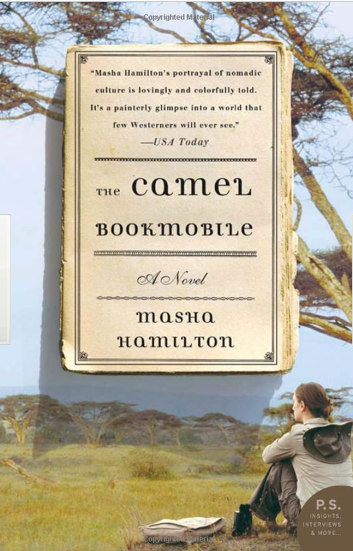
Masha Hamilton writes of a girl with a dream of going to a faraway place; she writes a grant proposal for a Camel Bookmobile, to take books from a remote library in Garissa, Kenya, out to nomadic groups in even more remote locations. As it turns out, the book features a device I like very much – a discussion of what is knowledge, what is learning, what happens when cultures clash and how in every interaction, there is something left that changes those interacting.
As Fiona (“Just call me Fi”) McSweeny follows her dream, there are her actions, how she sees her actions, how her actions are seen from an alternate culture, and how Fi feels she may be missing something in the interaction.
Anyone who has tried to finesse their way living in an alien environment knows that feeling, and the disasters you can bring on with only good intentions. Words, tone of voice, body language – all can be interpreted in ways you never dreamed, blinded by the wisdom of your own culture.
The star of the book is the Kenyan desert. While we do get to know the characters in the small arid desert village of Mididima, it is the way of life that Hamilton captures and which captivates us. The traditional ways are already passing, and the village elders are fighting a losing battle, trying to maintain their old ways. At the same time, there is a lot of wisdom to be learned and stored before the old ways pass, if there is anyone to document, to capture the details.
How can a book be both badly written, so badly written that you are constantly aware of it, and so breathtakingly vivid, so unforgettable?
There is a real Camel Bookmobile, started in 1996, and after visiting, Hamilton began a Camel Book Drive which garnered over 7000 books for the nomadic library. You can visit the website and learn where to donate books for other schools in the Garissa area by clicking here.
The Bride: To Dance or Not to Dance?
From National Public Radio, where you can listen to the entire story
July 22, 2010
One Sudan Marriage Ritual: An Alluring Nude Dance
by GWEN THOMPKINS
A mating ritual in Northern Sudan is hotter than the Sahara but not for everyone to see.
It has no official name, only a few simple rules apply, and, like all matters of the heart and the loins, the custom is open to interpretation.
In English, people here call it the Bride Dance.
Young brides have been performing the dance on, or near, their wedding nights for thousands of years. Like Sudan, it is both Arab and African. And, like Sudan, it is neither Arab nor African.
It is deeply erotic. The women wear revealing clothes. Not so long ago, in some fleeting instances, they wore no clothes at all. Sometimes, a gathering of sisters, aunts, mothers and friends teaches the steps. Or wealthier brides engage professional instructors. Because rich or poor, urban or rural, every bride knows that doing the dance well takes practice.

(skirt traditionally worn)
The Bride Whisperer
Iman Ali, aka Shengota, is a kind of bride whisperer. She teaches young women how to be one part Salome, one part Beyonce and one part the girl next-door.
But that ain’t easy.
Creating the right effect takes several songs, smart choreography, a custom-built stage and a whole wardrobe of costume changes.
Young brides-to-be practice their steps every day, sometimes for months in advance. The upside, Shengota says, is that the women usually lose several pounds before the wedding. And that makes just about everybody happy.
When the music starts, the bride and groom mount a circular stage. And while the groom stands there snapping his fingers, the bride does her best to make him look like the luckiest man in the room. Never mind that he’s usually the only man in the room. The dance is, more often than not, performed in front of an entirely female audience of cheering family members and friends.
But not everyone here is a fan.
Contradicting The Rules?
The dance predates Islam in Sudan. And it may be one of the few customs on which feminists and Islamic fundamentalists agree.
Nowadays, plenty of Sudanese women say they don’t want to dance, “like monkeys,” half-naked for the crowd. And Sudan’s Islamic fundamentalist government has strict rules on how women should comport themselves in public: conservative attire, head and legs covered, no shimmying.
Fatima Sir El Khatim Hallulah danced when she was a bride at age 14. Now, at age 60, she says she doesn’t want her daughters to dance.
Hallulah says she was an uneducated country girl at 14, marrying a man she had never seen before at the bidding of her parents. But her daughters are university graduates who chose their own husbands. Hallulah says her girls should not be made to debase themselves. Others say they’d hate to see videos of their performances end up on YouTube.
‘Nice To Show Off A Little’
But after a recent dip in general interest in dancing, choreographer Shengota says her phone is now ringing more often. Educated women of Sudan’s economic elite are seeking her services.
Zaeneb El Khamis, a dentist in her late 20s, says the dance gives brides a chance to shake things up a little before settling down to marriage. The lights and the music and the costume changes — including different perfumes and nail polishes for different dances — can be great fun.
She, like many brides, enjoys watching the video of her performance with her family and friends. “It’s nice to show off a little,” El Khamis says. “I was good.”
Butler’s Pantry
This room is kind of an LOL; it is called the Butler’s Pantry, but we don’t have a butler. It has a dual wine refrigerator, one held at 47°F for white wine and one at 61°F for red wine. We do have wine in them, but we are not great collectors of wine. The cupboards have come in handy for all the beer and wine glasses we collected during our years of living in Germany. The white wine refrigerator also holds beer, which is tasty in hot hot weather and with Mexican food.
This is a room we are in and out of all the time – on our way to the garden, on our way to the laundry, and on our way out the door to the garage. The photographs are by AdventureMan:

Music Banned in Somalia
We are in our own world these days, boxes needing unpacking, deliveries interrupting tasks, and no connection – no TV, no internet, no land line phone. We do have a cell phone, and Friday night our son called to ask us if we have heard about the weather.
Nope.
Heavy rains, strong winds, possibility of tornados. It was lively!
I hadn’t heard about Somalia, either.
This is really scary to me. This is the kind of thing I worry about in my own country – who makes the rules? Who gets to say what music I listen to, what movies I watch? Who gets to restrict my access to information?
Who gets to tell me that as a woman, I can’t have a checking account in my name? Or that I have to wear a burqa? Or that I am not allowed to wear a niqab (if that’s what I want?)
Somalia Radicals Declare Music ‘Un-Islamic,’ and Radio Goes Tuneless
POSTED: 04/25/10
If, as my colleague Sarah Wildman reports, the Francophonic world is intent on curbing expressions of fundamentalist Islam belief, then the radical Muslim world is taking no prisoners with the West, either. Last week, the Somalian fundamentalist Islamic group Hizbul Islam announced that music of any kind is “un-Islamic,” warning of “serious consequences” for those who dare to violate their decree. In response, radio stations all over the country, including those run by the moderate Muslim transitional government, cut all music from their broadcasts. Even intro music for news reports was scrapped. In its place? “We are using sounds such as gunfire, the noise of vehicles and the sound of birds to link up our programmes and news,” said one Somalian head of radio programming.
Get the new
PD toolbar!
Somalia has been wracked with inter-tribal violence for nearly two decades. In the last few years, increasingly radical Muslim militants, including the dominant Shabab group, have taken over large parts of the country and become closely affiliated with al-Qaeda. A moderate Muslim transitional government, helmed by a former teacher named Sheik Sharif Sheik Ahmed, controls a small part of the country. His government is largely propped up by African Union peacekeepers, with United Nations’ and U.S. support.
In the meantime, Islamic radicals like Shabab have gone on a campaign the New York Times described as “a quest to turn Somalia into a seventh century style Islamic state.”
The music decree follows a string of fundamentalist decrees, including prohibitions on wearing bras (also “un-Islamic”), the banning of modern movies and news channels, including the BBC and Voice of America.
As evidence of a power struggle between the moderate Muslim government and the hard-line radicals who control many parts of the country, Sheik Ahmed’s government responded last Sunday by saying any radio stations that stopped playing music would face closure. In the government’s eyes, those radio stations that complied with the ban were colluding with the radicals.
In the meantime, the radio stations have been caught between a rock and a hard place. “The order and counter-order are very destructive,” radio director Abukar Hassan Kadaf said in the Times article. “Each group are issuing orders against us and we are the victims.”
In the escalating tug-of-war between Western and Islamic powers over freedom of expression, what remains to be seen is how much of a causal relationship exists between the two. Is a proposed burqa ban in Quebec a result of the shuttering of a radio station in Somalia? Does a call for prohibition of headscarves in Paris force a bra-burning in Mogadishu?
If Islamic decrees do, in fact, fuel the fire for legal actions in the West (and vice versa), then continued and increased prohibition seems inevitable. But if radical Islam and a skeptical West are destined to one-up each other in a battle of bans, the powers that be might remember the men and women caught in the crossfire. That is, the women in the West who wear niqabs by choice, or the men and women in Somalia who just want to listen to music. What is perhaps most strikingly absent in all the brouhaha surrounding sharia vs. Western law are the voices of the moderate Muslims themselves. In the end, perhaps the gulf between the two sides will prove too great to be bridged, but for the immediate future, we would do well to remember the ground we share in common. Before there’s nothing left to ban.
Unexpected Blessings
Yesterday I received an unexpected thrill – a letter from a publishing house in Zambia asking to use a photo of a quilt I made in a textbook they are publishing for Namibian children. We have traveled often to Zambia, and once to Namibia. Namibia is a thrilling country, as hot and dry and dusty as Qatar and Kuwait, and as rich, due to diamond deposits.
This is the quilt they will be using. I made it for my husband when I first started quilting, and more experienced quilters said I was crazy. It is a huge quilt, ample for a California king sized bed, but I knew I needed 3″ squares (I had some giraffe fabric I wanted to use) and as the quilt assumed a life of its own, it ended up much larger than I had planned.
It has many African fabrics, one a piece I bought in Tunisia about 30 years ago. I put a piece of it in all my map quilts.

Here are a couple of my more recent quilts. The first is the one I made for my new grandson 🙂

This one is one I started many years ago, but didn’t know how to make it work the way I wanted it to. Twelve years later, I pulled it out and knew exactly what to do and had it pieced together in one morning. 🙂
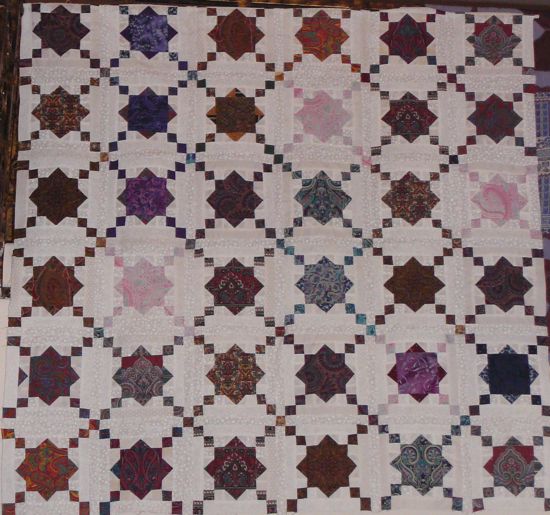
All these years of living abroad, with AdventureMan working long hours and often traveling, quilting has kept me sane. It provides me with friends who speak the same language – patterns, textures and colors – no matter where I go in the world. It is so absorbing that sometimes I look up and an entire day has passed while I work on a quilt, and it’s time to fix dinner . . . Dinner? No! No! I am going to sew for another hour and order out!
One of the things quilting groups do is to help you stretch and to try new things. Literally, the groups hold CHALLENGES. This was a challenge where it was to show you and a facet of your personality – so this is how I see me with the green Gulf in the background. I made this while living in Kuwait and participating in the quilting guild which is part of the Kuwait Textile Arts Association there. 🙂

There is a wonderful guild in Qatar, the Qatar Quilters. They meet once a month and have nearly 100 members – imagine! Women who quilt come from all Qatar to attend. At the meetings, they show what they have been working on, and teach one another new ways to create quilts. They share information on where to find quilting tools and which shop has recently received a new shipment of fabrics.
You can learn more about the Qatar Quilters by visiting their blog: Qatar Quilters The lady you see in the first photo is one of the Qatar Quilter founders.
Change of Plans
When we were planning this trip, it all sounded so simple . . . greet the grandbaby, buy a house, quick, fly to Seattle, fly back to Pensacola, kiss the grandbaby and fly to Doha to pack.
Not quite the way it turned out. When we got here, the grandbaby was 11 days overdue. We got to be here for the birth. While our son and his wife labored, we went out with the world’s most wonderful real estate lady and actually, we did find a house.
Three years ago, we found a house. When I talked with the mortgage people, I said “We just finished paying off a mortgage with you; isn’t there some kind of short-cut you could do with me?” and they did something called “fast track” with me, and it was so easy I can’t even remember the paperwork; I think I filled it out on my computer – online – and that was it. My son handled the closing. It was so easy.
Things have really changed. This will be our third mortgage with the same company, but you would think we are potential deadbeats. We have high credit scores, an impeccable payment record – I would think they would want to have us as customers! It’s like pulling teeth. Papers don’t get to us. Additional verifications are required. Appraisers actually enter the house and verify square footage.
Between chasing paper and soothing the newborn, my life has been very full. It doesn’t sound very exciting, when I tell you about it, but here is the truth – I know I am exactly where I am supposed to be right now. It’s an amazing feeling.
Today, I spent a lot of time with the baby. At some point, I realized I wasn’t going to make it to Seattle this trip, and it’s OK. I can go to Seattle later. For right now, I have enough on my plate.
I had forgotten, too, how chaotic life with a newborn can be. His needs take precedence, and sometimes we all run around trying to guess what those needs might be, simple as they are . . . clean diaper? swaddling / soothing to sleep? Mother’s milk? Today was a really good day, where he took the diaper changes with grace, dropped right off to sleep after every meal, and was keenly alert for maybe a half hour after feeding before napping. He loves patterns and fabrics. I am having SO MUCH FUN!
A part of our life is ending, the nomadic part. AdventureMan and I have had a lot of fun, once our son got through college and law school, we were on our own again, living in Europe, living in Saudi Arabia, Kuwait and Qatar – we have had a great adventure. We travelled to Botswana, Namibia, Zambia (several times), South Africa, Kenya, Tanzania and spent a wonderful week on Mnemba Island off the coast of Zanzibar. We have wonderful friends, mostly from churches and interest groups. I would think, knowing us, that we would be sad leaving all this, but instead, we are racing toward our new future, being more settled, being near our son and his family, and his wife’s great big family. 🙂
For one thing, the world has changed. With e-mail and VOIP phones and people who jump on a plane at the drop of a hat, we expect to stay in touch with those we love and treasure. We expect they will come see us. It’s kind of fun settling in a place with white sandy beaches that everyone wants to come visit. 🙂 Cooler than Kuwait and Qatar in the summer time, too! Nice warm winters, well, not this winter, brrrrrrrrrrrr!
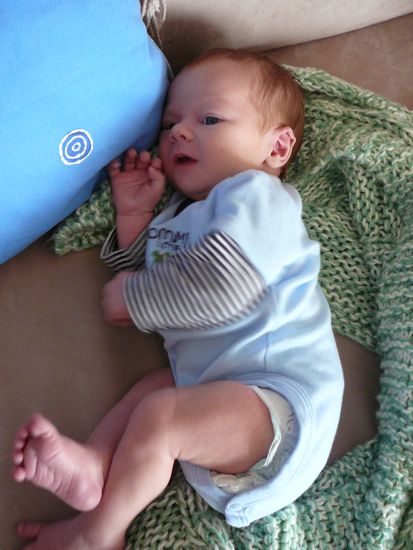
Thought you might want to see a photo of my little darling grandson:
Recent Comments
Cathy on No Grown-Ups in Charge intlxpatr on Waiting for Snow intlxpatr on Waiting for Snow Abou Tabblouleh on t… on Waiting for Snow Abou Tabbouleh on in… on Waiting for Snow Wikipedia Donate Button

Amazina


Early Voting in Florida


 Here There and Everywhere