Kuwait to Provide Assistance in Dharfur
From today’s Arab Times:
Kuwait Red Crescent ready to fill aid agencies gap in Darfur
KUWAIT CITY, March 7, (KUNA): Kuwait Red Crescent Society (KRCS) said Saturday it was ready to fill the aid agencies gap caused by the withdrawal of a number of humanitarian organizations from Darfur.
KRCS Chairman Barjas Al-Barjas said in a letter he sent to Secretary-General of the International Federation of Red Cross and Red Crescent Societies (IFRC) Bekele Geleta, that KRCS believed the federation should cover the needs caused by the withdrawal of 16 non-governmental organizations from Darfur due to bad security conditions. He called IFRC to urge all humanitarian and charitable bodies, national societies, and the International Committee of the Red Cross (ICRC) to contribute to ending the deterioration of the humanitarian situation in Darfur. Al-Barjas said KRCS was ready to provide aid, as it always did to the needy around the world.
Meanwhile, the Arab League Council has decided to send an Arab-Afro delegation to the UN Security Council (UNSC) to defer the International Criminal Court’s (ICC) arrest warrant against Sudanese President Omar Al-Bashir. The council, meeting urgently at the foreign ministers’ level to discuss ICC arrest warrant, expressed dismay for the ICC decision and said it did not consider justice, stability and peace in Sudan. The council voiced solidarity with Sudan against any plans undermining the sovereignty, unity and independence of Sudan.
The foreign ministers underlined in a statement importance of the independence of the Sudanese judiciary. They refused any attempt to politicize the principles of the international justice which would jeopardize the unity, sovereignty and independence of countries around the world. They regretted the fact that article 16 of the Rome statute of the ICC was not provoked thus delay the arrest warrant for 12 months. They asserted that heads of state enjoy immunity in accordance with the 1961 Vienna agreement.
The arrest warrant does not consider the implementation of the peace agreement in Southern Sudan and preparation for the general elections in the second half of this year, said the ministers. The Arab foreign ministers urged the UN Security Council (UNSC) to live up its responsibility to preserving peace and stability in Sudan. They called on regional and international parties to provide suitable atmosphere for the political settlement between the Sudanese government and rebel groups in Darfur.
May God bless the work of their hands and their hearts.
Warning from My New Best Friend
It really sounds like she knows me! And she warns me against those nasty Nigerian scammers, so she must be on the up-and-up, right? And oh my, they have a file for me with all that money? Even though I have never worked in Nigeria, never had a contract? And oh yeh, it’s a blind-copy. . . . hmmmm.
Dearest,
My name is Mrs. Susan Walter, I live at 3775 Oleander Dr Highland, Ca 92346,
United States.
I am one of those that executed a contract in Nigeria years ago and they refused
to pay me, I had paid over $70,000USD trying to get my payment all to no avail.
Somebody directed me to travel down to Nigeria with all my contract documents
to meet Barrister Mat Oto who is the member of CONTRACT PAYMENT COMMITTEE and
LEGAL ADVISER to the COMMITTEE, and I contacted him and he explained everythi
ng to me on telephone and advised me to come down to Nigeria which I did.
He said that those contacting us through emails are fake. Then he took me to the
paying bank, which is Central Bank of Nigeria, and I am the happiest woman
on this earth because I have received my contract funds of $8.2Million USD.
On the process of searching for my file,I saw your information on awaiting pay
ment list in the office of Barrister Mat Oto.Though I did not capture all your
information lest your fax number.
Am sorry contacting you late as I planed doing it as soon as I arrive back USA.
I have been so busy because we are trying to set up a factory here with the mo
ney we received.
So if you care,do contact Barrister Mat Oto with the information below and just
explain yourself to him as I know he is honest and humble person.
Alternatively mention my name to him he will attend to you.
Name: Barrister Mat Oto
Email: barr.mato@urln.name
phone number +234-1-432490123
Address: 123,Palm Avenue Palm Grove,
Lagos Nigeria.
You really have to stop your dealing with those contacting you okay because they will dry you up until you have nothing to eat.
The only money I paid was just $8,200 for Federal Inland Revenue Services
(F.I.R.S).
So you have to take note of that. You can reach me on this telefax number:1-20
8-248-3647 or email:
mrssusan.walter@gmail.com
Thanks,
Mrs. Susan Walter
Confessions of a Sudanese deserter
“Khalid”, a member of the Janjaweed tells about the Sudanese scorched earth policy in today’s BBC News:

The International Criminal Court is set to announce whether or not it is to issue a warrant for the arrest of the President of Sudan President al-Bashir, for alleged war crimes in Darfur.
The Sudanese government has always said the accusations are political but now one of the country’s former soldiers, who served in Darfur, has been telling his story to the BBC’s Mike Thomson.
Khalid (not his real name), a polite and softly spoken man from Darfur, seems reluctant to talk about his past. It is soon clear why.
“The orders given to us were to burn the villages completely,” he says.
“We even had to poison the water wells. We were also given orders to kill all the woman and rape girls under 13 and 14.”
Khalid, who is of black African origin, says he was forcibly recruited into President Omar al-Bashir’s Sudanese army in late 2002.
He and several other men where he lived were taken to the headquarters of his regiment which was based near the north-western Darfur town of Fasher.
He admits to having taken part in seven different attacks on Darfur villages with the help of Janjaweed militia.
The first one was in the Korma area in December 2002 several months before the conflict in Darfur officially began.
He claims to have been extremely reluctant to carry out the savage orders he was given.
“When they asked me to rape the girl, I went and stood in front of her,” he said.
“Tears came into my eyes. They said: ‘You have to rape her. If you don’t we will beat you.’ I hesitated and they hit me with the butt of a rifle.
“But when I went to the girl I couldn’t do it. I took her into a corner and lay myself on top of her as if I was raping her for about 10 to 15 minutes.
“Then, I jumped up and came out. They said: ‘Did you rape her?’ I said: ‘Yes, I did’.”
Khalid says that soon after this he and the other soldiers went back to base.
When they got there he was told to join another patrol immediately.
When he refused they beat and tortured him, inflicting severe burns on his legs and back.
He spent five weeks in a military hospital recovering from his injuries.
Before long, he said, he was ordered to join other brutal raids on Darfur villages.
I asked him what he was told to do with unarmed civilians who did not resist in any way.
“They told us, don’t leave anybody, just kill everybody,” he said.
“Even the children, if left behind in the huts, we had to kill them,” he said. “People would cry and run from their huts.
“Many couldn’t take their all their children. If they had more than two they had to leave them behind. If you saw them you had to shoot and kill.”
Khalid insists that he always fired over the heads of civilians and didn’t kill anyone himself despite the orders he was given.
He says he could do this without his fellow soldiers noticing but he admits that there was no way he could avoid carrying out orders to torch peoples homes.
The six-year conflict has spawned more than two million refugees
“I did take part,” he admitted. “They forced me. We had no choice. If you didn’t they would kill you.”
Did anyone refuse?
“Two of my colleagues refused and they were shot dead.”
You can read the entire article by clicking BBC NEWS: Dharfur
African Heads and Art
From this morning’s e-mails – I think this is a sincere one. If anyone wants to contact this artist, his e-mail is:
africanhead_art@yahoo.com
Good day sir\ma
it is a great pleasure of getting across to your wed site. Am Mr KOLA OWOLAWI JUNAID am muslim an artist am the founded of african heads art and cultural gallery african heads art gallery was base in lagos and osogbo osun state in nigeria
i participated in my first art exhibition at GENEVE COMITE INTERNATION committee of the red cross ICRC am one of the winner in the art competition i also exhibit at US Embassy in lagos ,IITA ibaban German cultural Center , British High Commission ,american international school,Britsih high school, National art council in Accra Ghana i received an award for up coming artist an many more
i will like to make an inquiry on if i could join the Qurain cultural festival or organizering a cultural art exhibition on Qurain words, painting adire ,batick ,tye and dye and other local fabric art work for up coming this year.i will ilke to know if it could be organizes and what was the general registration or inquiry is needed for the exhibition thanks you.
please if you ilke to see the samples of the art works i will be glad to show it
A New Dawn (and Glimpses from the Inauguration)
“Are you able to watch the inauguration from work?” I type an IM to my son.
“Nah, I’ll have to catch some of it later,” he types back. He has victims to interview and briefs to prepare – it’s a normal day, not a holiday in his state.
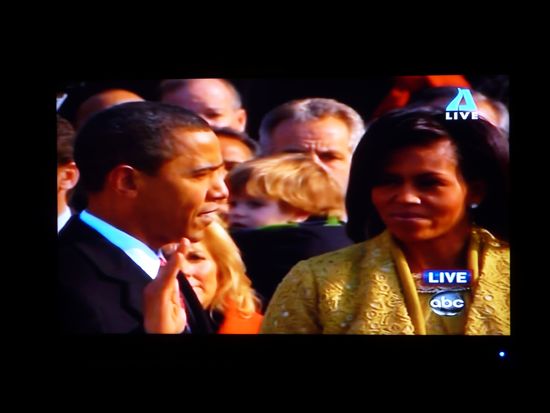
I am glued to the screen. AdventureMan comes home and joins me, just in time for the swearing in and Inaugural address. WOW. Our new President is inspirational. He doesn’t tell us it is going to be easy. He says we are all going to have to work hard to turn things around. He reminds us that together, united – we can do it. Wow.
AdventureMan said what was most exciting to him was that we are celebrating 200 years of peaceful transition of power. The pendulum has swung right and left and center, administrations have changed, and by the Grace of God, it has happened peacefully.
Taking the oath of office:

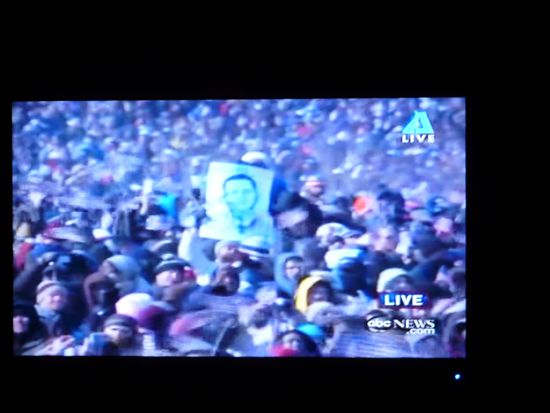
Crowds watching in Kenya:

Inaugural speech:
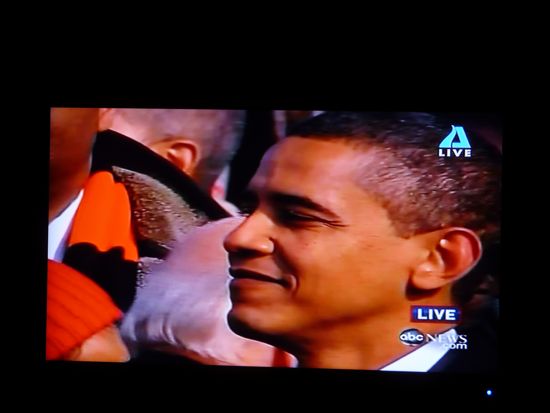
An estimated 1.4 million Americans stood hours to watch Obama become President in temperatures below freezing:


Singing the national anthem:


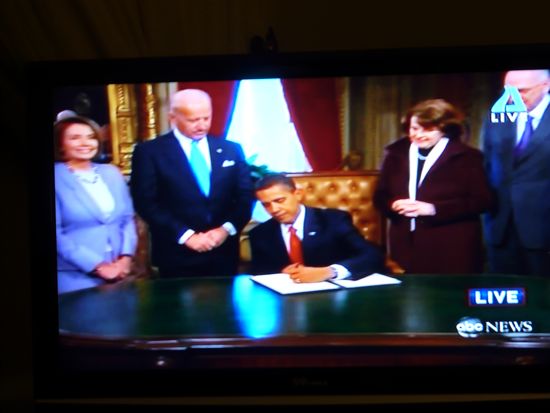
Signing his first documents as the US President:
What? You thought I forgot? Here is the new dawn in Kuwait – a pearly morning, another great day in Kuwait. Thanks for your patience. 🙂

What is it called in Kuwait? Can you do it?
In the comments of a recent post, blogger Moodi asked if I liked Qatayif. I checked the Wikipedia page, and it reminded me of something else.
In Qatar, when I lived there, our teachers at The Qatar Center for the Presentation of Islam demonstrated making a large, thin dough that was used in many ways, folded and used in casseroles, used as a foundation in serving dishes, crumbled up when dry and used in breakfast making . . .
It was made by hand, using a dough that you held in your hand, and tossed and brought back to your hand after leaving a dot on a hot griddle. I think the hot griddle might have been flat some times, and like an upside-down wok other times. The pancake would turn out large and round, but only a few atoms thick, they were very very thin and delicate.
I never have seen this in Kuwait, but that doesn’t mean it doesn’t exist.
Do any of your grandmothers or mothers make thin pancakes for special holidays in this manner? Can you tell me what it is called?
In Tunisia, women used to make Malsouqa, the thin thin dough used to make brik and sell it in stacks in the marketplace. You could wait, and buy it fresh off the stove, they would toss and grab, toss and grab, and then peel the very thin, fragile skin of dough off the burner. Pop in a little tuna, chopped parsley. salt, pepper and egg, fry lightly in a little olive oil in a frying pan – heaven in a wrapper.
I was obsessed. It took me an hour – but I found a wonderful blog, Chef Zadi with these fabulous photos of how malsouka are made. His blog is all about healthy North African cuisine
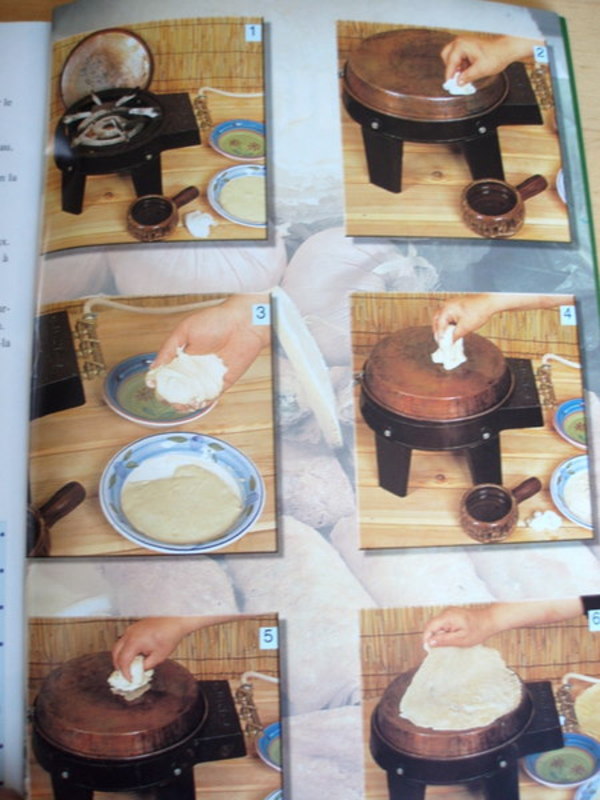
So – have you seen anything similar, something done on a hot iron with a dough held in the hand and tossed at the got grill over and over, leaving small spots of dough that gather into a large flaky thin pastry?
Somalia: Pirates – and Dumping
This is a report from BBC News. I published a piece previously on Somalia on March 11, and blogger Shafi said the following:
“When wealthier nations align their fleet of vessels at Somali coast to fish illegally (estimated at around $6 million as the article says) and dump toxic waste in some parts of the water, aren’t they doing a greater evil and a major harm to the shell-shattared country and her people than the pirates for whom piracy is itself a survival method?”
The statement caught me totally by surprise. I went looking to see if it was true, and it was.
Shafi has a fascinating blog, and if you have some time, go take a look. Meanwhile, I am happy to see glimpses of a fuller picture coming forth in the news:

Ex-Somali Army Colonel Mohamed Nureh Abdulle lives in Harardhere – the town closest to where the hijacked Saudi oil tanker, Sirius Star is moored. He tells the BBC, via phone from his home, that the town’s residents are more concerned about the apparent dumping of toxic waste than piracy.
The Harardhere-born military man advises the town’s elders on security matters and is in his fifties.
Somalia has been wracked by conflict since 1991 – when its last national government was forced from power.
The super-tanker is close to our coast. It is a very, very long ship. Some time ago we had our own problems of piracy in our town but that has not happened lately.
The people who have been hijacking these ships in our seas are not from our region. We do not know any of the guys on the super-tanker and they haven’t made any contact with us.
You know, our problem is not piracy. It is illegal dumping.
These problems have been going for sometime and the world knows about it. The Americans have been here in the region for a long time now – they know about the pollution.
Instead, no, the world is only talking about the pirates and the money involved.
Mysterious illnesses
Meanwhile, there has been something else going on and it has been going on for years. There are many dumpings made in our sea, so much rubbish.
It is dumped in our seas and it washes up on our coastline and spreads into our area.
A few nights ago, some tanks came out from the high sea and they cracked it seems and now they are leaking into the water and into the air.
The first people fell ill yesterday afternoon. People are reporting mysterious illnesses; they are talking about it as though it were chicken pox – but it is not exactly like that either. Their skin is bad. They are sneezing, coughing and vomiting.
This is the first time it has been like this; that people have such very, very bad sickness.
The people who have these symptoms are the ones who wake early, before it is light, and herd their livestock to the shore to graze. The animals are sick from drinking the water and the people who washed in the water are now suffering.
TimesOnline ran an article on Somalia after the tsunami, and the contaminants that had been washed ashore:
“The current situation along the Somali coastline poses a very serious environmental hazard not only in Somalia but also in the eastern Africa sub-region,” the report says. Toxic waste was first dumped in Somalia in the late 1980s, but accelerated sharply during the civil war which followed the 1991 overthrow of the late dictator Mohamed Siad Barre.
Local warlords, many of them former ministers in Siad Barre’s last government, received large payments from Swiss and Italian firms for access to their respective fiefdoms.
Most of the waste was simply dumped on remote beaches in containers and leaking disposable barrels.
Somali sources close to the trade say that the dumped materials included radioactive uranium, lead, cadmium, mercury and industrial, hospital, chemical and various other toxic wastes. In 1992, Unep said that European firms were involved in the trade, but because of the high level of insecurity in the country there were never any accurate assessments of the extent of the problem.
In 1997 and 1998, the Italian newspaper Famiglia Cristiana, which jointly investigated the allegations with the Italian branch of Greenpeace, published a series of articles detailing the extent of illegal dumping by a Swiss firm, Achair Partners, and an Italian waste broker, Progresso.
The news is so much more complicated than it appears. How do we stop all these wrongful, hurtful things? Do not we have a responsibility toward the poorest nations? If we – meaning the richest nations – don’t stop this dumping now, is there not every chance in the world that it will come back to haunt us?
Sudan Protects Women from Alien Influences
This is from today’s Daily Star
South Sudan arrests 20 women for wearing pants, short skirts
By Agence France Presse (AFP)
JUBA, Sudan: A Southern Sudan Cabinet minister said on Tuesday that more than 20 women were arrested and beaten for allegedly dressing inappropriately under a new edict against “bad behavior.” “Between 20 and 30 girls were picked up from different points, hurled into police lorries, arrested and taken to the police station and some of them were beaten,” said Mary Kiden Kimbo, the gender, social welfare and religious affairs minister in the semi-autonomous southern government.
“This is absolutely not acceptable: it is not the job of police to judge what is and what is not a correct way to dress in such a manner of blanket punishment,” she said.
The police crackdown on young women wearing trousers or short skirts follows an order from the commissioner of Juba county, the capital of Southern Sudan. Most of the women, said to be in their late teens and 20s, were rounded up as they left Catholic mass in Juba on Sunday, Kimbo said.
Others were picked up in market places.
The order bans “all bad behaviors, activities and imported illicit cultures,” according to a copy seen by AFP, signed by Juba’s commissioner, Albert Pitia Redantore.
Inappropriate behavior may include wearing tight trousers, short skirts or skimpy tops considered “Western” attire.
The order, dated October 2, said that it aimed to “preserve the cultural values, dignity and achievements of the people of southern Sudan, checking out the intrusion of foreign cultures into our societies, for the sake of bringing up [a] good generation.” Those deemed in contravention of the order are liable to three months imprisonment. Those convicted for a second time face another three-month sentence and a fine of 600 Sudanese pounds ($300).
Traditional values are important in largely Christian and animist Southern Sudan, which is recovering from decades of war against the mainly Muslim north. It was the imposition of Sharia law by the north that helped spark the southern rebellion, which was rooted in complaints of marginalization.
“This kind of thing looks like the old days of Sharia law, and it is dangerous because creating such a situation can encourage mob justice,” Kimbo told AFP.
The minister said that the principle of gender equality was enshrined in Southern Sudan and added that she was investigating the matter. – AFP
Moroccan Blogger Jailed
You can read the entire story, which appeared today, on BBC News Africa:

A Moroccan blogger has been jailed for two years for showing disrespect to the monarchy, say the man’s family.
Mohammed Erraji, 29, was convicted after writing an article claiming King Mohammed VI’s charitable habits were encouraging a culture of dependency.
There has been no official comment on the case, but rights groups claim Erraji did not have a fair trial.
A BBC reporter says criticising the king is an offence in Morocco and the royal family remains a taboo subject.
Morocco has previously caused international outrage with its treatment of internet users.
Earlier this year, Fouad Mortada was sentenced to three years in prison for creating a false profile on the internet site Facebook using the identity of the king’s brother.
He received a royal pardon following protests from internet users around the world.
‘Disastrous’
Erraji claimed in an internet article that the king’s charity towards Moroccans was stifling development by encouraging people to be lazy.
“This has made the Moroccans a people without dignity, who live by donations and gifts,” he wrote.
The BBC’s James Copnall in the capital, Rabat, says he was particularly critical of the practice known as grima – giving lucrative licences to run taxis and other transport in exchange for begging letters.
Erraji said this did not happen in developed countries, where hard work rather than begging is rewarded.
He was arrested by the authorities last Friday and accused of “lacking the respect due to the king”.
In court on Monday, he was given a two-year prison sentence and fined 5,000 Dirham ($630:£356).
Namibia, A Bleak Kind of Beauty
This is an excerpt from the New York Times Travel Section on Namibia, a country AdventureMan and I visited a few years ago.
We landed in Windhoek, and our first night, we ate dinner at Joe’s Beerhouse, a little disorienting, as we had flown in from Germany, and found ourselves in a very German restaurant. The Germans colonized Namibia for a very few years over 100 years ago, but their influence lingers on in names, on streets, statues and cuisine.
Our trip through Namibia was unforgettable. It was unlike any other African country we have ever visited. It has a very long coastline with cold Atlantic currents called The Skeleton Coast. It has the world’s highest sand dunes, unbelievably beautiful. When I think of Namibia, I think of dryness – it is the thirstiest country I have ever seen, outside Kuwait.

Much of our time in Namibia, in Etosha and in Demaraland, we were camping, with CCAfrica (Conservation Corps Africa), but at the end, we stayed in one of the most spectacular private lodges in the world: Sossusvlei Mountain Lodge. It was a total WOW. We rode ATV’s to the top of the dunes for sunset. They had an astronomical observatory, because at night there is NO ambient light and you can see the sky so clearly. The food was fabulous and creative.
Namibia, a country of stark beauty and riveting contradictions, should be at the top of any serious traveler’s want-to-visit list.
The landscape is otherworldly, from the ocean of blood red crests along Dune Alley at Sossusvlei (pronounced SOSS-oo-vlay) to the gravity-defying rock formations and petrified forest of Damaraland, in the country’s center. Even beside the main highway, there are enough elephants, giraffes and springbok to satisfy those who can’t imagine a southern African trip without big game.
And the mind-boggling juxtaposition of women draped in skins that covered animals a week earlier against shopping malls offering a full selection of Ray-Bans, or of face powder ground in a mortar and pestle cheek by jowl with shiny Hummers, leads you into the heart of a modern Africa tangled by time, defined by the collision of centuries and traditions.
Namibia isn’t easy, especially for travelers whose notion of a vacation is dashing from one sight to another, or for urbanites who need regular fixes of bright lights and noisy streets. Except for those with pockets deep enough to arrange chartered flights between the dunes and the Damara homesteads, it demands patience with corrugated gravel roads and mile after mile of what poets are fond of calling terrible beauty.
You can read the entire article HERE.
Recent Comments
intlxpatr on Shampoo Ginger tigerbutterya0c5ff1d… on Shampoo Ginger intlxpatr on British Soldier Kidnapped, Esc… John on British Soldier Kidnapped, Esc… intlxpatr on British Soldier Kidnapped, Esc… Wikipedia Donate Button

Amazina


Early Voting in Florida


