Hey Ayatollah! Leave Those Kids Alone!
Every now and then I make a new friend. I can see in their eyes – life! love! willingness to engage and take risks! people who don’t necessarily see things the way the majority does.
One of these friends, my Kuwaiti friend, is a treasure. She has the most amazing mind, and sends me the most amazing things.
You might look at me and think I am too old for Pink Floyd, but you would be wrong. Pink Floyd makes my blood run faster. They did when I was younger, they did when my own son discovered Pink Floyd, and then, watching this video my friend sent – WOW. There goes the adrenelin!
OK, YouTube won’t let me insert it in this post. Go to the original post, play the video. . . very creative, very moving:
http://www.blurredvisionmusic.com/
Don’t you love young people? They love justice, and they hate injustice. They hate unnecessary constrictions. They hate people telling them how to think. All that energy, all that passion, all that vision!
Most of my friends – like AdventureMan, like my Kuwaiti friend – are still 25 on the inside. 🙂
Most of my friends will get this video – and love it! 🙂
Life Intrudes
Yes, I am sorry. I left you with no indication that I wouldn’t be able to blog for a while, but – as it does for you – life intrudes. AdventureMan and I are on a GREAT adventure, a baby was born, and thus we became Grandma and Grandpa! We didn’t intend to be here for the birth, but babies have their own schedules, and we got here in time to spend time with our son and his wife AND to be able to see our new grandson before he was even an hour old.
Who ever thinks the thrills in life are over once you hit ‘grown-up’ is SO wrong. Life just keeps getting better and better, and is full of thrills – if you have the eyes to see, and the ears to hear, and the heart to know a miracle when you see one.
Every new baby is a miracle. We can’t make them happen – or not happen – by wishing. Babies, each and every one, are a miracle.
Photos? This was a mixed up trip. We have been on the run ever since we hit the ground. I have photos, but I left my card-reader in Doha. As soon as I can hit a store, I will show you a photo of the newest prince. 😉
Thanks for your patience with me.
First Things First
“I have some WONDERFUL news for you!” I gushed to AdventureMan when he picked up the call, “I found a third of the last fruitcake in the refrigerator!” I knew he thought he has finished off the fruit cake and that we didn’t have any more.
Pause. Pause. Pause.
“Hello? Hello? Are you there, AdventureMan.”
AdventureMan comes on, his work-a-day brisk, official self.
“When you start a conversation with ‘I have some wonderful news for you'” he says, “the next words out of your mouth really need to be that I am a grandfather.”
LLLLLLOOOOOLLLLLL.
I can’t make that happen any faster than it is going to happen. Baby grandson is now almost a week overdue, and we are waiting, waiting, waiting for him to show up. This is an eagerly awaited arrival.
I guess he is also happy about the fruitcake, but he really wants a grandson! 🙂
Handbook for 2010
Thank you, Dear Friend, who sent this to me this morning 🙂
HANDBOOK 2010
Health:
1. Drink plenty of water.
2.. Eat breakfast like a king, lunch like a prince and dinner like a beggar.
3. Eat more foods that grow on trees and plants and eat less food that is manufactured in plants….
4. Live with the 3 E’s — Energy, Enthusiasm and Empathy.
5. Make time to pray.
6. Play more games.
7. Read more books than you did in 2009.
8. Sit in silence for at least 10 minutes each day.
9. Sleep for 7 hours.
10. Take a 10-30 minute walk daily. And while you walk, smile.
Personality:
11. Don’t compare your life to others. You have no idea what their journey is all about.
12 Don’t have negative thoughts or things you cannot control. Instead invest your energy in the positive present moment.
13. Don’t over do. Keep your limits.
14. Don’t take yourself so seriously. No one else does.
15. Don’t waste your precious energy on gossip.
16. Dream more while you are awake..
17. Envy is a waste of time. You already have all you need.
18. Forget issues of the past. Don’t remind your partner with his/her mistakes of the past. That will ruin your present happiness.
19. Life is too short to waste time hating anyone. Don’t hate others.
20. Make peace with your past so it won’t spoil the present.
21. No one is in charge of your happiness except you.
22. Realize that life is a school and you are here to learn. Problems are simply part of the curriculum that appear and fade away like algebra class but the lessons you learn will last a lifetime.
23. Smile and laugh more.
24. You don’t have to win every argument. Agree to disagree.
Society:
25. Call your family often.
26. Each day give something good to others.
27. Forgive everyone for everything.
28. Spend time w/ people over the age of 70 & under the age of 6.
29. Try to make at least three people smile each day.
30. What other people think of you is none of your business.
31. Your job won’t take care of you when you are sick. Your friends will. Stay in touch.
Life:
32.. Do the right thing!
33. Get rid of anything that isn’t useful, beautiful or joyful.
34. God heals everything.
35. However good or bad a situation is, it will change..
36. No matter how you feel, get up, dress up and show up..
37. The best is yet to come.
38. When you awake alive in the morning, be thankful for it.
39. Your Inner most is always happy. So, be happy..
Last but not the least:
40. Please Forward this to everyone you care about, I just did..
Thank You
At some hour, while I was sleeping, the blog hit 1M hits. Pretty cool, even though it is just a number.
AdventureMan said “how about if I take you out for dinner tonight to celebrate.”
(Thursday night is always date night. We always go out for dinner. He was being funny.)
But he reminded me that I used to thank my readers, and I haven’t done that for a long time.
Most of us who blog, and who continue blogging (it’s the continuing part that is hard work) blog because that’s the way God made us – he created us wanting to share the written word. For me, it’s sort of like thinking out loud, and many times I throw out ideas hoping to get other points of view to help me see things more fully, from more perspectives.
You, my readers, have given me unexpected points of view many, many times, and I thank you. Months after I write an article, you will read it and comment – and I read every comment. Thank you.
Coming soon, AdventureMan and I are starting a whole new adventure. I’m not so sure I am going to continue blogging. I won’t be living in an exotic country; I will be living a more normal American life, as a Grandmama. I know it will fascinate me, but I am not so sure you will find it all that interesting, LOL.
Again, thank you for your support and input these three years of blogging, and for finding me and my ideas and my fascination with current events much more interesting than I find myself. 😉
And, for those of you who always ask, yes, the Qattari Cat will be going with us, and yes, he is till with us (crying right now because AdventureMan has left for work and his heart is broken), I just haven’t taken a lot of photos lately because mostly he sleeps, and he looks pretty much the same.
‘Glimmer of Hope’ in Doha Abduction Case
‘Glimmer of hope’ in custody battle
From the Qatar Gulf Times
British mother Rebecca Jones has described the decision by a Qatari judge to bring her son to court as a “glimmer of hope” in her ongoing battle to regain custody of Adam, saying that the judge’s decision that the boy’s attendance is necessary feels like her first victory in the case.
“I’m thrilled that Adam will be given the opportunity to tell the court how he wants to come home to his Mummy, Daddy and little sister, and that the court will have the chance to see how he is suffering,” she told Gulf Times yesterday.
Jones, who claimed that her son was kidnapped when she was “tricked” into visiting the country in October last year, is particularly worried about the mental and physical state of her son, saying that he had been ill in recent weeks because of the stress surrounding the current situation.
However, the most recent ruling in the case has given her some hope that she may be reunited with him on a permanent basis in the not too distant future.
Earlier this week a judge ruled that Jones’ appeal will be held on February 11, and that both Adam and his 77-year-old grandmother who was originally awarded custody of him, should attend the court hearing.
Jones is also fighting a court case to increase her visitation rights with her son, something that will be decided on February 3.
She is hoping to be awarded more time with Adam, as well as the ability to spend time with him outside of the house in which he is currently living.
“He seems to be ill because of stress and has been physically sick recently,” she claimed, adding “he is very upset and very nervous on each visit – the second I walk through the door he asks me when he can come home.”
Another major concern for Jones is the educational aspect of her son’s life as it will shortly be the fifth month that he has gone without attending school.
But for now, Jones is just looking forward to the court hearing in which her son will finally be given a voice. “I truly believe that the court will do the right thing,” she added.
Pomegranate May Fight MRSA?
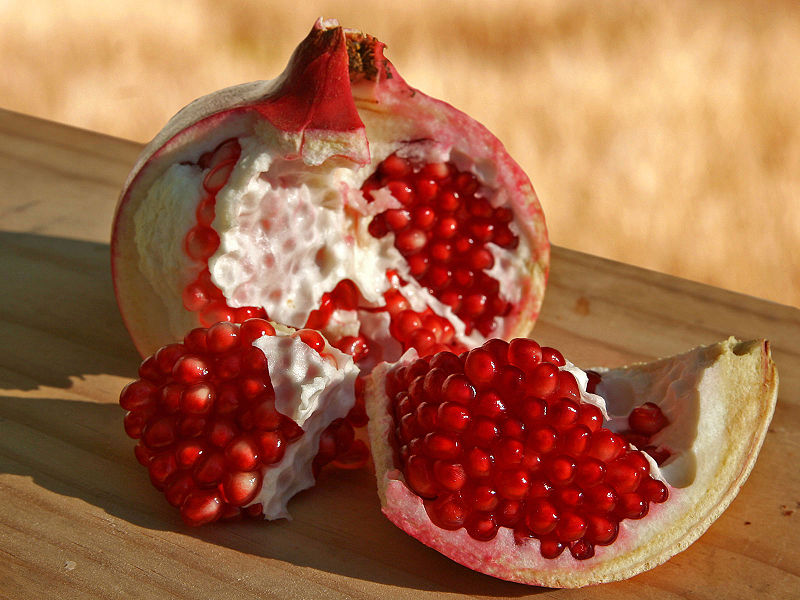
I found this article on AOL Health News and I am delighted to have any excuse to buy and eat a pomegranate. Now, even more so.
You may think I am overly concerned about MRSA, but I am convinced that it was MRSA that ended up killing my father. He was old, yes, but amazingly resilient and sturdy. He had a fighting spirit, and no matter what happened, he took control of his own “wellness.”
He went in for a routine operation (although few operations are ‘routine’ at 87) and ended up with a horrible infection where his IV had been inserted, an infection that wasn’t caught for about a week. He complained; people thought he was exaggerating. Eventually it was diagnosed as MRSA. He had to go through several rounds of intravenous Vancomycin, each of which lasted 30 days, and, I am convinced, none of which got rid of the infection because a month or so later, it would be roaring back.
What are we doing to ourselves? Antibiotic resistant bacteria are a result of over reliance on antibiotics, and for what? For viral diseases which cannot be cured by an antibiotic!
Eat more pomegranates!
By Katherine Tweed
Stopping the superbug methicillin resistant Staphylococcus aureus (MRSA) has researchers looking for new antibacterial agents in all corners of the globe. Not only are these bacteria difficult treat due to resistance to certain antibiotics, they are especially dangerous because they can be transmitted via casual contact. Scientists at the University of Kingston, Surrey in the UK have found there is promise in pomegranates.
Pomegranates have long been known for their antibacterial and therapeutic health benefits, especially in Brazil. While most of us think of pomegranates as being chock-full of antioxidants, they may fight more than free radicals. A study published in BMC Complementary and Alternative Medicine found that when the fruit’s rind is combined with metal salts and vitamin C, they hold promise in killing MRSA.
“It was the mix that fantastically increased the activity — there was synergy, where the combined effects were much greater than those exhibited by individual components,” study author Declan Naughton told the Daily Mail. “It shows nature still has a few tricks up its sleeve.”
Drug-resistant staph infections such as MRSA are a growing problem, primarily in hospital settings. MRSA infections accounted for two percent of staph infections in U.S. hospitals in 1974, but that figure jumped to 63 percent in 2004, according to the CDC.
Don’t reach for the pomegranate lotion just yet, however. The research was done in a lab setting, and it is still in the preliminary stages. Also, pomegranate rind on its own was not able to stop or slow the growth of drug-resistant staph infections. The authors say that while there is potential for pomegranates enhanced with metal salts, further investigation is needed.
Cheaters Leave Digital Tracks
No, not another post about cheetahs – this is about cheaters.
Today in AOL: Sphere
(Dec. 3) — Tiger Woods has long since mastered the use of every club in his golf bag. Yet he, like many Americans, apparently is still learning the hazards of communicating too openly by modern methods such as text messaging.
Woods is certainly not alone. As communication technology continues to evolve, unfaithful partners are finding it easier to keep in touch with their illicit lovers — but it’s also a lot easier to get caught.
The golf champion has said only that “I have let my family down” through unspecified “transgressions.” But one of his alleged mistresses, Jaimee Grubbs, says she still has 300 text messages sent to her by Woods. In one, Grubbs tells RadarOnline.com, Woods says, “Send me something very naughty. … Go to the bathroom and take [a picture].”
Us Weekly magazine has also posted a voice mail Grubbs says is from Woods, warning that his wife has examined his cell phone and may have discovered the former cocktail waitress’ name via caller ID.
“Any electronic means of communication — a cell phone call, an e-mail or a text message — will leave some sort of trail behind,” said Ed Edmister, a private investigator and computer forensic expert at Integrity Security & Investigation Services, which has branches in California and Virginia. “Even if you toss your phone in an incinerator or dump your computer in a lake, there are still records kept by phone and Internet companies. Digital forensics has become a huge field.”
Of course, not every spouse needs to hire a private investigator, or send in a partner’s cell phone to one of the dozens of companies that specialize in recovering deleted text messages and call logs. Sometimes, the evidence is hiding in plain sight.
Take the case of Tony, a 38-year-old Jacksonville, Fla., man who did not want to use his real name for this article. After eight years of marriage, Tony began an affair with a younger woman. “We sent text messages to each other all the time,” Tony said. “I carried my cell phone with me wherever I went.”
After staying out late one night with his mistress, Tony slept in while his wife and two sons ate breakfast together in the kitchen. His cell phone, carelessly left in a coat pocket, chirped to indicate a text message had been received. “My 8-year-old son picked it up and read the message aloud,” Tony recalled. “It said, ‘Good morning, honey. Have a good day.'”
Tony’s wife snatched the phone from her son’s hand, headed into the bedroom and confronted her husband. Six months later, the couple divorced.
“Infidelity is so much easier today,” said Ruth Houston, author of “Is He Cheating on You? 829 Telltale Signs” and a widely cited infidelity expert. “In the past, a potential cheater would go to a bar or a nightclub — very risky stuff when you’re in a marriage. Now you can sit down in your home and click on a mouse and find willing partners.”
Thanks to unreliable self-reporting, trustworthy infidelity statistics are difficult to come by. But a recent study sponsored by the National Science Foundation, and reported in The New York Times, showed marked increases in infidelity among both men and women from 1991 to 2006.
“Infidelity is definitely on the rise because of technology,” Houston said.
Even in innocuous ways, the Internet can bring together aspiring adulterers. After all, the Web is quick to sort users into affinity groups. Two people who meet in a dedicated chat room already have some interest in common, and that can foster a rapid sense of intimacy.
“Women, especially, crave emotional intimacy,” Houston said. “E-mail or chatting can start off innocently, but if there are actual connections, relationships develop quickly.”
In any case, adulterers are slow to grasp that modern communication devices are not nearly as private and secure as many people believe. Just ask South Carolina Gov. Mark Sanford, whose e-mails to his mistress, Maria Belen Chapur, were first made public by The State, a Columbia, S.C., newspaper.
Kwame Kilpatrick, the former mayor of Detroit, suffered a similar turn in the electronic pillory. Some 6,000 text messages from his mistress’ pager were posted online by The Detroit Free Press and helped lead to his conviction on perjury charges.
Those politicians are certainly not the only ones to be caught with their virtual pants down. Digital technology, which has democratized almost everything it touches, is making adultery accessible to the masses.
Real Age and Boost Your Immunities
A while back, there was a blogger, Fonzy, who was more here there and everywhere than . . . Here There and Everywhere. He found some of the most amazing resources, and Real Age was one of them.
I took the Real Age test, and got a shock; there were things I really needed to do to keep my health and fitness at peak. I hadn’t been doing them, thought I could slide. Real Age won’t let me.
Every week I get bulletins from them on new findings in health issues. They are always packed with valuable information. Here is one of the most recent ones:
Boost Your Natural Immunity
June 30, 2009 3:14 PM by Mehmet Oz, MD and Michael Roizen, MD
New flu strains. Antibiotic-resistant tuberculosis. Germs in and on the foods we buy in supermarkets and in restaurants. Flesh-eating bacteria. Feels like you’re in the midst of a scary twenty-first century germ invasion. And while you try your best to keep from meeting the nastiest bugs, there’s only so much you can do without living in a bubble. That means boosting your immune system matters more than ever.
And steps you take to boost your immunity may also protect you from the chronic diseases associated with aging. See, immune busters — everything from aging and stress to lack of sleep, too little exercise, and not-so-smart eating — can pull the plug on how well your white blood cells, natural killer cells, and chemical messengers can attack and destroy foreign invaders. Didn’t know you had an army of defenders, did you? Well, you do. And the very same actions that lessen their ability to fight off bugs also cause trouble by encouraging chronic inflammation — a hot-button health risk now linked with asthma, heart disease, diabetes, and even some types of cancer.
Keeping your own personal security force strong and disciplined is easy:
Feast on fin food. EPA (eicosapentaenoic acid), the essential omega-3 fatty acid found in fatty fish (and fish oil, of course), limits several cellular processes (involving dendritic cells and interleukin 12; aren’t you glad you asked?) associated with inflammation, so they can’t do their dirty work. Serve yourself salmon or trout at least twice a week, or get 2,000 milligrams of EPA plus DHA, another omega-3, from supplements daily. Don’t like the fishy taste or the size of the pill? Just get the DHA from pills made from algae — that’s where the fish get it.
See red or go nuts. Red wine, red grapes, and peanuts are great sources of resveratrol, a compound that protects against immune system aging and inflammation.
Learn the art of ahhhh. Your nervous system and your immune system are linked more closely than fraud and Bernard Madoff. Extreme stress reduces your natural killer cell count — one reason widows and widowers are more likely to get sick after the death of a spouse. Even periods of short stress (say, road rage) can boost levels of proinflammatory chemicals called cytokines. Set aside 10 minutes a day for relaxation, whether it’s meditation, intimacy, a walk, or the pure bliss of playing with your kids or grandkids. And learn some coping skills that help you talk your stress level down while you’re still in traffic or whatever situation gets on your nerves.
Tuck yourself in. Sleep deprivation torpedoes immunity and increases levels of proteins associated with inflammation. Stop shortchanging yourself and jump into the sack a half hour earlier tonight . . . and every night this week. Add another half hour next week, and keep going until you’re getting 7 1/2 to 8 hours of shuteye per night. Every night!
Take a walk today. Regular physical activity can help keep immunity where it should be. You don’t have to be a gym rat: When a group of overweight couch potatoes started exercising five times a week, they gained a definite cold-fighting edge over nonexercisers.
Pop some vitamin D. This vitamin can’t do its immunity-boosting job if you don’t get enough of it . . . which includes at least 30% to 40% of us. Since it’s difficult to get what you need from food alone, get 1,000 international units a day from a supplement if you’re younger than 60, 1,200 if you’re 60 or older.
Munch apples, broccoli, and red onions. All are bursting with quercetin, a flavonoid that shores up immunity, even when you’re fatigued. The fiber and antioxidants in these natural goodies also help reduce or mute inflammation instigators.
Think zinc. Go to the end of the alphabet for a mineral that supports immunity (it may also thwart cancer cells). You can get the zinc you need — 12 milligrams a day — from crab, oysters, pork, poultry, beans, cashews, and yogurt. Or find a good multivitamin with less than 15 milligrams. Too much of the stuff could stop other important minerals from doing their jobs.
Don’t forget classic “C.” This vitamin helps you produce more bullets to kill invading germs. Bell peppers are chock-full of vitamin C; other good C options include strawberries, cantaloupe, and broccoli. Or take 400 milligrams of vitamin C as a supplement three times a day.
Turmeric Kills Cancer Cells (Pass the Biriyani, Please!)
Curry spice ‘kills cancer cells’
From BBC Health News
An extract found in the bright yellow curry spice turmeric can kill off cancer cells, scientists have shown.
The chemical – curcumin – has long been thought to have healing powers and is already being tested as a treatment for arthritis and even dementia.
Now tests by a team at the Cork Cancer Research Centre show it can destroy gullet cancer cells in the lab.
Cancer experts said the findings in the British Journal of Cancer could help doctors find new treatments.
Dr Sharon McKenna and her team found that curcumin started to kill cancer cells within 24 hours.
‘Natural’ remedy
The cells also began to digest themselves, after the curcumin triggered lethal cell death signals.
Dr McKenna said: “Scientists have known for a long time that natural compounds have the potential to treat faulty cells that have become cancerous and we suspected that curcumin might have therapeutic value.”
Dr Lesley Walker, director of cancer information at Cancer Research UK, said: “This is interesting research which opens up the possibility that natural chemicals found in turmeric could be developed into new treatments for oesophageal cancer.
“Rates of oesophageal cancer have gone up by more than a half since the 70s and this is thought to be linked to rising rates of obesity, alcohol intake and reflux disease so finding ways to prevent this disease is important too.”
Each year around 7,800 people are diagnosed with oesophageal cancer in the UK. It is the sixth most common cause of cancer death and accounts for around five percent of all UK cancer deaths.”>
Recent Comments
intlxpatr on Shampoo Ginger tigerbutterya0c5ff1d… on Shampoo Ginger intlxpatr on British Soldier Kidnapped, Esc… John on British Soldier Kidnapped, Esc… intlxpatr on British Soldier Kidnapped, Esc… Wikipedia Donate Button

Amazina


Early Voting in Florida


