Navajo Tacos in Mesa Verde
Back when we left Grand Canyon, we stopped to take photos at a gorge, and there were some shops setting up nearby, so I stopped by to take a look. As I was looking, the man running the shop I was in asked where I was from. I said “Pensacola” and then realizing that not everyone knows where Pensacola is, I added “Florida.”
There was a silence. I looked up and asked “Have you been in Pensacola?” and he said “Yes.” He had been in the military, trained in Orlando and then had some additional training in Pensacola. Small world. 🙂
It was a nice chat. He knew we were driving through the Navajo Nation, and told us to be sure to stop somewhere for a Navajo Taco, that we’d like it. We tried to stop, but it was Sunday and everyplace was closed. We ended up eating in a Subway, we like Subway, but they’re everywhere and I’m not about to take a photo of a Subway to show you where we ate, LOL.
Anyway, after our 700 Year Cultural Tour, we drove down to Spruce Tree House restaurant, the only place open for lunch in Mesa Verde this early in the season, and there they have a Navajo Taco:

It really was good. The base was a lot like the sopapilla we had in Holbrook, Arizona, and the topping was like chili. Delicious chili.
We also ordered the home-made chips. I always like to see what real chips look and taste like:
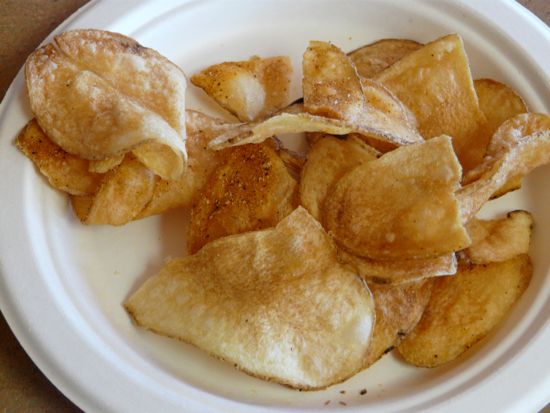
These were also delicious, spicy. We didn’t eat them all, just tasted a few. They were good.
In the afternoon, we visited and revisited several of the sites from our morning tour, appreciating having the sites all – or mostly – to ourselves. In the late afternoon, we tried to capture the great light.
The 700 Years Tour at Mesa Verde
Early early in the morning we are up and ready to grab a bite of breakfast at the Far View Lodge and to take the 700 years tour. When we called for reservations at the Far View Lodge, the desk clerk asked if we would like to sign up for the 700 Years of Culture tour, and since Sparkle had told us that the tours fill up early, we signed up.
The light in Mesa Verde is beautiful at eight in the morning, and we were shocked when thirty-something people around our age (I guess we are all out exploring America!) got on the bus. Somehow, for $45, I had thought it would be a tour of five to seven people. I didn’t think so many people would pay so much for a tour!
The guide, Dave, and the bus driver, Leiter, were both local men, living in Cortez, men who double as guides a couple days a week to liven up their retirement. Dave’s depth of knowledge and investigative spirit was impressive; clearly he has a passion for the Ancestral Puebloans, and reads everything he can get his hands on. He has read all the latest studies and speculation, and as a farming man, he had some of his own down-to-earth speculations which he shared with us. It was all good stuff.
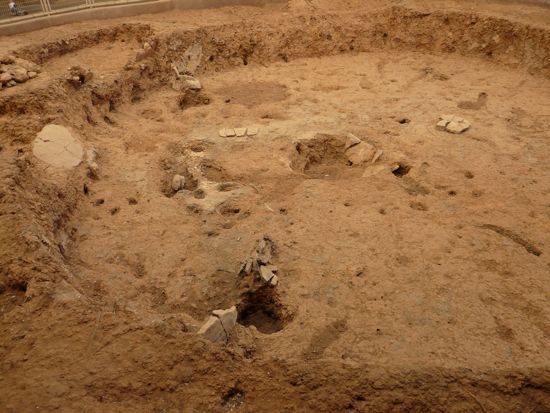
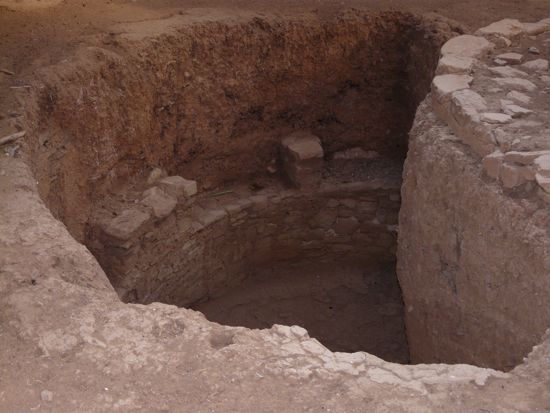
First, we went to look at early pit dwellings:
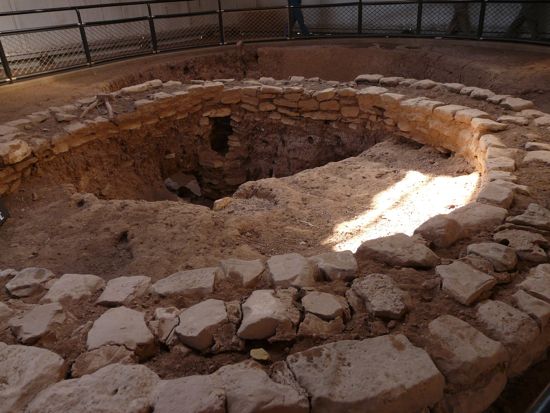
And then we headed off to visit some of the more and less famous cliff dwellings:

Does this remind you of anything? (Hint: see previous post)
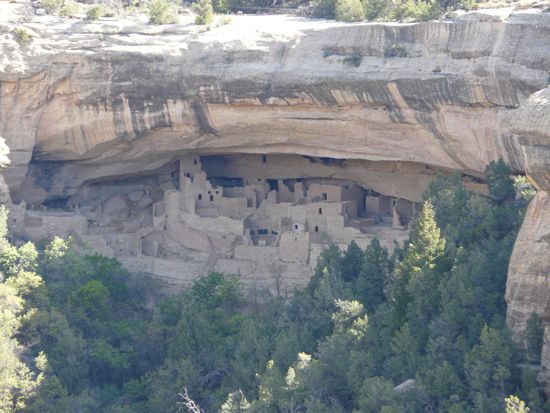
Look at the terrain – so similar to other places where similar dwellings have evolved . . . (Hint Hint: Les Eyzies de Tayak) There are cliff dwellings in almost every conceivable concavity.
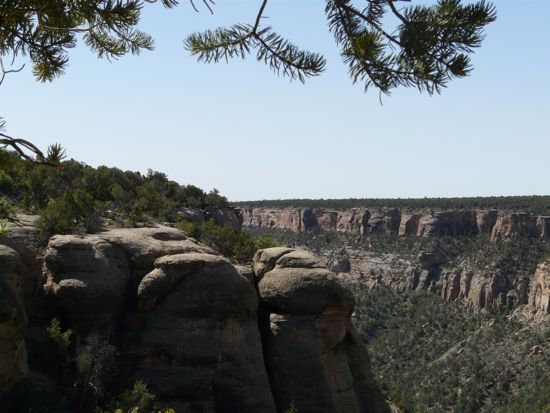
From pit dwellings to small family dwellings, to multiple family dwellings, small villages . . .
This is the Cliff Palace, a multiple family dwelling:


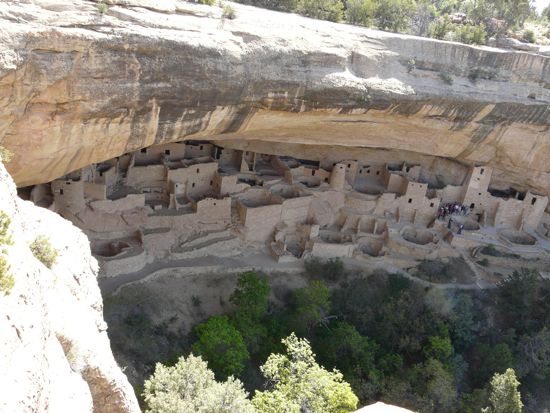
And then, the old legend goes, they just disappeared . . . or did they? Dave, the guide, tells us that the Apaches and Navajos won’t come any where near the Mesa, that the mesa is full of old spirits, not their spirits. The Hopi, however, a little further South, have no fear; the customs and dwellings of the Ancient Puebloans are familiar to them.
It’s kind of like conspiracy theories. We all love a good scary story.
“And then, they all just disappeared!”
But Dave thinks they didn’t disappear, that maybe they just moved on. Maybe too many years of drought, or maybe the soil they were farming gave out. Maybe they heard life was easier a few miles down the road and just picked up and moved a little on down the road . . . which seems to me to be a more logical, if less romantic, possibility.
Anyway, one of the things I really liked was that these ancient peoples, whoever they were, built their dwellings in locations and styles similar to the pre-France people of . . .umm . . . err. . . France.
I need to add a footnote here. This doesn’t happen to everybody, but it happened to me. Once I got to Grand Canyon, activities that I normally do without batting an eye began to be harder. I am a walker and a hiker, but any time I had to hike uphill in the Grand Canyon, I was huffing and puffing like a geezer. “Oh no! Oh no!” I was thinking to myself, “I must have some terrible respiratory condition! I’m suddenly getting old!”
Not so. As it turns out, I am just sensitive to high altitude. I should have known. I drove through Colorado once, and my eyes turned bright red, tiny little capillaries in my eyes burst.
At 8000 feet, in Mesa Verde, I could function, but sometimes found myself huffing and puffing. As soon as we descended a couple thousand feet, I was fine. Leiter, the bus driver, told me that many athletic teams train at high altitude so that when they perform, at a lower altitude, they will exceed themselves. It is such a relief to be able to move fast now, and not puff. I always took it for granted before. Not now.
Petroglyphs in the Petrified Forest
So here we segue back to the Petrified Forest, and it may not seem logical in a linear, chronological sense, like time-as-pearls-strung-together-on-a-string sort of thing, but in terms of like things, the next chronological entry is going to be on 700 years of culture, the Ancestral Puebloans who used to be called the Anasazi, but before I go there, I want to show you some petroglyphs.
(I’m putting in a lot of links in case you are as big a petroglyph nerd as I am, and want to read more)
I always imagine the problems with being early man. Imagine they are smart, and spend a lot of their days figuring things out, most important being 1. What are we going to eat? 2. How are we going to keep dry/warm? 3. How do we protect ourselves from our enemies? They have the same problems we have, only on a much more basic level, and with fewer resources.
Have you ever thought about how easy it is to get information now? (The hard part being sifting through so you get the most reliable, most relevant information). Imagine a world where you have to figure it out for yourself, every day.
Early civilizations fascinate me. I am always interested in little tiny things that can be very important, like how did they fasten skins together to keep themselves warm? How do you poke a hole in a sharp bone so you can use it as a needle? How do you make a button, or make strips that can be used to tie clothing together?
How do you fasten a spear head onto a spear, or an arrowhead onto an arrow?
Early man was a problem solver, and I am fascinated by petroglyphs, which are either early attempts at documentation, or early attempts at communication, or maybe both? The first petroglyphs and cave paintings I ever visited were the Font de Gaume Caves near Les Eyzies-de-Tayac-Sireuil, and they took my breath away. I didn’t even hesitate because it was a cave, I wanted to see them so badly.
I want you to look at this photo of a fairly early dwelling in Les Eyzies de Tayac-Sireuil and hold it in your mind before we move on:

Later, living in Saudi Arabia, one of the most fun day trips ever was to a rock formation called Graffiti Rock, which had no protection, so very old petroglyphs mingled with modern carvings, but some of the older carvings were so interesting, so intriguing.
Coming across petroglyphs in the Petrified Forest was a delight.
Here is part of what the national parks website has to say about petroglyphs found in the Petrified Forest:
In 1977 a spiral petroglyph at Chaco Canyon National Monument was discovered which displayed a precise interaction with sunlight at the time of summer solstice by means of a narrow shaft of sunlight that moved down a shadowed rock face to bisect the center of a large spiral petroglyph. Subsequent observations found that on winter solstice and equinoxes there were intriguing interactions of sunlit shafts with the large spiral and a smaller spiral nearby. No other example of a sunlight interaction with prehistoric or historic petroglyphs was known at this time. However, there was a tradition of Pueblo sun watching in historic times, particularly of the varying sunrise and sunset positions throughout the year, to set the dates for ceremonies.
As a result of the Chaco Canyon find, Bob Preston initiated a research project to determine whether other petroglyph sites in the Southwest functioned as solar “observatories.” Over the last 16 years he has identified about 120 examples of similar solstice events at more than 50 petroglyph sites in Arizona, New Mexico and southern Utah. Evidence indicates that the phenomenon may have been spread over as much as a 1000-km region. These findings show clearly that certain petroglyphs were used by early pueblo cultures to function as calendrical markers for the winter and summer solstices. Petrified Forest National Park contains the greatest known concentration of solar calendars, with 16 of the sites being in or immediately adjacent to the park, and has been key to understanding their nature.
Shadows and sunlit images are found to move across petroglyphs due to other rocks being in the path of the sun’s rays. As the sun’s path across the sky changes throughout the year, the positions of the shadows and sunlit images change on the petroglyph panels. In many cases the petroglyphs have been placed on the rock faces in just the right position so that specific interactions occur on the solstices. The most common types of petroglyphs on which solsitial interactions have been identified are spirals and circles. The key to determining that these were intended and not by chance is that interactions are seen from site to site, and occur on the solstices more frequently than on other days of the year. These consistent interactions may involve a point of sunlight or shadow piercing the center or tracing the edge of a spiral or circular petroglyph; or shadow lines may suddenly appear or disappear at the center or edges of the petroglyph; or they may move up to the center or edge and then retreat. It is not uncommon for a single petroglyph to display multiple interactions of this type, either on the same solstice or on each of the solstices. In fact, at one site, there are five circular and spiral petroglyphs that show 15 interactions on the both solstices.
An intriguing question is whether types of petroglyph images were involved with specific dates. In several cases similar sunlight and shadow interactions occur on spiral and circular petroglyphs on the equinox, and distinctive interactions occur with other petroglyphs on the solstices and other dates. Clearly much of the puzzle remains to be unraveled.
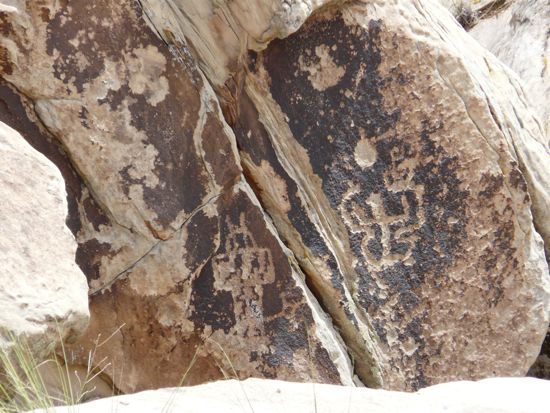
There was a WEALTH of petroglyphs. I’m just going to show you a few of those we found:
This one makes me laugh; it looks so much like our modern day stork-who-brings-babies (LOL, where did that legend/story start anyway??)

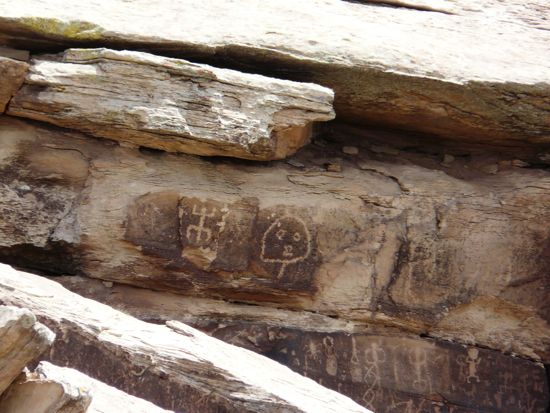

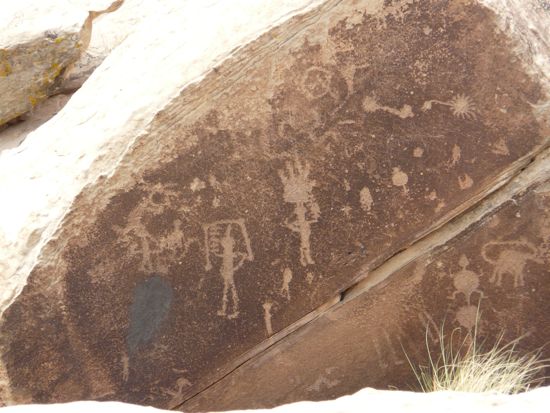
LOL, these feet are larger than life, or else they were made by giants!


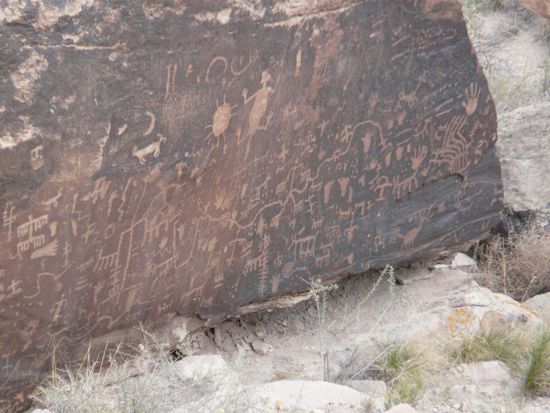
Early people in widely separated parts of the world carved and painted on rock, probably for a number of reasons, maybe keeping track of solar activity and seasons, maybe magical/religious thinking for a good hunt or nostalgia for a good hunt, maybe just someone who, like today’s blogger, just has to document in some way . . . 😉
Last Dinner in El Tovar
Yes, it’s early, and we aren’t all that hungry, but it’s easy and close and it’s the last dinner we will have at El Tovar.
They gave us a beautiful table.
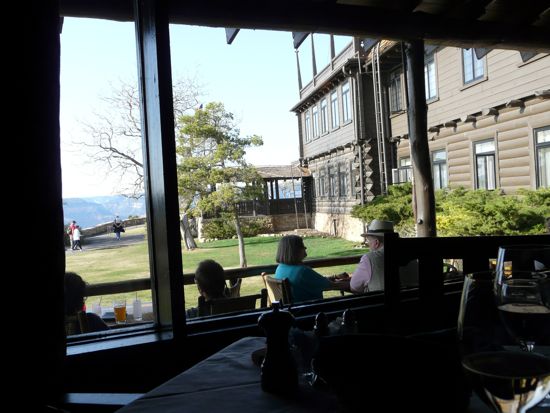
We order, AdventureMan ordering the signature soup and a Salad; I ordered the French Onion Soup and Crab Cakes. I know, I know, I can get great crab cakes in Pensacola, I guess I just wanted to see how they did them. (They did great.)
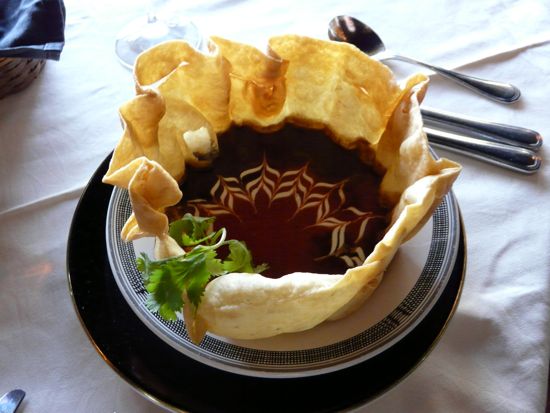
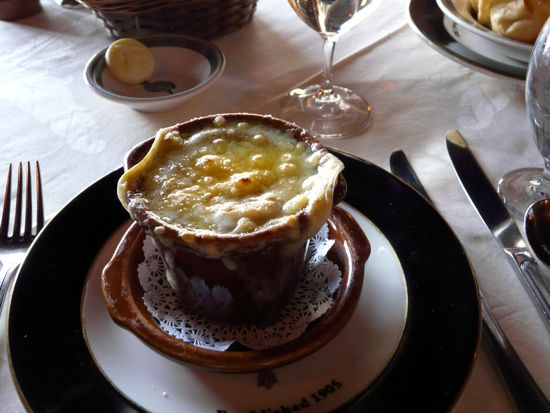
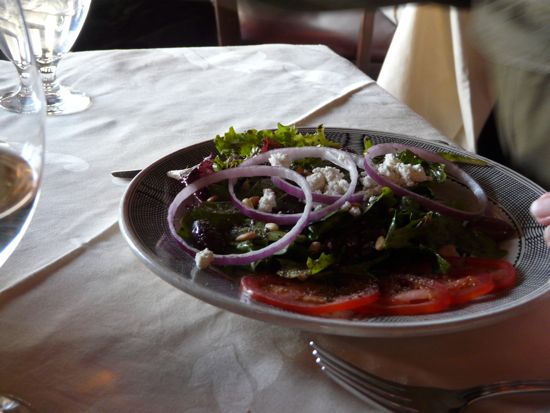
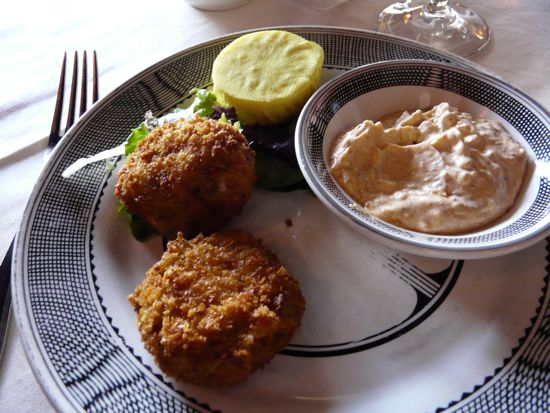
I forgot to take a photo of dessert! I did take a last evening photo of the canyon.
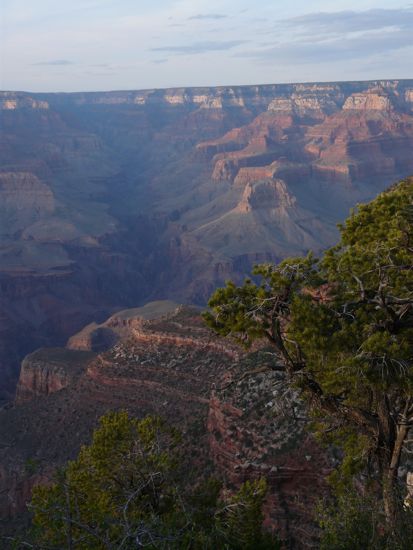
We are up at six the next morning to get an early start on the next leg of our journey, today to Mesa Verde, Colorado, driving most of the day through the Navajo Nation.
On our way out, AdventureMan stops so I can take a photo of one of the signs – Mountain Lion – don’t you love it?

And one last photo of the Grand Canyon as we depart:
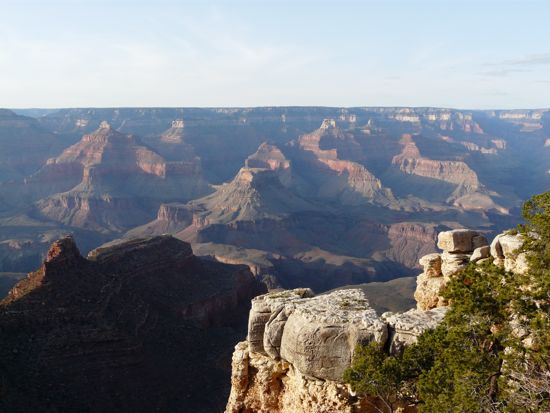
A last note – late April is a perfect time of year to visit the Grand Canyon.
Grand Canyon: Early East Rim, Breakfast at El Tovar and Shuttle along the West Rim
When your day starts at five in the morning, you have a lot of hours in your day!
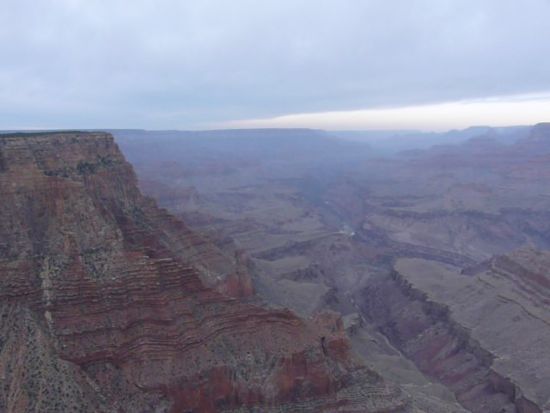

We were back at the lodge by seven, where there is already a crowd lining up for breakfast. We had such a great dinner the night before, we decide to have breakfast and then take the shuttles along the western rim of the canyon.
The El Tovar Dining room is as beautiful by day as it is by night:
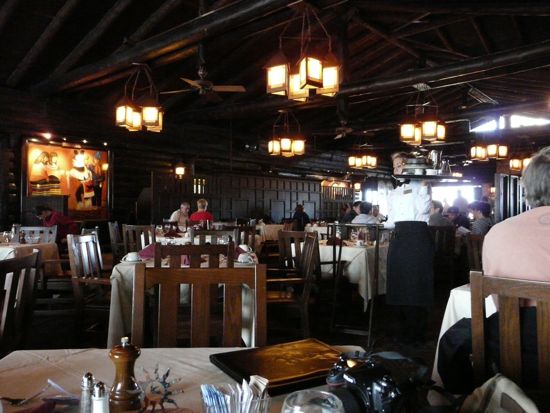
We are on the south west side of the dining room, near a large fireplace and far away from the view, but it hardly matters – the view is there, 24/7, for anyone who wants to visit. We see fabulous plates arriving at all the tables, and we watch a new wait-person being trained in the El Tovar way of doing things. It was great entertainment. Our breakfasts were divine.
AdventureMan’s breakfast:
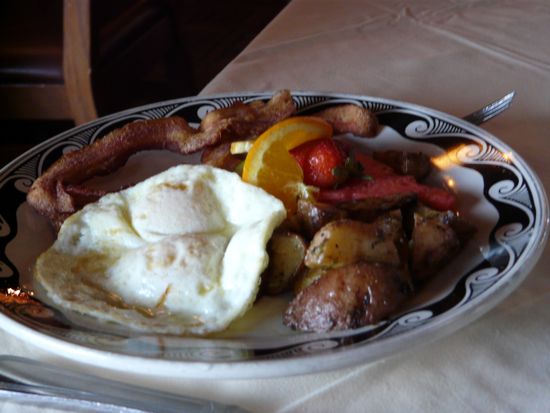
I had Eggs Benedict, with smoked salmon instead of the traditional Canadian bacon:

We run upstairs to brush our teeth, and then head out to explore the western rim before the train arrives, at 1100, bringing in many more people, even in these early spring months.
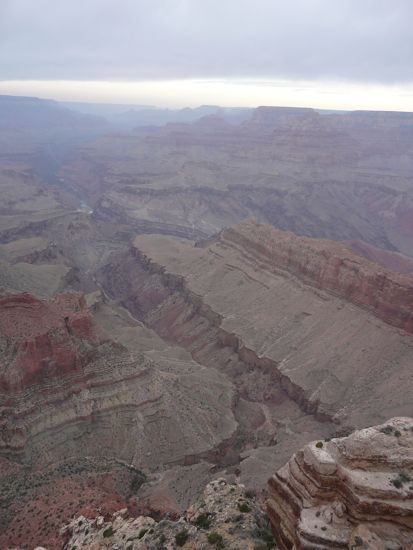
The shuttle system is a marvel. Different colored lines have different routes, and there are maps that show what color the bus is that goes where you want to go. We walked to the red bus stops, hopped on, hopped off, hopped on, hopped off, hiked a little, hopped back on, hopped off, hiked a little more, met some great people and had a lot of fun taking photos.
The sun has burned off the clouds, it is still a little hazy but a great, sunny day.


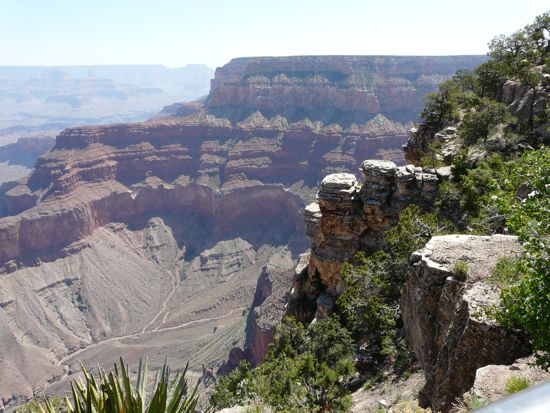

We hit Hermit’s Rest, at the end of the shuttle line, around 11:30, and head back to Grand Canyon village.

La Posada Hotel: A Restored Gem and a Great Retreat in Winslow, AZ
AdventureMan was stunned. “Tell me again how you found this place?” he asked, incredulously. I’m embarrassed at how easy it was. When I was looking at places we wanted to go, AdventureMan had mentioned the Painted Desert and the Petrified Forest, so I had Googled “really cool hotel near Petrified Forest” and LaPosada popped up in a TripAdvisor reference. I’m embarrassed at how easy it is to get information these days. 🙂
Do you see the camel at the entry? How could we not love this place?

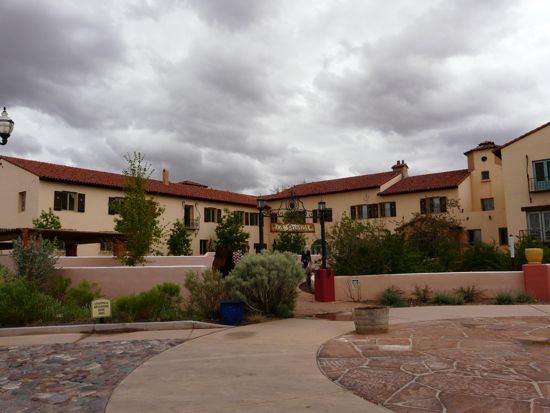
Since we often wander, and don’t really know where we will be until a night or so in advance, I print out information and carry it in an old fashioned paper folder that has envelopes on both sides, so I can stick things in and they won’t fall out. In Albuquerque, I showed AdventureMan some photos from the La Posada website, and he was sold. We called, reserved a room for the next night, so we knew we could spend all the time we wanted in the Painted Desert and Petrified Forest and that a room would be waiting for us.
Every room in our wing has a name, named after famous people who have visited La Posada in its rich and famous past, and we are in the Turrell Room:

We had no idea how lovely that room would be. I am a total sucker for shiny wooden floors, and for textiles, and for space to breathe, and our room had all this – and more. It had a painted ceramic sink in the washroom area, and a glorious tiled wall in the whirlpool bath room. The whirlpool bath worked flawlessly.

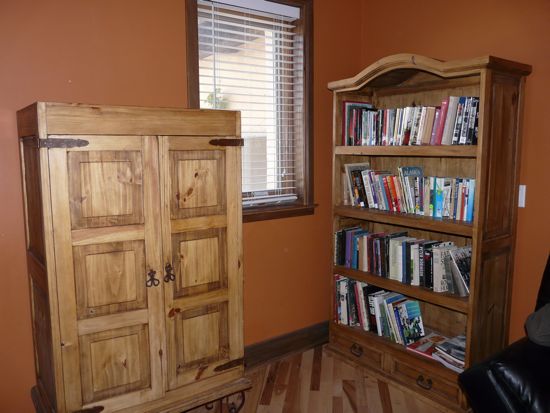

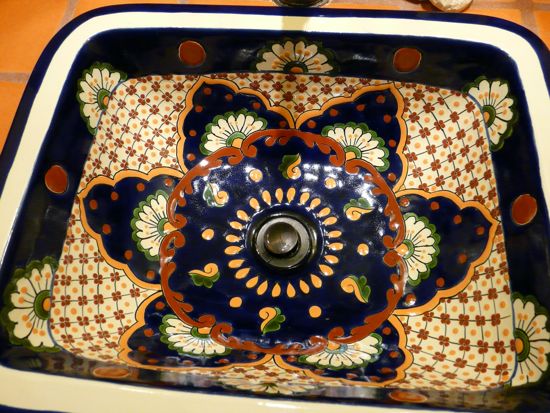
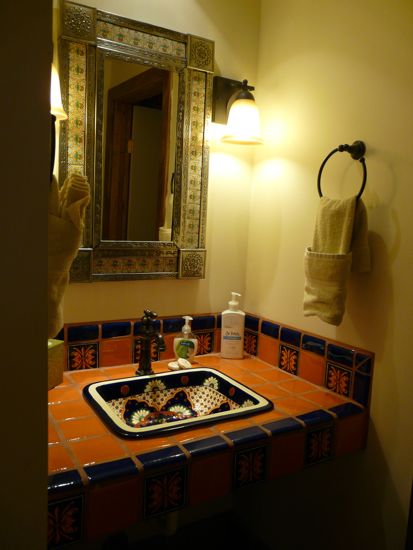

Although we were tired, we were eager to explore this fascinating hotel. We couldn’t stay in the room, it was too exciting, too much to see! We went down a hallway to the gift shop, which also serves as reception:
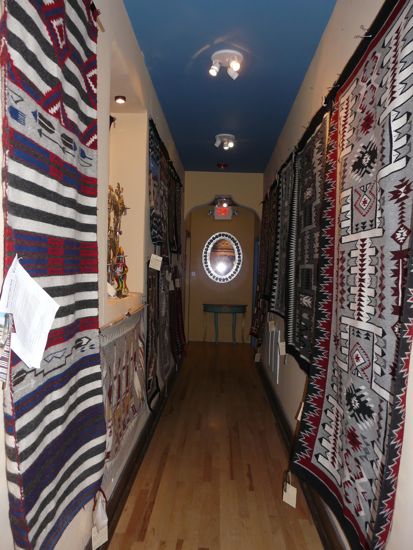


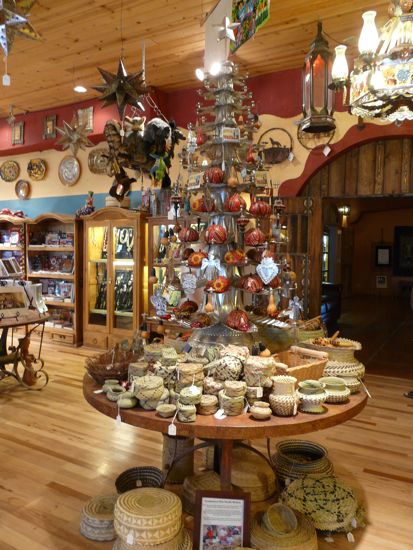
The spaces are fabulous, each one defined and delineated from one another by changes in surface textures, lighting fixtures, beamed ceilings, windows . . . there are endless possibilities for discoveries. We watched a film about the history of the hotel – it was actually a very long film, but fascinating – about the architect, Mary Elizabeth Jane Colter, and the building of the hotel in an amazingly short time for the amount of materials and techniques necessary. The hotel was built in 1929 by the Santa Fe Railway for the Fred Harvey Company. Mary Coulter seems to have had carte blanche in putting in just about anything her imagination could cook up.
Although the hotel went out of business and was remodeled in the sixties for the railroad company (a total desecration of the beautiful spaces), it has been lovingly and passionately restored, with near fanatic attention to detail. There are many spaces where people can gather to read books, play games, share a drink or a cup of coffee, big spaces and little spaces, and every space is beautiful.
Built before air conditioning, the original hotel incorporated a wind tower, something we saw often in old houses in Qatar and Kuwait, where any little breeze was captured, brought into the interior and circulated – La Posada had the same technology.

Now, for some of the public spaces, gathering spaces and places of peace and serenity.
La Posada was a destination hotel, with a train station just paces from the hotel lobby and reception. This is the arcade arriving guests would walk through to reach the hotel:
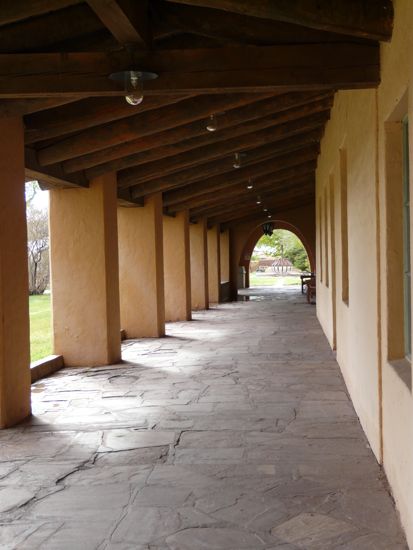
The hotel lobby, outside the Turquoise Room restaurant:


A beautiful, small, intimate space where we watched the film about the restoration of La Posada:

The upstairs gathering room, full of books, games, chess and checkers sets, tables, chairs, couches, all to make guests comfortable and give them a place to relax and get to know other guests:
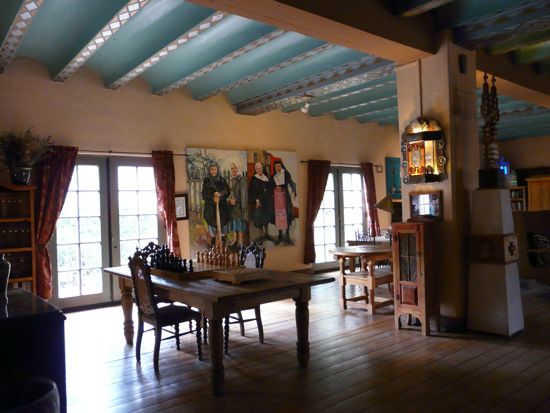


That night, I had one of the best dinners of the entire trip, a vegetarian plate that knocked my socks off in the La Posada restaurant, the Turquoise Room:
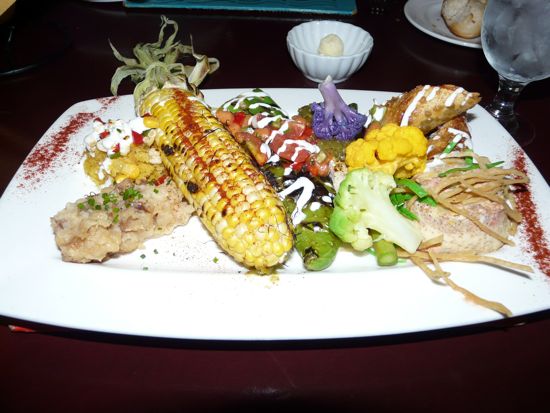
We also had a Grand Marniere Chocolate Mousse, oh, to die for.
Breakfast the next morning was oatmeal, in the same restaurant, but oh, what exquisite oatmeal, and I don’t really even like oatmeal. I guess I like oatmeal at La Posada 🙂

Last – and least, but I can’t help it, I am a sucker for light fixtures, really lovely light fixtures, and I loved these, probably because they take me back to our times in the Middle East:
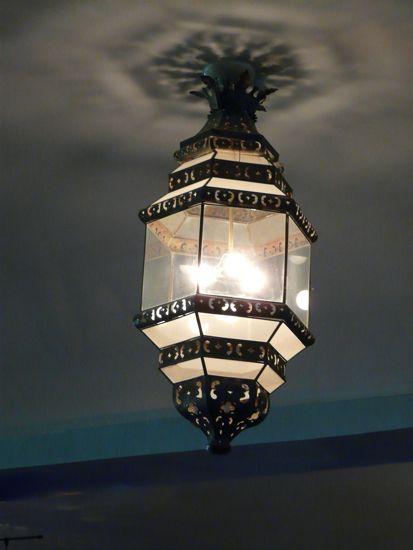
La Posada is close to the Petrified Forest and the Painted Desert, Canyon de Chelly, many more amazing sights of north western Arizona. You can get out and explore, and spend your nights in luxury and ease in a beautiful surrounding.
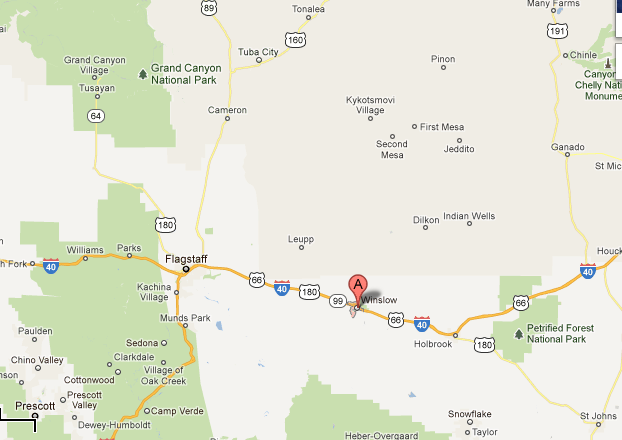
The Painted Desert and the Petrified Forest – Crossing into Arizona

Leaving Albuquerque, we are delighted to be taking I-40 going West; it’s like everyone else is on I-40 coming East. The drive is smooth, a little road work here and there, but nothing that holds us up in any major way. We cross the continental divide (where all the rivers on the east side flow to the Gulf of Mexico, and those on the West side flow into the Pacific) and we wonder what the divide is called, if anything, that divides rivers flowing into the Gulf of Mexico from rivers flowing into the Atlantic?
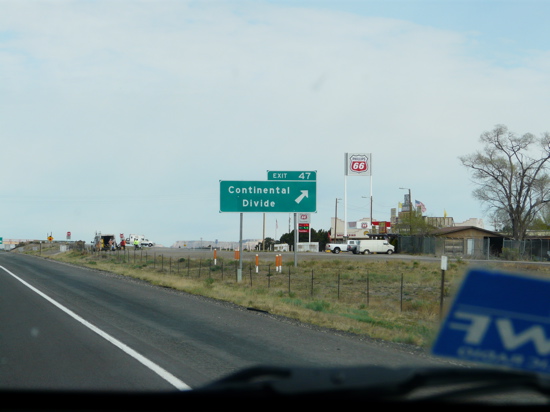
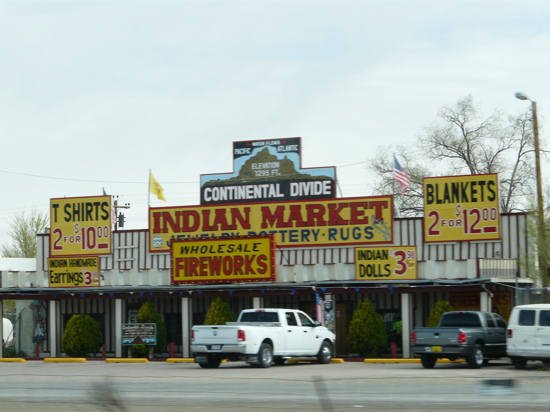
We are driving along the old Highway 66, too, which is fun, seeing the nostalgic old signs and relics from the 40’s and 50’s, when Route 66 was in its heyday and there weren’t big interstates fully functioning.
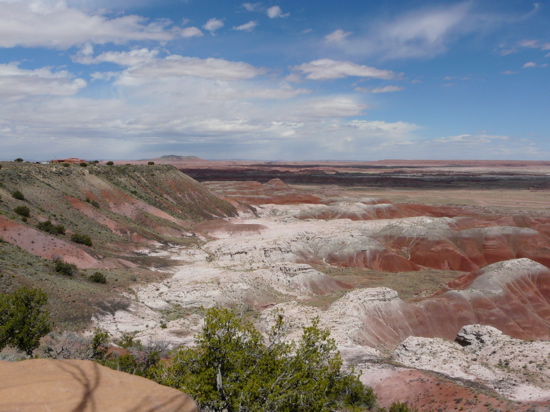
From Carlsbad, where we saw temperatures up to 99° F, we have dropped considerably, and hit the road with a temperature around 45°, which rises as we drive toward the Painted Desert and the Petrified Forest. When we arrive, it is in the 80’s (F) and a bright, partly cloudy day. The colors and the scenery are unimaginable.



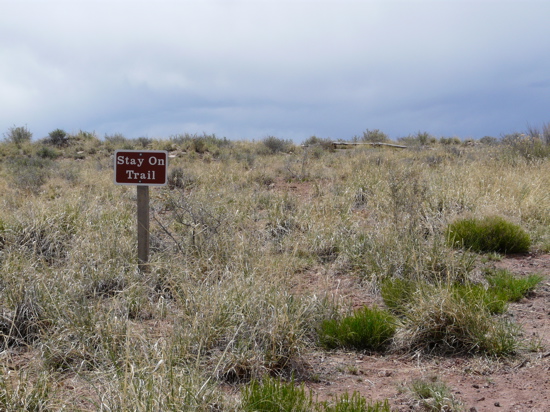
I included this one because it made me laugh. These signs are necessary; Americans are inclined to wander off the trail, it’s in our nature, and we need these signs to make us more careful where we are stepping 🙂
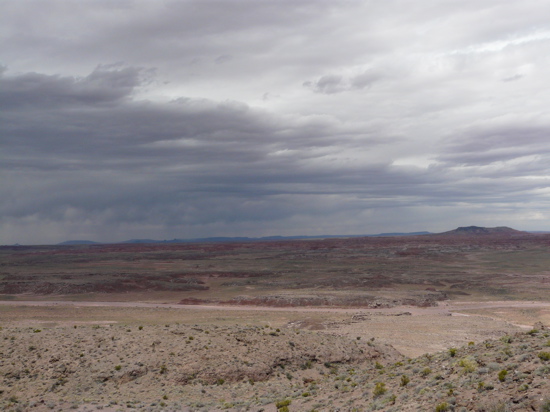
As we leave the Painted Desert trail and head into the Petrified Forest area, the weather starts getting seriously complicated and the temperatures start dropping:
I’ve never seen a toilet like this before. It’s amazing:

At the risk of giving you too much information, whatever goes into the toilet evaporates due to the constant wind action. Whoever sits on the toilet has the unusual experience of having a wind-dried bottom:

We start moving a little faster, not lingering as the weather changes:

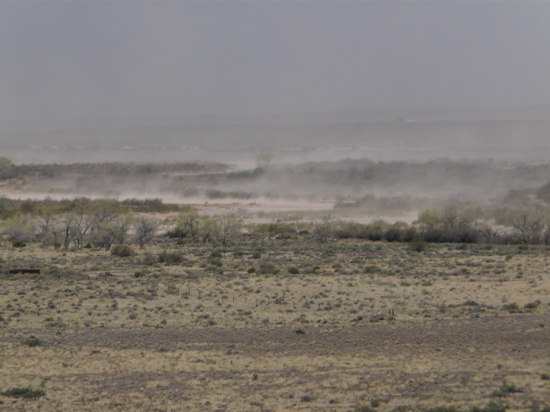

Can you see how the light has changed? Just after taking this, huge raindrops started falling and we continued on to the end of the Petrified Forest. The temperature dropped to 45° (F)

The Carlsbad Cavern Desert Trail
Here’s the thing . . . I’ve kind of lived a life a little on the edge. We’ve taken chances. We were young, we took risks we didn’t even know we were taking.
The result is that while I am still determined to live my life to the fullest, there are things I won’t do. Jump out of a perfectly good airplane, even with a parachute. Walk out on clear platforms over the Grand Canyon. Go in bat caves. Go into just about any confined space – I just don’t do it. There are things I don’t like doing but I do them, but there are things I just won’t do, and I’ve stopped doing caverns and walking close to the edge in very high places.
So we went to Carlsbad Caverns, visited the visitor center, then took the Desert Drive.
We are here at an awesome time of the year. Things are blooming, and we are awed at the persistence of life. The temperature has hit ninety something (fahrenheit) by 10 in the morning, but these plants are thriving. So thriving that one plant burrowed through two layers of cloth and into AdventureMan’s flesh!


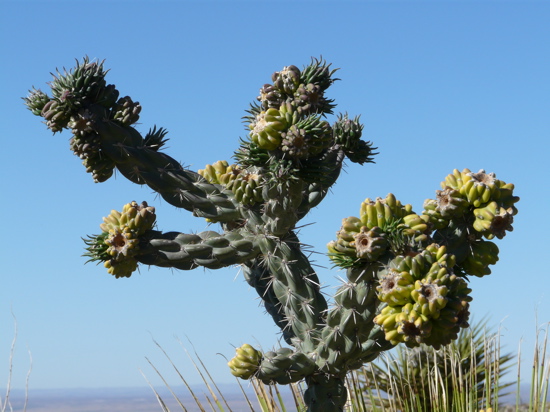
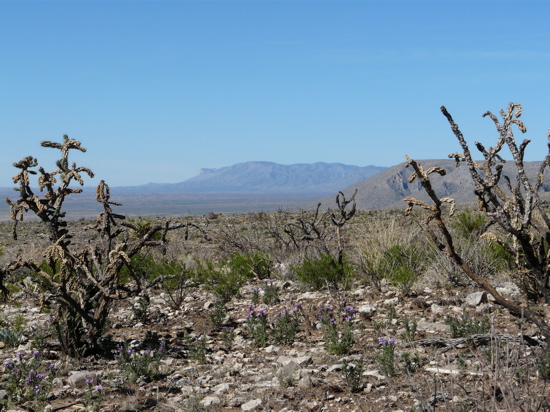
These are old familiar plants, the Prickly Pear. I first saw them when we lived in Tunisia, and they were used as boundary borders, and a formidable boundary marker they are – tall and tough and very prickly. The Tunisians used the prickly pear to make jelly, but they also used the leaves, trimming off all the prickles, peeling off the tough outer skin, pounding the fibrous center into submission and then, I think, breading them and frying them. I love it that something so tough and which grows so persistently can also provide nutrition to hungry people.

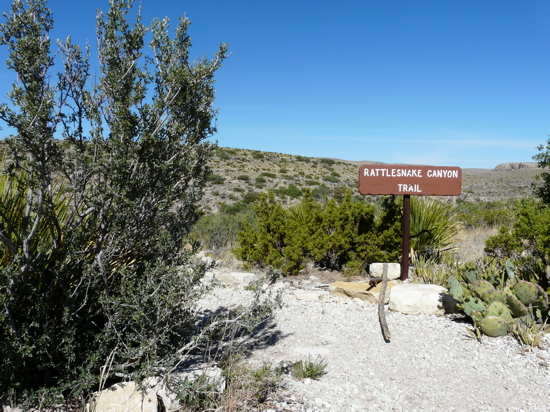
I’m just throwing this one in because it cracked me up; the stick looking a little like a snake by the sign:
Riding Across the Wild West
We just figured this was going to be a rough boring stretch, driving I-10 across West Texas to New Mexico, but, as so often does, magic happened and the day changed totally.
AdventureMan had a little allergy, so I did the driving across the wilds of west Texas. It wasn’t anything like I had expected. I’ve read lots of books set in Texas, and seen movies. I expected No Country For Old Men. What I got was a long empty highway with hardly any fellow travelers, some spectacular scenery, hardly any speed limit at all, and lots of time to think and enjoy the ride. Wooo HOOOO on West Texas!
Turning north at Ft. Stockton, we entered Hackberry Holland country (James Lee Burke) with those long empty landscapes punctuated with endlessly pecking derricks, whirling dust, endless pick-ups and tankers, and not much else. The scenery went from those plateaus and arroyos to Qatar flat and white desert, from Texas wildflowers to succulents. Then, just around Pecos, Texas, as we are in the end stretch toward New Mexico, it turns more golden, like Kuwait, with some elevations. Across the border, I asked AdventureMan (now awake and feeling good again) “where is the red tint we see in all the ‘Visit New Mexico’ brochures?” Within half an hour, the iron-oxide tint shows up and we see the red glow start to appear.
We know we want to visit Carlsbad Caverns, so we spend the night in Carlsbad, and eat at Mi Casita. Here is what the desk clerk told us:
“I can’t eat at Mi Casita because the food is too spicy, but everyone who really loves Mexican food eats there.”
We loved it. I ordered things I don’t usually order, enchiladas and beans and rice, and it was so GOOD.
As we left, we went down to the city park and took pictures of the river, and AdventureMan fed the hissing geese some of his peanut-butter and crackers that we carry along in case we might starve or something ;-).
As soon as I can get these photos transferred from my iPad to my computer, I will put in the photos and this will be a much more interesting entry.
Late Afternoon in DeLuna Park
One of the great joys of living in Pensacola is seeing our grandson often. Yesterday, we were picking him up and keeping him until dinner, so we decided to take him to run in the fountains, only to discover that the fountains stop at 5 on Mondays – Wednesdays, and run until 8 on Thursdays, Fridays and Saturdays. No problem – there is always something going on to thrill a two years old’s heart.
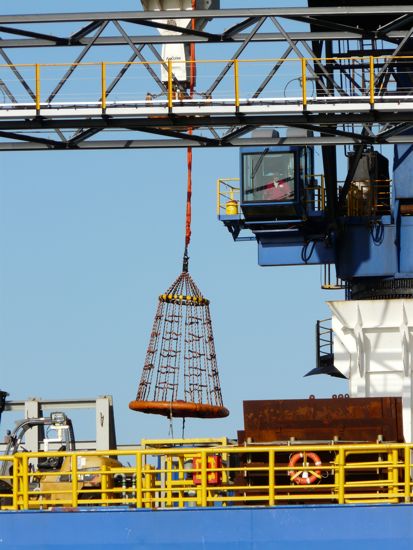
Yesterday, it was a tug-boat bringing in a huge dredger, with CRANES! Our two year old is all-boy. He loves car words, and truck words, and words like bulldozer, and pick-up, and CRANES. Watching the tugboat bring in the dredger thrilled his heart.

The crane lowers a cage onto the deck:
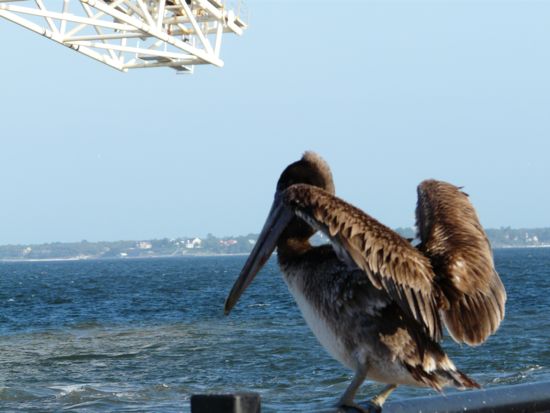
The pelicans are enthralled; the churning engines stir up fish and make finding supper easy pickings:

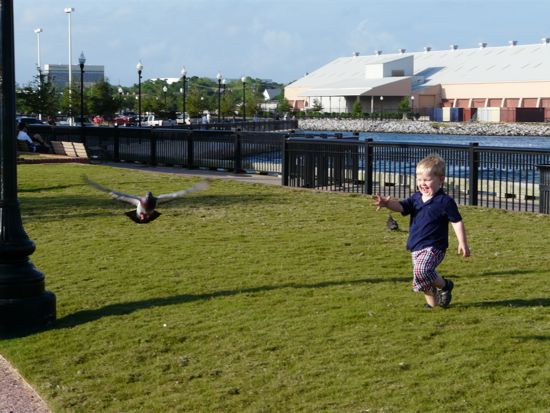
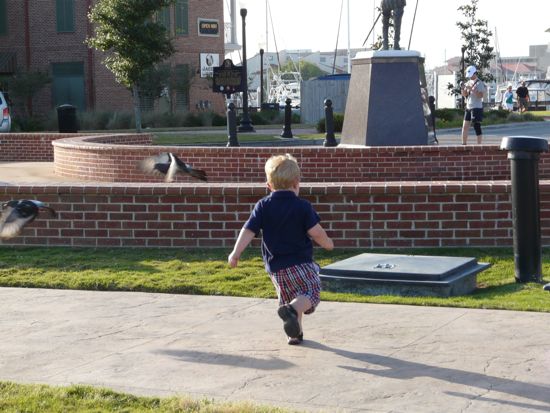
And then, chasing the pigeons! Where do they get the energy? A two-year-old can chase pigeons endlessly!

Recent Comments
ExpatAlien on What Country am I Living … intlxpatr on Yellowstone: Old Faithful to C… Michelle on Yellowstone: Old Faithful to C… Cathy on No Grown-Ups in Charge intlxpatr on Waiting for Snow Wikipedia Donate Button

Amazina


Early Voting in Florida


 Here There and Everywhere