Nkwali Camp, Day 2
We’ve booked three nights at each camp, so we get at least two full days at each, and additional drives or hikes for the transfer days – there is never a dull moment.
The drums, the drums, and we are ready and out the door in no time. Today, as we are walking down to catch the boat, my toe catches on a root and I almost fall into the river. Even though the Luangwa is shallow, it would still be humiliating, and I would have to go back and change clothes, and then (gulp) there are those crocodiles . . . . The path is rough and I am a little unbalanced by my backpack, and by the grace of God, the guide, Keyala, steels himself, I hit him and he doesn’t fall in the water when I hit. He holds steady. Thanks be to God! (By evening, there was a new set of stairs, and no roots.)
Our day starts with leopard. We are once again at a green lagoon, watching ducks and cranes, when Keyala says “look, there is a leopard!” and about two hundred yards back, he is at a pond, drinking, then quietly, slowly, turns and walks back into the forest. What a great way to start!

Sorry, the leopard is in the distance and you learn to shoot fast. It doesn’t always make for the sharpest shot, but by the time you get all the settings right and the focus set, the leopard is gone and you have a photo of the lagoon where the leopard was, who wants to see that?
We have a lively morning, full of birds and more elephant and giraffe:

These giraffe are young males, and they are fighting with their necks, sort of comical to watch, but they can seriously hurt one another. I think these ones are more playing at fighting:

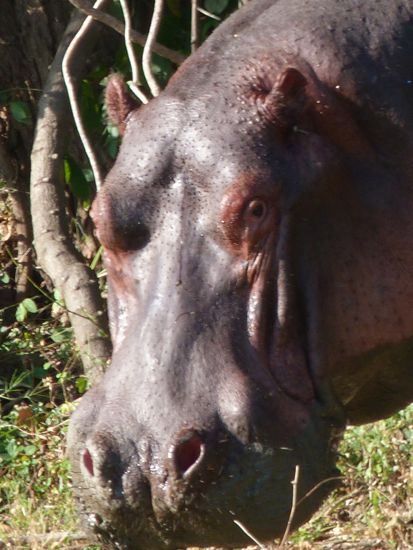
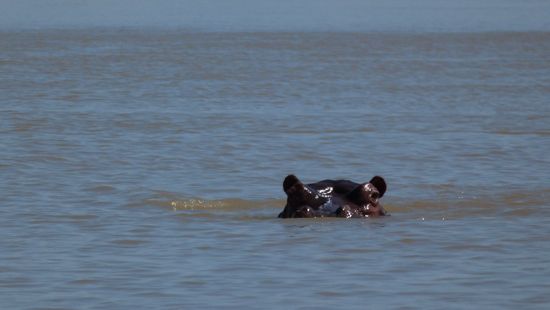
This hippo has gotten tired of the fighting for a spot in the river and has found a lovely isolated spot in the lagoon. You can tell he is a weathered old soul by the scars on his body.

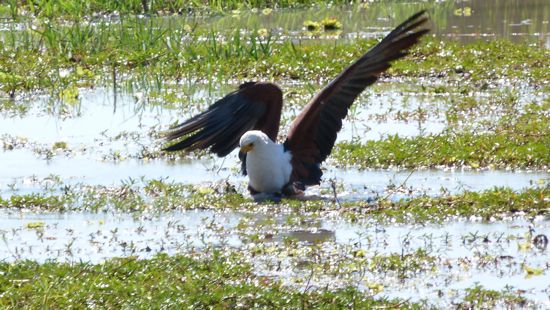
We also get a chance to photograph that glorious fish eagle in a tree – this is how you usually see them; the one I shot in the previous post on Nkwali was actually catching a fish. You don’t get that shot often:

Many stops later, we are driving along and we smell sausages. Keyala says it must be a nearby lodge, but there is no lodge near by. . . We turn a corner and there is a crew, with a fire, and camp chairs all set up, and we realize we are about to experience one of the infamous Nkwali BBQ cook-outs, oh what fun. We are overlooking another great lagoon, full of hippo, Cape Buffalo, baboons, and all kinds of wildlife. Robert, the stellar camp cook, is there asking us how we like our eggs, and with our eggs are sausage, bacon, corn fritters, fried onion, baked beans and toast from loaves of bread made in camp, big thick slices.

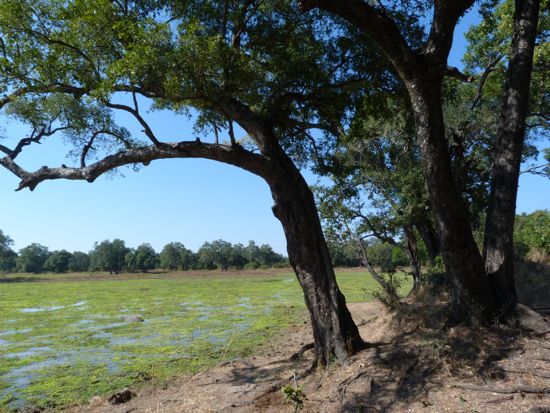
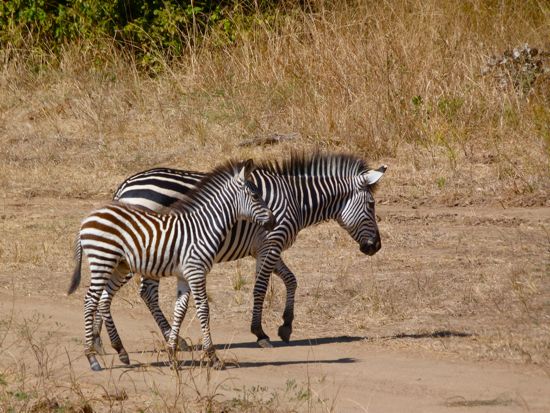

On our way back to camp, we will cross the river again:

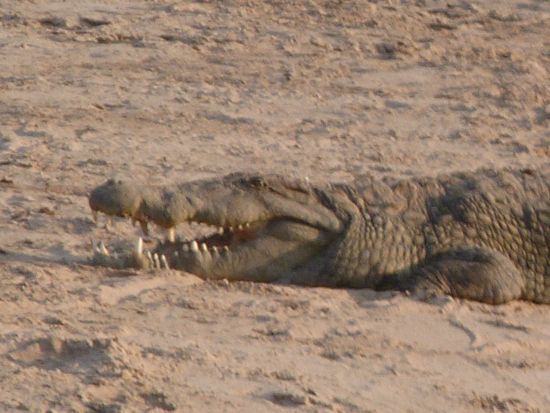
And here is one of many of the crocodiles sunning on the river sand:
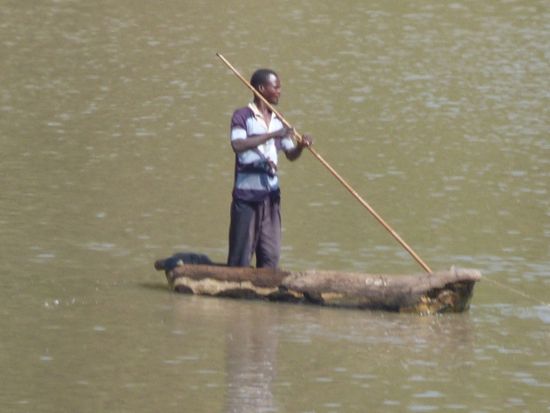
Just before we get back to camp, we see a Zambian local, fishing in the river. Look closely at the canoe – we used to see canoes like this in Alaska, too, dugouts. Imagine the hours it takes to hollow out a tree so that you can use it as a boat, and imagine that if you have very little, the man who has created for himself a boat can be a man with an enhanced opportunity to feed his family . . .
Once again, we arrive back at camp, and snooze a little until dinner. Bumping around in the Toyota trucks wears us out, and we are still jet lagging, some times we think we’ve beat it, and then when we least expect it, it beats us. I really need to wash my hair, it gets so dusty from the trails, but I really really need a nap and a nap almost always trumps washing hair.
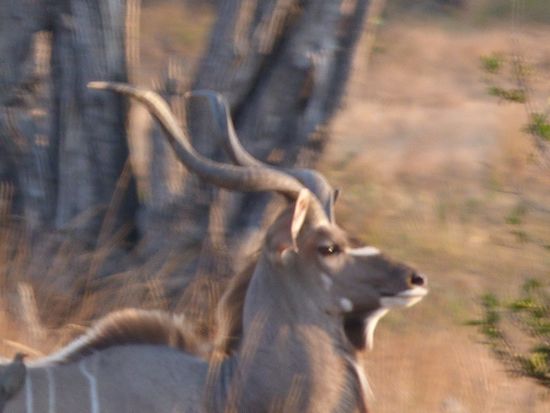
As we head out on our last Nkwali game drive, there is an air of excitement. We find the noble-looking kudu, so shy, and he astonishes us by walking across the road so we can get a clear shot of those amazing curled antlers.

You’d think there would come a time when we might think “Oh, it’s just another elephant family,” but for us, that time never comes. We always watch them with fascination, thinking how very smart they are, how far they range, how they communicate, and how they mourn the deaths of their group. Elephant are huge, and they have their own agenda, they are not there for our entertainment but for their own survival, so we watch them with great respect.

Keyala takes us across the river and we head up to the highest hill for sundowners, half-searching for lion and leopard on the way. The highest hill has a 180 degree view of the land all the way to the escarpment, and the sun sets at just about 90 degrees – right in front of us. Behind us, about the same time, the full moon rises. It is awesome.
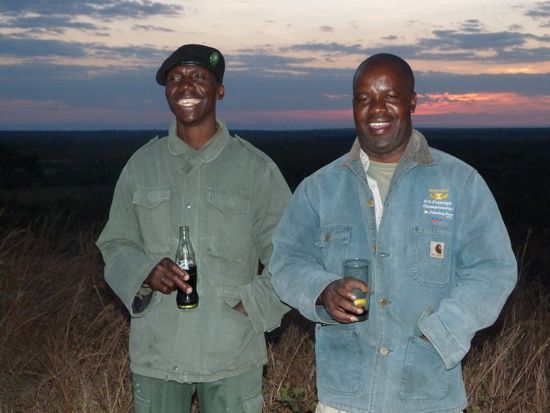
This is Keyala and Keyfus. Keyfus (Kay-fus), on the left, is the same as Cephus in Greek, meaning rock – Saint Peter’s name. Keyala is our guide, and recently marketed for Robin Pope Safaris in Seattle. 🙂
On this high hill I spot a tree, Sterculia quinqueloba, a tree I have never seen before, and Keyala tells us the name. It is such an unusual tree:

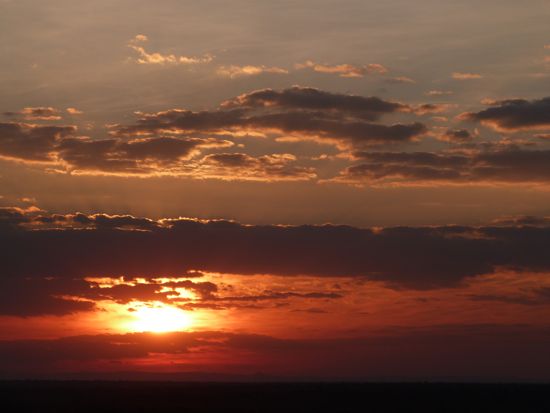
Sunset from the high hill in the Chongwe Game Park:
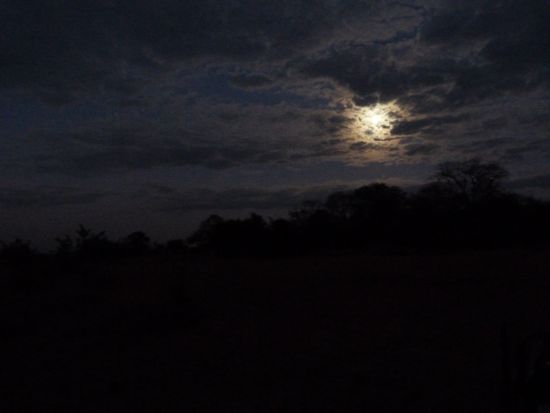
Moonrise in the east, magical:
Dinner conversation is fast and furious back at camp, and we excuse ourselves to make sure we are packed up and ready for departure the next day for Tena Tena. We say a sad farewell to Chris, and Tina, and Keyala, who have taken such good care of us and gotten our Zambia safari off to such a great and happy start.
Lusaka, Zambia to Nkwali, South Luangwa Valley, Zambia
Lusaka to Nkwali
“The shuttle will leave promptly at one” the concierge scolded, as if we had been late for any shuttle before.
“We’ll be there!” we responded, and we were. We had our bags packed and ready, and were in the lobby by 12:45. The shuttle, this time a big bus, was just for us, and in spite of Friday afternoon traffic, made good time to the airport.
For all our efforts to be on time, we learned that our flight would be delayed another hour and a half. On one hand, we are always glad when airlines make needed repairs . . . we’d rather have a safe flight. On the other hand, the sun sets early, it is winter in Zambia, and it would be nearly dark when we arrived. It isn’t like the US, or Kuwait, or Qatar, or even Lusaka, where there are strong lights so you can land after dark. If it is dark in Mfuwe, your plane can’t land. We really, really don’t want to stay in Lusaka another night when we really want to be in the bush.
It was very nearly dark when we arrived, but we did arrive in time to land. We missed the sunset, but we got to see the villagers all en route to the nearest markets for Friday evening shopping, and got to camp just in time to set down our bags and have dinner. Earlier campers have left, and for the first night, the four of us have the entire camp to ourselves.
Here is a view that thrills me – the full moon, as seen from our shower:

Nkwali is a Robin Pope Camp, and we have been coming back regularly since our first trip about 12 years ago. We were last there four years ago with out son and his wife.
“What would you like to see?” our hostess Tina and camp manager Chris asked us.
“I’ve always loved giraffe,” one of our group replied, “Can you arrange for a giraffe?”
“Yes, we can arrange that,” he smiled.
Meanwhile, camp wildlife joined us for dinner:

Still jet lagging, we went to bed and AdventureMan was sound asleep quickly, just after hearing the “hahahahahahahaha” of the hippos. Just as I was falling asleep, I heard what I thought were the guards footsteps around our cabin, but they went on and on, and it sounded like he was sitting on our front porch. After about five minutes, I got up and peeked out the curtains. A hippo! A hippo, not ten feet away, munching on greenery just off our patio. It’s amazing how quietly a hippo walks – soundlessly, on those big round feet – but how noisily he munches. It was the munching I had mistaken for footsteps.

There are also monkeys, which are adorable, like tiny kittens, playful and scampering, but they like to come in the cabin. We are told that they don’t bother with anything except food, so not to keep food open in our cabins, but our neighbor had her medications knocked about, and a glass full of soda sent crashing to the floor by monkeys – while she was right there showering!
Morning came too quickly, the drums drumming at 0530 to wake us for a 0545 breakfast and 0600 departure for the bush.
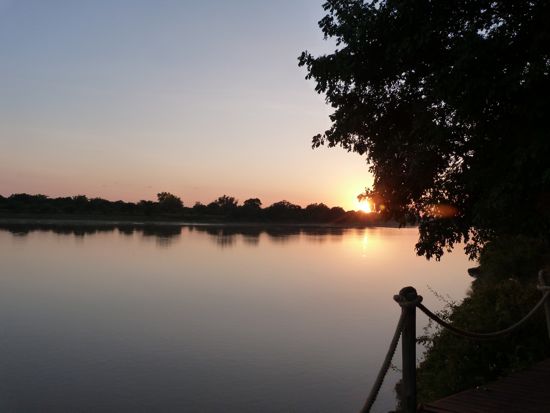
It’s a beautiful day, we eat some hot porridge and load up for a morning in the bush.
Just leaving the camp, we saw hyena ahead of us on the road, and a warthog family, and then giraffe! One, off in the distance! Later in the day we would see more of these Thornicroft giraffe, endemic to this part of Zambia.
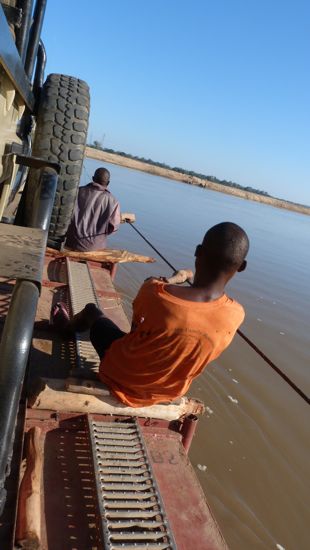
We drove up to the river cross barge, a private barge funded by the local camps to help get their guests across to the national park on the other side. The barge trip is an event in itself, hand pulled across the wide, but shallow Luangwa river. Shallow, but full of hippo, and full of crocodiles, too.

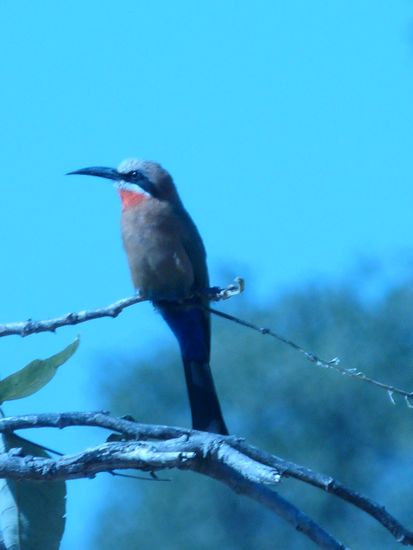
The best part of the morning was reaching a huge lagoon, full of exotic birds, and with a constant stream of animals coming to drink, parades of zebra, elephant, a fishing eagle, ibis, Egyptian duck and many others. We are a patient bunch, and we loved just finding a good position and watching the game pass through, getting a good shot when we could. By the time we headed back to the lodge for lunch, we were exhausted.

This isn’t the most crisp photo, but I love the length of that loooonnng trunk reaching out into the lagoon for water. Sometimes you only get one shot:


This is a fish eagle. The next shot, he has a fish in his claws, but it isn’t a very clear shot:

Nkwali Cape Buffalo

Then, just for our companion, we came across giraffe – lots of giraffe, but it’s not easy to get a good clear shot, because you are mostly shooting them against trees, head in the leaves, and you have to shoot fast or all you get are giraffe butts, walking away:

We leave the Land Cruiser on the National Park side of the river, and men from the camp poll us back. The river is so shallow that we almost get stuck on the sand bar.

You’d think we could just walk across, but there are territorial hippo and hungry crocodile, and we don’t want to tangle with either of them.
One of the funniest continuing jokes on the trip are the questions from people who have never traveled in Africa who with great concern ask “But what will you eat?” We took photos often, because we ate often, and well. This is our lunch the first day when we got back:

I always have a list of things I need to do. Like at these camps, women need to wash out their own underwear, it’s a cultural thing, men are doing the laundry but they won’t touch womens underclothes, so I always have some clothespins to hang things to dry. I also wanted to wash my hair, which gets dusty quickly out driving on the game drives. I have to do it in the afternoon, so it will dry (no hair dryers in the bush), and then I need to lay down, because I’m really sleepy, still jet lagging. When I wake up to the “tea-time” drums two hours later. I felt so good! I felt like it was the best sleep I had gotten since leaving Pensacola, and it made me feel good, and full of energy once again.
Here is what our cabin, and Nkwali Camp, look like:

This is our writing desk; there is one in each cabin:
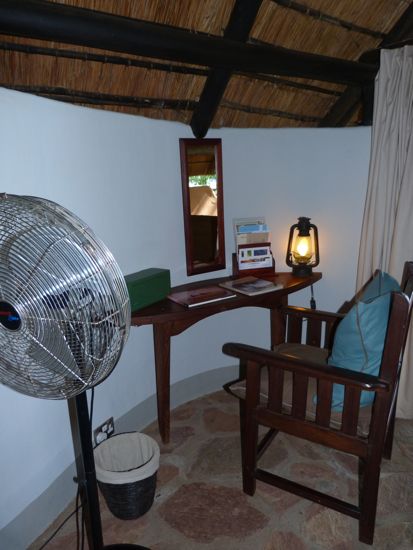
This is where you can unpack while you stay here, and where I lay out my clothes the night before so I don’t have to think when we get up early the next morning. When you are getting up really early, and only have about 15 minutes to get ready, you need to be able to get dressed without thinking too much about it. (It’s kind of like going to kid’s camp, only this is grown-up camp, LOL)

I almost hate to show you too much, it’s all such a wonderful surprise, finding these lovely cabins in the wild, but some people are so afraid to give it a try, I wanted to reassure you that it is quite civilized:
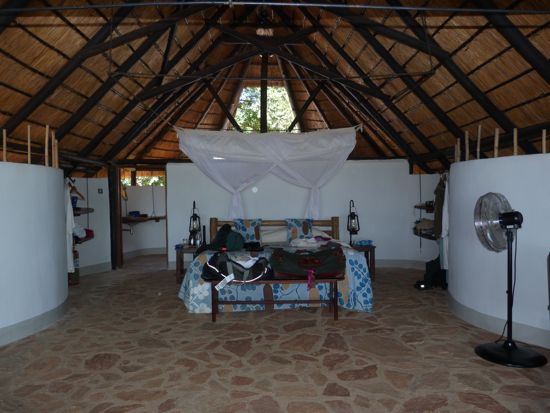
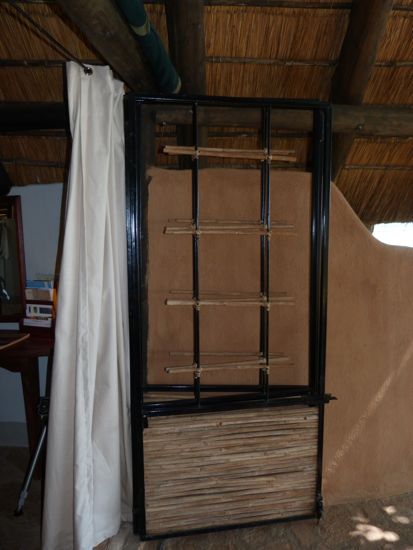
This doesn’t look like a lot, but the screen is enough to keep the wild animals out of your room when the sun goes down:
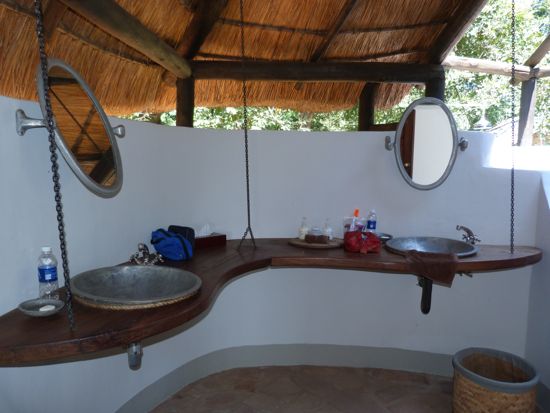
We love this bathroom:

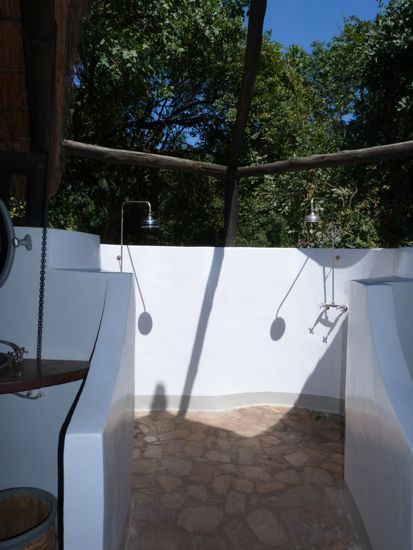
We really really love this, this huge shower, with dual heads, big enough for both of us to shower at the same time, in the hot afternoon.
This is the Nkwali dining area:

This is the pool area and lagoon adjoining the dining area:
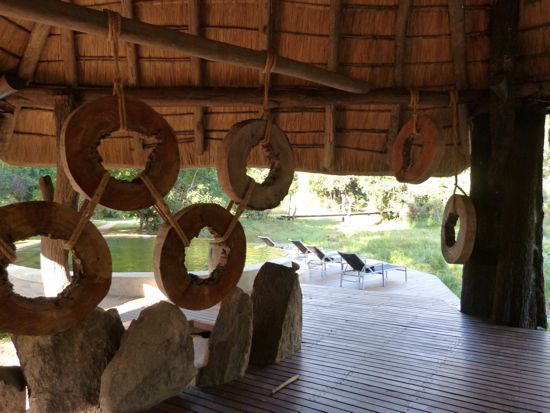
This is the gathering area/bar, and also where the campfire is, and where we eat breakfast around the campfire:
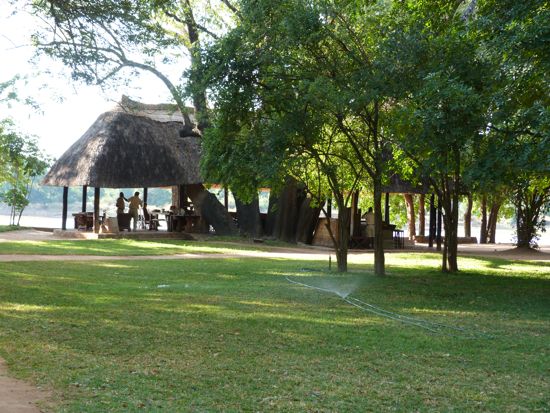
It seems to me that Nkwali is pretty much the intake area, where they help us all understand how things work, then they send us off to the other camps, Nsefu and Tena Tena, or to the fly camps (outdoor camping), or the mobile tented safaris. Before you go, you have to know the protocols, so Nkwali sort of educates you.
Your day goes like this – drums, get up, get dressed, go eat, load up into the car, go look for game. Back to camp for lunch, take care of washing underwear or hair, take a nap, drums, wake up, drink tea and eat cake, go for a game drive, stop for sun-downers, see lions (if you are lucky), back to camp, meet up in the gathering area/bar for drinks, drums for dinner, eat dinner, lay out your clothes, fall into bed (repeat)
After tea, we took a boat, polling back across to the national park, where we left the car. We drive, admiring giraffe (many!) and elephant and hippo. We run into one elephant who seriously, seriously does not like us. He does several mock charges, but he doesn’t walk away, he keeps charging.

We had a beautiful sunset on the river, and then went seriously looking for lion.


At the same time the sun is setting in the west, the full moon is rising in the east, fabulous:

The most exciting part was coming across a group of three young lions, one with a battered and bleeding ear, who tolerated our photo-taking until they didn’t. Then, one got up with a roar, and started walking and roaring.


Have you ever heard a lion roar? It is very very impressive; very loud, very resonant, it shakes your bones with its power. Shortly, one of his brothers joined him. They walked away down the wadi (what we call dry river beds when we live in the Middle East) and we thought we had a great night. Little did we know we were also going to have a leopard walk right next to our vehicle, and each of us was working frantically to figure out night time settings, so totally unexpected that not one of us got a photo. It didn’t matter. The very closeness of the passage and his utter disregard for our presence, his focus, was amazing and memorable.
All this fresh air and fabulous meals – Now I am back on schedule and sleeping through the night. I can hear the hippo outside munching as I am drifting off – but I just smile to myself and go happily straight to sleep.
Alaskan Heritage Celebration
I’m researching the Inuit / Eskimo / Yup’ik mask my Mother bought lo, these many many moons ago, and like anyone born to research, I am hopelessly lost, and enjoying every minute of the journey.
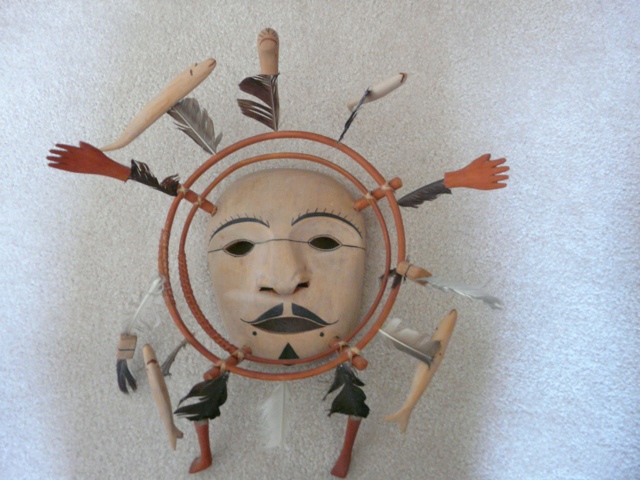
I’m not Alaskan. I was born in Alaska, and so many times through the years when I see blocks that need ticking, I have been tempted to tick “native Alaskan” but I know that they don’t mean me, and that there are people who really deserve those preferences. I FEEL Alaskan, even though I’ve been gone a long time.
(My Mother used to tell us not to play with the “natives” because “they had knives!” (Big scary eyes). LLLOOOLLLL! Can you think of any quicker way to get your kids to play with the forbidden group? They had knives! Plus, they were our neighbors, and our classmates, and we all played together. Skied together. Played Cowboys and . . . Indians. Yes! We did! LLOOOLLL!)
I found this fabulous video of segments from the “Celebration 2010” There is a reason I am sharing this – first, for all my friends of all nations who love textiles and handwork as I do – and our name is legion – I want you to see this video and to see the magnificant ceremonial robes they are wearing. They have to be hand made; they are each so individual, even among people of the same clan, the bear is different, one from the other, the fish – different, the raven – fabulously different, I even saw a sun! I hope your heart goes pitter patter, just as mine is going.
I wish I could bring this entire celebration to Kuwait and do a presentation with the KTAA (Kuwait Textile Arts Association.) They would LOVE these crafts, and the dancing. Look at the wonderful drums!
Second – did you hear them ululate? This is what I love about my travels; no matter what our differences, we have some amazing similarities.
Celebration, a First Nation heritage event taking place in Juneau, Alaska, originated and was sponsored in 1982 by Sealaska. The gathering takes place every other year and is the biggest event for Native Americans in Alaska for Tlingit, Haida and Tsimshian peoples.
To me, the coolest thing of all is that this is not done for tourists, but for the First Nation peoples, to transmit their culture to their children, and to celebrate themselves. This second video focuses on the clans and their special dances:
Now here is the exciting thing. It only happens every two years. This year it will take place June 6 – June 9. Here’s the information:
Celebration Native Cultural Conference
June 06, 2012 to June 09, 2012
A biennial Native cultural celebration featuring colorful costumed processions, dance performances, authentic arts and crafts and gatherings. Held in various venues including Centennial Hall Convention Center.
907-463-4844
http://www.sealaskaheritage.org
We already have plans for this June (I’ll share more about that later) but I talked to AdventureMan and said I really, really want to go in 2014. He said (are you sitting down?) “That’s just the kind of thing I LOVE! We’ve been planning to go to Alaska anyway, let’s go for that celebration!”
And that is why, after all these years of being married, I still adore my husband. He is a man with a heart for Adventure, and he gets all excited about the same things I do, well, some of the time. There was a falcon fest once in Tunisia that he dragged his feet on because he had just gotten in from a long trip, but once we got there, we all agreed it was one of those things that we would have regretted forever if we missed it. He is always up for a new adventure!
Wooooo HOOOOOOOOO!
See you there?
Up in the Air
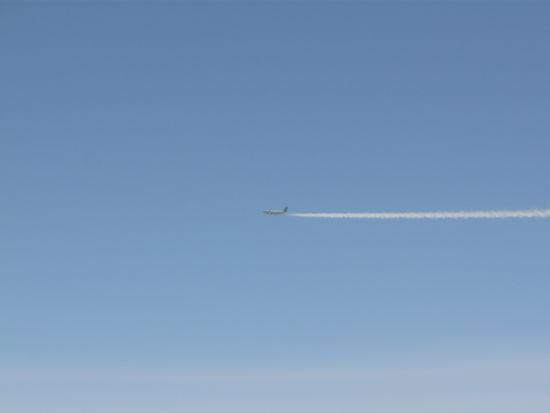
Every now and then, when it doesn’t matter, when I don’t have a tight connection, I take a window seat because I really love topography. I especially love flying the polar route, seeing the ice fields in Greenland and northern Canada, and I always love mountains.
This flight, I have a great seat, 20F, and I love it because while it is a window seat, there are only two seats in front of us, so I can exit and enter my seat as I please, without disturbing anyone, so it is like having a window seat that is an aisle seat, LOL.
Warning: don’t try this at home. Often, when you schedule for 20F, the plane reconfigures so that there is a three seat across in front of you, so you don’t have that easy enter and exit. One time, row 20 wasn’t even in the plane and the rows started with 21. Life doesn’t come with guarantees, especially when it comes to flying cattle class, so just relax, have a good engrossing book, some snack that will tide you over until your next stop and headphones, if that helps you shut out the world you are in.
Here is some of what I enjoyed (fortunately, my seat mates were also readers and preferred having the window shade open; I’m not always so lucky)

It almost hurts me physically when I have to leave the mountains behind . . .
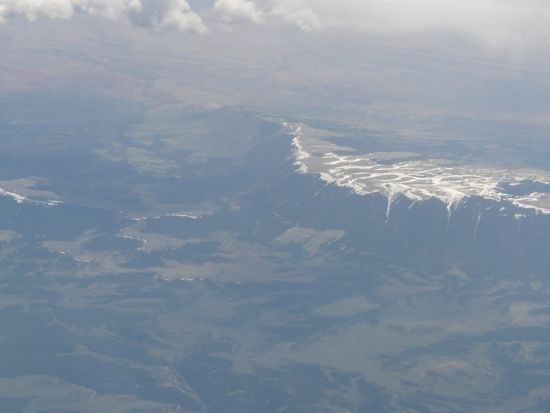
Don’t you love the way the snow and ice appear to drip over the side of this Rocky Mountain area plateau?

The sheer natural power of the river+time combination that ate these paths awes me.
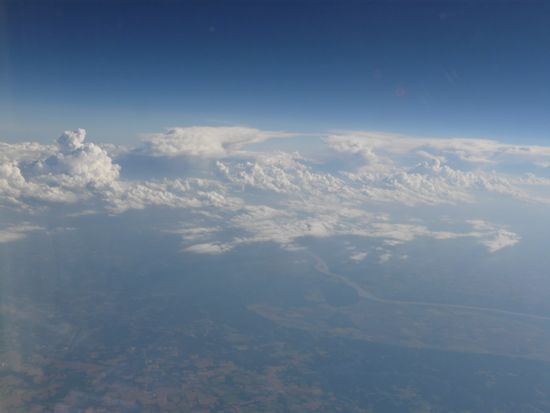
Back in the flatlands, with some puffy, billowy cloud cover. I keep hearing Joni Mitchell singing . . . . 😉
Navajo Tacos in Mesa Verde
Back when we left Grand Canyon, we stopped to take photos at a gorge, and there were some shops setting up nearby, so I stopped by to take a look. As I was looking, the man running the shop I was in asked where I was from. I said “Pensacola” and then realizing that not everyone knows where Pensacola is, I added “Florida.”
There was a silence. I looked up and asked “Have you been in Pensacola?” and he said “Yes.” He had been in the military, trained in Orlando and then had some additional training in Pensacola. Small world. 🙂
It was a nice chat. He knew we were driving through the Navajo Nation, and told us to be sure to stop somewhere for a Navajo Taco, that we’d like it. We tried to stop, but it was Sunday and everyplace was closed. We ended up eating in a Subway, we like Subway, but they’re everywhere and I’m not about to take a photo of a Subway to show you where we ate, LOL.
Anyway, after our 700 Year Cultural Tour, we drove down to Spruce Tree House restaurant, the only place open for lunch in Mesa Verde this early in the season, and there they have a Navajo Taco:

It really was good. The base was a lot like the sopapilla we had in Holbrook, Arizona, and the topping was like chili. Delicious chili.
We also ordered the home-made chips. I always like to see what real chips look and taste like:
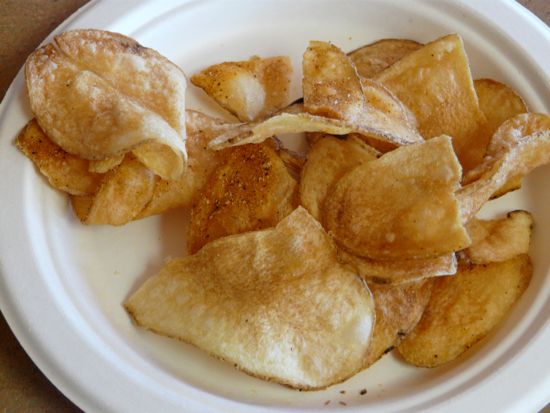
These were also delicious, spicy. We didn’t eat them all, just tasted a few. They were good.
In the afternoon, we visited and revisited several of the sites from our morning tour, appreciating having the sites all – or mostly – to ourselves. In the late afternoon, we tried to capture the great light.
The 700 Years Tour at Mesa Verde
Early early in the morning we are up and ready to grab a bite of breakfast at the Far View Lodge and to take the 700 years tour. When we called for reservations at the Far View Lodge, the desk clerk asked if we would like to sign up for the 700 Years of Culture tour, and since Sparkle had told us that the tours fill up early, we signed up.
The light in Mesa Verde is beautiful at eight in the morning, and we were shocked when thirty-something people around our age (I guess we are all out exploring America!) got on the bus. Somehow, for $45, I had thought it would be a tour of five to seven people. I didn’t think so many people would pay so much for a tour!
The guide, Dave, and the bus driver, Leiter, were both local men, living in Cortez, men who double as guides a couple days a week to liven up their retirement. Dave’s depth of knowledge and investigative spirit was impressive; clearly he has a passion for the Ancestral Puebloans, and reads everything he can get his hands on. He has read all the latest studies and speculation, and as a farming man, he had some of his own down-to-earth speculations which he shared with us. It was all good stuff.
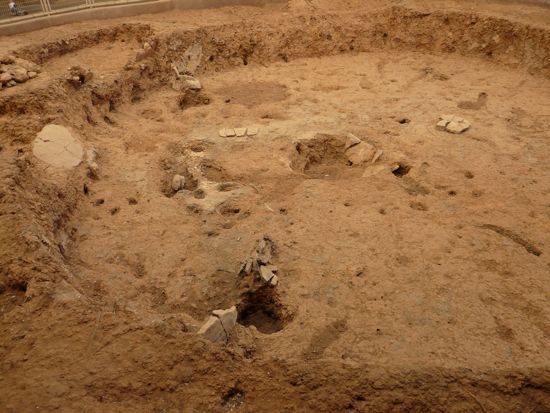
First, we went to look at early pit dwellings:
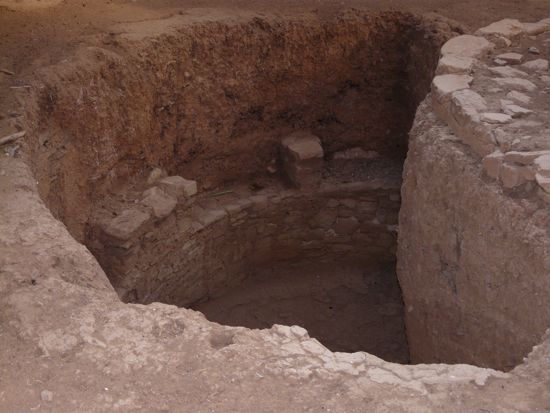
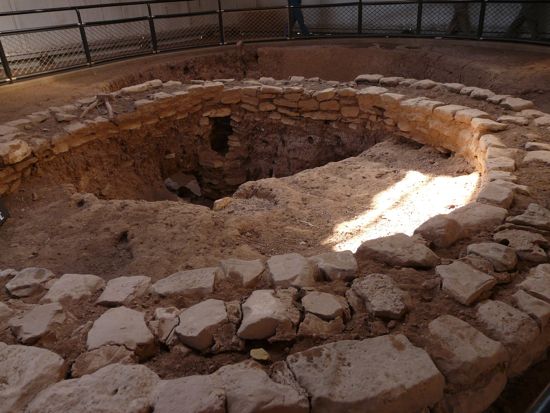
And then we headed off to visit some of the more and less famous cliff dwellings:

Does this remind you of anything? (Hint: see previous post)
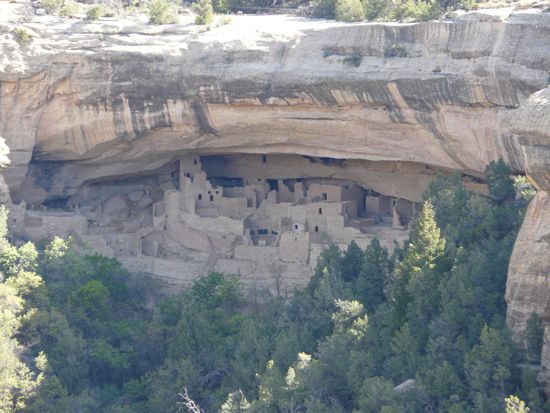
Look at the terrain – so similar to other places where similar dwellings have evolved . . . (Hint Hint: Les Eyzies de Tayak) There are cliff dwellings in almost every conceivable concavity.
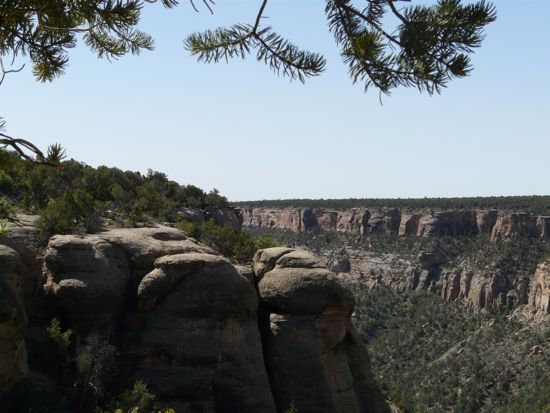
From pit dwellings to small family dwellings, to multiple family dwellings, small villages . . .
This is the Cliff Palace, a multiple family dwelling:


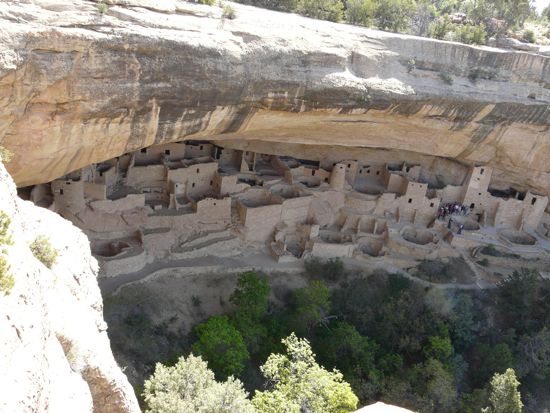
And then, the old legend goes, they just disappeared . . . or did they? Dave, the guide, tells us that the Apaches and Navajos won’t come any where near the Mesa, that the mesa is full of old spirits, not their spirits. The Hopi, however, a little further South, have no fear; the customs and dwellings of the Ancient Puebloans are familiar to them.
It’s kind of like conspiracy theories. We all love a good scary story.
“And then, they all just disappeared!”
But Dave thinks they didn’t disappear, that maybe they just moved on. Maybe too many years of drought, or maybe the soil they were farming gave out. Maybe they heard life was easier a few miles down the road and just picked up and moved a little on down the road . . . which seems to me to be a more logical, if less romantic, possibility.
Anyway, one of the things I really liked was that these ancient peoples, whoever they were, built their dwellings in locations and styles similar to the pre-France people of . . .umm . . . err. . . France.
I need to add a footnote here. This doesn’t happen to everybody, but it happened to me. Once I got to Grand Canyon, activities that I normally do without batting an eye began to be harder. I am a walker and a hiker, but any time I had to hike uphill in the Grand Canyon, I was huffing and puffing like a geezer. “Oh no! Oh no!” I was thinking to myself, “I must have some terrible respiratory condition! I’m suddenly getting old!”
Not so. As it turns out, I am just sensitive to high altitude. I should have known. I drove through Colorado once, and my eyes turned bright red, tiny little capillaries in my eyes burst.
At 8000 feet, in Mesa Verde, I could function, but sometimes found myself huffing and puffing. As soon as we descended a couple thousand feet, I was fine. Leiter, the bus driver, told me that many athletic teams train at high altitude so that when they perform, at a lower altitude, they will exceed themselves. It is such a relief to be able to move fast now, and not puff. I always took it for granted before. Not now.
Petroglyphs in the Petrified Forest
So here we segue back to the Petrified Forest, and it may not seem logical in a linear, chronological sense, like time-as-pearls-strung-together-on-a-string sort of thing, but in terms of like things, the next chronological entry is going to be on 700 years of culture, the Ancestral Puebloans who used to be called the Anasazi, but before I go there, I want to show you some petroglyphs.
(I’m putting in a lot of links in case you are as big a petroglyph nerd as I am, and want to read more)
I always imagine the problems with being early man. Imagine they are smart, and spend a lot of their days figuring things out, most important being 1. What are we going to eat? 2. How are we going to keep dry/warm? 3. How do we protect ourselves from our enemies? They have the same problems we have, only on a much more basic level, and with fewer resources.
Have you ever thought about how easy it is to get information now? (The hard part being sifting through so you get the most reliable, most relevant information). Imagine a world where you have to figure it out for yourself, every day.
Early civilizations fascinate me. I am always interested in little tiny things that can be very important, like how did they fasten skins together to keep themselves warm? How do you poke a hole in a sharp bone so you can use it as a needle? How do you make a button, or make strips that can be used to tie clothing together?
How do you fasten a spear head onto a spear, or an arrowhead onto an arrow?
Early man was a problem solver, and I am fascinated by petroglyphs, which are either early attempts at documentation, or early attempts at communication, or maybe both? The first petroglyphs and cave paintings I ever visited were the Font de Gaume Caves near Les Eyzies-de-Tayac-Sireuil, and they took my breath away. I didn’t even hesitate because it was a cave, I wanted to see them so badly.
I want you to look at this photo of a fairly early dwelling in Les Eyzies de Tayac-Sireuil and hold it in your mind before we move on:

Later, living in Saudi Arabia, one of the most fun day trips ever was to a rock formation called Graffiti Rock, which had no protection, so very old petroglyphs mingled with modern carvings, but some of the older carvings were so interesting, so intriguing.
Coming across petroglyphs in the Petrified Forest was a delight.
Here is part of what the national parks website has to say about petroglyphs found in the Petrified Forest:
In 1977 a spiral petroglyph at Chaco Canyon National Monument was discovered which displayed a precise interaction with sunlight at the time of summer solstice by means of a narrow shaft of sunlight that moved down a shadowed rock face to bisect the center of a large spiral petroglyph. Subsequent observations found that on winter solstice and equinoxes there were intriguing interactions of sunlit shafts with the large spiral and a smaller spiral nearby. No other example of a sunlight interaction with prehistoric or historic petroglyphs was known at this time. However, there was a tradition of Pueblo sun watching in historic times, particularly of the varying sunrise and sunset positions throughout the year, to set the dates for ceremonies.
As a result of the Chaco Canyon find, Bob Preston initiated a research project to determine whether other petroglyph sites in the Southwest functioned as solar “observatories.” Over the last 16 years he has identified about 120 examples of similar solstice events at more than 50 petroglyph sites in Arizona, New Mexico and southern Utah. Evidence indicates that the phenomenon may have been spread over as much as a 1000-km region. These findings show clearly that certain petroglyphs were used by early pueblo cultures to function as calendrical markers for the winter and summer solstices. Petrified Forest National Park contains the greatest known concentration of solar calendars, with 16 of the sites being in or immediately adjacent to the park, and has been key to understanding their nature.
Shadows and sunlit images are found to move across petroglyphs due to other rocks being in the path of the sun’s rays. As the sun’s path across the sky changes throughout the year, the positions of the shadows and sunlit images change on the petroglyph panels. In many cases the petroglyphs have been placed on the rock faces in just the right position so that specific interactions occur on the solstices. The most common types of petroglyphs on which solsitial interactions have been identified are spirals and circles. The key to determining that these were intended and not by chance is that interactions are seen from site to site, and occur on the solstices more frequently than on other days of the year. These consistent interactions may involve a point of sunlight or shadow piercing the center or tracing the edge of a spiral or circular petroglyph; or shadow lines may suddenly appear or disappear at the center or edges of the petroglyph; or they may move up to the center or edge and then retreat. It is not uncommon for a single petroglyph to display multiple interactions of this type, either on the same solstice or on each of the solstices. In fact, at one site, there are five circular and spiral petroglyphs that show 15 interactions on the both solstices.
An intriguing question is whether types of petroglyph images were involved with specific dates. In several cases similar sunlight and shadow interactions occur on spiral and circular petroglyphs on the equinox, and distinctive interactions occur with other petroglyphs on the solstices and other dates. Clearly much of the puzzle remains to be unraveled.
There was a WEALTH of petroglyphs. I’m just going to show you a few of those we found:
This one makes me laugh; it looks so much like our modern day stork-who-brings-babies (LOL, where did that legend/story start anyway??)

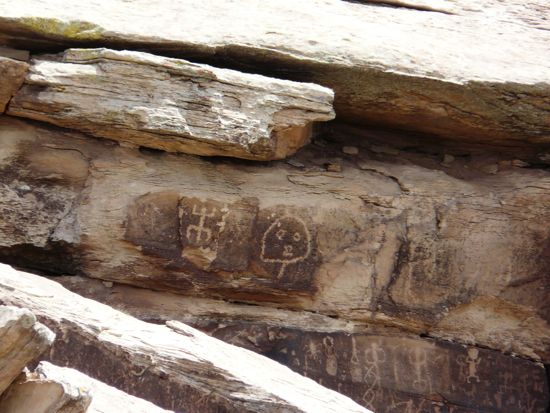
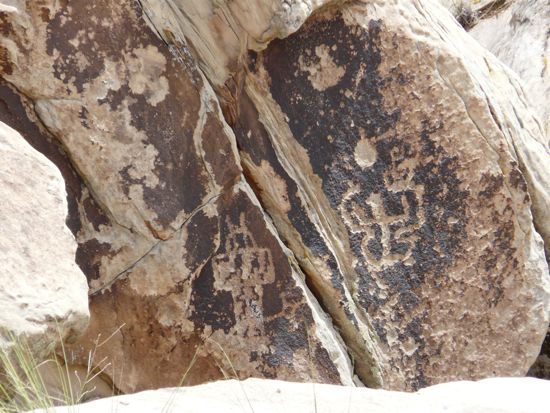

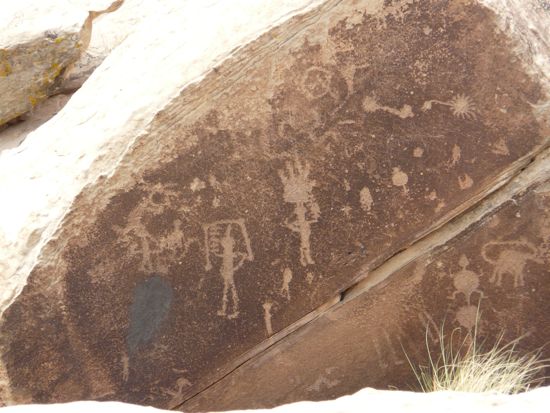
LOL, these feet are larger than life, or else they were made by giants!


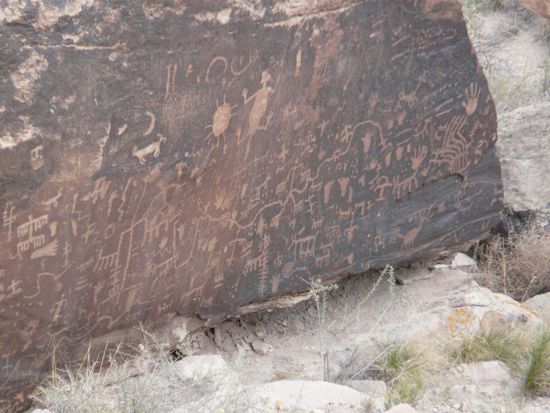
Early people in widely separated parts of the world carved and painted on rock, probably for a number of reasons, maybe keeping track of solar activity and seasons, maybe magical/religious thinking for a good hunt or nostalgia for a good hunt, maybe just someone who, like today’s blogger, just has to document in some way . . . 😉
Last Dinner in El Tovar
Yes, it’s early, and we aren’t all that hungry, but it’s easy and close and it’s the last dinner we will have at El Tovar.
They gave us a beautiful table.
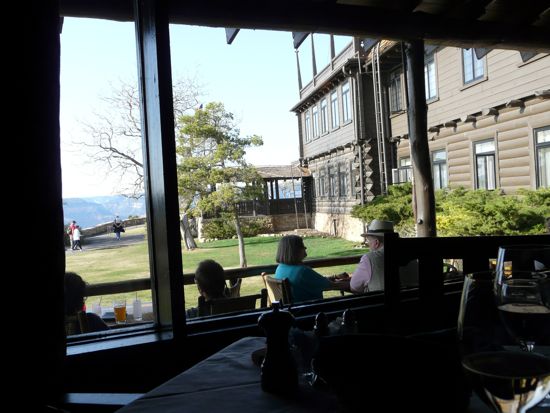
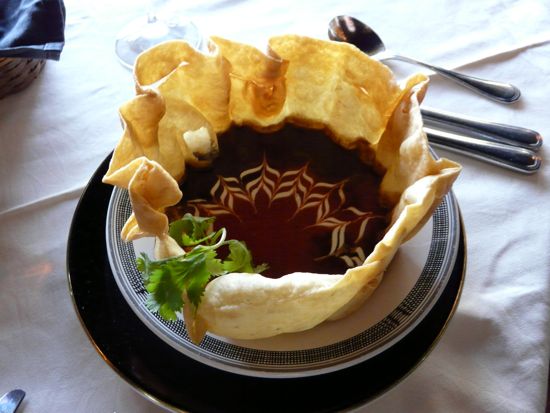
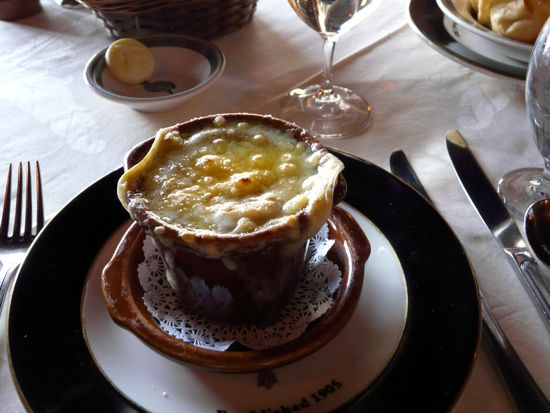
We order, AdventureMan ordering the signature soup and a Salad; I ordered the French Onion Soup and Crab Cakes. I know, I know, I can get great crab cakes in Pensacola, I guess I just wanted to see how they did them. (They did great.)
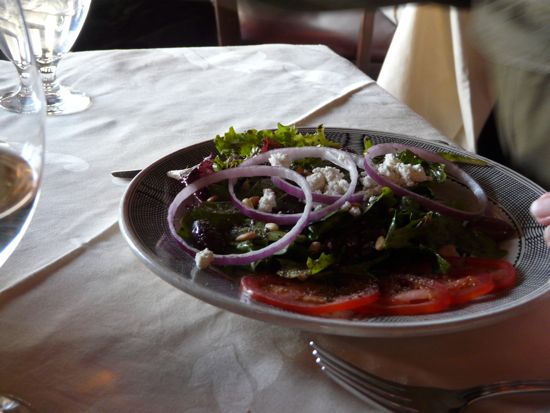
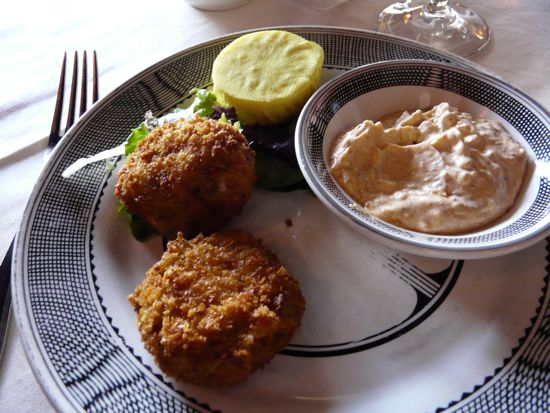
I forgot to take a photo of dessert! I did take a last evening photo of the canyon.
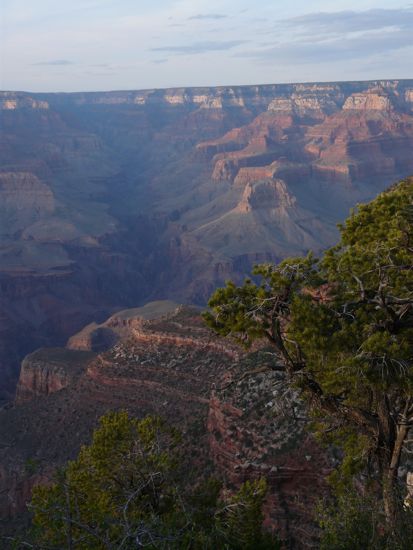
We are up at six the next morning to get an early start on the next leg of our journey, today to Mesa Verde, Colorado, driving most of the day through the Navajo Nation.
On our way out, AdventureMan stops so I can take a photo of one of the signs – Mountain Lion – don’t you love it?

And one last photo of the Grand Canyon as we depart:
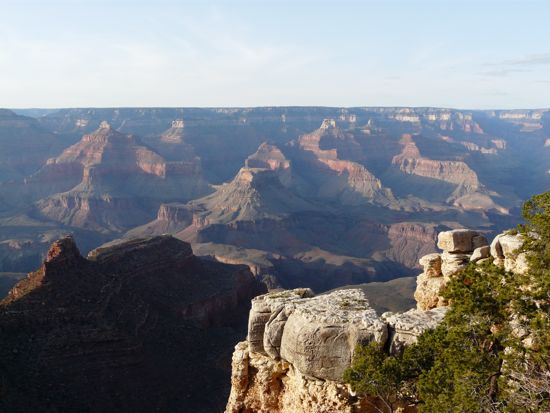
A last note – late April is a perfect time of year to visit the Grand Canyon.
Grand Canyon: Early East Rim, Breakfast at El Tovar and Shuttle along the West Rim
When your day starts at five in the morning, you have a lot of hours in your day!
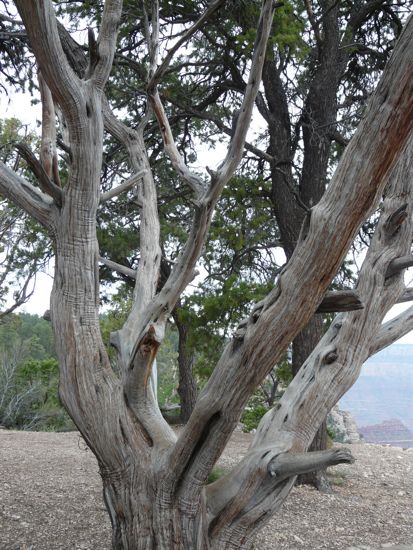
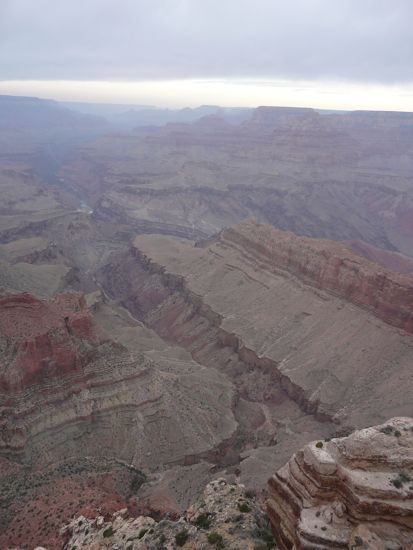
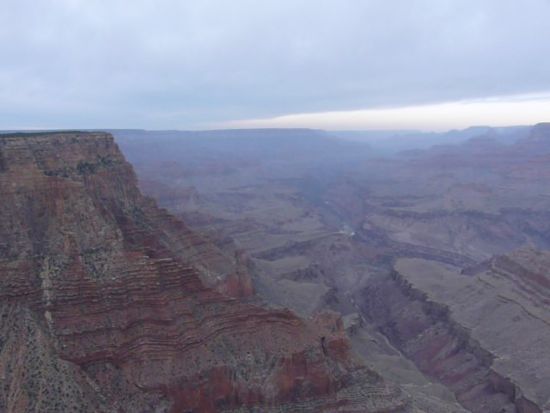

We were back at the lodge by seven, where there is already a crowd lining up for breakfast. We had such a great dinner the night before, we decide to have breakfast and then take the shuttles along the western rim of the canyon.
The El Tovar Dining room is as beautiful by day as it is by night:
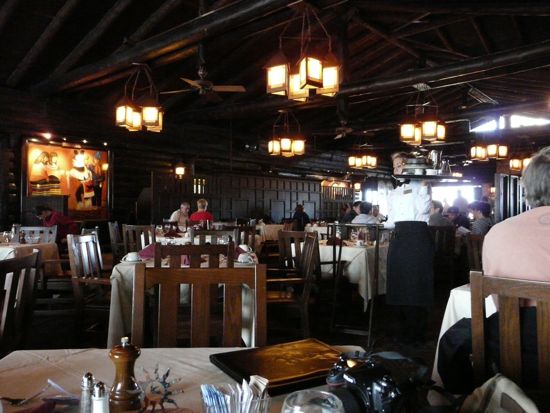
We are on the south west side of the dining room, near a large fireplace and far away from the view, but it hardly matters – the view is there, 24/7, for anyone who wants to visit. We see fabulous plates arriving at all the tables, and we watch a new wait-person being trained in the El Tovar way of doing things. It was great entertainment. Our breakfasts were divine.
AdventureMan’s breakfast:
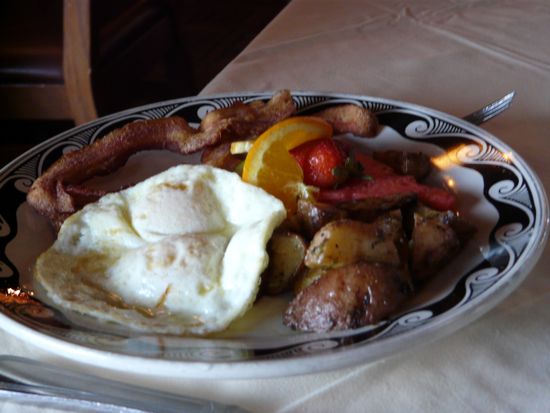
I had Eggs Benedict, with smoked salmon instead of the traditional Canadian bacon:

We run upstairs to brush our teeth, and then head out to explore the western rim before the train arrives, at 1100, bringing in many more people, even in these early spring months.
The shuttle system is a marvel. Different colored lines have different routes, and there are maps that show what color the bus is that goes where you want to go. We walked to the red bus stops, hopped on, hopped off, hopped on, hopped off, hiked a little, hopped back on, hopped off, hiked a little more, met some great people and had a lot of fun taking photos.
The sun has burned off the clouds, it is still a little hazy but a great, sunny day.


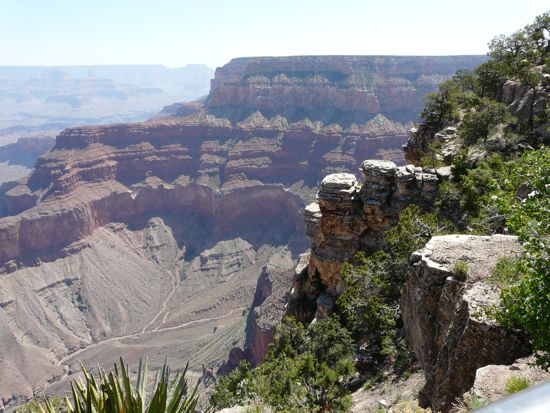

We hit Hermit’s Rest, at the end of the shuttle line, around 11:30, and head back to Grand Canyon village.

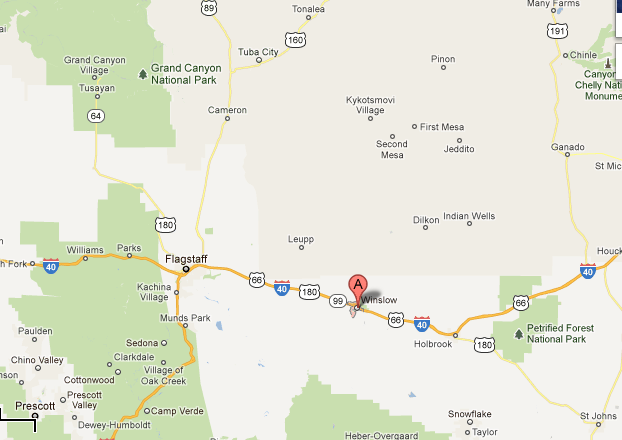
La Posada Hotel: A Restored Gem and a Great Retreat in Winslow, AZ
AdventureMan was stunned. “Tell me again how you found this place?” he asked, incredulously. I’m embarrassed at how easy it was. When I was looking at places we wanted to go, AdventureMan had mentioned the Painted Desert and the Petrified Forest, so I had Googled “really cool hotel near Petrified Forest” and LaPosada popped up in a TripAdvisor reference. I’m embarrassed at how easy it is to get information these days. 🙂
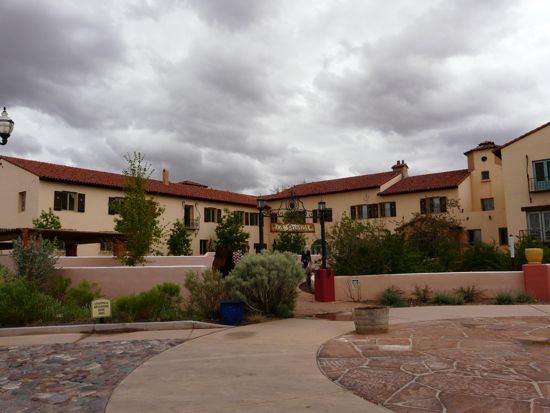
Do you see the camel at the entry? How could we not love this place?

Since we often wander, and don’t really know where we will be until a night or so in advance, I print out information and carry it in an old fashioned paper folder that has envelopes on both sides, so I can stick things in and they won’t fall out. In Albuquerque, I showed AdventureMan some photos from the La Posada website, and he was sold. We called, reserved a room for the next night, so we knew we could spend all the time we wanted in the Painted Desert and Petrified Forest and that a room would be waiting for us.
Every room in our wing has a name, named after famous people who have visited La Posada in its rich and famous past, and we are in the Turrell Room:

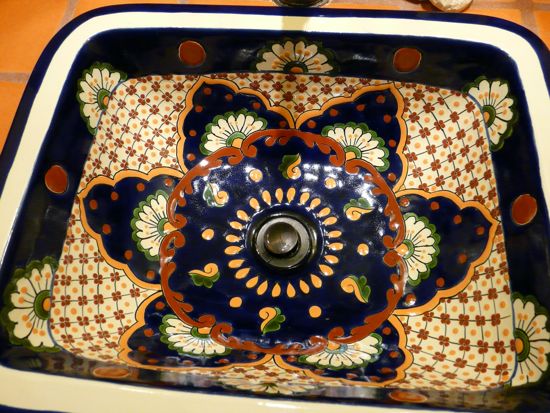
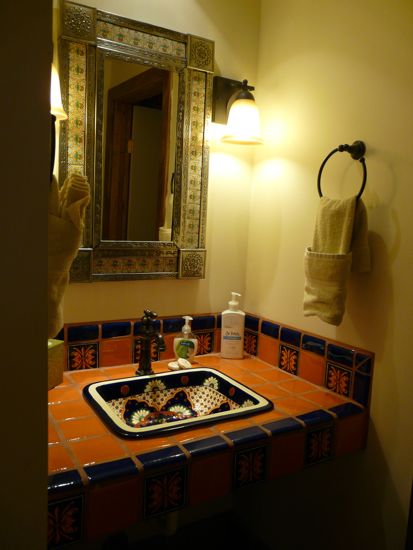
We had no idea how lovely that room would be. I am a total sucker for shiny wooden floors, and for textiles, and for space to breathe, and our room had all this – and more. It had a painted ceramic sink in the washroom area, and a glorious tiled wall in the whirlpool bath room. The whirlpool bath worked flawlessly.

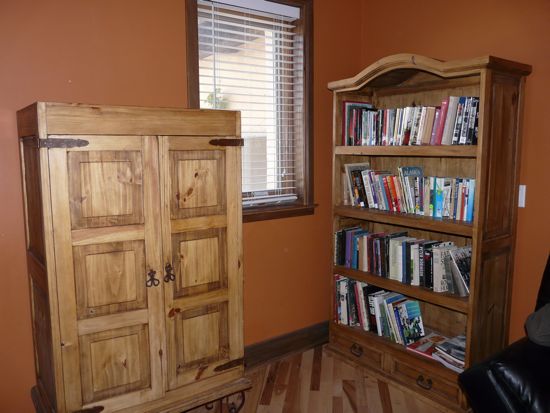


Although we were tired, we were eager to explore this fascinating hotel. We couldn’t stay in the room, it was too exciting, too much to see! We went down a hallway to the gift shop, which also serves as reception:
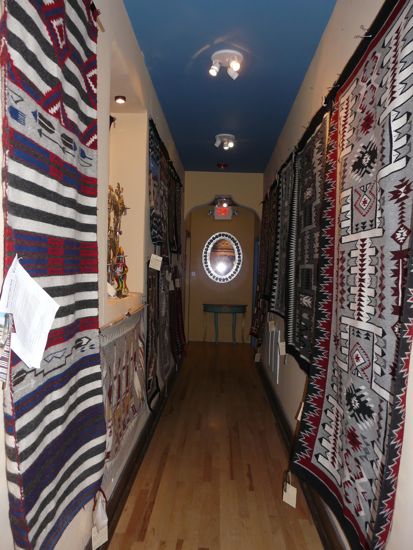


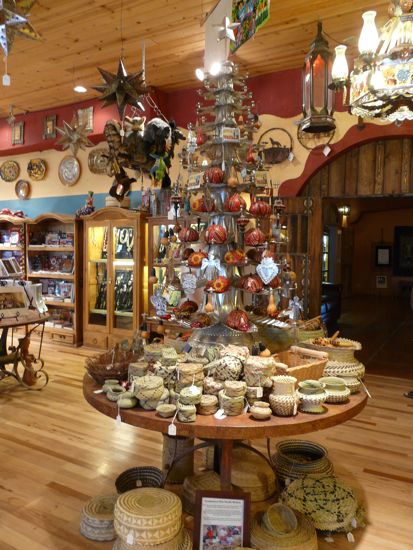
The spaces are fabulous, each one defined and delineated from one another by changes in surface textures, lighting fixtures, beamed ceilings, windows . . . there are endless possibilities for discoveries. We watched a film about the history of the hotel – it was actually a very long film, but fascinating – about the architect, Mary Elizabeth Jane Colter, and the building of the hotel in an amazingly short time for the amount of materials and techniques necessary. The hotel was built in 1929 by the Santa Fe Railway for the Fred Harvey Company. Mary Coulter seems to have had carte blanche in putting in just about anything her imagination could cook up.
Although the hotel went out of business and was remodeled in the sixties for the railroad company (a total desecration of the beautiful spaces), it has been lovingly and passionately restored, with near fanatic attention to detail. There are many spaces where people can gather to read books, play games, share a drink or a cup of coffee, big spaces and little spaces, and every space is beautiful.
Built before air conditioning, the original hotel incorporated a wind tower, something we saw often in old houses in Qatar and Kuwait, where any little breeze was captured, brought into the interior and circulated – La Posada had the same technology.

Now, for some of the public spaces, gathering spaces and places of peace and serenity.
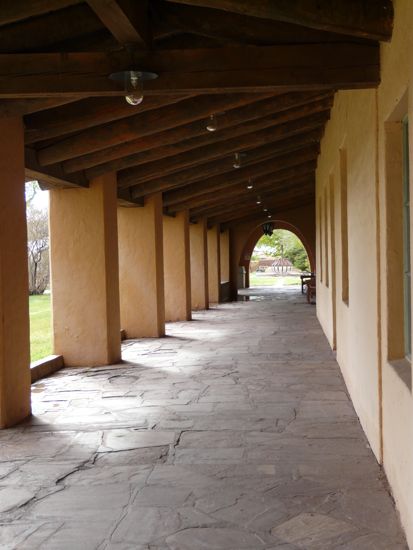
La Posada was a destination hotel, with a train station just paces from the hotel lobby and reception. This is the arcade arriving guests would walk through to reach the hotel:
The hotel lobby, outside the Turquoise Room restaurant:


A beautiful, small, intimate space where we watched the film about the restoration of La Posada:

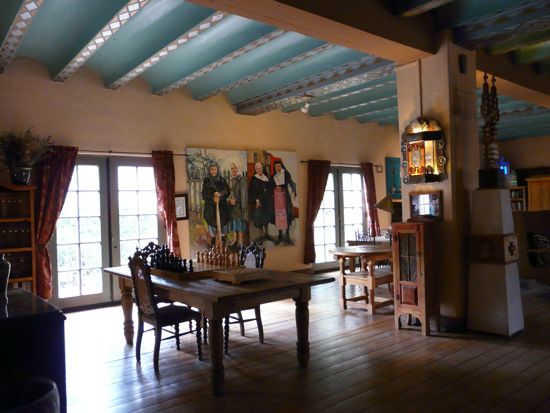
The upstairs gathering room, full of books, games, chess and checkers sets, tables, chairs, couches, all to make guests comfortable and give them a place to relax and get to know other guests:


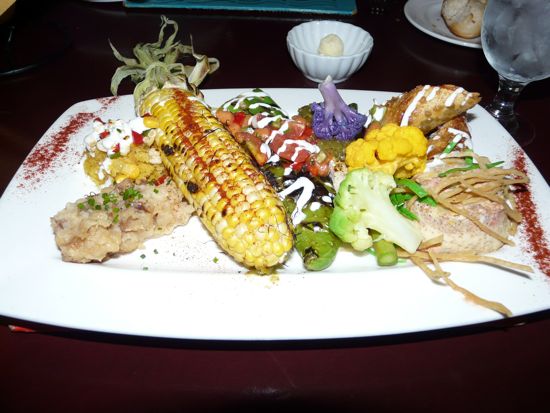
That night, I had one of the best dinners of the entire trip, a vegetarian plate that knocked my socks off in the La Posada restaurant, the Turquoise Room:
We also had a Grand Marniere Chocolate Mousse, oh, to die for.
Breakfast the next morning was oatmeal, in the same restaurant, but oh, what exquisite oatmeal, and I don’t really even like oatmeal. I guess I like oatmeal at La Posada 🙂

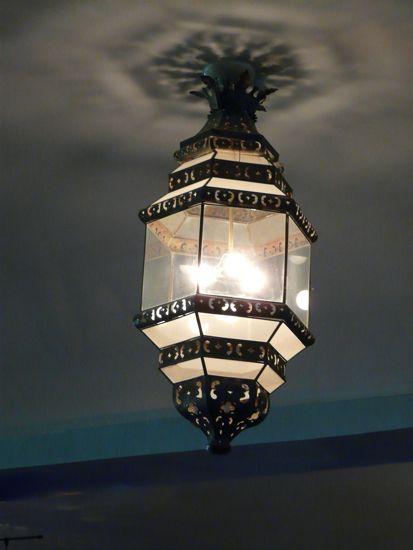
Last – and least, but I can’t help it, I am a sucker for light fixtures, really lovely light fixtures, and I loved these, probably because they take me back to our times in the Middle East:
La Posada is close to the Petrified Forest and the Painted Desert, Canyon de Chelly, many more amazing sights of north western Arizona. You can get out and explore, and spend your nights in luxury and ease in a beautiful surrounding.
Recent Comments
intlxpatr on Shampoo Ginger tigerbutterya0c5ff1d… on Shampoo Ginger intlxpatr on British Soldier Kidnapped, Esc… John on British Soldier Kidnapped, Esc… intlxpatr on British Soldier Kidnapped, Esc… Wikipedia Donate Button

Amazina


Early Voting in Florida


