Oscar Romero, Patron Saint of The Americas and El Salvador
My friends, when you hear that the immigrants seeking a new life in our country are rapists, thieves, the mentally ill and very bad people, please think of Oscar Romero, and all those who have fought the evil forces of thuggery and dictatorship to find a life of freedom for themselves, and for their families, especially, hope for their children.
I urge you to read a much criticized book, American Dirt, by Jeanine Cummins. Here is what Wikipedia says. My experience was that the struggles exposed in American Dirt are very typical of people seeking to escape the violence of their societies.
American Dirt is a 2020 novel by American author Jeanine Cummins, published by Flatiron Books. The book is about a Mexican bookseller who is forced to flee as an undocumented immigrant to the United States, along with her son, after her journalist husband exposes a local drug kingpin.
ÓSCAR ROMERO
ARCHBISHOP OF SAN SALVADOR, AND THE MARTYRS OF EL SALVADOR
(24 March 1980)
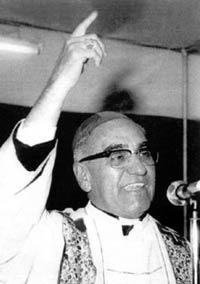
Óscar Arnulfo Romero y Galdámez (August 15, 1917 – March 24, 1980), commonly known as Monseñor Romero, was a priest of the Roman Catholic Church in El Salvador. He later became prelate archbishop of San Salvador.
As an archbishop, he witnessed numerous violations of human rights and began a ministry speaking out on behalf of the poor and victims of the country’s civil war. His brand of political activism was denounced by the hierarchy of the Roman Catholic Church and the government of El Salvador. In 1980, he was assassinated by gunshot while consecrating the Eucharist during mass. His death finally provoked international outcry for human rights reform in El Salvador.
In 1997, a cause for beatification and canonization into sainthood was opened for Romero and Pope John Paul II bestowed upon him the title of Servant of God. Pope Francis canonized Romero as a saint on 14 October 2018. He is considered the unofficial patron saint of the Americas and El Salvador and is often referred to as “San Romero” in El Salvador. Outside of Catholicism Romero is honored by other religious denominations of Christendom, like the Church of England through its Common Worship. He is one of the ten 20th-century martyrs from across the world who are depicted in statues above the Great West Door of Westminster Abbey, London.
from Wikipedia
Also commemorated on this day are three Maryknoll nuns and a woman lay missionary killed by a Salvadoran army death squad on 2 Dec, 1980, and additionally six Jesuits, their housekeeper and her daughter, who were also murdered by the Salvadoran army on 16 Nov. 1989.
Small Groups and the Seven Deadly Sins
One of the great calming forces in my life is meeting with my small groups. One is a monthly book club; we are not all of the same mind; we bring different perceptions, and it is good for us. New doors open, we see things differently. Yesterday, I was confronted by a woman who reminded me that when she was reviewing a book she loved, and wondered why it was not popular, there was a silence. And then I said “Well, it was poorly written.” I expected a rebuke, but she said that having given it some thought, now she agrees. Whew!
(I hate confrontation. And I also have a big problem with lying. I believe lying hurts the person receiving the lie, and it hurts the liar. I think lies are seeds that grow wildly, creating a thicket of evil. Unintended consequences.)
My other small group doesn’t meet all the time, just for studies two or three times a year. Small group are where real connections are made, so the church makes an effort to help us connect with one another. This small group has met at the same time with the same leader for several years. It has several people who have been with this group for a long time. New people come once or twice and are never seen again, and some come and settle in for the long haul. We are diverse, from all segments of the church, and we have a wonderful gift in common. As we study and apply scripture, we laugh at ourselves. On rare occasions, we cry with one another. It is a band of buddies, and our buddies keep us safe in life.
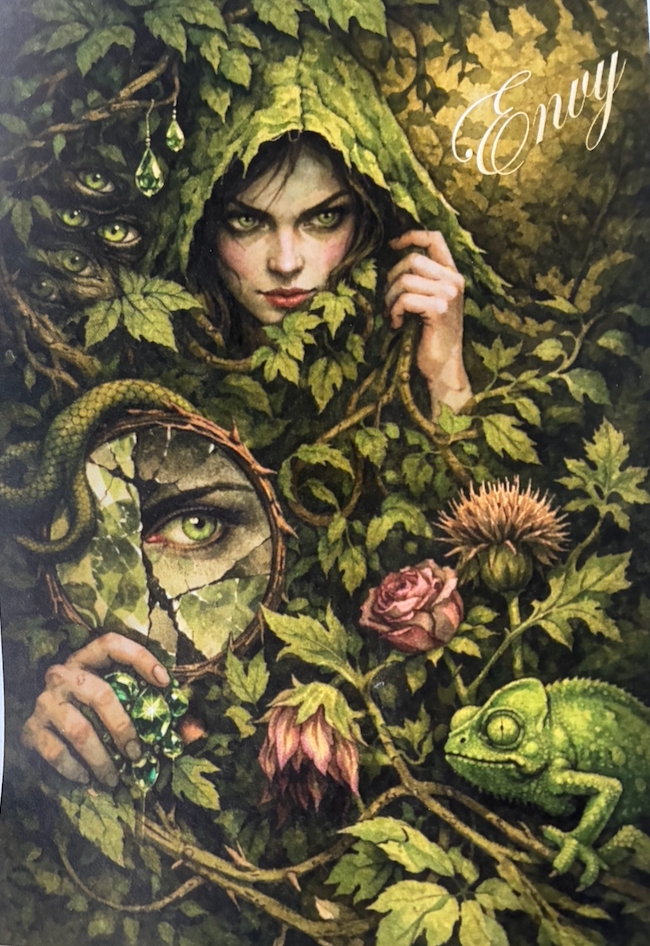
Last night we were working on Envy. It was fascinating, and I learned something new. There is a technical difference between jealousy and envy. Jealousy is having something/someone and being afraid of losing what you have. Envy is wanting something – or something better than – someone else has, or something you lack. That’s food for thought for the rest of the week.
As a group, we thought the illustration for Envy was fabulous. One member asked to look at all the eyes, all green, and notice how cold envy is. Another said that Envy is the only deadly sin that gives no pleasure. We only have six weeks; it makes me laugh to know that the deadly sin of Lust is optional.
During an epoch when I find events stirring in me emotional turbulence, I leave these groups feeling at peace, and I sleep well at night. The world goes on. We find our people. They help us shoulder our burdens and march alongside us. Thanks be to God.
Anna Julia Haywood Cooper
Today the church honors Anna Julia Haywood Cooper, an extraordinary woman who prevailed against prejudice.
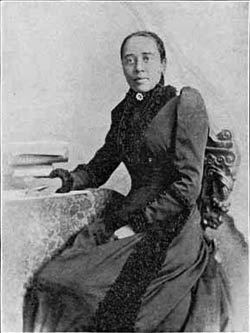
ANNA JULIA HAYWOOD COOPER
EDUCATOR
(1964)
Anna Julia Haywood Cooper (August 10, c1859- February 27, 1964). Educator, advocate and scholar. Born in Raleigh, North Carolina to an enslaved woman and a white man, presumably her mother’s master, Anna Julia was an academically gifted child and received a scholarship to attend St. Augustine Normal School and Collegiate Institute, a school founded by the Episcopal Church to educate African-American teachers and clergy. There she began her membership in the Episcopal Church. After forcing her way into a Greek class designed for male theology students, Anna Julia later married the instructor, George A.C. Cooper, the second African-American ordained to the Episcopal priesthood in North Carolina.
After her husband’s death in 1879, Cooper received degrees in mathematics from Oberlin College, and was made principal of the only African American high school in Washington D.C.. She was denied reappointment in 1906 because she refused to lower her educational standards.
Throughout her career, Cooper emphasized the importance of education to the future of African Americans, and was critical of the lack of support they received from the church. An advocate for African-American women, Cooper assisted in organizing the Colored Women’s League and the first Colored Settlement House in Washington, D.C. She wrote and spoke widely on issues of race and gender, and took an active role in national and international organizations founded to advance African Americans.
At the age of fifty-five she adopted the five children of her nephew. In 1925, Cooper became the fourth African-American woman to complete a Ph.D degree, granted from the Sorbonne when she was sixty-five years old. From 1930-1942, Cooper served as president of Frelinghuysen University.
from the Episcopal Women’s History Project
Pensacola New Year’s Sunset over the Bayou
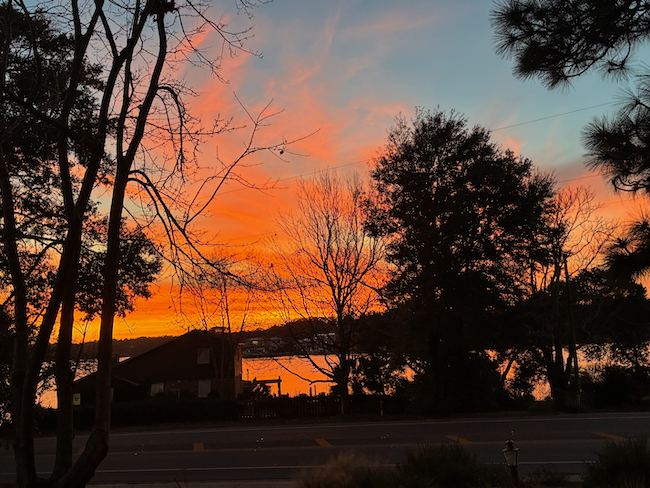
We moved to this house at the beginning of COVID. You wouldn’t think it was a great time to go house hunting or to move, but it worked for us. Almost every day, I thank my husband for moving here (he had said “No more moves!” but COVID made things different.) Almost every day is a sunset – not unlike this one, but no two are identical. Every day. It never fails to thrill my heart. Happy New Year!
Diwali: A Light Sparkles in Dark Times

Today, Labor Day, when dark events are taking place in our country, shutting down the light of liberty and democracy, we got an unexpected invitation – to a Diwali party, coming up in a couple months.
We are so honored. And we know Diwali; we were living in Al Fardan 1, in Doha, Qatar, when an Indian neighbor invited all the residents of Al Fardan to come over for Diwali. We didn’t know what Diwali was, and our internet was dial-up and irregular, but we asked around and were told, with big smiles, to go and find out.
The night of Diwali came, and we walked to our neighbor’s house, along with many of our Al Fardan neighbors. We could see it long before we arrived – thousands of candles set out in patterns in the yard, lining the sidewalk, leading us inside, to more lights and a feast of sweets, platters of sweets, all illuminated by gleaming candlelight.
Such open-hearted hospitality. Such generous sharing. No one was excluded; everyone was welcome, and there was plenty for everyone.
Our neighbors’ beliefs were different from ours, and yet, I believe all such generosity, freely given, springs from the same spirit.
We can’t wait for this upcoming Diwali.
When the News is Personal
MARTYRS OF THE SUDANS
(16 May 1983)

Photo From the Episcopal News Service
The Christian bishops, chiefs, commanders, clergy and people of Sudan declared, on May 16, 1983, that they would not abandon God as God had revealed himself to them under threat of Shariah Law imposed by the fundamentalist Islamic government in Khartoum. Until a peace treaty was signed on January 9, 2005, the Episcopal Church of the Province of the Sudan suffered from persecution and devastation through twenty-two years of civil war. Two and a half million people were killed, half of whom were members of this church. Many clergy and lay leaders were singled out because of their religious leadership in their communities. No buildings, including churches and schools, are left standing in an area the size of Alaska. Four million people are internally displaced, and a million are scattered around Africa and beyond in the Sudanese Diaspora. Twenty-two of the twenty-four dioceses exist in exile in Uganda or Kenya, and the majority of the clergy are unpaid. Only 5% of the population of Southern Sudan was Christian in 1983. Today over 85% of that region of six million is now mostly Episcopalian or Roman Catholic. A faith rooted deeply in the mercy of God has renewed their spirits through out the years of strife and sorrow.
From the proposal before the 75th General Convention
We have a friend in South Sudan, Manyan Debid Mayer. We met him with a delegation of African Journalists here in Pensacola looking at Freedom of the Press with Gulf Coast Diplomacy. He came to our house, with two other African delegates, shortly before Christmas, and we had a lovely and memorable evening together sharing our stories.
Manyan Debid told us about his childhood, as the Janjaweed attacked in Sudan, and how very suddenly, often in the middle of the night, an entire village would have to evacuate, carrying only what they could carry on their backs. It was chaotic, terrifying – and deadly. Villages would be burned and razed to the ground.
The villagers would run towards the missions in Uganda for safety. Sometimes families got separated. The children found shelter, and care, at the missions while they waited to be reunited with their desperate parents. At the missions, the priests would teach the children the basics, using a stick, and drawing letters, shapes and numbers on the ground. Manyan Debid, now a journalist, got his start with those very basic lessons at the mission churches.
We Americans know so little. Few even know where South Sudan is, or that it is a separate nation from Sudan, one of the newest nations in the world.
I got caught in a comical situation as I tried to wire funds to Manyan Debid once during continued difficulties in South Sudan. I went to my bank and asked them to wire x amount of money to my friend. They looked at me oddly. They called the bank manager, and had hushed conversations. The manager came in and interrogated me very gently, asking how I know this person, did he contact me over the internet, how often did he ask me for money, questions that were none of his business – except, as it turns out, it was. They thought I was an old lady being scammed by some internet scammer. Did I even know, they asked me, that Sudan was on the restricted countries list?
I explained equally gently and firmly that South Sudan is a separate country from Sudan, and how I knew this man, how we had met in Pensacola through a visit arranged by the Department of State, how he had been a guest in my house and that we had corresponded as friends, on Facebook for years. They didn’t believe me. They didn’t believe there was a separate country called South Sudan. At the end, I finally had to tell them it was MY money, and that I could send him this amount and even if it were a scammer, it would not hurt me. Very reluctantly, they wired the funds to my friend.
Manyan Debid and I are still in touch. Today, he is a working journalist in South Sudan, still bravely facing the forces who would like to take South Sudan, and all its oil wealth, and destroy the existence of South Sudan.
There are still martyrs in South Sudan. And most Americans don’t even know South Sudan exists.

Morocco Malta and the Med: Tunisian Interlude
We aren’t just sailing away from Malta. We are sailing toward a part of our history, and please pardon that these photos are not that great; I don’t even know what kind of camera we were using and they are now very old.
We lived in Tunis for two years, courtesy of the US Government, wanting us to be linguistically and culturally more fluent. For me, it was scary at first – coming from Monterey, CA and entering into what seemed to be a very alien culture.
It began a great leap in opening our visions to other ways of thinking.
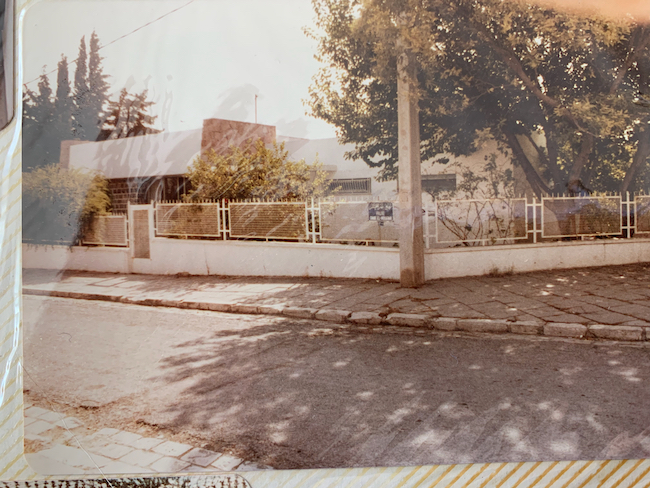
Below is our old villa – I am showing you this because when we went to visit it, it looked entirely different.
Our son went to a local Pre-School, Joie de Vivre, the Joy of Life 😊. This is his class photo.

AdventureMan on our back porch, where we often ate. We only had air conditioning in our bedrooms. The candelabras (there were two) were made for us in Binzerte.


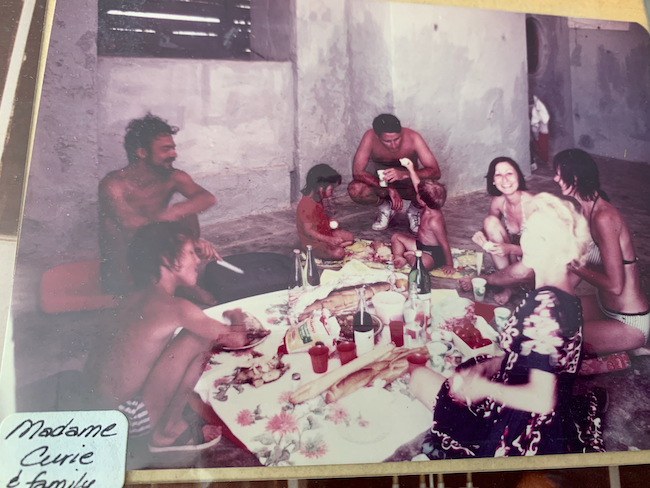
My French teacher, Madame Huguette Curie invited us into her culture; she lived on Avenue Habib Bourgiba in a palatial apartment and had this seaside cottage where we could swim and picnic together. She was beautiful and cultured, and helped us learn about and love our time in Tunisia.


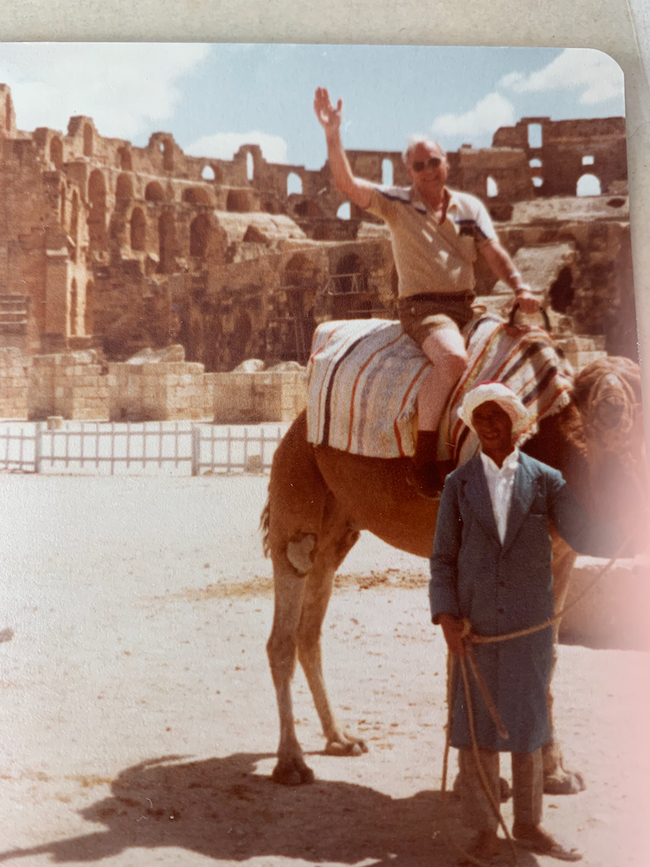
My parents came to visit, and we had a wonderful time showing them Tunisia. This was at the Ampitheatre in El Jem.

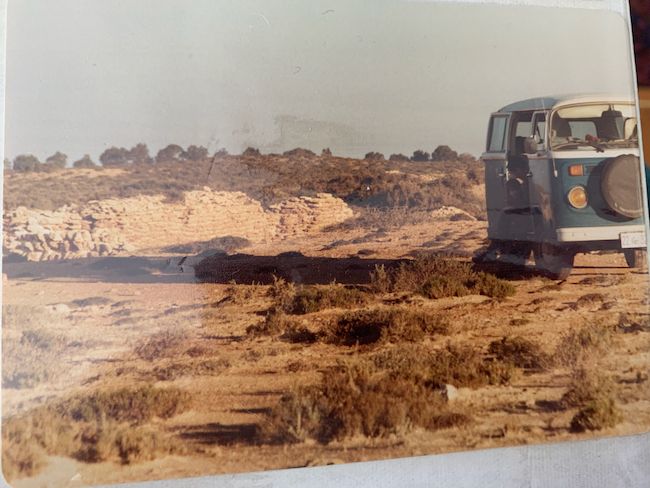
We camped in desolate areas – now built up – in our Volkswagon Bus.
Once a year, there was a Bedouin festival in Douz (where much of the original Star Wars was filmed.) We camped there, too, and have never been colder in our lives than in the Tunisian desert in late November.

The Camel Market in Nabuel was a great weekend favorite.
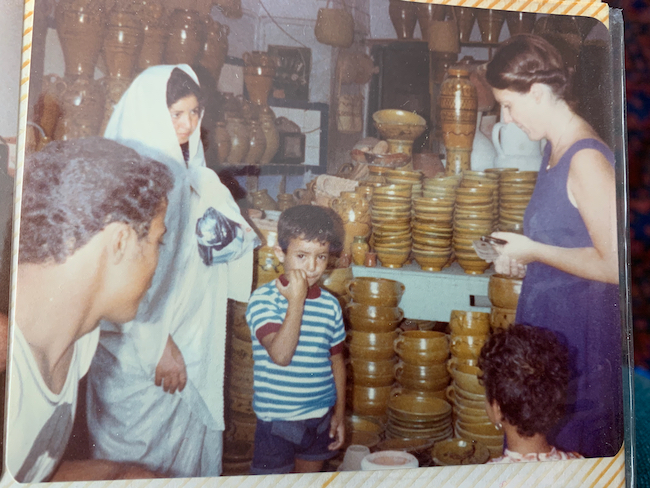
So my friends, on! on! We are on our way back to Tunis, 46 years later.
Saying Goodbye to Al Marai Coffee Cups

All my nomadic life, I have had to sift, sort and weigh the value of my belongings – literally. As an Army wife and later a corporate wife, I had a weight allowance as we moved from country to country. My life was full of leaving things behind – friends, churches, social groups, jobs, my identity – as well as belongings.
Unlikely items made the cut. In 2003, when we moved to Doha, Qatar, I discovered a nearby store, the LuLu (which means lovely large pearl), where a gallon of Al Rifai milk came with a free coffee cup sturdily taped to it. I was delighted. I’ve always believed good design does not necessarily correlate with price – and these cups were a perfect size and had these wonderful scenes from Doha life, where there was a dhow harbor in the center of town, dhows in the harbor, and camel races with human riders on Saturdays. Look! The dhow coffee cup even has a wind tower in the background.
So yesterday, Christmas Day, as I opened two beautiful new coffee cups, one from Giverney and one from Barcelona, my husband looked at me sorrowfully, and approached the subject gently.
“It’s time we give up the Doha coffee cups,” he said.
“They have served us well. They are over 20 years old. They were free, probably made in China from materials we don’t even want to think about. I use them all the time, and even as I do, I wonder what might be leaching into my drink.”
I know he is right. There is no marking of any kind to indicate origin. After all these years, marks are appearing where we have stirred for twenty years. And yet – these cups have served me loyally. They are still bright and unmarred. I love their memorialization of a slower time in Doha. And I have options.
At Christmas breakfast, I have the cups out on display and offer them to my son. He is a discerning collector of first editions by selected authors, first edition Legos from the space exploration collections, edged weapons, and selected items that catch his attention. He also knows how to buy and sell on the Internet when he wants to refine his collections.
He expresses interest but does not take them with him. Their departure, however, is Christmas Day chaotic – bags full of presents, the food divided to be used for quick meals in the coming week (even our grandchildren contributed to our Christmas Eve dinner, my grandson a crab dip and my granddaughter a wreath made of crescent roll wrapped little smokies. My son, who was never interested in cooking, astonished us with a baked Brie!) and last-minute check-ins on upcoming family plans.
I am a patient woman. I know those cups deserve to find new appreciation in a new home. I believe my son will get involved but if not, I have other options.
Update: This is what it is like to be me. It is not that I am getting older, it is that I will tell you things I believe to be true, and they are close, but not the same.
My friend Yusuf, below, said he thought it must be Al Marai, and that sounded familiar. AdventureMan said maybe really we should keep the cups, and as he handled them, He found Al Marai logos on the cups. Not just one. Two on each cup.

In our family, we are all very very sure we are right. When we are not right, we are required to humbly state it. I was wrong, so very very wrong; the cups were labeled, Al Marai, not Al Rifai, and YOU, Yusef and AdventureMan, were RIGHT.
And we are keeping the cups!
“I Think She’s a Liar!”
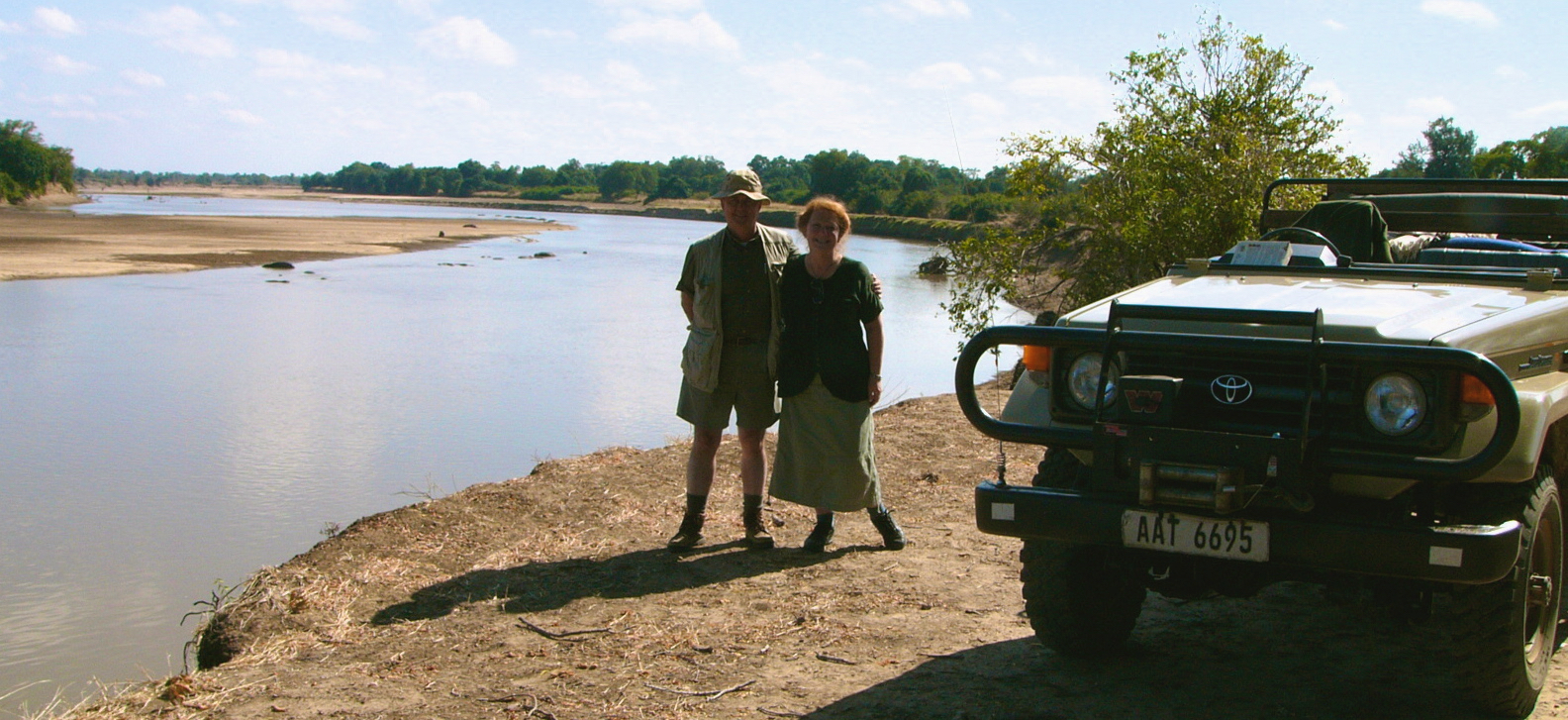
AdventureMan has just come back from running errands and he has some tales to tell. One of his adventures has to do with meeting a woman a little older than him.
“No matter what I said, she’d been there, done that,” he said. “Like we talked about war experience, and I told her I fought in VietNam. She just nodded and said “I lost two husbands fighting in VietNam.”
“We talked about travel in Africa, and as it turns out, she had been everywhere. She’s travelled all the places we’ve been. I think she’s a liar.”
We’ve all run into them – the lunatics who make themselves big by lying.
And then I stopped, caught by a thought. This blog. My own experiences, roaming the world and then settling down in a small Southern city. It sounds wild. Unbelievable.
I have a friend who once told me “Isn’t it wonderful God blessed us with our different kind of lives? I never wanted to travel, and I love that I got to grow up in a small Southern town where I knew everyone.”
She was right. The thought of living all my life in one place makes me choke; I feel strangled. And living here, I am careful not to talk too much about all the places we have lived, and all the places we have visited. I am careful not to talk about the risks we have taken and the adventures we have had. I got the life I was created to live, and it might sound incredible to others.
It brought me up short. I think of people reading this blog and wondering how it can all be true. I read entries from years ago and I can hardly believe it myself! And I believe it’s entirely possible that people might think I am exaggerating or elaborating.
I shrug my shoulders. Yes, I want to have credibility. No, I am not to concerned with whether people believe me or not. And it is interesting to me to be given a sudden shift in perspective. I know how I see myself, and then, in an instant, I see how I might be perceived in another way.
18 Years as Intlxpatr

18 years as Intlxpatr, and who knew I’d still be blogging? I remember the combination of terror and excitement with which I began – and the kindness of the bloggers in Kuwait who welcomed me in, and what great discussions we had. Mostly I remember how much I learned from those early years. I had begun thinking there were things I wanted to remember; I had no idea I would be learning so much, and changing my own perspectives in response. For that, I thank God for giving me the courage to start, and the commitment to persevere.
I’m not the same person now as when I started. What I love is that I am surrounded by people within 20 years on either side of my age who are also changing, evolving, thinking about the bigger things and focusing, too, on the greatness of the small things.
One of the big changes in my life came with being diagnosed with diabetes ten years ago, losing, over the course of ten years, forty pounds and finding again how much I enjoyed swimming. I was once a competitive swimmer; I quit at 16, I just didn’t like being so focused on winning. It spoiled swimming for me. Now, I can’t wait; I get in the pool and just chug along until I’ve done two miles, three days a week. On the days I am not swimming, I miss swimming!
My blood sugar and A1C are NORMAL! I feel twenty years younger!
So today I welcome you in for some healthy and delicious snacks. (Yes! Chocolate is healthy!) All good things in moderation.

My healthy favorite, a blueberry smoothie!

Not boring fruit! Exciting presentation.

Charcuterie!
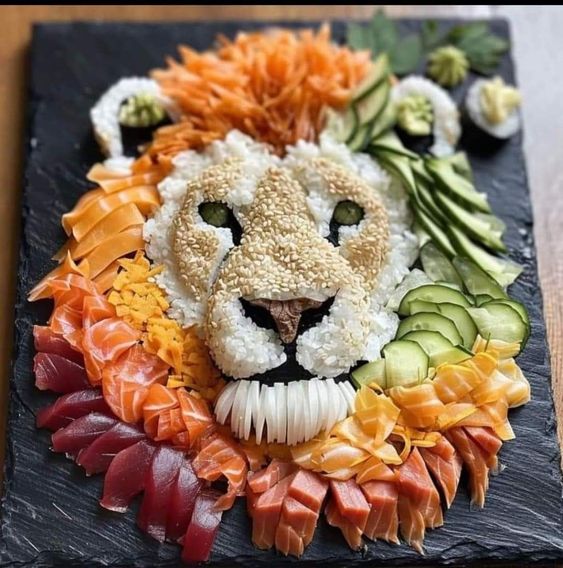
Veggies for the strong and courageous!

Oranges!

Small amounts of something delicious – you get to choose!

Chocolate to top us off, good healthy chocolate.
I appreciate your stopping my to help me celebrate. Thank you for your support these many years.
Recent Comments
ExpatAlien on What Country am I Living … intlxpatr on Yellowstone: Old Faithful to C… Michelle on Yellowstone: Old Faithful to C… Cathy on No Grown-Ups in Charge intlxpatr on Waiting for Snow Wikipedia Donate Button

Amazina


Early Voting in Florida


 Here There and Everywhere