The Church Remembers John of Damascus
Today the church remembers John of Damascus, our good friend who once was the American Consul in Damascus is visiting with us, and we mourn the loss of peace and security in Damascus, and Syria, and the heartless loss of so many lives, the destruction of beautiful Homs, and so many other villages, named and unnamed, and the use of nerve gas on Syrian people.
I love it that he is most often shown wearing a keffiye

The Liturgical Calendar: The Church Remembers
Today the church remembers John of Damascus, Priest, c. 760.
The son of an important official in the court of the Muslim Caliph of Damascus, John had an easy rapport with the Muslims among whom he was reared, and readily succeeded to his father’s office in the Caliph’s court. Later, he abandoned the wealth and comfort of the fashionable life of Damascus and joined a religious community in Palestine.
As he lived the rigorous life of a monk in the stark wilderness near the Dead Sea, his own strong personality began to emerge. He soon distinguished himself as a theologian and scholar. His chief published work extant is The Fount of Knowledge. He is recognized as a “Doctor of the Universal Church.”
However, John of Damascus is most widely remembered for his contributions to Christian worship. He wrote many fine hymns, including two Easter ones that are still popular today: “Come ye faithful raise the strain…” and “The Day of Resurrection, earth tell it out abroad!” He effectively defended the doctrine of the Real Presence in the Eucharist, the veneration of the Lord’s Mother, and use of icons. He became involved in an international religio-political struggle called the “Icononclastic Controversy” which reached violent proportions and shook the Byzantine world. His life was saved in this controversy by his powerful Muslim friends.
We give thanks for John and for all those who have upheld the truth of our faith and the glory of our worship. Amen.
If You Lived Here, I’d Know Your Name: Heather Lende

“You have to read this!” said my book friend, “You’re from Alaska! It’s about a woman who lives in some small town and writes obituaries!”
I grinned politely and put the book in my bag. Some books sound more interesting than other books – I’ve always loved adventures and mysteries and murders – add a little drama to the day-to-day-ness of everyday life. A woman who writes obituaries? Hmmm, not so much.
But spending my afternoons tending to my sweet little 3-month-old granddaughter means I often sit, anchored by the soundly sleeping baby who I don’t want to disturb, even by twitching. I have one hand free – and you can only play so much iPhone Sudoku.
An Alaskan friend had also recommended this book, so early this week I picked it up and started reading.
Oh. my. goodness. Yes, Haines is a small town, but oh the drama of writing obituaries. Oh, the things you learn about your neighbors and the surprises you get learning about their earlier lives. I love the way Heather Lende weaves the writing of the town obituaries with the current ongoing dramas in her own life and in the lives of her friends and makes it work.
It’s not unlike where I grew up, although my hometown had a hospital. We also had moose and bear and elk in our back yards, and learned to treat wildlife with respect, and that the best option was to back away slowly. There are the same senseless deaths from auto accidents, fishing boat accidents and unexpected changes in weather. There is the same feeling of wonder, almost every day of your life, knowing how very lucky you are to live in the midst of such awe-inspiring beauty. It’s hard for me to imagine being an unbeliever living in Alaska.
It’s also a great book to read before going to bed. Some of the books I read are too exciting or too disturbing to read before bed; books that infiltrate your dreams with images and situations that give you a restless night. While Lende deals with death and sadness and drama, there is an underlying message of hope in the neighborliness of your neighbors, the security of living in a town where everybody knows everybody else, in the civility even of people who strongly disagree with one another. If You Lived Here, I’d Know Your Name gives you peaceful sleep. She ties it all together with an ending that rips your heart out; you will never forget this book once you read it. After reading, you will feel like you have lived in Haines, Alaska.
The paperback version is available from Amazon.com for $9.73. No, I no longer own stock in Amazon.com.
Elizabeth of Hungary
You think life would be sweet if you were born rich and beautiful, but not so much for Elizabeth of Hungary. She saw – and endured – so much in her short life. I can imagine that the best would be that her children were not killed, and the worst would be having them taken from her.

Today the church remembers Elizabeth, Princess of Hungary, 1231.
Being born wealthy does not assure security in life, and one’s own generosity to others does not guarantee repayment in kind by others. Elizabeth was the daughter of the king of Hungary. She married Louis the Fourth, Landgrave of Thuringia, Germany. She was a loving and exemplary wife and mother. However, when she was only twenty years old, her husband was killed and she and her children became the wards of her husband’s cruel and selfish brother, Henry Raspe. Eventually he expelled Elizabeth and her children from the family home, Wartburg Castle.
Elizabeth sought refuge in the church in Marburg, but even there she was not kindly treated. The stern, powerful, and insensitive priest, Conrad, called “the Master of Marburg,” had her children taken from her and placed her in a convent of women Franciscans, known as Poor Clares. There she was treated with almost sadistic severity. “Like grass beaten by a thunderstorm,” to use her own phrase, she revived to become the most beloved “sister of the poor” of Marburg. She often sewed garments for poor children until her fingers bled, or went days without sleep while caring for the sick. She died in 1231, at the age of twenty-four.
In all our struggles, give us strength to cling to you, O God, our only true and lasting hope. Amen.
Almighty God, by your grace your servant Elizabeth of Hungary recognized and honored Jesus in the poor of this world: Grant that we, following her example, may with love and gladness serve those in any need or trouble, in the name and for the sake of Jesus Christ; who lives and reigns with you and the Holy Spirit, one God, for ever and ever. Amen.
“How Have You Managed . . . ?”
“What do you mean?” I asked the elegant grinning lady who was asking me the question. Three former military wives, one Army, one Air Force and one Navy, and we had been talking about our world-wide lives and adventures.
“How are you doing? You haven’t been here long. Are you managing to settle in?” asked with enormous sympathy.
She caught me off guard.
Yes, I am happy. I’ve settled in. I have friends. I’m connected.
But her question caught me off guard, and all of a sudden I couldn’t answer.
“I’m doing OK” I managed to start. “But it’s like this church. I love this church, and at the same time, there are times I walk in and oh, how I miss our churches in the Middle East, where I would walk in and think ‘this is what heaven must look like’ especially at Christmas, with all the Indian families in their saris and finery, and the Africans in their brocades and elaborate head-dresses, and the people from all over the world. The music was simpler, and at the Christmas Eve service, we sang ‘Silent Night’ in every language in the church . . . I miss that.”
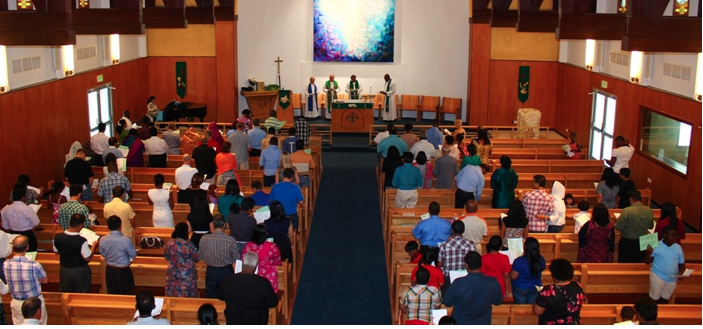
There are times the memories catch me unaware, and leave me breathless.
AdventueMan and I went grocery shopping today and when the cashier told me the total, AdventureMan almost gasped. I just laughed and told him that’s why I never took him grocery shopping with me in Kuwait – the sticker shock would have killed him.
Life here is definitely easier.
On the other hand, we have had to revise our ideas about Kuwait drivers. At first, we just thought there were a lot of Kuwaitis living in Pensacola; now we have realized that there are people who just drive as they please. Some of them are stoned out of their minds. I witnessed an accident last week where when I checked the driver of the car that was hit, she grinned at me loopily – and then disappeared. It was bizarre, and I wonder how many people are on the roads as impaired as she was. She went right through a stop sign as if it weren’t even there, and if the car had hit 6 inches more forward, she would have been dead. She didn’t have a scratch. And she was not at all concerned, just that loopy grin. “Elegantly wasted” said the driver of the car who hit her.
We both have a lot going on. With connection comes commitment and obligation. We try to coordinate our schedules at the beginning of the week so we can help one another out. The highlight is that each afternoon I am taking care of our new little granddaughter. AdventureMan/Baba often comes by and naps in the peaceful environment just to be with us. She is a sweet, laughing little baby, never very fussy. He offers me a day off, which occasionally I take, or he takes a time when I have a meeting or an appointment. We have both discovered how very much we like the ‘work’ of grandparenting. 🙂
We’re managing. 🙂
The Alaska State Museum in Juneau
“Oh,” the docent laughed, “everyone asks about that old bear. He hasn’t been around for years. He got all patchy because all the kids touched him and his hair fell off.”
LOL. I know one of those kids. There was a big sign that said “Do Not Touch the Bear” but he was a snowy white polar bear and . . . irresistible. My Dad worked in the same building as this museum, in its old location, and I would meet him there for a ride home after going to the library.
I loved this museum.
This time, it was one of the highlights of the entire trip. This museum is rich in well-curated pieces, and they are beautifully arranged. A new museum is going up; I can only hope that when it opens, it is at least as well done as this one is. Both AdventureMan and I could spend a lot more time in this museum.
Carving at the entrance:


Bent wood box

Painted chest

Ceremonial robe

Everyday clothing
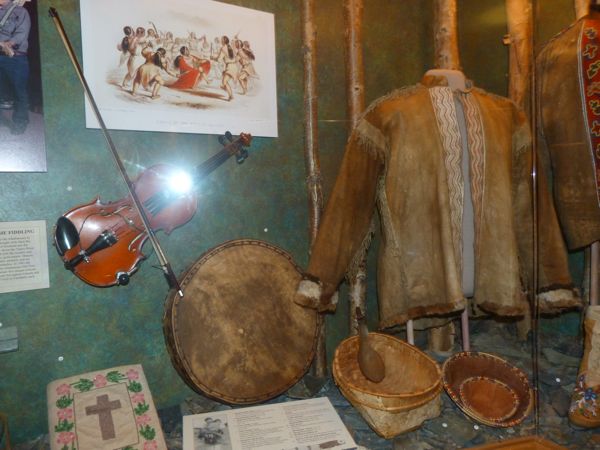
Upiq masks

Close up Upiq masks

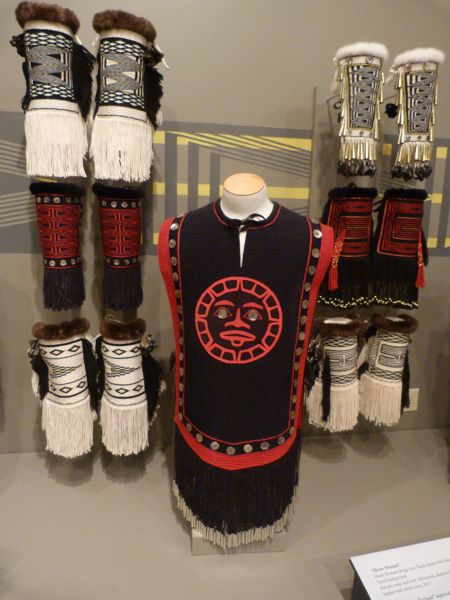
Sun motif ceremonial outfit – look at the leg pieces – don’t they look like Sadu weaving to you?

Moon motif ceremonial outfit
Hand made hats. I was so surprised; these are like prayer caps in Oman and in Pakistan and I think in Indonesia. That they would be so similar in shape and geometric embroidery was amazing to me.

Eagle’s nest display, with eagle sounds. I love this! There is also a bear, but positioned so you really cannot touch . . . 😦


Corner pillars of Alaskan native houses used to look like this, not exactly totemic but with carved spirits:

There is so much more. I focused on the Alaskan Native inhabitants, but there are also exhibits of the coming of the Russians, the gold rush, the transition to territory and statehood . . . I can only take in so much at one time! Good thing we are going back 🙂
ALASKA STATE MUSEUM
395 Whittier Street
Juneau, AK 99811-1718
Tel: 907.465.2901
Fax: 907.465.2976
Americanah and Chimamanda Ngozi Adichie
Rushing from one meeting to another yesterday, I had just an hour – but during that hour, Terry Gross was interviewing one of my favorite authors, Chimamanda Ngozi Adichie, and Chimamanda Ngozi Adichie does GREAT interviews. She is funny, and educated and insightful; she can talk about painful topics and make you laugh and cry with her. That interview was a blessing on my day.
I started reading Chimamanda Ngozi Adichie when I was in Kuwait. A good friend approached me and asked me to form a book club. LOL. This is a friend I can’t say no to. Every introverted bone in my body was screaming “NO! NO!” and I smiled at her and said “Yes.”
God is good. He laughed when I said “yes” and through the book club, introduced me to authors I might never otherwise read. The club was made up of many nationalities, and we read books from everywhere, unforgettable books. We read Chimamanda Ngozi Adichie “Half of a Yellow Sun.” Once you read Chimamanda Ngozi Adichie, there is no going back. I wonder if I will be able to hold out on Americanah until it comes out in paperback?
This is from the National Public Radio website, so you can actually listen to the interview yourself, should you want to get to know this delightful author a little better.
‘Americanah’ Author Explains ‘Learning’ To Be Black In The U.S.

When the novelist Chimamanda Ngozi Adichie was growing up in Nigeria she was not used to being identified by the color of her skin. That changed when she arrived in the United States for college. As a black African in America, Adichie was suddenly confronted with what it meant to be a person of color in the United States. Race as an idea became something that she had to navigate and learn.
The learning process took some time and was episodic. Adichie recalls, for example, an undergraduate class in which the subject of watermelon came up. A student had said something about watermelon to an African-American classmate, who was offended by the comment.
“I remember sitting there thinking, ‘But what’s so bad about watermelons? Because I quite like watermelons,’ ” Adichie tells Fresh Air‘s Terry Gross.
She felt that her African-American classmate was annoyed with her because Adichie didn’t share her anger — but she didn’t have the context to understand why. The history of the trans-Atlantic slave trade was not taught to students in Nigeria. Adichie had yet to learn fully about the history of slavery — and its continuing reverberations — in the U.S.
“Race is such a strange construct,” says Adichie, “because you have to learn what it means to be black in America. So you have to learn that watermelon is supposed to be offensive.”
Adichie is a MacArthur Fellowship winner and author of the novels Purple Hibiscusand Half of A Yellow Sun. Her new novel, Americanah, explores this question of what it means to be black in the U.S., and tells the story of a young Nigerian couple, one of whom leaves for England and the other of whom leaves for America.
The title, she says, is a Nigerian word for those who have been to the U.S. and return with American affectations.
“It’s often used,” she says, “in the context of a kind of gentle mockery.”
The Festival of BERNARD MIZEKI
(Play the video of the Soweto Gospel Choir as you read this summary from today’s Lectionary Readings How I would love to be able to attend this festival!)
BERNARD MIZEKI
CATECHIST AND MARTYR IN AFRICA (18 JUNE 1896)
Bernard Mizeki was born in Portuguese East Africa (Mozambique) in about 1861. When he was twelve or a little older, he left his home and went to Capetown, South Africa, where for the next ten years he worked as a laborer, living in the slums of Capetown, but (perceiving the disastrous effects of drunkenness on many workers in the slums) firmly refusing to drink alcohol, and remaining largely uncorrupted by his surroundings. After his day’s work, he attended night classes at an Anglican school.
Under the influence of his teachers, from the Society of Saint John the Evangelist (SSJE, an Anglican religious order for men, popularly called the Cowley Fathers), he became a Christian and was baptized on 9 March 1886. Besides the fundamentals of European schooling, he mastered English, French, high Dutch, and at least eight local African languages. In time he would be an invaluable assistant when the Anglican church began translating its sacred texts into African languages.
After graduating from the school, he accompanied Bishop Knight-Bruce to Mashonaland, a tribal area in Southern Rhodesia (now Zimbabwe), to work there as a lay catechist. In 1891 the bishop assigned him to Nhowe, the village of paramount-chief Mangwende, and there he built a mission-complex. He prayed the Anglican hours each day, tended his subsistence garden, studied the local language (which he mastered better than any other foreigner in his day), and cultivated friendships with the villagers. He eventually opened a school, and won the hearts of many of the Mashona through his love for their children.
He moved his mission complex up onto a nearby plateau, next to a grove of trees sacred to the ancestral spirits of the Mashona. Although he had the chief’s permission, he angered the local religious leaders when he cut some of the trees down and carved crosses into others. Although he opposed some local traditional religious customs, Bernard was very attentive to the nuances of the Shona Spirit religion. He developed an approach that built on people’s already monotheistic faith in one God, Mwari, and on their sensitivity to spirit life, while at the same time he forthrightly proclaimed the Christ. Over the next five years (1891-1896), the mission at Nhowe produced an abundance of converts.
Many black African nationalists regarded all missionaries as working for the European colonial governments. During an uprising in 1896, Bernard was warned to flee. He refused, since he did not regard himself as working for anyone but Christ, and he would not desert his converts or his post.
On 18 June 1896, he was fatally speared outside his hut. His wife and a helper went to get food and blankets for him. They later reported that, from a distance, they saw a blinding light on the hillside where he had been lying, and heard a rushing sound, as though of many wings. When they returned to the spot his body had disappeared. The place of his death has become a focus of great devotion for Anglicans and other Christians, and one of the greatest of all Christian festivals in Africa takes place there every year around the feast day that marks the anniversary of his martyrdom, June 18.
Anesthesia Linked to Dementia Risk in Seniors
It may not be dementia. It may be a reaction to a medication in the elderly that LOOKS like dementia.
My father was 87, and doing pretty well for a man 87. He still walked on his own, using a walker when he had to, and very rarely, a wheelchair if we were going a long ways. He went into the hospital for a minor surgery. The tube inserted in his hand for the anesthetic became infected. Dad was acting weird, he was having hallucinations, and my sister rightly identified that Dad had a reaction to the diuretic drug Lasix; when they switched him to an alternative, the raving and hallucinations stopped.
He was transferred to a rehabilitation unit, where for two days, they put him back on Lasix. Poor communication between hospital and the rehab facility, plus standardization of drug regimens – they switched him without telling him, or us. Once again, he went loony tunes, and at the same time, his right hand began to swell until it looked like a lobster claw. He kept saying it hurt, and it was big and red, and the rehab people kept saying it would get better.
Dad was rushed to another hospital, one the rehab clinic worked with, and the doctors told us he had a ‘cascade of problems’ and which were the primary three we wanted them to work with?
Get him off the Lasix, first thing, we all agreed, and find a way to have it annotated on any record that he is never to have Lasix. (It did no good; the next hospitalization, back at the first hospital, they gave him Lasix again, which made him crazy and masked all the other symptoms.)
Long story short, there were a cascade of hospital mistakes – not one hospital, two hospitals and the rehab clinic – where miscommunications, inattentions and shortage of trained personnel resulted in a cascade of issues that led to my father’s death later that year. The other lesson learned is that if you go into a hospital, make sure you have a good support system, someone with you who will bravely ask questions, and remind someone if an inappropriate medication is prescribed. You need a family member with you for protection against inattention, mistakes, miscommunications and personnel shortages.
It’s not like there’s anyone to bring a lawsuit against; they were all doing the best they could, but Dad was old. My bet is that he might have lived another couple years, at the very least, had he not gone in for that first non-essential minor surgery. To me, the moral of the story is if you want to live a long life, stay away from hospitals.

Anesthesia Linked to Increased Dementia Risk in Seniors
Exposure to anesthesia has been linked to a 35 percent increase of dementia in patients over age 65, according to a new study.
By Jeffrey Kopman, Everyday Health Staff Writer
FRIDAY, May 31, 2013 — Caregivers and seniors struggling with the dilemmas of elder care have another risk to weigh against potential rewards — senior patients exposed to general anesthesia face an increased risk of dementia, according to research presented at Euroanaesthesia, the annual congress of the European Society of Anaesthesiology (ESA).
Researchers reviewed the medical information of 9,294 French patients over the age of 65. The patients were interviewed several times over a ten year period to determine their cognitive status.
After two years, 33 percent of participants had been exposed to anesthesia. Most of the exposed patients (19 percent overall) were exposed to general anesthesia — a medically induced coma. The rest were exposed to local/locoregional — any technique to relieve pain in the body — anesthesia.
In total, 632 participants developed dementia eight years after the study began. A majority of these patients, 512, were diagnosed with probable or possible Alzheimer’s disease. The remainder had non-Alzheimer’s dementia.
The gap between dementia related to general anesthesia (22 percent) and non-dementia patients (19 percent) was associated with a 35 percent increased risk of developing dementia. This risk was linked to at least one general anesthesia.
“Elderly patients are at an increased risk for complications following anesthesia and surgery,” said Jeffrey H. Silverstein, MD, MS, and vice chair for research at the Department of Anesthesiology at Mount Sinai in New York City. “[They] are particularly prone to postoperative delirium, which is a loss of orientation and attention. Anesthesiologists have been evaluating higher cognitive functions (for example, memory and executive processing) and found that a substantial number have decreases in one or more of these areas after a surgical procedure.”
Researchers hope this study will lead to more awareness for surgeons.
“Recognition of postoperative cognitive dysfunction (POCD) is essential in the perioperative management of elderly patients,” said study author Dr. Francois Sztark, INSERM and University of Bordeaux, France, in a press release. “A long-term follow-up of these patients should be planned.”
Elderly Care: Risk vs. Reward
Senior citizens and their caregivers might be willing to accept an increased risk of dementia if it means getting necessary anesthesia for an important medical procedure. Dementia is a relatively common occurrence in old age: One in three seniors has Alzheimer’s disease or dementia by the time of their death.
But surgery at old age can also carry more severe, and less common, health risks. In fact, simply surviving surgery can be difficult for elderly patients, especially those over the age of 80.
While the numbers vary depending on procedure, researchers have found that mortality risk tied to elective major surgeries increases with age. The risk more than doubles for patients over 80 compared to patients ages 65 to 69.
But other surgery complications are even more common in seniors.
“The major risk for elderly patients following surgery is pneumonia,” said Dr. Silverstein. “Cardiac complications are next most common.”
However, Dr. Silverstein still feels that if surgery is deemed necessary, patients should not fear the risks.
“In theory, only necessary surgery is done,” he said. “Knowing how [patients] reacted to anesthesia and surgery in the past may give them some idea of their postoperative course.”
Last Updated: 05/31/2013
Mayor Emory Valentine Doesn’t Get His Way

It all started with a conversation with my Mom, during which, in a hushed voice, she told me about a neighbor “who had gotten a blue card.” A blue card? I had never heard of a blue card.
“It meant she had to leave the state!” Mom said.
Such a small thing, and such a journey it has led me on, trying to find out about the blue card and how it functioned. It led me to The History of the Juneau Alaska Police Department, and reading through that led to an hour of hilarity reading through the struggles of a small frontier town trying to bring order out of chaos and fight the battles of sewers, garbage, untethered horses, bawdy houses, and law enforcement.
Here are some examples of early actions:
1904
September, 1904 – George Kyrage (“George the Greek”) was elected to the Council and served with Mayor George Forrest, Councilmen Henry Shattuck, John Reck, Louis Lund, J.P. Jorgenson, and Henry States. Kyrage was named chairman of the Police Committee and found himself squarely between those who wanted prosperity through a wide open town, and those who demanded strict enforcement of a new ordinance prohibiting women loitering in saloons.
1910
January 7, 1910 – The conduct of a man named Al Graham was discussed and the Council ordered that he be given a “Blue Ticket”.
April 15, 1910 – The applicants for City Marshal were as follows: Charles Biernoth, W.G. Harris, Charles Meline, Mike McKenna, William Steinbeck, John Sweeney, Fred LaMarche Holmberg, and J.T. Martin. Charles Biernoth received the majority of the votes and was elected.
May 6, 1910 – City Marshal Charles Biernoth was asked to resign.
1913
April 18, 1913 – Mr. Nolan appeared before the Council and protested that the women of ill fame were allowed to live in the vicinity of the saw-mill outside of the restricted district, and the matter was referred to the Police Committee and the Chief of Police.
1914
January 2, 1914 – The City Attorney was instructed to prepare an ordinance against expectorating on the sidewalks of the City of Juneau.
-An ordinance was passed that provided punishment for pimps and moques to be set at not more than one hundred dollars.
City refuses to clean up red light district
February 6, 1914 – Councilman H.J. Raymond said that the last Grand Jury: wanted the City of Juneau to do something about cleaning up the red light district in the City. It was moved that the Chief of Police be ordered to close up every bawdy house in the City; but the motion died for lack of a second. It was then moved that the Chief of Police be instructed to stop the sale of liquor in all houses of prostitution in the City of Juneau; and again the motion died for lack of a second. It was then moved and seconded that a letter be forwarded to John Rustgard, US District Attorney, First Division of Alaska, stating that the City authorities of Juneau will be glad to lend all the aid they can in the enforcement of the law in the sale of liquor in houses of prostitution in the City of Juneau.
May 14, 1914 – A day’s labor in the Municipality of Juneau was set at eight (8) hours, common laborers were paid 35 cents per hour, and could work any number of additional hours at the same rate per hour.
1915
January 27, 1915 – A special meeting was called to hear charges of misconduct in office that have been made against Chief of Police William McBride. The Council requested that witnesses give their testimony. Harry Grove was duly sworn and testified and Charles Freegrove, Helen, and J.H. Gilpatrick were called and questioned by different councilmen. The hearing was then continued to a subsequent meeting of the Council.
January 29, 1915 – The Clerk read the resignation of William McBride from the office of the Chief of Police of the City of Juneau which took effect on February 1, 1915.
-A proposed ordinance was presented entitled “An ordinance requiring horses to be tied”.
July 7, 1916 – S.A. Judd protested that the Chief of Police had ordered him to leave town.
It makes for fascinating reading. Then I came across this sequence of reports, but for all my Googling, I cannot find out what the charges were against Chief of Police W.S. Harding:
1917
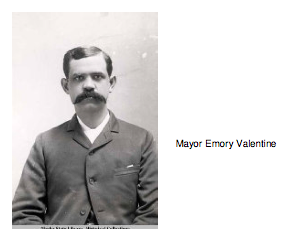
April 11, 1917 – Mayor Valentine declared that grave and serious charges have been made against W.S. Harding, Chief of Police, and that proofs are now in his possession. He further declared that an emergency existed, ordered that the office of Chief of Police be declared vacant, and stated that he will in due time appoint an emergency Chief of Police.
Councilman King asked Mayor Valentine the nature of the charges, to which Mayor Valentine replied that Mr. Harding would be given an opportunity to answer them, and that he would call a special meeting for that purpose.
April 12, 1917 – It was moved and seconded that W.S. Harding be elected to the position of Chief of Police for the coming year, to which Mayor Valentine declared out of order and stated that Mr. Harding had been suspended under the rules. Councilman Blomgren called for a vote on the adoption of the motion, and all six councilmen vote aye.
April 20, 1917 – The Clerk read the following demand: To Emory Valentine, Mayor and Common Council of the City of Juneau:
Whereas, Emory Valentine Mayor of the City of Juneau did at a public meeting held in the City of Juneau on the night of the 19th day of April, 1917, read certain affidavits purporting to contain certain charges against me as Chief of Police of Juneau, and that Emory Valentine publicly announced on the streets and public places of the Town of Juneau that he had other charges against me, I hereby demand that affidavits and all charges made against me as a public official and against my conduct, if committed and filed with the Common Council of the City of Juneau, or the Clerk of the City, and that a hearing be had immediately. Respectfully submitted, dated Juneau, Alaska, April 20, 1917. (signed) W.S. Harding
-An Executive Session was scheduled for Monday, April 23, 1917, at the hour of eight o’clock p.m. for the purpose of having the charges against W.S. Harding formally filed or presented.
-The Mayor called for the election of a person to fill the position of Chief of Police for the coming year. The Clerk read the following names as persons who had filed their applications: W.S. Harding, W.D. McMillan, E.J. Sliter, and Capt. E. Harrigan. W.S. Harding received six votes and the other applicants received none. The Mayor declared a veto on the election of W.S. Harding as Chief of Police.
-Harding appointed Dan Harrington, W.D. McMillan, and Emil Mullenbeck, to serve as police officers under him and asked for approval of the Council which was given. The Mayor declared a veto to the action of the Council.
April 27, 1917 – The Common Council of the City of Juneau, Alaska, convened in the Council Chambers of City Hall at the hour of eight o’clock p.m. on Friday, April 27, 1917, for the purpose of trying the charges against W.S. Harding, Chief of Police.
-The trial of the charges was to be heard by affidavit, and W.S. Harding was given until Monday night to file his answering affidavits, with the trial continued to Thursday, May 3, 1917 at the hour of eight o’clock p.m.
May 3, 1917 – The Common Council of the Town of Juneau, Territory of Alaska, convened in the Council Chambers of the City at the hour of eight o’clock p.m. on Thursday, May 3, 1917 – Mayor Valentine presiding. A resolution calling for the reading of the charges against W.S. Harding, Chief of Police accusing him of misconduct in office and the answering affidavits from the Chief was read.
-Affidavits of Walter Johnson, Frank Morrison, Jack Ivey, Fred Alexander, Mrytle Mercer, J.W. Felix, D. DeBlaser, F.J. Breezee, L.N. Ritter, and E. Valentine supported the charges.
-Affidavits of W.S. Harding, Emil Mullenbeck, Louise Dejonghe, E.W. Pettit, L.O. Sloane, C.O. Lindsey, Carl R. Brophy, W.D. MacMillan, A.C. Williams Jr., Frank E. Sargent, Glen C. Bartlett, H.H. Post, D.J. Harrington, George C. Burford, Edith Johnson, John B. Marshal, Harry Ellingen, and E.A. Naud were read in answer to the charges.
-The Council took a ten minute recess to consider the charges, and Mayor Valentine left the meeting.
-Following the recess, the following resolution was read: Be it resolved that W.S. Harding, Chief of Police of the City of Juneau, whom certain charges have been filed against, has been exonerated and it is the wish of the Council that he continue as Chief of Police.
May 4, 1917 – The electric light at the end of the garbage dump was out, causing trouble for boats navigating up and down the channel.
-Mayor Valentine objected to the claim of Chief Harding for his full monthly salary, saying that he was only entitled to pay for the first eleven days in April, because Harding was relieved from office on that date.
-The Clerk read Mayor Valentine’s veto message to the action of the Council electing W.S. Harding as Chief of Police on April 20, 1917, and to the action of the Council confirming the appointments of W.S. Harding, Patrolman Harrington and Mullenbeck. The following resolution was then read: Be it resolved that the veto of Mayor Valentine to the action of the Council in electing W.S. Harding, Chief of Police of the City of Juneau, Alaska on April 20, 1917, be overruled and held for naught. And be it further resolved that the veto of Mayor Valentine to the action of the Council in confirming the appointment of Patrolman Harrington and Mullenbeck on April 20, 1917, be overruled and held for naught.
Mayor Valentine served as Mayor for six terms, according to Wikipedia, and organized the volunteer fire department and designed the city’s first water system. For some reason, he really didn’t like the Chief of Police, but Harding and a lot of support among the council members, and retained his position. Fascinating stuff; brings history to life.
And you thought history was dull?
The Church Remembers Bede the Venerable
I found this while reading the daily meditation at Forward Day by Day:
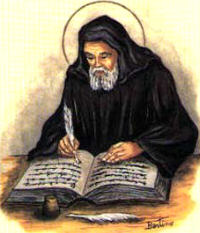
Today the church remembers Bede, the Venerable, Priest, and Monk of Jarrow, 735.
When the monks of Jarrow sang, “Lord, leave us not as orphans,” it is said that Bede would often weep. As a child he was left orphaned in a dark, hostile, and dangerous land. He was cared for and reared by kindly monks. When he was but a youngster, plague struck the monastery, almost wiping it out. The only surviving souls were Bede and the old abbot. Bede naturally had a strong sense of the importance of community, of the fine line between life and death, and of our utter dependence upon the Creator.
He rarely ventured outside the walls of Jarrow monastery, yet his knowledge of theology, geography, and language was worthy of the most sophisticated of his time in Western Europe. He wrote a number of excellent books on various subjects, but he is best remembered for his Ecclesiastical History of the English People. This work has justly earned for him the title “Father of English History.” Unlike some of the careless historians of his day, he was meticulous in listing his authorities and sources. He took care to separate known fact from hearsay, but his descriptions are lively and dramatic.
Bede thought of himself as a teacher, and he seems to have built most of his teaching around the Divine Offices which the monks read daily. It is altogether fitting that he was pronounced a “Doctor of the Church” by Pope Leo XIII. Bede’s remains rest in Durham.
May the riches of Bede’s scholarship inspire us to fill our minds with the story of your work among us, O God. Amen.
Heavenly Father, you called your servant Bede, while still a child, to devote his life to your service in the disciplines of religion and scholarship; Grant that as he labored in the Spirit to bring riches of your truth to his generation, so we, in our various vocations, may strive to make you known in all the world; through Jesus Christ our Lord, who lives and reigns with you and the Holy Spirit, one God, for ever and ever. Amen.
Recent Comments
ExpatAlien on What Country am I Living … intlxpatr on Yellowstone: Old Faithful to C… Michelle on Yellowstone: Old Faithful to C… Cathy on No Grown-Ups in Charge intlxpatr on Waiting for Snow Wikipedia Donate Button

Amazina


Early Voting in Florida


 Here There and Everywhere