Anesthesia Linked to Dementia Risk in Seniors
It may not be dementia. It may be a reaction to a medication in the elderly that LOOKS like dementia.
My father was 87, and doing pretty well for a man 87. He still walked on his own, using a walker when he had to, and very rarely, a wheelchair if we were going a long ways. He went into the hospital for a minor surgery. The tube inserted in his hand for the anesthetic became infected. Dad was acting weird, he was having hallucinations, and my sister rightly identified that Dad had a reaction to the diuretic drug Lasix; when they switched him to an alternative, the raving and hallucinations stopped.
He was transferred to a rehabilitation unit, where for two days, they put him back on Lasix. Poor communication between hospital and the rehab facility, plus standardization of drug regimens – they switched him without telling him, or us. Once again, he went loony tunes, and at the same time, his right hand began to swell until it looked like a lobster claw. He kept saying it hurt, and it was big and red, and the rehab people kept saying it would get better.
Dad was rushed to another hospital, one the rehab clinic worked with, and the doctors told us he had a ‘cascade of problems’ and which were the primary three we wanted them to work with?
Get him off the Lasix, first thing, we all agreed, and find a way to have it annotated on any record that he is never to have Lasix. (It did no good; the next hospitalization, back at the first hospital, they gave him Lasix again, which made him crazy and masked all the other symptoms.)
Long story short, there were a cascade of hospital mistakes – not one hospital, two hospitals and the rehab clinic – where miscommunications, inattentions and shortage of trained personnel resulted in a cascade of issues that led to my father’s death later that year. The other lesson learned is that if you go into a hospital, make sure you have a good support system, someone with you who will bravely ask questions, and remind someone if an inappropriate medication is prescribed. You need a family member with you for protection against inattention, mistakes, miscommunications and personnel shortages.
It’s not like there’s anyone to bring a lawsuit against; they were all doing the best they could, but Dad was old. My bet is that he might have lived another couple years, at the very least, had he not gone in for that first non-essential minor surgery. To me, the moral of the story is if you want to live a long life, stay away from hospitals.

Anesthesia Linked to Increased Dementia Risk in Seniors
Exposure to anesthesia has been linked to a 35 percent increase of dementia in patients over age 65, according to a new study.
By Jeffrey Kopman, Everyday Health Staff Writer
FRIDAY, May 31, 2013 — Caregivers and seniors struggling with the dilemmas of elder care have another risk to weigh against potential rewards — senior patients exposed to general anesthesia face an increased risk of dementia, according to research presented at Euroanaesthesia, the annual congress of the European Society of Anaesthesiology (ESA).
Researchers reviewed the medical information of 9,294 French patients over the age of 65. The patients were interviewed several times over a ten year period to determine their cognitive status.
After two years, 33 percent of participants had been exposed to anesthesia. Most of the exposed patients (19 percent overall) were exposed to general anesthesia — a medically induced coma. The rest were exposed to local/locoregional — any technique to relieve pain in the body — anesthesia.
In total, 632 participants developed dementia eight years after the study began. A majority of these patients, 512, were diagnosed with probable or possible Alzheimer’s disease. The remainder had non-Alzheimer’s dementia.
The gap between dementia related to general anesthesia (22 percent) and non-dementia patients (19 percent) was associated with a 35 percent increased risk of developing dementia. This risk was linked to at least one general anesthesia.
“Elderly patients are at an increased risk for complications following anesthesia and surgery,” said Jeffrey H. Silverstein, MD, MS, and vice chair for research at the Department of Anesthesiology at Mount Sinai in New York City. “[They] are particularly prone to postoperative delirium, which is a loss of orientation and attention. Anesthesiologists have been evaluating higher cognitive functions (for example, memory and executive processing) and found that a substantial number have decreases in one or more of these areas after a surgical procedure.”
Researchers hope this study will lead to more awareness for surgeons.
“Recognition of postoperative cognitive dysfunction (POCD) is essential in the perioperative management of elderly patients,” said study author Dr. Francois Sztark, INSERM and University of Bordeaux, France, in a press release. “A long-term follow-up of these patients should be planned.”
Elderly Care: Risk vs. Reward
Senior citizens and their caregivers might be willing to accept an increased risk of dementia if it means getting necessary anesthesia for an important medical procedure. Dementia is a relatively common occurrence in old age: One in three seniors has Alzheimer’s disease or dementia by the time of their death.
But surgery at old age can also carry more severe, and less common, health risks. In fact, simply surviving surgery can be difficult for elderly patients, especially those over the age of 80.
While the numbers vary depending on procedure, researchers have found that mortality risk tied to elective major surgeries increases with age. The risk more than doubles for patients over 80 compared to patients ages 65 to 69.
But other surgery complications are even more common in seniors.
“The major risk for elderly patients following surgery is pneumonia,” said Dr. Silverstein. “Cardiac complications are next most common.”
However, Dr. Silverstein still feels that if surgery is deemed necessary, patients should not fear the risks.
“In theory, only necessary surgery is done,” he said. “Knowing how [patients] reacted to anesthesia and surgery in the past may give them some idea of their postoperative course.”
Last Updated: 05/31/2013
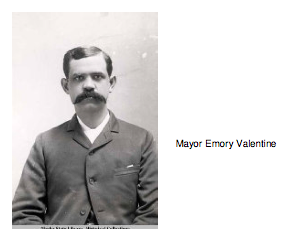
Mayor Emory Valentine Doesn’t Get His Way

It all started with a conversation with my Mom, during which, in a hushed voice, she told me about a neighbor “who had gotten a blue card.” A blue card? I had never heard of a blue card.
“It meant she had to leave the state!” Mom said.
Such a small thing, and such a journey it has led me on, trying to find out about the blue card and how it functioned. It led me to The History of the Juneau Alaska Police Department, and reading through that led to an hour of hilarity reading through the struggles of a small frontier town trying to bring order out of chaos and fight the battles of sewers, garbage, untethered horses, bawdy houses, and law enforcement.
Here are some examples of early actions:
1904
September, 1904 – George Kyrage (“George the Greek”) was elected to the Council and served with Mayor George Forrest, Councilmen Henry Shattuck, John Reck, Louis Lund, J.P. Jorgenson, and Henry States. Kyrage was named chairman of the Police Committee and found himself squarely between those who wanted prosperity through a wide open town, and those who demanded strict enforcement of a new ordinance prohibiting women loitering in saloons.
1910
January 7, 1910 – The conduct of a man named Al Graham was discussed and the Council ordered that he be given a “Blue Ticket”.
April 15, 1910 – The applicants for City Marshal were as follows: Charles Biernoth, W.G. Harris, Charles Meline, Mike McKenna, William Steinbeck, John Sweeney, Fred LaMarche Holmberg, and J.T. Martin. Charles Biernoth received the majority of the votes and was elected.
May 6, 1910 – City Marshal Charles Biernoth was asked to resign.
1913
April 18, 1913 – Mr. Nolan appeared before the Council and protested that the women of ill fame were allowed to live in the vicinity of the saw-mill outside of the restricted district, and the matter was referred to the Police Committee and the Chief of Police.
1914
January 2, 1914 – The City Attorney was instructed to prepare an ordinance against expectorating on the sidewalks of the City of Juneau.
-An ordinance was passed that provided punishment for pimps and moques to be set at not more than one hundred dollars.
City refuses to clean up red light district
February 6, 1914 – Councilman H.J. Raymond said that the last Grand Jury: wanted the City of Juneau to do something about cleaning up the red light district in the City. It was moved that the Chief of Police be ordered to close up every bawdy house in the City; but the motion died for lack of a second. It was then moved that the Chief of Police be instructed to stop the sale of liquor in all houses of prostitution in the City of Juneau; and again the motion died for lack of a second. It was then moved and seconded that a letter be forwarded to John Rustgard, US District Attorney, First Division of Alaska, stating that the City authorities of Juneau will be glad to lend all the aid they can in the enforcement of the law in the sale of liquor in houses of prostitution in the City of Juneau.
May 14, 1914 – A day’s labor in the Municipality of Juneau was set at eight (8) hours, common laborers were paid 35 cents per hour, and could work any number of additional hours at the same rate per hour.
1915
January 27, 1915 – A special meeting was called to hear charges of misconduct in office that have been made against Chief of Police William McBride. The Council requested that witnesses give their testimony. Harry Grove was duly sworn and testified and Charles Freegrove, Helen, and J.H. Gilpatrick were called and questioned by different councilmen. The hearing was then continued to a subsequent meeting of the Council.
January 29, 1915 – The Clerk read the resignation of William McBride from the office of the Chief of Police of the City of Juneau which took effect on February 1, 1915.
-A proposed ordinance was presented entitled “An ordinance requiring horses to be tied”.
July 7, 1916 – S.A. Judd protested that the Chief of Police had ordered him to leave town.
It makes for fascinating reading. Then I came across this sequence of reports, but for all my Googling, I cannot find out what the charges were against Chief of Police W.S. Harding:
1917
April 11, 1917 – Mayor Valentine declared that grave and serious charges have been made against W.S. Harding, Chief of Police, and that proofs are now in his possession. He further declared that an emergency existed, ordered that the office of Chief of Police be declared vacant, and stated that he will in due time appoint an emergency Chief of Police.
Councilman King asked Mayor Valentine the nature of the charges, to which Mayor Valentine replied that Mr. Harding would be given an opportunity to answer them, and that he would call a special meeting for that purpose.
April 12, 1917 – It was moved and seconded that W.S. Harding be elected to the position of Chief of Police for the coming year, to which Mayor Valentine declared out of order and stated that Mr. Harding had been suspended under the rules. Councilman Blomgren called for a vote on the adoption of the motion, and all six councilmen vote aye.
April 20, 1917 – The Clerk read the following demand: To Emory Valentine, Mayor and Common Council of the City of Juneau:
Whereas, Emory Valentine Mayor of the City of Juneau did at a public meeting held in the City of Juneau on the night of the 19th day of April, 1917, read certain affidavits purporting to contain certain charges against me as Chief of Police of Juneau, and that Emory Valentine publicly announced on the streets and public places of the Town of Juneau that he had other charges against me, I hereby demand that affidavits and all charges made against me as a public official and against my conduct, if committed and filed with the Common Council of the City of Juneau, or the Clerk of the City, and that a hearing be had immediately. Respectfully submitted, dated Juneau, Alaska, April 20, 1917. (signed) W.S. Harding
-An Executive Session was scheduled for Monday, April 23, 1917, at the hour of eight o’clock p.m. for the purpose of having the charges against W.S. Harding formally filed or presented.
-The Mayor called for the election of a person to fill the position of Chief of Police for the coming year. The Clerk read the following names as persons who had filed their applications: W.S. Harding, W.D. McMillan, E.J. Sliter, and Capt. E. Harrigan. W.S. Harding received six votes and the other applicants received none. The Mayor declared a veto on the election of W.S. Harding as Chief of Police.
-Harding appointed Dan Harrington, W.D. McMillan, and Emil Mullenbeck, to serve as police officers under him and asked for approval of the Council which was given. The Mayor declared a veto to the action of the Council.
April 27, 1917 – The Common Council of the City of Juneau, Alaska, convened in the Council Chambers of City Hall at the hour of eight o’clock p.m. on Friday, April 27, 1917, for the purpose of trying the charges against W.S. Harding, Chief of Police.
-The trial of the charges was to be heard by affidavit, and W.S. Harding was given until Monday night to file his answering affidavits, with the trial continued to Thursday, May 3, 1917 at the hour of eight o’clock p.m.
May 3, 1917 – The Common Council of the Town of Juneau, Territory of Alaska, convened in the Council Chambers of the City at the hour of eight o’clock p.m. on Thursday, May 3, 1917 – Mayor Valentine presiding. A resolution calling for the reading of the charges against W.S. Harding, Chief of Police accusing him of misconduct in office and the answering affidavits from the Chief was read.
-Affidavits of Walter Johnson, Frank Morrison, Jack Ivey, Fred Alexander, Mrytle Mercer, J.W. Felix, D. DeBlaser, F.J. Breezee, L.N. Ritter, and E. Valentine supported the charges.
-Affidavits of W.S. Harding, Emil Mullenbeck, Louise Dejonghe, E.W. Pettit, L.O. Sloane, C.O. Lindsey, Carl R. Brophy, W.D. MacMillan, A.C. Williams Jr., Frank E. Sargent, Glen C. Bartlett, H.H. Post, D.J. Harrington, George C. Burford, Edith Johnson, John B. Marshal, Harry Ellingen, and E.A. Naud were read in answer to the charges.
-The Council took a ten minute recess to consider the charges, and Mayor Valentine left the meeting.
-Following the recess, the following resolution was read: Be it resolved that W.S. Harding, Chief of Police of the City of Juneau, whom certain charges have been filed against, has been exonerated and it is the wish of the Council that he continue as Chief of Police.
May 4, 1917 – The electric light at the end of the garbage dump was out, causing trouble for boats navigating up and down the channel.
-Mayor Valentine objected to the claim of Chief Harding for his full monthly salary, saying that he was only entitled to pay for the first eleven days in April, because Harding was relieved from office on that date.
-The Clerk read Mayor Valentine’s veto message to the action of the Council electing W.S. Harding as Chief of Police on April 20, 1917, and to the action of the Council confirming the appointments of W.S. Harding, Patrolman Harrington and Mullenbeck. The following resolution was then read: Be it resolved that the veto of Mayor Valentine to the action of the Council in electing W.S. Harding, Chief of Police of the City of Juneau, Alaska on April 20, 1917, be overruled and held for naught. And be it further resolved that the veto of Mayor Valentine to the action of the Council in confirming the appointment of Patrolman Harrington and Mullenbeck on April 20, 1917, be overruled and held for naught.
Mayor Valentine served as Mayor for six terms, according to Wikipedia, and organized the volunteer fire department and designed the city’s first water system. For some reason, he really didn’t like the Chief of Police, but Harding and a lot of support among the council members, and retained his position. Fascinating stuff; brings history to life.
And you thought history was dull?
The Church Remembers Bede the Venerable
I found this while reading the daily meditation at Forward Day by Day:
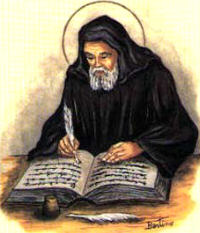
Today the church remembers Bede, the Venerable, Priest, and Monk of Jarrow, 735.
When the monks of Jarrow sang, “Lord, leave us not as orphans,” it is said that Bede would often weep. As a child he was left orphaned in a dark, hostile, and dangerous land. He was cared for and reared by kindly monks. When he was but a youngster, plague struck the monastery, almost wiping it out. The only surviving souls were Bede and the old abbot. Bede naturally had a strong sense of the importance of community, of the fine line between life and death, and of our utter dependence upon the Creator.
He rarely ventured outside the walls of Jarrow monastery, yet his knowledge of theology, geography, and language was worthy of the most sophisticated of his time in Western Europe. He wrote a number of excellent books on various subjects, but he is best remembered for his Ecclesiastical History of the English People. This work has justly earned for him the title “Father of English History.” Unlike some of the careless historians of his day, he was meticulous in listing his authorities and sources. He took care to separate known fact from hearsay, but his descriptions are lively and dramatic.
Bede thought of himself as a teacher, and he seems to have built most of his teaching around the Divine Offices which the monks read daily. It is altogether fitting that he was pronounced a “Doctor of the Church” by Pope Leo XIII. Bede’s remains rest in Durham.
May the riches of Bede’s scholarship inspire us to fill our minds with the story of your work among us, O God. Amen.
Heavenly Father, you called your servant Bede, while still a child, to devote his life to your service in the disciplines of religion and scholarship; Grant that as he labored in the Spirit to bring riches of your truth to his generation, so we, in our various vocations, may strive to make you known in all the world; through Jesus Christ our Lord, who lives and reigns with you and the Holy Spirit, one God, for ever and ever. Amen.
Defending the World Against Bland Food
One of our life dreams came true when we were able to visit Avery Island and the McIlhenny Company. Tabasco sauce is on every table in almost every restaurant in the South, right along with the salt and pepper. When AdventureMan was serving in VietNam, soldiers had a tiny bottle of Tabasco in each ration, to spice up the food. The quote “defending the world against bland food” gave me a big grin. Rest in Peace, Paul C.P. McIlhenny. (This is from AOL News/Huffpost today)

Paul C.P. McIlhenny Dead: CEO Of Tabasco Company Dies At 68
AVERY ISLAND, La. — Paul C.P. McIlhenny, chief executive and chairman of the board of the McIlhenny Co. that makes the trademarked line of Tabasco hot pepper sauces sold the world over, has died. He was 68.
The company, based on south Louisiana’s Avery Island, said in a statement that McIlhenny had died Saturday. The statement, released Sunday, credited McIlhenny’s leadership with introducing several new varieties of hot sauces sold under the Tabasco brand and with greatly expanding their global reach.
McIlhenny was a member of a storied clan whose 145-year-old company has been producing the original world-famous Tabasco sauce for several generations, since shortly after the Civil War. The statement said McIlhenny joined the company in 1967 and directly oversaw production and quality of all products sold under the brand for 13 years.
Under his management, the company experienced years of record growth in sales and earnings, according to the company.
McIlhenny also worked to develop an array of items that could be marketed and emblazoned with the Tabasco logo: T-shirts, aprons, neckties, stuffed toy bears, and computer screensavers, the Times-Picayune of New Orleans noted. The newspaper first reported the death and noted that McIlhenny was an executive with a keen sense of humor, quipping days before he reigned as Rex, the King of Carnival, for Mardi Gras in 2006: “We’re defending the world against bland food.”
The Times-Picayune said he had taken up the post of company president starting in 1998 before adding the title of CEO two years later. It added that his cousin, Tony Simmons, took over as president last year.
“All of McIlhenny Company and the McIlhenny and Avery families are deeply saddened by this news,” said Tony Simmons, president of McIlhenny Company and a McIlhenny family member, in the company’s statement.
He added: “We will clearly miss Paul’s devoted leadership but will more sorely feel the loss of his acumen, his charm and his irrepressible sense of humor.”
The statement said McIlhenny led the way on new brand merchandising, taking an instrumental role in the company’s catalog business of licensed merchandise. He also was a driving force behind the growing global reach of Tabasco products, today sold in more than 165 countries and territories.
The company said McIlhenny, at the time of his death, was also a company director. He was a sixth-generation member of the family to live on Avery Island and among the fourth generation to produce the Tabasco brand sauce on Avery Island, where patriarch Edmund McIlhenny had founded the company in 1868.
Born on March 19, 1944, he grew up in New Orleans and spent much of his childhood moving between New Orleans the family compound on Avery Island, according to The Times-Picayune.
Reports noted he also had been an impassioned board member of America’s Wetland Foundation because of his longtime interest in preserving south Louisiana coastlines crumbling under the onslaught of decades of erosion.
Attorney Edward Abell called his friend McIlhenny “a well-known figure.”
“It really kind of puts us on the map here,” Abell said, “because the Tabasco products are known all over the world.”
The Church Remembers Absalom Jones
Imagine the difference that diligence and persistence and cheerful good humor made in the life of Absalom Jones, imagine all the lives he touched, imagine the obstacles and brutal life he experienced and overcame on his life’s journey. It is truly humbling to see what this saint achieved:

The Liturgical Calendar: The Church Remembers
Today the church remembers Absalom Jones, Priest, 1818.
Pastor Absalom Jones was reared a domestic slave on a plantation in Delaware. His charm, wit, and sincerity gained for him the affection of all who knew him. He was able to save enough pennies, given to him as tips, to purchase for himself a primer, a spelling book, and a New Testament. This was the beginning of an insatiable quest for knowledge which was to occupy much of his life.
When he was sixteen years old his mother, five brothers, and one sister were sold, and he was taken to Philadelphia with his master. The more stimulating environment of the city, added to a desire to correspond with his mother, resulted in an intensified effort to learn. He went to night school and also studied theology under Bishop William White (see July 17), from whom he eventually received holy orders. He married, bought a house and land, and finally, at age thirty-seven,he was granted his freedom. Finding that Philadelphia’s “white” churches were not truly open to him or his people, he founded the African Episcopal Church of St. Thomas.
He was an exemplary pastor and an able student of Holy Scripture and human nature. He had found Our Lord and in his Name had overcome seemingly insurmountable odds. Jones bore witness, with his life, to the truth that all people are bearers of God’s image.
Give us strength to overcome those things that separate us, Lord Christ, that we may see your likeness in all people. Amen.
Feast Day of St. Anthony
In our Lectionary Readings for today, they list today as the Feast Day for St. Antony, one of the early monastics of the Christian Church.

ANTONY
ABBOT IN EGYPT (17 JAN 356)
Before the conversion of the Emperor Constantine in 312 AD, back in the days when Christianity was still a persecuted religion, the act of becoming a Christian involved turning one’s back on the pursuit of security, of fashionable prestige and popularity, of success as the term is widely understood. After the Emperor had changed Christianity from a persecuted religion into a fashionable one, many earnest Christians felt the need to make such a renunciation in the service of Christ, and did not see mere Church membership as any longer enough to constitute such a renunciation. Accordingly, many of them sought Christian commitment by fleeing from society into the desert, and becoming hermits, devoting themselves to solitude, fasting, and prayer. Although this trend was much accelerated and reinforced by the conversion of Constantine and attendant changes, it had already begun earlier. An outstanding early example is Antony of Egypt, often reckoned as the founder of Christian monasticism.
Antony of Egypt, the son of Christian parents, inherited a large estate. On his way to church one day, he found himself meditating on the text, “Sell all that you have, and give to the poor, and come follow me.” When he got to church, he heard the preacher speaking on that very text. He took this as a message for him, and, having provided for the care of his sister, he gave his land to the tenants who lived on it, and gave his other wealth to the poor, and became a hermit, living alone for twenty years, praying and reading, and doing manual labor.
In 305, he gave up his solitude to become the head of a group of monks, living in a cluster of huts or cells, devoting themselves to communal singing and worship, to prayer and study and manual labor under Antony’s direction. They did not simply renounce the world, but were diligent in prayer for their fellow Christians, worked with their hands to earn money that they might distribute it as alms, and preached and gave personal counseling to those who sought them out.
In 321, Christians in Alexandria were being persecuted by the Emperor Maximinus (the rule of Constantine was not yet universal), and Antony visited Alexandria to encourage those facing the possibility of martyrdom. He visited again in 335, when Arianism was strong in the city, and converted many, by his preaching and testimony, and by prayer and the working of miracles. His biography was written by Athanasius, who said of him: “Who ever met him grieving and failed to go away rejoicing?”
The Forward Day by Day website summarizes St. Antony just a little differently:
Today the church remembers Antony, Abbot in Egypt, 356.
Father of Christian Monasticism Many young men of the third-century world despaired of their decaying, materialistic, and licentious society. In Egypt many fled into the desert in protest and for their own souls’ health. Sometimes their behavior became almost as bizarre and unbalanced as the behavior of those from whom they fled. This was not true of Antony. Antony’s quiet and well-ordered life of devotion in the desert stood out in contrast both to the wickedness of the contemporary world and the eccentricities of some other hermits. He gave away all his possessions to the poor and thereby freed himself from the demands of property. Still, he found that he had to fight a seemingly endless battle against his personal passions and temptations. He helped fellow Christian hermits to organize their lives in meaningful patterns of prayer, work, and meditation. His own solitude was frequently interrupted by his concern for the secular church and by requests for counseling. He was a friend to Athanasius (see May 2) and his orthodoxy was unquestionable. It has been said that, “Alone in the desert, Antony stood in the midst of mankind.”
This is not the same St. Anthony who helps you find lost things; that is St. Anthony of Padua, but when I read about this St. Anthony, and his orderly life, I thought that beating back the forces of chaos keeps things from getting lost in the first place. 🙂
The Power of Kindness to Change Lives
This week AdventureMan and I have been blessed, greatly blessed. We have met some wonderful people and heard some amazing things. Two stories in particular have shaken the earth for me.
“How It Happened for Me”
The first story is about a friend we met from the newest country on earth, South Sudan. A group of us were sitting together when one woman turned to this man from the South Sudan and asked “How did you find Jesus?”
This was not a religious gathering, so it is an unusual question on a social evening. But this quiet, modest man responded “I will tell you. It is a long story. It starts when I was only five months, not a baby, five months in my mother’s womb.”
He told us of a life with no security. His parents and family fled to the forest, and were on the run continually most of his life – until recently. He told of a life trying to find safe places, sometimes being separated from his parents.

He told of a priest who, when he and his brothers and sisters were very young, taught them to say “God bless Mother and God bless Father and God bless my brothers and sisters and watch over us always.” He was kind to the children, and taught them that God loves them, that God is kind. He said they did not know who this God was, but he and his brothers and sisters said this prayer every night, to keep his family safe. He said they learned other simple prayers. There would be rare times when someone would teach them a letter, or some numbers, drawing in the sand, or the floor of the forest, simple, quick lessons.
“So I don’t know all the stories you do,” he said. “I don’t even know the bible very well, we never had educated priests, just simple men who taught us simple prayers. Only later did we become more educated.”
As we listened, we had huge lumps in our throats. I could hear Jesus’ voice saying that we must believe as little children, and this man had the pure simple faith of a child, a memory from his earliest years, as he prayed for his family to be safe in a world where life was continual chaos and a struggle to survive.
“When I understood about God,” he went on, “there wasn’t even a church or a pastor-man who could baptize me; I had to believe for many years before I could become a Christian.”
As a footnote, he told us that somehow, most of his village managed to survive, helping one another. His entire family made it through, his parents are still alive. The village children little by little gained education, becoming doctors, lawyers, professionals of all kinds. His village now has a church, a simple church, not always staffed, but a church. The war is ended. For him, the simplicity of peace is all he ever wanted.
We will never forget his, and his story. We have met an extraordinary human being.
Today, we went to a lunch, invited by a friend, to raise funds for public education. LOL, this is what I used to do; I worked for an education foundation and raised money for public education. I love this kind of thing. I knew just what to expect – lots of success stories, stellar achievements, and a gentle pitch.
Whoa! Wrong! Darling kids – check. Recognition of important guests – check. Gentle pitch – no way! They got right to business; you will see this form, please take your pens RIGHT NOW and fill it out and give what you can, education funds seem to get cut more every year and we are trying to do more with less and less. Give NOW. CHECK!
The final speaker was a local businessman and patron-of-just-about-everything, a man who also brought baseball to Pensacola. He talked about his own public education. He talked about his speech impediment, and his deafness, he talked about his short stature and his inability to sit still and concentrate. He talked about teachers who identified him and instead of treating him as an obstacle, made him believe they were glad to have him in their class. He talked about teachers who gave him special assignments, who taught him math by having him calculate baseball averages. He knew their names, these saints who kept him in school, no matter how discouraged he might be.
He graduated with a 1.9 grade point, and had no intention of going to college, but ended up astonishing everyone by doing well on the ACT test and having a guidance counselor who found him just exactly the right environment where he could flourish on the college level.
Important people usually enjoy telling you the great things they have done. This man focused on his disabilities, his humiliations and his weaknesses, and how the kindness of educators had pulled him out of a very dark place and set him on the road for the success he is today.
I am willing to bet that the education foundation gained a lot of donors today. We were caught by surprise. We can defend against the powerful and successful, but when the heart speaks from vulnerability and failure, our hearts respond. This man is a success, but he gives credit to those who looked at him with caring eyes, with caring hearts, who lifted him and helped him on his way to the incredible (wealthy) success he is today, with a flourishing business and innumerable local charities who are grateful for his support.
What a week! And it’s only Tuesday! I wonder what the rest of the week will bring?
Doc by Mary Doria Russell

Mary Doria Russell is one of my favorite authors because she tackles large topics fearlessly, humorously and with great compassion. I first read her many years ago in a novel called Children Of God; you can read it stand-alone as I did, but I should have read The Sparrow, which preceded it. That one is about the Jesuits who take the Gospel into outer space, and has some laugh-out-loud moments in the midst of utter hopelessness. Yes. She’s that kind of author, my kind of woman.
Here is the ending Question and Answer from an interview at the back of Doc, an interview with John Connelly:
Q: Authors are often asked what advice they’d give young writers. I would like to ask you a similar question: What do you think the worst advice a young writer could get is?
Mary Doria Russell: Major in English. Join a writer’s group. Blog.
My advice is to major in and do something REAL. Have an actual 3-D life of your own. And please, shut up about it until you’ve got something genuinely wise or useful or thoughtful to share. Then again, I’m a cranky old lady! What the hell do I know?
Reading a book about legendary heroes of the Old West is not something I looked forward to, so the book languished on my “to read” pile until one day I picked it up just because it is written by Mary Doria Russell, and because she has knocked my socks off with every book I’ve read by her.
It starts off slow, summing up the early genteel years of John Henry Holliday in Georgia, just prior to, during and after the War Between the States. At 22 he is diagnosed with acute tuberculosis, and is advised that a drier climate out West might provide him with a more comfortable life, as short as it was likely to be. He had trained as a dentist, so he had a skill. Times were hard, and while he was a very very good dentist, it was a good thing he also had skills with card playing, to supplement his income when people didn’t have the money to go to the dentist.
Don’t skip over the early years, because what happens in the early years resonates into his years living in the West. The majority of the book takes place in Dodge, a border town where laws are made over a card game and by the men who will profit from them. Lives are hard, and short. While it is surely the wild west, the focus is on the relationships Doc builds – Wyatt and Morgan Earp (all the Earp brothers), Bat Masterson, the gals . . . here is where Russell’s artistry shines; the cardboard figures begin to become real people. We start to like one or two, admire another, despise one more.
Here’s what I love about Mary Doria Russell – without being at all preachy, she makes you stop and think about some of the values you hold most dear. Once you get west, 80% of the women featured in the book are prostitutes. Most of the characters drink heavily, and routinely use drugs which are today restricted to prescriptions. There is corruption, and murder, and arson, and abortion, and contraception, and adultery, and there is no one character who is purely good or purely evil, they are all complicated, just as we are. She can lead you to dislike a character, who at just the right moment knows just the right thing to say, and suddenly, you see that character differently, because another facet of his or her character has been revealed.
In the questions at the back of the book, we are asked if we were to meet Doc Holliday, would we like him? I had to ask the question the other way around – if I were to meet Doc Holliday, how would he perceive me? I found myself thinking outside the box, found myself thinking that if I knew my life were going to be very very short, would I want to hang around with normal people, dull, predictable people? Maybe people who look better on the outside than they are, or think more highly of themselves than they ought? Doc Holliday hung around with lawmen and gamblers and prostitutes and bartenders; his patients were law-abiding church-going citizens. Who gave greater color and meaning to his life? Who were more likely to be down-to-earth and practical and unpretentious?
There is an absolutely delightful segment about a Jesuit priest from an old Hungarian aristocratic family who finds himself riding out to visit all the small Catholic Indian parishes on a donkey, replacing a highly popular priest who is very sick; he is teased and mocked and treated with disrespect. One night, cold and wet, covered with dirt and filth in the desert, he has an epiphany that changes his life. Mary Doria Russell books have these luminous moments, worth reading the entire book for, and which will bring a smile of memory to your face long after you have finished reading the book.
Recent Comments
Kitchen on Isiais: Winding Down intlxpatr on Shampoo Ginger tigerbutterya0c5ff1d… on Shampoo Ginger intlxpatr on British Soldier Kidnapped, Esc… John on British Soldier Kidnapped, Esc… Wikipedia Donate Button

Amazina


Early Voting in Florida


