Reading Signs for the Future
This article from The Washington Post caught my eye for a couple of reasons. While I like Harry Potter, and am delighted to see children reading just about anything, I wondered if some of the oldies but goodies were still being read – and this study says that they are.
What is the number one factor that encourages children to read? Living in a family where books and magazines are everywhere, where parents take their kids to libraries and bookstores. Computer use also encourages good reading – and writing – skills.

What Do Children Read? Hint: Harry Potter’s Not No. 1
By Jay Mathews
Washington Post Staff Writer
Monday, May 5, 2008; 2:32 PM
Children have welcomed the Harry Potter books in recent years like free ice cream in the cafeteria, but the largest survey ever of youthful reading in the United States revealed today that none of J.K. Rowling’s phenomenally popular books has been able to dislodge the works of longtime favorites Dr. Seuss, E.B. White, Judy Blume, S.E. Hinton and Harper Lee as the most read.
Books by the five well-known U.S. authors, plus lesser-known Laura Numeroff, Katherine Paterson and Gary Paulsen, drew the most readers at every grade level in a study of 78.5 million books read by more than 3 million children who logged on to the Renaissance Learning Web site to take quizzes on books they read last year. Many works from Rowling’s Potter series turned up in the top 20, but other authors also ranked high and are likely to get more attention as a result.
“I find it reassuring . . . that students are still reading the classics I read as a child,” said Roy Truby, a senior vice president for Wisconsin-based Renaissance Learning. But Truby said he would have preferred to see more meaty and varied fare, such as “historical novels and biographical works so integral to understanding our past and contemporary books that help us understand our world.”
Michelle F. Bayuk, marketing director for the New York-based Children’s Book Council, agreed. “What’s missing from the list are all the wonderful nonfiction, informational, humorous and novelty books as well as graphic novels that kids read and enjoy both inside and outside the classroom.”
Renaissance Learning’s Accelerated Reader software for monitoring reading progress online was the source of the survey. Twenty-two years ago, Judi Paul invented on her kitchen table a quizzing system to motivate her children to read. With her husband, Terry Paul, she turned it into a big business. Truby, a former executive director of the National Assessment Governing Board, which oversees the leading federal reading test, said the company’s learning programs are used in more than 63,000 U.S. schools.
Students read books, some assigned but many chosen on their own, and then take computer quizzes, either online or with company software, to see whether they understood what they read. Students compile points based on the average sentence length, average word length, word difficulty level and total words in each book, and they sometimes get prizes from their schools. Some critics have questioned giving many more points for a sprawling Tom Clancy thriller than a tightly written classic such as Stephen Crane’s “The Red Badge of Courage,” but many educators and parents have praised the system for motivating children to read.
In response to the survey data, some Washington area English teachers said they were bothered by the relatively few books read by each student, particularly in the upper grades. Seventh-graders averaged 7.1 books in 2007, which steadily declined to 4.5 books for 12th-graders. “I wish more schools did what we do and treated independent reading as vital to the curriculum, especially for boys, who seem to be sharing very few books,” said Lelac Almagor, a seventh-grade teacher at the KIPP DC: AIM Academy, a public charter school in Southeast Washington.
Although some experts thought children needed more reality, the fifth-most-popular book among high school students, “A Child Called ‘It’ ” by Dave Pelzer, was too real for Rachel Sadauskas, who teaches English at Yorktown High School in Arlington County. “The true story is based on a brutal case of child abuse,” she said. “A friend who is a social worker recommended it to me, but I could not finish it because it was so emotionally difficult to read.”
Teachers and book editors were pleased at the resilience of Lee’s 48-year-old novel, “To Kill a Mockingbird,” No. 1 for ninth- through 12th-graders, although Mary Lee Donovan, an executive editor at Candlewick Press in Somerville, Mass., said she thought it owed much of its success to the fact that “teachers make it part of the curriculum.” Rafe Esquith, teacher and author of best-selling books about teaching, makes it required reading in his Los Angeles fifth-grade class. He said he thought older students preferred it to Harry Potter because it fits with their growing realization that “life is not a fairy tale” and because of the moral fiber of its hero, lawyer Atticus Finch.
Yorktown High 11th-grader Ashley Samay said the Lee book “taught me to see things from others’ points of view.” Yorktown 12th-grader Matthew Bloch said, “It speaks to small-town ideals and racism, which are very important topics.”
The survey, at http://www.renlearn.com/whatkidsarereading, breaks down results by gender and section of the country. Overall, Dr. Seuss’s madly rhyming “Green Eggs and Ham” was the most popular first-grade book. Second-graders preferred Numeroff’s “If You Give a Mouse a Cookie,” which Donovan praised for its humorous take on cause and effect. White’s timeless tale of a girl, a pig and a spider, “Charlotte’s Web,” was the third-grade favorite. Blume, not surprisingly, won over fourth-graders with her “Tales of a Fourth Grade Nothing,” the first of several books about Peter Warren Hatcher and his younger brother, Farley, who prefers to be called “Fudge.”
Fifth-graders read most often Paterson’s story of two children and a magical forest kingdom, “Bridge to Terabithia.” Sixth-graders preferred “Hatchet,” about a boy stranded in the wilderness, by Paulsen, whom Donovan called “Jack London for kids.” The most-read book among seventh- and eighth-graders was “The Outsiders,” a story of rival gangs in Tulsa published in 1967 when its author, Hinton, was 18 years old.
Kuwait Book Store
After all the months my reading and blogging friends have been recommending the Kuwait Book Store, I finally got there.
I thought I was in heaven.
Another friend, with us, said she is planning a date night with her husband at the Kuwait Book Store – you can spend hours there, and you can top off the evening with an ice cream cone right outside the door.

This is the only place in Kuwait I have seen Jehan Rejab’s book about the Invasion of Kuwait. I found several other books by her, and by her husband. I found four books on Kuwait by Claudia Al-Rashoud, another of my favorite authors and Kuwait photographers. They have a great selection of books on Kuwait – the best I have seen. They have another couple books which feature or include the unique architectural elements in Kuwait, but not The History of Architecture in Old Kuwait City, the book I reviewed earlier. Some of these other books may be even better! 🙂
There were all kinds of books. Acres of books. Books, and a good selection of greeting cards, and pens, and children’s books. The Kuwait Book Store is huge.
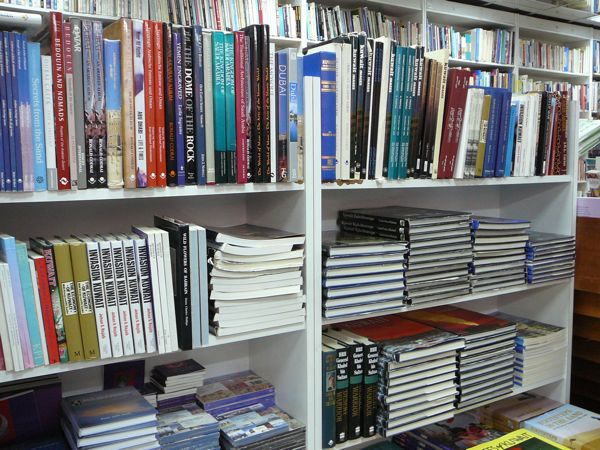
The Kuwait Book Store is just inside the main entrance to the Al Muthanna Mall and Residence, across from the JW Marriott in downtown Kuwait. You go down the escalator, and you are there. I like this mall; it has upper end quality kind of goods; some really good shoe stores, many other great resources. I’m not a big fan of malls, but this mall is a very useful mall.
I only regret it took me so long to get there! What a find! I think a date night at the Kuwait Book Store will be in my future, too. I didn’t get to hit all the shops, just had a brief glance. Do you have any favorites or recommendations at Al Muthanna?
Water for Elephants by Sara Gruen

This is another one of those books I picked up on the last day of my last travels in the US. I had been through the Barnes and Noble nearby several times, picked this up and looked at is at least a dozen times, then put it down, just not that interested. On the last day, who knows why, I bought it and stuck it in my outer pocket of my suitcase. Maybe it was the only thing I could see that would fit, I don’t know. I had rejected it so many times before.
It hasn’t even been on my night stand, the books I really really intend to read. It has been on a shelf of books I will read someday when I don’t have anything else to do. Every now and then, it caught my eye. The Zanzibar Chest was on the same shelf. . . and that turned out to be a pretty good book. So recently, after I had read some books I had to read but were a little dry, and a couple books I wanted to read which were a little light, I grabbed Water for Elephants.
That was day before yesterday. I couldn’t put it down. I had a whole list of things to get done yesterday, but once I started Water for Elephants, I was lost, totally immersed in the tawdry world of circuses, bound in the magic of the illusion and performances, mesmerized by what goes on behind the scenes to make the spectacular possible.
The main character loses his parents in a totally unnecessary car accident just as he is about to take his final exams in Veterinary Science, at Cornell University. (You might think I am throwing in too much useless detail here, but it matters.) Stunned by the triple loss of both his parents, and the discovery that they had hocked everything to the bank to fund his education, he blanks on his exams and hits the road, ending up with a second rate circus.
What is so amazing about this author is that once you start reading, you are THERE.
The above mentioned Zanzibar Chest keeps you hooked by it’s painfullness, but for both AdventureMan and myself, we never liked the author, we found him a little full of himself. It doesn’t take away from the Zanzibar Chest being a worthy read, and unforgettable read.
Water for Elephants, on the other hand, has a hero you love to love. In a world of strict boundaries, a heirarchical social structure, he manages to cross all the boundaries. He truly loves the animals, and in one scene, that love just radiates, emanates, it illuminates the book from the inside, and makes you feel light and crazy with that same sort of love, love of the whole of creation. Jakob is loyal to his friends, and loyal even to his enemies, he is sacrificial in his loyalty, and, in the end, he is vastly and abundantly rewarded for his good character.
There is something for everyone, just like a circus. Like a circus, too, it has illusions, it distracts with one hand while the trick is performed with another, there is sensuality, there is sexuality, there are photos from old circuses. There are things which could offend just about every sensibility; there is kindness, there is cruelty, justice and injustice and cosmic justice. Sometimes you just have to suspend judgement and go with the read. This is one of those books.
I would say this is one of the finest reading experiences I have had for a long time. Brava, Sara Gruen. Worth every penny.
I’ve told AdventureMan as soon as he finishes The Zanzibar Chest, he has to start Water for Elephants. I can hardly wait. It’s that good.
You can find Water for Elephants in paperback at Amazon.com for $8.37 + shipping.
Moses Learns to Delegate
When I was young, I never would have thought that I would join a bible study on the life of Moses that took a whole year. When I was young, I was a believer, but never dreamed I would really STUDY the word. One day a person invited me in, and I found myself learning things I never would have dreamed.
I remember learning this segment, from Exodus, which is part of the readings for day. Moses listened to his father-in-law, and he had to learn to delegate, so he wouldn’t be worn out:
Exodus 18:13-27
13 The next day Moses sat as judge for the people, while the people stood around him from morning until evening. 14When Moses’ father-in-law saw all that he was doing for the people, he said, ‘What is this that you are doing for the people? Why do you sit alone, while all the people stand around you from morning until evening?’ 15Moses said to his father-in-law, ‘Because the people come to me to inquire of God. 16When they have a dispute, they come to me and I decide between one person and another, and I make known to them the statutes and instructions of God.’ 17Moses” father-in-law said to him, ‘What you are doing is not good. 18You will surely wear yourself out, both you and these people with you. For the task is too heavy for you; you cannot do it alone. 19Now listen to me. I will give you counsel, and God be with you! You should represent the people before God, and you should bring their cases before God; 20teach them the statutes and instructions and make known to them the way they are to go and the things they are to do. 21You should also look for able men among all the people, men who fear God, are trustworthy, and hate dishonest gain; set such men over them as officers over thousands, hundreds, fifties and tens. 22Let them sit as judges for the people at all times; let them bring every important case to you, but decide every minor case themselves. So it will be easier for you, and they will bear the burden with you. 23If you do this, and God so commands you, then you will be able to endure, and all these people will go to their home in peace.’
24 So Moses listened to his father-in-law and did all that he had said. 25Moses chose able men from all Israel and appointed them as heads over the people, as officers over thousands, hundreds, fifties, and tens. 26And they judged the people at all times; hard cases they brought to Moses, but any minor case they decided themselves. 27Then Moses let his father-in-law depart, and he went off to his own country.
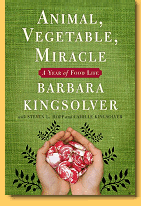
Animal, Vegetable, Miracle: Kingsolver
A friend passed along a fascinating book by one of my favorite fiction authors, Barbara Kingsolver, who wrote the cross-culturally unforgetable Poisonwood Bible, and many other very readable books. This book is about how her family vowed to eat locally for one year. I haven’t finished it yet, this is not a book review, but I am trying to think how eating locally would apply in Kuwait.
We would have a year-round supply of fish, which I love. We would have spinach in December and January, and those wonderful Kuwaiti tomatoes in the Spring. Cilantro, green onions and mint are grown year round, too, I think, and we would have chickens and eggs and maybe some sheep – or does most of the sheep in Kuwait come from elsewhere? Pomgranates? Pistacios?
I need YOUR help. What would our diet look like in Kuwait if everything we ate were local? Which month would we be able to eat what? What could we preserve in some way – drying, canning, freezing – for future months?
What grain would we have? Let’s say keep the food “local” and give ourselves a 100 mile radius. What would we eat?
Bullying and 19 Minutes; Jodi Picoult
When my blogging friend Chirp makes a recommendation, I have learned to order the book and read it. She reads books that make you think! The latest book is Jodi Picoult’s 19 Minutes, a book about a kid who is sensitive and kind and funny, and plays by the rules – he is good at sharing, and listening and all the things we try to teach our children to be good at.
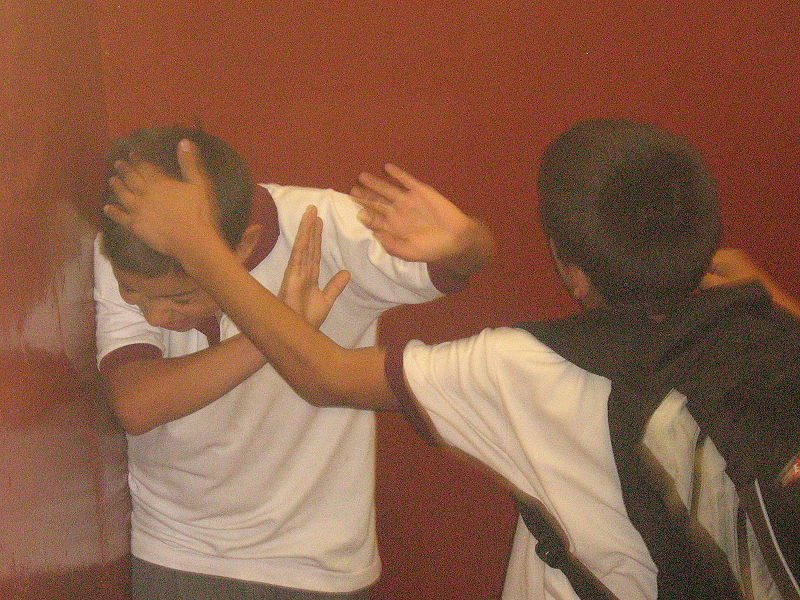
He gets bullied. From the time he starts school, he is bullied physically and mentally and emotionally. He does the right thing – he reports it. The schools do nothing, or so little that it only makes things worse for him. Pushed too far, one day snaps, he goes ballistic. He walks into the school and shoots 19 of his classmates.
One problem is access to weapons. Literally, physically teenagers have not yet developed the judgement areas of the brain. I am guessing in males it takes even longer, and I only guess that because of all the traffic fatalities and physical damage adolescent boys inflict upon themselves – and their victims. Maybe it is that fatal combination of poor judgement and testosterone that pushes them too far. Access to weapons – guns, knives, fast cars – makes them even more lethal.
Before I wrote this review, however, I had to do a lot of thinking. This book is about bullying, and even as adults we come across bullies. Our household helpers are terrified of the police – those who are here to protect us. The police use their position to try to bully phone numbers out of pretty Kuwaiti girls, and to exact sexual favors from the Asian domestics. Not all police are bullies, but if a person has that tendency, the position allows him/her to use that power wrongly.
And bullying doesn’t stop with graduation from high school. We are seeing the same kinds of behavior at universities – Virginia Tech – and in the workplace – “going postal” and GMAC just to name two. People who are bullied sometimes turn, they go out in a blaze of glory.
I’ve been bullied. People who are raised to have good manners are often victims of those who are willing to overstep the boundaries. We make excuses for them – we say they are oblivious. I am beginning to think that many a bully is NOT oblivious, but has learned to push to get his or her own way.
With men, the bullying is more physical, and it’s all about jockying for position – number one in the pecking order, the next promotion, the boss’s golf partner, etc. If you think women are gossips – you oughta hear the men! When I hear men “bantering” it’s all about who’s got the “biggest.” Or maybe, the devil whispers in my ear, it’s about who can make you THINK his is the biggest.
With women, in my experience, most of the bullies are physically bigger. They are women who – literally – throw their weight around. They are women who will interrupt anyone and override their suggestion with a loud voice. They are women who have temper tantrums, and hurt feelings, who go from person to person forming alliances that dissolve with the next disagreement. That’s the sad truth – a bully wants his or her own way – all the time. Once you go against them, you have to watch your back.
Picoult has done her homework. Bullies are often likeable enough people! A bully carries his/own burden, however – and that is a desperate need for popularity. You can see this in animal behavior; once a creature has achieved dominance, it takes enormous energy to maintain that position, so much energy that the rest of your life shrinks as your focus must be on maintaining dominance.
The UK, Canada, and the US all have websites about bullying, trying to put a stop to it in the schools. What do they define as bullying?
People calling you names
Making things up to get you into trouble
Hitting, pinching, biting, pushing and shoving
Taking things away from you
Damaging your belongings
Stealing your money
Taking your friends away from you
Posting insulting messages on the internet or by IM (cyberbullying)
Spreading rumours
Threats and intimidation
Making silent or abusive phone calls
Sending you offensive phone texts
Bullies can also frighten you so that you don’t want to go to school, so that you pretend to be ill to avoid them
What can people with manners do against a bully?
In general, the first thing to do is tell an adult – it doesn’t have to be your parents. Additonal suggestions suggest creating your own support network – create a wide network of friends. Join interest groups, in our out of school.
When our son was bullied in school, he worked hard and earned a black belt in karate, and then went on to earn further degrees, and to teach karate – while still in high school. Just knowing that he had a lethal skill made him walk differently, made the bullies afraid to target him. He went to a magnet school, where there was a high degree of chaos, and he sought out and made friends with the biggest people he could find. He used his head. He made it through. Of all his accomplishments, one of the things that made us most proud of him was his ability to stick it out and to prevail.
I worked in a high school. My office was a safe haven for many kids, kids who found high school dynamics pure hell. Most of them were emotionally years ahead of the crowds roaming the hallways, the cruel kids, for whom high school will probably be the highlight of their lives.
“You’re going to love being an adult,” I would tell them. “Hang in there. For them, this may be as good as it gets, but your life is going to get better and better.”
Geeks don’t always get a lot of respect. The two guys that graduated high school at the bottom of the class with my son already had a flourishing computer networking business going. If you haven’t noticed, most of the people who are making it big financially are people who have learned how to use their heads.
I have learned something else. You can beat a bully at his or her own game. Bullies usually rely on instilling fear in others, but rarely do they do their homework.
Choose your battles. Bullying hurts everyone. If you see someone being bullied and you can do something about it then and there, stand up for the person being bullied. All you have to do is say “that’s not funny, just stop.” Many times bullies are so shocked at being challenged, they will stop! If your judgement tells you it would be unsafe to say anything, quickly tell an adult, a supervisor, a manager, what you have seen.
If a bully is trying to push through something you believe is wrong, you can quietly discuss things one on one with others, and make a plan. You can call for a vote! You can quietly stand up to a bully. You can tell a bully “it’s my turn to talk” and they have to shut up! (When you do this, you have to be very careful to listen when the bully is speaking so that everyone knows it really IS your turn to talk.) You can use a little gentle humor – bullies usually only like humor when it is aimed at someone else. They haven’t a clue what to do when it is aimed at them!
If it is annoying, but not something worth fighting over, let the bully get his or her own way. They usually end up shooting themselves in the foot, self-destructing. The adult bully ends up driving people away, and then wondering why he/she has no friends?
Living your own life well is your best revenge!
Thank you, Chirp, for another book that really made me think!
A Long Way Gone: Ishmael Beah
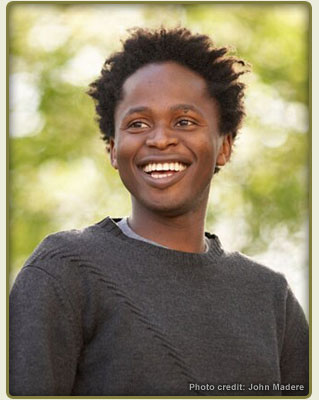

Back when I wrote an update on Dharfur, my blogging friend Chirp recommended a book, A Long Way Gone; Memoirs of a Boy Soldier by Ishmael Beah. I ordered it that very day, and read it this last week.
It is a truly heartbreaking autobiographical book about a young mischievous boy growing up in Sierra Leone, leading a relatively simple and carefree life in his village with his family. It is very African. He talks about the games he and his friends play, his fascination with rap music and the simple joys of the life he is leading.
Then the rebels come. The invade the villages, hopped up on dope, their dead eyes with no pity, raping, killing, chopping off limbs, stealing all the village food and burning the village behind them, often with people locked inside their huts.
Ishmael escapes once with friends, eventually returning to the village to find his entire family gone. Most of the book has to do with what he has to do to survive. Many villages are very afraid of groups of boys, even boys as young as these are – in their early adolescence – and will hurt them. At the very least, most of the villages hurry them along. At one point Ishmael is hiding out in the jungle forest on his own, hiding from lions, giant feral pigs, sleeping up in trees and looking for the rare fruit or grass that he can eat without getting sick.
Finally, after meeting up with some other boys and continuing to try to find his family, a village takes him in, a village run by the state soldiers. As they are attacked by rebels, the boys are forced to make a choice – go out on their own again (where the rebels will also try to recruit them, and if they refuse, will kill them) or agree to be soldiers. These are kids 12, 13, 14 carrying AK 47’s. As part of their training they are given drugs on a regular basis which keep them hopped up, full of energy, and not sleeping for days. The young boys learn to kill without pity. He becomes the very people he was fleeing.
This is a book about redemption. At the center where the boy soldiers are taken, they are constantly told “none of this was your fault.” It is a very African approach, a very human and loving approach to redemption of lives that might have been totally lost to the horrors they have witnessed and inflicted. The author is now nearly 30, and sounds – unlikely as it might be – happy.
Thank you, Chirp, for recommending this wonderful book.
Meat and Fish at the Sultan Center
It doesn’t take long before you live in a country long enough that you don’t see with the same eyes as when you came. Last week, as I was shopping, I was looking for something to fix for dinner. Normally, I just see something and grab and go, but my attention was caught by how expensive everything was, and then again, by the fact that American ground beef was twice as expensive as New Zealand ground beef, and both were really really expensive – it’s ground beef!
I’ve been careful about meat ever since I read Deadly Feasts about ten years ago. The book is a medical mystery, it traces the identification of Mad Cow Disease, and how vulnerable we all are. The human variant takes ten years to develop – all because tainted meat enters our food supply, because meat producers are too greedy to pass up a cow who is stumbling and falling down.
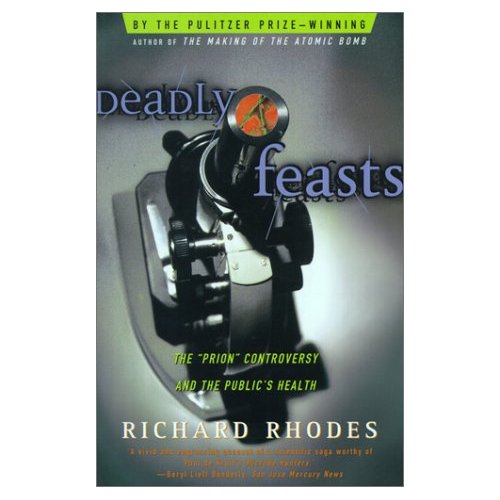
Even those who keep it out of the human food chain often process fallen cows for animal food.
And none of that has anything to do, really, with this post. The point is, for once, instead of rushing by, I was paying attention. When you pay attention, you start to see things (again) (or for the first time.) Here, you see things routinely that you don’t see in the United States:
Lamb’s brains:

Lamb’s heart:

Sheep’s feet:

Fresh Quail:

Kuwaiti Shoom:

Saudi Shrimp (these look big, but Kuwaiti shrimp, in season, are even bigger, and the sweetest shrimp you have ever tasted):

Iranian Squid:

Nuabi (a fish caught locally)

I love Kuwaiti seafood, and this is the one I love the best of all, Kuwaiti Zubaidi:

For those of you in the US, you can multiply the prices by four for an approximate idea of how much the food costs in dollars. The dollar is slipping here, as everywhere else, prices are going up, and we are taking the double whammy.
The seafood is out of this world. Even though expensive, local caught seafood is about what we would pay for seafood in the US. Vegetables IN SEASON can be reasonable. When I want iceburg lettuce, I pay about $3/ head. I have wonderful friends who are sharing their bumper crops of vegetables this year, and oh! they are SO good, so tasty! One of my friends has tried some heirloom tomatoes, and they are doing well!
A Case of Two Cities with Inspector Chen: Qiu Xiaolong
When my sister Sparkle recommends a book, I have learned to listen. I think I ordered this book about six months ago, but never cared enough to actually read it. After reading a recent Donna Leon (like dessert, I use it as a reward for reading something more challenging) I decided it was time to tackle Qiu Xiaolong.
I believe A Case of Two Cities is the first in the series; I tried very hard to make sure it was. When I first started reading it, it was difficult, but it didn’t take long to adjust. When you read a detective story written in a foreign culture, you have to park your old way of thinking, and quickly adapt to a new way of thinking. First, you have to learn what that new way of thinking is. They don’t just tell you at the beginning of the book “Here are the differences in values – you will notice . . .” no, but Qiu Xiaolong is courteous enough to take us by the hand and lead us gently into the Chinese way of thinking, the Chinese way of getting things done, and the technicalities of Chinese detective work.
As we meet Inspector Chen, a published poet, and a detective, ten pages into the book, a new anti-corruption campaign is starting in Shanghai, and Inspector Chen has been given a special assignment – a qinchai dacheng – as “Emperor’s Special Envoy with an Imperial Sword.” Even though imperial days are long gone, this warrant gives him emergency powers to search and arrest without reporting to anyone – and without a warrant. He is to seek and find Xing, a corrupt businessman who has caused huge loss to the national economy and is in danger of tarnishing the Chinese national image, and Xing’s associates.
Just as in the Donna Leon books about Commissario Guido Brunetti, and the Bowen books about Gabriel duPre, and James Lee Burke’s books about New Orleans, and Cara Black’s books about Aimee LeDuc, the detectives and investigators have to walk a fine line between going after the criminal and overstepping their warrant – stepping on the toes of those also engaged in corruption so entrenched that it has become a way of life. Each of these detectives has to maneuver that treacherously fine line – who determines when corruption has become too much? It usually puts their own lives in danger at some point, as those manipulating the system and making a fortune out of it do not want to be caught, do not want to be exposed, and will go to great lengths to protect their ill-gotten gains.
And just as in the above books, the book is more about the actual process than the crime itself. Inspector Chen must go about his task indirectly, having chats here and there, gathering threads of information with which he tries to weave a plausible tapestry of events.
As I was reading A Case of Two Cities, I kept making AdventureMan take me out for Chinese food! The meetings are often held over food, and the descriptions are mouth-watering.



Best of all, when you read these books, you get a tiny little glimpse into another way of thinking, another way of doing business. We are all human, we all have the same needs, and we differ in how we go about getting those needs met. We differ in the way we think. It helps to enter another way of living, another way of thinking, it helps to visit through these books so that we can increase our own understanding that our way of doing things is not the only way, maybe (gasp!) not even the “right” way! Maybe (crunching those brain cells really hard to output this thought) there is more than one “right” way?
How Good People Turn Evil
This is a subject that fascinates me – how even “good” people can do very very bad things . . . The article and interview is from Wired.com science/discoveries and you can read the entire article and view a videotape by clicking on the blue type.
TED 2008: How Good People Turn Evil, From Stanford to Abu Ghraib
By Kim Zetter 02.28.08 | 12:00 AM
MONTEREY, California — Psychologist Philip Zimbardo has seen good people turn evil, and he thinks he knows why. Zimbardo will speak Thursday afternoon at the TED conference, where he plans to illustrate his points by showing a three-minute video, obtained by Wired.com, that features many previously unseen photographs from the Abu Ghraib prison in Iraq (disturbing content).
In March 2006, Salon.com published 279 photos and 19 videos from Abu Ghraib, one of the most extensive documentations to date of abuse in the notorious prison. Zimbardo claims, however, that many images in his video — which he obtained while serving as an expert witness for an Abu Ghraib defendant — have never before been published.
The Abu Ghraib prison made international headlines in 2004 when photographs of military personnel abusing Iraqi prisoners were published around the world. Seven soldiers were convicted in courts martial and two, including Specialist Lynndie England, were sentenced to prison.
Zimbardo conducted a now-famous experiment at Stanford University in 1971, involving students who posed as prisoners and guards. Five days into the experiment, Zimbardo halted the study when the student guards began abusing the prisoners, forcing them to strip naked and simulate sex acts.
His book, The Lucifer Effect: Understanding How Good People Turn Evil, explores how a “perfect storm” of conditions can make ordinary people commit horrendous acts.
He spoke with Wired.com about what Abu Ghraib and his prison study can teach us about evil and why heroes are, by nature, social deviants.
Wired: Your work suggests that we all have the capacity for evil, and that it’s simply environmental influences that tip the balance from good to bad. Doesn’t that absolve people from taking responsibility for their choices?
Philip Zimbardo: No. People are always personally accountable for their behavior. If they kill, they are accountable. However, what I’m saying is that if the killing can be shown to be a product of the influence of a powerful situation within a powerful system, then it’s as if they are experiencing diminished capacity and have lost their free will or their full reasoning capacity.
Situations can be sufficiently powerful to undercut empathy, altruism, morality and to get ordinary people, even good people, to be seduced into doing really bad things — but only in that situation.
Understanding the reason for someone’s behavior is not the same as excusing it. Understanding why somebody did something — where that why has to do with situational influences — leads to a totally different way of dealing with evil. It leads to developing prevention strategies to change those evil-generating situations, rather than the current strategy, which is to change the person.
You can read the rest of the article and view the video HERE.
Recent Comments
ExpatAlien on What Country am I Living … intlxpatr on Yellowstone: Old Faithful to C… Michelle on Yellowstone: Old Faithful to C… Cathy on No Grown-Ups in Charge intlxpatr on Waiting for Snow Wikipedia Donate Button

Amazina


Early Voting in Florida


 Here There and Everywhere