Pilgrimage to Powell’s World of Books
It’s the last day of the trip, and we are back in Portland. In a day when Amazon reigns supreme, Powell’s still stands tall, a bookstore that is a legend, taking up city blocks in Portland in its multi level building, all sectioned off with a mix of new and gently used books in every subject.
Powell’s World of Books is overwhelming. If you love books, if you love all things related to reading, you must at some point in your life make the pilgrimage to Powell’s.
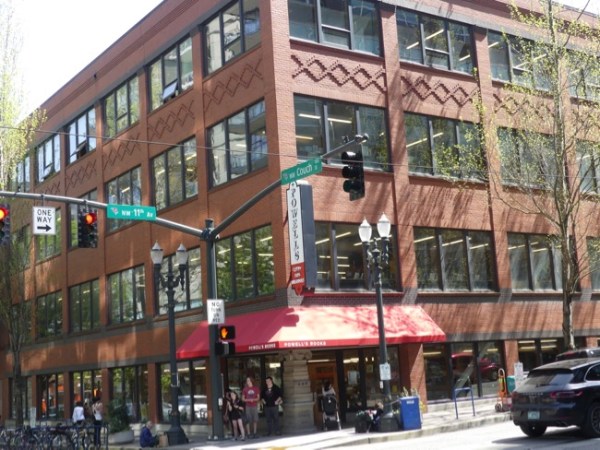


When you’ve got your fill of books, they also have a wonderful coffee shop.
Life is Complicated: Maintaining Balance
 It’s been an odd new year. It started with loss and grief, and quiet introspection. Once the season ended, we were caught in the whirl of daily life, amplified by our son’s need for an ACL fix, which has totally immobilized him for a couple weeks and which requires we all pitch in to help keep life going smoothly.
And, I had a major birthday.
The last major birthday I had like this one was when I turned 35 and realized that I hadn’t accomplished my major dreams. I cried all day. People kept stopping by, bringing gifts and cards, and I just kept crying That year, I started graduate school, and never looked back. I was a military wife at an overseas post, with duties to my husband, my community, my church and my job, and I piled on evening classes and all the attendant work of research and studying on top, and I had never been happier. Going back to school was like flying. I loved my studies, and on the days I felt overwhelmed, I would realize that grad school was the only thing I could resign from and I would choose to go forward. My studies were my reward for good behavior in all the other areas of my life.
“What? You didn’t love being a mother?” I hear you asking. We had an oddly shaped room in our quarters, long and narrow. My desk was at the far end, and next to it was my son’s desk. We would do homework together. I adored my son. I would take him to karate lessons, iron his acolyte robes, be there when he got home from school; he enriched my life. But what made my spirit fly was my studies.
Yesterday, things were relatively quiet and I started a project I usually start in January, cleaning out. We haven’t moved in nearly eight years. I tend to be pretty good at cleaning out and passing along or throwing out, but when you are settled, you don’t do so as conscientiously as when you live with a weight allowance. My weight allowance always heavily favored our items collected from foreign postings, and everything else was expendable. Now, the expendable is taking up space, and I want to clear out that which only burdens me and ties me down, and make way for whatever is coming.
En route, I came across a large packet of printed out letters from my earlier lives, one entry in particular, 5 pages describing our arrival in Kuwait. Oh! There are so many things I have already forgotten, so I read it through, and then passed it along to AdventureMan, and listened to him laugh as he hit the funny parts. I owe my Mother a great gratitude for having saved all those letters, for which, having gone through several computers since I wrote them, I have no records. Those were pre-FaceBook times, when we still sent out group e-mails, which then got forward on. Now, we have less time – or we take less time – to write at length about what is going on in our lives.

I made room for my growing collection of religious-oriented books. I have a shelf for them. I have my spiritual disciplines, like doing the Daily Lectionary, but for additional readings, books were scattered here and there. If I am going to get serious about reading them, I have to have them where I know where they are, and I can retrieve them easily. They don’t call it “discipline” for no reason.
When I was a nomad, life’s busier moments were balanced by the enormous quiet of being in a new location. There were the logistical challenges of deliveries, moving out / moving in, looking for the good grocery stores, the cleaners who could do your nicer clothes without ruining them, getting new visas, driver’s licenses, memberships, etc. but in general, life could be very quiet for up to six months. I always found those quiet times, before new friendships, meetings, commitments, etc. very nourishing to my spirit.
I’ve never been so settled. There are times when my spirit rebels against the sameness of it all. There are times when I miss being around people who don’t always use deodorant and who smell sweaty; it takes me back to riding the strassenbahn (street car) in high school in Heidelberg, or to Africa and our adventures there. There are times I catch a whiff of Desert Rose, and feel an urgent upwelling of nostalgia for walking down a Gulf Arab avenue, or through a mall, and how it was the men who smelled so good. There are times I would kill for real flatbread, fresh out of the oven, or for a Tunisian “brik,” done in pure olive oil, or for the simplest French dish, moules frites, mussels in a simple wine sauce with fries.
I do love Pensacola. I have friends here. I’ve always been lucky that way; people take me in and take me behind the scenes. I hear the old stories of how Pensacola used to be, and I hear the new stories, that corruption is never hidden enough to go undiscovered. People in Pensacola, like people everywhere, know things, and I am honored that they share these insights with me. I have found religious community here. I have found meaningful work.
I have a son of whom I am enormously proud. I love and admire his wife. And I have two of the smartest, funniest grand-children on earth, with whom I love spending time.
(Did you know that the use of “whom” is generational?)

It is a sodden, rainy day in Pensacola. AdventureMan is on the couch, here in my office, snoozing as I write. We are on our way to church, then I have a meeting before coming home to do my studies for my class this week. As it says in our Episcopalian Forward Day-byDay: Oh God, Give me strength to live another day. Let me not turn coward before its difficulties or prove recreant to its duties: let me not lose faith in other people . . .
On on.
The Rules of Magic: Alice Hoffman
No, I haven’t gone silent. I’ve been busy, contacting my worthless representatives in the House and Senate, telling them to stop the thug-in-chief, to stop the carpetbaggers stripping our country of it’s resources and decency.
In response, they supported a tax cut that favors the very rich, and strips the neediest of health care that they might be able to afford. The also broke my heart by inserting a little amendment that allows for oil drilling in the Arctic, in my birth state of Alaska.
I used to write about corruption in Kuwait and in Qatar. I never dreamed I would be faced with such horrifying, outrageous behaviors in my own country. Very humbling. Very miserable.
So, when my heart is broken, I turn to books, and oh, have I found a delightful book. Alice Hoffman’s book The Rules of Magic. I’ve just gotten into it, but I wanted to tell you about a paragraph that hooks me and makes me want to stay up all night to read the whole book 🙂 This is my great escape.
Everyone had to leave home eventually, didn’t they? They had to set out on their own and find out who they were and what their futures might bring. But for now all Vincent wanted was a bus ticket, and when he looked at his sisters he could tell they agreed. No going back, no retreat, no settling for the ordinary lives they had been made to live every day.
Hoffman, Alice. The Rules of Magic: A Novel (The Practical Magic Series Book 1) (p. 19). Simon & Schuster. Kindle Edition.
Update: I finished this book, and loved it. It was pure escape, and thoroughly engaging and relatable, although that may sound contradictory. 😉
Nina George: Little French Bistro (aka Little Breton Bistro)

I haven’t been reviewing books so much recently. I run a local book club, we meet once a month, and this year, we chose some really HARD books. This book, The Little French Bistro, is not one of the books my book club read. It is not a hard book.
It is a great, quick airplane read, or a beach read. It is a book you can read and pass along to the person sitting next to you, because you won’t need to go back and re-read any of it.
I am pre-disposed to like any book that has France, French, or Paris in the title, or bistro, or book shop. I read another book by this author called The Little French Bookshop, in which the main character ends up taking his bookshop – on a barge – down a series of rivers, through locks and small French towns, to the south of France. I really enjoyed that book, and have thought of it often.
This book I just found annoying. I wanted to tell the main character, Marianna, to “man up,”, grow-a-pair, take responsibility for your own life! She lived in misery for forty something years with a man who treated her like an accessory, like a domestic, like a convenience, without respect, without . . . . respect.
Marianne gets sadder and sadder, goes to Paris on a trip with her churlish husband, and decides to commit suicide, but fails in her attempt.
She escapes the hospital in which she is about to be evaluated for mental stability, and heads to Brittany.
I’m not liking her very much so far, but I am hesitant to blame a victim. And I am annoyed; how did this sad sack get the gumption to go, and how did she happen to have cash on her, when her purse went into the river with her when she jumped off the Pont Neuf?
Her motivation? She wants to die in Brittany, and things the sea will do the job. She ends up in the sea several times.
Long story short, she finds work she enjoys and is good at. She learns a little French, she makes friends. She gets a make-over and buys some new clothes. She finds a lover, a French artist, who loves and adores her, and she blooms under his loving attention.
Sigh.
It’s a very romantic idea, and it makes me tired. I’ve met so many divorced people, men and women, who are still looking for that partner who will love and adore them. Some of them wish they had stayed with their marriage; some were smart to leave. Relationships are hard work. It may be all magical, as George implies, at the beginning, but as the relationship grows and enriches, deepens, you have to learn to accept another, warts and all. You can’t do that unless you can accept yourself . . . warts and all.
I object to the premise that you find a wonderful new lover and a new life begins. My experience tells me that you really need to be happy with yourself, first, and that wonderful love will follow . . . or not. If you are happy with yourself, and you are creating a life you love living, that may be as good as life can be. If you don’t find a way to be happy with yourself, if you don’t know who you are, every relationship ends the same way. God willing, we grow, we change, we learn more about ourselves, who we are, our relationship to the universe, and our purpose, and how to fulfill it.
There are some interesting characters, interesting situations and a lovely community life in The Little French Bistro. My frustration with the book is that it had more potential than it demonstrated.
The Mockingjay
I saw a set of movies a couple years ago, about a post apocalyptic America, where there is a capitol full of fabulously rich, fabulously well-dressed, ornately made-up rulers who entertained themselves with a yearly survival ordeal, the Hunger Games, fueled by “tributes” who were chosen from each of 12 districts to compete to the death, to the last one standing. One woman and one man were chosen from each district to compete.
Upon the inauguration of our current regime, I had to find ways to fight my despair and outrage; I had to find ways to join with others of similar feelings and counter moves which I consider to be against the best interest of my country, and who I have always believed us to be – people who believe in liberty, equality and brotherhood, people who have all arrived here from elsewhere (Immigrated), and people who believe in giving others a fair chance at the American Dream.
My best friend forever (we met in college) and I challenged one another; she added Planned Parenthood to her charitable donations, and I added the ACLU.
I had always thought the ACLU a little nutty, but when the first immigration ban went into effect, and the ACLU had the skill, imagination and resources to mobilize and to man tables offering legal help – FREE – at the airports to stunned arrivals being turned back, I was proud I had supported their efforts.
I live in a conservative area, and because I don’t want my car damaged, or any sort of ugly confrontations in parking lots, I don’t put bumper stickers on my car. There is one I have seen that I love:

I would never dare put this on my car, living where I live.
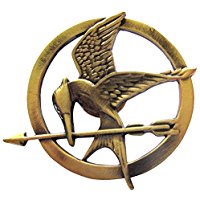
I did, however, buy a mockingjay pin which I found on Amazon, amazing Amazon. I can safely wear it, knowing it signifies rebellion, and no one here has a clue.
Wear it in Seattle, I learned, and everything changes. My best friend forever and I went to dinner, and I was wearing that pin. The waitress peered, and peered again, and asked “Is that what I think it is?”
I said it was a mockinjay, and a metaphor. She took our order, left, and within seconds another waitress appeared, and then a waiter. Each treated me like royalty, giving salutes, blessing me with “may the odds be ever in your favor.” They asked me questions I couldn’t answer; I kept explaining that it was my metaphor for finding ways to counter a corrupt regime, and I particularly loved it because it connects us all, young and old.
I had seen the movies, but now I am deep into reading the Hunger Games trilogy, so that I can wear the pin again, with deeper knowledge when I run into the people who really know all the lore.
May the odds be ever in your favor 🙂
“Guido Brunetti Sent Us” (Rosa Rossa Restaurant)
AdventureMan and I read a series of detective novels set in Venice by author Donna Leon, who lives there. Commissario Guido Brunetti is a patient, thoughtful and smart detective, working under a lazy, corrupt and greedy boss in a country rife with corruption. Each book has a social issue in Venice as its topic, and not lightweight topics – the arrogance of dumping trash, boatloads of trash, off the coast of Somalia (had you ever heard of that before? Neither had I. But it is true, and it has ruined traditional Somali fishing), big pharma and tainted drugs, sex tourism and human trafficking, governmental bribery – Donna Leon fearlessly tackles them all.
Guido Brunetti loves Venice, and he loves his family. His solace in life is his wife, a professor of literature at the university, and his two children. His wife cooks meals that make the reader’s mouth water as they read, or Guido and one of his lieutenants will stop at a restaurant for lunch.
In one of the books, “Blood From a Stone,” American tourists give evidence to a stabbing they witness on their way to dinner. To thank them for their help, he directs them to a GOOD Venetian restaurant, and tells them to say Guido Brunetti sent them.
We don’t say that. No matter how real Guido Brunetti has become to us, we know he is not real, and we don’t say he sent us. But we do take the tiny winding back lanes to find Rosa Rossa, and while we order familiar salads, we also order Venetian specialities for our main courses.
Rosa Rossa on a tiny but busy street:

AdventureMan’s favorite salad; he loves Caprese:

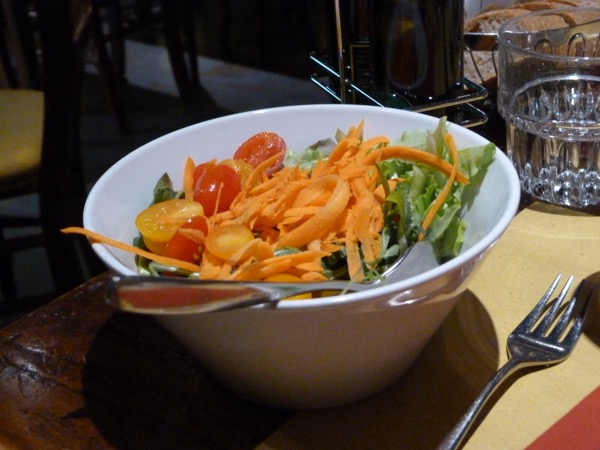
I had a garden salad:
I love black spaghetti, or Pasta Nero. It is made with squid, and squid ink, and I first had it at a lovely dinner a long time ago in Damascus, Syria, served by a beautiful Italian who swore t me that this dish is Southern Italian. If so, I ordered it anyway, in honor of Beatrice, and it was delicious.

AdventureMan ordered Pasta with Squid and pepperoncini, and he said it was very piquant, and that he has never eaten so much squid in his life at one time.

We passed on dessert, knowing we still had miles to walk, and possibly a gelato toward the end. We had such a short time to enjoy Venice, searching for and finding Rosa Rossa was a lot of fun, and a great adventure. They took good care of us, and the food was delicious.
The Badass Librarians of Timbuktu
I saw this today on the NPR Books section, and as one great admirer of librarians, I wanted to share it with you. These librarians are my kind of badass! They are providing a service to humanity.
Timbuktu’s ‘Badass Librarians’: Checking Out Books Under Al-Qaida’s Nose

Handout picture dated 1997 and released in 2012 by the UN shows ancient manuscripts displayed at the library in the city of Timbuktu. Al-Qaeda has destroyed ancient texts it considers idolatrous.
Evan Schneider/AFP/Getty Images
For hundreds of years, Timbuktu has had a place in the world’s imagination. Located on the southern edge of the Sahara desert, the city flourished as a center of Islamic culture and scholarship in the 13th through 16th centuries. It was placed on the UNESCO World Heritage List in 1988, recognized for the University of Sankore, which had as many as 25,000 students who studied the Quran, as well as the historic Djingareyber and Sidi Yahia mosques.

The Bad-Ass Librarians of Timbuktu
And Their Race to Save the World’s Most Precious Manuscripts
Timbuktu was a center of the manuscript trade, with traders bringing Islamic texts from all over the Muslim world. Despite occupations and invasions of all kinds since then, scholars managed to preserve and even restore hundreds of thousands of manuscripts dating from the 13th century.
But that changed when militant Islamists backed by al-Qaida arrived in 2012. The hardline Islamists didn’t see these texts as part of their Islamic heritage, but as idolatry, contradicting their interpretation of Islam. They set about destroying important cultural icons, including 15th-century mausoleums of Sufi Muslim saints. Librarians feared the city’s prized medieval collections of manuscripts would be next.
Librarian Abdel Kader Haidara organized and oversaw a secret plot to smuggle 350,000 medieval manuscripts out of Timbuktu. Joshua Hammer chronicled Haidara’s story in the book The Bad-Ass Librarians of Timbuktu. Hammer spoke with NPR’s Michel Martin about how a librarian became an “operator.”
Interview Highlights
Why these manuscripts were so important
These volumes — and we’re talking hundreds of thousands of them — at the point at which al-Qaida invaded Timbuktu, there were something like 370,000 manuscripts amassed in libraries in Timbuktu. And they portrayed Islam as practiced in this corner of the world as a blend of the secular and the religious — or they showed that the two could coexist beautifully. And they did in this city.
So it was tremendously important for Haidara and those who supported him to protect and preserve these manuscripts as evidence of both Mali’s former greatness and the tolerance that that form of Islam encouraged.
On Abdel Kader Haidara’s background
Abdel Kader Haidara was a son of a scholar and he grew up in an intellectual environment in Timbuktu. He was not a wealthy person. After his father’s death in the early 1980s he inherited the family’s centuries-old manuscript collection.
So in 1984 the head of the Ahmed Baba Institute, the government-owned library in Timbuktu, called on Haidara and said, “Hey, we’re having trouble getting off the ground, we need to find manuscripts. We know they’re out there, they’re hidden away in the desert, in river towns. Can you undertake this job of traveling around northern Mali, tracking down these manuscripts that have been lost — buried, disappeared — over generations? Gather them up, we’ll give you money. And we want this library to be splendid. We want this to be something that people from all around the world will come to visit. So go out, do your best, find books for us.”
He was reluctant at first, but the call of duty and the curator’s constant pressure prevailed. And in 1984 he began this what turned into a 12-year really amazing quest to ferret out these manuscripts all across Mali.
How Libya changed Mali
In 2011, the Arab Spring breaks out. Gadhafi’s downfall, the arsenals of Libya — in the chaos of Gadhafi’s murder and the disintegration of the Libyan state — are opened for the taking. Then you’ve got these various rebel groups in Mali. You’ve got Islamic radicals all descending on Libya — on these arsenals. Walking in, loading up their pickup trucks with heavy weaponry, driving through the dust across the desert back to Mali. And so these heavily armed rebels sweep across the desert and in three months have captured two-thirds of the country.
Why he decided to do what he did
The first thing that Abdel Kader was worried about, frankly, was looting. In the first few days after the rebels took over Timbuktu and the army and the police had fled, there was total disorder. That’s when he kind of began to scheme — “Hey, the great treasures of Timbuktu are being held in these very ostentatious libraries.” He said, “These are going to be targets.”
The looting subsided pretty quickly. But as it subsided, you had this growing radicalism, you had Islamic police roaring through the streets, stopping people, throwing them in jail, grabbing cigarettes out of their mouths, whipping them in public. He just foresaw that this was going to get worse, and that the manuscripts, which as we already said expressed values that were anathema to fundamentalist Islam — to Wahhabi Islam — were in danger. That sooner or later, these manuscripts are going to be held hostage. They’re going to become political tools, they could be destroyed in an act of vengeance, caught up in military action. We’ve got to protect them.
So that’s when Abdel Kader and a small group of his supporters, friends, relatives got together and began what ended up being a three-stage effort to protect, and essentially smuggle to safety, all of these manuscripts.
Becoming a ‘badass’
Let’s remember that Abdel Kader was more than a librarian, this guy had spent 12 years as a badass explorer, as an adventurer. He was traveling on camels across the Sahara, on riverboats, going to small villages, finding these manuscripts. So he was an operator. So when the time came, he just knew what to do.
He said, “The first thing we’re going to do is get them out of these big libraries. We’re going to take trunks, we’re going to pack them into trunks at night when the rebels are asleep. And then we’re going to move them in the dead of night by mule cart to these various houses — safe houses, scattered around the city. We’re going to stick them in there and hopefully they’ll be safe for the duration of this occupation.” Which of course, nobody knew when that was going to end.
Why it’s important
One of the things that I think is important to draw from it is to realize that there is this whole strain of Islam that is moderate, that celebrates intellectuality, that celebrates culture, that celebrates diversity, secular ideas, poetry, love, human beauty. I think that is lost in this debate that’s going on. We tend to really kind of turn against Islam because of the actions of this particularly violent group.
But I think in fact that the Islam represented by those in Timbuktu and the badass librarians is in fact more representative of what Islam is. And these people [who] were the real victims of extremism in this part of the world are fellow Muslims. They were the ones who really suffered. They were the ones who had their hands and feet chopped off, who had to live through the horror of daily occupation.
For the most part, we see this from afar, but these people are on the front lines and they are living through the horror of radicalism every day and every minute.
Where the manuscripts are now
He hopes that he’ll be able to return them to Timbuktu. They are in about a dozen climate-controlled storage rooms in Bamako, the capital of Mali. And as far as moving them back, he’s waiting. I mean, these are very hard people to root out. But Timbuktu is a ghost town — tourists aren’t going there, flights aren’t going there. It’s very sad. And I don’t know and he doesn’t know if those glory days can ever be recaptured, given the strength of the Islamists — the terrorists in that area, in that part of the world.
Doris Duke’s Shangri-La
Months in advance, my friend said “You’ll really want to see Shangri-La,” and I had never heard of it, but I looked online, and it looked beautiful. Doris Duke, one of the richest women ever to live, could buy anything she wanted. She had a good eye for art, good timing, and she bought much of what is in Shangri-La and her other residences at bargain prices after WWII. The value of her art holdings increased dramatically, and she ended up with an even bigger fortune than that with which she started.
How do I know? I am in the middle of my third book, reading about Doris Duke. The books are pretty bad. Each author seems to have an axe to grind, and one author took very little information and used it to speculate endlessly, full of gossip and mean-spirit. Altogether, Duke does not come off as a very kind person, but who can say which version of this very private person is the “real” Doris Duke?
To visit Shangri-La, you must go through the Honolulu Museum of Art. They have an online reservation system – the next two weeks are already fully booked. My friend booked months in advance so that we could attend. We got to the Museum, found a good parking place, entered the museum, receiving a lapel sticker and a wristband which later allowed us to visit the museum for as long as we liked.
We boarded a bus and watched a very romanticized movie about the life of Doris Duke, and then we were there! We were warned we could take no photos inside. What a pity! The interiors are magnificent, all marble, and tiles, gorgeous woodwork, and all kinds of Islamic Art that looks like it would go well in the Qatar Museum of Islamic Art. I couldn’t help but wonder if the newly rich aren’t trying to buy some of their cultural objects back?

Our guide ushered us into a beautiful entry, with meshribiyya and tiles and beautiful light fixtures inside. I wish I could show you.

About half way through the tour, we had a break on a terrace from which we had this spectacular view. I read in one of the books that Duke built this rock harbor without asking permission from the Hawaii government, just did it. It is lovely. The terrace also has gorgeous Persian tiles, the interior tiles are Persian and Iznik.

After visiting the Damascus Room and the Syrian Room and the Mogul Room, we visited Doris Duke’s bedroom, bare but for a couple couches. Then, out to the gardens.

We were allowed to take photos in the gardens 🙂

This is a tree at the entry to the house; the tree sends down those shoots that form new roots and new trees. It is magnificent!

After our visit to Shangri-La, we returned to the Honolulu Museum of Art, and had lunch. This is the market salad with salmon – Yumm.

As we lunched, a character went around taking selfies. I think this is a performance artist, and I think it may have been a guy.

Being three very independent kind of folk, we split up to see what we wanted to see at the museum. There was a special temporary exhibit on Japanese street fashion which I found fascinating. I loved some of these street fashions, which strike me as very imaginative. When I got to the Lolita section, however, little girl dresses for grown women, I found it too creepy and strange to photograph.


There is a section on Islamic Art with beautiful tiles and examples of several genres of art objects.

Out on one of the patios, I found this screen which reminded me of a very modern sort of tree-of-life.

Altogether, a grand day. My friend was right – we really enjoyed seeing this.
On Our Own in the Souks of Marrakesh and the Jemaa el-Fna
Free at last!
We are as giddy as children let out of school as the groups head left and we head right, going deeper into our favorite territory, the souks (small shops) in the great city of Marrakesh.
Before we ever went to Marrakesh, many years ago, we read a book by Elizabeth Warnock Fernea, author of Guests of the Sheikh, called A Street in Marrakesh, talking about how her family lived in the center of Marrakesh, among Moroccans, and the adjustments they made as they grew to learn more about their environment. You know how you can read a book and feel like you had lived it? We felt we had lived in Marrakesh.
When we visited with our son, we had a car and were driving all through Morocco. We had left Ouazazarte and driven over the Atlas Mountains, stopping here and there to buy fossils and “thunderballs” which are also called geodes. It was late, and dark when we got to Marrakesh, and we had to stop and ask directions at a gas station how to find our hotel. We knew we were near, and we didn’t know how to close the distance. This was before smart phones and Google Maps.
Our son and I watched AdventureMan from the car, and as we watched him ask the two men working there, one pointed left and one pointed right. We were dying laughing. And, actually, both were right, there was an obstacle between us and the hotel and you could go right – or you could go left. At that moment, a motorcycle drove up, listened to the question and offered to guide us to our hotel. This is the essence of Morocco to us; the kindness and the hospitality of the Moroccans.
I wish I could remember the name of the hotel, but our room was huge, and full of tile work. Our son had his own area, on a separate level in the same room, and his own TV. It was a far cry from a sterile, modern hotel; this was full of color and detail, tile and wood work.
The next day, we hired a private guide for a tour of Marrakesh, and had a wonderful time exploring all kinds of wonderful places.
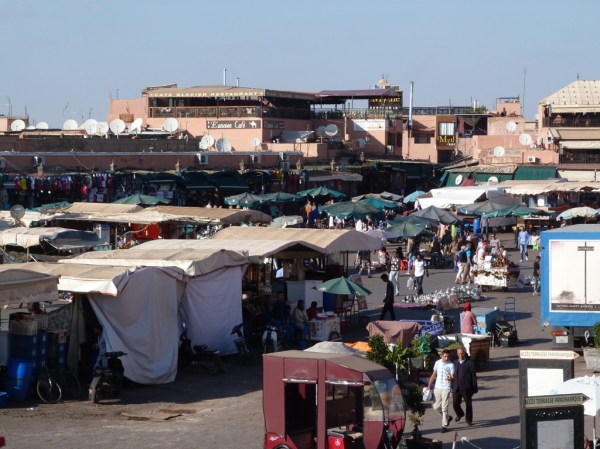
So now, off we go, and the smells and the feel of the souks almost make us giddy; we are back in our element.
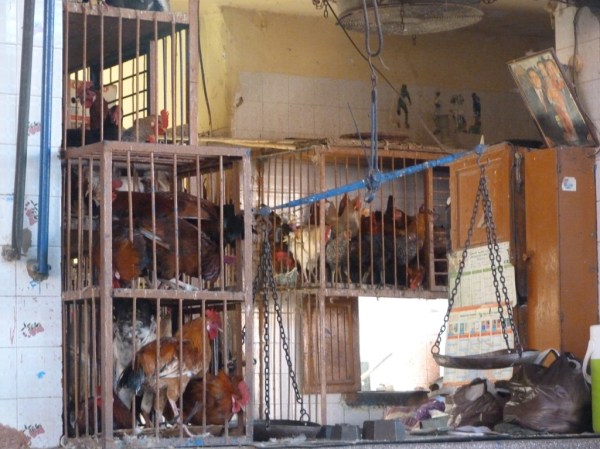
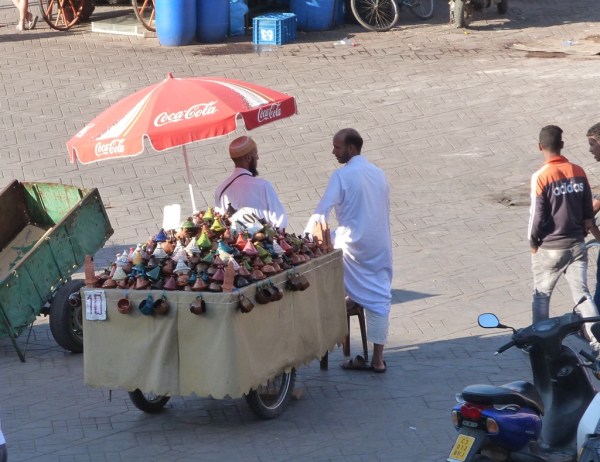
As we wander, we can hear roosters crowing, and, in the middle of the souks, we find a souk devoted to roosters. It is the middle of the afternoon, a quiet time of day, perfect for wandering.
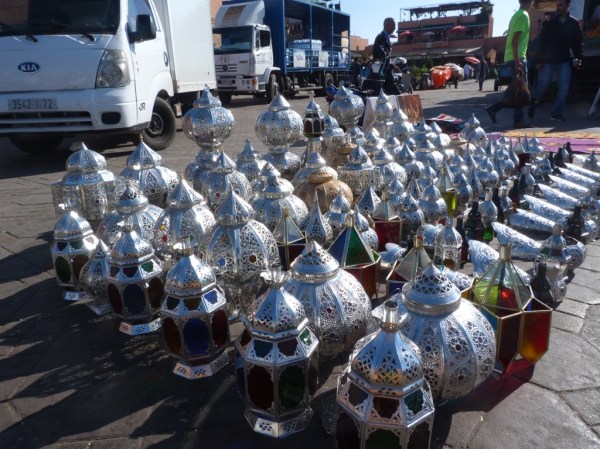
Me and my attraction to light fixtures 🙂
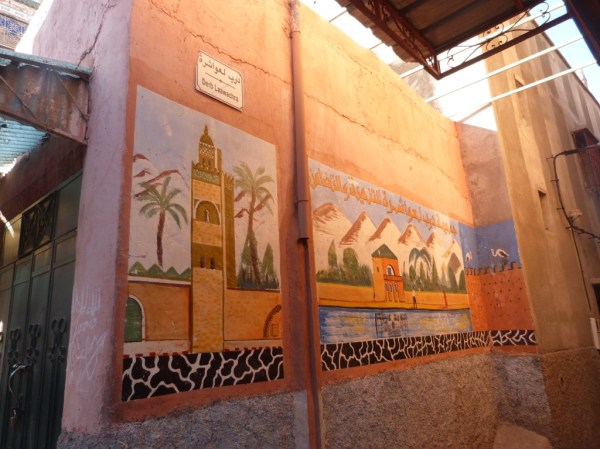
A mural of the Koutoubia mosque; one of the reasons we felt so secure in this souk is that if you get lost, you just look for the highest tower around, and that is the Koutoubia mosque, which takes you to Jemaa el-Fna.


We walked to our content, and then settled in at late afternoon to a cafe with a terrace high over the Jemaa el-Fna, where we had our choice of tables and could watch the market come to life. As we sipped our mint tea, the other tables filled; Moroccan families, tourist couples, assorted characters. The day is gorgeous, we have a shaded location, life is sweet. We’ve soaked in the sights and the smells. We’ve done more than our 10,000 steps. We enjoyed this afternoon immensely.




Tucson, and the Great Saguaros, and Zeman’s
On our way to the interstate from Tombstone, we see our first giant Saguaro, one of the reasons we wanted to stop in Tucson. It is awe-inspiring, just growing in someone’s front yard, about two stories high. Did you know that these giant cactus only grow in a very limited environment? Tomorrow, we are going to the Saguaro National Park; we can hardly wait.
Meanwhile, we check in to our very odd Residence Inn. It is near the Tucson airport, and it looks like a resort, but when we go to use the pool, it isn’t even filled, it is being repaired. Repaired? It looks brand new.
It is in an area with a lot of other new looking hotels, near the airport, but while in other places there are usually a lot of restaurants around the airport, in Tucson, there are few, and not ones we care about.
Using our Trip Advisor research, and our Google Maps App, we find Zeman’s. Zeman’s is Ethiopian, and gets great reviews. We love Ethiopian food, and because most of what we order is vegetarian, we also know it is really good for us.
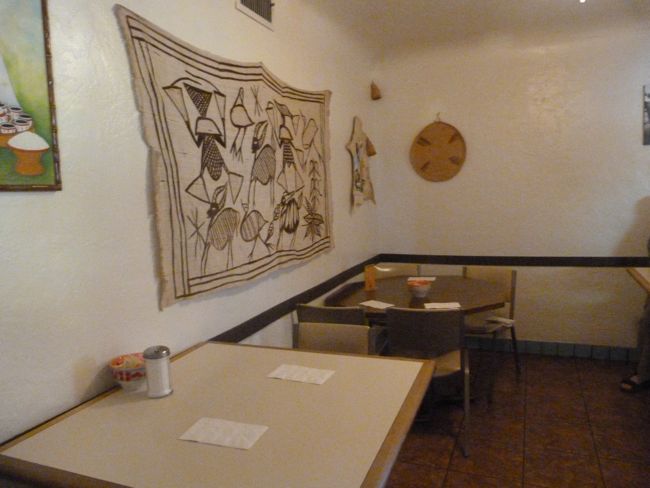
It is an easy drive into the big city, and we find Zeman’s right where it is supposed to be. We are warmly welcomed when we go in, and take a look at the menu.

They do something we really like; they have a combination where you can order one meat and two vegetables. We ordered two combinations, as did most of the other customers, and it was delicious!
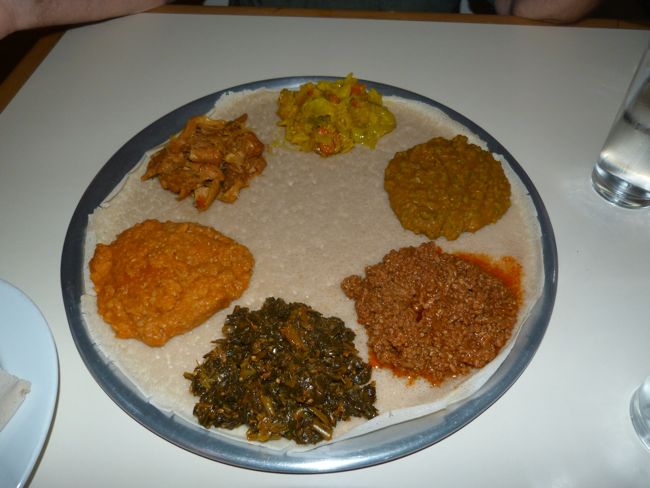
We really loved the ground beef, which was exotic and spicy, and the collard greens, also exotic and spicy, but with different spices. I always think of Vargese’s Cutting for Stone when I eat Ethiopian food. When I read it, I felt like I had grown up in Ethiopia.
It’s in the university part of town, and most of the customers appeared to be students and faculties who enjoy good eats at reasonable prices. Zeman’s is exactly that. Tucson is blessed to have such a delightful restaurant. I understand there is another Zeman’s and even a third one in the planning. 🙂
Recent Comments
ExpatAlien on What Country am I Living … intlxpatr on Yellowstone: Old Faithful to C… Michelle on Yellowstone: Old Faithful to C… Cathy on No Grown-Ups in Charge intlxpatr on Waiting for Snow Wikipedia Donate Button

Amazina


Early Voting in Florida


 Here There and Everywhere