Ann Patchett: The Patron Saint of Liars
I didn’t expect to like this book as much as I did. The main character is odd, a woman who doesn’t really think things through clearly, and somehow doesn’t even really know what she is feeling.
She gets married, and three years later, pregnant, decides “the marriage isn’t working” and leaves her husband, with a note saying only that the marriage isn’t working. We’ve been with her when she met him and fell in love, and she seemed to love him OK, and their lives together seemed to be OK, but somehow, she had to leave. I didn’t understand it when it happens in the book, and I never did understand it. The author tells us that Rose is a private person.
Rose drives from California to Tennesee, to a home for unwed mothers, where she bears a child, whom she keeps. Most of what she does seems to be on automatic pilot. I never really understand what Rose wants, only that she is aware that this isn’t it.
The story is told from three different points of view, and at no time did I have a clear idea of what motivated the main character, Rose. You can’t help but love her husband, Son, and her daughter, and all the women who love Cecilia, and help raise her.
You do get was a rounded picture of people around her, the good sisters running the home for the unwed women, how the women who arrived changed over the years as our culture changed, and how you may not understand how a person’s mind is working but sometimes you can just find a way to accept that she is what she is, and get on with living your life.
I really liked the book, even though I was not taken with the main character. I can’t tell you too much without giving it all away. Read the book and tell me what you think.
Emily Arsenault: In Search of the Rose Notes
I think I got this book because I saw some of my book-loving friends on Good Reads reading it. When I started reading it, I thought, “Hmmm, big print, short chapters and the main character is a pre-teen, hmmm, this has the feel of a teen-book,” but by then it was too late, I was already hooked, so I read the whole book and I am glad I did.
So the writing is not all that complex. I actually like teen books because teens and twenties deal so much with making moral choices. They are at that wonderful age when they think about things and decides what matters to them. There are many of those I would rather hang around than people my own age who want to talk about shopping or shoes or aches and pains.
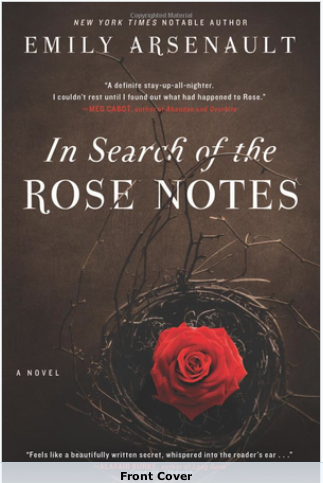
(You can find this book at Amazon.com)
Nora hangs out a lot with Charlotte, her best friend, while her single mother works full time. Charlotte is bossy, but never boring, as they explore the pre-teen world together. They have a babysitter, Rose, who watches over them and keeps them out of trouble. Until one day Rose disappears.
The book switches back and forth from these pre-teen experiences to a later time, maybe 15 years later, when Rose’s body is unearthed, and once again Nora experiences a lot of feelings she had buried. I loved the depiction of high school, where so many kids are suicidal, and life is cruel. High school just isn’t a kind place, even for those who look like they are having a great time.
At the same time, there were some good relationships, and you get to look back with Nora at people who were kind, but you were too absorbed in your own feelings to notice. It’s a complex world, and we get to go back and explore it once again through Nora’s eyes.
I’m glad I read it. This book did not change my life, but it is a great book for people who either are younger, or who like younger people, as I do.
Jennifer Egan: A Visit From the Goon Squad
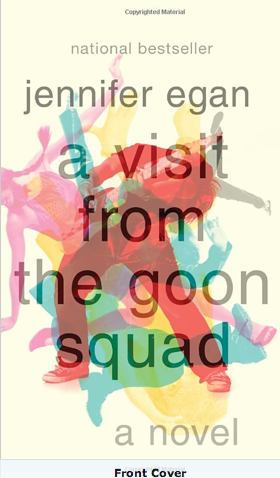
Amazon.com kept telling me I needed to read this book, so finally, I ordered it and waited a couple months before I was ready. I just finished a major project AND I caught a miserable cold, so what better time?
I loved this book. It had a lot going against it; you know irrational factors like how you feel when you have a cold and your sinuses are all stuffed up and your chest is tight? A Visit From the Goon Squad took me out of my misery. While it appears random, it is tightly plotted, and I loved seeing how different strands intertwined. I also loved the effects of the goon squad (no, I am not going to tell you anything specific) and I loved how technology drove differences in how different generations thought and acted.
The last act takes place in a future where (this makes total sense) there is a high value placed on “pure”, no tattoos, no swearing – it is truly hilarious, the lengths to which we will go to NOT be our parents. Babies have their own hand-helds, which is already happening. My eyes have been opened, watching our own 18 month old grandson working an iPad and iPhone. It’s amazing to me the aps that are created to entertain, divert and teach our little ones.
This is not a straight line book, so there are times I had to go back and read a section again to remind myself where I met this character before, and how he tied into the plot earlier. It is a fascinating creation, this book, and I would love to sit down for coffee with this author, and her outside-the-box kind of thinking.
Major Pettigrew’s Last Stand
 Major Pettigrew’s Last Stand by Helen Simonson
My rating: 5 of 5 stars
I loved this book. It follows all the themes I love – how convention blinds us, how our cultural assumptions make us unconsciously snobbish and leads us to hideous behavior, it is very cultural and also very cross-cultural. Major Pettrigrew is widowed, and his grief has made him old. At the beginning of the book, his life seems very dull and grey. It lightens as his friendship sparks with Mrs. Ali, a widow who runs a small convenience market in his small English village. They both love reading (of course I love that part!) and they talk books, and sparks of warmth kindle.
This book is also very uncomfortable for me, as Roger has a grown son who bullies his father. The book isn’t just cross-cultural, it’s cross-generational, and I see glimpses of myself in the boorish behavior of his son toward his father.
There are some amusing scenes, some wickedly insightful village-interaction scenes, some painfully introspective moments, and some truly grand moments when everything becomes clear and a person acts. For me, there was an added bonus in that as I read Mrs. Ali’s words, I could hear them so clearly, and she spoke in the voice of a dear friend. I could picture her, because I could see the sweet smiling face of a dear friend. It was like having a great visit.
<a href=
New Generation of Readers
Nothing could make me happier. The Happy Baby loves books! When he was born, one of my sisters sent a box, full of almost every classic book children love to read. Since then, AdventureMan and I have been supplementing with all our own favorites. Happy Baby loves to sit in a lap and read a book, and he is also happy reading on his own.
He LOVES trucks and buses and cars, LOL, he is all boy:
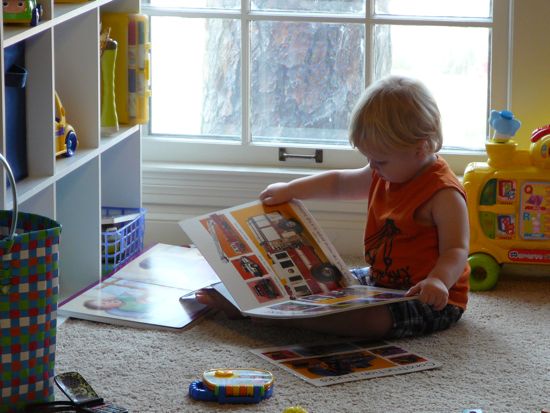
This weekend the Happy Baby discovered heaven-on-earth – the Pensacola National Aviation Museum. He loves the cockpits, with all those buttons and levers and wheels. He only screamed when it was time to move on to the next exhibit.
I was babysitting the other day and they left us with the iPad, which he also loves. I thought I knew how things worked, but I was wrong. I didn’t know anything about Angry Birds or Zombies in the Garden, and he showed me. 18 months old. I just had to laugh. Already, I am learning from him!
Changes in the Air
“It’s still hot,” I said as we were coming out of the movie, “but can you feel a change in the air? Even though it’s hot, the air is changing, the light is changing – you can feel hints that Fall is coming . . . ”
We had just been to see “The Help,” and if you haven’t seen it yet, you need to make plans to see it soon. It is a really good movie, which will make you laugh, and cry, and remember that it wasn’t so long ago in our country when it took place. (You can read my review of the unforgettable book here.)
The movie is a serious movie, and at the same time, I loved the attention to detail – the hair, the fashions, the manners – all very 50’s, even though it is the 1960’s in Jackson, Mississippi.
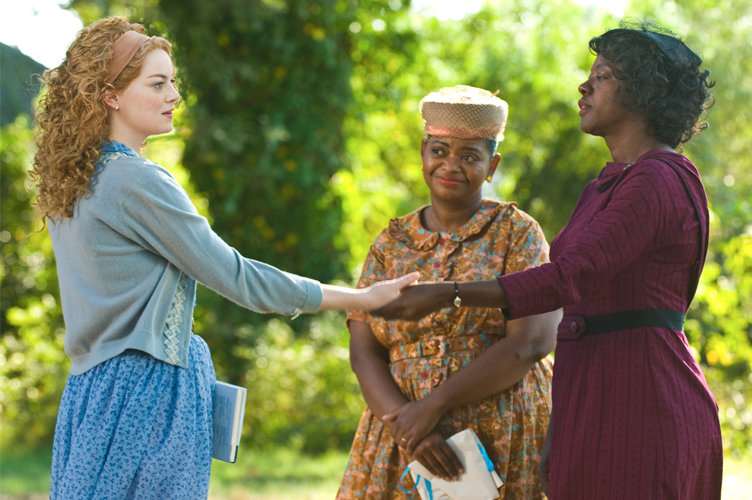
I remember reading this book in Qatar, just after I had moved back there from Kuwait. The Kuwait book club also read White Tiger and Half of a Yellow Sun, all of which had domestic service as at least part of the theme. It’s another one of those cultural things we all have in common – how do we treat the people who work for us? How do they see us? Who is raising our children and teaching them values?
In the Gulf, there are horror stories in the papers of servants who never receive their wages, or who work 16 hours a day, sun-up to sun-down, with never a day off. The families who take good care of their servants never make the papers, but I have seen good and caring relationships, lasting many years, between employers and employees. We’re glad we saw this movie, which sticks closely to the book. For a fuller experience – read the book.
Meanwhile, the temperature early this morning was below 69° F, which means that my tomatoes will begin setting once again and we may have a good crop coming before the cold sets in. I noticed, to my horror, I have a decent crop of weeds trying to establish themselves while it is too hot for me to go out and do battle with them. Some of my tomatoes actually continued producing even during the hottest days of the summer; I’m going to have to plant more of those next year. The golden pear and the red pear tomatoes are producing merrily; the bigger tomatoes have stopped – I hope temporarily.
Credit Card Blues
“Because your name and card number are on file with us, it is possible that your card information has been compromised. While we employ the strongest encryption processes, it is possible that a motivated and persistent hacker could access your information. For this reason, we suggest that you inform your credit card company and explore the possibility of closing your current card and starting another.”

I don’t even have a pit in my stomach this time when I get this message. This is our third change in one year on one card. One of the changes was due to our card company shifting its business to another company, but two were due to possible compromises of our information, which had nothing to do with anything we had done except to use our credit card.
In Saturday’s paper, we read that there has been a huge shift in the restaurant business. An owner said that ten years ago cash customers and credit card customers were about 50/50, but now, 90% of all customers use credit cards. (We’re in the 10% who use cash, but it’s because of all our years living overseas.)
The new cards have arrived, and I spent the day going to all the sites that bill me automatically, and monthly, and to my car rental people, and airline reservations people . . . all those automatic charges that would bounce if I didn’t get the correct new number to them. Even as I am sending out all this information, I cannot help but be aware that 1) It is the companies storing my information that make me so vulnerable, and 2) in some cases, there are no alternatives. Credit cards are the accepted way of paying these days.
It’s been a long journey. I remember my first eye-opening experience; I was back from Qatar, re-opening a mobile phone account and I handed the sales person a hundred dollar bill, and she just gaped. “No one ever pays in cash anymore,” she said, “I don’t even know what to do!” As it turned out, they didn’t have change, so I had to charge it, but it went against my grain – we use our cards, but selectively, and pay them off in full every month.
And we only really use one card. We have a couple back ups, but we never use them.
I can’t help but feel that we are all increasingly vulnerable by our reliance on the credit card system. Hackers are the least of the problem – I also worry about those heaps of paragraphs in 2 pt type that we have to ‘read’ and sign, because do you really read them? I know I scan them, but there are words in those agreements designed (I believe) to make you tired of reading, big words, lots of them strung together. They probably have some meaning, but although I am not stupid, reading financial disclosure statements makes my head spin.
What kind of vulnerability do we have to our banks with these cards?
What are our obligations that we don’t even know about?
While we were waiting for our cards, I had three pre-orders with Amazon.com that failed. I wrote to them, suggesting that because I was a good customer, a shareholder, and a faithful buyer with them almost from the very beginning, that maybe they could send them anyway (especially the new Song of Ice and Fire volume by George R.R. Martin, A Dance With Dragons,) but no, they would not. This is not the Amazon.com I used to know, who sent me a coffee cup for being a faithful customer, back in 1997. No, I had to zip up the road to Barnes and Noble, the old fashioned way.
On the other hand, our mail-order-pharmacy people were just great. I had an automatic order and when I explained the problem and that we were waiting for our new cards to arrive, the customer service lady just laughed and said “We’ll send it out and bill you later.” How very very civilized. (ExpressScripts – YAYYYYY)
I used to know my credit card number by heart. We had the same card for almost 20 years. I even memorized my next card, but not this one. I have little faith it will be good for all that long.
Speak Kuwaiti
Thanks to commenter Zak who recommends a new book available in Kuwait. Wish it had been available when I was there. I had to learn by asking friends. I’m still tempted to answer the phone “Weynich?? Weynich?” (Where are you – to a female)
“SPEAK KUWAITI”
I liked the idea of this new book “Speak Kuwaiti”, unlike any other book, this book has been compiled and designed to focus on the spoken Kuwaiti dialect in the easiest and most interactive way possible. I have many expatriate friends who often ask me “How can I speak Kuwaiti ?” or “How to say I’m hungry, tired, happy in Kuwait?” Well this book is the answer
The price is 3.600 K.D and can be found at Virgin, That Al Salasil, and Jarir bookshop, Kuwait Bookshop.
Zak
The Passage by Justin Cronin
I subscribe to GoodReads.com, and I buy books through Amazon.com, so I am not sure which one of those recommended this book for me. I held it a couple months before I read it, just wasn’t sure it was something I cared about. Once I started, however, I was hooked.
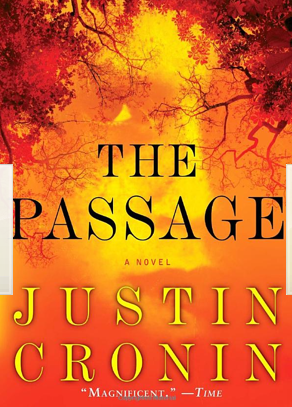
Don’t you just love summertime reading, the kind where you might even be able to grab a couple hours in a row? When you can focus like that, it’s like you are living two lives; you are in your normal existence, but a part of you is somewhere else, if the book is good enough.
Sometimes that somewhere else isn’t that great, and in The Passage, you are in a post-apocalyptic America where those military scientists have lost control of one of their experiments and life has changed forever as a result. Sorry to sound so cynical, but I started reading Sci-Fi when I was still in middle-school, so I am a little jaded about post-apocalyptic literature, but this one managed to suck me in. Also, even though you know it’s fiction, it is compelling enough to feel very real.
So before I go getting all critical about the little things, I need to tell you that when I had to put the book down, I could hardly wait to get back to it, and I probably need to look after my laundry and my floors and wash up some dishes now that I’ve finished; the book compelled my interest.
I think the author does a great job setting up the world. In order for young people to come into their own, to head out on their quest, you have to get parents out of the way, so all the young people out to solve the problems have parents who have died, or committed suicide (the living situation is a little bleak) and that kind of bugs me, even though I can see the literary usefulness of having this happen.
The survivors, 100 years after the societal meltdown, live a bleak and limited existence, mostly focused on not getting killed. (One of the very scary things is just how fast a society can melt down when faced with an overwhelming threat.)
This is a vampire-novel, but a vampire novel with a total twist, there is nothing attractive about these vampires, called virals. They are demented, and they want blood. They tear into flesh. You don’t want to be out in the open after dark, you don’t want to run into a viral. Justin Cronin makes it very very real. I’m glad my husband wasn’t traveling. I know vampires are not real, and I know there are no virals, and you know sometimes rational doesn’t matter when you hear sounds at night? These bad-guys are very very lethal and very very bad.
And here is what I like. Cronin takes you from utter fear to some compassion for the virals. I imagine this will play into the next book.
I also like his inclusion of children, and they way children perceive and the way children feel, and how those perceptions and feelings grow with the child, and, if you are very lucky or very persistent, how you can gain insights into those perceptions and understand them differently as you reach adulthood. It reminds me of another Sci-Fi author I used to read, Zenna Henderson, who wrote books about specially talented children.
Here is what I don’t like, what I find really frustrating: this is just the first volume. I am satisfied enough with this book, and I know I will have to read the next one, but I think I can see where he is going with it all. I find it frustrating; I am holding my breath for the next Game of Thrones/Fire and Ice volume to come out, and now this Passage follow up won’t be out until 2012, on AAARRGH.
It’s a dark book, but it kept me glued. The things that annoyed me didn’t annoy me enough to discourage me from reading. 🙂 It is a great summer read.
Adaobi Tricia Nwaubani: I Do Not Come to You by Chance
This book, the first novel from Adaobi Tricia Nwaubani, is hilarious, with moments of pathos, and a fresh point of view.
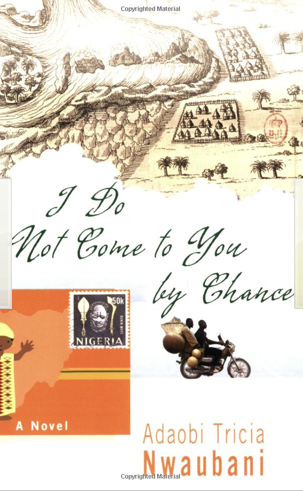
Amazon.com recommended it to me as I was busy buying books by author Chimamanda Ngozi Adichie; I thought ‘OK, I’ll read a series of Nigerian books as part of my summer reading.
Young Kingsley Ibe is the family’s first born male, and with that status goes many privileges – and responsibilities. After graduating with a Masters in Chemical Engineering, he has no success in his search for a job with an oil company in Nigeria, and consequently loses the love of his life, Ola, to another who has secure employment.
Worse, his retired father has a stroke, and the family discovers that with all the fees required, they haven’t enough for his continued care, so Kingsley must approach his uncle, Boniface Mbamalu, more familiarly known as Cash Daddy, for funds to transfer his father to a long term care facility, and, later, for his father’s funeral.
Serious Kingsley’s eyes nearly pop as he sees the life his uncle is living, cars, women, designer watches, shoes, suits and all the trappings of new wealth. Soon, his uncle makes a convincing case for Kingsley coming to work for him, the better to help out his family of mother, brothers and sister, now that he is the senior male in the family.
Kingsley discovers he has a gift for the work – which is writing 419s, those scam letters which I frequently publish in this column. I loved being on the inside, learning how strong possibility e-mail addresses are netted, how response e-mails are massaged – not unlike fund raising techniques by charitable organizations in the US. Kingsley’s education helps him achieve enormous financial success in a very short time – but he finds that all the cash and designer goods in the word do not solve his problems nor make him happy.
I learned a lot about how successful many of these scammers are, and how the money made is spread throughout the Nigerian communities. The author takes a balanced view, balancing the way the cash makes life easier for people – a lot of people, because the rich man has many obligations to his community, balanced against the disgust, and sick fear felt by his religious mother and aunt, and his one time girlfriend, when they learn the work he is doing. They are disappointed that a man of such promise has sunk to making so much money in a dishonest way. The book also does not deal sympathetically with those who have given or lost money to the scammers, nor, in my opinion, does the ending satisfy.
This is one of the funniest parts of the book – a group of Nigerian scammers is about to meet with a representative of a major US investment firm. He thinks he will be meeting with the Nigerian Minister of Transportation to discuss building a new airport; the reality is that Cash Daddy, in disguise, will be pretending to be the minister. Kingsley protests that Cash Daddy looks nothing like the minister, and Cash Daddy responds:
“Let me tell you something . . . Me, I really like these oyibo people. They’re very very nice people. See how they came and showed us that the ground where we’ve been dancing Atilogwu has crude oil under it. If not for them, we might never have found out. But Kings,” he dragged in his dangling foot and sat up in the tub, “white man doesn’t understand black man’s face. Do you know tht I can give you my passport to travel with . . . Even if your nose is ten times bigger than my own, they won’t even notice?”
It was a fascinating book. I understand better now why 419 scams work. (419 is the section of the Nigerian criminal code making scam e-mails a crime; thus the crime is called ‘a 419’) There are some very funny and very insightful moments in the book. It is no where near the level of literature that you experience with Chimamanda Ngozi Adichie, but there is more humor, and the book shows a more modern day Nigeria. Not a bad summer read, but not great literature.
Recent Comments
ExpatAlien on What Country am I Living … intlxpatr on Yellowstone: Old Faithful to C… Michelle on Yellowstone: Old Faithful to C… Cathy on No Grown-Ups in Charge intlxpatr on Waiting for Snow Wikipedia Donate Button

Amazina


Early Voting in Florida


 Here There and Everywhere