Kuwait Bans Blackberry?
I have always loved politics. I don’t love politick-ing, I love watching what politicians do. One of the first rules, in my book, is “Don’t pass laws you can’t enforce.”
It’s pretty basic. Have you ever watched parents who tell their children over and over “Don’t do (whatever)” but they are too lazy to get off their big bottoms to go over and distract the child or to enforce penalties for misbehavior? What happens? The child does – or continues to do – what he or she wants, while the parent either gives up or escalates to a punishment out of proportion to the infraction.
Governments are the same. Don’t make a big noise if you don’t intend – or can’t – follow through. Don’t create penalties you can’t or won’t enforce.
Trying to ban Blackberries in Kuwait – LLLLLOOOOOOLLLLLLLLL! Trying to ban message services? These tech-savvy young people can run circles around the politicians and bureaucrats who try. This is a total hoot.
BlackBerry Ban Eyed
KUWAIT CITY, May 23: The Ministry of Interior is planning to stop BlackBerry Messenger (BBM) service and a decision to this effect might be issued within the next few days, reports Al-Shahid daily. A security source said the service cannot be controlled by the Ministry of Communications or security authorities and hence, users of BlackBerry sets were taking advantage to spread rumors and call for strikes.
He added that the ministry came to the decision after conducting studies and holding several meetings in the last fortnight. The three telecommunication companies in Kuwait, however, said they had not received any official request from the Interior Ministry so far.
Arab Times Online
BBC and the Oil Spill and Ethiopian Elections
You would think that living here on the Gulf Coast within miles of the huge oil spill spewing out to putrefy the beautiful, sparkling gulf waters, that we would have the best, most comprehensive coverage of the local news.
Not so.
“I love BBC!” I called out from my studio to AdventureMan, in his study next door. “Who else is covering the Ethiopian elections in such detail? And they have the best coverage of the oil spill!”
Here is the latest; and excerpt from the Huffington Post:
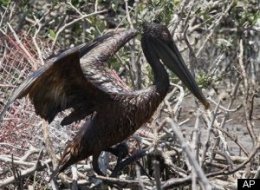
BARATARIA BAY, La. (AP) — As officials approached to survey the damage the Gulf oil spill caused in coastal marshes, some brown pelicans couldn’t fly away Sunday. All they could do was hobble.
Several pelicans were coated in oil on Barataria Bay off Louisiana, their usually brown and white feathers now jet black. Pelican eggs were glazed with rust-colored gunk, and new hatchlings and nests were also coated with crude.
It is unclear if the area can even be cleaned, or if the birds can be saved. It is also unknown how much of the Gulf Coast will end up looking the same way because of a well that has spewed untold millions of gallons of oil since an offshore rig exploded more than a month ago.
“As we talk, a total of more than 65 miles of our shoreline now has been oiled,” said Louisiana Gov. Bobby Jindal, who announced new efforts to keep the spill from spreading.
A mile-long tube operating for about a week has siphoned off more than half a million gallons in the past week, but it began sucking up oil at a slower rate over the weekend. Even at its best the effort did not capture all the oil leaking, and the next attempt to stanch the flow won’t be put into action until at least Tuesday. . . .
In Barataria Bay, orange oil had made its way a good 6 inches onto the shore, coating grasses and the nests of brown pelicans in mangrove trees. Just six months ago, the birds had been removed from the federal endangered species list.
The pelicans struggled to clean the crude from their bodies, splashing in the water and preening themselves. One stood at the edge of the island with its wings lifted slightly, its head drooping — so encrusted in oil it couldn’t fly.
Wildlife officials tried to rescue oil-soaked pelicans Sunday, but they suspended their efforts after spooking the birds. They weren’t sure whether they would try again. U.S. Fish and Wildlife spokeswoman Stacy Shelton said it is sometimes better to leave the animals alone than to disturb their colony.
Pelicans are especially vulnerable to oil. Not only could they eat tainted fish and feed it to their young, but they could die of hypothermia or drowning if they’re soaked in oil.
Globs of oil have soaked through containment booms set up in the area. Plaquemines Parish President Billy Nungesser said BP needed to send more booms. He said it would be up to federal wildlife authorities to decide whether to try to clean the oil that has already washed ashore.
Saudi Woman Attacks Muttawa
I found this on AOL News
“People are fed up with these religious police, and now they have to pay the price for the humiliation they put people through for years and years,” she was quoted as saying. “This is just the beginning and there will be more resistance.”
(May 18) — An angry young Saudi Arabian woman has left her mark on a religious policeman who approached her for illegally socializing with an unmarried young man.
According to the Saudi daily Okaz, the woman strongly objected to the policeman’s interference and repeatedly punched him so hard that he ended up in the hospital with bruises to his face and body.
The couple, believed to be in their 20s, were strolling through an amusement park in the city of Al-Mubarraz when the policeman asked them to confirm their relationship to one another.
Hasan Jamali, AP
In Saudi Arabia, women aren’t allowed to drive or to appear in public without a male guardian.
For unknown reasons, the man collapsed while being questioned, and the woman jumped in with fists flying, Okaz reported, according to arabianbusiness.com.
No statement on the incident has so far been made by the religious police – formally titled the Commission for the Promotion of Virtue and Prevention of Vice – or by the regular police, the Arab site and The Jerusalem Post reported.
If the unidentified woman is charged she could face a long prison term, as well as body lashes.
“To see resistance from a woman means a lot,” Wajiha Al-Huwaidar, a Saudi women’s rights activist, told The Media Line News Agency, The Post reported.
“People are fed up with these religious police, and now they have to pay the price for the humiliation they put people through for years and years,” she was quoted as saying. “This is just the beginning and there will be more resistance.”
“The media and the Internet have given people a lot of power and the freedom to express their anger,” she added. Whatever the religious police do ends up all over the Internet, she said, which gives them “a horrible reputation and gives people power to react.”
Under Saudi law, women are not allowed to drive, be seen in public without a male guardian and socialize with unrelated men.
A decision to open the country’s first co-educational university last year was strongly criticized by a senior Saudi cleric, who was then fired by King Abdullah, The Post reported.
Scary Phishing
I received this letter today from Bank of America:
Dear Customer,
We have received an order by phone from you or someone other than you to make changes to one or more of your Bank Of America Online Banking Profile.
If you did not authorize this change(s) please Sign On to your Bank Of America Online Banking and verify/cancel this change.
Sign On below and verify your details and ensure to be accurate. Also, note that entering invalid entries to your details will lead to Online Account lock down.
For your security we have issued this
Click Online Banking Sign On . (this was in hypertext)
Kind regards.
Security Advisor,
Copyright 2010 Bank Of America. All Rights Reserved.
It had the right logo, and purported to be from secureonline@boa.us.
OOps! I need to deny the changes were made by me? Just click right here?
No no no!
I forwarded this e-mail to:
abuse@bankofamerica.com
Who replied with a letter confirming that it was, indeed, a scam.
If you get letters like this pretending to be from your bank, do not click on anything in the letter, but go online to your bank’s online fraud section, get the e-mail address and forward the letter to them. The banks are fighting a bitter battle to protect their customers, and the sooner they know the newest scams, the sooner they can scourge the earth to eliminate these monsters, who will steal your identity and your property and your cash if you let them.
Grafitti Bridge
Grafitti Bridge turned purple last week. The Run for Life (Cancer Survivors) had painted it purple and then had to put guards on it because the Oil Spill protesters wanted to paint it black.

You know how there are the rules, and then there are the way rules are enforced – or not? Grafitti is discouraged in Pensacola, but Grafitti bridge – a train bridge – is kind of exempt. The informal rule is that as long as the police don’t actually SEE you painting on the bridge, they won’t bother tracking you down. So the adventure is to do it in the middle of the night, with someone keeping watch so you don’t get caught in the act.
Oil Spill Moving Towards Land
You can follow the oil spill movement on this interactive map from usatoday.com

There are lots of meetings. The answer to most questions is the same “I don’t know.” “We don’t know.” Fishing has been banned in the Gulf areas where the oil spill may have effect.
Music Banned in Somalia
We are in our own world these days, boxes needing unpacking, deliveries interrupting tasks, and no connection – no TV, no internet, no land line phone. We do have a cell phone, and Friday night our son called to ask us if we have heard about the weather.
Nope.
Heavy rains, strong winds, possibility of tornados. It was lively!
I hadn’t heard about Somalia, either.
This is really scary to me. This is the kind of thing I worry about in my own country – who makes the rules? Who gets to say what music I listen to, what movies I watch? Who gets to restrict my access to information?
Who gets to tell me that as a woman, I can’t have a checking account in my name? Or that I have to wear a burqa? Or that I am not allowed to wear a niqab (if that’s what I want?)
Somalia Radicals Declare Music ‘Un-Islamic,’ and Radio Goes Tuneless
POSTED: 04/25/10
If, as my colleague Sarah Wildman reports, the Francophonic world is intent on curbing expressions of fundamentalist Islam belief, then the radical Muslim world is taking no prisoners with the West, either. Last week, the Somalian fundamentalist Islamic group Hizbul Islam announced that music of any kind is “un-Islamic,” warning of “serious consequences” for those who dare to violate their decree. In response, radio stations all over the country, including those run by the moderate Muslim transitional government, cut all music from their broadcasts. Even intro music for news reports was scrapped. In its place? “We are using sounds such as gunfire, the noise of vehicles and the sound of birds to link up our programmes and news,” said one Somalian head of radio programming.
Get the new
PD toolbar!
Somalia has been wracked with inter-tribal violence for nearly two decades. In the last few years, increasingly radical Muslim militants, including the dominant Shabab group, have taken over large parts of the country and become closely affiliated with al-Qaeda. A moderate Muslim transitional government, helmed by a former teacher named Sheik Sharif Sheik Ahmed, controls a small part of the country. His government is largely propped up by African Union peacekeepers, with United Nations’ and U.S. support.
In the meantime, Islamic radicals like Shabab have gone on a campaign the New York Times described as “a quest to turn Somalia into a seventh century style Islamic state.”
The music decree follows a string of fundamentalist decrees, including prohibitions on wearing bras (also “un-Islamic”), the banning of modern movies and news channels, including the BBC and Voice of America.
As evidence of a power struggle between the moderate Muslim government and the hard-line radicals who control many parts of the country, Sheik Ahmed’s government responded last Sunday by saying any radio stations that stopped playing music would face closure. In the government’s eyes, those radio stations that complied with the ban were colluding with the radicals.
In the meantime, the radio stations have been caught between a rock and a hard place. “The order and counter-order are very destructive,” radio director Abukar Hassan Kadaf said in the Times article. “Each group are issuing orders against us and we are the victims.”
In the escalating tug-of-war between Western and Islamic powers over freedom of expression, what remains to be seen is how much of a causal relationship exists between the two. Is a proposed burqa ban in Quebec a result of the shuttering of a radio station in Somalia? Does a call for prohibition of headscarves in Paris force a bra-burning in Mogadishu?
If Islamic decrees do, in fact, fuel the fire for legal actions in the West (and vice versa), then continued and increased prohibition seems inevitable. But if radical Islam and a skeptical West are destined to one-up each other in a battle of bans, the powers that be might remember the men and women caught in the crossfire. That is, the women in the West who wear niqabs by choice, or the men and women in Somalia who just want to listen to music. What is perhaps most strikingly absent in all the brouhaha surrounding sharia vs. Western law are the voices of the moderate Muslims themselves. In the end, perhaps the gulf between the two sides will prove too great to be bridged, but for the immediate future, we would do well to remember the ground we share in common. Before there’s nothing left to ban.
Pensacola/Escambia County Honors WWII Vets
To understand how significant this is, you need to know that Pensacola is not a wealthy area, suffering more than 10% unemployment. Pensacola and Escambia County were hit hard by Hurricanes Ivan and Dennis, and are still recovering, but when asked to support this effort, exceeded – and nearly doubled – the charitable contribution:
The sixth trip of Emerald Coast Honor Flight is scheduled to depart from the Pensacola Gulf Coast Regional Airport this morning, taking a group of Northwest Florida’s WWII veterans to see the WWII Memorial.
This is from the Pensacola News Journal for today:
The Escambia County School District is the major sponsor for the April 14 flight, which will take 98 World War II veterans to Washington, D.C.
More than $114,000 was raised through individual donations. Teachers made personal donations to sponsor a veteran, often doing so in honor of their own loved ones who served during WWII. Students saved pennies and participated in school activities such as the “Hats Off To Veterans” day hosted at N. B. Cook.
All of the funds given were donations made by employees, students, schools, parents and community members.
In October, the district set a goal to sponsor 50 veterans, but within six weeks, the goal had been exceeded. On March 16, Superintendent Malcolm Thomas presented a ceremonial check to Emerald Coast Honor Flight, representing the largest donation ever made to the organization.
“I’m so incredibly proud of Escambia County’s staff, teachers and students,” Thomas said in a news release. “They really stepped up to the challenge to honor our local veterans by sending them on Honor Flight.”
The veterans, whose ages range from 82 to 95, will have guardians to escort them throughout the entire day. A cherished war time memory , “mail call,” will be re-created on the flight to Washington, with letters of appreciation from students and employees being distributed to each of the veterans.
Bryce Cox, a fourth-grade student from N. B. Cook Elementary, wrote one of the letters.
“I wrote ‘Thank you for serving our country and protecting it and I hope you have fun on the Honor Flight,” Bryce said.
A big homecoming celebration is planned upon the veterans’ return to Pensacola. Escambia County School District high school bands, cheerleaders and NJROTCs will be participating.
The public is invited to welcome home the veterans as at 7 p.m. at the Pensacola Gulf Coast Regional Airport.
Wooo HOOOO on you, Pensacola and Escambia County!
The Quest for a Florida Driver’s License
I thought it would be a piece of cake.
One of the hardest driver’s licenses to get is a German one, unless you are a driver’s license holder from select states who have an agreement with Germany. I was not a resident of any of those states, but my husband’s company was located in one of them, so as I went through one year, I exchanged my current state license for that state’s license by showing my license and letting them punch a hole in it, getting a new photo and a new license from the needed state – it took like ten minutes.
So AdventureMan and I show up at the Florida Driver’s license place with our old licenses. The man hands us a check list of items we need, and it is like a scavenger hunt! You must have one from column one, one from column two, one from column three and two from column four.
Aha! The Queen of Paperwork, one of my aliases, assures AdventureMan we can cobble together what we need. I have utility bills! I have a 1099! We have passports! We have a deed to our new house, with our names on it!
We walk back in and meet a very nice Florida driver’s license guy and discover our paperwork is not quite so adequate as we thought. My 1099 does not have my FULL social security number on it. I haven’t seen my social security card for – decades. No one has EVER asked to see it before. I know my number, and it isn’t enough that it is on the several other cards I pull out to verify who I am.
We have 9/11 to thank for this, and the Orwellian Patriot Act, life has gotten a lot more complicated.
AdventureMan does not have exactly the right papers either, but very close, so the attendant allows me to write out a statement verifying that I am responsible for him and verify he is living at my address with me (the utility is in my name.)
On our way down to the Social Security Administration, which, by the way was amazingly efficient for a bureaucracy, AdventureMan started laughing and said it’s not unlike when we first got married and he, being four months younger than I am, was not old enough to rent a car, so I rented the car in my name. I laughed and told him he was lucky that when I vouched he lived with me, I did not check the block where I said I was his guardian!
Less than an hour later, I have a letter verifying I have a social security number, and will have a new card, and we are back at the Driver’s License office for the third time; the third time’s the charm, and now I am a legal Florida driver, a registered voter, and an organ donor.
I still have my lifetime-good German driver’s license, which has been handy many a time, and my Kuwait driver’s license, valid for eight more years, and a valid Qatar driver’s license, although maybe now that we are no longer legal residents, we no longer have valid licenses, either, LOL!
Recent Comments
Kitchen on Isiais: Winding Down intlxpatr on Shampoo Ginger tigerbutterya0c5ff1d… on Shampoo Ginger intlxpatr on British Soldier Kidnapped, Esc… John on British Soldier Kidnapped, Esc… Wikipedia Donate Button

Amazina


Early Voting in Florida


