Changing Times for Qatar Divorcees?
Many Westerners think all Qattaris (and Kuwaitis, and Emiratis, and Saudis) are rich. The movies tell us so, just as they tell the rest of the world that all us US citizens live on large ranches outside of Dallas and have big hair and wear cocktail dresses during the daytime and lead immoral lives, LLLLOOOOLLLLL. The truth, as I see it, is that in every country I live, we all face similar problems.
Qatari divorcees call for review of law on housing
Web posted at: 9/29/2009 1:8:46
Source ::: The Peninsula
DOHA: Qatari divorcees are entitled to free government housing only if they remain unmarried (after divorce) for five years in a row, so many of them with no job and children to support are urging the authorities to review this rule.
The divorce rate being very high in Qatar and many divorcees taking custody of their children as well prefer to live away from their parents in rented accommodation.
And since not all divorcees are employed and financially independent they struggle to make ends meet with meager monthly maintenance amounts they receive from their former husbands.
Government housing rules in the country specify that Qatari women who remain unmarried up to the age of 35 are entitled to free state housing.
One of the divorcees told Al Sharq on grounds of anonymity that life for her and her children had become miserable as the monthly rent she had to pay for the rented accommodation was quite high.
Living off meager maintenance amount, she said she was finding it extremely hard to make ends meet, especially as children’s education is to be taken care of which is an expensive affair.
“We, therefore, want the government to review its housing rules and consider our plight on humanitarian grounds,” she said emphatically.
“More than the spinsters, we need a government house because spinsters can anyway stay with their parents,” said the woman.
According to her, living in rented accommodation with children for five years consecutively after divorce is near-impossible due to the fact that the maintenance amounts given by their former husbands are fixed while rents have been going up.
Exporting Trash to Poorer Countries
From The New York Times, where you can read the entire article on exporting trash by clicking here
By ELISABETH ROSENTHAL
Published: September 26, 2009
ROTTERDAM, the Netherlands — When two inspectors swung open the doors of a battered red shipping container here, they confronted a graveyard of Europe’s electronic waste — old wires, electricity meters, circuit boards — mixed with remnants of cardboard and plastic.
“This is supposed to be going to China, but it isn’t going anywhere,” said Arno Vink, an inspector from the Dutch environment ministry who impounded the container because of Europe’s strict new laws that place restrictions on all types of waste exports, from dirty pipes to broken computers to household trash.
Exporting waste illegally to poor countries has become a vast and growing international business, as companies try to minimize the costs of new environmental laws, like those here, that tax waste or require that it be recycled or otherwise disposed of in an environmentally responsible way.
Rotterdam, the busiest port in Europe, has unwittingly become Europe’s main external garbage chute, a gateway for trash bound for places like China, Indonesia, India and Africa. There, electronic waste and construction debris containing toxic chemicals are often dismantled by children at great cost to their health. Other garbage that is supposed to be recycled according to European law may be simply burned or left to rot, polluting air and water and releasing the heat-trapping gases linked to global warming.
While much of the international waste trade is legal, sent to qualified overseas recyclers, a big chunk is not. For a price, underground traders make Europe’s waste disappear overseas.
After Europe first mandated recycling electronics like televisions and computers, two to three tons of electronic waste was turned in last year, far less than the seven tons anticipated. Much of the rest was probably exported illegally, according to the European Environment Agency.
Paper, plastic and metal trash exported from Europe rose tenfold from 1995 to 2007, the agency says, with 20 million containers of waste now shipped each year either legally or illegally. Half of that passes through this huge port, where trucks and ships exchange goods around the clock.
When we were blogging about pirates in Somalia, a Somali wrote in that part of the problem was that rich western countries were dumping toxic trash off the coast of Somalia and damaging the traditional fishing wealth of the country. Once trash is exported, there is no telling where it will be dumped, or what problems we are causing for our descendants down the road. I can’t help but think that we reap what we sow – and that we need to be paying attention to what we are dumping and where we are dumping it.
Expose Violators to Protect Consumers?
This article is from the Qatar Peninsula but it applies equally in Kuwait, in Seattle, in Pensacola . . . when a restaurant violates a health code, shouldn’t those results be made public? They are serving the public, they take our money, shouldn’t we know the state of hygiene and the safe-practices they observe – or don’t observe?
We still remember a time in Monterey, California when we walked into one of the most popular Chinese restaurants in town and found a table, without having to wait. It was astonishing. There were few customers that night. The next day in the paper we found it had been closed for health-code violations. We took comfort in knowing that when it re-opened, it had to pass a re-check, and it was probably the cleanest it had ever been, or would be for a time to come. 🙂
Restaurateurs want names of eateries violating rules to be made public
Web posted at: 9/27/2009 23:45:38
Source ::: THE PENINSULA
DOHA: The identity of the eateries punished for flouting health and safety rules should be disclosed by the authorities concerned, feel a number of restaurateurs in the city.
Not disclosing the name of an erring eating outlet is unadvisable since it can make all the eateries of a locality suspect in the eyes of patrons, say restaurateurs.
This happens especially as the authorities do mention the area an erring eatery is located in but fight shy of publishing its name in local newspapers.
Al Sharq Arabic newspaper in its weekly online survey took up this issue this time and an overwhelming 94 percent of the respondents said they were in favor of disclosing the identity of an erring eateries.
Only five percent said they did not back the idea, while one percent said they were undecided.
Kuwait Censors ‘Terror’ Blogs, Websites
Teeny Teeny Tiny Article in today’s Gulf Times:
Kuwait censors ‘terror’blogs, websites: report
Kuwait has blocked a number of Internet blogs and websites with links to “terror” cells and groups, a top official said in comments published yesterday. “The ministry has blocked blogs … used by some to communicate with terror cells and extremist groups,” communications ministry undersecretary Abdulmohsen al-Mazeedi told Kuwait’s An-Nahar newspaper. He said the ministry had also blocked sites deemed offensive to God and the emir and which undermined what he called national unity, in addition to sites promoting pornography. Mazeedi said the ministry was applying the law and “aims to preserve Islamic values.”
More information, from Al Watan:
Kuwait blocks terrorـlinked Web sites
KUWAIT: Kuwait has blocked a number of Internet blogs and Web sites with links to “terror” cells and groups, a top official said in comments published on Friday.
“The ministry has blocked blogs …used by some to communicate with terror cells and extremist groups,”Communications Ministry undersecretary Abdulmohsen AlـMazeedi told Kuwait”s AnـNahar newspaper.
He said the ministry has also blocked “sites deemed offensive to Almighty God and to His Highness the Amir Sheikh Sabah AlـAhmad AlـSabah and which undermined national unity,” in addition to sites promoting pornography. Mazeedi said the ministry was applying the law and “aims to preserve Islamic values.” However before blocking any site, the ministry takes permission from the Public Prosecution.
A number of MPs have described the ministry”s monitoring of blogs as a breach of the Constitution and threatened to question the communications minister in Parliament.
Last year, the Public Prosecution questioned Mohammed Abdulqader AlـJassem for writing an article on his Web site that was deemed offensive to the country”s crown prince.
In 2007, blogger and journalist Bashar AlـSayegh was detained for two days after comments deemed offensive to the Gulf state”s ruler were posted on his Web site.
The man, who posted the comments, a Kuwaiti citizen, was jailed for two years.ـAFP
Last updated on Saturday 26/9/2009
You Have Choices: Banned Book Week
September 26 – October 3 is Banned Book Week. I love Banned Book Week – it celebrates our right to access ideas. We have choices. I have a friend who limits what she reads because in her caste and in her religion, our daily activities can enhance or pollute the spirit. I totally get that. I totally get that there are images available online that can stick in our mind forever is we come across them accidentally, and I totally get that there are ideas that can bring chaos and disorder to a society.
I make choices. I choose not to watch TV unless it is something that interests me. I choose not to spend time on trivia if I can help it. I also choose not to pollute my mind and spirit with things I consider to be unwholesome, even unhelpful.
But I honor YOUR choice to read, watch, think what YOU choose.
Here is a list of the Most Banned or Challenged Books compiled by the American Library Association
Banned and/or Challenged Books from the Radcliffe Publishing Course Top 100 Novels of the 20th Century
See also Banned and/or Challenged Books from the Radcliffe Publishing Course Top 100 Novels of the 20th Century from the ALA Office for Intellectual Freedom.
The Great Gatsby, F. Scott Fitzgerald
Challenged at the Baptist College in Charleston, SC (1987) because of “language and sexual references in the book.”
The Catcher in the Rye, JD Salinger
Since its publication, this title has been a favorite target of censors. In 1960, a teacher in Tulsa, Okla. was fired for assigning the book to an eleventh grade English class.The teacher appealed and was reinstated by the school board, but the book was removed from use in the school. In 1963, a delegation of parents of high school students in Columbus, Ohio, asked the school board to ban the novel for being “anti white” and “obscene.” The school board refused the request. Removed from the Selinsgrove, Pa. suggested reading list (1975). Based on parents’ objections to the language and content of the book, the school board voted 5 4 to ban the book.The book was later reinstated in the curriculum when the board learned that the vote was illegal because they needed a two thirds vote for removal of the text. Challenged as an assignment in an American literature class in Pittsgrove, NJ. (1977). After months of controversy, the board ruled that the novel could be read in the advanced placement class, but they gave parents the right to decide whether or not their children would read it. Removed from the Issaquah,Wash. Optional High School reading list (1978). Removed from the required reading list in Middleville, Mich. (1979). Removed from the Jackson Milton school libraries in North Jackson, Ohio (1980). Removed from two Anniston, Ala. high school libraries (1982), but later reinstated on a restrictive basis. Removed from the school libraries in Morris, Manitoba (1982) along with two other books because they violate the committee’s guidelines covering “excess vulgar language, sexual scenes, things concerning moral issues, excessive violence, and anything dealing with the occult:” Challenged at the Libby, Mont. High School (1983) due to the “book’s contents:” Challenged, but retained for use in select English classes at New Richmond, Wis. (1994). Banned from English classes at the Freeport High School in De Funiak Springs, Fla. (1985) because it is “unacceptable” and “obscene.” Removed from the required reading list of a Medicine Bow, Wyo. Senior High School English class (1986) because of sexual references and profanity in the book. Banned from a required sophomore English reading list at the Napoleon, N.Dak. High School (1987) after parents and the local Knights of Columbus chapter complained about its profanity and sexual references. Challenged at the Linton Stockton, Ind. High School (1988) because the book is “blasphemous and undermines morality.” Banned from the classrooms in Boron, Calif High School (1989) because the book contains profanity. Challenged at the GraysIaKe, III. Community High School (1991). Challenged at the Jamaica High School in Sidell, III. (1992) because the book container profanities and depicted premarital sex, alcohol abuse, and prostitution. Challenged in the Waterloo, Iowa schools (1992) and Duval County, Fla. public school libraries (1992) because of profanity, lurid passages about sex, and statements defamatory to minorities, God, women, and the disabled. ‘Challenged at the Cumberland Valley Nigh School in Carlisle, Pa. (1992) because of a parent’s objections that it contains profanity and is immoral. Challenged, but retained, at the New Richmond, Wis. High School (1994) for use in some English classes. Challenged as required reading in the Corona Norco, Calif. Unified School District (1993) because it is “centered around negative activity. “The book was retained and teachers selected alternatives if students object to Salinger’s novel. Challenged as mandatory reading in the Goffstown, N.H. schools (1994) because of the vulgar words used and the sexual exploits experienced in the book. Challenged at the St. Johns County Schools in St. Augustine, Fla. (1995). Challenged at the Oxford Hills High School in Paris, Maine (1996). A parent objected to the use of the ‘F’ word:’ Challenged, but retained, at the Glynn Academy High School in Brunswick, Ga. (1997). A student objected to the novel’s profanity and sexual references. Removed because of profanity and sexual situations from the required reading curriculum of the Marysville, Calif Joint Unified School District (1997). The school superintendent removed it to get it “out of the way so that we didn’t have that polarization over a book.” Challenged, but retained on the shelves of Limestone County, Ala. school district (2000) despite objections about the book’s foul language. Banned, but later reinstated after community protests at the Windsor Forest High School in Savannah, Ga. (2000). The controversy began in early 1999 when a parent complained about sex, violence, and profanity in the book that was part of an advanced placement English class. Removed by a Dorchester District 2 school board member in Summerville, SC (2001) because it “is a filthy, filthy book.” Challenged by a Glynn County, Ga. (2001) school board member because of profanity. The novel was retained. Source: “100 Banned Books: Censorship Histories of World Literature,” By Nicholas Karolides. pp. 366 68; Newsletter on Intellectual Freedom, Nov. 1978, p. 138; Jan. 1980, pp. 6 7; May 1980, p. 5 I ; Mar. 1983, pp. 37 38; July 1983, p. 122; July 1985, p. I 13; Mar. 1987, p. 55; July 1988, p. 123; Jan. 1988, p. 10; Sept. 1988, p. 177; Nov. 1989, pp. 218 19; July 1991, pp. 129 30; May 1992, p. 83;July I 992, pp. I 05, I 26; Jan. I 993, p. 29; Jan. I 994, p. 14, Mar. 1994, pp. 56, 70; May 1994, p. 100; Jan. I 995, p. I 2; Jan. I 996, p. I 4; Nov. I 996, p. 212; May 1997, p. 78; July 1997, p. 96; May 2000, P. 91; July 2000, p. 123; Mar. 2001, p. 76; Nov. 2001, pp. 246-47, 277-78.
The Grapes of Wrath, John Steinbeck
Burned by the East St. Louis, III. Public Library (1939) and barred from the Buffalo, N.Y Public Library (1939) on the grounds that “vulgar words” were used. Banned in Kansas City, Mo. (1939); Kern County Calif, the scene of Steinbeck’s novel, (1939); Ireland ( 1953); Kanawha, Iowa High School classes (1980); and Morris, Manitoba (1982). On Feb. 21, 1973, eleven Turkish book publishers went on trial before an Istanbul martial law tribunal on charges of publishing, possessing and selling books in violation of an order of the Istanbul martial law command. They faced possible sentences of between one month’s and six months’ imprisonment “for spreading propaganda unfavorable to the state” and the confiscation of their books. Eight booksellers were also on trial with the publishers on the same charge involving the Gropes of Wroth. Challenged in Vernon Verona Sherill, N.Y School District ( I 980); challenged as required reading for Richford,Vt. (1981) High School English students due to the book’s language and portrayal of a former minister who recounts how he took advantage of a young woman. Removed from two Anniston, Ala. high school libraries (1982), but later reinstated on a restrictive basis. Challenged at the Cummings High School in Burlington, N.C. (1986) as an optional reading assignment because the “book is full of filth. My son is being raised in a Christian home and this book takes the Lord’s name in vain and has all kinds of profanity in it.” Although the parent spoke to the press, a formal complaint with the school demanding the book’s removal was not filed. Challenged at the Moore County school system in Carthage, N.C. (I 986) because the book contains the phase “God damn:” Challenged in the Greenville, S.C. schools (199 I) because the book uses the name of God and Jesus in a “vain and profane manner along with inappropriate sexual references.” Challenged in the Union City Tenn. High School classes (1993). Source: 2000 BBW Resource Guide.
To Kill a Mockingbird, Harper Lee
Challenged in Eden Valley, Minn. (1977) and temporarily banned due to words “damn” and “whore lady” used in the novel. Challenged in the Vernon Verona Sherill, N.Y School District (1980) as a “filthy, trashy novel:” Challenged at the Warren, Ind.Township schools (1981) because the book does “psychological damage to the positive integration process ” and “represents institutionalized racism under the guise of good literature:” After unsuccessfully banning Lee’s novel, three black parents resigned from the township human relations advisory council. Challenged in the Waukegan, III. School District (1984) because the novel uses the word “nigger.” Challenged in the Kansas City, Mo. junior high schools (1985). Challenged at the Park Hill, Mo. Junior High School (1985) because the novel “contains profanity and racial slurs:” Retained on a supplemental eighth grade reading list in the Casa Grande, Ariz. Elementary School District (1985), despite the protests by black parents and the National Association for the Advancement of Colored People who charged the book was unfit for junior high use. Challenged at the Santa Cruz, Calif. Schools (1995) because of its racial themes. Removed from the Southwood High School Library in Caddo Parish, La. (1995) because the book’s language and content were objectionable. Challenged at the Moss Point, Miss. School District (1996) because the novel contains a racial epithet. Banned from the Lindale,Tex. advanced placement English reading list (1996) because the book “conflicted with the values of the community.” Challenged by a Glynn County, Ga. (2001) school board member because of profanity. The novel was retained. Returned to the freshman reading list at Muskogee, Okla. High School (2001) despite complaints over the years from black students and parents about racial slurs in the text. Challenged in the Normal, ILL Community High Schools sophomore literature class (2003) as being degrading to African Americans. Challenged at the Stanford Middle School in Durham, N.C. (2004) because the 1961 Pulitzer Prize-winning novel uses the word “nigger.” Source: 2004 Banned Books Resource Guide.
The Color Purple, Alice Walker
Challenged as appropriate reading for Oakland, Calif. High School honors class (1984) due to the work’s “sexual and social explicitness” and its “troubling ideas about race relations, man’s relationship to God, African history and human sexuality.” After nine months of haggling and delays, a divided Oakland Board of Education gave formal approval for the book’s use. Rejected for purchase by the Hayward, Calif. schools trustee (1985) because of “rough language” and “explicit sex scenes.” Removed from the open shelves of the Newport News, Va. school library (1986) because of its “profanity and sexual references” and placed in a special section accessible only to students over the age of 18 or who have written permission from a parent. Challenged at the public libraries of Saginaw, Mich. (1989) because of its language and “explicitness.” Challenged as an optional reading assigned in Ten Sleep, Wyo. schools (1990). Challenged as a reading assignment at the New Burn, N.C. High School (1992) because the main character is raped by her stepfather. Banned in the Souderton, Pa. Area School District (1992) as appropriate reading for 10th graders because it is “smut.” Challenged on the curricular reading list at Pomperaug High School in Southbury, Conn. (1995) because sexually explicit passages are appropriate high school reading. Retained as an English course reading assignment in the Junction City, Oreg. high school (1995) after a challenge to Walker’s Pulitzer Prize-winning novel caused months of controversy. Although an alternative assignment was available, the book was challenged due to “inappropriate language, graphic sexual scenes, and book’s negative image of black men.” Challenged at the St. Johns County Schools in St. Augustine, Fla. (1995). Retained on the Round Rock, Tex. Independent High School reading list (1996) after a challenge that the book was too violent. Challenged, but retained, as part of the reading list for Advanced Placement English classes at Northwest High Schools in High Point, N.C. (1996). The book was challenged because it is “sexually graphic and violent.” Removed from the Jackson County, W. Va. school libraries (1997) along with sixteen other titles. Challenged, but retained as part of a supplemental reading list at the Shawnee School in Lima, Ohio (1999). Several parents described its content as vulgar and “X-rated.” Removed from the Ferguson High School library in Newport News, Va. (1999). Students may request and borrow the book with parental approval. Challenged, along with seventeen other titles in the Fairfax County, VA elementary and secondary libraries (2002), by a group called Parents Against Bad Books in Schools. The group contends the books “contain profanity and descriptions of drug abuse, sexually explicit conduct, and torture. Source: 2004 Banned Books Resource Guide, by Robert P. Doyle.
Ulysses, James Joyce
Burned in the U.S. (1918), Ireland (1922), Canada (1922), England (1923) and banned in England (1929). Source: 3, p. 66; 5, pp. 328-30; 10, Vol. III, pp. 411-12; 557-58, 645.
Beloved, Toni Morrison
Challenged at the St. Johns County Schools in St. Augustine, FL (1995). Retained on the Round Rock, Texas Independent High School reading list (1996) after a challenge that the book was too violent. Challenged by a member of the Madawaska, Maine School Committee (1997) because of the book’s language. The 1987 Pulitzer Prize winning novel has been required reading for the advanced placement English class for six years. Challenged in the Sarasota County, Florida schools (1998) because of sexual material. Source: Newsletter on Intellectual Freedom. Jan. 1996, p. 14; May 1996, p. 99; Han. 1998, p. 14; July 1998, p. 120.
The Lord of the Flies, William Golding
Challenged at the Dallas, TX. Independent School District high school libraries (1974); challenged at the Sully Buttes, S. Dak. High School (1981); challenged at the Owen, N.C. High School (1981) because the book is “demoralizing inasmuch as it implies that man is little more than an animal”; challenged at the Marana, Ariz. High School (1983) as an inappropriate reading assignment. Challenged at the Olney, Tex. Independent School District (1984) because of “excessive violence and bad language.” A committee of the Toronto, Canada Board of Education ruled on June 23, 1988, that the novel is “racist and recommended that it be removed from all schools.” Parents and members of the black community complained about a reference to “niggers” in the book and said it denigrates blacks. Challenged in the Waterloo, Iowa schools (1992) because of profanity, lurid passages about sex, and statements defamatory to minorities, God, women and the disabled. Challenged, but retained on the ninth-grade accelerated English reading list in Bloomfield, N.Y. (2000). From Newsletter on Intellectual Freedom: an. 1975, p. 6; July, 1981, p. 103; Jan. 1982, p. 17; Jan, 1984, p. 25-26; July 1984, p. 122; Sept. 1988, p. 152; July 1992, p. 126; Mar. 2000, p. 64.
1984, George Orwell
Challenged in the Jackson County, FL (1981) because Orwell’s novel is “pro-communist and contained explicit sexual matter.” Source: 2004 Banned Books Resource Guide by Robert P. Doyle.
Lolita, Vladmir Nabokov
Banned as obscene in France (1956-1959), in England (1955-59), in Argentina (1959), and in New Zealand (1960). The South African Directorate of Publications announced on November 27, 1982, that Lolita has been taken off the banned list, eight years after a request for permission to market the novel in paperback has been refused.
Of Mice and Men, John Steinbeck
Banned in Ireland (1953); Syracuse, Ind. (1974); Oil City, Pa. (I 977); Grand Blanc, Mich. (1979); Continental, Ohio (1980) and other communities. Challenged in Greenville, S.C. (1977) by the Fourth Province of the Knights of the Ku Klux KIan;VernonVerona Sherill, N.Y School District (1980); St. David, Ariz. (1981) and Tell City, Ind. (1982) due to “profanity and using God’s name in vain:” Banned from classroom use at the Scottsboro, Ala. Skyline High School (1983) due to “profanity.” The Knoxville, Tenn. School Board chairman vowed to have “filthy books” removed from Knoxville’s public schools (1984) and picked Steinbeck’s novel as the first target due to “its vulgar language:” Reinstated at the Christian County, Ky. school libraries and English classes (1987) after being challenged as vulgar and offensive. Challenged in the Marion County, WVa. schools (1988), at the Wheaton Warrenville, III. Middle School (1988), and at the Berrien Springs, Mich. High School (1988) because the book contains profanity. Removed from the Northside High School in Tuscaloosa, Ala. (1989) because the book “has profane use of God’s name.” Challenged as a summer youth program reading assignment in Chattanooga, Tenn. (1989) because “Steinbeck is known to have had an anti business attitude:” In addition, “he was very questionable as to his patriotism:’ Removed from all reading lists and collected at the White Chapel High School in Pine Bluff, Ark (1989) because of objections to language. Challenged as appropriate for high school reading lists in the Shelby County, Tenn. school system (1989) because the novel contained “offensive language.” Challenged, but retained in a Salinas, Kans. (1990) tenth grade English class despite concerns that it contained “profanity” and “takes the Lord’s name in vain.” Challenged by a Fresno, Calif (1991) parent as a tenth grade English college preparatory curriculum assignment, citing “profanity” and “racial slurs.” The book was retained, and the child of the objecting parent was provided with an alternative reading assignment. Challenged in the Riveria, Tex. schools (1990) because it contains profanity. Challenged as curriculum material at the Ringgold High School in Carroll Township, Pa. (1991) because the novel contains terminology offensive to blacks. Removed and later returned to the Suwannee, Fla. High School library (1991) because the book is “indecent” Challenged at the Jacksboro, Tenn. High School (1991) because the novel contains “blasphemous” language, excessive cursing, and sexual overtones. Challenged as required reading in the Buckingham County, Va. schools (1991) because of profanity. In 1992 a coalition of community members and clergy in Mobile, Ala., requested that local school officials form a special textbook screening committee to “weed out objectionable things:” Steinbeck’s novel was the first target because it contained “profanity” and “morbid and depressing themes: ‘Temporarily removed from the Hamilton, Ohio High School reading list (1992) after a parent complained about its vulgarity and racial slurs. Challenged in the Waterloo, Iowa schools (1992) and the Duval County, Fla. public school libraries (1992) because of profanity, lurid passages about sex, and statements defamatory to minorities, God, women, and the disabled. Challenged at the Modesto, Calif. High School as recommended reading (1992) because of “offensive and racist language.” The word “nigger” appears in the book. Challenged at the Oak Hill High School in Alexandria, La. (1992) because of profanity. Challenged as an appropriate English curriculum assignment at the Mingus, Ariz.Union High School (1993) because of “profane language, moral statement, treatment of the retarded, and the violent ending.” Pulled from a classroom by Putnam County, Tenn. school superintendent (1994) “due to the language:’ Later, after discussions with the school district counsel, it was reinstated. The book was challenged in the Loganville, Ga. High School (1994) because of its “vulgar language throughout” Challenged in the Galena, Kans. school library (1995) because of the book’s language and social implications. Retained in the Bemidji, Minn. schools (1995) after challenges to the book’s “objectionable” language. Challenged at the Stephens County High School library in Toccoa, Ga. (I 995) because of “curse words: ‘The book was retained. Challenged, but retained in a Warm Springs, VA. High School (1995) English class. Banned from the Washington Junior High School curriculum in Peru, III. (1997) because it was deemed “age inappropriate:” Challenged, but retained, in the Louisville, Ohio high school English classes (1997) because of profanity. Removed, restored, restricted, and eventually retained at the Bay County schools in Panama City, Fla. (1997). A citizen group, the 100 Black United, Inc., requested the novel’s removal and “any other inadmissible literary books that have racial slurs in them, such as the using of the word ‘Nigger: ” Challenged as a reading list assignment for a ninth grade literature class, but retained at the Sauk Rapids Rice High School in St. Cloud, Minn. (1997). A parent complained that the book’s use of racist language led to racist behavior and racial harassment. Challenged in O’Hara Park Middle School classrooms in Oakley, Calif. (1998) because it contains racial epithets. Challenged, but retained, in the Bryant, Ark. school library (1998) because of a parent’s complaint that the book “takes God’s name in vain 15 times and uses Jesus’s name lightly.” Challenged at the Barron, Wis. School District (1998). Challenged, but retained in the sophomore curriculum at West Middlesex, Pa. High School (1999) despite objections to the novel’s profanity. Challenged in the Tomah, Wis. School District (1999) because the novel is violent and contains obscenities. Challenged as required reading at the high school in Grandville, Mich. (2002) because the book “is full of racism, profanity, and foul language.” Banned from the George County, Miss. schools (2002) because of profanity. Challenged in the Normal, Ill. Community High Schools (2003) because the books contains “racial slurs, profanity, violence, and does not represent traditional values.” An alternative book, Steinbeck’s The Pearl, was offered but rejected by the family challenging the novel. Source: 2004 Banned Books Resource Guide, by Robert P. Doyle.
Catch-22, Joseph Heller
Banned in Strongsville, Ohio (1972), but the school board’s action was overturned in 1976 by a U.S. District Court in Minarcini v. Strongsville City School District. Challenged at the Dallas, Tex. Independent School District high school libraries (1974); in Snoqualmie, Wash. (1979) because of its several references to “whores.” 2004 Banned Books Resource Guide, Robert P. Doyle.
Brave New World, Aldous Huxley
Banned in Ireland (1932). Removed from classroom in Miller, MO (1980), because it made promiscuous sex “look like fun” and challenged frequently throughout the U.S. Challenged as required reading at the Yukon, Oklahoma High School (1988) because of “the book’s language and moral content.” Challenged as required reading in the Corona-Norco, California Unified School District (1993) because it is “centered around negative activity.” Specifically, parents objected that the characters’ sexual behavior directly opposed the health curriculum, which taught sexual abstinence until marriage. The book was retained, and teachers selected alternatives if students object to Huxley’s novel. Brave New World was again challenged in Foley, Alabama (2000) because of the depictions of “orgies, self-flogging, suicide” and characters who show “contempt for religion, marriage, and the family.” The book was removed from the library, pending review. Source: 2001 Banned Books Resource Guide.
The Sun Also Rises, Ernest Hemingway
Banned in Boston, MA (1930), Ireland (1953), Riverside, CA (1960). Burned in Nazi bonfires (1933).
As I Lay Dying, William Faulkner
Banned in the Graves County School District in Mayfield, KY (1986) because it contained “offensive and obscene passages referring to abortion and used God’s name in vain.” The decision was reversed a week later after intense pressure from the ACLU and considerable negative publicity. Challenged as a required reading assignment in an advanced English class of Pulaski County High School in Somerset, KY (1987) because the book contains “profanity and a segment about masturbation.” Challenged, but retained, in the Carroll County, MD schools (1991). Two school board members were concerned about the book’s coarse language and dialect. Banned at Central High School in Louisville, KY (1994) temporarily because the book uses profanity and questions the existence of God. Source: 2004 Banned Books Resource Guide by Robert P. Doyle.
A Farewell to Arms, Ernest Hemingway
The June 1929 issue of Scribner’s Magazine, which ran Hemingway’s novel, was banned in Boston, Mass. (1929). Banned in Italy (1929) because of its painfully accurate account of the Italian retreat from Caporetto, Italy; banned in Ireland (1939); challenges at the Dallas, TX. Independent School District high school libraries (1974); challenges at the Vernon-Verona-Sherill, N.Y. School District (1980) as a “sex novel; burned by the Nazis in Germany (1933). Source: 2004 Banned Books Resource Guide by Robert P. Doyle.
Heart of Darkness, Joseph Conrad
Their Eyes were Watching God, Zora Neale Hurston
Challenged for sexual explicitness, but retained on the Stonewall Jackson High School’s academically advanced reading list in Brentsville, VA (1997). A parent objected to the novel’s language and sexual explicitness.
Invisible Man, Ralph Ellison
Excerpts banned in Butler, PA (1975); removed from the high school English reading list in St. Francis, WI (1975). Retained in the Yakima, WA schools (1994) after a five-month dispute over what advanced high school students should read in the classroom. Two parents raised concerns about profanity and images of violence and sexuality in the book and requested that it be removed from the reading list.
Song of Solomon, Toni Morrison
Challenged, but retained, in the Columbus, Ohio schools (1993). The complainant believed that the book contains language degrading to blacks, and is sexually explicit. Removed from required reading lists and library shelves in the Richmond County, GA. School District (1994) after a parent complained that passages from the book were “filthy and inappropriate.” Challenged at the St. Johns County Schools in St. Augustine, Fla. (1995). Removed from the St. Mary’s County, Md. schools’ approved text list (1998) by the superintendent overruling a faculty committee recommendation. Complainants referred to the novel as “filth,” “trash,” and “repulsive.” Source: 2004 Banned Books Resource Guide by Robert P. Doyle.
Gone with the Wind, Margaret Mitchell
Banned from Anaheim, Calif. Union High School District English classrooms (9178) according to the Anaheim Secondary Teachers Association. Challenged in Waukegan, Ill. School District (1984) because the novel uses the word “nigger.” Source: 2004 Banned Books Resource Guide by Robert P. Doyle.
Native Son, Richard Wright
Challenged in Goffstown, N.H. (1978); Elmwood Park, N.J. (1978) due to “objectionable” language; and North Adams, Mass. (1981) due to the book’s “violence, sex, and profanity.” Challenged at the Berrian Springs, Mich. High School in classrooms and libraries (1988) because the novel is “vulgar, profane, and sexually explicit.” Retained in the Yakima, Wash. schools (1994) after a five-month dispute over what advanced high school students should read in the classroom. Two parents raised concerns about profanity and images of violence and sexuality in the book and requested that it be removed from the reading list. Challenged as part of the reading list for Advanced Placement English classes at Northwest High School in High Point, N.C. (1996). The book was challenged because it is “sexually graphic and violent.” Removed from Irvington High School in Fremont, Calif. (1998) after a few parents complained the book was unnecessarily violence and sexually explicit. Challenged in the Hamilton High School curriculum in Fort Wayne, Ind. (1998) because of the novel’s graphic language and sexual content.
One Flew Over the Cuckoo’s Nest, Ken Kesey
Challenged in the Greenley, Colorado public school district (1971) as a non-required American Culture reading. In 1974, five residents of Strongsville, Ohio, sued the board of education to remove the novel. Labeling it “pornographic,” they charged the novel “glofiries criminal activity, has a tendency to corrupt juveniles and contains descriptions of bestiality, bizarre violence, and torture, dismemberment, death, and human elimination.” Removed from public school libraries in Randolph, NY, and Alton, OK (1975). Removed from the required reading list in Westport, MA (1977). Banned from the St. Anthony, Idaho Freemont High School classrooms (1978) and the instructor fired¾Fogarty v. Atchley. Challenged at the Merrimack, N.H. High School (1982). Challenged as part of the curriculum in an Aberdeen, Washington High School honors English class (1986) because the book promotes “secular humanism.” The school board voted to retain the title. Challenged at the Placentia-Yorba Linda, California Unified School District (2000) after complaints by parents stated that teachers “can choose the best books, but they keep choosing this garbage over and over again.” Source: 2004 Banned Books Resource Guide, by Robert P. Doyle.
Slaughterhouse Five, Kurt Vonnegut
Challenged in many communities, but burned in Drake, N. Dak (1973). Banned in Rochester, Mich. because the novel “contains and makes references to religious matters” and thus fell within the ban of the establishment clause. An appellate court upheld its usage in the school in Todd v Rochester Community Schools, 41 Mich. App. 320, 200 N. W 2d 90 (I 972). Banned in Levittown, N.Y (1975), North Jackson, Ohio (1979), and Lakeland, Fla. (1982) because of the “book’s explicit sexual scenes, violence, and obscene language.” Barred from purchase at the Washington Park High School in Racine, Wis. (I 984) by the district administrative assistant for instructional services. Challenged at the Owensboro, Ky. High School library (1985) because of “foul language, a section depicting a picture of an act of bestiality, a reference to ‘Magic Fingers’ attached to the protagonist’s bed to help him sleep, and the sentence: ‘The gun made a ripping sound like the opening of the fly of God Almighty.”‘ Restricted to students who have parental permission at the four Racine, Wis. Unified District high school libraries (1986) because of “language used in the book depictions of torture, ethnic slurs, and negative portrayals of women:’ Challenged at the LaRue County, Ky. High School library (1987) because “the book contains foul language and promotes deviant sexual behavior’ Banned from the Fitzgerald, Ga. schools (I 987) because A was filled with profanity and full of explicit sexual references:’ Challenged in the Baton Rouge, La. public high school libraries ( 1988) because the book is “vulgar and offensive:’ Challenged in the Monroe, Mich. public schools (I 989) as required reading in a modem novel course for high school juniors and senior because of the book’s language and the way women are portrayed. Retained on the Round Rock, Tex. Independent High School reading list (1996) after a challenge that the book was too violent. Challenged as an eleventh grade summer reading option in Prince William County, Va ( 1998) because the book “was rife with profanity and explicit sex:” Source: 5, pp. I 37 42; 8, Jan. 1974, p. 4; May 1980, p. 5 I ; Sept. 1982, p. 155; Nov. 1982, p. 197; Sept. 1984, p. 158; Jan. 1986, pp. 9 10; Mar. 1986, p. 57; Mar. 1987, p. 5 I ; July 1987, p. 147; Sept. 1987, pp. 174 75; Nov. 1987, p. 224; May 1988, p. 86; July 1988, pp. I 39 40; July 1989, p. 144, May 1996, p. 99; 9, pp. 78 79; Nov. 1998, p. 183.
For Whom the Bell Tolls, Ernest Hemingway
Scribner. Declared non-mailable by the U.S. Post Office (1940). On Feb. 21, 1973, eleven Turkish book publishers went on trial before an Istanbul martial law tribunal on charges of publishing, possessing, and selling books in violation of an order of the Istanbul martial law command. They faced possible sentences of between one month’s and six month’s imprisonment “for spreading propaganda unfavorable to the state” and the confiscation of their books. Eight booksellers also were on trial with the publishers on the same charge involving For Whom the Bell Tolls. Source: Haight, Anne Lyon, and Chandler B. Grannis. Banned Books, 387 B.C. to 1978 A.D., 4th ed. New York, N.Y.: Bowker Co., 1978 (p. 80); Index on Censorship. London: Writers and Scholars International, Ltd., published bimonthly, Summer 1973, xii.
The Call of the Wild, Jack London
Banned in Italy (1929), Yugoslavia (1929), and burned in Nazi bonfires (1933). Source: 2004 Banned Books Resource Guide by Robert P. Doyle.
Go Tell it on the Mountain, James Baldwin
Challenged as required reading in the Hudson Falls, N.Y. schools (1994) because the book has recurring themes of rape, masturbation, violence, and degrading treatment of women. Challenged as a ninth-grade summer reading option in Prince William County, Va. (1988) because the book was “rife with profanity and explicit sex.” Source: 2004 Banned Books Resource Guide by Robert P. Doyle.
All the King’s Men, Robert Penn Warren
Challenged at the Dallas, Tex. Independent School District high school libraries. Newsletter on Intellectual Freedom, Jan. 1975, p. 6-7.
The Lord of the Rings, JRR Tolkien
Burned in Alamagordo, N. Mex. (2001) outside Christ Community Church along with other Tolkien novels as satanic. Source: Newsletter on Intellectual Freedom, Mar. 2002, p. 61.
The Jungle, Upton Sinclair
Banned from public libraries in Yugoslavia (1929). Burned in the Nazi bonfires because of Sinclair’s socialist views (1933). Banned in East Germany (1956) as inimical to communism. Banned in South Korea (1985). Sources: Banned Books, 387 B.C. to 1978 A.D., 4th edition; Anne Lyon Haight and Chandler B. Grannis. Index on Censorship.
Lady Chatterley’s Lover, DH Lawrence
A Clockwork Orange, Anthony Burgess
In 1973 a book seller in Orem, Utah, was arrested to selling the novel. Charges were later dropped, but the book seller as forced to close the store and relocate to another city. Removed from Aurora, Colo. high school (1976) due to “objectionable” language and from high school classrooms in Westport, Mass. (1977) because of “objectionable” language. Removed from two Anniston, Ala. High school libraries (1982), but later reinstated on a restricted basis. Source: 2004 Banned Books Resource Guide, ed. Robert P. Doyle.
In Cold Blood, Truman Capote
Banned, but later reinstated after community protests at the Windsor Forest High School in Savannah, Ga. (2000). The controversy began in early 1999 when a parent complaines about sex, violence, and profanity in the book that was aprt of an Advanced Placement English Class. Source: 2004 Banned Books Resource Guide by Robert P. Doyle.
Satanic Verses, Salman Rushdie
Banned in Pakistan, Saudi Arabia, Egypt, Somalia, Sudan, Bangladesh, Malaysia, Quatar, Indonesia, South Africa, and India because of its criticism of Islam. Burned in West Yorkshire, England (1989) and temporarily withdrawn from two bookstores on the advice of police who took threats to staff and property seriously. In Pakistan five people died in riots against the book. Another man died a day later in Kashmir. Ayatollah Khomeni issued a fatwa or religions edict, stating, “I inform the proud Muslim people of the world that the author of the Satanic Verses, which is against Islam, the prophet, and the Koran, and all those involved in its publication who were aware of its content, have been sentenced to death.”
Challenged at the Wichita, Ks. Public Library (1989) because the book is “blasphemous to the prophet Mohammed.” In Venezuela, owning or reading it was declared a crime under penalty of 15 months’ imprisonment. In Japan, the sale of the English-language edition was banned under the threat of fines. The governments of Bulgaria and Poland also restricted its distribution. In 1991, in separare inceidents, Hitoshi Igarashi, the Japanese translator, was stabbed to death and its Italian translator, Ettore Capriolo, was seriously wounded. In 1993 William Nygaard, its Norwegian publisher, was shot and seriously wounded. Source: 2004 Banned Books Resource Guide by Robert P. Doyle.
Sons and Lovers, DH Lawrence
In 1961 an Oklahoma City group called Mothers United for Decency hired a trailer, dubbed it “smutmobile,” and displayed books deemed objectionable, including Lawrence’s novel. Source: 2004 Banned Books Resource Guide by Robert P. Doyle.
Cat’s Cradle, Kurt Vonnegut
The Strongsville, Ohio School Board (1972) voted to withdraw this title from the school library; this action was overturned in 1976 by a U.S. District Court in Minarcini v. Strongsville City School District, 541 F. 2d 577 (6th Cir. 1976). Challenged at Merrimack, NH High School (1982).
A Separate Peace, John Knowles
Challenged in Vernon-Verona-Sherill, NY School District (1980) as a “filthy, trashy sex novel.” Challenged at the Fannett-Metal High School in Shippensburg, Pa. (1985) because of its allegedly offensive language. Challenged as appropriate for high school reading lists in the Shelby County, Tenn. school system (1989) because the novel contained “offensive language.” Challenged at the McDowell County, N.C. schools (1996) because of “graphic language.” Source: Newsletter on Intellectual Freedom, May 1980, p. 62; Nov. 1985, p. 204; Jan, 1990, pp 11-12; Jan. 1997, p. 11.
Naked Lunch, William S. Burroughs
Found obscene in Boston, Mass. Superior Court (1965). The finding was reversed bu the State Supreme Court the following year. Source: 2004 Banned Books Resource Guide by Robert P. Doyle.
Women in Love, DH Lawrence
Seized by John Summers of the New York Society for the Suppression of vice and declared obscene (1922). Source: 100 Banned Books: Censorship Histories of World Literature. Nicholas Karalides, Margaret Bald, and Dawn B. Sova. pp. 331-32; “Banned in Boston,” Randy F. Nelson, in Almanac of American Letters, p. 142; A History of Books Publishing in the United States, John Tebbel, Vol III, p. 415.
The Naked and the Dead, Norman Mailer
Banned in Canada (1949) and Australia (1949). Source: 2004 Banned Books Resource Guide by Robert P. Doyle.
Tropic of Cancer, Henry Miller
Banned from U.S. Customs (1934). The U.S. Supreme Court found the novel not obscene (1964). Banned in Turkey (1986). Source: 2004 Banned Books Resource Guide by Robert P. Doyle.
An American Tragedy, Theodore Dreiser
Banned in Boston, Mass. (1927) and burned by the Nazis in Germany (1933) because it “deals with low love affairs.” Source: 2004 Banned Books Resource Guide by Robert P. Doyle.
Rabbit, Run, John Updike
Fawcett. Banned in Ireland in 1962 because the Irish Board of Censors found the work “obscene” and “indecent,” objecting particularly to the author’s handling of the characters’ sexuality, the “explicit sex acts” and “promiscuity.” The work was officially banned from sales in Ireland until the introduction of the revised Censorship Publications Bill in 1967. Restricted to high school students with parental permission in the six Aroostock County, Maine community high school libraries (1976) because of passages in the book dealing with sex and an extramarital affair. Removed from the required reading list for English class at the Medicine Bow, Wyo. Junior High School (1986) because of sexual references and profanity in the book. Source: 5, p. 319-20; 8, Mar. 1977, p. 36; Mar. 1987, p.55.
Here is a more complete list from the ALA:
According to the Office for Intellectual Freedom, at least 42 of the Radcliffe Publishing Course Top 100 Novels of the 20th Century have been the target of ban attempts.
The titles in bold represent banned or challenged books. For more information on why these books were challenged, visit challenged classics and the Banned Books Week Web site.
1. The Great Gatsby by F. Scott Fitzgerald
2. The Catcher in the Rye by J.D. Salinger
3. The Grapes of Wrath by John Steinbeck
4. To Kill a Mockingbird by Harper Lee
5. The Color Purple by Alice Walker
6. Ulysses by James Joyce
7. Beloved by Toni Morrison
8. The Lord of the Flies by William Golding
9. 1984 by George Orwell
10. The Sound and the Fury by William Faulkner
11. Lolita by Vladmir Nabokov
12. Of Mice and Men by John Steinbeck
13. Charlotte’s Web by E. B. White
14. A Portrait of the Artist as a Young Man by James Joyce
15. Catch-22 by Joseph Heller
16. Brave New World by Aldous Huxley
17. Animal Farm by George Orwell
18. The Sun Also Rises by Ernest Hemingway
19. As I Lay Dying by William Faulkner
20. A Farewell to Arms by Ernest Hemingway
21. Heart of Darkness by Joseph Conrad
22. Winnie-the-Pooh by A. A. Milne
23. Their Eyes are Watching God by Zora Neale Hurston
24. Invisible Man by Ralph Ellison
25. Song of Solomon by Toni Morrison
26. Gone with the Wind by Margaret Mitchell
27. Native Son by Richard Wright
28. One Flew Over the Cuckoo’s Nest by Ken Kesey
29. Slaughterhouse-Five by Kurt Vonnegut
30. For Whom the Bell Tolls by Ernest Hemingway
31. On the Road by Jack Kerouac
32. The Old Man and the Sea by Ernest Hemingway
33. The Call of the Wild by Jack London
34. To the Lighthouse by Virginia Woolf
35. Portrait of a Lady by Henry James
36. Go Tell it on the Mountain by James Baldwin
37. The World According to Garp by John Irving
38. All the King’s Men by Robert Penn Warren
39. A Room with a View by E. M. Forster
40. The Lord of the Rings by J. R. R. Tolkien
41. Schindler’s List by Thomas Keneally
42. The Age of Innocence by Edith Wharton
43. The Fountainhead by Ayn Rand
44. Finnegans Wake by James Joyce
45. The Jungle by Upton Sinclair
46. Mrs. Dalloway by Virginia Woolf
47. The Wonderful Wizard of Oz by L. Frank Baum
48. Lady Chatterley’s Lover by D. H. Lawrence
49. A Clockwork Orange by Anthony Burgess
50. The Awakening by Kate Chopin
51. My Antonia by Willa Cather
52. Howards End by E. M. Forster
53. In Cold Blood by Truman Capote
54. Franny and Zooey by J.D. Salinger
55. The Satanic Verses by Salman Rushdie
56. Jazz by Toni Morrison
57. Sophie’s Choice by William Styron
58. Absalom, Absalom! by William Faulkner
59. A Passage to India by E. M. Forster
60. Ethan Frome by Edith Wharton
61. A Good Man Is Hard to Find by Flannery O’Connor
62. Tender Is the Night by F. Scott Fitzgerald
63. Orlando by Virginia Woolf
64. Sons and Lovers by D. H. Lawrence
65. Bonfire of the Vanities by Tom Wolfe
66. Cat’s Cradle by Kurt Vonnegut
67. A Separate Peace by John Knowles
68. Light in August by William Faulkner
69. The Wings of the Dove by Henry James
70. Things Fall Apart by Chinua Achebe
71. Rebecca by Daphne du Maurier
72. A Hitchhiker’s Guide to the Galaxy by Douglas Adams
73. Naked Lunch by William S. Burroughs
74. Brideshead Revisited by Evelyn Waugh
75. Women in Love by D. H. Lawrence
76. Look Homeward, Angel by Thomas Wolfe
77. In Our Time by Ernest Hemingway
78. The Autobiography of Alice B. Toklas by Gertrude Stein
79. The Maltese Falcon by Dashiell Hammett
80. The Naked and the Dead by Norman Mailer
81. Wide Sargasso Sea by Jean Rhys
82. White Noise by Don DeLillo
83. O Pioneers! by Willa Cather
84. Tropic of Cancer by Henry Miller
85. The War of the Worlds by H. G. Wells
86. Lord Jim by Joseph Conrad
87. The Bostonians by Henry James
88. An American Tragedy by Theodore Dreiser
89. Death Comes for the Archbishop by Willa Cather
90. The Wind in the Willows by Kenneth Grahame
91. This Side of Paradise by F. Scott Fitzgerald
92. Atlas Shrugged by Ayn Rand
93. The French Lieutenant’s Woman by John Fowles
94. Babbitt by Sinclair Lewis
95. Kim by Rudyard Kipling
96. The Beautiful and the Damned by F. Scott Fitzgerald
97. Rabbit, Run by John Updike
98. Where Angels Fear to Tread by E. M. Forster
99. Main Street by Sinclair Lewis
100. Midnight’s Children by Salman Rushdie
In conclusion, I refer you to one of my all time favorite essays, the Areopagitica, by John MIlton from which one of my all time favorite quotes comes:
I cannot praise a fugitive and cloistered virtue, unexercised and unbreathed, that never sallies out and sees her adversary, but slinks out of the race, where that immortal garland is to be run for, not without dust and heat.
Character is built on our choices. If someone else is making our choices for us, we are not protected, we are kept from exercising bad judgement. While I would love to say that I have always exercised good judgement, it is not the case. I’ve learned a lot from my bad choices and I thank God that he is merciful and all-forgiving. Censorship protects us from exposure to challenging ideas and content. I agree with Milton – how can we fight that which we do not even know exists? To know that evil is out there, that it exists and that we CHOOSE the good – that is virtue.
The celebrate Banned Book Week, they suggest you read a banned book. If you need a suggestion, I recommend George Orwell, Animal Farm or 1984. If you are living in a country where politicians use words to disguise their meaning – and who isn’t? – I heartily recommend 1984.
Carnage on Karabaa
Running errands today in the heat and humidity gave me a new insight into these last few days of Ramadan. I briefly got annoyed with myself for forgetting to bring water, and then realized ‘oh no!’ I had left the water on purpose so I wouldn’t unthinkingly violate the no-eating/ no-drinking-in-public-during-Ramadan laws. When it is SO hot, and SO humid you sweat! You just ooze moisture! When I got home, I was exhausted. (It might also be a little bit of jet lag) I was so tired, I had to take a nap.
I cannot imagine what it must be like to try to live a semi-normal life and fast during this kind of heat. I cannot imagine how it will be next year. And the year after that. It is brutal.
I knew Karabaa street was going to undergo some changes for the new ‘Heart of Doha’ project, but the reality was shocking. Old landmarks are gone. Just gone.
The Garden Restaurant, where they had the purely vegetarian restaurant on the ground floor and the more elaborate carnivore restaurant upstairs:
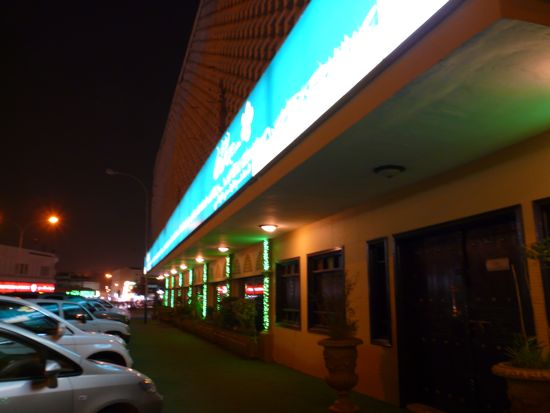
This rubble is where the Garden used to be:

When visitors came to Doha, one of the standard stops was always the Yemeni Honey Man (he also sold baskets from the Asiri mountains in Saudi Arabia, gorgeous baskets, in a building I always thought of as the Beehive Building, because of the honey, and also because of the shape of the multiple domes on top of the building:

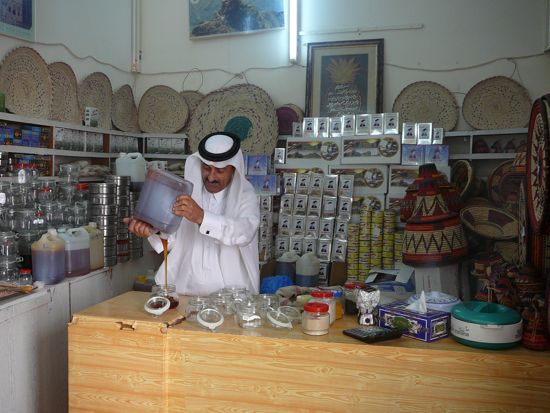
You can see a tiny remnant of the building in the right corner – all the rest is rubble. All the surrounding buildings are also empty, ready to be demolished:


Here is the parking lot which used to be full – there used to be another restaurant, not a fancy restaurant but a very tasty restaurant called The Welcome – it was torn down, only five years ago, and now the building that replaced it is also being torn down:

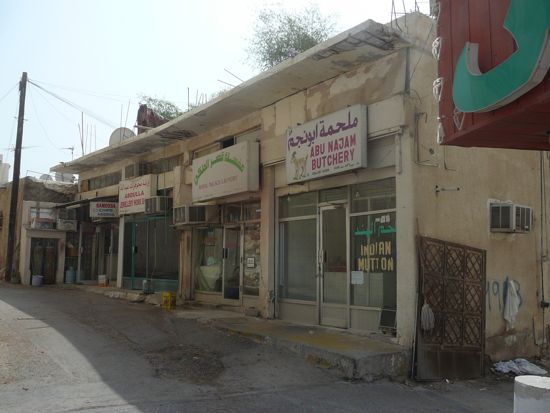
All the little shops are just gone, all the little jewelry shops and textile shops, gone:

I wonder how long these old shops will remain?
Eid Confusion
After writing that I don’t get a lot of phone calls, my VOIP started ringing. Four times, it was AdventureMan – we always have a lot to talk about. Once, my Mom, who calls just because she can and because the number we got is her area code, so it is like calling next door, and we all like that. Last, one of my friends in Kuwait – we have discovered we can call VOIP to VOIP. It’s like double the trouble – VOIP phones don’t always have the best connection, sometimes they are echo-y, sometimes one person can hear and the other can’t, sometimes you get other people on the conversation with you – so when you talk VOIP to VOIP, you have double the risk of technical difficulties, but still, an cost-per-phonecall that encourages long conversations (if you can hear and understand one another.)
“Has Eid started in Kuwait?” I asked at one point.
“I don’t thing so,” she replied. “I think it starts like Monday or so.”
It’s confusing to me. I know that Ramadan started four weeks ago tomorrow, so it is likely Eid will be 28 days later, like tonight or tomorrow or Sunday. But Kuwait started the Eid holidays on Friday, the official holidays, so that people will have nine full days of Eid celebration. (two weekends and a five day week). I don’t know if it is the same in Qatar.
It is also confusing as to just who gets the Eid holiday. When I lived in Tunis, lo, these many years ago, the entire country got every celebration. Those of us at the Embassy were doubly blessed; we got all the American holidays AND we got all the Tunisian holidays. So did just about everybody; the country shut down. For at least three days, no restaurants were open, no stores were open – you had to know about this in advance and bring in provisions to last until the Eid celebrations were over.
I wonder, did it used to be that way in Qatar? In Kuwait? That everything shut down, at least for the first day of Eid, and often longer?
In Kuwait and in Qatar, occasionally – like the first day of Eid – the stores will be closed a day – some just half a day. So many workers here are non-Muslim that it makes it possible to keep places open without intruding on someone’s celebration of Eid, in fact, I would think being able to go to restaurants and pick up a few items in the stores enhances the Eid experiences. I know most of my friends in Qatar are leaving town, just as I am getting back, beating feet for Europe, for Africa, for the Maldives, celebrating by traveling.
All the same, I am not sure when exactly Eid is expected to start officially, like according to the lunar calendar. Anyone?
KLM Customer Service – I’m Impressed
There are days when my phone doesn’t ring at all. I’m not a big phone person, sometimes my friends are out of town, there can be a hundred reasons my phone doesn’t ring including the fact that not a lot of people have my phone number.
So when my phone rang this afternoon, I was surprised, but a few people know I am back in town and I wondered who it could be.
KLM said the little phone screen. KLM calling me? Did I lose something and I don’t even know it?
“This is Mr. SoAndSo with KLM Customer Service, we are calling to ask how was your flight?”
(HOLY SMOKES!)
He also asked if I had any criticisms or suggestions. . . Soliciting customer feedback . . . amazing.
Actually, the KLM part of the flight was magnificent. I got on the plane and slept almost all the way to Qatar, I was so exhausted. I don’t even remember anything, but I was really really really glad no one woke me to ask if I wanted a meal or anything. For me, that is a really good flight.
I am still so blown away that they called and asked.
Amazon
For my fellow book lovers – this is what the Amazon.com headquarters looks like. A long time ago, it was a veteran’s hospital, then it was de-militarized and Amazon bought it. They have a lot of other locations and warehouses, but this is the central Amazon, overlooking Seattle and I-5.

No lives were endangered in the taking of this photo – it’s Labor Day weekend, and the traffic was stopped on the highway, inching north, as I took the photo.
Guerilla Art at the Gas Works
Yesterday Mom pulled out a clipping from the Seattle Times about an unknown sculptor who had left a collection of fascinating sculptures – papier mache’ with golden highlights – of people emerging from their shells. They were delivered by stealth to the park by by the artist and friends, and left displayed to the wonderment of runners, joggers, walkers and picnicking families who discovered them at the Gasworks Park.
“Guerrilla-art in Seattle
In what was advertised as a gift to the citizens of Seattle, a gold-colored sculpture by an unknown artist turned up in Gas Works Park on Tuesday, August 25, 2009. “Anew is gifted to the citizens of Seattle in the spirit of awakening,” the artist wrote in a plaque attached to the sculpture.”
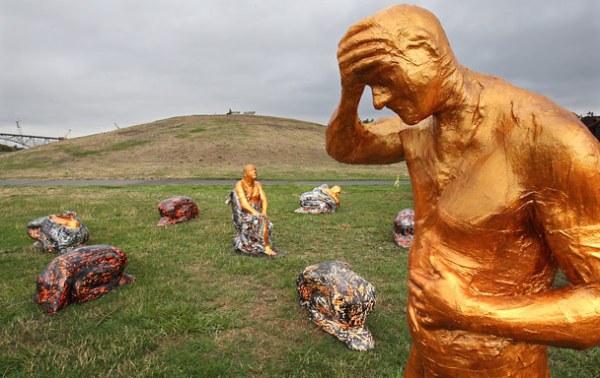
(This is not my photo; this photo is from the Seattle Times Photo Gallery and you can purchase a copy of it from them)
How cool is that? The park officials were all set to pick the art works up and dispose of them, but people started calling in, by the hundreds, “no! leave it there! It is wonderful!” And, amazement of amazements, the city listened, and left the sculptures there.
In today’s Seattle Times is a follow up:
Guerrilla artist goes public; golden man already taken
By Susan Gilmore
Seattle Times staff reporter (you can read the entire article by clicking on the blue type)
The artist who left a sculpture in Seattle’s Gas Works Park earlier this week says she was “amazed and overwhelmed” by the response to the art.
“I spent some time both in the afternoon and evening standing with the crowd, watching their reactions, and I am overflowing with joy,” said Cyra Hobson, 31, in an e-mail sent Wednesday night.
The Seattle Parks Department said Wednesday it will leave the multipiece sculpture in place until Labor Day rather than removing it today, as had been planned.
So Mom and I decided we wanted to take a look, which is a lot braver than you can imagine. Mom has always been active, but she is no longer able to walk as long as she wants to walk – at 86, she hates to accept any limitations, so off we go.
We get to the Gas Works Park and it is another gorgeous day, warm, without being hot, and we walk. And we walk. And we don’t see one single piece of sculpture. People have taken her at her word – they are all gone!
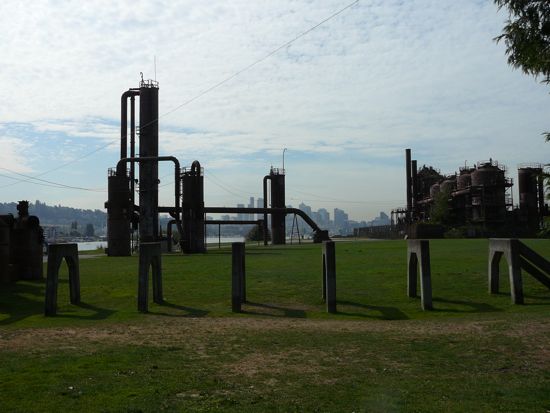
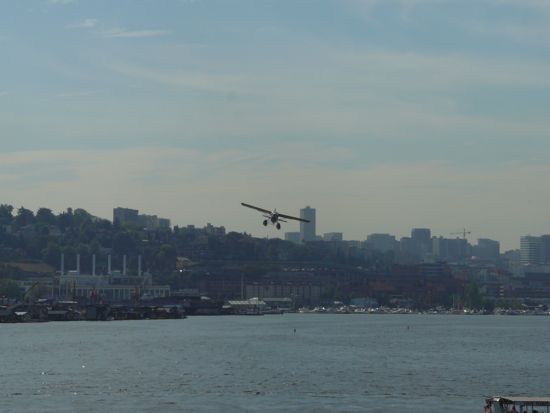
Oh well. We missed an ephemeral moment in time, a great happening, but we still had a great adventure. The view from the Gas Works park (which is – no kidding – on the site of a defunct Gas Works factory, so they turned it into a park for families, joggers, dog walkers, etc.) is phenomenal – at one time, there was a jet, a helicopter and a pontoon plane in the air, a car/boat, several kayaks and a fishing boat in the water, and dogs and children everywhere.
Of course I took some photos to share with you:


This is a “Duck.” Right now it is a boat, but it can also put down wheels and function as an open tour bus on land:

Recent Comments
ExpatAlien on What Country am I Living … intlxpatr on Yellowstone: Old Faithful to C… Michelle on Yellowstone: Old Faithful to C… Cathy on No Grown-Ups in Charge intlxpatr on Waiting for Snow Wikipedia Donate Button

Amazina


Early Voting in Florida


 Here There and Everywhere