Here There and Everywhere

Expat wanderer

Today’s News from Doha

It’s a very brave thing to take an honest and open look at the serious problems confronting any society.

Report on domestic workers by year-end
Web posted at: 6/24/2009 2:49:44
Source ::: The Peninsula.

DOHA: The first national survey on domestic workers in Qatar will be completed soon and the findings will be announced by the end of this year, a senior official of the Qatar Foundation for Combating Human Trafficking, the organisers of the study, has said.

On Monday, the Foundation signed a memorandum of understanding (MoU) with the Doha International Institute for Family Studies and Development for collaboration between the two bodies in carrying out the survey. The MoU was signed by Mariam Al Malki, director of the Foundation and Richard Wilkins, managing director of the Institute.

Speaking on the occasion, Al Malki said the survey which is the first of its kind in the region, aimed at identifying the problems of domestic workers in the country and seek solutions. Another major objective of the study was to assess the impact of housemaids and other domestic workers on the Qatari family and the society.

The survey conducted through direct interviews with a randomly selected group of domestics workers and families has received a positive response from the society, added Al Malki.

She attributed the success to an awareness campaign waged with the support of the media prior to the launch of the survey. The survey covered 657 families and a total of 900 domestic workers from five regions across the country, said Al Malki.

The interviews were conducted through questionnaires prepared separately for the two targeted categories. The questionnaires for domestic workers were available in 10 languages including Arabic to cater to the different nationalities.

Wilkins said the study was extremely important since it can help in identifying the problems of domestic workers as well as their impact on the society.

“ Almost every Qatari household has employed domestic workers, especially because most women are now working outside. This is also a sensitive issue, given the impact of these workers on the families,” he said.

Protecting women and children to focus on providing social and psychological support to victims of family violence:

Counselling service launched for victims of behavioural disorders
Web posted at: 6/24/2009 2:47:0
Source ::: The Peninsula

DOHA: The Qatar Foundation for Protection of Women and Children has launched a new service to provide social and psychological support to victims of violence as well as those who suffer from behavioural disorders.

The service named “change your life” is part of the Foundation’s three-year plan to prepare a comprehensive rehabilitation programme for such members of the society. Besides moral and psychological support, the Foundation will provide medical and legal assistance to victims to facilitate their rehabilitation.

Farida Al Obaidli, Director of the Foundation said, recently they had come across a case where a family wanted to abandon their four children.

“This was very surprising. The fact that such incidents still occur underlines the need for social and psychological support and rehabilitation,” said Al Obaidli.

She said the Foundation had been providing legal assistance to victims of violence and abuse. It has 19 lawyers who help people who don’t have the capability to hire the service of a lawyer to present their case in the court.

And one tiny very strange article:

Media Freedom Centre team leaves office

DOHA: Robert Ménard, director- general of the Doha Centre for Media Freedom and his team have left the Centre.

“We no longer have either the freedom or the resources to do our work,” said Menard, in a statement issued yesterday.

The heads of the assistance, research and communications departments have also left the Centre, said the statement.

The Center was set up on the initiative of H H Sheikha Mozah bint Nasser Al Missned and Reporters Without Borders in December 2007.

Ménard, who became director-general on April 1, 2008, was the founder of Reporters Without Borders, which he headed for 23 years.

It’s a little cooler out today in Doha. High temperature this afternoon only reached 109°F / 43°C. 🙂

June 24, 2009 Posted by | Bureaucracy, Communication, Cultural, Doha, ExPat Life, Living Conditions, News, Political Issues, Qatar, Social Issues, Women's Issues | Leave a comment

Men Hate Discussing Prostate Cancer

One possible reason women live longer than men is that woman pay attention, and when they think something might not be quite right, they take action – they do research on the internet, they talk with their friends, they go to the doctor and get checked out.

Poor men. The stronger sex is so shy! They are shy to discuss any problems with reproduction, with sexual activity. In effect – they would rather die than go to the doctor!

(So who, really, is the stronger sex? The one who avoids looking at the problem, or the one who faces up to it?)

It’s why we women have girlfriends. We can talk about ANYTHING. Yep, even you. It doesn’t mean we are betraying your secrets, most of the time we are trying to figure you out, or trying to help you. We talk about the things that scare us – like cancer, or being abandoned, or our latest blood tests.

Because you big strong hunks can’t admit there might be something going wrong, I am highlighting two articles – hot off the BBC press – on prostate cancer. (KTDP, please consider this an invitation to blog about this)

‘Surprise’ prostate result probed

Prostate cancer kills 10,000 men in the UK each year

Researchers are probing an unexpected success in a study of an experimental treatment for prostate cancer.

In three men with advanced disease, use of an immune drug called ipilimumab, shrank their tumours to such an extent surgeons were able to operate.

The Mayo Clinic team in the US said the “startling” results in the study of 108 men had prompted them to set up a second trial using higher doses.

One UK expert said there were currently few treatments for advanced disease.
In men with advanced prostate cancer, which has spread outside the prostate, surgery cannot usually be done.

Hormone therapy is usually given to try to shrink the tumour to some degree and buy some time.

The trial was set up to see if MDX-010, a type of drug called a monoclonal antibody, would improve on hormone treatment.

The idea is that the drug will encourage a strong immune response to attack the cancer cells.

Half the men had normal therapy and half also received MDX-010.

In three cases, where the experimental drug was given, the tumours shrank dramatically, enabling surgeons to operate and remove the tumour.

You can read the entire article by clicking here: BBC Health News Prostate Cancer

Green tea ‘slows prostate cancer’

Green tea has already been linked to health benefits

A chemical found in green tea appears to slow the progression of prostate cancer, a study has suggested.

Green tea has been linked to a positive effect on a wide range of conditions, including heart disease, cancer and Alzheimer’s disease.

The research, in the US journal Cancer Prevention Research, found a significant fall in certain markers which indicate cancer development.

A UK charity said the tea might help men manage low-risk tumours.

Although previous studies have shown benefits from drinking green tea – including some positive findings in relation to prostate cancer, there have been mixed results.
In this study, Philadelphia-based researchers tested a compound called Polyphenon E.

They were looking for a number of biomarkers – molecules – including vascular endothelial growth factor (VEGF) and hepatocyte growth factor (HGF) which are indicators of developing cancer.

They also looked for prostate specific antigen (PSA) – a protein only found in the prostate. Levels can rise if cancer is present.

’12 cups’
The study included 26 men, aged 41 to 72 years, who had been diagnosed with prostate cancer and who were scheduled for radical prostate surgery.

Patients took four capsules containing Polyphenon E for an average of 34 days, up until the day before surgery – the equivalent of around 12 cups of normally brewed concentrated green tea.

The study found a significant reduction in levels of HGF, VEGF and PSA, with some patients demonstrating reductions of more than 30%.

Dr James Cardelli, from the Feist-Weiller Cancer Center, who led the study, said the compound, which was provided by the company Polyphenon Pharma, “may have the potential to lower the incidence and slow the progression of prostate cancer.”
There were only a few reported side effects associated with this study, and liver function remained normal.

You can read the full article about the relationship between green tea and reduction of prostate cancer by clicking here: BBC Health News Green Tea

June 21, 2009 Posted by | Aging, Bureaucracy, Communication, Health Issues, Social Issues | | 4 Comments

Signs of the Times in Doha, Qatar

There are a whole series of these signs, carefully placed at eye-level at most stoplights. Here are two; it takes me a while to get in the right position at the right time and to have my camera ready, but I am learning to always have my camera ready:

00TakeCareNoSpeed

00TakeCareSeatbelt

May God richly bless my husband for his patience; I am always calling out “Can you pull over so I can get a picture of that sign?” In Arabic, this one says “Bunshury al Rodoa”

00TyrePunctuary

I speak some Arabic, not a lot, like I can’t discuss politics with you, or anything complex, but I know shapes and colors and directions, and it all comes in handy. I took this sign because my favorite color is purple, and it is a very hard name to remember, when you are looking for something specific that is purple. 🙂

00Banafsaj
And see if you can guess why this is my very favorite photo of all 😉

00DohaDhow

June 20, 2009 Posted by | Arts & Handicrafts, Beauty, Bureaucracy, Communication, Community, Cultural, Doha, ExPat Life, Humor, Language, Law and Order, Living Conditions, Qatar, Safety, Travel | 8 Comments

The Paper Moon by Andrea Camilleri

Ahhh! Another book about corruption, but this one is no where near so painful for me to read as The Appeal by John Grisham, because this one is set in Sicily, where we expect a certain level of corruption, and Italy, where the whole system operates by rules we can barely begin to comprehend, but it is ITALY, and fascinating, and funny, and another great page turner for these hot hot hot summer days.

Paper Moon

Andrea Camilleri has a whole series of books about Inspector Montalbano, which I love almost as I love the Donna Leon series about the Venetian, Guido Brunetti. Brunetti has the edge because he is married and has a family, and it IS Venice – no competition there, Venice will always win, hands down. But Inspector Montalbano’s single status allows for a whole different flavor permeating his investigations, and he, like Guido Brunetti, shares the Italian reverence for really great food.

I didn’t want to fix dinner. I didn’t want to get out of bed. All I wanted to do was to read the whole book, and, when I finished, I wanted another one!

Inspector Montalbano is asked by a woman to find her missing brother, and he finds him almost immediately, dead, under bizarre circumstances. The brother has a very large amount of money unaccounted for, and unaccounted in terms of earnings, as well. He is a pharmaceutical representative, good at what he does – but he still has way too much money, and Inspector Montalbano finds he is rather fond of the prime suspect.

In the meantime, his office has also been tasked to find the reason several high level politicians have suddenly died, purportedly of a variety of causes, but in reality, all have died of drug overdoses. The problem is, that finding the culprit means exposing the reality of high level drug usage, and the inspector realizes the case has been dumped on his office because no one wants to take responsibility for what happens when the culprit is caught. It’s all very Italian, very Sicilian.

Between investigations, Inspector Montalbano eats some amazing meals. 🙂 He takes his glass of wine and walks in the sand out to the sea. We get to know the characters working out of his office better, and to appreciate their quirkiness. This is a great series, a lot of fun. I think I need to go to Sicily for a visit. I definitely need some Italian food and a glass of vino!

modis_sicily_20020407_lrg
Photo courtesy of http://visibleearth.nasa.gov/)

From time to time a word or phrase would appear that required going to the back of the book where the word is not only translated, but the concept explained, something crucial when reading a novel from another culture. In this series, it is particularly valuable, as the background for the crimes and their investigations with political implications, and if you don’t understand the politics, you can miss the point of the novel.

I found this book at Amazon.com. for a mere $10.19 plus shipping.

June 16, 2009 Posted by | Books, Bureaucracy, Character, Community, Crime, Cultural, Entertainment, Family Issues, Fiction, Financial Issues, Florida, Living Conditions | 2 Comments

The Appeal by John Grisham

One of the things I like about John Grisham is that he really likes the underdog. In his books, the person often the least likely to prevail does so, usually because he has a smart attorney, one who is paying attention and taking good care of the client. Warning – this book review contains a spoiler, so don’t go any further if you don’t want to know too much about the plot and resolution.

Appeal

The Appeal is the exception. No one wins, not even the apparent winner, who sails off in the end with his empty, unsatisfying life. He schemes, he exploits, he lies, he buys elections, and he makes a fortune – and he isn’t satisfied. He is married to a woman who sounds more like a greyhound, all skin and bones and self-absorption.

The subject matter is a case where a chemical company has dumped toxic wastes into the ground in Mississippi, it has penetrated into the groundwater, and polluted the entire water system of a small fictional town. Two lawyers, married to one another, sacrifice everything and face bankruptcy to win a case for their client who has lost both husband and son to cancer caused by the toxic chemicals dumped. They win.

There is an appeal.

What this book is about isn’t just about groundwater contamination, or even about buying elections in Mississippi – it is an indictment of every state that elects judges. The core of the novel is about how big money, big corporations, pick candidates and fund them, legally and illegally, and insure that they win. They pack the courts with judges who are opposed to large settlements.

God bless John Grisham. With all his great legal thrillers, he has made a bundle and can take risks like writing a book like The Appeal, which should be an eye opener, and should be read by every caring citizen.

Judges should not be elected. When the judiciary are elected, they have to think about their next election, with every legal decision. It taints objectivity. It corrupts objectivity. It eliminates objectivity. Without an objective judiciary – why bother? They will always rule on the side whose interests are the most powerful and profitable.

Here are a couple quotes that tell you where the novel is going. My Kuwaiti friends are going to love this – I have taken so many shots at Kuwait corruption – so here it is, my friends, exposure of the institutionalized corruption in my country:

Barry laughed and crossed his legs. “We do campaigns. Have a look.” He picked up a remote and pushed the button, and a large white screen dropped from the ceiling and covered most of the wall, then the entire nation appeared. Most of the states were in green, the rest were in a soft yellow. “Thirty-one states are in the green. The yellow ones have the good sense to appoint their courts. We make our living in the green ones.”

“Judicial elections.”
“Yes. That’s all we do, and we do it very quietly. When our clients need help, we target a supreme court justice who is not particularly friendly, and we take him, or her, out of the picture.”
“Just like that.”
“Just like that.”
“Who are your clients?”
“I can’t give you the names, but they’re all on your side of the street. Big companies in energy, insurance, pharmaceuticals, chemicals, timber, all types of manufacturers, plus doctors, hospitals, nursing homes, banks. We raise tons of money and hire the people on the ground to run aggressive campaigns.”

* * * * * * * *

The Senator did not know who owned the jet, not had he ever met Mr. Trudeau, which in most cultures would seem odd since Rudd had taken so much money from the man. But in Washington, money arrives through a myriad of strange and nebulous conduits. Often those taking it have only a vague idea of where it’s coming from; often they have no clue. In most democracies, the transference of so much cash would be considered outright corruption, but in Washington the corruption has been legalized. Senator Rudd didn’t know and didn’t care that he was owned by other people. He had over $11 million in the bank, money he could eventually keep if not forced to waste it on some frivolous campaign. In return for such an investment, Rudd had a perfect voting record on all matters dealing with pharmaceuticals, chemicals, oil, energy, insurance, banks and on and on.

I like almost every book I read by John Grisham. He is a man with a conscience, and he is trying to raise our awareness of corruptive factors before our system goes entirely under. I couldn’t put this book down, and I can hardly wait to read the next one.

June 16, 2009 Posted by | Books, Bureaucracy, Character, Community, Crime, Cultural, Fiction, Financial Issues, Fund Raising, Interconnected, Law and Order, Leadership, Living Conditions, Political Issues, Social Issues | , , , | 3 Comments

Very Strange Weather in Qatar and Kuwait

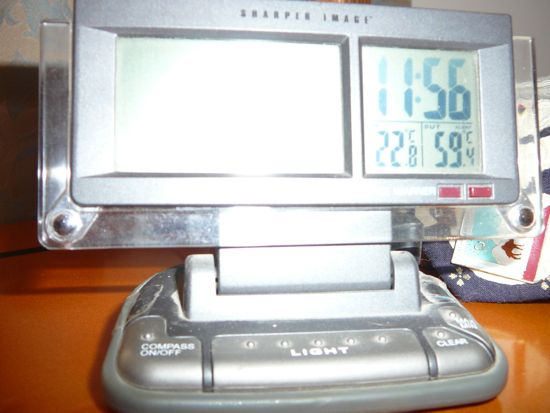
As I was writing a post, I noticed – Holy Cow! It’s 113°F / 45°C in Doha. Checking Kuwait, Holy Moly, it’s 115°F / 46°C. That is Holy Smokes Hot, that is hot hot hot, right?

Picture 1

Thirty seconds later, I look – and my little weatherunderground sticker says it’s “only” 106.9 °F / 41°C in Doha, and “only” 106.9°F / 41°C in Kuwait.

How amazing is that – the temperatures dropping so fast, in BOTH Kuwait and Doha, within seconds?

June 11, 2009 Posted by | Bureaucracy, Cultural, Doha, ExPat Life, Health Issues, Kuwait, Living Conditions, Qatar, Social Issues, Statistics, Weather | 7 Comments

Peninsula Editor Responds to Qatar’s Advisory Council

From today’s Peninsula:

Advisory Council’s opinion surprising
Web posted at: 6/11/2009 6:45:39
Source ::: THE PENINSULA/ BY Khalid Abdul Rahim Al Sayed

Khalid Abdul Rahim Al Sayed
The Emir, His Highness, Sheikh Hamad bin Khalifa Al Thani, declared the media free in the country in 1995 and with the launch of Al Jazeera, we have shown the world that Qatar is a country which allows different opinions to be heard.

We were, therefore, quite surprised by the outcome of a debate in the Advisory Council on Monday, which called for stringent punishment to be given to Qatar-based journalists who write against the ruler, national security, religion and the Constitution.

First of all, all the above subjects are already protected by the Qatari Law. Second, we must remember that there is a provision in the Qatari Constitution which allows its revision at a future date by the next generation. We have a saying in Arabic which roughly translates into English as ‘one generation cannot control another’. By raising this debate, the Advisory Council has made a generalised conclusion without addressing the issue directly.

We find it strange that the Advisory Council, made up of Qatari nationals, has this kind of opinion when His Highness The Emir has given us the freedom to voice our opinion on issues freely and in a fair manner.

We are concerned as a Qatari newspaper that if these restrictions are imposed on Qatari journalists, they will be afraid to report news and events as they see them. Needless to say, the impact on foreign scribes here would be too deterring.

I am an avid reader of local newspapers. None of them has ever written anything objectionable against the four subjects referred to in the Advisory Council debate. The Advisory Council, I am afraid, has failed to address the issue of irresponsible journalism. Other nations will find it strange that a country which advocates media freedom through the establishment of Al Jazeera will condone such practice. If there is any misuse, it shouldn’t be generalised. Doing this would soil Qatar’s image in the world.

Given this backdrop, we urge the authorities concerned in Qatar to come up with a new Media Law that would protect the freedom of our journalists, especially as the old press legislation was enforced years ago, in 1979.

Khalid Abdul Rahim Al Sayed is the Editor-in-Chief of The Peninsula

June 11, 2009 Posted by | Bureaucracy, Doha, ExPat Life, Free Speech, Interconnected, Kuwait, News, Political Issues, Qatar, Social Issues | 4 Comments

Irresponsible Journalism in Qatar

This is from yesterday’s Peninsula, a Doha newspaper

Advisory panel wants curbs on irresponsible journalism
Web posted at: 6/10/2009 3:35:56
Source ::: The PENINSULA / By Mohammed Saeed

DOHA: A debate in the Advisory Council on irresponsible media on Monday has called for stringent punishment for Qatar-based journalists who write against the ruler, national security, religion and the Constitution.

A key member, Nasser Rahid Al Kaabi, taking part in the discussion, said there was the need to include TV channels, radio stations and the Internet in the laws that regulate the media in the country.

Some 24 members of the Council requested the House to debate the issue of irresponsible media.

It was pointed out during discussions that there were some journalists in the country who were misusing press freedom and dedicating their writings to undermine national interest.

The debate called for applying the laws strictly to punish erring scribes. Law Number 38 of 2005 and Law Number 8 of 1979 carried provisions to take erring journalists to task, it was pointed out.

Al Kaabi called for the laws to be amended and said the six-month prison term and minimum fine slab of QR3,000 for erring journalists prescribed be raised.

He said the jail term should be raised to a year and the fine should not be less than QR300,000. Qatar’s social and religious values must be preserved at any cost, the debate noted. THE PENINSULA

June 11, 2009 Posted by | Bureaucracy, Cultural, Doha, ExPat Life, Free Speech, News, Qatar | Leave a comment

Turkey Central

Going back to Turkey Central on Merqab Street in Doha, was both like a home coming, and a big surprise. It was the second place AdventureMan took me when I arrived the first time in Doha (Fakr al Din, the first place, is no longer there), and it was a place a lot of people hung out.

Through the years, it has had a roller-coaster reputation, sometimes closed for renovations, sometimes closed for health / sanitation violations, but – when open – packed with people in search of reasonably priced, outstandingly tasty dishes.

It’s not one of AdventureMan’s favorite places, but it is one of mine! 😉 So the night we went to the Doha Clinic to get our blood-types – beginning the endless process of paperwork and hurdles for our residency in Qatar – he agreed to take me to Turkey Central.

Oh, YUM.

In the first place, when we walked in it all looks immaculately clean. Cooks and servers are wearing hats to keep stray hair from falling into food. Tables are now granite, chairs are comfy.

The food is wonderful. The place is packed. Our old friend sees us come in and comes over to greet us. We feel at home.

We decided to try some new mezzes (appetizer / salads) instead of our same old, same old hummous, tabouli, mouttable. We tried the chili salad (made of sweet red peppers, not the hot kind, and excellent), the baba ghannoush (actually, we have had this before at TC and love it ) and the moussaka (no meat moussaka) which we both agreed was THE BEST.

00ChiliSalad

00BabaGhannoush

00MousakkaMaaLaham

The best part of all is the Turkey Central bread, hot, fresh from the oven, and covered with sesame seeds:
00TCBread

AdventureMan ordered the Mixed Grill:

00TCMixedGrill

and I ordered my old favorite, shish taouk (marinated, grilled boneless chicken pieces):

00TCShishTaouk

Too much food! I walked out with a big bag of leftovers, enough to cover a week of lunches!

June 7, 2009 Posted by | Bureaucracy, Doha, Eating Out, ExPat Life, Food, Health Issues, Hygiene, Living Conditions, Qatar | Leave a comment

John the Baptist / Yahya ibn Zakariyya

Most westerners don’t have a clue that John the Baptist, as well as Jesus, are featured prominently in the Qur’an.

Today’s reading in The Lectionary starts of the magically lyrical Book of John, and, if you read between the lines, you get a clue to the mystery of the holy trinity – not three Gods, not at all, but three facets of the one God we people of the book believe in:

John 1:1-18

1In the beginning was the Word, and the Word was with God, and the Word was God. 2He was in the beginning with God. 3All things came into being through him, and without him not one thing came into being. What has come into being 4in him was life,* and the life was the light of all people. 5The light shines in the darkness, and the darkness did not overcome it.

6 There was a man sent from God, whose name was John. 7He came as a witness to testify to the light, so that all might believe through him. 8He himself was not the light, but he came to testify to the light. 9The true light, which enlightens everyone, was coming into the world.*

10 He was in the world, and the world came into being through him; yet the world did not know him. 11He came to what was his own,* and his own people did not accept him. 12But to all who received him, who believed in his name, he gave power to become children of God, 13who were born, not of blood or of the will of the flesh or of the will of man, but of God.

14 And the Word became flesh and lived among us, and we have seen his glory, the glory as of a father’s only son,* full of grace and truth. 15(John testified to him and cried out, ‘This was he of whom I said, “He who comes after me ranks ahead of me because he was before me.” ’) 16From his fullness we have all received, grace upon grace. 17The law indeed was given through Moses; grace and truth came through Jesus Christ. 18No one has ever seen God. It is God the only Son,* who is close to the Father’s heart,* who has made him known.

(This is the tomb of John the Baptist / Yahya in the Ummayad Mosque in Damascus, Syria)

00umyahyahstomb.jpg

So we ask ourselves, what exactly does the Qur’an have to say about John, and going to Wikipedia, I found the following (I have added paragraph separations to make it more readable):

According to the Qur’an

According to the Quran, Yahya was the son of Zakariya, and was foretold to his father by the angel Gabriel. Yahya is called a righteous, honorable and chaste person, as well as a Prophet of the Righteous ([Qur’an 6:85], [Qur’an 3:39]). He came to confirm the Word of God ([Qur’an 3:39]). His story was retold by Jafar to the Abyssinian King during the Migration to Abyssinia [2].

In his recent article, Agron Belica say’s the following: this prophet has been overlooked and misrepresented. One reason he has been overlooked is because there are five words used in the Quran to describe Prophet Yahya that have been misinterpreted in translations of the Quran. The first is the word hasur which is usually translated “chaste.” My research shows that the Arabic word hasur does not mean “chaste” with regard to Yahya; rather , it means “a concealer of secrets.”

Why the mistake in translation and commentary? As there was no extensive information given in the Quran about the life of Prophet Yahya nor in the hadith, the commentators then turned to Christian tradition and simply repeated what they found there. Nonetheless, the commentators of the Quran have placed considerable emphasis on this word.

Al-Tabari interprets the word hasur to mean one who abstains from sexual intercourse with women. He then reports a hadith on the authority of Said ibn al-Musayyab which has Prophet Muhammad saying the following: “Everyone of the sons of Adam shall come on the Day of Resurrection with a sin (of sexual impropriety) except Yahya bin Zechariah.’ Then, picking up a tiny straw, he continued, ‘this is because his generative organ was no bigger then this straw (implying that he was impotent).’” Does this mean that even the prophets outside of Yahya will be raised up with this sin of sexual impropriety? How can we accept that this was said by such a modest human being, comparing a straw to another prophet’s generative organ? Was Yahya impotent?

One commentator, Ibn Kathir, a renowned Islamic scholar , rejects this view and adds, “This would be a defect and a blemish unworthy of prophets.” He then mentions that it was not that he had no sexual relations with women, but that he had no illegal sexual relations with them. Indeed, the whole discussion is unseemly. It is known that prophets of God are immune from major sins, so this statement makes no sense at all when interpreting the word, hasur. In addition, I would like to mention the fact that in his commentary, ibn Kathir says he (Yahya) probably married and had children. He said this on the basis of what was related in the Quran of the prayer of Zachariah. There are at least three reasons why interpreting hasur in this context as “chaste” is a misinterpretation: First of all, there is another word in the Quran for “chaste” and that is muhasanah. As God used a different word with hasur, it must mean something different. Secondly, God says in the Quran that Islam did not bring monasticism but that it was something that they (the Christians) invented. Therefore, God would not have sent a Prophet who was celibate. In addition, it is contrary the exhortation in the Torah to “go forth and multiply.” Thirdly, Yahya’s father, Zechariah prayed for a protector who would provide descendants (dhuriyyat) for his family. “There Zachariah called to his Lord; he said: My Lord! Bestow on me good offspring from Thy presence; truly Thou art hearing supplication.” (3:38) God gave him Yahya.

God would not have sent a son to Zechariah who would not carry on the line of Jacob’s descendants because then God would not have answered the prayer of Zechariah. The word hasur is used only one time in the Quran and that is in regard to the Prophet Yahya.

A major Arabic-English lexicon, that of Edward William Lane (Taj al-Arus) states that when hasur is used alone, it means “concealer of secrets.” In his translation, of Ibn al- Arabi’s Book of the Fabulous Gryphon, Elmore also translates the Arabic hasur “as consealer of secrets.” In the referenced passage, “chaste” would not have been appropriate. (Gerald T. Elmore, Islamic Sainthood in the Fullness of Time, Brill 1999, P. 482)

The second word that has been misinterpreted is waliy (19:5) which in this verse and many others in the Quran means “protector” not “heir or successor.” In this specific case, Zechariah prays to his Lord: “And truly I have feared my defenders after me and my wife has been a barren woman. So bestow on me from that which proceeds from Thy Presence a protector (waliy).”

The third word that is misinterpreted is that of fard in (21:89): “And mention Zechariah when he cried out to his Lord: My Lord! Forsake me not unassisted (fard) and Thou art the Best of the ones who inherit.” It is usually translated as “heir,” but the same reasoning applies as above. The word “unassisted” refers to the fact that Zechariah did not want to be left alone without any protector. He feared for those who would defend him and his honor after he died, that they would be left without a protector and thereby could not defend his honor.

The fourth misinterpreted word in relation to Prophet Yahya is sayyid. Prophet Yahya is referred to as a sayyid, chief in the Quran. The commentators have interpreted this to mean that he was a scholar of religious law, a wise man, a noble wise and pious man, and so forth. This was a prophet of God. Knowledge and wisdom were given to him by his Lord. The title given to Yahya by his Lord shows that Prophet Yahya is one who has authority over his people and not “noble” or “honorable” as this word is usually translated. Honor and nobility are good qualities but they fail to indicate that Prophet Yahya is given a role of leadership by his Lord.

The fifth word is hanan which means “mercy,” which is part of the compound name Yu’hanan (in English “John”), meaning “God is Merciful.” The word hanan is used once in the Quran and that is in reference to Prophet Yahya: “And continuous mercy from Us and purity . . . .” This is singularly appropriate to the circumstances of the Prophet Yahya. The names Yahya and Yuhanan are not the same as many assume. They have two entirely different roots. Hanan and hanna both derive from the Semitic root h n n. While the word hanna means “mercy or tenderness,” the root word for Yahya is h y y. It means “life” or “he lives.” One does not need to be a linguist to see the obvious. In addition, I would like also to mention that this name and attribute given to Prophet Yahya can also be found in Sabean literature. The Sabians are mentioned in the Quran in verses (2:62), (5:69) and (22:17).

In their canonical prayer book we find Yahya Yuhanna. It has been known that it is the practice of the Sabians to have two names, a real name and a special name. According to the Sabians, this prophet’s real name was Yahya (he lives) and his lay name was Yuhanna (John). Prophet Yahya is the only one given this name as the Quran clearly states: “O Zechariah! Truly We give thee the good tidings of a boy; his name will be Yahya (he who lives) and We assign it not as a namesake (samiyya) for anyone before.” Again, another word that we need to pay attention to is samiya. It is used twice in the Quran, once in reference to Yahya (19:7) “O Zechariah! Truly We give thee the good tidings of a boy; his name will be Yahya and We assign it not as a namesake (samiya) for anyone before.” The other time it is used is in reference to God. “. . . Knowest thou any namesake (samiya) for Him [God]?” (19:65)

In the famous Arabic lexicon Lisan al-arab the root word s m w means elevation or highness. “Then the angels proclaimed to him while he was in the sanctuary that God gives you good tidings of Yahya-one who establishes the word of God as true- a chief and a concealer of secrets and a prophet, among the ones who are in accord with morality.”(3:39) See The Sublime Quran Pocket Size translated by Laleh Bakhtiar (2009)

So here is what I am thinking this morning . . . We have so much to offer one another. We use each other’s books – Jewish, Christian, Moslem – and studies to illuminate our beliefs. Why are we niggling over trivialities? If we were to clasp hands and fight together against the forces of darkness, what a mighty force for good we would be!

June 7, 2009 Posted by | Bureaucracy, Character, Community, ExPat Life, Interconnected, Random Musings, Spiritual | 10 Comments