The Fingerprint Factory
Drama Drama Drama. It used to be the last dreaded event before getting your residence. You had to have fingerprints taken and it was in this big mob-scene, huge mobs of people and hot hot hot, no air, and the ink was HORRIBLE, and even if you brought your own soap and washed right away, you still had ink under your fingernails for days. It was a hellish experience.
Today was the day. It started with drama – when I got to where I was supposed to be at 10:10, the receptionist told me I was supposed to be there at 9:30, I had missed my appointment. I was really sure my husband had told me my appointment was at 10:30, so I waited while she called, and it was one of those experiences where she was NOT happy being wrong, and I got to sit out in the not-air-conditioned hall to wait for my group to go.
When my group got to the fingerprint place, there was no mob. There WAS more drama. There was only a very nice be-thobed gentleman who said that the fingerprint computer was broken. It was broken yesterday, and they got it working again this morning until 9 o’clock, but now it is broken. I asked “how long until it is fixed?” but it was one of those insh’allah things, no one knows how long it will take to get the system up again. We would have to come back tomorrow.
And then, just as we were walking out the gate back to the van, he called to us “Come back! Come back!” The fingerprint machine was working again.
Inside, it was orderly and air conditioned. Take a number, take a seat. Wait your turn. Very cool, watching people’s fingerprints, handprints, etc show up in huge prints. If there was any blur, the machine showed red – like a red thumb – and it had to be done over again.

For some reason, I had to have several done over again. I don’t know if it was me, or if the machine was just finicky. All I know is that the system was up long enough for me to get my fingerprints taken, and there was NO mess. None. Wooo HOOOO.
I still have my old Qateri driving licence. I am praying – please keep me in your prayers – that they will just renew it and I won’t have to take a road test on the roads of Qatar. Although – after driving in Kuwait – I can drive anywhere. 😀
“Whip Me if You Dare” Sudan Woman Wears Pants
This woman doesn’t have to take the whipping – she was a UN employee, and could claim diplomatic immunity. She wears a headscarf, she wears modest clothing. She could have quietly escaped. But like Rosa Parks, the black woman in segregated America, who refused to give up her seat and move to the back of the bus, Lubna Hussein has chosen to take a stand, even take a whipping, rather than back down.
Do you think it is un-Islamic for women to wear pants?
‘Whip me if you dare’ says Lubna Hussein, Sudan’s defiant trouser woman
Lubna Hussein, the Sudanese woman who is daring Islamic judges to have her whipped for the “crime” of wearing trousers, has given a defiant interview to the Telegraph.

As the morality police crowded around her table in a Khartoum restaurant, leering at her to see what she was wearing, Lubna Hussein had no idea she was about to become the best-known woman in Sudan.
She had arrived at the Kawkab Elsharq Hall on a Friday night to book a cousin’s wedding party, and while she waited she watched an Egyptian singer and sipped a coke.
She left less than an hour later under arrest as a “trouser girl” – humiliated in front of hundreds of people, then beaten around the head in a police van before being hauled before a court to face a likely sentence of 40 lashes for the “sin” of not wearing traditional Islamic dress.
The officials who tried to humiliate her expected her to beg for mercy, as most of their victims do.
Instead she turned the tables on them – and in court on Tuesday Mrs Hussein will dare judges to have her flogged, as she makes a brave stand for women’s rights in one of Africa’s most conservative nations.
She has become an overnight heroine for thousands of women in Africa and the Middle East, who are flooding her inbox with supportive emails. To the men who feel threatened by her she is an enemy of public morals, to be denounced in the letters pages of newspapers and in mosques.
As she recounted her ordeal in Khartoum yesterday Mrs Hussein, a widow in her late thirties who works as a journalist and United Nations’ press officer, managed cheerfully to crack jokes – despite the real prospect that in a couple of days she will be flogged with a camel-hair whip in a public courtyard where anyone who chooses may watch the spectacle.
Her interview with The Sunday Telegraph was her first with a Western newspaper.
“Flogging is a terrible thing – very painful and a humiliation for the victim,” she said. “But I am not afraid of being flogged. I will not back down.
“I want to stand up for the rights of women, and now the eyes of the world are on this case I have a chance to draw attention to the plight of women in Sudan.”
She could easily have escaped punishment by simply claiming immunity as a UN worker, as she is entitled to under Sudanese law. Instead, she is resigning from the UN – to the confusion of judges who last Wednesday adjourned the case because they did not know what to do with her.
“When I was in court I felt like a revolutionary standing before the judges,” she said, her eyes blazing with pride. “I felt as if I was representing all the women of Sudan.”
Like many other women in the capital, Mrs Hussein fell foul of Sudan’s Public Order Police, hated groups of young puritans employed by the government to crack down on illegal drinkers of alcohol and women who, in their view, are insufficiently demure.
Despite their claims of moral superiority, they have a reputation for dishonesty and for demanding sexual favours from women they arrest.
Mrs Hussein was one of 14 women arrested at the Kawkab Elsharq Hall, a popular meeting place for the capital’s intellectuals and journalists, who bring their families. Most of them were detained for wearing trousers. The police had difficulty seeing what Mrs Hussein was wearing under her loose, flowing Sudanese clothes. She was wearing green trousers, not the jeans that she said she sometimes wears, and wore a headscarf, as usual.
“They were very rude,” she said. “A girl at a table near mine was told to stand up and told to take a few steps and then turn around, in a very humiliating way. She was let off when they ‘discovered’ she was not wearing trousers.”
After her arrest, on the way to a police station, she tried to calm the younger girls.
“All the girls were forced to crouch on the floor of the pick-up with all the policemen sitting on the sides,” she said. “They were all very terrified and crying hysterically, except me as I had been arrested before during university days by the security services.
“So I began to try to calm the girls, telling them this wasn’t very serious. The response of the policeman was to snatch my mobile phone, and he hit me hard on the head with his open hand.
“On the way I felt so humiliated and downtrodden. In my mind was the thought that we were only treated like this because we were females.”
Christian women visiting from the south of Sudan were among the 10 women who admitted their error and were summarily flogged with 10 lashes each. But Mrs Hussein declined to admit her guilt and insisted on her right to go before a judge.
While waiting for her first court appearance, she said she was surprised to find herself held in a single cramped detention cell with other prisoners of both sexes. “How Islamic is that?” she asked. “This should not happen under Sharia.”
Mrs Hussein is a long-standing critic of Sudan’s government, headed by President Omar al-Bashir, the first head of state to face an international arrest warrant for war crimes. Sudan has been accused of committing atrocities in the Darfur region.
Before her arrest she had written several articles criticising the regime, although she believes she was picked at random by the morality police.
The regime has often caused international revulsion for religious extremism. In 2007 British teacher Gillian Gibbons was briefly imprisoned for calling the classroom teddy bear Mohammed.
The government is dominated by Islamists, although only the northern part of the nation is Muslim. Young women are frequently harassed and arrested by the regime’s morality police.
Mrs Hussein said: “The acts of this regime have no connection with the real Islam, which would not allow the hitting of women for the clothes they are wearing and in fact would punish anyone who slanders a woman.
“These laws were made by this current regime which uses it to humiliate the people and especially women. These tyrants are here to distort the real image of Islam.”
She was released from custody after her first court appearance last week, since when she has appeared on Sudanese television and radio to argue her case – which has made headlines around the world.
She is not only in trouble with police and judges. A day after her court appearance she was threatened by a motorcyclist, who did not remove his helmet. He told her that she would end up like an Egyptian woman who was murdered in a notorious recent case.
Since then she has not slept at home, moving between the houses of relatives. She believes her mobile telephone has been listened to by the security services using scanners.
But she has pledged to keep up her fight. “I hope the situation of women improves in Sudan. Whatever happens I will continue to fight for women’s rights.”
Residence
We all know the drill, the expat drill we all go through to become residents. Residency is not something to be sniffed at, if you don’t have it, really bad things can happen.
So today was the day I needed to get my medical exam. What a difference from the last time, six years ago.
Six years ago, we went to an old, dilapidated hospital in the center of town with terrible parking. There were long lines in the hot sun everywhere. I don’t remember there being any air conditioning. What I do remember is walking down a hallway littered with the used cotton balls people had discarded after having their blood taken for the blood tests. I was nearly ill – blood carries diseases, and here were these bloody balls all over the floor.
When it was my turn to have my blood taken, the women who took my blood – six years ago – was eating salted pumpkin seeds. I saw the thought cross her mind that she ought to put on the gloves, right there in the box on her desk, but if she did, she couldn’t continue munching, so she decided not to. I watched her take a fresh needle – I was saving my protest to insist on a fresh needle had she decided she could re-use an old one. I choose my battles.
I closed my eyes and prayed. She did OK, she got the blood she needed and was still munching on the pumpkin seeds as I left to go get my X-ray.
In the X-ray room there were all these women in USED hospital gowns, one would take one off and the next woman would put it on. I had been warned to bring a white T-shirt, and that would be acceptable, which it was. There was no dressing room, just one big changing room.
I couldn’t get out of there fast enough.
Fast forward six years – new, modern air conditioned medical facility outside the city with lots of parking. I’m already feeling more positive, although I do have my clean T-shirt. The phlebotomist is in a white jacket, clean and neat, and is supplied with all kinds of sterile supplies. The blood work takes maybe 30 seconds, thanks be to God, because I am a little squeamish about people taking my blood, and one time, I even fainted, but just for a few seconds. Not this time – it was over before I could even get too worried about it.
The X-ray was orderly, and there were stacks and stacks and stacks and bags of clean gowns, and even three fairly clean changing rooms. I still wore my own T-shirt, since I had it. The only thing that bothered me was that there were bins to put the used gowns when the X-ray was finished, but the women tossed them on the floor! There is a part of me that almost picked them all up and put them in the bin, but they called my name just as I was about to do it.
The process was so orderly, so painless this time! And, God willing, soon I will be a legal Qatar resident and even, soon, insh’allah, a legal driver. I still have my old Qateri driving license, it will just need to be renewed. (I also have my 10-year Kuwait license, because in expat world, you just never know. I also have my lifetime German driving license because in expat world, you just never know. And I have my stateside driver’s license to take care of me there. 🙂 )
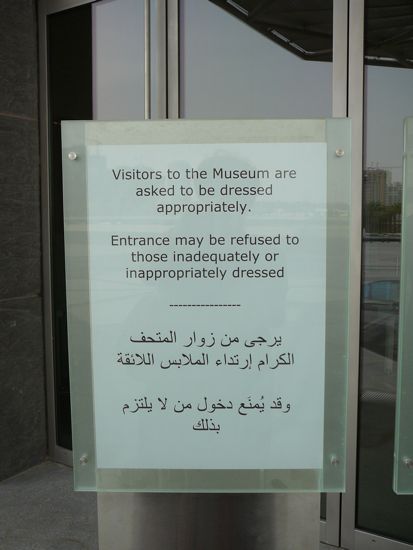
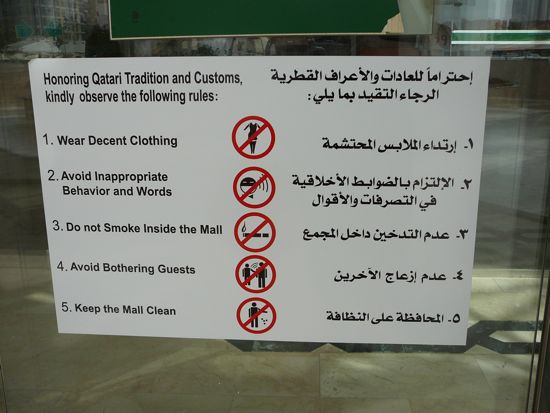
James Lee Burke and Swan Peak
When I read the description of this book on Amazon.com, I thought “haven’t I read this before? Dave Robicheaux and his buddy Clete go to Montana for a vacation?” but the description sounded like it was probably a new book and the copyright date was recent. I’ve been burned before – especially with Donna Leon books, where I order a book and discover I have already read it – it was published in England under one title and then – years later – in America, under a different title. That is so frustrating!
It arrived just as all the household goods arrived, so I had something to look forward to reading after the long, grueling days of toting and unwrapping, and putting away.
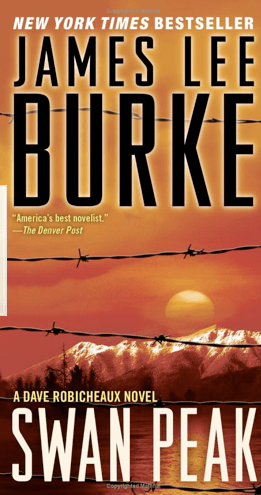
Some of the reviewers say it’s just another James Lee Burke, same story, different setting, and, to some extent, they are correct. I would counter with my opinion that no matter which James Lee Burke story you are reading, there are moments of pure poetry, and moments of keenly cynical insights that lift any book he writes out of the ordinary and puts it in the can’t-live-my-life-without-reading-this-book catagory.
Dave and Clete are vacationing in Montana (Dave’s wife is there, too, but barely appears in this book). As usual, they find themselves peripherally involved with a couple killings, and are interviewing a witness, Jamie Sue Wellstone, wife of a transplanted-from-Texas oil tycoon.
The garden was dissected by gravel pathways and surrounded by a gray stone will that was stippled with lichen in the shade. The flower beds were planted with pansies, English roses that were as big as grapefruit, forget-me-nots, violets, clematis vine and bottlebrush trees. I wondered if the eclectic nature of the ornamentals in the garden said something about the undefined and perhaps deceptive nature of the Wellstones and their ability to acquire an entire culture as easily as writing a check.
In the following section, he writes about the drifters, the people who end up in places like Montana, Alaska – wherever there is still a laxity in formal structures:
The waddies and drifters who worked for him were the kind of men who were out of sync with both history and themselves, pushed further and further by technology and convention into remote corners where the nineteenth century was still visible in the glimmer of the high-ceilinged saloon or an elevated sidewalk that had tethering rings inset in the concrete or an all-night cafe that served steaks and spuds to railroad workers in the lee of a mountain bigger than the sky.
Most of them were honest men. When they got into trouble, it was usually minor and alcohol or women or both. They didn’t file tax returns or waste money on dentists. Many of them didn’t have last names, or at least last names they always spelled the same way. Some had only initials, and even friends who had known them on the drift for years never knew what the initials stood for. If they weren’t paid to be wranglers and ranch workers, most of them would do the work for free. If the couldn’t do it for free, most of them would pay to do it. When one of them called himself a rodeo bum, he wasn’t being humble.
Their enemies were predictability, politic, geographical permanence, formal religion, and any conversation at all about the harmful effects of vice on one’s health. The average waddie woke in the morning with a cigarette cough from hell and considered the Big C an occupational hazard, on the same level as clap and cirrhosis and getting bull hooked or stirrup-drug or flung like a rag doll into the boards. It was just a part of the ride. Anybody who could stay on a sunfishing bolt of lightning eight seconds to the buzzer had already dispensed with questions about mortality.
There are many who object to the violence and brutality in every James Lee Burke novel. The problem is, he is writing about people who have to deal with violence and brutality and a way of life most of us never see. Burke writes about cops, about gangsters and organized crime, and about prisoners and prison life. It isn’t pretty. His main characters in this book, Dave and Clete, have seen too much. They are cynical as only deep-dyed idealists can be cynical. They are the guardians of our society; the enforcers of the codes. Without the police, and those who fight with them against crime, it is the rule of the jungle, where might makes right. The bullies rule, and as we have seen through history, unlimited power invites abuse.
What all predators hated most was to be made accountable. It wasn’t death that they feared. Death was what they sought, onstage, with the attention of the world focused upon them. But when you took away their weapons and their instruments of bondage and torture, when you pulled the gloves off their hands and the mask off their face, every one of them was a pathetic child. They were terrified of their mother and became sycophantic around uniformed men. The fact they were reviled by other felons and that cops would not touch them without wearing polyethylene gloves was not lost on them.
But how do you get your hands on a guy who has probably been killing people for years, in several states, leaving no viable clues, threading his way in and out of normal society? How do you find a sadist who probably looks and acts just like your next-door neighbor?
Much later in the book, he describes the kind of hero that crops up in each book the same way:
But if there is a greater lesson in what occurred inside that clearing, it’s probably the simple fact that the real gladiators of the world are so humble in their origins and unremarkable in appearance that when we stand next to them in a grocery-store line, we never guess how brightly their souls can burn in the dark.
There is only one Dave Robicheaux book I have kept – A Morning for Flamingos, the first one I ever read. I’m pretty sure it was in the late 1980’s, and I have been a James Lee Burke addict ever since. James Lee Burke hates organized crime, and he hates most of all those criminals who make themselves wealthy by bribery and corruption, who attend the society balls and events, whose photos appear in the paper looking like you and me – like respectable folk. People who get photographed making a donation to charity with wealth stolen from the common purse. His heros – and heroines – are modern day gladiators, they are the bureaucrat who refuses to hide the illegal wiretaps, the plodding cops and FBI officers who track down the slightest clue to bring down the Madhoff and the white-collar robbers, the prosecutors who risk their lives to put the bad guys away.
I guess for me, reading James Lee Burke is like reading a fairy-tale (If you have ever read the original fairy-tales, you will know what true gruesome violence and brutality is all about!) where those who flout the law, those who oppress the poor, those who use their ill-gotten wealth to isolate themselves high above the common man – get their justice. They think they are above the law. They are wrong.
Today’s News from Doha
It’s a very brave thing to take an honest and open look at the serious problems confronting any society.
Report on domestic workers by year-end
Web posted at: 6/24/2009 2:49:44
Source ::: The Peninsula.
DOHA: The first national survey on domestic workers in Qatar will be completed soon and the findings will be announced by the end of this year, a senior official of the Qatar Foundation for Combating Human Trafficking, the organisers of the study, has said.
On Monday, the Foundation signed a memorandum of understanding (MoU) with the Doha International Institute for Family Studies and Development for collaboration between the two bodies in carrying out the survey. The MoU was signed by Mariam Al Malki, director of the Foundation and Richard Wilkins, managing director of the Institute.
Speaking on the occasion, Al Malki said the survey which is the first of its kind in the region, aimed at identifying the problems of domestic workers in the country and seek solutions. Another major objective of the study was to assess the impact of housemaids and other domestic workers on the Qatari family and the society.
The survey conducted through direct interviews with a randomly selected group of domestics workers and families has received a positive response from the society, added Al Malki.
She attributed the success to an awareness campaign waged with the support of the media prior to the launch of the survey. The survey covered 657 families and a total of 900 domestic workers from five regions across the country, said Al Malki.
The interviews were conducted through questionnaires prepared separately for the two targeted categories. The questionnaires for domestic workers were available in 10 languages including Arabic to cater to the different nationalities.
Wilkins said the study was extremely important since it can help in identifying the problems of domestic workers as well as their impact on the society.
“ Almost every Qatari household has employed domestic workers, especially because most women are now working outside. This is also a sensitive issue, given the impact of these workers on the families,” he said.
Protecting women and children to focus on providing social and psychological support to victims of family violence:
Counselling service launched for victims of behavioural disorders
Web posted at: 6/24/2009 2:47:0
Source ::: The Peninsula
DOHA: The Qatar Foundation for Protection of Women and Children has launched a new service to provide social and psychological support to victims of violence as well as those who suffer from behavioural disorders.
The service named “change your life” is part of the Foundation’s three-year plan to prepare a comprehensive rehabilitation programme for such members of the society. Besides moral and psychological support, the Foundation will provide medical and legal assistance to victims to facilitate their rehabilitation.
Farida Al Obaidli, Director of the Foundation said, recently they had come across a case where a family wanted to abandon their four children.
“This was very surprising. The fact that such incidents still occur underlines the need for social and psychological support and rehabilitation,” said Al Obaidli.
She said the Foundation had been providing legal assistance to victims of violence and abuse. It has 19 lawyers who help people who don’t have the capability to hire the service of a lawyer to present their case in the court.
And one tiny very strange article:
Media Freedom Centre team leaves office
DOHA: Robert Ménard, director- general of the Doha Centre for Media Freedom and his team have left the Centre.
“We no longer have either the freedom or the resources to do our work,” said Menard, in a statement issued yesterday.
The heads of the assistance, research and communications departments have also left the Centre, said the statement.
The Center was set up on the initiative of H H Sheikha Mozah bint Nasser Al Missned and Reporters Without Borders in December 2007.
Ménard, who became director-general on April 1, 2008, was the founder of Reporters Without Borders, which he headed for 23 years.
It’s a little cooler out today in Doha. High temperature this afternoon only reached 109°F / 43°C. 🙂
Men Hate Discussing Prostate Cancer
One possible reason women live longer than men is that woman pay attention, and when they think something might not be quite right, they take action – they do research on the internet, they talk with their friends, they go to the doctor and get checked out.
Poor men. The stronger sex is so shy! They are shy to discuss any problems with reproduction, with sexual activity. In effect – they would rather die than go to the doctor!
(So who, really, is the stronger sex? The one who avoids looking at the problem, or the one who faces up to it?)
It’s why we women have girlfriends. We can talk about ANYTHING. Yep, even you. It doesn’t mean we are betraying your secrets, most of the time we are trying to figure you out, or trying to help you. We talk about the things that scare us – like cancer, or being abandoned, or our latest blood tests.
Because you big strong hunks can’t admit there might be something going wrong, I am highlighting two articles – hot off the BBC press – on prostate cancer. (KTDP, please consider this an invitation to blog about this)
‘Surprise’ prostate result probed
Prostate cancer kills 10,000 men in the UK each year
Researchers are probing an unexpected success in a study of an experimental treatment for prostate cancer.
In three men with advanced disease, use of an immune drug called ipilimumab, shrank their tumours to such an extent surgeons were able to operate.
The Mayo Clinic team in the US said the “startling” results in the study of 108 men had prompted them to set up a second trial using higher doses.
One UK expert said there were currently few treatments for advanced disease.
In men with advanced prostate cancer, which has spread outside the prostate, surgery cannot usually be done.
Hormone therapy is usually given to try to shrink the tumour to some degree and buy some time.
The trial was set up to see if MDX-010, a type of drug called a monoclonal antibody, would improve on hormone treatment.
The idea is that the drug will encourage a strong immune response to attack the cancer cells.
Half the men had normal therapy and half also received MDX-010.
In three cases, where the experimental drug was given, the tumours shrank dramatically, enabling surgeons to operate and remove the tumour.
You can read the entire article by clicking here: BBC Health News Prostate Cancer
Green tea ‘slows prostate cancer’
Green tea has already been linked to health benefits
A chemical found in green tea appears to slow the progression of prostate cancer, a study has suggested.
Green tea has been linked to a positive effect on a wide range of conditions, including heart disease, cancer and Alzheimer’s disease.
The research, in the US journal Cancer Prevention Research, found a significant fall in certain markers which indicate cancer development.
A UK charity said the tea might help men manage low-risk tumours.
Although previous studies have shown benefits from drinking green tea – including some positive findings in relation to prostate cancer, there have been mixed results.
In this study, Philadelphia-based researchers tested a compound called Polyphenon E.
They were looking for a number of biomarkers – molecules – including vascular endothelial growth factor (VEGF) and hepatocyte growth factor (HGF) which are indicators of developing cancer.
They also looked for prostate specific antigen (PSA) – a protein only found in the prostate. Levels can rise if cancer is present.
’12 cups’
The study included 26 men, aged 41 to 72 years, who had been diagnosed with prostate cancer and who were scheduled for radical prostate surgery.
Patients took four capsules containing Polyphenon E for an average of 34 days, up until the day before surgery – the equivalent of around 12 cups of normally brewed concentrated green tea.
The study found a significant reduction in levels of HGF, VEGF and PSA, with some patients demonstrating reductions of more than 30%.
Dr James Cardelli, from the Feist-Weiller Cancer Center, who led the study, said the compound, which was provided by the company Polyphenon Pharma, “may have the potential to lower the incidence and slow the progression of prostate cancer.”
There were only a few reported side effects associated with this study, and liver function remained normal.
You can read the full article about the relationship between green tea and reduction of prostate cancer by clicking here: BBC Health News Green Tea
Signs of the Times in Doha, Qatar
There are a whole series of these signs, carefully placed at eye-level at most stoplights. Here are two; it takes me a while to get in the right position at the right time and to have my camera ready, but I am learning to always have my camera ready:
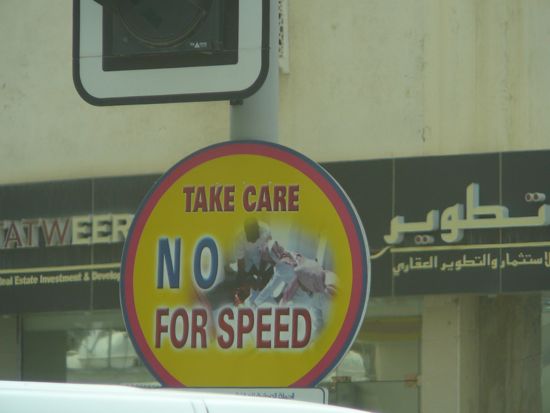

May God richly bless my husband for his patience; I am always calling out “Can you pull over so I can get a picture of that sign?” In Arabic, this one says “Bunshury al Rodoa”

I speak some Arabic, not a lot, like I can’t discuss politics with you, or anything complex, but I know shapes and colors and directions, and it all comes in handy. I took this sign because my favorite color is purple, and it is a very hard name to remember, when you are looking for something specific that is purple. 🙂

And see if you can guess why this is my very favorite photo of all 😉

Recent Comments
Kitchen on Isiais: Winding Down intlxpatr on Shampoo Ginger tigerbutterya0c5ff1d… on Shampoo Ginger intlxpatr on British Soldier Kidnapped, Esc… John on British Soldier Kidnapped, Esc… Wikipedia Donate Button

Amazina


Early Voting in Florida


